
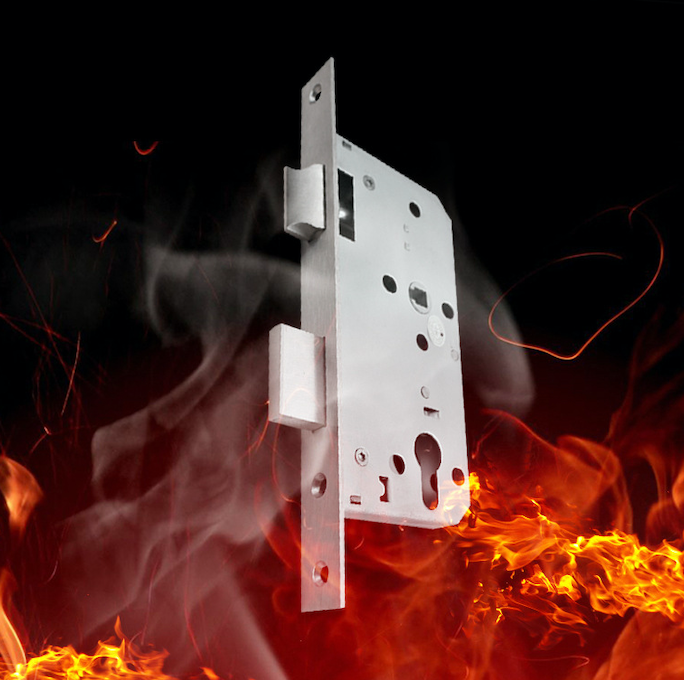
Can PVD Finished Hardware Be Used on Fire Rated Doors? Fire Test Considerations
PVD finished hardware creates a common concern for fire-rated door buyers: the finish looks premium, but the project must still pass compliance review. If this question is handled too late, buyers may face rejected submittals, retesting requests, or shipment delays. I usually solve this by separating decorative finish decisions from tested fire-rated hardware construction.
Yes, PVD finished hardware can be used on fire-rated doors when the exact hardware material, structure, dimensions, and application are covered by valid fire test evidence. The PVD color coating itself is normally not the deciding factor. Buyers should verify the tested model scope, report details, and local project requirements before approval.
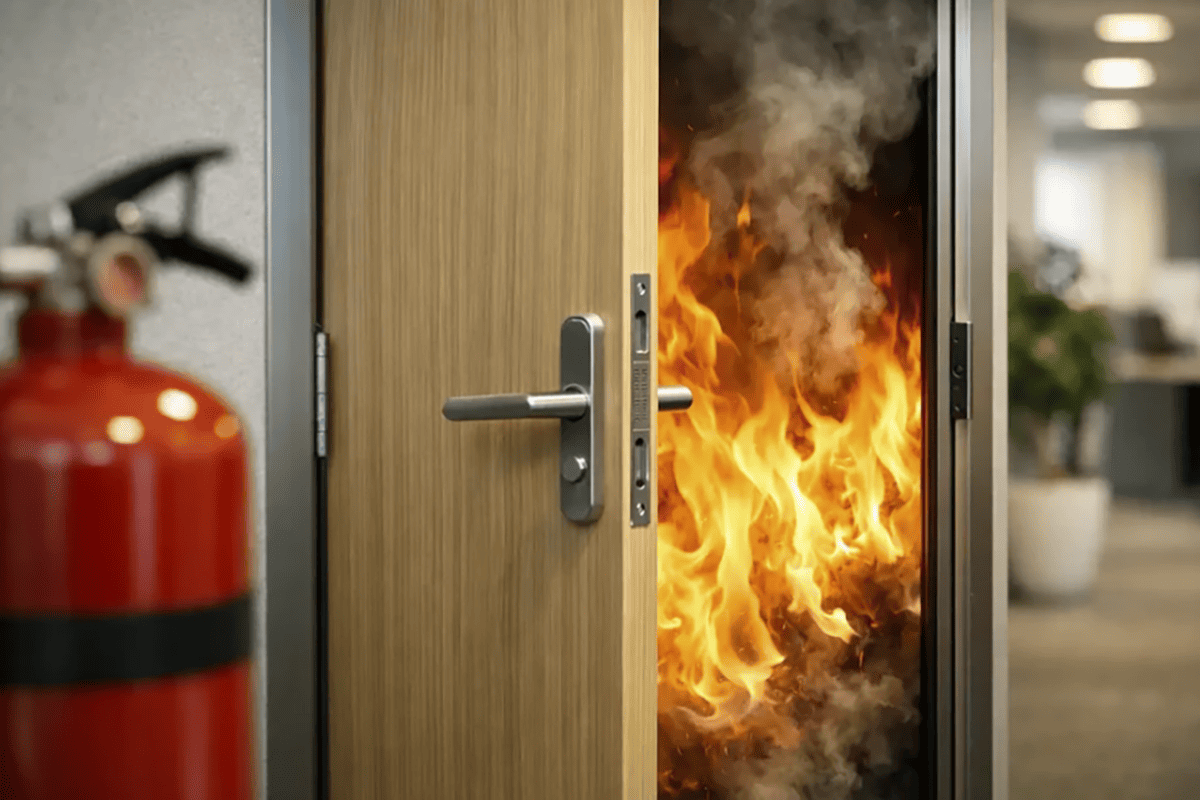
The important point is not whether “PVD is fire-rated” as a surface color. The better question is whether the same lock, handle, hinge, cylinder, or accessory configuration has been tested or accepted for the required fire-rated door assembly. I will break that down from a manufacturer’s view.
Can PVD finished hardware be used on fire-rated doors?
PVD finished hardware often appears in hotel, office, hospital, and residential projects where design and safety both matter. The problem starts when appearance is discussed before fire evidence. If buyers treat the finish as the full compliance answer, they may miss the real approval factors.
PVD finished hardware can be used on fire-rated doors if the base hardware design is suitable and the relevant fire test report or certificate covers the exact configuration. The finish is mainly an appearance, wear resistance, and corrosion resistance option. Fire suitability depends more on base material, construction, size, fixing method, and door assembly compatibility.
Why the finish is not the main fire-test factor
In production, I look at PVD as a surface treatment, not as the structural body of the hardware. A PVD layer is very thin compared with the lock case, latch, lever spindle, hinge leaf, screw, or cylinder body.1 In many architectural hardware applications, PVD is used to create colors such as:
- Satin gold
- Black
- Champagne
- Bronze
- Rose gold
- Graphite
- Brushed stainless tones
These finishes help with appearance consistency, abrasion resistance, and corrosion performance. They do not replace the need for a tested fire-rated hardware construction.
For fire-rated door projects, the critical concerns are usually different. A buyer should pay attention to whether the hardware can maintain its intended function during fire exposure and whether it has been included in the relevant test scope. For example, a mortise lock must not create an unacceptable weak point in the door leaf. A hinge must support the door during fire exposure and after thermal deformation. A lever handle set must remain compatible with the lock body and door assembly requirements.
Here is a simple way I explain it during project confirmation:
| Buyer question | Better technical question | Why it matters |
|---|---|---|
| Is PVD fire-rated? | Is this exact hardware model covered by fire test evidence? | The tested construction matters more than color. |
| Can I change gold to black? | Does the material, structure, and dimension remain unchanged? | A color-only change is usually lower risk. |
| Can I use another lock body? | Is the new lock body included in the tested scope? | A new structure may affect fire performance. |
| Can I use different screws? | Are fixing components controlled by the report or specification? | Fixings can affect integrity and performance. |
In our factory work at SDH Hardware, I often see buyers ask first about PVD color codes. That is understandable because the finish is visible to the end user. However, the compliance file usually needs deeper information: model number, base material, dimensions, fire test report reference, applicable standard, and installation scope.
For European-style architectural hardware, project teams may also check product standards such as EN 12209 for mechanically operated locks, EN 1906 for lever handles, EN 1935 for hinges, and EN 1303 for cylinders. Fire testing may also connect to door assembly standards such as EN 1634-12 or other regional requirements. Buyers should confirm the applicable standard with the project authority or qualified professional.
I do not recommend approving hardware only because the finish is PVD. I recommend approving it because the complete hardware configuration matches the test evidence and project specification.
Does the PVD color change require a new fire test?
PVD finished hardware creates a practical sourcing question when a tested model is already available in one color, but the project wants another color. Retesting can be expensive and slow. If buyers do not understand what changed, they may either over-test unnecessarily or approve changes too loosely.
A PVD color change generally does not require a new fire test when only the surface color changes and the base material, structure, dimensions, components, and installation method remain unchanged. However, the final decision must follow the fire test report scope, certificate wording, project specification, and local approval authority.

How I separate color changes from construction changes
When I review a project inquiry, I do not treat every change equally. A surface color change is different from changing the steel thickness of a lock case or replacing a hinge bearing design. The approval risk depends on whether the change affects the tested performance.
A PVD color change usually means the hardware body remains the same, while the coating recipe or target material creates a different visual finish. In that situation, the fire-rated performance is still mainly linked to the tested hardware body. This is why retesting is generally not required when the only change is PVD color, subject to the test report and local rules.
However, I always recommend that buyers document the change clearly. A project reviewer may ask whether the black PVD handle is the same model as the satin stainless tested handle. The buyer should be ready to show that the change is cosmetic only.
Color-only change versus functional change
The table below shows how I usually classify changes during supplier evaluation:
| Change type | Typical example | Fire-test concern level | Buyer action |
|---|---|---|---|
| PVD color only | Satin gold to black PVD | Lower | Confirm model and construction remain unchanged. |
| Same base material, same structure | 304 stainless handle with different PVD tone | Lower to medium | Check report scope and supplier declaration. |
| Base material change | Stainless steel to zinc alloy | Higher | Verify whether the material is covered. |
| Structure change | New lock case design or latch structure | Higher | Request matching fire evidence. |
| Dimension change | Larger lock body cut-out | Higher | Check door leaf preparation and report scope. |
| Fixing change | Different screws or spindle | Medium to higher | Confirm installation requirements. |
I have seen buyers assume that two handles are equivalent because they look the same after PVD coating. That is risky. Two lever handles may share the same black finish but use different base materials, roses, springs, spindles, or fixing systems.3 These internal differences may affect performance, durability, or fire-rated approval.
What should buyers request from suppliers?
For procurement teams, I suggest requesting a short confirmation package before mass order placement. The package does not need to be complicated, but it should be specific.
A practical file may include:
- Product model number
- Base material confirmation
- Main dimensions and drawings
- Finish description, such as black PVD or satin gold PVD
- Fire test report or certificate reference
- Statement that structure and material match the tested model
- Installation conditions or limitations
- Applicable project standard or market requirement
At SDH Hardware, we usually discuss these points early because our customers include door factories, hardware brands, and wholesalers who must prepare submittals for their own clients. This step helps reduce disputes later, especially when the project has multiple door ratings, different door cores, or regional approval rules.
The key is simple: a PVD color change is often manageable, but a hardware construction change needs much more careful verification.
What should buyers verify before specifying PVD finished hardware?
PVD finished hardware can look correct on a sample board, but a sample board does not prove fire-rated suitability. The risk appears when the supplied goods do not match the tested scope. Buyers should verify the product identity before production, not after goods arrive at the project site.
Buyers should verify that the exact model, base material, construction, size, fixing method, door application, and rating are covered by relevant fire test evidence. They should also check whether the certificate or report is valid for the target market and whether the project authority accepts the documentation.
The safest approval question
I recommend replacing the question “Is this PVD fire-rated?” with this question:
“Is this exact hardware configuration covered by the fire test evidence for this door application?”
That question is more accurate because it connects the hardware to the real approval basis. It also forces the supplier and buyer to discuss the model, material, structure, and intended use.
For example, a PVD finished lever handle may be acceptable when it is paired with a tested mortise lock on a compatible fire-rated timber door. The same handle may require more review if it is used with another lock body, another spindle size, another door construction, or another fire rating duration.
Core items to check
I suggest using a checklist like this during procurement:
| Verification item | What to check | Why it matters |
|---|---|---|
| Model identity | Model number and drawing match the report | Similar-looking hardware may differ internally. |
| Base material | Stainless steel, brass, steel, or other specified material | Material behavior affects heat response.4 |
| Structure | Lock case, latch, spindle, hinge bearing, fixing system | Structure affects function and integrity. |
| Dimensions | Cut-out size, backset, leaf thickness, hinge size | Openings and load paths matter in fire doors. |
| Finish | PVD color and substrate preparation | Finish should not hide material changes. |
| Application | Door type, rating, single/double leaf, orientation | Reports may have defined limits. |
| Installation | Screws, intumescent kits, reinforcement, templates | Installation can affect performance. |
| Documentation | Test report, certificate, classification, supplier confirmation | Approval depends on evidence. |
Product-specific considerations
Different hardware categories need different checks.
Mortise locks
For Euro mortise locks, I pay attention to lock case dimensions, latch design, deadbolt structure, forend size, and the cut-out required in the door leaf. A larger cut-out may influence the fire door construction.5 The buyer should confirm whether the lock model and installation details are included in the evidence.
Lever handles
For stainless steel lever handles, I check the base material, rose or backplate design, spindle, spring cassette, fixing bolts, and compatibility with the lock. PVD finished hardware in this category is often selected for hotel and commercial aesthetics, but the handle set still needs to match the tested lockset arrangement.
Hinges
For butt hinges and concealed hinges, I focus on load capacity, hinge size, material thickness, bearing design, screw type, and door weight. Hinges are critical because the door must remain supported during fire exposure.6 A PVD finish may improve appearance, but the hinge construction and test scope drive acceptance.
Cylinders and accessories
For Euro brass cylinders, escutcheons, door viewers, dust sockets, flush bolts, and other accessories, I check whether the item penetrates the door leaf and whether the report controls that opening. Small accessories can still matter if they create untested penetrations or change the door assembly.7
Why supplier discipline matters
A supplier should not only provide a nice finish. A supplier should control drawings, materials, inspection records, and production consistency. At SDH Hardware, our internal approach follows full-process quality control, from raw material screening to production supervision and finished product inspection. I still recommend that buyers verify certificates and reports because project approval must rely on documented evidence, not verbal claims.
This matters more in B2B supply because one purchase may serve hundreds or thousands of doors. A small mismatch in model, screw, or lock body can become a large compliance and replacement issue.
How does PVD finished hardware compare with other finishes for fire-rated door projects?
PVD finished hardware is often compared with stainless steel satin finishing, powder coating, electroplating, and painted finishes. The problem is that buyers sometimes compare these finishes only by appearance. For fire-rated doors, the better comparison separates surface performance from fire-tested hardware construction.
PVD finished hardware can offer strong appearance control, wear resistance, and corrosion resistance, but it should be evaluated separately from fire-rated suitability. Fire-rated approval depends on the tested hardware model and door application, while finish selection depends on design, durability expectations, environment, and maintenance requirements.
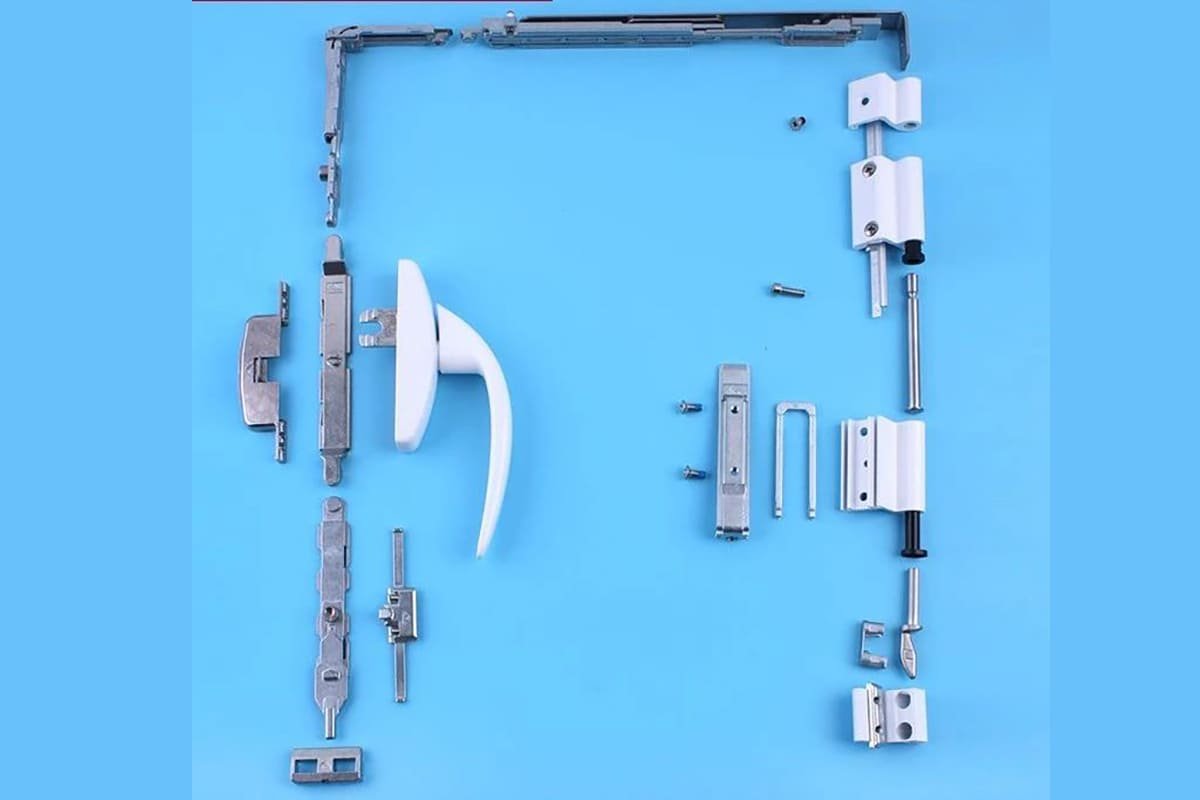
Finish comparison for procurement decisions
A finish can influence long-term appearance and maintenance. It can also influence customer perception in premium projects. However, the finish usually does not replace fire evidence for the hardware body.
Here is a practical comparison:
| Finish type | Common use | Main advantage | Buyer caution |
|---|---|---|---|
| PVD | Premium handles, hinges, accessories | Good wear resistance and color options | Confirm base hardware is tested. |
| Satin stainless steel | Commercial and public buildings | Stable, neutral appearance | Check stainless grade and construction. |
| Electroplating | Decorative brass or zinc components | Wide color range | Check corrosion resistance and substrate. |
| Powder coating | Color-matched architectural hardware | Strong color flexibility | Check thickness, adhesion, and tested scope. |
| Painting | Budget or special color needs | Simple color customization | May wear faster in high-touch areas. |
PVD is often chosen when buyers want a premium metallic appearance with better wear performance than many conventional decorative finishes8. In high-touch areas, such as hotel room doors, office doors, and residential entrance doors, this can matter. A lever handle is touched many times each day. A weak finish can show scratches, fingerprints, or color fading quickly.
Still, I always remind buyers that finish durability and fire-rated suitability are two different evaluations.
Environmental and use-case factors
The project environment also matters. Buyers should consider:
- Indoor or outdoor exposure
- Humidity and coastal conditions
- Cleaning chemicals
- Expected touch frequency
- Door weight and traffic level
- Project design language
- Replacement and maintenance plan
For example, a Middle East hotel project may prioritize gold or black PVD for design consistency. A European public building may prioritize satin stainless steel and documented fire performance. A Southeast Asian coastal project may focus on corrosion resistance due to humidity. In each case, the finish choice is only one part of the specification.
What I recommend for bulk buyers
For door manufacturers, hardware brands, and wholesalers, I suggest building a finish and compliance matrix before ordering. The matrix should connect each SKU with the approved finish options and fire evidence.
A simple matrix may include:
| SKU | Product | Tested base material | Approved finishes | Fire evidence | Notes |
|---|---|---|---|---|---|
| ML-001 | Euro mortise lock | Steel case, stainless forend | SS, PVD black, PVD gold | Report reference | Confirm door thickness |
| LH-002 | Lever handle | 304 stainless steel | Satin, PVD black, PVD gold | Report or set evidence | Use same spindle |
| BH-003 | Butt hinge | Stainless steel | Satin, PVD bronze | Report reference | Confirm screw type |
| CY-004 | Euro cylinder | Brass | Nickel, PVD finish options | Project-specific | Check door penetrations |
This matrix helps the buyer avoid accidental substitution. It also helps sales teams answer customer questions consistently. I have found that this simple document prevents many late-stage problems because it connects appearance options with tested configurations.
When should a buyer request retesting or professional review?
PVD finished hardware may not need retesting for a color-only change, but some changes deserve careful professional review. The danger comes from assuming that every product variation is cosmetic. When the hardware body changes, the fire-rated evidence may no longer apply.
A buyer should request retesting or qualified review when the hardware material, structure, size, fixing method, door preparation, or application differs from the tested configuration. Professional evaluation is also recommended when the project authority, local code, or fire consultant requires confirmation beyond the existing report.
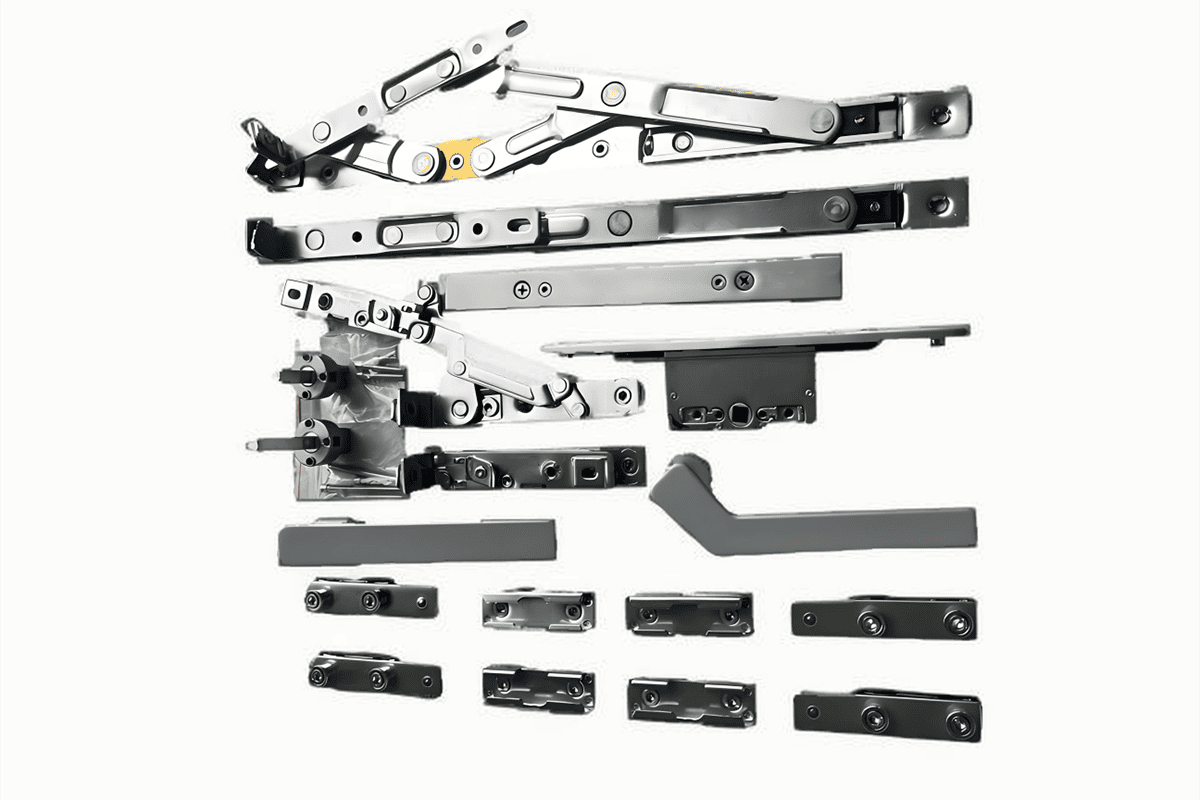
Changes that may trigger concern
I treat the following changes as higher-risk items:
- A different lock case design
- A different latch or deadbolt construction
- A different hinge size or thickness
- A different hinge bearing system
- A different handle fixing method
- A different spindle material or size
- A different base material under the PVD coating
- A larger door cut-out
- A new concealed hinge routing detail
- A new intumescent kit arrangement
- A new door type or fire rating duration
These changes may affect the door assembly in ways that a decorative finish change does not. For example, replacing a stainless steel lever handle with a zinc alloy handle in the same PVD color is not just a color change. The surface may look similar, but the base material and mechanical behavior are different.
When existing documents may not be enough
A fire test report usually has a defined scope. It may name specific products, sizes, door types, ratings, installation conditions, and allowed variations. A certificate may simplify the approval process, but the buyer should still check what it actually covers.
Existing documents may need further review when:
The report is for another region or standard.
A report accepted in one market may not automatically satisfy another market.The product name is similar but not identical.
A small model code difference can indicate a different internal structure.The door assembly is different.
Timber, steel, composite, and glazed fire doors may have different requirements.The rating duration changes.
A 30-minute application and a 60-minute application may not have the same evidence.The approval authority asks for clarification.
The local authority or project fire consultant may require additional documents.
A practical decision path
I suggest this decision path for buyers:
- Confirm the required fire rating and standard.
- Identify the exact hardware model and finish.
- Compare the product drawing with the tested drawing or report scope.
- Check whether only the PVD color changes.
- Confirm that material and structure remain unchanged.
- Ask the supplier for written confirmation and supporting documents.
- Submit the file to the project consultant or authority if required.
- Request professional review or retesting if the configuration is outside the scope.
This process is more efficient than asking a supplier to “send a fire-rated PVD handle.” That phrase is too broad. A better inquiry includes the door type, fire rating, target standard, model, material, finish, and installation method.
For large OEM and ODM orders, this discipline is especially important. A customized design may be commercially attractive, but it can create a new compliance pathway. At SDH Hardware, we support customized specifications, surface treatments, accessory configurations, logos, packaging, drawings, and inspection service. However, I still advise buyers to treat fire-rated approval as a document-based and application-specific decision.
Frequently Asked Questions
Is PVD coating itself fire-rated?
PVD coating should not be treated as the source of fire-rated performance. It is mainly a decorative and protective surface finish. Fire-rated suitability depends on the tested hardware construction, base material, dimensions, installation method, and door assembly evidence.
Can I use black PVD handles instead of satin stainless handles on a fire-rated door?
You may be able to use black PVD handles if the handle model, base material, structure, fixing method, and application match the tested configuration. If only the color changes, retesting is generally not required, but the report scope and project approval must confirm this.
What documents should I request for PVD finished hardware?
You should request product drawings, material details, finish description, model numbers, fire test reports or certificates, installation instructions, and supplier confirmation that the supplied configuration matches the tested scope. You should also verify whether the documents are accepted in your target market.
Do hinges and locks need more attention than handles?
Hinges and locks often need close attention because they directly affect door support, latching, cut-outs, and functional integrity. Handles also matter, especially when they are part of a tested lockset. Buyers should verify every hardware item that penetrates, supports, or operates the fire door.
Can a supplier certificate replace project approval?
A supplier certificate is useful, but it does not automatically replace project approval. The project specification, local regulations, fire consultant, and approval authority may require specific evidence. Buyers should treat certificates as documents to verify, not as universal approval for every application.
Conclusion
PVD finished hardware can be a suitable choice for fire-rated doors when the exact hardware configuration is covered by valid fire test evidence. The PVD color is usually not the deciding factor; the base material, structure, dimensions, fixing method, and application matter more. I recommend that buyers verify reports, certificates, drawings, and project requirements before ordering. If you need factory-direct support for PVD-finished locks, handles, hinges, cylinders, or accessories, SDH Hardware can help review the hardware configuration and prepare project-focused documentation for your procurement team.
"Thermal Conductivity Measurement of an Electron-Beam ...", https://pmc.ncbi.nlm.nih.gov/articles/PMC4844514/. Materials-science reviews describe physical vapor deposition coatings as thin films commonly measured in micrometres, supporting the distinction between a surface coating and the structural mass of door hardware. Evidence role: definition; source type: paper. Supports: The source should define PVD coatings as thin films and provide typical coating thickness ranges.. Scope note: The source would describe typical PVD coating practice generally, not the measured coating thickness on the article’s specific hardware. ↩
"What is EN 1634-1 and why does it matter for fire doors?", https://metacon-next.com/en/knowledge-base/what-is-en-1634-1-and-why-does-it-matter-for-fire-doors/. Standards descriptions of EN 1634-1 define it as a fire-resistance test method for doorsets, shutters, and openable windows, making it an appropriate reference for door-assembly fire testing. Evidence role: definition; source type: institution. Supports: The source should describe EN 1634-1 as a fire-resistance test method for doorsets, shutters, and related assemblies.. Scope note: The standard’s scope does not by itself determine acceptance of a particular hardware variant in a local approval process. ↩
"087100 – DOOR HARDWARE - Facilities and Campus Services", https://fcs.cornell.edu/087100-door-hardware. Lever-handle standards classify and test hardware by mechanical and performance characteristics such as durability, strength, fixing, and application, supporting the point that handles with the same finish may not be technically equivalent. Evidence role: mechanism; source type: institution. Supports: The source should support that lever-handle evaluation includes mechanical construction, fixing, durability, and related performance features, not only visual finish.. Scope note: The source would support the general evaluation principle rather than document the internal design of any named handle model. ↩
"Part II Chapter 2. Thermophysical Properties", https://www.nist.gov/el/part-ii-chapter-2-thermophysical-properties. Materials research shows that metals and alloys differ in thermal expansion, conductivity, melting temperature, and strength retention at elevated temperatures, which explains why a hardware material change can affect fire-exposure behavior. Evidence role: mechanism; source type: research. Supports: The source should explain that materials differ in thermal expansion, conductivity, melting point, and strength retention at elevated temperatures.. Scope note: This supports the mechanism generally and does not predict the fire performance of a specific lock, hinge, or handle without assembly testing. ↩
"Home Hardening - CAL FIRE - CA.gov", https://www.fire.ca.gov/home-hardening. Fire-door installation and maintenance guidance controls holes, cut-outs, and hardware preparations because changes to the door leaf can affect the integrity of the rated assembly. Evidence role: mechanism; source type: institution. Supports: The source should support that holes, cut-outs, and field modifications in fire doors are controlled because they can affect the rated assembly.. Scope note: The degree of effect depends on the door construction, hardware design, preparation size, and certification scope. ↩
"Fire Rated Concealed Door Hinges: A Comprehensive Guide", https://www.mckinneyhinge.com/en/resource-library/knowledge-center/blog/blog-post.aehdynamic-fire-rated-concealed-door-hinges-a-comprehensive-guide-650c3a3f9bc9de00014c211c_mckinney.html. Fire-door standards and inspection guidance treat hinges as essential assembly components because they carry the door leaf and help maintain its position in the frame during fire conditions. Evidence role: mechanism; source type: institution. Supports: The source should support that hinges are essential components of a fire-door assembly and must be suitable or listed for the door rating and application.. Scope note: This explains the hinge function generally; it does not establish suitability of a particular hinge size, bearing design, or finish. ↩
"Fire Doors and NFPA 80 FAQs", https://www.nfpa.org/news-blogs-and-articles/blogs/2025/04/11/fire-doors-faqs. Fire-door maintenance and installation guidance requires control of penetrations, accessories, and field modifications, supporting the view that even small added items can be relevant when they alter a rated assembly. Evidence role: general_support; source type: institution. Supports: The source should support that accessories, penetrations, and modifications to fire doors are subject to control because they may affect the rated assembly.. Scope note: The source would not show that every accessory requires separate testing; acceptance depends on listing, installation method, and authority review. ↩
"PVD for Decorative Applications: A Review - PMC - NIH", https://pmc.ncbi.nlm.nih.gov/articles/PMC10381906/. Comparative coating studies report that PVD films can provide high hardness and improved wear resistance relative to some conventional decorative finishes, depending on coating composition and substrate preparation. Evidence role: general_support; source type: paper. Supports: The source should support that PVD coatings can provide high hardness or wear resistance compared with some conventional decorative coating methods.. Scope note: The claim is not universal; specific performance depends on the PVD system, substrate, thickness, pretreatment, and service conditions. ↩
