
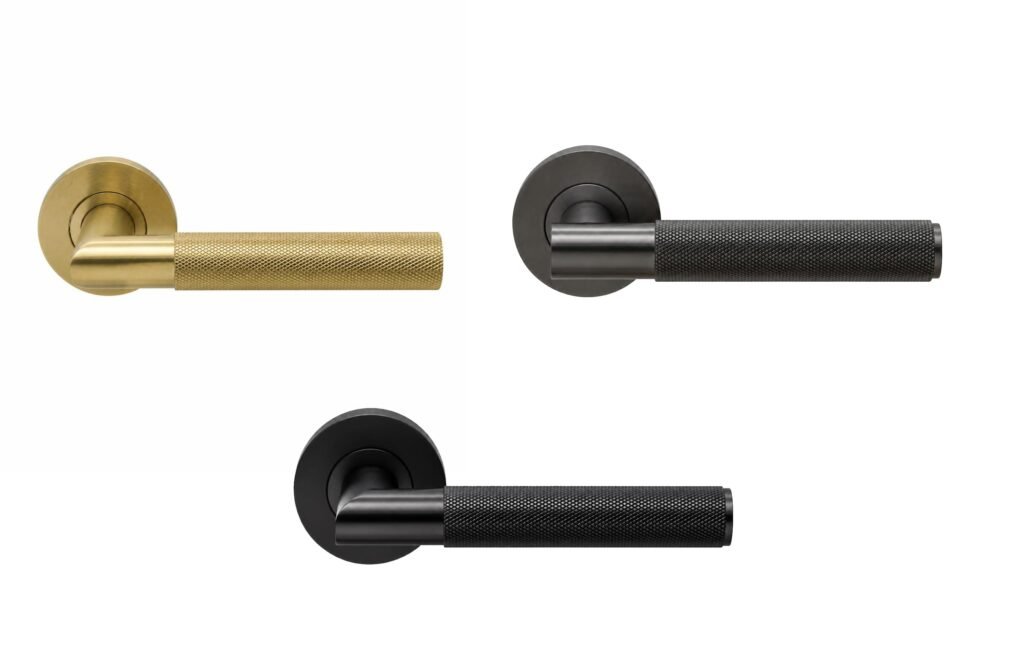
Lever Handle vs. Pull Handle: What's the Difference?
Lever handle vs. pull handle confusion can lead to the wrong door hardware package, especially when a buyer focuses only on appearance. That mistake can delay sampling, change drilling positions, and create installation problems. I usually solve it by starting with the door’s operating mechanism, not the handle shape.
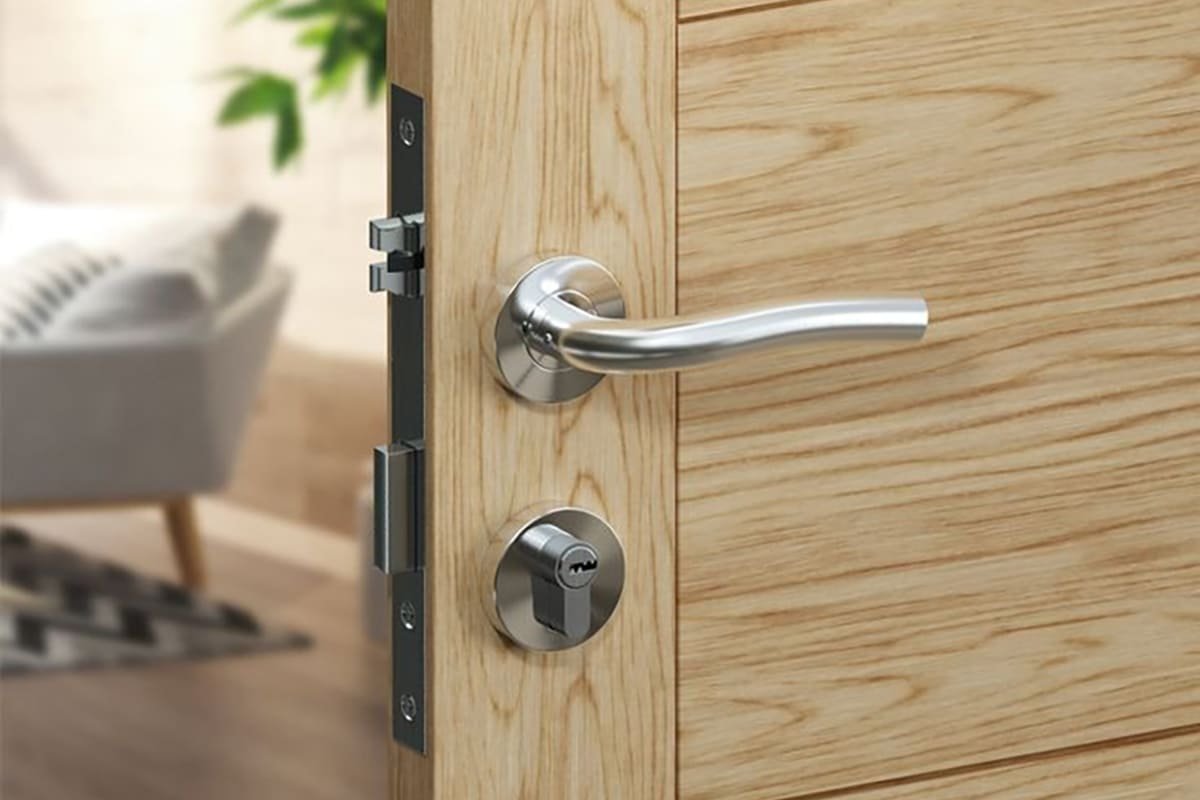
A lever handle operates a latch through a compatible mortise lock body1, while a pull handle mainly provides grip and pulling or pushing force. A lever handle is pressed down to retract the latch. A pull handle is usually paired with a ball catch, roller catch, magnetic catch, or similar holding device.2

In my factory-side communication with door manufacturers and hardware brands, I often see this question appear during quotation, sampling, and drawing confirmation. The difference becomes clear when I look at how the door opens, closes, and stays shut.
Lever Handle vs. Pull Handle: How Does Each One Work?
Many buyers compare a lever handle and a pull handle by design first. That creates a problem because two handles with similar finishes can serve very different functions. If I ignore the internal mechanism, I may select a beautiful product that cannot operate the door correctly.
A lever handle works as an operating handle. It connects to a spindle and mortise lock body, so pressing the lever down retracts the latch.3 A pull handle works as a gripping handle. It lets the user push or pull the door leaf, usually without retracting a latch by itself.
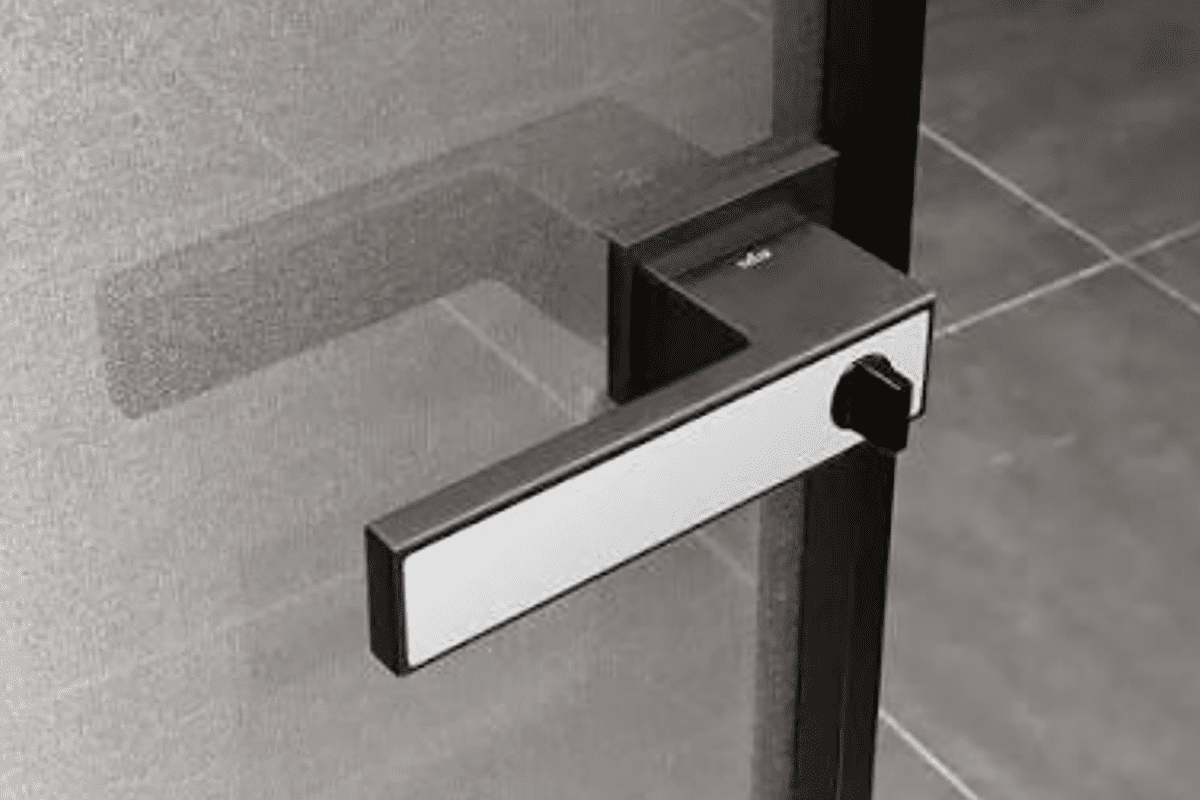
The basic operating logic
The simplest way I explain lever handle vs. pull handle is this:
A lever handle operates a lock or latch. A pull handle applies force to the door.
That may sound basic, but it affects nearly every purchasing detail. It affects the lock body, fixing holes, door preparation, accessories, installation drawings, and packaging list.
A typical lever handle set includes or works with:
- Lever handles for both sides of the door
- Spindle
- Escutcheon or rose
- Screws and fixing accessories
- Mortise lock body
- Strike plate
- Cylinder or thumbturn, depending on the function
A typical pull handle set may include:
- One pull handle or one pair of pull handles
- Through bolts, back-to-back fixing, or concealed fixing parts
- Optional mounting plates
- Catch device, if needed
- Magnetic catch, ball catch, roller catch, or floor/wall stop, depending on the door system
Functional comparison table
| Item | Lever Handle | Pull Handle |
|---|---|---|
| Main function | Retracts latch through lock body | Provides grip for push-pull movement |
| Common matching hardware | Mortise lock body, latch, cylinder, strike plate | Ball catch, roller catch, magnetic catch, door closer, pivot system |
| User action | Press down, then push or pull | Push or pull directly |
| Suitable door need | Controlled latching, privacy, locking | Light holding, passage, sliding, pivot, glass, or cabinet-style operation |
| Key buying risk | Wrong lock body or spindle match | Wrong fixing method or catch selection |
Why this matters in B2B purchasing
In B2B orders, I rarely see a handle sold as only a decorative part. The buyer usually needs a complete door hardware solution. That means I must understand the door structure before I recommend the handle type.
For example, if a door factory is producing internal wooden doors with standard latch operation, I would usually discuss lever handles with Euro mortise locks. The door leaf must be drilled for the spindle, keyhole or cylinder hole, lock body case, and strike plate.4
If a wholesaler is developing a minimalist interior door series with light closing force, I may discuss pull handles with magnetic catches. In that case, the door may not need a traditional latch tongue. The user simply pulls or pushes the door, and the magnetic catch helps hold it closed.5
From the manufacturing side, this distinction is practical. It affects:
Sample confirmation
I need to know whether the sample is only a handle or a complete operating set.Technical drawings
I need to confirm hole spacing, spindle size, lock case dimensions, and fixing points.Packaging
I need to prevent missing accessories, especially screws, spindles, roses, and catch parts.After-sales risk
I want to avoid a situation where the buyer receives the goods and later finds that the handle cannot match the door preparation.
So, the difference is not just “one has a lever shape and one has a bar shape.” The correct question is: What mechanism must this handle operate?
Lever Handle vs. Pull Handle: When Should I Choose a Lever Handle?
A door that needs locking, privacy, or controlled latching can fail in daily use if I choose the wrong handle. A pull handle may look suitable, but it will not retract a standard latch. That mismatch creates installation changes and customer complaints.
I should choose a lever handle when the door needs a latch to retract through a mortise lock body. This is common for passage doors, privacy doors, office doors, hotel doors, and many project doors where controlled closing, locking, or cylinder operation is required.
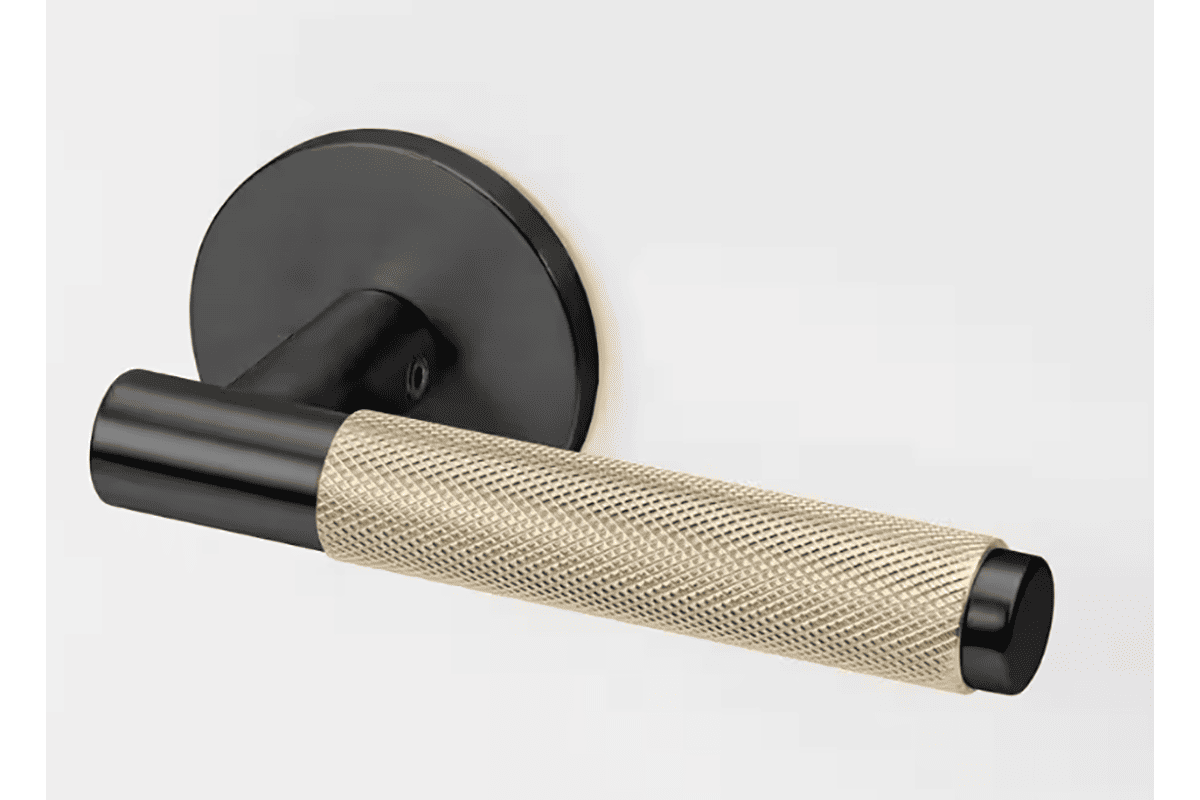
Lever handle + mortise lock body + latch retraction
When I explain lever handle vs. pull handle to importers, I often draw the lever handle system as three connected parts:
Lever handle
The user presses it down.Spindle
The spindle transfers rotation from the handle to the lock body.Mortise lock body
The latch retracts into the lock case, so the door can open.
This is why a lever handle is more than a visible product. It belongs to a mechanical hardware set. If the lock body does not match the lever handle, the system may not work smoothly.
Key details I check before confirming lever handle orders
For lever handle orders, I usually ask for technical details before I discuss price as final. A small mismatch can cause big problems during installation.
| Detail to check | Why it matters |
|---|---|
| Door thickness | It affects spindle length, screw length, and fixing method6 |
| Lock body type | It determines latch function and hole positions |
| Backset | It affects the distance from door edge to spindle center |
| Center distance | It affects lever and cylinder/keyhole alignment |
| Spindle size | Common sizes vary by market and lock design |
| Opening direction | It affects handing for some handle designs |
| Surface finish | It affects matching with hinges, cylinders, and accessories |
| Fire-rated requirement | It affects product selection and documentation that buyers should verify |
Common lever handle applications
I see lever handles used often in architectural door hardware programs because they support standard door operation. Common applications include:
- Apartment entrance doors, when matched with appropriate lock systems
- Interior room doors, especially privacy or passage functions
- Office doors, where controlled access may be needed
- Hotel doors, when paired with lock bodies and access systems
- Commercial wooden doors, when standard latch operation is required
A lever handle may also need special consideration for public buildings, accessibility requirements, fire-rated doors, or project specifications.7 I do not treat one handle as universally correct for every project. I always recommend that buyers verify local codes, door certification requirements, and installation conditions with qualified professionals.
What can go wrong with the wrong lever handle package?
In factory communication, I have seen buyers ask for “door handles” without saying whether they need lock bodies. This can create several practical risks:
- The door factory prepares holes for one lock type, but the supplied lock body is different.
- The handle rose covers the hole poorly because the drilling position was not confirmed.
- The spindle is too short for the door thickness.
- The finish matches the handle but not the hinge or cylinder.
- The buyer expects privacy locking, but the quoted handle set is passage function only.
These problems are avoidable. I usually prefer to confirm a complete door hardware schedule before mass production. That schedule should list the lever handle model, lock body, cylinder, strike plate, finish, door thickness range, and accessory pack.
My practical recommendation
If the door must close with a spring latch and open by pressing the handle, I choose a lever handle system. I also check the mortise lock body first. The lever design comes second.
That order of thinking helps buyers avoid expensive mistakes. It also helps manufacturers like us prepare correct samples, technical drawings, and inspection points before shipment.
Lever Handle vs. Pull Handle: When Should I Choose a Pull Handle?
A pull handle can look strong and simple, but it may be used incorrectly if I expect it to work like a lever. The problem appears when a door still needs latch retraction. Without the right catch or lock system, the door may not close or open as expected.
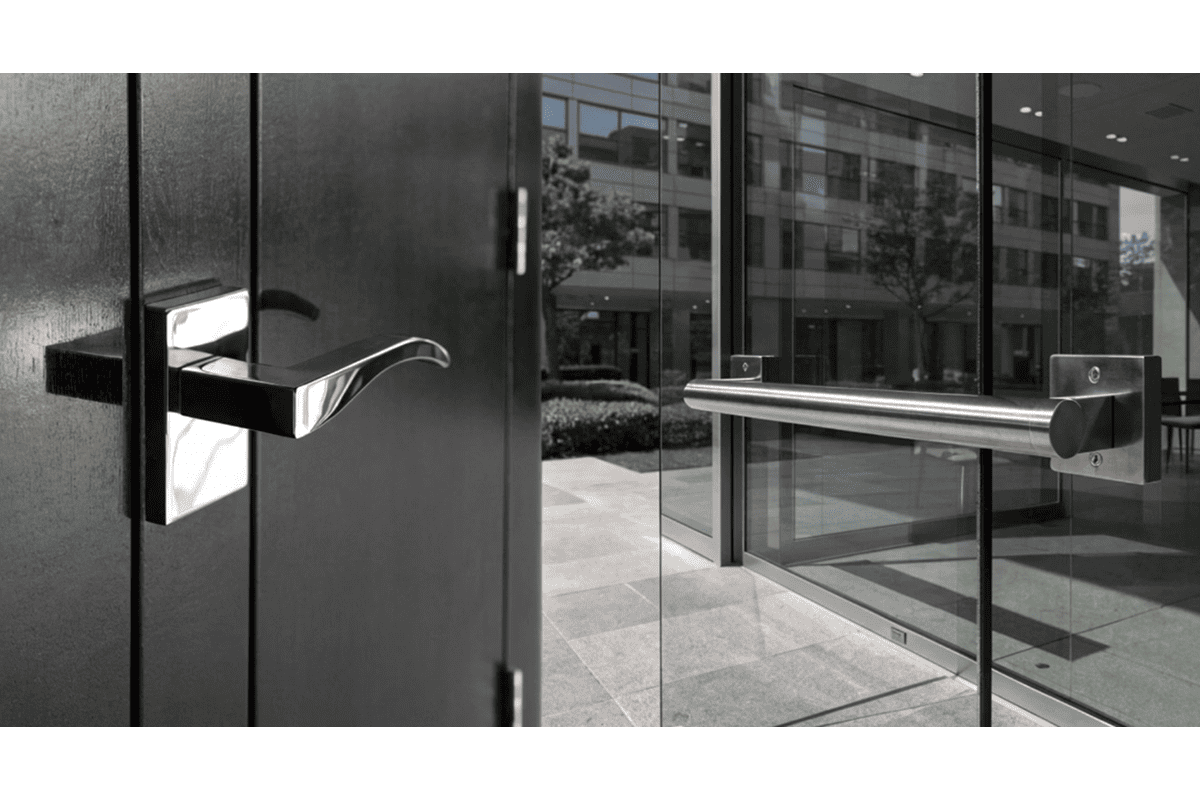
I should choose a pull handle when the door mainly needs a grip for push-pull operation, not latch retraction. Pull handles are commonly paired with ball catches, roller catches, magnetic catches, pivot systems, sliding doors, glass doors, and other doors that do not rely on a lever-operated latch.
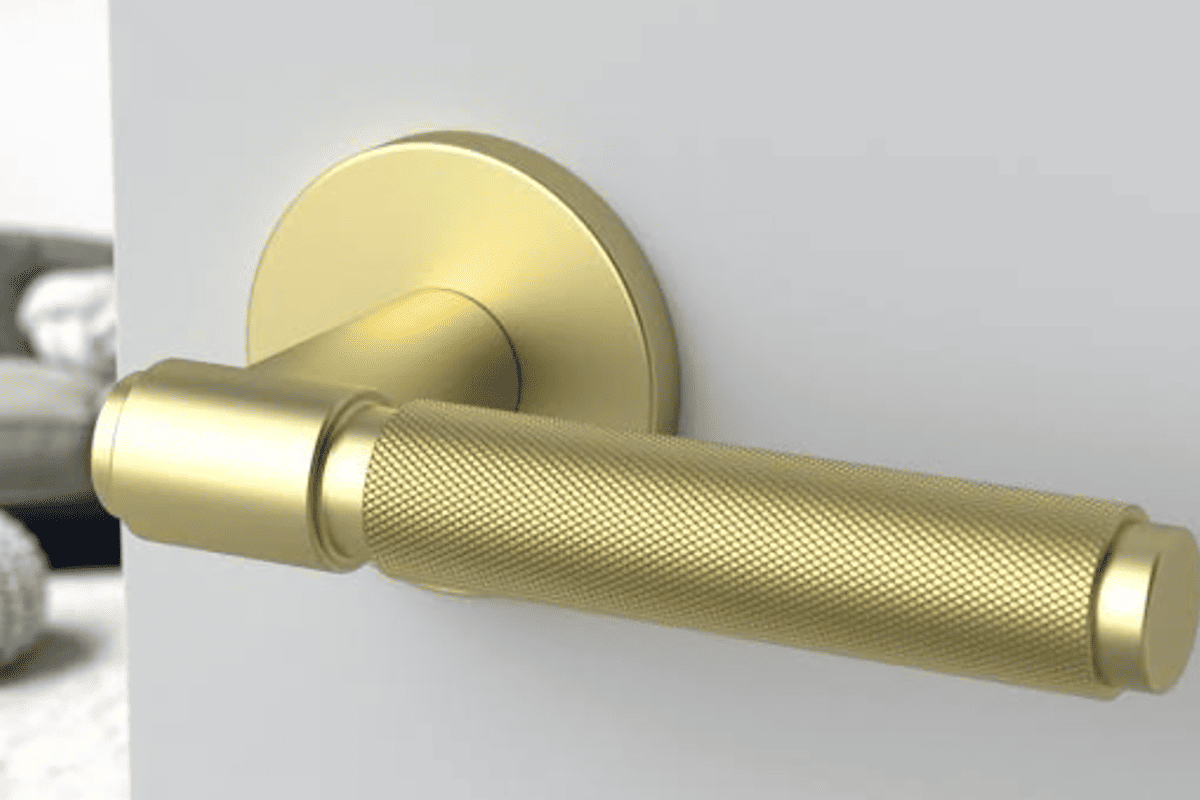
Pull handle + catch + push-pull operation
The working logic of a pull handle is different. A pull handle does not normally connect to a spindle that retracts a latch. Instead, it gives the user a place to hold and apply force.
In many applications, the door is held closed by another device, such as:
- Ball catch
- Roller catch
- Magnetic catch
- Concealed magnetic device
- Pivot door closing system
- Door closer or floor spring
- Sliding door track and stopper
This is the core difference in lever handle vs. pull handle selection. A pull handle can be very functional, but its function is not the same as a lever handle.
Common pull handle fixing methods
For bulk buyers, the fixing method is one of the most important details. The handle may look correct in a catalogue, but it still needs to match the door material and installation method.
| Fixing method | Common use | Buying note |
|---|---|---|
| Back-to-back fixing | Glass doors, wooden doors, metal doors | Two handles are fixed through the door |
| Single-sided fixing | Cabinet doors, interior doors, some commercial doors | Screw type and pull force should be reviewed |
| Concealed fixing | Minimalist doors and premium hardware lines | Installation accuracy is important |
| Through-bolt fixing | Heavier pull handles | Bolt length must match door thickness |
| Surface screw fixing | Utility or simple applications | Screw visibility may affect design requirements |
Where pull handles make sense
I often discuss pull handles for doors where the user action is direct and simple. The door does not need a lever to retract a latch. Instead, the user pulls or pushes the door leaf.
Common uses include:
Sliding doors
A pull handle gives grip, while the track controls movement.Pivot doors
The door rotates on a pivot system, and the pull handle provides operating force.Glass doors
Back-to-back pull handles are common, depending on glass preparation and fixing parts.8Closet or storage doors
A ball catch or magnetic catch can hold the door lightly closed.Minimalist interior doors
A pull handle with a magnetic catch can create a clean appearance, if the project allows that function.
Important caution for pull handle orders
I do not recommend choosing a pull handle only because it looks modern. I first check whether the door needs secure latching, privacy, or locking. If it does, a standard pull handle alone is usually not enough.9
For example, a meeting room door may need privacy or acoustic sealing. A simple pull handle with a magnetic catch may not provide the required function. A hotel room door may need a lock system, latch function, and project-specific certification documents. In that case, I would not replace the lever system with a pull handle unless the whole door hardware system is redesigned by qualified professionals.
What I ask before quoting pull handles
Before confirming pull handle production, I usually ask:
- What is the door material: wood, aluminum, steel, or glass?
- What is the door thickness?
- Is the handle single-sided or back-to-back?
- Does the buyer need a ball catch, roller catch, or magnetic catch?
- What is the center-to-center fixing distance?
- What is the total handle length?
- What is the tube or bar diameter?
- What surface finish is required?
- Does the package need custom logo, stamping, laser marking, or color box design?
These questions help me avoid unclear orders. They also help the buyer compare quotations correctly. A pull handle quotation without fixing details may not be equal to another supplier’s quotation that includes complete fixing accessories.
Lever Handle vs. Pull Handle: What Should B2B Buyers Check Before Ordering?
A wrong handle choice is not only a technical issue. It can affect production schedules, sample approvals, container planning, and customer trust. If I confirm only the visible handle model, I may miss the parts that make the door system work.
B2B buyers should check the full hardware package before ordering. For lever handle vs. pull handle decisions, I review the lock body or catch type, door thickness, hole position, fixing method, handle size, surface finish, opening direction, packaging, and whether all accessories are supplied as one matching set.
A practical pre-order checklist
When I support OEM, ODM, or wholesale inquiries, I like to organize the buying process into a clear checklist. This reduces back-and-forth communication and makes the quotation more accurate.
| Checklist item | Lever handle order | Pull handle order |
|---|---|---|
| Operating mechanism | Mortise lock body and latch | Catch, magnetic device, pivot, sliding, or push-pull system |
| Door thickness | Needed for spindle and screws | Needed for bolts and fixing parts |
| Hole position | Spindle, cylinder, keyhole, lock case | Fixing centers and bolt holes |
| Opening direction | May affect handle handing | Usually less critical, but still useful |
| Accessories | Lock body, spindle, screws, strike plate, cylinder | Bolts, fixing kit, catch device if required |
| Finish | Match with hinges and cylinders | Match with door system and accessories |
| Certification documents | Verify CE/fire-rated documents if required | Verify documents if project specifications require them |
| Packaging | Set-based packing avoids missing parts | Pair or single packing must be clear |
Why complete matching matters
In architectural hardware procurement, one product rarely works alone. A lever handle may need a mortise lock, cylinder, thumbturn, strike plate, and matching screws. A pull handle may need correct bolts, sleeves, washers, and a catch device.
I have learned that buyers often compare unit price without comparing package content. That can be risky. One supplier may quote a handle only. Another may quote a complete set. The cheaper offer may become more expensive after accessories are added.
I recommend that buyers ask suppliers to confirm:
- What is included in the unit price?
- What is excluded?
- Are fixing accessories included?
- Are lock bodies or catches included?
- Are drawings provided after order confirmation?
- Can the supplier inspect the finished products before shipment?
- Can the supplier support custom branding or packaging?
At SDH Hardware, we manufacture and supply lever handles, pull handles, mortise locks, hinges, cylinders, and door accessories for B2B customers. From my side, the most efficient orders are the ones where the buyer shares the door type, target market, finish requirement, and matching hardware list early.
Surface finish and market expectations
Surface finish is not only about appearance. It affects product positioning, corrosion expectations, cleaning method, and market acceptance. Common finishes may include stainless steel satin, polished stainless steel, black, PVD tones, antique finishes, and custom colors.
For B2B buyers, I suggest checking:
Target market preference
Middle East, Europe, and Southeast Asia may have different finish trends.Matching across the series
Handles, hinges, cylinders, locks, and accessories should look consistent.Sample approval
A physical sample is safer than relying only on photos.Batch consistency
Buyers should define acceptable color variation before mass production.
Certification and project documentation
Some projects require CE certification, fire-rated documentation, or other compliance documents.10 I treat these as documents that buyers should verify before final approval. A supplier should provide relevant documents where applicable, but the buyer should also confirm whether those documents match the exact product, configuration, door type, and project requirement.
This is especially important for technical door hardware. A handle, lock body, latch, or hinge may perform differently depending on the door assembly.11 For application-specific decisions, I recommend qualified professional evaluation.
Lever Handle vs. Pull Handle: How Do I Avoid Common Specification Mistakes?
Specification mistakes often happen when a buyer sends a photo and asks for “the same handle.” The photo may show the visible design, but it does not show the lock case, spindle, catch, bolt type, or door preparation. That missing information can cause costly confusion.
To avoid lever handle vs. pull handle mistakes, I specify the door function first, then the matching mechanism, then the visible handle design. I confirm whether the door needs latch retraction, light holding, locking, privacy, or simple push-pull operation before I finalize the model and accessories.
Mistake 1: Treating the handle as decoration only
This is the most common mistake. A handle is visible, so people naturally focus on style. But in manufacturing and procurement, function must come first.
A lever handle may look simple, but it must work with a lock body. A pull handle may look strong, but it may still need a catch or other holding device. If I ignore that, the door system becomes incomplete.
Mistake 2: Forgetting the door preparation
Door preparation includes drilling, routing, cut-outs, and fixing holes. Once a door factory prepares the door leaf, changes can be expensive.
For a lever handle, I must confirm:
- Lock body case size
- Backset
- Center distance
- Spindle hole size
- Cylinder or keyhole position
- Faceplate size
- Strike plate size
For a pull handle, I must confirm:
- Fixing center distance
- Bolt diameter
- Handle length
- Projection from door surface
- Single or back-to-back mounting
- Door material and thickness
- Catch or magnetic device position
Mistake 3: Ignoring regional standards
Different markets may prefer different specifications. European buyers may focus on Euro-profile cylinders and CE-related documentation. Middle East buyers may request certain finishes, heavy-duty appearances, or custom branding. Southeast Asian buyers may need flexible packaging and mixed product categories for wholesale channels.
I do not assume one standard fits all markets. I prefer to ask the buyer what market they serve and what door manufacturers or contractors expect.
Mistake 4: Not requesting a sample set
A sample can reveal issues that drawings cannot show clearly. I recommend sample checking before large orders, especially for new product lines.
A good sample review should check:
Function
The lever should return smoothly, and the latch should retract correctly. The pull handle should feel secure after fixing.Fit
The accessories should match the door thickness and hole positions.Finish
The color and surface should match the approved standard.Packaging
The set should include all promised parts.Installation clarity
The installer should understand how each part is used.
Mistake 5: Comparing prices without comparing scope
This mistake creates hidden cost. A buyer may receive a lower quotation for a pull handle, but the catch is not included. Or the lever handle price may exclude the lock body and cylinder.
I suggest creating a quotation comparison sheet. It should include:
| Quotation item | Supplier A | Supplier B | Supplier C |
|---|---|---|---|
| Handle included | Yes/No | Yes/No | Yes/No |
| Lock body or catch included | Yes/No | Yes/No | Yes/No |
| Fixing accessories included | Yes/No | Yes/No | Yes/No |
| Custom logo included | Yes/No | Yes/No | Yes/No |
| Color box included | Yes/No | Yes/No | Yes/No |
| Inspection service included | Yes/No | Yes/No | Yes/No |
| Drawings confirmed | Yes/No | Yes/No | Yes/No |
This method makes supplier comparison more realistic. It also protects the buyer from ordering a handle that looks correct but cannot be installed as expected.
Frequently Asked Questions
Is a lever handle better than a pull handle?
A lever handle is not always better than a pull handle. I choose a lever handle when the door needs latch retraction through a mortise lock body. I choose a pull handle when the door mainly needs push-pull operation with a catch, magnetic device, sliding system, or pivot system.
Can I use a pull handle with a mortise lock?
Yes, but the system must be designed correctly. Some doors use pull handles with separate lock or latch mechanisms, but a standard pull handle does not retract a latch by itself. I recommend checking the lock type, door preparation, and user operation before confirming the order.
What hardware does a lever handle need?
A lever handle usually needs a compatible mortise lock body, spindle, screws, strike plate, and sometimes a Euro cylinder, keyhole escutcheon, or thumbturn. The exact set depends on the door function, door thickness, backset, center distance, and project requirement.
What hardware does a pull handle need?
A pull handle usually needs fixing accessories such as bolts, sleeves, washers, or concealed fixing parts. It may also need a ball catch, roller catch, magnetic catch, pivot system, sliding track, or door closer, depending on how the door stays closed and opens.
What should I send to a supplier before ordering handles?
I suggest sending the door type, door thickness, material, opening direction, handle size, finish, lock body or catch requirement, fixing method, target market, packaging request, and any certification requirements. Clear information helps the supplier quote the correct complete hardware package.
Conclusion
The key difference in lever handle vs. pull handle selection is the operating mechanism. A lever handle works with a mortise lock body to retract a latch. A pull handle provides grip for push-pull operation and is often used with a ball catch, roller catch, or magnetic catch. I recommend confirming the door function, matching hardware, door thickness, hole positions, finish, and accessories before placing a bulk order. If you need factory-direct support for lever handles, pull handles, mortise locks, hinges, cylinders, or complete door hardware sets, contact SDH Hardware for B2B sourcing and customization support.
"Mortise lock", https://en.wikipedia.org/wiki/Mortise_lock. A neutral door-hardware reference describes lever handles as operating latch or lock mechanisms, supporting the distinction between lever trim and non-latching pull hardware. Evidence role: definition; source type: encyclopedia. Supports: Lever handles are door-hardware components that operate latch or lock mechanisms, including mortise-lock mechanisms.. Scope note: This supports the general functional definition and does not verify compatibility for any specific lock body or product model. ↩
"Magnetic Door Catch, Ball Catch Replacement", https://www.amazon.com/magnetic-door-catch-ball-replacement/s?k=magnetic+door+catch%2C+ball+catch+replacement. Architectural-hardware guidance identifies ball catches, roller catches, and magnetic catches as devices used to retain doors in the closed position, supporting their pairing with non-latching pull handles. Evidence role: general_support; source type: institution. Supports: Ball, roller, and magnetic catches are recognized door-hardware devices used to hold doors closed without a conventional lever-operated latch.. Scope note: This supports common hardware practice and does not prove that these catches are used in every pull-handle application. ↩
"Renovators Supply Manufacturing Door Lock Latch 7 1/4 ...", https://reframedarchives.sandbox.library.columbia.edu/listing/renovators-supply-manufacturing-door-lock-latch-7-14-in-polished-brass-gate-latch-garage-barn-door-lock-with-mounting-hardware?srsltid=216524360. Technical door-hardware descriptions explain that lever rotation is transmitted through a spindle to the latch or lock case, causing the latch to retract. Evidence role: mechanism; source type: institution. Supports: A spindle transmits lever rotation to the lock or latch mechanism, causing latch retraction.. Scope note: The cited mechanism applies to typical lever-operated locksets and may vary by lock design. ↩
"Mortise lock", https://en.wikipedia.org/wiki/Mortise_lock. Mortise-lock installation guidance describes door and frame preparations for the lock case, spindle or trim openings, cylinder or keyway openings, and strike plate, supporting the article’s installation checklist. Evidence role: mechanism; source type: institution. Supports: Mortise-lock installations require coordinated door and frame preparations for the lock case, spindle/trim, cylinder or keyhole, and strike.. Scope note: Installation dimensions are product-specific, so the source supports the categories of preparation rather than exact measurements. ↩
"Magnetic Door Catches & Latches | Cabinet & Closet ...", https://www.factorydirecthardware.com/collections/magnetic-catches?srsltid=AYCX9vL6WiVtf-W4PL5KFJRC-kVC2PqmABFNZeCxZlRm5VZPWBUH46bw. Door-hardware technical references describe magnetic catches as devices that use magnetic attraction to hold a door or panel closed, supporting the explanation of pull-handle operation with a separate holding device. Evidence role: mechanism; source type: institution. Supports: Magnetic catches use magnetic attraction to retain a door or panel in a closed position.. Scope note: This supports the holding function of magnetic catches and does not establish suitability for secure latching, acoustic performance, or fire-rated use. ↩
"Deadbolt Mounting Screws for Thick Door w", https://www.kwikset.com/support/productdetail/deadbolt-mounting-screws-for-thick-door-w-spindle-extender. Door-hardware installation guidance commonly specifies hardware components by door thickness, supporting the claim that spindle length, screw length, and fixing method depend on the door leaf thickness. Evidence role: mechanism; source type: institution. Supports: Door thickness determines or constrains the required length of spindles, screws, bolts, and other fixing parts.. Scope note: The source supports the general installation principle; exact component lengths depend on the manufacturer’s design and mounting system. ↩
"Chapter 4: Entrances, Doors, and Gates", https://www.access-board.gov/ada/guides/chapter-4-entrances-doors-and-gates/. Accessibility regulations for operable parts and fire-door guidance on required hardware show that lever-handle selection may depend on public-building access rules and fire-rated assembly requirements. Evidence role: general_support; source type: government. Supports: Door hardware in public buildings can be subject to accessibility requirements, and fire-door assemblies can be subject to specific hardware requirements.. Scope note: This is contextual regulatory support; exact obligations depend on jurisdiction, occupancy, door type, and the tested door assembly. ↩
"How to fit pull handles. Bolt through fixings, back ...",
. Architectural glass-hardware guidance describes back-to-back pull handles mounted through prepared glass openings, supporting the statement that glass-door applications depend on preparation and fixing parts. Evidence role: general_support; source type: institution. Supports: Glass-door pull handles are often mounted in back-to-back pairs using through-glass fixings or prepared fixing holes.. Scope note: This supports a common mounting approach and does not establish that back-to-back fixing is required for every glass door. ↩"Prevent Your Doorknob From Locking You Out", https://www.instructables.com/Prevent-Your-Doorknob-From-Locking-You-Out/. Architectural-hardware references distinguish pull handles from latching and locking devices, supporting the conclusion that a pull handle alone is insufficient where privacy, secure latching, or locking is required. Evidence role: general_support; source type: institution. Supports: Pull handles provide gripping hardware and must be combined with separate latch, lock, or catch hardware when those functions are required.. Scope note: This is general functional support and does not address specialized integrated pull-handle lock systems. ↩
"CE marking - Internal Market, Industry, Entrepreneurship and SMEs", https://single-market-economy.ec.europa.eu/single-market/goods/ce-marking_en. Official CE-marking and fire-door compliance guidance shows that some door-hardware projects require documented conformity or fire-rated evidence before approval or installation. Evidence role: general_support; source type: government. Supports: Construction products and door hardware may require CE marking or documented conformity in regulated markets, and fire-rated doors may require evidence tied to tested assemblies.. Scope note: This support is jurisdiction- and product-dependent; it does not prove that every lever handle, pull handle, or project requires CE or fire-rated documentation. ↩
"Important Tips for Specifying Fire Door Assemblies", https://steeldoor.org/tips-for-specifying-fire-door-assemblies/. Fire-door and product-certification authorities describe door performance as assembly-dependent, including the interaction of doors, frames, hinges, latches, locks, and other hardware. Evidence role: expert_consensus; source type: institution. Supports: Fire-door and technical-door performance is evaluated at the assembly level, with hardware performance depending on its use within a tested or specified assembly.. Scope note: This directly supports assembly-dependent performance for regulated or tested doors; it is contextual for ordinary non-rated interior doors. ↩
