
Hinge-bearing technologies
Hinge-bearing technologies often look like a simple upgrade, but the wrong hinge choice can still lead to sagging doors, rough movement, noise, or wasted cost. I see this often when buyers ask for “the strongest bearing hinge” before checking the door’s real use. A better approach is to match the bearing structure to the application.
Hinge-bearing technologies help reduce friction and improve door movement1, but they are not automatically better for every door2. Buyers should select them according to door weight, door size, opening frequency, installation accuracy, environment, and project risk. The best hinge is the one that performs consistently under the door’s actual working conditions.
In production and customer sample discussions, I have learned that hinge selection is rarely about one specification. Load capacity matters, but it is only one part of the decision. The sections below explain how I evaluate bearing hinges from a manufacturing, sourcing, and quality-control point of view.
Are Hinge-bearing technologies always better for every door?
Many buyers assume that a bearing hinge is always the safer choice. That idea sounds logical, but it can create new problems. If the door is light, the installation is simple, or the budget is tight, an over-specified hinge may add cost without creating clear value.
Hinge-bearing technologies are not always better for every door. They create value when the bearing structure matches the door’s weight, size, usage frequency, and installation conditions. For low-frequency or light-duty doors, a well-made standard hinge may perform reliably enough and cost less.3
Why the “bearing hinge is always better” idea is incomplete
In buyer communication, I often hear one short request: “Please quote bearing hinges.” My first response is usually a question, not a price. I ask about the door leaf material, door size, project type, opening frequency, and whether the hinge will be used for fire-rated doors, hotel rooms, apartment entries, commercial corridors, or utility rooms.
That is because a bearing does not solve every hinge problem. A bearing mainly helps reduce friction around the rotation point. It can improve smoothness, reduce wear, and support more stable movement under repeated use. However, if the hinge leaf is too thin, the pin fit is loose, the screw holes are poorly positioned, or the frame installation is inaccurate, the door can still drop, rub, or feel unstable.
Standard hinges can still be the right choice
A non-bearing butt hinge can be suitable when the door is:
- Light in weight
- Moderate in size
- Opened infrequently
- Installed in a low-risk interior position
- Used in a cost-sensitive batch project
For example, a small interior timber door in a residential storage room may not need advanced bearing construction. In that case, buyers may get better value from a properly specified stainless steel or steel hinge with correct thickness, accurate hole positioning, and consistent plating or surface treatment.
Bearing hinges matter more when friction risk increases
Hinge-bearing technologies become more useful when the hinge must handle repeated movement or higher stress. Common examples include:
- Heavy apartment entrance doors
- Hotel room doors with frequent use
- Commercial doors in corridors
- Large timber or metal doors
- Doors with closers that increase operating cycles
- Projects where quiet and smooth operation affects user perception
A bearing hinge can reduce the feeling of drag during opening and closing. It can also help keep movement smoother over time. However, the real result still depends on the complete hinge design and production control.
A practical way to think about value
I prefer to treat bearing hinge selection as a risk-control decision. The buyer should ask:
“What problem am I trying to reduce: sagging, noise, friction, wear, warranty complaints, or project rejection?”
This question keeps the discussion practical. It avoids both under-specifying and over-specifying.
| Door condition | Bearing hinge value | Selection note |
|---|---|---|
| Light interior door | Low to medium | Standard hinge may be enough |
| Heavy entrance door | High | Bearing design can reduce friction stress |
| High-frequency hotel door | High | Smooth and quiet movement matters |
| Low-use utility door | Low | Cost control may be more important |
| Fire-rated project door | Application-specific | Verify certification documents and tested configuration |
| Poor installation condition | Limited | Bearing cannot fully correct alignment problems |
The key point is simple. Bearing structure creates value only when the working condition needs it. A buyer who starts with the door application will usually make a better choice than a buyer who starts only with the word “bearing.”
How should buyers match Hinge-bearing technologies to door conditions?
A hinge can look strong on paper but still perform poorly in the field. This happens when buyers focus only on nominal load capacity. Door width, height, closer force, opening frequency, frame accuracy, and environment can all change how the hinge performs.
Buyers should match Hinge-bearing technologies to door weight, door dimensions, opening frequency, installation accuracy, and environment. Load capacity is important, but it should not be the only selection factor. A long, wide, high-use, or poorly aligned door needs more careful hinge evaluation than a small light door.
Start with door weight, but do not stop there
Door weight is the first obvious factor. A heavier door places more vertical load on the hinge set. However, the same 60 kg door can behave differently depending on its size and use. A narrow door and a wide door create different leverage forces on the hinge line.
In simple terms, door width increases the turning stress on the hinge4. A wider door can feel heavier during operation because the load is farther from the hinge axis. This is one reason I do not like selecting hinges by weight alone.
When I review a customer sample inquiry, I usually ask for:
- Door leaf height
- Door leaf width
- Door thickness
- Door material, such as timber, steel, aluminum, or composite
- Approximate door weight
- Number of hinges per door
- Whether a door closer will be installed
- Opening direction and expected traffic level
These details help us avoid a common mistake: choosing a hinge that looks acceptable by weight rating but feels rough or unstable in daily use.
Consider opening frequency and project type
A door that opens 20 times per day is not the same as a door that opens 500 times per day.5 In hotels, schools, hospitals, offices, and public buildings, hinge movement repeats constantly. A smooth sample hinge may feel fine at first, but batch performance matters more.
For high-use doors, buyers should pay attention to:
- Bearing consistency
- Pin straightness
- Leaf thickness
- Knuckle alignment
- Screw fixing stability
- Surface treatment durability
- Noise after repeated operation
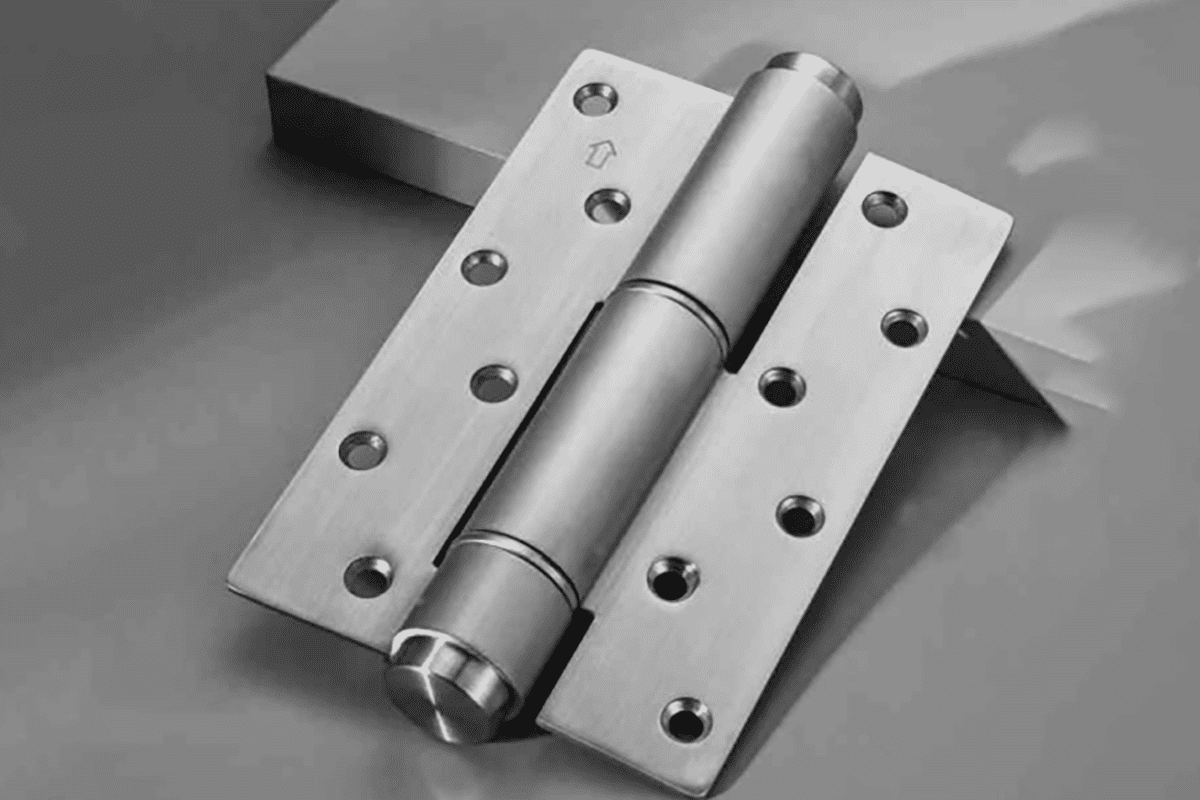
A door closer also changes the situation. Closers can add controlled force to the door cycle.6 If the closer is set too aggressively, the hinge may experience stronger closing stress. In this case, the hinge, lock, closer, frame, and installation should be evaluated together.
Installation accuracy can make or break the hinge
Even good Hinge-bearing technologies cannot save a badly installed door.7 If the hinge recess is too deep, too shallow, or not aligned vertically, the hinge leaves may twist. If the frame is not straight, the door can bind. If screws are weak or the fixing base is poor, the hinge may loosen.
This is why batch buyers should not only ask, “What is the load capacity?” They should also ask, “How stable is the hinge when installed in real production?”
Useful checks include:
- Does the hinge leaf sit flat?
- Are the screw holes consistent?
- Is the pin axis straight across all hinges?
- Do the knuckles rotate smoothly without shaking?
- Does the hinge match the door and frame preparation?
- Are installation drawings available after order confirmation?
At SDH Hardware, we often prepare detailed product drawings for confirmed orders because small dimensional differences can affect door factory production. Buyers should always confirm these drawings before batch manufacturing.
Environment also matters
The working environment affects hinge selection. For humid areas, coastal regions, or high-use commercial spaces, material and surface treatment become important.8 Stainless steel hinges may be preferred for corrosion resistance, while other projects may accept plated steel depending on budget and exposure.
Here is a practical selection table:
| Application factor | Why it matters | Buyer action |
|---|---|---|
| Heavy door | Higher vertical load | Use stronger hinge structure and suitable leaf thickness |
| Wide door | Higher leverage stress | Do not rely on weight rating alone |
| High traffic | More wear cycles | Consider bearing structure and stable assembly |
| Door closer | Adds cycle force | Check hinge compatibility with closer use |
| Humidity or coastal air | Corrosion risk | Verify material grade and finish |
| Fire-rated project | Compliance risk | Verify certification, test scope, and door set configuration |
| Poor frame tolerance | Alignment risk | Improve installation control before blaming hinge design |
Hinge selection is a system decision. The hinge carries the door, but the door, frame, closer, screws, and installer all influence the final result.
Which hinge-bearing designs fit common project use cases?
Buyers often ask for a “ball bearing hinge” without knowing whether that structure fits the project. This creates confusion because bearing-related hinge designs can vary by market, price level, and door application. The better question is how each design supports a real use case.
Common hinge-bearing designs should be selected by use case, not by name alone. Ball bearing hinges often suit heavier or more frequently used doors. Plain bearing or standard hinges may suit lighter interior doors. Concealed or specialty hinges require closer review of door structure, adjustment needs, and installation accuracy.
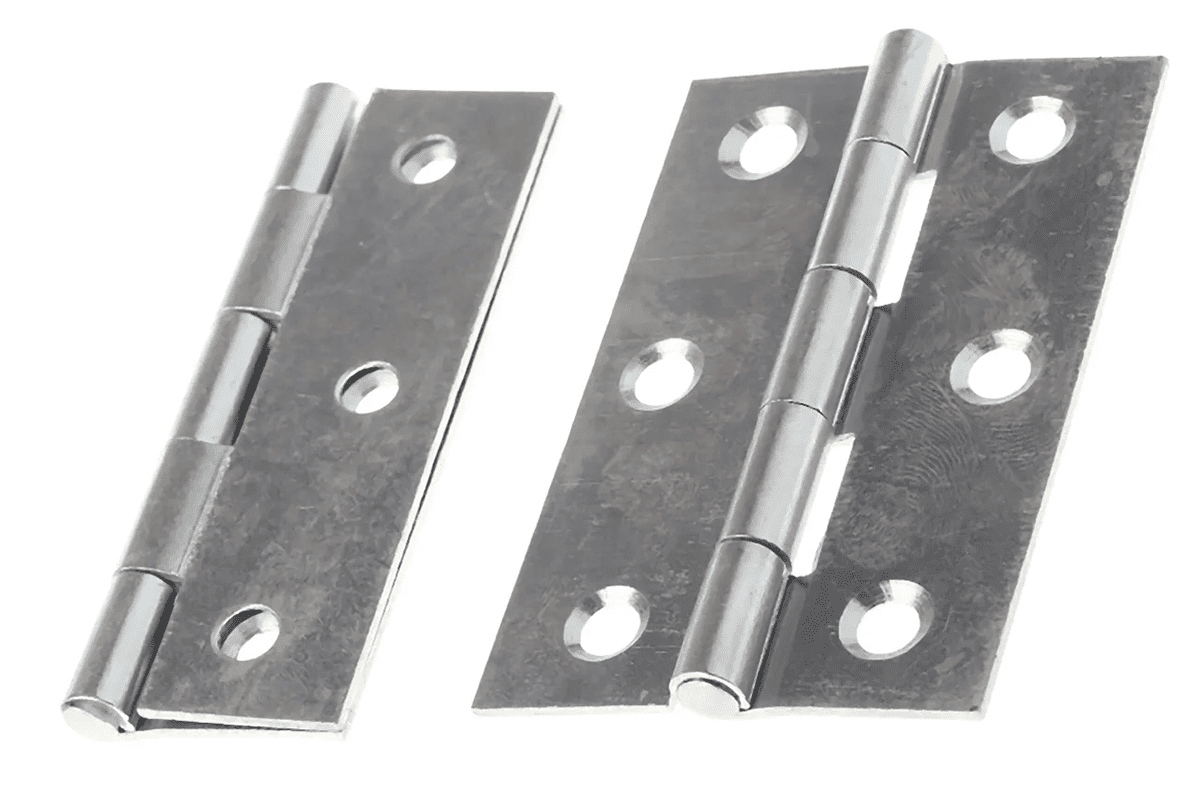
Ball bearing butt hinges
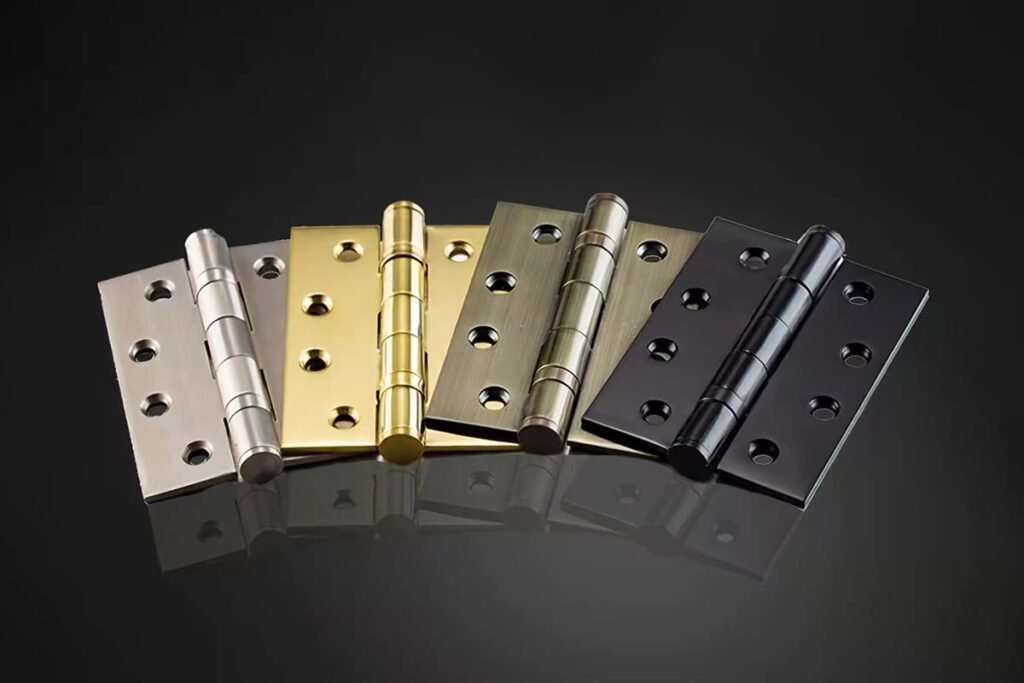
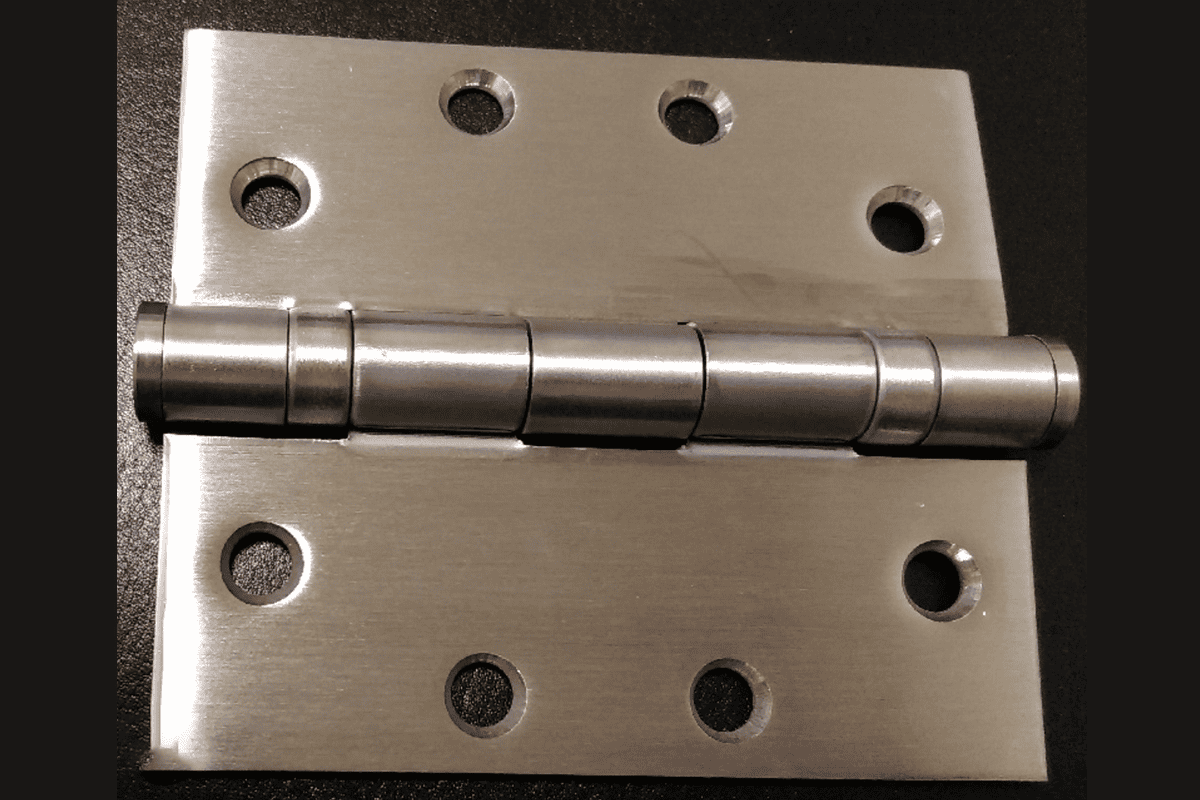
Ball bearing butt hinges are one of the most familiar bearing hinge types in architectural door hardware. They usually include bearings between hinge knuckles to reduce friction during door rotation.9 Buyers often specify them for heavier timber doors, apartment entry doors, hotel doors, and commercial interior doors.
They can be useful when the project needs:
- Smoother movement
- Better wear resistance under repeated cycles
- Reduced squeaking risk
- More stable door operation
- A stronger quality perception
However, a ball bearing hinge is not automatically high quality. I have seen samples where the bearing idea was correct, but the total hinge quality was weak. The leaf was thin, the pin fit was loose, or the plating was inconsistent. In those cases, the word “bearing” did not protect the project.
Plain bearing and standard butt hinges
Standard butt hinges, including plain bearing designs, can still be practical. They are often used for lighter interior doors, wardrobe doors, utility doors, or projects where opening frequency is low.
Buyers should not dismiss them too quickly. A well-made standard hinge can outperform a poorly made bearing hinge in some low-duty applications. The question is not “bearing or non-bearing?” The question is “what performance does the door really need?”
Concealed hinges and bearing considerations
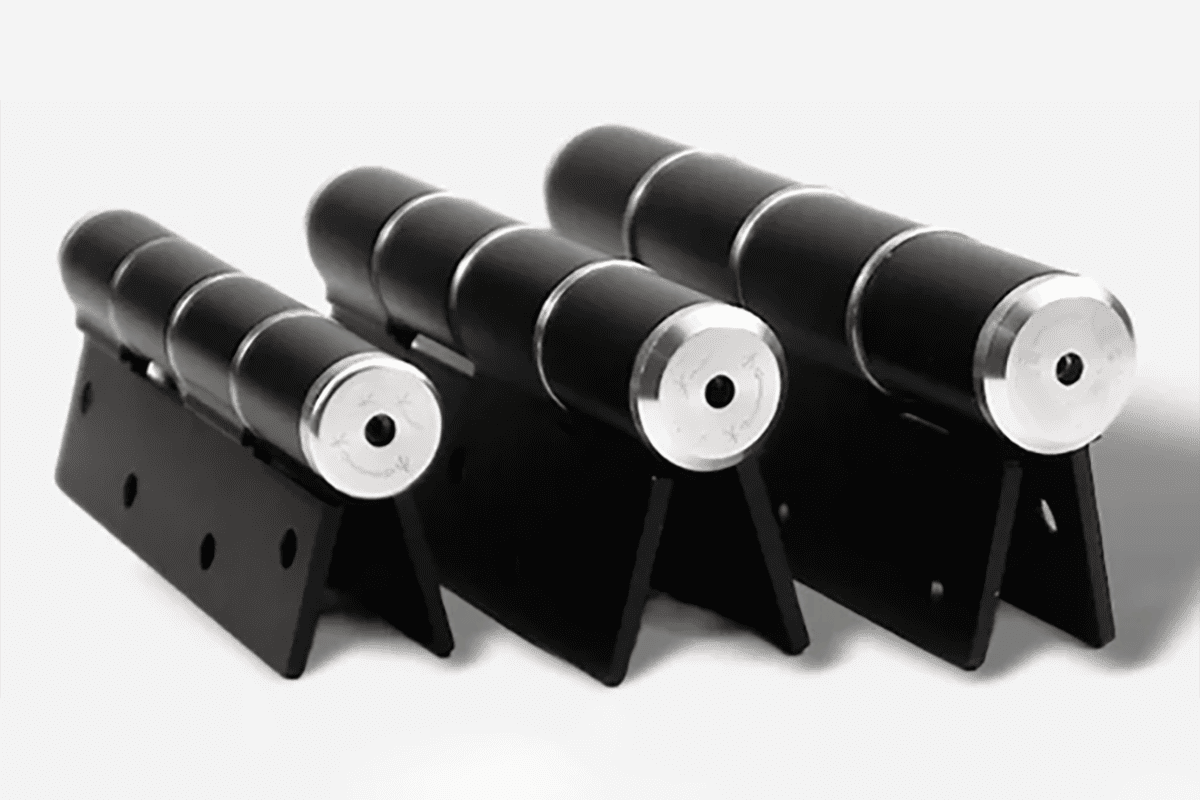
Concealed door hinges are a different category. They are often selected for clean design, flush doors, premium interiors, or hidden hardware requirements. Some concealed hinges include internal pivot and bearing-related structures, but their selection depends heavily on door preparation and installation accuracy.
For concealed hinges, buyers should review:
- Door thickness compatibility
- Frame material and preparation
- Adjustment range
- Opening angle
- Load rating under the specific door size
- Fire-rated documentation if required
- Installation skill level
Concealed hinges are less forgiving than simple butt hinges.10 If the door factory or installer does not control routing accuracy, the final operation can suffer. For batch orders, I recommend sample fitting before confirming large production.
Bearing washers and intermediate designs
Some hinges use washers or low-friction components rather than full ball bearing assemblies. These designs can offer a middle ground. They may improve movement compared with basic hinges while keeping cost lower than premium bearing hinges.
They may fit:
- Medium-duty interior doors
- Residential projects with moderate use
- Cost-sensitive doors that still need smoother action
- Markets where buyers prefer visible quality upgrades
Again, the best choice depends on real working conditions.
Use-case comparison table
| Hinge design | Typical use case | Main advantage | Main caution |
|---|---|---|---|
| Standard butt hinge | Light interior doors | Simple and cost-effective | Not ideal for heavy or high-use doors |
| Plain bearing hinge | Medium-use doors | Stable basic movement | Quality depends on machining accuracy |
| Ball bearing butt hinge | Heavy or frequent-use doors | Smoother rotation and reduced friction | Poor materials can still fail |
| Washer-type hinge | Medium-duty projects | Balance between cost and smoothness | Check washer durability and assembly |
| Concealed hinge | Flush design and premium interiors | Hidden appearance and adjustability | Requires accurate preparation |
| Fire-rated hinge | Fire door assemblies | Compliance with tested door systems | Verify certification scope carefully |
My practical selection rule
When I discuss samples with importers or door manufacturers, I usually divide the decision into three levels:
- Basic function: The hinge must fit the door, carry the load, and rotate smoothly.
- Project risk: The hinge must reduce complaints from noise, sagging, wear, or rough operation.
- Market positioning: The hinge must match the customer’s price level, brand expectation, and documentation needs.
This approach prevents buyers from choosing based on product names alone. It also prevents unnecessary upgrades. Hinge-bearing technologies should support the door’s purpose, not decorate a quotation sheet.
How do manufacturing quality controls affect Hinge-bearing technologies?
A bearing hinge can fail to meet expectations if the manufacturing process is unstable. Buyers may compare bearing types, but production details often decide the final result. Material thickness, machining precision, pin alignment, assembly pressure, and inspection standards all affect performance.
Manufacturing quality control affects Hinge-bearing technologies by determining whether the hinge rotates smoothly, carries load consistently, resists looseness, and maintains stable surface quality.11 Bearing type matters, but material selection, knuckle forming, pin fit, assembly consistency, and finished product inspection are equally important.
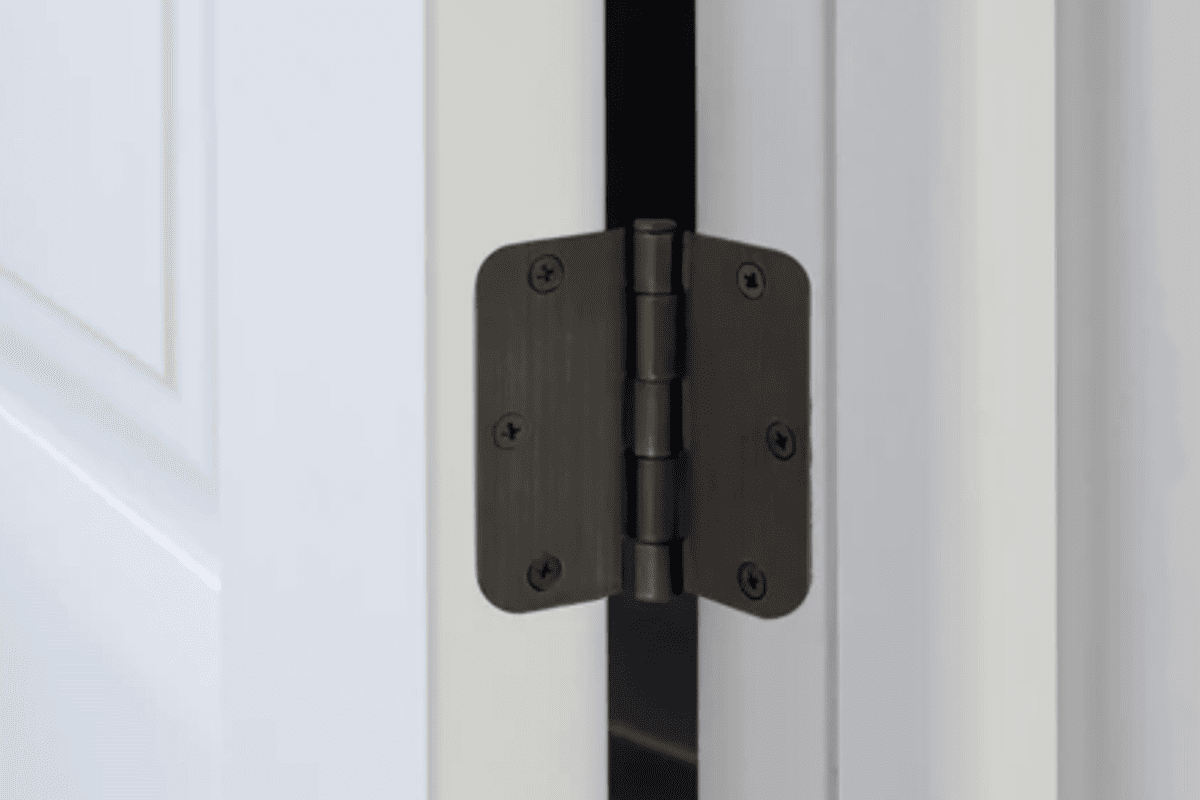
Material selection comes first
The hinge starts with material. Stainless steel, steel, brass, and other materials each have different strength, corrosion resistance, and cost profiles. For architectural door hardware, buyers should confirm material grade, leaf thickness, and surface finish requirements before production.
A hinge with a bearing structure but weak material can still deform. A hinge with good material but poor machining can still rotate badly. The product must be balanced.
Key material points include:
- Leaf thickness: Thin leaves may flex under stress.
- Material grade: Stainless steel grade should match corrosion expectations.
- Hardness and strength: The material should support the intended door load.
- Surface treatment: Finish should match the environment and market standard.
- Consistency: Batch-to-batch variation should be controlled.
Machining precision affects rotation
Hinge movement depends on alignment. The knuckles, pin, bearing position, and leaf flatness must work together. If the hinge axis is not straight, the door may feel tight or uneven. If the clearance is too large, the hinge may shake. If the clearance is too small, the hinge may bind.
In production, small differences can become big problems after installation. Door factories need hinges that behave consistently across many doors, not just one good sample.
Important machining checks include:
- Knuckle roundness
- Pin diameter consistency
- Bearing seat accuracy
- Leaf flatness
- Hole positioning
- Countersink accuracy
- Edge finishing
These checks sound basic, but they are the difference between a smooth batch order and a complaint-heavy project.
Assembly consistency matters
Bearing hinges require careful assembly. The bearing components must sit correctly. The pin must be inserted straight. The hinge should rotate freely without excessive looseness. If workers over-press or under-press components, the hinge may feel different from piece to piece.
At our factory, we place strong attention on production supervision and finished inspection because overseas buyers often judge quality from consistency. One excellent sample is not enough. The batch must match the approved sample.
For ODM and OEM buyers, I recommend confirming:
- Golden sample approval
- Product drawings
- Material specifications
- Surface finish standard
- Packaging method
- Logo or stamping position
- Inspection criteria before shipment
This process reduces misunderstanding. It also helps both sides define what “qualified” means.
Inspection should include function, not only appearance
Appearance inspection is necessary, but it is not enough. A hinge may look clean and still rotate poorly. Buyers should ask how the supplier checks hinge function.
Common inspection points include:
| Inspection item | Why it matters | What buyers should request |
|---|---|---|
| Visual finish | Market acceptance | Consistent color, no obvious scratches |
| Leaf flatness | Installation stability | Flat contact with door and frame |
| Hole position | Door factory efficiency | Match confirmed drawing |
| Rotation smoothness | User experience | No rough grinding feeling |
| Axial looseness | Long-term stability | Controlled clearance |
| Pin retention | Safety and durability | Stable pin assembly |
| Packaging protection | Shipping quality | Avoid scratches and deformation |
Certification documents should be verified
For CE-marked or fire-rated hardware, buyers should verify the relevant certificates, test reports, product scope, and applicable standards. A certificate should not be treated as a general promise for every door condition. Fire-rated performance, in particular, depends on the tested door assembly and configuration.12
As a manufacturer, I can support documentation review and product matching, but project-specific compliance decisions should involve qualified professionals, local authorities, or certified testing bodies where required. This is especially important for fire doors, public buildings, and regulated markets.
Manufacturing quality control turns hinge-bearing technologies from a concept into a dependable product. Without stable production, even a good design can become risky in batch sourcing.
What should buyers ask suppliers before ordering hinge-bearing hinges?
A buyer can receive many similar-looking hinge quotations. The prices may differ by only a small amount, but the actual performance can be very different. If the buyer only compares size and price, hidden risks may appear after installation or shipment.
Buyers should ask suppliers about door application, material, thickness, bearing structure, production tolerance, inspection method, certification scope, sample approval, packaging, and batch consistency. These questions help identify whether the hinge is suitable for the project instead of merely matching a catalog description.
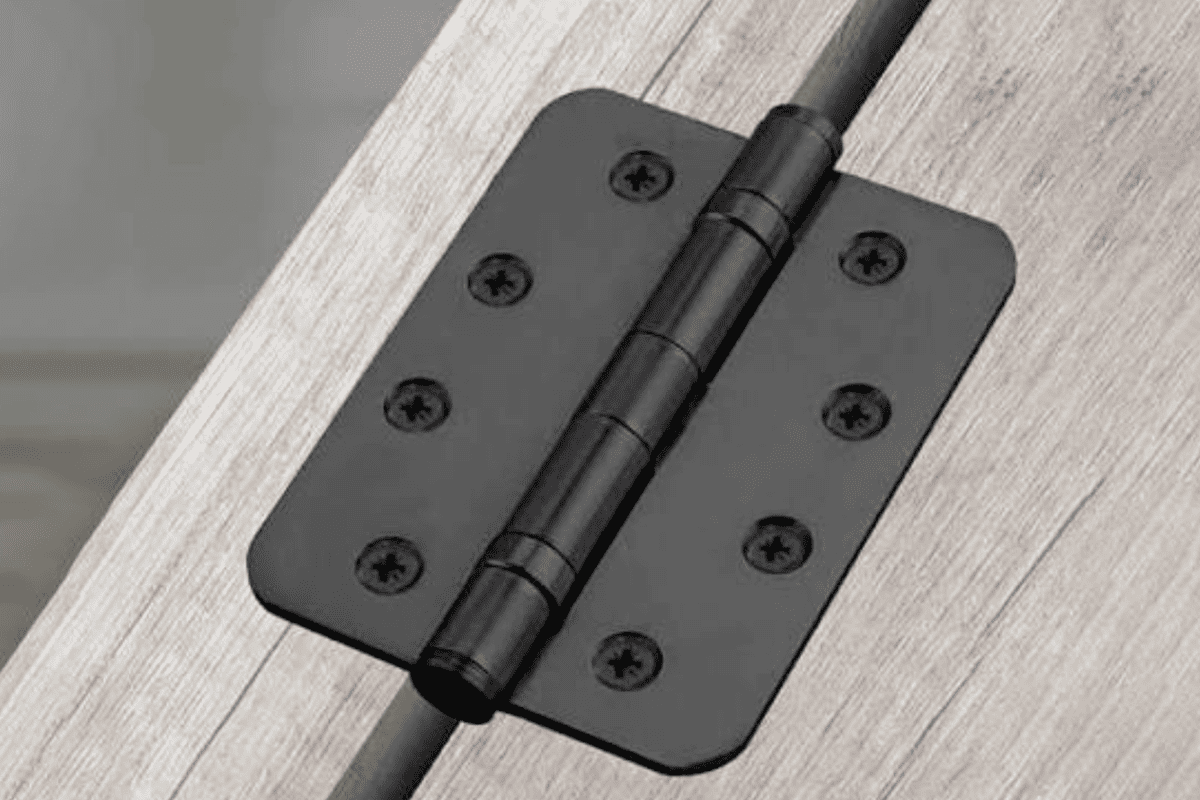
Questions about application fit
Before discussing final price, I suggest asking the supplier these questions:
- What door weight and size is this hinge usually used for?
- How many hinges are recommended per door?
- Is the hinge suitable for high-frequency use?
- Can it be used with a door closer?
- Is it intended for timber, steel, or aluminum doors?
- Does the hinge need special installation preparation?
- Is there a tested or recommended door thickness range?
These questions shift the conversation from product name to product suitability.
Questions about structure and material
The next step is to clarify construction. Many hinges look similar in photos. The difference is often inside the knuckle, bearing area, pin, or material.
Ask about:
- Material grade
- Leaf thickness
- Pin diameter
- Bearing type or washer structure
- Knuckle quantity and shape
- Screw type and size
- Surface treatment
- Salt spray or corrosion testing if relevant
- Fire-rated or CE documentation if required
If the supplier cannot explain these details clearly, the buyer should be careful. A reliable factory should understand how its product is made and where it should be used.
Questions about quality control
For batch orders, quality control is as important as the hinge design. A sample may be hand-selected. A shipment must be consistently produced.
Useful quality questions include:
| Buyer question | Reason |
|---|---|
| Do you inspect raw materials before production? | Material affects strength and finish |
| Do you control hole position by drawing? | Door factories need dimensional consistency |
| Do you test rotation smoothness? | Function matters after installation |
| Do you check leaf flatness? | Poor flatness causes fitting issues |
| Do you inspect finished goods before packing? | Prevents batch defects |
| Can you provide inspection photos or reports? | Helps remote buyers reduce risk |
| Can you keep approved samples for comparison? | Supports repeat orders |
Conclusion
Hinge-bearing technologies should be selected as an application decision, not as a simple upgrade label. Buyers should review door weight, size, traffic level, installation accuracy, environment, and compliance needs before choosing a hinge structure. Manufacturing quality also matters because material, machining, assembly, and inspection decide batch performance. If you are sourcing hinges for door production, hardware branding, or wholesale projects, I recommend starting with your door specifications and sample requirements. SDH Hardware can support factory-direct hinge selection, customization, drawings, and inspection for qualified B2B orders.
"Rolling-element bearing", https://en.wikipedia.org/wiki/Rolling-element_bearing. A mechanical-engineering source on rolling-element bearings explains that rolling contact is used to reduce friction in rotating mechanisms, supporting the article’s general statement that bearing structures can improve hinge movement. Evidence role: mechanism; source type: education. Supports: A neutral engineering source should explain that rolling-element bearings reduce friction by replacing sliding contact with rolling contact in rotating assemblies.. Scope note: The source would support the mechanical principle rather than prove performance for a specific hinge model or installation. ↩
"A156.1 - 2025 Butts and Hinges", https://buildershardware.com/ANSI-BHMA-Standards/Hardware-Highlights/A1561-2025-Butts-and-Hinges. Door-hardware standards classify hinges by application-related factors such as door mass and durability cycles, which supports the view that a bearing feature alone does not determine suitability. Evidence role: expert_consensus; source type: institution. Supports: A door-hardware standard or institutional guide should show that hinges are classified or selected by parameters such as door mass, usage grade, durability cycles, and application conditions.. Scope note: The source would provide standards-based context rather than a direct comparison of all bearing and non-bearing hinge types. ↩
"087100 – DOOR HARDWARE - Facilities and Campus Services", https://fcs.cornell.edu/087100-door-hardware. Institutional door-hardware guidance and hinge standards distinguish hinge requirements by duty level and use conditions, supporting the article’s contextual claim that lighter, low-frequency doors may not require bearing hinges. Evidence role: general_support; source type: institution. Supports: A standards or institutional source should support that hinge performance requirements vary by duty level, door mass, and use frequency.. Scope note: The source would not necessarily state that a standard hinge is always cheaper; cost depends on market and specification. ↩
"Torque - Simple English Wikipedia, the free encyclopedia", https://simple.wikipedia.org/wiki/Torque. Introductory mechanics sources define torque as the product of force and lever arm distance, supporting the article’s explanation that a wider door can impose greater turning moment on its hinges. Evidence role: mechanism; source type: education. Supports: A mechanics source should explain that torque or moment increases as the perpendicular distance from the axis of rotation increases.. Scope note: The source supports the physical principle; actual hinge loading also depends on door mass distribution, hinge spacing, installation, and dynamic use. ↩
"SECTION 087111 - DOOR HARDWARE (SCHEDULED BY ...", https://fpm.usc.edu/wp-content/uploads/2021/11/087102-USC-HSC-door-hardware-Guide-Specification_1.pdf. Hinge standards use durability-cycle classifications or tests, supporting the article’s claim that a frequently operated door creates different performance requirements from a low-use door. Evidence role: general_support; source type: institution. Supports: A hinge standard should show that durability is evaluated through cycle testing and that usage intensity is a recognized selection factor.. Scope note: The cited standard would validate the relevance of cycle frequency but not the specific example values of 20 and 500 openings per day. ↩
"087100 – DOOR HARDWARE - Facilities and Campus Services", https://fcs.cornell.edu/087100-door-hardware. Technical descriptions of door closers state that they regulate the closing movement of a door through controlled spring or hydraulic action, supporting the article’s point that closer settings can affect the operating cycle. Evidence role: mechanism; source type: institution. Supports: A neutral source should explain that door closers use spring or hydraulic mechanisms to control closing motion and force.. Scope note: The source would establish the closer mechanism, not quantify the additional stress on a particular hinge installation. ↩
"SDI 122-21", https://steeldoor.org/sdi-122/. Building-installation guidance emphasizes that doors and frames must be plumb, square, and properly aligned for hardware to operate correctly, supporting the article’s claim that hinge design cannot fully compensate for poor installation. Evidence role: general_support; source type: education. Supports: An educational or building guidance source should support that improper door or frame alignment can cause binding, rubbing, or hardware malfunction.. Scope note: The source would support the general installation principle rather than evaluate bearing hinges specifically. ↩
"Projections of corrosion and deterioration of infrastructure ...", https://www.nist.gov/publications/projections-corrosion-and-deterioration-infrastructure-united-states-coasts-under. Materials-science sources describe moisture and chloride-rich coastal environments as corrosion risks for metals, supporting the article’s statement that hinge material and finish become important in humid or coastal applications. Evidence role: mechanism; source type: government. Supports: A government or materials-science source should explain that moisture and chloride exposure accelerate corrosion and that material choice affects corrosion resistance.. Scope note: The source would explain corrosion mechanisms generally and may not address a specific hinge finish or stainless-steel grade. ↩
"Hinge", https://en.wikipedia.org/wiki/Hinge. Reference descriptions of ball-bearing hinges identify the bearing elements at the hinge pivot or knuckle as a friction-reducing feature, supporting the article’s definition of this hinge type. Evidence role: definition; source type: encyclopedia. Supports: A neutral reference should define ball bearing hinges as hinges that use ball bearings at the knuckle or pivot to reduce friction.. Scope note: The source would support the general design definition, not the quality or durability of any particular product. ↩
"Concealed Hinge Jig Makes Cabinet Door Installation Easy", https://www.facebook.com/kregjig/videos/this-economical-easy-to-use-concealed-hinge-jig-takes-the-guesswork-out-of-hinge/767038445997953/. Technical guidance for concealed hinges specifies precise mortising, routing, and alignment requirements, supporting the article’s contextual claim that concealed hinges are less tolerant of preparation errors than simpler butt hinges. Evidence role: general_support; source type: institution. Supports: A technical hardware or institutional source should show that concealed hinges require specific mortising, routing, alignment, or adjustment procedures.. Scope note: The source would support the installation-sensitivity comparison in general terms; tolerance varies by hinge design. ↩
"Engineering fit", https://en.wikipedia.org/wiki/Engineering_fit. Quality-management and mechanical-engineering sources describe process control, tolerances, and inspection as determinants of consistent product conformity and functional fit, supporting the article’s claim that manufacturing control affects bearing-hinge performance. Evidence role: general_support; source type: institution. Supports: A quality-management or mechanical-engineering source should support that controlled tolerances, inspection, and process consistency affect conformity and functional performance in manufactured assemblies.. Scope note: The source would support the general manufacturing principle rather than provide hinge-specific performance data. ↩
"Fire Doors and NFPA 80 FAQs", https://www.nfpa.org/news-blogs-and-articles/blogs/2025/04/11/fire-doors-faqs. Fire-door standards and certification guidance treat fire resistance as a property of a tested door assembly, including its hardware and configuration, supporting the article’s warning that a certificate should not be generalized to every door condition. Evidence role: expert_consensus; source type: institution. Supports: A fire-door standard or certification source should support that fire-door ratings apply to tested assemblies with specified components and configurations.. Scope note: The source would establish the compliance principle; project approval still depends on local code requirements and the exact listed assembly. ↩
