
Slim Mortise Locks For Aluminium Slim Frame Doors: Constraints & Risks
Slim mortise locks for aluminium slim frame doors can look simple on a drawing, but the wrong choice can create fitting problems, weak fixing, and security risks. I often see buyers focus on the narrowest body or the lowest price. A safer approach is to evaluate the lock together with the aluminium profile, handle, cylinder, and faceplate.
Slim mortise locks for aluminium slim frame doors should be selected by profile compatibility, not only by lock width. Buyers should confirm the backset, lock case width, handle through-bolt fixing, screw hole alignment, and faceplate type with drawings and samples before batch production. A narrow lock can still fail if it weakens the profile or fits poorly.
In our production and sample-confirmation work at SDH Hardware, the same problem appears often: one dimension looks correct, but the full hardware set does not work well together. The details below explain where the main risks usually start and how buyers can control them before large orders.
Why Should Slim Mortise Locks Be Matched To The Aluminium Profile First?
A buyer may want one standard lock for many doors, but aluminium slim frame doors rarely allow that decision to be made from the lock catalogue alone.1 The profile cavity, wall thickness, reinforcement, and door edge design all affect whether the lock can be installed safely.
Slim mortise locks should be matched to the aluminium profile before price or appearance is considered. The profile determines the possible backset, lock case width, faceplate type, screw position, and handle fixing method. If the lock does not match the profile, the door may need excessive cutting or may lose installation strength.
The lock and profile are one system
I do not treat slim mortise locks as isolated products. In many slim frame door applications, the lock body becomes part of a very narrow structural space. The aluminium profile must hold the lock, support the handle load, accept the cylinder position, and maintain enough edge strength around the cut-out.
That means the “right” lock is not always the narrowest lock. It is the lock that fits the profile geometry with the least compromise.
Key profile details usually include:
- Internal cavity width
- Door stile width
- Profile wall thickness
- Reinforcement position
- Door edge shape
- Available screw fixing area
- Required faceplate seat
- Handle and cylinder center line
When I review a new slim aluminium door project, I prefer to start with the door profile drawing. A product photo or lock body width is not enough. A 25 mm backset lock, for example, may sound suitable for a narrow profile, but the cylinder cam, handle follower, or fixing screws may still conflict with the aluminium structure.2
Profile compatibility checklist
| Check item | Why it matters | Risk if ignored |
|---|---|---|
| Backset | Positions handle and cylinder inside the profile | Awkward operation or excessive cutting |
| Lock case width | Determines whether the lock body can sit correctly | Lock cannot seat fully or weakens the stile |
| Faceplate type | Controls door edge fit and protection | Poor edge support or reduced anti-pry resistance |
| Handle fixing holes | Supports long-term handle stability | Handle loosening after repeated use |
| Strike alignment | Affects latch and bolt engagement | Poor closing or weak locking |
A slim lock that works in one aluminium system may not work in another. This is why I recommend buyers confirm by technical drawing + physical sample + installation trial, especially before standardizing a lock model for multiple door series.
In practical procurement, profile matching is not a small engineering detail. It is the foundation of stable installation, repeatable production, and acceptable security performance.
How Do Backset Constraints Affect Slim Mortise Locks?
Backset is easy to list in a quotation, but it is harder to validate in the door. If the backset does not match the aluminium profile, the lock may technically enter the door while the handle, cylinder, or screw fixing points end up in the wrong position.
Backset affects how slim mortise locks sit inside the aluminium profile and how the user operates the door. A suitable backset keeps the handle and cylinder in a usable position without forcing excessive profile cutting. Buyers should confirm backset from the profile drawing, not only from preferred market habits.
Backset is not just a buyer preference
Many markets have common backset preferences. Some buyers ask for 20 mm, 25 mm, 30 mm, or 35 mm because their existing door series uses those values. That is understandable. However, aluminium slim frame doors do not always allow the preferred size.
The backset must work with:
- The aluminium stile width
- The internal profile chamber
- The glass or panel position
- The handle rose or plate size
- The cylinder position
- The screw fixing points
- The latch and deadbolt engagement line
If the backset is too small, the handle may sit too close to the door edge.3 This can affect hand clearance, handle appearance, and fixing strength. The lock case may also sit too near the profile wall, leaving little material around the opening.
If the backset is too large, the lock may move toward the inner side of the profile. The buyer may need to cut more aluminium than intended. In some profiles, the lock case can interfere with reinforcement, glazing beads, thermal break structures4, or other internal features.
Practical comparison of backset risks
| Backset condition | Possible benefit | Possible risk |
|---|---|---|
| Too small | Fits narrow stile visually | Weak edge material, tight handle clearance, unstable fixing |
| Too large | Better hand clearance in some doors | Excessive cutting, internal conflict, awkward cylinder position |
| Correct for profile | Balanced installation | Requires drawing and sample confirmation |
| Chosen only by habit | Easy procurement decision | Higher chance of batch fitting problems |
I usually ask for three documents
When a customer asks us to develop or supply slim mortise locks for a new aluminium slim frame door, I usually ask for:
- Door profile cross-section drawing
- Current or target lock drawing
- Handle and cylinder specification
These documents help us check whether the requested backset is realistic. If the customer has an existing sample door, I also suggest a fitting trial before confirming batch production.
Backset mistakes are expensive because they do not always appear during simple desktop review. One sample can seem acceptable if it is installed carefully by an experienced technician. However, a production line may expose the real problem. Workers may need extra time to adjust the opening. Screw holes may shift slightly. Handles may not sit flat. The latch may not meet the strike correctly.
For procurement teams, the lesson is simple: do not approve a backset only because it appears in the catalogue. Confirm it against the aluminium system, the handle set, and the intended manufacturing tolerance.
Why Is Lock Case Width A Structural Risk In Slim Mortise Locks?
A slim lock body may look suitable because the catalogue shows a narrow case. However, the real issue is whether the lock case can sit inside the profile while leaving enough aluminium around it. If the cavity is too tight, installation strength can suffer.
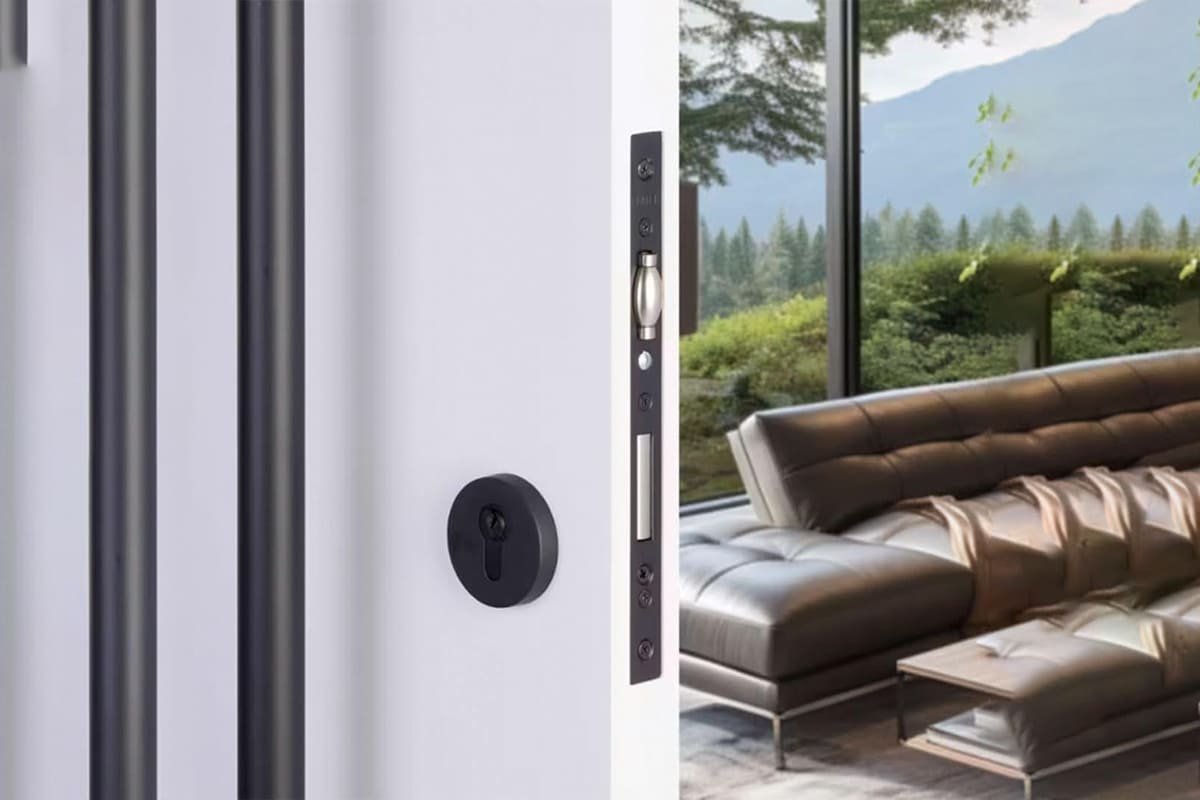
Lock case width is a structural constraint for slim mortise locks because the aluminium profile must hold the lock without losing too much material.5 A lock can be “slim” on paper but still unsuitable if the case conflicts with the cavity, reinforcement, screw points, or door edge strength.
Narrow does not always mean safe
I have seen projects where the buyer searched for the thinnest lock body first. That approach can help in some slim door systems, but it can also hide the real risk. The lock case must not only enter the profile. It must sit correctly, align with the faceplate, allow stable screw fixing, and support normal operation over time.
A narrow aluminium profile may have internal walls, ribs, or chambers that limit usable space. The outside stile width can look generous, while the internal cavity is much smaller. This is common in aluminium systems designed for strength, drainage, thermal performance, or visual minimalism.
The buyer should check both:
- External visible stile width
- Internal usable cavity for the lock body
These two dimensions are not the same.
What happens when the lock case is poorly seated?
A poorly seated lock case can create several problems:
- The lock may twist slightly inside the profile.
- The faceplate may not sit flush on the edge.
- Screws may pull against thin aluminium walls.6
- The latch and deadbolt may not move smoothly.
- The handle spindle may bind under pressure.
- The door edge may lose strength after cutting.
These issues are not always obvious in the first installation. They may appear after repeated use, transport vibration, on-site adjustment, or seasonal movement. In commercial procurement, this matters because the buyer is not evaluating only one showroom sample. The buyer is evaluating repeatable performance across a batch.
Lock case width review table
| Review point | What I check | Why it matters |
|---|---|---|
| Case width | Actual lock body thickness and side clearance | Prevents forced installation |
| Case height | Space needed for latch, bolt, follower, and cylinder | Avoids internal conflict |
| Cut-out size | Aluminium removed from the profile | Protects stile strength |
| Screw area | Remaining material around fixing points | Improves installation stability |
| Faceplate seat | Edge surface for plate contact | Keeps lock aligned and protected |
Tolerance is part of the decision
In batch production, tolerance can decide whether a lock is practical.7 A sample profile may be slightly different from the batch profile. A lock opening may be cut with small variation. The faceplate or screw holes may shift within production tolerance. These small changes can add up.
For this reason, I prefer to leave practical clearance where the profile allows it. I also recommend that buyers confirm the maximum and minimum profile tolerance with their extrusion supplier. If the lock only fits when every part is perfect, the design may be too risky for normal production.
This is also why SDH Hardware treats sample approval as one step, not the final guarantee. We can help check lock body fitting, but the door manufacturer should still confirm the complete assembly under real production conditions.
How Can Handle Fixing Create Problems In Slim Mortise Locks?
Handle fixing may seem like an accessory detail, but it strongly affects user experience. Slim aluminium doors often have limited material around the lock area. If the handle is not fixed correctly, the set can loosen even when the lock body itself is acceptable.
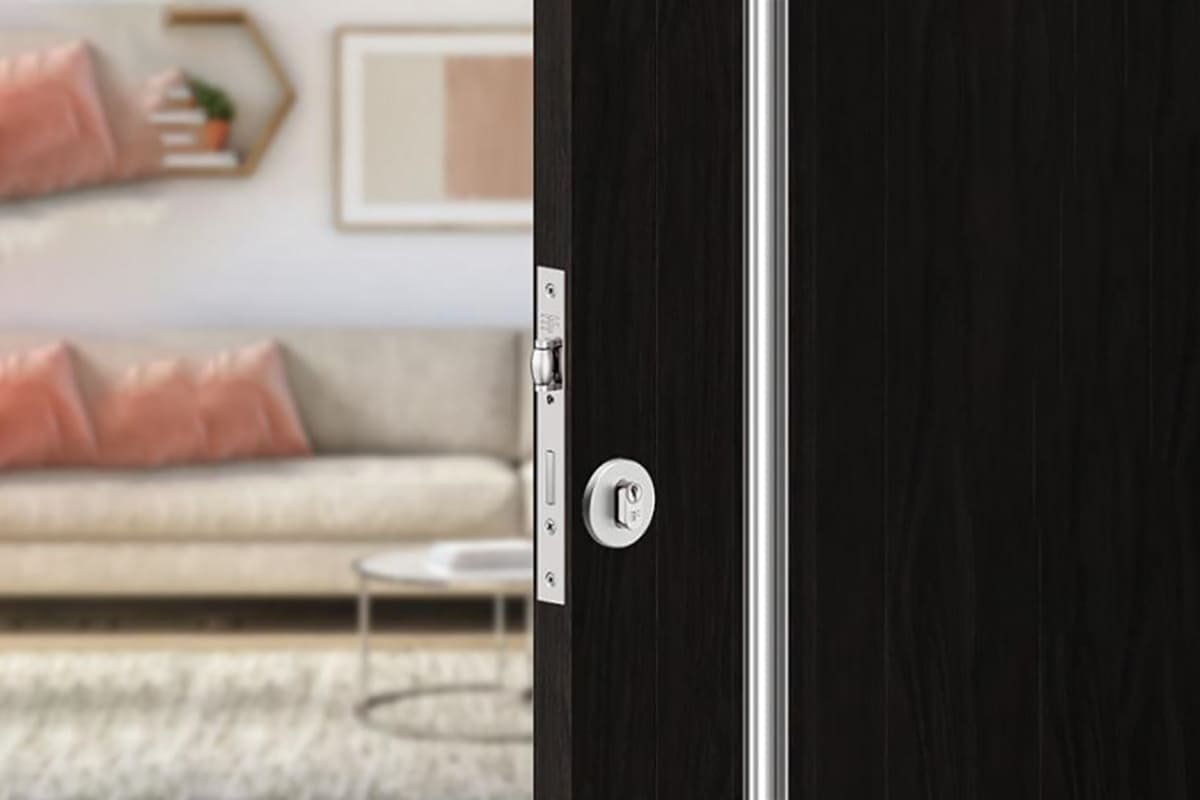
Handle fixing creates risk in slim mortise locks because narrow aluminium profiles may not support weak or mismatched screw methods. Through-bolt fixing is often required for stable handle installation. Buyers should confirm handle screw holes, lock case clearance, spindle size, and fixing direction before approving samples.
The handle carries daily force
Users touch the handle more than any other part of the lock set. They pull, push, twist, and sometimes hang weight on it. In a slim aluminium door, this force transfers through a smaller fixing area than in a wider timber or steel door.
That is why handle fixing cannot be treated as a minor item.
In many slim frame door applications, I look for the correct through-bolt screw holes when the handle design requires them. Through-bolts can connect the two handle sides more securely.8 They reduce dependence on thin aluminium skin or small local screw bite.
However, the lock case must allow those bolts to pass. If the screw holes in the handle, lock case, and profile do not align, installers may improvise. That is where risk begins.
Common handle fixing problems
- The handle screw holes do not match the lock case.
- The through-bolts hit the lock body.
- The rose or plate cannot sit flat on the profile.
- The spindle is too long, too short, or poorly supported.
- The fixing screws bite into weak aluminium only.
- The handle becomes loose after repeated use.
- The cylinder or handle position looks awkward.
Fixing method comparison
| Fixing method | Typical use | Main concern in slim aluminium doors |
|---|---|---|
| Wood-type screws into door material | Some light-duty doors | Aluminium may not provide enough bite |
| Grub screw on spindle/handle | Secondary fixing | Not enough for main load alone |
| Through-bolt fixing | Many stable lever handle sets | Requires correct hole alignment and lock clearance |
| Custom fixing plate | Special profiles or projects | Requires careful design and sample testing |
Handle compatibility must be checked with the lock
A buyer may source the lock from one factory and the handle from another. This can work, but it needs coordination. The handle’s fixing centers, rose diameter, spindle size, spring cassette, and screw length must match the lock and the door profile.
At SDH Hardware, we often support customers with complete hardware matching because one-stop sourcing reduces this kind of mismatch. Even so, I still advise buyers to verify all dimensions before batch production.
A practical handle review should include:
- Follower size, such as 8 mm where applicable.
- Spindle length, based on door thickness.
- Through-bolt center distance, based on handle design.
- Screw path clearance, based on lock case drawing.
- Handle rose or plate coverage, based on door cut-out.
- Surface finish compatibility, based on market or project demand.
If the handle fixing is weak, the user may blame the lock, even when the lock mechanism is functioning. For importers and hardware brands, this can create warranty pressure. For door manufacturers, it can create after-sales installation problems.
So, I treat handle fixing as part of the lock selection, not a separate purchase decision.
Why Does Faceplate Type Matter For Fit And Security?
Faceplate type is easy to overlook because flat and U-shaped faceplates may appear similar in product photos. In actual aluminium profiles, they are not interchangeable. The faceplate affects how the lock sits, how the door edge is covered, and how the lock area resists prying.9
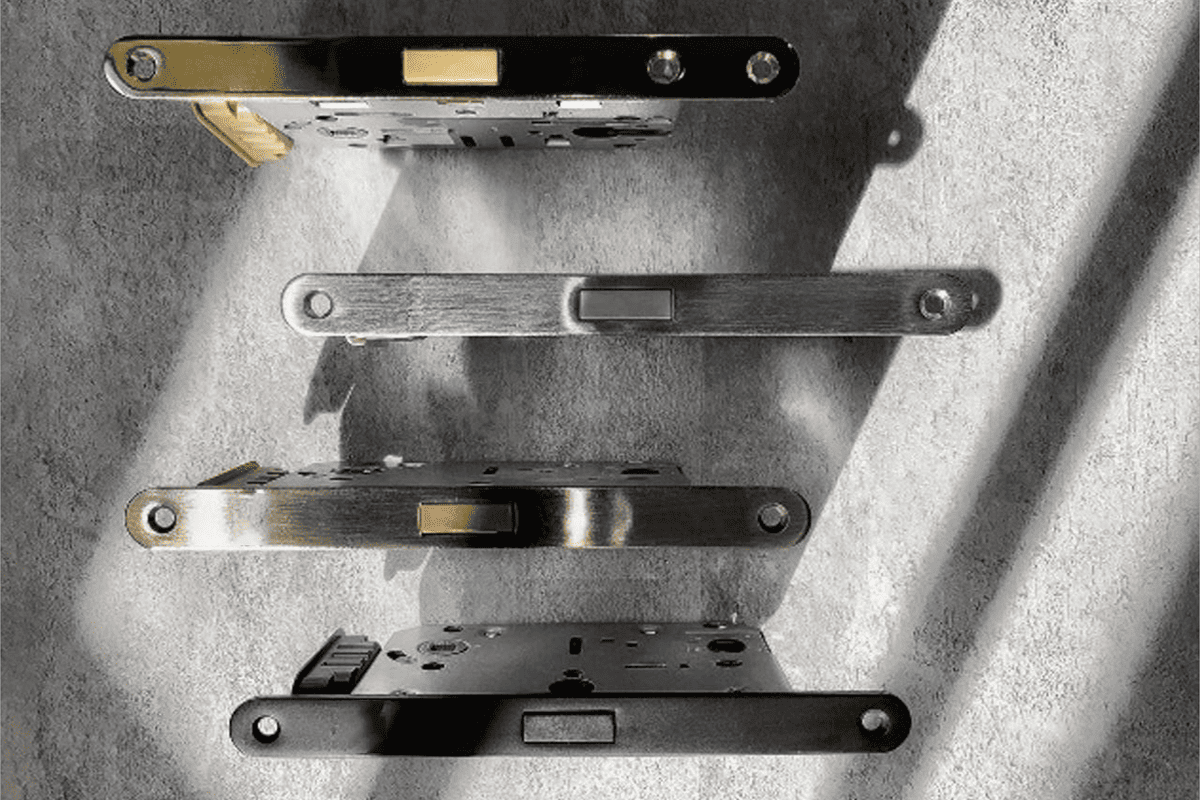
Faceplate type matters because slim mortise locks must match the door edge design. A flat faceplate and a U-shaped or channel faceplate support the profile differently. Using the wrong type can cause poor seating, exposed edges, weak fixing, or reduced protection around the lock opening.
Flat faceplate versus U-shaped faceplate
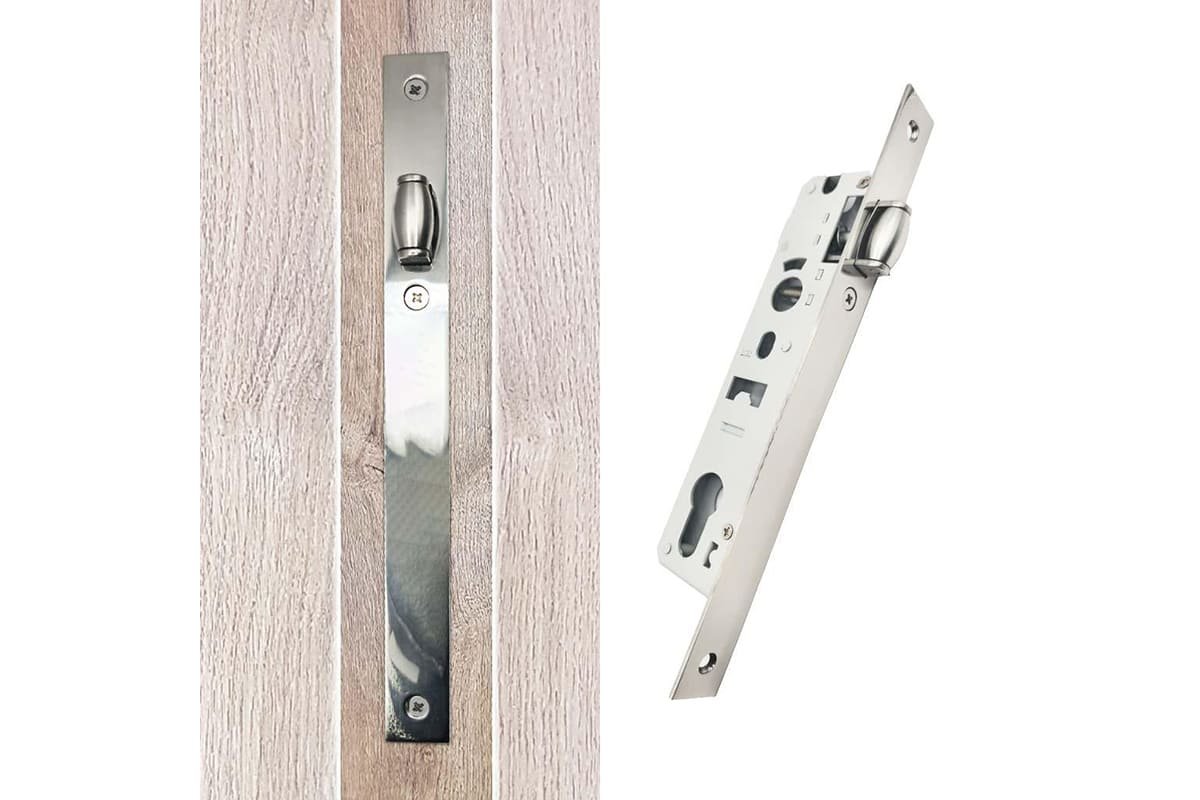
A flat faceplate usually sits on a prepared flat door edge. It is common where the aluminium profile provides a stable surface for screw fixing and plate support. It can be simple and clean when the profile is designed for it.
A U-shaped or channel faceplate wraps around or seats into a specific profile edge design. It can help cover the door edge and support the lock opening in certain aluminium systems. However, it must match the profile shape, thickness, and direction.
Neither option is universally better. The correct choice depends on the door design.
Key differences
| Faceplate type | Typical feature | Main risk if mismatched |
|---|---|---|
| Flat faceplate | Sits on flat edge surface | May not protect or seat correctly on channel profiles |
| U-shaped faceplate | Matches channel or wrap-around edge | May not fit flat profiles or may sit proud |
| Reversible faceplate | Can support left/right variations in some designs | Must still match latch direction and profile details |
| Custom faceplate | Made for specific profile | Requires tooling, drawings, and sample approval |
Security depends on fit, not only material
Buyers often ask about material thickness, stainless steel grade, or finish. These are important. However, a strong faceplate can still perform poorly if it does not sit correctly.
A mismatched faceplate may leave gaps. It may fail to support the latch area. It may expose cut aluminium edges. It may also reduce resistance against prying forces around the lock side of the door. I use careful language here because real security performance depends on the full door set, installation, strike, frame, and test method.10 Still, in practical supplier work, poor faceplate matching is a visible risk.
Faceplate confirmation points
Before approving slim mortise locks for production, I suggest confirming:
- Faceplate shape
- Faceplate length and width
- Faceplate thickness
- Screw hole position
- Latch and deadbolt opening
- Left/right hand direction
- Surface finish
- Compatibility with strike plate
- Door edge coverage
- Profile seating method
For fire-rated or CE-related projects, buyers should also verify certification documents, test scope, and product configuration. Certifications should match the actual lock model, material, size, and intended use where required.11 I do not recommend assuming that one certificate covers every customized faceplate or every door system.
At SDH Hardware, we can provide CE and fire-rated certification documents for core product lines where applicable, but buyers should always review the documents against their market and project requirements. Application-specific decisions may also require qualified professional evaluation.
Why Is Sample Approval Not Enough For Slim Mortise Locks?
A sample can prove that a lock is possible, but it does not prove that every batch will install smoothly. Slim aluminium doors have less tolerance for error. Small changes in profile extrusion, machining, screw holes, or handle supply can create batch-level issues.
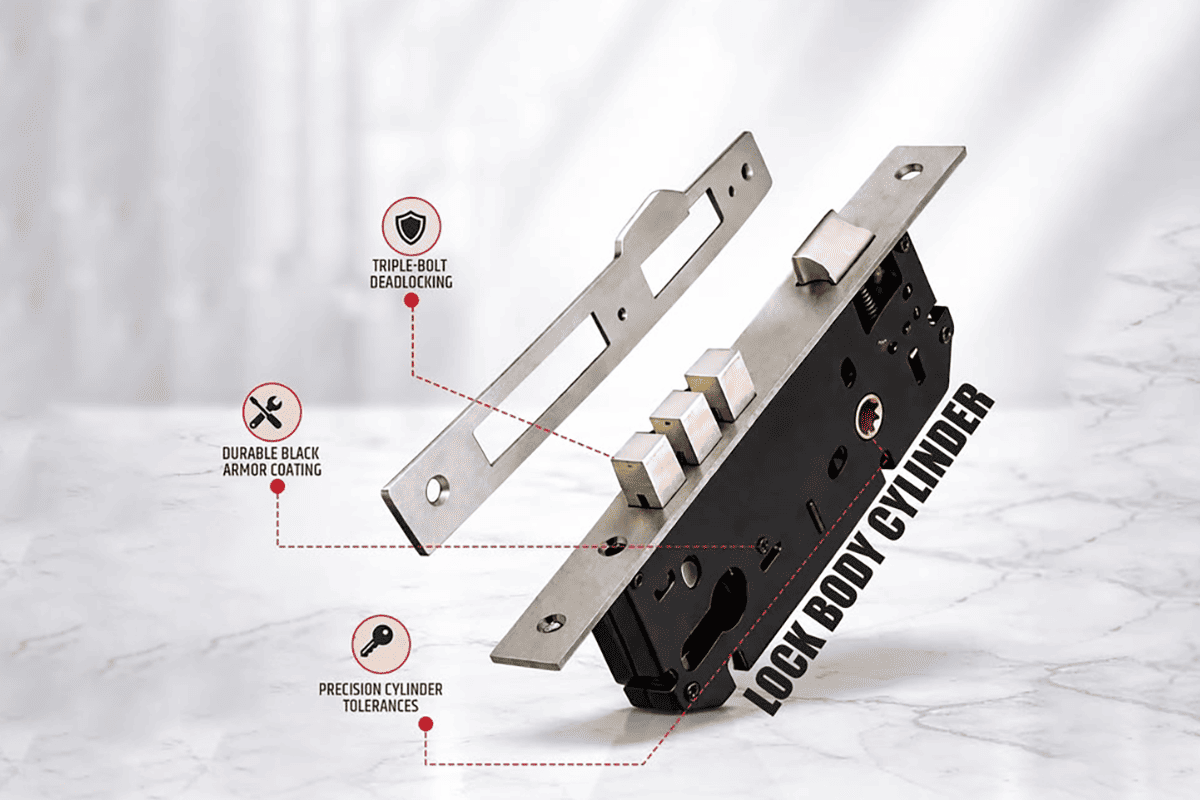
Sample approval is not enough for slim mortise locks because one fitted sample does not confirm production tolerance.12 Buyers should also verify profile variation, lock opening accuracy, screw hole alignment, handle compatibility, faceplate direction, and strike engagement before mass production or long-term standardization.
A good sample can hide a risky design
I have seen cases where a skilled technician makes a difficult sample work. The door looks good. The handle turns. The latch closes. Everyone feels confident. Then batch production begins, and small problems appear.
This happens because a sample is often made with extra care. The technician may adjust the opening by hand. The best profile piece may be selected. The installer may slightly correct screw positions. These steps are normal in sampling, but they can hide tolerance problems that production workers will face later.
Batch production needs repeatability
For door manufacturers and importers, the key question is not only, “Can this lock fit?” The better question is:
“Can this lock fit repeatedly, efficiently, and safely within our normal production tolerance?”
That is a different standard.
Batch confirmation checklist
| Control point | What to confirm | Why it matters |
|---|---|---|
| Profile tolerance | Actual cavity and wall thickness range | Prevents tight or loose lock seating |
| Machining accuracy | Lock opening and screw hole positions | Supports repeatable installation |
| Lock case consistency | Body width, hole positions, faceplate alignment | Reduces batch variation |
| Handle compatibility | Spindle, through-bolts, rose/plate size | Prevents loosening and rework |
| Faceplate direction | Left/right and flat/U-shaped type | Avoids incorrect assembly |
| Strike engagement | Latch and deadbolt fit with frame | Maintains closing and locking performance |
| Surface finish | Color and coating consistency | Protects brand appearance |
I recommend staged approval
For higher-volume orders, I prefer a staged approval process:
Drawing review
The buyer and supplier compare the lock, profile, handle, and cylinder drawings.Prototype sample
The first physical sample confirms basic fit and function.Installed door sample
The buyer tests the lock in the actual aluminium profile.Small pre-production batch
A limited run checks repeatability and machining tolerance.Final batch inspection
The buyer or supplier checks key dimensions and function after production.
This process may feel slower at the beginning, but it saves time later. A batch problem with slim mortise locks can affect door assembly, packing, shipment schedules, and customer satisfaction.
At SDH Hardware, our quality process includes raw material screening, production supervision, and finished product inspection. We also use specialized testing machines for function checks and product evaluation. However, the door manufacturer must still validate the lock in the actual profile and application. A factory inspection cannot replace project-specific installation testing.
Frequently Asked Questions
Are the narrowest slim mortise locks always the best choice?
No. The narrowest lock is not always the best choice. A suitable slim mortise lock must fit the aluminium profile while leaving enough material for stable fixing and door strength. Buyers should confirm backset, case width, faceplate type, and handle fixing before choosing the narrowest option.
What backset is best for aluminium slim frame doors?
There is no universal best backset for aluminium slim frame doors. The correct backset depends on the profile cavity, stile width, handle position, cylinder position, and cutting allowance. Buyers should confirm the backset using profile drawings and installed samples before batch orders.
Can one slim mortise lock model fit all aluminium slim frame doors?
No. One lock model rarely fits all aluminium slim frame doors safely. Different profiles have different cavities, wall thicknesses, edge shapes, and fixing methods. A lock that works in one system may create installation or security risks in another system.
Why do handle through-bolt holes matter?
Handle through-bolt holes matter because they improve fixing stability in many slim aluminium door applications. If the handle fixing holes do not align with the lock and profile, the handle may loosen after use. Buyers should check screw path clearance before sample approval.
Should I verify CE or fire-rated certification for slim mortise locks?
Yes. Buyers should verify CE or fire-rated certification documents where the project or market requires them. The certificate scope should match the lock model, configuration, material, and intended use. For application-specific compliance decisions, buyers should consult qualified professionals or local authorities.
Conclusion
Slim mortise locks for aluminium slim frame doors should be evaluated as part of the full door system. The most important risks usually come from backset mismatch, lock case width conflict, weak handle fixing, wrong faceplate type, and over-reliance on one approved sample. I recommend confirming drawings, samples, profile tolerances, and complete hardware compatibility before batch production. If you need factory-direct support for customized slim lock projects, SDH Hardware can help review specifications, produce samples, and supply matched door hardware solutions.
"A156.13 - 2022 Mortise Locks", https://buildershardware.com/ANSI-BHMA-Standards/Hardware-Highlights/A15613-2022-Mortise-Locks. Door-hardware standards describe mortise-lock performance and installation using coordinated dimensions such as backset, door preparation, fixing positions, and lock configuration, supporting the view that catalogue dimensions alone are insufficient for confirming suitability. Evidence role: general_support; source type: institution. Supports: A neutral door-hardware standard or technical guide should support that mortise-lock installation depends on coordinated door preparation dimensions rather than catalogue width alone.. Scope note: This would provide general technical support, not proof that any specific aluminium profile or lock model is compatible. ↩
"Mortise lock", https://en.wikipedia.org/wiki/Mortise_lock. Technical references for mortise locks locate the cylinder, follower, fixing points, and backset as coordinated dimensions, which supports the claim that a nominally narrow backset can still create internal interference in a constrained profile. Evidence role: mechanism; source type: institution. Supports: A standards document or technical reference should support that a mortise lock contains fixed component positions whose geometry must be coordinated with the door structure.. Scope note: Such a source would explain the mechanism generally and would not verify the fit of the specific 25 mm example. ↩
"How to Determine the Backset of Your Door", https://www.lowes.com/n/how-to/determine-the-backset-of-your-door. Door-hardware glossaries define backset as the distance from the door edge to the centerline of the lock or latch, supporting the statement that a smaller backset moves the handle closer to the door edge. Evidence role: definition; source type: institution. Supports: A door-hardware standard or glossary should support the definition of backset as an edge-to-centerline dimension that determines handle placement.. ↩
"Thermal Break vs. Non-Thermal Break Aluminum Profiles", https://www.instagram.com/reel/DfEWkJpFrQW/. Educational materials on aluminium fenestration describe thermal breaks as insulating elements integrated into metal frame profiles, providing contextual support for the claim that such structures may occupy or divide internal profile space. Evidence role: general_support; source type: education. Supports: An educational source should support that aluminium doors and windows commonly use thermal breaks and internal profile structures to improve performance.. Scope note: This supports the presence and function of thermal breaks generally, not that a given lock will interfere with a given profile. ↩
"Experimental and Numerical Study on the Influence of Stress ... - PMC", https://pmc.ncbi.nlm.nih.gov/articles/PMC9967977/. Engineering studies on openings and cut-outs in structural members show that removing material changes section properties and can introduce stress concentrations, supporting the structural concern raised for lock-case openings in narrow aluminium profiles. Evidence role: mechanism; source type: paper. Supports: A paper on structural openings, stress concentration, or aluminium members should support that removing material from a load-bearing section can reduce stiffness or strength.. Scope note: The evidence would establish the general structural mechanism and would not quantify the allowable cut-out for a particular door profile. ↩
"REQUIREMENTS FOR THREADED FASTENING SYSTEMS IN ...", https://s3vi.ndc.nasa.gov/ssri-kb/static/resources/nasa-std-5020.pdf. Research on screw and threaded-fastener pull-out in sheet materials reports that pull-out resistance is affected by sheet thickness, material strength, and thread engagement, supporting the concern that thin aluminium walls may provide limited fixing strength. Evidence role: mechanism; source type: paper. Supports: A fastener study should support that screw pull-out strength depends on sheet thickness, material, thread engagement, and joint geometry.. Scope note: The cited evidence would be mechanical-context support and may not test the exact screws or door profiles discussed in the article. ↩
"Design for tolerance of electro-mechanical assemblies", https://nvlpubs.nist.gov/nistpubs/Legacy/IR/nistir6223.pdf. Manufacturing metrology references describe tolerance stack-up as the accumulation of dimensional variations that can affect assembly fit and function, supporting the claim that production tolerances may determine whether a lock design is practical beyond a single sample. Evidence role: mechanism; source type: government. Supports: A government or standards source on manufacturing metrology should support that dimensional variation and tolerance stack-up affect assembly fit and repeatability.. Scope note: This supports the production principle generally and does not measure tolerance limits for the specific locks described. ↩
"Bolted Joint Design", https://crafter.fastenal.com/static-assets/pdfs/Bolted_Joint_Design_rev_2017-02-21.pdf. Engineering texts on bolted joints explain that bolts can clamp components together across an assembly, providing contextual support for the statement that through-bolts can secure opposite handle sides more effectively than local screws in thin material. Evidence role: mechanism; source type: education. Supports: An engineering source should support that through-bolts create a clamped joint between components and reduce reliance on local thread engagement in a thin substrate.. Scope note: This is a general fastening principle and does not prove superior performance for every handle design. ↩
"EN 12209: Building Hardware - Mechanically operated locks and ...", https://www.intertek.com/building/standards/en-12209/. Lock-security standards evaluate mechanical resistance of locks and related components under specified loading or attack conditions, providing contextual support for the claim that faceplate seating and edge coverage can affect resistance around the lock area. Evidence role: mechanism; source type: institution. Supports: A lock or door-security standard should support that lock components and their installation are relevant to resistance against mechanical attack or side loading.. Scope note: The standard would support the security mechanism in context, not establish the forced-entry rating of a particular faceplate. ↩
"What Is PAS 24? Requirements, Testing and Limits", https://www.si4security.com/post/what-is-pas-24-requirements-testing-and-security-limitations. Enhanced-security standards for doorsets, such as tests for burglary resistance or enhanced security performance, assess the complete door assembly under defined methods, supporting the statement that lock security depends on the door set, strike, frame, installation, and test procedure. Evidence role: expert_consensus; source type: institution. Supports: A doorset security standard should support that burglary or enhanced-security performance is assessed on complete doorsets, including frame, hardware, installation, and test conditions.. ↩
"Construction Products Regulation (CPR) 2024–2032 guide", https://ecochain.com/blog/cpr-regulation-why-manufacturers-cant-afford-to-ignore-it/. Government guidance on construction-product marking and declarations links certified or declared performance to the relevant product type, characteristics, and intended use, supporting the statement that certification should match the actual lock configuration. Evidence role: general_support; source type: government. Supports: Government guidance should support that construction-product declarations or certification are tied to declared performance, intended use, and product type or configuration.. Scope note: This supports the compliance principle generally and does not determine whether any named lock certificate is valid for a specific project. ↩
"ISO 2859-1", https://chemistry.unt.edu/~tgolden/courses/iso2859-1.pdf. Statistical quality-control standards for lot inspection use defined sampling plans to account for production variation, supporting the claim that a single fitted sample cannot by itself confirm batch-level tolerance performance. Evidence role: general_support; source type: institution. Supports: A quality-control standard should support that production lots are evaluated through sampling plans or statistical inspection rather than reliance on one sample.. ↩
