

What Types of Panic Exit Devices Are Available for Wood Doors?
Panic exit devices are often chosen by how the bar looks, but the real problem is whether the locking method and installation structure fit the wood door. That mismatch causes delays and costly rework. The solution is to select panic exit hardware by locking type, door preparation, and use scenario—not by appearance alone.
The main types of panic exit devices for wood doors are rim, mortise, surface vertical rod, and concealed vertical rod. Each uses a different locking structure and installation method. Mechanical devices suit standard egress. Electronic panic exit devices add access control or monitoring. The right choice depends on door thickness, edge construction, frame condition, fire-rating, and single or double door configuration.
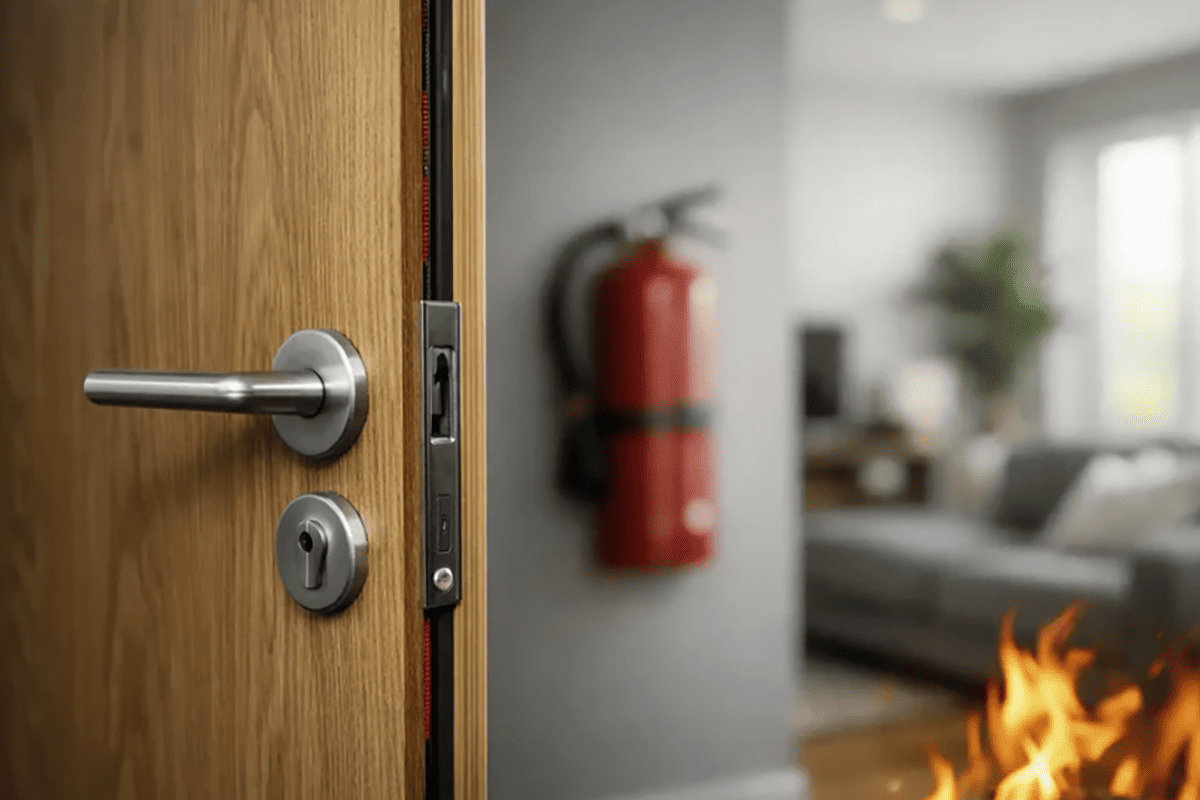
Many buyers ask me which push bar looks best. I guide them to what will actually fit their door: locking points, door prep, and frame strikes. Below, I break down the options and the checks you must make to avoid surprises at installation.
What do we mean by panic exit devices vs panic exit hardware?
You face confusion when different catalogs use “panic exit device” and “panic exit hardware” as if they are the same. This leads to incomplete orders. The fix is simple: use precise terms and map the components to the door and frame.
A panic exit device is the push/touch bar assembly that unlatches the door for emergency egress. Panic exit hardware is the broader set that includes trim, strikes, rods, electrification kits, and accessories. Treat the device as part of a complete hardware package.

Dive deeper
- Definitions
- Panic exit hardware: The full assembly required for code-compliant egress on an outward-opening door. It can include the exit device, outside trim (lever/pull), strikes, rods, mullions, cylinders, electrification kits, and labels.
- Panic exit device: The bar mechanism mounted on the door that retracts the latch(es) when pushed.
- Standards to verify
- In Europe, panic exit devices typically reference EN 1125 (panic applications) or EN 179 (emergency applications). Scope differs.1 Buyers must verify the exact standard, certificate holder, and door assembly compatibility.
- For fire-rated wood doors, confirm that the device model holds a valid fire rating and that the specific door assembly has been tested with an approved configuration.2 Do not assume universal compliance.
- Components matter
- Device type (rim, mortise, surface vertical rod, concealed vertical rod)
- Strikes (rim keeper, top jamb strike, floor strike, mortise strike)
- Trim options (lever, plate, pull handle, cylinder functions)
- Optional features (dogging, electric latch retraction, request-to-exit, monitoring switches)
- Supplier note
- At SDH Hardware, I always request the door schedule, thickness, stile width, frame type, and fire-rating requirements before matching panic exit hardware. I share drawings and a parts list so buyers know exactly what arrives in the cartons.
Are mechanical panic exit devices or electronic panic exit devices better for wood doors?
You might worry that you need electronic features for every opening. That can complicate wiring and compliance. Mechanical devices are simpler and cost-effective. Electronic panic exit devices add control and monitoring when a project requires it.
Mechanical panic exit devices suit standard escape functions. Electronic panic exit devices fit doors with access control, time scheduling, or status monitoring.3 Choose based on project needs, certification scope, and wiring feasibility in the frame and wall.

Dive deeper
- Mechanical devices
- Use a spring and cam-driven bar to retract a latch. They are robust, easy to maintain, and ideal for most single doors and pairs in schools, offices, and retail.
- Common features: mechanical dogging (holds latch retracted to allow free passage), various trim functions (lever, passage, storeroom).
- Fire-rated caution: mechanical dogging that defeats latching is typically not permitted on fire-rated doors.4 Always verify against the device’s fire label and local rules.
- Electronic/electrified devices
- Electric latch retraction (ELR): Uses power to retract the latch(es), enabling card access, scheduled unlocks, or integration with building systems.
- Request-to-exit (REX) and monitoring: Sensors provide signals to access control for compliance logging and alarm integration.
- Power and wiring: Assess frame/wall conduit, hinge with power transfer, and control panel distance. Poor power design causes inconsistent retraction.
- Selection considerations for wood doors
- Door thickness and core material affect the device mounting and the ability to route channels for concealed features.
- Fire-rated wood doors require careful validation of device model, trim function, and any electrified options.
- Budget and maintenance: Mechanical models are simpler to service. Electronic models increase installation complexity and must be supported by a qualified integrator.
- From my supply desk
- I once helped a client move from universal mechanical devices to ELR models on the main entrance pair. The requirement was to unlock doors at opening time and relock automatically. We prepared detailed wiring notes and confirmed frame raceways were ready before shipping.
How does a rim panic exit device suit wood doors?
You want a straightforward device that installs quickly on timber stiles. Rim devices are the easiest but not for every pair or tall door. The solution is to use rim panic exit devices where single-point locking is sufficient.
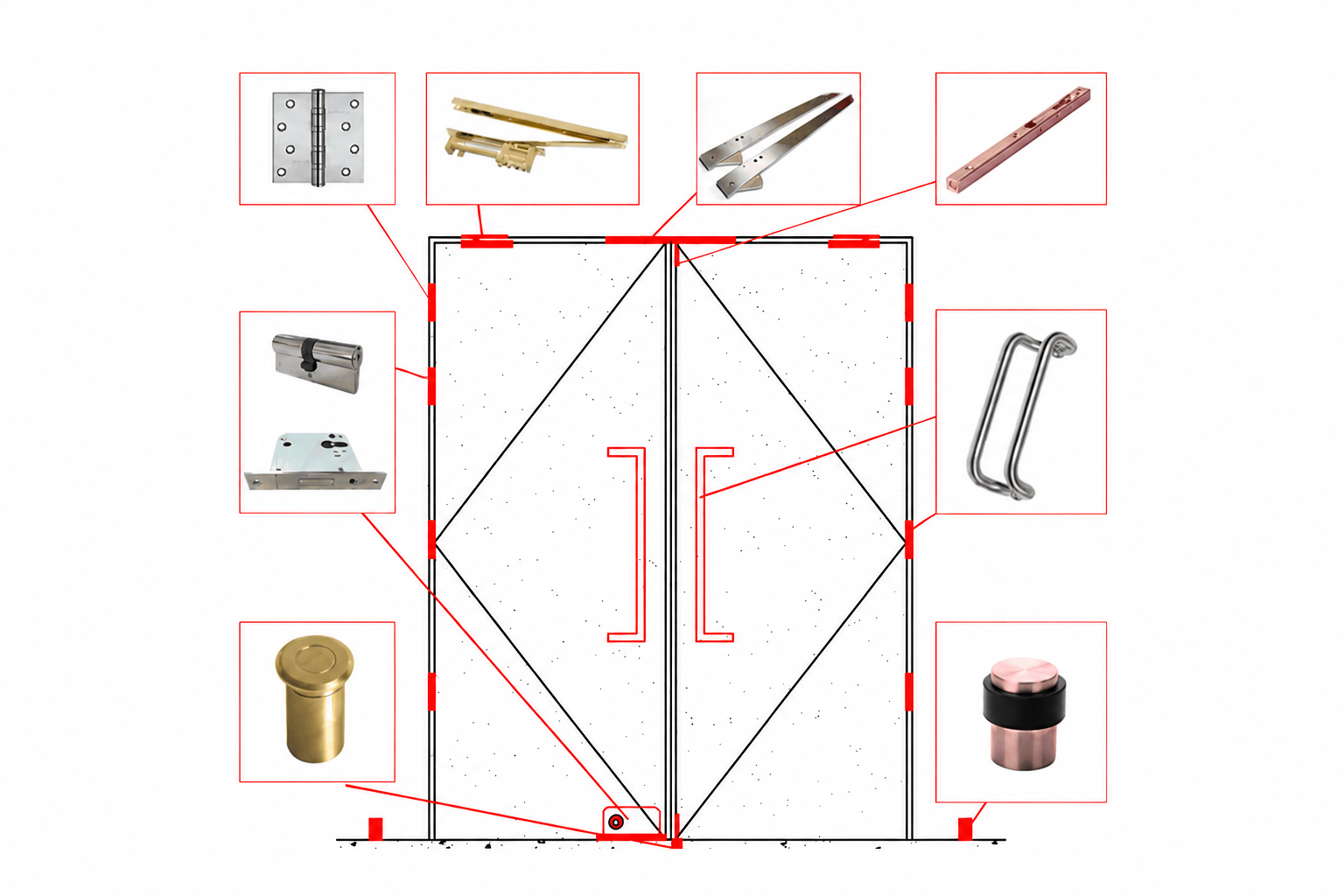
A rim panic exit device surface mounts on the door and latches into a rim strike on the frame.5 It offers single-point locking and simple installation. It is well-suited to single wood doors with a prepared strike jamb and stable frames.
Dive deeper
- What it is
- A surface-mounted exit device with a rim latch that engages a keeper (strike) on the frame. The push bar retracts the single latch.
- Where it fits
- Single wood doors in corridors, classrooms, storerooms, and many commercial openings where one latch is enough.
- Pairs with removable mullions can also use two rim devices, one per leaf, latching into the mullion.6
- Pros
- Simplified installation on wood stiles. Minimal pocketing or routing.
- Fast maintenance. Fewer alignment variables than vertical rod systems.
- Good for retrofits and replacement projects.
- Cons
- Single-point latching may be insufficient for tall doors or windy exterior openings prone to door flex.
- Without a mullion on pairs, you cannot use rim devices effectively because there is no center strike.
- Key checks on wood doors
- Door thickness (commonly 40–45 mm in European projects, 44.5 mm/1-3/4" in many international specs). Confirm the device’s mounting range and screw lengths.
- Frame type: metal hollow frames provide reliable rim keeper alignment. Timber frames require precise strike positioning and robust screws.
- Edge construction: ensure the stile can accept through-bolts and that screws do not split the edge. Pre-drill carefully in hardwood.
- Procurement tip
- Request the exact rim keeper model with dimensions. Provide frame section drawings to your supplier. At SDH Hardware, I reject vague “rim device + strike” descriptions and issue a complete parts list with fasteners and templates.
What is a mortise panic exit device for wood doors?
You might prefer a clean look but overlook the lock pocket needs. Mortise devices require accurate door preparation and reinforced stiles. The fix is to use mortise panic exit devices when your wood door can accept a mortise lock case.
A mortise panic exit device uses a mortise lock body installed inside the door edge, with the bar operating the latch.7 It provides single-point locking with a cleaner aesthetic. It is ideal when wood stiles have enough width and the door can be precisely prepped.

Dive deeper
- Preparation requirements
- The door edge must be routed for the mortise lock case and faceplate.8 Typical backsets and case sizes vary by brand; common European backsets include 55–65 mm, but buyers must verify exact drawings.
- Stile width matters. Very narrow stiles may not support the pocket. Confirm minimum stile width with your supplier.
- Advantages
- Cleaner sightlines. No rim keeper on the frame.
- Strong latch engagement and robust alignment with a mortise strike.
- Compatible with many trim functions on the outside (lever, plate, cylinder).
- Risks on wood doors
- Weak core or insufficient stile reinforcement can lead to splitting or fastener pull-out over time.
- Misaligned mortise pocket causes latch binding and retraction issues.
- Fire-rated doors: you must verify the mortise device is tested with the specific door assembly. Documentation rules here.
- When I recommend it
- I propose mortise panic exit devices when the project wants a premium aesthetic, accepts the additional machining time, and has strong stiles. I often ship a CNC prep template to door factories to control tolerances.
- Installation notes
- Use through-bolts wherever possible, not just wood screws. They resist pull forces.
- Seal routed pockets in fire-rated doors according to the door manufacturer’s instructions. Do not improvise fillers.
- Checklist
- Door stile width ≥ supplier minimum
- Confirm mortise case drawing and backset
- Matching mortise strike for frame type
- Fire label scope and assembly listing validated
Why use surface vertical rod panic exit devices on wood doors?
You might need more than one latch point to resist wind or ensure positive latching on tall timber doors. Surface rods look busy, but they solve performance problems. The solution is surface vertical rod panic exit devices for multi-point locking.
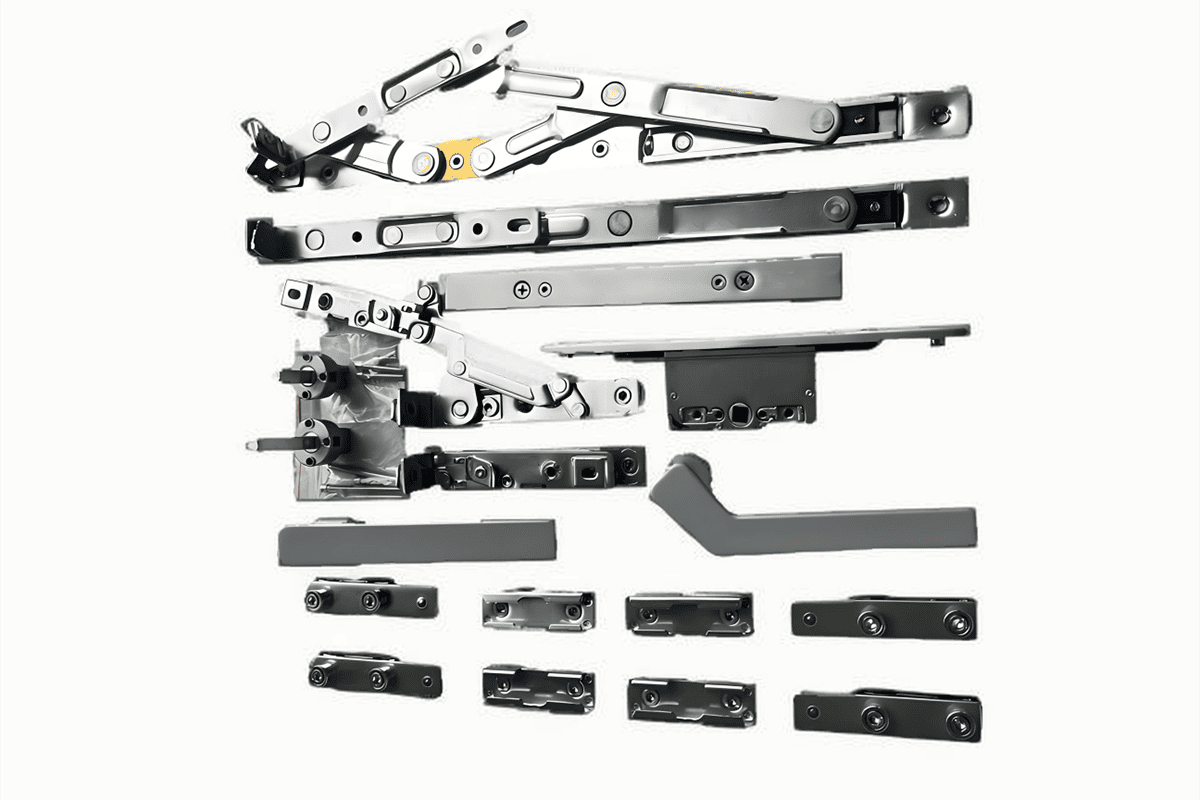
Surface vertical rod panic exit devices add top and bottom latching through visible rods.9 They deliver multi-point locking on single doors or pairs, improving security and reliability. They are common on schools, gyms, and exterior wood doors.
Dive deeper
- What they do
- The push bar retracts top and bottom latches via external rods. The top latch engages a header strike; the bottom engages a floor strike or sill.
- Use cases
- Tall or flexible wood doors where a single rim latch may not hold consistently.
- Exterior openings exposed to wind pressure or where tight sealing is required.
- Pairs without a center mullion, when one leaf must latch to top/bottom instead.
- Pros
- Improved door control and security with multi-point engagement.
- Installation avoids deep routing in the door core.
- Cons
- Visible hardware and rods. More parts to align and maintain.
- Floor strikes require precise drilling and may conflict with underfloor heat or slab reinforcement.10
- Important checks for wood doors
- Bottom strike location: confirm floor material and drilling depth. Coordinate with site engineers to avoid services in the slab.
- Top strike alignment: header reinforcement is helpful in timber frames.
- Door thickness and core strength: through-bolting is recommended to keep devices secure over time.
- Double-door notes
- On pairs without mullions, one or both leaves can use surface vertical rod panic exit devices for top/bottom latching. Verify coordinator or sequence requirements if both leaves are active.
- From field coordination
- I always ask for floor plans and section details when surface rods are specified. A client once avoided slab rework because we flagged the floor strike conflict early and switched to top-latch-only plus a tight threshold as approved by their authority.
When are concealed vertical rod panic exit devices the right choice?
Designers dislike exposed rods but sometimes pick concealed types without considering door core routing. That causes delays at the factory. The fix is to use concealed vertical rod panic exit devices when the wood door can accept internal channels and reinforcement.
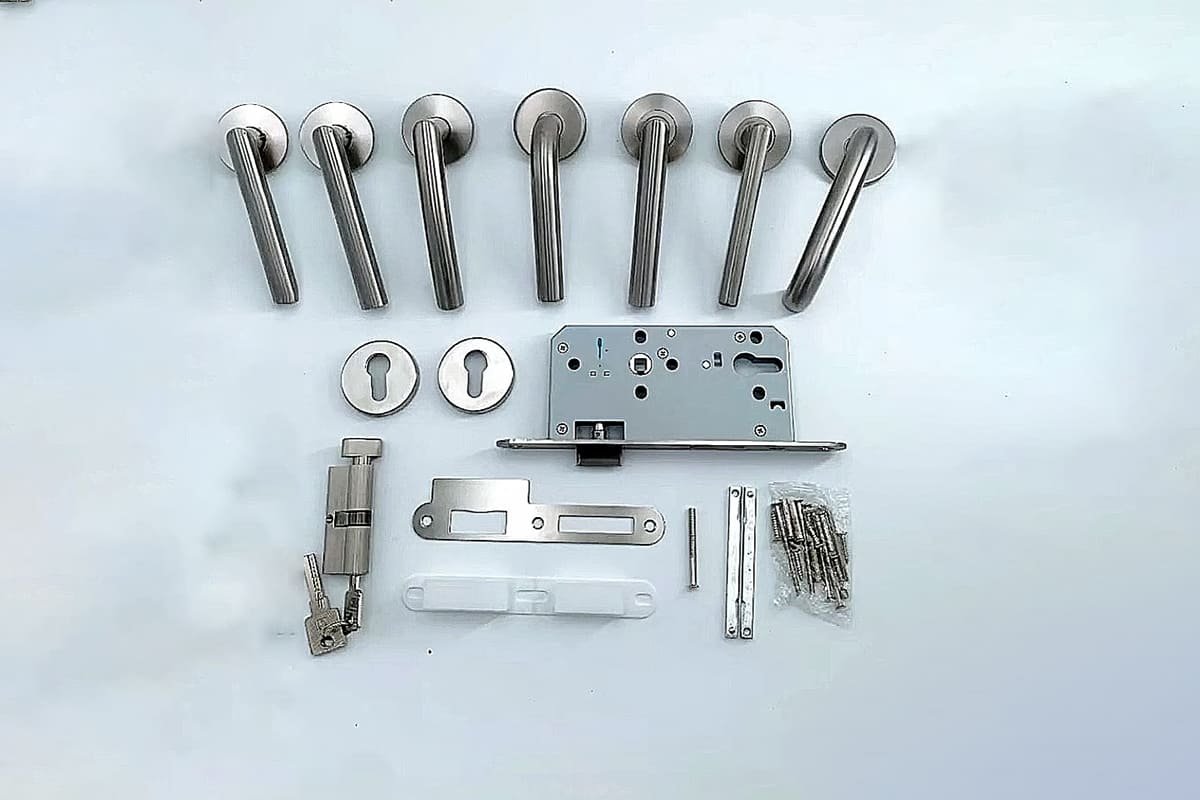
Concealed vertical rod panic exit devices hide rods within the door, delivering multi-point latching with a clean look.11 They require precise channels routed in the door core and strong stiles. Choose them for premium aesthetics and high-traffic pairs.
Dive deeper
- Advantages
- Clean aesthetics with multi-point locking. No exposed rods to catch on clothes or bags.
- Better protection against tampering and accidental damage.
- Door preparation
- Internal channels must be routed for the rods and latch mechanisms. This is factory work, not a quick site drill.12
- Core type matters. Particleboard or lightweight cores may need reinforcement strips to prevent rod cavity collapse.
- Installation and maintenance
- More complex than surface rods. Exact templates and jigs are critical.
- Maintenance access must be planned. Some designs provide access plates; confirm before ordering.
- Applications
- High-end commercial interiors, hotels, and public buildings where aesthetics matter.
- Pairs without a mullion that still require top/bottom latching.
- Risks
- Misrouting channels leads to binding and unreliable latch travel. This is the most common cause of callbacks I see.
- Fire-rated doors require documented, tested routing and device configuration. Verify certificates and assembly listings.
- Procurement and factory notes
- Share door construction drawings with your supplier. At SDH Hardware, I request stile/core details and provide routing templates or coordinated prep with the door manufacturer. We also include fitting guides and fastener maps in the packing.
How do I match panic exit devices to single and double wood doors?
You might order the right device but the wrong configuration for pairs, mullions, or frames. That leads to site improvisation. The solution is a structured matching process for panic exit devices across single and double wood doors.
For single doors, rim or mortise panic exit devices are common. For double doors without mullions, vertical rod panic exit devices provide top/bottom latching. With removable mullions, rim devices can be used on each leaf. Always verify door thickness, stile width, frame strikes, and certificate scope.
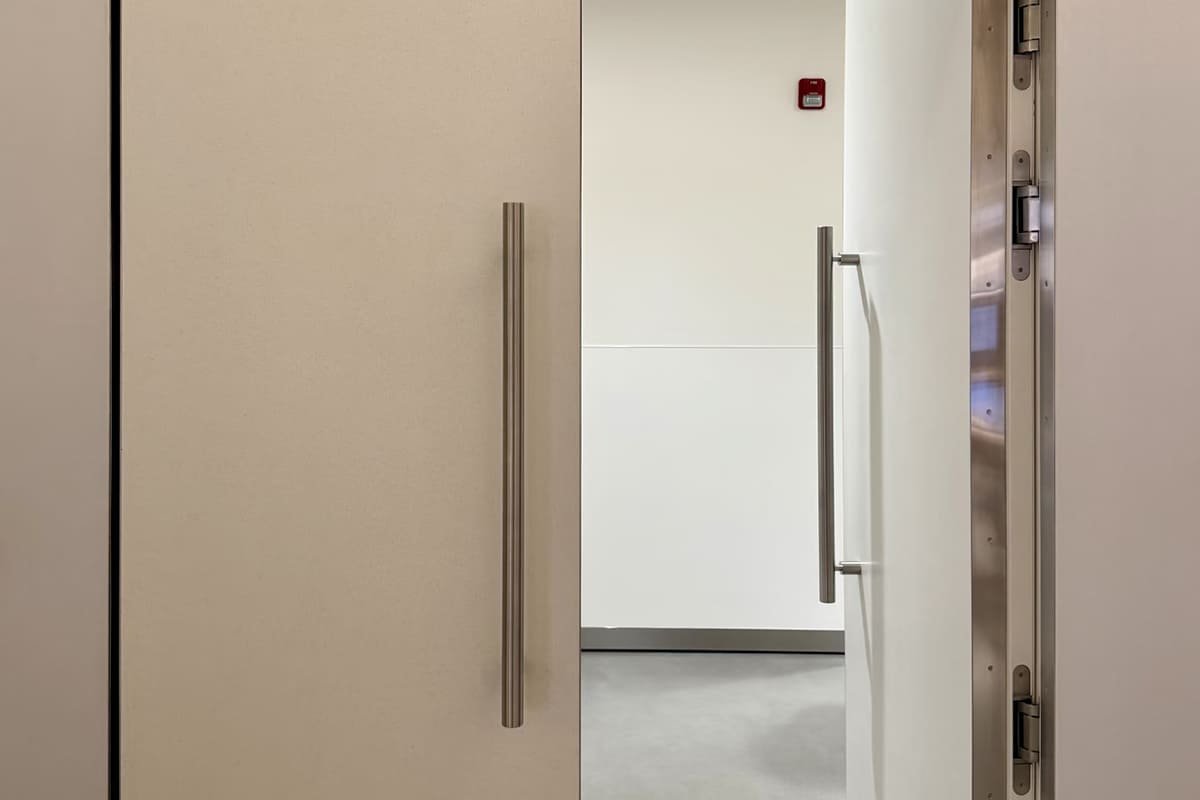
Dive deeper
- Quick comparison
| Device type | Locking points | Typical prep | Best for | Pros | Cons |
|---|---|---|---|---|---|
| Rim | Single | Surface mount + rim keeper | Single doors, pairs with mullion | Easy install, retrofit-friendly | Needs keeper; single-point only |
| Mortise | Single | Mortise pocket + strike | Single doors with strong stiles | Clean look, robust latch | Requires precise routing |
| Surface vertical rod | Multi (top/bottom) | Surface bars + rods + header/floor strikes | Tall/Exterior doors, pairs w/o mullion | Strong control, easier than concealed | Visible rods, floor drill |
| Concealed vertical rod | Multi (top/bottom) | Internal rod channels + strikes | Premium interiors, pairs w/o mullion | Clean aesthetic, protected rods | Complex prep, core reinforcement |
- Single vs pair decision flow
- Is there a mullion?
- Yes: use rim devices per leaf. Confirm mullion type and strike kits.
- No: use vertical rod devices (surface or concealed) to latch to header and floor.
- Is the door fire-rated?
- Verify allowed functions (e.g., dogging restrictions) and the exact device listing with the door assembly.
- What is the door thickness and core?
- Confirm mounting ranges and reinforcement points. Use through-bolts on wood doors whenever possible.
- What trim is required outside?
- Lever, plate, or pull + cylinder. Check spindle/cylinder compatibility and handing.
- What frame type is installed?
- Metal frames ease keeper alignment. Timber frames need careful strike seating and longer fasteners.
- Is there a mullion?
- Electrification planning
- For pairs, plan how power transfers to active leaf devices (power transfer hinges, door loops, or electrified pivot arrangements).
- Coordinate control panels, cable gauges, and surge protection if using ELR or monitoring.
- What I check before quoting
- Door schedule, plan heights, stile widths, frame sections
- Single or pair, mullion status, floor strike feasibility
- Fire labels and requested certifications (CE/EN 1125/EN 179), with documents to verify
- Required outside trim and cylinder keyway compatibility
- Shipping kit: templates, fasteners, and installation drawings
Frequently Asked Questions
Do panic exit devices work on all wood door thicknesses?
Most panic exit devices support common wood door thicknesses around 40–45 mm (about 1-3/4"). Some models provide wider ranges. Verify the device’s installation manual and fastener lengths. If your doors are non-standard thickness, request a drawing and a sample set before bulk ordering.
Can I use mechanical dogging on a fire-rated wood door?
Mechanical dogging that holds the latch retracted is typically not permitted on fire-rated doors. Rules depend on the standard and listing. Always verify the device’s fire label and the door assembly’s tested configuration. When in doubt, consult the project authority and request written approval.
What outside trim can I pair with panic exit devices on wood doors?
Common trims include levers, pulls, and plates with various functions (passage, storeroom, night latch). Confirm spindle dimensions, cylinder requirements, and handing. Ensure trim backplates align with stile width and through-bolt positions on the wood door for durable attachment.
Are electronic panic exit devices difficult to install on wood doors?
Electrified devices require power transfer and wiring through the frame and hinge line. They are more complex than mechanical units. With proper planning—raceways, power transfer hinges, correct voltage and gauge—they install reliably. Coordinate with your access control integrator and verify certification scope.
What documents should I verify before purchasing panic exit hardware?
Request the device’s standard compliance certificates (e.g., EN 1125/EN 179), fire-rated listings, installation drawings, and hardware schedules. Confirm the scope matches your wood door assembly. At SDH Hardware, I provide drawings, parts lists, and inspection support upon order confirmation.
Conclusion
Choosing panic exit devices for wood doors is about locking structure, door preparation, and certification—not bar style. Rim and mortise devices provide single-point locking, while surface and concealed vertical rod devices deliver multi-point control. If you need help matching devices to your door schedule, contact SDH Hardware. I will review your drawings, provide samples, and ship a complete, verified hardware kit for your project.
"dhf Best Practice Guide: Panic and Emergency Exit Devices", https://www.dhfonline.org.uk/media/documents/documents34a.pdf. European standards documentation distinguishes EN 1125 panic exit devices from EN 179 emergency exit devices, supporting the article’s point that buyers must verify which standard applies to the intended exit condition. Evidence role: definition; source type: institution. Supports: A source should define EN 1125 and EN 179 and explain that EN 1125 addresses panic exit devices while EN 179 addresses emergency exit devices for different occupancy assumptions.. Scope note: This supports the standards distinction generally; it does not verify compliance of any specific device or wood door assembly. ↩
"Fire Doors and NFPA 80 FAQs", https://www.nfpa.org/news-blogs-and-articles/blogs/2025/04/11/fire-doors-faqs. Fire-door standards treat the door, frame, and hardware as a listed assembly, supporting the requirement to verify that panic hardware is approved for the particular fire-rated wood door configuration. Evidence role: expert_consensus; source type: institution. Supports: A source should explain that fire door assemblies include the door, frame, hardware, and glazing components and must be installed and maintained according to their listings and standards.. Scope note: This establishes the general compliance principle; local code adoption and individual product listings still determine whether a specific installation is permitted. ↩
"division 28 – electronic safety and security", https://fm.uni.edu/sites/default/files/division_28_-_electronic_safety_and_security.pdf. Facilities and access-control guidance describes electrified exit devices as hardware that can interface with card access, latch retraction, and monitoring systems, supporting the article’s distinction between basic mechanical egress and electronically controlled openings. Evidence role: general_support; source type: education. Supports: A source should describe electrified exit-device functions such as electric latch retraction, request-to-exit monitoring, door position monitoring, or integration with access-control systems.. Scope note: This is contextual support for common functions and does not prove that every electronic device supports every listed feature. ↩
"Panic and Fire Exit Hardware", https://www.fairfaxcounty.gov/fire-ems/fire-marshal/panic-and-fire-exit-hardware. Fire-door guidance requires fire-rated doors to be self-latching or positively latching, which supports the article’s warning that mechanical dogging that keeps the latch retracted is generally incompatible with fire-rated openings. Evidence role: expert_consensus; source type: institution. Supports: A source should state that fire-rated doors are required to latch positively and that dogging that leaves the latch retracted is not permitted except where listed fail-safe or fire-exit hardware arrangements allow proper relatching.. Scope note: The source should be applied with care because exceptions depend on the listing, local code, and the exact fire-exit hardware function. ↩
"Surface Mounted Solutions for Exit Devices", https://www.hesinnovations.com/en/solutions/surface-mounted-solutions-for-exit-devices. Architectural hardware references define rim exit devices as surface-applied exit hardware with a latch that engages a strike at the frame, supporting the article’s description of their basic locking structure. Evidence role: definition; source type: education. Supports: A source should define rim exit devices as surface-mounted exit hardware that secures the door with a latch engaging a frame-mounted strike.. Scope note: This supports the general device type and not the suitability of any particular rim device for a specific wood door. ↩
"Rim Exit Device Mullions", https://www.vonduprin.com/en/products/options-accessories/mullions.html. Architectural hardware guidance describes removable mullions as center members used with pairs of doors to receive rim-device latches, supporting the article’s statement that each leaf can latch into the mullion. Evidence role: mechanism; source type: education. Supports: A source should explain that removable mullions provide a secure center member and strikes for rim exit devices on pairs of doors.. Scope note: This is a general configuration principle; fire rating, wind load, and manufacturer listing requirements still control the final design. ↩
"Locksets, Mortise Locks, and Exit Devices", https://www.midwestdoor.net/news/education-series-7-locksets-mortise-locks-exit-devices. Door-hardware references describe mortise exit devices as using a lock case mortised into the door edge, supporting the article’s explanation of how the bar operates an internal latch mechanism. Evidence role: definition; source type: education. Supports: A source should define mortise exit devices as exit hardware operating a mortise lock case fitted into the edge of the door.. Scope note: This establishes the device category but does not specify exact backsets, case sizes, or compatibility with a given wood-door stile. ↩
"Recommended router guide for mortise faceplates", https://www.reddit.com/r/Locksmith/comments/1abyggu/recommended_router_guide_for_mortise_faceplates/. Technical installation guidance for mortise locks describes cutting a pocket in the door edge and preparing the faceplate area, supporting the article’s warning that mortise exit devices require precise door machining. Evidence role: mechanism; source type: education. Supports: A source should show that mortise locks require a pocket in the door edge and a faceplate preparation for proper installation.. Scope note: This supports the machining requirement generally; actual dimensions vary by product and must be taken from the device template. ↩
"Sargent Surface Vertical Rod Exit Devices | Commercial Panic Bar", https://commercialdoorhardware.com/collections/surface-vertical-rod-exit-devices?srsltid=AYCX9vIq0zomtglCijxvqwqCpQihYFXC92jcK8V9GO_OHr5S6VkXZYx0. Architectural hardware references describe surface vertical rod exit devices as surface-applied hardware using vertical rods to actuate top and bottom latches, supporting the article’s description of their multi-point latching method. Evidence role: definition; source type: education. Supports: A source should define surface vertical rod exit devices as surface-mounted exit devices with rods that operate top and bottom latch points.. Scope note: This supports the general mechanism, not the performance of any specific installation under wind or security loads. ↩
"8.4 Core Drilling of Concrete Floors", https://public.airportal.maa.maryland.gov/pegs/Volume_2_-_Architectural_and_Engineering/Chapter_08_Structural_and_Structural_Systems/8_4_Core_Drilling_of_Concrete_Floors.htm. Construction safety guidance warns that drilling into slabs or floors can damage embedded services or reinforcement, supporting the article’s caution that floor strikes for bottom latches require site coordination. Evidence role: general_support; source type: government. Supports: A source should warn that drilling into floors or concrete slabs can strike embedded utilities, heating pipes, cables, or reinforcement and should be coordinated before work begins.. Scope note: The support is contextual rather than specific to panic hardware; it establishes the drilling risk that can arise when installing floor strikes. ↩
"Sargent Concealed Vertical Rod Exit Devices | 8600 Series", https://commercialdoorhardware.com/collections/concealed-vertical-rod-exit-devices?srsltid=AYCX9vKYCZXLYpgcUexETgjsx8RnmK_MdJPSKq7FPY2-IiqW2tWphNgs. Door-hardware references define concealed vertical rod exit devices as using rods hidden within the door to actuate top and bottom latches, supporting the article’s explanation of their concealed multi-point locking structure. Evidence role: definition; source type: education. Supports: A source should define concealed vertical rod exit devices as hardware with internal rods that operate top and bottom latch points.. Scope note: This supports the general hardware type; it does not establish that concealed rods are appropriate for every wood-door core or traffic condition. ↩
"Concealed Vertical Rod Exit Device Adjustment",
. Technical preparation guidance for concealed vertical rod exit devices shows internal door preparations for rods and latch mechanisms, supporting the article’s statement that these devices require planned routing rather than simple field drilling. Evidence role: mechanism; source type: education. Supports: A source should show that concealed vertical rod exit devices require internal preparations or channels in the door for rods and latch assemblies.. Scope note: The source should be treated as general support because preparation methods vary by manufacturer, door construction, and listing requirements. ↩
