
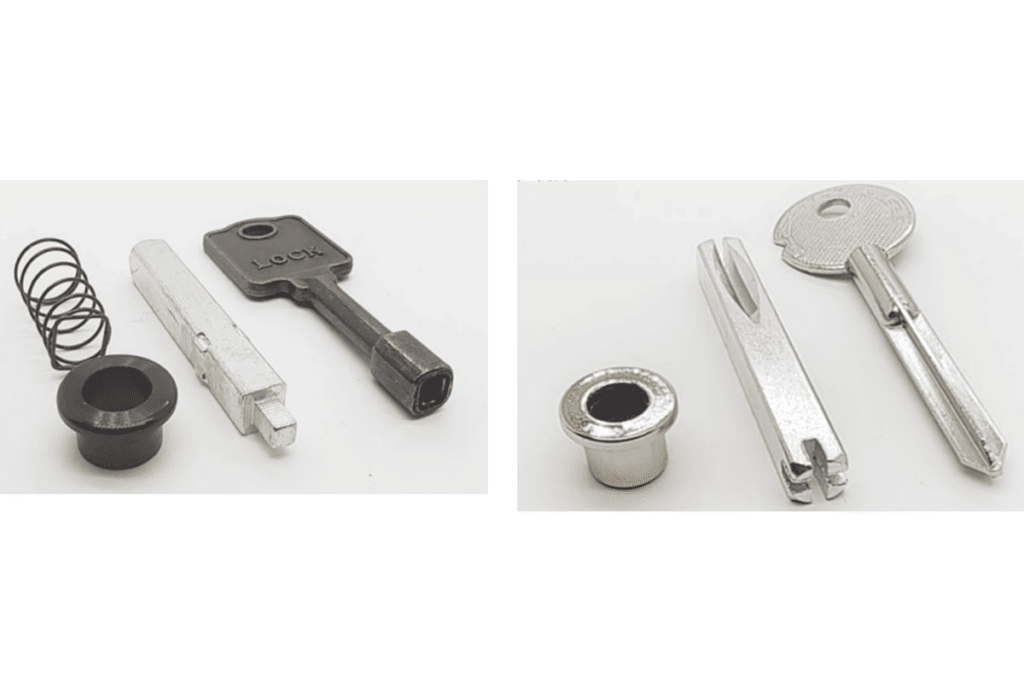
How to match lever handle spindle to mortise lock follower
A lever handle spindle looks simple, but a wrong match can stop a mortise lock from working correctly. Buyers often focus on the square size first, then discover panic, classroom, or night latch functions need a different spindle type. The safer solution is to check lock function, spindle type, section size, and final length together.
To match a lever handle spindle to a mortise lock follower, start with the mortise lock function, then confirm whether the lock needs a full spindle, split spindle, or half spindle. After that, verify the spindle square size, door thickness, handle rose or backplate height, and supplier drawings before bulk ordering.
I have seen many mismatch questions begin with one assumption: “The follower is 8mm, so the handle must fit.” That shortcut is risky. In real B2B procurement, the spindle must support the lock function, the door design, and the installation hardware as a complete system.
Why should lock function come before lever handle spindle size?
A lever handle spindle mismatch often starts when buyers check only the follower square hole. The lock may look compatible on paper, but the internal function may require a special spindle arrangement. If the spindle type is wrong, the handle can move without operating the latch correctly.
The lock function should come first because it determines the spindle type.1 A standard mortise lock normally uses a one-piece full spindle. Panic, escape, classroom, and night latch functions may require split or half spindles.2 The square size matters, but it should be checked after the function is confirmed.
The follower hole is not the whole story
The mortise lock follower is the part that receives the spindle and transfers handle movement into the lock mechanism.3 Many buyers naturally check the visible square opening first. That is useful, but it is not enough.
In my supplier-side work, I have handled questions where the spindle entered the follower correctly, but the lock still failed during testing. The reason was not the 8mm square. The reason was that the lock function needed a different spindle type.
A standard passage or entrance mortise lock often uses a one-piece full spindle. Both handles act through the same spindle. When one side turns, the spindle transfers movement through the lock body.
However, some locks are designed for controlled operation from each side. For example:
- A72ZE panic or escape locks commonly require split spindles.
- A72ZCR classroom locks commonly require split spindles.
- Night latch lock functions may require a half spindle.
- Some special project locks may have side-specific operation rules.
This is why I always ask buyers about the lock function before I discuss spindle size. The same square section can still be wrong if the operating principle is wrong.
Common lock function and spindle type relationship
| Mortise lock function | Common spindle type | Main reason to confirm |
|---|---|---|
| Standard mortise lock | Full spindle | Both handles usually operate through one spindle |
| Panic / escape lock, such as A72ZE | Split spindle | Inside and outside operation may differ |
| Classroom lock, such as A72ZCR | Split spindle | One side may be controlled differently |
| Night latch function | Half spindle | One side may not operate the latch by handle |
| Special project lock | Confirm by drawing/sample | Function may vary by brand or market |
This table is only a practical starting point. It should not replace the lock manufacturer’s technical sheet. Different brands can define functions differently. Regional standards can also affect the spindle design.
A better buyer question
Instead of asking:
“Is this an 8mm spindle?”
I suggest asking:
“Which spindle type does this mortise lock function require: full, split, or half?”
That question changes the discussion. It moves the evaluation from a single dimension to a compatibility check. It also reduces the risk of ordering a large batch of lever handles that cannot operate the lock correctly.
For B2B buyers, this matters because a spindle error is not just a small accessory issue. It can delay door production, stop site installation, create returns, and damage customer confidence. A few minutes spent confirming the lock function can prevent a much larger problem later.
Which lever handle spindle type matches each mortise lock function?
A lever handle spindle can be full, split, or half, and each type supports a different lock behavior. The problem appears when buyers treat these spindle types as interchangeable. The result can be a handle that fits into the follower but does not match the lock’s intended operation.
A full spindle normally suits standard mortise locks. A split spindle is commonly used for panic, escape, and classroom functions where each side may operate differently. A half spindle may be required for night latch functions. The correct choice should always be confirmed against the lock body drawing and function description.

Full spindle
A full spindle is a one-piece bar that passes through the handle set and lock follower. It is the most familiar type for many standard lever handle applications. In many standard mortise lock sets, this design works well because both sides of the door use the same rotational movement.
A full lever handle spindle is commonly used for:
- Standard latch operation
- Standard entrance lock functions
- Interior door handle sets
- Many Euro mortise lock applications
However, “common” does not mean universal. A buyer should still check the lock drawing and handle fixing method. Some locks may have special followers, spring requirements, or handle-side restrictions.
Split spindle
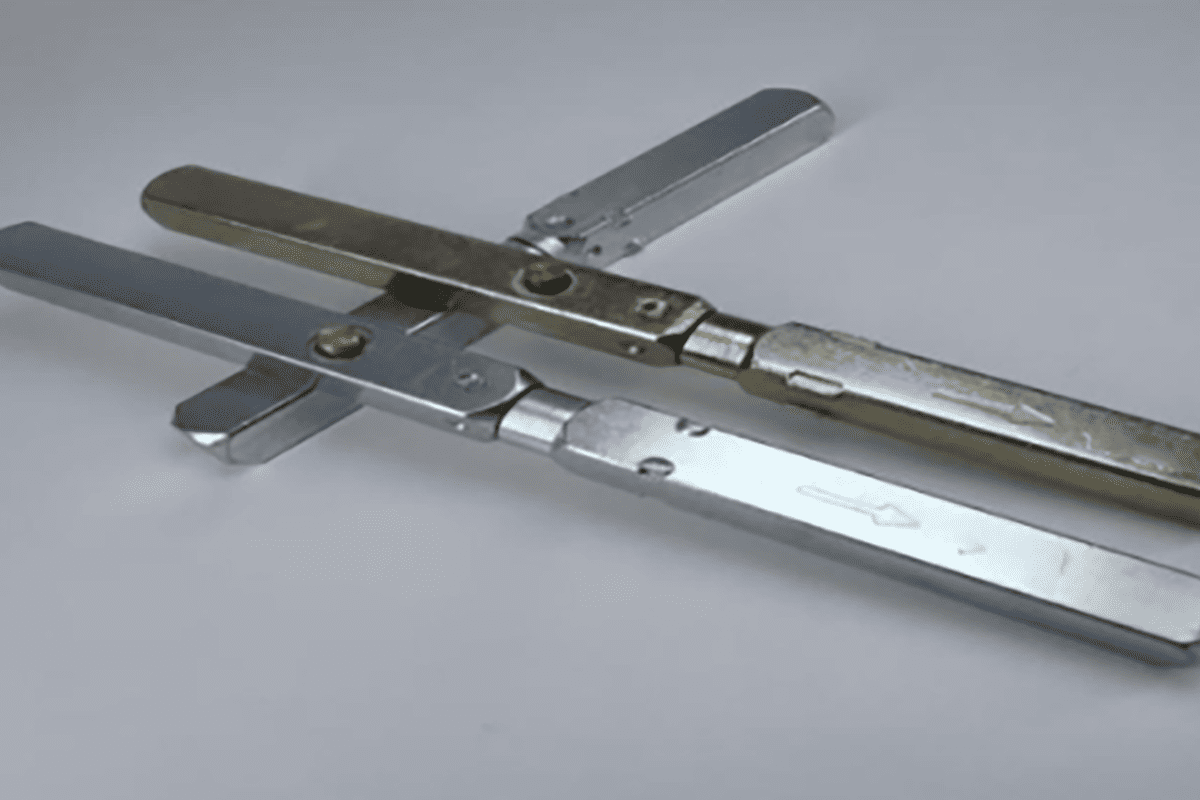
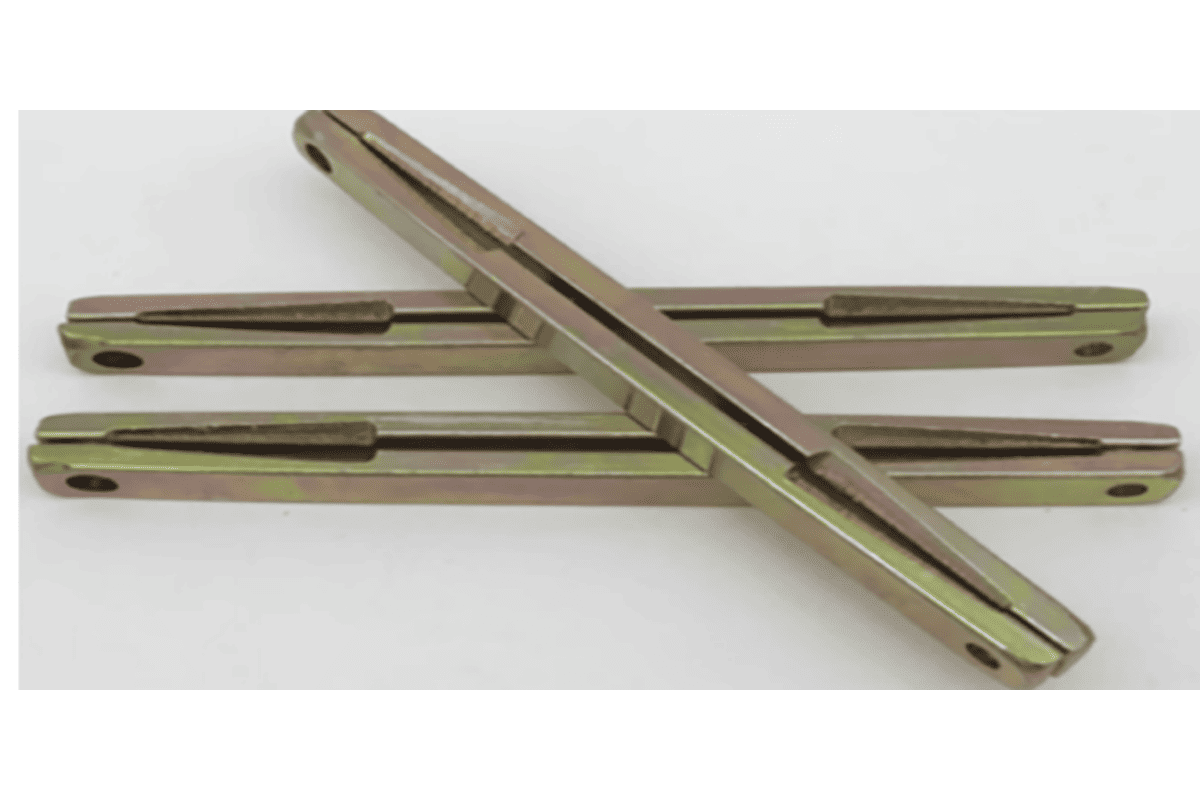
A split spindle is not one continuous bar. It uses two separate spindle parts, usually one for each side of the door. This allows the lock body to control inside and outside handle movement differently.
Split spindle systems are important for functions such as:
Panic or escape operation
The inside handle may need to retract the latch freely for emergency exit.4 The outside handle may be controlled by key or another mechanism.Classroom function
The outside handle may be lockable or controlled, while the inside handle may remain free for egress, depending on the function design.5Function-specific commercial locks
Some commercial door specifications require different behavior on each side.
This is where many mismatch issues happen. A buyer may order a standard handle set with a full spindle because the follower size looks correct. Then the installer finds that the lock function does not perform as required. The lock may not engage properly, or the outside handle may operate when it should not.
Half spindle
A half spindle is used when only one side of the handle needs to operate the lock follower. Night latch functions may use this approach, depending on the lock design.
A half spindle can be relevant when:
- The outside side uses a fixed knob or pull.
- The latch is controlled from one side only.
- The lock body is designed for asymmetric operation.
- The project specification limits handle operation from one side.
For importers and wholesalers, this point is important because the handle appearance may be the same. The difference is hidden in the accessory configuration. If the spindle type is not clearly specified before production, the packing list may look correct, but the installation result can still fail.
Practical supplier-side checklist
When I review a spindle inquiry, I prefer to confirm these details before quoting or production:
- Mortise lock model and function
- Follower type and spindle operation design
- Required spindle type: full, split, or half
- Handle model and fixing method
- Door thickness range
- Rose or backplate height
- Required market standard, such as German or Italian specification
- Drawings, samples, or previous successful order references
This method is slower than giving a quick answer, but it is safer for bulk orders. It also helps buyers avoid mixing different spindle types across similar-looking lock functions.
How do you confirm lever handle spindle section size?
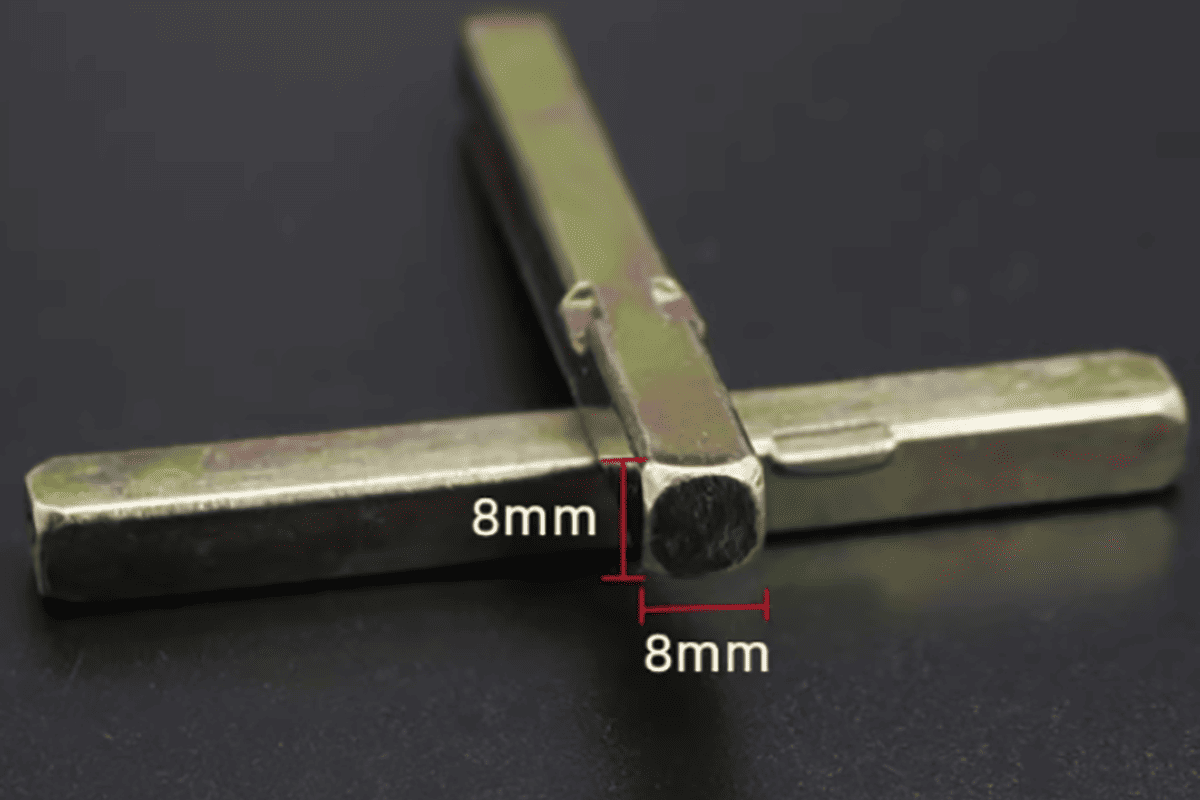
A lever handle spindle section size should be confirmed only after the lock function and spindle type are clear. Buyers often assume 8mm is universal, especially in German-standard projects. That assumption can create problems because 7mm, 9mm, and Italian 6mm applications also exist.
The spindle section size must match the mortise lock follower and the handle hub. German-standard applications commonly use 8mm, but 7mm and 9mm options are also found.6 Italian-standard locks may require 6mm, and some magnetic lock bodies have limited internal space that prevents an 8mm spindle from fitting.
Common square spindle sizes
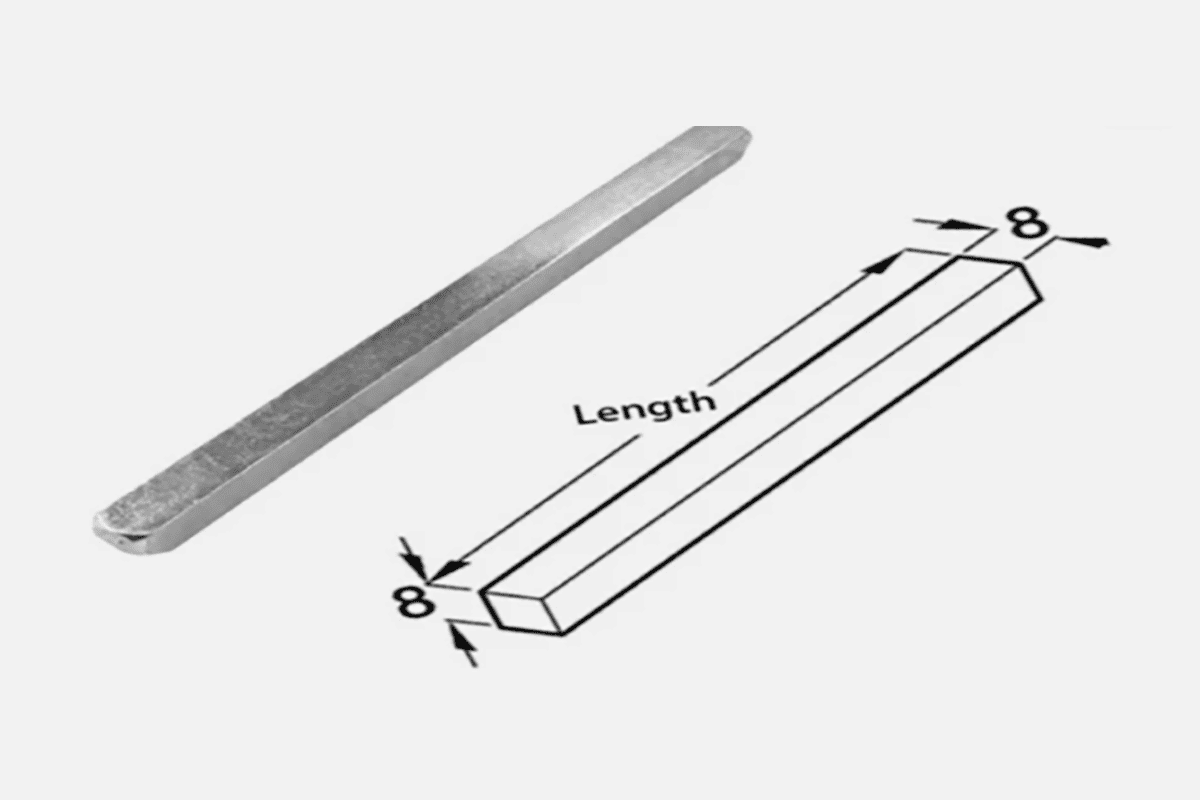
The spindle section is usually a square bar. The dimension is measured across one side of the square, such as 8mm × 8mm. The handle hub, lock follower, and spindle should work together without excessive looseness or forced fitting.
Common sizes include:
| Spindle section size | Common application context | Buyer note |
|---|---|---|
| 6mm | Some Italian-standard locks and compact lock bodies | Should be checked carefully against lock drawing |
| 7mm | Certain regional or older specifications | Not a substitute for 8mm |
| 8mm | Common German-standard applications | Common, but not universal |
| 9mm | Some heavy-duty or regional applications | Requires matching handle and follower |
The 8mm spindle is common in many European architectural hardware specifications. At SDH Hardware, I often see buyers use 8mm for German-standard Euro mortise lock applications. Still, I do not treat it as a universal answer. The lock drawing should confirm it.
Why 6mm can matter in Italian-standard cases
Italian-standard applications may require 6mm spindle sections.7 This is especially important for certain magnetic lock bodies. Some of these locks have limited lower internal space, so an 8mm spindle may physically interfere with the mechanism or simply fail to fit.8
This detail is easy to miss because many buyers standardize their handle purchasing around one spindle size. That approach may work across one product line, but it becomes risky when the buyer adds a new lock series or enters a new market.
For example, a door factory may use 8mm spindles for most Euro mortise locks. Then the factory receives an order requiring magnetic locks for a different regional specification. If the team uses the existing 8mm spindle without checking the lock body, they may discover the issue only during trial installation.
Fit is more than “can it enter the hole?”
The section size should be checked for three kinds of fit:
Dimensional fit
The spindle should enter the follower and handle hub without forcing.Functional fit
The spindle should rotate cleanly and operate the latch or deadlocking function as designed.Durability fit
The spindle should not create excessive play, stress, or premature wear.
A spindle that is too small can create looseness. The lever may feel weak or unstable. A spindle that is too large can damage the follower or fail to enter the lock.9 Even a small mismatch can matter when the order quantity is high.
What buyers should request before confirming size
For bulk procurement, I suggest buyers request:
- Lock body technical drawing
- Follower square size
- Handle hub square size
- Spindle tolerance information, if available
- Sample confirmation for new lock-handle combinations
- Written confirmation from the supplier
This is also where an experienced factory can help. As a door hardware manufacturer, we normally review the handle, lock, and spindle as a set. However, final application suitability should still be verified against the buyer’s door construction, project standard, and installation conditions.
How long should a lever handle spindle be for the complete door set?
A lever handle spindle length should not be calculated from the lock body alone. The common mistake is to check the door thickness but ignore the height of the handle roses or backplates. Then the spindle may be too short to engage properly or too long for clean installation.
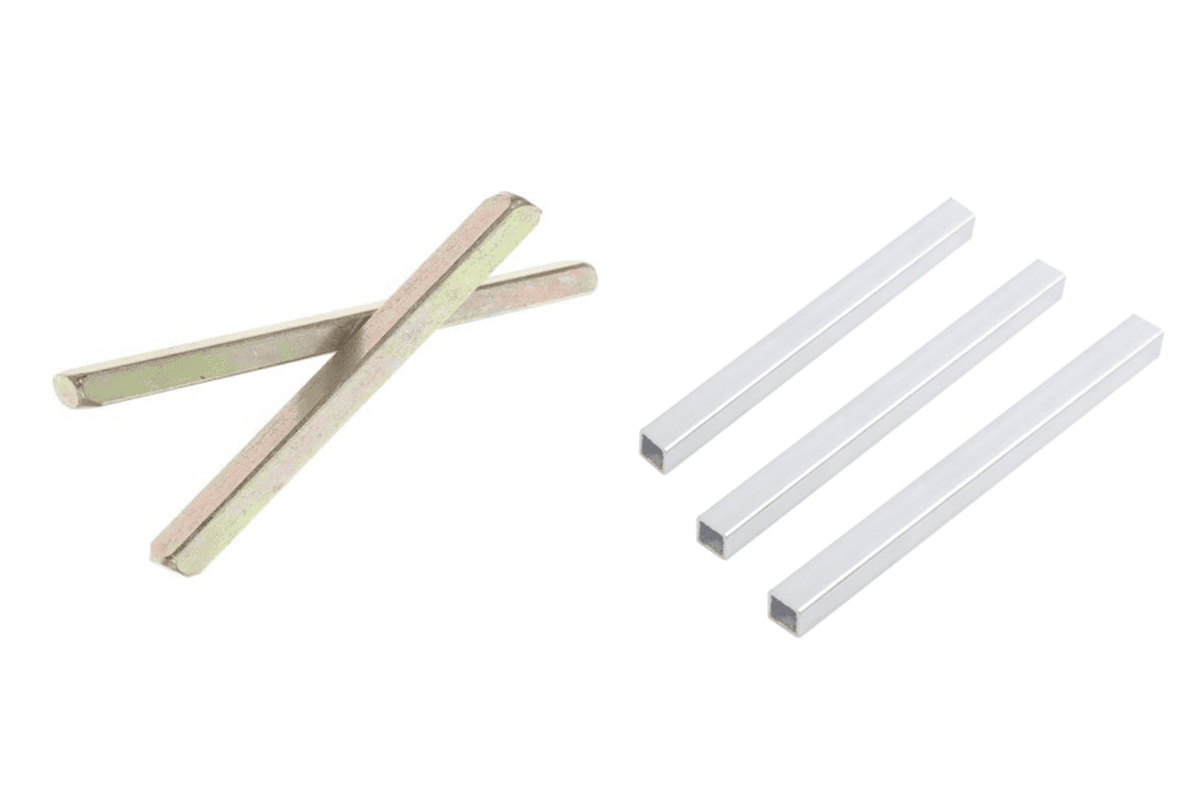
The minimum spindle length should be calculated as door thickness plus the height of both handle covers or roses.10 A 110mm spindle is commonly used and can often be cut down according to actual door size, but the final length should be verified before installation and bulk shipment.
The basic length formula
The practical minimum length formula is:
Minimum spindle length = door thickness + outside rose or backplate height + inside rose or backplate height
This formula is simple, but it prevents many installation problems. The lock body sits inside the door, but the spindle must pass through the complete handle set. The handle covers or roses add height on both sides.
For example:
| Door thickness | Outside rose height | Inside rose height | Minimum spindle length |
|---|---|---|---|
| 40mm | 10mm | 10mm | 60mm |
| 45mm | 12mm | 12mm | 69mm |
| 50mm | 10mm | 10mm | 70mm |
| 55mm | 14mm | 14mm | 83mm |
This table gives a calculation method, not a final universal size. Handle construction, grub screw position, spindle engagement depth, and project tolerance can change the practical requirement.
Why 110mm is common but still needs checking
A 110mm lever handle spindle is commonly used because it gives flexibility.11 Installers or factories can cut it down based on the door thickness and handle set. This is useful for wholesalers and door factories because one stock size can cover several applications.
However, cutting is not a replacement for specification control. The final length should be checked before installation. If the spindle is cut too short, it may not engage securely with the handle hub. If it remains too long, it may push against the handle assembly or prevent the roses from sitting correctly.
In my experience, length problems often appear in mixed-product orders. A buyer may combine:
- One lock body series
- Two different handle rose designs
- Several door thicknesses
- Different project markets
The spindle length that works for one combination may not work for another.
What to check before production
Before placing a bulk order, buyers should confirm:
Actual door thickness
Do not use a rough estimate if the door construction varies.Both cover heights
The inside and outside rose or backplate may not always be the same.Handle fixing method
Grub screw, bolt-through fixing, and spring cassette designs may affect engagement.Required spindle engagement
The spindle should sit securely in the handle hub.Whether cutting is allowed
Some spindles are easier to cut than others. Split and special spindles may need more care.Packing and labeling
Bulk buyers should avoid mixing different spindle lengths without clear packing identification.
Length errors affect function and perception
A spindle that is slightly wrong may still allow the handle to move during a quick test. But after installation, the door may feel loose, noisy, or unreliable. In commercial projects, that becomes a quality issue.
For hardware brand enterprises, this matters because end users judge the complete door set, not just the lock body. A good lock and a good handle can still feel poor if the spindle length is wrong. That is why I recommend checking the full set before shipment, especially for new combinations.
What pre-order checklist prevents lever handle spindle and follower mismatch?
A lever handle spindle mismatch is easiest to prevent before the order is produced. The problem becomes expensive after shipment because the parts may already be packed, branded, and distributed. A clear pre-order checklist helps buyers control function, size, length, and accessory configuration.
The best pre-order checklist confirms lock function, spindle type, spindle square size, door thickness, rose or backplate height, handle fixing method, and required spindle length. Buyers should also verify drawings, samples, and supplier specification sheets before approving mass production or shipping.
A practical compatibility checklist
I recommend using the following checklist before confirming a lever handle and mortise lock order:
| Check item | What to confirm | Why it matters |
|---|---|---|
| Lock function | Standard, panic, classroom, night latch, etc. | Determines spindle type |
| Spindle type | Full, split, or half | Controls lock operation |
| Square section size | 6mm, 7mm, 8mm, 9mm, or other | Matches follower and handle hub |
| Door thickness | Actual door range | Affects final spindle length |
| Rose/backplate height | Both sides of the door | Adds to required length |
| Handle fixing | Grub screw, bolt-through, spring design | Affects engagement and assembly |
| Lock drawing | Follower and function details | Reduces assumption risk |
| Sample test | Complete door set if possible | Confirms real installation |
| Packing requirement | Label spindle type and size | Prevents warehouse mix-ups |
This checklist is especially useful for door factories, importers, and wholesalers. These buyers often handle many SKUs and repeat orders. A small mistake can multiply quickly across hundreds or thousands of sets.
How I would evaluate a new combination
When a customer asks whether a handle can match a lock, I normally work through the question in this order:
What lock function is it?
I want to know whether the lock is standard, panic, classroom, night latch, or another function.What spindle type does the function need?
I check whether the application needs full, split, or half spindle operation.What is the follower square size?
I confirm the section size only after the function and spindle type are clear.What is the door thickness?
I check the actual range, not only the nominal value.What handle rose or backplate is used?
I include the cover height on both sides.Can we verify by drawing or sample?
I prefer written confirmation and trial assembly for new projects.
This order helps avoid the common “8mm first” mistake. It also creates a more professional communication record between buyer and supplier.
Why this matters for B2B quality control
For a single home installation, a wrong spindle may be inconvenient. For a B2B order, it can be a commercial problem. The buyer may face:
- Delayed door production
- Repacking costs
- Site installation failure
- Customer complaints
- Return shipments
- Brand reputation damage
- Extra air freight for replacement accessories
These risks are avoidable with better specification control. The spindle is a small component, but it connects the handle, lock body, and user experience.
Supplier selection also matters
A good supplier should be able to discuss more than the handle appearance. The supplier should understand lock functions, spindle types, common regional standards, and production tolerances. For customized orders, the supplier should also provide drawings, accessory configuration confirmation, and inspection support.
At SDH Hardware, we work with standardized and customized architectural door hardware, including Euro mortise locks, stainless steel lever handles, hinges, cylinders, and door accessories. For project or OEM orders, I prefer to confirm the full hardware set before production. Buyers should still verify all certifications, fire-rated documents, and technical drawings for their specific project requirements.
Frequently Asked Questions
Is an 8mm lever handle spindle always compatible with an 8mm mortise lock follower?
No. An 8mm spindle may fit the follower size, but it may still be wrong for the lock function. Panic, escape, classroom, or night latch locks may need split or half spindles. Buyers should confirm function, spindle type, and drawings before ordering.
What is the difference between a full spindle and a split spindle?
A full spindle is one continuous bar that usually operates both handles together. A split spindle uses separate spindle parts for each side of the door. Split spindles are commonly used when inside and outside handle operation must differ, such as some panic or classroom lock functions.
How do I calculate the correct spindle length?
Calculate the minimum length as door thickness + outside rose or backplate height + inside rose or backplate height. A 110mm spindle is commonly supplied and cut down, but the final length should be checked against the complete handle and lock set.
When would a 6mm spindle be required?
A 6mm spindle may be required in some Italian-standard lock applications. It can also appear in compact or magnetic lock bodies where internal space is limited. Buyers should not replace it with 8mm unless the lock drawing and supplier confirm compatibility.
Should I test samples before placing a bulk order?
Yes. Sample testing is strongly recommended for new handle and mortise lock combinations.12 A sample can confirm function, spindle type, square size, length, handle engagement, and installation feel before mass production, branding, or shipment.
Conclusion
Matching a lever handle spindle to a mortise lock follower is a full compatibility check, not only a square-size decision. Start with the lock function, then confirm whether the application needs a full, split, or half spindle. After that, verify the section size, door thickness, rose or backplate height, and final spindle length. If you are preparing a bulk order, share your lock drawings, handle model, door thickness, and function requirements with us so we can help review the spindle configuration before production.
"087100 – DOOR HARDWARE - Facilities and Campus Services", https://fcs.cornell.edu/087100-door-hardware. Institutional architectural-hardware guidance links spindle configuration to lock function, because the required inside and outside lever behavior differs by function; this supports the article’s sequencing of function before size, though exact spindle selection remains product-specific. Evidence role: general_support; source type: institution. Supports: The source should show that lock function, such as passage, classroom, emergency exit, or night latch operation, affects spindle arrangement.. Scope note: Contextual support; individual manufacturers may implement the same named function differently. ↩
"Understanding Lock Functions", https://lockdontblock.org/wp-content/uploads/2017/07/Understanding-Lock-Functions-DH-May-2015.pdf. Architectural-hardware references describe split and half spindle arrangements for lock functions requiring side-specific operation, including emergency egress and controlled-entry functions; this supports the general compatibility principle, but not every panic, classroom, or night latch model will use the same arrangement. Evidence role: general_support; source type: institution. Supports: The source should document that side-specific lock functions can use split spindles or half spindles to separate inside and outside operation.. Scope note: Contextual support; the word “may” should remain because designs vary by standard, market, and manufacturer. ↩
"Mortise lock", https://en.wikipedia.org/wiki/Mortise_lock. Institutional lock-hardware terminology sources define the follower or hub as the part of a lock case that receives the lever spindle and transfers rotation to the latch mechanism; this supports the functional description, but does not verify any specific product compatibility. Evidence role: definition; source type: institution. Supports: The source should define the follower or hub as the component actuated by a lever spindle to operate the latch or lock mechanism.. Scope note: Definition-level support only; it does not prove compatibility for a particular lock and handle set. ↩
"prEN 179 - Emergency Exit Devices Lever Handle Push ...", https://standards.iteh.ai/catalog/standards/cen/01525131-4221-4727-8131-244a49c1f80e/pren-179?srsltid=AYCX9vKOl50sb3WZH43p1hIBQ2XQrcg1CF-BMSt0m7uX74avjfLnNrkf. Life-safety codes and emergency-exit device standards require egress-side door hardware to permit latch release for exit without special knowledge or effort; this supports the article’s statement about free inside operation, while the exact spindle design is determined by the certified lockset. Evidence role: expert_consensus; source type: government. Supports: The source should support that egress doors and emergency-exit devices are designed to permit exit-side latch release without special knowledge or effort.. Scope note: Supports the egress principle rather than directly specifying a spindle type for every lock. ↩
"Allegion Basics of Lock Functions Article", https://us.allegion.com/content/dam/allegion-us-2/web-files/allegion/information-documents/Allegion_Basics_of_Lock_Functions_Article_109884.pdf. Recognized lock-function classifications describe classroom functions as controlling or locking the outside lever while permitting inside egress operation; this supports the functional distinction, but product-specific behavior depends on the exact ANSI/BHMA function number or regional equivalent. Evidence role: definition; source type: institution. Supports: The source should define classroom lock functions as allowing outside locking or control while preserving inside egress operation.. Scope note: Definition-level support; it does not identify the spindle arrangement for all classroom locks. ↩
"DIN EN 1906 - HOPPE | United States & Canada", https://www.hoppe.com/us-us/door-handles/standards-and-solutions-door-handles/din-en-1906/. European architectural-hardware standards and technical references identify square spindle dimensions such as 8 mm and other regional variants, supporting the article’s warning that one nominal size is not universal; availability of 7 mm or 9 mm sizes remains market- and product-dependent. Evidence role: general_support; source type: institution. Supports: The source should identify common European square spindle sizes used with lever handles and mortise locks.. Scope note: General dimensional support; it does not establish prevalence in every German-standard project. ↩
"Verum Magnetic Mortise Lock", https://store.angelbau.com/products/verum-magnetic-mortise-lock?srsltid=AYCX9vJ3vdZYUQVOrYKwlTP0B7wc2Ukz8kz6PomZj1c24GaVeN4TrEYV. Technical references on European and Italian lock hardware document the use of 6 mm square spindles in some applications, supporting the article’s caution against assuming an 8 mm spindle; the source would provide contextual dimensional evidence rather than proof for every Italian-standard lock. Evidence role: general_support; source type: institution. Supports: The source should show that 6 mm square spindles appear in Italian or compact European lock applications.. Scope note: Contextual support; Italian-market products are not uniform and must still be checked by drawing. ↩
"Interior Mortise Lock with Magnetic Latch", https://www.emtek.com/Interior-Mortise-Lock-with-Magnetic-Latch/. Technical drawings for compact or magnetic mortise lock bodies show that spindle aperture size and internal mechanism clearance constrain the spindle section that can be used; this supports the mechanical rationale, though the interference risk must be verified on the specific lock model. Evidence role: mechanism; source type: other. Supports: The source should show that lock-body geometry and internal clearance can constrain the spindle size that fits or operates correctly.. Scope note: Model-specific support is needed for direct proof; general drawings only support the mechanism. ↩
"Types of Fit in Engineering: Clearance, Transition, and ...", https://www.fictiv.com/articles/engineering-fits-clearance-transition-interference. Engineering references on fits and tolerances explain that excessive clearance can cause play while excessive interference can prevent assembly or damage mating components; this supports the spindle-fit mechanism by analogy, although the exact damage threshold depends on the lock materials and tolerances. Evidence role: mechanism; source type: education. Supports: The source should explain how clearance fits and interference fits affect looseness, assembly, stress, and wear.. Scope note: Mechanical-principle support rather than lock-specific test evidence. ↩
"What is a Spindle and what kind do I need? - Our Blog", https://www.morehandles.co.uk/blog/more-handles-technical-guides-what-is-spindle-and-how-do-i-know-what-kind-i-need/. Door-hardware installation guidance treats spindle length as a function of the door thickness plus the external handle or rose assemblies that the spindle must pass through; this supports the stated calculation method, while final length also depends on hub engagement and fixing details. Evidence role: mechanism; source type: other. Supports: The source should support that spindle length must span the door and the handle assemblies on both sides.. Scope note: Practical installation support; it does not replace product-specific installation instructions. ↩
"BE-TOOL Door Handle Spindle Bar Universal ...", https://www.amazon.com/clp/B0DFH3CDXY. Door-hardware installation references and product specifications commonly list 110 mm square spindles and describe cutting to suit door thickness, supporting the article’s statement about flexibility; the evidence reflects common practice rather than a universal standard. Evidence role: general_support; source type: other. Supports: The source should show that 110 mm lever-handle spindles are commonly supplied and may be cut down for installation.. Scope note: Market-practice support; not all spindle types, especially split or special spindles, are intended to be cut. ↩
"First article inspection", https://en.wikipedia.org/wiki/First_article_inspection. Quality-management guidance on first-article inspection and product verification supports testing representative samples before production release to confirm that requirements are met; this supports the article’s sample-testing advice, though it is general QC evidence rather than door-hardware-specific proof. Evidence role: expert_consensus; source type: institution. Supports: The source should support sample verification, first-article inspection, or validation before production release.. Scope note: General quality-control support; specific acceptance criteria must be defined for the hardware project. ↩
