
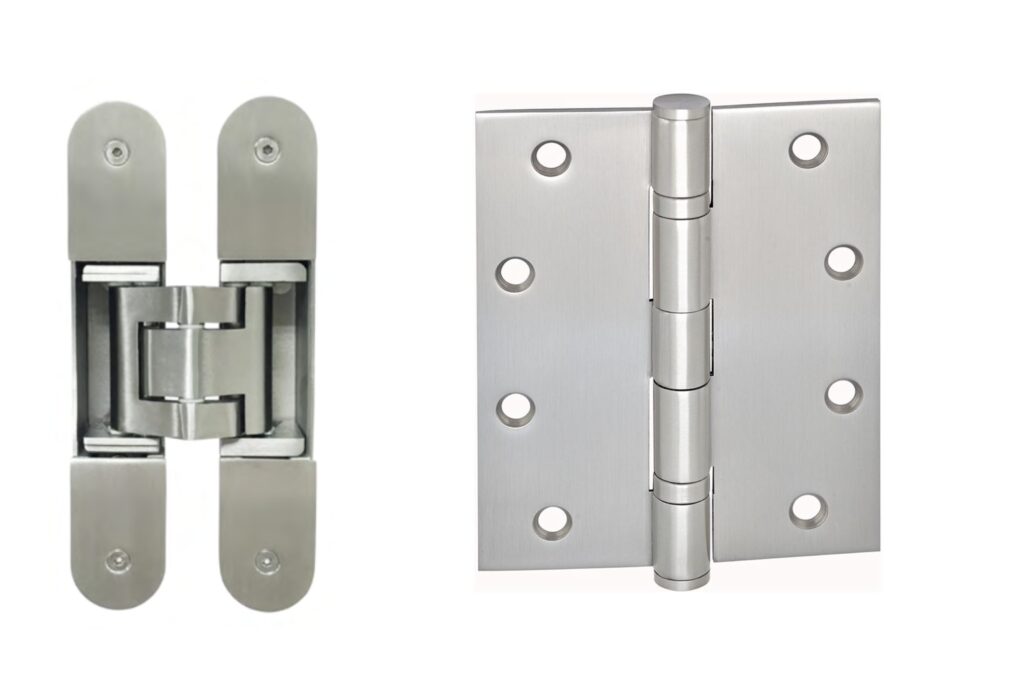
EN 1935 Grades: Can Concealed Hinges Reach The Same Grade As Butt Hinges?
EN 1935 Grades can confuse buyers when they compare concealed hinges with traditional butt hinges. The risk is simple: a grade number may look reassuring, but the wrong hinge can still cause sagging, noise, poor adjustment, or after-sales claims. I use EN 1935-style testing as a practical reference, but I always connect the result to rated load, material, and door application.
Concealed hinges can reach comparable EN 1935-style test levels in certain applications, but they are not automatically equal to butt hinges. EN 1935 was mainly written for single-axis butt hinges, while concealed hinges are multi-axis products. Buyers should judge each concealed hinge by rated load, material, 200,000-cycle testing, installation conditions, and the real door system.
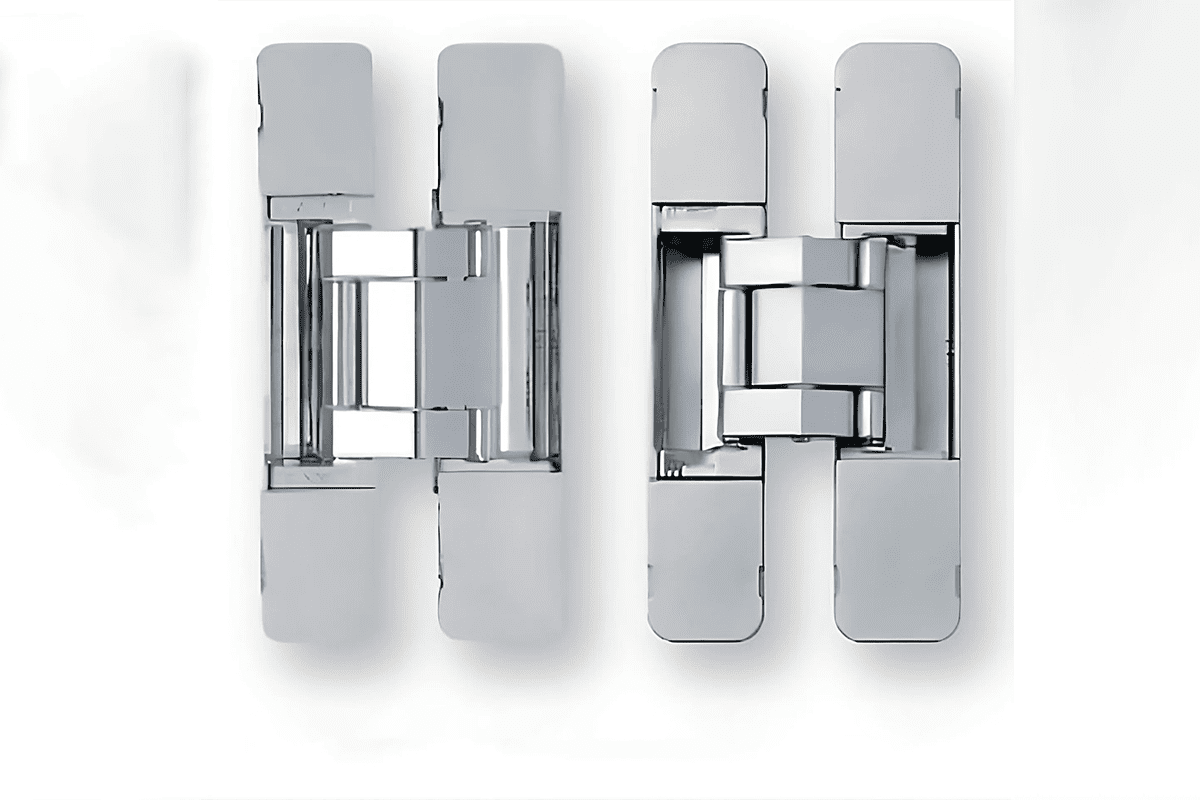
This distinction matters because a hinge is not only a test sample. It becomes part of a door system.1 Below, I will explain how I evaluate concealed hinges in factory testing, how load ranges differ by material, and when a concealed hinge can realistically compete with a butt hinge.
What Do EN 1935 Grades Really Mean For Concealed Hinges?
EN 1935 Grades often look like a simple ranking system, but that view can mislead buyers. The problem becomes more serious when a concealed hinge is compared with a butt hinge only by grade. I prefer to start with the test scope before I discuss the number.
EN 1935 is a European standard mainly used for single-axis building door hinges.2 Concealed hinges are multi-axis products3, so manufacturers commonly use EN 1935 procedures as a reference test method. For concealed hinges, the meaningful result is not the grade alone, but performance under rated load and defined test conditions.
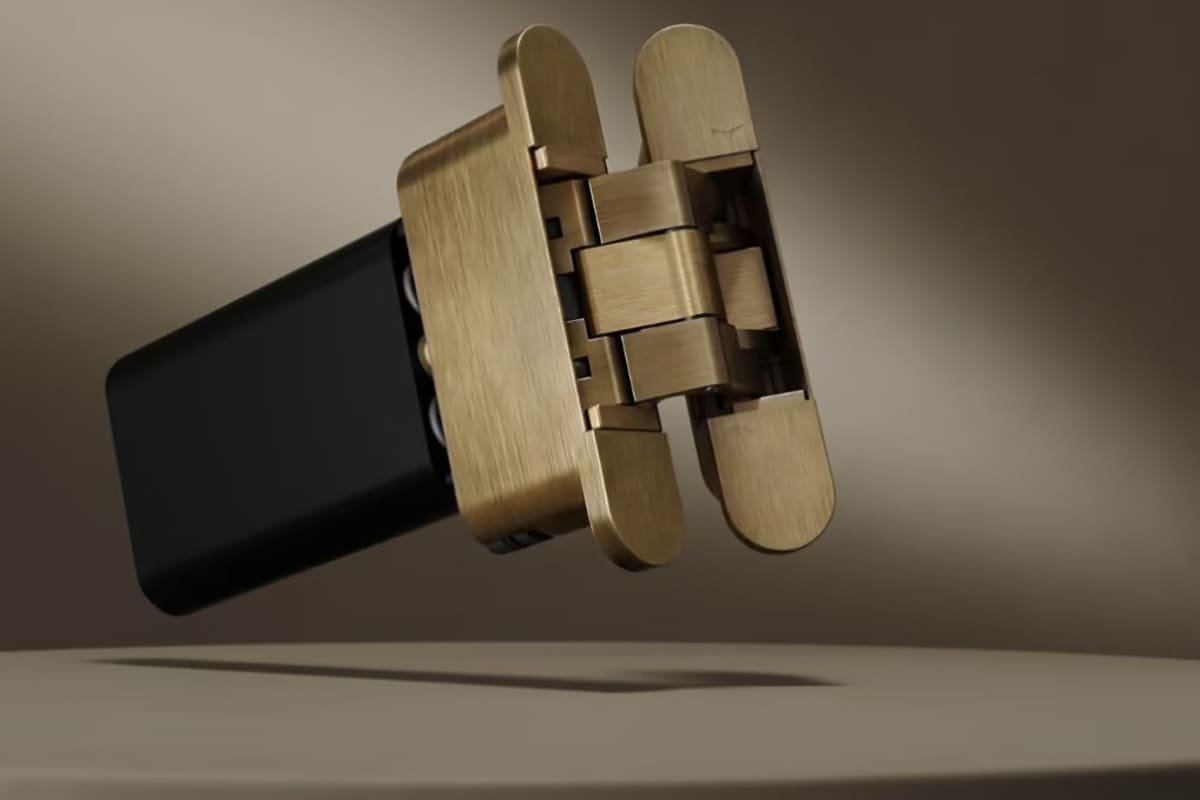
EN 1935 was not designed around multi-axis concealed hinges
In daily purchasing discussions, I often hear one question: “Can your concealed hinge reach the same EN 1935 grade as a butt hinge?” I understand why buyers ask it. They need a simple way to compare products. However, the question needs a careful answer.
EN 1935 was originally created around single-axis hinges, such as common butt hinges used on building doors. A butt hinge rotates around one clear pin axis. Its movement is direct and easy to define during a durability test.
A concealed hinge works differently. It usually has:
- Multiple moving links
- Hidden arms or sliding elements
- Adjustment screws
- A more complex load path
- Different installation pockets in the door and frame
Because of this structure, the same door weight can stress a concealed hinge in a different way from a butt hinge.
How I use EN 1935 as a practical reference
In our factory-side work at SDH Hardware, I treat EN 1935 as a reference procedure for concealed hinge evaluation, not as a perfect one-to-one standard written only for concealed hinges. That is an important difference.
When I review a concealed hinge test, I look at:
| Evaluation Point | Why It Matters For Buyers |
|---|---|
| Rated door weight | Shows the intended load range, not unlimited capacity |
| Test cycles | Confirms durability under repeated opening and closing |
| Material | Zinc alloy and stainless steel behave differently |
| Door width | Wider doors create higher torque on hinges |
| Installation method | Poor routing or weak frame support can reduce performance |
| Adjustment range | Concealed hinges often need precise post-installation alignment |
I have seen buyers focus too much on the grade number and too little on the application. That is risky. A concealed hinge tested at a nominal load may perform very well in the correct system. The same hinge may fail early if used on a wider, heavier, or high-frequency door beyond its intended design.
My practical rule is simple: I do not treat EN 1935 Grades as a universal replacement for engineering judgment.
Why grade comparison still has value
This does not mean EN 1935-style testing is useless for concealed hinges. It has strong procurement value when the test conditions are clearly stated. It gives door manufacturers, hardware brands, and importers a common language for durability discussion.
A buyer can ask:
- What rated load was used in the test?
- Was the hinge tested for 200,000 cycles?4
- What material was the tested model made from?
- Was the test internal or third-party?
- Is the report connected to the exact model being quoted?
These questions help separate marketing claims from useful performance evidence.
At SDH Hardware, we manufacture both standardized and customized architectural hardware, so I see this issue from the supplier side. The best buyers do not ask only for “the highest grade.” They ask whether the hinge matches the door construction, market requirement, and expected service environment. That approach reduces complaints and protects both sides.
Can EN 1935 Grades For Concealed Hinges Match Butt Hinges In Real Testing?
EN 1935 Grades can be used to compare durability levels, but the comparison must be controlled. The common mistake is to assume that a concealed hinge and a butt hinge are interchangeable once a similar test level is reached. That assumption creates design and warranty risk.
A concealed hinge can reach a comparable EN 1935-style test level when it is designed, produced, installed, and tested under its rated load. However, a passing test does not automatically mean it can replace a butt hinge on every door. Door weight, width, frame strength, and usage frequency still decide suitability.
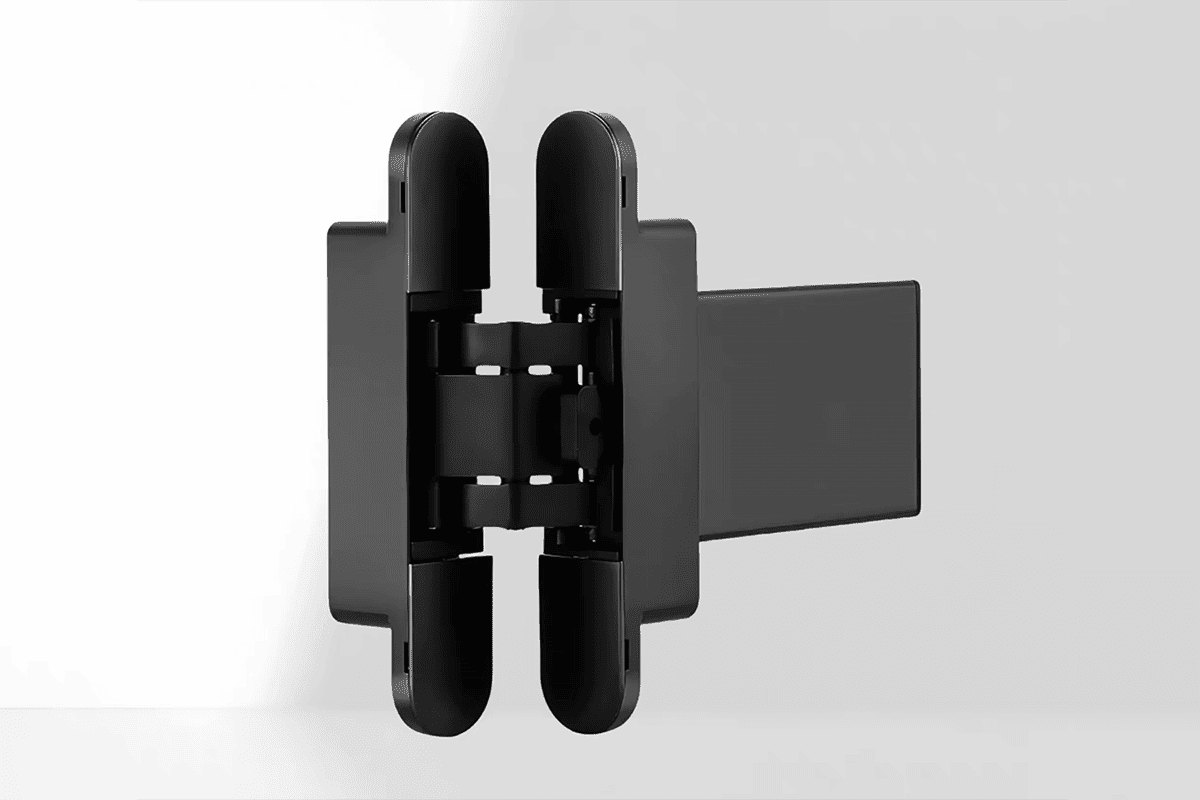
Comparable test level is not the same as identical function
Butt hinges and concealed hinges solve different architectural needs. A butt hinge is visible, simple, strong, and easy to install. A concealed hinge is hidden when the door is closed, offers a cleaner appearance, and often allows three-dimensional adjustment. These benefits come with higher requirements for machining accuracy and frame preparation.
Here is how I usually compare the two for B2B buyers:
| Factor | Butt Hinges | Concealed Hinges |
|---|---|---|
| Movement type | Single-axis rotation | Multi-axis movement |
| Appearance | Visible knuckle | Hidden when closed |
| Installation tolerance | Usually more forgiving | Requires precise routing |
| Adjustment | Limited on basic models | Often 3D adjustable |
| Load path | Direct through hinge leaves and pin | Through arms, links, and fixing points |
| Common evaluation standard | EN 1935 | EN 1935 used as reference method |
| Best use case | General commercial and residential doors | Flush, modern, premium door systems |
The table shows why I avoid a simple “yes” or “no.” A concealed hinge can perform strongly in testing, but the door system must be designed for it.
What the 200,000-cycle test proves
For hinge durability, the key evidence is life-cycle testing under marked or nominal rated load5. In our internal evaluation, I focus on whether a concealed hinge can complete 200,000 cycles under the load it is meant to carry.
That test can show:
- Whether the hinge arms deform
- Whether screws or fixing points loosen
- Whether the door drops after repeated movement
- Whether adjustment remains stable
- Whether opening and closing stay smooth
- Whether noise develops during cycling
However, the test does not prove that the hinge is suitable for every heavier or wider door. A hinge tested at 80 kg should not be marketed as suitable for 120 kg unless that higher load has also been tested and validated.
Why buyers should ask for application-based evidence
When a customer sends us a concealed hinge inquiry, I do not only ask for the target load. I also want to know the door thickness, door width, frame material, opening angle, surface finish, and market requirement. These details matter.
For example, a 60 kg residential interior door is very different from a 60 kg commercial door in a hotel corridor. The hotel door may be opened many more times each day. It may also need stronger corrosion resistance, better noise control, and more stable adjustment.
A practical buyer checklist should include:
Door weight
The hinge must match the actual finished door weight, including glass, core, cladding, and accessories.Door width
A wider door increases leverage.6 The same weight can create greater stress.Door height and hinge quantity
Tall doors may need three or more hinges for better load distribution.Frame material
Timber, aluminum, steel, and composite frames hold screws differently.7Usage frequency
Residential, hotel, office, hospital, and public building doors have different cycle demands.8Installation accuracy
Concealed hinges require accurate pocket cutting. Poor alignment can damage the hinge even if the product itself is strong.
This is why I tell buyers that comparable EN 1935 Grades are useful, but they are only one part of procurement evaluation.
How Do Material And Rated Load Affect EN 1935 Grades?
EN 1935 Grades become more useful when buyers connect them to hinge material and rated load. The problem is that many product pages mention a grade without explaining what the tested hinge was made from. That missing detail can create unrealistic expectations.
Material directly affects the rated load, durability margin, and application suitability of concealed hinges. In my factory experience, zinc alloy concealed hinges can be evaluated around 40–160 kg rated loads, while stainless steel concealed hinges can be evaluated around 80–200 kg rated loads, depending on model design and test conditions.
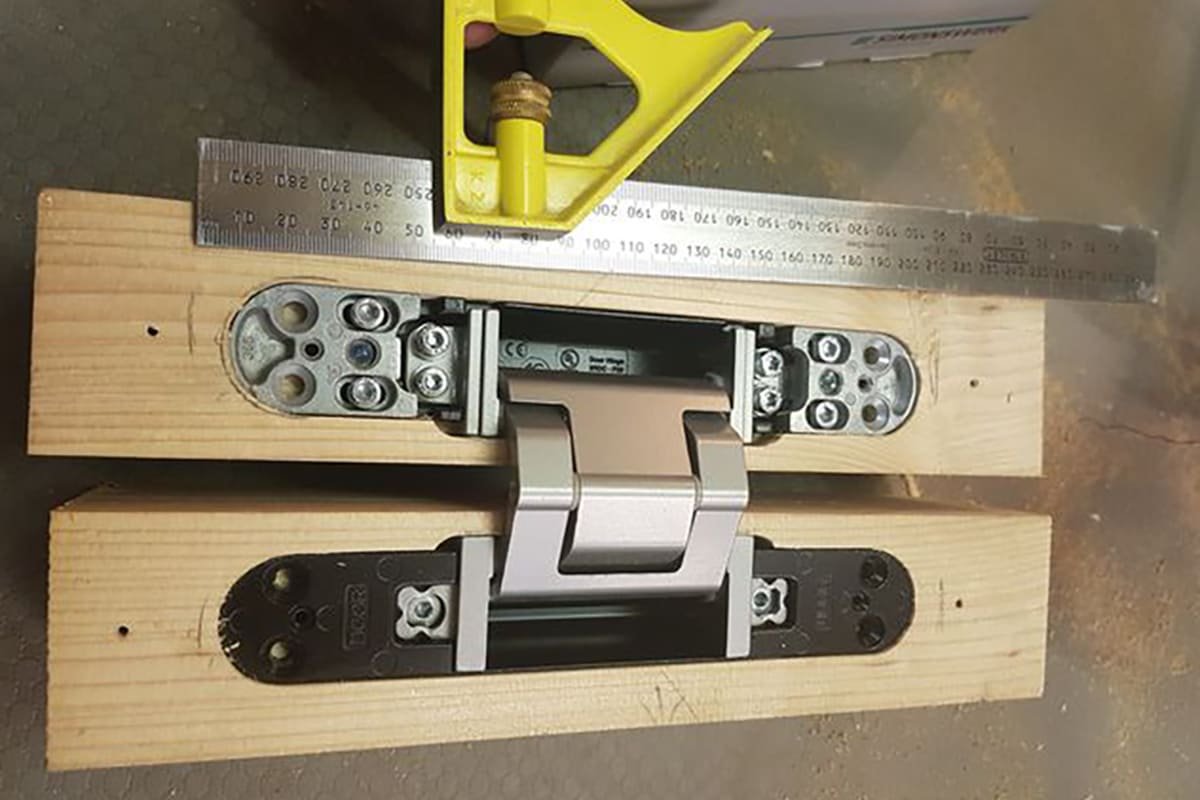
Zinc alloy concealed hinges: practical and flexible
Zinc alloy concealed hinges are widely used because they can support many common interior door applications with good dimensional stability and flexible design options. They are also suitable for many decorative finishes.
From our product experience, zinc alloy concealed hinges can be tested at rated loads in the 40–160 kg range, depending on the specific model. I do not treat this as a universal statement for every zinc alloy hinge in the market. The geometry, arm structure, screw design, and production quality all matter.
Common advantages of zinc alloy concealed hinges include:
- Good casting flexibility9
- Smooth appearance after finishing
- Competitive cost for B2B projects
- Suitable load range for many interior doors
- Stable performance when correctly designed and installed
However, zinc alloy hinges still need careful selection. Buyers should confirm the exact rated load and test data for the exact model they plan to purchase.
Stainless steel concealed hinges: stronger range for demanding projects
Stainless steel concealed hinges are often selected for higher strength requirements, better corrosion resistance, or premium commercial projects. In our experience, stainless steel concealed hinges can be tested at rated loads around 80–200 kg, again depending on model design and test conditions.
Stainless steel may be preferred when the project needs:
- Higher load capacity
- Stronger structural performance
- Improved corrosion resistance10
- Better long-term durability in demanding environments
- Compatibility with premium door systems
That said, stainless steel alone does not guarantee success. A poorly designed stainless steel concealed hinge can still underperform. Buyers should evaluate the full product structure, not only the material name.
Material comparison for procurement decisions
| Material | Typical Rated Load Range From My Experience | Common Use Case | Buyer Caution |
|---|---|---|---|
| Zinc alloy concealed hinge | 40–160 kg | Interior doors, residential projects, mid-range commercial doors | Verify exact model test load and cycle result |
| Stainless steel concealed hinge | 80–200 kg | Heavy doors, premium projects, higher durability needs | Confirm installation requirements and door system compatibility |
| Butt hinge in steel or stainless steel | Varies by model and size | General building doors, fire-rated assemblies, commercial doors | Verify CE/fire-rated documents and exact hinge grade |
This comparison helps buyers avoid a common error: assuming all concealed hinges are similar. They are not. A small zinc alloy concealed hinge for a light interior door should not be compared with a heavy-duty stainless steel concealed hinge for a large commercial door.
What I check during internal evaluation
When we evaluate concealed hinge performance according to EN 1935-style methods, I pay attention to both visible and hidden failure points.
I look for:
- Permanent deformation after cycling
- Door sag after repeated load
- Loosening at fixing holes
- Increased friction during opening
- Surface wear around moving joints
- Stability of 3D adjustment screws
- Noise or rough movement
- Cracks in arms or bodies
- Loss of closing alignment
This is also why I prefer to discuss rated load and life-cycle performance together. A hinge may look excellent before testing. The real question is how it behaves after thousands of movements under load.
For buyers, the practical request is simple:
Ask the supplier to connect the EN 1935-style result to the exact material, exact model, exact rated load, and exact test cycle count.
That request makes the comparison much more reliable.
Why Are EN 1935 Grades Not Enough For Supplier Selection?
EN 1935 Grades help buyers filter hinge options, but they cannot replace supplier evaluation. The problem is that two suppliers may show similar claims while using different raw materials, tooling accuracy, inspection systems, and test methods. The grade number alone cannot reveal those differences.
Buyers should use EN 1935 Grades as one part of supplier selection, not the whole decision. A reliable concealed hinge supplier should provide clear rated-load information, production control, inspection records, test capability, model-specific documentation, and professional support for door application review.
Factory capability affects hinge consistency
In architectural hardware, consistency often matters as much as peak performance. One test sample may pass. The bigger question is whether bulk production can remain stable across thousands of pieces.
At SDH Hardware, our work covers R&D, precision manufacturing, and global sales of standardized and customized door hardware. We operate independent production lines and support OEM/ODM projects. From this position, I have learned that concealed hinge quality depends on process discipline.
Important factory controls include:
- Raw material screening
- Tooling and die accuracy
- Machining precision
- Surface treatment control
- Assembly inspection
- Functional testing
- Final product inspection
- Packaging protection
- Batch traceability
A concealed hinge has several interacting components. A small tolerance problem can become a large adjustment problem after installation.11 That is especially true when the door manufacturer routes the hinge pocket based on the drawing supplied by the hinge factory.
Documentation buyers should request
For B2B procurement, I recommend that buyers verify documents instead of accepting general statements. This is especially important for importers, hardware brands, and door factories that carry after-sales responsibility in their local market.
Useful documents may include:
| Document | What It Helps Confirm |
|---|---|
| Product drawing | Dimensions, routing size, fixing positions, adjustment range |
| Rated load declaration | Intended door weight for the exact hinge model |
| Test report | Cycle count, load, sample model, test method |
| CE documents where applicable | Compliance basis for relevant markets |
| Fire-rated documents where applicable | Suitability for fire door assemblies, subject to verification |
| Material specification | Zinc alloy, stainless steel, screws, pins, or components |
| Surface finish specification | Salt spray level, coating type, color tolerance |
| Inspection report | Bulk order quality status before shipment |
If a supplier says a hinge is “EN 1935 grade,” I would ask: Which model? Which load? Which cycle count? Which report? Which test lab or internal test equipment? These questions are normal in professional sourcing.
Why customization needs extra caution
Many door manufacturers and hardware brands need customized concealed hinges. They may request a special finish, logo, screw pack, packaging, opening angle, or body size. Customization is valuable, but it can also change performance risk.
For example:
- A different screw may reduce fixing strength.
- A different finish may affect moving clearance.
- A modified arm shape may change load distribution.
- A new packaging method may affect surface protection.
- A changed installation pocket may influence alignment.
This does not mean buyers should avoid customization. It means every meaningful change should be reviewed. For application-specific decisions, I recommend qualified professional evaluation, especially for fire-rated doors, heavy doors, public buildings, and high-frequency commercial spaces.
Supplier selection checklist
When I help a buyer compare hinge suppliers, I would use this practical checklist:
Does the supplier manufacture directly or only trade?
Factory-direct supply can improve communication and control.Can the supplier explain the test method clearly?
A serious supplier will not overstate the original scope of EN 1935.Can the supplier connect load to material and model?
Zinc alloy and stainless steel concealed hinges should not be treated as identical.Can the supplier provide drawings before production?
Door factories need accurate routing information.Can the supplier inspect finished goods after production?
Final inspection helps reduce batch problems.Can the supplier support OEM/ODM branding?
Hardware brands may need logos, packaging, and market-specific configurations.Can the supplier discuss door applications, not only catalog numbers?
This is often the difference between a product seller and a solution partner.
For buyers in Europe, the Middle East, and Southeast Asia, this approach reduces the risk of choosing a concealed hinge only because the catalog claim looks strong.
When Should Buyers Choose Concealed Hinges Instead Of Butt Hinges?
EN 1935 Grades can support a concealed hinge decision, but the final choice should come from the door’s design purpose. The issue is not whether concealed hinges are “better” than butt hinges. The real issue is whether the hinge type fits the door system and project expectations.
Buyers should choose concealed hinges when the project needs hidden hardware, clean door lines, precise adjustment, and verified rated-load performance. Butt hinges remain a strong choice for simple installation, visible traditional hardware, and many heavy-duty or fire-rated door assemblies where the hinge system is already proven.
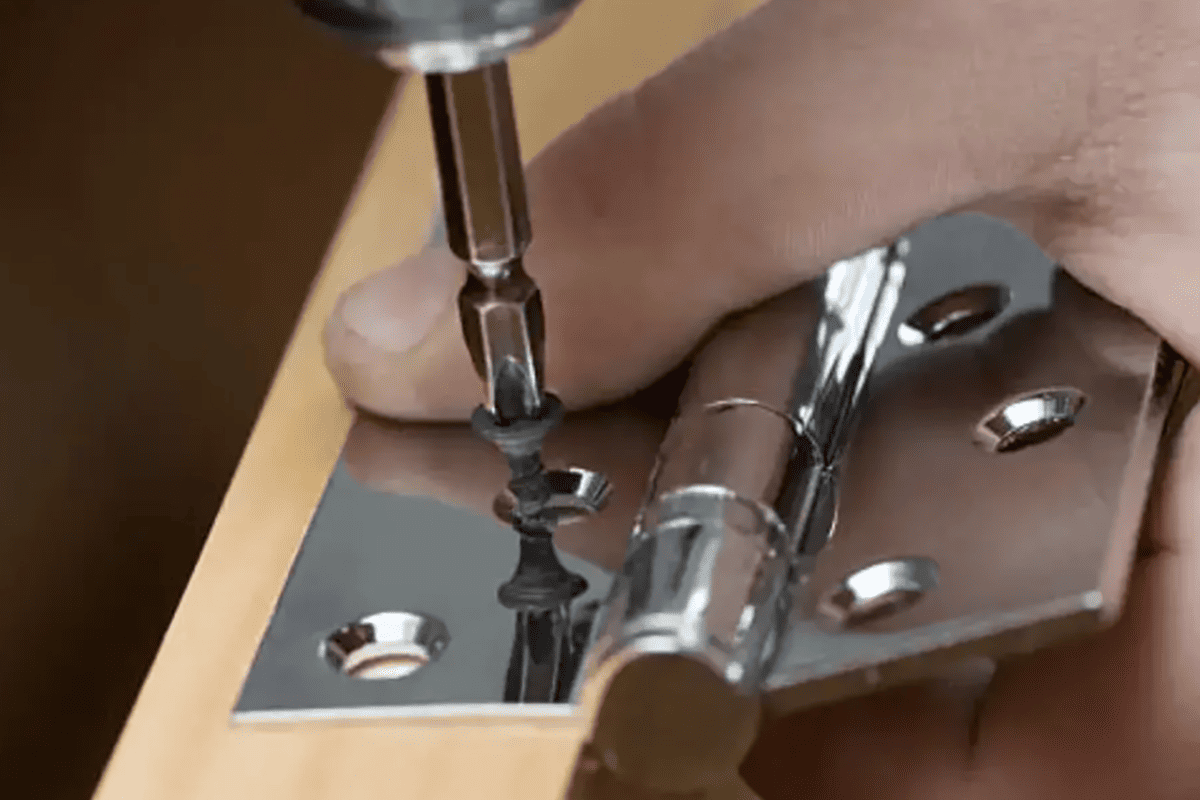
Concealed hinges are strong in design-led projects
Concealed hinges are especially attractive for modern interior doors, flush doors, hotel room doors, villas, offices, and premium residential projects. When the door is closed, the hinge is not visible. This gives architects and brands a clean appearance.
They also often provide adjustment in three directions:
- Horizontal adjustment
- Vertical adjustment
- Depth adjustment
This helps installers fine-tune door gaps after fitting. For door factories, this can be valuable when they produce higher-end systems with strict visual requirements.
However, concealed hinges demand more precision. The door and frame must be routed accurately. The fixing screws must match the material. The installer must follow the drawing. If one part is wrong, the hinge may carry uneven stress.
Butt hinges remain practical and robust
Butt hinges remain popular because they are simple, familiar, and reliable. They are easier for many installers to understand. They also work well in many commercial and residential applications. For some fire-rated assemblies, butt hinges may already be part of a tested door set.
A buyer should be careful before replacing a butt hinge with a concealed hinge in an existing specification. The replacement may affect:
- Door leaf preparation
- Frame reinforcement
- Fire door evidence
- Opening clearance
- Load distribution
- Maintenance method
- Local code or project approval
If the project involves fire-rated doors, I strongly recommend checking the complete tested assembly and relevant certification documents. A hinge certificate alone may not prove that the full door set is approved in the final configuration.12
Practical selection matrix
| Project Requirement | Better Starting Choice | Reason |
|---|---|---|
| Hidden hardware appearance | Concealed hinge | Clean look when door is closed |
| Simple installation | Butt hinge | Easier routing and fitting |
| Premium flush door system | Concealed hinge | Better aesthetic integration |
| Traditional commercial door | Butt hinge | Proven and familiar solution |
| Heavy door with verified concealed hinge system | Depends on tested model | Confirm rated load and cycle result |
| Fire-rated door assembly | Depends on certified door set | Verify full assembly evidence |
| High adjustment requirement | Concealed hinge | 3D adjustment can help |
| Low-cost basic door | Butt hinge | Usually more economical |
My practical recommendation
If a buyer wants to replace butt hinges with concealed hinges, I suggest a step-by-step evaluation:
- Confirm finished door weight.
- Confirm door width and height.
- Choose material and hinge model.
- Verify rated load and 200,000-cycle test evidence.
- Review drawings with the door factory.
- Produce a sample door.
- Test installation and adjustment.
- Inspect operation after repeated opening.
- Confirm packaging and bulk inspection requirements.
- Approve mass production only after the system works.
Conclusion
EN 1935 Grades are useful, but they should not be treated as a shortcut for hinge selection. Concealed hinges can reach comparable EN 1935-style test levels when the specific model is tested under its rated load for 200,000 cycles. Still, material, door size, frame structure, installation precision, and real usage all matter. If you are evaluating concealed hinges for OEM, ODM, or bulk sourcing, I can help you review specifications, drawings, load requirements, and suitable SDH Hardware models for your door project.
"SECTION 087111 - DOOR HARDWARE (SCHEDULED BY ...", https://fpm.usc.edu/wp-content/uploads/2021/11/087102-USC-HSC-door-hardware-Guide-Specification_1.pdf. Institutional guidance on doorsets treats the leaf, frame, hinges, hardware, and installation as interacting parts of a door assembly, supporting the article’s statement that a hinge functions within a door system; the evidence is contextual because not every hinge durability test is performed on a complete doorset. Evidence role: general_support; source type: institution. Supports: An institutional source should explain that doorsets or door assemblies include the door leaf, frame, hardware, and installation details, and that performance is assessed at assembly level in some contexts.. Scope note: This supports the systems concept, not a specific performance result for the concealed hinges discussed in the article. ↩
"EN 1935: Building hardware - Single-axis hinges", https://www.intertek.com/building/standards/en-1935/. Standards descriptions of EN 1935 define it as specifying requirements and test methods for single-axis hinges used on windows and doors, supporting the article’s statement about the standard’s primary scope. Evidence role: definition; source type: institution. Supports: A standards body or standards catalogue should identify EN 1935 as the European standard for single-axis hinges and describe its scope.. ↩
"Multi-Axis Hinges", https://www.takigen.com/products/list/D-23101. Engineering descriptions of concealed hinge mechanisms show that their motion is typically produced by linked arms and multiple pivot points rather than one exposed pin axis, supporting the article’s distinction between concealed and butt-hinge movement; this is contextual evidence because individual proprietary hinge designs can vary. Evidence role: mechanism; source type: research. Supports: A neutral engineering or research source should describe concealed hinge motion as involving linked arms, multiple pivots, or non-single-axis kinematics.. Scope note: The source would support the general mechanism of many concealed hinges, not certify that every concealed hinge model is multi-axis. ↩
"Durability of concealed door hinges", https://www.technicalhinges.com/concealed-hinges-durability/. EN 1935 documentation classifies hinge durability using prescribed cycle testing, including a 200,000-cycle level, which supports the article’s use of 200,000 cycles as a recognized durability benchmark. Evidence role: statistic; source type: institution. Supports: A standards source should confirm that EN 1935 includes durability testing at specified cycle counts, including 200,000 cycles for higher durability classifications.. ↩
"Accelerated Life Testing to Predict Service Life and Reliability ...", https://epublications.marquette.edu/cgi/viewcontent.cgi?article=1162&context=mechengin_fac. Hinge test standards evaluate durability by applying defined loads while the hinge is repeatedly cycled, supporting the article’s emphasis on life-cycle testing under a stated rated or nominal load. Evidence role: mechanism; source type: institution. Supports: A standard or technical testing source should show that hinge durability is assessed by repeated cycling under defined loads or test masses.. ↩
"28.18 -- Open door to demonstration preparation area", https://web.physics.ucsb.edu/~lecturedemonstrations/Composer/Pages/28.18.html. Basic statics defines moment as force multiplied by perpendicular distance from the pivot, so increasing door width increases the hinge moment for a given door weight; this supports the article’s leverage explanation at a general mechanics level. Evidence role: mechanism; source type: education. Supports: An engineering mechanics source should explain that torque or moment increases with the perpendicular distance from the pivot to the line of force.. Scope note: The mechanics source would not calculate the exact hinge load for a specific door because real hinge loads also depend on hinge spacing, number of hinges, installation, and frame stiffness. ↩
"Screw withdrawal strength of heat-treated and laminated ...", https://bioresources.cnr.ncsu.edu/resources/screw-withdrawal-strength-of-heat-treated-and-laminated-veneer-lumber-reinforced-with-carbon-and-glass-fibers/. Research on fastener withdrawal resistance shows that screw holding capacity depends on substrate material and its mechanical properties, supporting the article’s warning that timber, aluminum, steel, and composite frames do not hold hinge screws identically. Evidence role: mechanism; source type: paper. Supports: A peer-reviewed or technical paper should show that fastener withdrawal resistance depends on substrate material and material properties.. Scope note: The source would support the general fastening principle, not the exact screw performance of every door-frame construction. ↩
"087100 – DOOR HARDWARE - Facilities and Campus Services", https://fcs.cornell.edu/087100-door-hardware. Door-hardware standards and guidance classify products partly by duty level, user category, or expected traffic, supporting the article’s statement that residential, hotel, office, hospital, and public-building doors can have different cycle demands; this is contextual rather than a measured comparison of the named building types. Evidence role: general_support; source type: institution. Supports: A standards or institutional source should show that door hardware is classified or selected partly by usage category, traffic level, or expected frequency of operation.. Scope note: The source would support differentiated usage categories, not provide exact daily cycle counts for each building type. ↩
"Engineering Characteristics of Zinc Die Castings", https://www.eazall.com/engineering-characteristics-of-zinc-die-castings. Materials and die-casting references describe zinc alloys as well suited to producing precise and complex cast components, supporting the article’s claim that zinc alloy hinges can offer casting flexibility; this evidence concerns material process capability rather than the load rating of a finished hinge. Evidence role: mechanism; source type: institution. Supports: An institutional materials source should explain that zinc alloys are widely used in die casting because they allow precise, complex shapes and good surface finish.. Scope note: The source would support castability, not the durability of any specific zinc alloy hinge model. ↩
"Revealing the Corrosion Resistance of 316 L Stainless Steel ...", https://pmc.ncbi.nlm.nih.gov/articles/PMC9920300/. Materials references explain that stainless steels resist corrosion through a chromium-rich passive oxide film, supporting the article’s statement that stainless steel may be preferred where improved corrosion resistance is needed. Evidence role: mechanism; source type: government. Supports: A government or educational materials source should explain that stainless steel resists corrosion because chromium forms a passive oxide film.. ↩
"Tolerance Stack Analysis Methods", https://faculty.washington.edu/fscholz/Reports/isstech-95-030.pdf. Engineering sources on tolerance stack-up explain that small dimensional deviations in individual components can accumulate and affect assembly fit and alignment, supporting the article’s statement that minor tolerance errors can become installation adjustment problems. Evidence role: mechanism; source type: education. Supports: An engineering source should explain tolerance stack-up and how small dimensional deviations can accumulate in assemblies.. ↩
"Important Tips for Specifying Fire Door Assemblies", https://steeldoor.org/tips-for-specifying-fire-door-assemblies/. Government fire-door guidance treats fire resistance as a property of the tested door assembly, including compatible hardware and installation, supporting the article’s caution that a hinge certificate alone may not establish approval of the final doorset configuration. Evidence role: expert_consensus; source type: government. Supports: Official fire-door guidance should state that fire performance depends on the tested doorset or assembly, including compatible hardware and installation details.. ↩
