
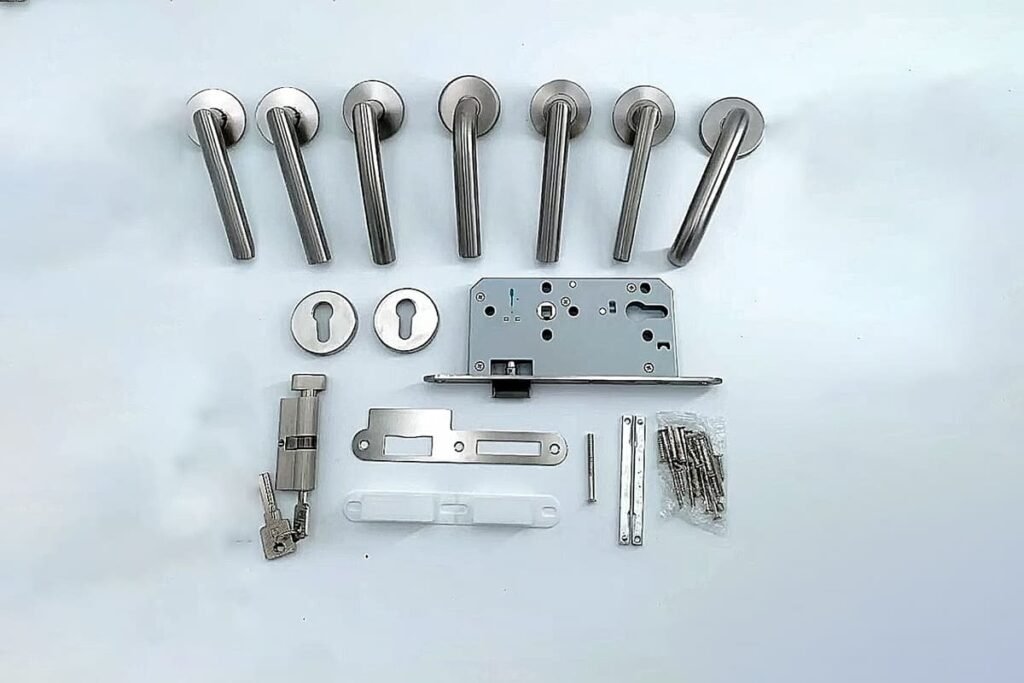
Can You Install a Mortice Lock on a Fire Door? Requirements, Standards and Common Mistakes
A mortice lock on a fire door can seem like a simple hardware choice, but the wrong lock can create approval problems, safety risks, and costly rework. I have seen buyers focus on size or material first. The safer approach is to check certification, fire-rating scope, and the complete door application before ordering.
Yes, you can install a mortice lock on a fire door, but only when the lockset is tested, certified, and suitable for the required fire-rating time and door application. The lock, handles, cylinder, hinges, accessories, and door assembly must match the project’s destination-market standards and documented certification scope.1
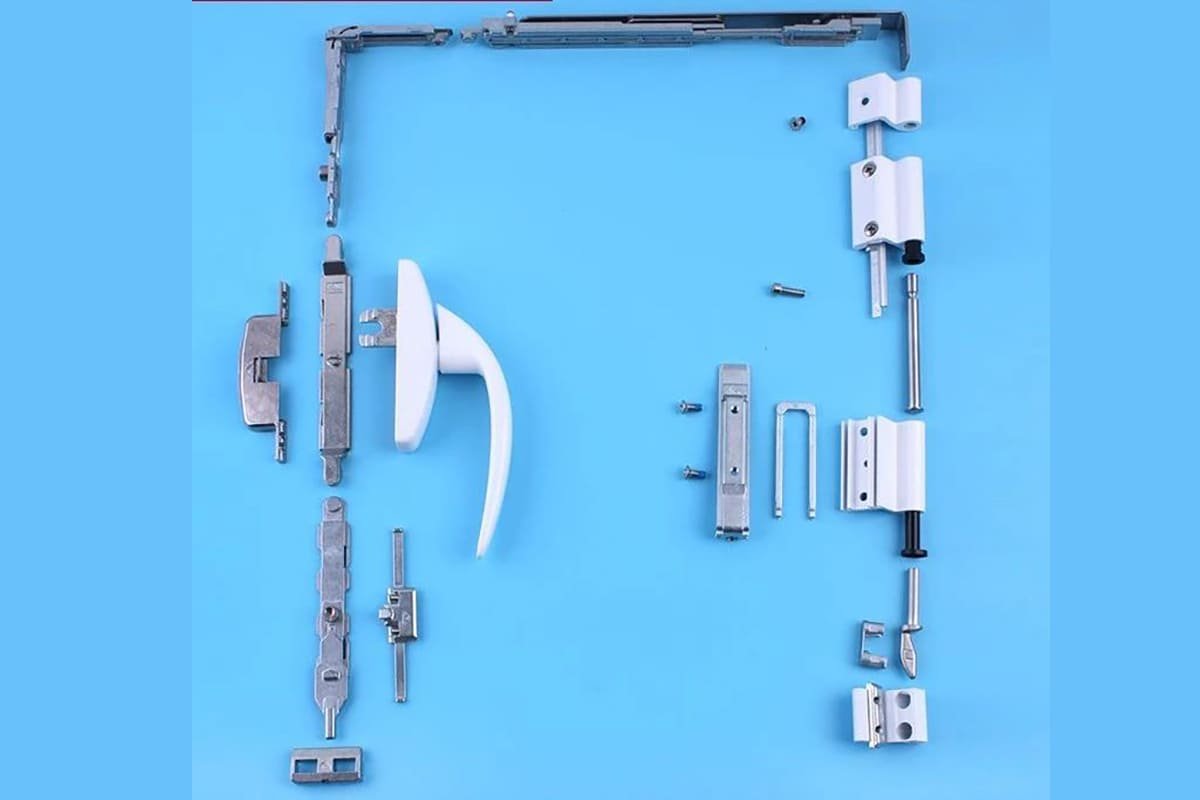
This guide explains how I evaluate fire-rated mortice locks from a manufacturer and supplier point of view. It is written for door factories, hardware brands, wholesalers, and project buyers who need practical checks before they commit to bulk production or project supply.
Is a Mortice Lock on a Fire Door Allowed by Standards?
Many buyers ask this question only after the door design is already confirmed. That creates pressure because the lock pocket, faceplate, cylinder, lever handle, and accessories may already be specified. If the mortice lock on a fire door is not within the tested scope, the project can face rejection.
A mortice lock is allowed on a fire door when the lock body and related hardware are approved for that fire-rated door application. The key point is not only whether the lock fits the door. The key point is whether the product and complete door assembly meet the relevant fire test, safety, and market requirements.
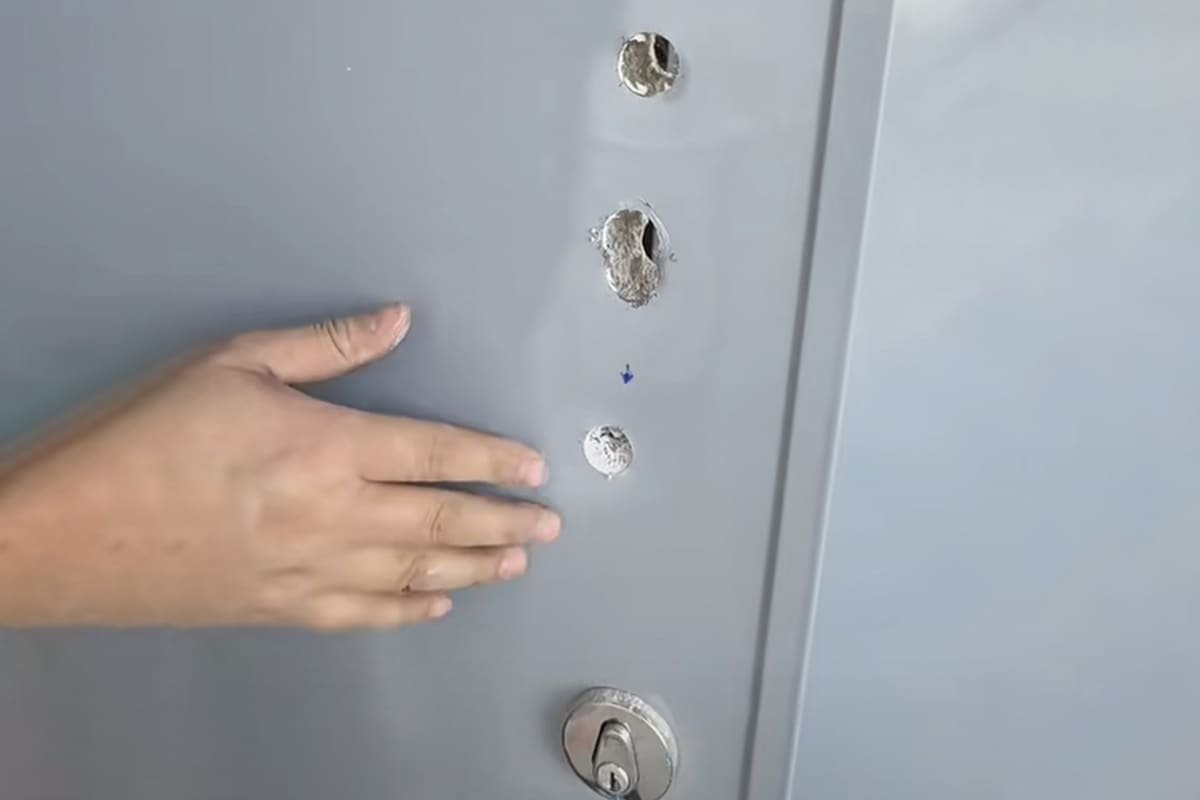
Why the answer is conditional
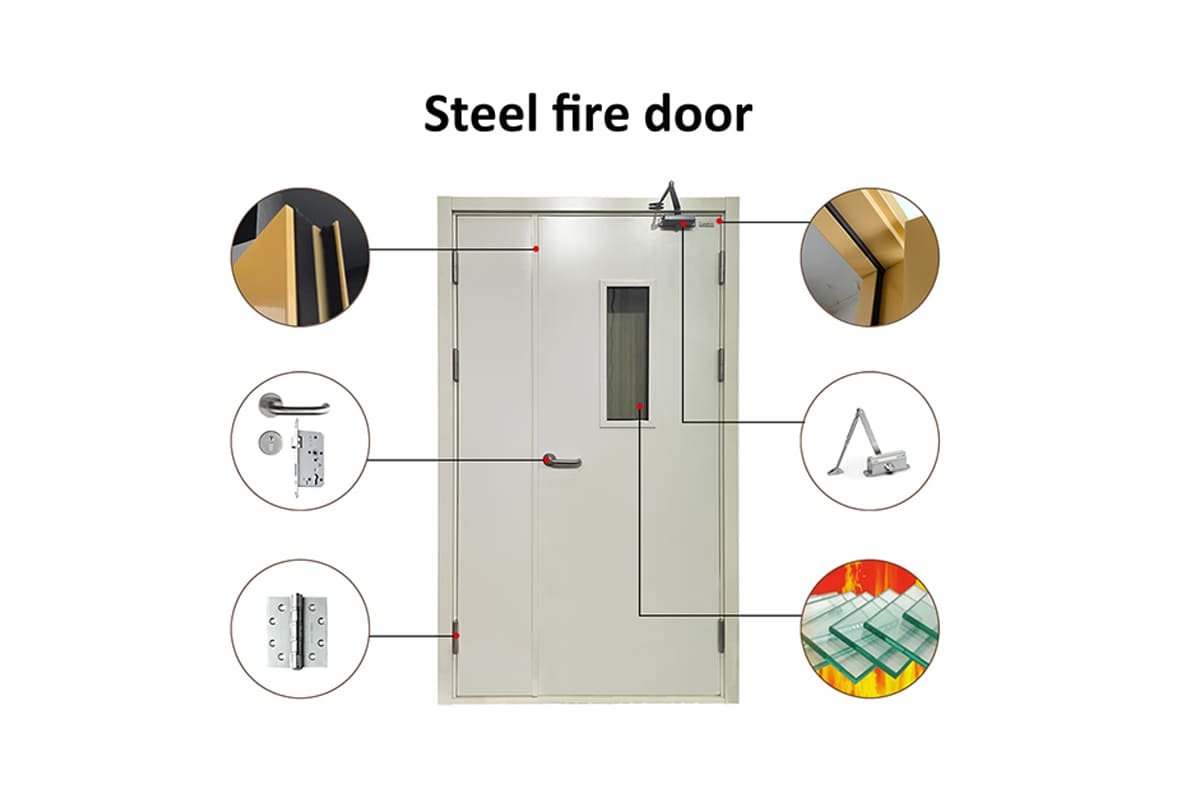
A fire door is not just a normal door with stronger materials. It is a tested door assembly. The leaf, frame, hinges, lock, latch, handles, seals, closer, glazing, and accessories work together during a fire test. If one item changes, the performance may change too.
In my daily work with door factories and hardware buyers, I often see three common assumptions:
- “The lock is stainless steel, so it is suitable.”
- “The lock has CE documents, so it is accepted everywhere.”
- “The lock fits the cut-out, so replacement is safe.”
These assumptions are risky. A stainless steel mortice lock body may have good heat resistance as a material, but material alone does not prove fire-door approval. CE documentation may support compliance in certain European contexts, but it does not automatically replace UL listing, local civil defense approval, or project-specific fire test evidence.2 A lock that fits mechanically may still fall outside the fire door’s tested configuration.
What standards may apply?
The applicable standard depends on the market and project. Buyers should confirm requirements with the door certification holder, project consultant, local authority, or qualified fire engineer.
| Market or Project Type | Common Documents Buyers May Need | Important Note |
|---|---|---|
| Europe or EU-related projects | CE documentation, EN standards, EN 1634 fire test evidence | CE and fire test scope must be checked together |
| Middle East projects | Civil defense requirements, EN or UL-based evidence, project approvals | Requirements can differ by country and emirate/city |
| North America or UL-specified projects | UL listing, labeled hardware, fire-rated door assembly evidence | UL and CE are not interchangeable3 |
| Southeast Asia projects | Local authority approval, EN/UL documents, project specifications | Import acceptance can vary by country |
What should B2B buyers verify first?
Before I recommend a mortice lock for a fire-rated door project, I prefer to check:
Required fire rating
Common ratings may include 30, 60, 90, or 120 minutes, depending on the project and door assembly.4Door material and construction
Timber, steel, and composite fire doors may need different tested hardware combinations.Lock function
A passage lock, sash lock, deadlock, bathroom lock, or escape lock may have different compliance implications.Opening type and location
Public corridors, escape routes, hotel rooms, apartment entrances, stairwells, and service rooms carry different risks.Certification scope
The document should show whether the lock model, size, material, latch type, forend, and accessories are covered.
I treat certification as a document to verify, not as a marketing phrase. That habit prevents many procurement mistakes.
At SDH Hardware, we manufacture Euro mortise locks, lever handles, hinges, cylinders, and accessories for B2B customers. From that supply experience, I know buyers often need help organizing documents before they can make a safe purchasing decision. However, final approval should always come from the relevant project authority, testing body, certification holder, or qualified professional.
What Certifications Matter for a Mortice Lock on a Fire Door?
Certification confusion is one of the biggest causes of wrong purchases. A buyer may receive a nice-looking certificate and assume the product is approved for every fire door. That mistake can delay shipments, fail inspection, or force expensive replacement after installation.
The required certification for a mortice lock on a fire door depends on the destination country, fire-rating duration, door assembly, and project specification. Buyers may need CE documentation, EN 1634 fire test evidence, UL listing, or local approval. These documents are not automatically interchangeable and must match the lock’s tested use.
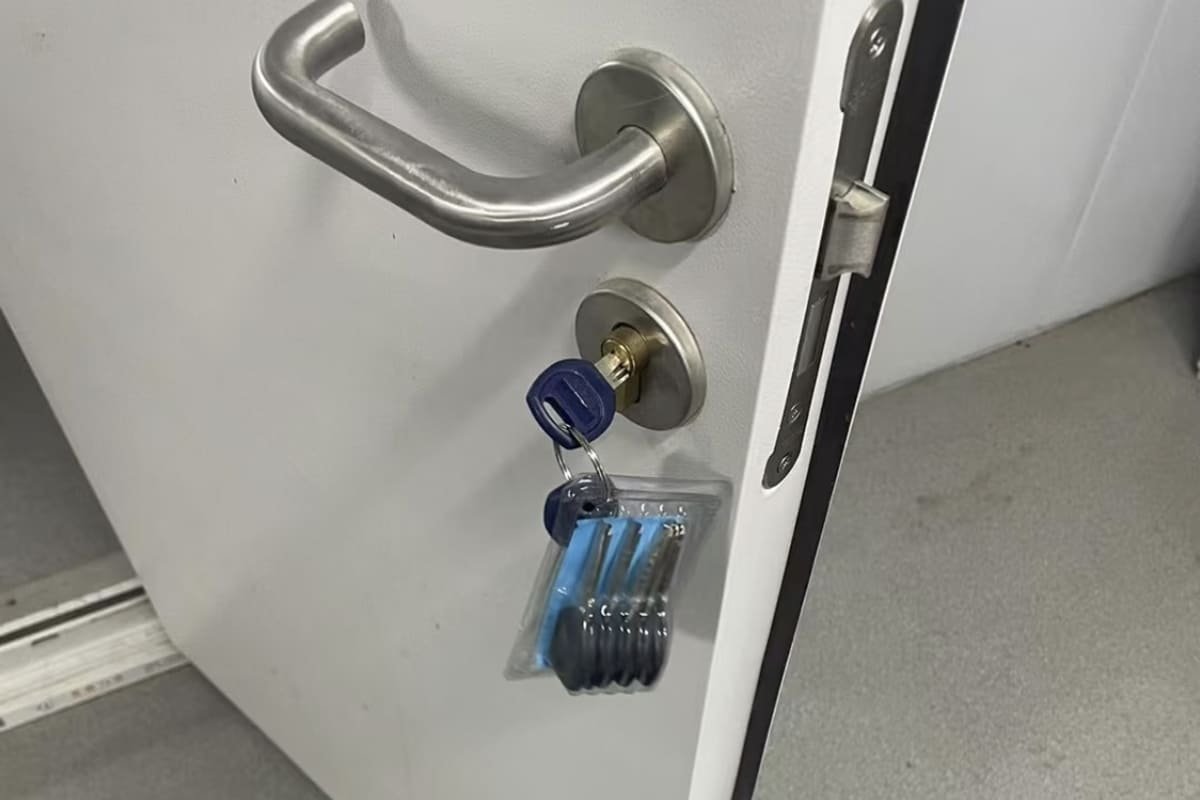
CE, EN 1634, UL, and local approval are different
Many buyers use “certificate” as one general word. I understand why. Procurement teams must compare many suppliers quickly. Still, fire door hardware requires more precise thinking.
CE marking may indicate that a product meets applicable European requirements under relevant product standards. For locks and building hardware, this can be important in European supply chains. However, CE alone does not always mean the lock is approved for every fire-rated door.
EN 1634 relates to fire resistance and smoke control tests for door and shutter assemblies, openable windows, and building hardware in specific contexts. Buyers often need evidence that the lock was included in a relevant fire test or is covered by extended application rules.
UL listing is common for projects based on North American standards or specifications. If the project calls for UL-listed fire door hardware, a CE document usually will not satisfy that requirement by itself.
Local approvals may also apply. In the Middle East, for example, fire door approvals can involve civil defense authorities and project-level submissions.5 In Southeast Asia, different countries may accept different evidence or require local testing and registration.
Certification comparison table
| Document Type | What It Usually Supports | What Buyers Should Check |
|---|---|---|
| CE documentation | European product conformity route | Product standard, classification, declared performance |
| EN 1634 fire test evidence | Fire performance of door assembly or hardware context | Door type, rating time, lock model, tested configuration |
| UL listing/certification | UL-based fire door hardware approval | Listing category, model number, label requirements |
| Local authority approval | Project or country acceptance | Whether the exact hardware set is accepted |
| Test report | Evidence from a laboratory test | Validity, tested sample, scope, limitations |
The most important detail: scope
The most useful question is not “Do you have a certificate?” The better question is:
“Does the certificate or test evidence cover this exact lock, this fire rating, this door type, and this application?”
A lock certificate may not cover all variations. For example, a fire test may apply to:
- One lock case size
- One backset
- One forend material
- One latchbolt structure
- One door thickness range
- One door material
- One fire-rating time
- One installation direction or configuration
If a buyer changes from one model to another, changes the faceplate, adds an electric strike, or uses a different cylinder, the approval scope may no longer be the same. This is why I always advise B2B buyers to request model-level documentation, not just a general company certificate.
Practical document checklist
Before placing a bulk order, buyers should request and file:
- Product datasheet with model number, dimensions, materials, and function.
- Fire-rated certificate or test report showing relevant scope.
- CE or UL documentation, if required by the destination market.
- Installation instructions for correct fitting.
- Bill of materials for lock, lever handles, cylinder, screws, strike plate, and accessories.
- Factory quality control evidence, especially for repeated production orders.
- Packaging and marking information, if the market requires traceability.
At SDH Hardware, we commonly support customers with product drawings, inspection service after order completion, and document coordination for architectural hardware orders. Still, I always keep the boundary clear. A supplier can provide product evidence, but a supplier should not replace the project certifier, fire engineer, or code authority.
Is Stainless Steel Enough for a Mortice Lock on a Fire Door?
Stainless steel looks strong, and it usually performs better than low-grade materials under heat and corrosion exposure. Because of that, many buyers believe stainless steel automatically means fire-rated. This misunderstanding is common, but it can create serious compliance risk.
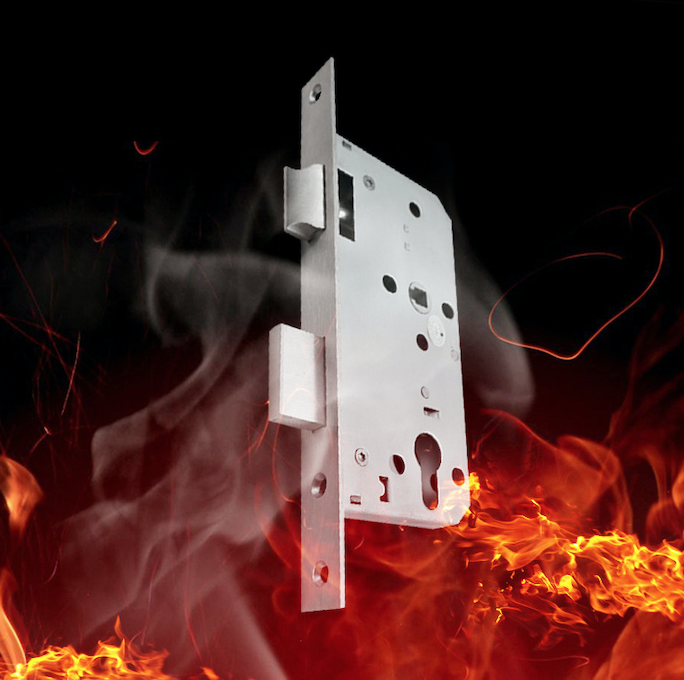
Stainless steel is not enough to approve a mortice lock on a fire door. A stainless steel lock body may be non-combustible or heat resistant as a material, but the complete lockset must still be fire-tested, certified, and used within the documented scope of the fire-rated door assembly.
Material performance is only one part of compliance
A mortice lock contains more than one material and more than one function. Even when the case is stainless steel, the lock may include:
- Springs
- Latch components
- Follower parts
- Plastic or nylon internal parts in some designs
- Screws
- Strike plates
- Cylinder interface parts
- Lubricants
- Decorative faceplates
- Lever handle connections
During a fire, the door assembly faces heat, pressure, smoke movement, and structural deformation. A lock must continue to support the door’s fire-resisting function. The latch must help keep the door closed. The hardware must not create a weak point that allows premature failure. The cut-out for the lock case must also be considered because mortising removes material from the door leaf.
Why “stainless steel equals fire-rated” is wrong
Here is the simple distinction:
| Claim | Is It Enough? | Why |
|---|---|---|
| The lock body is stainless steel | No | Material does not prove tested fire performance |
| The lock fits the fire door cut-out | No | Mechanical fit does not prove certification scope |
| The lock has a certificate from the supplier | Maybe | The document must match model, rating, and application |
| The lock was tested in a fire door assembly | Possibly | Buyers must verify scope and destination-market acceptance |
| The lock, handles, cylinder, hinges, and door assembly match approved evidence | Stronger basis | This is closer to proper fire door hardware selection |
I once discussed a project where the buyer wanted to replace a certified lock with a similar stainless steel lock because the dimensions were almost identical. The replacement looked reasonable from a machining point of view. However, the certification documents did not cover that model. The buyer wisely paused the order and checked with the door supplier before proceeding. That kind of pause can save a project.
What material details still matter?
Although material is not enough, it still matters. Buyers should compare:
Lock case material
Stainless steel or suitable steel construction can improve durability and heat resistance.Forend and strike plate
These parts must suit the door edge, frame, and fire-rated configuration.Latchbolt and deadbolt design
The latch should maintain engagement as expected under door movement and heat exposure.Follower strength
Public-area doors may face frequent use, so the handle follower needs reliable performance.Screw quality and fixing method
Loose or weak screws can reduce real-world performance even when the lock body is good.Cylinder compatibility
Euro profile cylinders should match the lock and project security needs without compromising fire documentation.
What I recommend buyers ask suppliers
For a stainless steel mortice lock, I suggest asking:
- Is this exact model covered by fire-rated documentation?
- What fire-rating time is covered?
- Which door type was tested?
- Is the lock suitable for single-leaf or double-leaf fire doors?
- Are the handles, cylinder, and strike included in the tested setup?
- Are there limits on door thickness, lock size, backset, or faceplate?
- Can the supplier provide drawings and installation guidance?
This approach keeps the conversation professional. It also helps buyers avoid emotional decisions based only on appearance, weight, or material description.
How Should Buyers Match Fire Rating Time and Hardware Scope?
A fire-rated door is approved for a time period, but hardware is sometimes selected as if time does not matter. That can create a mismatch. A 30-minute door, a 60-minute door, and a 120-minute door may not accept the same hardware set.
Buyers should match the lock, lever handles, cylinder, hinges, seals, closer, and accessories to the required fire resistance time of the door assembly. A mortice lock on a fire door should not be selected only by size or function. It should match the door’s certified fire-rating scope.
Fire rating is an assembly issue
A fire door rating usually refers to the door assembly’s ability to resist fire for a specified period under test conditions.6 Common project ratings include:
- 30 minutes
- 60 minutes
- 90 minutes
- 120 minutes
The exact rating depends on the building code, door location, wall rating, and project specification. Public buildings, hospitals, hotels, schools, apartments, warehouses, and commercial towers may have different fire compartment requirements.
The lock must not weaken the door assembly beyond its approved performance. Mortice preparation creates a pocket inside the door edge.7 If the lock case is too large, installed incorrectly, or outside the tested scope, the door leaf may not perform as intended.
Hardware items that must work together
A compliant fire door hardware package may include:
| Hardware Item | Why It Matters |
|---|---|
| Mortice lock or latch | Keeps the door closed and supports secure operation |
| Lever handle or pull handle | Supports daily use and emergency movement |
| Euro cylinder | Provides locking function and key control |
| Hinges | Carry door weight under normal and fire conditions |
| Door closer | Ensures the door returns to the closed position |
| Intumescent seals | Expand under heat to help seal gaps8 |
| Strike plate | Receives latch or bolt and maintains alignment |
| Panic or emergency hardware | Supports safe evacuation where required |
For escape routes, the lock function becomes even more important. A door may need emergency exit operation, panic function, free egress, or fail-safe behavior depending on the building use and local code. A normal security lock may not be acceptable on a public exit door.
Public exits and escape routes carry higher risk
I pay special attention when a customer says the lock is for:
- Stairwell doors
- Corridor fire doors
- Public-area exits
- Shopping mall escape routes
- School or hospital doors
- Hotel emergency routes
- Factory evacuation passages
In these locations, the lock is not only a security product. It is part of the evacuation system. A door must allow safe movement while still supporting fire separation. This balance is why professional evaluation matters.
A practical matching process
I recommend this step-by-step process before ordering:
Confirm the door rating
Ask whether the door is 30, 60, 90, or 120 minutes.Confirm the door type
Identify timber, steel, composite, single-leaf, double-leaf, left hand, or right hand.Confirm the opening function
Decide whether the door is for passage, privacy, deadlocking, emergency escape, or panic exit.Check the project standard
Identify whether CE, EN 1634, UL, local civil defense approval, or another route is required.Match the hardware package
Review lock, cylinder, handle, hinges, closer, seals, and accessories together.Verify model-level evidence
Do not rely only on catalog pictures or a general certificate.Confirm installation details
Follow the tested or approved installation method.
At SDH Hardware, our product portfolio includes Euro mortise locks, stainless steel lever handles, butt hinges, concealed hinges, Euro brass cylinders, and door accessories. This helps when buyers want a coordinated hardware series. However, I still encourage every buyer to match our documents with the project’s required approval route before final selection.
What Common Mistakes Happen When Installing a Mortice Lock on a Fire Door?
Most mistakes do not happen because buyers are careless. They happen because fire door hardware involves many documents, many parties, and tight deadlines. When the project is urgent, people may treat a fire door like a normal door with heavier hardware.
The most common mistakes include using uncertified locks, assuming CE or stainless steel is enough, changing hardware after approval, cutting the door incorrectly, and ignoring escape-route requirements. A mortice lock on a fire door must be selected and installed according to the approved scope, not only according to convenience.

Mistake 1: Replacing a tested lock with a similar model
This is very common in procurement. A buyer may find a similar lock with a better price, faster lead time, or different finish. The dimensions may look close. The faceplate may fit. The function may be the same.
However, fire certification is usually model-specific or scope-specific. A “similar” product may not be accepted. Even small changes can matter, such as:
- Lock case depth
- Backset
- Forend width
- Latch material
- Bolt projection
- Strike plate design
- Screw position
- Internal structure
Mistake 2: Ignoring the tested door type
A lock tested on a timber fire door may not automatically apply to a steel fire door. A lock tested in one door thickness may not apply to another thickness. A lock used on a single-leaf door may not automatically apply to a double-leaf door.
Buyers should ask for the tested application, not only the product name.
Mistake 3: Cutting too much material from the door leaf
Mortice lock installation requires cutting a pocket into the door edge. If the pocket is oversized or poorly positioned, the door may lose strength. Fire doors often have strict rules for machining, intumescent protection, and lock placement.
Good installation should follow:
- Correct lock pocket size
- Correct faceplate recess depth
- Proper screw fixing
- Approved intumescent protection if required
- Accurate latch and strike alignment
- No unauthorized extra drilling or trimming
Mistake 4: Forgetting the cylinder and lever handles
Some buyers check the lock body but forget the cylinder and handles. This is risky. The complete lockset includes interacting parts. If the lever handle fails, the lock may not operate correctly. If the cylinder is not suitable, the door may lose security or compliance.
For B2B supply, I prefer to review the full set:
| Component | Buyer Question |
|---|---|
| Lock body | Is this exact model fire-rated for the application? |
| Lever handle | Is it suitable for fire door use and traffic level? |
| Cylinder | Does it match security, keying, and fire requirements? |
| Strike plate | Is it included in the tested configuration? |
| Screws | Are they the correct type and size? |
| Accessories | Are escutcheons, roses, or plates approved? |
Mistake 5: Treating exit doors like normal security doors
Public exits and escape route doors may require special exit hardware.9 A lock that improves security can become a problem if it delays evacuation. This is why escape-route doors need extra care.
Depending on the project, buyers may need to consider:
- Panic exit devices
- Emergency exit functions
- One-motion egress
- Non-key locking from the egress side
- Fail-safe or fail-secure access control behavior
- Local building code and fire authority rules
Mistake 6: Not keeping documents traceable
For large projects, the hardware may pass through several hands: manufacturer, exporter, wholesaler, door factory, contractor, installer, consultant, and inspector. If model numbers and documents are not traceable, approval becomes difficult.
I recommend keeping a simple file with:
- Purchase order model numbers
- Product drawings
- Certificates and test reports
- Inspection photos
- Packaging labels
- Installation instructions
- Batch or production references where available
This record helps if the inspector asks why a certain lock was used. It also supports repeat orders because the buyer can reorder the same approved configuration.
Frequently Asked Questions
Can any mortice lock be fitted to a fire door?
No. A mortice lock can be fitted to a fire door only when it is suitable for the required fire-rated application. Buyers should verify the lock model, door type, fire-rating time, hardware set, and destination-market standard before installation.
Does CE certification mean a mortice lock is fire-rated?
Not always. CE documentation may support European product conformity, but it does not automatically prove that the lock is approved for every fire door. Buyers should also check fire test evidence, certification scope, and project requirements.
Is a stainless steel mortice lock acceptable for fire doors?
A stainless steel mortice lock may be suitable, but stainless steel alone is not enough. The exact lockset must have relevant fire-rated evidence and must be used within the tested or approved scope of the fire door assembly.
Can I replace a fire door lock with the same size lock?
Not automatically. Matching size is only one factor. The replacement lock should match the approved model or be accepted within the fire door’s certification scope. Buyers should check with the door manufacturer, certification holder, or qualified professional.
Do hinges and handles need to match the fire rating too?
Yes. Fire door performance depends on the complete assembly. Hinges, handles, cylinders, closers, seals, locks, and accessories should match the required fire rating and approved hardware scope for the door application.
Conclusion
A mortice lock on a fire door is acceptable only when the lockset, door assembly, fire-rating time, certification scope, and destination-market requirements all match. Buyers should not rely only on stainless steel material, CE wording, dimensions, or supplier claims. They should verify model-level documents and seek qualified professional approval for application-specific decisions. If you are sourcing mortice locks, handles, hinges, cylinders, and coordinated fire door hardware for B2B projects, SDH Hardware can support your evaluation with product drawings, manufacturing information, and relevant documentation for review.
"Fire door", https://en.wikipedia.org/wiki/Fire_door. General references on fire doors describe them as assemblies of the leaf, frame, and listed hardware evaluated together for fire performance; altering components outside the certified configuration can compromise compliance. Evidence role: general_support; source type: encyclopedia. Supports: That fire doors are certified as assemblies with listed hardware and that substituting components outside the certified scope can undermine compliance.. Scope note: Encyclopedic summaries provide general principles rather than jurisdiction-specific legal requirements; local codes and approvals govern acceptance. ↩
"CE marking", https://en.wikipedia.org/wiki/CE_marking. Authoritative descriptions explain that CE marking is an EU conformity indication for placing products on the European market, while UL listing is a North American certification; they address different regulatory requirements and are not interchangeable. Evidence role: general_support; source type: encyclopedia. Supports: That CE marking is an EU conformity indication tied to EU legislation, whereas UL listing is a North American product certification, and they serve different regulatory regimes.. Scope note: Project acceptance always depends on the specific jurisdiction and specification; this note clarifies regimes but does not determine a specific project’s compliance. ↩
"UL (safety organization)", https://en.wikipedia.org/wiki/UL_(safety_organization). Authoritative overviews explain that CE marking is an EU conformity marking tied to European legislation, whereas UL listings pertain to North American certification; they fulfill different roles and one does not substitute for the other. Evidence role: general_support; source type: encyclopedia. Supports: That CE marking indicates EU market conformity while UL listings pertain to North American certification, serving different regulatory contexts.. Scope note: Whether a given project accepts one or the other depends on the specified standard and the local authority having jurisdiction. ↩
"Fire door", https://en.wikipedia.org/wiki/Fire_door. General references on fire-resistance ratings document standardized time classifications, including 30, 60, 90, and 120 minutes, used to express the duration of fire resistance under test conditions. Evidence role: definition; source type: encyclopedia. Supports: That fire-resistance ratings for doors and assemblies are commonly specified in standardized time intervals like 30, 60, 90, and 120 minutes.. Scope note: Exact rating categories and nomenclature can vary by standard and jurisdiction. ↩
"Fire Door Certification Standards: Compliance Guide", https://sffeco.com/ensure-your-building-meets-fire-door-standards/. Civil defense authorities in jurisdictions like Dubai operate product conformity and approval schemes for fire protection products, illustrating that fire doors may require civil defense registration and project-level submissions in the region. Evidence role: general_support; source type: government. Supports: That civil defense authorities in the Middle East, such as Dubai Civil Defense, administer conformity certification and approval processes for fire protection products, including fire doors.. Scope note: Procedures vary by country and emirate; this example demonstrates the type of approval rather than a universal regional rule. ↩
"Fire door", https://en.wikipedia.org/wiki/Fire_door. Standard references define a fire-resistance rating as the measured duration an assembly resists fire exposure under specified test conditions. Evidence role: definition; source type: encyclopedia. Supports: That a fire-resistance rating expresses the period an assembly withstands standardized fire exposure during testing.. Scope note: Different standards use different furnace curves and acceptance criteria; ratings are not universally interchangeable. ↩
"Best Practice Guide - BWF Fire Door Alliance", https://firedoors.bwf.org.uk/app/uploads/sites/3/2025/10/Fire-Door-Alliance-Best-Practice-Guide-2023-8-1.pdf. Industry guidance for fire doors warns that creating or enlarging cut-outs for hardware alters the doorset and may invalidate the certification unless carried out exactly as per the tested and approved details. Evidence role: general_support; source type: institution. Supports: That cutting or modifying fire doors for hardware must follow the tested/approved details and that unapproved material removal can invalidate certification.. Scope note: Institutional guidance reflects best practice but specific legal requirements depend on local codes and certifications. ↩
"Intumescent", https://en.wikipedia.org/wiki/Intumescent. Technical summaries explain that intumescent materials expand upon heating and form a char that helps block gaps, supporting the use of intumescent seals in fire-resisting door assemblies. Evidence role: mechanism; source type: encyclopedia. Supports: That intumescent materials expand when exposed to high temperatures and can seal gaps, which is why such seals are used in fire doors.. Scope note: This is a general description of material behavior; specific performance depends on product formulation and installation. ↩
"1910.36 - Design and construction requirements for exit ...", http://www.osha.gov/laws-regs/regulations/standardnumber/1910/1910.36. U.S. occupational safety regulations require that exit route doors be readily openable from the inside without keys, tools, or special knowledge, which in practice is achieved through dedicated exit or panic hardware on many public egress doors. Evidence role: general_support; source type: government. Supports: That exit route doors must be readily openable from the inside without keys, tools, or special knowledge, often necessitating specific exit hardware.. Scope note: OSHA applies to U.S. workplaces; requirements for other occupancies and jurisdictions may differ. ↩
