

Accessible Lever Handles: Operating Force & Shape
Accessible lever handles can look correct on a drawing but still feel difficult on a real door. Buyers may choose a smooth shape, approve a finish, and still face complaints from elderly users, disabled users, or project inspectors. The better solution is to evaluate shape, operating force, lock matching, and installed performance together.
Accessible lever handles should be selected by how easily and safely users can operate the complete door hardware system, not by handle appearance alone. Buyers should review lever shape, grip section, spring return, lock case resistance, latch friction, door closer force, and local accessibility requirements before confirming a specification.
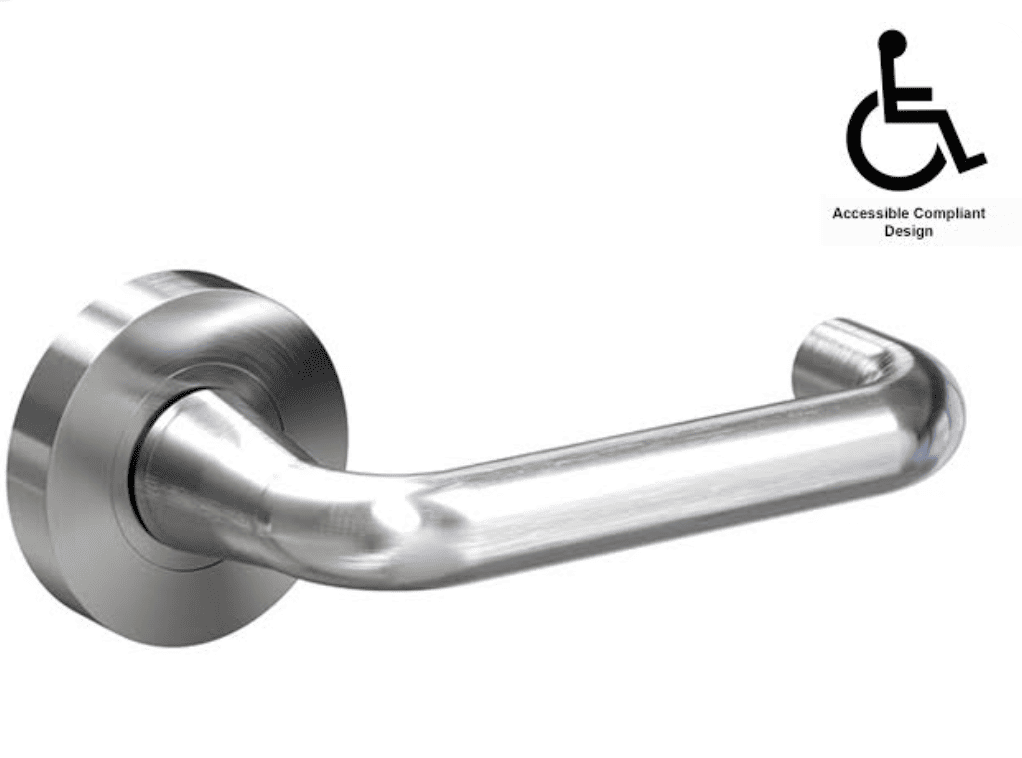
In my work with door factories, hardware brands, and project buyers, I often see one problem repeat itself: the handle is judged before the whole door is tested. That is risky. A lever handle is only truly accessible when the installed system supports low-force, stable, and intuitive use.
Why Are Accessible Lever Handles More Than a Shape Choice?
A buyer may see a long lever, a round end, or a smooth curve and assume the product is accessible. That assumption can create trouble. If the lock body is stiff or the spring return is too strong, the user still struggles. The handle style alone does not prove usability.
Accessible lever handles are more than a shape choice because accessibility depends on the complete operating condition1. The handle profile matters, but so do the spindle, spring mechanism, lock case, latch engagement, door closer, door weight, and installation accuracy. Buyers should test the assembled door hardware system before approving large orders.
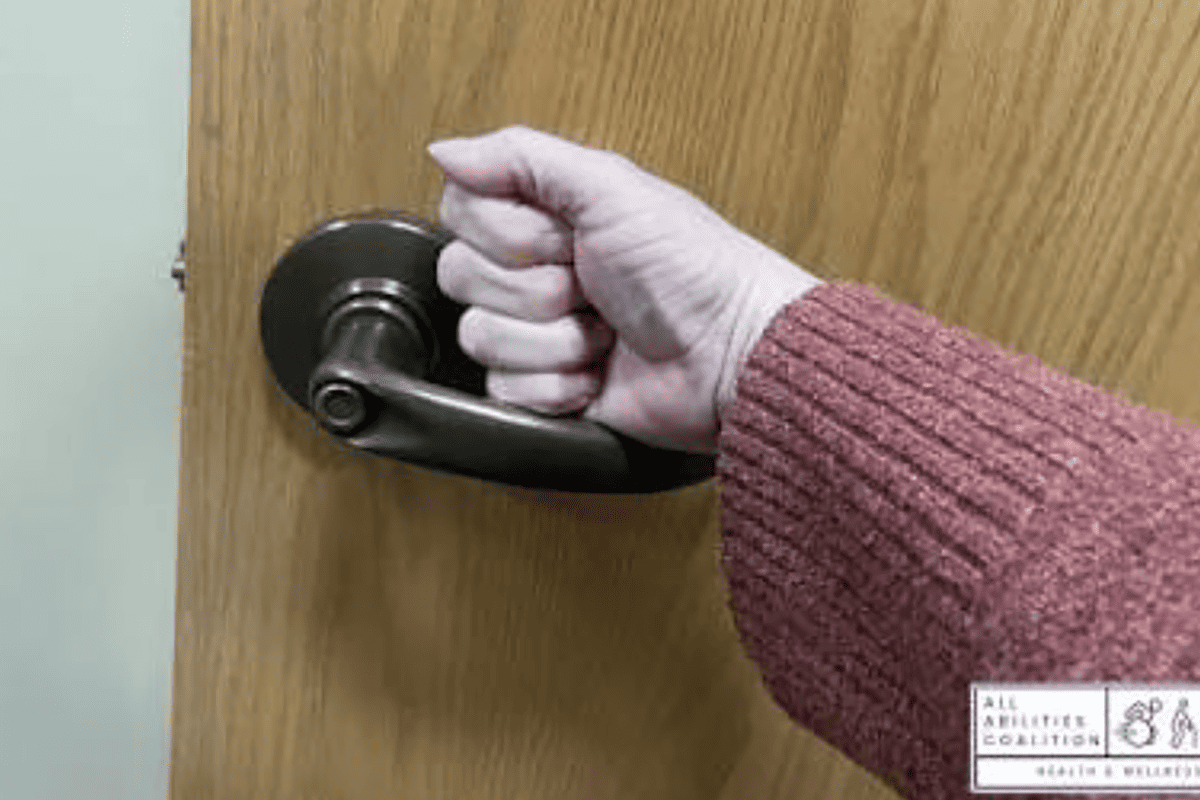
“Accessible” Describes Use, Not Just Style
I treat the word accessible as a use-condition claim. It should describe how a person can operate the door in real life. It should not be used only because the lever looks longer, smoother, or more modern than a standard handle.
For disabled users, elderly users, children, and people carrying objects, the key question is simple:
Can the user open the door with stable control and reasonable force, without tight gripping, twisting, or painful hand movement2?
That question moves the discussion away from appearance and toward performance.
A lever handle may have a visually friendly design but still perform poorly when combined with the wrong components. For example, a buyer may approve a comfortable lever shape, but the final door may still require high pressure because of:
- A heavy spring inside the lever rose or lock case
- A latch bolt rubbing against the strike plate
- A poorly aligned mortise lock
- A strong door closer setting
- A warped door leaf or frame
- A seal that creates excess closing pressure
- A fire-rated door assembly with additional resistance
- Incorrect spindle length or loose fixing
In our production and customer communication work at SDH Hardware, I have learned to ask buyers about the door type, lock body, closer, project market, and user group before discussing only handle style. This saves time. It also helps prevent a handle from being blamed for a system-level problem.
Product-Level vs. System-Level Evaluation
The table below shows why buyers should separate product-level features from installed performance.
| Evaluation Area | Product-Level Question | System-Level Question |
|---|---|---|
| Lever shape | Is the handle easy to reach and press? | Does it remain easy after installation? |
| Cross-section | Is the grip comfortable for weak hands? | Does the user need to grip tightly to operate it? |
| Spring return | Does the handle return smoothly? | Is return force too strong for the project users? |
| Lock case | Is the lock compatible with the handle? | Does the latch retract with low resistance? |
| Door closer | Not part of the handle itself | Does it add opening resistance or user difficulty? |
| Installation | Are dimensions correct? | Is the door aligned and free from rubbing? |
This distinction matters for procurement. A handle supplier can manufacture a well-designed lever, but the project team still needs to verify the final assembly. For public buildings, hospitals, schools, elderly-care spaces, and barrier-free projects, I recommend that buyers request sample testing under actual door conditions whenever possible.
Standards Should Be Used Carefully
European and UK terms are sometimes mixed together in sales conversations. I avoid that because it can mislead buyers.
- EN 1906 is relevant to lever handle performance classification, such as category of use, durability, door mass, corrosion resistance, and security grading.
- EN 1125 relates to panic exit devices operated by a horizontal bar, not ordinary lever handles.
- BS 8300 is commonly referenced in the UK for accessible and inclusive building design.
- Local building codes, fire rules, and project specifications may add further requirements.
These are not one generic “accessibility certificate.” Buyers should verify the applicable documents for the target market and project. If a supplier provides CE or fire-rated documents, I suggest checking whether those documents match the exact product model, lock function, door type, and intended application.
How Should Buyers Evaluate Operating Force for Accessible Lever Handles?
Operating force can become a hidden risk. A handle may pass visual review but fail when users press it repeatedly. If the force feels heavy, people with weak hand strength, arthritis, limited dexterity, or temporary injury may find the door difficult or uncomfortable to use3.
Buyers should evaluate operating force for accessible lever handles as a project requirement, not as a casual product description. They should confirm the applicable local standard, define the expected maximum force, test the handle with the selected lock case and door assembly, and record results before approval.
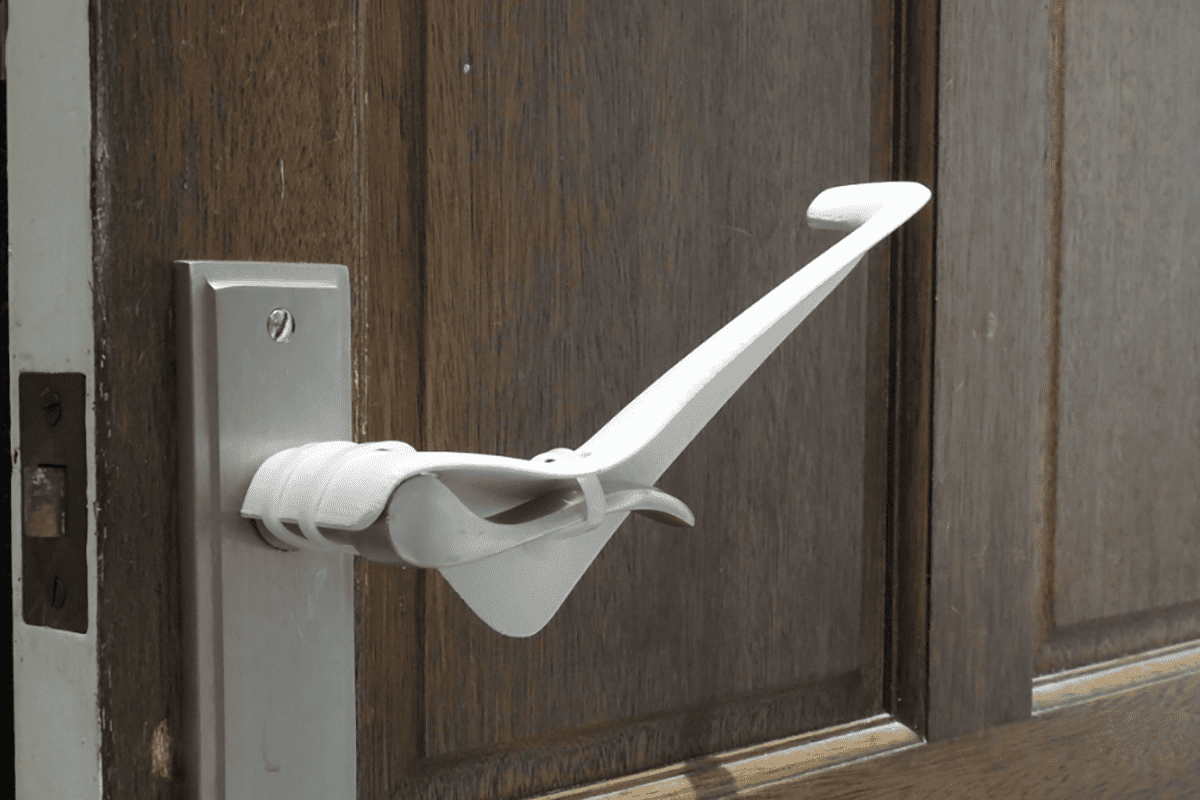
Why Operating Force Is Not One Simple Number
In many accessibility discussions, buyers mention low operating force, and I often hear values around ≤22N4 discussed in market or project conversations. However, I do not treat this as a universal rule. The correct limit must be checked against the local standard, building type, door function, and project specification.
This point is important. A hospital project, an elderly-care facility, a school, a public office, and a private apartment may not use the same requirements. Fire doors may also have additional hardware and sealing conditions that affect operation. Buyers should not approve a handle based only on a catalog claim.
Operating force may include several different user actions:
- Pressing the lever down
- Retracting the latch
- Pulling or pushing the door open
- Overcoming door closer resistance
- Moving past seals, air pressure, or frame friction
- Releasing the door after use
If the project only tests the bare handle, the result may look good. If the project tests the handle with the lock case, latch, closer, and installed door, the result may be very different.
Where Resistance Comes From
A door handle does not operate alone. Several components can increase the force required from the user.
| Source of Resistance | How It Affects the User | Buyer Checkpoint |
|---|---|---|
| Lever spring return | Makes the handle harder to depress | Ask about spring strength and return feel |
| Mortise lock case | Adds internal friction during latch retraction | Test with the actual lock model |
| Latch bolt | May rub against strike plate | Check alignment after installation |
| Door closer | Adds opening resistance | Adjust closer to project requirement |
| Door seals | Can increase pressure on the latch | Test with seals installed |
| Door weight | Affects opening and control | Match hardware to door size and mass |
| Poor fixing | Causes looseness or drag | Inspect spindle, screws, and rose fixing |
In our factory discussions with project buyers, I often ask whether the lever will be used with a Euro mortise lock, a fire-rated lock case, a bathroom lock, a classroom function lock, or another configuration. The answer changes the evaluation. A light handle with a stiff lock case may still feel heavy. A comfortable lever with a badly aligned strike plate may still create complaints.
Practical Procurement Test Method
For bulk buyers, I suggest a simple pre-order evaluation process. It is not a substitute for professional testing, but it helps reveal problems early.
Step 1: Define the project requirement
The buyer should confirm the target market, building type, user group, and applicable standard. If a force value is required, it should be written into the purchase specification.
Step 2: Test the actual hardware combination
The sample should include the lever handle, rose or backplate, spindle, lock case, latch, cylinder if needed, and fixing accessories.
Step 3: Install the set on a realistic door sample
A bench test is useful, but an installed test is better. Door thickness, frame alignment, seals, and closer settings can change performance5.
Step 4: Record force and user feedback
A project team can use a force gauge where appropriate. They should also ask users to test the door, especially when the project serves elderly or disabled people.
Step 5: Confirm repeatability
One good sample is not enough for major procurement. Buyers should verify production consistency, inspection records, and packaging protection.
For ODM and OEM projects, I also recommend that buyers share the intended handle force feel with the factory early. It is much easier to adjust design expectations before tooling, finishing, and mass production begin.
Which Shape Features Make Accessible Lever Handles Easier to Use?
Shape is still important. A poor shape can force the user to pinch, twist, or grip too tightly. That becomes a serious problem for people with weak hand strength or limited finger movement. The right shape supports palm contact, stable pressure, and predictable movement.
Shape features that make accessible lever handles easier to use include a comfortable cross-section, sufficient lever length, rounded edges, stable palm contact, anti-slip feel, and clearance from the door face. Round bar, oval, and D-type profiles can all work when matched to the user group and project requirement.
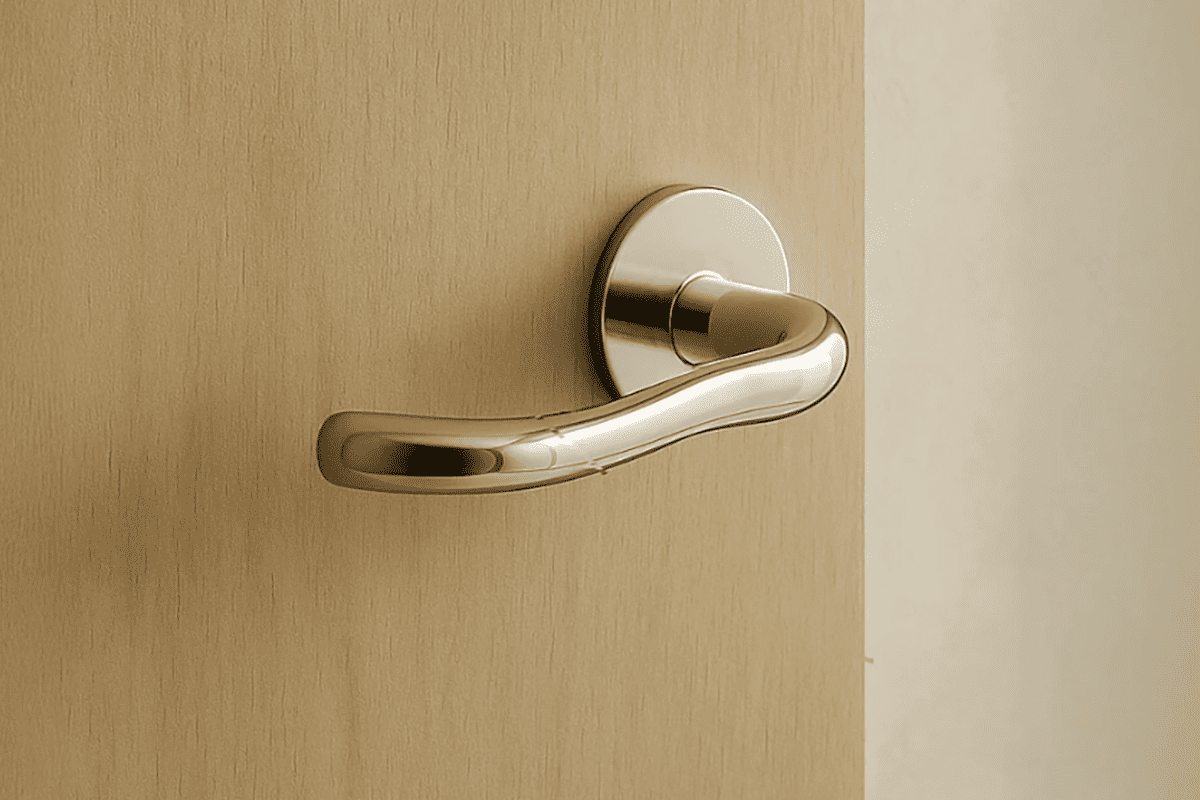
Round Bar, Oval, and D-Type Profiles
There is no single best shape for every accessible door. The right choice depends on the market, the building type, the lock case, the aesthetic standard, and the users. However, I often compare three common lever sections when speaking with buyers.
| Handle Shape | Strengths | Possible Concerns | Common Use Cases |
|---|---|---|---|
| Round bar | Familiar feel, easy production consistency, smooth appearance | Can feel slippery if diameter or finish is wrong | Offices, apartments, general projects |
| Oval section | Larger palm contact area, softer grip feel | Needs careful proportion control | Hospitals, elderly-care spaces, public buildings |
| D-type profile | Stable pressure surface, clear orientation | May look heavier depending on design | Barrier-free projects, high-use doors |
| Flat wide lever | Good palm operation, modern appearance | Edge comfort must be controlled | Public buildings, commercial interiors |
In my experience, buyers often focus first on the front view of the handle. I prefer to look at the side section. The cross-section determines how the hand contacts the lever. It also affects whether the user can press the handle with the palm, wrist, or side of the hand when finger strength is limited.
Important Shape Details
Small design details can make a large difference.
1. Lever length
A longer lever can reduce perceived effort because the user presses farther from the spindle6. However, longer is not always better. The lever must avoid collision with frames, glass trims, wall stops, or other hardware.
2. End return design
Some accessibility guidance favors lever ends that return toward the door face7 because they reduce the risk of clothing or bags catching on the handle. Buyers should check the local standard and project requirement.
3. Edge radius
Sharp edges create discomfort. Rounded edges improve hand comfort and reduce pressure points, especially for elderly users and users with arthritis.
4. Grip diameter or width
A handle that is too thin may feel unstable. A handle that is too thick may be hard for smaller hands to control. The best range depends on the user group and regional preference.
5. Finish texture
A mirror-polished surface may look premium, but it can feel slippery in wet or high-use environments. Satin stainless steel, PVD finishes, or textured finishes may provide a better balance of appearance and grip, depending on the project.
Shape Should Support Multiple Ways of Operation
Accessible door hardware should not assume that every user operates the lever with a full hand grip. Some users may press the lever with:
- The palm8
- The side of the hand
- A closed fist
- The forearm
- Limited finger contact
- Assisted movement from a caregiver
This is why I avoid calling a handle accessible only because it has a fashionable long lever shape. The lever should support different operating styles without requiring precise finger control.
Buyer Questions for Shape Selection
When buyers compare stainless steel lever handles or architectural lever handles for accessible use, I suggest asking these questions:
- Can the lever be pressed without tight gripping?
- Does the section feel stable under the palm?
- Are the edges rounded and comfortable?
- Is the lever long enough for low-force operation?
- Does the end design meet the project’s safety preference?
- Does the finish provide enough anti-slip feel?
- Does the shape match the lock case spring force?
- Can the factory maintain the same section and finish in mass production?
These questions help buyers move from “this looks accessible” to “this can be evaluated for accessible use.”
How Do Lock Cases, Door Closers, and Installation Affect Accessible Lever Handles?
A handle can be well designed, but the final door can still perform badly. This usually happens when the buyer evaluates the lever separately from the mortise lock, door closer, latch alignment, seals, and installer workmanship. The user experiences the whole system, not one component.
Lock cases, door closers, and installation affect accessible lever handles by changing the real force needed to open the door. A stiff lock case, strong spring return, misaligned latch, heavy closer, or poor frame installation can make an otherwise comfortable lever difficult for disabled or elderly users.
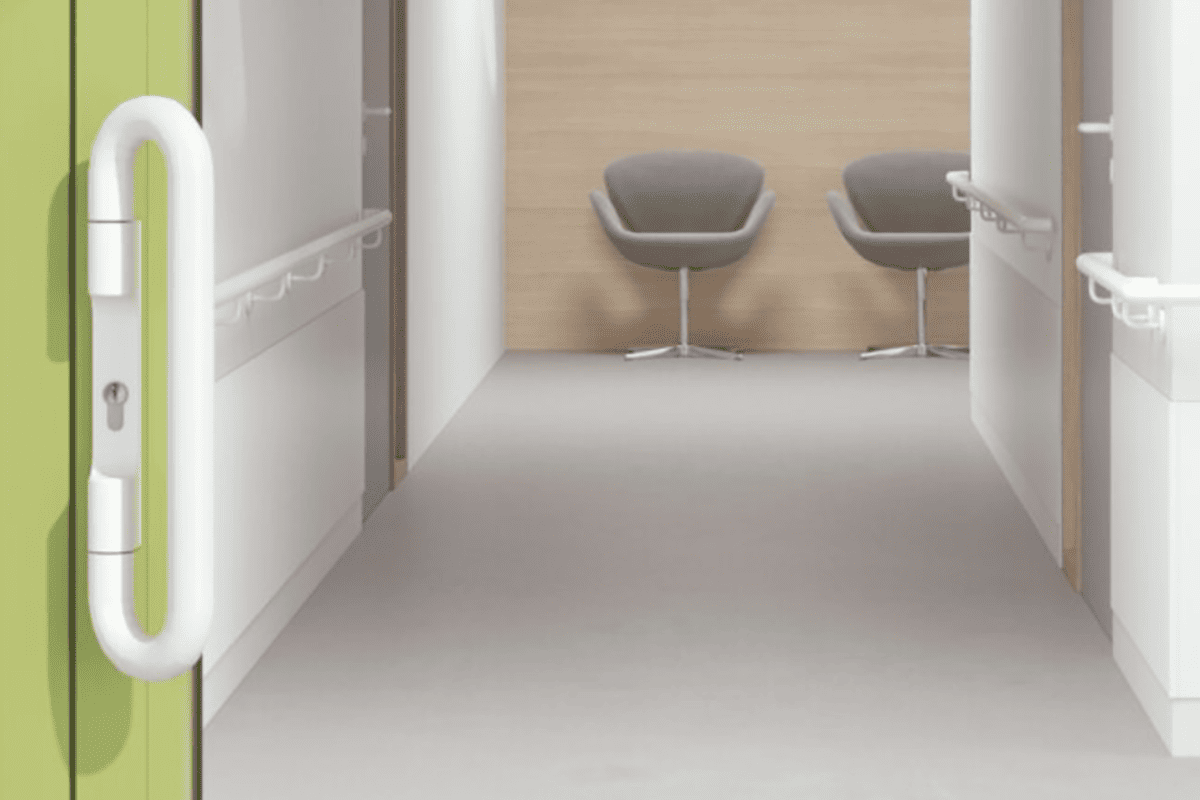
The Lock Case Is a Critical Partner
For many architectural doors, the lever handle operates a mortise lock. The lock case determines how smoothly the latch retracts and how much resistance the user feels. If the lock case has rough internal movement, weak dimensional control, or unsuitable spring force, the accessible handle cannot compensate fully.
At SDH Hardware, our product range includes Euro mortise locks, stainless steel lever handles, hinges, cylinders, and door accessories, so I often view the handle and lock as a matched set. This does not mean one factory’s set is always required. It means buyers should confirm compatibility and operating feel before approving the final bill of materials.
Key lock case checkpoints include:
- Backset and center distance
- Follower size and spindle fit
- Latch bolt movement
- Spring return strength
- Strike plate alignment
- Door thickness compatibility
- Fire-rated or project-specific documentation
- Cycle test expectations
- Corrosion resistance requirement
For European-style projects, EN 1906 may be relevant to lever handle classification, while lock standards and fire-rated requirements may be separate. Buyers should verify which documents apply to the complete door schedule. They should not assume one certificate covers every performance question.
Door Closers Can Change User Experience
Door closers are another common source of accessibility problems. A closer may be selected for fire performance, security, wind pressure, or durability. However, if it is adjusted too strongly, users may struggle to open the door9 even when the handle itself is easy to press.
This is especially important in:
- Hospitals
- Elderly-care facilities
- Schools
- Public offices
- Transport buildings
- Hotels
- Shopping centers
- Barrier-free routes
A project may require controlled closing for safety, smoke control, or fire compartmentation. At the same time, the door must remain usable. This balance should be reviewed by qualified professionals, especially for fire-rated or regulated applications.
Installation Can Make or Break the Result
I have seen cases where the hardware sample felt smooth on the table but felt heavy after installation. The problem was not always the product. Sometimes the latch rubbed against the strike. Sometimes the door dropped slightly after hanging. Sometimes the spindle was too tight, or the fixing screws pulled the rose out of alignment.
Common installation issues include:
Strike plate misalignment
The latch bolt rubs instead of retracting smoothly.Incorrect spindle length
The handle may bind or feel loose.Over-tightened fixing screws
The rose or backplate may distort slightly.Poor door/frame gap
The door presses against the frame or seal.Hinge sagging
Door weight shifts and changes latch engagement.Closer misadjustment
Opening resistance becomes too high.
For B2B buyers, this means inspection should not stop at incoming product quality. It should include installed performance checks. Door factories can test the complete door set before delivery. Project buyers can request mock-up room testing. Hardware brands and wholesalers can create clearer installation guides for their downstream customers.
A Simple System Matching Checklist
Before confirming accessible lever handles for public-use projects, buyers can use this checklist:
| Item | What to Confirm | Why It Matters |
|---|---|---|
| Lever design | Length, section, edge radius, finish | Affects grip and palm operation |
| Spring return | Smooth return without excessive resistance | Affects pressing force |
| Lock case | Compatible follower, latch, and spring | Affects force and durability |
| Strike plate | Correct position and latch entry | Prevents rubbing |
| Door closer | Proper power size and adjustment | Affects opening force |
| Hinges | Door support and alignment | Prevents sagging |
| Door seals | Compression level | Affects latch release |
| Standard documents | EN 1906, fire-rated documents, local requirements | Supports project review |
| Sample test | Installed door operation | Confirms real performance |
This checklist is not a replacement for professional design review. It is a procurement tool. It helps buyers ask better questions before mass production or site installation.
How Should B2B Buyers Specify Accessible Lever Handles for Projects?
Specification mistakes can become expensive. If a buyer writes only “accessible lever handle” in the purchase order, the supplier may not know the expected operating force, target market, door type, lock body, finish, testing requirement, or documentation requirement. Vague language creates avoidable risk.
B2B buyers should specify accessible lever handles by defining the application, user group, local standard, operating force expectation, lever shape, material, finish, lock compatibility, door closer condition, certification documents to verify, sample approval process, and final inspection method. Clear specifications reduce disputes and improve installed performance.

Start With the Application
I usually ask buyers to describe the project before choosing the model. A lever for a private apartment is not always suitable for a hospital corridor. A handle for a hotel room may not meet the needs of an elderly-care facility. A school may need different durability and safety priorities than an office building.
Useful application details include:
- Building type
- Door location
- Door material
- Door thickness
- Door size and weight
- Fire-rated requirement
- Public or private use
- Expected traffic level
- Target market or country
- User group, such as elderly users or disabled users
- Required documents and standards
- Branding, packaging, or OEM requirements
These details help the manufacturer recommend a realistic option. They also help the buyer compare quotations fairly. A very low price may hide weaker material, rougher finishing, lower durability, or less consistent spring control.
Define the Hardware Set, Not Only the Handle
For accessible door operation, the specification should include the surrounding hardware.
A practical specification may include:
- Lever handle model and dimensions
- Rose or backplate type
- Material, such as stainless steel grade
- Surface treatment, such as satin, polished, PVD, or powder coating
- Spindle size and fixing method
- Mortise lock model
- Cylinder type if required
- Strike plate type
- Door closer model or force setting requirement
- Hinges and door weight range
- Fire-rated documents if required
- CE or other relevant documents for buyer verification
- Packaging and labeling requirements
- Inspection method and acceptable tolerance
Conclusion
Accessible lever handles should be chosen through both design judgment and system testing. The handle shape, cross-section, spring return, lock body, latch alignment, door closer, and installation quality all affect real usability. Buyers should also verify standards, documents, and project requirements instead of relying on appearance alone. If you are selecting lever handles for public buildings, elderly-care spaces, hospitals, schools, or barrier-free projects, I recommend starting with samples and a clear specification. Contact SDH Hardware to discuss factory-direct accessible lever handle options for your door hardware program.
"Chapter 4: Entrances, Doors, and Gates", https://www.access-board.gov/ada/guides/chapter-4-entrances-doors-and-gates/. Accessibility standards for doors treat usability as an installed performance issue, including requirements for operable hardware and limits on force or actions needed to use the door; this supports evaluating the complete door assembly rather than handle appearance alone. Evidence role: general_support; source type: government. Supports: The source should show that accessible door operation is assessed through functional requirements such as usable hardware, operating force, clearances, and door opening conditions.. Scope note: Such standards establish minimum accessibility requirements and do not directly test any specific lever handle model. ↩
"Chapter 3: Operable Parts", https://www.access-board.gov/ada/guides/chapter-3-operable-parts/. The 2010 ADA Standards specify that operable parts must be usable with one hand and must not require tight grasping, pinching, or twisting of the wrist, providing a formal basis for assessing accessible door hardware by hand-action demands. Evidence role: definition; source type: government. Supports: The source should define accessible operable parts as usable without tight grasping, pinching, or twisting of the wrist.. Scope note: The ADA Standards are a United States regulatory reference and may not be the governing requirement in other markets. ↩
"Hand grip strength as a proposed new vital sign of health - PMC", https://pmc.ncbi.nlm.nih.gov/articles/PMC10777545/. Research on hand function and arthritis shows that reduced grip strength, pain, and limited dexterity can impair performance of everyday manual tasks, supporting the concern that high-force door hardware may be difficult for affected users. Evidence role: general_support; source type: paper. Supports: The source should show that reduced grip strength, arthritis, or dexterity impairment affects the ability to operate handles or other building hardware.. Scope note: Such research may address hand-function limitations generally rather than testing the exact lever-handle and lock combinations discussed in the article. ↩
"Chapter 3: Operable Parts", https://www.access-board.gov/ada/guides/chapter-3-operable-parts/. The 2010 ADA Standards set a maximum operating force of 5 pounds for operable parts, which is approximately 22.2 newtons, providing context for market references to values near 22 N. Evidence role: statistic; source type: government. Supports: The source should show that 5 pounds of force is used in accessibility standards for operable parts, approximately equal to 22.2 newtons.. Scope note: This supports the numerical context for operable parts under the ADA; it does not establish a universal maximum for all doors, all countries, or all fire-rated assemblies. ↩
"087100 – DOOR HARDWARE - Facilities and Campus Services", https://fcs.cornell.edu/087100-door-hardware. Accessibility and door-hardware guidance commonly treats door opening force as an installed condition affected by hardware adjustment, latching, seals, and door/frame interaction, supporting the need to test the complete installed assembly. Evidence role: mechanism; source type: institution. Supports: The source should explain that installed door components and adjustments influence opening force or ease of operation.. Scope note: This is contextual support for the mechanism and may not quantify the effect of each individual installation variable. ↩
"Torque and Equilibrium", http://hyperphysics.phy-astr.gsu.edu/hbase/torq2.html. Basic mechanics defines torque as the product of applied force and lever-arm distance from the pivot, so increasing the distance from the spindle can reduce the force needed to produce an equivalent turning moment. Evidence role: mechanism; source type: education. Supports: The source should explain that torque equals force multiplied by perpendicular distance from the pivot, so a longer lever arm can reduce required force for the same torque.. Scope note: This mechanical principle explains the lever effect but does not account for friction, lock springs, door closers, or user hand comfort. ↩
"Chapter 4: Entrances, Doors, and Gates", https://www.access-board.gov/ada/guides/chapter-4-entrances-doors-and-gates/. Accessible-design guidance often prefers lever furniture with a return toward the door face because this form can reduce the likelihood of clothing, bags, or mobility aids catching on the handle. Evidence role: general_support; source type: institution. Supports: The source should support the design rationale that return-to-door lever ends can reduce snagging or catching risk.. Scope note: This supports the design rationale generally; local codes and project specifications may phrase or require this feature differently. ↩
"Chapter 4: Entrances, Doors, and Gates", https://www.access-board.gov/ada/guides/chapter-4-entrances-doors-and-gates/. The ADA requirement that operable parts not require tight grasping, pinching, or twisting supports evaluating door hardware for use by people who may press or push with the palm, fist, or forearm rather than with precise finger control. Evidence role: general_support; source type: government. Supports: The source should show that accessible operable parts should not require tight grasping, pinching, or twisting, which supports operation by palm, fist, or forearm.. Scope note: The standard states functional requirements rather than prescribing each specific body part or operating method listed in the article. ↩
"Chapter 4: Entrances, Doors, and Gates", https://www.access-board.gov/ada/guides/chapter-4-entrances-doors-and-gates/. Accessibility guidance on door opening force recognizes that the force needed to open a door is part of accessible use; because door closers add controlled resistance to the opening cycle, their adjustment can materially affect usability. Evidence role: mechanism; source type: government. Supports: The source should show that door opening force is regulated or measured for accessibility and that closers can affect this force.. Scope note: The cited accessibility source may set force limits without providing detailed closer-adjustment procedures for every closer model. ↩
