
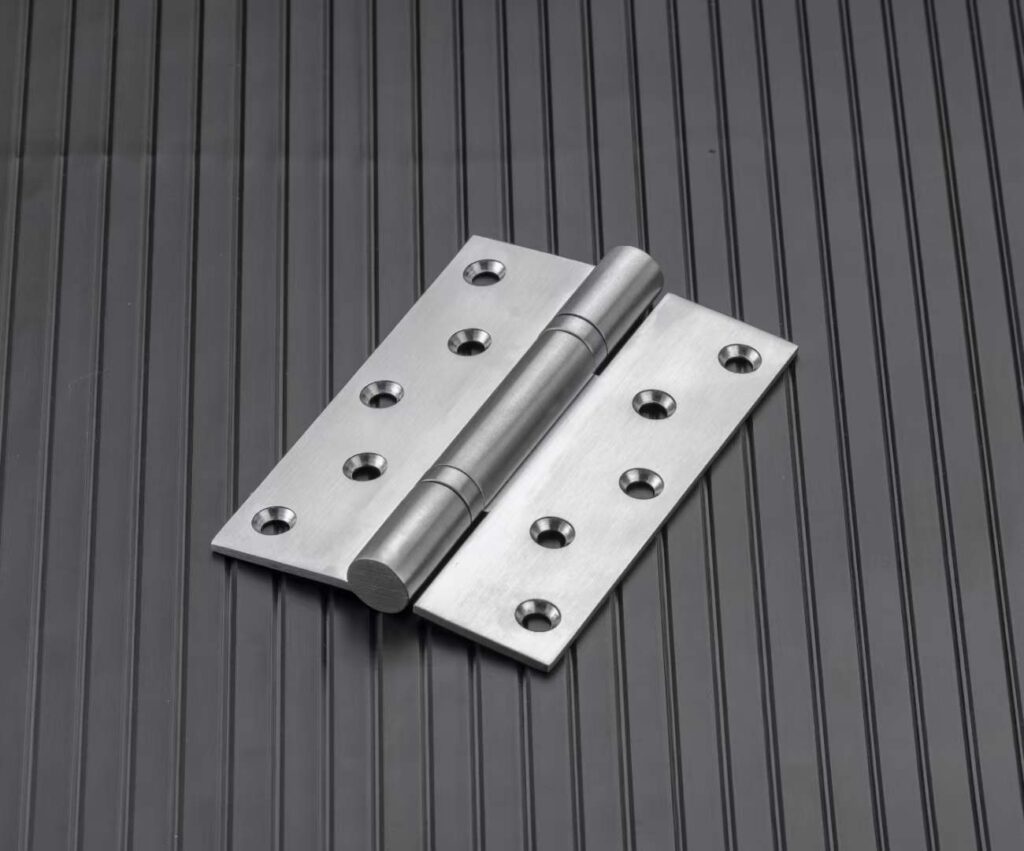
Ball bearing butt hinge vs plain butt hinge: cycle & noise test
Ball bearing butt hinge vs plain butt hinge is a common sourcing question, but many buyers reduce it to a simple “which is stronger” decision. That can create wrong specifications, noisy doors, faster wear complaints, or unnecessary cost. I compare both hinge types by looking at load behavior, repeated cycling, smoothness, noise, and application risk.
A ball bearing butt hinge is often preferred when smoother movement and lower operating noise matter, while a plain butt hinge may show stronger load-bearing performance under controlled same-spec, same-material, same-installation conditions. The better choice depends on door weight, opening frequency, user experience expectations, and after-sales risk—not on one single test result.
In my factory work, I rarely see one hinge type win every category. The more useful question is how each hinge behaves under a real door application. That means separating load stability, cycle wear, friction change, noise, and buyer positioning before placing an OEM or ODM order.
Ball bearing butt hinge vs plain butt hinge: what should a cycle test really measure?
Cycle testing looks simple, but poor interpretation creates sourcing mistakes. A buyer may ask only for a high cycle number, then ignore looseness, friction, sagging, and noise change after repeated opening. That creates risk when the hinge reaches the market and users judge the full door experience.
A cycle test should measure more than opening and closing count.1 It should observe hinge alignment, pin wear, knuckle looseness, screw holding stability, friction change, surface damage, noise development, and door movement feel2. A useful test compares the two hinge types under the same size, material, installation, and load conditions.
Why “more cycles” is not enough
I understand why buyers like simple cycle claims. A single number is easy to place in a purchasing document. However, a cycle count alone does not tell me whether the hinge remains stable, quiet, and smooth after repeated use.
In our internal factory comparisons, I prefer to control as many variables as possible:
- Same hinge size
- Same material grade
- Same leaf thickness
- Same pin structure where applicable
- Same screw position
- Same installation gap
- Same door simulation setup
- Same opening angle
- Same inspection intervals
This type of comparison does not replace a certified laboratory report. It gives practical factory-side insight for product development and supplier evaluation.
What buyers should observe during cycle testing
A good cycle and noise test should break performance into separate checkpoints.
| Test item | What I look for | Why it matters to buyers |
|---|---|---|
| Load behavior | Door sag, hinge deformation, knuckle pressure | Reduces installation complaints |
| Wear pattern | Pin marks, knuckle abrasion, bearing track condition | Predicts service life risks |
| Smoothness | Resistance during opening and closing | Affects user experience |
| Noise | Squeak, rubbing, clicking, vibration sound | Affects perceived quality |
| Looseness | Increased play between hinge parts | Affects long-term stability |
| Surface condition | Scratches, plating damage, rust risk | Affects brand image |
| Screw stability | Movement around screw holes | Affects field reliability |
A ball bearing butt hinge vs plain butt hinge test becomes useful only when the buyer can see which failure mode matters most for the project. For example, a hotel room door may require a different balance from a warehouse service door. One project may care more about silence and smooth motion. Another may prioritize structural holding and cost control.
A practical testing mindset
When I review hinge samples for a door factory or hardware brand, I ask three questions before I look at marketing claims:
What is the door weight range?
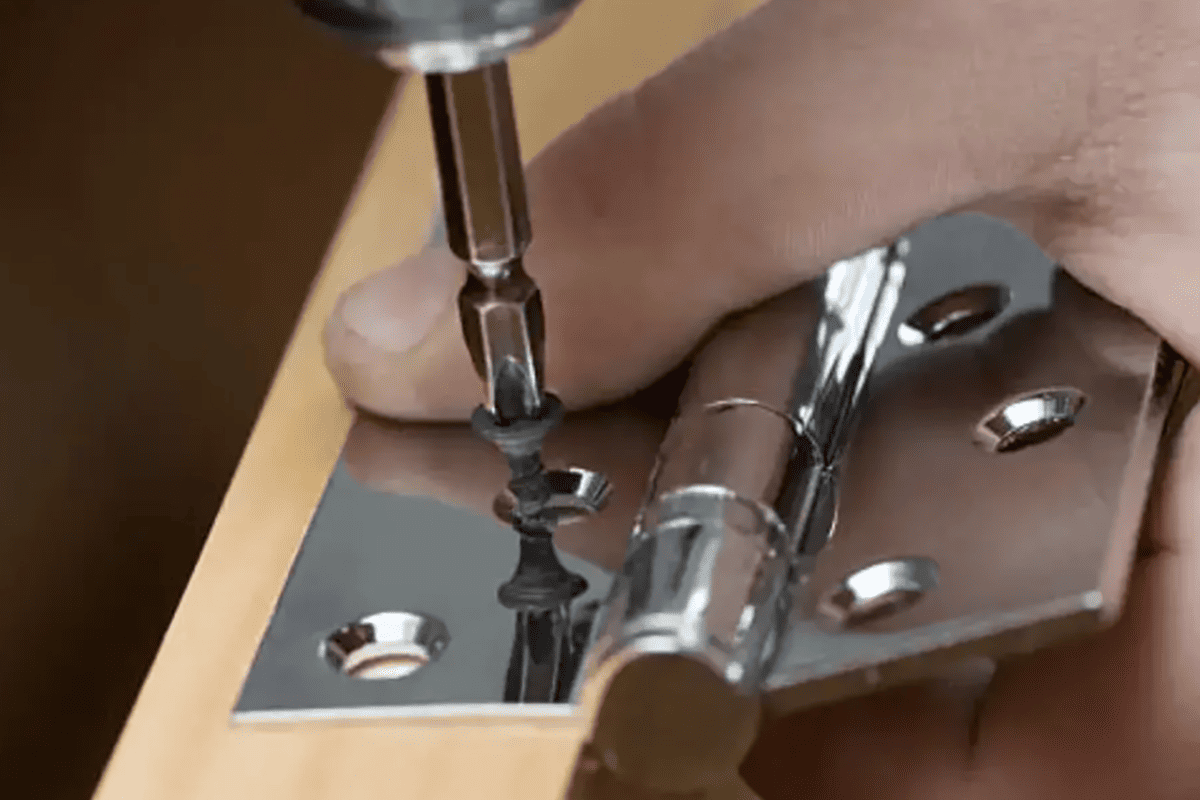
Heavy doors create more stress on the hinge leaves, pin, knuckles, and screws.3How often will the door open each day?
High-frequency use changes the importance of wear and friction.4What will the end user complain about first?
Some users complain about sagging. Others complain about squeaking or rough movement.
This is why cycle testing should never be treated as only a pass-or-fail number. It should be treated as a risk mapping tool. In procurement, that risk mapping helps the buyer choose the right hinge construction, material, finish, and inspection standard before mass production begins.
Ball bearing butt hinge vs plain butt hinge: which one handles load better?
Load-bearing performance is often misunderstood. Many buyers assume the bearing structure automatically makes a hinge stronger. That is not always the case. If the hinge size, material, leaf thickness, and installation method are the same, the real load result can depend on contact area, pin support, knuckle design, and deformation resistance5.
In our controlled internal observations, a plain butt hinge may show better load-bearing performance than a ball bearing butt hinge under the same specification, same material, and same installation setup. I treat this as a practical factory-side observation, not a universal certified claim for every hinge design or every supplier.
Why a plain butt hinge may perform well under load
A plain butt hinge has a direct pin-and-knuckle structure.6 The contact area and material support can be very effective when the hinge is properly designed and produced. In some same-spec comparisons, this simple structure can support vertical load very well because the load path is direct.
That does not mean every plain butt hinge is strong. Poor material, thin leaves, loose knuckles, weak pins, and inaccurate machining can all reduce performance. However, it does mean buyers should not treat plain butt hinges as outdated or low quality by default.
In a controlled factory comparison, I usually pay close attention to:
- Leaf thickness consistency
- Pin diameter and hardness
- Knuckle forming accuracy
- Gap between hinge leaf and pin
- Welding or forming quality where relevant
- Screw hole position
- Surface flatness
- Tolerance control after production
If these details are good, a plain butt hinge can offer strong cost-performance value for many doors.
Why ball bearing structure does not automatically mean higher strength
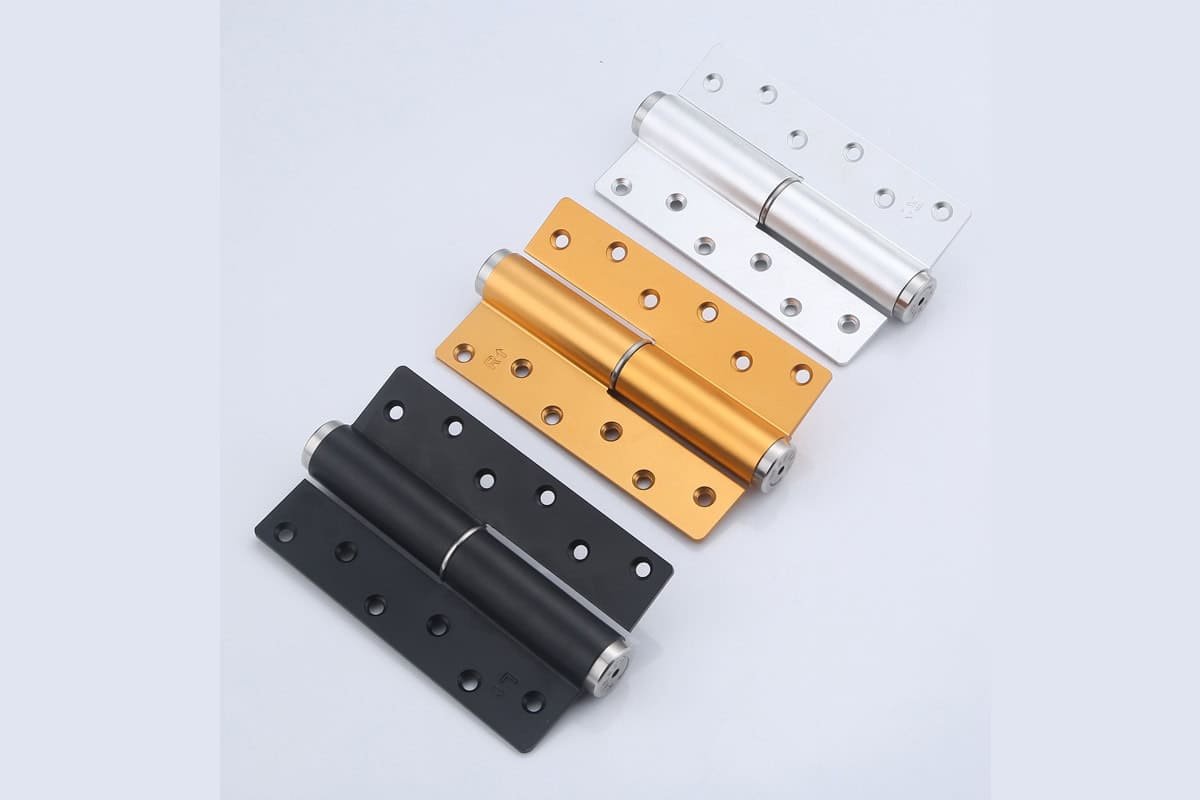
A ball bearing hinge introduces bearing rings or bearing units between hinge knuckles.7 This design helps reduce friction during movement.8 However, the bearing structure also changes how pressure is distributed. If the material thickness, bearing quality, and machining accuracy are not well controlled, the hinge may feel smooth at first but still require careful evaluation under load.
For a buyer, the right question is not:
“Is a ball bearing hinge stronger?”
The better question is:
“Does this ball bearing hinge maintain alignment, smoothness, and acceptable wear under my door weight and usage conditions?”
That is a more useful procurement question.
Load-bearing evaluation checklist
When I support buyers evaluating ball bearing butt hinge vs plain butt hinge, I recommend a structured sample approval process.
| Evaluation factor | Plain butt hinge focus | Ball bearing butt hinge focus |
|---|---|---|
| Vertical load stability | Pin support and knuckle strength | Bearing compression and alignment |
| Long-term sag risk | Leaf deformation and screw holding | Bearing wear and leaf deformation |
| Installation tolerance | Gap control and flatness | Bearing position and knuckle spacing |
| Maintenance expectation | Lubrication and wear monitoring | Bearing condition and noise behavior |
| Cost-performance | Often strong for standard doors | Better when smooth feel adds value |
For door factories, this matters because hinge problems do not always appear during assembly. They often appear after the finished door is installed at the job site. At that point, replacing hinges can cost more than the original hardware value.
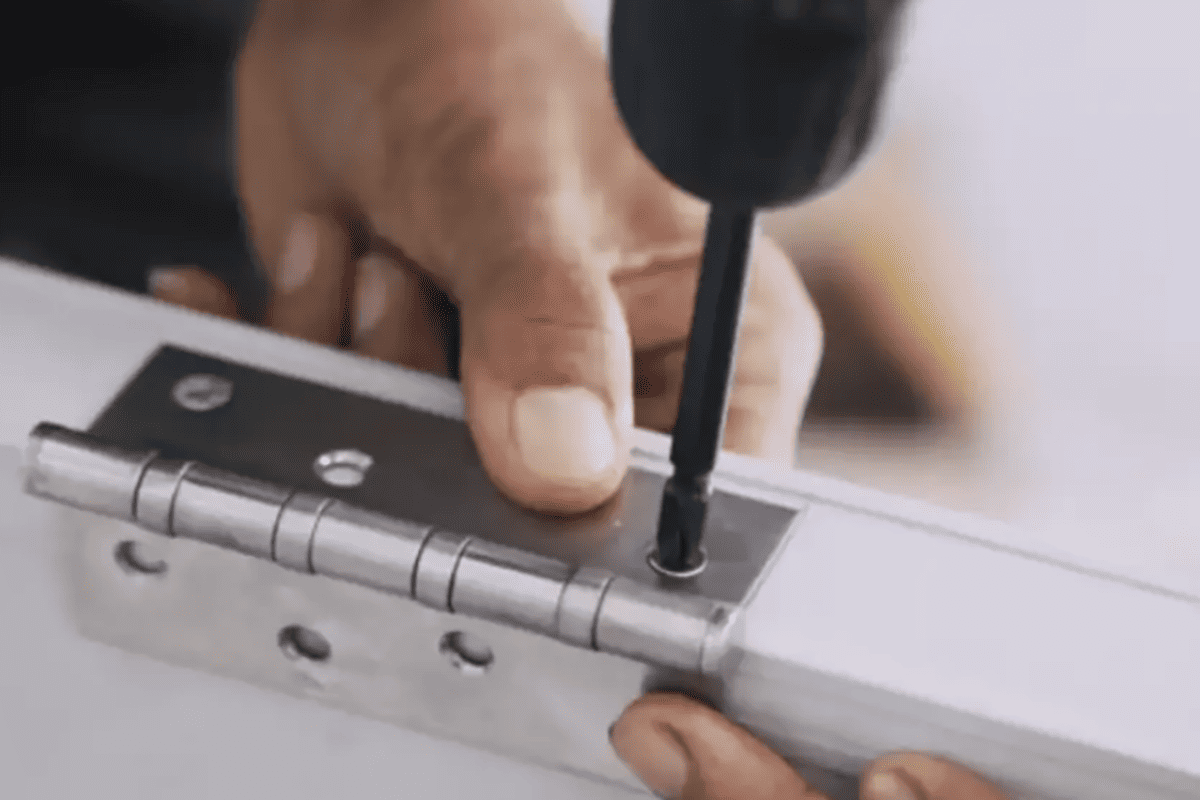
I usually advise buyers to test hinges with the actual door structure, not only with a loose hardware sample. Door core material, door thickness, frame rigidity, screw quality, and installation skill all affect the result.9 If the project has fire-rated, acoustic, commercial, or high-traffic requirements, the buyer should also request relevant documentation and consider qualified professional evaluation before final specification.
How does a ball bearing butt hinge vs plain butt hinge comparison explain noise and smoothness?
Noise is not only a comfort issue. It is also a quality signal. A door that squeaks, rubs, or feels rough can make users think the whole door system is low quality.10 This can create after-sales pressure for door factories, hardware brands, and wholesalers.
A ball bearing butt hinge usually has an advantage in smoothness and noise control because the bearing structure reduces friction during door movement. A plain butt hinge can still work reliably, but it may create more friction-related sound if load, alignment, lubrication, or tolerance control is not well managed.
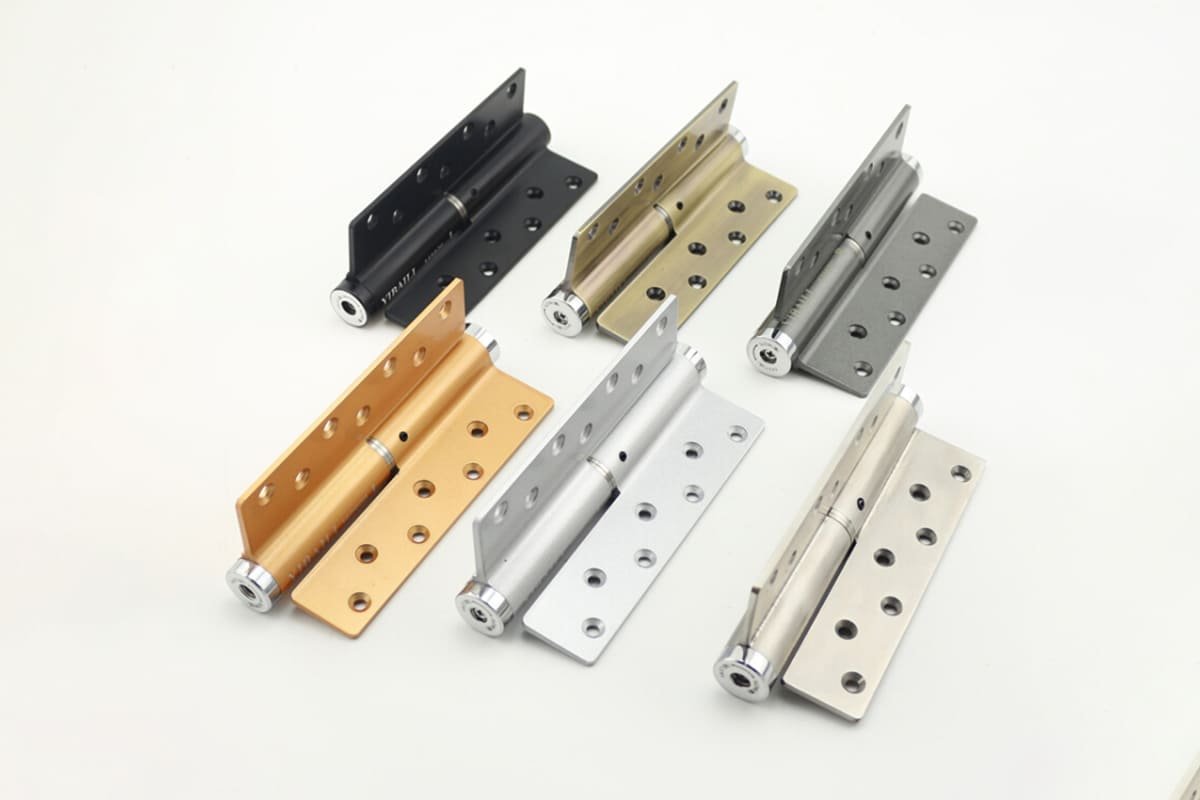
What causes hinge noise?
In my experience, hinge noise usually comes from friction, misalignment, wear, or installation pressure.11 The sound may appear as squeaking, grinding, clicking, or vibration. Each sound points to a different possible cause.
Common noise sources include:
- Pin-to-knuckle friction
- Dry contact surfaces
- Uneven hinge gaps
- Door sag after loading
- Poor screw alignment
- Frame movement
- Bearing contamination
- Surface finish damage inside moving areas
- Incorrect installation angle
A ball bearing hinge reduces sliding friction because the bearing elements help the hinge rotate more smoothly. This can make the door feel lighter during opening and closing. It can also reduce user-perceived noise, especially in applications where people notice small details.
Where smoothness matters most
Smooth opening is more valuable in some markets than others. For example, a hardware brand selling premium residential door sets may care deeply about the first impression. A door factory supplying apartment projects may need a balance between smoothness, cost, and long-term complaint control.
Ball bearing butt hinges are often considered for:
- Hotel room doors
- Apartment entrance doors
- Office doors
- Showroom doors
- Premium residential doors
- Doors with frequent daily use
- Products positioned as higher-grade hardware
Plain butt hinges can still be suitable for many standard applications, especially when load-bearing value and cost-performance are more important than premium feel.
How I compare operating feel
A good noise and smoothness check should include more than a quick hand movement. I prefer to evaluate the hinge after loading and repeated cycling because a new sample can feel different from a used sample.
A practical test can observe:
Initial opening feel
I check whether the hinge moves evenly without tight points.Movement under load
I observe whether friction increases after the hinge carries door weight.Sound during slow movement
Slow movement can reveal rubbing that fast movement hides.Sound during normal use
Normal movement better reflects daily user experience.Feel after repeated operation
I check whether smoothness improves, declines, or becomes inconsistent.Looseness after use
Excess looseness can create clicking or vibration.
For a serious procurement project, I do not recommend judging noise by ear alone if the buyer needs a formal standard.12 A qualified testing setup may use controlled background conditions and consistent measurement distance. However, even without formal decibel claims, comparative factory testing still helps buyers identify which sample feels and sounds better under the same conditions.
Noise as an after-sales risk
For many B2B buyers, noise complaints are expensive because they are subjective. One user may accept a small sound. Another user may reject it immediately. This makes hinge selection important for brand reputation.
I often tell buyers that hinge smoothness is not only a technical feature. It is also a customer perception feature. A quiet door can support a premium brand image. A rough-feeling door can weaken it.
That is why the ball bearing butt hinge vs plain butt hinge decision should include both mechanical and emotional factors. Load-bearing performance protects the installation. Smoothness and quietness protect the user experience.
How should buyers choose between ball bearing butt hinge vs plain butt hinge for door projects?
The wrong hinge choice can create hidden costs. A buyer may save money on the hinge but face complaints about noise. Another buyer may over-specify a bearing hinge when a well-made plain hinge would deliver better load value. Both mistakes reduce margin and trust.
Buyers should choose between the two hinge types by matching hinge behavior to door weight, opening frequency, market position, noise expectations, certification requirements, and after-sales risk. A plain butt hinge may fit load-focused standard doors, while a ball bearing butt hinge may fit smoother and quieter applications.
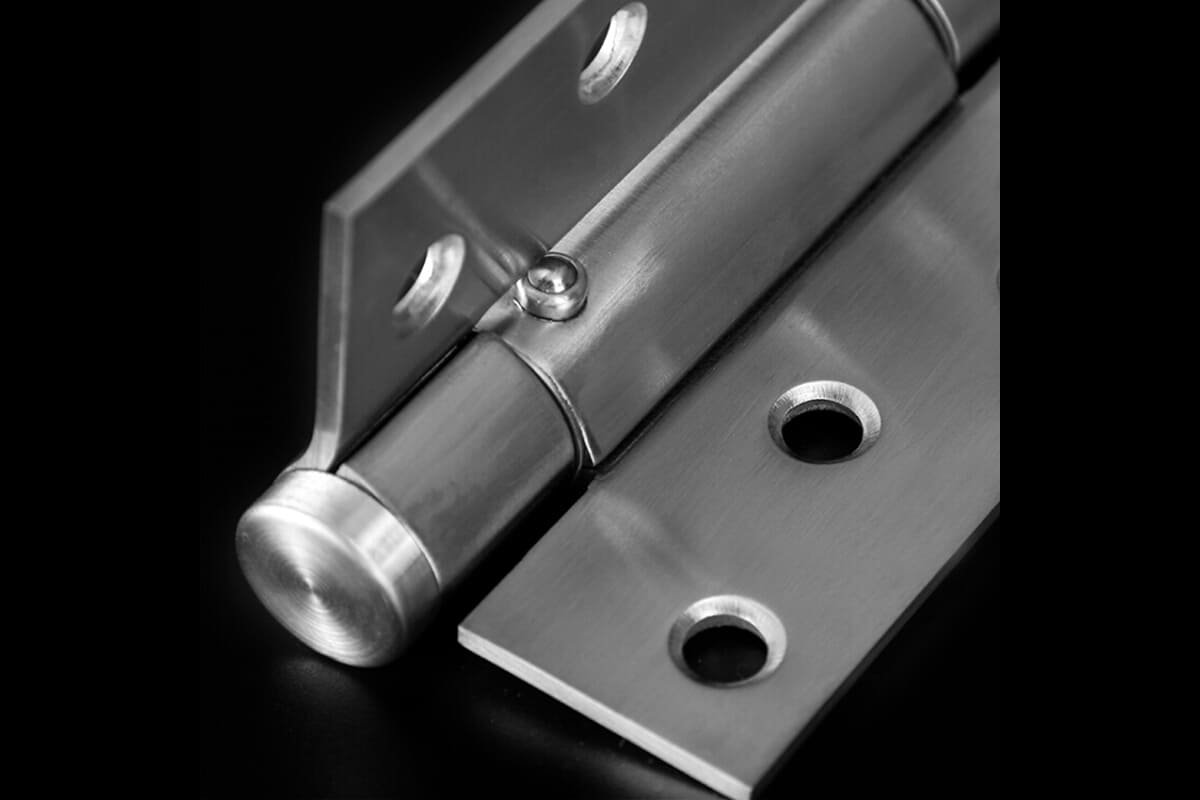
Start with the door application
I like to begin with the door, not the hinge. The hinge is only one part of the full door system. A high-quality hinge can still perform poorly if the door leaf, frame, screws, or installation method is not suitable.
Buyers should define:
- Door type: wood door, steel door, fire-rated door, hotel door, apartment door, office door
- Door weight: light, medium, or heavy range based on project data
- Opening frequency: occasional, normal, or high-use
- User expectation: standard function or premium smoothness
- Market price level: budget, mid-range, or premium
- Complaint sensitivity: low, medium, or high
- Regulatory documents: CE, fire-rated documentation, or local project requirements
At SDH Hardware, we manufacture architectural door hardware for B2B customers, so I often see different buyers choose different hinge structures for different product lines. A door factory may use a plain butt hinge for one series and a ball bearing butt hinge for another. That is normal. It is not a contradiction. It is product positioning.
Selection matrix for procurement teams
The table below shows how I would think about the decision in a sourcing discussion. It is not a universal rule. It is a practical starting point.
| Buyer priority | Better fit may be | Reason |
|---|---|---|
| Strong load-bearing value under controlled same-spec conditions | Plain butt hinge | Direct structure may perform well in load support |
| Smoother opening and closing | Ball bearing butt hinge | Bearing design reduces friction |
| Lower operating noise | Ball bearing butt hinge | Less rubbing can improve sound behavior |
| Standard door line cost-performance | Plain butt hinge | Simple structure can be efficient and reliable |
| Premium door hardware positioning | Ball bearing butt hinge | Smooth feel supports higher perceived quality |
| High complaint sensitivity | Depends on test result | Buyer should compare load, wear, and noise together |
| Fire-rated or regulated projects | Depends on certified documents | Buyer should verify valid test reports and scope |
Supplier evaluation questions
A hinge supplier should be able to discuss more than price. In my view, a serious B2B supplier should explain production control, material selection, inspection process, and customization options.
When buyers compare suppliers, they should ask:
Can you produce both ball bearing and plain butt hinges in-house?
In-house production can improve control over tolerances and consistency.Can you compare both options under the same specification?
Same-condition comparison is more useful than marketing descriptions.What material and finish options are available?
Stainless steel grade, plating, polishing, and coating affect performance and appearance.Can you provide drawings after order confirmation?
Technical drawings reduce misunderstanding in OEM and ODM projects.Can you support logo, packaging, and accessory customization?
This matters for hardware brands and wholesalers.Can you provide CE or fire-rated certification documents where applicable?
Buyers should verify that documents match the product model, size, and intended use.What inspection is done after production?
Finished product inspection helps reduce batch variation.
Quality control during mass production
Sample approval is only the first step. Mass production consistency matters more. A good sample does not guarantee every carton will match it unless the factory controls the process.
For butt hinges, I focus on:
- Raw material screening
- Cutting and stamping accuracy
- Knuckle forming consistency
- Pin assembly fit
- Bearing placement where applicable
- Leaf flatness
- Hole positioning
- Surface treatment quality
- Opening and closing feel
- Final inspection before packing
At SDH Hardware, our factory-side quality control follows the logic of raw material screening, standardized production supervision, and finished product inspection. I describe this as our manufacturing approach, while project buyers should still verify documents and conduct their own approval checks for critical applications.
Do not ignore installation variables
A hinge can be technically correct but still fail in use if the installation is wrong. This is especially important for import buyers supplying door factories in different regions. The same hinge may behave differently when installed on different frames or with different screws.
Buyers should confirm:
- Screw type and length
- Door and frame material
- Mortise depth
- Hinge alignment
- Number of hinges per door
- Door closer use
- Environmental exposure
- Fire or smoke seal pressure
- Installer skill level
For application-specific decisions, I recommend qualified professional evaluation. This is especially true for fire-rated doors, public buildings, heavy doors, and high-traffic projects.
Frequently Asked Questions
Is a ball bearing butt hinge always stronger than a plain butt hinge?
No. A ball bearing butt hinge is not always stronger. In our controlled factory-side observations under the same specification, material, and installation setup, a plain butt hinge may show better load-bearing performance. Buyers should compare load stability, wear, smoothness, and noise together.
When should I choose a ball bearing butt hinge?
I would choose a ball bearing butt hinge when smooth opening, quieter movement, and premium user experience matter. It is often useful for hotels, apartments, offices, and higher-positioned door hardware lines. Buyers should still verify material, bearing quality, finish, and test results.
When is a plain butt hinge a good choice?
A plain butt hinge is a good choice when the project needs reliable load-bearing value, simple structure, and strong cost-performance. It is not a low-quality option by default. Its performance depends on material, thickness, pin fit, knuckle accuracy, and production control.
What should I ask a supplier before ordering butt hinges?
You should ask about material grade, hinge thickness, pin structure, bearing quality, surface finish, cycle test method, load comparison, inspection process, drawings, packaging, and certification documents. If CE or fire-rated documents are required, verify that they match the exact product and intended use.
Can cycle testing predict all field problems?
No. Cycle testing helps identify wear, looseness, friction change, and noise behavior, but it cannot predict every installation issue. Door weight, frame rigidity, screw quality, mortise accuracy, climate, and user behavior also affect hinge performance. Buyers should combine testing with project-specific evaluation.
Conclusion
Ball bearing butt hinge vs plain butt hinge is not a simple winner-takes-all comparison. A plain butt hinge may offer strong load-bearing value under controlled same-spec conditions, while a ball bearing butt hinge may offer smoother movement and better noise control. The right choice depends on door weight, opening frequency, market positioning, and after-sales risk. If you are evaluating hinges for OEM, ODM, or bulk sourcing, I recommend comparing samples under your real door conditions. SDH Hardware can support factory-direct hinge selection, customization, and inspection for your project.
"A156.1 - 2025 Butts and Hinges", https://buildershardware.com/ANSI-BHMA-Standards/Hardware-Highlights/A1561-2025-Butts-and-Hinges. ANSI/BHMA A156.1 and EN 1935 frame hinge durability as a set of performance requirements involving cycling, loading, dimensional classification, and related checks rather than a cycle count alone; this supports the article’s testing approach at a standards level, although it does not validate the author’s specific factory procedure. Evidence role: expert_consensus; source type: institution. Supports: recognized hinge standards evaluate durability with multiple requirements, not only cycle count. Scope note: Contextual support from standards, not direct proof of the article's internal testing results. ↩
"NASA-STD-5020", https://s3vi.ndc.nasa.gov/ssri-kb/static/resources/nasa-std-5020.pdf. Door-hardware standards and hinge test methods commonly assess durability through repeated operation together with loading, wear, dimensional stability, corrosion or surface performance, and functional operation; this supports the article’s multi-factor checklist, while some subjective items such as perceived movement feel may not be specified in the same way. Evidence role: general_support; source type: institution. Supports: hinge performance assessment commonly includes wear, dimensional stability, loading, frictional behavior, and surface durability. Scope note: The source would support the general test categories, not every listed checkpoint verbatim. ↩
"Is it true that one hinge bears most of the load on a typical 3 ...", https://diy.stackexchange.com/questions/185490/is-it-true-that-one-hinge-bears-most-of-the-load-on-a-typical-3-hinge-door. Elementary statics treats a hinged door as a supported body whose weight and moment are resisted by hinge reactions and fasteners; increasing the door weight increases the forces and moments carried by the hinge assembly, although the exact stress distribution depends on geometry, number of hinges, and installation details. Evidence role: mechanism; source type: education. Supports: larger door weights increase hinge reactions and stresses in connected hinge and fastener components. Scope note: General mechanics support, not a calculation for the specific hinges discussed. ↩
"High Performance Tribology Systems: Design Consideration", https://www.nist.gov/publications/high-performance-tribology-systems-design-consideration. Tribology research describes wear as a cumulative result of repeated contact, sliding, lubrication condition, contact stress, and material properties; this supports treating high-use doors as more sensitive to friction and wear, although hinge-specific outcomes depend on design and materials. Evidence role: mechanism; source type: paper. Supports: repeated sliding or rolling contact can change friction and produce wear over time. Scope note: General tribology evidence, not a comparative test of ball bearing and plain butt hinges. ↩
"design, fabrication, and testing of mechanical hinges with ...", https://digitalcommons.calpoly.edu/cgi/viewcontent.cgi?params=/context/theses/article/4047/&path_info=Design__Fabrication__and_Testing_of_Mechanical_Hinges_with_Snap_Fit_Locking_Mechanisms_in_Rigid_Origami_Structures.pdf. Machine-design texts analyze pin joints and bearing contact in terms of contact area, bearing stress, member geometry, and material strength; this provides a mechanical basis for evaluating hinge load capacity by design details rather than by bearing type alone. Evidence role: mechanism; source type: education. Supports: load capacity in pin-jointed components is influenced by contact area, bearing stress, geometry, and material deformation. Scope note: The support is based on general pin-joint mechanics and does not rank specific commercial hinge designs. ↩
"Hinge", https://en.wikipedia.org/wiki/Hinge. Neutral hinge references define a butt hinge as two leaves joined by interlocking knuckles around a pin, supporting the article’s description of the plain butt hinge structure; the definition does not by itself establish comparative strength. Evidence role: definition; source type: encyclopedia. Supports: butt hinges use interlocking knuckles joined by a pin. Scope note: Definition support only, not performance evidence. ↩
"Ball Bearing Hinges: Sizing, Grades and When to Use", https://www.americanlocksets.com/ball-bearing-hinges-guide?srsltid=AYCX9vJfo47r4M6q4h2uFPlZ4FO3WAFiNcqTfxE5ZSiyZCVUEeC6G4Ld. Architectural-hardware glossaries and hinge standards describe ball bearing hinges as hinges incorporating bearing elements at the knuckle or barrel interface to facilitate rotation; this supports the structural description, without proving superior performance in every application. Evidence role: definition; source type: institution. Supports: ball bearing hinges incorporate bearing elements at the hinge knuckle interface. Scope note: Definition support only; performance depends on design, materials, and installation. ↩
"Ball bearing", https://en.wikipedia.org/wiki/Ball_bearing. References on rolling-element bearings explain that balls reduce friction by substituting rolling contact for sliding contact between moving surfaces; this supports the mechanism behind smoother ball bearing hinge movement, although actual noise and durability still depend on hinge quality and loading. Evidence role: mechanism; source type: encyclopedia. Supports: ball bearings reduce sliding friction by replacing sliding contact with rolling contact. Scope note: Mechanism support, not a direct test of the article's hinge samples. ↩
"SDI 122-21", https://steeldoor.org/sdi-122/. Door installation and fire-door standards treat the door leaf, frame, hinges, fasteners, clearances, and installation workmanship as interdependent elements of the door assembly; this supports the article’s point that hinge results are affected by the complete installed system. Evidence role: general_support; source type: institution. Supports: door and frame construction, fastener selection, and installation conditions affect door assembly performance. Scope note: General door-assembly support, not a quantitative estimate of each variable's effect. ↩
"assessing the sound quality of consumer products using data ...", https://digitalcommons.mtu.edu/etdr/1854/. Research on product sound quality and psychoacoustics finds that unwanted noises such as squeaks, rattles, and rough operating sounds can influence perceived product quality; this supports the article’s perception claim in general, though it is not specific to door hinges unless a door-hardware study is used. Evidence role: general_support; source type: paper. Supports: auditory and tactile cues can influence perceived product quality. Scope note: Contextual support from product-perception research, not direct evidence about all door systems. ↩
"Fix A Squeaky Door In 2 Minutes | SIMPLE FIX EXPLAINED",
. Studies of squeak and rubbing noise in mechanical contacts identify frictional excitation, wear, surface condition, and alignment or contact-pressure changes as common contributors; this supports the proposed mechanisms for hinge noise, while field diagnosis remains installation-specific. Evidence role: mechanism; source type: research. Supports: friction, wear, misalignment, and contact conditions can generate squeak or rubbing noise in mechanical joints. Scope note: General mechanical-noise support, not a comprehensive field survey of door hinge failures. ↩"Sound Level Meter App | Noise and Hearing Loss", https://www.cdc.gov/niosh/noise/about/app.html. Acoustics standards such as ISO 1996 and IEC 61672 specify instrument performance, measurement conditions, and reporting practices for sound measurements; this supports the article’s caution that formal noise claims should not rely on listening by ear alone. Evidence role: expert_consensus; source type: institution. Supports: standardized noise measurement requires calibrated instruments and controlled conditions. Scope note: Supports formal noise-measurement practice generally, not a hinge-specific acceptance threshold. ↩
