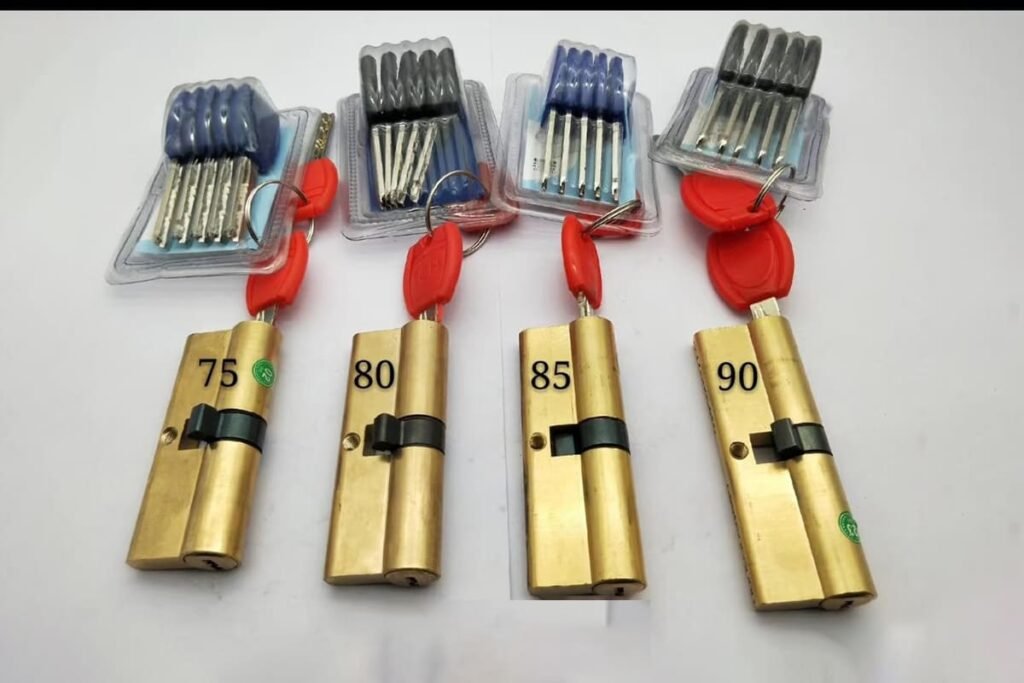
How to measure euro profile cylinder length correctly
Accurately measuring the length of a euro profile cylinder is critical for ensuring proper fit and functionality in door hardware systems.1 The correct measurement isn’t just about the total size—it involves understanding A/B dimensions from the fixing screw center, door thickness, and the impact of handle or escutcheon configurations. Let's explore the exact steps and considerations.
To measure euro profile cylinder length correctly, take the following steps: use the fixing screw hole (cam center) as the reference point2, measure A and B dimensions from this center to each cylinder end, and ensure that the total length fits your door thickness plus any handle or escutcheon configurations. Confirm the required cylinder type and market-specific size notation.
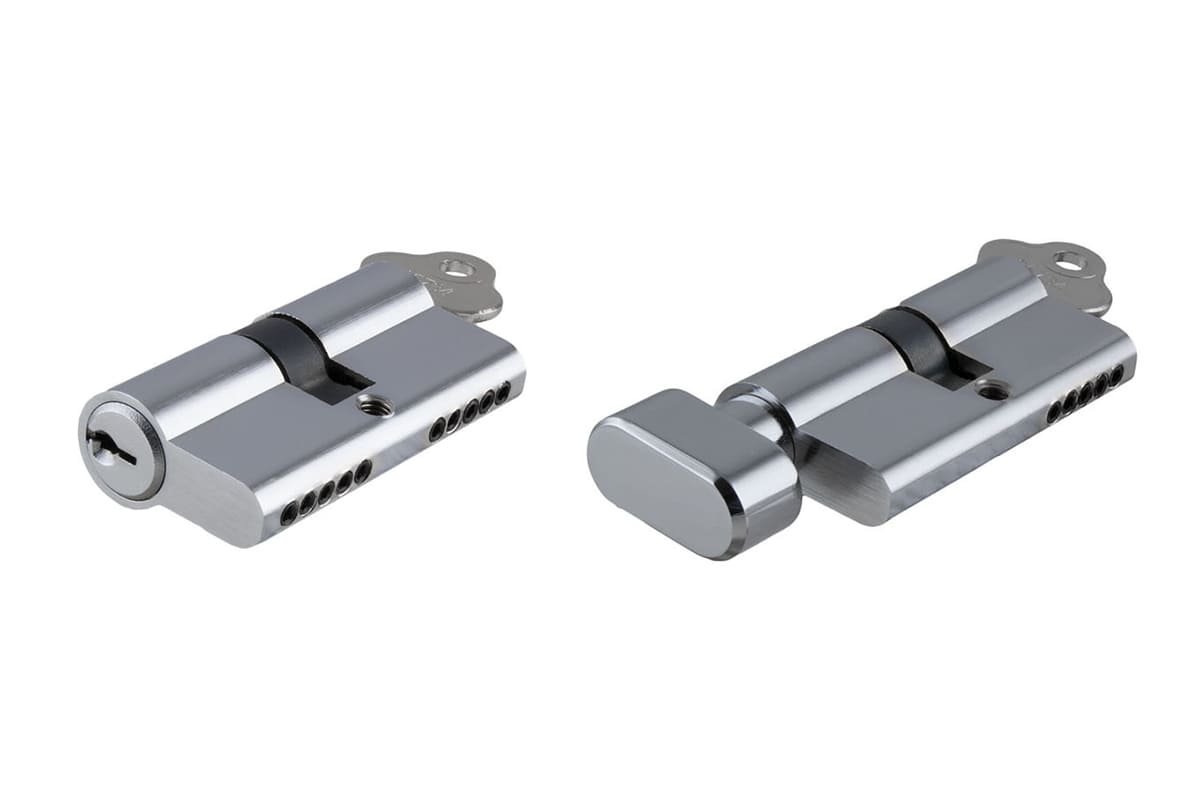
Correct measurement is essential to avoid mismatched hardware during installation and to enhance security. Below, I’ll guide you through the steps while clarifying the key factors B2B buyers need to evaluate before placing bulk hardware orders.
Why isn’t total cylinder length enough to measure correctly?
Total cylinder length often leads to incorrect decisions because it doesn’t account for A-side and B-side differences. A singular measurement hides critical specifications.
The total cylinder length combines the A and B dimensions3, which represent the inside and outside parts of the cylinder measured from the fixing screw center. These dimensions determine compatibility with the door thickness and hardware like escutcheons or lever plates.4
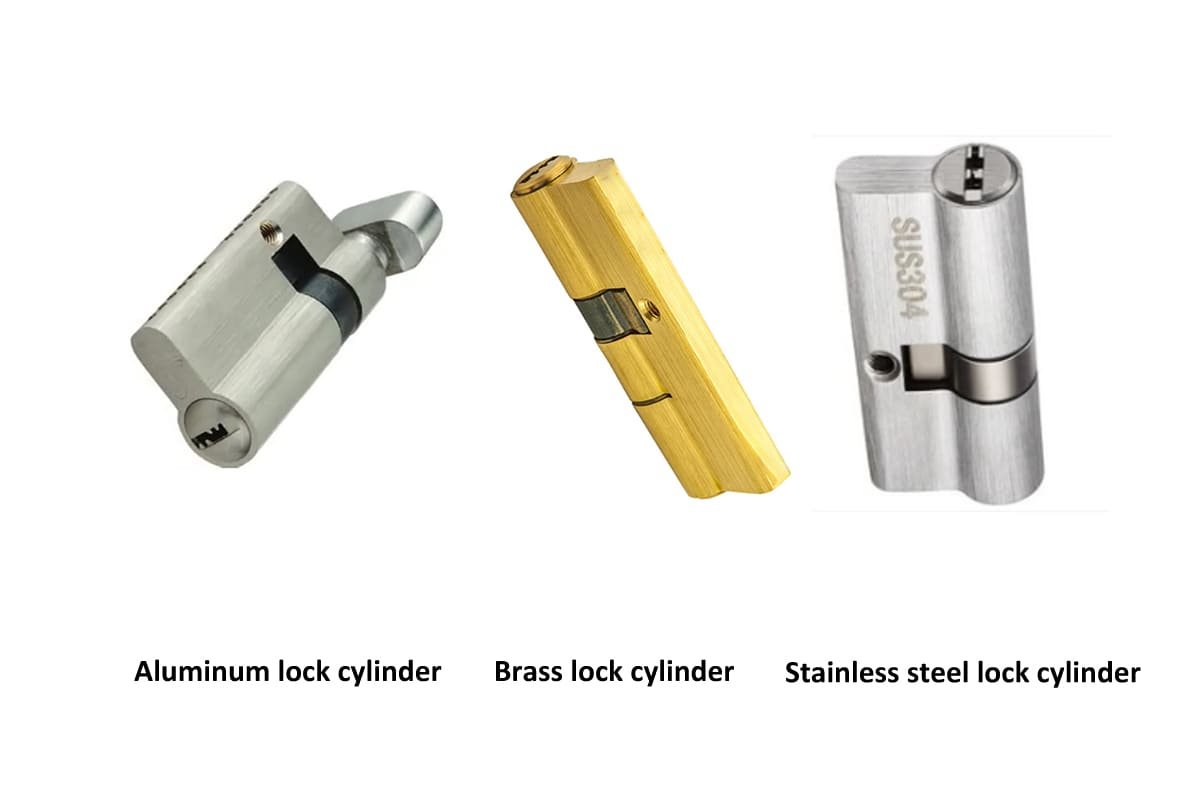
When two cylinders have identical total lengths but different A/B distributions, they may fit doors differently.5 For example, a cylinder with an 80mm total length can have variations like 40/40mm (balanced) or 30/50mm (offset). Without specifying A and B measurements, hardware mismatches are likely.
Why A/B dimensions matter to hardware fit:
- Door thickness: Doors of varying thickness require proportional A/B sides to match evenly, preventing either side from protruding excessively.
- Handle plates and escutcheons: Additional hardware such as protective covers or decorative trims modifies the cylinder side lengths needed for secure installation.
- Security concerns: Cylinders with protrusions are easier targets for forced entry.6 Accurate measurements play a role in reducing vulnerabilities.
Procurement teams should provide A/B measurements alongside the total length to avoid measurement miscommunication between suppliers and manufacturers.
How does door thickness affect cylinder measurement?
Door thickness forms the foundation for determining cylinder length. Simply adding extra millimeters "for safety" is not a reliable solution.
To determine the cylinder length for a door, measure the door's thickness accurately and add allowances for any hardware overlays such as lever plate thickness or escutcheons7. Divide the thickness and overlays proportionally between the A-side (inside) and B-side (outside) dimensions.
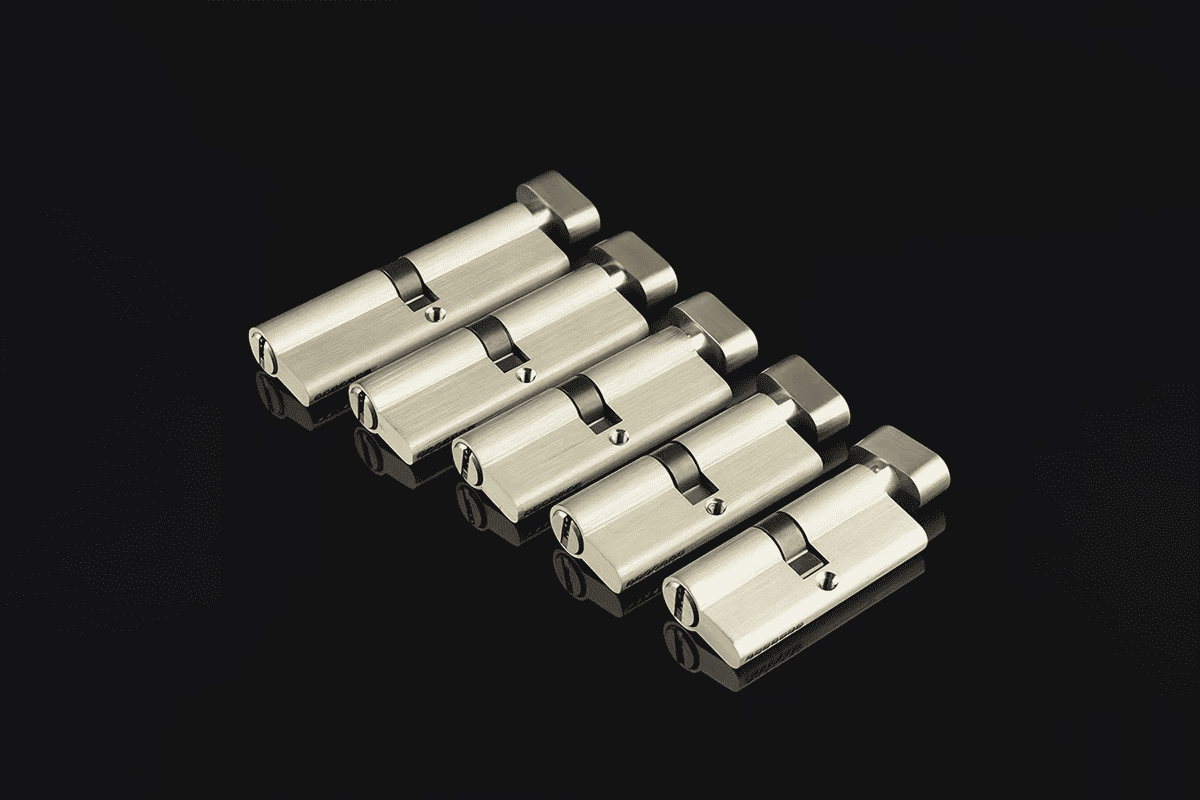
Ideal calculations for cylinder length:
- Start with the door thickness. For instance, if the door is 40mm thick, this becomes the baseline measurement.
- Account for overlays on each side. Common examples include ~4mm lever plate thickness on the inside and protective or decorative covers of ~5mm on the outside.
- Combine for total cylinder length: Door thickness (40mm) + overlays (~9mm) = 49mm, rounded up to standard increments (e.g., 50mm)8.
Adjust these numbers to meet market-specific increments or wholesale preferences, as many suppliers express dimensions in 5mm multiples9.
How does the fixing screw location affect measurement?
The centering of the fixing screw hole within the cylinder dictates how A and B sides are distinguished.
The fixing screw hole acts as the central reference point for measurement. The A-side and B-side are measured independently from this point to each cylinder edge. Any offset of the cam center affects compatibility, especially for doors with specialized edge designs.
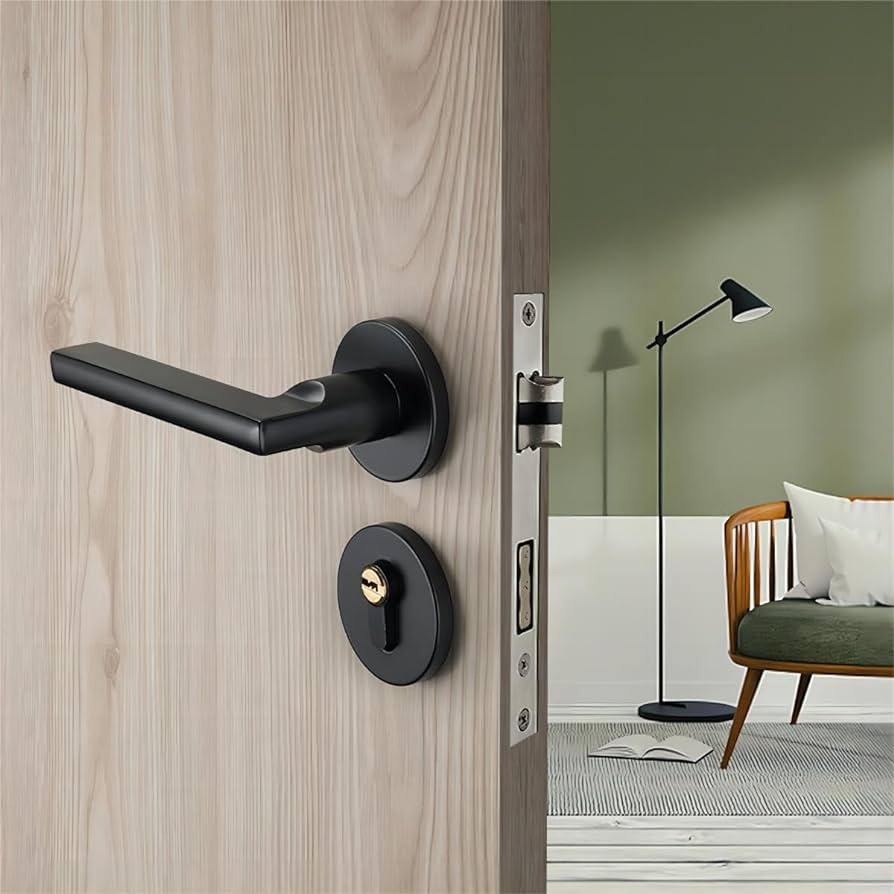
Fixing screw considerations for doors with special designs:
- Central cam position: Typically used for doors without rebates, allowing equal A and B dimensions in symmetrical hardware installations.
- Offset cam position10: Necessary for doors with rebates or modular lock configurations requiring displaced A/B measurements.
Confirm whether the lock design mandates centered or offset cam positioning before specifying cylinder dimensions. This is critical for flush installation in rebated or modular doors.
What cylinder type is needed for different scenarios?
Euro profile cylinders come in multiple variations, each tailored to specific functionalities. Understanding your application avoids errors.
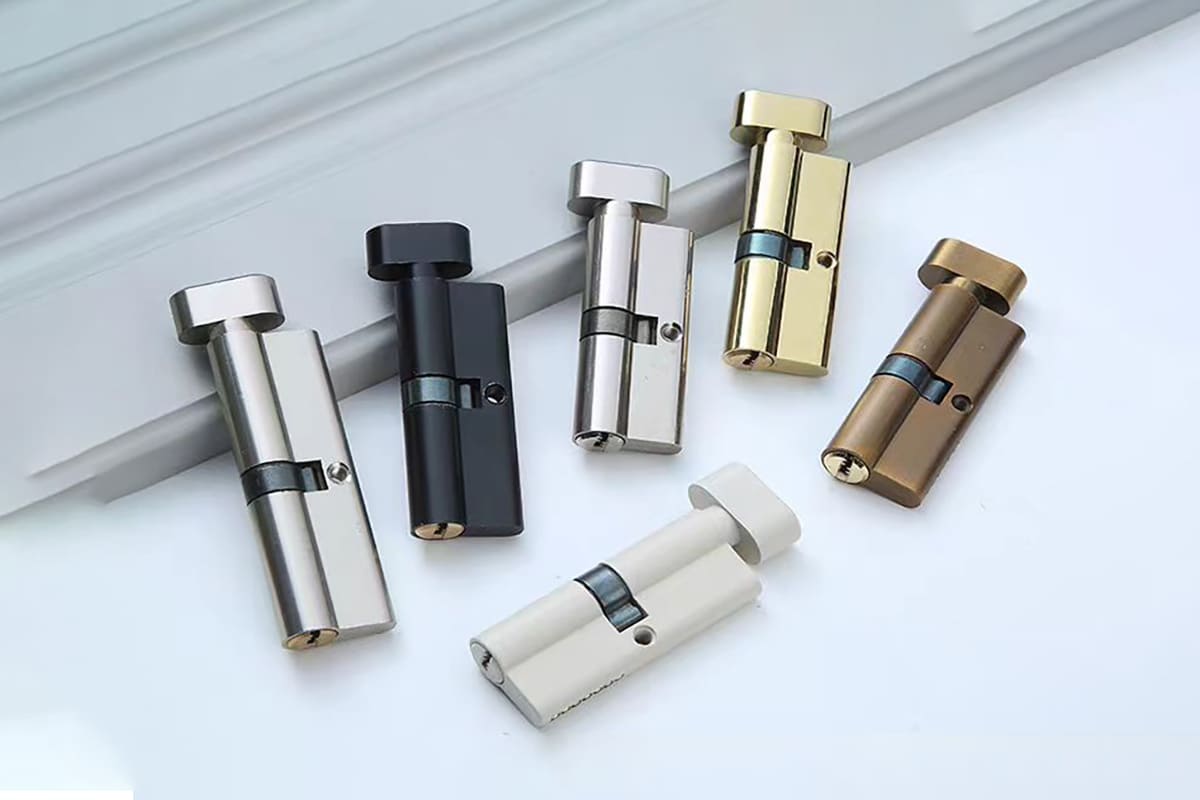
Common euro cylinder types include double cylinders for secure indoor/outdoor functionality, single cylinders for restricted use, half cylinders for one-sided access, and special designs for bathrooms or high-security doors.11 Each type has unique measurement needs.
Matching cylinder type to application:
- Double cylinders: Found in entrance doors where two-sided locking is required, measured with balanced A/B dimensions.
- Single cylinders: Suited for indoor doors allowing limited access from one side (e.g., storage areas).
- Half cylinders: Common for closet doors or server cabinets with one-sided locking only.
- Bathroom cylinders: Include emergency functions or thumb turns.
- High-security cylinders: Feature anti-drill or anti-pick capabilities12, requiring additional alignment checks.
For B2B buyers, sharing detailed application data allows suppliers to recommend specialized cylinder designs best suited to your project needs.
Frequently Asked Questions
How do I express A/B measurements in a purchase order?
Mention the A-side and B-side dimensions separately, along with the total cylinder length. For example, "A: 35mm, B: 45mm (Total: 80mm)" ensures precise communication.
What hardware components affect cylinder sizing?
Escutcheons, lever handles, protective covers, decorative plates, or trims all add to door thickness. Ensure these are accounted for when calculating cylinder dimensions.
Why aren’t longer cylinders always better?
Excessively long cylinders may protrude past the door, leading to aesthetic problems or security risks like easier tampering or snapping.
Conclusion
Measuring euro profile cylinder length correctly involves more than recording the total size—buyers must evaluate A/B dimensions based on the fixing screw reference point, door thickness, and the effects of surrounding hardware like escutcheons or lever plates. This attention to detail ensures proper fit, function, and security.
If you’re looking for reliable guidance and precision-manufactured euro profile cylinders for your projects, contact SDH Hardware today for tailored solutions!
"What Size Euro Cylinder Do I Need? Measuring Guide", https://lockerfella.co.uk/euro-cylinder-size/. European profile-cylinder standards and technical references specify dimensional characteristics for lock cylinders, supporting the need to measure cylinder length accurately for compatibility with the lock case and door furniture; these sources establish dimensional requirements rather than validating a specific installation procedure. Evidence role: general_support; source type: institution. Supports: A technical standard or institutional reference should support that profile cylinder dimensions are specified for compatibility with door hardware and lock cases.. Scope note: The support is contextual because standards define dimensions and tolerances but may not state the article’s installation advice verbatim. ↩
"Measure a euro cylinder: A/B sizes, door furniture and fit", https://www.1control.eu/blog/en/measure-euro-cylinder. Technical dimensional references for euro profile cylinders identify the fixing-screw/cam area as the datum from which left and right cylinder lengths are described, supporting the article’s instruction to measure A and B dimensions from that point. Evidence role: mechanism; source type: institution. Supports: A dimensional standard or technical guide should show that the cylinder halves are measured from the fixing-screw or cam center toward each end.. ↩
"Euro Profile Cylinder", https://www.assaabloy.com/in/en/documents/catalogue/Euro%20Profile%20Cylinder.pdf. Educational lock-hardware references describe euro cylinder sizes using two measurements taken from the central fixing point, with the stated total length corresponding to the sum of those two sides. Evidence role: definition; source type: education. Supports: A technical or educational source should define euro cylinder length notation as two side measurements whose sum equals the total cylinder length.. ↩
"Measure a euro cylinder: A/B sizes, door furniture and fit", https://www.1control.eu/blog/en/measure-euro-cylinder. Technical installation guidance for profile cylinders treats cylinder length as a function of the door leaf and the thickness of fitted door furniture, supporting the article’s statement that A/B dimensions affect compatibility with escutcheons and lever plates. Evidence role: mechanism; source type: institution. Supports: A neutral installation or standards-based source should explain that cylinder projection depends on door thickness plus the thickness of door furniture.. Scope note: The support is contextual because exact allowances vary by door set and hardware design. ↩
"Measure a euro cylinder: A/B sizes, door furniture and fit", https://www.1control.eu/blog/en/measure-euro-cylinder. Neutral measurement guides for euro cylinders describe both equal and unequal side lengths, showing that identical total lengths can have different inside/outside projections depending on the A/B distribution. Evidence role: mechanism; source type: education. Supports: A technical measurement guide should confirm that euro cylinders are sold in symmetric and asymmetric A/B sizes and that the distribution matters for fit.. ↩
"What is Lock Snapping with Prevention Tips (Expert Advice)", https://www.locksmiths.co.uk/faq/lock-snapping/. Police-backed burglary-prevention guidance identifies excessive euro-cylinder projection as a security concern because it can provide purchase for forced-entry methods such as snapping. Evidence role: expert_consensus; source type: government. Supports: A police or government-backed crime-prevention source should support that protruding euro cylinders can be more vulnerable to snapping or other forced-entry attacks.. Scope note: The source would support the general security risk, while the precise acceptable projection may vary by jurisdiction, standard, and hardware type. ↩
"How to Measure a Euro Cylinder Lock Correctly - AKADA hardware", https://akada-hardware.com/how-to-measure-a-euro-cylinder-lock-correctly/. Installation guidance for euro profile cylinders explains that measurements should include the door leaf and any external or internal furniture through which the cylinder passes, supporting the inclusion of lever plates and escutcheons in sizing calculations. Evidence role: mechanism; source type: education. Supports: A measurement guide should support that the effective cylinder length includes both the door thickness and the thickness of fitted door furniture.. ↩
"Euro Profile Cylinder", https://www.assaabloy.com/in/en/documents/catalogue/Euro%20Profile%20Cylinder.pdf. Dimensional references for profile cylinders describe standardized size notations and commonly available length increments, supporting the article’s statement that calculated measurements are normally matched to the next available standard size. Evidence role: definition; source type: institution. Supports: A standard or neutral technical reference should confirm that euro cylinders are commonly specified in standard length increments.. Scope note: The support is contextual because available increments may differ by market, manufacturer, and cylinder design. ↩
"Non-standard size euro cylinder? : r/DIYUK", https://www.reddit.com/r/DIYUK/comments/1uaf477/nonstandard_size_euro_cylinder/. Technical size references and standardized product notations for euro profile cylinders commonly list A/B lengths in 5 mm increments, supporting the article’s description of prevailing size expression. Evidence role: general_support; source type: institution. Supports: A technical standard, cataloging convention, or neutral reference should support that euro cylinder lengths are commonly listed in 5 mm steps.. Scope note: The support is contextual because it describes common industry notation rather than proving that every supplier uses 5 mm multiples. ↩
"Euro Profile-Full Cylinder", https://www.allaboutdoors.com/Products/door-parts/hinged-residential-door-parts/Lock-Cylinders-Parts/Euro-Profile-Full-Cylinder?srsltid=AYCX9vKpQjwAt9aHhGsSEpSlvqrNTHByq1ApgrQGDF_h3DKOvu7I-kbz. Specialized door-hardware references describe offset or asymmetric cylinder configurations used where the lock case or door construction does not align with a centered cylinder arrangement, providing contextual support for the article’s discussion of offset cam positioning. Evidence role: mechanism; source type: institution. Supports: A technical door-hardware source should explain circumstances in which the cam or cylinder centerline is offset relative to the door or lock arrangement.. Scope note: The support is contextual because offset requirements depend on the specific lock case, rebate geometry, and hardware system. ↩
"Pin tumbler lock", https://en.wikipedia.org/wiki/Pin_tumbler_lock. General references on cylinder locks and euro profile cylinders distinguish common functional variants, including double-ended, single-ended, half, and thumb-turn arrangements, supporting the article’s classification of cylinder types. Evidence role: definition; source type: encyclopedia. Supports: A neutral reference should define common cylinder-lock types and distinguish double, single, half, and thumb-turn or special-purpose cylinders.. Scope note: The support is contextual because terminology can vary by country and supplier. ↩
"Guide to EN 1303:2015 - Cylinders for Locks Coding System", https://www.dirock.com/Guide-to-EN-1303-2015-Cylinders-for-Locks-Coding-System-id44113496.html. Lock-cylinder security standards such as EN 1303 include attack-resistance criteria relevant to drilling and manipulation, supporting the article’s statement that high-security cylinders may incorporate anti-drill or anti-pick protections. Evidence role: expert_consensus; source type: institution. Supports: A security standard or certification source should support that high-security cylinders are evaluated for resistance to drilling, picking, or related attack methods.. Scope note: The source supports the existence and assessment of such protections, not that every product marketed as high-security includes all of them. ↩