Choosing the wrong hinge can stop your production line cold. Are you sure your current order matches your factory's capabilities? Avoid costly reworks and production delays before they happen.
Different hinge types serve various functions based on door weight, opening angle, and installation.1 Common types include butt, concealed, and pivot hinges.2 Understanding their unique installation requirements, load-bearing capacities, and compatibility with your door design is crucial for efficient production and optimal door performance.
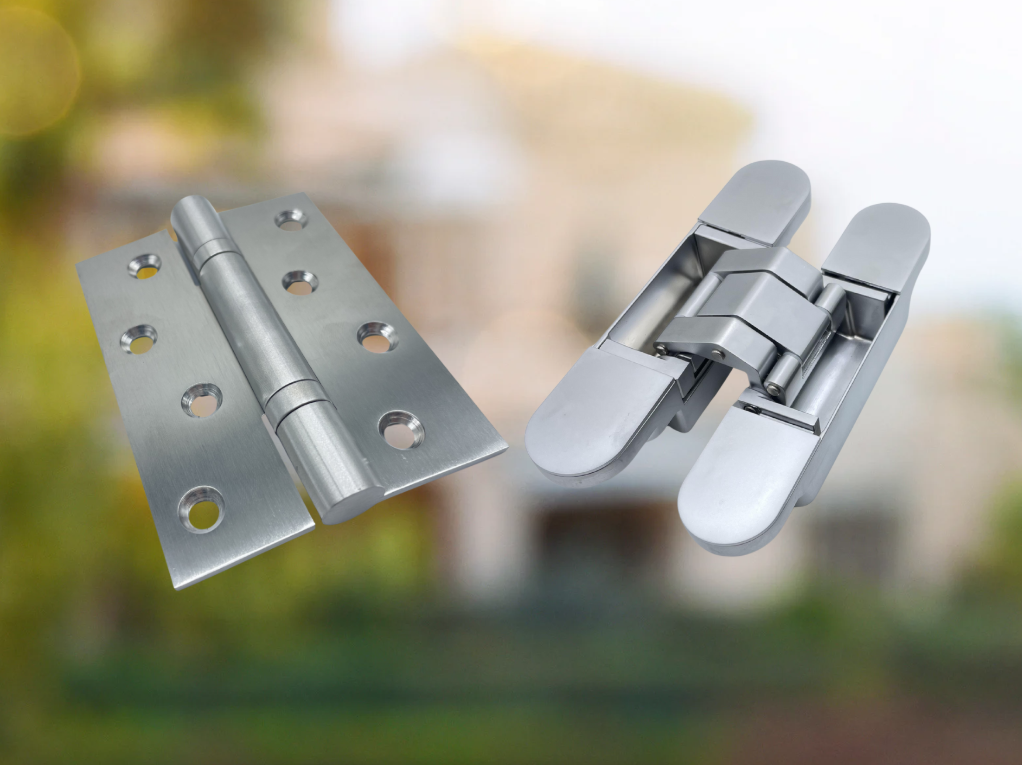
As a technical sales representative at SDH Hardware, I see many questions about hinges. Sometimes, customers make critical mistakes in their orders. These mistakes often come from not fully understanding how hinge types truly differ. I want to help you prevent these common and costly errors.
Do you know the real difference between concealed and butt hinges?
Are you struggling with hinge choices that seem to demand a change in your production process? Many buyers often mix up concealed and butt hinges, not realizing the significant impact on their factory's workflow. This confusion often leads to unexpected reworks.
Concealed hinges require deep routing within the door and frame, making them invisible when the door is closed, and demanding specialized machining.3 Butt hinges typically need a simpler mortise or can be surface-mounted, making them visible but less demanding on door preparation.4
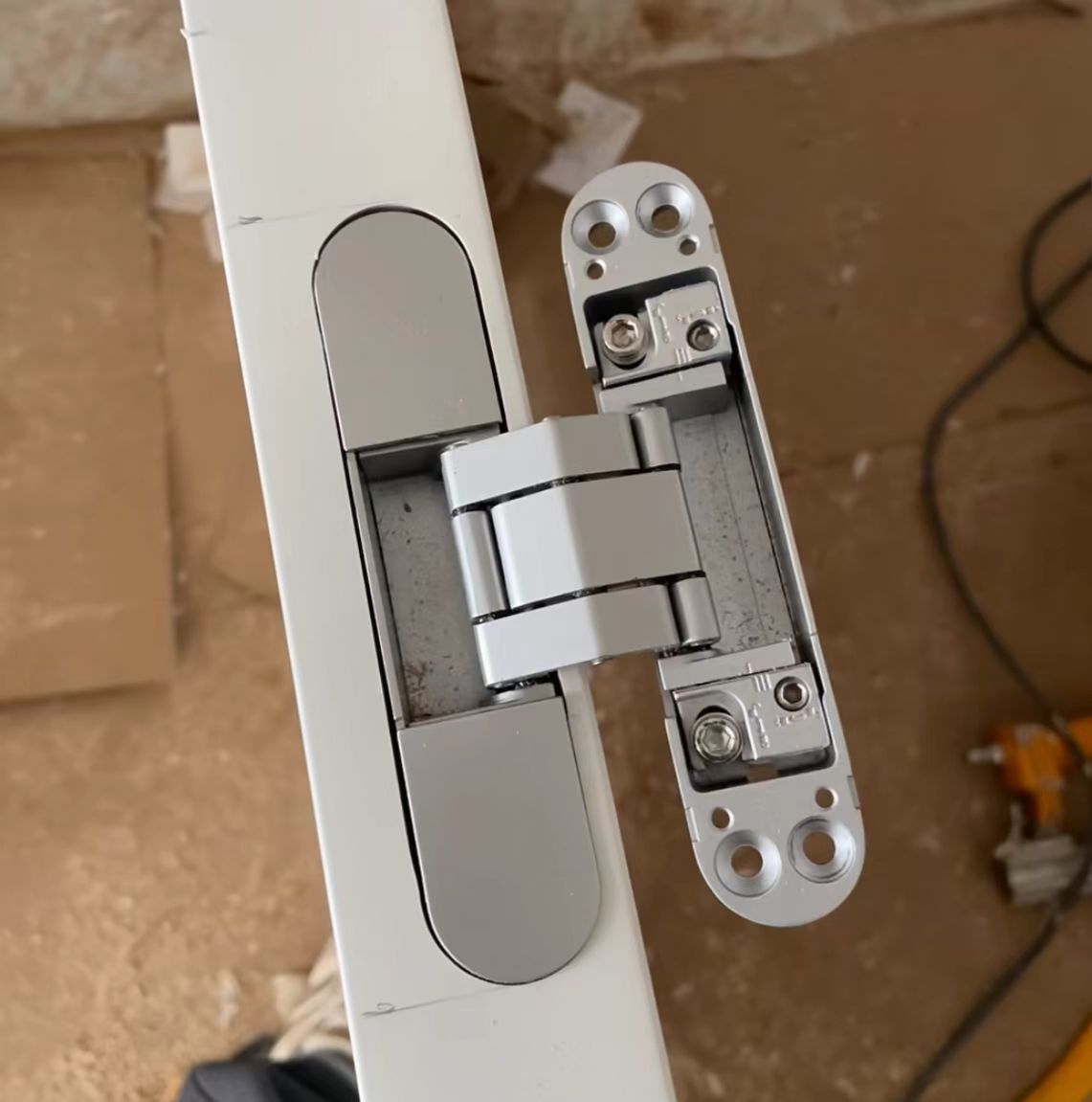
Machining Requirements: A Critical Comparison
In my work, I have seen first-hand how easily buyers confuse hinge types. The most frequent mix-up is between concealed hinges and butt hinges. Many customers might label a concealed hinge as a "butt hinge" on their RFQ sheet, or vice versa. This often happens because they look similar when the door is closed, or because buyers focus on the visible part only. However, the installation process and the demands on your production line are vastly different5.
For example, a standard butt hinge usually needs a shallow mortise cut into the edge of the door and the frame6. Some butt hinges can even be surface mounted with minimal door preparation. This process is generally straightforward and uses common factory equipment. On the other hand, concealed hinges, like our popular 3D adjustable concealed hinges, require much more complex machining. They need deep, precise pockets routed into both the door panel and the door frame.7 This demands specialized routing equipment and a different production setup. If your factory is tooled for butt hinges and you order concealed hinges by mistake, you face significant problems. You might need to invest in new machinery, re-configure your production line, or even return the wrong hinges, which causes costly delays and eats into your profit margins.
I remember one case where a customer, a door factory in the Middle East, ordered what they called "invisible butt hinges." When the order arrived, they realized these were deep-mortise concealed hinges, and their current production line could not handle the required routing. They faced a tough choice: invest heavily in new equipment or delay production by sending the hinges back and reordering. My team at SDH helped them understand the precise machining differences. We then guided them to either adjust their door designs or select a suitable hinge type that matched their existing capabilities, preventing a future recurrence of such an error by clarifying specifications upfront.
| Feature | Concealed Hinges | Butt Hinges |
|---|---|---|
| Machining | Deep, precise routing in door and frame | Shallow mortise or surface mounting |
| Visibility | Invisible when door is closed | Visible when door is closed |
| Installation | More complex, requires specialized equipment | Simpler, uses common tools |
| Production Cost | Higher initial setup for machining | Lower setup cost for machining |
| Common Mistake | Often mistaken for butt hinges on RFQ | Sometimes misidentified when discussing "invisible" |
At SDH, when we get an inquiry, we do not just take the name at face value. We ask about your door panel machining plan. This helps us confirm if the hinge you want truly fits your current production setup. We can assess if your existing equipment supports the requested hinge type. If not, we suggest adjusted specifications or explain the necessary changes to avoid expensive line retrofits later. This step saves our customers a lot of headaches and money.
Why should you look beyond aesthetics when choosing hinges?
Do you often select hinges based only on how they look, overlooking their performance specifications? This approach can lead to significant problems down the line, affecting door durability and functionality. Ignoring critical parameters like load rating and opening angle can cause serious issues.
Beyond aesthetics, hinges must be chosen based on load rating to ensure they support the door's weight without sagging or failure. The opening angle must match functional requirements to allow proper door use and avoid obstructions, ensuring long-term performance and customer satisfaction.
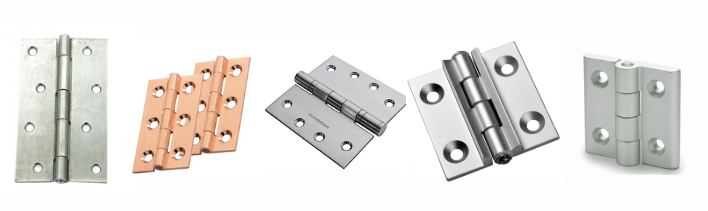
Performance Metrics: More Than Just Appearance
Many buyers, especially those new to large-scale procurement, tend to classify hinges based purely on visual appeal or basic type names. They might request a "heavy-duty" hinge without checking its actual load rating. Or, they pick a standard hinge without considering the door's specific opening requirements. This perspective can cause severe operational issues and lead to unhappy end-users or costly product recalls.
The load rating of a hinge is not just a number; it dictates the maximum weight a hinge set can reliably support over its lifetime.8 Using a hinge with an insufficient load rating for a heavy door will inevitably lead to door sag, hinge failure, and potentially, dangerous situations.9 I have seen cases where door manufacturers had to deal with widespread complaints because doors started to sag just months after installation. This problem was due to hinges that were visually appealing but functionally inadequate. Conversely, over-specifying a hinge, using an unnecessarily robust and expensive hinge for a lightweight door, increases costs without adding proportional value.
Similarly, the opening angle of a hinge is crucial for practical door use10. A standard door might only need a 90-degree opening. But a door in a tight hallway, a hospital, or a furniture cabinet might need to open 180 degrees or more11. If the hinge cannot provide the required opening angle, the door will hit the wall or an adjacent cabinet, making it impractical. This is not just an inconvenience; it affects the entire user experience and the functionality of the space. My team at SDH always asks specific questions about the door's weight, thickness, and where it will be installed. We need to know the exact opening requirements. These details allow us to recommend hinges that are not only aesthetically pleasing but also perfectly functional and durable for their intended application. We verify that the hinge's load capacity and opening angle align with your project's specifications and international standards like CE certification, which often includes durability tests and load specifications12. This approach ensures your product meets performance expectations.
| Performance Aspect | Why It Matters | Impact of Mismatch | SDH's Approach |
|---|---|---|---|
| Load Rating | Supports door weight, prevents sag, ensures longevity | Door sag, hinge failure, callbacks, safety risks | Ask for door weight, material, verify certifications, suggest suitable hinges |
| Opening Angle | Ensures proper door function, avoids obstructions | Door hits walls/furniture, restricted access, user frustration | Inquire about installation environment, desired opening, door thickness |
| Durability | Long-term performance, reduces maintenance | Premature wear, frequent repairs, poor reputation | Recommend hinges based on cycle testing, material quality, certifications |
When a customer comes to us, my first goal is to go beyond the surface. We ask critical questions: "What is the weight of your door?" "What is its thickness?" "What opening angle does the door need to achieve in its installed environment?" These questions help us guide buyers away from purely visual decisions. We look at the total application. This method helps avoid future reorder cases due to functional failures. It ensures that the chosen hardware provides reliable, long-term performance. It reduces your procurement risks and supports stable product market competitiveness.
Conclusion
Choosing the right hinge is about more than just looks. It prevents costly production line changes and guarantees door performance. My team at SDH helps you align hinge types with your factory capabilities and project needs.
"[PDF] instructions for editing and coordination", https://www.fcps.edu/sites/default/files/media/pdf/Division-8-Doors-and-Windows_0.pdf. An architectural hardware or building-construction reference describes hinge selection as dependent on load, door geometry, swing requirements, and installation conditions, supporting the article's general framing of hinge choice. Evidence role: general_support; source type: education. Supports: A neutral source should explain that hinges are selected according to mechanical load, range of motion, and installation conditions.. Scope note: The source would support the selection criteria generally, but may not address every hinge product category used in commercial procurement. ↩
"Hinge - Wikipedia", https://en.wikipedia.org/wiki/Hinge. A general reference on hinges identifies butt, concealed, and pivot hinges among recognized hinge forms, supporting the classification used in the article. Evidence role: definition; source type: encyclopedia. Supports: A neutral reference should identify butt hinges, concealed hinges, and pivot hinges as recognized hinge types.. Scope note: Such a reference establishes terminology, not the relative market prevalence of each hinge type. ↩
"[PDF] DIVISION 8 – DOORS & WINDOWS - in.nau.edu", https://in.nau.edu/wp-content/uploads/sites/60/2018/08/Division-8-05.01.15-ek.pdf. A building-construction or architectural hardware reference describes concealed hinges as being recessed into the door and frame so that the hinge is not visible in the closed position, supporting the article's description of their installation and appearance. Evidence role: mechanism; source type: education. Supports: A source should explain the concealed hinge installation method and its hidden appearance when the door is closed.. Scope note: The degree of routing and machining complexity can vary by concealed-hinge design. ↩
"[PDF] carpentry-standards.pdf - Pittsburg State University", https://www.pittstate.edu/office/facility-operations/_files/documents/construction-standards-documents/carpentry-standards.pdf. A neutral architectural hardware reference defines butt hinges as paired leaves fixed to the door and jamb, commonly mortised into the edges and visible at the hinge side, supporting the article's comparison with concealed hinges. Evidence role: definition; source type: education. Supports: A source should define butt hinges and describe common mortised or surface-mounted installation.. Scope note: The source may not directly compare production difficulty between butt and concealed hinges. ↩
"[PDF] uvu door hardware standard guide", https://www.uvu.edu/facilities/docs/uvuguide_087100_door_hardware_2022-11-29a.pdf. A construction or manufacturing reference notes that hinge type determines the required door and frame preparation, including mortising, routing, or surface mounting, supporting the article's statement that installation workflows differ by hinge type. Evidence role: mechanism; source type: education. Supports: A source should document that hinge types differ in required door and frame preparation, such as mortising, routing, or surface mounting.. Scope note: The source would establish technical differences in preparation, not quantify the exact effect on a specific factory production line. ↩
"[PDF] uvu door hardware standard guide", https://www.uvu.edu/facilities/docs/uvuguide_087100_door_hardware_2022-11-29a.pdf. A carpentry or building-construction source explains that butt hinges are commonly recessed into mortises cut into the door edge and jamb, supporting the article's description of standard butt-hinge preparation. Evidence role: mechanism; source type: education. Supports: A source should show that butt hinges are commonly set into mortises in the door edge and jamb.. Scope note: The source may not specify that the mortise is always shallow, because mortise depth depends on hinge leaf thickness. ↩
"[PDF] SECTION 08 71 00 – DOOR HARDWARE", https://design.missouristate.edu/_Files/Standards/Division8/087100DoorHardware.pdf. A technical installation reference for concealed hinges describes the use of accurately routed recesses in both the door leaf and frame, supporting the article's statement about pocket machining. Evidence role: mechanism; source type: education. Supports: A source should describe concealed or invisible hinge installation as requiring routed pockets or recesses in the door and frame.. Scope note: The reference would support the general installation method, while exact pocket depth and tolerances vary by hinge model. ↩
"How much weight can door hinges hold? - HingeOutlet", https://www.hingeoutlet.com/blogs/news/how-much-weight-can-door-hinges-hold?srsltid=AfmBOoq3m0pVTRAMf9bZb3JlYR2nS-jZmy4FF2b-lsW4JyGpfB7NL2w0. Door-hardware standards such as EN 1935 or ANSI/BHMA hinge standards classify hinges by performance characteristics including load or door-mass capacity, supporting the article's interpretation of load rating as a weight-support criterion. Evidence role: definition; source type: institution. Supports: A standards body or institutional source should explain hinge grading or load capacity in relation to supported door mass.. Scope note: Standards classify test performance and permissible applications; they do not guarantee lifetime performance in every installation environment. ↩
"Hinge Material & Door Sag: Which Causes It Faster? - Framewell", https://frame-well.com/blogs/perspectives/hinge-material-and-door-sag?srsltid=AfmBOoqiHShaXXnoznzTkxxkqo4aLl2KB-ItbyoGkB-KIuIcU0YzFNmG. Technical door-hardware guidance links inadequate hinge capacity or improper hinge selection with sagging, impaired door operation, and accelerated hardware failure, supporting the article's warning about under-rated hinges. Evidence role: mechanism; source type: institution. Supports: A source should connect inadequate hinge load capacity with door sag, impaired operation, or hardware failure.. Scope note: The source would support increased risk rather than prove that failure is inevitable in every case. ↩
"46 CFR § 72.05-25 - Doors, other than watertight. - Law.Cornell.Edu", https://www.law.cornell.edu/cfr/text/46/72.05-25. Building-design references discuss door swing and required clearances as determinants of usability and access, supporting the article's claim that hinge opening angle is functionally important. Evidence role: general_support; source type: education. Supports: A source should explain that door swing, clearances, and opening angle affect usability and spatial function.. Scope note: Such sources may address door swing and clearance broadly rather than hinge opening angle as a standalone product specification. ↩
"Different Types of Door-Opening Motions as Contributing Factors to ...", https://pmc.ncbi.nlm.nih.gov/articles/PMC3691190/. Accessibility, healthcare-facility, or cabinetry references describe applications in which wide door swing, including approximately 180-degree opening, is used to improve clearance or access, supporting the article's example of specialized opening-angle requirements. Evidence role: case_reference; source type: government. Supports: A source should show that door or cabinet designs sometimes use or require 180-degree swing for access, clearance, or function.. Scope note: The source may document selected applications rather than establish a universal requirement for all hospitals or cabinets. ↩
"EN 1935 Door Hinge Grades: Complete Engineering ...", https://www.dndhardware.com/en-1935-door-hinge-grades-complete-engineering-breakdown.html. European standards for single-axis hinges, including EN 1935, classify hinges using performance criteria such as durability cycles and door-mass capacity, providing context for the article's statement that CE-related compliance can involve durability and load specifications. Evidence role: expert_consensus; source type: institution. Supports: A standards or EU source should explain that certain building hardware hinges are classified or tested for durability and load-related performance under EN 1935 or related CE-marking frameworks.. Scope note: CE marking rules depend on product scope and applicable harmonized standards, so the source supports the claim for covered hinge categories rather than all hinges. ↩