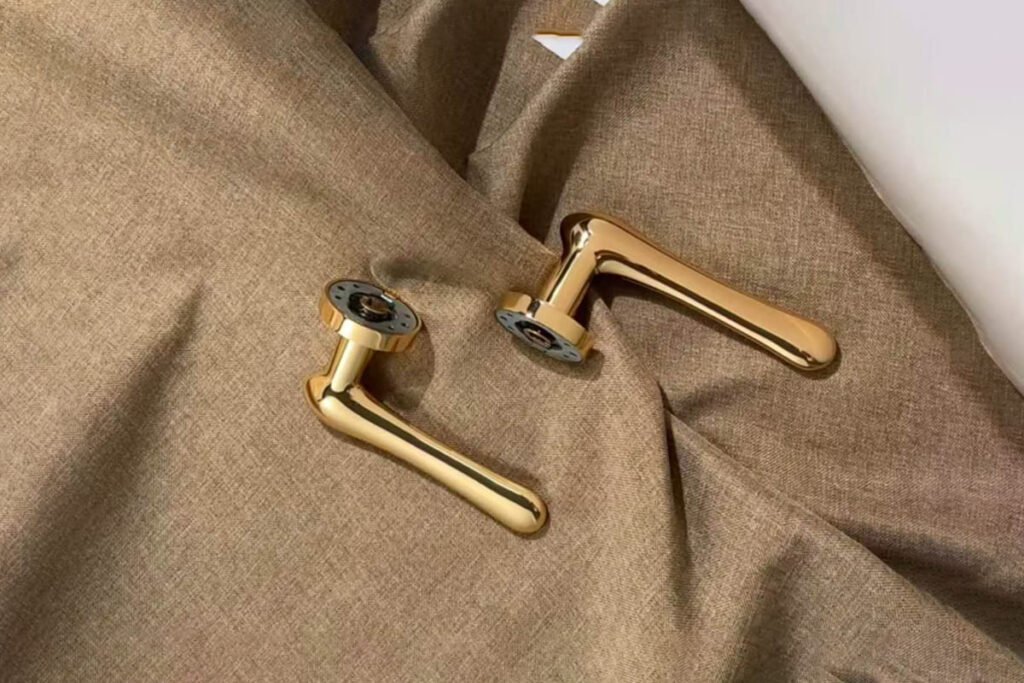
Where zinc alloy material is applied?
Wrong material choices look fine in samples. They can fail in real orders. I see buyers lose time when zinc alloy is judged too simply.
I see zinc alloy applied in products that need complex shapes, accurate die-casting, solid hand feel, and decorative finishes. In door hardware, I use it mainly for lever handles, trims, rosettes, covers, faceplates, and selected precision-cast parts, based on function, load, finish, and test needs.
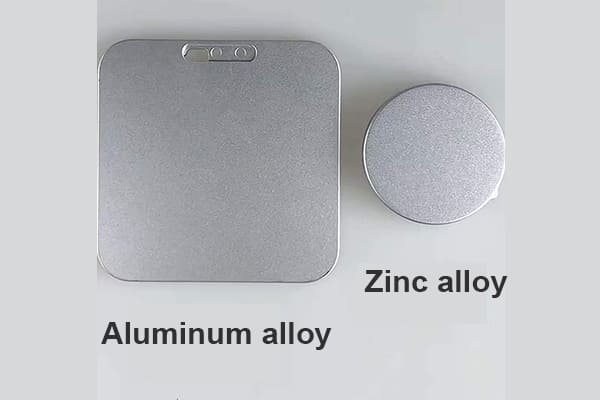
I often meet buyers who ask one short question: “Is zinc alloy good?” I understand the question, but I do not answer it with yes or no. I first ask where the part will be used, what load it will take, what finish the market wants, and what test standard the project needs. Zinc alloy can be a smart choice. It can also be the wrong choice if the part needs another material or a verified safety structure. This is why I look at zinc alloy as a component decision, not as a simple material label.
Why is zinc alloy used in so many products?
A wrong view of zinc alloy can make a buyer overpay or choose the wrong part. I see this often when people only compare material names.
I use zinc alloy when the part needs die-cast forming, stable shape, good detail, solid weight, and decorative surface treatment. It is common in consumer goods, fittings, appliance parts, and many hardware parts where design and finish matter.1
I start from the processing logic
I do not treat zinc alloy as magic. I treat it as a practical die-casting material. It has a relatively low melting point compared with many other metals, and its molten flow helps factories form complex details.2 This matters when I need a handle body, a cover, a trim part, or a small shaped housing with clean edges.
I see zinc alloy in many daily products. It appears in appliance knobs, bathroom accessories, fashion fittings, instrument housings, model toys, and some consumer product parts. I mention these products only as context. My main concern is door hardware.
| Material feature I consider | What it helps me make | Buyer meaning |
|---|---|---|
| Good die-casting flow | Complex shapes and thin details | I can support more design styles |
| Solid hand feel | Handles and decorative hardware | The product can feel heavier and stronger |
| Finish compatibility | Plating, polishing, spraying, brushed effects | I can match market colors and series design |
| Cost-performance | Medium-volume and large-volume parts | Buyers can control price while keeping appearance |
I connect the feature to the order
When I speak with a door factory, I do not only discuss the drawing. I discuss how the product will be sold. A door handle for a retail hardware brand may need a fine plated finish. A project door handle may need consistent color across many cartons. A trim part may need exact shape more than high strength.
Zinc alloy often works well in these cases. But I still need to confirm design thickness, surface process, screw fixing method, packaging protection, and testing requirements.3 The material gives me a good base, but the final result depends on design and production control.
Where does zinc alloy fit in architectural door hardware?
A door hardware line can look complete in a catalog. It can still fail if each part uses material for the wrong reason.
I use zinc alloy most often in appearance-driven and precision-cast door hardware parts. These include lever handles, decorative covers, rosettes, escutcheons, faceplates, trims, and selected lock or hinge-related parts when design and testing support the use.
I separate appearance parts from risk parts
In my factory work, I divide door hardware into two simple groups. The first group needs shape, finish, touch, and brand style. The second group needs load, security, fire resistance, or long cycle performance. Zinc alloy is often strong in the first group. It may be used in some parts of the second group, but only with correct structure and verified testing.4
For example, a lever handle body can use zinc alloy because die-casting supports curves, square lines, grooves, and clean surface areas. A rosette or cover can also use it because the buyer wants a good finish and a stable shape. A decorative faceplate can use it when the structure and fitting method are suitable.
| Door hardware part | Zinc alloy suitability | My usual buyer concern |
|---|---|---|
| Lever handle body | Commonly suitable | Hand feel, finish, style, cost |
| Rosette and escutcheon | Commonly suitable | Size accuracy and finish match |
| Decorative cover | Commonly suitable | Surface consistency in batch |
| Faceplate or trim | Suitable in many designs | Flatness, fixing, finish |
| Lock cylinder core | Usually not my broad recommendation | Security, wear, key system |
| Heavy-duty hinge main load part | Needs careful proof | Load rating, cycle test, structure |
I use zinc alloy where it makes commercial sense
A hardware brand buyer often asks me for one full product series. The buyer wants the handle, rosette, cover, thumb turn, and other visible parts to match. Zinc alloy helps in this kind of series because it can take decorative finishes well when the process is controlled.5 I can also use the die-casting mold to keep the shape stable for repeat orders.
But I do not promise that zinc alloy solves every issue. I still check the door type, target price, sales region, corrosion expectation, and certificate need. A hotel project, a residential door line, and a fire-rated door assembly can have very different risks. I ask these questions early because a wrong material decision becomes expensive after tooling, sampling, and first shipment.
How should I judge zinc alloy for lever handles and trims?
A beautiful handle sample can hide weak design. I have seen buyers focus on color and ignore fixing strength, wall thickness, and batch finish control.
I judge zinc alloy lever handles and trims by design, wall thickness, fixing method, surface process, usage position, and target market. I do not judge by material name alone because the same alloy family can perform differently in different structures.
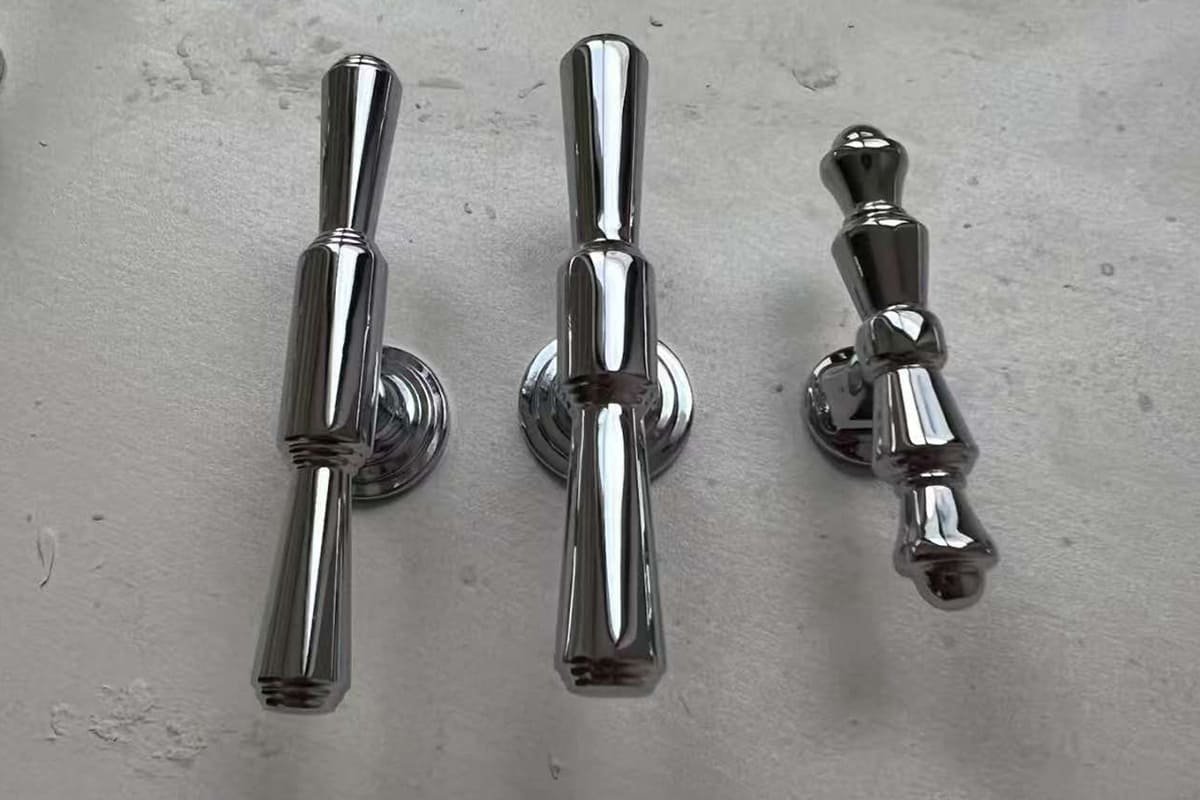
I check the part as a working product
When I review a zinc alloy lever handle, I hold it in my hand first. I check its weight, balance, edges, and grip. Then I check hidden areas. I look at the spindle hole, screw area, inner ribs, and connection points. These places often decide real use life more than the outer shape.
For trims and covers, I focus on surface and fitting. A cover may look simple, but a poor die-casting mold can create rough edges, uneven plating, or assembly gaps. If the product goes to a hardware brand, the same finish must repeat over many batches. If it goes to a door factory, the part must also assemble fast on the production line.
| Check point | What I look for | Why it matters to buyers |
|---|---|---|
| Handle structure | Inner ribs, spindle area, screw seat | It affects real use and return rate |
| Surface preparation | Polishing, cleaning, base layer | It affects plating and visible quality |
| Color control | Same finish across parts | It protects brand image |
| Assembly fit | Rosette, cover, screw, spindle | It reduces door factory complaints |
| Packaging | Separation and surface protection | It prevents scratches during shipment |
I match finish choices to market position
Many buyers choose zinc alloy because it supports rich decorative effects. I often see requests for polished chrome, satin nickel, black, antique, gold tone, and brushed plated looks. These finishes can help a product line fit a target market. But I always remind buyers that the finish is not only a color. It is also a process chain.
A poor base surface can make a good color look bad. A weak packaging method can damage a good finish before the buyer receives it. A finish that works in one market may not suit another market with higher humidity or different user habits. This is why I ask buyers to approve finish samples, confirm inspection standards, and keep a control sample for bulk comparison.
Can zinc alloy be used in concealed hinges and lock parts?
A careless material claim can create risk. I avoid saying zinc alloy is always right for concealed hinges or lock systems.
I may use zinc alloy in selected concealed hinge bodies, covers, or internal precision die-cast structures when the design, load rating, cycle test, and project requirement support it. I do not treat it as the default for all load-bearing hinge or security lock parts.
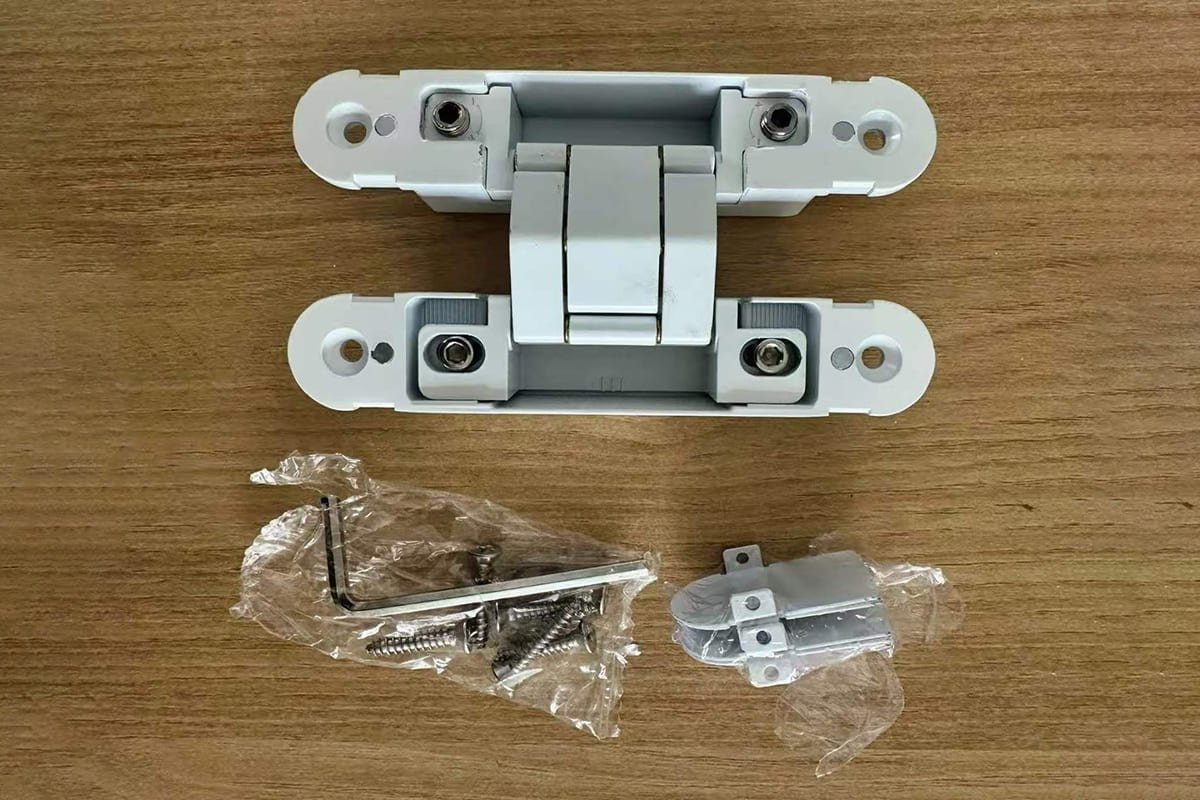
I use careful language for concealed hinges
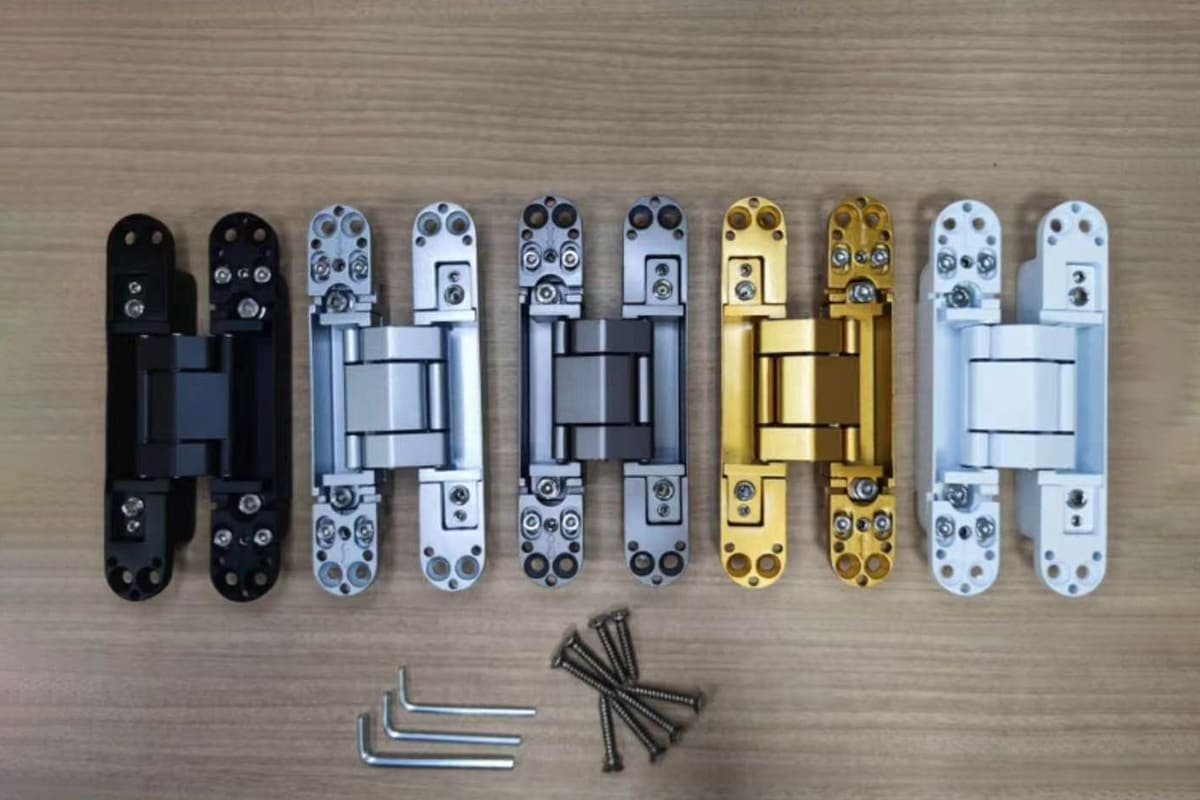
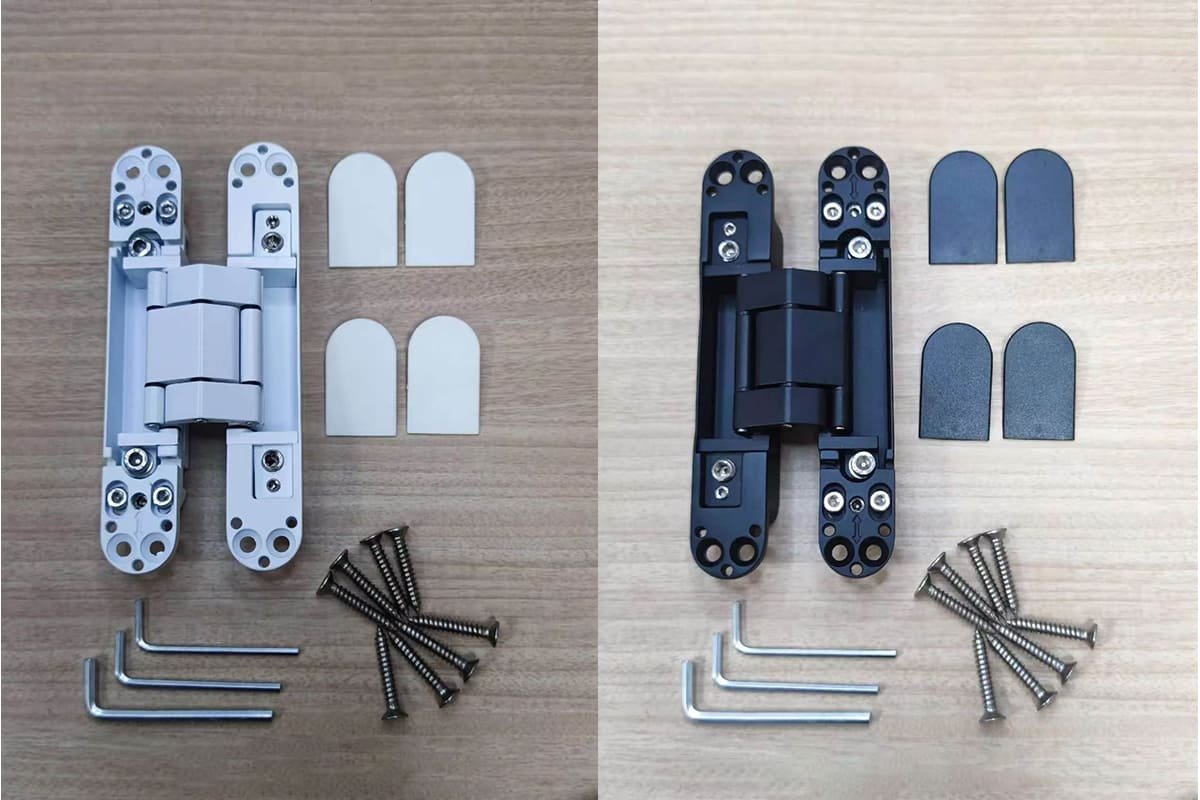
Concealed hinges are not just decorative parts. They must support door weight, movement, alignment, and long use.6 Some concealed hinge designs may include zinc alloy die-cast bodies or internal formed parts because zinc alloy can form complex shapes. It can help with compact structures and clean finishing. But the final choice depends on engineering.
When I discuss concealed hinges with a door factory, I ask about door weight, door size, opening angle, installation method, fire rating needs, and cycle test target. I also ask if the buyer has a required standard or local project rule. If the hinge is for a heavy door, I do not rely on material name. I look for test data, structural design, screw holding method, and installation accuracy.7
| Part or area | Possible zinc alloy use | What I must verify | ||
|---|---|---|---|---|
| Concealed hinge cover | Often possible | Finish, fit, surface strength | ||
| Die-cast hinge body in some designs | Possible with proof | Load test, cycle test, structure | ||
| Internal precision part | Possible in selected designs | Wear, tolerance, movement | ||
| Main heavy-load function | Not a simple yes | Rated load, safety factor, certification | ||
| [ | Fire-rated door assembly | Needs system proof | Fire certificate and approved structure | ](https://www.nfpa.org/news-blogs-and-articles/blogs/2025/04/11/fire-doors-faqs)%%%FOOTNOTE_REF_8%%% |
I separate decorative lock parts from security parts
Lock hardware also needs a clear split. Zinc alloy may be suitable for decorative lock covers, escutcheons, thumb turns, and some lock trim parts. These parts need shape, finish, and stable assembly. But high-security lock cylinders and key control parts need a different level of review. I do not broadly call zinc alloy suitable for high-grade lock cylinders.
A lock cylinder must resist wear, attack, and key operation over time.9 Buyers should check the actual material specification, security grade, test report, and market standard. If a product is only a decorative cover for a cylinder, the decision is different. This difference sounds small, but it matters a lot in procurement. I have seen buyers compare two quotations without noticing that one quote includes decorative zinc alloy parts, while another quote includes a different security structure. That comparison is not fair.
What should buyers check before choosing zinc alloy?
A low quotation can look attractive. It can become costly when the finish changes, the part bends, or the project rejects the certificate.
I advise buyers to check zinc alloy by component function, design risk, finish target, testing need, certificate need, and supplier process control. A clear checklist reduces sample mistakes and bulk order disputes.
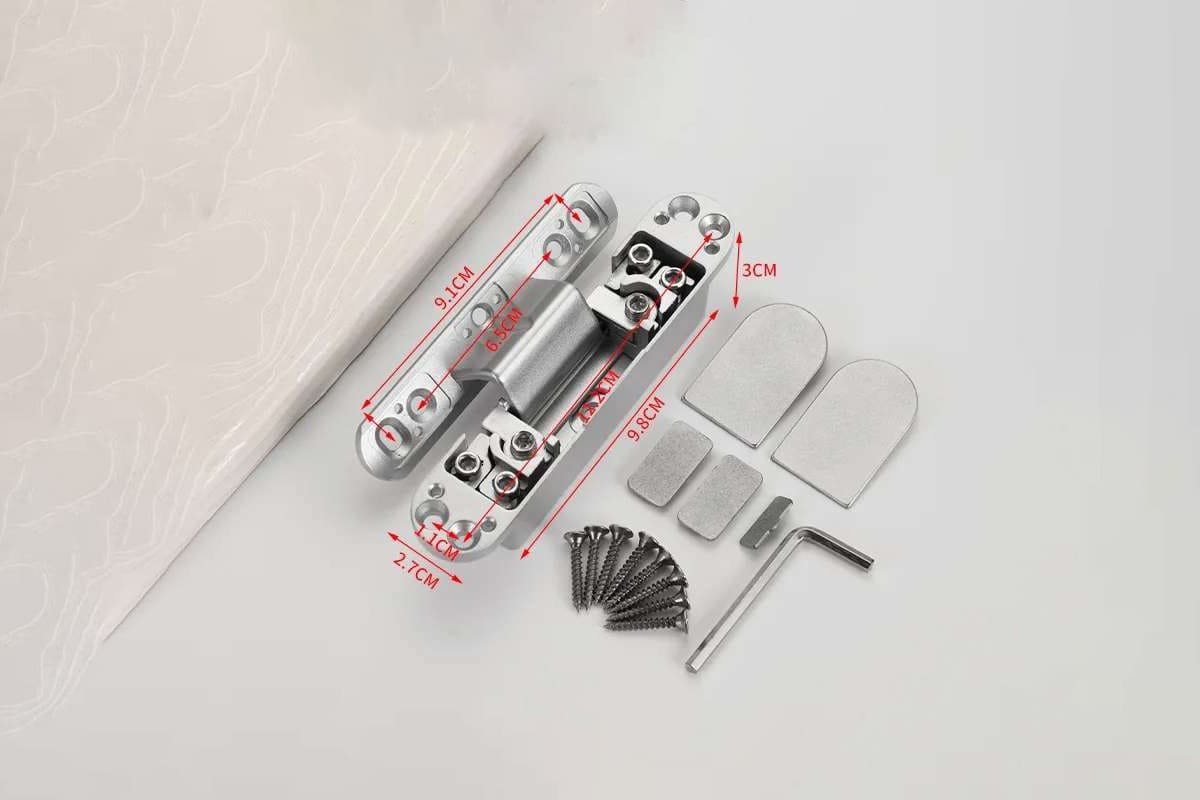
I use a component-based checklist
When I support a buyer before quotation, I try to slow down the decision. I ask for drawings, photos, door type, market, finish, order volume, and test needs. If the buyer does not have drawings, I ask for a reference sample. Then I separate the product into visible parts, fixing parts, moving parts, load parts, and security parts.
This simple split helps both sides. It helps me quote the correct material and process. It helps the buyer compare suppliers with the same assumptions. Without this work, one supplier may quote a better structure, and another supplier may quote a cheaper but weaker version. The buyer then sees only the price gap and misses the real product gap.
| Buyer question | My reason for asking | Better decision result |
|---|---|---|
| What part will use zinc alloy? | I need to know function | The material choice becomes clear |
| What load will the part take? | I need to judge risk | Heavy-duty parts get proper review |
| What finish is required? | I need to plan process | Bulk color stays more stable |
| What market is targeted? | I need to match standards | The product fits local demand |
| What certificates are needed? | I need to avoid project rejection | Compliance risk becomes lower |
| What quantity is expected? | I need to plan tooling and production | Cost and delivery become clearer |
I also check the supplier, not only the material
A material can be suitable, but a weak supplier can still make a poor product. I check raw material control, die-casting stability, mold maintenance, polishing skill, plating partner control, assembly inspection, and packaging method. These steps decide whether the bulk order matches the approved sample.
As a China-based door hardware manufacturer, I have learned that many buyer problems start before production. The product requirement is not written clearly. The approved sample is not kept. The finish name is not linked to a real control sample. The test standard is discussed too late. Then both sides argue after the goods are made.
I prefer to confirm these points before the order starts. I ask the buyer to define the inspection level and key dimensions. I keep finish samples for comparison. I also suggest testing when the part is related to load, fire rating, or long cycle use. This does not make the process more complex. It makes the risk visible before money is spent.
How does zinc alloy compare with stainless steel, brass, and aluminum?
A buyer can make a bad decision when the team says one material is “better.” I think that word is too broad for door hardware.
I compare zinc alloy with stainless steel, brass, and aluminum by use position. Zinc alloy often wins on complex die-cast shape and decorative cost-performance, but other metals may be better for corrosion, strength, machining, or security needs.
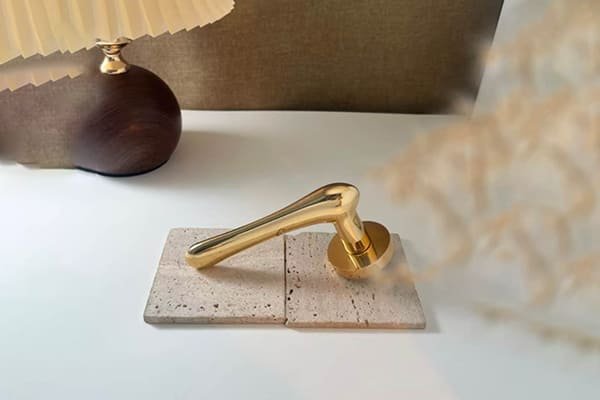
I choose by the job of the part
I do not put zinc alloy above every other material. Stainless steel is often chosen when corrosion resistance, strength, and a clean metal image matter.10 Brass is often used in cylinders, premium fittings, and parts that need good machining and long-term wear behavior.11 Aluminum can help when light weight and certain surface styles are important.12 Each material has its own place.
Zinc alloy has strong value when I need detailed die-casting and a heavy hand feel at a controlled cost. That is why I often see it in handles, trims, and decorative hardware. But if the part carries high load or needs strict security, I stop and review the test and structure.
| Material | Where I often see value | Where I stay careful |
|---|---|---|
| Zinc alloy | Complex handles, trims, covers | Heavy load and security-critical parts |
| Stainless steel | Hinges, handles, plates, outdoor uses | Complex thick decorative shapes may cost more |
| Brass | Cylinders, premium hardware, machined parts | Price may be higher |
| Aluminum | Light parts and selected designs | Surface and strength needs must match use |
I connect material choice to project positioning
A wholesaler may need a high-cost-effective handle line. Zinc alloy may help because it can create many styles with good finish options. A door factory may need hardware for a certified fire-rated door set. That case needs verified assembly data more than a nice-looking sample. A hardware brand may need a premium line with strict finish and long-term image. That buyer may choose zinc alloy for some visible parts and another material for other parts.
This mixed material approach is normal. A complete lockset or door hardware kit does not need one material everywhere. I often recommend one material for the handle, another for the cylinder, another for screws, and another for hinge load parts. This method helps the buyer control cost and protect function at the same time.
Conclusion
I apply zinc alloy where shape, finish, and cost-performance fit the part, and I verify load, security, testing, and certification before I recommend it.
"Appliance - Cast Products", https://www.castproducts.com/markets/appliance-2/. An institutional overview of zinc die casting lists consumer products, fittings, appliance components, and hardware among common application areas, providing contextual support for these examples. Evidence role: general_support; source type: institution. Supports: The source should describe common application areas for zinc die castings, including consumer products, fittings, appliances, or hardware.. Scope note: The source would support common application categories, not the suitability of any specific door-hardware design. ↩
"Zinc Die Castings - Modern Aluminum Castings", https://modernaluminum.com/zinc-die-castings.html. A materials-science reference documents that zinc die-casting alloys melt at relatively low temperatures and are valued for castability in intricate components, supporting the processing rationale stated here. Evidence role: mechanism; source type: research. Supports: The source should document zinc die-casting alloys' relatively low melting temperatures and castability for intricate shapes.. ↩
"Eng_Prop_D_Design Rules - Zinc Die Casting", https://diecasting.zinc.org/properties/en/design/eng_prop_d_design-rules/. A die-casting design or standards reference identifies wall thickness, surface condition, fastening details, inspection, and testing as factors that influence component quality and performance. Evidence role: expert_consensus; source type: institution. Supports: The source should support that wall thickness, surface preparation, fastening design, inspection, and testing affect the quality and performance of die-cast components.. Scope note: The source would support the checklist principles generally, not this manufacturer's specific inspection workflow. ↩
"[PDF] SECTION 08 71 00 DOOR HARDWARE - Nash County", https://www.nashcountync.gov/DocumentCenter/View/13355. Door-hardware standards specify performance tests for function, strength, durability, security, or fire-related use, supporting the need to validate risk-critical parts by structure and test evidence rather than by material label alone. Evidence role: expert_consensus; source type: institution. Supports: The source should show that door hardware performance is evaluated through functional, load, endurance, security, or fire-related tests rather than by material name alone.. Scope note: Standards support the validation approach; they do not determine whether any particular zinc alloy part will pass. ↩
"Surface Finishing for Die Cast Parts | Custom Plating - Dynacast", https://www.dynacast.com/additional-capabilities/surface-finishes-and-plating. A surface-finishing reference explains that zinc die castings can be electroplated or otherwise decoratively finished, with finish quality depending on substrate preparation and process control. Evidence role: mechanism; source type: research. Supports: The source should explain that zinc die castings are commonly plated or finished decoratively and that surface preparation affects finish quality.. ↩
"[PDF] SECTION 08 71 00 – DOOR HARDWARE", https://design.missouristate.edu/_Files/Standards/Division8/087100DoorHardware.pdf. Hinge performance standards classify hinges by factors such as door mass, durability cycles, and functional requirements, supporting the statement that concealed hinges are structural moving components rather than merely decorative parts. Evidence role: definition; source type: institution. Supports: The source should define hinge performance requirements such as door mass, durability cycles, movement, and alignment-related function.. ↩
"[PDF] SECTION 08 71 00 DOOR HARDWARE - Nash County", https://www.nashcountync.gov/DocumentCenter/View/13355. Hinge standards and installation guidance relate hinge performance to rated loads, durability testing, fastening arrangements, and installation conditions, supporting the need to evaluate heavy-door hinges beyond the base material name. Evidence role: expert_consensus; source type: institution. Supports: The source should support that hinge ratings and reliable performance depend on load testing, structural design, fastening, and installation conditions.. Scope note: The source would support the evaluation criteria, not the adequacy of any individual hinge model. ↩
"Fire Doors and NFPA 80 FAQs", https://www.nfpa.org/news-blogs-and-articles/blogs/2025/04/11/fire-doors-faqs. Fire-door standards treat the door, frame, hardware, and related components as a rated assembly requiring listed or approved construction, supporting the need for system proof rather than reliance on a component material alone. Evidence role: definition; source type: institution. Supports: The source should show that fire doors are evaluated as listed or approved assemblies with compatible components and required documentation.. ↩
"[PDF] 1 SECTION 087100 - DOOR HARDWAR - Oakton Community College", https://www.oakton.edu/_pdfs/procurement/oakton_-_08_71_00_door_hardware_specification.pdf. Lock-cylinder standards specify durability, key-operation, and attack-resistance criteria, supporting the claim that cylinder performance must be assessed over time and under security-related conditions. Evidence role: definition; source type: institution. Supports: The source should identify lock-cylinder test categories such as durability, key operation, and resistance to attack.. ↩
"Stainless steel - Wikipedia", https://en.wikipedia.org/wiki/Stainless_steel. A materials reference describes stainless steel as corrosion-resistant and mechanically useful while retaining a clean metallic appearance, supporting its selection for hardware where durability and appearance are important. Evidence role: general_support; source type: encyclopedia. Supports: The source should summarize stainless steel's corrosion resistance, mechanical properties, and common use where durable appearance is valued.. Scope note: The source supports general material characteristics, not a direct comparison for every door-hardware component. ↩
"When a key is inserted into a lock, it wears out the key and the pins ...", https://www.reddit.com/r/AskEngineers/comments/1397vxh/when_a_key_is_inserted_into_a_lock_it_wears_out/. A materials reference identifies brass alloys as readily machinable and used in precision hardware applications, providing contextual support for their use in cylinders, fittings, and wear-sensitive machined parts. Evidence role: general_support; source type: research. Supports: The source should support brass's machinability and use in components where precise machining and wear behavior are relevant.. Scope note: The source would support the material rationale generally, not prove that brass is required for all lock cylinders or premium fittings. ↩
"[PDF] Aluminum and Aluminum Alloys - NIST Materials Data Repository", https://materialsdata.nist.gov/bitstream/handle/11115/173/Aluminum%20and%20Aluminum%20Alloys%20Davis.pdf. An educational materials source describes aluminum as a low-density metal that can receive protective or decorative surface finishes such as anodizing, supporting its use where weight and surface style are important. Evidence role: general_support; source type: education. Supports: The source should document aluminum's low density and common surface finishing methods, including decorative or protective finishes.. ↩