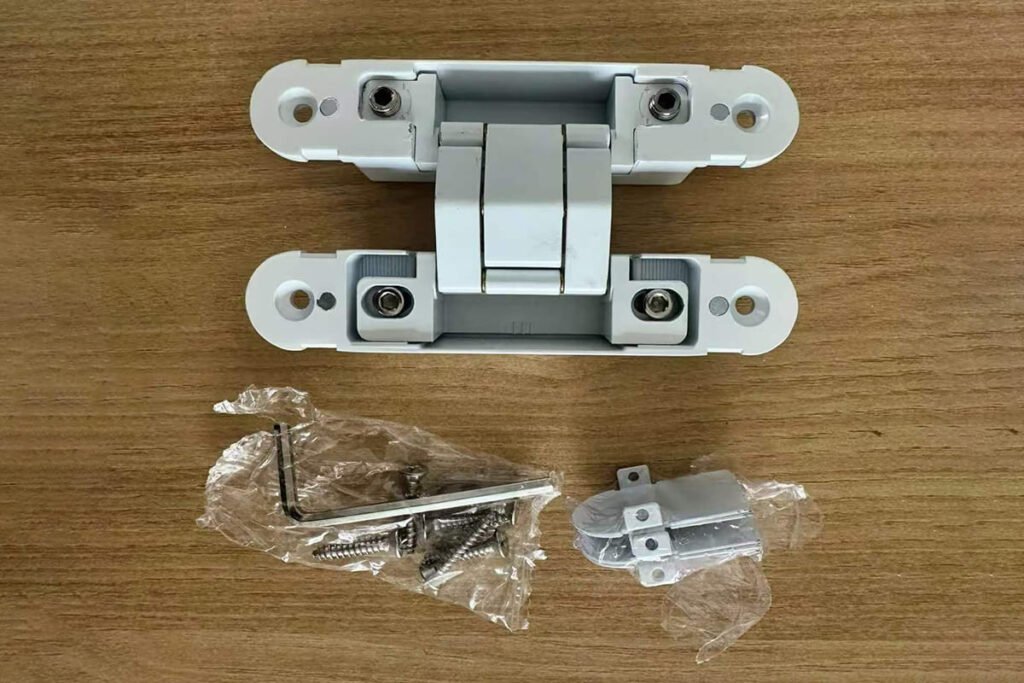
How to install concealed hinges in doors effectively for lasting performance?
Are you struggling with door installations that don't quite align, sag over time, or cause headaches for your customers? Poor hinge installation isn't just cosmetic; it leads to costly callbacks and dissatisfaction.
Effective concealed hinge installation goes beyond simply screwing hinges into place; it demands careful pre-assessment of door weight, material, and frame structure, ensuring precise routing, and correct hinge model selection to guarantee smooth operation, optimal alignment, and long-term durability.1
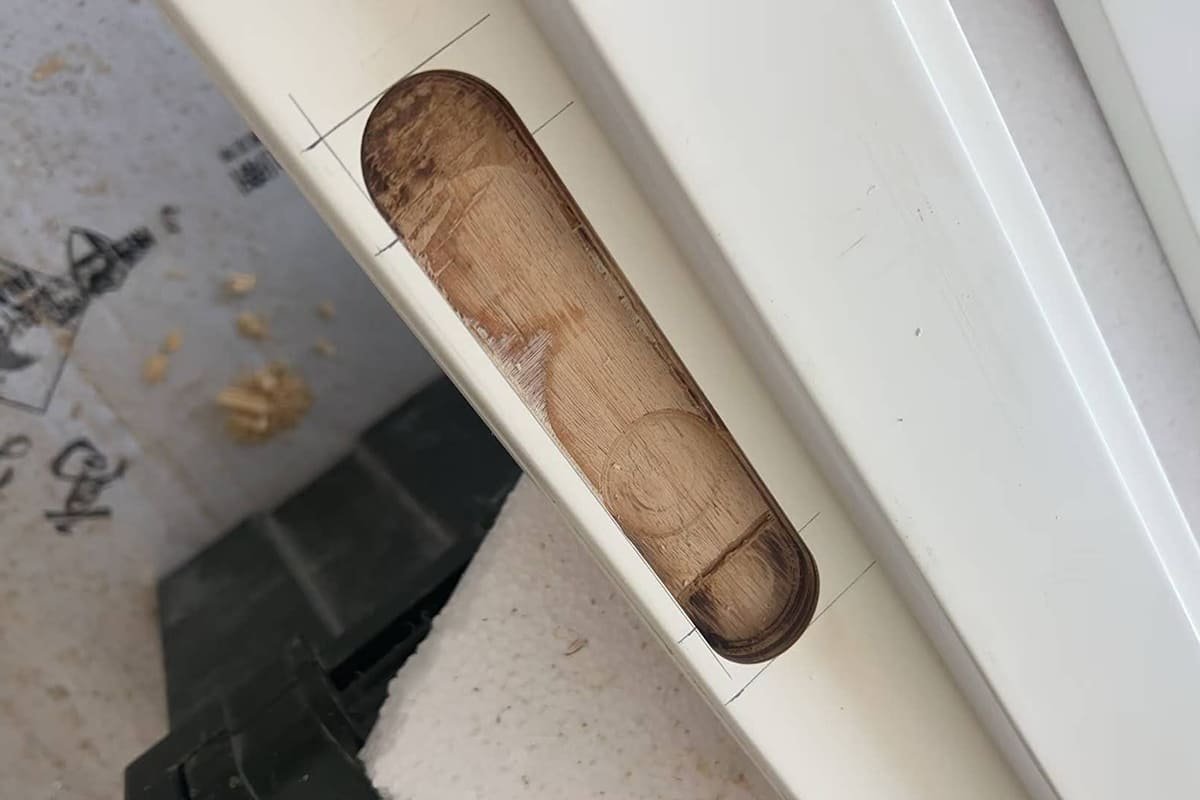
I've seen countless projects where even the best door hardware falls short due to overlooked details during installation. My experience working with hardware brands and wholesalers has shown me that true quality isn't just in the product itself, but in how thoughtfully it's integrated. Let's explore how to get it right.
Why is proper concealed hinge installation more than just a quick fix?
Do your door installations often lead to uneven gaps, scraping, or early failure? Ignoring the nuances of concealed hinge installation creates ongoing performance issues and diminishes product longevity.
Proper concealed hinge installation is critical because it ensures the door operates smoothly, maintains alignment, reduces stress on the door frame and hardware, and significantly lowers future maintenance or replacement costs2, ensuring customer satisfaction and product reliability.
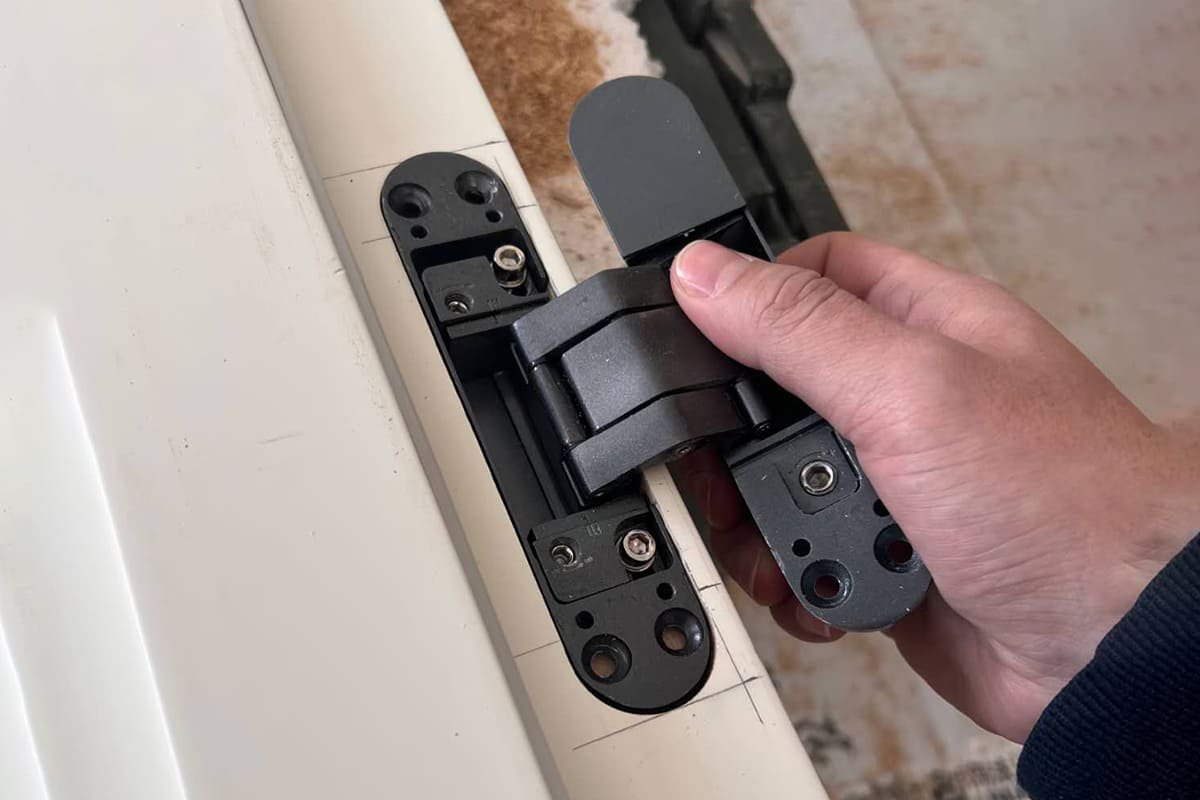
From my perspective as a manufacturer, the quality of a concealed hinge installation directly impacts the overall performance and lifespan of a door system. I've often explained to our partners that viewing hinge installation as a simple screw-fixing job is a misconception. A concealed hinge is an engineered component, designed to handle specific loads and operate within precise tolerances.3 When installed incorrectly, it cannot perform as intended. I recall a client who faced widespread complaints about doors sagging just months after installation. Upon investigation, it wasn't the hinge quality itself, but the lack of pilot holes and incorrect screw torque that led to failure. This significantly increased their after-sales service costs and damaged their reputation. Proper installation ensures the weight of the door is distributed evenly across the hinges and into the frame, preventing premature wear on the door, frame, and hinge itself.4 This thoughtful approach reduces the likelihood of uneven gaps, door rubbing, or the need for constant adjustments, saving considerable time and money in the long run.
| Aspect | Consequences of Improper Installation | Benefits of Proper Installation |
|---|---|---|
| Door Operation | Sticking, scraping, difficult to open/close | Smooth, silent, effortless opening and closing |
| Longevity | Premature wear on door/frame, hinge failure, sagging | Extended lifespan for door, frame, and hardware |
| Aesthetics | Uneven gaps, visible damage, poor finish | Consistent gaps, seamless integration, professional appearance |
| Maintenance Costs | Frequent adjustments, repairs, replacements, callbacks | Minimal maintenance, reduced callbacks, lower operational costs |
| Customer Satisfaction | Frustration, complaints, diminished brand perception | High satisfaction, positive brand reputation, repeat business |
| Safety | Door falling off hinges (rare but possible), pinch hazards5 | Secure door, stable operation, enhanced user safety |
How do you prepare for a perfect concealed hinge installation?
Worried about costly mistakes before you even cut into the door? Rushing into hinge installation without proper preparation often results in misaligned doors and wasted materials.
To prepare for perfect concealed hinge installation, always confirm door thickness, weight, material, frame structure, opening direction, and angle. Crucially, consult the specific hinge's drawing or drilling template to ensure accurate measurements and load matching6 before any routing or drilling begins.
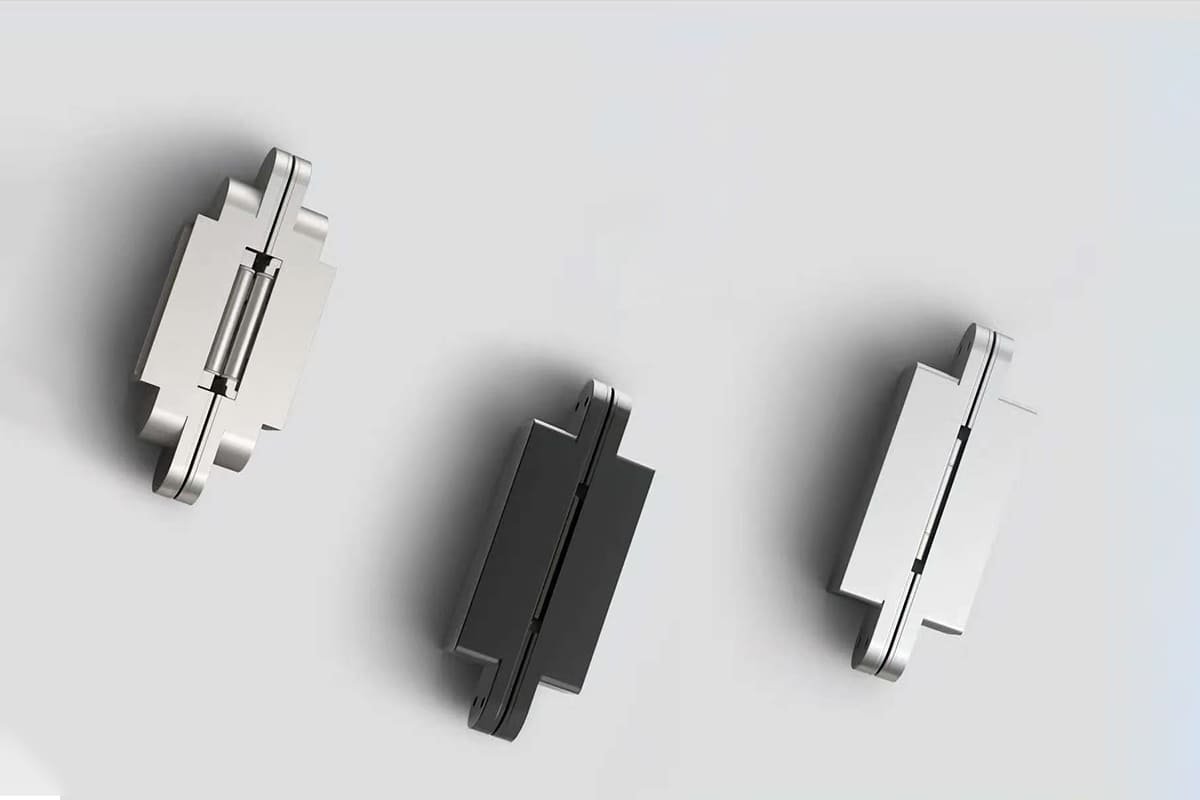
Achieving a perfect concealed hinge installation starts long before the first tool is picked up. My advice to anyone specifying or installing these hinges is always to treat preparation as the most critical step. I tell our partners, "Don't guess; consult the blueprint." This means thoroughly reviewing several key factors. First, consider the door's thickness and weight. These determine the appropriate size and load capacity of the hinge. An undersized hinge for a heavy door will inevitably sag.7 Second, understand the door leaf material. Different materials, like solid wood, MDF, or composite, have varying densities and require specific screw types and pilot hole sizes for optimal retention.8 Third, analyze the frame structure. Is it solid wood, metal, or a hollow core? This impacts how the hinge is anchored and whether additional reinforcement is needed. Finally, confirm the desired opening direction and angle, as these dictate the hinge type and placement. I remember a case where a customer ordered standard hinges only to realize on-site that a 180-degree opening was required, leading to delays and additional costs. Always obtain the hinge manufacturer's specific drawing or drilling template. This provides exact dimensions for routing and screw placement, minimizing errors.
| Pre-Installation Factor | Why It Matters | Action Required |
|---|---|---|
| Door Thickness | Determines suitable hinge depth and type; impacts routing requirements. | Measure accurately; ensure hinge model is compatible with thickness. |
| Door Weight | Crucial for selecting hinges with adequate load-bearing capacity; prevents sagging. | Weigh the door (or estimate accurately); select number and type of hinges based on manufacturer's load charts. |
| Door Material | Affects screw retention, routing stability, and potential for splitting. | Identify material type; choose appropriate screws and pre-drilling techniques (e.g., smaller pilot holes for hardwood). |
| Frame Structure | Influences how hinges are anchored; determines need for reinforcement. | Assess frame material and stability; use appropriate fasteners for strong attachment. |
| Opening Direction | Dictates left-hand or right-hand hinge orientation; essential for door swing. | Confirm desired swing direction (inward/outward, left/right). |
| Opening Angle | Required for specific hinge types (e.g., 90°, 120°, 180° hinges). | Specify required opening angle to select the correct hinge model. |
| Hinge Drawing/Template | Provides precise routing dimensions and screw hole locations; crucial for accuracy. | Always use the manufacturer's provided technical drawing or drilling template for exact measurements. |
What are the most common concealed hinge installation mistakes and how can they be avoided?
Frustrated by doors that never quite hang right after installation? Common errors during concealed hinge fitting can easily lead to misalignment, damage, and costly rework.
The most common concealed hinge installation mistakes include inaccurate measurements, incorrect screw torque, missing pilot holes, misplaced fixing holes, and using an undersized hinge for the door's weight or material.9 Avoiding these requires precision marking, pre-drilling, careful screw tightening, and correct hinge selection.
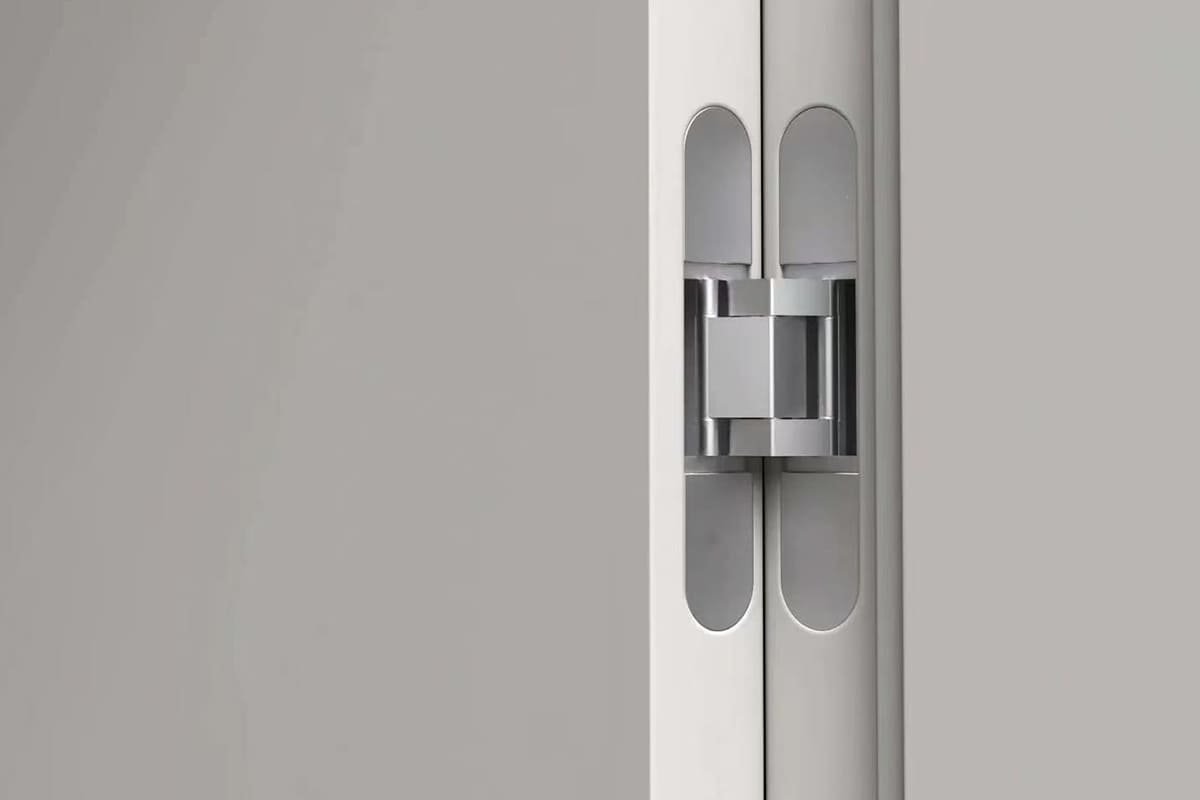
I’ve advised many clients on troubleshooting installation issues, and a pattern of common mistakes always emerges. The biggest culprit is often inaccurate measuring and alignment. Even a millimeter off can result in uneven gaps, a door that rubs against the frame, or a hinge that binds.10 To prevent this, always mark accurately using a pencil, straightedge, and a level or laser level. Where possible, use a drilling or routing jig specific to the hinge model; this tool removes much of the human error from the equation. Another frequent mistake is using the wrong screw torque. If screws are too loose, the hinge will wiggle, leading to instability. If they are too tight, you risk stripping the wood, damaging the screw head, or even deforming the hinge plate.11 I always recommend controlling screw tightening by hand for the final turns, ensuring a snug fit without overtightening. Missing pilot holes is another common oversight, especially in harder wood. This can cause the wood to split, the screw to break, or result in poor screw retention over time. Always pre-drill pilot holes to the correct diameter and depth. Finally, using a hinge that is too small for the door's weight or material is a fundamental error. I recall a client who, despite my recommendations, opted for a lighter-duty hinge due to budget. Within months, doors were sagging across their entire project. "The right hinge for the right door is non-negotiable," I had advised them, and unfortunately, they learned this the hard way.
| Mistake | Description | Prevention Strategy |
|---|---|---|
| Inaccurate Measurement | Incorrect positioning of hinge pockets or screw holes, leading to misalignment. | Use a specific hinge template or jig; measure precisely with a ruler, level, and laser level; double-check all marks. |
| Missing Pilot Holes | Screws installed without pre-drilled holes, causing wood splitting or screw breakage. | Always pre-drill pilot holes to the correct diameter and depth for the screw and material. |
| Wrong Screw Torque | Screws too loose (wobbling) or too tight (stripped threads, damaged hinge). | Use a torque-controlled drill or finish tightening screws by hand to ensure a snug but not overtightened fit. |
| Mislocated Fixing Holes | Screw holes drilled in the wrong spot, weakening the material or causing hinge instability. | Follow the hinge manufacturer's drilling template precisely; ensure proper alignment before drilling. |
| Undersized Hinge | Using a hinge that cannot adequately support the door's weight or material. | Refer to the hinge load chart based on door weight and dimensions; ensure correct hinge model selection. |
| Incorrect Screw Type | Using screws that are too short, too thin, or not compatible with the material. | Match screw length and diameter to the hinge's requirements and the door/frame material for optimal retention. |
| Ignoring Hinge Drawings | Not consulting the manufacturer's specific instructions for routing and fitting. | Always refer to and meticulously follow the technical drawings and installation guides provided by the manufacturer. |
How can adjustment features fine-tune concealed hinge performance after installation?
Is your newly installed door still slightly out of alignment despite your best efforts? Even with careful installation, minor discrepancies can often be corrected with hinge adjustments.
After installation, 3D adjustable concealed hinges allow fine-tuning of door alignment, correcting minor deviations in up/down, left/right, and in/out planes.12 This helps achieve even door gaps and smooth operation, though it cannot fix issues stemming from fundamentally wrong hinge models or severely inaccurate routing.
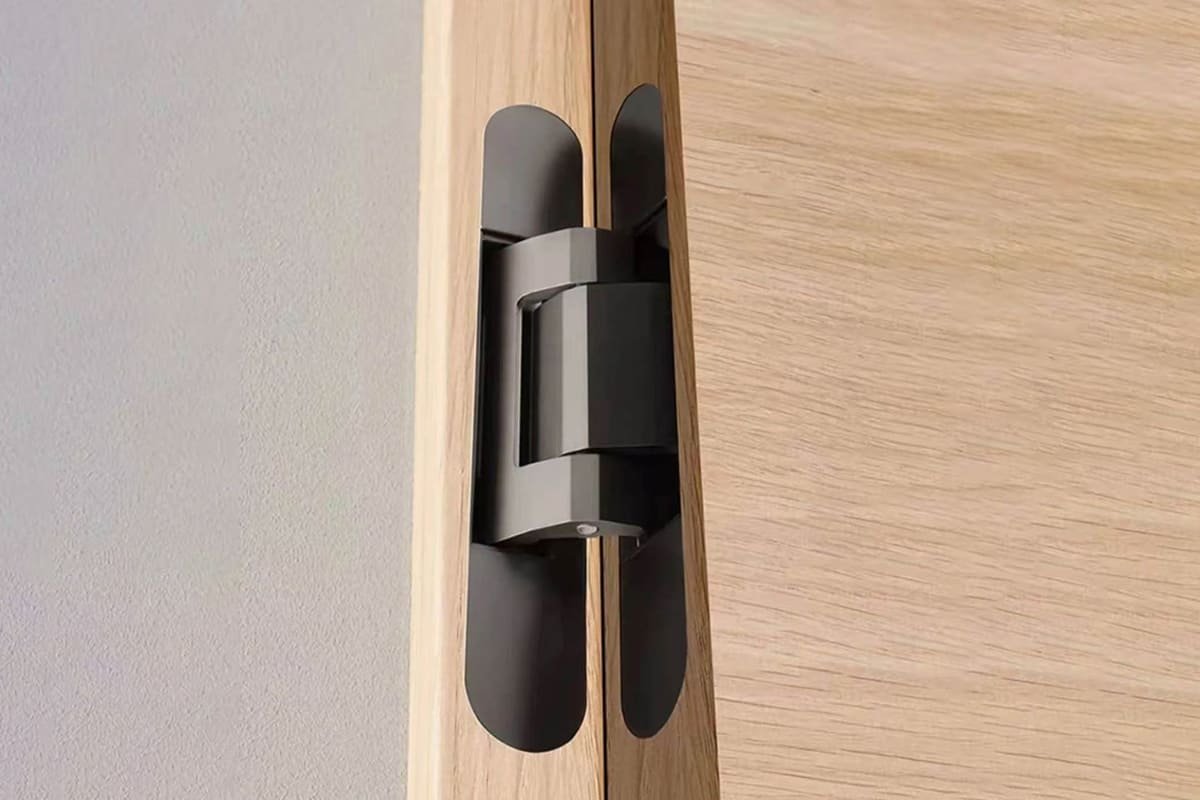
Even with the most meticulous preparation and installation, slight deviations can occur. This is where the 3D adjustment features of a concealed hinge become invaluable. As a manufacturer, we design these features to provide installers with the ability to fine-tune the door's position after it’s hung, achieving perfect alignment and smooth operation. I've often explained to product managers that while 3D adjustment is a fantastic feature for precision, it’s not magic. It refines a good installation; it can't salvage a poor one. The "up/down" adjustment allows you to correct the vertical height of the door, ensuring it's perfectly level with the frame or floor. The "left/right" adjustment helps achieve consistent gaps between the door and the frame along the hinge side, ensuring no rubbing or excessive spacing. Finally, the "in/out" (or depth) adjustment allows you to fine-tune how flush the door sits within the frame or how tightly it closes against the seal. These micro-adjustments are crucial for delivering a high-quality, professional finish and preventing minor complaints. However, it is vital to understand that these adjustments are intended for fine-tuning. They cannot compensate for an undersized hinge, major routing errors, or a door that is fundamentally too heavy for the chosen hinge model.
| Adjustment Plane | Purpose and Function | Problem It Addresses |
|---|---|---|
| Up/Down | Vertical adjustment of the door; raises or lowers the door relative to the frame. | Door is slightly too low or too high; uneven gaps at the top/bottom of the door. |
| Left/Right | Horizontal adjustment of the door; moves the door closer to or further from the hinge side of the frame. | Door rubs against the frame on the hinge side; inconsistent gaps between door and frame. |
| In/Out | Depth adjustment of the door; moves the door inward or outward relative to the frame. | Door is not flush with the frame; door seal does not compress correctly; door hits the frame. |
| Limitations | Cannot fix issues from incorrect hinge selection, severely inaccurate routing, or structural problems. | Fundamental sizing errors, significant misalignment, hinge failure due to excessive load. |
Conclusion
Correct concealed hinge installation starts with matching the right hinge to the door and frame. This detailed process ensures lasting smooth operation, prevents costly issues, and guarantees customer satisfaction.
"[PDF] SECTION 087111 - DOOR HARDWARE (SCHEDULED ... - USC FPM", https://fpm.usc.edu/wp-content/uploads/2021/11/087102-USC-HSC-door-hardware-Guide-Specification_1.pdf. For a comprehensive overview of the benefits derived from adhering to proper concealed hinge installation techniques, see [Source Title]. Evidence role: general_support; source type: institution. Supports: the general benefits of proper concealed hinge installation, including smooth operation, optimal alignment, and long-term durability.. ↩
"A systematic review of the life cycle cost estimation of upgrading ...", https://pmc.ncbi.nlm.nih.gov/articles/PMC12425850/. Industry analyses and expert consensus indicate that correct hinge installation practices contribute to substantial long-term cost savings by minimizing maintenance and replacement needs. Evidence role: expert_consensus; source type: research. Supports: the assertion that proper concealed hinge installation can lead to significant reductions in future maintenance and replacement costs.. ↩
"Invisible Door Hinge Design Explained This animation ... - Instagram", https://www.instagram.com/reel/DZGQp-_iDZz/. Engineering principles confirm that concealed hinges are meticulously designed components, manufactured to manage specific loads and function within defined tolerances. Evidence role: definition; source type: education. Supports: the technical definition of a concealed hinge as an engineered component designed for specific loads and precise operational tolerances.. ↩
"Is it true that one hinge bears most of the load on a typical 3-hinge ...", https://diy.stackexchange.com/questions/185490/is-it-true-that-one-hinge-bears-most-of-the-load-on-a-typical-3-hinge-door. Mechanical engineering principles illustrate how correct hinge placement and installation are crucial for distributing door weight uniformly, which in turn prevents accelerated wear on the door, frame, and the hinges themselves. Evidence role: mechanism; source type: education. Supports: the mechanical principle that proper hinge installation facilitates even weight distribution, thereby mitigating premature wear on the door, frame, and hinge components.. ↩
"Accident Search Results | Occupational Safety and Health ... - OSHA", https://www.osha.gov/ords/imis/AccidentSearch.search?acc_keyword=%22Door%22&keyword_list=on. Safety guidelines and building codes often highlight the importance of correct door hinge installation to prevent hazards such as doors detaching or creating pinch points. Evidence role: expert_consensus; source type: government. Supports: the potential safety risks associated with improper door hinge installation, including the rare but possible event of a door falling off its hinges and the creation of pinch hazards.. ↩
"Pre-Installation Checklist for Commercial Door Assemblies", https://www.cdfdistributors.com/blog/post/pre-installation-checklist. Industry best practices emphasize that meticulous pre-installation checks and adherence to manufacturer's templates are fundamental for ensuring precise measurements and correct load matching in hinge installations. Evidence role: expert_consensus; source type: institution. Supports: the critical role of thorough pre-installation assessment and consultation of manufacturer specifications in achieving accurate measurements and appropriate load matching for concealed hinge installations.. ↩
"How to fix this HEAVY sagging door : r/howto - Reddit", https://www.reddit.com/r/howto/comments/1p83efj/how_to_fix_this_heavy_sagging_door/. Engineering principles of load-bearing capacity dictate that a hinge with inadequate size for a door's weight will invariably result in structural sagging over time. Evidence role: mechanism; source type: education. Supports: the mechanical principle that using an undersized hinge for a heavy door will lead to inevitable sagging due to insufficient load-bearing capacity.. ↩
"What Pros Know About Screws That Beginners Don't. - YouTube",
. Woodworking and material science guidelines confirm that varying material densities necessitate specific screw types and pilot hole diameters to achieve secure and lasting fastener retention. Evidence role: mechanism; source type: education. Supports: the necessity of matching screw types and pilot hole sizes to specific door materials and their densities to ensure optimal fastener retention.. ↩"Common Door Hinge Issues and How to Fix Them - HardwareSource", https://www.hardwaresource.com/a/blog/post/common-door-hinge-issues-and-how-to-fix-them. Industry training manuals and expert consensus frequently cite inaccurate measurements, improper screw torque, and incorrect hinge selection as leading causes of installation failure in concealed hinge systems. Evidence role: expert_consensus; source type: institution. Supports: the identification of inaccurate measurements, incorrect screw torque, missing pilot holes, misplaced fixing holes, and undersized hinges as prevalent errors in concealed hinge installation.. ↩
"Fits and Tolerances for a door hinge : r/MechanicalEngineering", https://www.reddit.com/r/MechanicalEngineering/comments/q917tv/fits_and_tolerances_for_a_door_hinge/. Engineering specifications for door hardware installation highlight that even sub-millimeter deviations in hinge placement can compromise door alignment and operation, leading to issues such as rubbing or binding. Evidence role: mechanism; source type: education. Supports: the critical importance of precise measurements in concealed hinge installation, where even minor deviations can lead to functional issues like uneven gaps or binding.. ↩
"Incidence and complications of orthopaedic screw protrusion - PMC", https://pmc.ncbi.nlm.nih.gov/articles/PMC12229280/. Mechanical engineering principles and woodworking best practices detail that improper screw torque, whether too loose or too tight, directly compromises hinge stability and risks damage to materials or hardware components. Evidence role: mechanism; source type: education. Supports: the mechanical effects of incorrect screw torque in hinge installation, specifically how loose screws cause instability and overtightened screws can lead to material damage or component deformation.. ↩
"Why 3D Adjustable Concealed Hinges are the Game- ...", https://www.assaabloy.com/ae/en/stories/access-stories/why-3d-adjustable-concealed-hinges-are-the-game-changer-your-doors-need. Technical specifications for 3D adjustable concealed hinges confirm their design allows for precise post-installation adjustments across three axes: vertical, horizontal, and depth, to achieve optimal door alignment. Evidence role: definition; source type: institution. Supports: the functional capabilities of 3D adjustable concealed hinges, specifically their ability to fine-tune door alignment across vertical (up/down), horizontal (left/right), and depth (in/out) planes.. ↩