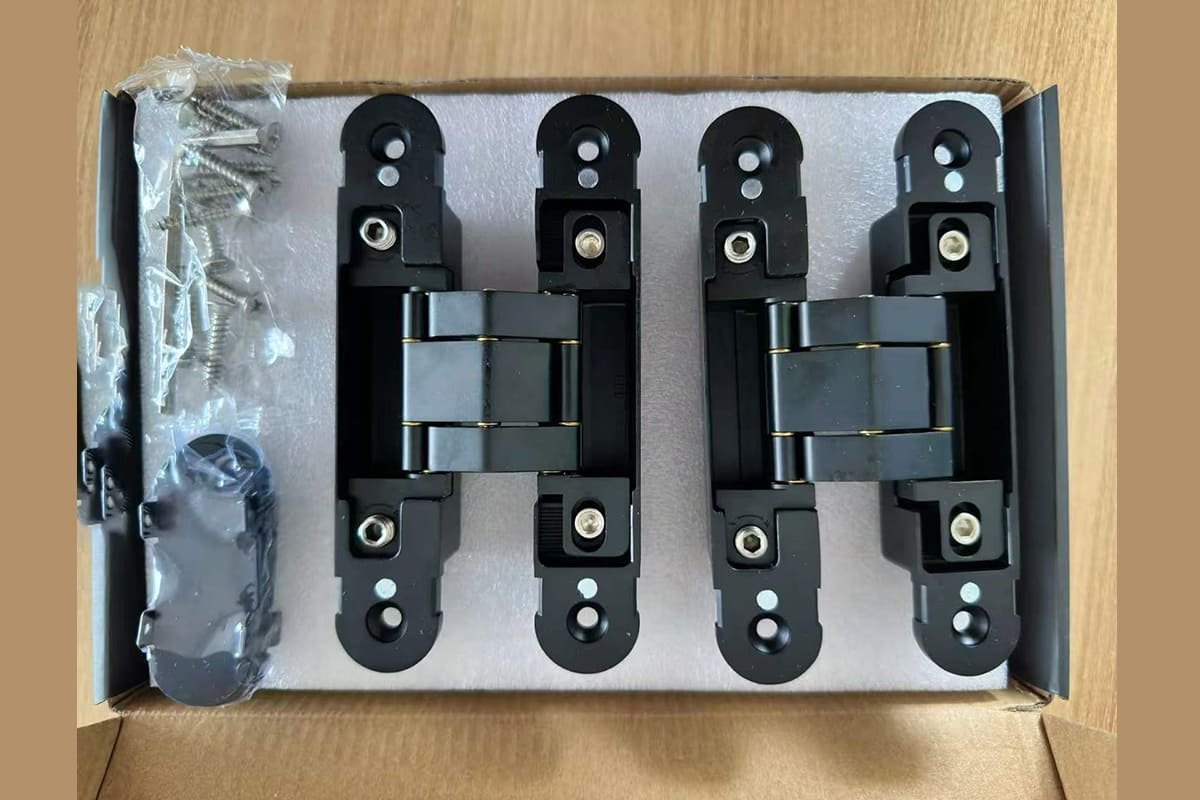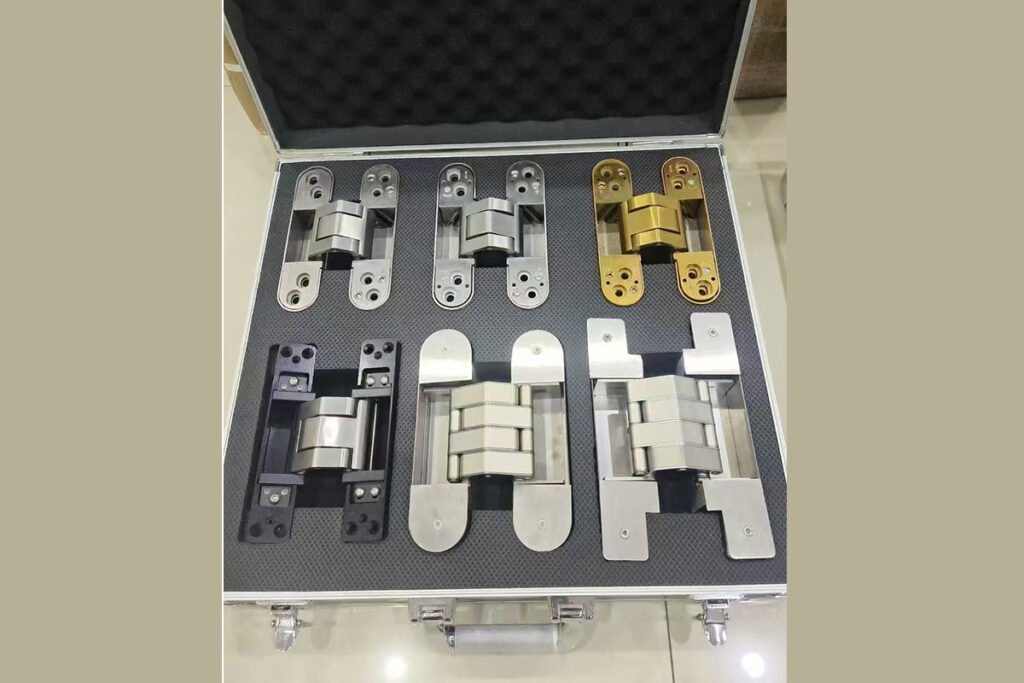
The Complete Guide to Hidden Door Hinges?
Clean doors look great. A wrong hidden hinge can sag, scrape, and fail.1 I see it in factories. I show safe, tested choices step by step.
Match the hinge to your door material, weight, thickness, opening angle, and 3D adjustment needs. Confirm material grade, load test door size, finish consistency, and certificates. Then check factory size compatibility and bulk QC.
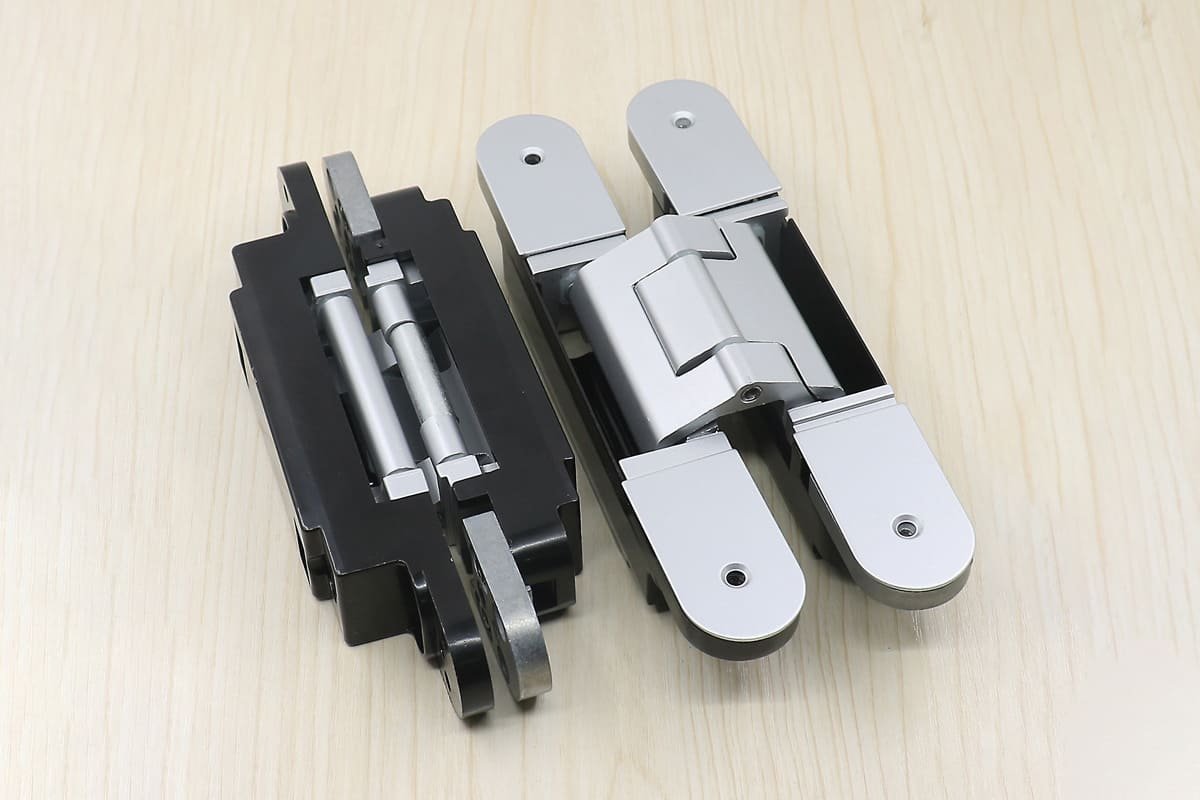
I start with the real reasons. I move fast into risks and checks. Stay with me. I keep it practical. You will leave with a hinge plan you can use.
The clean line is the first ask. Then the trouble starts when a hinge does not match the door. I guide buyers from looks to safe specs.
Buy hidden hinges for invisible doors, modern design, and smoother operation through 3D adjustment2. Then check door material, weight, thickness, and opening angle. A good match avoids sag, frame damage, and call-backs.3
Buyer goals
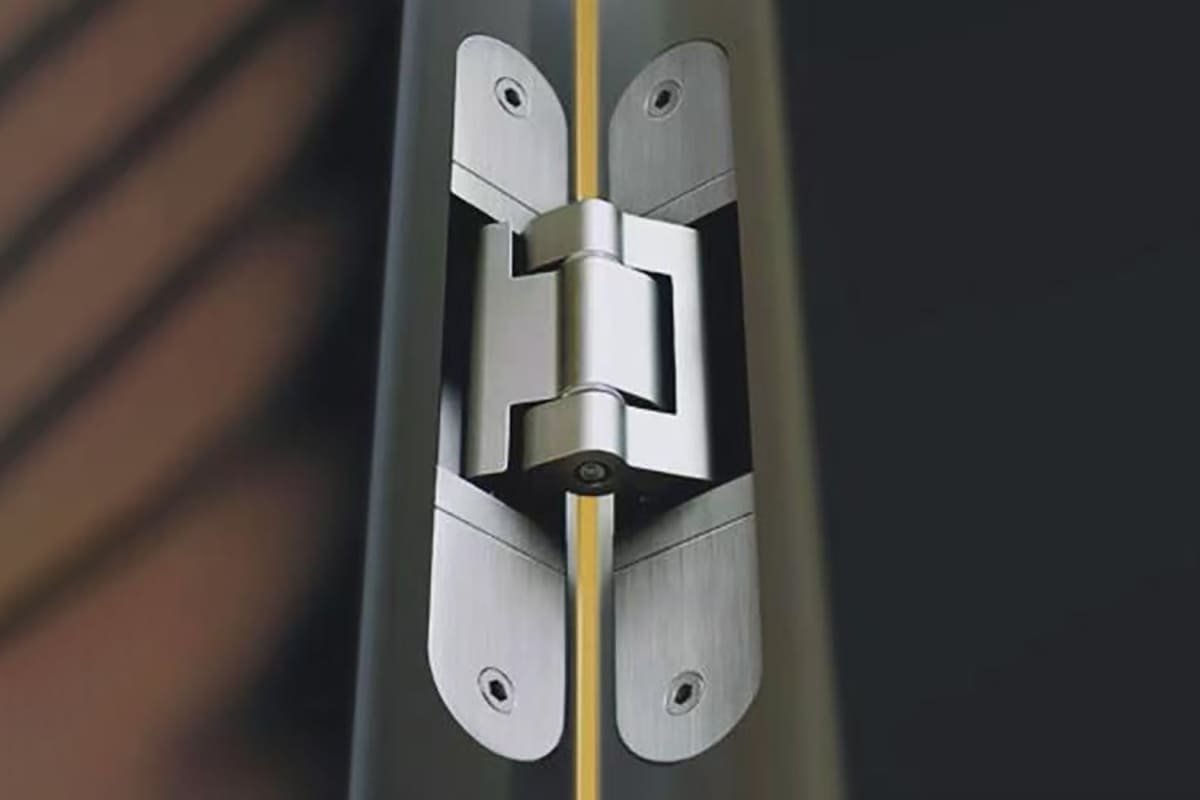
Most buyers want an invisible door or a modern flush look. Some want wider opening for tight corridors. Some need smooth, precise alignment on high-end doors. I respect the design. I protect the door.
Performance risks
A hinge that looks fine can still bind or wear fast. Mis-match shows as scraping, hinge leaf distortion, or screws pulling out. I have seen this on new hotel doors. It is avoidable.
Goals-to-check table
| Buyer goal | Key check | Typical hinge choice |
|---|---|---|
| Invisible look | Door thickness and slot accuracy | Mortise/SOSS-style or 3D adjustable |
| Wide opening | Opening angle and frame clearance | 120°–180° concealed, sized to door thickness |
| Smooth alignment | 3D adjustment range | 3D adjustable concealed hinge |
| Clean minimal finish | Surface finish consistency | Matched plating across all batches |
I do not mix types without checks. I see problems when a buyer treats all hidden hinges as the same. The installation style decides many things.
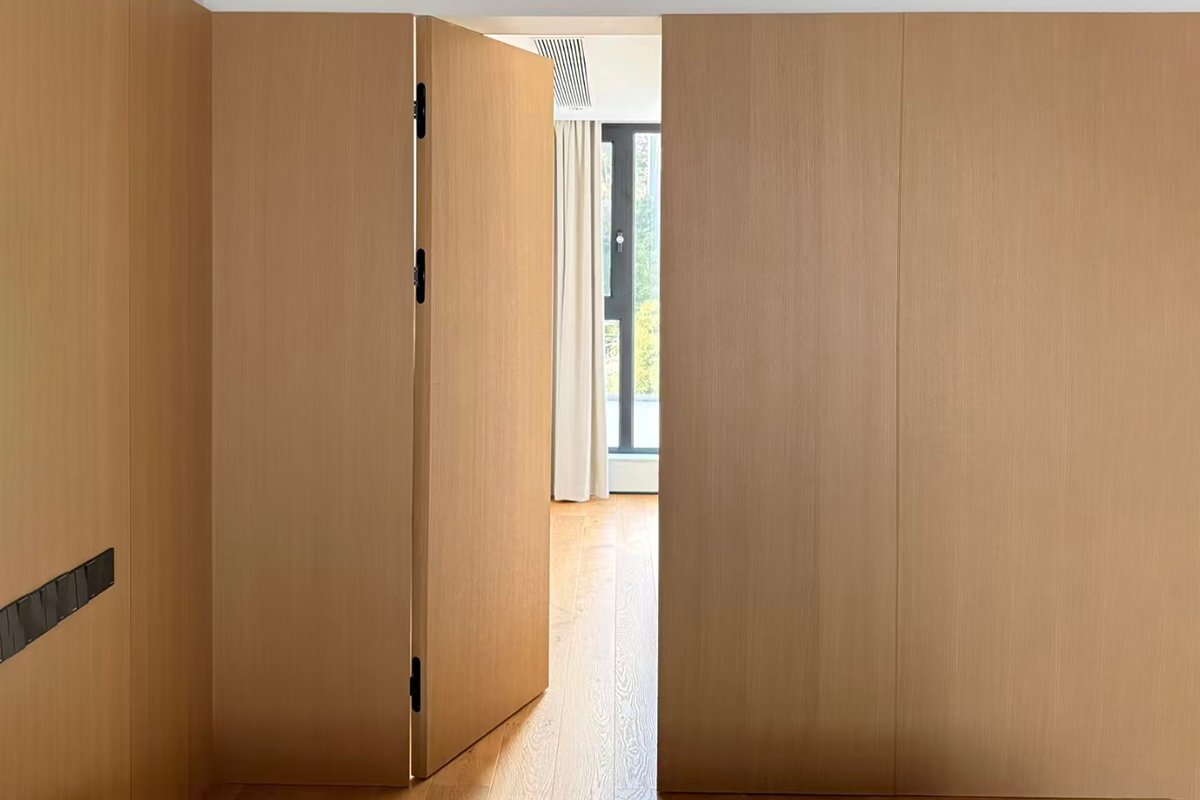
Mortise/SOSS-style hinges, surface-mounted concealed hinges, and 3D adjustable concealed hinges serve different installations.4 Pick by slotting method, door material, load grade, opening angle, and need for fine adjustment.
Type overview
Different types have different installation needs. Mortise/SOSS-style sits inside cut pockets. 3D adjustable concealed hinges also sit inside pockets but add adjusters. Surface-mounted concealed hinges avoid deep pockets and fit light doors.
Fit and limits table
| Type | Installation | Typical use | Pros | Limits |
|---|---|---|---|---|
| Mortise/SOSS-style | Deep pocket in door/frame | Flush wooden doors | Clean look, stable | No 3D adjust; relies on precise machining |
| 3D adjustable concealed | Pocket + adjust screws | Premium wooden/steel doors | Fine alignment, smoother close | More parts; higher cost |
| Surface-mounted concealed | Screwed to surfaces | Lightweight panels, cabinets | Easy install | Lower load; visible covers on some designs |
| Aluminum profile concealed | Integrated in profiles | Aluminum system doors | Matched to profile | Profile-specific, not cross-compatible |
I share machining drawings early. I confirm pocket size, screw type, and mounting plate needs. I do not suggest mixing types across a project.
What technical parameters matter when matching a hinge?
I see buyers ask only about load capacity. I ask for door thickness, width, height, and angle first. I confirm adjustment and finish next.
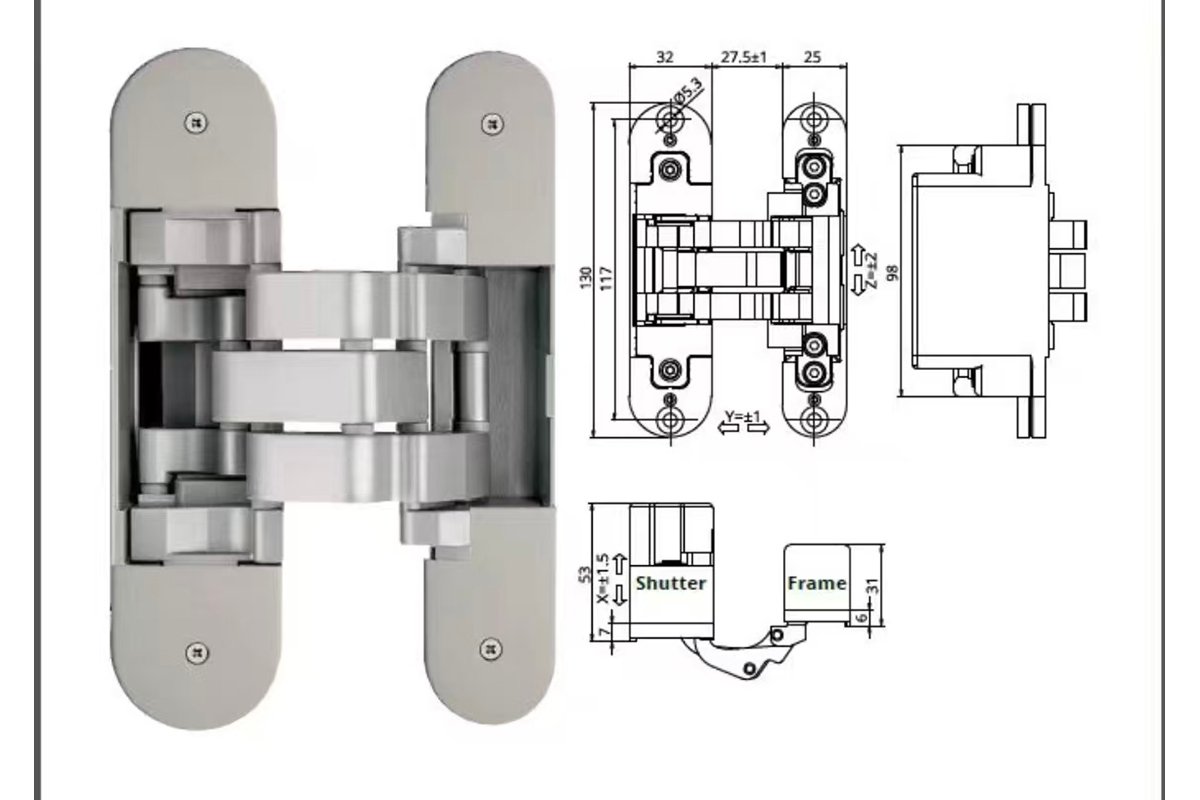
Check door thickness range, conditional max door weight, opening angle, 3D adjustment range, and finish consistency. Verify any test claim against the exact model, test door size, and report.
Core parameters
Door thickness sets the hinge body size and pocket depth.5 Opening angle must clear trims. Load capacity must match the actual door size.6 3D adjustment helps installers correct small errors. Finish consistency matters in bulk orders.
Parameter guide table
| Parameter | Typical range or note | Buyer action |
|---|---|---|
| Door thickness | 35–60 mm common; thicker needs larger bodies7 | Confirm hinge size and pocket depth |
| Opening angle | 90°, 120°, up to 180° on some models | Check frame clearance and stop positions |
| Max door weight | Tested on ~900×2100 mm door size | Adjust for wider/taller doors and hinge count |
| 3D adjustment | Vertical ±3 mm; lateral ±2 mm; depth ±1 mm | Confirm ranges per model |
| Finish/plating | SN, CP, PVD, BN, black, etc. | Approve finish sample and batch tolerance |
| Test standards8 | EN1935-type cycles reported per model | Request report and read test door size |
I share test door size and hinge count used in the cycle test. I do not promise load on doors outside those inputs.
How do material choices change performance and cost?
Material choice is not about a sales line. It is about fit, strength, corrosion, and finish. I pick by door use and project standard.
Use zinc alloy for indoor wooden doors with good finish. Use stainless steel for heavy and fire-rated doors.9 Use aluminum for aluminum profile doors. Use iron/carbon steel with anti-rust coating for budget markets.
![zinc alloy stainless steel concealed hinge materials]https://sdhhardware.com/wp-content/uploads/2026/06/Zinc-alloy-hinge-8.jpg "Material choices for hidden hinges")
Material comparison
Each metal has a story in production. Zinc alloy die-casts clean and polishes well. Stainless steel holds force and resists rust.10 Aluminum matches profiles and stays light. Iron or carbon steel saves cost with strong coating.
Material-to-use table
| Material | Strength | Corrosion resistance | Finish quality | Typical use | Notes |
|---|---|---|---|---|---|
| Zinc alloy | Medium | Good indoors | Very good plating | Interior wooden doors | Stable cost; wide finish choices |
| Stainless steel | High | Excellent | Satin/polish strong | Heavy doors; fire-rated applications | Higher cost; check certificate per model |
| Aluminum | Low–Med | Good with anodizing | Anodized/Paint | Aluminum system doors | Profile match; lighter; lower load |
| Iron/Carbon steel | Medium | Depends on coating | Painted/plated | Budget projects; industrial | Needs strict anti-rust process and QC |
I validate incoming material grade. I reject any batch with poor composition or inconsistent hardness. I pick finish to match project climate and handling.
How should I read load capacity and number of hinges?
I treat load as a system. Door size changes lever forces. Hinge count spreads load but also adds adjustment work. I balance both.
Read the max weight from the test report, including test door size. For wider or taller doors, add a third hinge.11 A fourth hinge can help load but can complicate alignment.
Practical rules
I start from the report weight and door size. I check door width and height. I confirm core material and skin. I set hinge count by real load and adjustment plan.
Load and hinge count table
| Door size (W×H) | Door weight | Hinge count | Notes |
|---|---|---|---|
| ≤900×2100 mm | Light–Medium | 2–3 | Two hinges for light; three for smoother control |
| 1000–1100×2100–2400 mm | Medium–Heavy | 3 | Better load spread; smoother adjustment |
| >1100 or >2400 mm | Heavy | 3–4 | Four only if needed; alignment becomes harder |
| Double-leaf doors | Varies | Per leaf | Balance both leaves; consider center load |
I space hinges with one near top and bottom, and one mid. I avoid placing hinges too close together. I confirm screw length and substrate condition. I never promise performance without these checks.
What production and QC details prove factory consistency?
A single sample can look perfect. Bulk orders can fail on finish or movement. I use checks at each stage to keep every piece consistent.
Ask for incoming material checks, precise die-cast dimensions, polishing and plating inspection, color matching to a master, bubble and scratch rejection, and 100% smooth opening checks during assembly.
My QC flow
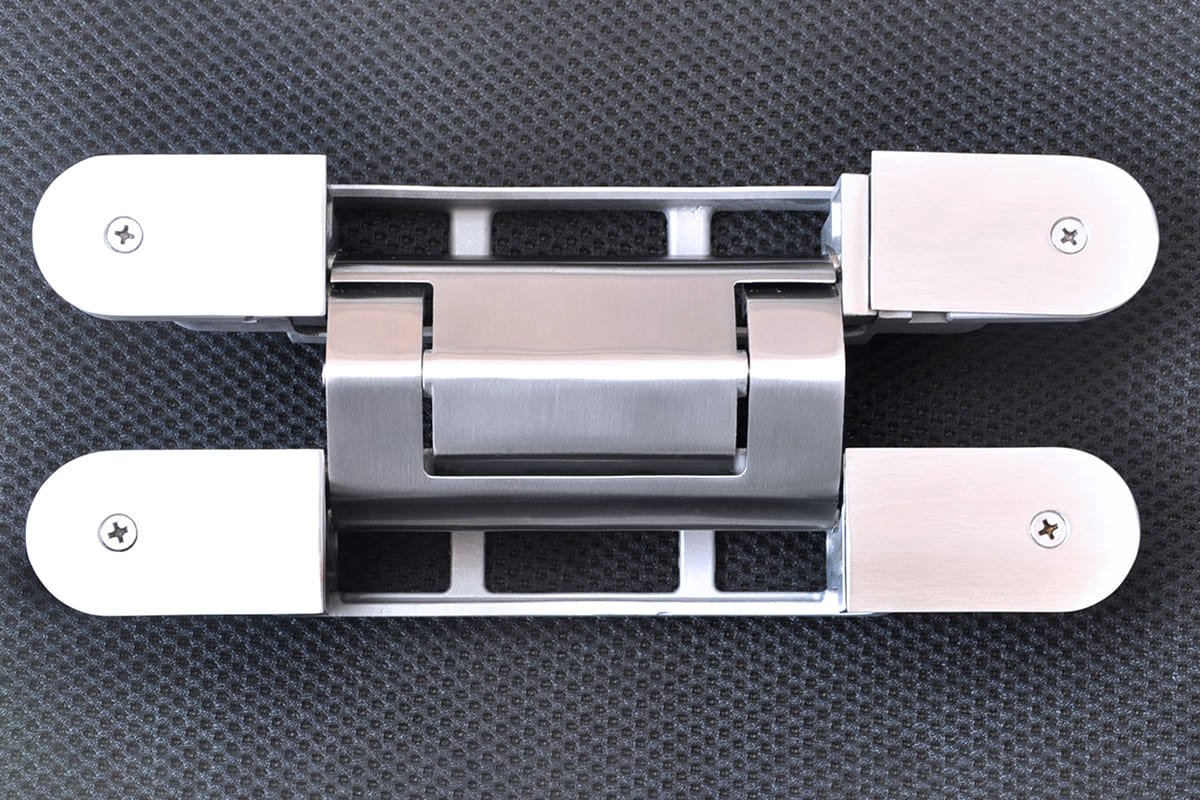
I check raw material grade. I control die-cast dimensions within mold limits. I polish and inspect edges. I plate with bath controls. I match color to an approved master. I test opening smoothness one by one.
QC checkpoints table
| Stage | Key check | Method | Sample scope |
|---|---|---|---|
| Incoming material | Alloy grade; steel/stainless spec | Certificate + spectrometer | Per batch |
| Die-casting/machining | Dimensions; hole positions | Caliper + gauge | Per lot |
| Polishing | Burrs; edge smoothness | Visual + touch inspection | Per piece |
| Plating/finishing | Color; gloss; adhesion | Salt spray (as needed); visual | Per batch + spot |
| Surface defects | Bubble; scratch; pinhole | Visual under light | Per piece |
| Assembly movement | Opening smoothness; noise | Manual cycle and feel test | 100% |
I keep a master finish sample for each project. I reject any piece that does not match the master. I store records so repeat orders stay stable.
How do I evaluate size standards and certificates without confusion?
3D hinges do not share one global size standard. I avoid promises based on guesses. I use drawings, samples, and real reports.
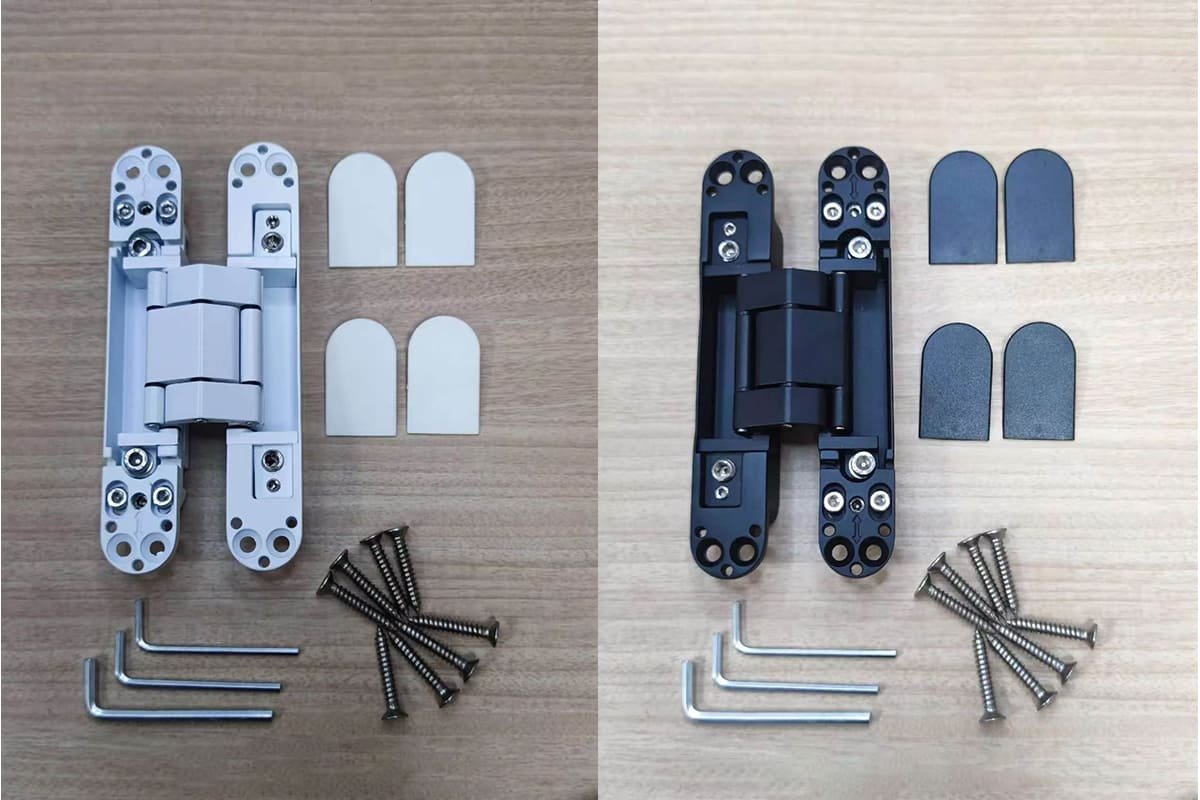
3D hidden hinges lack a unified size standard.12 Many factories follow big-brand dimensions. Verify any EN1935 or CE claim for the exact model and report. Confirm machining drawings and a fitted sample.
Size clarity
I send full machining drawings with tolerances. I confirm pocket depth, screw pattern, and plate thickness. I can follow common brand dimensions to ease door factory routing.
Certificates guide table
| Claim | Evidence needed | Buyer action |
|---|---|---|
| EN1935 cycle count | Test report with door size and hinge count | Read method; match your door inputs |
| CE marking | Declaration and relevant harmonized docs | Confirm scope; model covered |
| Fire rating | Model-specific fire test report | Check door type, duration, and hardware set |
| Corrosion resistance | Salt spray or climate test | Match to project climate |
I do not use a generic report for a different model. I confirm model codes match. I share photos of the tested setup when possible.
How do I match a concealed hinge to my door and project?
I use a simple path. I start with the door. I end with the hinge model, finish, and count. I document every assumption.
Share door material, size, thickness, and weight. Confirm opening angle, project standard, and finish. I suggest type, material, adjustment range, hinge count, and certificates based on those inputs.
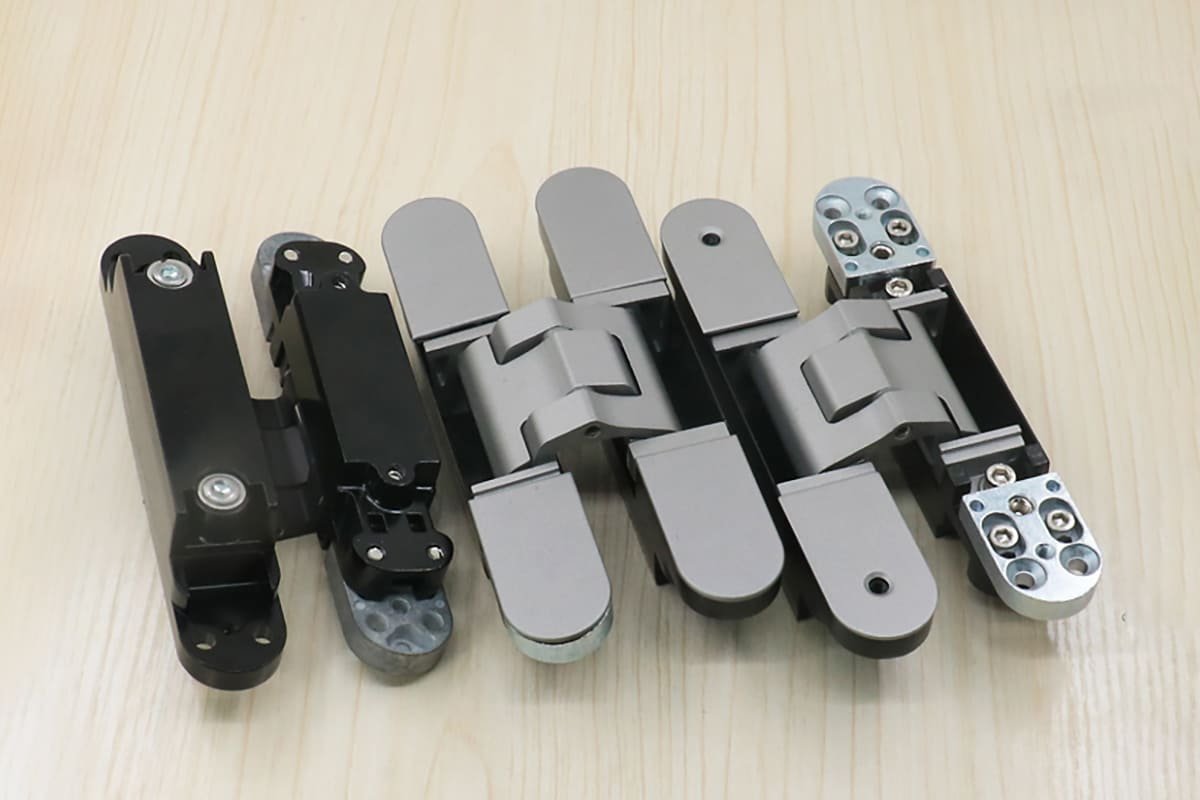
Matching steps
I take the basic door data first. I set the hinge type by installation and adjustment needs. I set material by use and standard. I confirm finish by project look. I fix hinge count by load and height.
Matching table
| Input | My setting | Why |
|---|---|---|
| Wooden door, 45 mm, 900×2100 mm, 35 kg | Zinc alloy 3D, 120° angle, 3 hinges | Finish match; easy alignment |
| Wooden door, 55 mm, 1100×2300 mm, 55 kg | Stainless steel 3D, 180°, 3 hinges | Higher load; wide open |
| Aluminum profile door, 40 mm, 900×2100 mm, 30 kg | Aluminum concealed, profile-matched | System fit; lighter weight |
| Fire-rated project, 50 mm, 1000×2100 mm, 60 kg | Tested stainless model, 3 hinges | Compliance; stronger body |
I always ask for the real door width and height. I confirm frame type and trim. I protect installers with 3D adjustment when tolerances are tight.
What information should I send to get a precise recommendation?
Good data makes a good hinge choice. I reply faster and more accurately when I have the right inputs. I keep this list simple.
Send door material, door weight, door thickness, door size, target market or project standard, opening angle, finish requirement, and expected quantity. I can then recommend a matching hinge set and share reports.
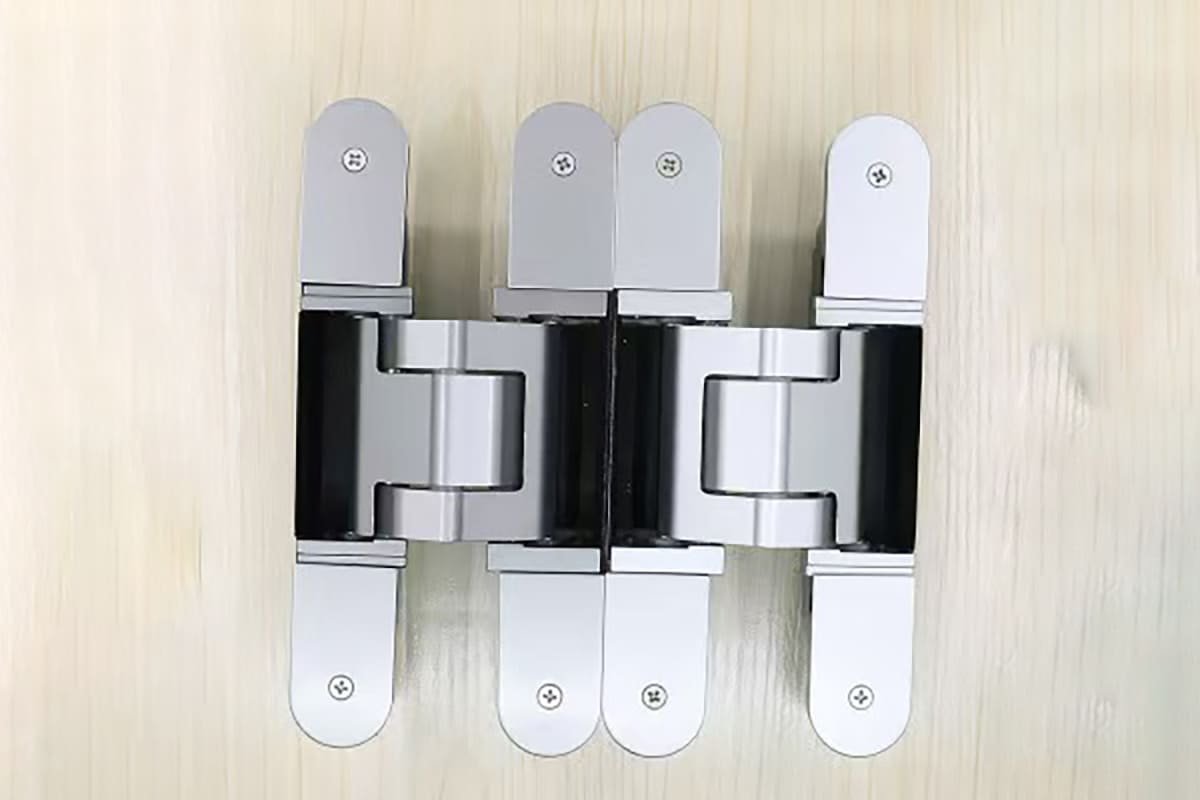
Buyer checklist
I have a fixed checklist for new projects. It covers door specs and project standards. It covers finish and volume. It keeps both of us clear.
Checklist table
| Item | Example | Why it matters |
|---|---|---|
| Door material | Solid wood; steel; aluminum | Sets hinge material and screws |
| Door size (W×H) | 900×2100 mm | Affects leverage and hinge count |
| Door thickness | 45 mm | Sets hinge body and pocket depth |
| Door weight | 35 kg | Sets load grade and type |
| Opening angle requirement | 120° or 180° | Avoids frame clash |
| Project standard | EN1935 cycles; fire rating need | Picks tested models |
| Finish requirement | Satin nickel; black | Batch consistency check |
| Expected quantity | 1,000 sets | Production planning and QC scaling |
I add any special notes, like door skin, core, or climate. I return a clear spec sheet and drawings. I include test reports when the model has them.
Conclusion
Choose hidden hinges by door data, hinge type, material, load, adjustment, finish, and verified reports. Good inputs and clear QC give safe doors and steady projects.
"How to Fix a Sagging Door that Won't Close or is Rubbing - YouTube",
. Architectural hardware guidance describes hinge selection as a function of door mass, dimensions, frequency of use, and fixing conditions, supporting the claim that an underspecified or mismatched hinge can contribute to sagging, binding, and premature failure. Evidence role: mechanism; source type: institution. Supports: A neutral technical source should explain that hinge capacity, placement, and compatibility with the door and frame affect sagging, binding, and premature wear.. Scope note: Such sources usually support the mechanism generally rather than proving failure for every concealed-hinge model. ↩"How to Adjust in 3D - Tectus Hinges", https://www.tectushinges.com/how-to-adjust-in-3d. Technical descriptions of three-dimensional adjustable hinges state that vertical, lateral, and depth adjustments allow installers to reposition the door leaf within the frame, which provides contextual support for improved alignment and smoother operation. Evidence role: mechanism; source type: institution. Supports: A technical or educational source should describe how three-axis hinge adjustment changes door position relative to the frame and can correct minor misalignment.. Scope note: This supports the adjustment mechanism, not a universal guarantee of smoother operation under all installation conditions. ↩
"10 Causes of Binding and Sagging in Swing Doors", https://www.swingingcafedoors.com/swinging-door-blog/10-causes-of-binding-and-sagging-in-swing-doors/. Architectural hardware references identify door weight, dimensions, usage level, and frame construction as key variables in hinge specification, supporting the view that proper matching reduces misalignment and related service problems. Evidence role: general_support; source type: institution. Supports: A building-hardware reference should support the principle that hinge specification must account for door size, weight, usage, and frame conditions to reduce malfunction and damage.. Scope note: The evidence is general hardware guidance and may not quantify call-back rates for hidden hinges specifically. ↩
"Concealed Hinge | Innovative Door Hardware | Sugatsune", https://www.sugatsune.com/hes-concealed-hinge-line/?srsltid=AfmBOooY2-JuM86yrzXbcHFPRnHucF0uB7n2zZeGvadQ7nq6plku38Bi. Educational hardware references distinguish mortised concealed hinges, surface-mounted concealed hinges, and adjustable concealed hinges by how they attach to the door and frame, supporting the article’s classification of these designs by installation type. Evidence role: definition; source type: education. Supports: A neutral hardware or building-technology source should define concealed hinge types and explain that mortised, surface-mounted, and adjustable designs have different installation requirements.. Scope note: Terminology varies by manufacturer and region, so the source may support the categories conceptually rather than with identical naming. ↩
"How to Install Concealed Hinges--The Complete Guide!", https://www.woodshopdiaries.com/how-to-install-concealed-hinges-cabinet-hardware/. Concealed-hinge installation guidance specifies that the hinge body is recessed into routed pockets in the door and frame, and that pocket depth and hinge size must be compatible with the door thickness. Evidence role: mechanism; source type: institution. Supports: A hardware installation or architectural reference should explain that concealed hinges require a routed pocket sized to the hinge body and compatible with door thickness.. Scope note: The source would support the installation principle; exact thickness limits remain model-specific. ↩
"Hinge Load Capacity: How to Calculate It - Weber Knapp Blog", https://blog.weberknapp.com/hinge-load-capacity-calculation. Engineering explanations of hinged doors describe the door leaf as a load acting at a distance from the hinge axis, so greater door width or mass increases the moment that hinges and fixings must resist. Evidence role: mechanism; source type: education. Supports: An engineering or educational source should explain that door width and mass create moments around the hinge axis, affecting hinge loading.. Scope note: This supports the mechanical basis, while actual rated capacity depends on test method, hinge count, fixing substrate, and model design. ↩
"[PDF] Hinges - Hettich", https://web.hettich.com/fileadmin/Company_website/HUK/Media/Hinges_2020_HUK.pdf. Concealed-hinge technical specifications commonly state minimum door thickness and mortise dimensions, providing contextual support for treating door thickness as a controlling parameter in hinge-body selection. Evidence role: general_support; source type: other. Supports: A source should show that concealed hinge specifications commonly list compatible door thickness ranges and that larger hinge bodies are used for thicker doors.. Scope note: The exact 35–60 mm range is market- and model-dependent and may require comparison across several specification sheets rather than one universal standard. ↩
"Understanding BS EN 1935:2002 single-axis hinge grades - SFS UK", https://uk.sfs.com/resources/article/understanding-bs-en-1935. EN 1935 specifies requirements and test methods for single-axis hinges used on doors and windows, including classification by durability, test cycles, door mass, safety, and corrosion resistance. Evidence role: definition; source type: institution. Supports: A standards body or accredited summary should describe EN 1935 as a standard for single-axis hinges, including durability, door mass, corrosion, and classification criteria.. Scope note: EN 1935 may not cover every concealed or multi-axis hinge configuration directly, so its relevance should be confirmed for the exact product and claim. ↩
"What Makes Fire Rated Door Hinges Important? Key Factors ...", https://watersonusa.com/solutions/fire-rated-door-hinges. Fire-door standards and guidance require hinges and other hardware used on rated doors to be tested or listed for the relevant fire-door assembly, supporting the need to use certified hardware rather than relying on material choice alone. Evidence role: expert_consensus; source type: institution. Supports: A fire-door standard or institutional guide should state that hinges and hardware for fire-rated doors must be tested, listed, or certified as part of the fire-door assembly.. Scope note: This supports the certification requirement; it does not prove that all stainless-steel concealed hinges are suitable for fire-rated doors. ↩
"Stainless steel - Wikipedia", https://en.wikipedia.org/wiki/Stainless_steel. Materials-science references explain that stainless steels contain sufficient chromium to form a passive oxide film, giving them corrosion resistance, and that grades used in hardware can provide substantial mechanical strength. Evidence role: mechanism; source type: education. Supports: A materials source should explain stainless steel’s corrosion resistance from chromium passivation and describe its strength characteristics relative to common construction metals.. Scope note: Strength and corrosion resistance vary by stainless grade, heat treatment, environment, and manufacturing process. ↩
"Everything you need to know about Commercial Door Hinges", https://www.mckinneyhinge.com/content/mckinney/us/en/resource-library/knowledge-center/blog/blog-post.aehdynamic-everything-you-need-to-know-about-commercial-door-hinges-top-10-commercial-contractors-hinge-installation-questions-633f18001fa7df003d7c229b_mckinney.html. Architectural-hardware guidance commonly increases hinge quantity for taller, wider, heavier, or more frequently used doors, supporting the practice of adding a third hinge when door size exceeds typical light-duty conditions. Evidence role: expert_consensus; source type: institution. Supports: A neutral architectural-hardware source should explain that taller, wider, or heavier doors commonly require three or more hinges depending on specifications.. Scope note: Exact hinge count depends on hinge rating, door construction, fixing substrate, and manufacturer test data. ↩
"[DOC] Section 08 71 00 - Door Hardware", https://www.vendorportal.ecms.va.gov/FBODocumentServer/DocumentServer.aspx?DocumentId=796073&FileName=VA259-13-R-0534-A00003003.doc. Standards for door hinges, such as EN 1935, classify performance characteristics and test methods but do not create a universal dimensional interface for every concealed 3D hinge, providing contextual support for verifying model-specific drawings. Evidence role: historical_context; source type: institution. Supports: A standards source should show that recognized hinge standards focus on performance classification and testing rather than establishing universal pocket dimensions for all 3D concealed hinges.. Scope note: This is contextual support; proving the absence of a global size standard may require checking multiple regional standards and product categories. ↩