What Are Common Mortise Lock Cylinder Sizes?
A wrong cylinder size looks small on paper. It becomes expensive when doors cannot lock well. I see this problem in many batch orders.
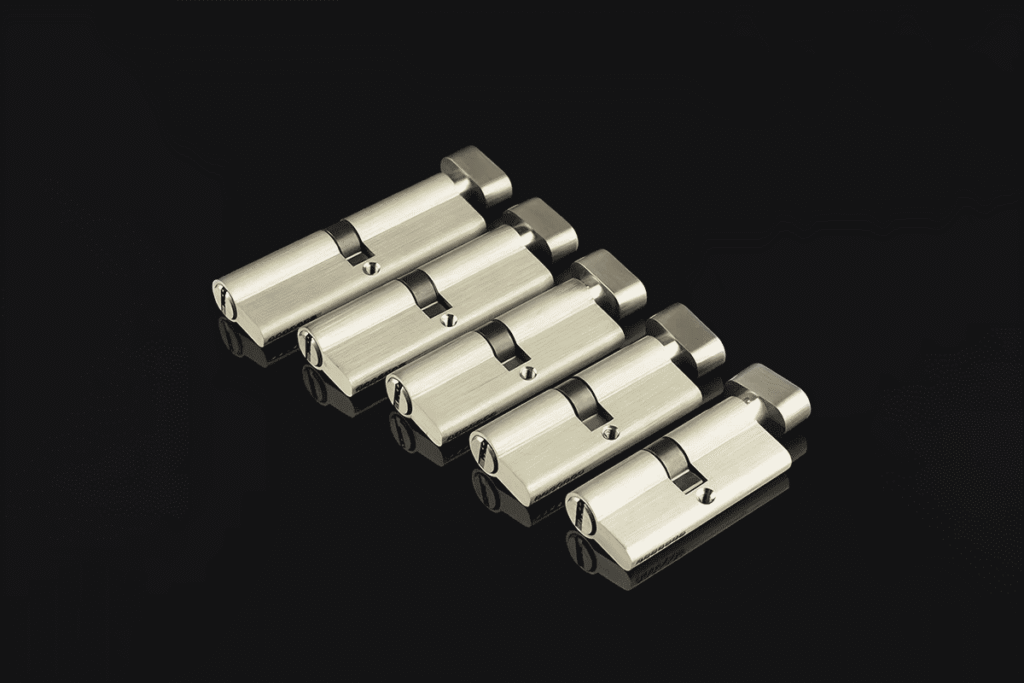
Common mortise lock cylinder sizes are usually 60, 65, 70, 75, and 80 mm.1 I do not choose them by length alone. I calculate the size from door thickness, cylinder cover height, 3–5 mm allowance, and the lock body position.2
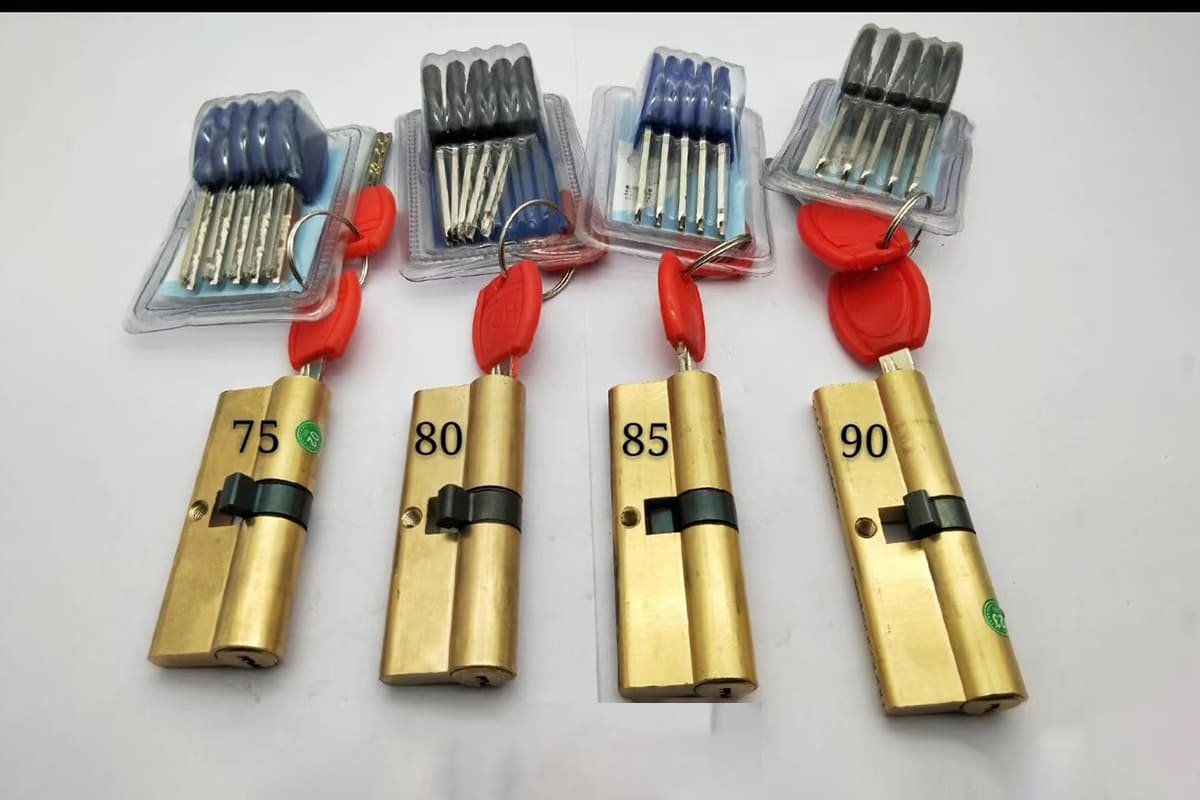
Many buyers ask me one simple question: “What cylinder size should I buy?” I understand the question. I also know the risk behind it. A common size can still be the wrong size when the door thickness, cylinder cover, or lock position changes. So I always start with the door, not the cylinder.
How Do I Calculate The Correct Mortise Lock Cylinder Size?
A cylinder that is too short creates installation trouble. A cylinder that is too long looks poor and may be unsafe.3 I use one basic formula first.
The practical formula is: cylinder length = door thickness + inside cylinder cover height + outside cylinder cover height + 3–5 mm allowance.4 I use this method before I confirm common sizes for production or quotation.
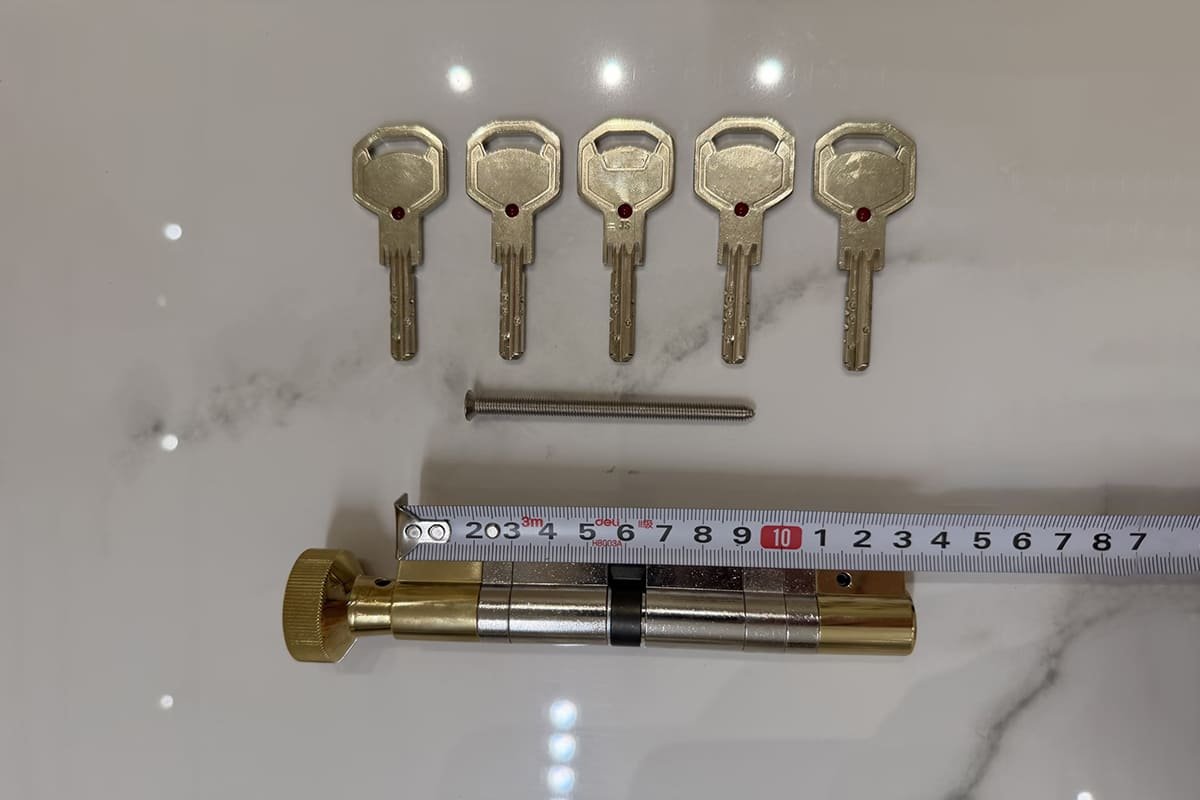
I usually explain this formula to buyers before we discuss stock sizes. The door thickness is the base. The cylinder covers on both sides add extra height. The 3–5 mm allowance gives a small safe projection. This helps the key work smoothly and helps the covers sit well.5 I do not like choosing a cylinder only from a catalog list, because a catalog cannot see the real door.
Here is the simple calculation logic I use in factory specification work:
| Item | What I Check | Why It Matters |
|---|---|---|
| Door thickness | 40 mm, 45 mm, 50 mm, or other | It is the main base length |
| Inside cylinder cover height | Often 6–10 mm | It adds to the needed cylinder length |
| Outside cylinder cover height | Often 6–10 mm | It also adds to the needed cylinder length |
| Allowance | Usually 3–5 mm total | It prevents the cylinder from being too short |
| Lock body position | Centered or offset | It decides the split length |
I have seen many cases where the buyer only told me “the door is 50 mm.” That is not enough. A 50 mm door with thin covers may use one cylinder length. A 50 mm fire-rated steel door with two thick stainless steel cylinder covers may need another. So I ask for the door thickness, cover height, door type, and lock body position before I confirm the cylinder size.
What Are The Most Common Mortise Lock Cylinder Lengths?
A buyer may feel pressure when a project has many door types. If the buyer picks only one size, some doors may fail during assembly. I keep the size list practical.
The most common mortise lock cylinder lengths are 60, 65, 70, 75, and 80 mm. These sizes are commonly used because factories, buyers, and warehouses can machine, purchase, stock, and supply them more easily.
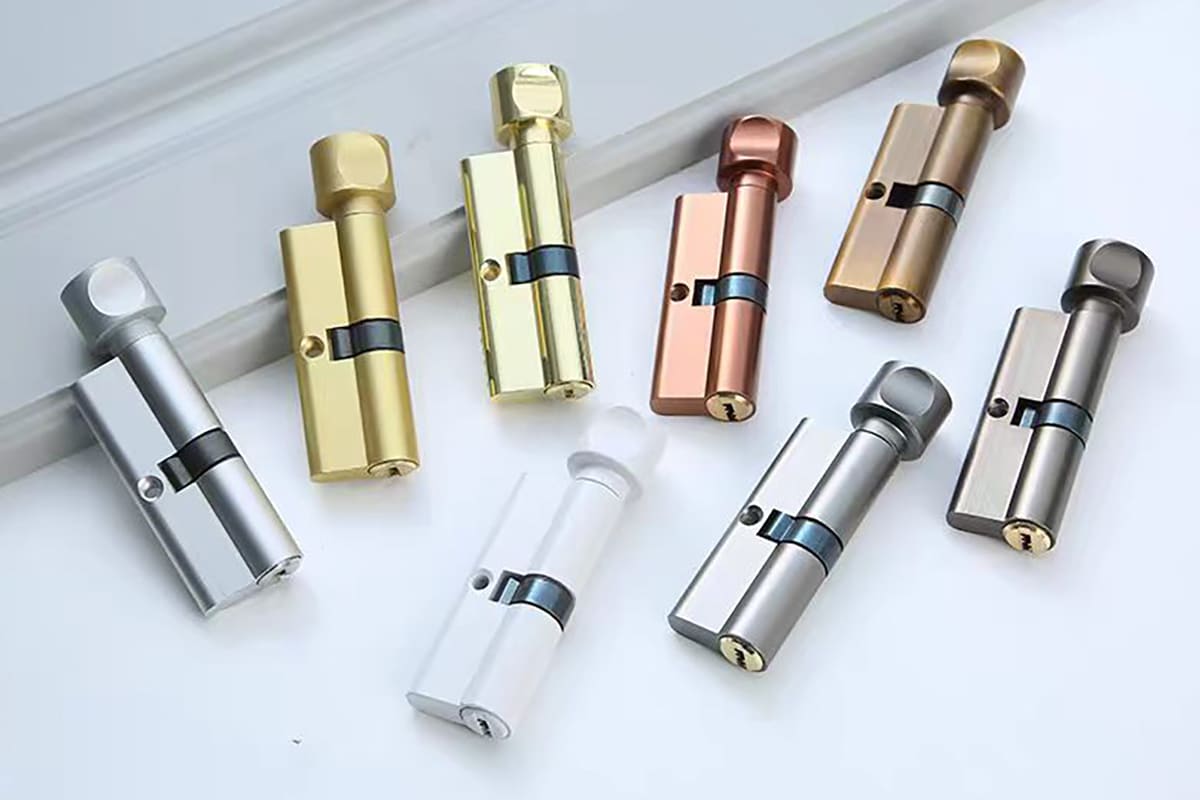
I often see these sizes in door hardware procurement for wooden doors, steel doors, aluminum profile doors, and fire-rated doors. But I do not say one size fits all. I use these common lengths as a starting point. Then I match them to the actual door structure. In production, sizes are usually rounded to multiples of 5 mm.6 This makes machining easier. It also makes stock control easier. A buyer can also manage spare parts better when sizes follow this 5 mm pattern.
The table below shows how I normally explain common use cases:
| Common Total Length | Common Split Examples | Typical Door Use | My Factory-Side Note |
|---|---|---|---|
| 60 mm | 30+30, 25+35 | Aluminum profile doors, thin interior doors | I confirm cover height carefully |
| 65 mm | 32.5+32.5, 30+35 | 45 mm wooden doors | I check if the lock is centered |
| 70 mm | 35+35, 30+40 | 50 mm steel or fire-rated doors | I check door rebate and cover height |
| 75 mm | 35+40, 30+45 | Thicker doors or offset lock cases | I confirm the outside projection |
| 80 mm | 40+40, 35+45 | Heavy doors or special structures | I request door drawings when needed |
I also remind buyers that cylinder length is not the same as mortise lock body size. It is also not the backset, center distance, or faceplate size.7 These are different specifications. If these numbers get mixed, the quotation may look correct, but the goods may not fit during final assembly.
How Do Door Thickness And Cylinder Covers Change The Size?
A small cover height can change the final size. I have seen buyers ignore this detail. The cylinder then arrives too short, and the installer cannot finish cleanly.
Door thickness alone does not decide the cylinder length.8 I add the inside cover height, outside cover height, and a 3–5 mm allowance. This is why two doors with the same thickness may need different cylinders.
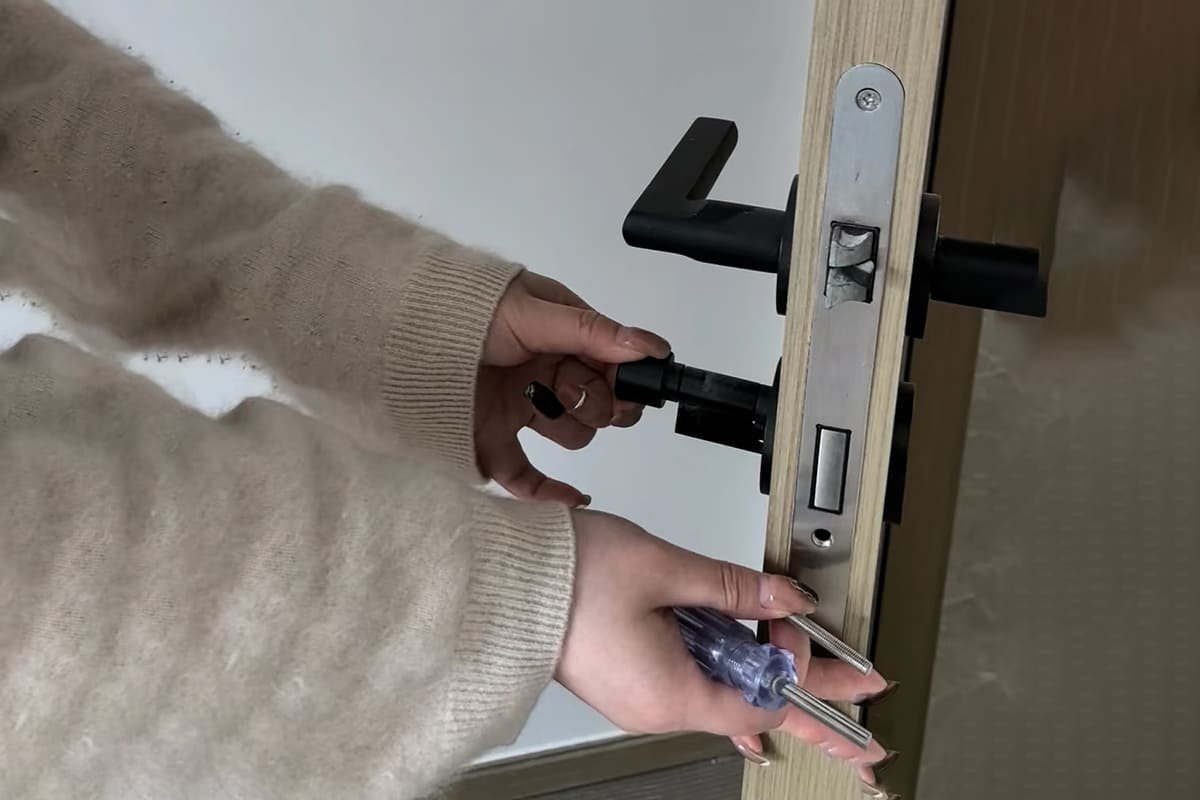
I often use real examples because they make the sizing rule easier to understand. For a 50 mm steel fire-rated door with two 8 mm stainless steel cylinder covers, I usually calculate 50 + 8 + 8 + about 4 mm. The result is about 70 mm.9 So a 70 mm cylinder is commonly used. For a 45 mm interior wooden door, the cover height may be lower. A 65 mm cylinder is often common. For a 40 mm aluminum profile door with 8 mm cover height, a 60 mm cylinder is commonly used.
Here is a simple reference table:
| Door Type | Door Thickness | Cover Height Example | Common Cylinder Length | My Comment |
|---|---|---|---|---|
| Steel fire-rated door | 50 mm | 8 mm + 8 mm | 70 mm | I use this often for project supply |
| Interior wooden door | 45 mm | Around 7–8 mm total per side range | 65 mm | I still confirm handle rose and cover type |
| Aluminum profile door | 40 mm | 8 mm cover height | 60 mm | I check the profile depth and lock case position |
| Thick entrance door | 55–60 mm | 8–10 mm each side | 75–80 mm | I ask for a drawing or sample |
I do not treat these examples as fixed rules. I treat them as common factory-side references. In batch procurement, the safest process is simple. I ask the buyer to confirm the door section drawing, cover height, and installation photo if available. This helps avoid wrong length, wrong split, and wrong finish. It also reduces after-sales cost after the goods arrive.
Why Are Cylinder Sizes Usually Rounded To 5 mm?
Odd sizes look exact on a drawing. They can create trouble in real purchasing. I often guide buyers toward standard 5 mm steps when the door allows it.
Mortise lock cylinder lengths are usually rounded to 5 mm steps, such as 60, 65, 70, 75, and 80 mm.10 This helps factory machining, material planning, stocking, batch packing, and future replacement.
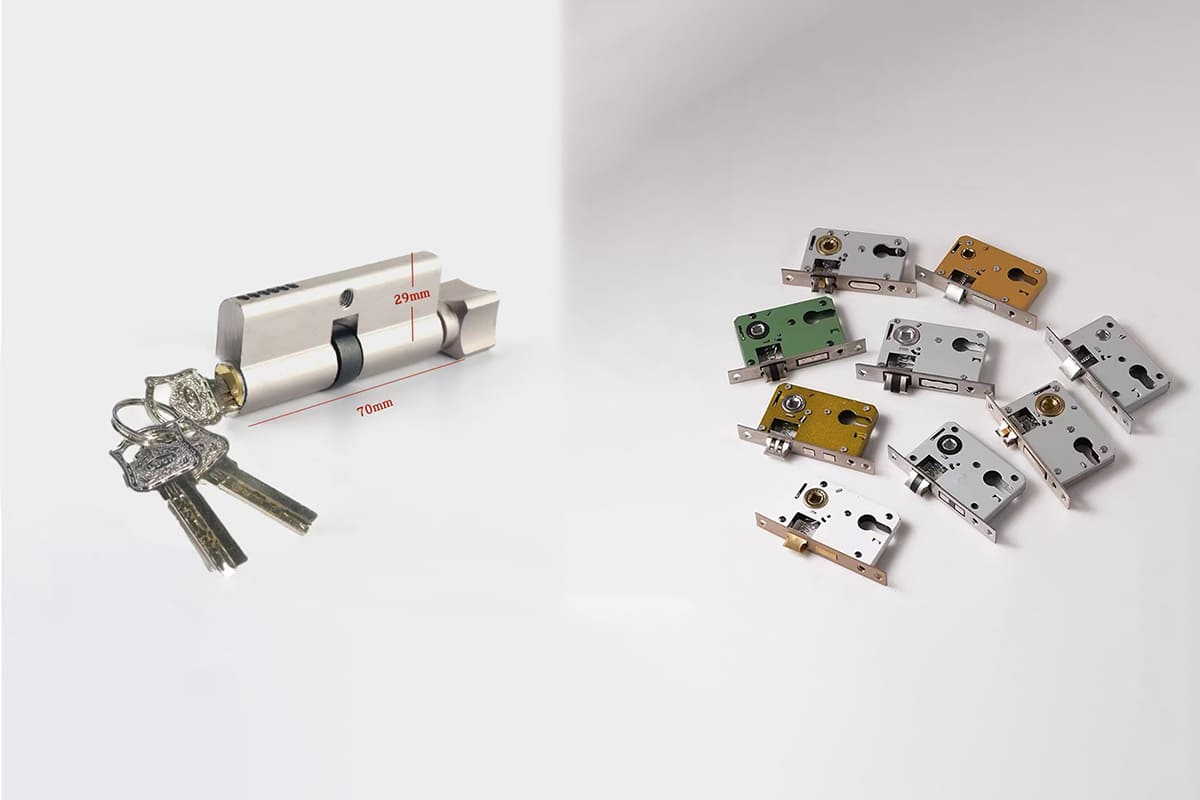
In my factory work, I prefer standard steps because they reduce risk for both sides. A 68 mm cylinder may look perfect in theory. But if the door and cover system allow a small projection, 70 mm is usually more practical. The 3–5 mm allowance exists for this reason. It gives a safe range. It also makes the product easier to source later. A door brand may need the same cylinder again after six months. A standard size is easier to repeat.
I also see benefits in export orders. Importers and wholesalers often carry stock. They do not want too many tiny size differences. Standard sizes help them build a clear SKU system. A simple size system also helps their sales team avoid mistakes.
| Size Method | Benefit | Possible Risk |
|---|---|---|
| 5 mm standard steps | Easy production and stock control | Needs correct allowance check |
| Exact custom size | Can match special doors closely | Higher MOQ, longer lead time |
| One size for all doors | Simple purchase order | High fitting risk |
| Size by formula first | Safer configuration | Needs more project information |
I still provide custom sizes when the door structure needs them. But I first check if a standard 5 mm size can solve the problem. This is usually better for cost, delivery time, and future supply stability.
What Is The Difference Between Total Length And Split Length?
A buyer may order “70 mm” and think the work is done. I do not stop there. A 70 mm cylinder can have different split lengths.
Total length is the full cylinder length. Split length shows how much cylinder extends to each side, such as 35+35 or 30+40.11 A flush door often uses a symmetrical split. A rebated door may need an asymmetric split.12
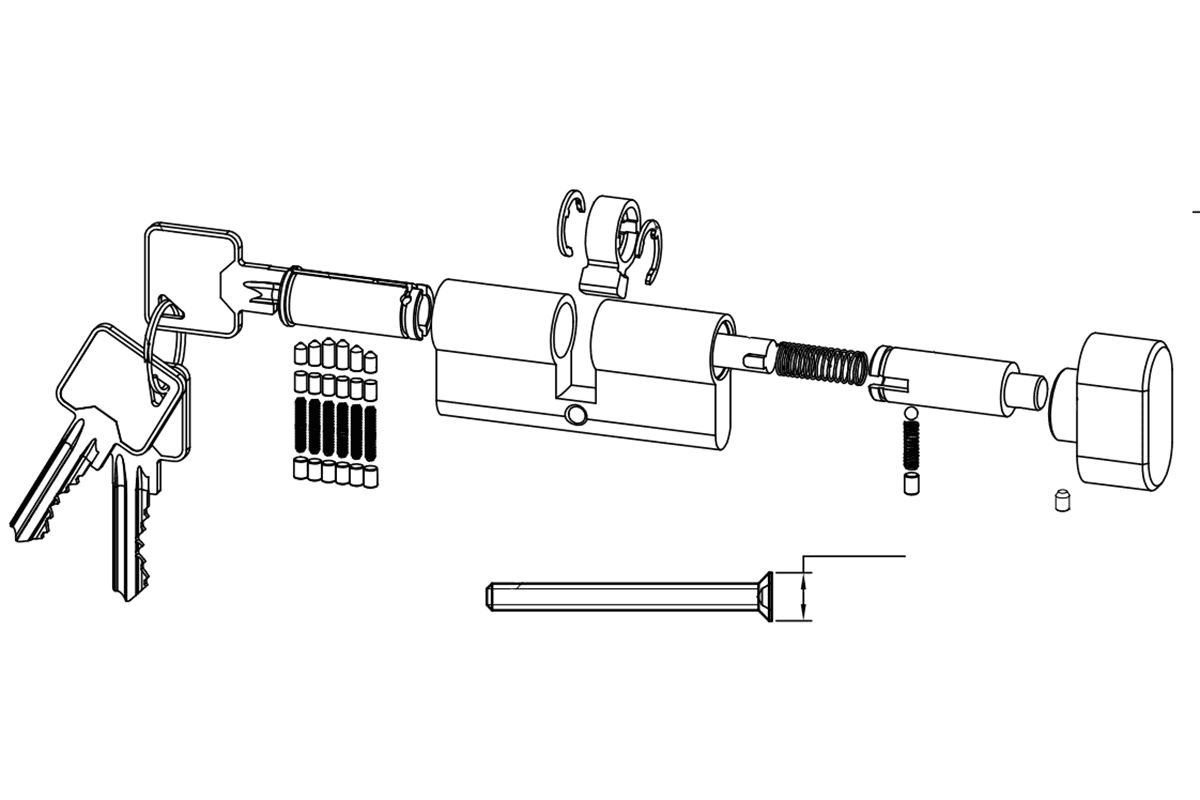
This point is very important for bulk orders. A 70 mm cylinder does not always mean 35+35. For a flush door, the lock body is usually installed in the middle of the door leaf. So a symmetrical cylinder such as 70 mm = 35+35 is commonly used. The cylinder projection on both sides looks balanced. The handle set and cylinder cover also sit in a normal position.
For a rebated door, the situation may change. The lock body may not be exactly centered. The outside or inside side may need more length. In this case, 70 mm = 30+40 may be better than 35+35. The total length is still 70 mm, but the split is different. This can decide whether the cylinder sits correctly.
| Door Structure | Lock Body Position | Common Split Logic | Example |
|---|---|---|---|
| Flush door | Usually centered | Symmetrical split | 70 mm = 35+35 |
| Rebated door | Often offset | Asymmetric split | 70 mm = 30+40 |
| Profile door | Depends on profile chamber | Confirm by drawing | 60 mm = 25+35 |
| Special project door | Depends on structure | Confirm by sample or section | 75 mm = 35+40 |
I always ask for the split length in serious orders. If the buyer only writes total length, I ask again. This small check can prevent a large shipment from becoming hard to install.
How Should Buyers Confirm Cylinder Size Before Ordering?
A rushed order can save one day at the beginning and lose many days at installation. I prefer to slow down once and confirm the key data clearly.
Buyers should confirm door thickness, cover height on both sides, lock body position, door type, cylinder total length, and split length before ordering. Samples or drawings help the supplier configure the cylinder correctly.
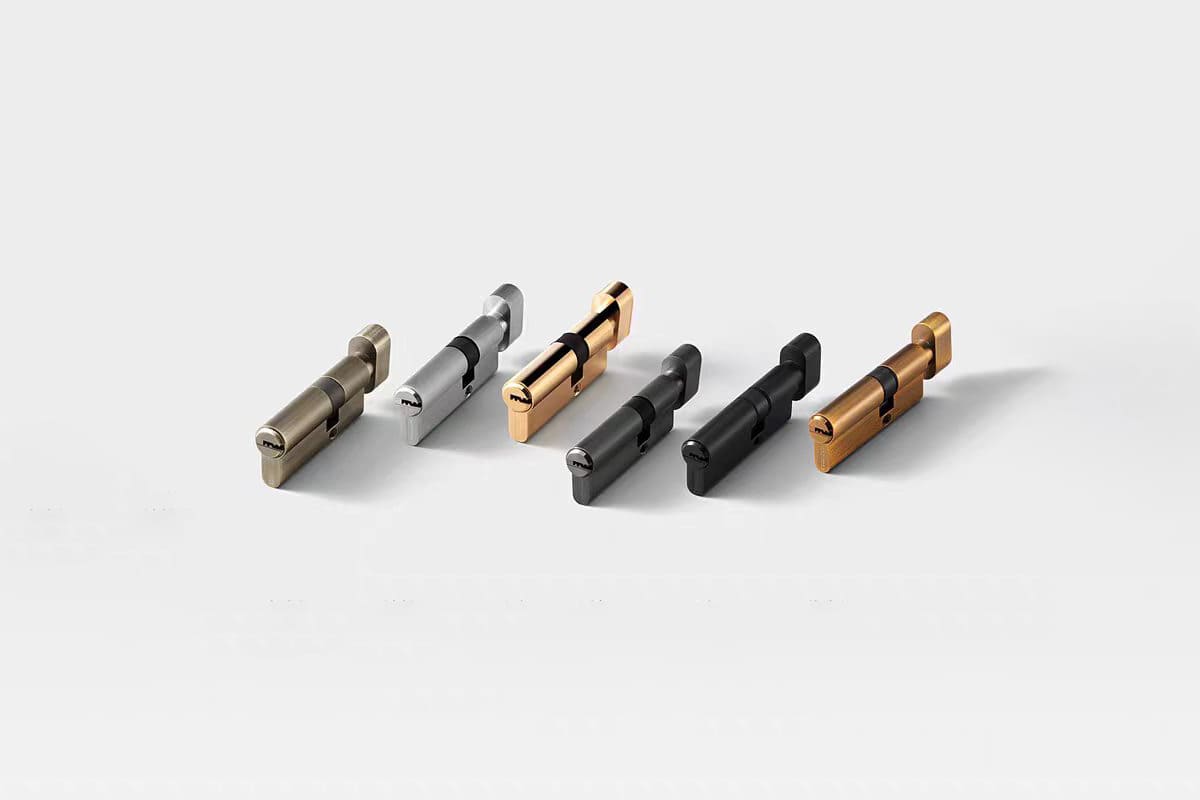
When I work with door manufacturers and hardware brand buyers, I use a basic checklist. It is not complicated. It just prevents common mistakes. The buyer should tell me the door material first. A steel fire-rated door, wooden door, and aluminum profile door may all use mortise locks, but the cylinder size logic can change. Then I ask for door thickness. After that, I ask for the cylinder cover height on both sides. Some covers are flat and thin. Some stainless steel covers are higher. This difference directly affects the required cylinder length.
I also ask whether the lock case is centered. If the door is rebated, I ask for a section drawing. If the buyer has an old sample, I ask them to measure both sides from the screw hole center to each end. This helps confirm the split.
Here is the checklist I normally use:
| Confirmation Item | Buyer Should Provide | My Reason |
|---|---|---|
| Door type | Wooden, steel, fire-rated, aluminum profile | Different structures change size |
| Door thickness | Exact mm value | Main base for calculation |
| Cover height | Inside and outside cover height | Directly adds to cylinder length |
| Lock position | Centered or offset | Decides split length |
| Total length | 60, 65, 70, 75, 80 mm, or custom | Needed for quotation and stock |
| Split length | 30+30, 35+35, 30+40, etc. | Needed for correct installation |
| Certification need | CE, fire-rated, project standard | Needed for market compliance |
I believe this process is better than asking only for common size. It also fits batch procurement better. A buyer can reduce return risk, protect project delivery, and keep product finish consistent across the whole order.
Conclusion
I choose mortise lock cylinder size by formula, door structure, cover height, and split length, not by common length alone.
"Pin tumbler lock - Wikipedia", https://en.wikipedia.org/wiki/Pin_tumbler_lock. A neutral standards or technical reference on profile lock cylinders supports that cylinders are specified by overall length and commonly supplied in standard millimetre increments, including lengths in the 60–80 mm range. Evidence role: general_support; source type: institution. Supports: Profile or mortise lock cylinders are commonly specified by overall length and are often available in standard millimetre increments including the listed sizes.. Scope note: Such a source would support common availability and specification practice, not prove that these are the most common sizes in every market. ↩
"087100 – DOOR HARDWARE - Facilities and Campus Services", https://fcs.cornell.edu/087100-door-hardware. Technical guidance on cylinder measurement supports that overall cylinder length is determined from the door thickness, trim or escutcheon dimensions, and the cylinder’s required projection on each side of the lock case. Evidence role: mechanism; source type: institution. Supports: Cylinder length selection depends on the door thickness, hardware trim or escutcheon thickness, and the cylinder’s position relative to the lock case.. Scope note: The source may describe the measurement principle without endorsing the article’s exact 3–5 mm allowance. ↩
"[PDF] CRIME PREVENTION - Locking Doors Still Best Bet Against Burglaries", https://www.sanbernardino.gov/DocumentCenter/View/5413/Crime-Prevention-Tip---Locking-Doors-PDF. Public security guidance on door locks supports that a cylinder should not project excessively beyond the protective hardware because exposed projection can make attack methods such as gripping or snapping easier. Evidence role: expert_consensus; source type: government. Supports: Excessive projection of a lock cylinder can increase vulnerability to attack methods such as gripping or snapping.. Scope note: This supports the security concern for exposed cylinders generally, not every mortise-cylinder design or installation. ↩
"How to Measure Your Euro Cylinder Lock Size - D&D Hardware", https://www.dndhardware.com/How-to-Measure-Your-Euro-Cylinder-Lock-Size-id40138696.html. A technical installation reference on profile-cylinder measurement supports the dimensional logic that cylinder length must account for the door leaf and the trim or escutcheon thickness on both sides, with only limited projection beyond the finished hardware. Evidence role: mechanism; source type: institution. Supports: Overall lock-cylinder length is calculated by accounting for the door thickness and the hardware or escutcheon thickness on both faces, with limited projection beyond the trim.. Scope note: The source would likely support the measurement logic rather than the precise 3–5 mm allowance stated in the article. ↩
"Euro Cylinder Lock Installation Guide | How to Guide | MKS", https://www.masterkeysystems.co.uk/cylinder-lock-installation-guide/. Door-hardware installation guidance supports that correct cylinder projection and alignment with the escutcheon or cover are necessary for proper operation and a correctly seated trim assembly. Evidence role: mechanism; source type: institution. Supports: Correct cylinder projection and alignment with the trim are relevant to proper operation and finished installation.. Scope note: This is contextual support for the installation principle and may not quantify the exact clearance needed. ↩
"[PDF] Euro Profile Cylinder - Assa Abloy", https://www.assaabloy.com/in/en/documents/catalogue/Euro%20Profile%20Cylinder.pdf. A standards-based or technical reference on profile-cylinder dimensions supports that cylinder lengths are commonly specified in 5 mm increments, which explains why totals such as 60, 65, 70, 75, and 80 mm are widely used. Evidence role: general_support; source type: institution. Supports: Profile cylinders are commonly specified in side lengths or total lengths that follow 5 mm increments.. Scope note: This supports dimensional convention and availability, not necessarily the internal production reasons of every factory. ↩
"How to Measure a Backset - YouTube",
. A door-hardware terminology reference supports that backset, center distance, faceplate dimensions, and cylinder length are separate specifications used to describe different parts of a lockset. Evidence role: definition; source type: institution. Supports: Backset, center distance, faceplate size, and cylinder length are distinct door-hardware dimensions.. ↩"How to Measure Your Euro Cylinder Lock Size - D&D Hardware", https://www.dndhardware.com/How-to-Measure-Your-Euro-Cylinder-Lock-Size-id40138696.html. Technical measurement guidance for profile cylinders supports that door thickness alone is insufficient; the installer must also account for trim or escutcheon thickness and the desired projection beyond the door faces. Evidence role: mechanism; source type: institution. Supports: Cylinder length selection requires more than the door leaf thickness because the fitted trim and projection requirements affect total length.. ↩
"How to Measure and Fit a Euro Cylinder Lock - Suffolk Latch Company", https://www.suffolklatchcompany.com/blogs/news/how-to-measure-and-fit-a-euro-cylinder-lock?srsltid=AfmBOooMHki67NZ_5QvGWNOSp8bK3IqyC9Vl3f0PGLmfhvbF07FlKkAg. Cylinder-measurement guidance supports the calculation method used in this worked example: adding the door leaf thickness and the hardware thickness on both sides produces an overall length of roughly 70 mm for a 50 mm door with two 8 mm covers and limited projection. Evidence role: case_reference; source type: institution. Supports: A worked sizing example can be supported by guidance showing that door thickness and both cover heights are added to determine cylinder length.. Scope note: The source would validate the method, while the exact suitability of 70 mm depends on the specific door, cover design, and lock position. ↩
"Mortice Sash Locks, 1PC Door Cylinder 60 65 70 75 80 85 ...", https://www.amazon.com/Mortice-Locks-Cylinder-Interior-Perform/dp/B0GD1HM9CN. An independent technical reference on profile-cylinder sizing supports that cylinder lengths are commonly specified in 5 mm steps, including standard total lengths such as 60, 65, 70, 75, and 80 mm. Evidence role: general_support; source type: institution. Supports: Lock cylinders are commonly sold or specified in standardized 5 mm length increments.. Scope note: The source would support common specification practice, not prove that all mortise-cylinder systems use these increments. ↩
"How to measure a Euro cylinder - YouTube",
. A technical source on profile-cylinder measurement supports the distinction between overall cylinder length and the two side dimensions, commonly expressed as paired measurements such as 35+35 or 30+40. Evidence role: definition; source type: institution. Supports: Cylinder total length is the overall dimension, while split length or side dimensions indicate the length on each side of the fixing point or lock case.. ↩"ZJYSMH Euro Cylinder Lock, Special Custom,Security Door Center ...", https://www.amazon.com/Cylinder-Security-Asymmetry-Aluminum-Eccentric/dp/B0CX22983J. Door-hardware measurement guidance supports that an offset lock case or rebated door construction can require unequal cylinder side dimensions, so the same total length may be specified with an asymmetric split. Evidence role: mechanism; source type: institution. Supports: When the lock case or cylinder position is offset within the door, the cylinder may require unequal side lengths.. Scope note: This supports the general installation logic; whether a particular rebated door needs an asymmetric split depends on its section and hardware. ↩