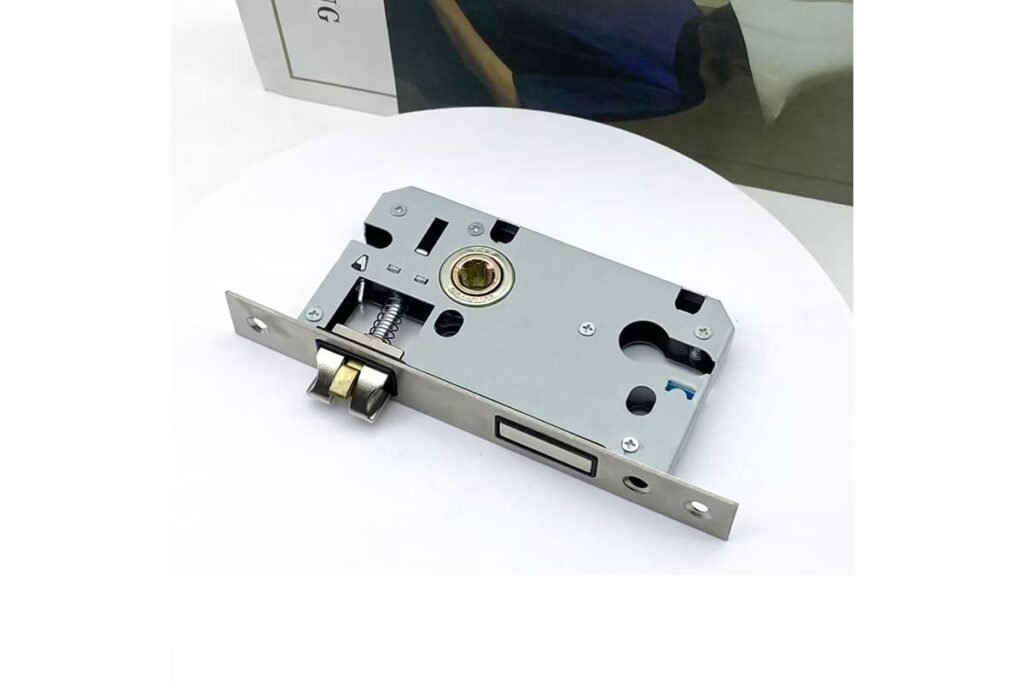
How do you identify a mortise lock?
I see buyers lose time when they judge a lock by the handle. That mistake causes wrong machining, wrong stock, and costly project delays.
I identify a mortise lock by checking whether the lock body is recessed inside the door leaf. I then confirm its function, backset, C-C distance, bolt type, cylinder type, handle match, faceplate, strike plate, door material, and project requirement.
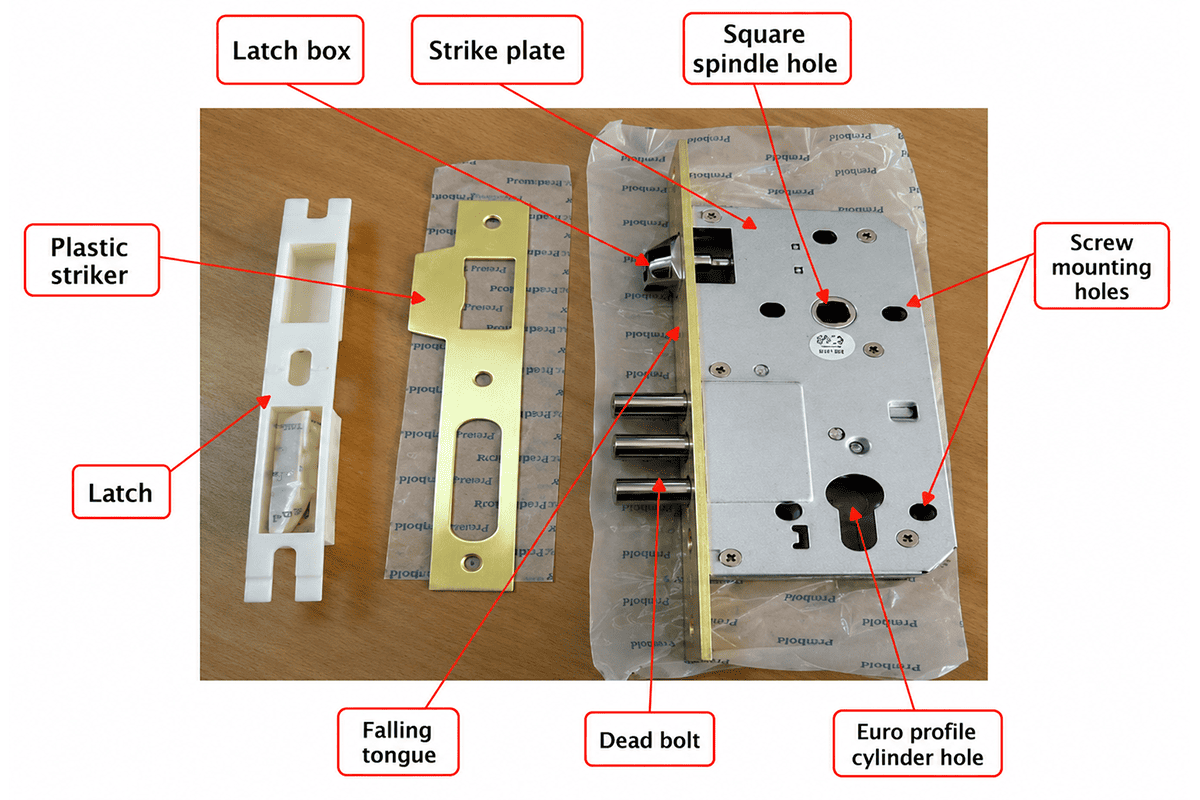
I have seen many lock samples look similar from the outside. I have also seen the wrong lock body arrive at a door factory because the buyer only checked the keyhole picture. I use a more practical method. I open the drawing, check the lock case, measure the key dimensions, and match the full hardware set before I confirm the order. If you buy, sell, or specify door hardware, this same method can save you from a small mistake that becomes a large batch problem.
Is the lock body recessed inside the door leaf?
I often see confusion because a rim lock and a mortise lock can both use a handle and key. The real difference is the lock body position.
I identify a mortise lock when the lock case sits inside a cut pocket in the door leaf. A rim lock sits on the door surface.1 I check the door preparation, lock body shape, faceplate, and strike plate before I make a final judgment.

In my factory work, I do not start with the handle design. I start with the lock body. A mortise lock needs a cavity inside the door. The faceplate stays visible on the door edge. The latch and deadbolt move through this faceplate and lock into the strike plate on the frame.2 This structure is the first sign.
A rim lock is different. It is fixed on the surface of the door. It does not need the same deep door machining. This difference matters for door factories because the door cut-out must match the lock case. If the lock body size is wrong, the door leaf may need rework.
I usually check the structure in this order:
| Check point | What I look for | Why I check it |
|---|---|---|
| Lock case position | Inside the door leaf | I confirm it is a mortise type |
| Faceplate | Visible on door edge | I confirm the edge preparation |
| Latch or deadbolt | Comes out from the faceplate | I confirm the locking action |
| Strike plate | Fixed on the frame | I confirm the door frame match |
| Door cut-out | Deep pocket inside the leaf | I confirm machining requirement |
I also remind buyers that a keyhole alone does not prove anything. A handle alone does not prove anything either. I need the lock body drawing, the door edge picture, or the real sample. This is the safest way to separate a mortise lock from other lock types.
Which dimensions should I check before I call it a Euro standard mortise lock?
I have seen correct-looking lock bodies fail at installation because one dimension was wrong. The lock entered stock, but it did not match the door.
I check the backset, C-C distance, faceplate size, lock case size, spindle hole, cylinder hole, and door thickness. For common Euro standard mortise locks, 55 mm or 60 mm backsets and 72 mm C-C distance are often used3, but I always verify the project standard.
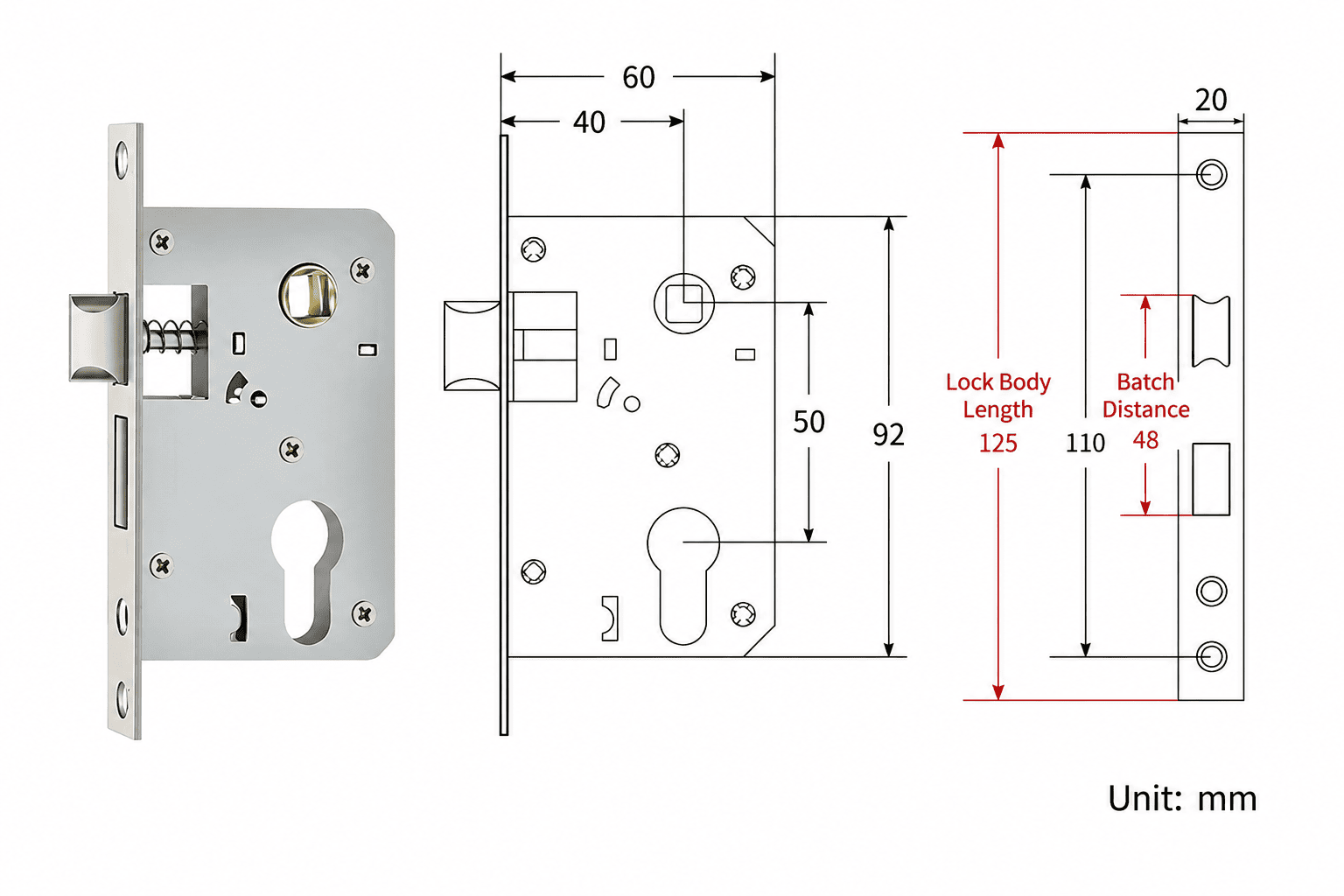
In our production work, I treat dimensions as the language of the lock. A picture can be attractive, but a drawing tells me if the lock can fit. For many Euro style projects, DIN 18251 is often used as a reference.4 I write this carefully because each project may have its own exact requirement. I do not assume a lock is compliant only because the shape looks similar.
The backset is one of the first dimensions I check. It is the distance from the front faceplate edge to the center of the handle spindle or cylinder area5, based on the lock drawing. Common backsets can include 55 mm and 60 mm. I also see 40 mm, 45 mm, and 65 mm in different door and handle applications.
The C-C distance is also important. It is the distance between the handle spindle center and the cylinder center.6 A 72 mm C-C distance is common for many Euro standard sash locks. It can make sourcing easier when the lock body, cylinder, handle, and escutcheon follow the same system.
| Dimension | Common examples I see | What I confirm |
|---|---|---|
| Backset | 40 / 45 / 55 / 60 / 65 mm | Handle position and door machining |
| C-C distance | 72 mm is common for many Euro sash locks | Handle and cylinder alignment |
| Faceplate width | Project dependent | Door edge fit |
| Lock case depth | Project dependent | Door cavity depth |
| Door thickness | Project dependent | Cylinder length and spindle length |
I always ask for the door drawing when possible. If the buyer only gives me a product photo, I cannot safely confirm the lock. I need dimensions because a small difference can affect the cylinder position, handle operation, and door edge machining.
What bolt configuration tells me the lock function?
I know a lock function by looking at the bolts, not only by reading the product name. The bolt layout shows how the door opens, closes, and locks.
A standard sash-type mortise lock usually has an upper latch bolt controlled by the handle and a lower deadbolt controlled by the cylinder.7 Other mortise locks can be passage, deadbolt-only, classroom, escape-door, or fire-door sash types.
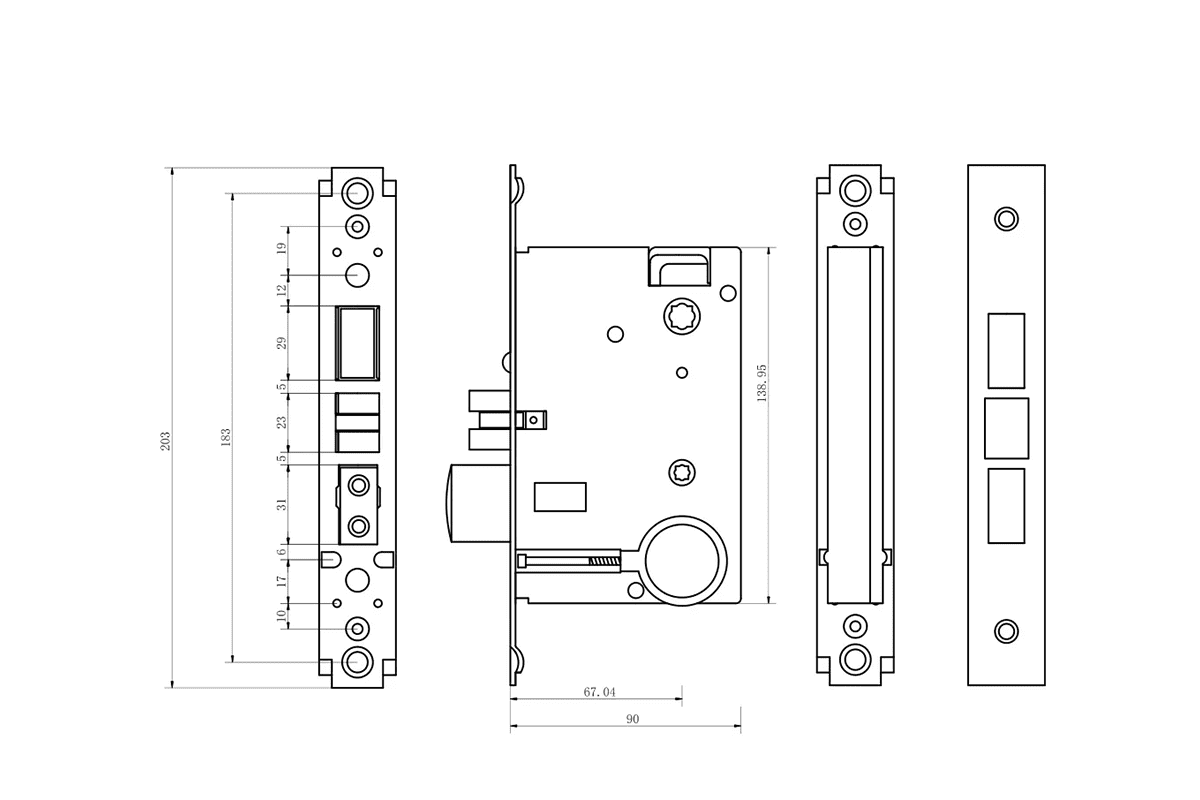
When I check a mortise lock sample, I always look at the faceplate side first. I want to see what moves out of the lock case. A normal sash lock usually has two main bolts. The upper latch bolt keeps the door closed during daily use. The handle retracts this latch. The lower deadbolt gives stronger locking. The cylinder moves this deadbolt.
This base structure is very common, but I never treat all mortise locks as one category. A passage lock may only have a latch. It may not need a cylinder. A deadbolt-only lock may be used for a door that is opened less often. A classroom lock has its own control logic. An escape-door lock needs a function that supports fast exit, based on the project requirement.8 A fire-door sash lock may need fire-rated performance and approved matching parts.9 I always tell buyers to verify the exact certificate, door set, and local requirement before they use it on a fire door.
| Lock function | Bolt structure I check | Common use idea |
|---|---|---|
| Sash lock | Latch + deadbolt | Common room and entrance doors |
| Passage lock | Latch only | Doors without key locking |
| Deadbolt-only lock | Deadbolt only | Low-frequency locking doors |
| Classroom lock | Function depends on design | Education and public projects |
| Escape-door lock | Exit function required | Doors needing safe exit |
| Fire-door sash lock | Fire-rated design and proof needed | Fire-rated door sets |
I do not rely on the product name alone because names can vary by market. I ask what the door must do. I then match the bolt structure to that function. This prevents a buyer from ordering a lock that looks right but works wrong.
How do magnetic and narrow-profile mortise locks change the identification?
I see many buyers call every recessed lock a standard sash lock. That causes problems when the lock is magnetic or made for aluminum profiles.
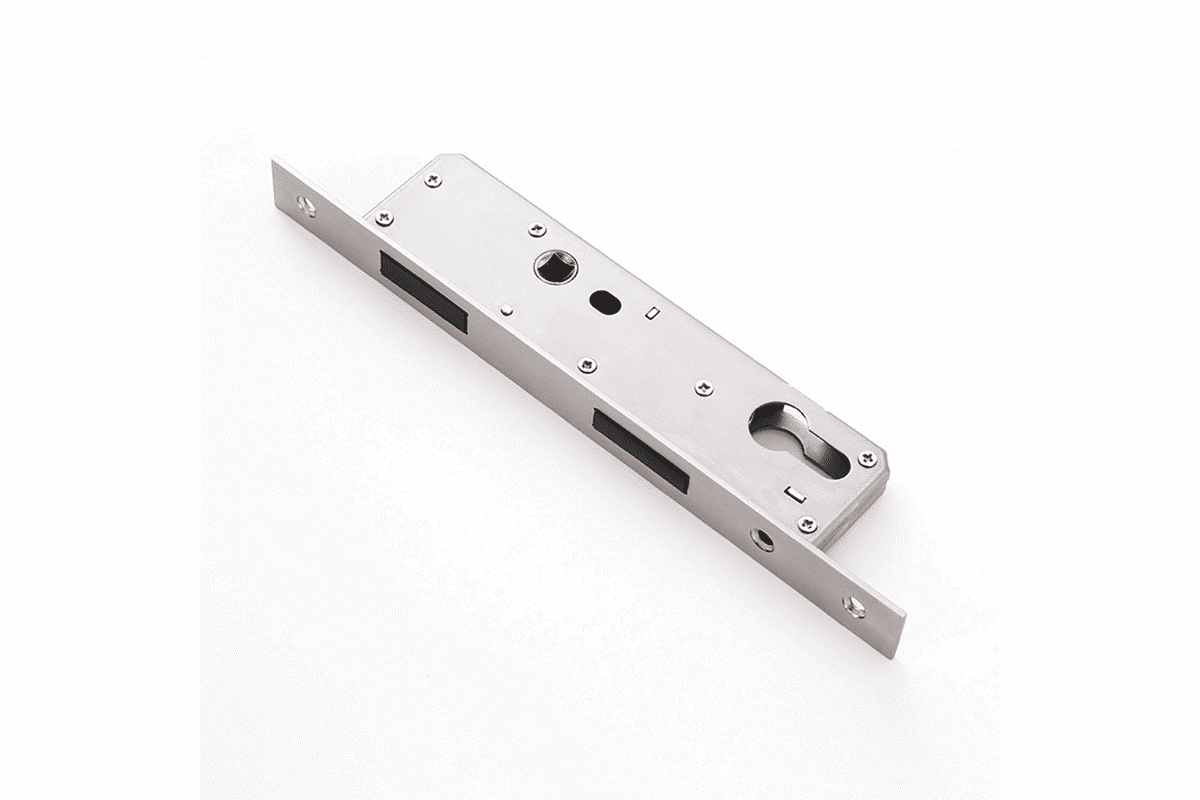
I still identify magnetic and narrow-profile locks as mortise locks when their bodies sit inside the door. I separate them by application, latch style, backset, C-C distance, door material, and matching hardware system.
Magnetic mortise locks are common in many interior door projects now. They often give a cleaner closing feel and a quiet look because the latch can stay hidden until it meets the strike area.10 Many magnetic locks use a single nylon latch. I often see an 85 mm center distance in this category, but I still check the real drawing. These locks may still work with Euro cylinders and lever handles, so the buyer should not classify them only by the cylinder shape.
Narrow-profile mortise locks are another separate group. I usually see them on aluminum doors, PVC frame doors, and slim profile systems.11 These locks need smaller backsets because the frame or stile is narrow. Common backsets can include 20 mm, 25 mm, 30 mm, and 35 mm.12 C-C distances can include 85 mm or 92 mm in many applications, but I always confirm the project drawing and market standard.
| Lock type | What makes it different | Typical points I check |
|---|---|---|
| Standard Euro sash lock | Latch and deadbolt in a wider case | 72 mm C-C, common 55/60 mm backsets |
| Magnetic mortise lock | Magnetic latch action, often interior use | 85 mm center distance, latch material, strike match |
| Narrow-profile lock | Slim case for aluminum or PVC profiles | 20/25/30/35 mm backsets, 85/92 mm C-C |
| Fire-door sash lock | Needs fire-rated door set match | Certificate, test scope, door material, accessories |
I separate these categories early in the purchasing discussion. If I do not separate them, the buyer may choose the wrong handle plate, cylinder length, strike plate, or door machining. The lock may be mortised into the door, but that does not mean it belongs to the same product family.
What matching parts should I confirm before purchasing?
I have seen a correct lock body fail because the cylinder was wrong. I have also seen the handle spindle not match the lock follower.
I confirm the lock body together with the cylinder, lever handle, spindle, faceplate, strike plate, screws, door thickness, opening direction, finish, certificate, and packaging requirement. A mortise lock works as a system, not as one loose part.
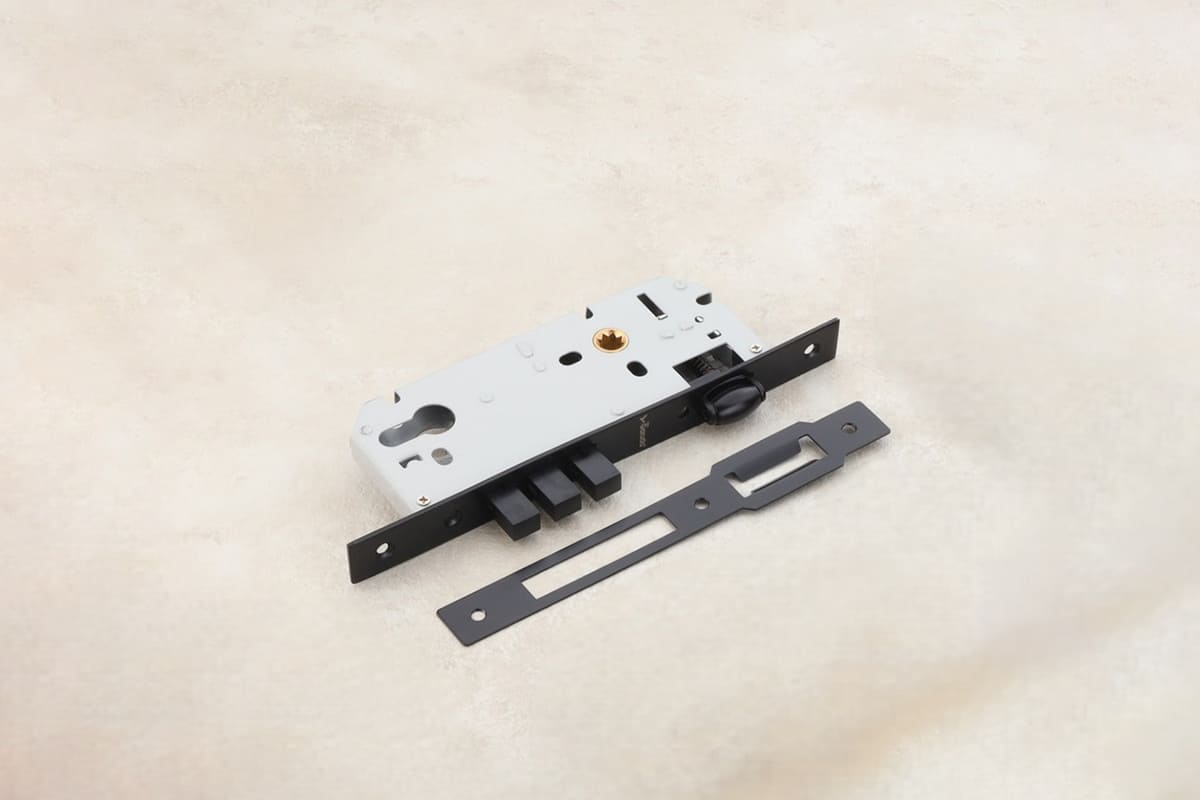
In factory supply, I rarely treat the lock body as a single item. I treat it as the center of a hardware set. The lock body must match the cylinder. The cylinder must have the correct profile, cam type, and length. The handle must match the spindle size and spring support. The escutcheon or plate must line up with the C-C distance. The strike plate must match the latch, deadbolt, door frame, and reveal condition.
I also check the door material. Wooden doors, steel doors, fire doors, aluminum doors, and PVC doors can need different lock cases and accessories. The finish also matters in bulk orders. If the handle, faceplate, hinge, and cylinder finish do not match, the final door set looks inconsistent. Buyers often care about this because their customers judge the whole door by the visible parts.
| Matching item | What I confirm | Risk if I ignore it |
|---|---|---|
| Euro cylinder | Profile, length, cam, key function | Key or deadbolt may not work |
| Lever handle | Spindle size, spring, plate or rose | Handle may sag or not return well |
| Faceplate | Width, length, radius or square end | Door edge may not fit |
| Strike plate | Latch and deadbolt position | Door may not close or lock |
| Screws and accessories | Size, finish, strength | Assembly may be slow or weak |
| Certificate | CE or fire-rated scope when needed | Project approval may fail |
When I prepare B2B orders, I also check carton labels, item codes, finish codes, and batch consistency. This may sound basic, but it helps a warehouse avoid mixed stock. I prefer to confirm all parts before mass production. A clear lock schedule prevents many later disputes.
How do I identify the right mortise lock before I place a bulk order?
I know bulk mistakes are expensive. One wrong C-C distance can affect hundreds or thousands of doors in one shipment.
I identify the right mortise lock for a bulk order by checking the door application, lock drawing, sample, dimensions, function, accessories, finish, certificate needs, and delivery plan before production starts.
When I work with door factories, brand operators, and wholesalers, I follow a simple order review path. First, I ask about the door type. I need to know if the door is wooden, steel, aluminum, PVC, interior, entrance, fire-rated, or project-specific. Then I ask for the drawing. If the drawing is not ready, I ask for a physical sample or a clear dimension sheet.
Next, I check the lock body size and function. I confirm the backset, C-C distance, faceplate, latch direction, deadbolt throw, follower size, and cylinder hole. Then I check the matching handle and cylinder. If the order needs CE or fire-rated documents, I ask the buyer to confirm the target market and exact project requirement. I do not use general claims when a project needs formal approval.
| Step | My check | Buyer benefit |
|---|---|---|
| Door application | Door material, use, thickness | Correct lock family |
| Drawing review | Backset, C-C, case size | Correct machining |
| Function review | Latch, deadbolt, passage, escape | Correct operation |
| Accessory match | Cylinder, handle, strike, screws | Smooth assembly |
| Compliance review | CE or fire-rated scope if needed | Lower approval risk |
| Bulk control | Finish, packing, item code | Stable supply and fewer mistakes |
I also care about lead time and repeat orders. A lock that fits once must fit again in the next batch. This is why I keep product codes, surface finish records, and confirmed drawings. For a buyer, this turns identification into a repeatable purchasing process.
Conclusion
I identify a mortise lock by structure first, dimensions second, and matching parts third. This method helps me avoid wrong sourcing and wrong door machining.
"Mortise lock - Wikipedia", https://en.wikipedia.org/wiki/Mortise_lock. A standard definition describes a mortise lock as a lock installed in a mortise or pocket cut into the door, whereas rim locks are mounted on the door surface. Evidence role: definition; source type: encyclopedia. Supports: A neutral reference should define a mortise lock as fitted into a pocket cut in the door and distinguish a rim lock as surface-mounted.. ↩
"Is There An Electric Strike That Will Work With This Mortise Lock?", https://ipvm.com/discussions/is-there-an-electric-strike-that-will-work-with-this-mortise-lock. Door-hardware references describe the faceplate as the visible edge plate of a mortise lock and the strike plate as the frame-mounted receiver for the latch or deadbolt. Evidence role: mechanism; source type: education. Supports: A technical glossary or educational door-hardware source should support the described roles of the faceplate, latch, deadbolt, and strike plate.. ↩
"55mm Backset / 72mm PZ CE Door Sash Lock Euro Profile Case", https://www.ebay.com/itm/Mortise-Lock-55mm-Backset-72mm-PZ-CE-Door-Sash-Lock-Euro-Profile-Case-/223326671630?_ul=IN. Standards-oriented door-hardware references list 55 mm and 60 mm backsets and 72 mm handle-to-cylinder centres among common European mortise-lock configurations. Evidence role: general_support; source type: institution. Supports: A standards-related reference or institutional technical specification should document that 55 mm or 60 mm backsets and 72 mm centers are common Euro mortise-lock configurations.. Scope note: This supports the dimensions as common configurations, not as universal requirements for all Euro-style locks or projects. ↩
"DIN standards", https://www.sullus.com/glossary/din-standards/. DIN 18251 is a German building-hardware standard for locks and latches, providing standards context for Euro-style mortise-lock specifications. Evidence role: general_support; source type: institution. Supports: An official standards body or institutional source should identify DIN 18251 as a standard covering mortise locks, latches, or related building hardware.. Scope note: The standard establishes a reference framework, but a cited summary may not show that every Euro-style project uses DIN 18251. ↩
"Door Knobs & Backset Explained: Sizes & Measuring", https://www.suffolklatchcompany.com/blogs/news/door-knobs-and-backset-explained?srsltid=AfmBOorCNO3WTbEGKt_PsEpifRDlPFC6EaqN3CUTT4rMGQJgHacN3CJa. Architectural hardware glossaries define backset as the distance from the edge or face of the lock to the centreline of the spindle, keyhole, or cylinder. Evidence role: definition; source type: education. Supports: A door-hardware glossary should define backset as the horizontal distance from the door edge or faceplate to the relevant lock centerline.. ↩
"A Complete Guide to Measuring and Choosing the Right Mortice Lock", https://fornd.com/blog/article/a-complete-guide-to-measuring-and-choosing-the-right-mortice-lock. Door-hardware references define the lock centre distance, often called C-C or PZ distance, as the measurement between the lever-spindle centre and the cylinder centre. Evidence role: definition; source type: education. Supports: A technical hardware source should define center distance, C-C, or PZ distance as the measurement between the lever spindle and cylinder centers.. ↩
"Leading Mortise Lock Manufacturer for Superior Security Solutions", https://www.marchry.com/product/sash-lock-mortise-lock/. Technical descriptions of sash mortise locks identify the lock as combining a latch bolt for handle operation with a deadbolt for key or cylinder locking. Evidence role: mechanism; source type: education. Supports: A technical door-hardware reference should describe sash locks as combining latch and deadbolt functions, typically operated by lever handle and key cylinder.. Scope note: The cited source may describe the common configuration rather than proving that every sash-type mortise lock uses the same vertical bolt order. ↩
"BS EN 179 – Emergency Exit Hardware - HOPPE International", https://www.hoppe.com/in-en/contacts-service/standards/bs-en-179/. Emergency-exit and panic-exit standards such as EN 179 and EN 1125 set performance requirements for door hardware intended to permit egress on escape routes. Evidence role: expert_consensus; source type: institution. Supports: Emergency-exit or panic-exit standards should support the requirement that escape-route door hardware allow rapid egress.. Scope note: The applicable standard depends on jurisdiction, occupancy, and whether the door is classified as an emergency-exit or panic-exit route. ↩
"Panic and Fire Exit Hardware | Fire and Rescue - Fairfax County", https://www.fairfaxcounty.gov/fire-ems/fire-marshal/panic-and-fire-exit-hardware. Fire-door regulations and standards require the door assembly, including latching or locking hardware, to maintain the tested fire rating and to use hardware within the approved listing or certification scope. Evidence role: expert_consensus; source type: government. Supports: A fire-code, government, or standards source should support that fire-door assemblies require tested, listed, or approved hardware compatible with the fire rating.. Scope note: Specific approval language and certification procedures vary by jurisdiction and by the tested door assembly. ↩
"Reliable Magnetic Mortise Lock for Wooden and Steel ...", https://www.camax.cn/what-is-a-magnetic-mortise-lock-and-why-it-is-widely-used-in-modern-interior-door_2215.html. Technical descriptions of magnetic latch locks explain that the latch can remain retracted in the lock body and project when it interacts with the magnetic strike, supporting the mechanism behind a concealed-latch closing action. Evidence role: mechanism; source type: other. Supports: A technical description should support the magnetic-latch mechanism in which the latch is retained or retracted until magnetic interaction with the strike area.. Scope note: Such a source supports the operating mechanism; claims about a cleaner feel or quieter appearance are partly experiential and may not be directly measured. ↩
"elox Narrow Stile Aluminum Door Mortise Deadlatch Lock ...", https://www.amazon.com/elox-Aluminum-Deadlatch-Cylinder-Reversible/dp/B0C9TBWX8M. Technical guides for narrow-stile or profile doors describe reduced-depth mortise locks as hardware used where aluminum, PVC, or slim door profiles leave limited space for the lock case. Evidence role: general_support; source type: education. Supports: A technical door or façade hardware guide should connect narrow-profile locks with aluminum, PVC, or narrow-stile door systems.. Scope note: This supports the typical application context, not the author's frequency statement across all markets. ↩
"ML30 narrow mortise lock with roller latch,20/25/30/35mm backset", https://unityhardware.net/product/ml30-narrow-mortise-lock-with-roller-latch/. Technical specifications for narrow-profile door locks list reduced backsets, including values in the 20 mm to 35 mm range, reflecting the limited stile depth of slim-profile door systems. Evidence role: general_support; source type: institution. Supports: A technical specification or standards-related reference should show that small backsets in the 20-35 mm range are used for narrow-profile locks.. Scope note: The cited source would substantiate these as available or common sizes, but project standards may specify other backsets. ↩