How does a 5 lever mortice lock work?
You sell doors, but lock questions slow decisions. Buyers ask how a 5 lever mortice lock works. Confusion risks wrong specs. I break it down and link it to procurement.
A 5 lever mortice lock uses five spring-loaded levers inside the lock case.1 The correct key lifts each lever to a precise height so all lever gates align. When aligned, the bolt can move to lock or unlock.
I will show how the mechanism works. I will then connect it to checks that protect your orders. I will keep the focus on fit, certification, and batch reliability, not hype.
What happens inside the lock when I turn the key?
You need a clear picture of the internal parts. Without it, you guess at quality. Guessing leads to returns.2 I use factory experience to explain the motion path.
The key turns a bit post or spindle to move the bolt only after the five levers align. The levers each have a gate. The key’s cut heights lift each lever to align all gates. When aligned, the bolt stump passes through, and the bolt slides.
 "title")
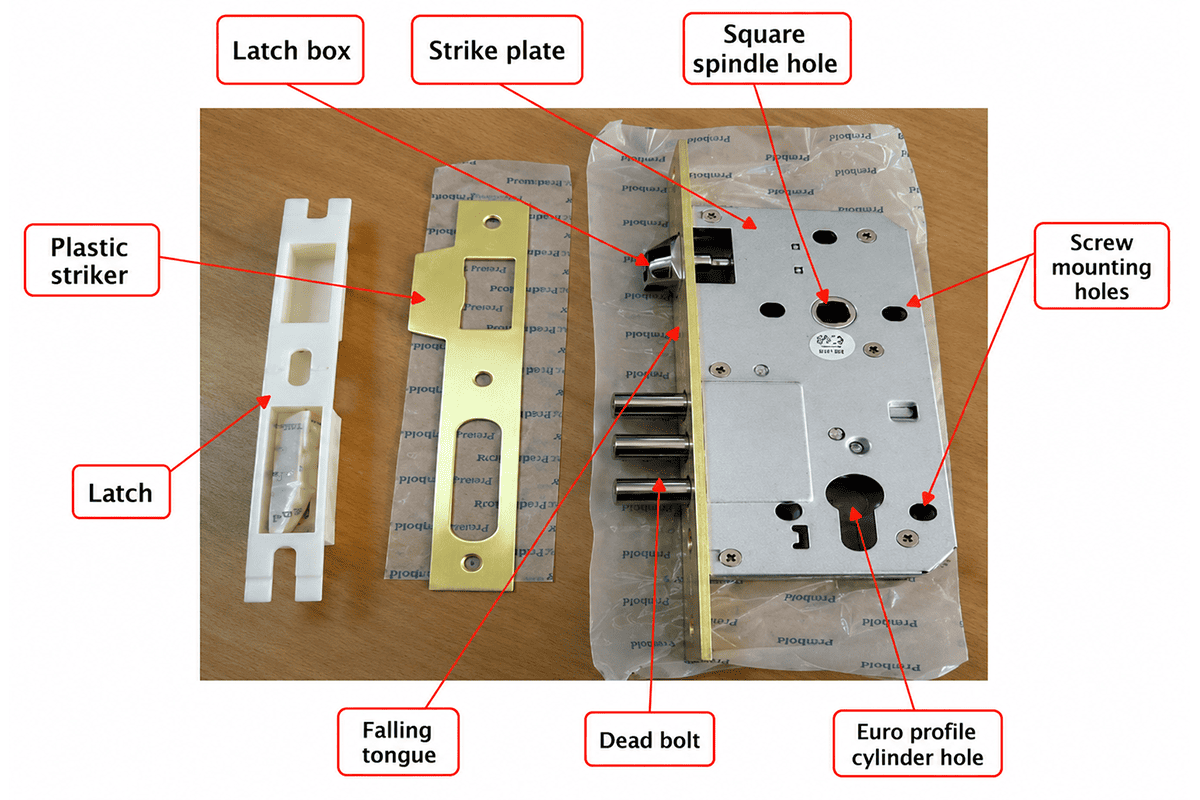
Key parts inside the case
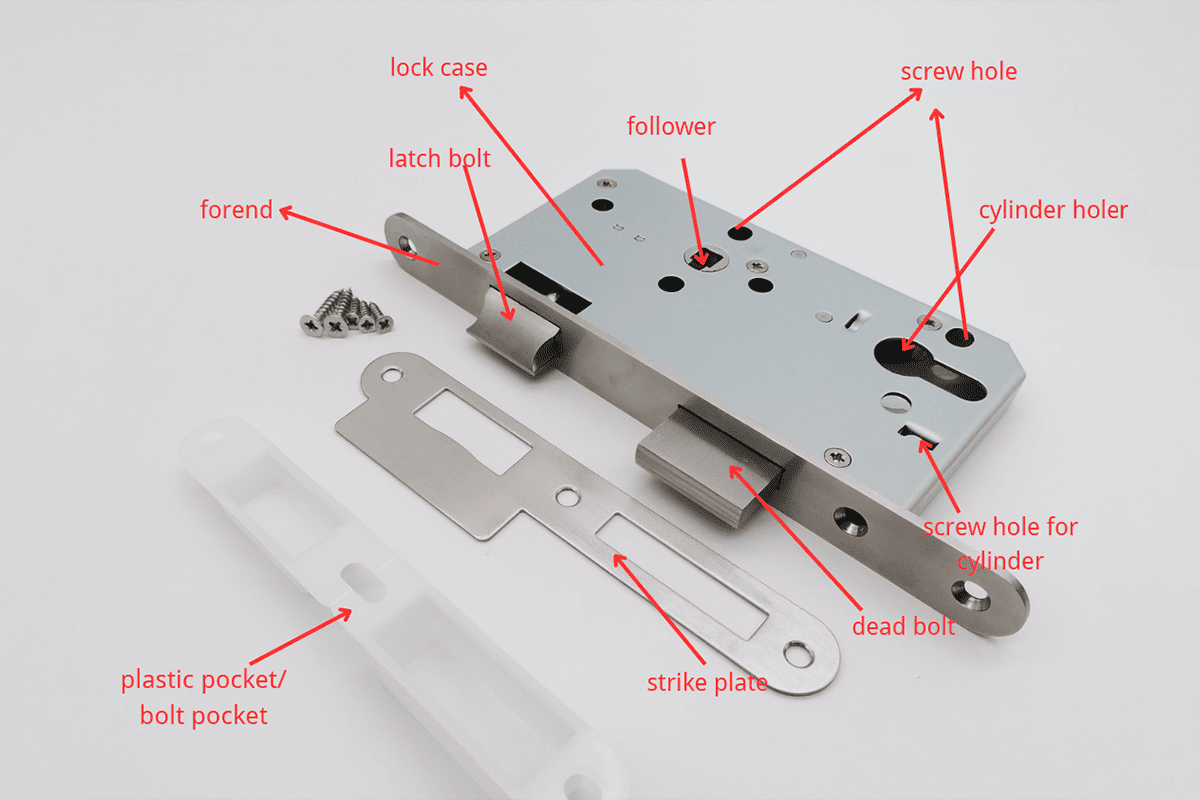
- Case: The metal shell that holds all parts.
- Bolt: The solid piece that projects into the strike.
- Stump: The bolt post that must pass all lever gates.
- Levers: Five plates with gates that rise on the key.
- Springs: Small springs that return each lever.
- Forend and strike: The face plate and the receiving plate.
Sequence of operation
- I insert the key. The key blade enters under the levers.
- I turn the key. The cuts on the key lift each lever to a target height.
- All five lever gates align if the key is correct.
- The stump lines up with the gates. The bolt can move.
- The bolt retracts or projects as I continue the turn.
Tolerances that matter
In production, I check if levers rise smoothly and return fast. I watch for burrs on gates. I test if the bolt moves without stick. Small errors cause drag. In my factory, I feel the lever bounce through the key. A crisp return means good springs. A dull grind means poor finish.
| Part | Check | Why it matters |
|---|---|---|
| Levers | Gate burrs, flatness | Smooth lift and honest alignment |
| Springs | Consistent force | Reliable return and anti-shake |
| Bolt | Straightness, surface | Low friction movement |
| Case | Rigidity | Tolerance holds under load |
| Stump | Diameter match | Clean pass through gates |
Do more levers always mean higher security?
People often think more levers means automatic high security. That sounds simple. It is not. The real result depends on materials, tolerances, case strength, and bolt throw.
More levers add key code complexity. All levers must align to move the bolt. That can help. But weak springs, soft levers, or a thin case can undo the benefit. I treat lever count as one input, not a final grade.3
What the lever count does
Five levers raise the number of possible key profiles. This reduces accidental cross-keying in bulk orders. It also allows more controlled keying plans. In my plant, I use lever coding sheets to plan unique sets. This is helpful for brands and projects that want clear key separation.
What lever count does not do alone
Lever count does not fix a poor case. It does not make soft levers hard. It does not change bolt throw length. It does not add drill resistance. It does not give a certificate. If a buyer only asks for “5 lever,” I ask follow-up questions.
What I measure beyond lever count
I check lever material, usually brass or steel.4 I check heat treatment. I check spring wire quality. I check bolt width and throw. I check forend thickness.5 I check strike reinforcement. I check that the case holds its shape after cycle tests.6
| Factor | Good sign | Risk sign |
|---|---|---|
| Lever count | 5 levers aligned cleanly | Sloppy lift heights |
| Lever material | Brass/steel with clean edges | Soft, bent, or burred levers |
| Bolt throw | 14–20 mm typical, firm | Short throw, wobble |
| Case | Rigid, no rattle | Thin, flex under load |
| Finish | Smooth key feel | Grinding, binding |
Which component is the 5 lever mortice lock in a door set?
Many buyers mix up the parts. This causes wrong orders. I fix this by naming each part and its role in the door.
A 5 lever mortice lock is the internal lock body. It sits in the door edge. It is not a euro cylinder. It is not the handle set. It can be a deadlock or a sashlock.
Deadlock vs sashlock
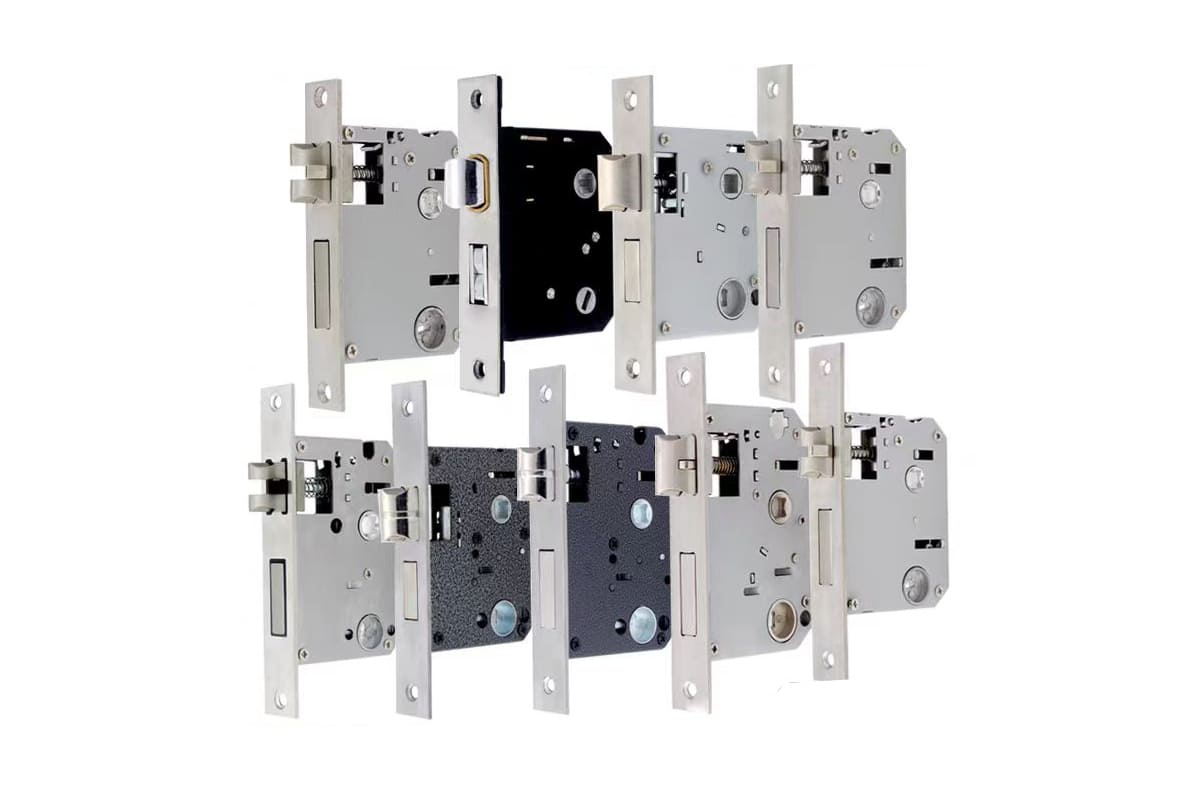
- Deadlock: A bolt only. Uses a key both sides. No latch, no handle spindle.
- Sashlock: A latch plus a deadbolt. The handle operates the latch. The key operates the bolt.
What it is not
- Not a euro cylinder. That is a separate cylinder that goes through a cylinder mortice case.
- Not a lever handle set. Handles and plates pair with the sashlock’s latch spindle.
- Not the full hardware system. You still need hinges, handles or knobs, strike, and accessories.
Key dimensions that drive fit
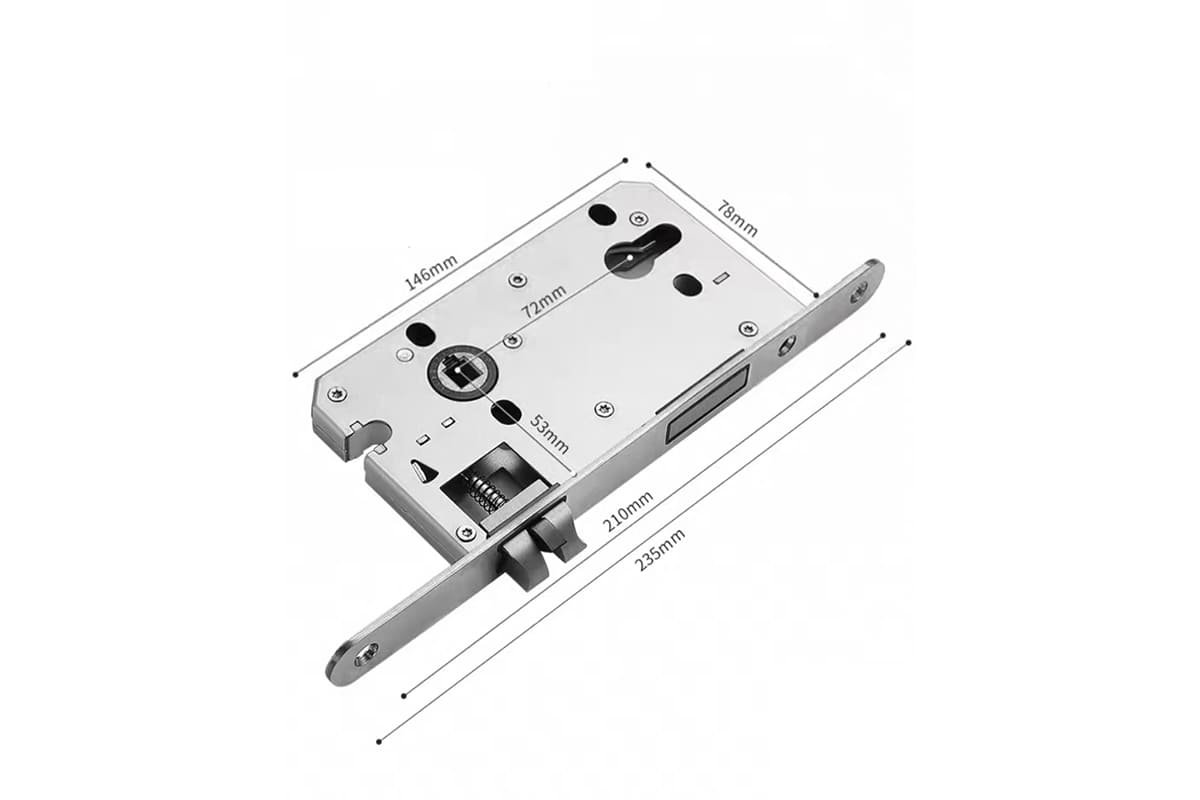
I confirm the backset, case size, forend size, and, for sashlocks, the centers (distance from handle spindle to keyhole). I keep the door thickness and stile width in mind. I check the strike box size on the frame.
| Component | Role | Typical checks |
|---|---|---|
| 5 lever mortice lock body | Internal mechanism | Backset, case size, forend |
| Handle set (sashlock) | Operates latch | Centers, spindle size |
| Escutcheon | Covers keyhole | Plate size, screw positions |
| Strike plate | Receives bolt | Box depth, alignment |
| Hinges | Support door weight | Load rating, fire rating |
How do I evaluate a 5 lever lock before a bulk order?
A sample can look fine. A batch can vary. I use a simple process to cut risk. I link mechanism checks to procurement steps.
I start with a hands-on test. I then measure key sizes and case sizes. I confirm certificates, and I match the exact model to the paperwork. I end with packaging and labeling checks for traceability.
Functional checks
I insert the key and turn it ten times. I feel for a smooth lift and a firm stop. I check that each lever resets fast. I push and pull the bolt to check side play. I check latch action on sashlocks with a handle. I check noise. A dull scrape tells me something is off.
Dimensional checks
I measure backset, case depth, forend length and width, and centers on sashlocks. I compare to your door prep drawings. I check that screw holes and strike positions match.7 For cross-border orders, I confirm metric or imperial listings match the actual part.
Compliance checks
I ask for CE and fire-rated files if the project needs them. I check the exact model number on the lock, not just the family series. I confirm test scope, door leaf type, and orientation. I avoid mixing certified and non-certified variants in one batch.8
| Check item | Method | Why it matters |
|---|---|---|
| Lever action | Cycle by key | Smooth, repeatable operation |
| Bolt stability | Wiggle test | Less play, better feel, longer life |
| Backset | Caliper | Fit to door prep and handle line |
| Centers (sashlock) | Measure spindle-to-key | Handle and escutcheon alignment |
| Certificates | Verify model/label | Project access and legal compliance |
| Packaging | Inspect labels and codes | Traceability and after-sales control |
My factory-side rule
I match samples to mass production. I pull from line output and not only from the sample room. I watch assembly. I check that lever packs, springs, and bolts from different bins still fit within tolerances. This stops surprises after shipping.
Where should I use a 5 lever mortice lock in projects?
The 5 lever mortice lock is common on external doors in some markets. But one market’s norm is not a rule everywhere. I always map use to local standards.
Use cases depend on the door type, the project level, and the needed certificates. I choose based on the door leaf, the fire door plan, and regional rules. I do not label any lever lock as “high security” by itself.
Typical applications
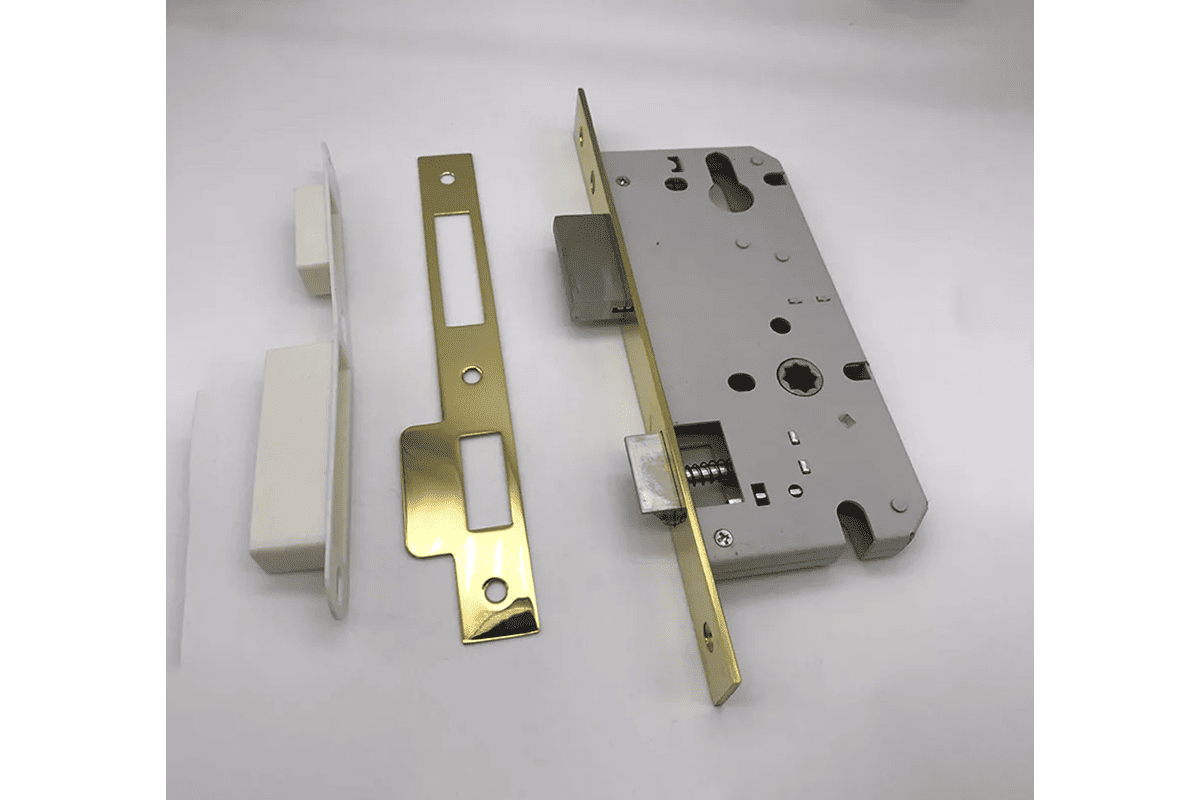
- External timber doors in markets that specify 5 lever deadlocks or sashlocks.
- Internal doors that need a deadbolt without a cylinder system.
- Retrofit jobs where existing prep suits lever cases.
Points to confirm first
I confirm if the project requires CE or fire-rated locks.9 I check if the insurer or client demands a named standard. I align hardware finishes across hinges, handles, and strikes. I match the strike box to the frame. I check door thickness and stile limits.
Fit, performance, and compliance
I do not mix lever locks with euro cylinder hardware without design review. The handle and keyway positions differ. I avoid false assumptions.10 I ask for the project spec, then offer the right case, forend, and strike set.
| Scenario | Good choice | Checks before order |
|---|---|---|
| External timber door | 5 lever deadlock or sashlock | Standard, fire needs, bolt throw |
| Internal office door | 5 lever sashlock | Centers, handle set, latch feel |
| Fire door set | Certified model only | Exact model on certificate |
| Retrofits | Match existing cut-out | Backset and case depth |
| Mixed finishes | Same plating for all parts | Finish code consistency |
Conclusion
A 5 lever mortice lock works by aligning five lever gates with the right key. I judge it by mechanism, fit, materials, and certifications, then confirm batch consistency.
"Mortise lock - Wikipedia", https://en.wikipedia.org/wiki/Mortise_lock. A 5 lever mortice lock operates using five levers that must align for the bolt to move, as detailed in various locksmithing resources. Evidence role: definition; source type: encyclopedia. Supports: the basic operational mechanism of a 5 lever mortice lock. Scope note: The source provides a general overview and may not cover all specific designs or variations. ↩
"The Real Impact of Returns & The Top Ways to Stop Them", https://www.ecommercechris.com/the-real-impact-of-returns-the-top-ways-to-stop-them/. Research indicates that miscommunication regarding product specifications significantly increases return rates in various industries. Evidence role: statistic; source type: paper. Supports: the relationship between incorrect product specifications and return rates. Scope note: The study may focus on broader categories and not specifically on locks or hardware. ↩
"What factors influence the security of a front door lock?", https://diy.stackexchange.com/questions/72247/what-factors-influence-the-security-of-a-front-door-lock. Experts agree that while lever count contributes to security, factors such as material quality and design are equally important. Evidence role: expert_consensus; source type: research. Supports: the complexity of factors affecting lock security beyond just lever count. Scope note: The consensus may vary based on different security contexts and lock types. ↩
"Systematic review of the effect of insertion torque on locking screw ...", https://pubmed.ncbi.nlm.nih.gov/41770050/. Studies show that the choice of materials, such as brass or steel, significantly impacts the durability and functionality of lock mechanisms. Evidence role: mechanism; source type: paper. Supports: the influence of lever material on the performance and longevity of locks. Scope note: The findings may not apply universally to all lock designs or applications. ↩
"Steel Thickness Matters: The Outside-In Approach to Security", https://deansafe.com/blogs/news/steel-thickness-matters-the-outside-in-approach-to-security?srsltid=AfmBOoqwx7SavQTkTEO4eJgeFIEhhFaO7n4TL-v897Rp31zDtHvvQadr. Studies suggest that forend thickness is a critical factor in determining the security and operational reliability of locks. Evidence role: mechanism; source type: paper. Supports: the role of forend thickness in enhancing lock security and functionality. Scope note: The research may focus on specific types of locks and not cover all variations. ↩
"Case Integrity Unit | Broome County", http://broomecountyny.gov/security/ciu. Research indicates that the structural integrity of lock cases is essential for ensuring reliable performance and longevity. Evidence role: mechanism; source type: research. Supports: the significance of maintaining structural integrity in lock cases for optimal performance. Scope note: The findings may be based on specific testing conditions and may not apply universally. ↩
"Tips for aligning holes with screws in wood - Facebook", https://www.facebook.com/groups/officialibanezguitargroup/posts/1145886240277778/. Experts emphasize that misalignment of screw holes and strike positions can lead to installation failures and compromised lock functionality. Evidence role: expert_consensus; source type: education. Supports: the necessity of proper alignment in lock installation for optimal performance. Scope note: The consensus may vary based on different types of locks and installation contexts. ↩
"TSCA Requirements for Importing Chemicals | US EPA", https://www.epa.gov/tsca-import-export-requirements/tsca-requirements-importing-chemicals. Case studies highlight that mixing certified and non-certified locks can lead to significant compliance and safety issues in construction projects. Evidence role: case_reference; source type: education. Supports: the risks associated with mixing certified and non-certified locks in a project. Scope note: The examples may not cover all types of locks or scenarios. ↩
"CE Marking - International Trade Administration", https://www.trade.gov/ce-marking. Regulatory guidelines specify that certain locks must meet CE marking and fire safety standards to ensure compliance in construction projects. Evidence role: general_support; source type: government. Supports: the necessity of compliance with CE marking and fire-rated standards in construction projects. Scope note: The regulations may vary by region and specific project requirements. ↩
"Best Practices Procurement & Lessons Learned Manual (Report 0105)", https://www.transit.dot.gov/funding/procurement/third-party-procurement/best-practices-procurement-manual. Case studies show that assumptions in procurement processes often lead to costly errors and misordered products. Evidence role: case_reference; source type: paper. Supports: the potential errors that can arise from making assumptions in procurement. Scope note: The examples may not specifically address locks or hardware. ↩