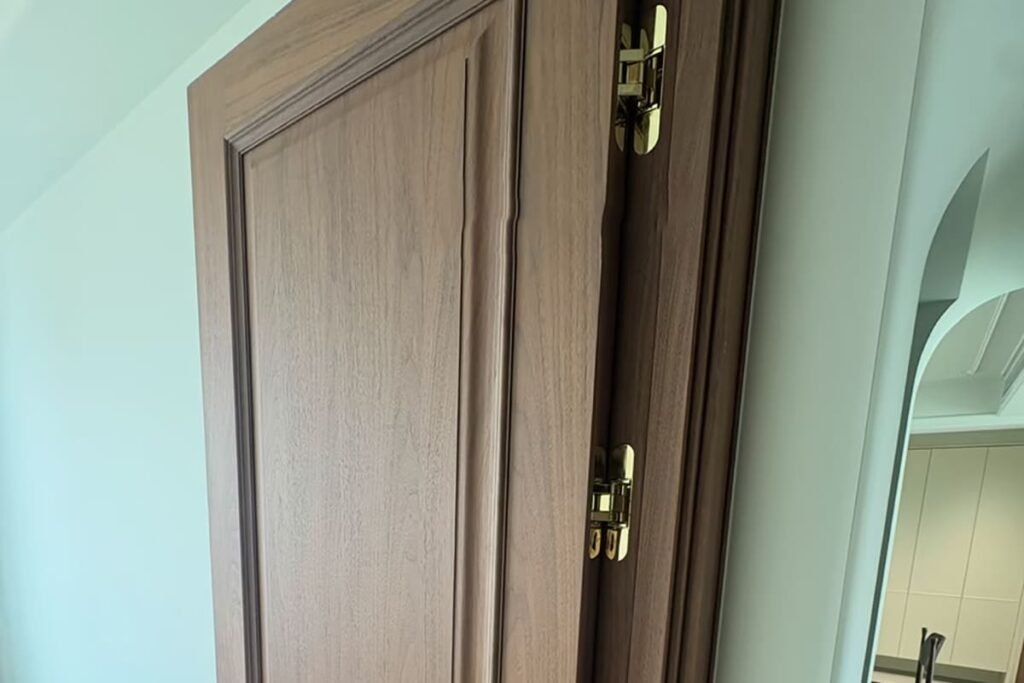
Exposed hinges can break a clean door design. They can also create alignment problems after installation. I see buyers lose time when hinge selection is unclear.
I use concealed door hinges to hide hinge barrels when the door is closed and to support clean door design, precise gap adjustment, smoother closing on selected models, and safe long-term performance when the hinge matches door weight, thickness, opening angle, and site conditions.
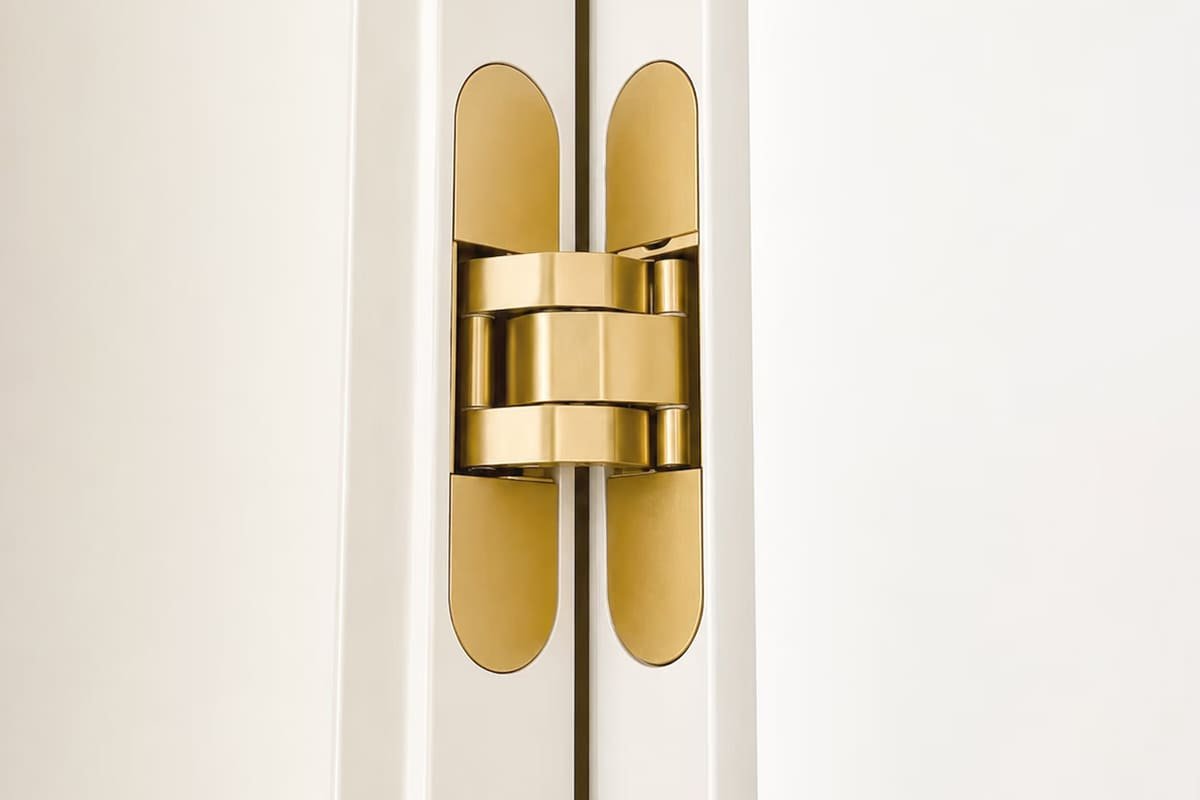
Many buyers first ask me what concealed door hinges are used for. I usually answer with a simple point. A concealed hinge is not only a hidden part. It is part of the whole door system. It affects the look, the door gap, the closing feel, the load support, and the long-term service result. I have seen many product managers choose a hinge only by its appearance. I have also seen installers struggle because the hinge did not match the door thickness or weight. So I prefer to explain the usage from the door system side, not from the catalog page only.
Why Do Concealed Door Hinges Improve Door Appearance?
A visible hinge can look acceptable on many doors. It can also weaken a clean design. I meet this issue often in premium door lines.
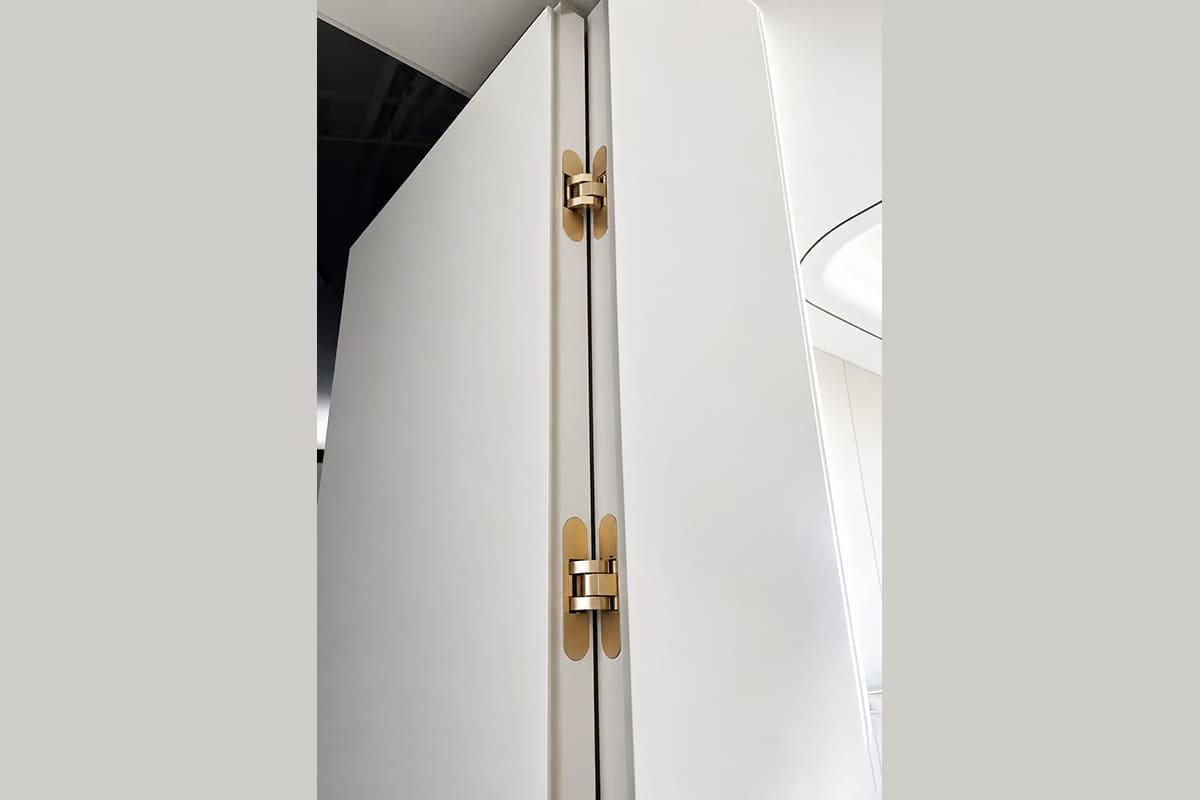
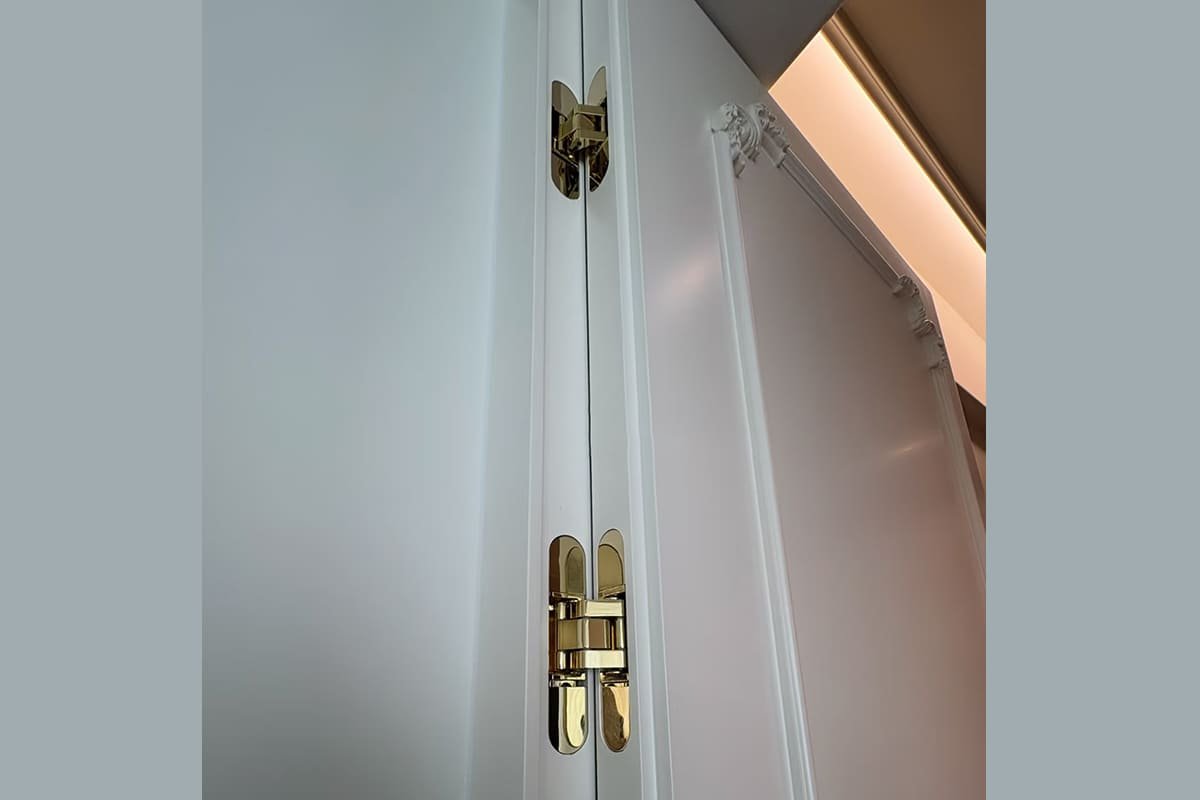
I use concealed hinges when the door needs a smooth closed surface, hidden hardware, and better visual integration. They are common for invisible doors, modern interior doors, hotels, apartments, and higher-positioned product lines.1
Where the appearance value comes from
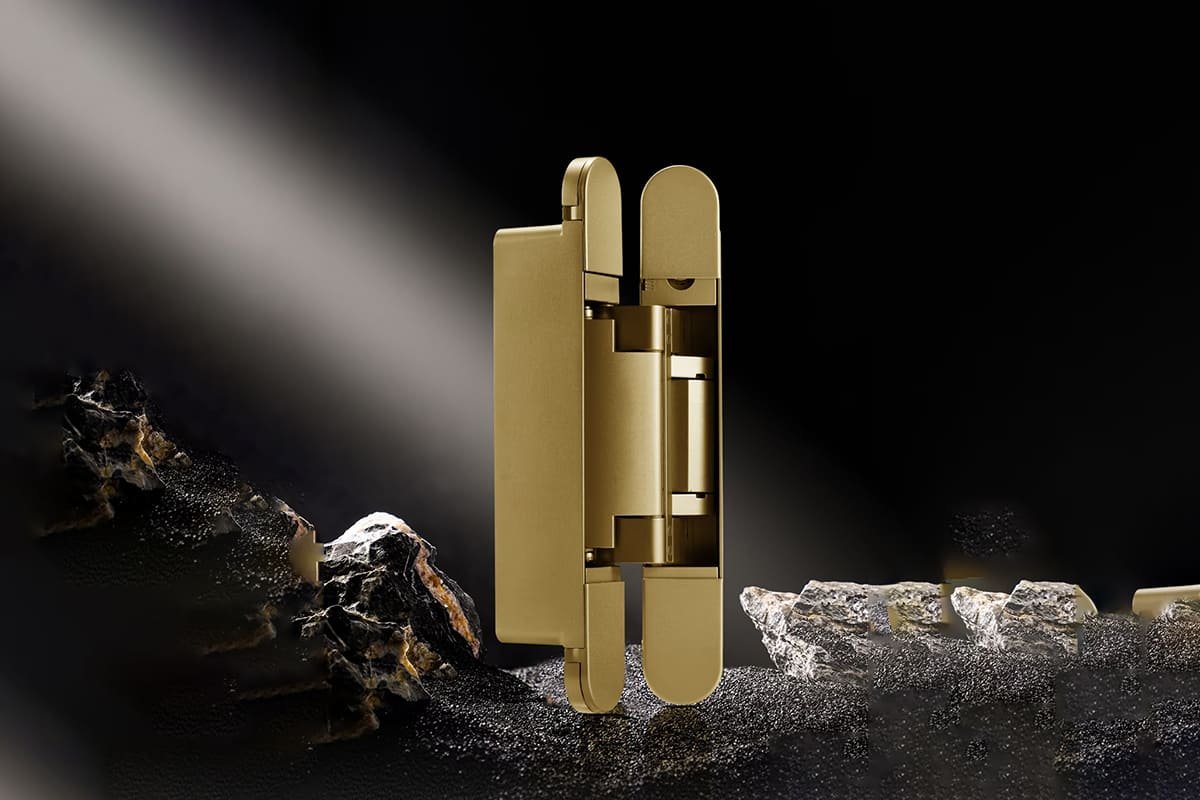
When the door is closed, a concealed hinge stays inside the door leaf and frame. The outside face does not show a hinge barrel.2 This helps the door match modern design styles. It also helps hardware brands create a more premium product series. I often explain this to buyers who sell both standard doors and higher-end doors. The concealed hinge is not needed for every door. A butt hinge can still be the better choice for simple cost-focused doors. But when the door design depends on clean lines, the hidden hinge gives real value.
Common appearance uses
| Door type or market use | Why I consider concealed hinges |
|---|---|
| Invisible doors | The hinge supports the hidden-door visual effect |
| Modern interior doors | The door surface looks cleaner when closed |
| Hotel and apartment doors | The hardware looks more refined in batch projects |
| Premium retail door lines | The product can be positioned at a higher level |
| Customized doors | The hinge can match special design needs if the model fits |
I also remind buyers to check the full visual result. The hinge is hidden only when the door is closed. The door gap, frame design, lock body, handle, and surface finish still affect the final look. A concealed hinge can help the appearance, but it cannot fix a poor door structure.
How Do Concealed Door Hinges Help Door Factories During Installation?
A small installation error can become a big after-sales issue. I have seen doors rub, gaps shift, and closing positions change after assembly.
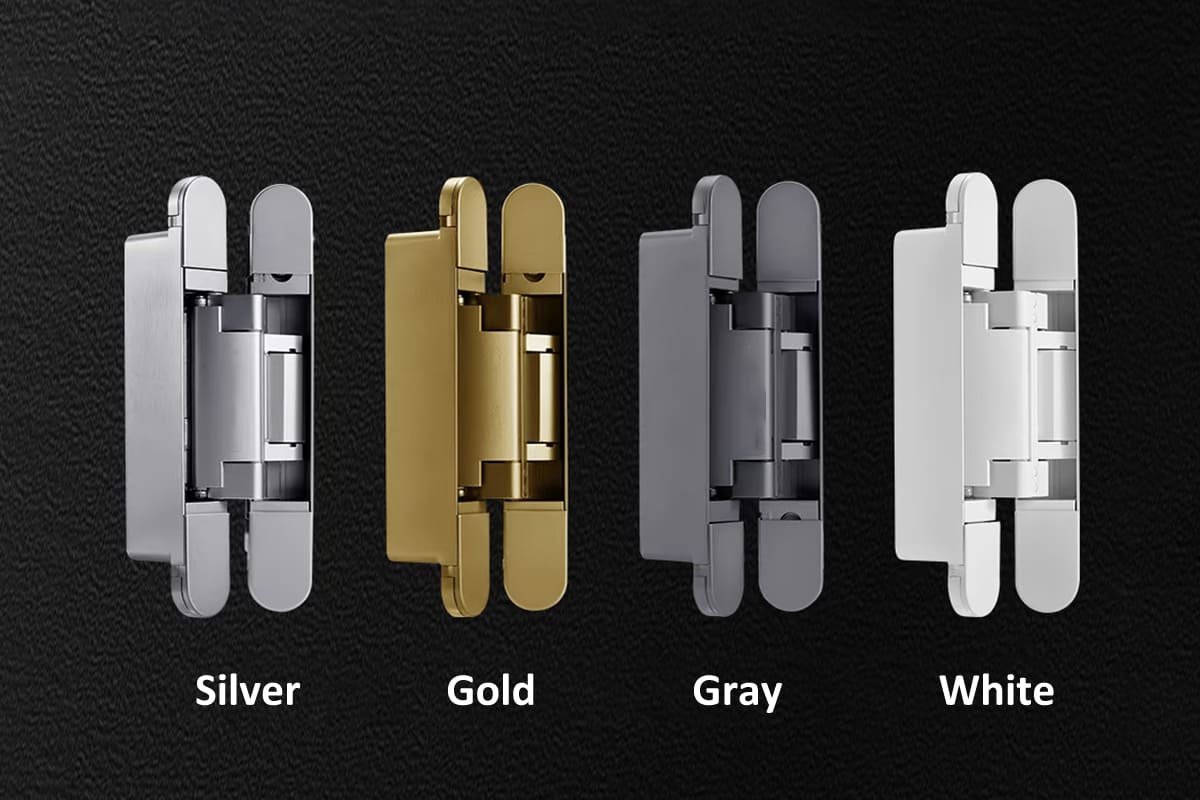
I value concealed hinges with three-dimensional adjustment because they help installers fine-tune the door after mounting. This can improve the door gap, side alignment, height position, and closing fit, based on the specific hinge model.
Why adjustment matters in production
Door factories work with real materials, not perfect drawings. The door leaf may have small tolerance changes. The frame may also have small size changes.3 The wall condition at the project site may create more problems. A hinge with 3D adjustment can help the installer correct these small issues after installation.4 I see this as one of the most practical uses of concealed door hinges in B2B supply.
What 3D adjustment usually supports
| Adjustment direction | Practical purpose |
|---|---|
| Up and down | I use it to correct door height and floor gap |
| Left and right | I use it to improve side gaps and frame alignment |
| In and out | I use it to adjust door flushness and closing position |
Not every concealed hinge has the same adjustment range. Some models have more flexible adjustment. Some models have a simpler structure. So I always ask buyers to confirm the door thickness, frame structure, milling depth, and installation method before ordering. The installation team also needs clear drawings. A good hinge can still perform badly if the door factory cuts the pocket in the wrong position.
When Do Concealed Door Hinges Add Smoother Closing?
A loud door can reduce the value of a good door product. I hear this complaint more in apartments, hotels, and office projects.
Some concealed hinges include hydraulic damping or soft-closing functions. I use these models when quieter and softer closing is required, but I always confirm the function by model because not every concealed hinge has damping.
What damping can do
Hydraulic damping can slow down the final closing movement. This can reduce impact noise.5 It can also improve the user feeling when the door closes. I do not describe this as a standard function for all concealed hinges. I only treat it as a model-dependent feature. Some concealed hinges are made mainly for hidden installation and load support. Some models add damping. Some models need a separate door closer or other hardware to control the closing action.
How I explain the choice to buyers
| Buyer requirement | Hinge direction I would check |
|---|---|
| Quiet closing | I check whether the model has damping |
| Heavy door leaf | I check load rating before damping preference |
| Fire-rated door system | I check the whole door hardware requirement first |
| Simple interior door | I may choose a non-damping concealed hinge |
| Premium apartment door | I may consider damping if the test and structure fit |
The most important point is matching. A damping hinge that does not fit the door weight or thickness can create problems. It may close poorly. It may wear faster. It may also increase cost without real market value. So I treat smoother closing as one possible use, not the only reason to use concealed door hinges.
How Should I Match Concealed Hinges With Door Weight And Thickness?
A hinge that looks strong in a photo may fail in the wrong door. I see this mistake when buyers skip technical confirmation.
I match concealed door hinges by door weight, door thickness, opening angle, frame structure, and hinge quantity. Load capacity can range widely by model, material, and test condition, so I never treat one number as universal.
Why load matching is critical
A concealed hinge carries the door leaf from inside the frame and door edge.6 This structure must match the door design. If the door is too heavy for the hinge, the door may sag. The gap may change. The latch may not enter the strike plate smoothly.7 The end user may blame the door factory or brand, even when the first mistake was hinge selection. I have handled many inquiries where the buyer asked for a lower price first. I still ask about the door weight and thickness before I recommend a model.
Key selection items
| Selection item | Why I check it |
|---|---|
| Door weight | The hinge must support the load safely |
| Door thickness | The hinge body needs enough installation space |
| Door height and width | Larger doors may need stronger hinges or more hinges |
| Opening angle | The hinge must match the required swing angle |
| Door material | Solid wood, steel, aluminum, and composite doors load hinges differently |
| Frame structure | The pocket depth and screw position must fit the hinge design |
Some concealed hinge ranges may support loads such as 40 kg to 200 kg, but this depends on the specific model, hinge quantity, material, and test condition.8 Zinc alloy, stainless steel, and other materials can all be used in different product designs. I do not choose by material name only. I choose by structure, verified specification, finish need, and real door application.
Why Do Finish And Corrosion Resistance Matter In Bulk Orders?
A good sample can still become a bad shipment if the finish is not stable. I pay close attention to this in repeat orders.
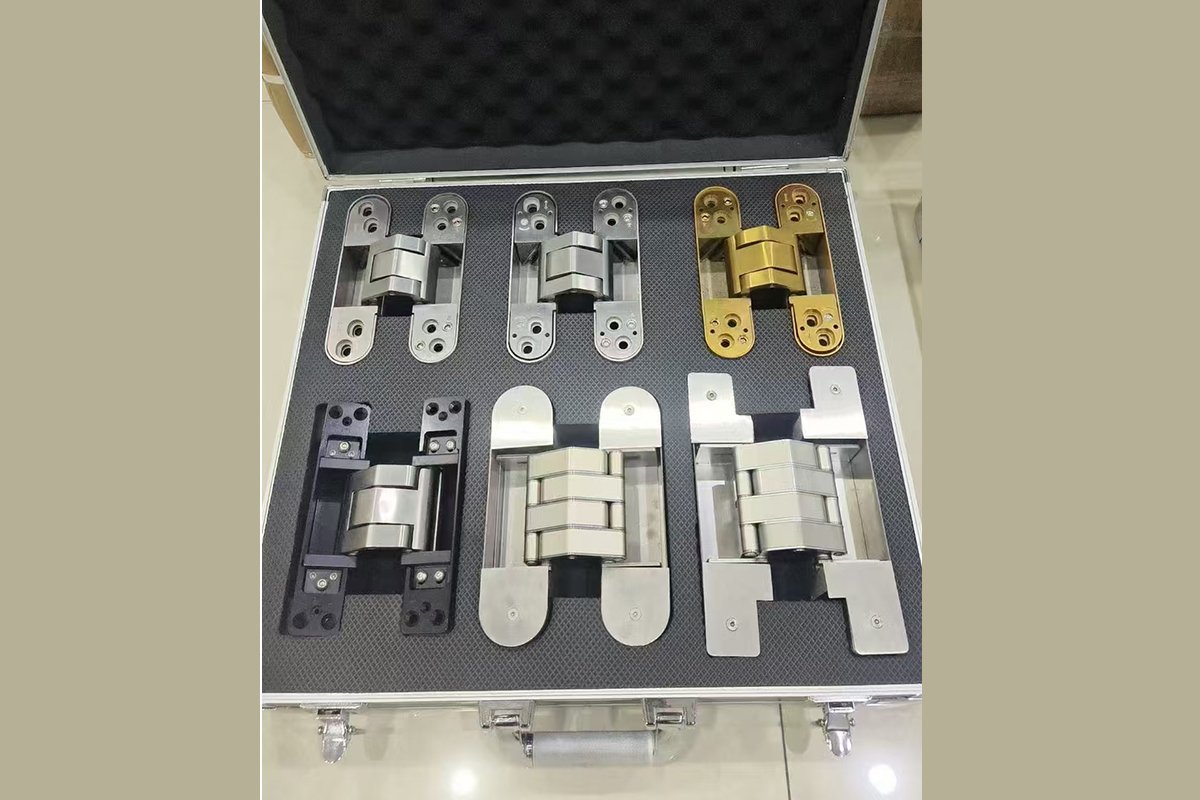
I use finish and corrosion resistance checks to control batch consistency, market acceptance, and long-term appearance. Electroplated zinc alloy or other treated surfaces can perform well when the process matches the target environment and specification.
Why surface finish is not only about color
For door factories and hardware brands, the hinge finish affects both appearance and trust. Even if the concealed hinge is hidden when the door closes, the hinge is still visible when the door opens. A rough surface can make the product feel low grade. An uneven batch color can create complaints in wholesale channels. A weak surface treatment can also cause corrosion problems in humid areas.9 I often see Middle East, Europe, and Southeast Asia buyers ask different finish questions because their market conditions are not the same.
What I normally confirm before bulk production
| Finish factor | Practical reason |
|---|---|
| Color standard | I need the batch to match the approved sample |
| Surface treatment | I check if electroplating or other treatment fits the requirement |
| Corrosion resistance | I match the product to the target environment |
| Visible surface quality | I check scratches, burrs, and coating defects |
| Packaging protection | I reduce rubbing during transport and storage |
Corrosion resistance is also model-dependent and process-dependent. A zinc alloy concealed hinge with electroplated finish can be a suitable choice for many interior door systems, but it still needs the right treatment and quality control.10 I do not tell buyers that one finish solves every climate. I ask where the product will be sold and how the door will be used.
How Do Concealed Hinges Affect Safety And Procurement Risk?
A small exposed part can become a weak point in some door designs. I treat safety as one part of the total selection process.
Concealed hinges reduce exposed hinge parts when the door is closed. They can make tampering harder and reduce snagging risks, but I do not present them as a complete anti-theft solution by themselves.11
What safety benefit is realistic
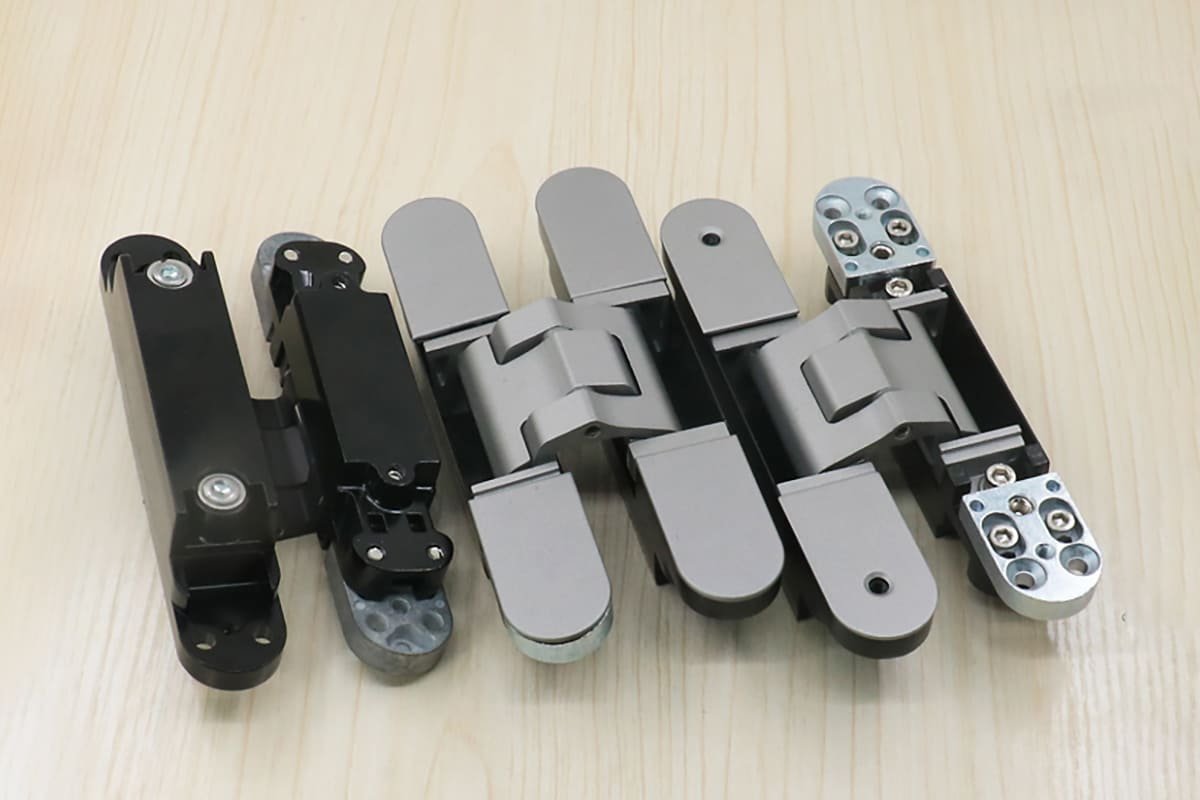
When a concealed hinge is installed correctly, the hinge body is hidden between the door and frame when closed. This reduces external protrusions. It also reduces exposed removable parts compared with some visible hinge applications. This can help in certain doors where a cleaner and less exposed structure is preferred. But safety depends on the whole door system. The lock, cylinder, frame, screws, door material, and installation quality all matter. I do not like exaggerated claims because they create wrong expectations for buyers and end users.
Where procurement risk appears
| Risk point | How I control it |
|---|---|
| Wrong hinge model | I confirm door weight, thickness, and opening angle |
| Poor installation fit | I provide drawings and ask for pocket size confirmation |
| Unstable finish | I confirm sample color and batch surface standard |
| Missing function | I confirm if damping or 3D adjustment is required |
| Wrong market positioning | I compare cost, function, and target door line |
| Weak supply plan | I confirm batch quantity and delivery schedule early |
For B2B buyers, concealed door hinges are also a supply chain decision. A factory may need the same model for a long period. A brand may need stable finish and packaging. A wholesaler may need a product range that is easy to explain to local customers. I see the best results when the buyer treats the hinge as part of a full door hardware package, not as a small accessory bought only by price.
Are Concealed Door Hinges Always Better Than Butt Hinges?
A wrong upgrade can increase cost without improving the door. I often remind buyers that hidden hardware is not always the best choice.
Concealed hinges are better for suitable door systems that need hidden installation, adjustment, or premium design. Butt hinges can still be better for simple doors, lower budgets, easier replacement, or traditional hardware positioning.
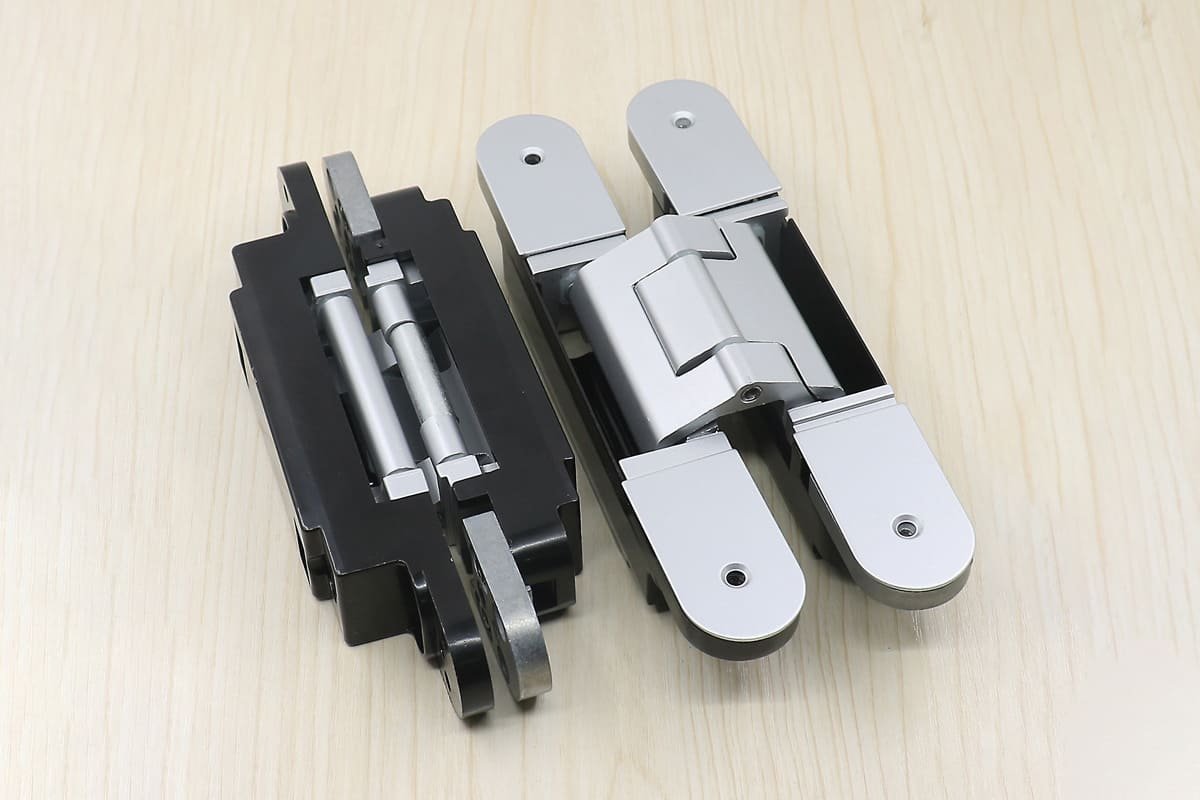
How I compare both hinge types
I do not sell concealed hinges by saying they are always better. That would not be honest. A butt hinge is simple, familiar, and cost-effective. It is easy for many installers to understand.12 It can be the right choice for standard doors and price-sensitive product lines. A concealed hinge has stronger value when the door design needs hidden hardware, fine adjustment, or a premium visual result. It may also require more accurate machining. The factory must be ready for this.
Simple comparison for buyers
| Decision factor | Concealed hinge | Butt hinge |
|---|---|---|
| Appearance when closed | Hidden | Visible |
| Installation machining | More exact pocket work | Usually simpler |
| Adjustment | Model-dependent, often stronger on 3D models | Usually limited |
| Cost level | Often higher | Often lower |
| Product positioning | Modern and premium door lines | Standard and traditional door lines |
| Replacement familiarity | May need trained installer | Usually easier in many markets |
I advise buyers to choose based on the door line. If the door is a premium interior door, concealed hinges may support the brand value. If the door is a budget project door, a good butt hinge may be more practical. The right hinge is the hinge that fits the door, the factory process, the market price, and the after-sales plan.
Conclusion
I use concealed door hinges for hidden design, better adjustment, selected soft closing, safe fitting, and stable door performance when the model matches the real door system.
"Frameless doors with hidden hinges - United Porte", https://unitedporte.us/doors/interior-doors/hidden-door?srsltid=AfmBOoqnKQrJcjnU9QBuBenHBb8mMfIMJrB_o1QsmBfn9iak4MI70iOV. Architectural hardware guidance describes concealed hinges as appropriate for flush or minimalist door designs where visible hardware is to be reduced; this provides contextual support for their use in modern and premium interior applications, though it does not quantify adoption by market segment. Evidence role: general_support; source type: institution. Supports: An architectural or building-hardware source should show that concealed hinges are specified for flush, minimalist, or hidden-door designs in interior applications.. Scope note: The source would likely support typical applications, not prove frequency across hotels, apartments, or all premium door lines. ↩
"Hinge - Wikipedia", https://en.wikipedia.org/wiki/Hinge. A general architectural-hardware reference defines concealed hinges as hinges whose working parts are recessed into the door and frame so that the hinge is not visible on the closed face; this supports the descriptive definition rather than any performance claim. Evidence role: definition; source type: encyclopedia. Supports: A neutral reference should define a concealed hinge as a hinge designed to be hidden from view when the door or panel is closed.. Scope note: The source would support the hinge type and visual effect, not the quality of any particular hinge model. ↩
"[PDF] STANDARD STEEL DOORS AND FRAMES", https://www.plu.edu/construction/wp-content/uploads/sites/128/2014/10/div-008.pdf. Door and frame standards specify allowable dimensional tolerances for manufactured leaves and frames, supporting the statement that real assemblies can vary from nominal drawings; the citation would establish tolerance practice rather than diagnose any specific installation problem. Evidence role: expert_consensus; source type: institution. Supports: A door, frame, or architectural-woodwork standard should document permitted dimensional tolerances for door leaves and frames.. Scope note: Tolerance values differ by material, standard, and product category. ↩
"How to Adjust in 3D - Tectus Hinges", https://www.tectushinges.com/how-to-adjust-in-3d. Technical descriptions of three-dimensionally adjustable hinges identify post-installation adjustment in vertical, lateral, and depth directions, supporting the claim that such hinges can correct minor alignment deviations; this does not guarantee correction of major structural or machining errors. Evidence role: mechanism; source type: other. Supports: A technical source should describe 3D adjustable hinges as allowing adjustment in height, side clearance, and depth or compression after mounting.. Scope note: Adjustment range and method depend on the specific hinge design. ↩
"Why is my door slamming? Adjust your door closer - YouTube",
. Mechanical-engineering sources describe hydraulic damping as dissipating kinetic energy and reducing closing velocity, which supports the claim that damped door hardware can reduce final impact and associated noise; the degree of noise reduction depends on door mass, latch design, and installation. Evidence role: mechanism; source type: research. Supports: A mechanical or building-services source should explain that hydraulic damping dissipates motion energy and reduces closing speed, which can lower impact at the end of travel.. Scope note: The source would support the mechanism generally, not measured sound reduction for the article's specific hinge models. ↩"Concealed Hinge | Innovative Door Hardware | Sugatsune", https://www.sugatsune.com/hes-concealed-hinge-line/?srsltid=AfmBOopzdtDYepOckZUExdCafMvsbcwt_6mCAB8JWkbgnkyiQDnR2B1W. Architectural-hardware installation references describe concealed hinges as recessed into prepared pockets in the door and frame, supporting the statement that the hinge carries the door through internal edge-and-frame connections; this does not address the load capacity of any individual product. Evidence role: mechanism; source type: institution. Supports: A hardware or construction reference should show that concealed hinges are installed in recesses or pockets in the door edge and frame.. Scope note: Installation geometry varies by hinge family and door construction. ↩
"Easy Fix For Sagging Doors - YouTube",
. Door-hardware maintenance guidance links inadequate hinge support or hinge wear with door sag and latch-strike misalignment, supporting the claim that hinge load selection affects gaps and closing function; it does not prove that every sagging door is caused by undersized hinges. Evidence role: mechanism; source type: institution. Supports: A door-hardware or building-maintenance source should explain that inadequate hinge support can cause door sag and misalignment with the frame or strike plate.. Scope note: Sagging can also result from frame movement, screw withdrawal, humidity, or poor installation. ↩"[DOC] Section 08 71 00 - Door Hardware", https://www.vendorportal.ecms.va.gov/FBODocumentServer/DocumentServer.aspx?DocumentId=796073&FileName=VA259-13-R-0534-A00003003.doc. Hinge performance standards such as EN 1935 and ANSI/BHMA classify hinges by test criteria including door mass and durability, supporting the broader point that load capacity is rating-dependent; these standards provide contextual support and may not directly verify the article's 40 kg to 200 kg concealed-hinge range. Evidence role: general_support; source type: institution. Supports: A hinge performance standard should show that hinges are classified by door mass, durability grade, and test conditions.. Scope note: The exact 40 kg to 200 kg range would still require model-specific technical data. ↩
"(PDF) Humidity and Dew Point: Their Effect on Corrosion and Coatings", https://www.academia.edu/17021842/Humidity_and_Dew_Point_Their_Effect_on_Corrosion_and_Coatings. Corrosion literature identifies moisture and humidity as key drivers of atmospheric corrosion and explains that protective coatings mitigate corrosion only when adequately applied and maintained, supporting the claim that weak surface treatment can fail in humid service conditions. Evidence role: mechanism; source type: research. Supports: A corrosion-science source should explain that moisture and humidity promote corrosion and that protective coatings reduce corrosion only when properly specified and applied.. Scope note: Actual corrosion performance depends on alloy composition, coating thickness, contaminants, and exposure duration. ↩
"Corrosion Resistance of Zinc Plating | Sharretts Plating Company", https://www.sharrettsplating.com/blog/corrosion-resistance-of-zinc-plating/. Electroplating and coating standards describe plated finishes as methods for improving appearance and corrosion resistance of metal components, while tying performance to coating specification, thickness, and testing; this supports the suitability statement only in a general interior-hardware context. Evidence role: general_support; source type: institution. Supports: A coating standard or materials reference should support that electroplated finishes are used to improve appearance and corrosion resistance, with performance dependent on process and testing.. Scope note: The source would not certify any specific zinc-alloy hinge without product-level testing. ↩
"Tamper-Proof Hinges- Is your home safe? - YouTube",
. Door-security guidance treats hinges as one element of a larger assembly that also includes the lock, frame, fasteners, and installation quality, supporting the article's limited claim that concealed hinges can reduce exposed parts but are not a complete anti-theft measure. Evidence role: expert_consensus; source type: government. Supports: A public safety or building-security source should explain that exposed hinges can be a vulnerability in some door assemblies and that overall door security depends on multiple components.. Scope note: The source would support security reasoning generally, not quantify tamper resistance for a specific concealed hinge. ↩"Hinge - Wikipedia", https://en.wikipedia.org/wiki/Hinge. General hardware references describe the butt hinge as a standard door hinge made of two leaves joined by a pin, supporting the claim that it is a familiar and basic option for many door installations; the source may not directly substantiate relative cost in every market. Evidence role: definition; source type: encyclopedia. Supports: A general reference should define butt hinges as a common hinge type used on doors, typically consisting of two leaves joined by a pin.. Scope note: Cost-effectiveness varies by material, finish, size, and local labor practice. ↩