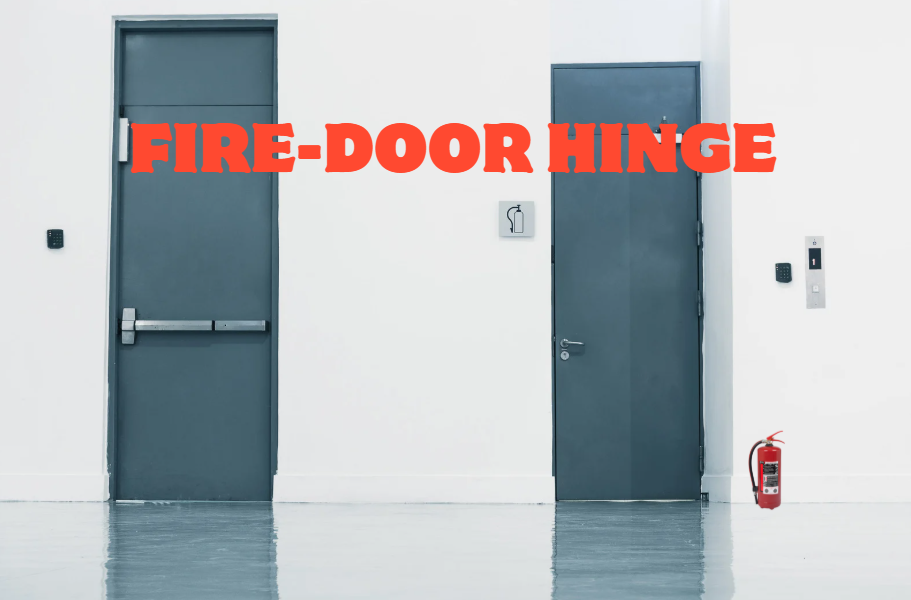
What makes a door hinge fire-rated?
In the world of door hardware, the term "fire-rated" often raises a lot of questions.
A fire-rated door hinge is not just a thicker hinge or made of stainless steel; it is tested and certified to keep fire doors functional during a blaze.1
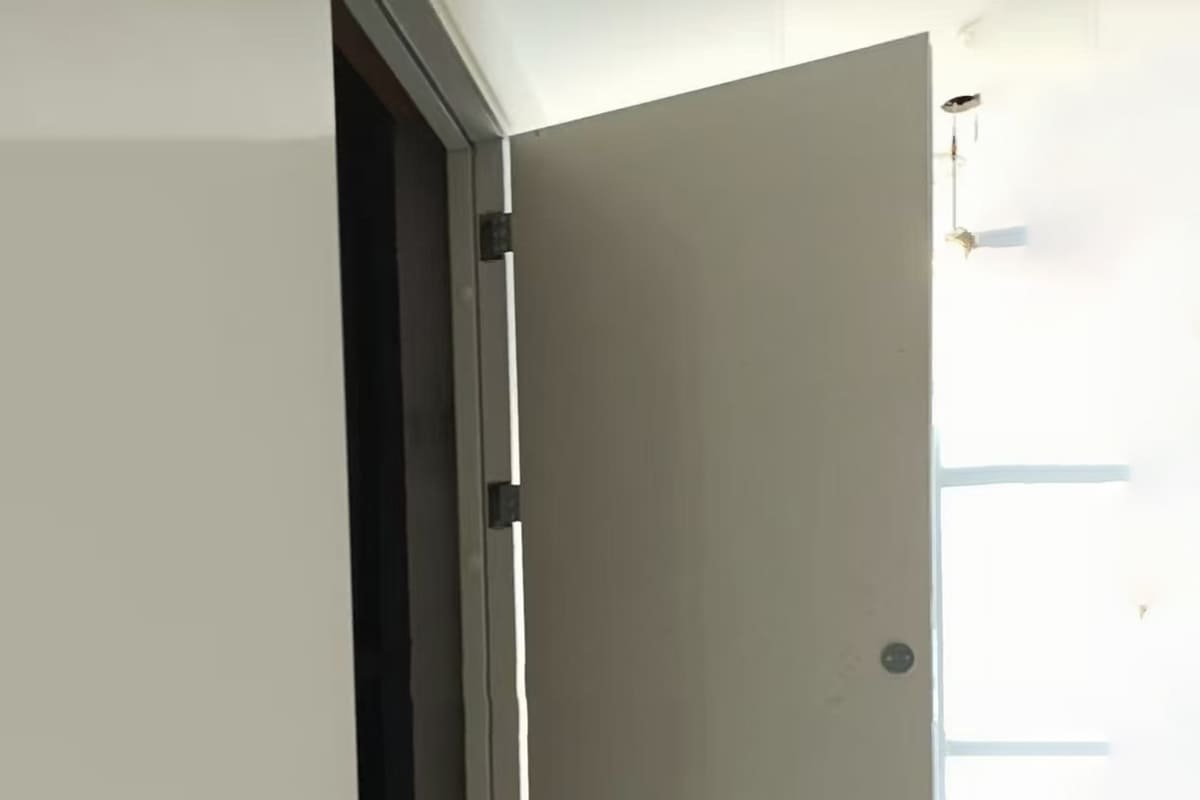
When I discuss fire-rated door hinges with manufacturers, they often ask if a 3 mm stainless steel ball-bearing hinge can be labeled fire-rated. My answer is always the same. First, we need to look into what standard applies to their project. It involves checking the market requirements, door rating, door size and weight, hinge quantity, and the specific door assembly that was tested.2 The certificate's scope must match those details.3 This prevents future complications like failed inspections or mismatched certificates.4
LOOP START
Why can't just any hinge be fire-rated?
Many believe that merely using stainless steel or a thicker design qualifies a hinge as fire-rated. This is a misconception I encounter often.
A hinge’s fire-rated status depends on specific testing standards and conditions; it’s not determined by its appearance or material alone.5
To break down this concept further, we need to examine what actual fire-testing involves. Standards like GB 12955, UL 10C, and BS EN 1634-1 exist for a reason.6 They define how a hinge must perform under various conditions.7 Each of these standards has clauses about temperature, cycle counts, and fire duration that must align with the testing procedures. Manufacturers must take these tests seriously. If a hinge is not tested in accordance with these standards, it cannot be guaranteed for fire-rated performance.
One significant aspect is the tested conditions. For instance, a hinge could look robust, but if its tested fire duration or temperature isn't verified in the certification document, its performance is still uncertain.
LOOP END
Does material choice really matter?
When it comes to fire-rated hinges, discussions about materials come up frequently. It’s tempting to assume that using stainless steel guarantees fire safety because of its strength and durability.
While material choice is important, it does not solely define a hinge’s fire-rated status.
For example, in my experience, it’s crucial to avoid using materials like plastic or nylon in high-temperature areas.8 Although stainless steel and other heat-resistant metals are generally preferable, we must ensure any claim about a material, like zinc alloy or brass, is backed by tested application reports. You can't just assume a bridge between a material and its fire-rated touch.
One thing I emphasize is the importance of having components that withstand heat. If they don’t, the hinge could fail during a real fire.9
LOOP START
How does structure influence fire performance?
Fire-rated hinges are not merely about material; their structure also plays a big role. A sturdy hinge must feature design elements that enhance durability in the face of fire.
Thicker leaves, robust pins, and heavy-duty ball bearings all make a hinge more reliable under fire conditions.10
In looking to select the right hinge, we should focus on several aspects. For instance, a thicker hinge leaf can better resist sagging under weight. Stronger pins add to durability and overall performance. Another consideration is to use high-quality screws and accessories that can endure fire exposure without deforming. Finishing also matters; stable electroplated or non-combustible finishes help prevent failures due to friction or detachment.
All these design factors are beneficial, but remember, certification and testing validate their effectiveness. It’s not enough to assume sturdiness will hold up under fire—proof from standard testing is essential.
LOOP END
How does a hinge fit into the overall fire door system?
It’s easy to think of a hinge in isolation, but it’s part of a larger fire door system.
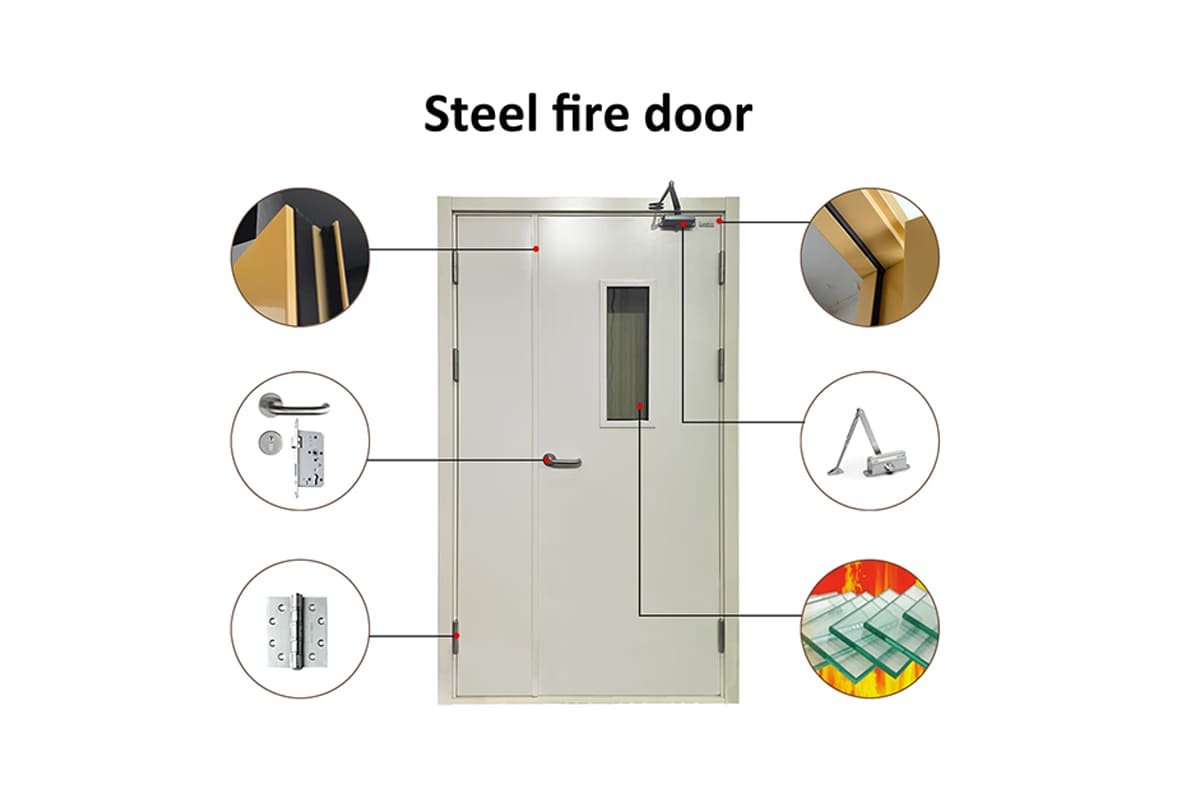
A hinge contributes to the performance of a fire door alongside the door leaf, frame, closers, locks, and bolts.
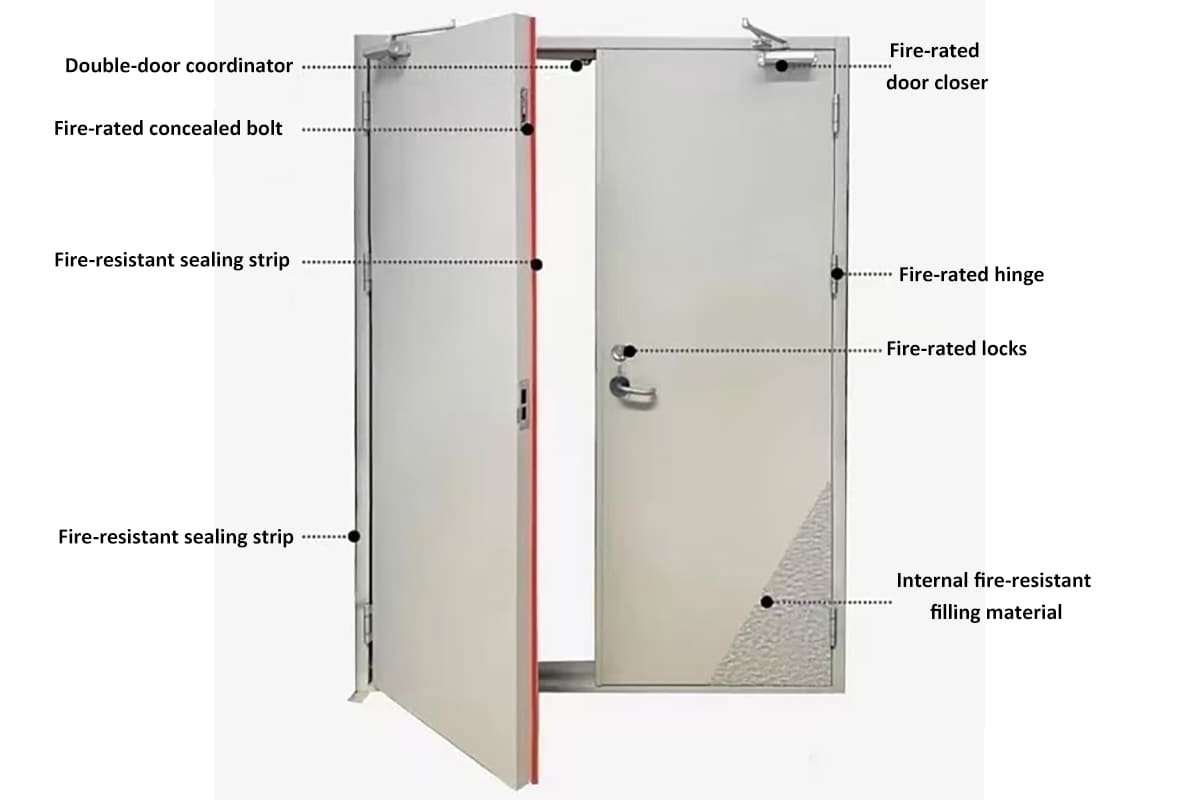
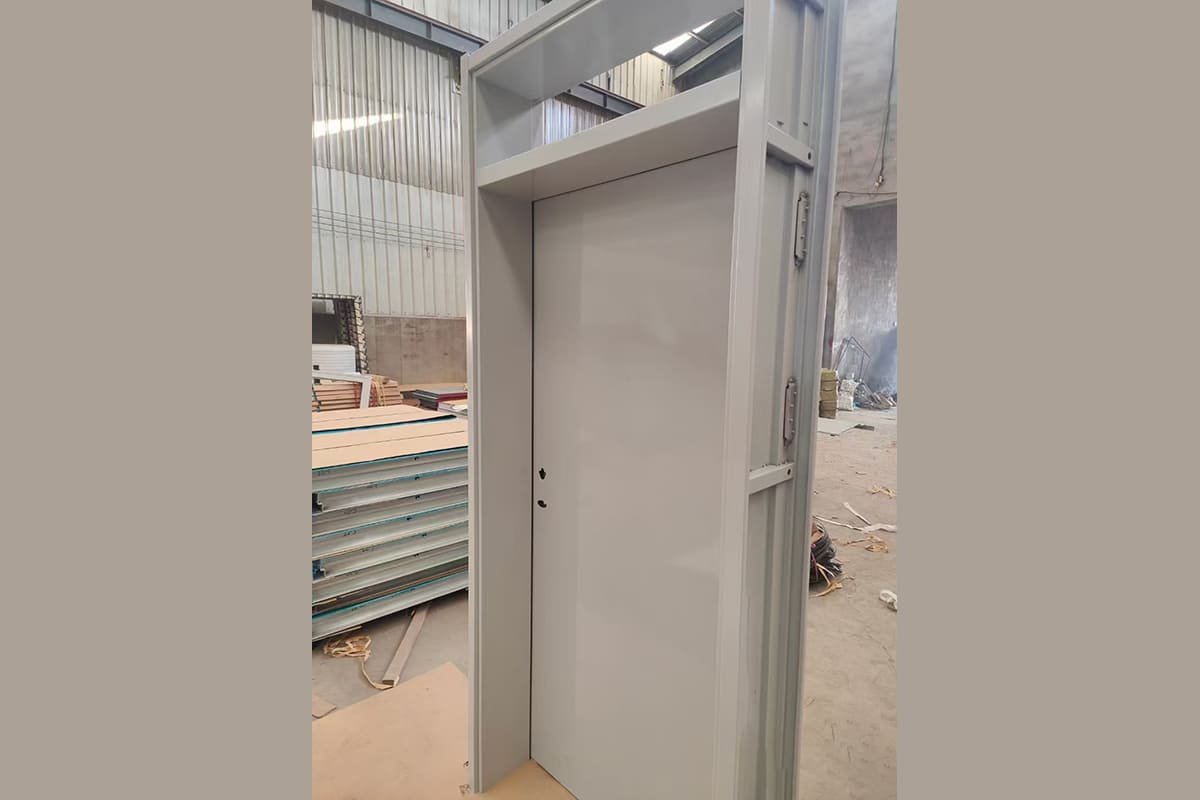
When working with fire-rated doors, it’s vital to understand how a hinge integrates within the complete system. If a hinge is certified for fire use but isn’t used correctly within its tested scope, it can still be a risk. For instance, if the door leaf or frame isn’t compatible with the hinge, performance in a fire may be compromised.
Installation methods also play a part. A well-installed hinge contributes to maintaining door integrity during a blaze. I often remind manufacturers to ensure each component aligns properly with the hinge for effective fire performance.
LOOP END
Conclusion
Understanding what makes a door hinge fire-rated requires careful consideration of testing, materials, structure, and the complete door system for effective fire safety.
"Fire Doors and NFPA 80 FAQs", https://www.nfpa.org/news-blogs-and-articles/blogs/2025/04/11/fire-doors-faqs. A standards or certification source should support that hinges used on fire doors are treated as part of a tested and certified fire-door assembly, so material thickness or stainless-steel construction alone does not establish a fire rating. Evidence role: definition; source type: institution. Supports: Fire-rated door hardware is evaluated through recognized fire-door tests and certification procedures rather than by material or thickness alone.. Scope note: The source may define requirements for fire-door assemblies generally rather than proving performance for any specific hinge model. ↩
"How to Choose Fire-Rated Door Hinges for Your Project | AKADA", https://akada-hardware.com/how-to-choose-fire-rated-door-hinges-for-your-project/. A fire-door listing or inspection guidance source should support that hinge suitability is determined by the conditions of the tested or listed assembly, including door characteristics and hardware configuration. Evidence role: general_support; source type: institution. Supports: Fire-door hardware approval depends on the listed or tested assembly and may be limited by door type, rating, size, weight, and hardware configuration.. Scope note: The source is likely to support the principle of listing limitations rather than the exact checklist wording used in the article. ↩
"Fire Door Certification Standards: Compliance Guide - SFFECO", https://sffeco.com/ensure-your-building-meets-fire-door-standards/. A certification-body or standards source should support that fire-door hardware certification is limited to the tested or listed scope, so the certificate must correspond to the actual assembly and installation conditions. Evidence role: expert_consensus; source type: institution. Supports: Fire-door certificates or listings are valid only for the configurations and conditions covered by the test or certification scope.. Scope note: The source may discuss fire-door assemblies broadly and not hinges exclusively. ↩
"Enforcement of Fire Door Inspections - iDigHardware", https://idighardware.com/2025/09/enforcement-of-fire-door-inspections/. An inspection standard or code guidance source should support that fire-door compliance inspections consider whether installed hardware matches the applicable listing, label, or certification conditions. Evidence role: general_support; source type: institution. Supports: Fire-door inspections commonly verify that doors and hardware are installed and maintained according to labels, listings, and applicable standards.. Scope note: The source would support the inspection rationale, not guarantee that every mismatch results in a failed inspection. ↩
"Common Misconceptions about Fire Door Assemblies | SDI", https://steeldoor.org/articles/01-11/. A fire-door standard or certification source should support that the fire rating of hinges is established through tested and listed conditions rather than through visual appearance or material selection alone. Evidence role: definition; source type: institution. Supports: Fire-rated status for door hardware is assigned through testing, listing, or certification under specified conditions.. Scope note: The source may address fire-door hardware generally and require interpretation for hinges specifically. ↩
"Fire Doors - OCWR", https://www.ocwr.gov/publications/fast-facts/fire-doors/. Standards-documentation sources should support that GB 12955, UL 10C, and BS EN 1634-1 are standards used for assessing fire-resisting doors or door assemblies. Evidence role: historical_context; source type: institution. Supports: The named standards concern fire resistance or fire testing of door assemblies in their respective jurisdictions or standards systems.. Scope note: The standards differ by jurisdiction and scope; citing them together establishes relevance to fire-door testing, not interchangeability. ↩
"Fire Door Hardware: What You Need to Know", https://ukfiredoortraining.com/2024/07/18/fire-door-hardware-what-you-need-to-know/. A fire-door testing standard or explanatory source should support that door assemblies are tested under defined fire exposure conditions and that hinges and other hardware are evaluated as part of the assembly’s performance. Evidence role: mechanism; source type: institution. Supports: Fire-door testing evaluates door assemblies under specified exposure conditions, and hardware must remain compatible with the assembly’s fire-resistance performance.. Scope note: Some standards test the door assembly as a whole rather than prescribing a standalone hinge-performance test. ↩
"Thermal Degradation of Glass Fibre-Reinforced Polyamide 6 ... - PMC", https://pmc.ncbi.nlm.nih.gov/articles/PMC11859150/. A materials-science source should support that nylon and many plastics lose mechanical integrity under elevated temperatures, providing a technical basis for avoiding such materials in high-temperature fire-door hardware locations. Evidence role: mechanism; source type: education. Supports: Common plastics such as nylon have thermal limits and can soften, melt, or degrade at temperatures far below fire exposure temperatures used in fire-resistance testing.. Scope note: Material data alone does not determine whether a specific certified hinge design containing polymer parts would pass or fail a fire test. ↩
"Important Tips for Specifying Fire Door Assemblies", https://steeldoor.org/tips-for-specifying-fire-door-assemblies/. A fire-safety research or testing source should support that fire-door hardware must maintain sufficient integrity during fire exposure because hardware failure can compromise the door assembly’s fire-resisting function. Evidence role: mechanism; source type: research. Supports: Hardware integrity is important to maintaining fire-door assembly performance during fire exposure, and failure of load-bearing or retaining components can compromise the door.. Scope note: The source may describe general hardware or door-assembly failure mechanisms rather than documenting this exact hinge scenario. ↩
"How to Choose Fire-Rated Door Hinges for Your Project | AKADA", https://akada-hardware.com/how-to-choose-fire-rated-door-hinges-for-your-project/. An engineering or fire-door hardware source should support that hinge structural features such as leaf thickness, pin robustness, and bearing design affect mechanical durability and load support, which are relevant to fire-door reliability. Evidence role: mechanism; source type: research. Supports: Hinge geometry and load-bearing components influence mechanical durability and load capacity, which can be relevant to maintaining a fire-door assembly under stress.. Scope note: Mechanical durability evidence is contextual and does not by itself prove fire-rated performance without a fire test or certification. ↩