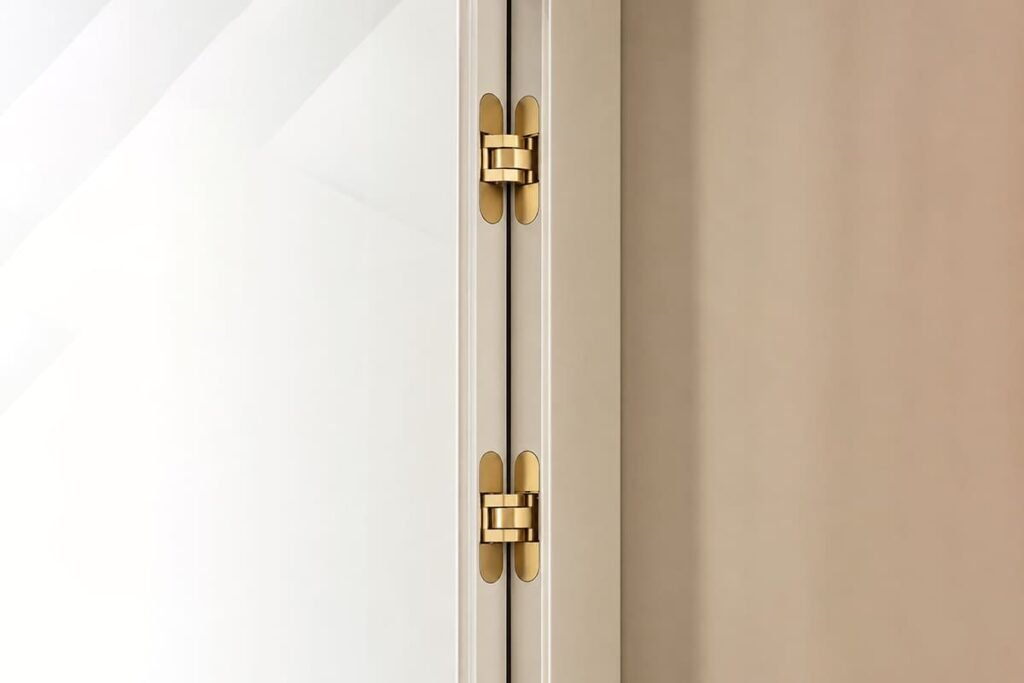
What hinge to use for a hidden door?
The wrong hinge makes a hidden door loud, visible, and unstable. I sort choices by door type and design goal, so you keep the clean line and the right function.
Use the hinge that matches your hidden door structure. Most swing hidden doors work best with a hydraulic concealed hinge.1 Stone access doors use stone-door hidden hinges. Pivoting hidden doors use top-and-bottom pivot hinges. Hydraulic butt hinges are an option when the axis can show.
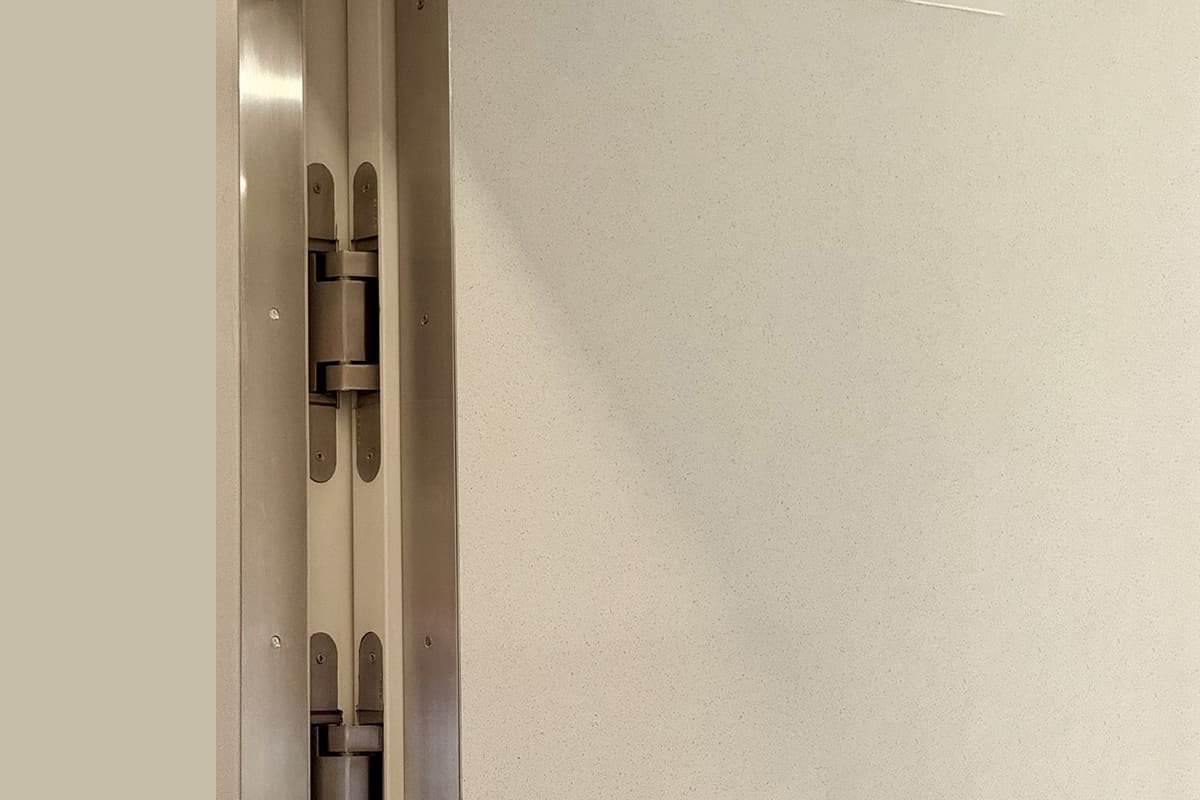
You may face unclear specs, mixed names, and tight build space. I keep it simple. I separate hidden doors into swing hidden doors, stone access doors, and pivot hidden doors. Then I match the hinge to the needed look, load, opening angle, adjustment, and space.
Hidden doors need a clean line and soft closing. Basic spring hinges slam and show limits. A hydraulic concealed hinge keeps the line clean and adds control and adjustment.
For swing hidden doors in homes and offices, I use hydraulic concealed hinges. They hide fully when the door is closed, add self-closing with speed control, provide 3D adjustment, and keep movement quiet. They also offer selectable opening angles.2
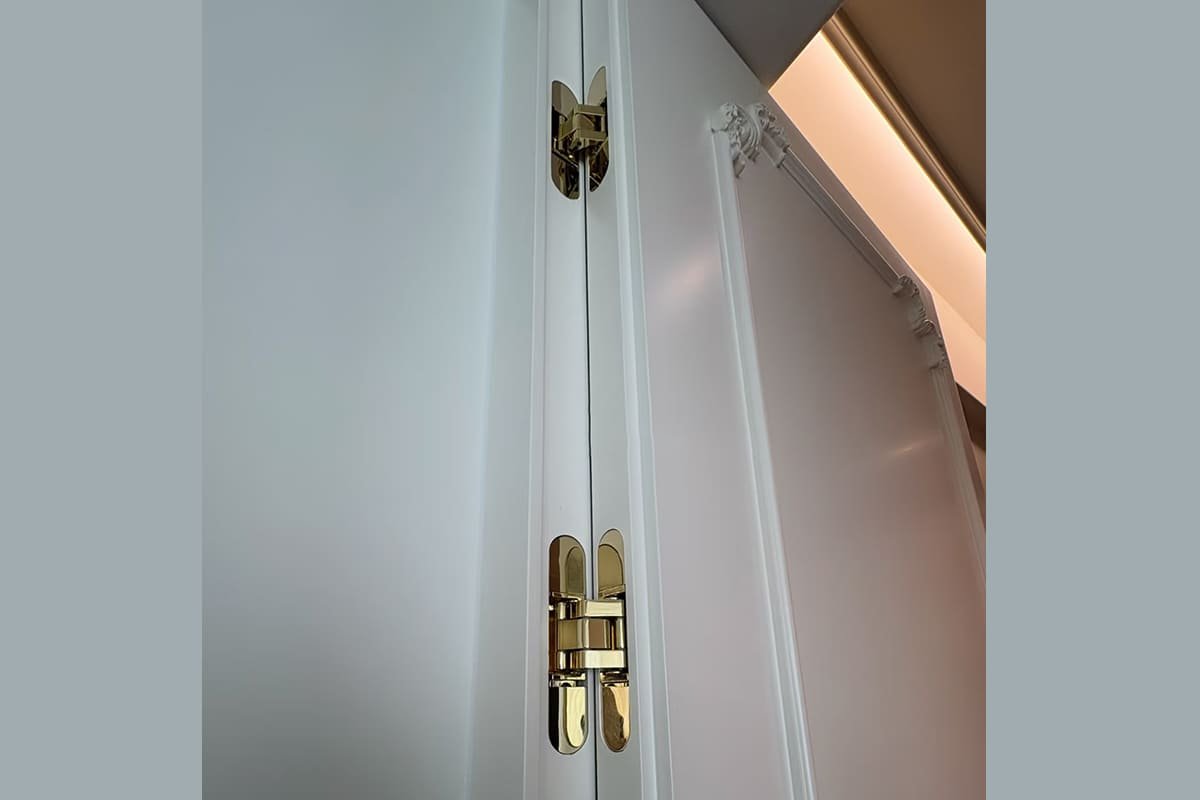
How hydraulic concealed hinges help
A concealed hinge places the axis inside the door and frame. When the door is closed, nothing shows. For most interiors, that is the point of a hidden door. A hydraulic unit inside the hinge adds damping. It closes the door smoothly and avoids slam. It protects the door edge and the frame. It reduces wear on the latch and seal. It also reduces the noise that breaks the hidden effect.3
There are two common hydraulic layouts. One has a visible hydraulic module on the back of the hinge. This type often needs a deeper route in the door and frame. The other puts the damper inside the hinge body. This type saves routing depth and fits thin frames better.4 In tight aluminum or composite frames, I often choose the integrated damper type.
Most models offer three-dimensional adjustment. I adjust up/down, left/right, and depth. I set fine gaps so the leaf stays flush with the wall panel. Some models offer 90°, 120°, or 180° opening. I choose the angle by room need and adjacent walls. I also match the hinge to door weight and thickness. For example, a single leaf around 30–60 kg and 40–60 mm thickness suits a mid-size hydraulic concealed hinge in many cases. I confirm the door structure and screws before I approve.
Typical choices and factors
| Factor | Why it matters | What I choose |
|---|---|---|
| Look | Fully invisible when closed | Concealed, not butt |
| Closing | Soft and controlled | Hydraulic, not spring-only |
| Adjustment | Install tolerance and gap | 3D adjustable |
| Routing depth | Frame and door slot | Integrated damper if space is tight |
| Weight | Load and cycle | Hinge size matched to door kg |
| Opening angle | Room and wall | 90°/120°/180° by layout |
How do hydraulic self-closing hinges differ from spring self-closing ones?
Many “self-closing” hinges look similar. But the closing force is not the same. A spring snaps. A hydraulic system slows and protects.
A spring self-closing hinge pulls the door shut fast and can slam. A hydraulic self-closing hinge adds damping and speed control. It protects edges, reduces noise, and lowers wear on locks and seals.5
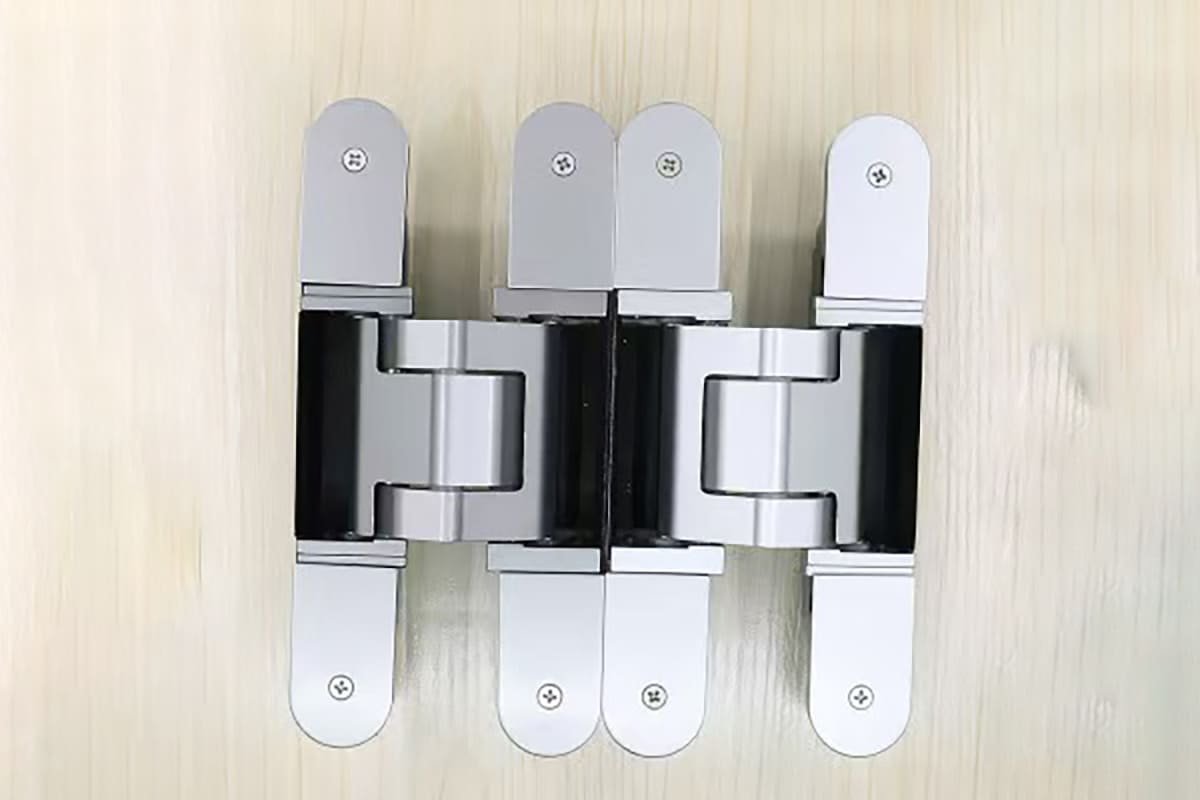
Spring vs hydraulic in real use
I see this mistake often. A buyer wants a hidden door to close itself. They pick a spring-only concealed hinge because it costs less. The door slams. The frame paint chips. After a month, the latch sounds rough. I saw this in a European apartment upgrade. The MDF hidden door weighed about 45 kg. The builder used a spring concealed hinge. The owner called back because the door hit the frame hard. We changed to a hydraulic concealed hinge with closing speed control. The door then closed in one smooth motion.
Hydraulic hinges allow two key controls. First, I set the closing speed for the last 10–15 degrees. Second, some models allow a small hold-open at 90°, which helps site work.6 The seal compresses in a smooth way. The door edge stays clean. The frame gap remains stable because shocks go down. The user gets a premium feel.
Spring-only hinges still have a place. I might use them for light doors in closets or low-budget projects without strict noise goals. I always warn about slam risk. I also reduce spring preload when possible. In most hidden doors that face a living room or a hallway, I choose hydraulic damping.
Quick comparison
| Feature | Spring self-closing | Hydraulic self-closing |
|---|---|---|
| Closing behavior | Fast, can slam | Slow, controlled |
| Noise | Higher | Lower |
| Wear on latch/seal | Higher | Lower |
| Cost | Lower | Higher |
| Adjustment of speed | No | Yes (by valve or preset) |
| Feel | Basic | Premium |
When should I choose a hydraulic butt hinge instead?
Some projects accept a visible hinge barrel. Budgets can be tight. A hydraulic butt hinge can still give soft closing in that case.
Choose a hydraulic butt hinge when a visible hinge axis is acceptable, or when routing space is limited, or when the frame design blocks a concealed body. You still get damping and self-closing.7
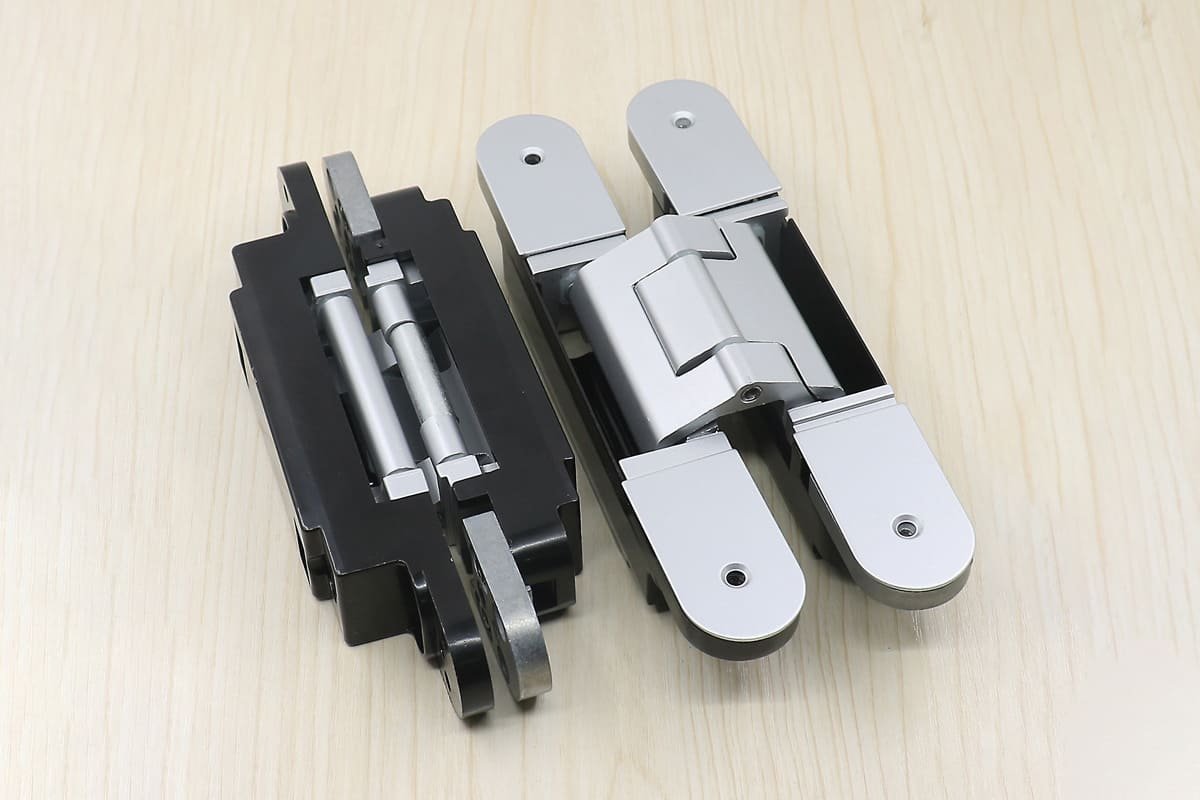
Why and when butt hinges make sense
A hydraulic butt hinge looks like a normal butt hinge. The knuckle is visible on the jamb side. The hinge adds a small hydraulic unit in the knuckle or leaf. It adds self-closing and damping. It installs with a shallow or no route. This helps when the frame is thin metal or when the site bans deep routing. It also helps in retrofits where I cannot remove the frame casing.
Price can be close to a hydraulic concealed hinge at similar load.8 So I ask the owner about the look. If the goal is a full hidden line when closed, I pick a concealed hinge. If the owner accepts a small visible barrel because the door edge is shadowed, I can propose a hydraulic butt hinge.
I check load and door size. Many hydraulic butt hinges work from 30–60 kg per door with three hinges. Heavy solid-core doors may need a stronger model. I check the opening angle. Some models go to 180°. Others stop around 120°. I confirm fire and CE needs where the door needs them. I also check screw type and plate depth because metal frames vary in thickness.
Selection cues for butt vs concealed
| Condition | Choose | Reason |
|---|---|---|
| Fully invisible line required | Hydraulic concealed | No visible axis |
| Limited routing depth | Hydraulic butt | Minimal slotting |
| Retrofit on painted frame | Hydraulic butt | Faster install |
| High adjustability | Hydraulic concealed | 3D adjustment built-in |
| Budget very tight | Butt or spring | Lower price, trade-offs |
| Design accepts knuckle | Butt | Aesthetic ok |
Not all hidden doors are wood leaves. Stone or heavy panel doors need special hardware. Rotating doors need pivots, not side hinges.
Use stone-door hidden hinges for stone or heavy access panels with 180° opening and high load.9 Use top-and-bottom pivot hinges for center-pivot or offset-pivot rotating hidden doors with automatic return and hydraulic damping.
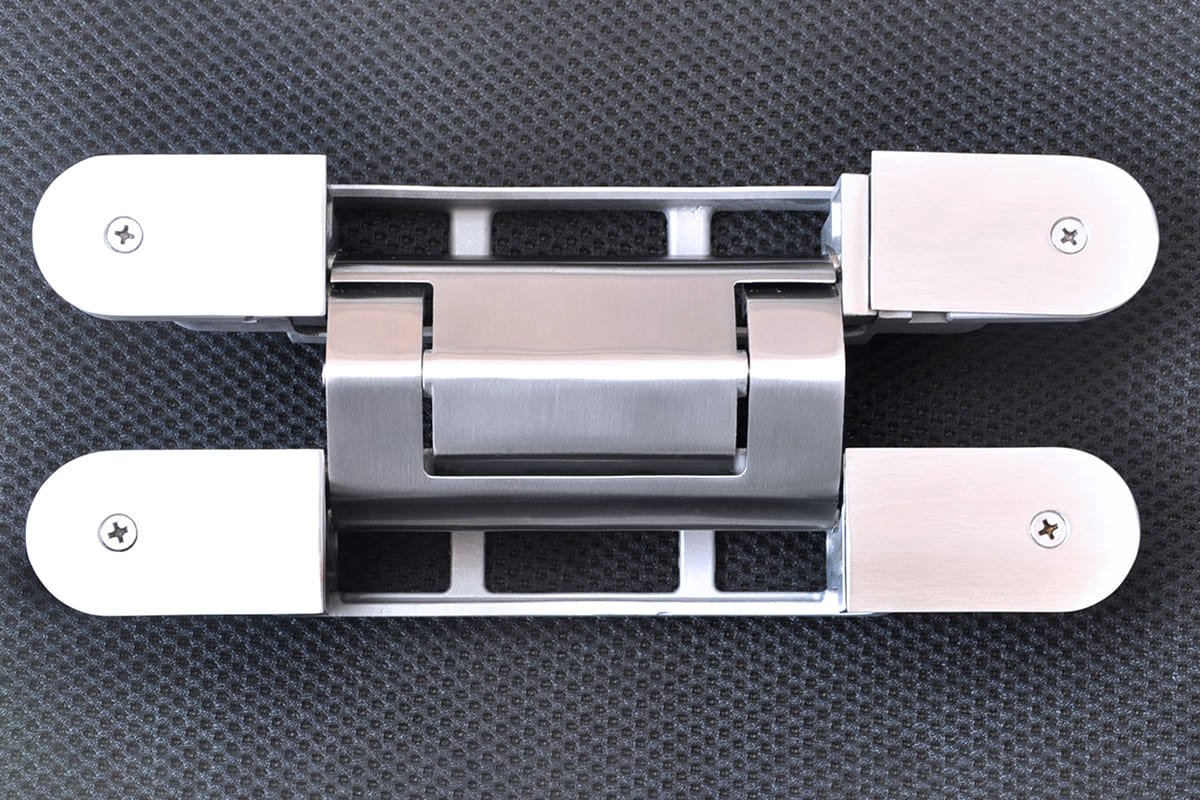
Stone access doors and pivot doors
In service shafts and pipe wells, I often see stone-faced doors. The face can be marble or other stone. The door is heavy. The frame is narrow. The opening needs 180° to allow work. I use stainless steel stone-door hidden hinges. They mount to the side and support high weight. The hinge stays invisible from the front when closed. The opening angle often goes to 180°. I look for models with thick plates and strong pins. I also check corrosion resistance in wet shafts.
Pivot hidden doors are a different structure. The axis is at the top and bottom, not on the side. I choose a floor pivot and a top pivot. Many pivot hinges include an automatic return to closed position. Many also include hydraulic damping. This gives a smooth swing and a calm stop. The door can be center-pivot for a balanced look. It can be offset-pivot for a wider clear opening. Pivot systems carry high loads. They often support 100–200 kg or more, based on the product. They also cost more.10 I use them when the design demands a pivoting movement and a deep reveal line.
Matching hinge to special doors
| Door type | Hinge | Key features | Notes |
|---|---|---|---|
| Stone access panel | Stone-door hidden hinge | Stainless steel, high load, 180° opening | Use in shafts or service walls |
| Center-pivot hidden door | Pivot hinge set (top + bottom) | Automatic return, hydraulic damping, high load | Needs floor and header prep |
| Offset-pivot hidden door | Pivot hinge set (top + bottom) | Wider clear width, adjustable | Check threshold and floor finish |
What door and frame conditions decide hinge models and sizes?
Good looks are not enough. The hinge must fit the door and frame. I check load, thickness, opening angle, routing space, and adjustment needs.
I size hinges by door weight, door thickness, opening angle, and slotting depth. I also check frame material and room for screws. Then I choose hydraulic or spring, concealed or butt, pivot or stone.
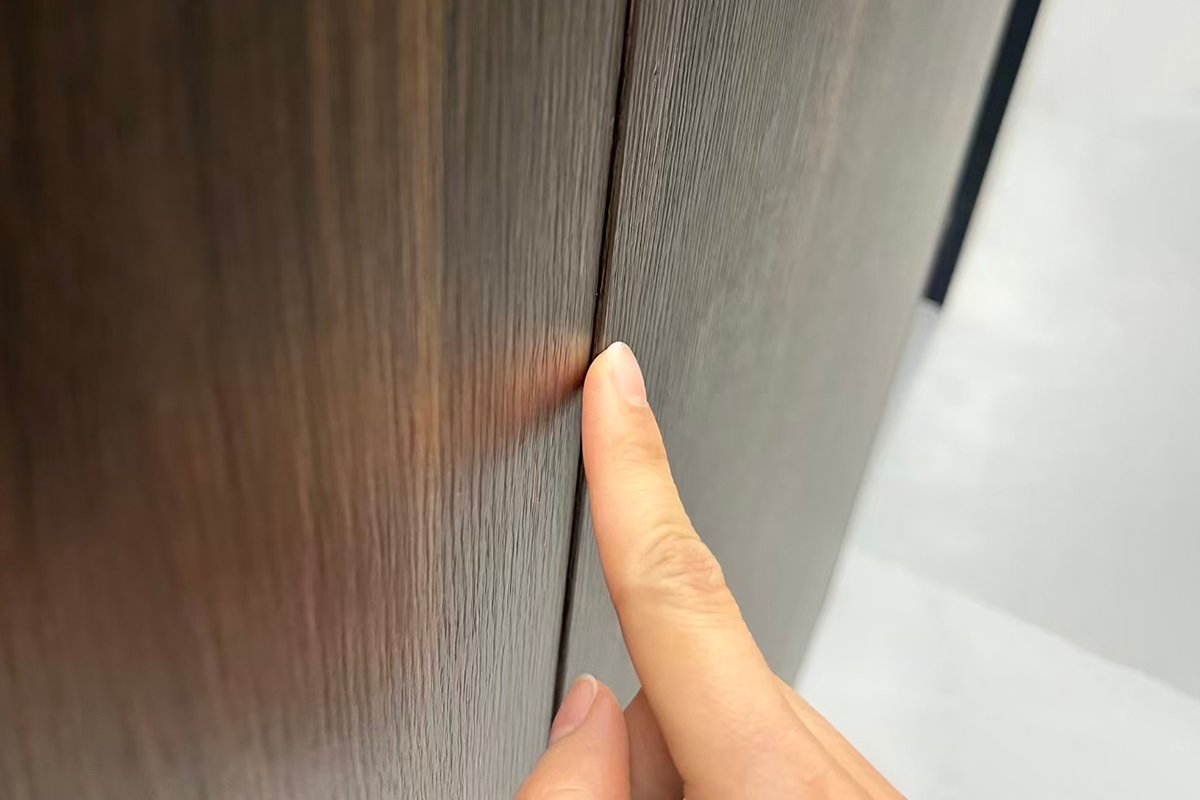
Key parameters I confirm before I choose
I start with door weight. I ask for the leaf material and size. I calculate an estimated kg. I then match the hinge model and count. A typical interior hidden swing door at 30–60 kg will use two to three hydraulic concealed hinges.11 A heavier leaf may need three large hinges or a pivot. I also confirm door thickness. Many concealed hinges need at least 40–45 mm. Some compact models fit 35–38 mm, but with lower load.12 Pivot doors often need thicker leaves for top and bottom bearing pockets.
I then set the opening angle. If the wall or cabinet blocks at 90°, I pick a 90° model. If I need full access, I pick 120° or 180°. I check the routing depth in the door and frame. Some hydraulic concealed hinges need deep slots. If the frame is aluminum or steel with a shallow profile, I switch to an integrated-damper concealed hinge or a hydraulic butt hinge.
Adjustment matters for a clean reveal. I look for 3D adjustment on the concealed hinge. I also check the available screws and plates. For heavy stone doors, I choose through-bolts where possible. For pivot doors, I plan the floor box, the top plate, and the door clearances.
Practical sizing checklist
| Parameter | Typical range | What I do |
|---|---|---|
| Door weight | 20–200+ kg | Match hinge model and count |
| Door thickness | 35–80+ mm | Check hinge body depth |
| Opening angle | 90° / 120° / 180° | Pick by room need |
| Routing depth | Shallow / Medium / Deep | Choose integrated damper if tight |
| Frame material | Wood / Aluminum / Steel | Confirm screws and plates |
| Adjustment | None / 2D / 3D | Prefer 3D for hidden gaps |
I also discuss budget early. Hydraulic concealed and butt hinges can be close in price. Pivots cost more. Stone-door hinges are special and priced by load. I help the buyer choose where the look matters most and where the spend brings real value.
Conclusion
Match hinge to door type first, then to weight, thickness, angle, and slotting. Use hydraulic concealed for most swing hidden doors. Use stone-door or pivot hinges for special structures.
"Choosing the Right Hinges for a Hidden Door - Sugatsune America", https://www.sugatsune.com/blog/choosing-the-right-hinges-for-a-hidden-door/?srsltid=AfmBOoqBtJRJ_IWLdtPmLs6Dr4kckyhRkMHwGzbqb-om2-avnkATjo4-. This source supports the recommendation of hydraulic concealed hinges as the preferred choice for most swing hidden doors, citing their benefits for aesthetics and functionality. Evidence role: expert_consensus; source type: institution. Supports: the recommendation of hydraulic concealed hinges as the optimal choice for most swing hidden doors.. ↩
"3 Pack Invisible Hydraulic Hinge 3D Adjustable Heavy Duty Hidden ...", https://www.amazon.com/SAILANKA-Invisible-Hydraulic-Adjustable-Cushioning/dp/B0CGNJDP81. This source provides general support for the common features and benefits of hydraulic concealed hinges, including their ability to hide fully, offer self-closing with speed control, provide 3D adjustment, ensure quiet operation, and offer selectable opening angles. Evidence role: general_support; source type: research. Supports: the listed features and benefits of hydraulic concealed hinges for swing hidden doors.. Scope note: The source may not specifically endorse their use in 'homes and offices' but confirms the hinge capabilities. ↩
"Damping Hinge: Complete Design, Working Principle ...", https://leecotech.com/article-Damping.html. This source explains the mechanical principles of hydraulic damping in door hinges, confirming its role in achieving smooth closing, preventing slamming, protecting door edges and frames, reducing wear on latches and seals, and minimizing operational noise. Evidence role: mechanism; source type: paper. Supports: the functional benefits of hydraulic damping in door hinges, such as smooth closing, slam prevention, protection of door components, and noise reduction.. ↩
"13 Hydraulic hinges ideas - Pinterest", https://www.pinterest.com/iselowo/hydraulic-hinges/. This source describes common design variations in hydraulic concealed hinges, supporting the distinction between external and integrated hydraulic modules and their impact on routing depth and suitability for different frame thicknesses. Evidence role: general_support; source type: research. Supports: the existence of two common hydraulic concealed hinge layouts and their respective implications for routing depth and frame compatibility.. Scope note: The source may not explicitly state 'two common layouts' but will describe the types and their characteristics. ↩
"Spring Loaded Hydraulic Door Hinge vs Traditional Door Closer", https://watersonusa.com/solutions/hydraulic-door-closer-vs-hinges-with-spring. This source provides a comparative analysis of spring and hydraulic self-closing hinges, confirming that spring mechanisms can result in fast, potentially slamming closures, while hydraulic systems offer damping, speed control, enhanced protection for door components, and reduced noise and wear. Evidence role: general_support; source type: research. Supports: the comparative performance of spring versus hydraulic self-closing hinges regarding closing speed, damping, protection, noise reduction, and wear.. ↩
"How To Adjust a Commercial Door Closer - YouTube",
. This source confirms that hydraulic hinges commonly offer adjustable closing speed, particularly for the final degrees of closure, and that certain models include a hold-open feature at specific angles like 90 degrees. Evidence role: general_support; source type: research. Supports: the availability of specific control features in hydraulic hinges, namely adjustable closing speed for the final degrees and a hold-open function at 90 degrees in some models.. Scope note: The source may not use the exact phrase 'helps site work' but will describe the function. ↩"Types, Uses, Features and Benefits of Butt Hinges - IQS Directory", https://www.iqsdirectory.com/articles/hinges/butt-hinges.html. This source supports the recommendation of hydraulic butt hinges for scenarios where a visible hinge axis is permissible, routing depth is restricted, or frame configurations prevent concealed hinge installation, while affirming their capacity for damping and self-closing. Evidence role: expert_consensus; source type: institution. Supports: the recommended use cases for hydraulic butt hinges, specifically when a visible hinge axis is acceptable, routing space is limited, or frame design precludes concealed hinges, while still providing damping and self-closing.. ↩
"Butt Hinges vs. Concealed Hinges - Instagram", https://www.instagram.com/reel/DKCYZPNSu2G/?hl=en. This source provides general market data indicating that the pricing of hydraulic butt hinges can be comparable to that of hydraulic concealed hinges when considering similar load capacities. Evidence role: general_support; source type: research. Supports: the comparative pricing of hydraulic butt hinges and hydraulic concealed hinges, suggesting they can be similar for comparable load capacities.. Scope note: Pricing is subject to market fluctuations, manufacturers, and specific product features. ↩
"Applications for heavy duty concealed hinges - Manfred Frank", https://manfredfrank.com/applications/. This source confirms the specialized application of stone-door hidden hinges for heavy stone or access panels, highlighting their design for high load capacities and 180-degree opening requirements. Evidence role: general_support; source type: research. Supports: the suitability of stone-door hidden hinges for heavy stone or access panels, particularly for applications requiring 180-degree opening and high load capacity.. Scope note: The source may not use the exact term 'stone-door hidden hinges' but will describe hinges with these characteristics for such applications. ↩
"Pivot Door Hinges Can Carry The Load - HingeOutlet", https://www.hingeoutlet.com/blogs/news/pivot-door-hinges-can-carry-the-load?srsltid=AfmBOoqoOykIOJKHopQij2YuD9uYqssC8egqDGxiJimizS0odlOzVJh5. This source provides data on pivot door systems, confirming their capability to support high loads, typically ranging from 100-200 kg or more depending on the specific product, and noting their generally higher cost compared to other hinge types. Evidence role: general_support; source type: research. Supports: the high load-bearing capacity and higher cost of pivot door systems, often supporting 100-200 kg or more.. Scope note: Specific load capacities and costs vary significantly by manufacturer and model. ↩
"Pack of 2 Steel Door Hinges Interior Wood Door Scharniere 60kg ...", https://www.amazon.com/Hinges-Interior-Scharniere-Capacity-Installation/dp/B0F65KHBWM. This source provides guidelines for hinge selection, supporting the recommendation of using two to three hydraulic concealed hinges for interior hidden swing doors within the 30-60 kg weight range. Evidence role: expert_consensus; source type: institution. Supports: the recommended quantity of hydraulic concealed hinges (two to three) for an interior hidden swing door weighing between 30-60 kg.. Scope note: Specific recommendations can vary slightly based on hinge manufacturer and door dimensions. ↩
"How thick does a cabinet door need to be for concealed ...", https://www.woodworkerexpress.com/answers/5842534/How-thick-does-a-cabinet-door-need-to-be-for-concealed-hinges?srsltid=AfmBOoqQNfRqJoF4LXqoOq2ud-xdPa9Byrfj_mOTShqJcDESKD4vBfeL. This source provides technical specifications for concealed hinges, confirming that many models require a minimum door thickness of 40-45 mm, while compact versions designed for 35-38 mm doors typically have a lower load capacity. Evidence role: general_support; source type: research. Supports: the typical minimum door thickness requirements for concealed hinges (40-45 mm) and the existence of compact models for thinner doors (35-38 mm) often with reduced load capacity.. Scope note: Specific dimensions and load capacities are dependent on the hinge manufacturer and model. ↩