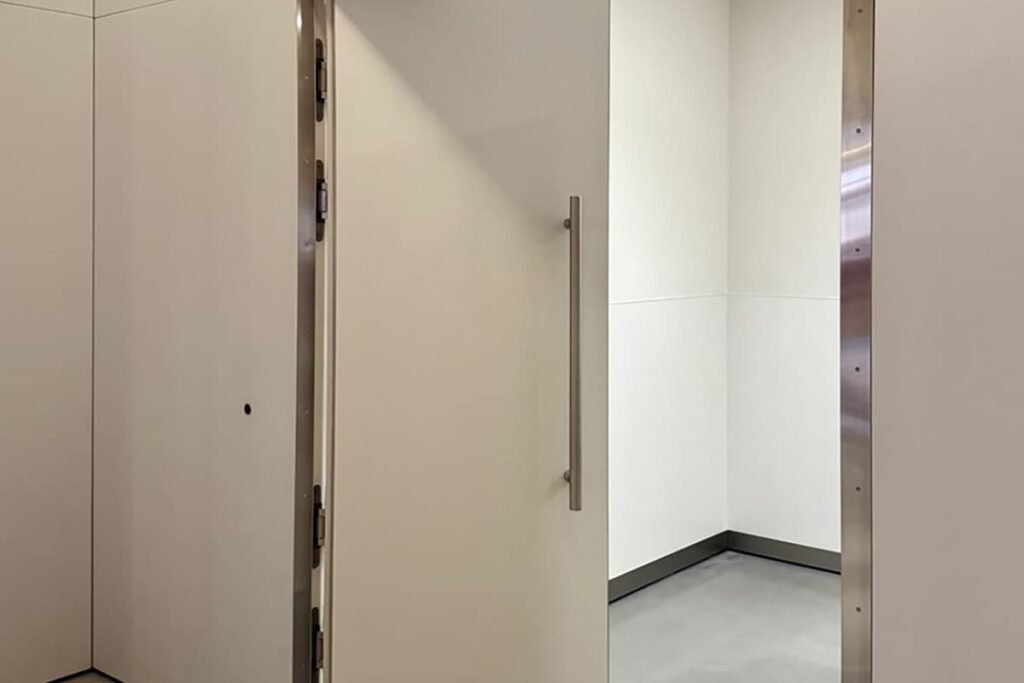
Concealed Hinges For Main Door: Are They The Right Choice?
I often see buyers attracted by hidden hinges first, then worried later when the main door is heavy, wide, or hard to install.
I can use concealed hinges for a main door when the hinge matches the door weight, frame structure, mortise space, opening angle, and installation skill. I should not choose it only for appearance, because exterior doors need load safety, anti-pry design, smooth movement, and low maintenance1.
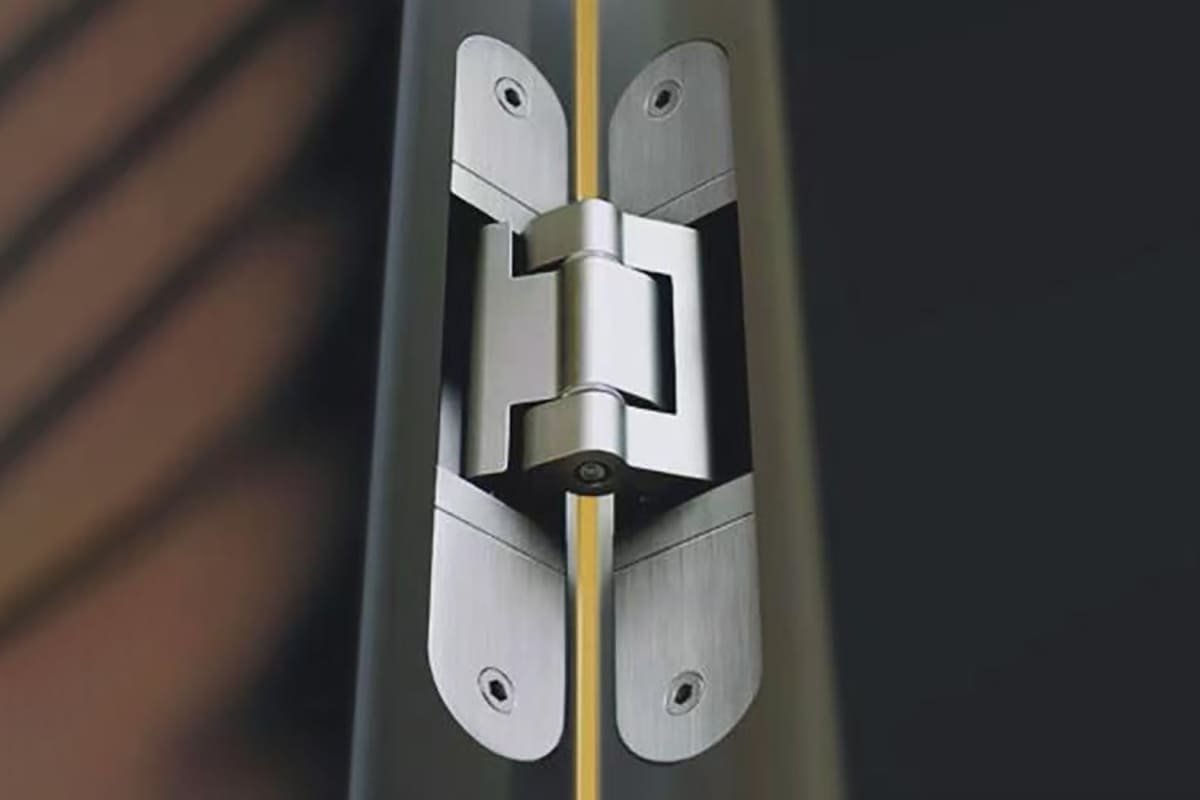
I treat concealed hinges for main doors as a product selection decision, not just a design decision. I like the clean look, and many of my customers want the same look for villa doors, apartment entrance doors, office doors, and commercial entrance doors. But I also know one wrong hinge choice can create sagging, rubbing, noise, or rework. In my factory work, I usually ask about the door weight, door height, door width, door thickness, door frame material, and installation method before I recommend one model. If I miss these points, the hidden hinge may become a hidden problem.
Can I Use Concealed Hinges On An Exterior Main Door?
I see many projects fail when the buyer asks only one question: “Can it be hidden?” That question is too small for a heavy entrance door.
I can use concealed hinges on exterior main doors, but I must match the hinge to the real door conditions. I check door weight, structure, thickness, frame strength, mortise space, hinge quantity, and opening angle before I make a safe choice.

I usually start with the door itself. A main door is not the same as a light internal room door. It may be taller, wider, thicker, and heavier.2 It may use steel, solid wood, composite panels, aluminum, or a mixed structure. I cannot judge hinge suitability by the catalog photo. I need to know what the hinge will carry every day.
Some concealed hinges can support high-load applications.3 Some models may support around 200 kg under the right conditions. Some models may also allow a 180° opening angle. I do not treat these numbers as universal. I treat them as model-specific data that must be checked against door size, hinge number, and installation position.
| What I check first | Why I check it | My practical view |
|---|---|---|
| Door weight | The hinge carries the door load | I never guess heavy door weight |
| Door height and width | Large doors create more stress | I ask for drawings when possible |
| Door thickness | The hinge needs enough body space | I avoid narrow door leaves |
| Frame structure | The frame must hold the hinge | I check wood, steel, or aluminum frame details |
| Opening angle | The door may need 90°, 120°, or 180° | I match the model to the site use |
| Hinge quantity | More hinges may spread the load | I confirm spacing with the buyer |
I also check the use scene. A villa entrance door may need a clean design and smooth movement. A shopping mall door may need more frequent opening. An office building entrance door may need stable alignment. I do not use one answer for all doors. I use the door data first, then I choose the hinge.
What Benefits Do Concealed Hinges Bring To A Main Door?
I know many buyers want a premium entrance look, but they also fear that a beautiful hinge may reduce function or increase risk.
Concealed hinges can improve the appearance of a main door and reduce exposed pry points.4 They also help create a clean outside surface when the door is closed. These benefits matter most in modern entrance door designs.
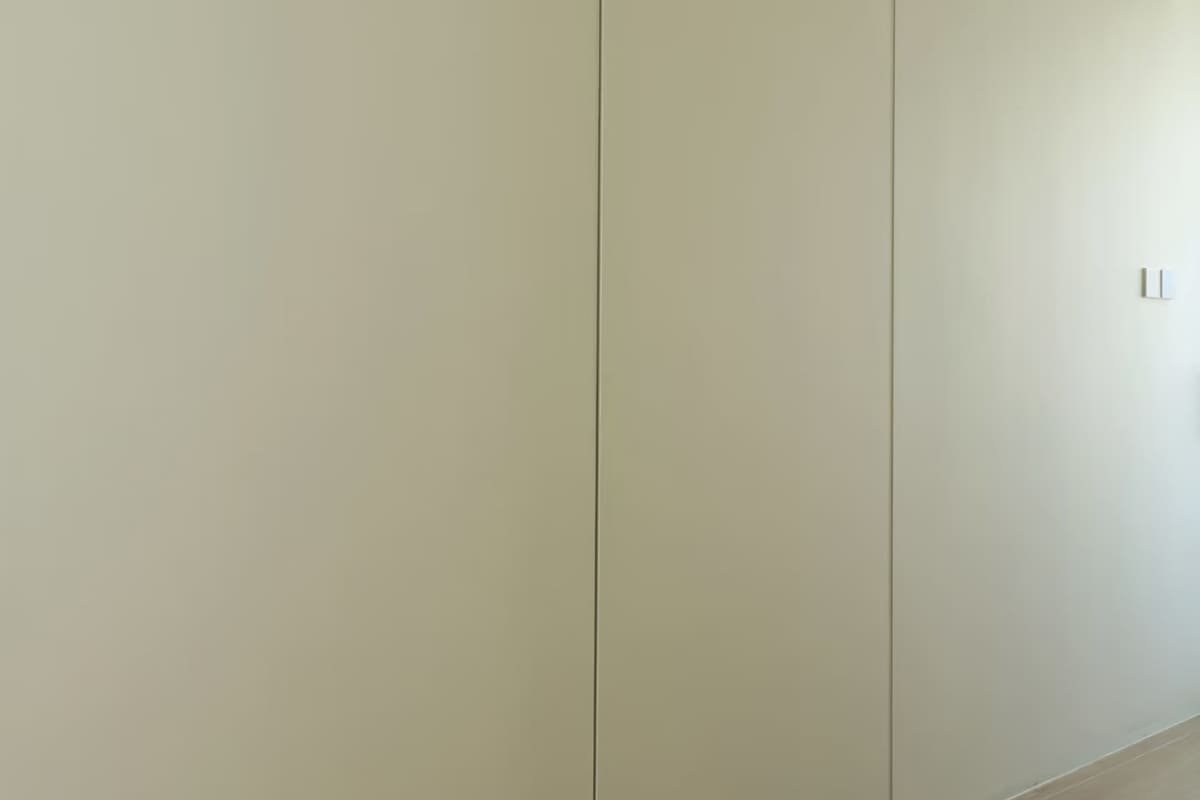
I see the first benefit as visual value. When the door is closed, the hinge is not visible from the outside. This gives the entrance a clean and integrated look. Many high-end wooden doors, composite doors, and light-luxury entrance systems use this style because the hinge does not break the door line. For a hardware brand, this can help product positioning. For a door factory, this can help upgrade a door series.
I also see a security benefit, but I explain it with care. Concealed hinges reduce exposed hinge parts on the outer side. A person outside has no obvious hinge barrel to attack like on many exposed butt hinges. This can reduce one external leverage point. I do not call it a complete anti-burglary solution. A secure main door also needs a strong lock body, good cylinder, strong frame, strong strike plate, and proper installation.5
| Benefit I see | What it means in real use | What I do not claim |
|---|---|---|
| Hidden appearance | The door looks clean when closed | I do not say appearance proves quality |
| Reduced exposed hinge point | The outside has less visible hinge hardware | I do not say it prevents all break-ins |
| Better design match | It suits minimalist and luxury doors | I do not say it suits every door structure |
| Possible smooth movement | Some models open and close quietly | I do not say every model is self-closing |
| Better product value | Brands can build a premium series | I do not ignore installation cost |
Some concealed hinges also have adjustment functions.6 I can often adjust the door in several directions after installation, depending on the model. This helps door factories and installers correct small alignment issues. Some self-closing concealed hinges can also offer smoother and quieter movement. I always say “some models” because the function depends on the internal structure. I never want a buyer to expect soft closing from a simple concealed hinge that does not have that design.
What Must I Check Before Choosing Concealed Hinges For A Heavy Main Door?
I have seen strong-looking hinges fail because the buyer did not check the door weight, arm material, and installation space before ordering.
I must check the hinge load rating, arm material, door dimensions, hinge quantity, mortise depth, and frame strength. For heavy exterior doors, I prefer strong metal arms such as stainless steel or suitable zinc alloy, not low-strength plastic arms.
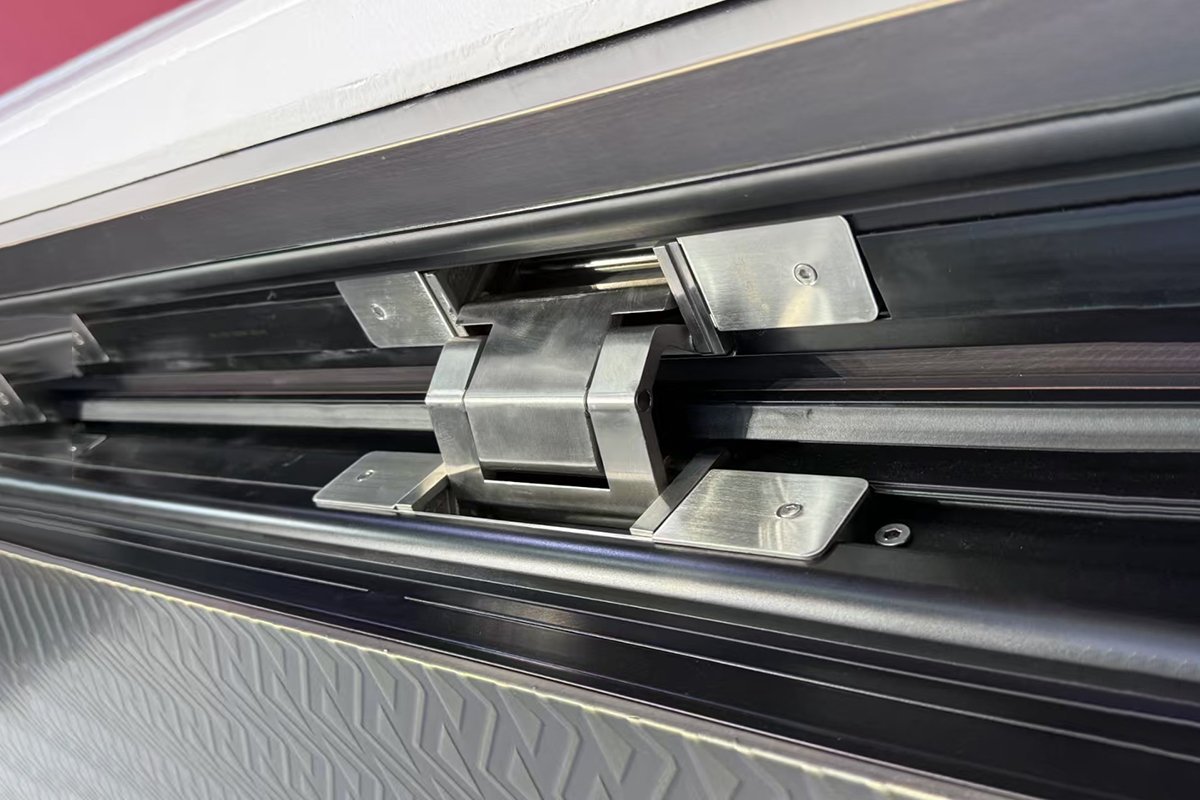
I pay close attention to the hinge arm. The arm takes a large part of the movement stress. For a heavy main door, I do not recommend low-strength plastic arms. Plastic may be acceptable in some light furniture or light internal uses, but I do not treat it as a safe choice for heavy-duty exterior entrance doors. I look for stronger metal structures. Stainless steel can give good strength and corrosion resistance.7 Zinc alloy can also work well in the right design and grade. The final choice depends on the hinge model, load target, surface finish, and price level.
I also check the relationship between door size and load. A 100 kg narrow door and a 100 kg wide door do not create the same stress. A wide door creates more leverage on the hinge side.8 A tall door also needs careful hinge spacing. I usually ask the customer for a drawing, or at least the door height, width, thickness, and estimated weight.
| Selection point | My factory-side question | My risk if I ignore it |
|---|---|---|
| Load rating | What weight can this model support under correct installation? | The door may sag |
| Door width | How far is the lock side from the hinge side? | The hinge may face higher leverage |
| Arm material | Is the arm stainless steel, zinc alloy, or weak plastic? | The arm may deform or break |
| Mortise space | Can the door and frame hold the hinge body? | The installer may cut too much material |
| Opening angle | Does the project need 90°, 120°, or 180°? | The door may not open as required |
| Adjustment method | Can I adjust height, depth, and side gap? | Small errors may become big site problems |
I also check how many hinges the door needs. A heavy entrance door often needs more than two hinges.9 The exact number depends on the model and the door data. I avoid simple rules when the door is expensive. I would rather spend more time confirming the hinge plan than handle complaints after delivery.
Why Does Installation Accuracy Decide The Final Result?
I know a good hinge can still perform badly when the mortise is rough, the frame is weak, or the installer has no experience.
Concealed hinges need accurate mortising in the door and frame.10 They are not as forgiving as ordinary butt hinges. I must confirm enough material thickness, correct cutting size, aligned positions, and skilled installation before using them.
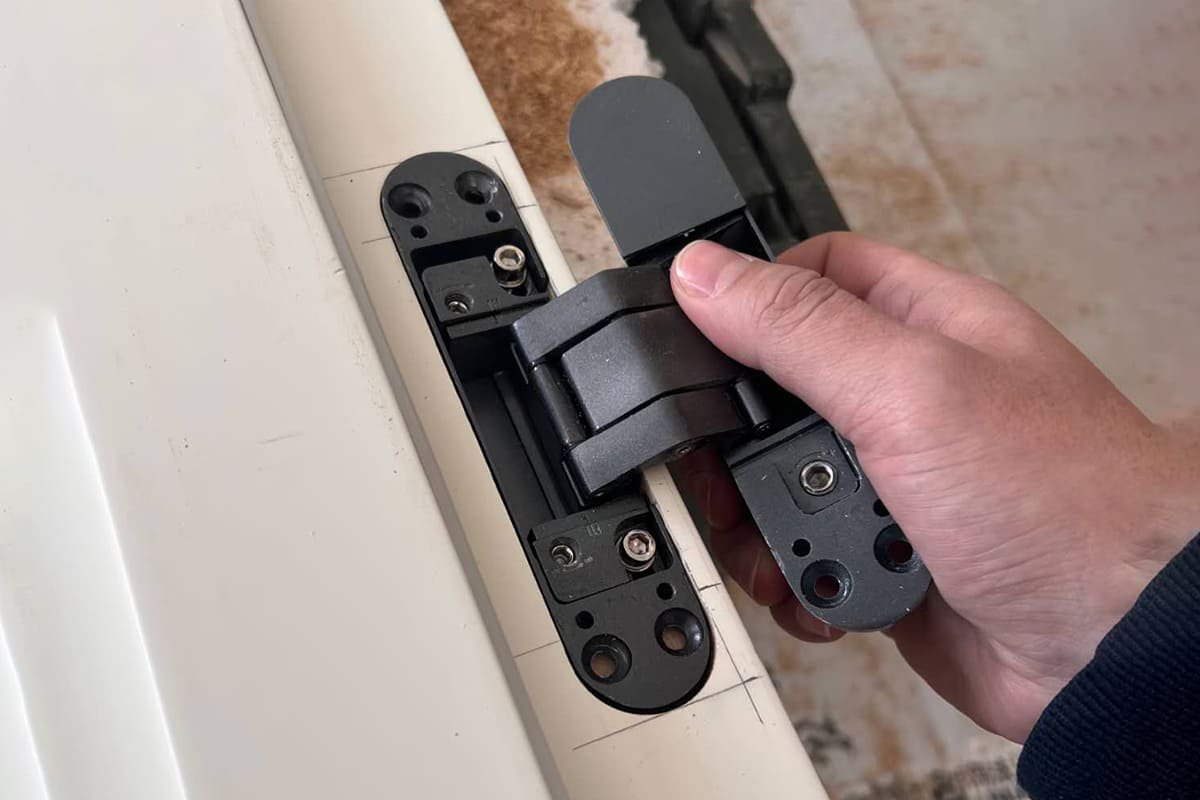
I see installation as the biggest hidden cost in concealed hinge projects. A butt hinge is easier to understand and easier to fit. A concealed hinge needs a pocket inside the door and frame. This pocket must match the hinge body. If the mortise is too shallow, the hinge may not sit flush. If the mortise is too deep, the door may lose strength or sit out of position. If the left and right positions are not aligned, the hinge may bind during movement.
I also do not recommend concealed hinges for very narrow door leaves or very narrow frames without checking the space. The hinge body needs room. The door edge must still keep enough strength after cutting.11 A thin or narrow structure may crack, deform, or fail to hold screws well. I always prefer to check drawings before I approve a concealed hinge for a special profile.
| Installation factor | What I ask the customer | What can go wrong |
|---|---|---|
| Mortise depth | Can the factory machine the pocket accurately? | The hinge may sit unevenly |
| Door edge width | Is there enough material after cutting? | The door edge may weaken |
| Frame profile | Can the frame accept the hinge body? | The frame may deform or split |
| Screw holding | Is the base material strong enough? | Screws may loosen over time |
| Position accuracy | Can the worker align all hinge pockets? | The door may rub or bind |
| Site adjustment | Can the installer adjust after hanging? | The gap may stay uneven |
In my work, I like to provide product drawings and installation dimensions before bulk production. I also suggest sample testing when the door system is new. A sample door can show many real problems before mass orders begin. It can show whether the hinge clears the frame, whether the opening angle is enough, and whether the door gap stays even. This step may take time, but it often saves a larger cost later.
How Should I Control Cost, Maintenance, And Supplier Risk?
I see buyers compare only unit price first, then pay more later through rework, delay, finish mismatch, and customer complaints.
I control risk by checking the full cost of the concealed hinge system. I include hinge price, machining cost, installation skill, adjustment time, finish consistency, spare parts, delivery stability, and future maintenance.
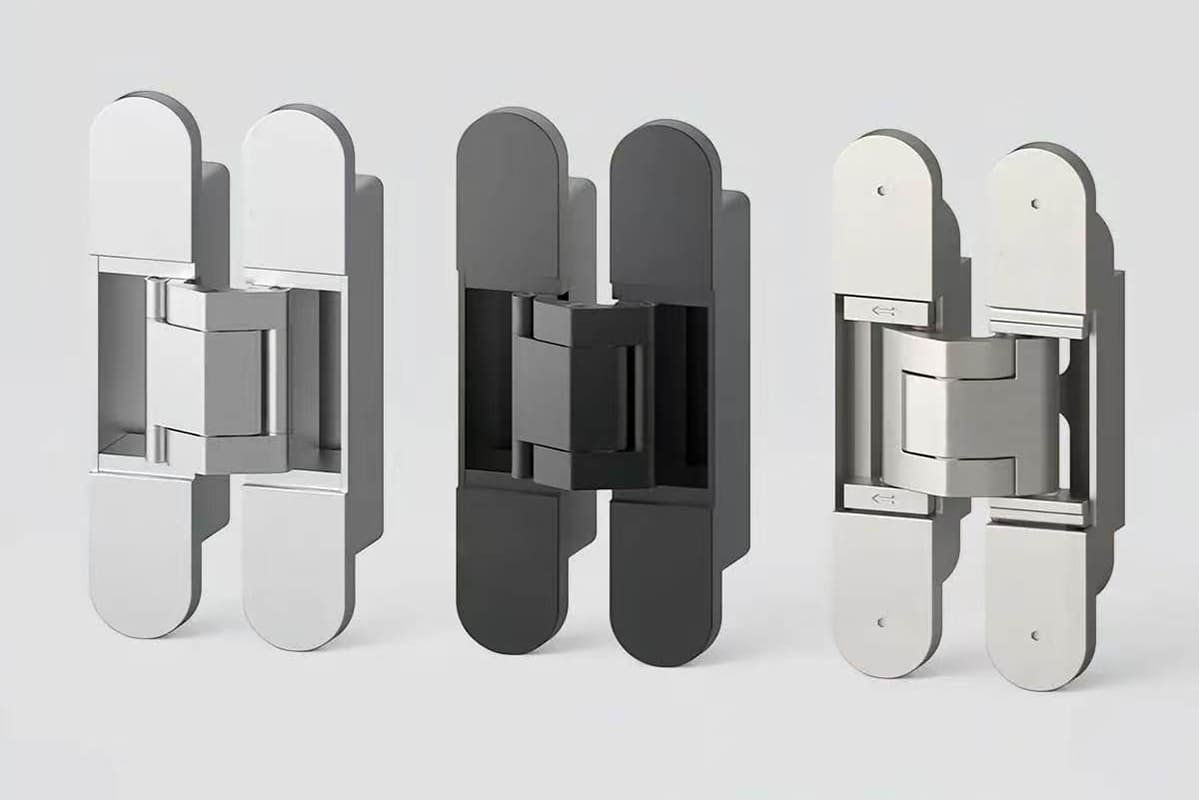
I do not treat concealed hinges as a low-cost replacement for common butt hinges. The hinge itself may cost more. The machining work may also cost more. The installation may need better workers and more time.12 If the door factory has CNC equipment and stable jigs, the process can be smooth. If the factory depends on manual cutting only, the rework risk may rise. I always ask the buyer about production method because the same hinge can create different results in different factories.
Maintenance also matters. A main door is used every day. The hinge must keep the door aligned over time. I prefer models with practical adjustment methods because door gaps can change after installation. I also pay attention to screw quality, surface finish, and corrosion resistance, especially for exterior doors in humid or coastal markets. Finish consistency matters for hardware brands and wholesalers. A batch with mixed color tone can create complaints even when the hinge function is fine.
| Cost or risk point | What I include in my check | Why it matters |
|---|---|---|
| Product price | I compare model structure, not only price | Cheap parts may raise failure risk |
| Machining cost | I check cutting method and tool accuracy | Bad mortising causes rework |
| Installation time | I ask about worker skill | Slow installation affects project cost |
| Finish consistency | I check batch surface control | Brands need uniform appearance |
| Certification need | I confirm project and market requirements | Some projects need CE or fire-rated documents |
| Delivery stability | I check factory capacity and lead time | Late hardware delays door shipment |
| Spare parts | I check screws, covers, and accessories | Missing parts create site trouble |
At SDH Hardware, I normally confirm these points before I quote or recommend a concealed hinge model. I check whether the customer needs a standard product or an ODM version. I also check whether the door system needs stainless steel, zinc alloy, a special finish, or a matched hardware set. For international buyers, I pay special attention to stable production, repeatable finish, and clear inspection. I know the buyer needs more than a beautiful hinge. The buyer needs a hinge that can be installed on time, work smoothly, and support long-term sales.
Conclusion
I choose concealed hinges for main doors when beauty, strength, structure, installation, and maintenance all match the real door system.
"Search : Foreign Affairs Manual", https://fam.state.gov/search?query=locking%20hardware. Institutional guidance on exterior door assemblies describes entrance-door performance as a combination of structural support, security hardware, operational durability, and maintenance considerations; this supports treating concealed hinges as one component of a broader door-system specification. Evidence role: expert_consensus; source type: institution. Supports: Exterior entrance doors are commonly evaluated for structural performance, security hardware, durability, and maintainability rather than appearance alone.. Scope note: The source would support the general door-system principle, not prove that every concealed hinge installation meets those requirements. ↩
"Door - Wikipedia", https://en.wikipedia.org/wiki/Door. Educational or code-oriented building references commonly distinguish exterior doors from interior doors by construction and performance requirements, including greater durability and often greater thickness; this provides context for why hinge selection for entrance doors differs from light interior doors. Evidence role: general_support; source type: education. Supports: Exterior doors are typically specified with different construction, thickness, and durability requirements than interior doors.. Scope note: The source would describe typical construction differences, while actual size and weight still vary by product and project. ↩
"Fire Rated Concealed Door Hinges: A Comprehensive Guide", https://www.mckinneyhinge.com/en/resource-library/knowledge-center/blog/blog-post.aehdynamic-fire-rated-concealed-door-hinges-a-comprehensive-guide-650c3a3f9bc9de00014c211c_mckinney.html. Architectural hardware standards and guidance classify hinges by duty level and door application, supporting the statement that some hinge designs are intended for high-load service when matched to door weight and installation conditions. Evidence role: general_support; source type: institution. Supports: Door hinges are specified by load capacity, door weight, frequency of use, and installation conditions, and some architectural hinges are designed for heavy-duty service.. Scope note: Such sources generally support the principle of rated heavy-duty hinges; the exact capacity of a concealed hinge remains model-specific. ↩
"Tamper-Proof Hinges- Is your home safe? - YouTube",
. Door-security guidance identifies exposed hinge components as potential hinge-side attack points and recommends protective measures where hinges are accessible, which supports the limited claim that concealed hinges reduce one visible external point of leverage. Evidence role: mechanism; source type: government. Supports: Security guidance often treats exposed hinge pins or hinge-side hardware as possible attack points and recommends protective hinge-side measures for outward-opening or exposed-hinge doors.. Scope note: This supports a mechanism for reducing exposure, not a finding that concealed hinges alone prevent forced entry. ↩"[PDF] PHYSICAL SECURITY OF DOOR ASSEMBLIES AND COMPONENTS", https://www.ojp.gov/pdffiles1/nij/32269.pdf. Government and public-safety door-security guidance commonly emphasizes reinforced locks, strike plates, frames, and correct installation, supporting the article’s claim that hinge concealment is only one part of a secure entrance-door assembly. Evidence role: expert_consensus; source type: government. Supports: Effective forced-entry resistance depends on the door slab, lockset, strike plate, frame, and installation quality working together.. Scope note: The source would provide general security guidance rather than testing the specific concealed hinge models discussed. ↩
"Why 3D Adjustable Concealed Hinges are the Game-Changer", https://www.assaabloy.com/ae/en/stories/access-stories/why-3d-adjustable-concealed-hinges-are-the-game-changer-your-doors-need. Architectural hardware technical references describe adjustable concealed hinges with multi-axis alignment features, supporting the statement that some concealed hinge models permit post-installation correction of door position. Evidence role: mechanism; source type: institution. Supports: Adjustable concealed hinges can include height, lateral, or depth adjustment mechanisms used to correct door alignment after installation.. Scope note: This is model-dependent; the source should not be read as implying that all concealed hinges include adjustment functions. ↩
"cryogenic material properties 304 Stainless", https://trc.nist.gov/cryogenics/materials/304Stainless/304Stainless_rev.htm. Materials-science references explain that stainless steels derive corrosion resistance from a chromium-rich passive oxide layer and can provide useful mechanical strength, supporting their common use in durable door hardware. Evidence role: general_support; source type: education. Supports: Stainless steels generally combine useful mechanical properties with corrosion resistance due to chromium-rich passive films.. Scope note: Performance depends on alloy grade, environment, surface finish, and design; this does not validate any specific hinge component. ↩
"Moment (physics) - Wikipedia", https://en.wikipedia.org/wiki/Moment_(physics). Basic mechanics references define torque as the product of force and moment arm, supporting the article’s explanation that a wider door can place greater rotational load on the hinge side even when total weight is unchanged. Evidence role: mechanism; source type: education. Supports: Torque increases with the perpendicular distance between the line of force and the pivot, so wider doors impose greater moment on hinges for a given weight distribution.. Scope note: The source supports the physical principle, while actual hinge stress also depends on door construction, hinge spacing, and installation geometry. ↩
"Everything you need to know about Commercial Door Hinges", https://www.mckinneyhinge.com/content/mckinney/us/en/resource-library/knowledge-center/blog/blog-post.aehdynamic-everything-you-need-to-know-about-commercial-door-hinges-top-10-commercial-contractors-hinge-installation-questions-633f18001fa7df003d7c229b_mckinney.html. Architectural hardware guidance specifies hinge quantity and grade in relation to door height, weight, and service conditions, supporting the statement that heavy entrance doors may require more than two hinges. Evidence role: expert_consensus; source type: institution. Supports: Hinge schedules and architectural hardware guidance commonly vary hinge quantity according to door height, weight, and duty level.. Scope note: The correct hinge count remains application-specific and must follow the selected hinge manufacturer’s tested rating and project requirements. ↩
"Concealed Hinges 101 - YouTube",
. Technical installation references for mortised door hardware explain that hinge recess depth and alignment affect flush seating, clearances, and door swing, supporting the claim that concealed hinges require accurate mortising in both door and frame. Evidence role: mechanism; source type: education. Supports: Mortised hinges depend on accurate pocket depth, position, and alignment to sit flush and allow proper door movement.. Scope note: The source would support the installation mechanism generally, not quantify acceptable tolerances for a particular concealed hinge model. ↩"Wood Handbook, Chapter 08: Fastenings", https://research.fs.usda.gov/download/treesearch/37424.pdf. Wood-engineering references discuss how fastener withdrawal resistance and member strength depend on material dimensions, density, and edge conditions, supporting the caution that hinge mortising should leave sufficient door-edge material. Evidence role: mechanism; source type: government. Supports: Material removed near an edge can affect local strength and fastener holding capacity, especially in wood or composite members.. Scope note: The source is most directly applicable to wood and wood-based doors; metal or composite profiles require separate structural evaluation. ↩
"Mortise vs Non-Mortise Hinge: Differences & Cost Comparison", https://doorsforpros.com/blog/post/mortise-vs-non-mortise-hinge?srsltid=AfmBOoqPM_4xQvgEIXnWEzg1M_sZQjqnUul3b8uHGEIcnit4rTnWAhNV. Construction and architectural-hardware estimating references note that hardware requiring precise mortising, templates, or skilled fitting can increase installation labor and coordination cost, supporting the article’s total-cost framing for concealed hinges. Evidence role: general_support; source type: institution. Supports: Specialty door hardware that requires precise mortising or machining can increase labor, equipment, and installation complexity compared with simpler surface or butt-hinge applications.. Scope note: Cost impact varies by factory tooling, worker experience, order volume, and the selected hinge system. ↩