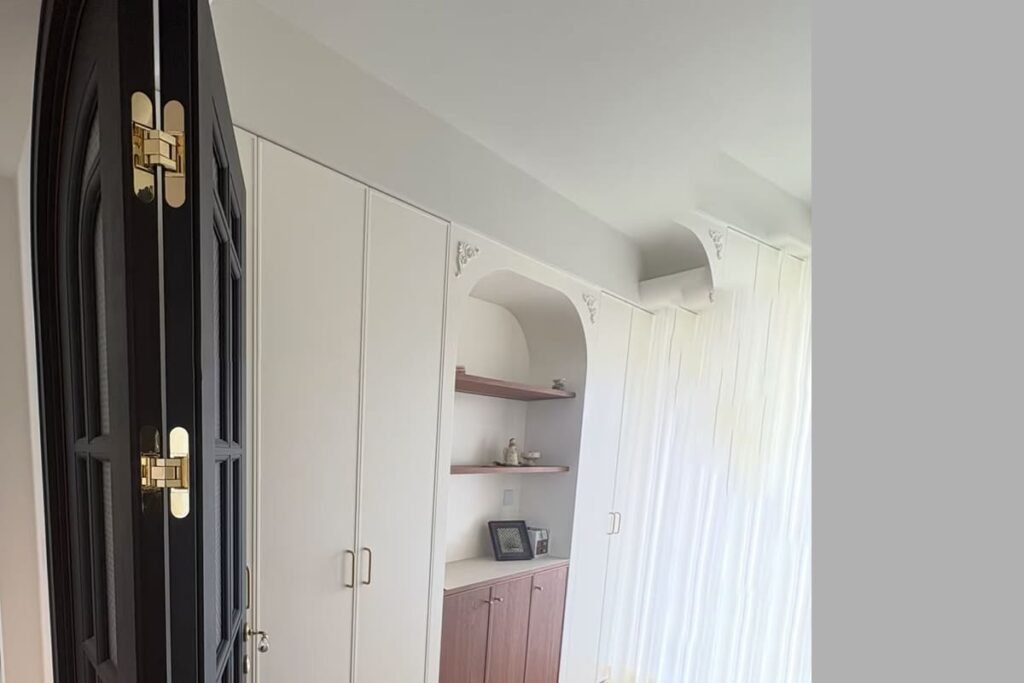
How Does a Self Closing Concealed Door Hinge Work?
I see many buyers lose time when a hidden hinge closes too fast, too weak, or not at all. The problem usually starts with unclear hinge structure.
I define a self closing concealed door hinge as a hidden hinge with built-in spring force, damping control, or both1. It pulls the door back toward the closed position after opening. The best result depends on door weight, opening angle, hinge quantity, adjustment range, and installation accuracy.2
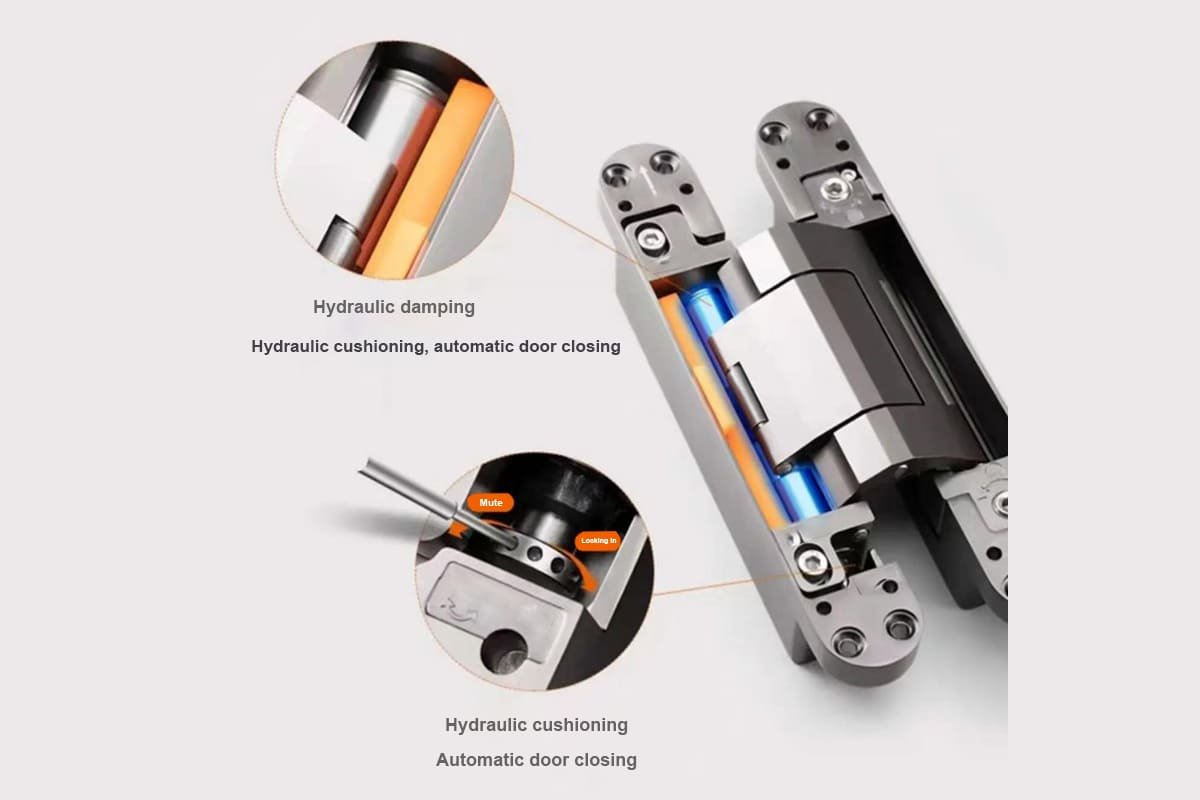
I always look at a self closing concealed hinge as a small control system inside the door edge. It does not only connect the door and frame. It also controls movement, closing speed, final pull, and door position. When I speak with door factories, I notice one common issue. Many teams treat the hinge like a normal concealed hinge with one extra function. I think that view is too simple. The self closing function affects milling, load balance, fire door use, finish choice, and long-term after-sales risk. If I choose the wrong structure, the door may close loudly, stop before latching, or lose force after many cycles. This is why I always start with the working principle before I talk about price, finish, or packaging.
What Parts Make a Self Closing Concealed Door Hinge Work?
I have seen projects fail because buyers only checked the hinge size. They ignored the spring, damper, pivot arms, and adjustment screws inside.
I understand a self closing concealed door hinge through five main parts: hinge body, pivot arms, closing spring, damping unit, and adjustment system. These parts stay hidden inside the door and frame. They guide the door movement and create controlled closing force after the door is opened.
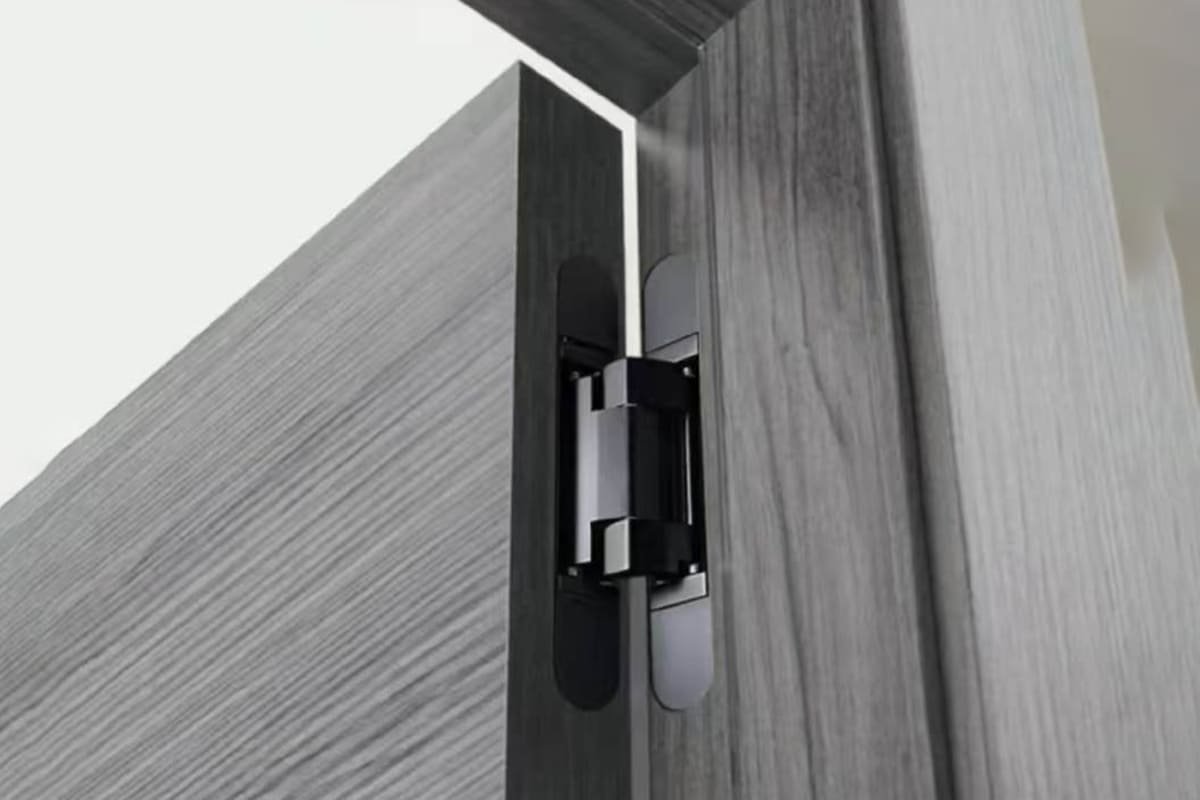
I break the hinge into working parts
I first check the hinge body because it carries the door load. The hinge body sits inside the door leaf and the frame. It must have stable material, accurate machining, and enough thickness. I then check the pivot arms. These arms open and fold when the door moves. They replace the visible knuckle of a butt hinge. I also check the closing spring. The spring stores force when the door opens. It releases that force when the door returns.3 Some designs use a mechanical spring only. Some designs add hydraulic or soft-close damping. I care about this point because a strong spring without damping can slam the door4. A weak spring with too much damping can fail to latch.
| Part I check | What it does | What I watch in production |
|---|---|---|
| Hinge body | I use it to hold the door load | I check material thickness and machining accuracy |
| Pivot arms | I use them to guide hidden movement | I check smooth folding and side clearance |
| Spring unit | I use it to create closing force | I check force range and cycle life |
| Damping unit | I use it to slow the door | I check oil leakage risk and closing speed |
| Adjustment screws | I use them to correct door gaps | I check 3D adjustment range and screw strength |
I always tell customers that the hinge must work as a full set. One weak part can affect the full door system. A perfect surface finish cannot fix a poor spring. A strong spring cannot fix bad milling. A good hinge needs balance.
How Does the Spring Create the Self Closing Force?
I often meet buyers who ask for “stronger closing.” I always ask one question first. I ask what door weight and door size they use.
I explain the spring action in simple terms. When I open the door, the hinge spring is compressed or twisted. The spring stores energy. When I release the door, the spring releases energy and pulls the door back toward the frame.
I see the spring as stored movement
I treat the spring as the heart of the self closing concealed hinge. When the door opens, the internal arm system turns or pushes the spring. The spring does not create force from nothing. It stores the force that I apply when I push the door open. When I let go, the spring tries to return to its original position. That action moves the arms and brings the door back. The door then moves toward the closed position. This sounds simple, but the force must match the real door.
| Door condition I check | If spring force is too low | If spring force is too high |
|---|---|---|
| Heavy wooden door | I see the door stop before closing | I see stress on screws and frame |
| Light aluminum door | I see weak final latch action | I hear loud closing noise |
| Fire-rated door | I see failure in self closing test | I see fast impact near the lock |
| Hotel room door | I see guest complaints about open doors | I see guest complaints about noise |
I prefer adjustable spring force when the project has different door sizes. I can set a lighter force for small doors. I can set a stronger force for larger doors. I also check the latch resistance. A mortise lock with a heavy latch spring needs more closing force. A soft latch needs less. This is why I never judge the hinge alone. I judge the hinge, lock, door weight, and frame gap together. I learned this after one hotel project where the hinge looked correct on paper, but the latch resistance was too high. The doors closed to the frame, but they did not always latch. The final problem was not only the hinge. It was the full door hardware match.
Why Does Damping Matter in a Self Closing Concealed Hinge?
I have handled many sample tests where the hinge could close the door, but the closing sound made the buyer reject the sample.
I use damping to control closing speed. The spring pulls the door closed, and the damper slows that movement5. This helps reduce slamming, protect the frame, improve comfort, and keep the final closing action more stable in daily use.
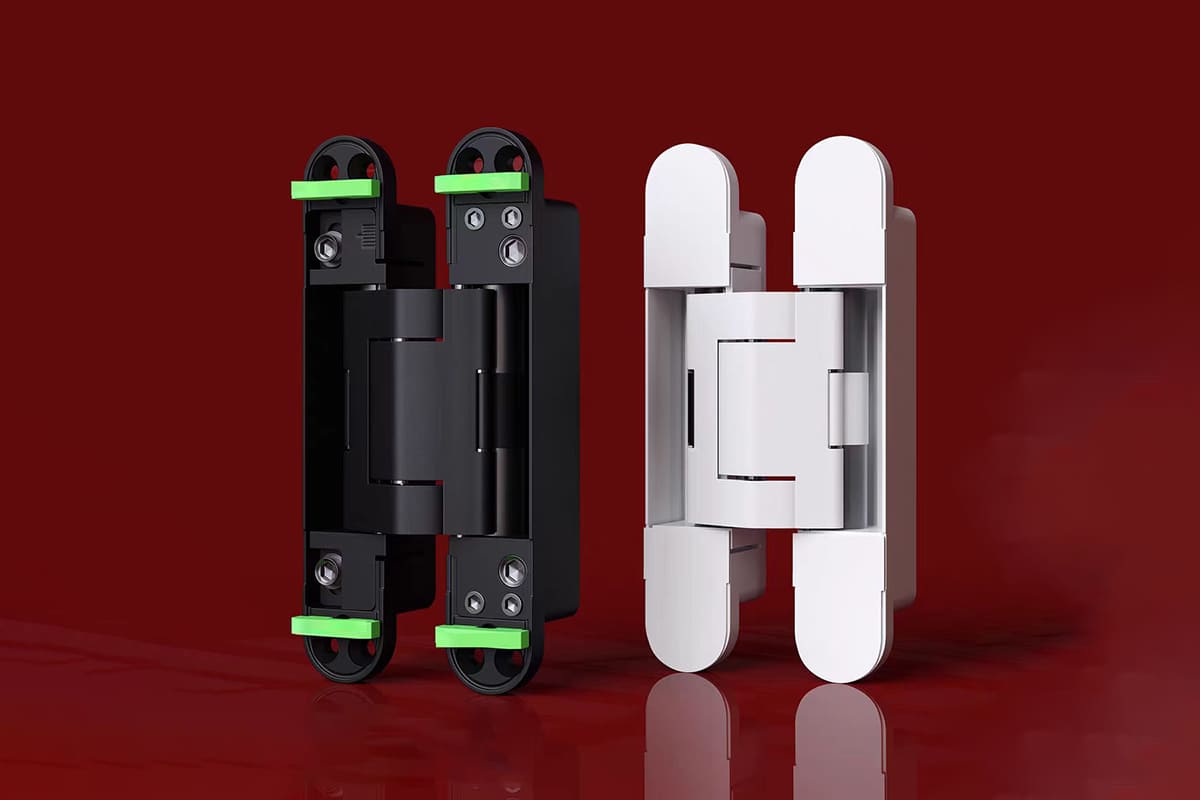
I use damping to make closing safe and quiet
I see damping as the part that makes the hinge feel professional. A spring can close a door, but it may close too fast. A damper controls the speed. In many concealed hinges, the damper uses hydraulic resistance or friction control. When the door moves through the final closing range, the damping unit slows the arm movement. This gives the door a softer close. I care about this on apartment doors, hotel doors, office doors, and quiet indoor areas. I also care about it for doors with glass panels because impact can cause noise and risk.
| Damping point I test | What I want to see | What problem I avoid |
|---|---|---|
| Opening angle before damping starts | I want smooth movement | I avoid sudden stop |
| Final closing speed | I want steady pull | I avoid door slamming |
| Final latch force | I want enough closing energy | I avoid incomplete latching |
| Temperature behavior6 | I want stable speed | I avoid slow closing in cold areas |
| Cycle test result | I want repeat movement | I avoid oil leakage and failure |
I always remind customers that damping should not fight the spring too much. If damping is too heavy, the door may stop before the latch engages. If damping is too light, the door may still slam. The correct design is a balance between spring force and damping resistance. In my factory work, I also ask the customer to send door weight, door thickness, expected opening angle, and lock type. I use these details before I suggest a model. I do this because the same hinge can feel different on different doors. A showroom test panel is not the same as a real project door.
How Does the Hidden Pivot System Move the Door?
I have seen people open a concealed hinge sample by hand and think the movement is magic. I know the movement comes from linked arms.
I describe the hidden pivot system as a set of internal arms that fold and rotate inside the hinge body. These arms let the door swing open while keeping the hinge invisible after closing. The arm geometry decides opening angle, clearance, and smoothness.
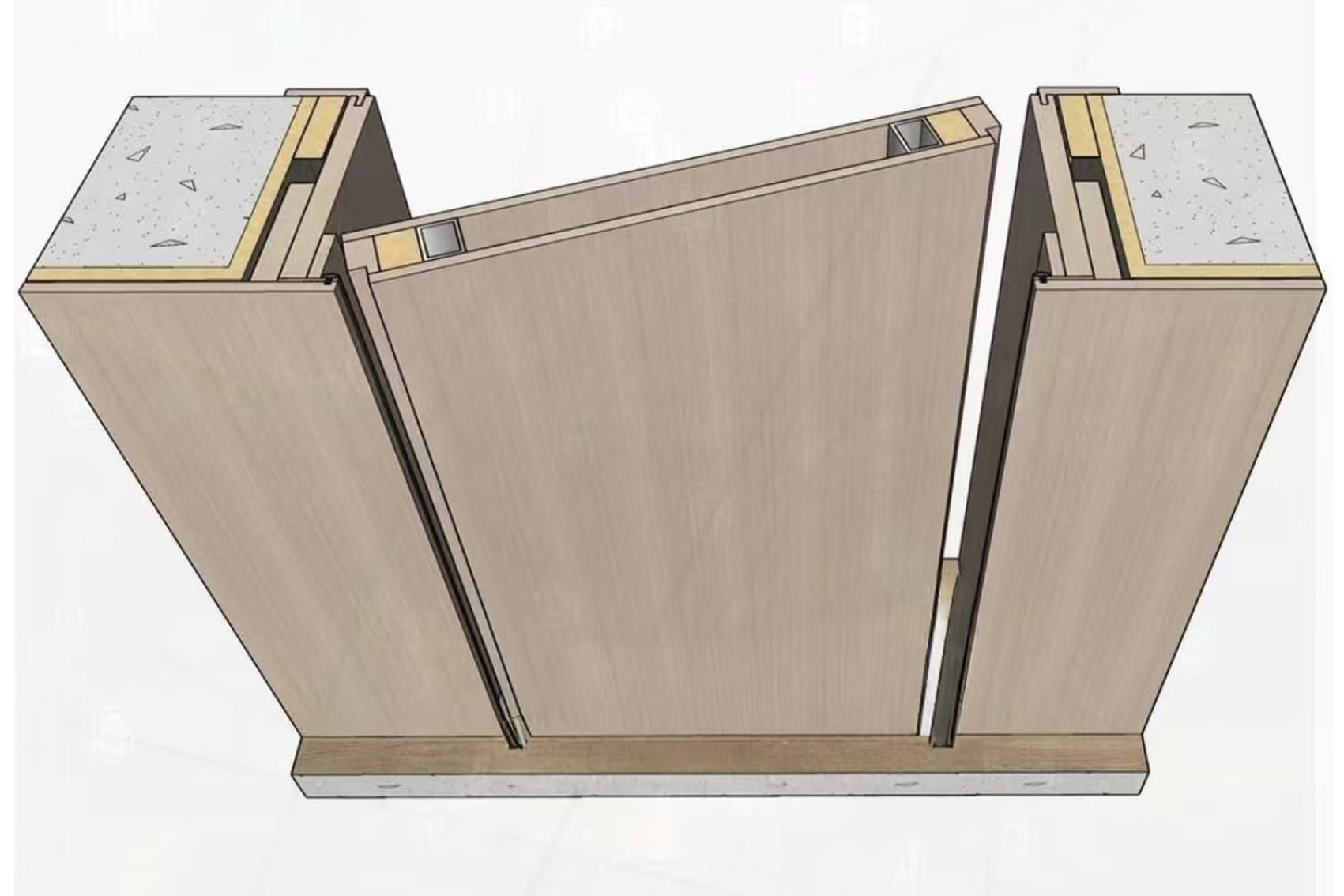
I study the arm geometry before I approve a hinge
I check the hidden pivot system because it decides how the door moves in real use. A normal butt hinge rotates around one visible pin. A concealed hinge uses several pivot points inside the hinge body.7 These points guide the door along a controlled path. The arms fold when the door closes. The arms extend when the door opens. The door can sit flush with the frame after closing because the hinge is buried inside the door edge and frame. This is the main reason architects like concealed hinges.
| Movement item I check | Why I check it | What I expect |
|---|---|---|
| Opening angle | I need project match | I expect 90°, 120°, or 180° options |
| Door clearance | I need no rubbing | I expect stable gap around the frame |
| Arm strength | I need long service life | I expect no bending under load |
| Side play | I need stable alignment | I expect little shaking after cycles |
| Smoothness | I need good user feel | I expect no grinding sound |
I also check whether the hinge can support the door without sagging. A concealed hinge has hidden arms, so the load path is different from a butt hinge. If the door is too heavy, the arms and screws carry high stress. This can cause the door to drop.8 It can also cause the latch and strike plate to misalign. I normally ask customers to confirm door height, width, thickness, and weight. I also ask how many hinges they plan to use. A tall door may need three or four hinges.9 A heavier fire-rated door may need a stronger hinge body and larger screws. I prefer to solve this before mass production because correction on site is expensive.
How Do 3D Adjustments Help the Hinge Close Correctly?
I often see installers blame the hinge when the door gap is wrong. I usually find that adjustment was not fully used or the milling was not accurate.
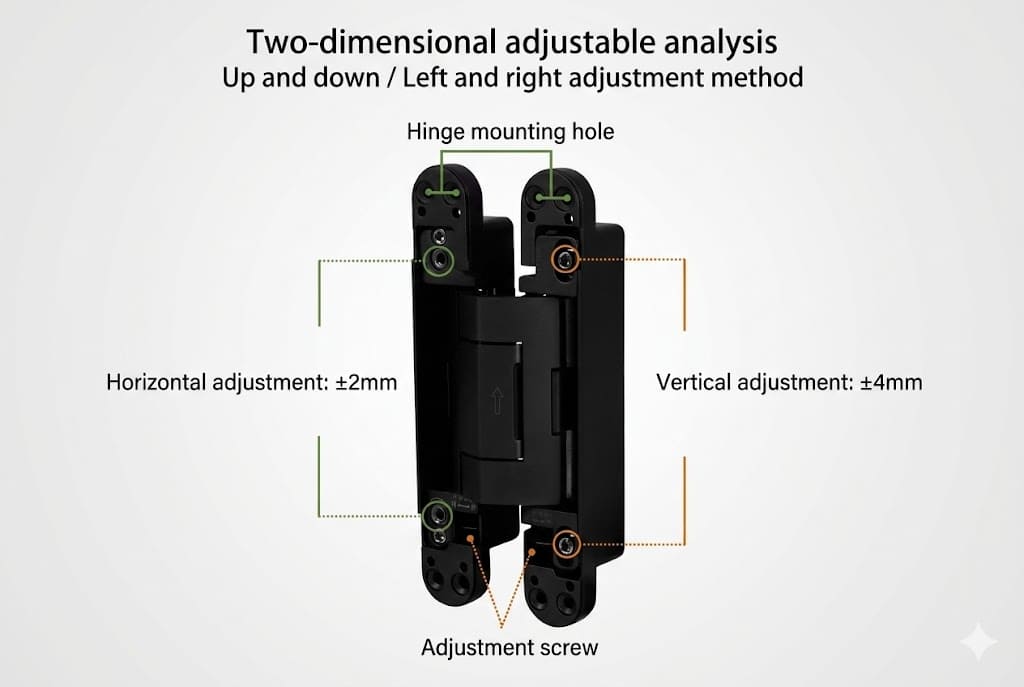
I use 3D adjustment to move the door up and down, left and right, and in and out after installation. This helps correct small fitting errors. It also helps the self closing force guide the door into the correct final position.
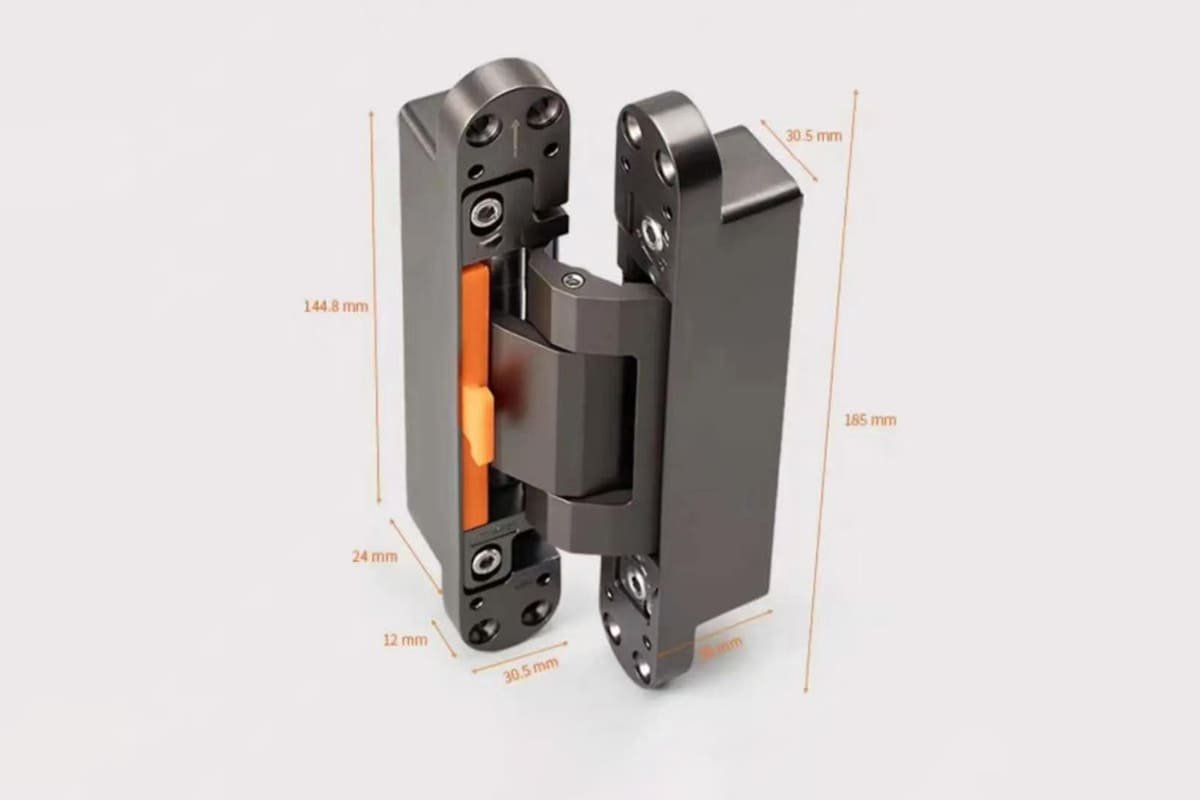
I use adjustment to protect the final fit
I value 3D adjustment because real doors are not always perfect. Wood can move.10 Frames can shift. Milling depth can vary. Paint or veneer can change the final thickness. A concealed hinge sits inside a pocket, so even a small error can affect door gaps. The 3D adjustment system allows me or the installer to correct the door position after hanging.11 Usually, I can adjust height, side gap, and compression depth. These three directions help the door align with the frame and lock.
| Adjustment I use | What it changes | Why it matters |
|---|---|---|
| Height adjustment | I move the door up or down | I align latch and strike plate |
| Side adjustment | I move the door left or right | I control side gaps |
| Depth adjustment | I move the door in or out | I make the door flush with frame |
| Spring adjustment | I change closing force | I match door weight and latch force |
| Speed adjustment | I change damping feel | I reduce slamming or stopping |
I always tell door factories not to use adjustment as a repair for bad preparation. Adjustment helps with small errors. It cannot save wrong hinge pockets, weak screws, or wrong door weight selection. I prefer to confirm milling drawings before production. I check pocket length, width, depth, screw hole position, and frame structure. I also check whether the door leaf has enough solid material around the hinge. Some light doors need reinforcement. If the screw area is weak, the hinge may loosen after repeated closing. The self closing force adds extra movement and stress. This is why I take installation details seriously. A good hinge still needs a correct door structure.
How Should I Choose the Right Self Closing Concealed Hinge for a Project?
I have watched buyers compare only unit price. I think that method creates hidden cost when the hinge does not match the door system.
I choose a self closing concealed hinge by checking door weight, door thickness, opening angle, fire rating needs, finish, adjustment range, and test cycle. I also match the hinge with the mortise lock and door frame to make sure the door can close and latch.
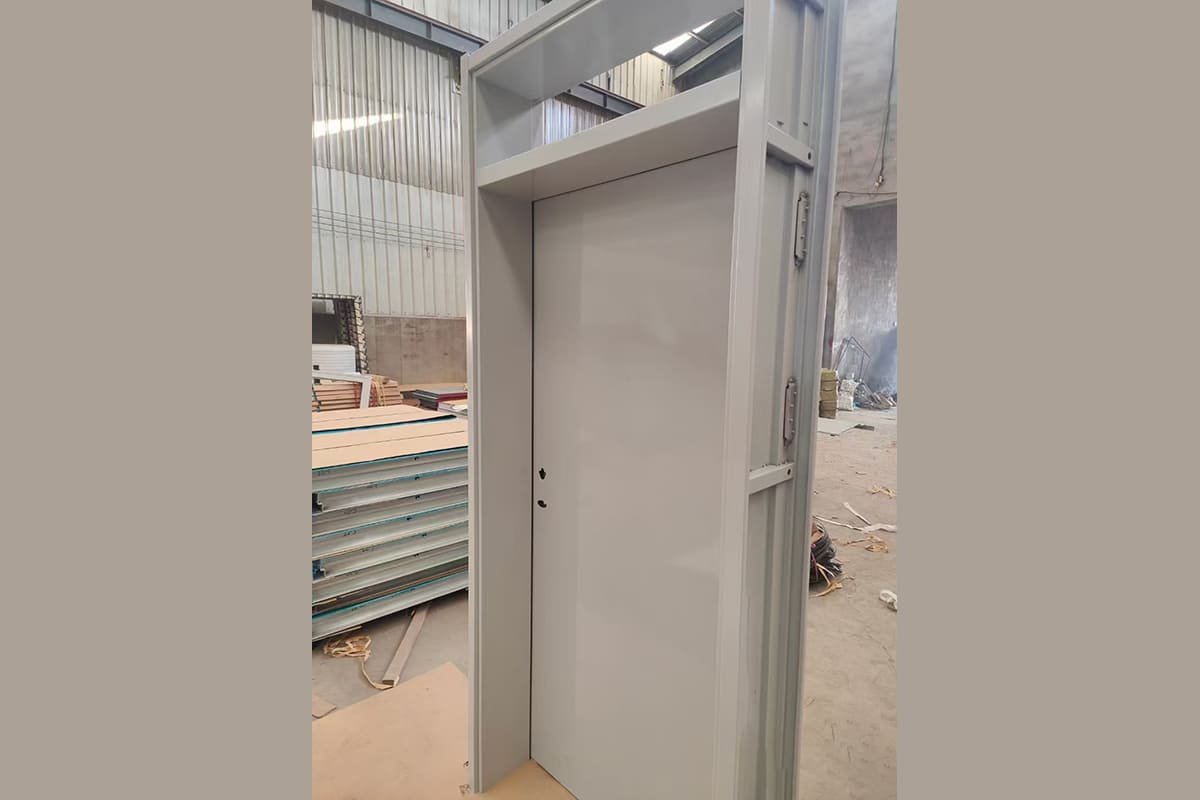
I use a simple project checklist
I always start with the door specification. I ask for door height, width, thickness, weight, material, and frame type. I then ask for the application. A hotel door needs quiet closing. A fire-rated door needs certified self closing action.12 A public building door needs higher cycle life. A residential interior door may need a cleaner look and soft movement. I also check the lock. The latch force can decide whether the hinge can close the door fully. I learned to ask this after several export orders where the hinge passed a basic sample test, but the final door did not latch well after the customer changed the lock model.
| Item I confirm | My reason | My usual action |
|---|---|---|
| Door weight | I need correct load rating | I choose hinge size and quantity |
| Door thickness | I need enough pocket space | I confirm hinge body depth |
| Opening angle | I need functional movement | I match 90°, 120°, or 180° design |
| Fire rating | I need compliance | I check certificate and test use |
| Finish | I need visual consistency | I match handle, lock, and cylinder finish |
| Lock type | I need final latching | I test latch resistance |
| Installation method | I need repeat accuracy | I provide drawing and sample |
I also look at supplier control. A self closing concealed hinge is more sensitive than a simple hinge. The spring force, damping oil, machining tolerance, surface finish, and screw quality all affect the result. I prefer factory-direct production because I can control material, assembly, testing, and packing. For bulk buyers, I suggest sample testing before mass order. I also suggest testing the hinge on the real door, not only by hand. A hinge that feels smooth in the hand may act differently under full door weight. I think this step saves time, money, and complaints.
Conclusion
I see a self closing concealed hinge as a hidden system. I choose it by matching spring force, damping, load, adjustment, and real door conditions.
"Hinge - Wikipedia", https://en.wikipedia.org/wiki/Hinge. A technical standard or reference on architectural door hardware defines self-closing hardware as a mechanism that returns a door toward the closed position and describes concealed hinges as hardware hidden within the door and frame; this supports the article’s definition, although terminology may vary by standard and product category. Evidence role: definition; source type: institution. Supports: A neutral source should define concealed or self-closing hinges and identify spring-assisted closing and damping as recognized hinge or door-control functions.. Scope note: The source may support the component functions and terminology generally rather than this exact combined product phrase. ↩
"[PDF] DOOR HARDWARE (SCHEDULED BY DESCRIBING PRODUCTS)", https://fpm.usc.edu/wp-content/uploads/2021/11/087102-USC-HSC-door-hardware-Guide-Specification_1.pdf. Architectural hardware guidance treats hinge selection as a function of door size, weight, usage, required swing, and installation conditions; this supports the article’s claim that hinge performance depends on multiple door-system variables rather than hinge size alone. Evidence role: expert_consensus; source type: institution. Supports: A standards or architectural hardware source should show that hinge selection depends on door size, door weight, number of hinges, opening requirements, and installation conditions.. Scope note: Such guidance may address hinges generally and may not isolate self-closing concealed hinges. ↩
"Hooke's law - Wikipedia", https://en.wikipedia.org/wiki/Hooke%27s_law. Physics treatments of elastic potential energy explain that a spring stores energy when compressed, extended, or twisted and releases energy as it returns toward equilibrium; this supports the hinge mechanism described here. Evidence role: mechanism; source type: education. Supports: A physics or engineering source should explain that compressed or twisted springs store elastic potential energy and release it when returning toward equilibrium.. ↩
"Door closer - Wikipedia", https://en.wikipedia.org/wiki/Door_closer. Technical descriptions of door closers explain that spring energy closes the door while hydraulic or mechanical damping regulates closing speed and reduces impact at the frame; this supports the claim that spring force without sufficient damping can cause slamming. Evidence role: mechanism; source type: institution. Supports: A door-control or mechanical engineering source should explain that damping is used to regulate spring-driven closing speed and reduce impact.. Scope note: The source may discuss door closers generally rather than concealed self-closing hinges specifically. ↩
"The effect of mechanical damping loads on disabling action tremor", https://pubmed.ncbi.nlm.nih.gov/8327136/. Mechanical engineering references describe dampers as devices that dissipate energy and resist motion, thereby reducing oscillation or speed; this supports the article’s explanation that the hinge damper slows spring-driven door closing. Evidence role: mechanism; source type: education. Supports: A mechanical engineering source should explain that dampers dissipate kinetic energy and resist motion, thereby reducing speed.. ↩
"Effects of temperature on the properties of HL32 oil in ... - PMC - NIH", https://pmc.ncbi.nlm.nih.gov/articles/PMC9732129/. Engineering literature on hydraulic damping notes that fluid viscosity varies with temperature and can change damping resistance; this supports the article’s concern that closing speed may vary in cold or hot environments. Evidence role: mechanism; source type: research. Supports: A research or engineering source should show that hydraulic damping fluids change viscosity with temperature, affecting damping force and movement speed.. Scope note: The evidence is contextual unless the source tests door hinges or door closers directly. ↩
"Top 5 Types of Pivot Door Hinges", https://www.hingeoutlet.com/blogs/news/what-are-the-different-types-of-pivot-door-hinges?srsltid=AfmBOorAIv-Q9xcdRhNw6aU-Isx1ma5sg4QG_nHVnaFoo8jCPSXzMMwG. Technical drawings of concealed hinge mechanisms show linked arms rotating about multiple internal pivots to allow the door to swing while hiding the hinge in the door and frame; this supports the article’s description of the hidden pivot system. Evidence role: mechanism; source type: other. Supports: A patent, technical drawing, or engineering reference should show that concealed or invisible hinges use linked arms and multiple pivots inside the hinge body.. Scope note: Patent drawings or technical examples may represent specific designs rather than every concealed hinge. ↩
"Easy Fix For Sagging Doors - YouTube",
. Building maintenance and architectural hardware references identify overloaded or inadequately supported hinges as a cause of door sagging and latch misalignment; this supports the article’s warning about heavy doors stressing concealed hinge arms and screws. Evidence role: general_support; source type: institution. Supports: A building hardware or maintenance source should connect inadequate hinge capacity, screw support, or door weight to sagging and misalignment.. Scope note: The source may discuss hinge-supported doors generally rather than concealed hinges specifically. ↩"When to use 3 hinges per door? : r/cabinetry", https://www.reddit.com/r/cabinetry/comments/1h6xjim/when_to_use_3_hinges_per_door/. Architectural door hardware guidance commonly specifies additional hinges as door height or weight increases, supporting the article’s statement that tall doors may require three or four hinges for stable support. Evidence role: expert_consensus; source type: institution. Supports: A door hardware guide should indicate that hinge quantity increases with door height, weight, or usage.. Scope note: Exact hinge counts vary by standard, door material, hinge type, and manufacturer rating. ↩
"[PDF] The Shrinking and Swelling of Wood and Its Effect on Furniture", https://www.extension.purdue.edu/extmedia/fnr/fnr-163.pdf. Wood science references, including government wood handbooks, explain that wood changes dimension as moisture content changes; this supports the article’s statement that wood movement can affect door fit and hinge adjustment. Evidence role: mechanism; source type: government. Supports: A forestry or wood science source should explain that wood expands and contracts with moisture-content changes.. ↩
"[PDF] 3D Adjustable Concealed Hinges - Assa Abloy", https://www.assaabloy.com/ae/en/product-assets/architectural-hardware/door-hinges/concealed-hinges/assets/documents/3D_Adjustable_Concealed_Hinges_Brochure_ME.pdf. Technical descriptions of adjustable concealed hinges describe separate vertical, lateral, and depth adjustments that permit door alignment after hanging; this supports the article’s explanation of 3D adjustment. Evidence role: mechanism; source type: other. Supports: A patent, technical manual, or standards-adjacent hardware reference should describe concealed hinges with vertical, lateral, and depth adjustment after installation.. Scope note: The evidence may come from mechanism descriptions or patents for particular hinge designs, so adjustment ranges may not apply universally. ↩
"Self-Closing Doors - HPD - NYC.gov", https://www.nyc.gov/site/hpd/services-and-information/self-closing-doors.page. Fire-door standards such as NFPA 80 require many fire door assemblies to be self-closing or automatic-closing and maintained so they close and latch properly; this supports the article’s statement that fire-rated doors need certified self-closing action. Evidence role: expert_consensus; source type: institution. Supports: A fire safety code or standard should state that fire doors must be self-closing or automatic-closing and able to latch as required by the listing.. Scope note: Requirements depend on jurisdiction, opening type, and the specific fire-door assembly listing. ↩