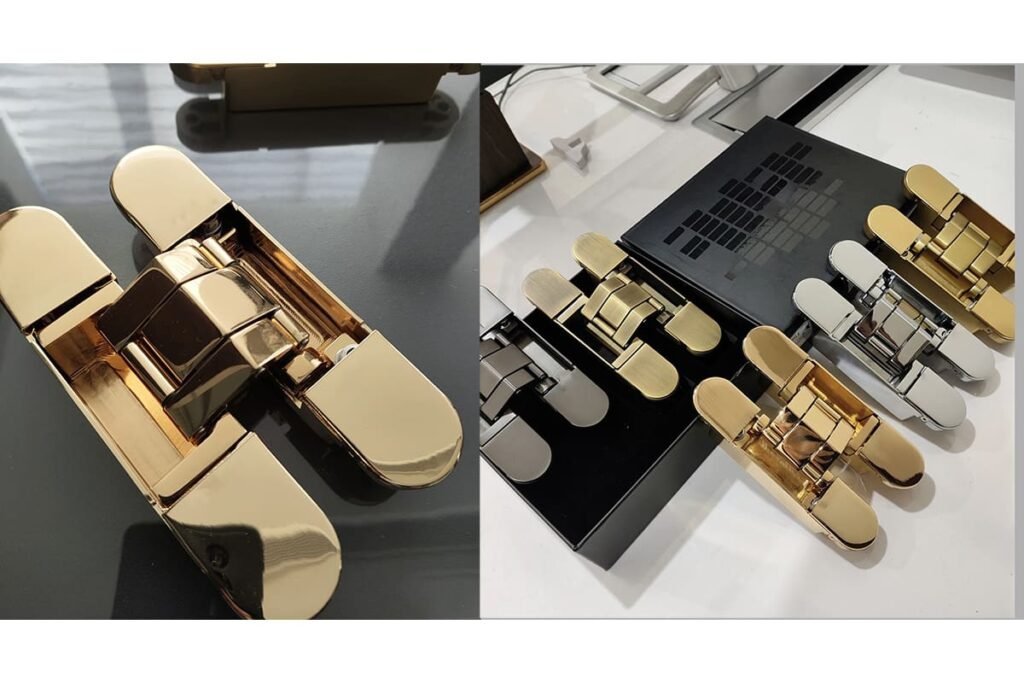
Do hidden hinges malfunction or become completely unusable?
A dragging door looks small at first. It gets worse fast. I slow the panic, sort the cause, and stop a shutdown before it starts.
Yes, hidden hinges can malfunction, but they rarely become completely unusable without a clear cause1. Most issues come from installation errors, load mismatch, environment, or wear. Total failure usually follows arm or pin breakage.2
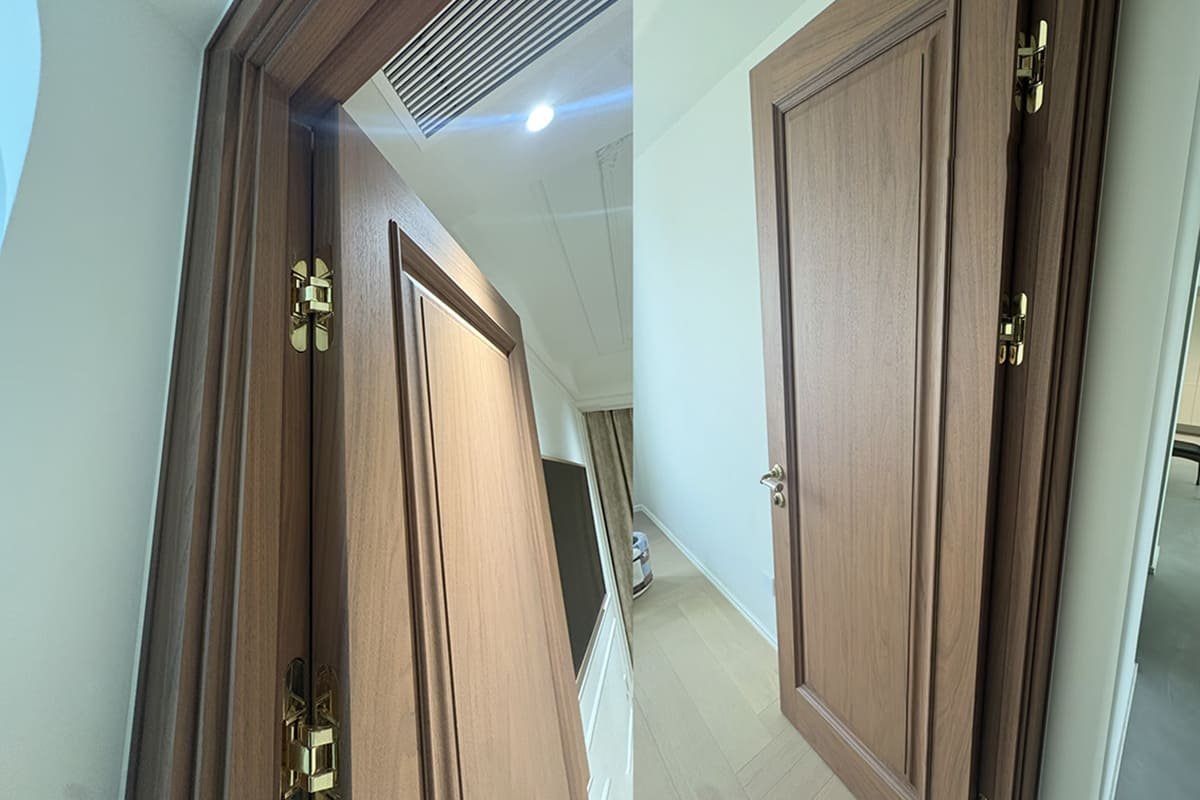
I make concealed hinges and I review claims every week. I see the same patterns in Europe, the Middle East, and Southeast Asia. I will show what fails first, what kills a hinge, and how to prevent both.
What counts as a malfunction, and what counts as complete failure?
A small click today can become a stuck door tomorrow. Many buyers react late. I separate early signs from breakdowns so I can act before the damage locks in.
Malfunction means the hinge still works but not well. Complete failure means the door cannot open or close because a key part broke or seized.
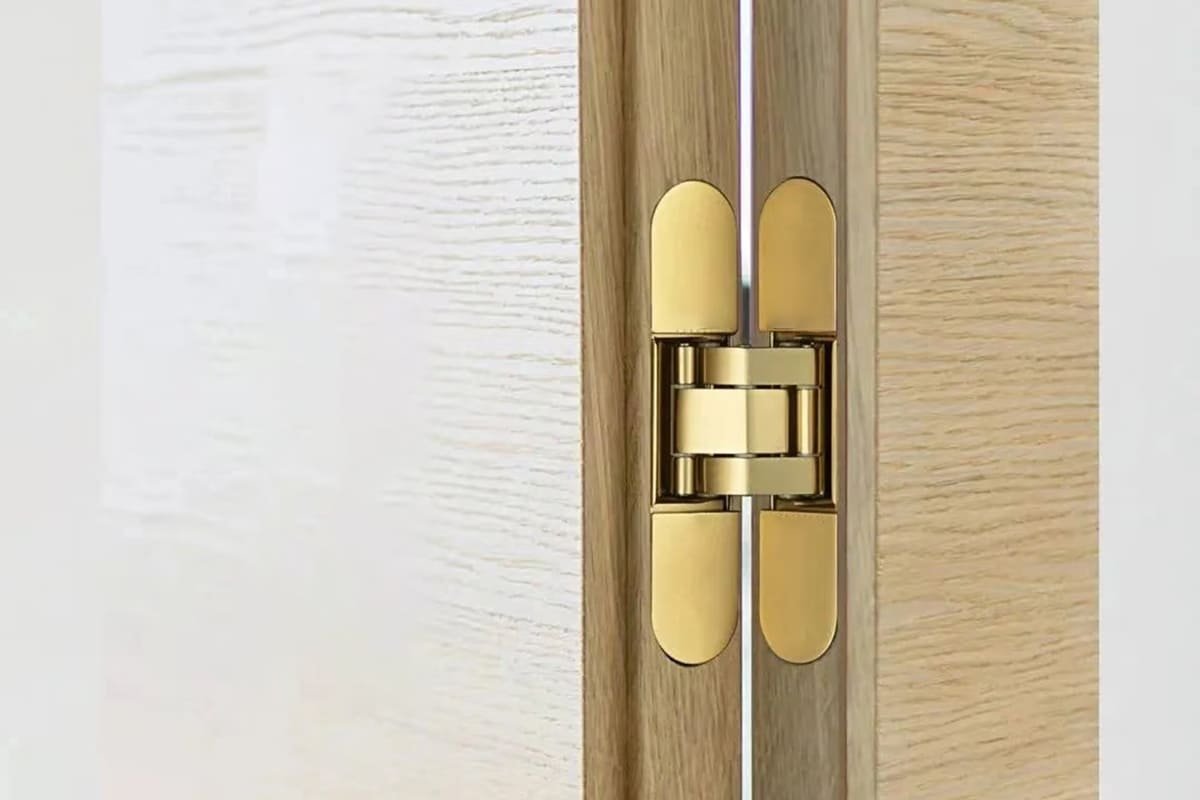
How I break down the two stages
I use simple words with my team and customers. I call the first stage “malfunction.” I call the second stage “complete failure.” Malfunction shows up as door sagging, uneven gaps, abnormal noise, stiff closing, loose screws, and lost adjustment range.3 The door still moves. It just feels wrong. It slowly hurts the hinge. Complete failure is rare without a trigger. It usually follows a broken arm, a cracked mounting ear, a bent pin, a stripped thread, or a seized joint from rust. At that point the door jams or drops. I never assume magic. Hinges fail for reasons I can see: load, fit, force, and environment. When I map the signs to the likely cause, I stop guessing and start fixing the system, not only the hardware.
| Stage | Typical sign | Likely cause | Door state |
|---|---|---|---|
| Malfunction | Sagging gap | Misaligned recess or loose screws | Opens/closes with effort |
| Malfunction | Click/creak | Dry or stressed joints | Opens/closes with noise |
| Complete failure | Arm crack | Overload or impact | Jammed or unsafe |
| Complete failure | Seized joint | Corrosion or debris | Stuck or binding |
How does installation accuracy affect concealed hinge health?
A good hinge can still fail on a bad cut. I see this most when teams rush. Small placement errors stack up and load the arm in the wrong way.
Installation accuracy is critical.4 Wrong recess depth, offset centers, or loose screws push the hinge off-axis.5 That stress grows into noise, sag, and then damage.
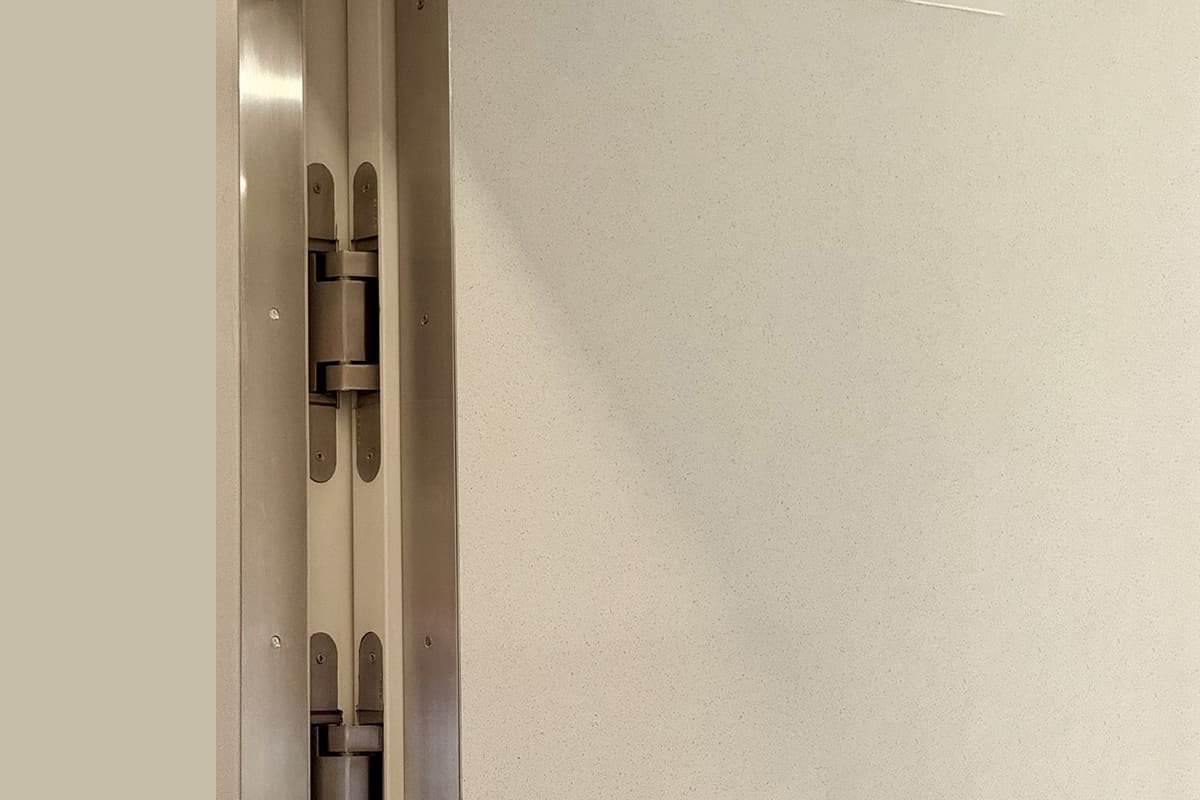
Why precision matters more with concealed hinges
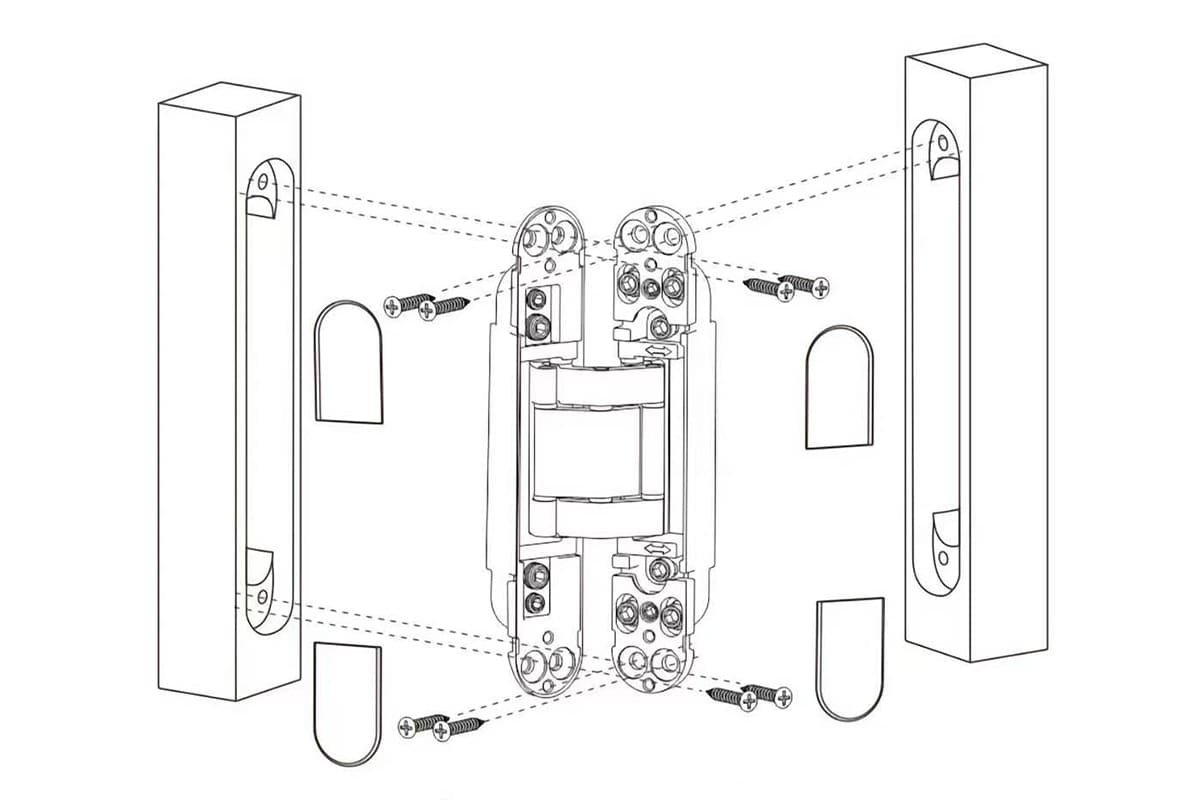
Concealed hinges need tight slotting and true alignment on both the door and the frame. The mechanism works inside the material. If the recess is too deep, the arm sits low and drags. If the recess is shallow, the cover binds. If the centers do not match, the joint twists. I once checked a hotel door batch with uneven mortises. The doors closed fine for two weeks. Then the gaps opened at the top. Screws loosened. The hinge felt rough. The fix was not stronger hinges. The fix was a proper jig and a torque check on the screws. I now ask buyers to confirm jig accuracy, drilling sequence, and screw type. I also ask for a trial installation before mass work.
| Installation error | Result in weeks | Quick check I ask for |
|---|---|---|
| Recess too deep | Door edge rubs frame | Measure depth vs spec with a gauge |
| Off-center drilling | Twist and noise on swing | Compare center lines with a template |
| Loose or wrong screws | Progressive sag | Use proper screw length and torque |
| Poor frame anchoring | Movement under load | Pull test the frame at hinge points |
Does load matching and door size decide hinge life?
Some buyers choose by price and one weight line. The door is heavier and wider than they think. The hinge pays for that guess later.
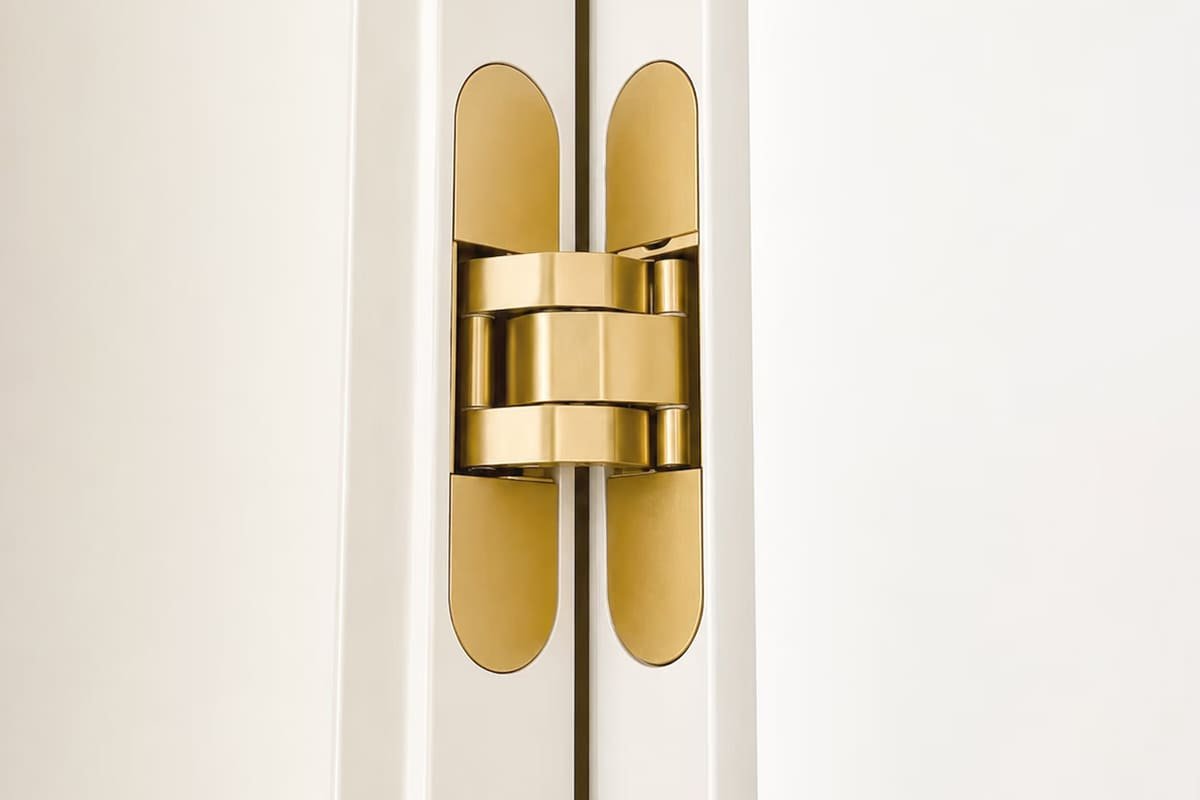
Load and size matching decide hinge life. Pick by door weight, width, height, thickness, and frame type. Use enough hinges and enough margin.
The selection math I use in real projects
I start with real door weight, not catalog weight. I add glass, seals, plates, and hardware. I note door width, because wide doors create more torque6. I check height, because tall doors need more hinges to spread load7. I also check thickness and frame bite, since narrow frames reduce fixing strength. If the door has a closer, I add a safety margin to load. In my factory practice, I add about 20–30% to the calculated door load to cover closer force and user abuse. This is a practical rule, not a test-lab standard. I then set hinge quantity. Two hinges work for small, light doors. Three or four hinges work for tall or heavy doors. I also reserve space for adjustment travel. A hinge cannot help if it sits cramped. The right pick prevents both slow sag and sudden arm cracks.
| Door spec | Risk if ignored | My choice guide |
|---|---|---|
| Heavy (>40 kg) | Arm stress, pin wear | Use higher-rated model |
| Wide (>900 mm) | High torque at open | Choose stronger arm design |
| Tall (>2100 mm) | Edge sag over time | Add third or fourth hinge |
| Narrow frame | Weak screw bite | Use longer screws or backing |
Can environment and materials make hinges seize or corrode?
A dry room hides sins. A seaside site exposes them in a month. I see the biggest jumps in failure rate near salt, humidity, and dust.
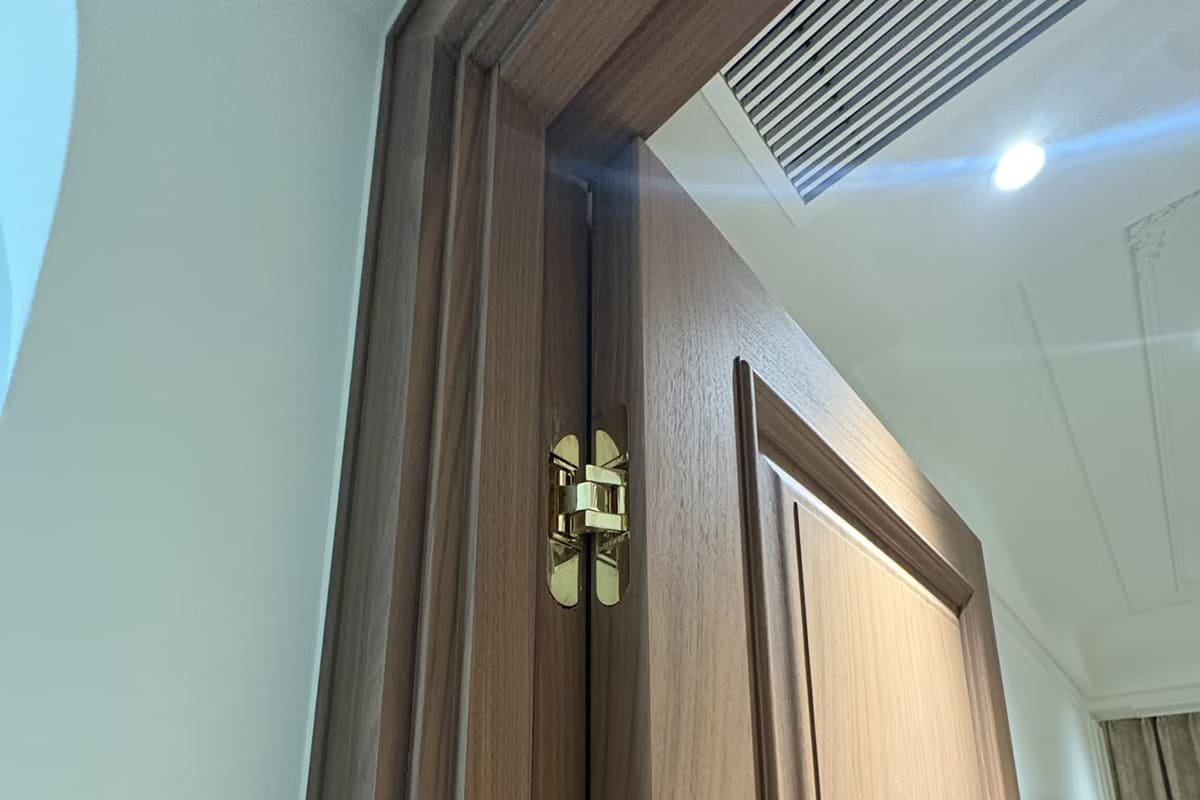
Yes. Humidity, salt, chemicals, and dust attack finishes, pins, and springs.8 Use the right material, finish, and grease, or the joint will bind and then seize.
Matching material and finish to the site
I build hinges in stainless steel, zinc alloy, and mixed builds. Each has a place. In coastal or pool areas, I push stainless steel with proper passivation.9 In dry indoor sites, zinc alloy with good plating works well and saves cost. In high-traffic public doors, I prefer stainless steel arms and pins for wear resistance. I also look at the finish. A nice satin look must also protect the base metal. Weak plating blisters and traps salt.10 That leads to rough joints and noise. I keep grease simple and stable. I avoid grease that washes off with cleaning chemicals. I ask buyers about cleaning agents, temperature swings, and dust loads. I do not assume “indoor” means safe. A basement car park counts as harsh. Early rust is a system signal, not just a cosmetic issue.
| Setting | Main threat | Material/finish I specify |
|---|---|---|
| Coastal exterior | Salt spray | 304/316 stainless, passivated |
| Pool/spa | Chlorides, humidity | 316 stainless, sealed pins |
| Industrial kitchen | Steam, cleaners | Stainless arms, high-grade plating |
| Basement/parking | Dust, moisture | Stainless pins, sealed joints |
Do door closers and opening frequency change the rules?
A closer adds force that never gets tired. High traffic multiplies that force every day. I see good hinges struggle when this part is ignored.
Yes. Closers and high cycle counts raise hinge stress.11 I add load margin, increase hinge count, and pick stronger arm designs to spread and survive the force.
How I plan for closers and cycles
I ask two simple questions. Does the door use a closer? How many cycles per day? A closer pushes the door shut. It also pulls it from a hold-open. That adds torque at the arm. I add about 20–30% to the door load for selection when a closer is present. This is my field rule, based on claims data, not a lab rule. If the door sees more than 200 uses per day, I move to a hinge with tested cycle life that fits the project scale. I also check the closer setting. An over-fast closer hits the frame and shocks the hinge.12 A small change in speed saves years. I never use the lightest hinge that “just meets” the line. I set real margin because people push, pull, and lean.
| Door setup | Added force source | Margin/choice I use |
|---|---|---|
| Closer fitted | Spring torque and sweep | +20–30% load, stronger arm |
| High traffic | Many daily cycles | Higher cycle-rated model |
| Wide + closer | High torque at edge | Add hinge count, stronger fixings |
| Fire door | Seal drag | Check rating, add margin |
When should I intervene: adjust, replace, or redesign?
Waiting costs more. Early action saves the door and the hinge. I look for signs, then pick a path that protects daily use and the project budget.
Act when gaps change, noises start, or adjustment runs out. Adjust if the structure is sound. Replace if wear is clear. Redesign if load and size were wrong.
A simple decision path I use with buyers
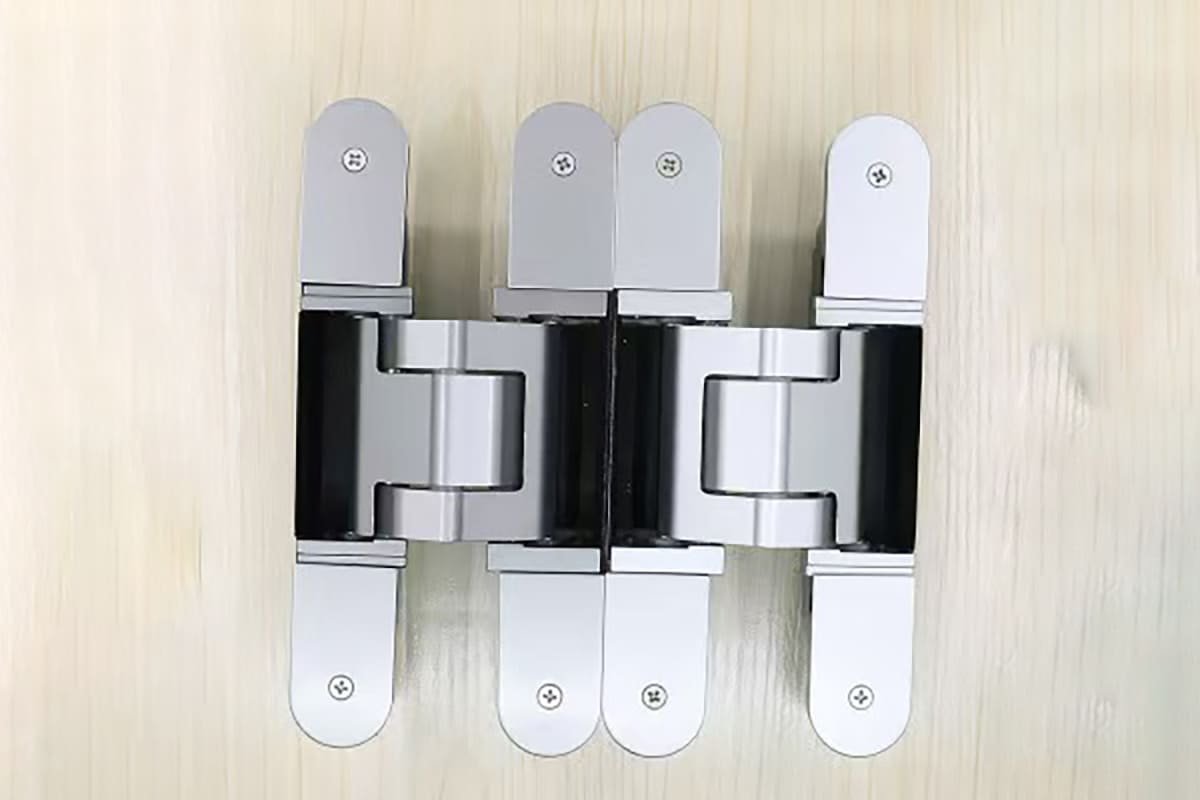
I ask for three things first: photos of gaps, a short video of the swing, and a shot of each hinge seat. If I see uneven gaps but clean seats and tight screws, I suggest careful adjustment by a trained installer. If the screws spin or the seats are chewed, replacement of the hardware and the fixing points is safer. If I see bent arms or cracked ears, I stop use and replace the hinges at once. Then I review the selection: door weight, width, hinge count, and any closer. If these were off, I pick a stronger model and set a margin. I also set a check plan with the buyer. A five-minute check each quarter prevents noise from becoming breaks. This is not a DIY fix. It is a managed action plan that cuts risk.
| Sign | Action I take | Goal |
|---|---|---|
| Gap drift, quiet swing | Skilled adjustment | Restore alignment |
| Click/creak, clean seats | Inspect and lube if allowed | Stop wear |
| Loose screws, chewed seats | Replace hardware and anchors | Restore fixing strength |
| Bent arm or cracks | Replace hinges now | Avoid unsafe use |
Conclusion
Most concealed hinge issues start small. Choose the right model, allow margin, install with care, check often, and act early. That plan prevents malfunctions and avoids complete failure.
"Mechanical failure : definition of the problem", https://www.govinfo.gov/content/pkg/GOVPUB-C13-ee03eb1b964a48f5fe41e6ae646cf2e9/pdf/GOVPUB-C13-ee03eb1b964a48f5fe41e6ae646cf2e9.pdf. Mechanical-joint failure literature describes hinge-like assemblies as failing through identifiable mechanisms, including overload, fatigue, wear, corrosion, misalignment, and seizure. Evidence role: mechanism; source type: research. Supports: A source should explain that mechanical joints usually fail through identifiable mechanisms such as overload, fatigue, wear, corrosion, misalignment, or seizure rather than without cause.. Scope note: This would provide contextual support for concealed hinges generally, not proof of the exact frequency of complete unusability in this manufacturer’s products. ↩
"Fatigue Loading • Joints in Shear", https://rbb.union.edu/courses/mer419/content/data/Lectures/MER419%20L12%20Dynamic%20and%20Shear%20Loading%20of%20Joints.pdf. Machine-design references identify pins and linked arms in hinged mechanisms as load-bearing elements; fracture or severe deformation of these parts can prevent the joint from carrying load or moving safely. Evidence role: mechanism; source type: education. Supports: A source should explain that pins, arms, and similar members in hinged mechanisms carry shear, bending, or bearing loads and that fracture of these components can disable the joint.. Scope note: This supports the mechanical principle rather than providing concealed-hinge-specific failure statistics. ↩
"Door hinge screws coming loose from framing how to fix?", https://www.reddit.com/r/HomeMaintenance/comments/13ileb7/door_hinge_screws_coming_loose_from_framing_how/. Door-hardware maintenance guidance commonly treats sagging, misalignment, abnormal noise, stiff operation, and loose fasteners as inspection indicators of hinge or fixing problems. Evidence role: general_support; source type: institution. Supports: A source should identify common door-hardware inspection signs such as sagging, misalignment, unusual noise, stiffness, and loose fasteners.. Scope note: The support is general to door hardware and may not distinguish concealed hinges from butt hinges or other hinge types. ↩
"SECTION 087111 - DOOR HARDWARE (SCHEDULED BY ...", https://fpm.usc.edu/wp-content/uploads/2021/11/087102-USC-HSC-door-hardware-Guide-Specification_1.pdf. Architectural door-hardware guidance emphasizes that hinges and related fittings must be installed within specified alignment, clearance, and fastening requirements for reliable operation. Evidence role: expert_consensus; source type: institution. Supports: A source should state that door hardware must be installed according to specified alignment, fastening, and clearance requirements to function properly.. Scope note: Such guidance may be based on industry practice rather than controlled testing of concealed hinge failures. ↩
"Common Causes of Fastener Loosening", https://www.matrixengrg.com/common-causes-of-fastener-loosening-and-how-to-prevent-it/. Mechanical-design sources explain that misalignment and inadequate fastening can introduce eccentric loads in joints, increasing friction, wear, and the risk of deformation. Evidence role: mechanism; source type: education. Supports: A source should explain that misalignment and loose fasteners can create eccentric or off-axis loading in mechanical joints, increasing friction, wear, or deformation.. Scope note: This supports the underlying mechanics but may not mention concealed door hinges specifically. ↩
"28.18 -- Open door to demonstration preparation area", https://web.physics.ucsb.edu/~lecturedemonstrations/Composer/Pages/28.18.html. Torque is proportional to the applied force and its perpendicular distance from the axis of rotation, so increasing door width increases the moment that the hinges must resist. Evidence role: mechanism; source type: encyclopedia. Supports: A source should define torque as the product of force and perpendicular distance from the axis of rotation, showing why a wider door increases hinge moment.. Scope note: This proves the mechanical relationship but does not set a particular hinge size or load rating. ↩
"Standard Door Hinge Dimensions: 3.5" to 6" Sizing Guide", https://doorsforpros.com/blog/post/standard-door-hinge-dimensions?srsltid=AfmBOorTyQtPwKMw6tc2cvfgpd_jzbx-p2VKCbERD5M4U_RTCavDiCoL. Door-hardware standards and installation guidance commonly base hinge quantity and placement on door height, weight, thickness, and service conditions. Evidence role: expert_consensus; source type: institution. Supports: A source should show that door height, weight, and use conditions affect the number and placement of hinges.. Scope note: The source may give conventional hinge rules and may not address every concealed-hinge design. ↩
"PDR: CORR-DATA - NIST Data Repository", https://data.nist.gov/pdr/lps/54AE54FB37AC022DE0531A570681D4291851. Corrosion and tribology research shows that humid, chloride-rich, chemically aggressive, or particulate-contaminated environments can degrade metal surfaces, coatings, lubricants, and moving joints. Evidence role: mechanism; source type: research. Supports: A source should explain how humidity and chlorides accelerate corrosion, how chemicals can damage coatings, and how particulates can increase wear in moving joints.. Scope note: This supports the environmental mechanisms broadly rather than documenting failure rates for concealed hinges in specific buildings. ↩
"Natural passivation behavior and its influence on chloride ...", https://www.sciencedirect.com/science/article/pii/S223878542031663X. Materials guidance describes passivation as a treatment that supports the protective chromium-oxide film on stainless steel, while also noting that chloride-rich coastal and pool environments require careful stainless grade selection. Evidence role: expert_consensus; source type: institution. Supports: A source should explain that passivation improves the protective chromium oxide layer on stainless steel and that chloride exposure is a key consideration in grade selection.. Scope note: This supports the rationale for stainless steel and passivation but does not prove that every stainless concealed hinge will perform adequately in all coastal or pool settings. ↩
"Methods for salt contamination of steel corrosion products", https://hero.epa.gov/reference/2519962/. Coating-failure studies describe blistering and underfilm corrosion as processes in which moisture and salts penetrate defects, accumulate beneath the coating, and accelerate substrate corrosion. Evidence role: mechanism; source type: paper. Supports: A source should describe coating or plating blistering and underfilm corrosion, especially where chloride salts and moisture penetrate defects.. Scope note: The evidence is general to plated or coated metals and may not test the exact hinge finish discussed in the article. ↩
"087100 – DOOR HARDWARE - Facilities and Campus Services", https://fcs.cornell.edu/087100-door-hardware. Door-hardware standards and fatigue principles recognize that closing devices apply mechanical force to the door system and that repeated operating cycles increase wear and fatigue demands on hinges and fixings. Evidence role: mechanism; source type: institution. Supports: A source should explain that door closers apply controlled closing force and that repeated operating cycles contribute to fatigue and wear in door hardware.. Scope note: This supports the stress mechanism but may not quantify the author’s specific load-margin rule. ↩
"Your Guide to Door Closer Adjustments", https://laforceinc.com/blog/your-guide-to-door-closer-adjustments/. Door-closer maintenance guidance treats sweep and latch-speed adjustment as necessary to prevent slamming, excessive impact, and undue stress on the door assembly. Evidence role: mechanism; source type: institution. Supports: A source should state that closing and latching speed should be adjusted to prevent slamming or excessive impact on door hardware.. Scope note: The source may discuss the full door assembly rather than measuring shock loads specifically at concealed hinges. ↩