How Do I Get My Bedroom Door Lock to Open Smoothly with a Key?
When your key won't turn, it's frustrating and can make you feel locked out. Don't worry, many common key issues are simple to fix with the right knowledge. I'm here to show you how to properly operate and troubleshoot your keyed bedroom door lock.
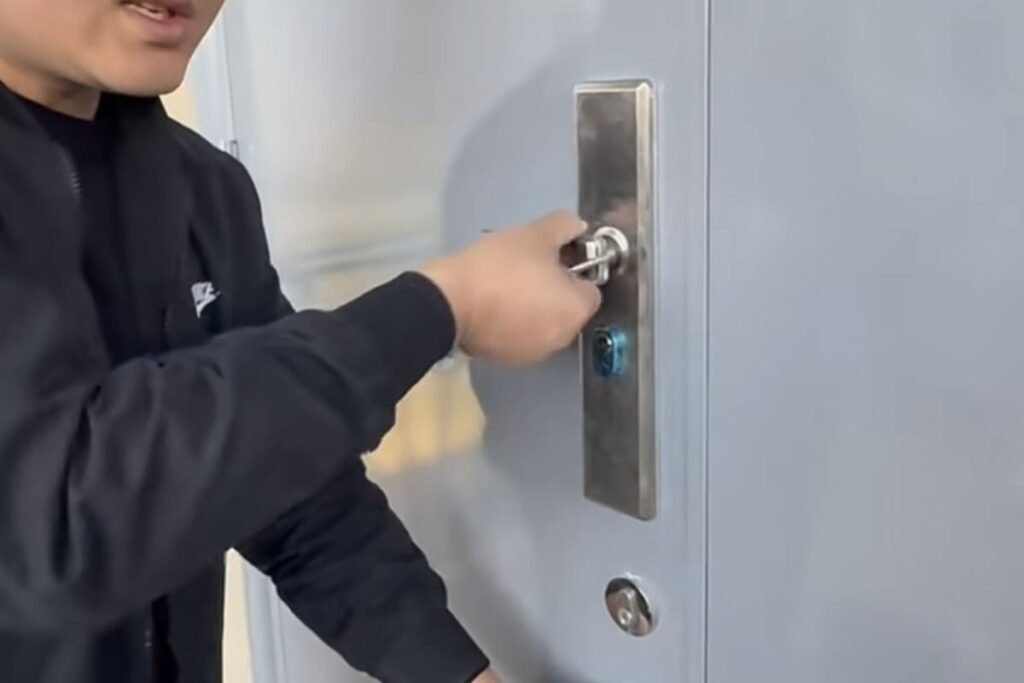
To open your bedroom door lock smoothly with a key, first confirm it's the correct key, insert it fully into the cylinder, and then turn it gently—usually 90° or 180°—to retract the latch or bolt1. Always remove the key after operating the lock to prevent issues.
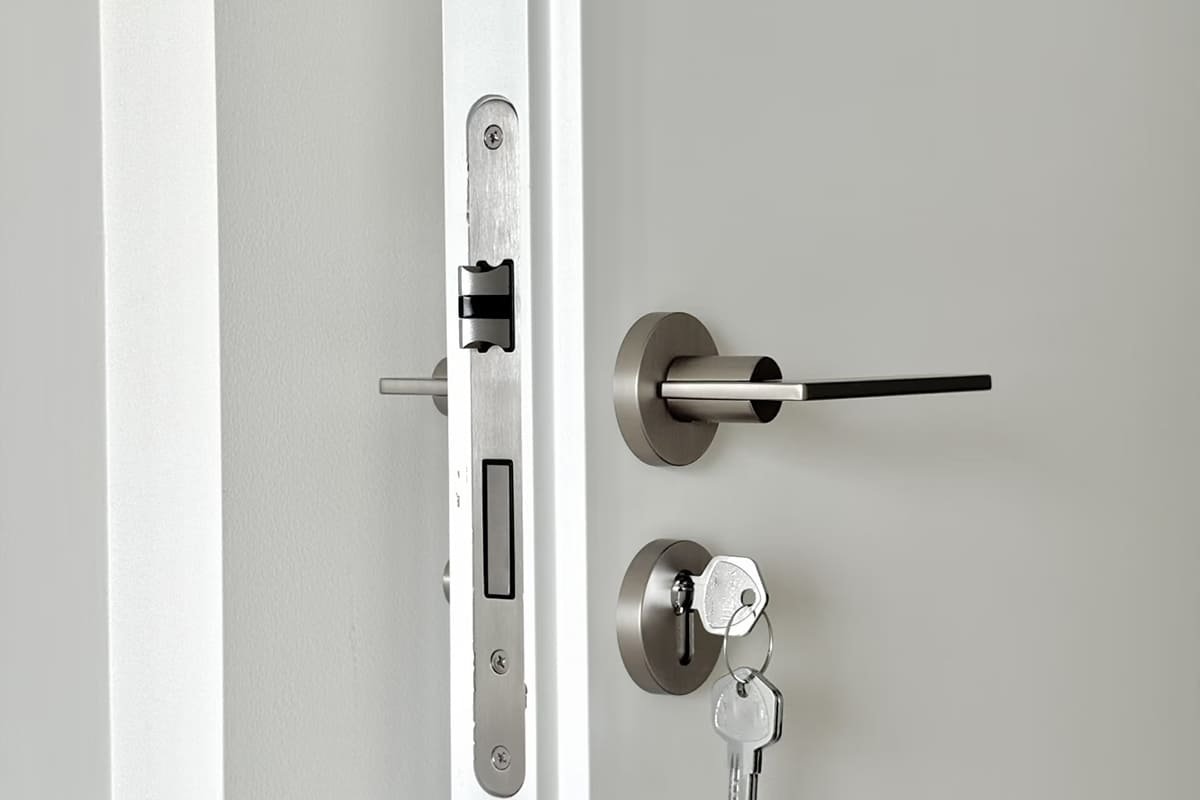
Understanding how your bedroom door lock and its key work together is crucial. I want to guide you through the normal operation and common scenarios where your key might not behave as expected, so you can avoid frustration and keep your hardware working perfectly.
Is My Key Really the Right Key for This Lock?
Feeling that click when a key smoothly operates a lock is satisfying, but what if your key just won't cooperate? It's annoying when a key looks right but feels wrong. I often find the first step is making sure you have the exact match, because even a tiny difference can stop the lock.
The correct key should slide into the lock cylinder easily, fit snugly without excessive wiggling2, and allow the lock's internal mechanism to align perfectly when turned, ensuring the door opens or locks as intended without force.
The Anatomy of a Keyway
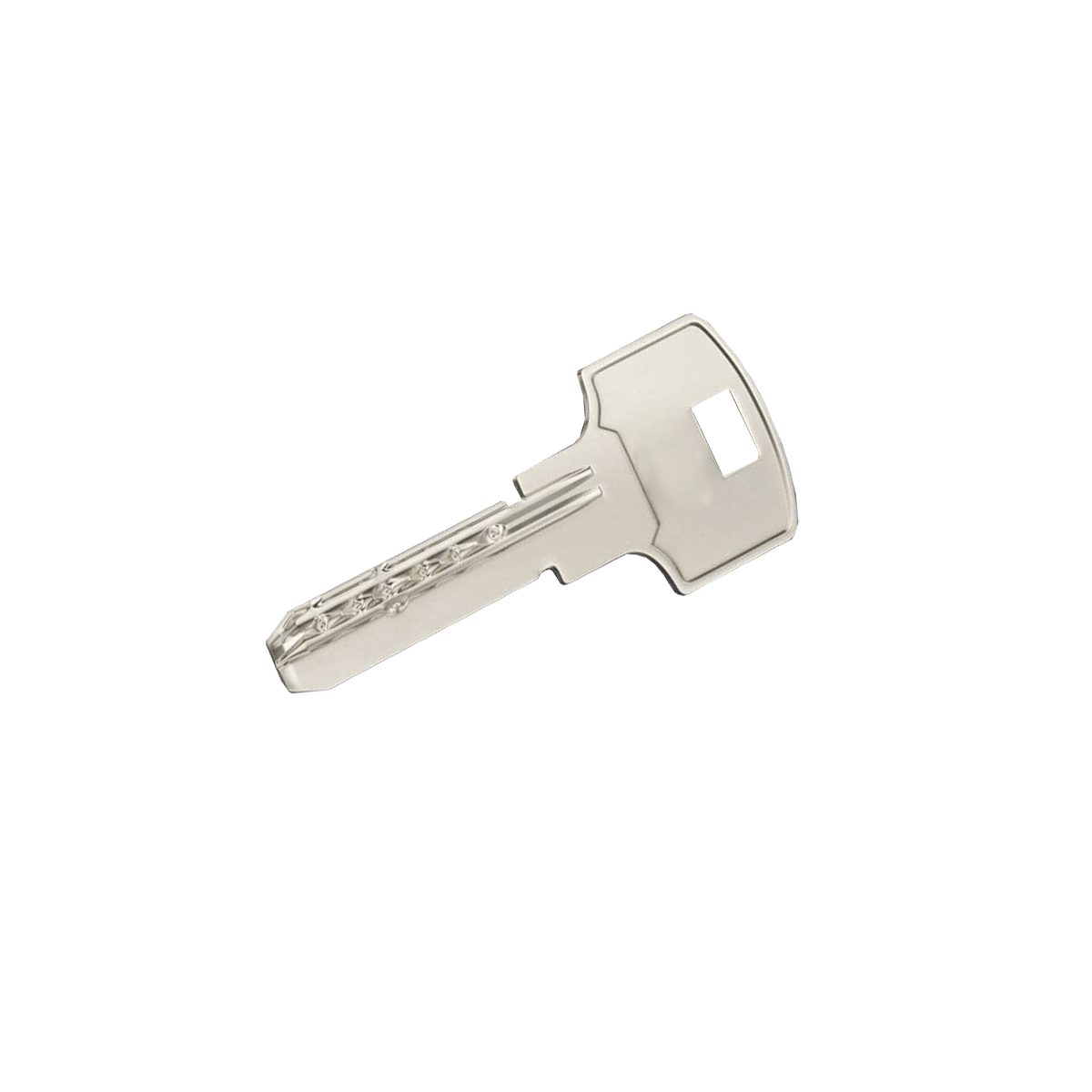
From my experience in manufacturing, I know that every lock cylinder has a unique keyway3. This is the intricate slot where you insert your key. The keyway's shape is designed to accept only specific key blanks. If your key doesn't slide in smoothly, it might be the wrong key blank altogether. I always advise checking if the key profile matches the keyway's shape. You should feel a smooth entry without having to push hard. If it jams or requires force to insert, it’s highly probable that it’s either not the right key for that specific lock or the key itself is damaged or bent. I've seen customers try to force a slightly bent key, which can damage the delicate pins inside the cylinder. This leads to a much bigger problem than just a sticky lock.
How Pins and Tumblers Work
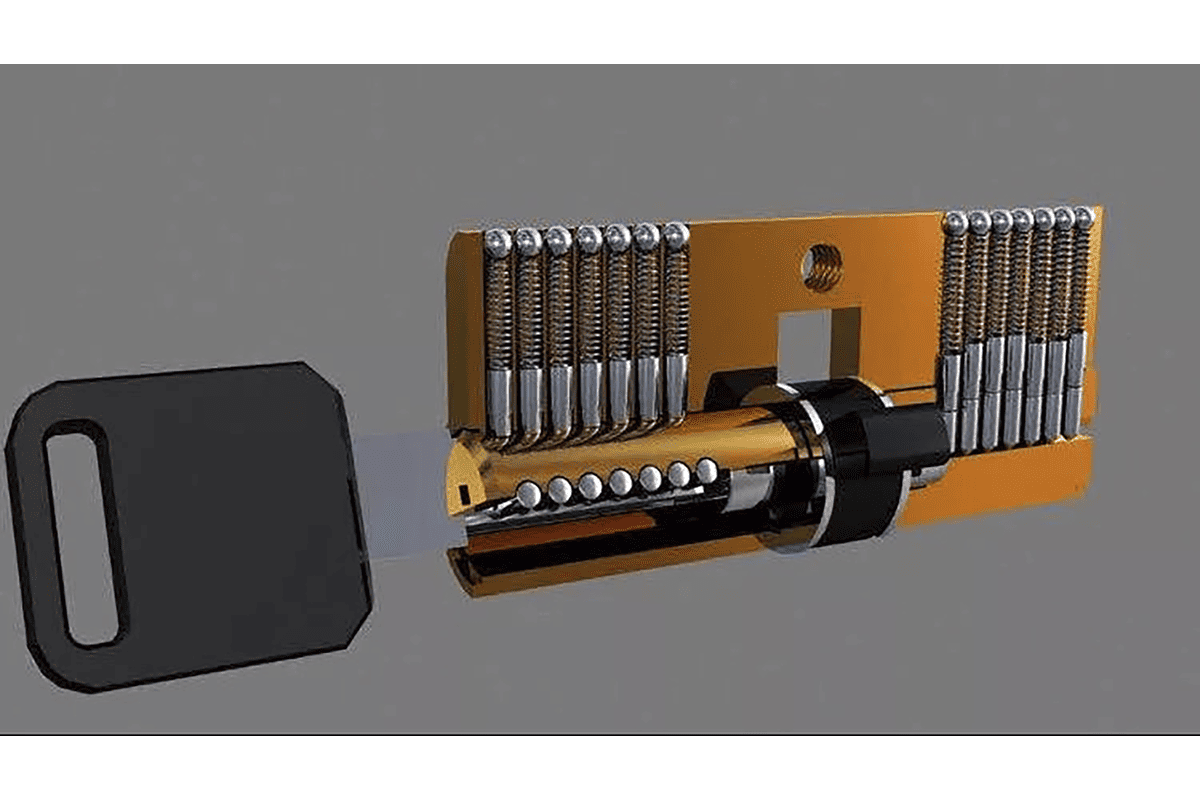
Inside your lock cylinder are small components called pins and tumblers. When you insert the correct key, its unique cuts lift these pins to a specific height, aligning them perfectly at what we call the "shear line."4 This alignment allows the cylinder plug to rotate freely, engaging or disengaging the lock's bolt. If even one pin is not lifted to the precise height—which happens with an incorrect or worn key—the cylinder will not turn.5 I always emphasize that precision is key here. Each cut on your key corresponds to a pin. When I'm checking a key that's not working, I look at the key's cuts closely. Are they worn down? Are they too shallow or too deep for this specific lock? These tiny variations are why one key works and another, seemingly similar, does not.
The Art of a Gentle Turn
Once the key is fully inserted, the next step is to turn it. This should be a gentle, deliberate motion. I typically recommend turning the key 90 degrees or 180 degrees, depending on the lock type, until you feel the bolt retract or extend. You should not have to apply excessive force. If I encounter resistance, my first instinct is never to push harder. Forcing the turn can break the key inside the lock, bend the pins, or even damage the entire cylinder mechanism6, requiring a full replacement. Instead, I try to gently wiggle the key slightly while applying light turning pressure. Sometimes, a tiny misalignment or a bit of friction can be overcome this way. If it still resists, I know there's a deeper issue that needs attention, like lubrication or a different kind of problem with the lock's internal components.
Why Is My Key Stiff or Hard to Turn in the Bedroom Lock?
That feeling of a key getting stuck or being tough to turn can quickly go from annoying to alarming. It's a common problem I hear about, and many people think their lock is broken. But often, it's just a matter of friction and wear. I always suggest addressing stiffness early to prevent future damage or breaking your key.
If your key feels stiff or is hard to turn, it's often due to dirt, debris, or a lack of proper lubrication inside the lock cylinder7. I recommend using a specialized graphite-based lock lubricant, applying a small amount to the keyway or directly to the key, then gently working the key in and out to distribute it.
Common Causes of a Stiff Lock
From a manufacturing perspective, lock cylinders are built with tight tolerances. Over time, these tolerances can become compromised by various factors, leading to stiffness. One major culprit is the accumulation of dust, dirt, and grime inside the keyway and around the pins. This debris acts like sandpaper, creating friction and preventing the pins from moving freely. I've also seen corrosion as a factor, especially in humid environments, where tiny rust particles can impede the smooth operation of metal components. Another common cause is simply wear and tear. Over thousands of cycles, the internal pins and the key itself can wear down, leading to a less precise fit and increased friction. Lastly, using the wrong type of lubricant, like WD-40 or other oil-based sprays, can actually attract more dust and turn into a gummy residue8, worsening the problem rather than solving it.
The Right Lubricant Makes a Difference
When your lock starts feeling stiff, my go-to recommendation is always a graphite-based dry lubricant or a dedicated silicone-free lock spray. I explicitly warn against using oil-based products because they can attract and trap dirt, creating a sticky mess over time that makes the lock even harder to operate. Graphite lubricant works by coating the internal mechanisms with fine, slippery particles, reducing friction without attracting dust.9 The way I apply it is simple: I either puff a small amount directly into the keyway or, more commonly, I coat the key itself with a thin layer of graphite powder. Then, I insert the key into the lock, turn it back and forth several times, and remove it. This action helps to distribute the lubricant throughout the cylinder, ensuring all the pins and tumblers are properly coated.
When to Call a Professional
While lubrication can fix many stiffness issues, I know it's not a magic bullet for every problem. If, after proper lubrication, your key still feels excessively stiff, grinds, or refuses to turn, it's time to consider that there might be a more significant internal problem. I've encountered situations where a broken spring, a bent pin, or severe internal corrosion needs more than just a quick spray. In these cases, forcing the key is the worst thing you can do, as it might lead to a broken key inside the cylinder or irreparable damage to the lock mechanism. At this point, I would advise reaching out to a qualified locksmith or even considering a lock replacement. Professionals have specialized tools and knowledge to diagnose internal issues without causing further damage, ensuring your door's security is restored safely and effectively.
Can a Master Key System Affect My Bedroom Lock Key?
You insert your key, it fits perfectly, but it just won't turn. It's confusing, right? Many people assume if a key slides into the keyway, it should work. But in some setups, especially in commercial or multi-unit residential buildings, there's a whole system at play that can make your key behave differently. I've seen this confusion often with master key systems.
Yes, a master key system can absolutely affect your bedroom lock key. In such a system, your individual bedroom key (a change key) is designed to open only that specific lock. A higher-level master key can open multiple locks, but your change key will not open other locks, nor will a lower-level key open your lock if your lock is part of a higher master key level.
What is a Master Key System?
From my vantage point in door hardware manufacturing, I can tell you that a master key system is a sophisticated hierarchy of keys and locks designed to provide different levels of access10. Imagine a hotel: each guest has a key for their specific room, but the hotel manager has one master key that opens all rooms. This is achieved by specially designed cylinders that have two shear lines for each pin.11 Your individual bedroom key, often called a "change key," aligns one set of pin combinations. The master key aligns a different set of pin combinations, allowing it to open multiple locks within the system. I always explain that while your key might fit, if the lock is also configured to accept a master key, and your key is just a change key, it's only designed to open that one specific lock. This system is about controlled access, not universal access for every key that looks similar.
Levels of Access Explained
In a typical master key system, you'll have several levels. At the bottom, there are "change keys" (or individual keys), like your bedroom door key, which open only one specific lock. Above that, you might have a "sub-master key" that opens a group of locks (e.g., all rooms on one floor). At the very top is the "master key," which opens all locks in the system. Some complex systems even have "grand master keys" that can open multiple master key systems. The key insight here, which I often communicate to our clients, is that your change key is not a master key. It's designed to be restricted. If your key fits but doesn't turn, and you know you're in a building with a master key system, it might be that the lock you're trying to open isn't the one assigned to your specific key's access level, or it's a lock designed for a higher-level key that your change key cannot operate. It's not a malfunction; it's the system working as intended to maintain security.
Identifying Your Key Type
It's not always obvious whether your key is part of a master key system just by looking at it. However, if you're in a commercial building, an apartment complex, or any large facility, it's highly probable. I tell my customers to look for markings on the key or to check with building management. Sometimes, the key blank itself might have a specific code that indicates it's part of a restricted system. If your key operates your specific bedroom door without issue, but you've tried it on another door where it fits but won't turn, and you suspect a master key system, it's likely that other door is simply not part of your key's access privileges. It's important to understand that your personal bedroom key is made to secure your private space, not to be a universal access tool. If you need access to other areas, you'd need the appropriate level master key, not just any key that looks like it fits.
Is an Internal Latch Blocking My Outside Key Operation?
Picture this: you're trying to unlock your bedroom door from the outside, but the key just won't turn. You're sure it's the right key, it slides in, but nothing happens. Before you panic, consider what's happening on the other side of the door. I often explain that many bedroom locks have a hidden feature that's actually working perfectly, even if it feels like a problem to you.
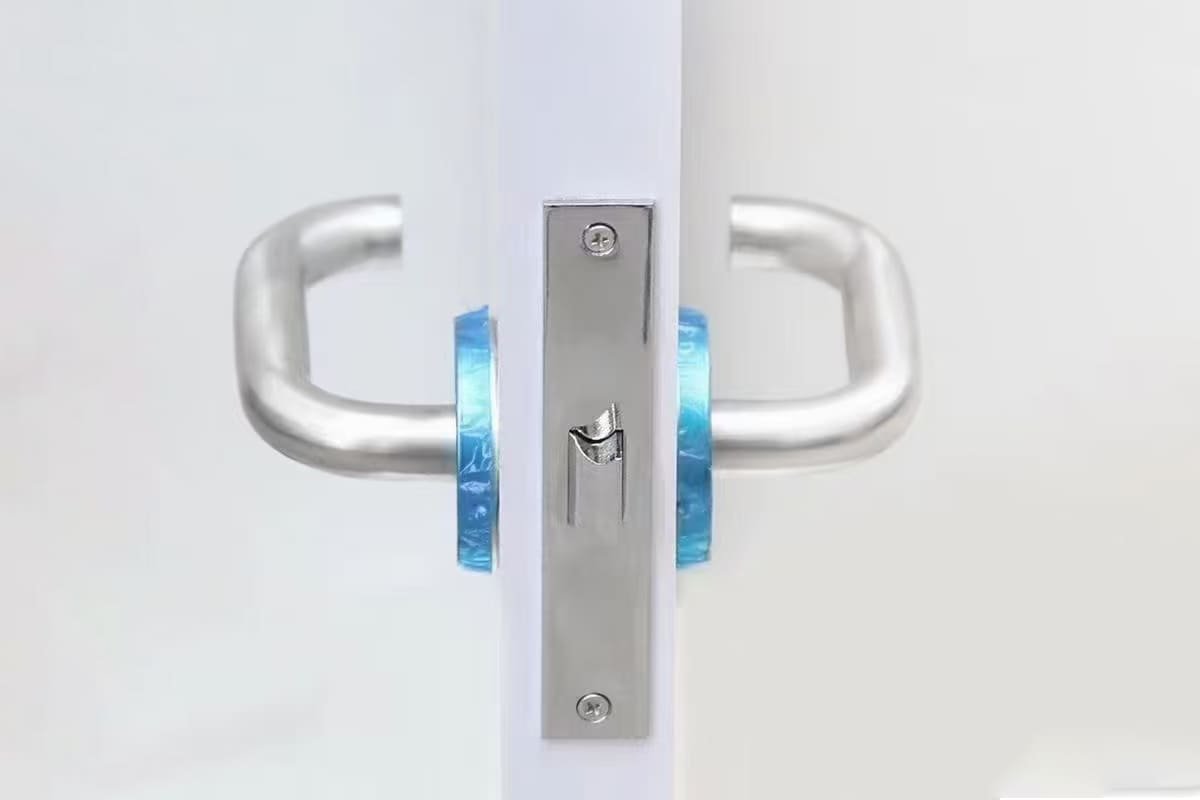
Yes, an internal privacy latch can definitely block outside key operation. Many bedroom or bathroom locks include an internal thumb-turn or push-button that, when engaged from the inside, prevents the key from working on the outside.12 The outside key will not turn until the inside mechanism is released by the person inside.
Understanding Privacy Mechanisms
When we design bedroom door hardware, privacy is a top priority. This is why many bedroom locks feature an internal mechanism that can be engaged without a key. The most common types I've seen are a simple thumb-turn, a push-button, or sometimes a combination of both. When someone inside the room engages this mechanism, it's designed to lock the door securely from the inside, preventing outside entry even with a correct key. From a structural standpoint, engaging the privacy mechanism directly interferes with the cylinder's ability to rotate the latch or bolt. It creates a physical block within the lock's internal gearing, ensuring that the key mechanism is bypassed for immediate privacy. I always emphasize that this is a feature, not a fault. It gives the person inside peace of mind, knowing their privacy is protected.
How an Inside Latch Affects Outside Access
The way an inside privacy latch affects outside key access is quite clever in its simplicity. When the thumb-turn is rotated or the button is pressed on the inside, it often engages a small internal cam or lever that directly controls the main latching mechanism. This cam then disconnects the outer key cylinder's ability to retract the latch bolt. So, even though you insert your key perfectly and try to turn it, the cylinder might rotate, but it won't be able to move the part that actually opens the door. It's like trying to steer a car that's in neutral – the steering wheel turns, but the car doesn't move. I've often had customers call, confused why their brand-new lock isn't working, only to find out someone inside had engaged the privacy function. The key on the outside is effectively overridden by the manual, internal safety latch.
Safety First: When to Check Inside
Given that an internal privacy latch can disable outside key entry, my first recommendation if your key isn't working is to consider if someone is inside and has engaged the lock. This is particularly true for bedroom or bathroom doors. I usually suggest a polite knock or a call to the person inside, explaining that the key isn't working and asking if they've locked the door from their side. They simply need to disengage the thumb-turn or button. Sometimes, these locks also have an emergency release feature on the outside – often a small hole where you can insert a narrow object like a paperclip or a special tool to override the privacy function. This is designed for emergencies, like a child accidentally locking themselves in. However, for everyday use, the expectation is that the person inside would disengage it. Always prioritize communication before assuming a lock is broken or trying to force anything.
What Happens If I Leave a Key in a Double-Cylinder Lock?
It might seem harmless, or even convenient, to leave a key inserted in a double-cylinder lock, especially if it's on the inside for quick exits. But as a hardware manufacturer, I know this practice can lead to unexpected problems and even compromise the security and functionality of the lock itself. It's a common mistake that I advise against.
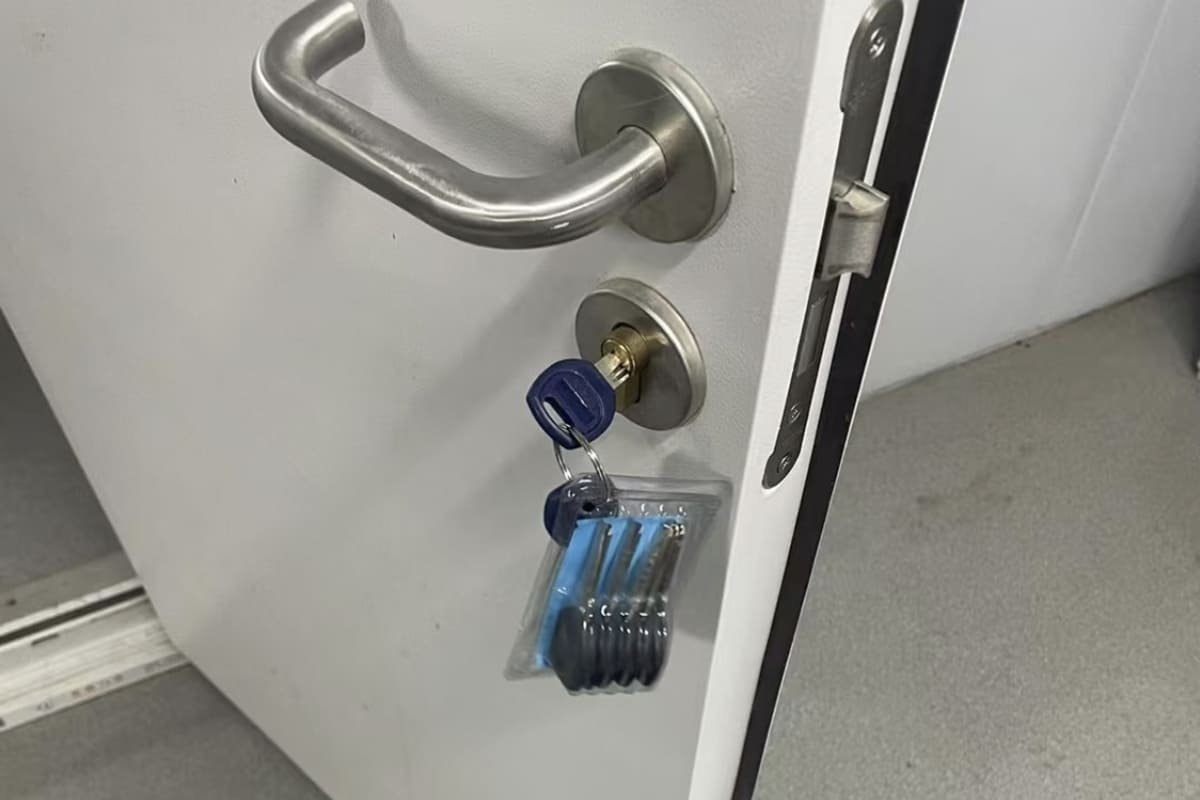
Leaving a key inserted in a double-cylinder lock, whether on the inside or outside, can cause mechanical interference, cylinder jamming, or block the operation from the opposite side. To ensure proper function and avoid damage, always remove the key completely after locking or unlocking the door from either side.
The Mechanics of a Double-Cylinder Lock
Double-cylinder locks are designed to require a key for operation on both the interior and exterior sides of the door. This design is often chosen for security reasons, as it prevents intruders from simply breaking a nearby window and reaching in to turn an inside thumb-turn. However, this double-keyed nature also means there are two distinct keyways and two sets of internal mechanisms that need to function independently. When I look at the internal workings during production, I see how closely these two cylinder halves are aligned. Each key needs space to rotate its own plug and engage the central locking mechanism. If a key is left in on one side, its position can physically obstruct the rotation of the cylinder or the full insertion of a key on the opposite side. It's a precise system, and any obstruction can lead to a jam.
Why Keys Interfere
The interference happens because when a key is inserted into one side of a double-cylinder lock and left there, its blade extends into the central part of the lock mechanism. This area is also where the internal workings for the other side's key cylinder are located. So, if you try to insert or turn a key from the opposite side, it literally bumps into the key that's already there. I've seen customers struggle with this, thinking their lock is suddenly broken. The key might not go in fully, or if it does, it won't turn because the other key is blocking the internal pin alignment or the plug rotation. In some designs, if you force the key, you could even bend the original key inside, or worse, damage the delicate pins or springs within the cylinder, leading to a much more costly repair than simply remembering to remove the key.
Best Practices for Key Management
To prevent these issues, my firm recommendation for any double-cylinder lock is simple: always remove the key after use. Whether you've just locked the door from the inside for the night or unlocked it to come in, take the key out. This ensures that the keyway on both sides is clear and ready for the next operation. This practice also has a secondary security benefit: if a key is left on the inside, it can potentially be manipulated from the outside by a tool slipped under the door, or if a window is broken. Removing the key eliminates this vulnerability. It's a small habit, but one that drastically improves the longevity and reliable function of your lock. It also means you won't be stuck fumbling with a jammed lock when you need quick access or exit.
Conclusion
Understanding your keyed bedroom door lock involves knowing its proper operation, troubleshooting common stiffness issues with correct lubrication, recognizing the role of master key systems, and respecting privacy latches or key management. I hope this guide helps you ensure your locks function smoothly and securely.
"Pin tumbler lock - Wikipedia", https://en.wikipedia.org/wiki/Pin_tumbler_lock. A technical overview of cylinder locks explains that the inserted key permits the plug to rotate, and that this rotation actuates the connected cam or boltwork to lock or unlock the door; the exact rotation angle varies by lock design. Evidence role: mechanism; source type: encyclopedia. Supports: A neutral source should explain that turning the key rotates the lock plug or cam, which actuates the latch or bolt.. Scope note: The source may support the mechanism directly but not the specific 90° or 180° figure for every bedroom lock model. ↩
"Key blank - Wikipedia", https://en.wikipedia.org/wiki/Key_blank. Reference descriptions of pin-tumbler locks identify the keyway as the shaped slot that receives the key and note that the key blank profile must match the cylinder before the bitting can operate the pins. Evidence role: definition; source type: encyclopedia. Supports: A source should define the keyway and explain that only keys with compatible profiles can enter and operate the cylinder correctly.. Scope note: This supports the compatibility principle, but it does not establish a universal amount of acceptable key movement or snugness. ↩
"Warded lock - Wikipedia", https://en.wikipedia.org/wiki/Warded_lock. Technical descriptions of locks describe the keyway as the shaped opening in the cylinder that accepts keys with a corresponding blank profile, limiting insertion to compatible key forms. Evidence role: definition; source type: encyclopedia. Supports: A source should support that the keyway is a shaped aperture that restricts which key blanks can be inserted.. Scope note: The source would support keyway selectivity, but the article’s phrase “every lock cylinder has a unique keyway” may overstate the point because keyways can be shared across multiple locks. ↩
"Pin tumbler lock - Wikipedia", https://en.wikipedia.org/wiki/Pin_tumbler_lock. Descriptions of pin-tumbler locks state that a properly cut key raises the pin stacks so the gap between key pins and driver pins coincides with the shear line, allowing the plug to rotate. Evidence role: mechanism; source type: encyclopedia. Supports: A source should explain the pin-tumbler mechanism and define the shear line as the interface where driver and key pins must align for plug rotation.. ↩
"Pin tumbler lock - Wikipedia", https://en.wikipedia.org/wiki/Pin_tumbler_lock. Standard accounts of pin-tumbler operation explain that the plug remains blocked unless every pin stack is positioned so that no pin crosses the shear line; an incorrectly cut or sufficiently worn key can therefore prevent rotation. Evidence role: mechanism; source type: encyclopedia. Supports: A source should support that all pin stacks must clear the shear line and that improper bitting prevents plug rotation.. Scope note: The source may not specifically quantify how much key wear is required to cause failure. ↩
"Broken Key? Don't Call a Locksmith — This Trick Saves ... - YouTube",
. Lock-maintenance guidance commonly warns that a key that resists turning should not be forced, because excessive torque can break the key or aggravate internal cylinder faults. Evidence role: general_support; source type: institution. Supports: A source should support that forcing a jammed key can cause breakage or worsen mechanical damage.. Scope note: This is general maintenance support and may not document each listed damage mode, such as bent pins, in controlled testing. ↩"[PDF] Boundary lubrication of silicon nitride - NIST Technical Series ...", https://nvlpubs.nist.gov/nistpubs/Legacy/SP/nistspecialpublication876.pdf. Maintenance and tribology sources describe dirt contamination and insufficient lubrication as common causes of increased friction and impaired movement in precision mechanical assemblies, including lock cylinders. Evidence role: mechanism; source type: institution. Supports: A source should support that debris and inadequate lubrication increase friction and can impair movement in lock cylinders or similar mechanical assemblies.. Scope note: The source may support the friction mechanism broadly rather than provide bedroom-lock-specific failure rates. ↩
"Graphite in locks!!!? : r/Locksmith - Reddit", https://www.reddit.com/r/Locksmith/comments/1h6ecq8/graphite_in_locks/. Lock-maintenance references caution that wet or oil-based lubricants can retain dirt and leave residues in cylinders, which may increase sticking rather than restore smooth operation. Evidence role: general_support; source type: institution. Supports: A source should support the general lock-maintenance principle that wet or oil-based lubricants can collect dirt and form residues in lock cylinders.. Scope note: Neutral sources may discuss oil-based lubricants as a class; they may not evaluate every WD-40 formulation or every lock environment. ↩
"Dry lubricant - Wikipedia", https://en.wikipedia.org/wiki/Dry_lubricant. Materials-science sources identify graphite as a solid lubricant whose layered crystal structure allows sliding between layers, reducing friction without the liquid film associated with oil-based lubricants. Evidence role: mechanism; source type: education. Supports: A source should explain graphite as a solid or dry lubricant and describe how layered graphite reduces friction without relying on liquid oil.. Scope note: This supports the lubricant mechanism generally; it may not directly compare dust attraction in household lock cylinders. ↩
"Pin tumbler lock - Wikipedia", https://en.wikipedia.org/wiki/Pin_tumbler_lock. Reference works on master keying define it as an arrangement in which individual change keys operate assigned cylinders while master or higher-level keys operate multiple cylinders within an access hierarchy. Evidence role: definition; source type: encyclopedia. Supports: A source should define master keying and explain the hierarchy of change keys, master keys, and higher-level keys.. ↩
"Master keying - Wikipedia", https://en.wikipedia.org/wiki/Master_keying. Technical explanations of master-keyed pin-tumbler locks describe the use of master wafers or comparable pinning arrangements that create additional valid shear-line positions, enabling both a change key and a master key to operate the same cylinder. Evidence role: mechanism; source type: encyclopedia. Supports: A source should explain how master wafers or equivalent pinning allow more than one key to align the pin stack so the plug can rotate.. Scope note: This supports the underlying mechanism but may qualify the article’s simplified statement that there are “two shear lines for each pin,” since actual pinning can vary. ↩
"Lockset - Wikipedia", https://en.wikipedia.org/wiki/Lockset. Door-hardware function references describe privacy locks as interior-door hardware commonly used for bedrooms and bathrooms, with an inside push-button or thumb-turn and an exterior emergency release rather than ordinary keyed access. Evidence role: definition; source type: institution. Supports: A source should define privacy lock functions and identify typical bedroom or bathroom uses with interior locking controls and limited exterior release.. Scope note: This supports privacy-lock behavior generally; it may not apply to every keyed bedroom lock, especially locks with full-entry or storeroom functions. ↩