What Are the 11 Best Hidden Door Hinges Ideas?
I often see buyers worry about the same problem. A hidden door looks clean in drawings, but the wrong hinge can cause sagging, noise, and poor alignment.1
The best hidden door hinge idea is the one that matches door weight, door thickness, door material, frame design, wall finish, opening angle, and use frequency.2 I always check these points before I recommend any concealed hinge, pivot hinge, or heavy-duty hidden hinge system.
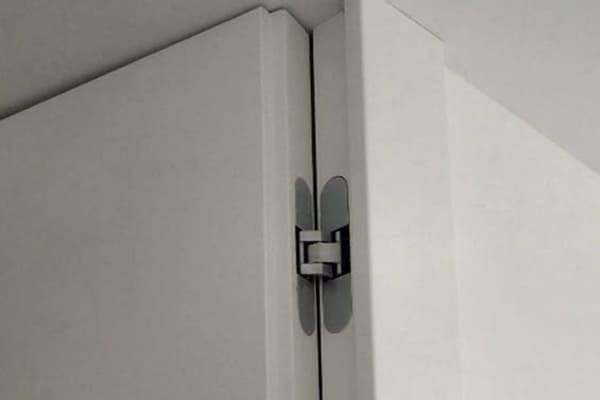
I treat an invisible door as a full door system, not only as a design idea. The wall surface, door leaf, frame, gap control, and hinge all work together. I have had many hinge selection discussions with door factories and project buyers. I usually ask for door weight, door thickness, door material, frame structure, wall finish thickness, and usage scenario before I recommend a model. A hidden hinge can make the door leaf and wall look like one flat surface, but it still has to carry real weight every day. That is why I do not choose hidden hinges only by appearance. I choose them by structure first, then by finish, then by price. The following 11 ideas are based on real application scenarios, and each idea has a selection check that helps reduce installation risk.
1. Should I Use 3D Concealed Hinges For Interior Wooden Doors?
I often see standard wooden doors become a problem when the hinge is chosen too late. The door looks simple, but wrong hinge sizing can create uneven gaps.
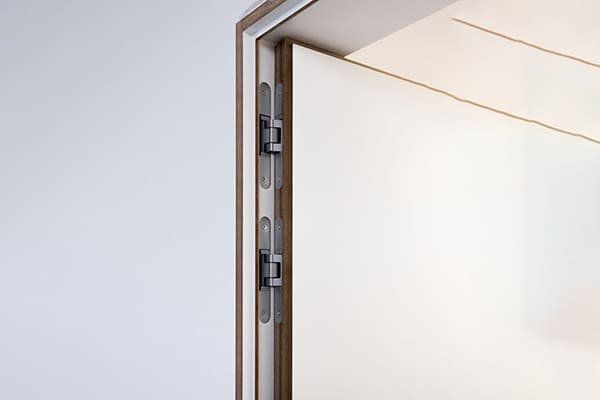
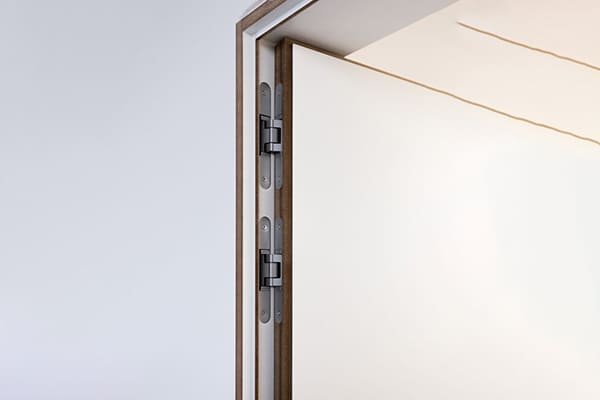
3D concealed hinges are a strong idea for interior wooden hidden doors because they allow adjustment in three directions. I usually consider them when the door needs a flush look, stable alignment, and easier correction after installation.
Where I Use This Idea
I usually start with 3D concealed hinges when the buyer needs a clean flush wooden door for apartments, hotels, offices, or villas. The main value is not only invisibility. The main value is adjustment. A 3D concealed hinge normally allows movement up and down, left and right, and in and out.3 This helps the installer correct small frame or door leaf errors after hanging the door.
I do not treat all 3D hinges as the same. One model may suit a light interior door. Another model may suit a heavier solid wood or composite door. Exact load capacity and opening angle must come from the supplier datasheet. If a buyer gives me a door thickness such as 40 mm or more, I still verify the hinge body depth, cup size, fixing screw position, and frame space.
| My selection check | What I confirm before I suggest it |
|---|---|
| Door weight | I check total leaf weight, not only door size |
| Door thickness | I check if the hinge body can be mortised safely |
| Frame design | I check if the frame has enough fixing material |
| Adjustment need | I prefer 3D hinges when batch gaps must be corrected |
| Opening frequency | I check if the door is residential, office, or public use |
I see this as the most basic hidden hinge idea for many interior wooden doors, but I still do not call it universal.
2. Should I Use Concealed Hinges For Rebated Or T-Type Doors?
I see many buyers choose a common concealed hinge for a rebated door, then they find the door cannot close cleanly. The rebate changes the hinge geometry.
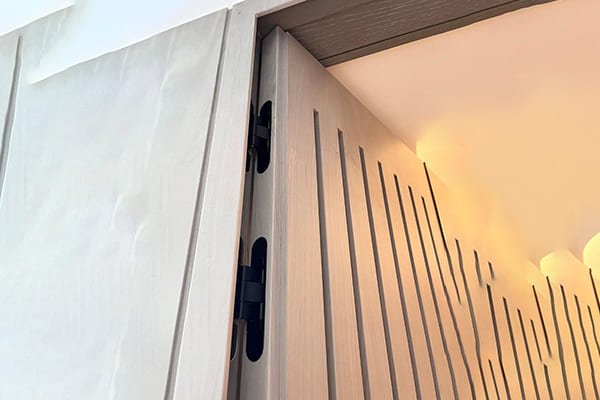
Concealed hinges for rebated or T-type doors should match the step shape of the door leaf and frame. I check the rebate depth, overlap, frame position, and opening path before I recommend this hinge type.
Why The Rebate Matters
I treat rebated doors as a special structure. The door edge is not flat like a normal flush door. It has a step. This step can improve sealing and sound control, but it also affects the hinge center line.4 If I use the wrong concealed hinge, the door may rub against the frame, fail to open fully, or leave an uneven shadow gap.
For a T-type door, I ask for a section drawing. A photo is helpful, but a drawing is better. I need to see the door leaf overlap, frame groove, seal position, and hinge fixing area. I also check if the hinge needs a special arm shape or a special milling pattern. Some concealed hinge models are made for rebated doors, while others are not.
| My selection check | Why I ask |
|---|---|
| Rebate depth | I need to know if the hinge can clear the step |
| Door overlap | I check if the leaf will hit the frame |
| Seal position | I avoid pressure against the gasket |
| Milling space | I confirm if the door edge has enough material |
| Opening angle | I check if the buyer needs 90°, 105°, or wider opening |
I like this idea when the buyer wants both a refined edge detail and a hidden hinge. I only use it when the hinge design truly matches the rebate.
3. Should I Choose Self-Closing Hidden Hinges For Quiet Bedroom Or Study Doors?
I often hear buyers ask for a hidden door that closes by itself. The idea sounds simple, but poor self-closing control can cause noise or bad closing force.
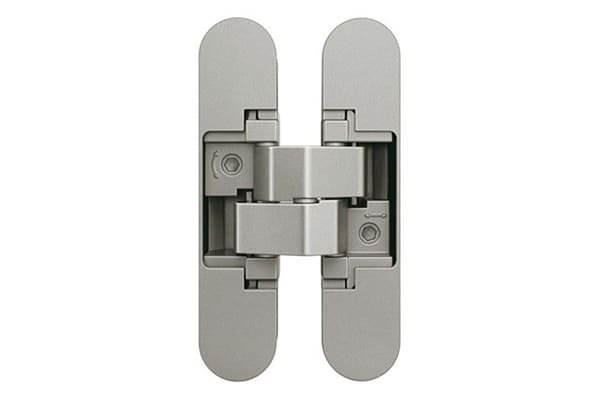
Self-closing hidden hinges are useful for bedrooms, study rooms, and office rooms when quiet closing and clean appearance are both needed. I check door weight, closing speed, closing force, and adjustment range before choosing them.
When Self-Closing Makes Sense
I consider self-closing hidden hinges when the door should return to the closed position without a visible door closer. This can be useful in a bedroom, study, small meeting room, or hotel interior door. The benefit is clear. The hinge stays hidden, and the door can close more neatly. Yet I do not use this idea for every hidden door.
The self-closing function depends on the actual hinge model. Some hinges use spring force. Some use a damping structure. Some have adjustable closing speed, and some do not.5 I never promise soft closing or silent closing unless the product model clearly supports it and the supplier data confirms it. I also consider whether the door has a latch, a magnetic lock, a seal, or air pressure from the room.
| My selection check | What I verify |
|---|---|
| Door weight | I check if the closing force can move the door leaf |
| Door thickness | I check if the hinge body fits inside the edge |
| Latch resistance | I check if the door can close into the lock smoothly |
| Noise control | I check if damping is included or only spring return |
| User comfort | I check if the force feels too strong for daily use |
I like this idea for quiet rooms, but I still separate “self-closing” from “soft-closing.” They are not always the same function.
4. Should I Use Larger Concealed Hinges For Thick Flush Wooden Doors?
I see thick doors used for premium interiors, but I also see buyers underestimate their weight. A thicker door often needs more hinge body strength and deeper fixing.
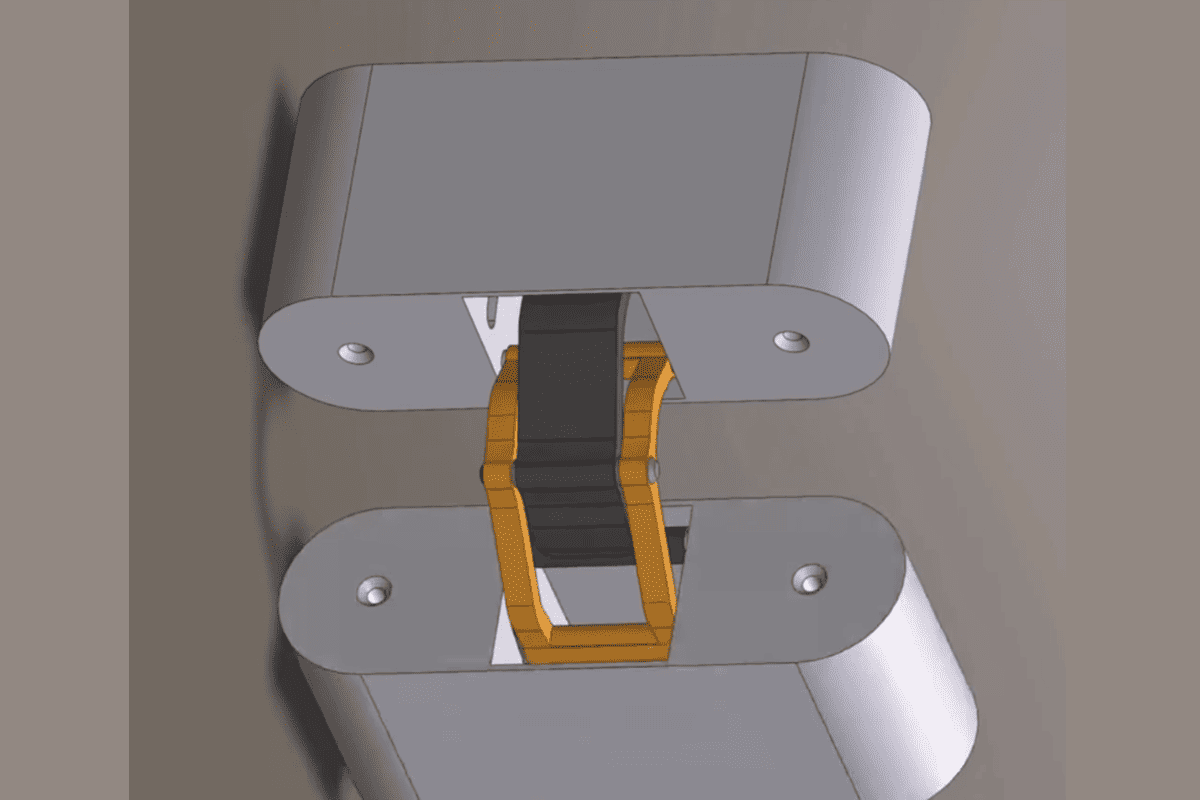
Larger concealed hinges can work well for thick flush wooden doors when the door edge has enough material, the frame is strong, and the hinge load rating matches the real door weight.
Why Door Thickness Is Not Enough
I often receive an inquiry that says, “The door is 40 mm or more, which hinge should I use?” I cannot answer only from thickness. A 40 mm door can be light if it is hollow core. It can be heavy if it is solid wood, fire core, or composite with dense filling.6 I need the full door size and weight.
For thick flush wooden doors, the hinge body may need deeper milling. The frame side also needs enough material for screw holding. If the frame is narrow, weak, or made with soft material, the hinge may loosen even if the hinge itself is strong. Some concealed hinge models mention a fixing width such as 16–18 mm, but I treat this as model-dependent. I always ask buyers to verify the supplier datasheet and installation drawing.
| My selection check | My reason |
|---|---|
| Real door weight | I cannot choose by thickness alone |
| Door core material | I check if screws and milling are safe |
| Frame strength | I check if the frame can hold long-term load |
| Hinge quantity | I check if two, three, or more hinges are needed |
| Adjustment access | I check if adjustment screws remain reachable |
I choose this idea when the door is thick, flat, and heavy enough to need stronger support. I avoid undersized hinges because they may sag after use.
5. Should I Use Fire-Rated Hidden Hinges For Project Doors?
I often see project buyers ask for hidden hinges and fire rating in the same sentence. The risk is that a normal concealed hinge may not meet fire-door requirements.
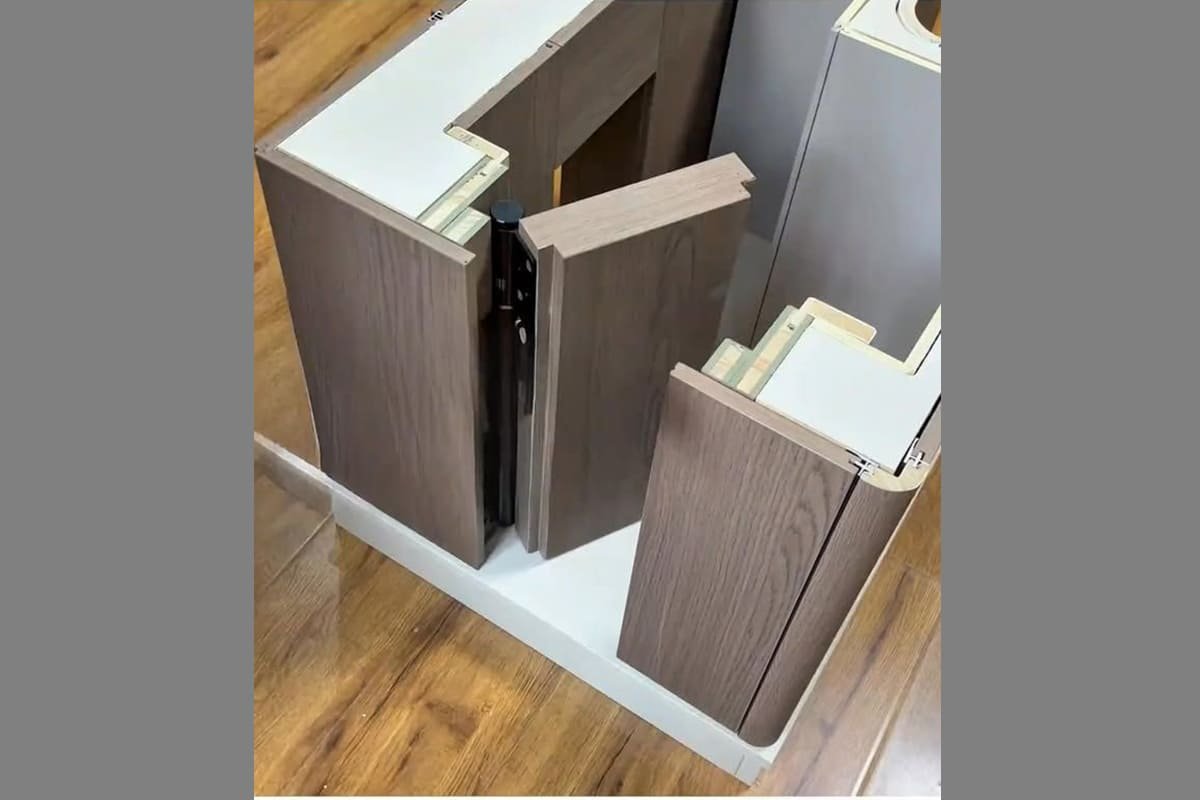
Fire-rated hidden hinges are for certified fire door systems, not general decorative doors. I check the certificate, tested door type, hinge quantity, load capacity, and installation method before I treat them as suitable.
How I Treat Fire-Rated Selection
I am careful with fire-rated hidden hinges because fire performance is not only about the hinge. It is about the full door set. The door leaf, frame, seal, lock, closer, and hinge all affect compliance.7 A hinge may have a CE certificate or fire-rated certificate, but I still need to confirm whether the certificate applies to the same door type and installation condition.
Some buyers mention values such as three fire-rated hinges carrying 100–120 kg. I treat these figures as model-dependent. I do not use them as a general rule. I ask for the specific hinge model, certificate, test report, door material, door size, and required fire rating time. I also ask if the door is used in a hotel, apartment, hospital, or public project.
| My selection check | What I ask the buyer to confirm |
|---|---|
| Certificate | I check CE and fire-rated documents when required |
| Tested application | I check if the hinge was tested with similar door sets |
| Door weight | I verify capacity against the exact model |
| Hinge quantity | I follow the datasheet and project requirement |
| Installer method | I check if milling and fixing follow the approved drawing |
I use this idea only when the project needs fire compliance. I do not replace certified hardware with normal hidden hinges.
6. Should I Use Slim Concealed Hinges For Aluminum-Frame Hidden Doors?
I see slim aluminum-frame doors in modern projects, but their narrow profiles create a real hardware challenge. A normal concealed hinge may be too wide.
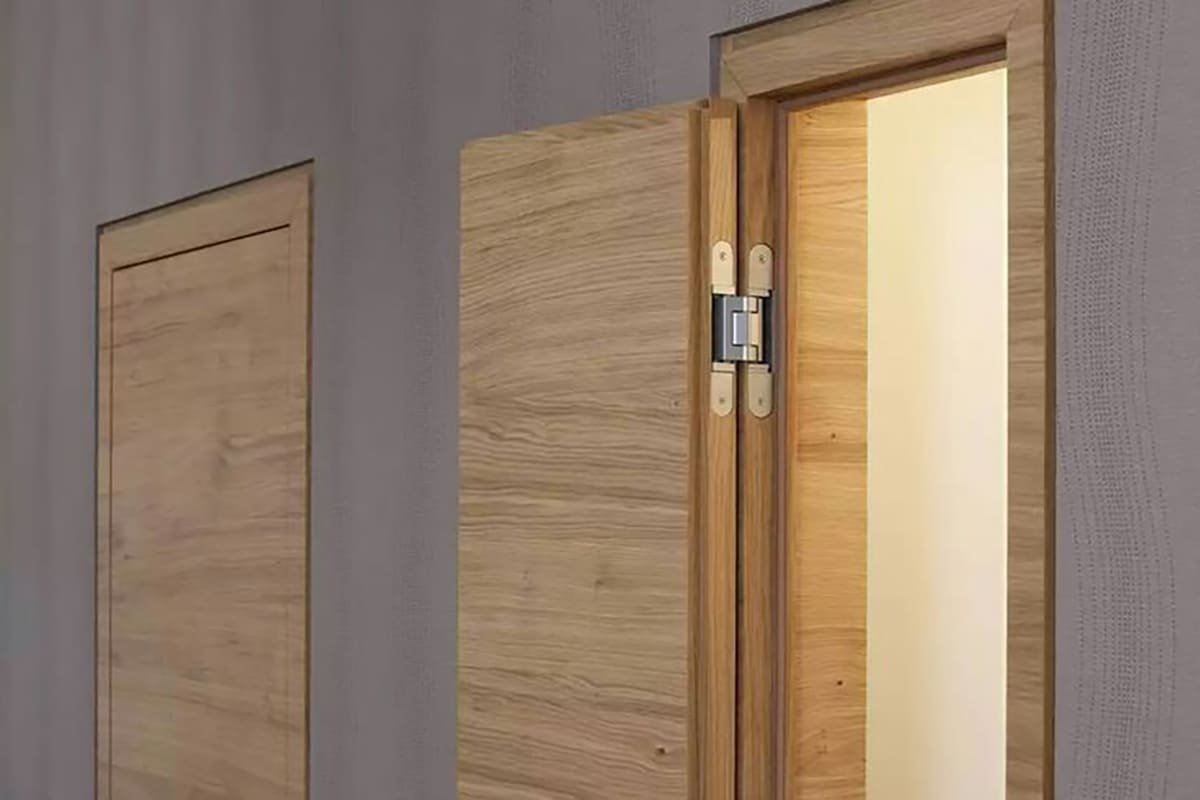
Slim concealed hinges are useful for aluminum-frame hidden doors when the profile has limited fixing width. I check profile depth, wall thickness, screw position, door weight, and adjustment space before selection.
Why Slim Profiles Need Extra Care
I like the look of slim aluminum-frame hidden doors, but I know the hinge selection is not always easy. The frame and leaf profile may look strong, but the fixing area can be narrow. If the hinge screws do not bite into enough material, the door may loosen.8 If the hinge body is too large, the profile cannot be milled safely.
I ask buyers for the aluminum profile drawing before I suggest a slim concealed hinge. I check wall thickness, cavity shape, screw channel, and reinforcement position. I also check if the door includes glass, wood panel, stone-look panel, or other decorative material. The surface may look light, but the total weight can be high.
| My selection check | What I look at |
|---|---|
| Profile width | I check if the hinge fits the narrow side |
| Profile depth | I check if the hinge body can sit inside |
| Reinforcement | I check if screws can hold under repeated use |
| Door panel material | I calculate total door weight with inserts |
| Adjustment access | I confirm if installers can still adjust the hinge |
I use slim concealed hinges when the profile design supports them. I avoid forcing a large hinge into a weak or narrow aluminum section.
7. Should I Use Top-And-Bottom Pivot Hinges For Tall Hidden Doors?
I often see tall hidden doors designed as wall panels. Side concealed hinges may not always be the best idea when the height and weight increase.
Top-and-bottom pivot hinges can help tall hidden doors rotate more smoothly because the load is shared through the floor and top frame area. I check structure, door weight, pivot position, and floor strength first.
When Pivot Support Works Better
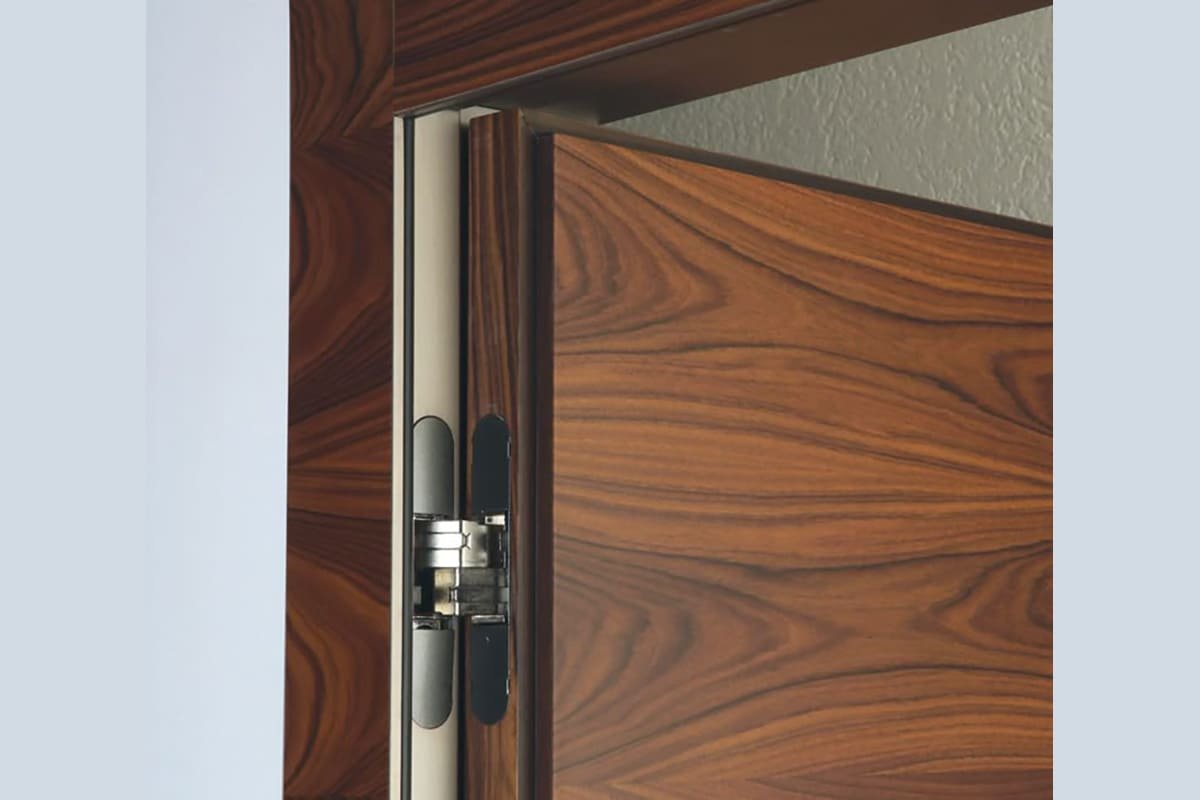
I consider top-and-bottom pivot hinges when the door is tall, wide, or designed as a large wall panel. A side-mounted concealed hinge carries the load from one vertical edge. A pivot system can move the rotation point inward and send part of the load through the bottom pivot.9 This can help with stability, but only if the floor and top fixing points are prepared well.
I do not call pivot hinges the same product as concealed door hinges. A pivot hinge changes the door movement path. The door may swing with an offset from the edge. The reveal gap, skirting line, wall panel thickness, and floor clearance all need checking. I ask buyers for the door elevation drawing and section drawing before I recommend this idea.
| My selection check | Why it matters |
|---|---|
| Door height | I check if side hinges may create too much stress |
| Door weight | I verify pivot model capacity from datasheet |
| Pivot point | I check if the door swing path clears the wall |
| Floor fixing | I confirm if the floor can hold the bottom hardware |
| Top support | I check if the upper frame or ceiling structure is solid |
I use this idea for tall hidden doors when the structure supports pivot loading. I do not use it just because it looks modern.
8. Should I Use Offset Or Long-Arm Hidden Hinges For Thick Wall Finishes?
I see hidden doors fail when the designer adds a thick wall finish after the hinge has already been selected. The door then hits the wall surface.
Offset or long-arm hidden hinges can solve special wall and door surface conditions. I check wall finish thickness, cladding depth, door swing path, and required opening angle before using them.
Why The Swing Path Is Important
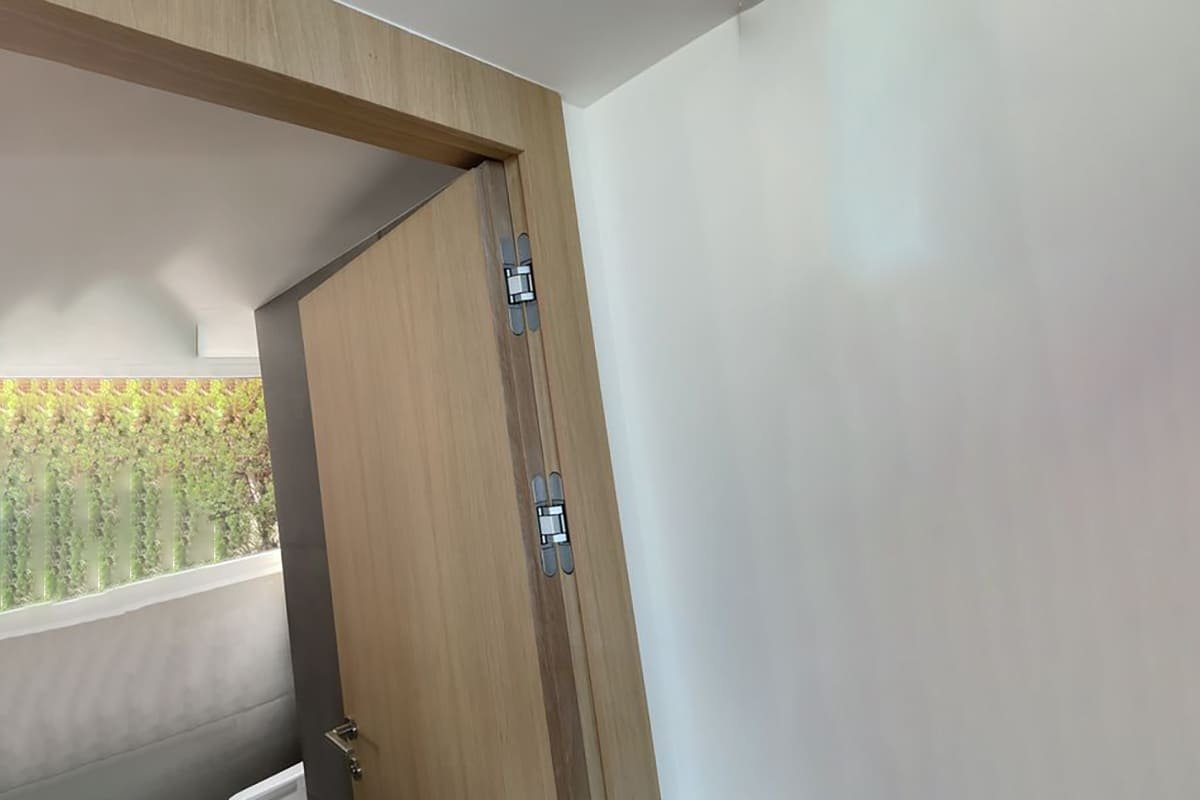
The offset or long-arm design changes the movement path.10 It may move the door away from the wall as it opens. This can protect the finish and improve opening angle. Yet this hinge type also needs more planning. The wider arm may need more internal space. The reveal line may be different. The maximum load may be different from a normal concealed hinge.
I like this idea for hidden doors with thick decorative finishes. I only use it after I understand the full finished wall build-up.
9. Should I Use Magnetic Pivot Systems For Light Hidden Feature Doors?
Magnetic pivot systems can be useful for light feature doors or special hidden access panels, but I treat them as application-specific. I verify door size, weight, holding force, pivot support, and safety before selection.
What I Check Before I Trust Magnetic Function
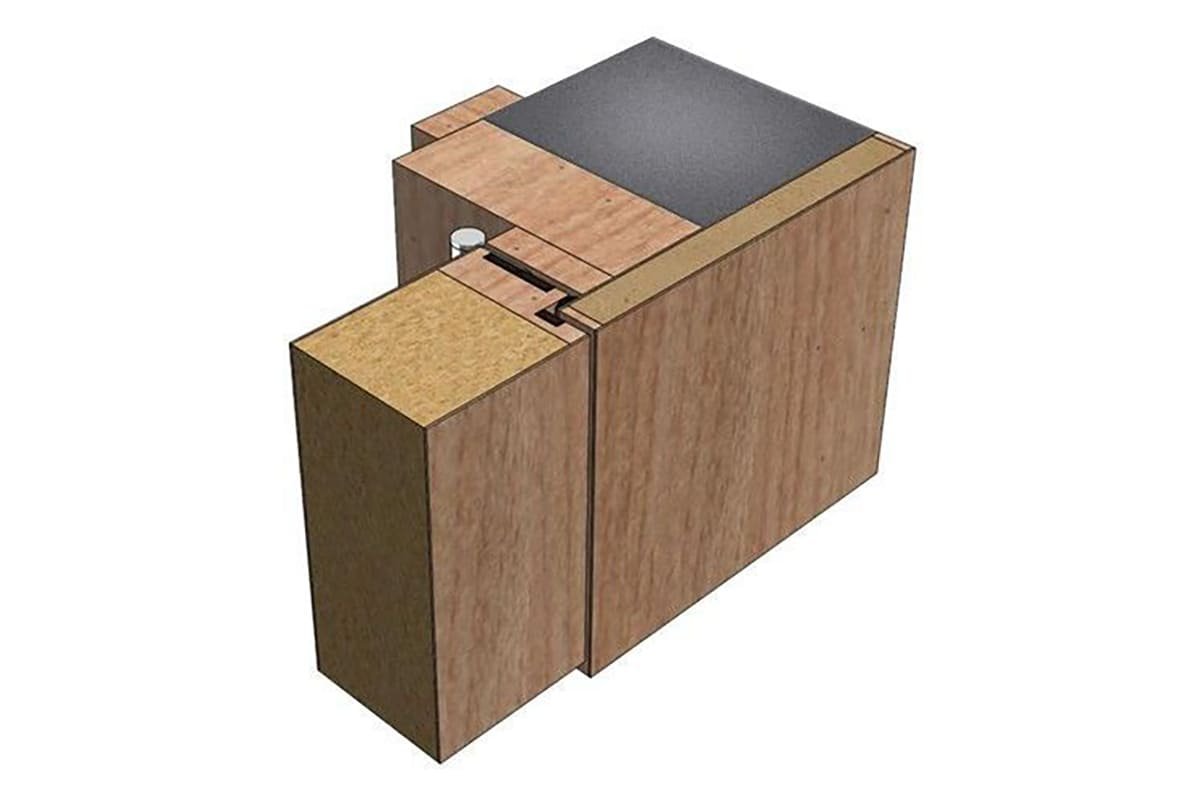
I am careful with magnetic pivot systems because the word “magnetic” can mean different things. It may refer to magnetic latching, magnetic positioning, or a special system that helps the door stay closed. It does not always mean the magnet carries the door weight. The pivot or hinge structure still needs to support the door leaf safely.11
| My selection check | What I confirm |
|---|---|
| Door weight | I check if the system can safely support the leaf |
| Magnetic role | I confirm if it is holding, latching, or positioning |
| Use frequency | I avoid weak systems for heavy daily use |
| Safety | I check if the door can be opened in an emergency |
| Maintenance | I check if magnets or moving parts need service |
I see magnetic systems as a special idea. I do not recommend them as a general hidden hinge solution.
10. Should I Use Heavy-Duty Pivot Systems For Bookcase Or Secret-Room Doors?
I see many secret-room ideas use a bookcase door, but I also see one big risk. The door weight can become much higher after shelves are loaded.
Why Bookcase Doors Are Different
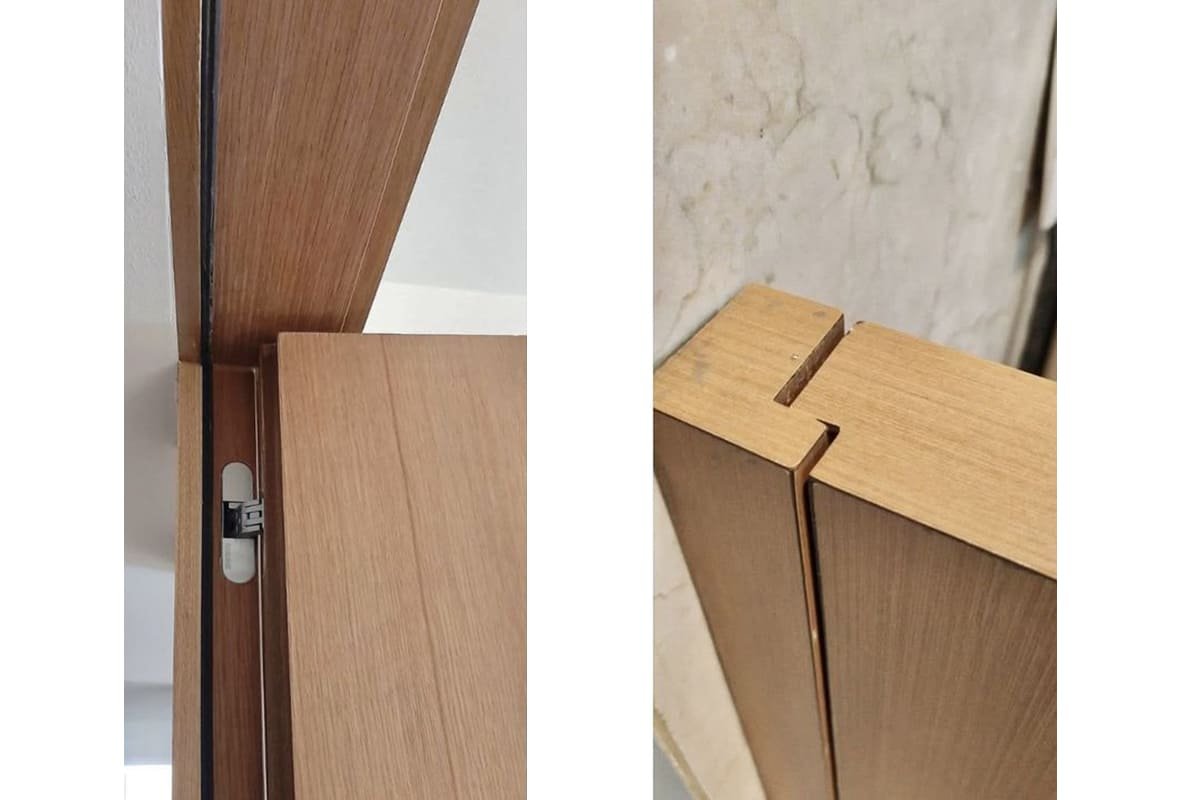
I do not treat a bookcase door like a normal wooden door. A normal door has one fixed weight. A bookcase door may become much heavier after books, decorations, or storage items are added. The weight also sits away from the pivot line, which creates more torque.12 This is why a normal concealed hinge can fail in this application.
| My selection check | What I calculate or confirm |
|---|---|
| Empty door weight | I need the base structure weight |
| Loaded weight | I include books or shelf items |
| Center of gravity | I check if weight sits far from the pivot |
| Floor support | I confirm if the base can carry the load |
| Adjustment | I prefer systems with anti-sag or height adjustment |
I use this idea when the hidden door is also furniture. I do not use standard concealed hinges for a loaded bookcase door.
11. Should I Choose Adjustable Hidden Hinge Sets For Batch Door Projects?
Adjustable hidden hinge sets are useful for bulk projects because they help installers correct gap, height, and depth differences after installation. I check consistency, adjustment range, finish control, and spare part supply.
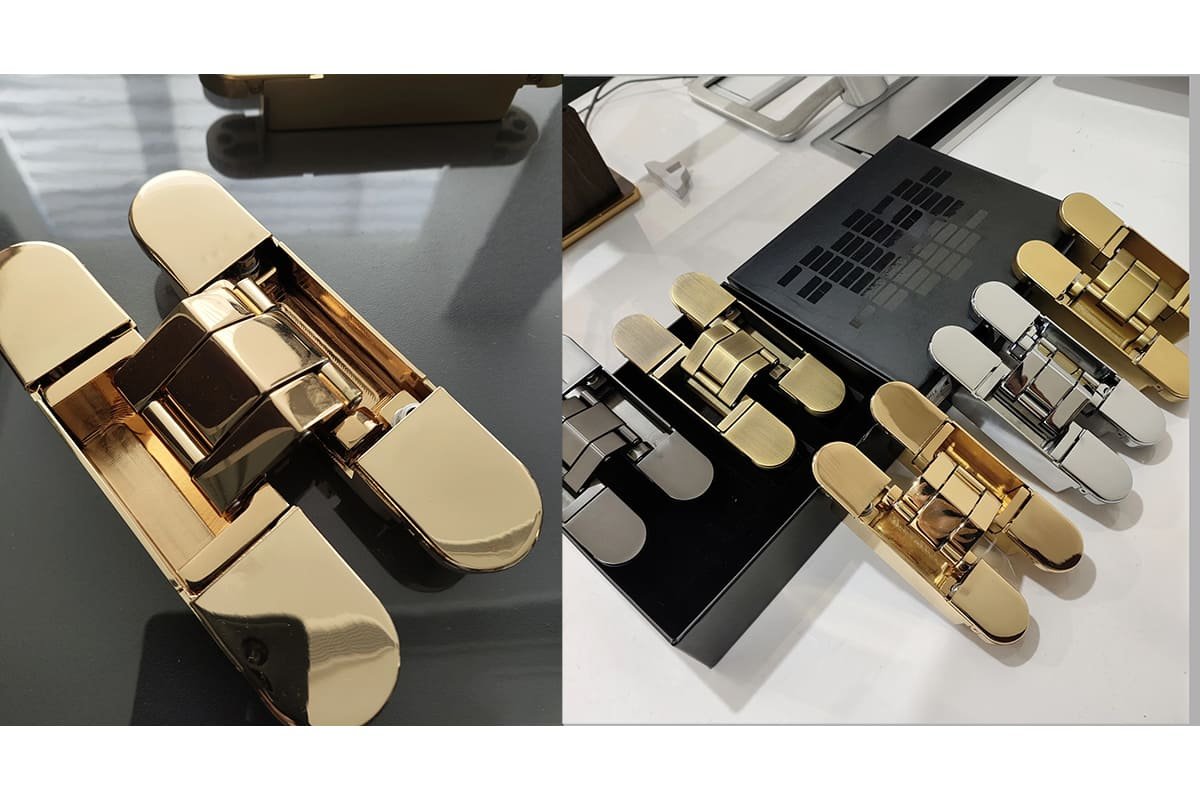
Why Adjustment Helps Procurement Teams
An adjustable hidden hinge set can reduce installation trouble when door leaves and frames have small production differences. It can help correct the gap at the top, side, or face surface. Yet the adjustment range is not a cure for bad production. The door and frame still need accurate machining. I ask buyers to confirm CNC milling dimensions, screw type, accessory package, surface finish, and packaging method.
| My selection check | What I confirm for batch orders |
|---|---|
| Adjustment range | I check vertical, horizontal, and depth movement |
| Finish consistency | I check if all hinges in the batch match color and texture |
| Milling drawing | I confirm if the factory can machine repeatable pockets |
| Screw and accessory set | I check if each door set has complete parts |
| Spare parts | I check if the buyer needs extra screws or covers |
Conclusion
I choose hidden door hinges by door structure first. I match weight, thickness, frame, finish, opening method, and use before I choose the hinge idea.
"Fix a Door That Won't Latch: Easy Step-by-Step Adjustments", https://imba.missouri.edu/how-to-adjust-a-door-that-won-t-latch-2867183492.html. Architectural-hardware guidance identifies hinge capacity, placement, and installation accuracy as factors that affect door alignment, sagging, and operating noise. Evidence role: general_support; source type: institution. Supports: A neutral architectural-hardware or building-construction source should support that hinge sizing, load capacity, and installation affect door sagging, noise, and alignment.. Scope note: This would support the general mechanism of hinge-related door problems, not prove that every wrong hinge selection causes all three failures. ↩
"SECTION 087111 - DOOR HARDWARE (SCHEDULED BY ...", https://fpm.usc.edu/wp-content/uploads/2021/11/087102-USC-HSC-door-hardware-Guide-Specification_1.pdf. Door-hardware standards and selection guides treat hinge choice as dependent on door size and weight, frame construction, opening requirements, and expected service conditions. Evidence role: expert_consensus; source type: institution. Supports: A standards body or architectural-hardware guide should support that hinge selection depends on physical door characteristics, frame conditions, opening requirements, and duty cycle.. Scope note: Such sources usually describe hinge selection generally and may not address every hidden-door finish condition listed in the article. ↩
"Can You Adjust Concealed Hinges? Full Guide", https://www.danddhardware.com/can-you-adjust-concealed-hinges.html. Technical descriptions of three-dimensional concealed hinges define their adjustment as movement in vertical, lateral, and depth directions. Evidence role: definition; source type: other. Supports: A technical hardware glossary or installation manual should confirm that 3D adjustment refers to vertical, lateral, and depth adjustment of the hinge or door leaf.. Scope note: The exact adjustment range is product-specific, so the source would support the definition rather than the capability of a particular hinge model. ↩
"Video Library Asia", https://athmer.com/asia-en/service/videos/. Building-acoustics and door-construction literature shows that perimeter sealing affects sound transmission through doors, and that rebated door edges alter the relationship between the leaf edge and frame. Evidence role: mechanism; source type: research. Supports: A building-acoustics or door-construction source should support that perimeter geometry and sealing influence sound transmission, while a rebated edge changes the door-frame interface relevant to hinge placement.. Scope note: A single source may support the acoustic effect or the geometry effect separately rather than directly evaluating concealed hinges on T-type doors. ↩
"Treasem 2 Pack Self Closing Door Hinges, 3.5 Inch, Gloss Black", https://www.amazon.com/Closing-Adjustable-Interior-Exterior-Commercial/dp/B0CCD4Y828. Door-control hardware references describe self-closing action as commonly produced by spring force, with damping or hydraulic control used to regulate closing speed in some designs. Evidence role: mechanism; source type: institution. Supports: A door-hardware technical guide should support that self-closing hardware can rely on spring force, damping or hydraulic control, and adjustable closing-speed mechanisms.. Scope note: The source would explain common mechanisms and would not verify the features of any specific hidden-hinge product. ↩
"Solid-Core vs Hollow-Core Doors - Pros & Cons - Doors Los Angeles", https://doorslosangeles.com/blog/solid-core-vs-hollow-core-doors?srsltid=AfmBOopew_C_7Kn263B2IQ3SGPKyZqXFTSCUvbyOrvZcsP7puV2ARSZV. Material references for wood and composite building products show that density varies substantially by core construction, so doors of similar thickness can have different weights. Evidence role: general_support; source type: government. Supports: A material or building-products reference should support that wood products, composites, hollow cores, and fire-rated cores differ substantially in density and therefore door weight.. Scope note: The source would support the principle of weight variation by material, not the exact mass of a particular 40 mm door. ↩
"[PDF] NSPIRE Standard - Door - Fire - HUD", https://www.hud.gov/sites/dfiles/PIH/documents/NSPIRE-Standard-Door-Fire-Labeled_20230811.pdf. Fire-door guidance treats the door leaf, frame, seals, latching hardware, closing device, and hinges as parts of a rated assembly whose compliance depends on tested and correctly installed components. Evidence role: expert_consensus; source type: government. Supports: A fire-safety code, government guide, or standards document should support that fire resistance is assessed at the assembly level and depends on compatible hardware and installation.. Scope note: Specific certification requirements vary by jurisdiction and standard, so the source would provide general compliance context rather than project-specific approval. ↩
"[PDF] Wood Handbook, Chapter 08: Fastenings", https://research.fs.usda.gov/download/treesearch/37424.pdf. Fastener-strength studies show that screw withdrawal and joint resistance depend on embedment depth, substrate properties, and applied loading, which explains why hinge screws may loosen when they engage too little material. Evidence role: mechanism; source type: paper. Supports: A fastener or structural-materials paper should support that screw holding strength depends on embedment, substrate material, and loading conditions.. Scope note: Most fastener studies use controlled specimens and may not reproduce the exact geometry of slim aluminum door profiles. ↩
"Mastering Pivot Doors: A Comprehensive Technical Overview", https://www.doornmore.com/blog/mastering-pivot-doors-a-comprehensive-technical-overview/?srsltid=AfmBOoolNkBjMR9cwX4naN9gaxDDeQrWd1A1haakCzURFRbjfIoMsPtk. Architectural-technology references describe pivot doors as rotating about a pivot axis, often offset from the door edge, with vertical load transferred through the pivot hardware to supporting structure. Evidence role: mechanism; source type: education. Supports: An architectural-technology or structural explanation should support that pivot doors rotate around a pivot axis that may be offset from the edge and that vertical loads are carried through pivot hardware.. Scope note: The exact share of load carried at the bottom and top depends on the product design and installation. ↩
"Mastering Pivot Doors: A Comprehensive Technical Overview", https://www.doornmore.com/blog/mastering-pivot-doors-a-comprehensive-technical-overview/?srsltid=AfmBOor_GD6mpEveuuYvTWUX1IeZjNheUbS8RDzAWlmtLavxU9V9BNs1. Mechanics and hardware references explain that the path of a hinged door is determined by the location of the rotational axis and any linkage geometry, so offset or long-arm hinges alter clearance and swing movement. Evidence role: mechanism; source type: education. Supports: A mechanics or architectural-hardware source should support that hinge pivot location and link geometry determine the path of a swinging door.. Scope note: This supports the mechanical principle rather than the performance of a specific concealed long-arm hinge. ↩
"Magnetic Door Latches: Designs & Uses | IQS Directory", https://www.iqsdirectory.com/articles/latch/magnetic-door-latches.html. Door-hardware references distinguish magnetic catches and latches, which provide holding or positioning force, from hinges and pivots, which support and guide the door leaf. Evidence role: definition; source type: institution. Supports: A door-hardware reference should support that magnetic catches or latches are intended for holding or positioning, while hinges and pivots provide the structural support for the door leaf.. Scope note: Some specialized magnetic systems may combine functions, so the source would support the distinction for common hardware categories rather than every proprietary system. ↩
"Torque (Moment)", https://www.grc.nasa.gov/www/k-12/airplane/torque.html. Introductory mechanics defines torque as the product of force and its perpendicular distance from the axis of rotation, so weight placed farther from a pivot line increases the rotational moment on the hardware. Evidence role: mechanism; source type: education. Supports: A physics textbook or university source should support that torque equals force multiplied by perpendicular distance from the pivot axis.. ↩