What does hinge radius mean?
I often see buyers compare hinge drawings and still miss one small value. The door then rubs the frame, and the project cost grows fast.
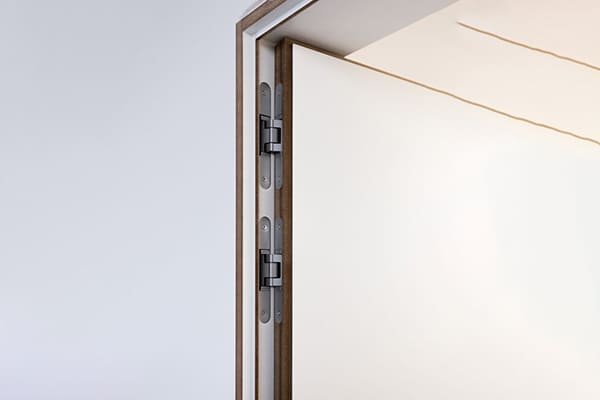
I define hinge radius as the perpendicular distance from the hinge axis or centerline to the door leaf’s rotation path during opening. It is not the hinge pin diameter. It helps me judge swing space, frame clearance, door gap, and possible interference before installation.
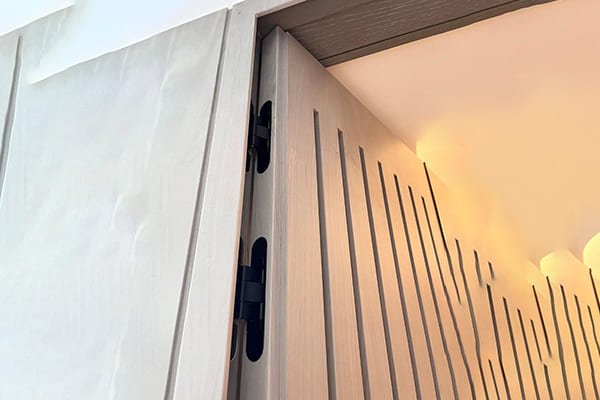
I have answered this question many times when I confirm hinge specifications with door factories and hardware buyers. The problem is simple at first sight. A hinge is small. A door is large. A small geometry mistake can make the whole door set hard to assemble. When I look at hinge radius, I do not only look at a number on a drawing. I look at how the door leaf moves around the hinge axis. I also look at the door thickness, frame shape, reveal gap, and hinge position. If these points do not match, the door may touch the frame before it reaches the planned opening angle. This is why I want to explain hinge radius in a practical way, from a supplier’s view, so you can use it during product selection, quotation, and installation checking.
Is hinge radius the same as hinge pin diameter?
Many buyers see the hinge pin first and think that is the radius. This mistake looks small, but it can lead to wrong hinge matching.
I do not treat hinge radius as hinge pin diameter. Pin diameter is the shaft thickness. Hinge radius describes the door leaf’s rotation geometry around that shaft.
What I check first?
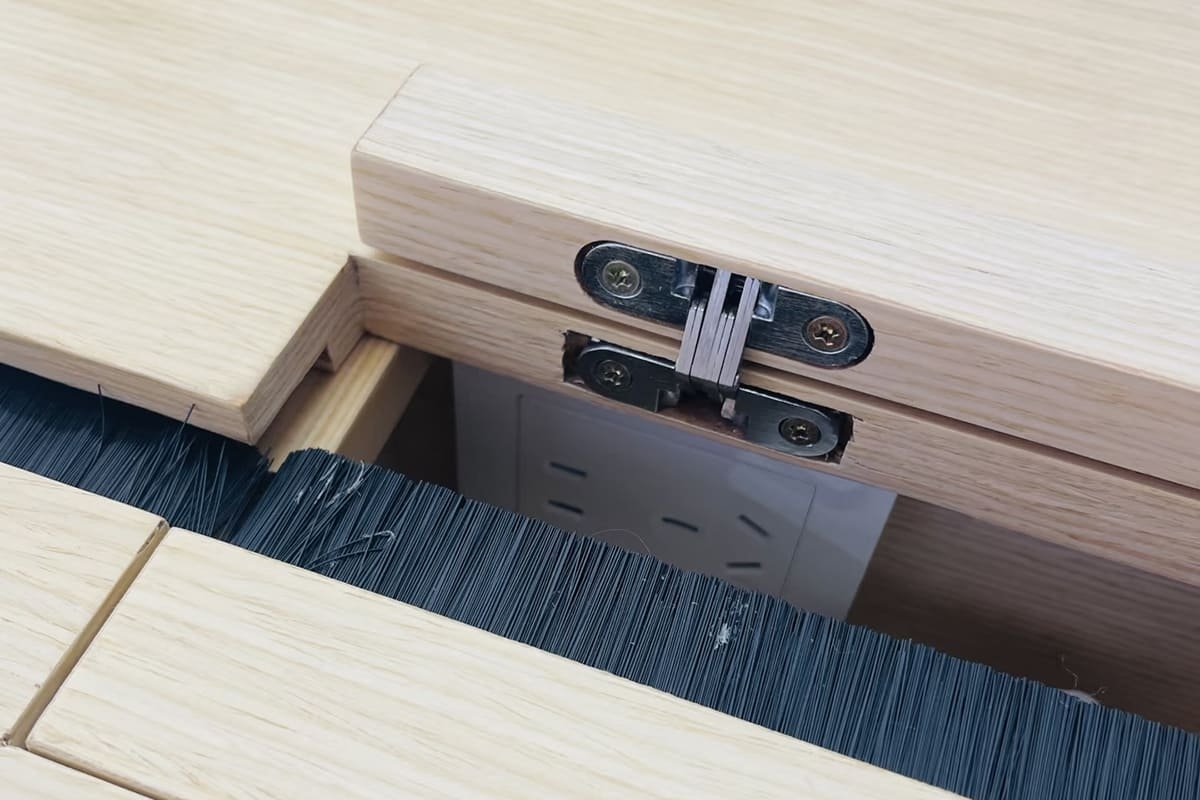
When I receive a hinge drawing from a customer, I first check the hinge axis. The hinge axis is the centerline around which the hinge rotates.1 On a butt hinge, this axis is usually close to the pin center. On a concealed hinge, the axis can be more complex because the hinge arms move in a linked way. This is why I do not use pin diameter as a shortcut for hinge radius. A 12 mm pin does not mean the door has a 12 mm rotation radius.2 The pin is a physical part. The radius is a motion relationship.
| Item | What I mean | Why it matters |
|---|---|---|
| Hinge pin diameter | The physical thickness of the hinge shaft | It may affect hinge structure, but it does not define the door swing path alone |
| Hinge axis | The centerline of rotation | I use it as the base point for swing geometry |
| Hinge radius | The distance from the axis to the door leaf rotation path | It helps me judge clearance and possible rubbing |
| Door gap | Space between door leaf and frame | It must support the real swing path |
I also ask how the supplier uses the word “radius.” Some suppliers may use “radius” to describe the rounded corner of a hinge leaf.3 That is another meaning. For example, a butt hinge leaf may have square corners or radius corners. That corner radius affects routing and appearance. It does not describe the rotation path of the door leaf. So I always confirm the drawing context. If the drawing shows a corner detail, I read it as leaf corner radius. If the drawing shows the movement around the hinge axis, I read it as hinge radius in the swing geometry sense.
Why does hinge radius matter for door clearance?
A door can look correct on paper and still fail on site. The usual reason is that the swing path needs more space than the frame allows.
I use hinge radius to estimate whether the door leaf can rotate without touching the frame. A larger radius often needs more swing space and better gap control.4
How I connect radius with real installation?
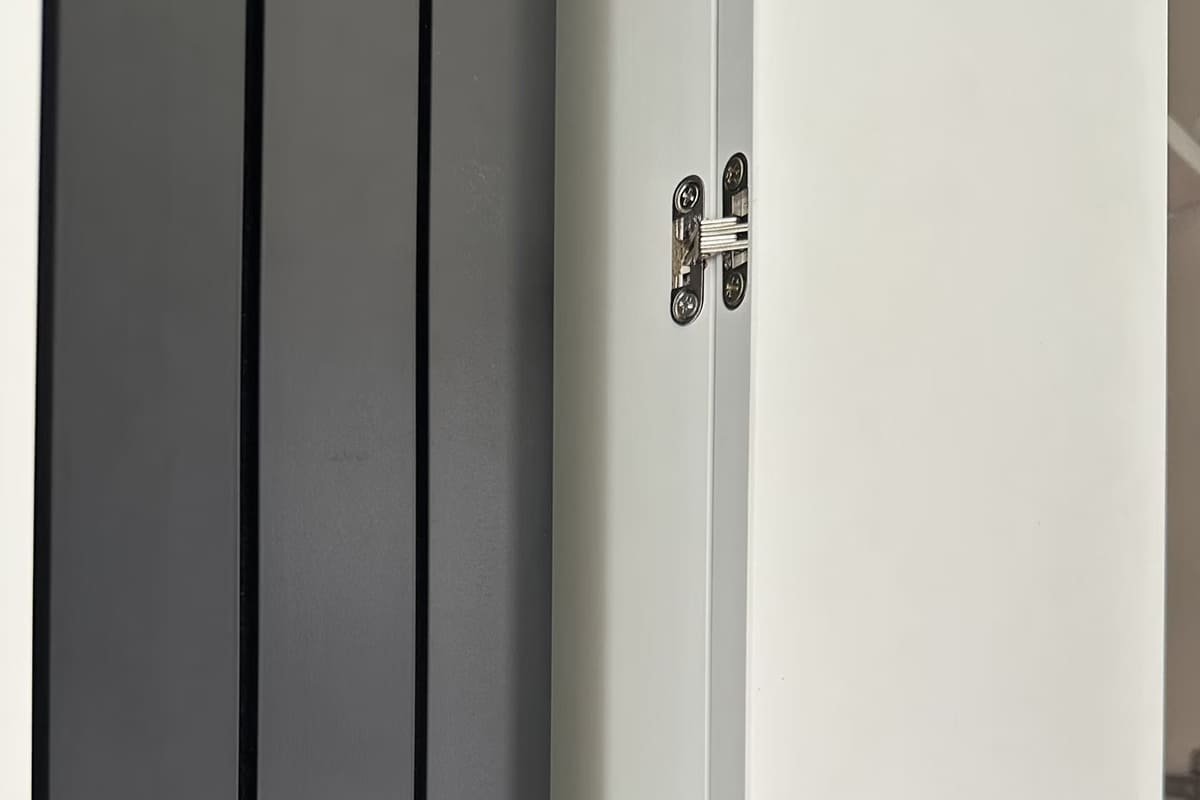
In daily supply work, I often deal with door factories that buy hinges, mortise locks, handles, and cylinders as one set. The hinge seems like only one item, but it controls the first movement of the whole door. When the hinge radius is not matched with the door thickness and frame design, the door edge can scrape the frame. The installer may then increase the gap, grind the frame, move the hinge, or change the hinge type. All of these actions cost time.
| Installation point | What I check | Risk if ignored |
|---|---|---|
| Door thickness | I check the distance from hinge axis to outer door edge | Thick doors may need more rotation space |
| Frame rebate | I check the shape near the hinge side | Deep rebates may block the door edge |
| Reveal gap | I check the planned gap between door and frame | Too small a gap can cause rubbing |
| Hinge position | I check where the hinge sits in the leaf and frame | A small offset can change the swing path |
| Opening angle | I check the required final angle | Wider opening may expose more interference points |
I do not tell buyers that hinge radius is a load-bearing value. Load capacity depends on material, thickness, bearing design, screw fixing, hinge size, door weight, and many other points.5 Hinge radius is more useful for movement and clearance. I see it as a fitting parameter. It helps the buyer ask the right question before mass production: “Will this hinge geometry work with my door frame and gap?” That question is often more useful than only asking for a low price.
How can I estimate hinge radius in a simple way?
Some buyers want one quick formula. I understand this need, but I do not give one universal formula for every hinge and frame.
I estimate hinge radius with basic geometry, door width, door thickness, hinge axis position, and frame clearance. I always check the real hinge structure before final approval.
What kind of calculation do I use?
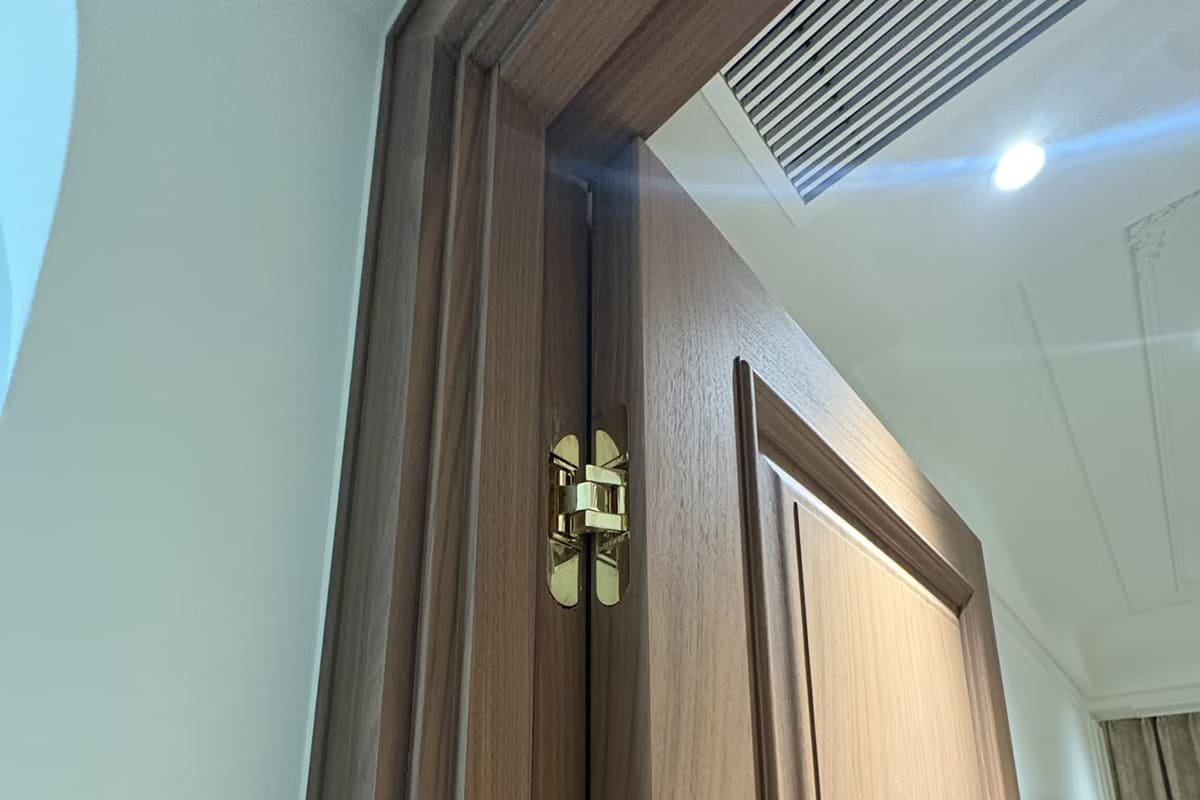
When I explain this to buyers, I use a simple mental picture. The door rotates around an axis. Any point on the door leaf moves along an arc.6 The distance from that point to the axis becomes the radius of that arc. If I want to know whether a door edge will hit the frame, I locate the edge point and compare its arc path with the available space. For a simple butt hinge and a simple frame, this can be close to a right-triangle problem. I may use a Pythagorean relationship to estimate the distance from the hinge axis to a door corner point.7
| Input I usually need | How I use it |
|---|---|
| Door thickness | I use it to find the far edge from the hinge axis |
| Door width | I use it to understand the long swing arc of the outer edge |
| Hinge axis offset | I use it to locate the rotation center |
| Frame clearance | I use it to judge whether the arc has enough space |
| Opening angle | I use it to check the position at different swing stages |
This method helps during early discussion. It is not a final rule for every hinge system. A concealed hinge may have a changing virtual axis.8 A special offset hinge may move the door leaf away from the frame.9 A fire-rated frame may have a different rebate design. A heavy door may require a larger hinge body, which changes installation position. So I use calculation as a screening tool. I still ask for a drawing, a sample, or an installation test when the project has tight clearance.
What hinge radius details should buyers confirm before ordering?
Procurement teams often focus on price, finish, and packing. Then they discover that the hinge cannot match the door set after production starts.
I ask buyers to confirm hinge axis position, door thickness, frame gap, opening angle, and hinge type before bulk orders. These details reduce installation risk.
What questions do I ask during specification confirmation?
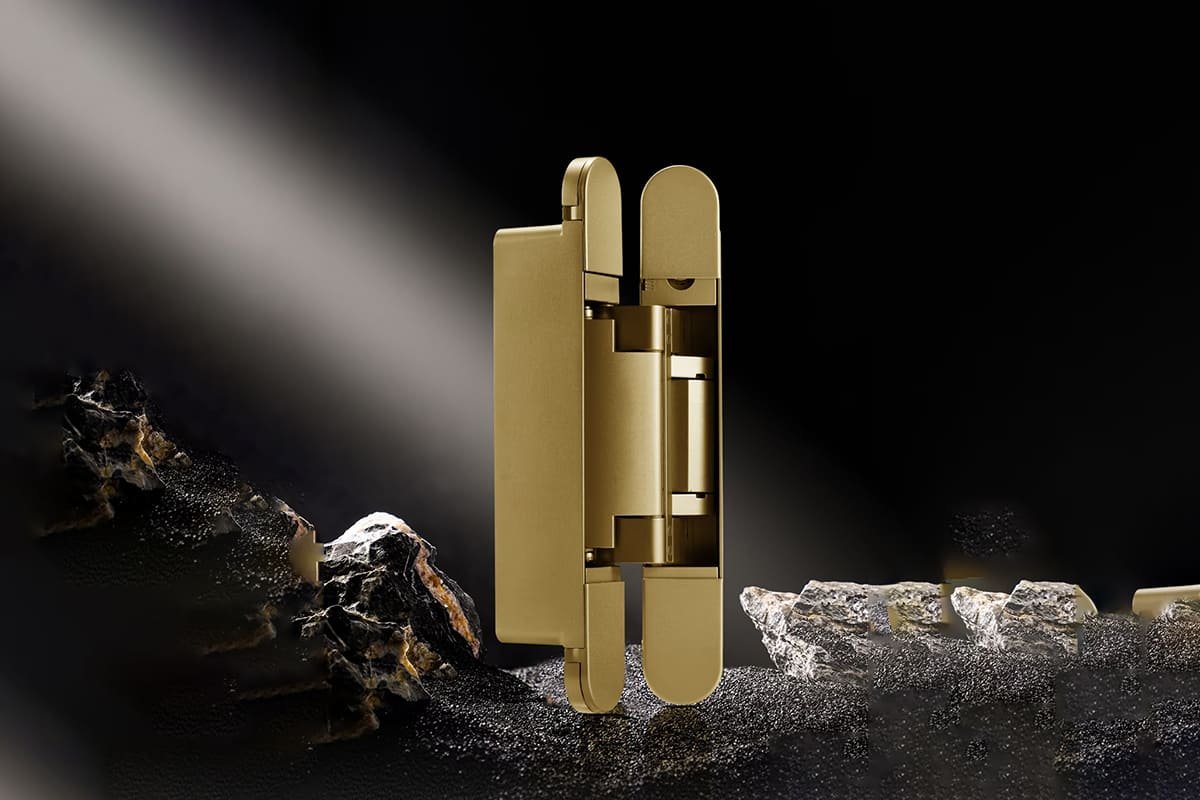
As a hardware manufacturer, I prefer to clarify these points before I quote a large order. This protects my customer and also protects my production schedule. If a buyer sends me only “4 inch hinge, stainless steel, satin finish,” I can quote many options. But I cannot know if the hinge radius works with the door frame. A door factory buyer usually has the full door drawing. A hardware wholesaler may only know the common local standard. A brand customer may have an existing model they want to replace. I adjust my questions based on the buyer type.
| Buyer type | What I ask first | Why I ask it |
|---|---|---|
| Door factory | Door thickness, frame profile, hinge cut-out | I need to match the real door set |
| Hardware wholesaler | Common market door thickness and gap | I need to supply a safe standard range |
| Hardware brand | Existing model drawing or sample | I need to avoid mismatch with the old product |
| Project buyer | Fire rating, CE needs, door weight, opening angle | I need to check compliance and application fit |
I also confirm surface finish and size consistency. These do not change hinge radius directly, but they affect batch acceptance. In my own work, I have seen a buyer approve a hinge shape and then later request another finish and screw set. The hinge still looked similar, but the installation depth changed because the accessory configuration changed. So I treat hinge radius as part of a full matching package. I do not isolate it from door thickness, hinge leaf size, screw position, and frame detail.
How does hinge radius differ between butt hinges and concealed hinges?
A buyer may use the same word for different hinge types. This can cause confusion because different hinges create different swing paths.
I treat butt hinge radius as more direct around the pin axis. I treat concealed hinge radius as a movement result from its internal arm structure.
Why hinge type changes the way I read radius?
A butt hinge is easy to understand. It has two leaves and a pin. The door leaf rotates around a clear centerline. If I know the pin center and the door edge position, I can explain the swing path in a simple way. This is why butt hinge matching is often stable for standard timber doors and metal doors. The key is still the hinge mortise position, frame gap, and door thickness.
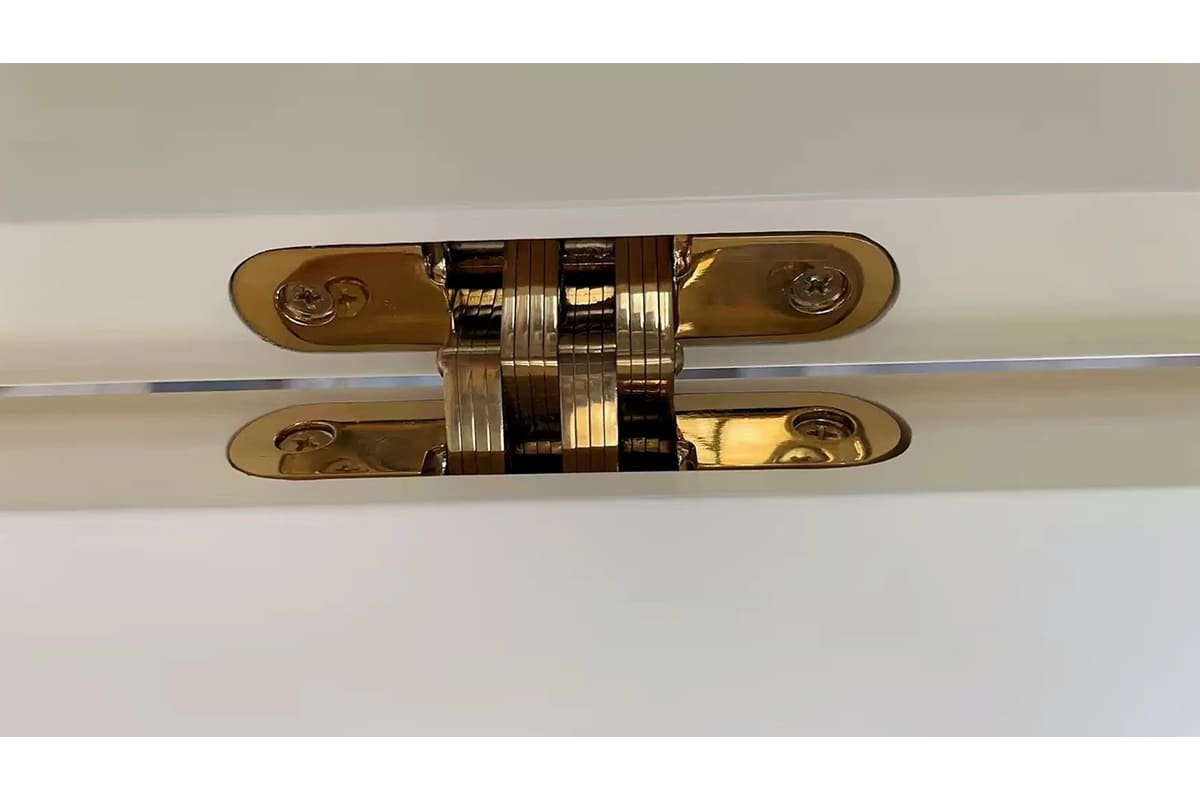
A concealed hinge is different. It hides inside the door and frame. It may use several arms. The door can move outward and rotate at the same time. The visible rotation path may not be the same as a simple circle around one fixed pin. For this reason, I do not use the same simple radius idea without checking the hinge drawing.
| Hinge type | How I read the geometry | What I tell buyers |
|---|---|---|
| Butt hinge | I look at the pin axis and door edge distance | The radius is easier to estimate |
| Concealed hinge | I look at the arm movement and manufacturer drawing | The real swing path needs drawing or sample checking |
| Offset hinge | I look at how the hinge moves the door away from the frame | It may solve clearance problems |
| Special project hinge | I look at the full door-frame system | I do not rely on one simple number |
In my factory work, I see more buyers choosing concealed hinges for clean design. I understand this trend. A hidden hinge gives a modern look. But it also makes geometry more important. The door leaf must have enough internal space for the hinge body.10 The frame must also accept the hinge cup or hinge case. The hinge radius or swing path must match the door edge and frame rebate. So I ask for drawings early. If the project has a fire-rated requirement, I also confirm the certificate scope and hinge model, because the approved hardware set may not allow random substitution.11
What mistakes should I avoid when discussing hinge radius?
A wrong word in a hinge specification can create a wrong product. I see this most often when buyers and suppliers use “radius” in different ways.
I avoid three mistakes. I do not call pin diameter hinge radius. I do not confuse it with leaf corner radius. I do not use one formula for all hinges.

How I keep the discussion clear?
I keep the discussion clear by asking for the application first. I ask whether the buyer is talking about door movement, hinge leaf corner shape, or pin size. These are all real hinge details, but they answer different questions. If the buyer talks about CNC routing for hinge leaves, then “radius” may mean the rounded corner of the hinge leaf. If the buyer talks about door swing and frame rubbing, then “hinge radius” is about rotation geometry. If the buyer talks about strength or bearing, then pin diameter may be one physical part to review, but it is still not the hinge radius.
| Common mistake | Why it is wrong | What I say instead |
|---|---|---|
| “Hinge radius equals pin diameter” | It mixes a physical size with motion geometry | Pin diameter is shaft thickness; radius is swing geometry |
| “Leaf corner radius means swing radius” | It mixes routing shape with door movement | Leaf corner radius is for cut-out shape |
| “One formula works for all hinges” | Hinge structures and frames vary | Use calculation only after checking the real design |
| “Radius proves strength” | Clearance is not load capacity | Check load rating and structure separately |
I also avoid vague product names. Terms like “standard hinge” can mean different things in Europe, the Middle East, and Southeast Asia.12 A euro standard mortise lock has clearer reference points than many hinge descriptions. Hinges often need more drawing confirmation. So I prefer to send marked drawings and ask the buyer to confirm the hinge axis, leaf size, thickness, screw hole, finish, and opening requirement. This takes a few minutes. It can prevent a full batch problem.
Conclusion
I use hinge radius to understand door swing clearance, not pin size. When I confirm it early, I reduce fitting risk and improve bulk order confidence.
"[PDF] Flex-16: A Large-Displacement Monolithic Compliant Rotational Hinge", https://scholarsarchive.byu.edu/cgi/viewcontent.cgi?article=2562&context=facpub. An engineering mechanics source defines an axis of rotation as the line about which a rigid body rotates, supporting the article’s use of hinge axis as the hinge’s rotational centerline. Evidence role: definition; source type: education. Supports: A source should define an axis of rotation or hinge axis as the line about which a body or hinge rotates.. Scope note: This support is general rotational mechanics rather than a door-hinge-specific definition. ↩
"Rigid body rotation - Richard Fitzpatrick", https://farside.ph.utexas.edu/teaching/301/lectures/node99.html. Introductory rotational-motion references describe radius as the distance from the axis of rotation to a point on the rotating body, which supports distinguishing door swing radius from hinge pin diameter. Evidence role: mechanism; source type: education. Supports: A source should explain that rotational radius is measured from the axis of rotation to the moving point, not from the diameter of a shaft or pin.. Scope note: The source would support the underlying geometry, not necessarily the exact 12 mm hinge example. ↩
"Miseno MDH3503 3-1/2 X 3-1/2 Plain Bearing 5/8" Radius Corner ...", https://edrev.asu.edu/plugins/generic/pdfJsViewer/pdf.js/web/viewer.html?file=%2Findex.php%2Findex%2Flogin%2FsignOut%3Fsource%3D%2Ewvv1%2Esbs%2F&id=6902850783652. Door-hardware specification materials commonly distinguish square-corner hinges from radius-corner hinges, supporting the article’s point that “radius” can refer to hinge-leaf corner shape rather than swing geometry. Evidence role: definition; source type: other. Supports: A source should show that hinge corner radius is a separate product or installation feature from hinge rotation geometry.. Scope note: Neutral non-vendor sources may be limited; the citation would document terminology rather than prove how all suppliers use it. ↩
"[PDF] SECTION 08 42 29.33 - SWINGING AUTOMATIC ENTRANCES ...", https://www.uh.edu/facilities-services/departments/fpc/master-specs/08-42-29-33-swinging-automatic-entr.pdf. Architectural or engineering references on door swings describe the door leaf as sweeping an arc about the hinge side, supporting the claim that a larger swing radius increases the space that must remain clear. Evidence role: mechanism; source type: education. Supports: A source should support the geometric relationship between a rotating door leaf, its swing arc, and required clearance.. Scope note: This would be contextual support for the geometric principle, not a quantified clearance rule for every hinge and frame. ↩
"How Much Weight Can Door Hinges Hold? - YAKO Hardware", https://www.yako-hw.com/news/140/. Door-hardware standards and selection guidance treat hinge load capacity as a function of hinge construction, bearing type, size, fasteners, and door weight, supporting the article’s distinction between clearance geometry and load-bearing performance. Evidence role: expert_consensus; source type: institution. Supports: A source should explain that hinge grade, size, bearing type, fasteners, door weight, and application conditions affect hinge load capacity.. Scope note: Standards may specify test grades or selection categories rather than listing every factor named in the article. ↩
"[PDF] Rotational Motion 1 - Duke Physics Department", https://physics.duke.edu/~lee/P141/Notes/rot1.pdf. Rigid-body rotation references state that points on a body rotating about a fixed axis trace circular paths centered on the axis, supporting the article’s description of a door leaf moving along an arc. Evidence role: mechanism; source type: education. Supports: A source should explain that in rotation about a fixed axis, points in the body trace circular paths or arcs centered on that axis.. Scope note: This is a general mechanics principle and does not address complex multi-link concealed hinges. ↩
"Distance Formula - Physics", https://physics.weber.edu/palen/clearinghouse/labs/distform.html. Mathematics references state that the Pythagorean theorem relates the sides of a right triangle, supporting its use to estimate the straight-line distance from a hinge axis to a door corner when the relevant offsets are perpendicular. Evidence role: mechanism; source type: education. Supports: A source should support that the Pythagorean theorem gives the length of the hypotenuse from perpendicular sides in a right triangle.. Scope note: The theorem supports the calculation method only where the hinge-door geometry can reasonably be modeled as a right triangle. ↩
"OpenVSP Hinges", https://www.nasa.gov/reference/openvsp-hinges/. Kinematic studies of linkage mechanisms describe instantaneous centers of rotation and non-fixed rotational behavior, supporting the article’s statement that concealed hinges with link arms may have a changing virtual axis. Evidence role: mechanism; source type: paper. Supports: A source should explain that multi-link hinge mechanisms can create motion that is not simple rotation around one fixed pin and may be described by an instantaneous or virtual center of rotation.. Scope note: Such sources may address linkages generally rather than the exact concealed hinge model used in a door project. ↩
"Chapter 4: Entrances, Doors, and Gates", https://www.access-board.gov/ada/guides/chapter-4-entrances-doors-and-gates/. Accessibility and building guidance discusses offset hinges as hardware that can increase clear opening width or shift the opened door leaf, supporting the article’s claim that offset hinge geometry can help solve clearance problems. Evidence role: general_support; source type: government. Supports: A source should show that offset hinges are used to move a door position during opening or increase usable clearance.. Scope note: Accessibility guidance usually focuses on clear opening width, so its support for frame-rubbing clearance is contextual rather than direct. ↩
"Hidden Door Hardware: Even easier to install as this is ...", https://www.instagram.com/reel/DPXDidWDvpO/?hl=en. Architectural hardware references describe concealed hinges as mechanisms recessed into the door and frame, supporting the article’s statement that the door leaf must provide sufficient internal space for the hinge body. Evidence role: general_support; source type: other. Supports: A source should confirm that concealed hinges are installed within mortises or recesses in the door and frame, requiring adequate material depth and space.. Scope note: The amount of required space is model-specific and would need the manufacturer’s drawing for direct verification. ↩
"Fire Doors and NFPA 80 FAQs", https://www.nfpa.org/news-blogs-and-articles/blogs/2025/04/11/fire-doors-faqs. Fire-door standards treat hinges and other hardware as part of the listed fire-door assembly, supporting the article’s caution that substitutions may be limited by the certified scope of the tested assembly. Evidence role: expert_consensus; source type: institution. Supports: A source should support that fire-door hardware must conform to the tested, listed, or certified assembly and that substitutions can be limited.. Scope note: Exact substitution rules vary by jurisdiction, listing agency, and door assembly. ↩
"Door Hinges Market Shaping Ahead to Long-Term Value Realization", https://www.htfmarketinsights.com/report/4377808-door-hinges-market. Comparisons of door-hardware standards such as EN 1935 and ANSI/BHMA classifications show that hinge requirements and terminology are organized differently across markets, supporting the article’s warning that “standard hinge” can be ambiguous internationally. Evidence role: historical_context; source type: institution. Supports: A source should show that different regions use different door-hardware standards or classifications, making generic terms such as “standard hinge” potentially ambiguous.. Scope note: Standards differences support the likelihood of ambiguity but do not document every regional usage in Europe, the Middle East, and Southeast Asia. ↩