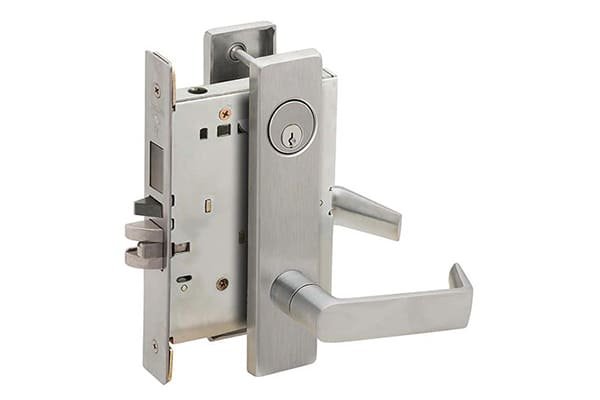
What Type of Doors Can a Mortise Lock Be Fitted On?
A Mortise lock can be a strong and professional door locking solution, but many buyers still ask me whether it will fit their door type. The risk is simple: the wrong lock body, backset, or door preparation can delay production and create costly returns. The right selection logic prevents that problem before ordering.
A Mortise lock can be fitted on wooden doors, steel doors, aluminum profile doors, and aluminum-framed glass doors1 when the correct lock type is selected. Suitability depends on door thickness, internal structure, lock body size, backset, opening direction, and application requirements. Standard mortise locks are not suitable for frameless glass doors.
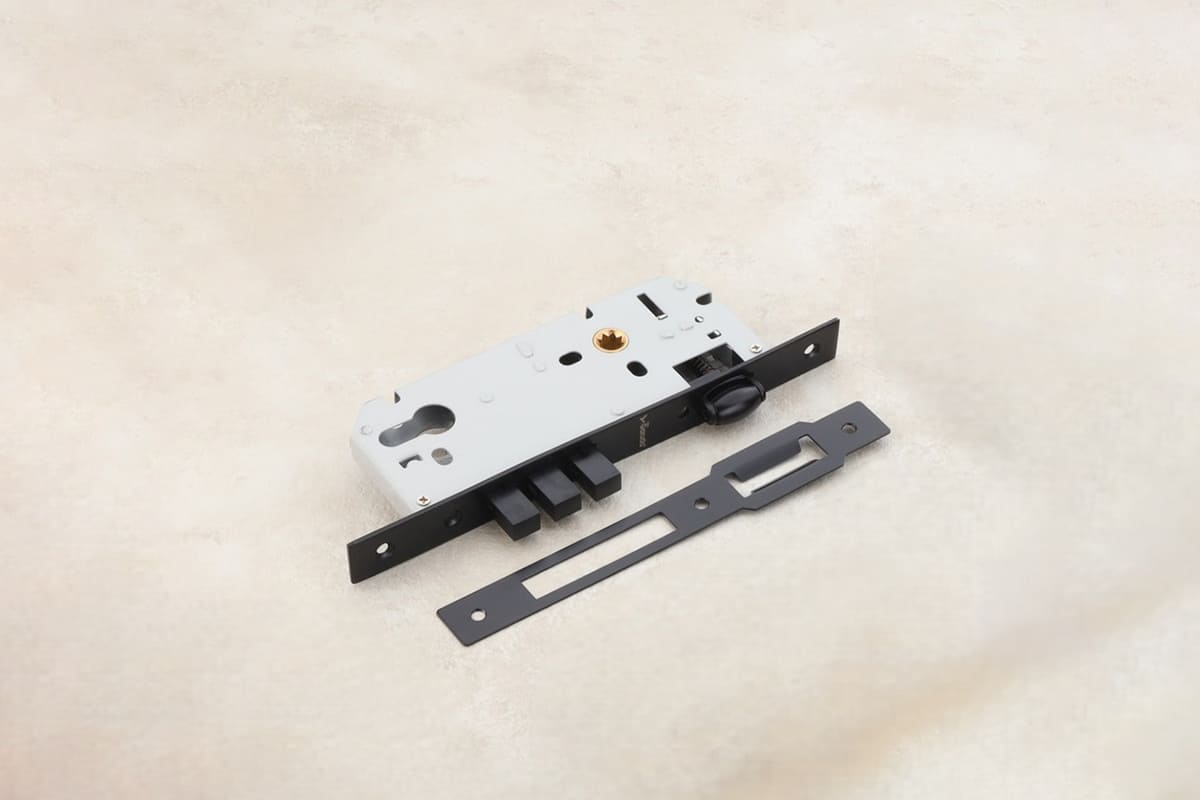
In my daily work with door factories, hardware brands, and wholesalers, I do not judge compatibility by the door name alone. I check the door material first, then the thickness, structure, lock dimensions, function, and handing. That is the safest way to confirm fitment before bulk purchase.
What Door Materials Can a Mortise Lock Be Fitted On?
Door material is the first question, but it is not the final answer. I often see buyers assume that one lock body can cover every door material. That assumption creates problems when the stile is narrow, the door is hollow, or the glass frame has limited space.
A Mortise lock can usually be used on wooden doors, steel doors, aluminum profile doors, and aluminum-framed glass doors if the lock body matches the door construction. Narrow aluminum or framed glass doors often need narrow-body mortise locks2. Frameless glass doors should not use standard mortise lock bodies.3
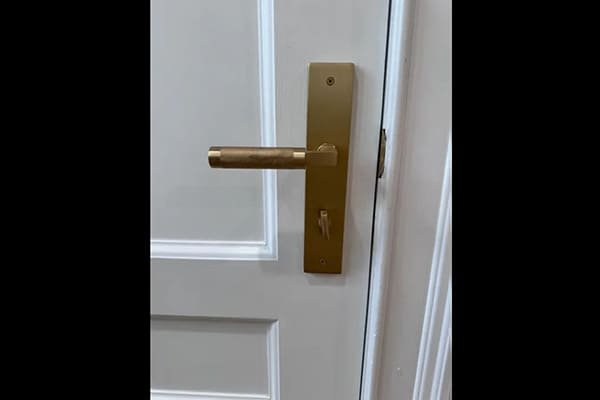
Wooden Doors
Wooden doors are one of the most common applications for a mortise lockset. Solid wood doors, engineered wood doors, and many composite doors can be prepared with a mortise pocket for the lock body4.
For wood doors, I usually ask buyers to confirm:
- Door thickness
- Solid or hollow-core construction
- Backset requirement
- Faceplate size
- Handle and cylinder type
- Latch direction
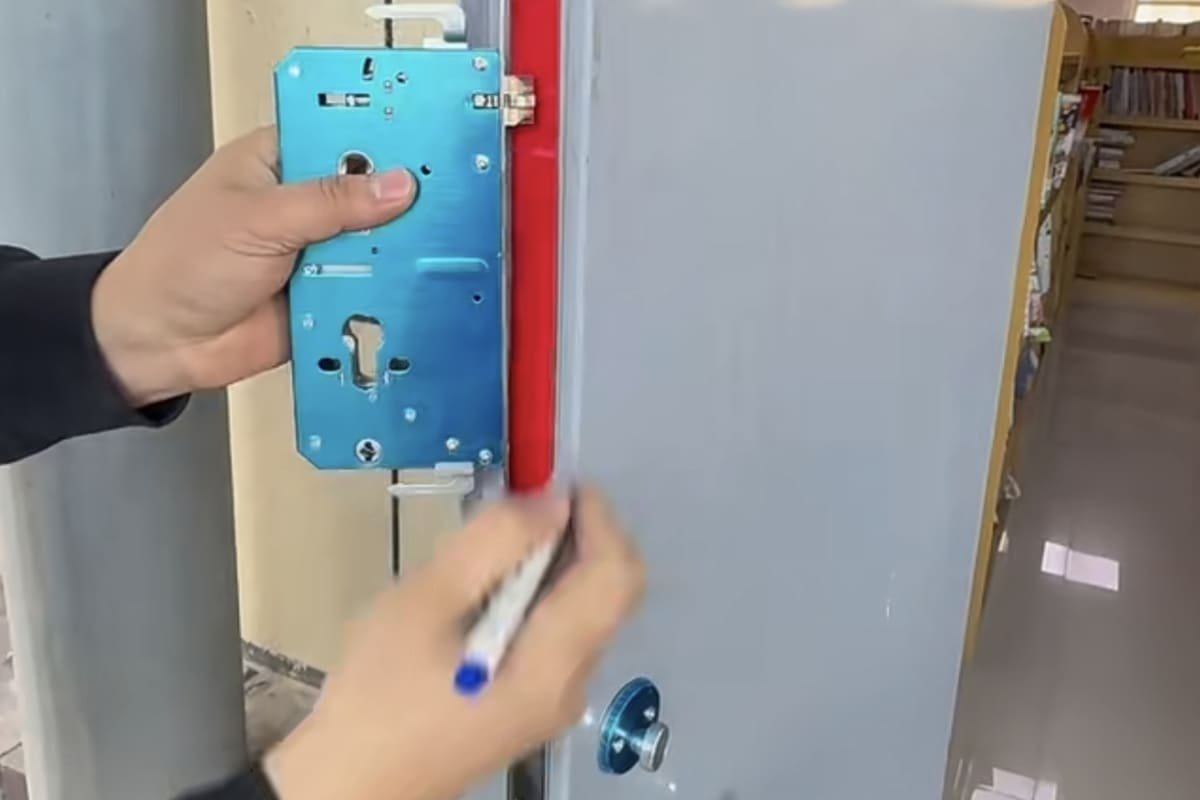
A solid wooden door normally gives good support for the lock case, screws, spindle, cylinder, and handles. However, not every wooden door is automatically suitable. A very thin interior door, a low-density hollow-core door, or a door with weak internal filling may not hold the lock securely unless it has reinforcement5.
Steel Doors
Steel doors can also use mortise locksets, especially entrance doors, apartment doors, security doors, and fire-rated steel doors. The key issue is not only the metal skin. The internal structure matters.
A steel door may require:
- Pre-punched lock pocket6
- Correct lock case depth
- Reinforced mounting area
- Compatible strike plate
- Matching cylinder and handle configuration
For steel doors, the lock body must match the prepared cavity. If the lock body is too deep, it may interfere with internal reinforcement. If the faceplate is too wide or too narrow, it may not align with the edge preparation.
Aluminum Profile Doors
Aluminum doors need more careful selection. Many aluminum profile doors have a narrow stile, so a standard wide mortise lock body may not fit. In this case, buyers normally use narrow-body mortise locks with smaller backsets and slimmer cases.
Here is a simple comparison:
| Door Type | Common Lock Choice | Key Fitment Concern |
|---|---|---|
| Solid wooden door | Standard mortise lock | Door thickness and mortise pocket |
| Steel entrance door | Heavy-duty mortise lock | Internal reinforcement and lock case depth |
| Aluminum profile door | Narrow-body mortise lock | Stile width and backset |
| Aluminum-framed glass door | Narrow-stile mortise lock | Frame depth and handle clearance |
| Frameless glass door | Not standard mortise lock | Requires special glass door hardware |
Aluminum-Framed Glass Doors
Aluminum-framed glass doors can often accept a mortise lock, but the lock usually sits inside the aluminum frame, not the glass panel. This means the profile size decides the lock type.
I always advise buyers to provide the aluminum profile drawing when possible. A small change in profile width can completely change the lock body selection.
Frameless Glass Doors
Frameless glass doors are different. A standard mortise lock needs a pocket inside the door edge. Glass cannot be mortised like wood or metal. For this reason, frameless glass doors require special glass door locks, patch fittings, floor springs, or other dedicated hardware.
This distinction is important for wholesalers. If a customer says “glass door,” I always ask whether it is framed glass or frameless glass. The answer changes the hardware completely.
Why Does Door Thickness Matter for a Mortise Lock?
Door thickness is one of the most common reasons for wrong fitment. A lock may look correct in a catalog, but if the door is too thin, the lock body, cylinder, spindle, and screws may not sit safely. This can cause weak fixing and poor operation.
A Mortise lock commonly requires a door thickness of about 35–55 mm7, with 35 mm often treated as a practical minimum. Thinner doors or special-profile doors need separate confirmation. Door thickness affects lock body depth, cylinder length, handle fixing, screw engagement, and overall security.8
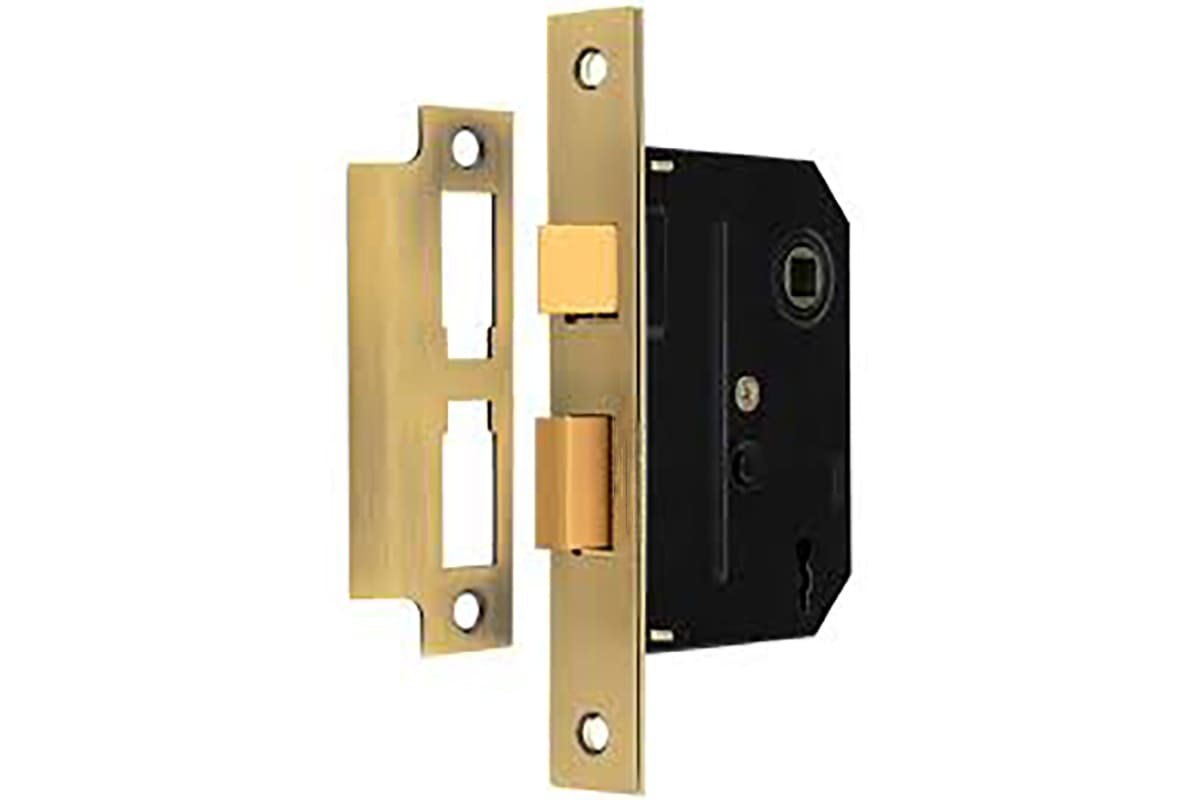
The Practical 35–55 mm Range
In many architectural door hardware projects, the practical door thickness range for mortise locksets is around 35 mm to 55 mm. This does not mean every lock fits every door in that range. It means many standard configurations are designed around this range.
For example:
- 35–40 mm doors are common for interior wooden doors.
- 40–45 mm doors are common for higher-grade interior and entrance doors.
- 45–55 mm doors are common for thicker entrance doors, steel doors, and project doors.
If a door is below 35 mm, the lock body may be too thick for the door edge. The cylinder may protrude too much. The handle screws may not hold well. The latch and deadbolt may also sit too close to the door surface.
Why Thickness Affects More Than the Lock Body
Many buyers focus only on the lock case depth. That is understandable, but thickness affects the entire hardware set.
A complete mortise lockset may include:
- Lock body
- Cylinder
- Lever handle
- Escutcheon or rose
- Spindle
- Screws
- Strike plate
- Faceplate
Each part must match the door thickness. For example, if the cylinder is too short, the key may not operate properly. If the cylinder is too long, it may project too far from the door surface. If the spindle is incorrect, the handle may feel loose or fail to retract the latch smoothly.
Typical Door Thickness and Hardware Considerations
| Door Thickness | Common Application | Selection Note |
|---|---|---|
| Below 35 mm | Thin interior or special panel door | Needs separate confirmation |
| 35–40 mm | Standard interior wooden door | Common for light-duty mortise locksets |
| 40–45 mm | Interior or apartment door | Common and flexible range |
| 45–55 mm | Entrance, steel, or project door | Check cylinder length and screw set |
| Above 55 mm | Thick custom door | May need extended cylinder or accessories |
What I Ask Before Quoting
When I prepare a quotation for buyers, I try to avoid guessing. I usually ask for the following information:
- Exact door thickness in millimeters
- Door material
- Door edge construction
- Backset requirement
- Cylinder length requirement
- Handle type and rose size
- Project application
This may feel detailed, but it saves time later. In bulk supply, a 2 mm or 3 mm mismatch can become a production issue across hundreds or thousands of doors. I prefer to check early rather than solve complaints after shipment.
How Does Internal Door Structure Affect Mortise Lock Installation?
A door may have the right material and thickness but still fail to support the lock properly. This is especially true for hollow-core doors. The outside surface may look strong, while the inside does not provide enough holding strength for the lock body and handle screws.
A Mortise lock works best when the door has enough internal strength around the lock pocket. Solid doors can usually be mortised directly. Hollow-core doors need reinforced blocking, pre-embedded wood, or structural support. Without reinforcement, the lock may loosen, shift, or damage the door edge.

Solid Door Structure
Solid doors are usually the easiest to evaluate. A solid wood door or a properly reinforced composite door can hold the lock body firmly after machining. The lock pocket can be cut cleanly, and the screws can bite into strong material.
Solid construction helps with:
- Stable lock body positioning
- Better screw holding power
- Smoother handle operation
- Reduced door edge cracking
- Longer service life
However, even solid doors require accurate preparation. If the mortise pocket is too large, the lock body may move. If it is too tight, the lock case may deform during fixing. Both problems can affect latch movement.
Hollow-Core Doors
Hollow-core doors need more caution. Many interior doors use light internal honeycomb, cardboard, or low-density filling. These doors may not provide enough support for a lock case unless the lock area is reinforced.
For hollow-core doors, I suggest buyers check whether the door has:
- Pre-embedded solid wood block
- Reinforced lock rail
- Enough edge material thickness
- Factory-prepared lock pocket
- Handle screw support
If none of these are present, a standard lockset may not stay stable after repeated use. The handle can become loose. The latch may not align. The door edge can split or collapse.
Steel Door Internal Reinforcement
Steel doors may look strong, but the internal layout still matters. Many steel doors include reinforcing plates, honeycomb filling, insulation, or fire-rated cores. The lock pocket must not conflict with these structures.
For fire-rated steel doors, I use extra caution. The lockset must be verified according to the specific certified product and project requirement. A fire-rated door is a tested system.9 The lock, latch, cylinder, strike plate, and installation position may all affect compliance.
Aluminum Profile Internal Space
Aluminum profile doors depend heavily on the section design. The profile may have internal ribs, screw channels, or thermal-break structures. These parts may limit the lock body size.
For this reason, I often ask buyers for:
- Profile cross-section drawing
- Stile width
- Available internal depth
- Backset
- Handle clearance
- Lock faceplate length and width
A narrow profile may require a narrow-stile lock body with a smaller backset. If buyers use a standard lock body by mistake, the profile may need rework. That can be expensive in a door factory production line.
A Simple Supplier-Side Rule
I use a simple rule when checking door structure:
If the door cannot hold the lock body, screws, spindle, and cylinder firmly after repeated operation, the lock is not suitable unless the door is reinforced.
This rule helps buyers avoid a common mistake. Compatibility is not just whether the lock fits into a hole. Compatibility means the complete door and hardware set can operate reliably over time.
Which Mortise Lock Type Should You Choose for Different Applications?
The same door material can need different lock functions depending on the application. An entrance door, hotel room door, office door, fire-rated door, and interior bedroom door do not share the same security or compliance requirements. Buyers should match the lock function to the use case.
A Mortise lock should be selected according to the door’s application. Entrance doors may need stronger security configurations and suitable cylinders. Fire-rated doors must use certified fire-rated locksets matched to project requirements.10 Interior doors can use simpler latch or privacy functions when high security is not required.
Interior Doors
Interior doors normally need smooth operation, a clean finish, and reasonable durability. They may use simpler lock functions, such as passage, privacy, or standard key locking.
Common interior applications include:
- Bedroom doors
- Office room doors
- Bathroom doors
- Meeting room doors
- Apartment internal doors
For these doors, buyers often focus on:
- Handle design
- Finish consistency
- Smooth latch operation
- Noise control
- Cost-effectiveness
- Easy replacement
Interior doors usually do not need the same level of cylinder security as entrance doors. However, the lock body still needs stable production quality. A low-cost lock that fails early can damage a hardware brand’s reputation.
Entrance Doors
Entrance doors need more attention to security. The lock body, cylinder, strike plate, and handle should work as a complete system. Buyers may need anti-drill, anti-pick, or higher-security cylinder options depending on the market and project.
I avoid making broad security-grade claims unless the exact model, certificate, and test standard are confirmed. In real procurement, “high security” must be linked to a specific product configuration.
For entrance doors, buyers should check:
- Deadbolt throw
- Cylinder type
- Cylinder material
- Key system
- Strike plate strength
- Door frame compatibility
- Local market standard
A strong lock body with a weak cylinder is not a strong system. A good cylinder with a weak door frame is also not enough. Security depends on the complete door opening.11
Fire-Rated Doors
Fire-rated doors require the most careful confirmation. A fire door is not just a door leaf. It is a certified assembly. The lockset must match the fire-rated door’s test condition and certification requirements.
Buyers should verify:
- Fire-rated lock certificate
- Compatible door rating
- Latch material
- Faceplate material
- Strike plate specification
- Tested installation condition
- Project requirements
I always use careful wording here because fire safety is serious. A lock may have a fire-rated certificate, but that does not automatically mean it is suitable for every fire-rated door project. The specific lock model, door type, and application condition must be checked.
Aluminum and Commercial Doors
Commercial aluminum doors often use narrow-stile lock bodies. These doors may appear in shops, offices, schools, public buildings, and glass entrance systems.
Common requirements include:
- Narrow backset
- Slim faceplate
- High cycle performance
- Compatible lever handles
- Euro profile cylinder option
- Stainless steel or durable finish
For commercial projects, appearance consistency is also important. A wholesaler may order thousands of sets in satin stainless steel, matte black, PVD gold, or other finishes. The lock body is hidden, but the faceplate, strike plate, cylinder, and handle finish must remain consistent across batches.
Application Comparison Table
| Application | Suggested Lock Direction | Main Concern |
|---|---|---|
| Interior wooden door | Standard mortise latch or lock | Smooth use and cost control |
| Apartment entrance door | Stronger lock body and cylinder | Security and durability |
| Fire-rated steel door | Fire-certified lockset | Certificate and tested condition |
| Aluminum profile door | Narrow-body lock | Stile width and backset |
| Framed glass aluminum door | Narrow-stile lock | Profile depth and handle clearance |
The key point is simple. The door type tells me where to start. The application tells me what performance level to choose.
What Should Buyers Check Before Ordering a Mortise Lock in Bulk?
Bulk orders magnify small mistakes. One wrong backset or latch direction can affect an entire container shipment. I have seen buyers become very careful after one painful mismatch. A clear checklist helps prevent fitment errors before production starts.
Before ordering a Mortise lock in bulk, buyers should check the lock body specification, backset, faceplate size, door thickness, cylinder type, handle configuration, opening direction, latch bevel direction, strike plate, finish, and certification requirements. Samples and drawings should be confirmed before mass production.
Check the Lock Body Marking and Specification
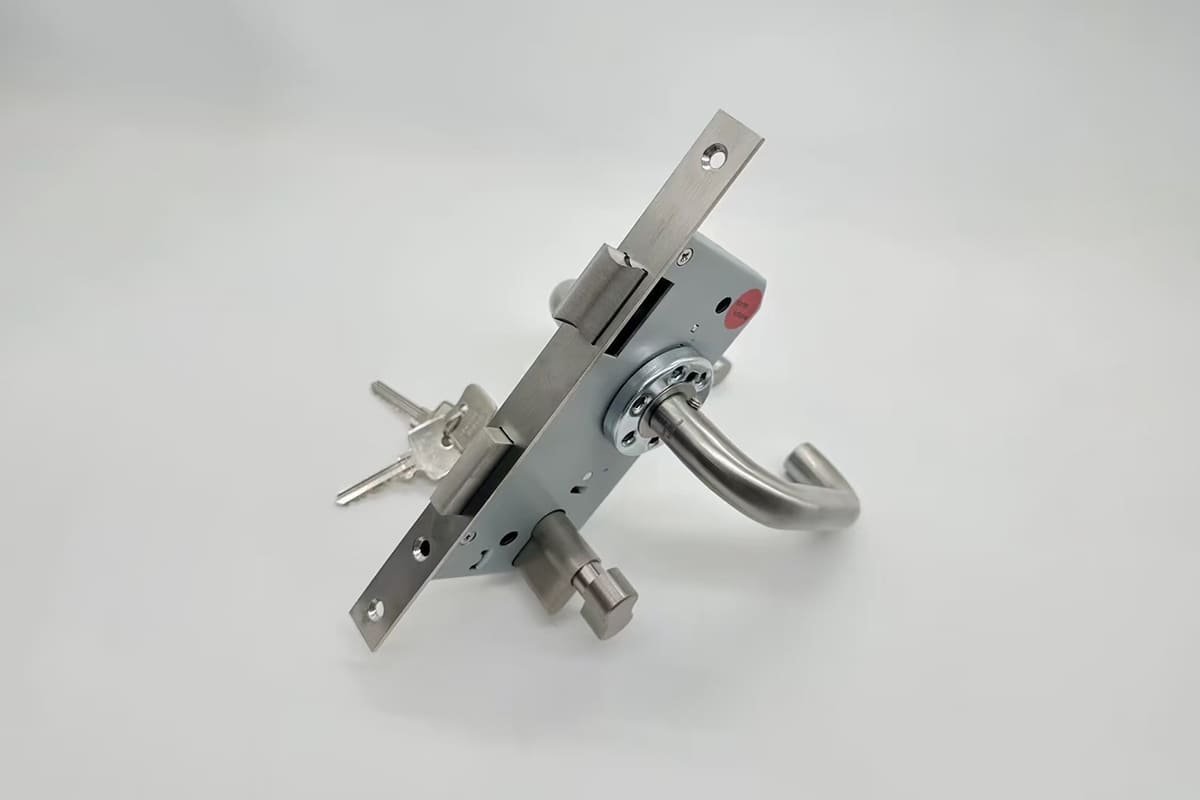
Many lock bodies include markings or codes that describe the model, backset, center distance, and function. Buyers should not rely only on photos. A lock body can look similar but have different measurements.
Important dimensions include:
- Backset
- Center distance
- Case depth
- Faceplate length
- Faceplate width
- Follower size
- Cylinder hole type
- Deadbolt throw
- Latch projection
The backset is especially important. It measures the distance from the door edge to the center of the spindle or keyhole12, depending on the lock design. If the backset is wrong, the handle and cylinder holes will not align with the door preparation.
Confirm Door Opening Direction
Door opening direction affects latch bevel direction and sometimes lock handing. Buyers should confirm whether the door is left-hand, right-hand, inward-opening, or outward-opening.
A simple communication mistake can lead to wrong latch direction. Some latch bolts are reversible, but not all lock models work the same way. I recommend confirming this before production, especially for project orders.
Match Cylinder and Handle Configuration
A mortise lock body is only part of the set. The cylinder and handle must match the lock body and door thickness.
Buyers should confirm:
- Euro profile cylinder or other cylinder type
- Cylinder length
- Single cylinder or thumbturn cylinder
- Lever handle spindle size
- Rose or escutcheon design
- Screw fixing method
- Finish and material
For European-standard door hardware, euro profile cylinders are common. But cylinder length must match the door thickness and escutcheon thickness. A 40 mm door and a 55 mm door usually do not use the same cylinder length.
Verify Certification Requirements
If the lock is for a fire-rated door, project door, or regulated market, certification must be checked before ordering. Buyers should ask for the relevant certificate and confirm that the model, material, function, and application match the requirement.
Common documents may include:
- CE certificate
- Fire-rated certificate
- Test report
- Product drawing
- Material specification
- Finish standard
- Inspection report
At SDH Hardware, I often help buyers confirm whether the requested lock body, cylinder, hinge, and handle combination can be supplied according to their market expectations. This is especially important for Europe, the Middle East, and Southeast Asia, where project requirements can be different.
Use a Pre-Order Checklist
Here is a practical checklist I recommend before bulk purchase:
| Item to Confirm | Why It Matters |
|---|---|
| Door material | Determines standard or narrow-body lock choice |
| Door thickness | Affects lock body, cylinder, screws, and handle |
| Internal structure | Confirms whether reinforcement is needed |
| Backset | Must match door drilling and handle position |
| Faceplate size | Must match door edge preparation |
| Cylinder type | Affects security and market compatibility |
| Handle configuration | Must match spindle and fixing method |
| Opening direction | Affects latch bevel and handing |
| Application | Determines security or fire-rated requirement |
| Certificate | Required for regulated projects |
| Finish | Ensures batch appearance consistency |
Confirm Samples Before Mass Production
For a new door model or a new customer market, I strongly recommend sample confirmation. A sample lets the buyer check fitment, operation, finish, packaging, and accessory compatibility before a full production run.
A good sample confirmation should include:
- Physical lock body test
- Door preparation test
- Handle operation test
- Cylinder operation test
- Strike plate alignment
- Finish approval
- Packaging check
This step may add a little time at the beginning. However, it can prevent major losses later. For door factories and wholesalers, stable repeat orders depend on getting these small details right.
Frequently Asked Questions
Can a Mortise lock be fitted on a hollow-core door?
Yes, but only if the hollow-core door has proper reinforcement around the lock area. The door should include internal blocking, a reinforced lock rail, or pre-embedded wood support. Without reinforcement, the lock body and handle screws may loosen or damage the door edge.
Can a Mortise lock be used on an aluminum door?
Yes, many aluminum doors can use mortise locks, but the profile size must be checked. Narrow aluminum stile doors usually need narrow-body mortise locks with suitable backsets and slim faceplates. I recommend confirming the aluminum profile drawing before ordering.
What is the minimum door thickness for a Mortise lock?
A common practical minimum is about 35 mm, and many standard doors fall within the 35–55 mm range. However, exact suitability depends on the lock body, cylinder, handle fixing, and door structure. Thin or special-profile doors need separate confirmation.
Are Mortise locks suitable for frameless glass doors?
Standard mortise locks are not suitable for frameless glass doors because the glass cannot be mortised like wood, steel, or aluminum. Frameless glass doors require dedicated glass door locks, patch fittings, or other special hardware designed for glass applications.
Do fire-rated doors need special Mortise locks?
Yes, fire-rated doors must use locksets verified for the specific certified door system and project requirement. Buyers should check the lock model, certificate, test condition, latch material, and installation requirements before ordering. Fire-rating suitability should never be assumed from appearance alone.
Conclusion
A Mortise lock can be fitted on many door types, including wooden doors, steel doors, aluminum profile doors, and aluminum-framed glass doors. However, suitability depends on much more than the door name. I always check door thickness, internal structure, lock body size, backset, application, certification needs, and opening direction before confirming a model. If you are sourcing mortise locks for bulk orders, door production, or hardware distribution, contact SDH Hardware for specification support, sample confirmation, and factory-direct supply.
"Mortise lock", https://en.wikipedia.org/wiki/Mortise_lock. A general definition of a mortise lock describes it as a lock fitted into a mortise, or recess, cut into the edge of a door, which supports the article’s emphasis on door construction and preparation rather than door material alone. Evidence role: definition; source type: encyclopedia. Supports: A neutral source should define a mortise lock as a lock installed into a mortise pocket in the edge of a door, supporting the idea that use depends on whether the door or frame member can accept that pocket.. Scope note: This source would support the installation principle, but it would not independently verify every listed door material or product configuration. ↩
"Mortise lock", https://en.wikipedia.org/wiki/Mortise_lock. Architectural hardware references describe narrow-stile locksets as hardware designed for doors with limited stile width, such as aluminum storefront doors, supporting the article’s explanation that narrow aluminum profiles often require slimmer mortise lock bodies. Evidence role: definition; source type: institution. Supports: A technical door-hardware source should define narrow-stile locks or explain their use on aluminum storefront or profile doors where the stile width limits lock case size and backset.. Scope note: The source would support the hardware category and use case, but exact compatibility must still be checked against the specific aluminum profile. ↩
"MUNDUS – Patch Fittings for Tempered Glass Assemblies ...",
. Technical guidance on door hardware distinguishes mortised locks, which require a recess in the door edge, from frameless glass-door hardware such as patch fittings, supporting the conclusion that standard mortise lock bodies are not normally used directly in frameless glass panels. Evidence role: mechanism; source type: institution. Supports: A technical or institutional source should explain that standard mortise locks require a mortised recess and that frameless glass doors typically use dedicated glass-door locks, patch fittings, or similar hardware.. Scope note: The support is contextual because exceptions may exist for proprietary glass-lock systems designed for specific glass thicknesses and preparations. ↩"DOOR HARDWARE (SCHEDULED BY DESCRIBING PRODUCTS)", https://fpm.usc.edu/wp-content/uploads/2021/11/087102-USC-HSC-door-hardware-Guide-Specification_1.pdf. Woodworking and architectural-door references describe mortising as the process of cutting a recess to receive hardware, including lock cases, which supports the statement that suitable wooden doors can be prepared with a mortise pocket for a mortise lock body. Evidence role: mechanism; source type: education. Supports: A woodworking, architectural, or educational source should describe cutting a mortise pocket in a wooden door to receive a mortise lock case.. Scope note: This supports the general preparation method, but final suitability still depends on the specific door construction and lock dimensions. ↩
"hollow core wood door", https://www.nyc.gov/assets/hpd/downloads/pdfs/services/08b-hollow-core-wood-doors.pdf. Industry guidance on hollow-core door construction notes that these doors contain limited core material and typically require adequate blocking or reinforcement at hardware locations, supporting the article’s caution that weak internal filling may not hold a mortise lock securely. Evidence role: mechanism; source type: institution. Supports: A door-industry or building-science source should explain that hollow-core doors have limited internal material and may require blocking or reinforcement where hardware is installed.. Scope note: The source would support the structural concern generally, not predict failure for every hollow-core door or lock model. ↩
"STANDARD STEEL DOORS AND FRAMES", https://ipf.msu.edu/sites/default/files/2018-08/CS_TEC_2004_081113_HOLLOW_METAL_DOORS_AND_FRAMES.PDF. Hollow-metal-door technical standards describe factory hardware preparations and reinforcements for specified locksets, supporting the article’s statement that steel doors often require a correctly prepared lock pocket for mortise hardware. Evidence role: general_support; source type: institution. Supports: A steel-door or hollow-metal-door standard should show that doors can be factory-prepared or reinforced for specified lock hardware, including mortise locks.. Scope note: This is general support because preparation details vary by door manufacturer, fire rating, and hardware schedule. ↩
"How to Select the Correct Mortise Lock Body?", https://smartdoorlocks.com.au/blogs/help/how-to-select-the-correct-mortise-lock-body?srsltid=AfmBOoqSPu96BumvL6wojXdhSIHqo5rbCUktoHxvwKtVaMEjlmrjoi_s. Architectural hardware specifications commonly list mortise locksets for doors in the approximate 35–55 mm thickness range, supporting the article’s use of that span as a practical procurement reference. Evidence role: general_support; source type: institution. Supports: A technical standard, architectural hardware guide, or institutional reference should show common mortise lock installation thickness ranges or minimum door thickness requirements.. Scope note: This support is contextual because door-thickness compatibility is ultimately model-specific and may differ for narrow-stile, heavy-duty, or custom locksets. ↩
"087100 – DOOR HARDWARE - Facilities and Campus Services", https://fcs.cornell.edu/087100-door-hardware. Door-hardware installation references state that component dimensions such as cylinder length, spindle length, and fastener engagement must correspond to the door thickness, supporting the article’s claim that thickness affects more than the lock case alone. Evidence role: mechanism; source type: institution. Supports: A technical hardware source should explain that lockset components such as cylinders, spindles, screws, and escutcheons must be selected according to door thickness.. Scope note: The source would support the general installation mechanism, not quantify the security effect for a particular lock model. ↩
"Fire Doors and NFPA 80 FAQs", https://www.nfpa.org/news-blogs-and-articles/blogs/2025/04/11/fire-doors-faqs. Fire-safety standards treat fire doors as fire door assemblies, with the door leaf, frame, latching hardware, and installation conditions forming part of the tested configuration, supporting the article’s statement that a fire-rated door is a tested system. Evidence role: expert_consensus; source type: institution. Supports: A fire-safety standard or code source should explain that fire doors are evaluated as assemblies including the door, frame, hardware, and installation conditions.. Scope note: The exact applicable requirements depend on the jurisdiction, rating, and certification listing. ↩
"Fire Doors and NFPA 80 FAQs", https://www.nfpa.org/news-blogs-and-articles/blogs/2025/04/11/fire-doors-faqs. Fire-door standards require latching and locking hardware used on rated openings to be listed or otherwise compatible with the tested fire door assembly, supporting the article’s statement that fire-rated doors need certified locksets matched to project requirements. Evidence role: expert_consensus; source type: institution. Supports: A fire-door standard or testing-listing source should state that fire door hardware, including latches and locksets, must be listed, labeled, or otherwise compatible with the fire-rated assembly.. Scope note: The source would establish the compliance principle; the suitability of a particular lock must still be verified against its listing, rating, and installation instructions. ↩
"Mitigating Attacks on Houses of Worship - Security Guide", https://www.cisa.gov/sites/default/files/publications/Mitigating%2520Attacks%2520on%2520Houses%2520of%2520Worship%2520Security%2520Guide_508_0.pdf. Government security guidance describes door resistance as depending on the interaction of the lock, strike, frame, hinges, and door construction, supporting the article’s statement that security depends on the complete door opening. Evidence role: expert_consensus; source type: government. Supports: A government or standards-based security source should explain that door security involves the coordinated strength of the lock, strike plate, frame, hinges, and door construction.. Scope note: The source would support the principle of system security, not certify the performance of any specific mortise lock configuration. ↩
"How to Determine the Backset of Your Door", https://www.lowes.com/n/how-to/determine-the-backset-of-your-door. Architectural hardware glossaries define backset as the distance from the edge of a door to the centerline of the lock or latch operating point, supporting the article’s explanation of why a wrong backset prevents alignment with door preparation. Evidence role: definition; source type: institution. Supports: A hardware glossary or technical reference should define backset as the distance from the door edge to the center of the lock bore, spindle, keyhole, or cylinder centerline.. Scope note: Terminology can vary slightly by lock type, so the exact reference point should be confirmed from the relevant lock drawing. ↩