How Much Weight Can a Door Hinge Hold?
How much weight can a door hinge hold is one of the first questions I hear from door factories and hardware buyers, but a single number can be misleading. If the hinge is underrated, the door may sag, bind, or fail after installation.1 The safer answer starts with hinge type, door size, hinge quantity, and tested product specification.
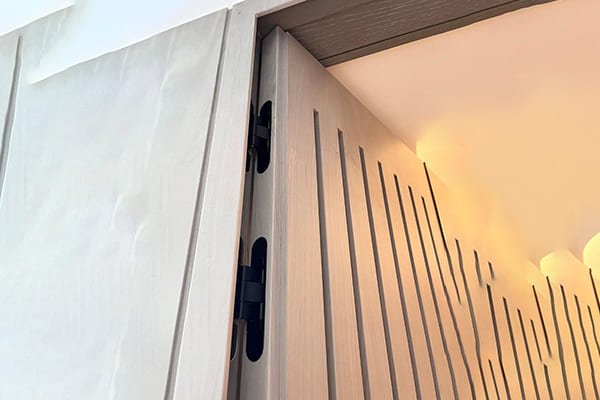
A door hinge does not have one universal weight capacity.2 For concealed hinges, a practical reference range is about 40–200 kg per set, usually meaning 2 pieces. Regular interior wooden doors may use around 40 kg per 2-piece set, while heavy-duty concealed hinges can reach about 100–200 kg depending on design, installation, and supplier data.
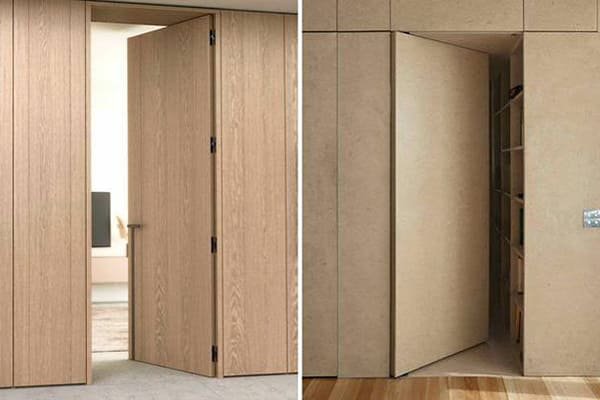
When I help buyers choose concealed hinges, I never start by quoting the highest load number. I first ask about the door weight, door height, door width, hinge quantity, opening frequency, and application environment3. Those details decide whether a standard hinge is enough or whether a heavy-duty concealed hinge is the safer choice.
How Much Weight Can a Door Hinge Hold for Concealed Hinges?
How much weight can a door hinge hold for concealed hinges becomes risky when buyers compare catalog numbers without checking the unit. Some suppliers describe capacity per hinge, while many architectural hardware manufacturers discuss capacity per set. If that point is unclear, the selected hinge may be too weak for the real door.
For concealed door hinges, load capacity is commonly discussed by one set of hinges, often 2 pieces, not one single hinge. As a reference, standard concealed hinges may support around 40–200 kg per set, with regular interior wooden door hinges often around 40 kg per 2-piece set and heavy-duty models around 100–200 kg per set.
Why “per set” matters in hinge selection
In B2B door hardware procurement, I often see buyers ask, “Can this hinge hold 80 kg?” My first reply is usually, “Do you mean one hinge or one set for one door leaf?” That small clarification prevents many specification mistakes.
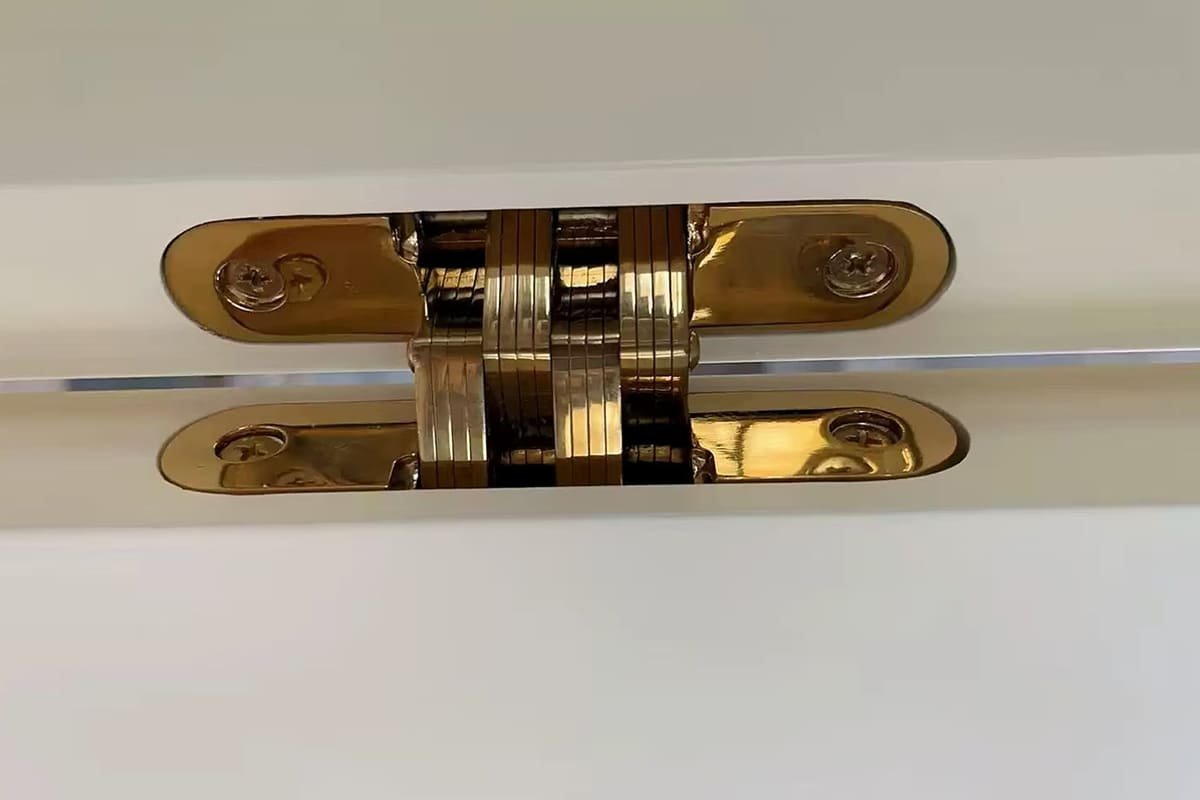
A concealed hinge works as part of a system. The door leaf, frame, fixing screws, hinge cups or mortise pockets, and installation accuracy all affect the result. That is why many manufacturers specify capacity by the complete hinge configuration used on one door.
For example:
| Concealed hinge type | Common reference capacity | Usual unit | Typical application |
|---|---|---|---|
| Standard concealed hinge | Around 40–80 kg | 2-piece set | Interior wooden doors |
| Medium-duty concealed hinge | Around 80–120 kg | 2-piece set | Taller or heavier interior doors |
| Heavy-duty concealed hinge | Around 100–200 kg | 2-piece set | Large wooden doors, entrance doors, project doors |
| Hydraulic self-closing concealed hinge | Around 60–100 kg | 2-piece set | Interior doors needing hidden self-closing function |
| Outdoor or industrial heavy-duty concealed hinge | Around 150–200 kg | 2-piece set or specified set | Outdoor, commercial, or industrial doors |
These figures are reference ranges, not universal promises. I always advise buyers to check the actual product drawing, rated load, cycle test data, screw configuration, and installation method.
Standard concealed hinges vs. heavy-duty concealed hinges
A regular interior wooden door may be about 2.2 m high and around 40 kg. In that case, a concealed hinge set rated around 40 kg may look acceptable. However, I usually recommend a margin above the actual door weight because long-term use creates extra stress.
A heavy-duty concealed hinge is not only “bigger.” It may include:
- Thicker hinge arms
- Larger fixing plates
- Stronger pivot structure
- Better 3D adjustment design
- More stable load distribution
- Higher screw pull-out resistance when installed correctly
For door factories, this matters because the hinge must perform not only during sample approval but also after repeated opening and closing in real buildings.
My practical rule is simple: I prefer a hinge capacity that is comfortably above the actual door weight, especially for bulk project doors where after-sales repair is expensive.
How Much Weight Can a Door Hinge Hold When the Door Size Changes?
How much weight can a door hinge hold changes when the door becomes taller, wider, or thicker. A hinge that works well on a normal 2.2 m interior door may not be stable on a taller door with the same weight. Door size increases leverage, and leverage increases sagging risk.4
Door weight is only one part of hinge selection. Door height, width, thickness, and center of gravity also matter. A common interior wooden door may be around 2.2 m high and 40 kg, but taller or wider doors usually need stronger concealed hinges or an added third hinge to reduce long-term sagging.
Door weight is vertical load, but door size creates leverage
Many buyers focus only on kilograms. I understand why. Weight is easy to compare in a catalog. But a door is not just hanging straight down like a static block. It opens and closes, and the hinge side carries repeated force.
A wider door creates more turning force on the hinge side.5 A taller door increases the distance between hinge points and can make alignment more sensitive. A heavier core, glass insert, metal skin, or fire-rated structure can also change how the load behaves.
Here is a simple B2B way to think about it:
| Door condition | Hinge selection risk | Practical response |
|---|---|---|
| Standard height, light wooden door | Low to medium | Standard concealed hinge may be enough |
| Standard height, heavy solid core door | Medium | Use higher-rated concealed hinge |
| Tall door over normal interior height | Medium to high | Check hinge spacing and consider 3 hinges |
| Wide door leaf | High | Select stronger hinge and verify fixing strength |
| Fire-rated or acoustic door | High | Confirm certified hinge compatibility |
| Outdoor or industrial door | High | Use heavy-duty concealed hinge with supplier data |
Why a 40 kg door may still need more than a 40 kg hinge set
A hinge set rated for 40 kg may support a 40 kg door under defined conditions. But real projects include variables. The door frame may be different. The installer may use different screws. The site may have higher opening frequency. The door may carry decorative panels or hardware after weighing.
That is why I advise buyers not to match the hinge rating exactly to the door weight. A small safety margin helps reduce:
- Door leaf sagging
- Poor closing alignment
- Rubbing between door and frame
- Stress on latch and mortise lock
- Customer complaints after installation
- Replacement cost for distributors and wholesalers
For product managers, this margin is also a commercial decision. The cheapest hinge may win the sample price comparison, but it can lose money later through after-sales claims.
A practical selection example
Let’s say a door factory is producing an interior wooden door:
- Door height: 2.2 m
- Door width: 850 mm
- Door weight: 40 kg
- Application: residential interior
- Hinge requirement: concealed appearance
A standard concealed hinge set rated around 40 kg may be used if the supplier confirms the specification. But if the same customer changes the design to a taller door, adds heavier panel material, or requires high-frequency project use, I would move to a higher-capacity hinge set.
In my factory discussions, I often tell buyers: the hinge is a small cost compared with the complete door system. If the hinge causes sagging, the whole door feels low quality, even when the door leaf itself is well made.
How Much Weight Can a Door Hinge Hold With 2 Hinges or 3 Hinges?
How much weight can a door hinge hold depends strongly on whether the door uses 2 hinges or adds a third hinge. If the door is heavy, tall, or used frequently, relying on only 2 hinges may increase stress at the upper hinge and create long-term alignment problems.
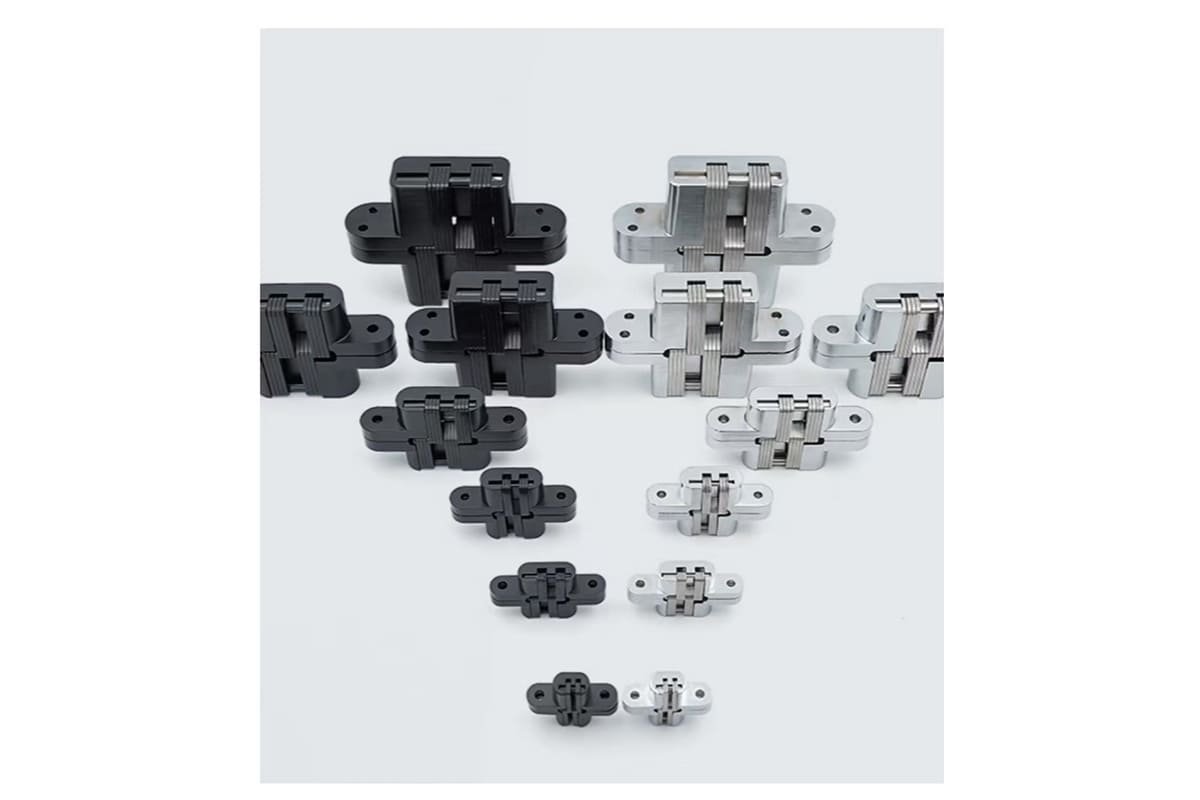
A 2-piece concealed hinge set is common for many interior doors, but a third hinge can help share load and improve stability. It does not automatically triple the capacity.6 Instead, it reduces stress concentration, supports taller or heavier doors, and lowers the risk of sagging when the hinge model and installation are suitable.
Why the top hinge usually suffers most
When a door hangs on the frame, the upper hinge often experiences the highest pulling force7. The lower hinge supports and stabilizes, but the upper hinge resists much of the door’s tendency to rotate away from the frame. This is why sagging often appears first as a gap change at the top latch side.
Adding a third hinge helps because it can:
- Distribute vertical load more evenly
- Reduce stress on the top hinge
- Improve door alignment over time
- Support taller door leaves
- Improve performance in high-use applications
However, I do not recommend using a third hinge as a careless fix for an underrated hinge. If the original hinge model is too weak, adding one more piece may still not solve the problem. The hinge type, structure, fixing method, and door design must still match.
2 hinges vs. 3 hinges in procurement decisions
For buyers, the choice between 2 and 3 hinges is not only technical. It also affects cost, production time, packaging, and installation. Door factories need stable assembly procedures. Hardware brand operators need simple product recommendations. Wholesalers need fewer after-sales issues.
| Configuration | Best use case | Advantage | Limitation |
|---|---|---|---|
| 2 concealed hinges | Standard interior wooden doors | Lower cost and faster installation | Less margin for tall or heavy doors |
| 3 concealed hinges | Taller, heavier, or high-use doors | Better load sharing and alignment | Higher hardware and machining cost |
| Heavy-duty 2-hinge set | Heavy doors with correct rated capacity | Clean look and fewer hinge points | Must verify supplier load data |
| Heavy-duty 3-hinge setup | Large project doors or demanding use | Strongest practical stability | Requires accurate machining and installation |
Do three hinges increase the rated capacity?
This is where I see confusion. If one 2-piece set is rated at 80 kg, some buyers assume three pieces can support 120 kg. That may not be correct. Load sharing is not always perfectly equal. Installation tolerance affects the actual distribution.
For concealed hinges, the hinge pockets must be machined accurately. If one hinge is slightly misaligned, it may carry too much load or create binding. This is especially important for 3D adjustable concealed hinges, because adjustment can improve alignment, but it cannot fully correct poor machining.
I usually suggest a third hinge when:
- The door is taller than standard
- The door is heavier than normal interior doors
- The project has high opening frequency
- The buyer wants to reduce long-term sagging risk
- The door carries extra hardware, panels, or special core materials
- The market has strict expectations for smooth closing
For bulk orders, I prefer confirming the door drawing before final hinge selection. This protects both sides. The buyer avoids mismatched specifications, and the manufacturer avoids unrealistic performance expectations.
Which Concealed Hinge Material and Structure Holds More Door Weight?
Material matters, but it does not answer the full question. I have seen buyers ask for stainless steel because they believe it is always stronger, while another buyer asks for zinc alloy because it is common in concealed hinge bodies. In reality, structure and design are just as important.
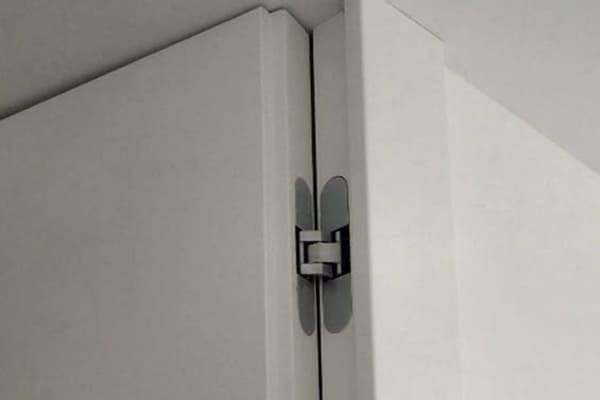
Concealed hinges may use stainless steel, zinc alloy, aluminum alloy, or mixed structures such as zinc alloy bodies with aluminum or stainless steel arms. The best hinge is not decided by material alone. Load-bearing strength, adjustability, corrosion resistance, machining accuracy, and long-term stability must be considered together.
Common concealed hinge materials
Different markets and door types prefer different hinge structures. In Europe, the Middle East, and Southeast Asia, I often see buyers balance cost, finish, and performance differently depending on the product line.
| Material or structure | Common advantage | Common consideration |
|---|---|---|
| Stainless steel | Strong corrosion resistance and durable appearance | Higher cost and more demanding machining |
| Zinc alloy body | Good shaping flexibility and common for concealed hinge housings | Must verify structure and load design |
| Aluminum alloy component | Lightweight and suitable for certain arms or covers | Not always ideal as the main load part |
| Mixed structure | Balances strength, cost, and adjustability | Quality depends heavily on design and assembly |
Structure decides how material performs
A strong material can still fail if the hinge design is weak.8 A well-designed mixed-material concealed hinge can perform better than a poorly designed hinge made from a single “strong” material. That is why I always look at the full hinge system.
Important structural points include:
- Arm thickness and geometry
- Pivot position and bearing surface
- Body depth and fixing plate size
- Screw quantity and screw location
- Adjustment mechanism strength
- Door and frame contact area
- Surface treatment consistency
- Corrosion protection for the target market
For example, a concealed hinge for an interior wooden door may focus on clean appearance and smooth adjustment. A heavy-duty concealed hinge for an entrance or industrial door needs stronger arms, deeper fixing, and better resistance to repeated stress.
Why adjustability matters for load performance
Many concealed hinges offer 3D adjustment: up-down, left-right, and in-out. This feature is useful for door factories because it helps installers fine-tune gaps after installation. But the adjustment system must be stable. If the adjustment screws or sliding structure are weak, the door may move over time.
A good concealed hinge should balance:
- Load capacity
- Smooth opening
- Stable adjustment
- Consistent finish
- Reliable screw holding
- Compatibility with door thickness and frame profile
In my experience, buyers who only compare weight capacity may miss the hinge’s long-term behavior. A hinge may hold the door during the first installation but lose alignment after months of use. That is the problem that creates warranty costs.
For B2B sourcing, I recommend asking the supplier for:
- Product drawing with dimensions
- Recommended door weight and size
- Recommended hinge quantity
- Material and surface finish details
- Installation instructions
- Certification information if used for fire-rated doors9
- Available test or internal quality data
This makes the purchasing decision more professional and reduces the chance of choosing a hinge based only on a high load claim.
How Should Buyers Choose the Right Door Hinge Capacity?
Choosing hinge capacity becomes difficult when every supplier claims strength. I understand the pressure buyers face. Product managers need reliable hardware, procurement teams need competitive pricing, and wholesalers need products that can sell without complaints. The wrong hinge specification can damage all three goals.
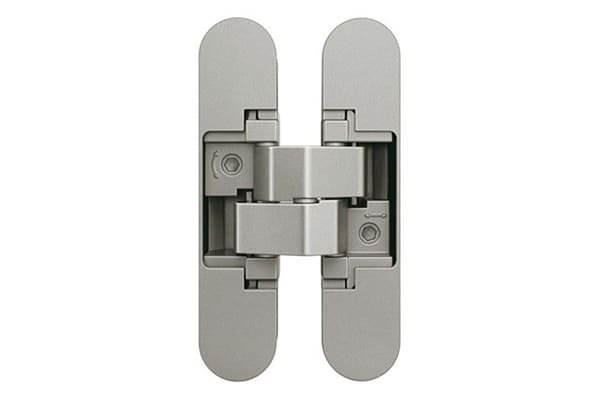
Buyers should choose a concealed hinge with a rated capacity higher than the actual door weight, while also checking door size, hinge quantity, material structure, installation method, and supplier test data. For heavier doors, outdoor doors, or high-use doors, a heavy-duty concealed hinge or 3-hinge configuration is usually safer.
My practical checklist for B2B hinge selection
When a buyer sends me a hinge inquiry, I usually ask for the following information before recommending a model:
Door material
Wooden, steel-wood, aluminum wood, fire-rated core, or other structure.Door weight
Actual weight is better than an estimate.Door height and width
A 40 kg standard door and a 40 kg oversized door may need different hinge planning.Door thickness
Concealed hinges need enough depth for the body and arm movement.Frame material and structure
Screw holding strength matters as much as hinge strength.10Number of hinges per door
The capacity must be discussed as a set, such as 2 pieces or 3 pieces.Application scenario
Residential, hotel, office, school, hospital, outdoor, or industrial use.Special function
Self-closing, fire-rated compatibility, corrosion resistance, or silent closing requirement.Surface finish
Finish consistency matters for brand operators and project supply.Certification requirement
CE certification or fire-rated certification may be required for some markets and projects.
Reference ranges I use in early discussions
The following ranges help buyers make an initial selection. They should not replace final product confirmation.
| Door / hinge need | Reference concealed hinge range | Notes |
|---|---|---|
| Regular interior wooden door | Around 40 kg per 2-piece set | Common for standard doors |
| Better margin for interior project doors | Around 60–80 kg per set | Useful for reducing sagging complaints |
| Hydraulic self-closing concealed hinge | Around 60–100 kg per set | Depends on hydraulic structure and door size |
| Heavy-duty concealed hinge | Around 100–200 kg per set | Suitable for heavier or larger doors |
| Outdoor or industrial heavy-duty hinge | Around 150–200 kg per set | Must confirm corrosion and installation requirements |
Avoiding over-cost while protecting quality
Some buyers choose the highest-capacity hinge for every door. That is safe in one way, but it can create unnecessary cost. Other buyers choose the cheapest standard hinge and hope it works for all door sizes. That is risky.
The better approach is product grading:
- Economy line: standard interior doors with normal weight
- Mid-range line: thicker or taller interior doors
- Project line: hotel, office, or high-frequency doors
- Heavy-duty line: large doors, entrance doors, or industrial use
- Special function line: hydraulic self-closing or fire-rated compatible concealed hinges
This product strategy helps hardware brands and wholesalers sell more clearly. It also helps door factories reduce confusion during assembly.
I often tell customers that hinge selection should match the real market position of the door. A premium door should not use a marginal hinge. A cost-sensitive door does not always need the most expensive heavy-duty model. The goal is stable performance at the right cost level.
Frequently Asked Questions
Is door hinge capacity measured per hinge or per set?
Door hinge capacity can be listed either way, but concealed hinge capacity is often discussed per set, usually 2 pieces for one door. Buyers should always confirm the unit with the supplier. Confusing single-hinge capacity with 2-piece set capacity can lead to wrong specification and sagging problems.
Can I use 2 concealed hinges for a 40 kg wooden door?
Yes, many standard interior wooden doors around 40 kg can use a 2-piece concealed hinge set if the hinge is rated for that application. However, buyers should still confirm door height, width, thickness, frame material, and installation method before finalizing bulk procurement.
When should I add a third concealed hinge?
I usually recommend a third concealed hinge for taller doors, heavier doors, high-frequency project doors, or doors where long-term alignment is critical. A third hinge helps share load and reduce sagging risk, but it must be matched with the correct hinge model and accurate machining.
Are stainless steel concealed hinges always stronger?
No. Stainless steel can offer good durability and corrosion resistance, but hinge strength depends on structure, arm design, pivot design, fixing method, and production quality. Zinc alloy, aluminum alloy, and mixed structures can also perform well when the hinge is properly engineered.
What capacity should I choose for hydraulic self-closing concealed hinges?
Hydraulic self-closing concealed hinges commonly fall around 60–100 kg per set as a reference range. The actual capacity depends on the product design, closing mechanism, door size, and supplier specification. Buyers should confirm both load capacity and closing performance before ordering.
Conclusion
So, how much weight can a door hinge hold? The practical answer depends on the hinge type, hinge structure, door weight, door size, hinge quantity, and installation quality. For concealed hinges, I normally discuss capacity by set, often 2 pieces, with reference ranges from about 40 kg for regular interior doors to 100–200 kg for heavy-duty applications. If you are sourcing concealed hinges for door production, hardware branding, or wholesale supply, contact SDH Hardware for specification support, ODM options, and factory-direct hinge solutions.
"(PDF) 305Vehicle Door Sag Evaluation Using FEA", https://www.academia.edu/12660370/305Vehicle_Door_Sag_Evaluation_Using_FEA. Mechanical analyses of hinged doors explain that insufficient support or excessive hinge loading can produce deflection and misalignment, which can appear as sagging, rubbing, binding, or hardware failure; this supports the mechanism but does not quantify the risk for a particular concealed hinge. Evidence role: mechanism; source type: education. Supports: Mechanical loading and insufficient hinge support can cause door misalignment, increased friction, and eventual failure.. Scope note: Mechanistic support only; actual failure depends on product design, fasteners, frame material, and installation quality. ↩
"Understanding BS EN 1935:2002 single-axis hinge grades", https://uk.sfs.com/resources/article/understanding-bs-en-1935. Building-hardware hinge standards such as EN 1935 and ANSI/BHMA A156.1 classify hinges by tested performance conditions, including door mass or duty grade and durability cycling, indicating that hinge capacity is specification-dependent rather than universal; these standards provide general classification context rather than ratings for a specific concealed-hinge model. Evidence role: expert_consensus; source type: institution. Supports: Hinge standards classify hinge performance by tested door mass, durability, and application conditions, supporting the idea that there is no single universal hinge capacity.. Scope note: Contextual support only; standards do not verify any particular product's advertised capacity. ↩
"Hinge Size Guide: Everything You Need to Know About Hinge Types & ...", https://www.dkhardware.com/blog/hinge-size-guide-and-chart/?srsltid=AfmBOooF1HWRDeld5VEyRsY4c7CuHRLhHyLXLrU3W-s2cBcNpmmJmwQu. Architectural-hardware guidance and hinge standards identify door mass, door size, duty or traffic level, hinge quantity, and exposure conditions as relevant variables in hinge specification, supporting the article's multi-factor selection approach; such guidance remains general and must be applied to the particular hinge model and installation. Evidence role: expert_consensus; source type: institution. Supports: Hardware specification guidance treats door size, weight, usage level, number of hinges, and environmental exposure as relevant to hinge selection.. Scope note: General specification support; it does not determine the correct hinge for a specific door without product data. ↩
"28.18 -- Open door to demonstration preparation area", https://web.physics.ucsb.edu/~lecturedemonstrations/Composer/Pages/28.18.html. Introductory mechanics sources define torque as force multiplied by the perpendicular moment arm, explaining why a wider door or shifted center of mass can increase rotational loading at the hinge side; this is a physics-based explanation rather than a direct concealed-hinge test result. Evidence role: mechanism; source type: education. Supports: Torque increases with the perpendicular distance from the pivot, so wider or differently proportioned doors can impose greater rotational demands on hinges.. Scope note: Contextual mechanics support; it does not provide a hinge-specific load rating. ↩
"Torque (Moment) | Glenn Research Center - NASA", https://www1.grc.nasa.gov/beginners-guide-to-aeronautics/torque-moment/. Mechanics references on torque show that, for a given weight, increasing the distance between the hinge axis and the center of mass increases the moment acting about the hinge, supporting the claim that a wider door creates greater turning force; this does not by itself determine allowable hinge capacity. Evidence role: mechanism; source type: education. Supports: A longer distance between the hinge axis and the door's center of mass increases torque for the same door weight.. Scope note: Applies the general torque principle to doors; actual hinge stress distribution also depends on hinge spacing and installation. ↩
"statically indeterminate structures", https://engineering.purdue.edu/~ce371/Docs/StaticallyIndeterminateStructures_Cross_Morgan.pdf. Structural mechanics sources on multiple supports explain that load sharing depends on stiffness, alignment, and support position, so adding another support does not guarantee proportional capacity increase; this supports the article's caution that three hinges do not automatically triple a two-hinge rating. Evidence role: mechanism; source type: education. Supports: Loads in multiple-support systems are not necessarily shared equally, especially when alignment and stiffness differ, so capacity does not scale linearly with the number of hinges.. Scope note: General structural principle; hinge manufacturers' tested configurations are still needed for final ratings. ↩
"Equilibrium", http://physics.bu.edu/~redner/211-sp06/class15/Equilibrium.html. Free-body analyses of hinged doors commonly show that the door's weight creates a moment about the hinge line, with the upper hinge often carrying a substantial tensile reaction while the lower hinge provides a counteracting reaction; this supports the load-distribution mechanism but may vary with hinge spacing and installation geometry. Evidence role: mechanism; source type: education. Supports: Static analysis of a door on hinges shows that the upper hinge often resists a significant outward or tensile reaction caused by the door's weight acting away from the hinge line.. Scope note: Mechanistic support; exact forces vary by door dimensions, hinge placement, and frame stiffness. ↩
"Stress_Concentration_Tables.pdf", http://www.unm.edu/~bgreen/ME360/Stress_Concentration_Tables.pdf. Mechanical-design references explain that geometry, load path, and stress concentration can control component failure independently of nominal material strength, supporting the claim that a hinge made from a strong material can still fail if its design is weak. Evidence role: mechanism; source type: education. Supports: Component geometry and stress concentration can govern failure even when the base material has high strength.. Scope note: General engineering support; it does not evaluate any specific concealed-hinge design. ↩
"NFPA 80: Fire Doors & Other Opening Protectives", https://usmadesupply.com/resources/building-codes-standards/emergency-life-safety/nfpa-80. Fire-door standards such as NFPA 80 treat fire doors as rated assemblies and require hardware to be listed, labeled, or otherwise suitable for the approved assembly, supporting the need to verify certification information when hinges are used on fire-rated doors. Evidence role: expert_consensus; source type: institution. Supports: Fire-door standards require components such as hinges and other hardware to be suitable for the rated assembly and installed according to listing requirements.. Scope note: Supports the compliance principle; exact requirements vary by jurisdiction, door assembly listing, and applicable code edition. ↩
"Wood Handbook, Chapter 08: Fastenings", https://research.fs.usda.gov/download/treesearch/37424.pdf. The USDA Wood Handbook and related fastener references describe screw withdrawal resistance as a function of fastener geometry, penetration, and wood properties, supporting the article's point that hinge performance depends on screw holding strength as well as hinge strength. Evidence role: mechanism; source type: government. Supports: Screw holding strength depends on fastener dimensions, embedment, and wood or frame substrate properties, which affects hinge installation performance.. Scope note: Directly supports wood-frame fastening behavior; applicability to metal, composite, or masonry frames requires separate data. ↩