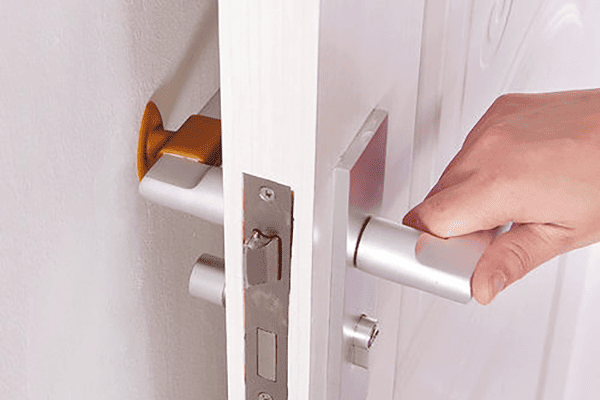
What is the backset of a Mortice lock?
The backset of a mortice lock is a small dimension that can create big procurement problems when it is missed. Buyers may approve a lock sample, then discover that the handle position, door stile, or profile cavity does not fit. The solution is to confirm backset together with the door structure, handle design, and lock specification before production.
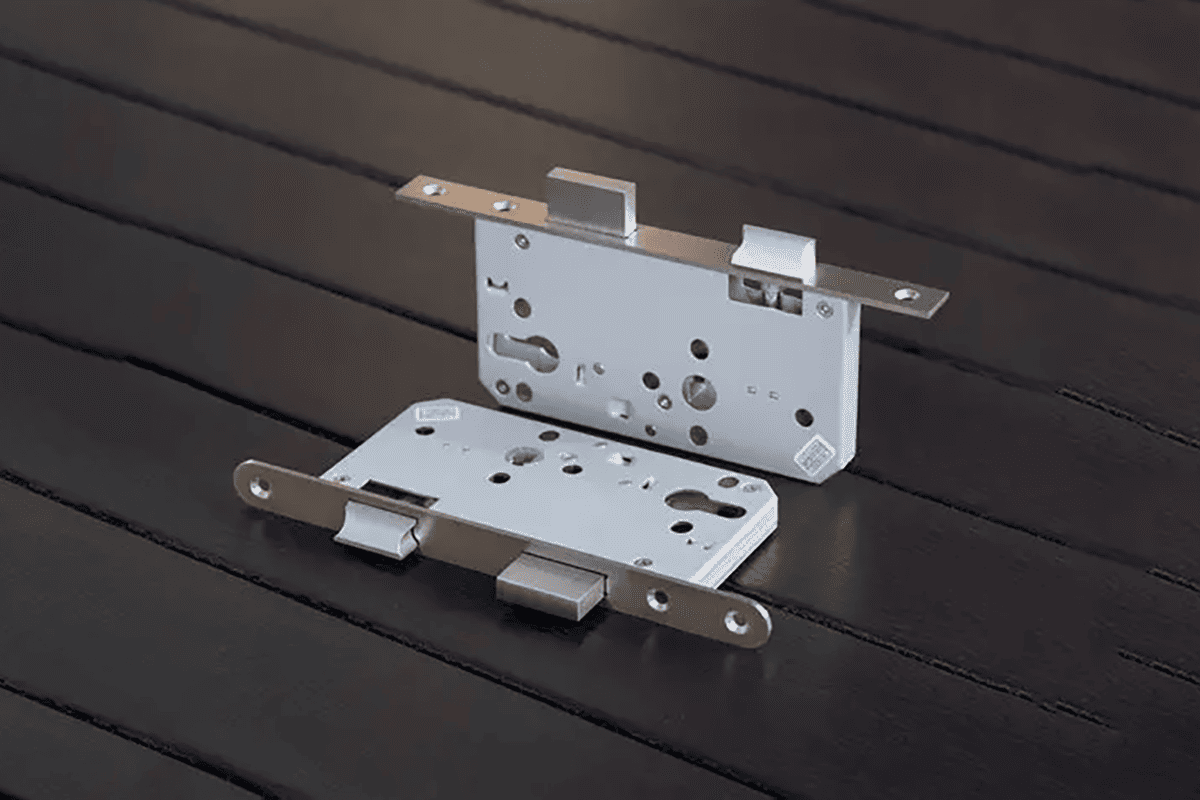
The backset of a mortice lock is the distance from the center of the follower or spindle hole to the front edge of the forend, also called the faceplate1. It is not the center distance, lock case depth, forend size, cylinder length, or door thickness.2 Common Euro-standard mortice locks often use 55 mm or 60 mm backsets3, but narrow-profile doors may need smaller sizes4.
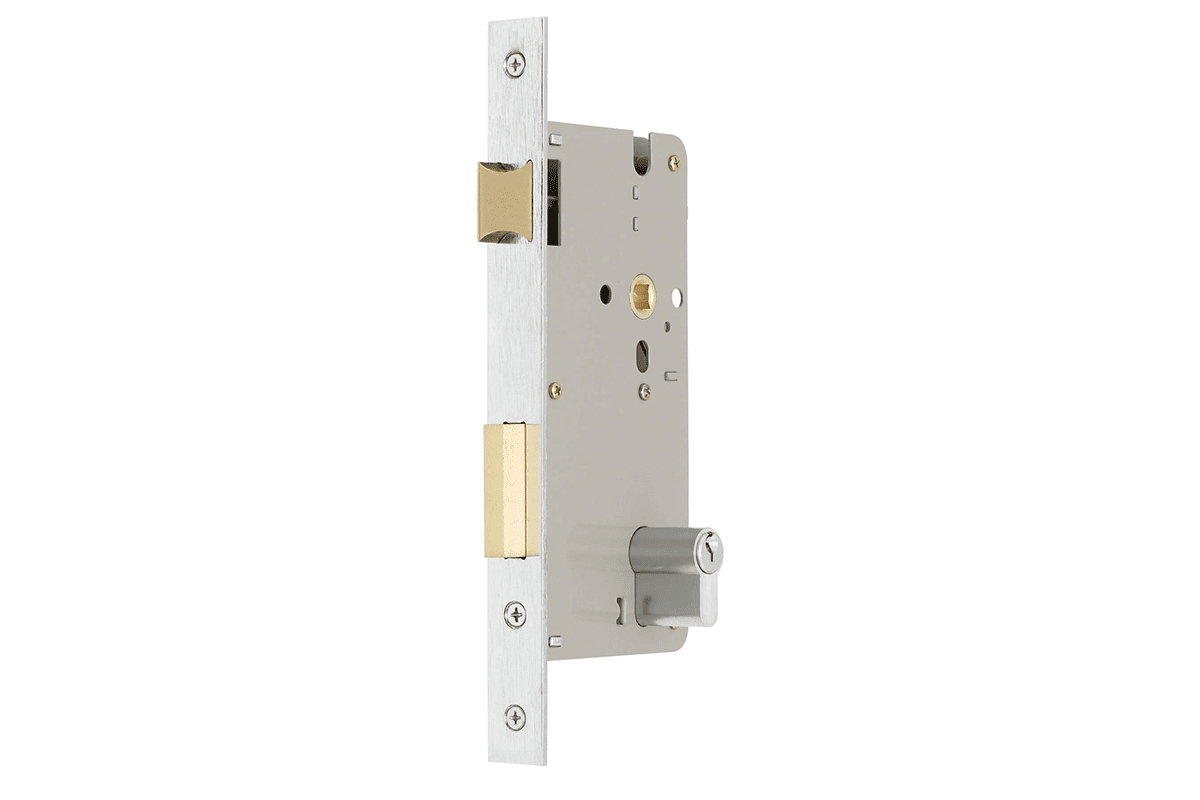
I have seen many door factory inquiries start with only “we need mortice locks.” That is not enough for accurate sampling. A good lock choice starts with the backset, but it also depends on the door material, frame clearance, lock type, center distance, cylinder type, and lever handle shape.
How do I measure the backset of a Mortice lock?
The backset of a mortice lock looks simple, but it is often confused with nearby dimensions. This confusion can cause wrong drawings, wrong lock samples, and delayed approval. I always prefer to check a marked drawing before confirming a lock body for production.
The backset of a mortice lock is measured from the center of the follower, where the handle spindle passes through, to the front edge of the forend or faceplate. Measure in a straight horizontal line. Do not measure from the cylinder hole, the lock case back, or the edge of the door.
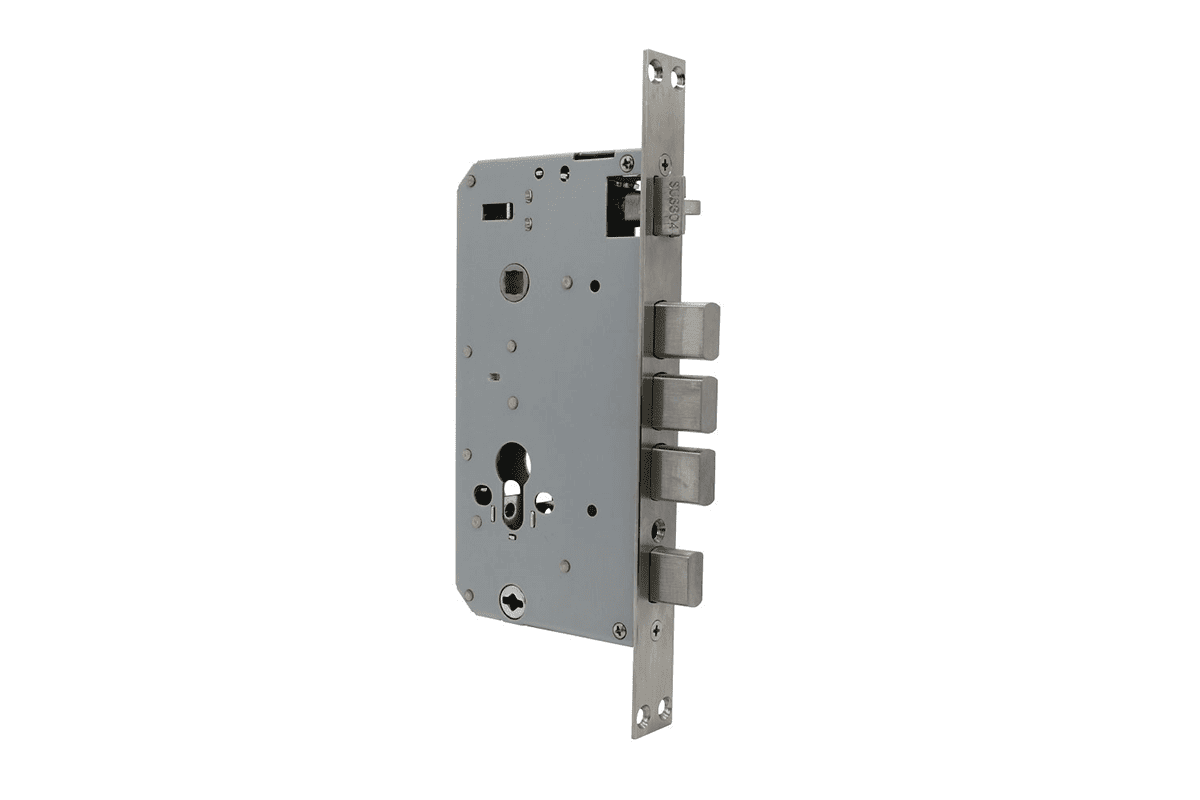
A simple way to understand the measurement
When I explain this to buyers, I use one simple rule:
Backset = center of handle spindle hole → front edge of the lock faceplate
Here is a basic text diagram:
| Lock part | What it means | Is it the backset? |
|---|---|---|
| Follower / spindle hole | The square hole for the lever handle spindle | Starting point |
| Front edge of forend / faceplate | The visible metal strip on the door edge | End point |
| Cylinder hole | Hole for Euro profile cylinder | No |
| Center distance | Distance between follower center and cylinder center | No |
| Lock case depth | Total depth of the lock body inside the door | No |
| Door thickness | Thickness of the door leaf | No |
For Euro-type mortice locks, buyers often specify dimensions such as 55/72, 60/72, 55/85, or 60/85. In this format, the first number usually refers to the backset, while the second number refers to the center distance5. For example, 55/72 normally means a 55 mm backset and 72 mm center distance.
However, I still recommend checking the drawing. Some customers use different naming habits in different markets. I have seen buyers write “55 mm lock” when they mean the backset, and others use “55 mm” to refer to case depth or door thickness. A drawing removes doubt.
Do not confuse backset with center distance
The most common mistake is mixing up backset and center distance.
- Backset runs from the follower center to the faceplate edge.
- Center distance runs from the follower center to the cylinder center.
- Lock case depth is the full body depth inside the door.
- Forend size is the length, width, and thickness of the visible faceplate.
- Cylinder length depends on door thickness and escutcheon or handle plate design.
For procurement, this matters because one wrong number can change the whole lock series. A 55 mm backset lock and a 60 mm backset lock may look similar in photos, but the latch, deadbolt, follower, case, and door machining position can be different.
A practical factory-side check
In our production and sampling work, I like to confirm these points before making or matching a sample:
- Backset: 20, 25, 30, 35, 45, 50, 55, 60 mm, or another value.
- Center distance: Common Euro options include 72 mm and 85 mm6, depending on the market.
- Forend size: Width, length, radius or square ends, and screw hole positions.
- Lock function: Sash lock, bathroom lock, cylinder lock, passage lock, or project lock.
- Door material: Wooden, steel, aluminum profile, PVC profile, or composite.
- Handle design: Lever on rose, lever on plate, pull handle combination, or special trim.
This is why I do not treat the backset of a mortice lock as only a lock-body number. It is a matching dimension between the lock, the door edge, the handle position, and the frame.
Why does the backset of a Mortice lock matter for Euro-standard door hardware?
The backset of a mortice lock matters because it controls where the lever handle sits on the door face7. If it is wrong, the lock may still enter the mortice pocket, but the handle may sit too close to the frame, the door stile may weaken, or the lock may not match existing machining.
For Euro-standard door hardware, 55 mm and 60 mm backsets are common in many DIN-style mortice lock ranges, especially for wooden doors. However, buyers should not treat these sizes as universal. Narrow-profile aluminum and PVC doors often require smaller backsets because the profile cavity has limited depth.
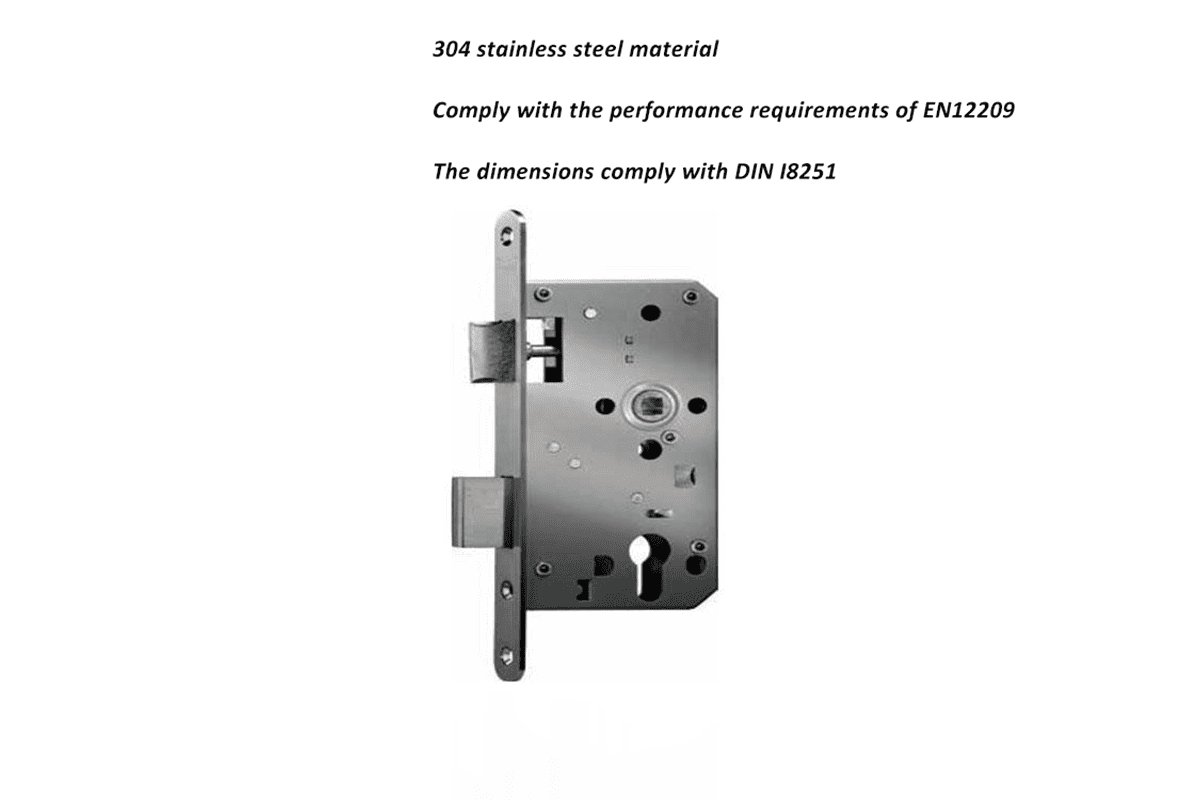
Common Euro mortice lock context
In many architectural hardware markets, Euro-style mortice locks are specified using a combination of dimensions. A buyer may ask for a lock such as:
| Typical format | Common meaning | Buyer should confirm |
|---|---|---|
| 55/72 | 55 mm backset, 72 mm center distance | Door structure and handle clearance |
| 60/72 | 60 mm backset, 72 mm center distance | Case depth and faceplate size |
| 55/85 | 55 mm backset, 85 mm center distance | Cylinder position and handle plate |
| 60/85 | 60 mm backset, 85 mm center distance | Market standard and door machining |
DIN 18251-type mortice locks are often discussed in relation to backsets such as 55 mm and 60 mm.8 If a buyer or brand wants to cite DIN 18251 in catalogues, test files, or compliance documents, I always suggest verifying the exact wording and latest standard version before publication. Standards should be treated as documents to check, not as marketing slogans.
Why backset affects more than lock production
From the factory side, the backset influences several parts of the product:
- Follower position inside the case
- Latch and deadbolt geometry
- Case depth and internal structure
- Forend punching and assembly
- Door machining template
- Lever handle position
- Cylinder and escutcheon alignment
This means the backset of a mortice lock can affect both manufacturing and installation preparation. Even when the same faceplate length is used, the internal case design may change. If a door factory has already prepared CNC machining based on one backset, switching to another size can require new templates or rework.
Handle clearance is a real purchasing risk
I often remind buyers to check the handle, not only the lock. A narrow backset brings the lever handle closer to the door edge. That can create several problems:
- The lever may hit the frame or stop.
- The user’s hand may feel cramped.
- A large rose or plate may look too close to the edge.
- The handle may not align well with the door design.
- The lock may pass sample inspection but fail in final assembly.
This is especially important for modern lever handles with wide roses, long plates, or thick bases. A slim minimalist handle may work with a smaller backset, while a heavy commercial handle may need more clearance.
Procurement impact in batch orders
For one sample door, a technician may solve a mismatch manually. For a batch order of 5,000 lock sets, that is not practical. A wrong backset can lead to:
- Machining rework on door leaves.
- Handle clearance complaints from installers or end users.
- Mixed inventory that cannot be used across projects.
- Delayed shipment because replacement locks must be produced.
- Higher after-sales cost for wholesalers and door brands.
In my experience, the safest practice is to confirm the lock drawing, door section drawing, and handle drawing together. The buyer does not need to become a lock engineer. But the buyer should understand that the backset connects many decisions.
Which backset of a Mortice lock fits wooden, aluminum, or PVC doors?
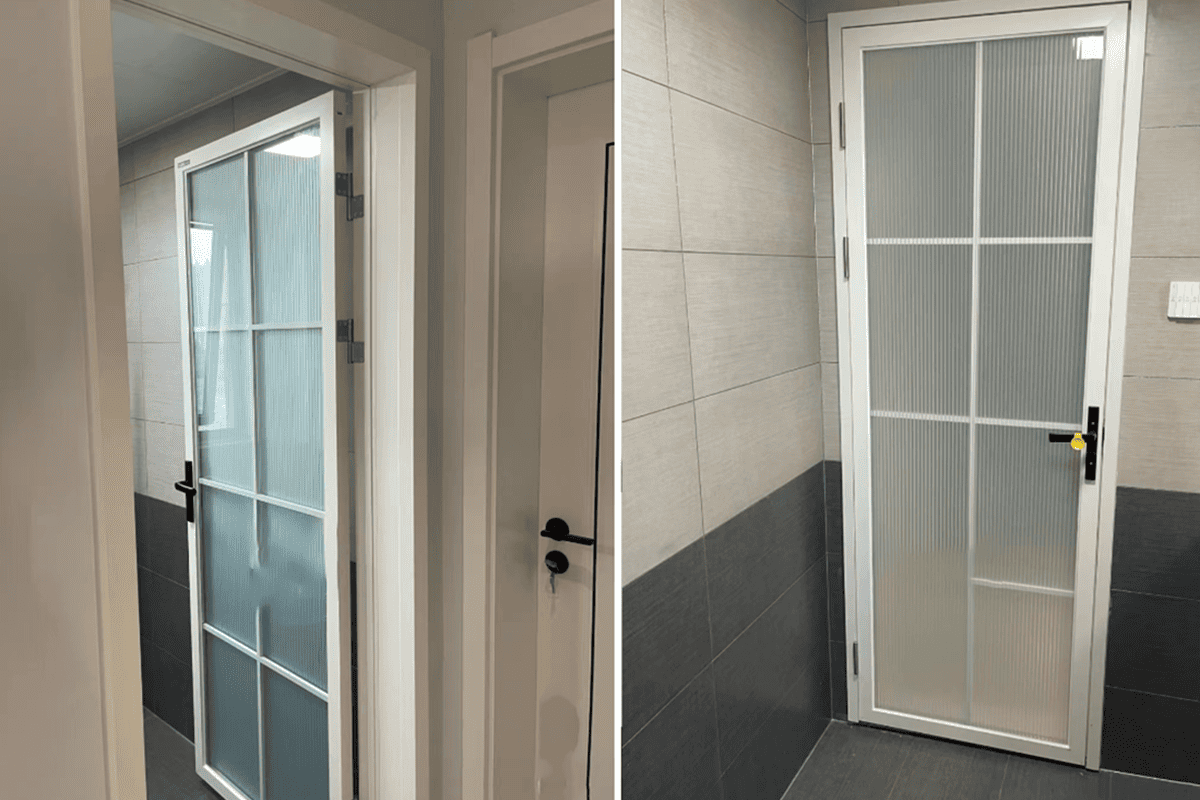
The backset of a mortice lock should match the door structure first. A standard wooden door may accept 55 mm or 60 mm, but an aluminum or PVC profile door may need 20, 25, 30, or 35 mm. The available lock body depth is limited by the stile, profile chamber, and reinforcement.
For wooden doors, buyers should check the stile width and mortice depth. For aluminum and PVC profile doors, buyers should check the profile cavity and hardware groove. The right backset is the size that allows the lock body to fit securely while keeping the handle position comfortable and clear of the frame.
Typical backset choices by door type
The table below gives a practical starting point. It is not a universal rule, because every door profile and project specification can be different.
| Door application | Common backset range | Main reason | Buyer’s key check |
|---|---|---|---|
| Solid wooden interior door | 55 mm, 60 mm | Enough stile width for standard lock body | Stile width and handle clearance |
| Wooden frame or engineered door | 45 mm, 50 mm, 55 mm, 60 mm | Door construction varies | Timber frame width and core material |
| Steel security or project door | 50 mm, 55 mm, 60 mm, or special | Depends on door design and lock reinforcement | Lock pocket and faceplate design |
| Aluminum profile door | 20 mm, 25 mm, 30 mm, 35 mm | Narrow profile cavity | Profile section drawing |
| PVC profile door | 25 mm, 30 mm, 35 mm | Hardware channel limits case size | Reinforcement and screw fixing |
| Narrow stile glazed door | 20 mm, 25 mm, 30 mm | Very limited stile width | Handle rose/plate clearance |
Wooden doors: do not assume every stile is wide enough
Many buyers treat wooden doors as simple. In reality, the timber frame structure matters. A flush wooden door may have a wide lock stile, or it may have a narrower internal frame with lightweight core material. If the lock case is too deep, it may cut too much material from the stile.9
When a buyer chooses the backset of a mortice lock for a wooden door, I suggest checking:
- Door thickness, such as 35 mm, 40 mm, 44 mm, or 45 mm
- Lock stile width, especially for engineered doors
- Core material, such as solid timber, particleboard, honeycomb, or composite
- Required faceplate size
- Handle rose or plate diameter
- Door frame clearance
A 55 mm backset may be suitable for many wooden doors. A 60 mm backset may give more handle clearance and a more centered visual position. But if the stile is narrow, a smaller lock may be safer. The right choice depends on the door drawing, not only the catalogue.
Aluminum and PVC profile doors: profile cavity controls the choice
For aluminum and PVC doors, the lock body must fit inside the profile cavity.10 This is why narrow-profile mortice locks use smaller backsets such as 20 mm, 25 mm, 30 mm, or 35 mm. These locks are not “smaller” only for style. They are designed around the available space inside the profile.
A buyer should check:
- Profile cross-section drawing
- Internal chamber depth
- Reinforcement position
- Hardware groove width
- Screw fixing area
- Strike plate position on the frame
This is where lock selection becomes a system decision. The lock, handle, cylinder, strike plate, and profile all need to work together. A standard 55 mm backset lock may be excellent for a wooden door, but it may be impossible to fit into a narrow aluminum stile.
Handle clearance and appearance
Backset also changes the visual and ergonomic position of the handle. If the handle is too close to the frame, the door can feel cheap or uncomfortable even if the lock works.
A simple evaluation method is to place the handle drawing over the door elevation drawing. Then check:
- Distance from handle grip to frame
- Rose or plate distance from door edge
- Clearance when the lever rotates down
- Space for the user’s knuckles
- Visual balance on the door stile
I once reviewed a sample request where the lock backset looked correct from the lock drawing, but the customer’s long handle plate sat too close to the frame reveal. The lock itself was not defective. The specification was incomplete. After checking the handle plate width and frame detail, the customer adjusted the lock selection before batch production.
That is the value of confirming the backset of a mortice lock early. It reduces hidden risk before tooling, sampling, door machining, and shipment.
How should buyers confirm the backset of a Mortice lock before bulk orders?
The backset of a mortice lock should be confirmed through drawings, samples, and order specifications before mass production. Verbal descriptions are not enough. I recommend matching the lock drawing with the door section, handle drawing, cylinder type, faceplate size, and project standard before approving a purchase order.
Buyers should ask the supplier to confirm the backset, center distance, forend size, lock function, door material, door thickness, cylinder type, and handle clearance in writing. This is especially important for ODM orders, mixed finishes, private label packaging, and repeated batch supply.
A practical inquiry checklist
Before I confirm a mortice lock quotation or sample for a door factory customer, I prefer to receive the following information:
| Item to confirm | Why it matters |
|---|---|
| Backset | Controls handle position and lock case fit |
| Center distance | Matches cylinder, handle plate, and market standard |
| Door material | Affects lock body selection and fixing method |
| Profile or frame width | Determines available case depth |
| Door thickness | Affects cylinder length and trim selection |
| Forend size | Must match door edge machining |
| Lock type | Sash, bathroom, passage, entrance, or project function |
| Cylinder type | Euro profile, thumbturn, key-key, or special system |
| Handle design and clearance | Prevents frame conflict and poor operation |
| Finish requirement | Supports batch consistency across hardware items |
| Certification requirement | Documents such as CE or fire-rated reports should be verified |
This checklist is simple, but it prevents many expensive mistakes.
What I check in a lock drawing
A good lock drawing should include more than the front view. For a serious procurement project, I like to see:
- Backset dimension
- Center distance
- Case depth and case height
- Forend length, width, and thickness
- Screw hole positions
- Latch direction or reversibility
- Deadbolt throw
- Follower size, such as 8 mm square in many lever applications
- Cylinder hole position and profile
- Strike plate reference, if required
If the buyer wants CE or fire-rated products, the buyer should also request valid documents and confirm whether the exact model, door type, and application are covered.11 Certification documents should be verified carefully, especially for project tendering or regulated markets.
Sampling before mass production
For bulk orders, I do not like to rely only on catalogue photos. A physical sample can reveal issues that drawings may not show clearly. During sample approval, buyers should check:
- Lock body fit in the door pocket or profile.
- Handle operation with the selected lever or plate.
- Cylinder fit with the selected door thickness.
- Latch engagement with the strike plate.
- Surface finish consistency with other hardware.
- Packaging and labeling for warehouse control.
- Door closing feeling after the lock is installed in a test door.
The sample should match the future production order. If the sample is 55/72 with a square forend, the bulk order should not quietly change to 60/72 with a radius forend unless the door machining is also updated.
How batch buyers can reduce rework risk
For door manufacturers, brand operators, and wholesalers, the risk is not only one wrong lock. The bigger risk is a mismatch across the supply chain.
A product manager may approve a lock. A door production team may machine the leaf. A handle supplier may ship the lever set. A cylinder supplier may deliver cylinders. If nobody checks the complete system, the mismatch appears at assembly.
I suggest using one specification sheet per lock series. It should include:
- Lock item code
- Backset
- Center distance
- Door type
- Door thickness range
- Faceplate size
- Strike plate type
- Cylinder length recommendation
- Handle model compatibility
- Finish code
- Packaging method
- Compliance document reference
This document becomes very useful for repeat orders. It also helps new purchasing staff avoid repeating old mistakes.
At SDH Hardware, our role as a manufacturer is to support this kind of specification confirmation. We produce Euro-standard mortice locks, stainless steel lever handles, butt hinges, concealed hinges, and cylinders for overseas buyers. When a customer sends door drawings and hardware requirements, we can help match the lock series and confirm practical production details. For application-specific safety or fire door decisions, qualified professional evaluation and verified test documents are still necessary.
Frequently Asked Questions
Is the backset of a mortice lock the same as the center distance?
No. The backset of a mortice lock is the distance from the follower or spindle hole center to the faceplate edge. Center distance is the distance between the follower center and cylinder hole center. These two dimensions are different, but both must match the door and handle specification.
Are 55 mm and 60 mm backsets standard for all mortice locks?
No. 55 mm and 60 mm backsets are common in many Euro-style mortice lock applications, especially for wooden doors. They are not universal. Aluminum, PVC, and narrow-stile doors may require smaller backsets such as 20 mm, 25 mm, 30 mm, or 35 mm.
What happens if I choose the wrong mortice lock backset?
The lock may not fit the door pocket, or the handle may sit too close to the frame. The door factory may need to re-machine the door, change the handle, or reorder locks. In batch purchasing, this can delay delivery and increase after-sales cost.
How do I choose a backset for a wooden door?
You should check the door thickness, stile width, internal frame construction, handle size, and frame clearance. Many wooden doors can use 55 mm or 60 mm backsets, but narrow stile or engineered doors may need a different lock body. A door section drawing is the safest reference.
Should I confirm the handle before choosing the lock backset?
Yes. The handle design affects clearance and appearance. A large rose, wide plate, or thick lever base may need more space from the door edge. I recommend checking the lock drawing and handle drawing together before approving samples or bulk production.
Conclusion
The backset of a mortice lock is not just a catalogue dimension. It is a matching parameter between the follower position, door edge structure, frame clearance, handle design, and door application. Buyers should confirm backset together with center distance, door material, profile or frame width, door thickness, forend size, lock type, cylinder type, and handle clearance. If you are selecting Euro-standard mortice locks for bulk purchasing, send us your drawings and project requirements. My team at SDH Hardware can help review the specification before sampling and production.
"Door Knobs & Backset Explained: Sizes & Measuring", https://www.suffolklatchcompany.com/blogs/news/door-knobs-and-backset-explained?srsltid. A technical standard or institutional glossary defines lock backset as the horizontal distance from the operating centerline, such as the follower or spindle position, to the lock forend or door edge; this supports the article’s measurement definition, although terminology may vary between mortice, tubular, and cylindrical lock references. Evidence role: definition; source type: institution. Supports: The source should define lock backset as a distance from a reference point such as the follower, spindle, keyhole, or lock center to the forend or door edge.. Scope note: Some references define backset from the lock edge to the keyhole or bore center rather than specifically to the follower center, so the source should be checked for mortice-lock terminology. ↩
"How to measure a mortice lock for timber doors", https://www.eraeverywhere.com/news/how-to-measure-a-mortice-lock/. Institutional lock standards and technical dimension tables treat backset, follower-to-cylinder distance, case depth, forend dimensions, and door thickness as separate specification items; this supports the article’s warning that these dimensions should not be conflated. Evidence role: definition; source type: institution. Supports: The source should distinguish backset from other lock dimensions such as case depth, forend dimensions, follower-to-cylinder distance, and door thickness.. Scope note: The source may list the dimensions without explicitly warning buyers not to confuse them, so the citation would support the technical distinction rather than the procurement advice. ↩
"Mortise lock, for hinged doors, Startec, profile cylinder, backset 55 ...", https://www.hafele.si/en/product/mortise-lock-for-hinged-doors-startec-profile-cylinder-backset-55-mm/P-00872843/. DIN-style mortice-lock dimensional references include 55 mm and 60 mm backsets among standard or commonly specified sizes, supporting the article’s statement that these dimensions are common in Euro-standard applications. Evidence role: general_support; source type: institution. Supports: The source should show that 55 mm and 60 mm are recognized or commonly specified backsets in DIN/Euro-style mortice lock ranges.. Scope note: The citation would support common use within DIN/Euro-style ranges, not prove that these values dominate every European market or every mortice-lock type. ↩
"Narrow mortise lock with roller latch, 20/25/30/35mm backset", https://www.unityhardware.com/product/ml30-narrow-mortise-lock-with-roller-latch/. Technical guidance for narrow-stile and profile-door hardware notes that restricted stile or profile depth limits the lock case and often requires smaller backsets; this supports the article’s explanation that narrow-profile doors may need reduced backset dimensions. Evidence role: mechanism; source type: institution. Supports: The source should explain that narrow-stile or profile doors have limited cavity depth and therefore use narrow-case locks with smaller backsets.. Scope note: Available sources may document typical hardware configurations rather than prescribe one universal backset for all narrow-profile doors. ↩
"How to measure and choose the right mortise lock size", https://www.blue-id.com/en/blog/mortise-lock-mass. Euro-style mortice-lock technical references commonly express lock dimensions as backset followed by follower-to-cylinder center distance, for example 55/72; this supports the article’s explanation of the notation. Evidence role: definition; source type: institution. Supports: The source should show that Euro-style mortice-lock dimensional shorthand commonly pairs backset with center distance, such as 55/72.. Scope note: The support is for common industry notation and does not exclude local catalogues or suppliers that use different naming conventions. ↩
"How to measure and choose the right mortise lock size", https://www.blue-id.com/en/blog/mortise-lock-mass. DIN/Euro-style mortice-lock dimension references identify 72 mm and 85 mm follower-to-cylinder center distances as recognized configurations, supporting the article’s statement that these are common Euro options. Evidence role: general_support; source type: institution. Supports: The source should document 72 mm and 85 mm as recognized or common follower-to-cylinder center distances in Euro-style mortice locks.. Scope note: The citation would substantiate recognized dimensional options, not prove that they are the most common in every national market. ↩
"Door Knobs & Backset Explained: Sizes & Measuring", https://www.suffolklatchcompany.com/blogs/news/door-knobs-and-backset-explained?srsltid=AfmBOooEZ_mreaj4R21yQyqBCOqw9fn2tf0CLVnRMhLddWXThhlW9ZF6. Technical door-hardware guidance explains that the lock backset locates the spindle or handle centerline relative to the door edge; this supports the article’s claim that backset controls where the lever handle sits on the door face. Evidence role: mechanism; source type: education. Supports: The source should explain that backset locates the spindle or handle center relative to the door edge, thereby determining the handle position.. Scope note: The source would support the geometric relationship, while project-specific clearance still depends on the handle design, frame, and door construction. ↩
"DIN 18251: The German Standard for Mortise Locks", https://umaylocks.com/din-18251/. Standards references for DIN 18251 mortice locks identify dimensional categories that include common backsets such as 55 mm and 60 mm, supporting the article’s contextual link between DIN-type locks and these backset values. Evidence role: historical_context; source type: institution. Supports: The source should show that DIN 18251 or DIN-style mortice lock dimensional discussions include 55 mm and 60 mm backsets.. Scope note: The citation should be checked against the current version of the standard, and secondary summaries may not reproduce the full official dimensional tables. ↩
"lock-shop-standards.pdf - Facility Services", https://fm.unm.edu/assets/documents/lock-shop-standards.pdf. Architectural wood-door guidance treats lock machining as a preparation that removes material from the lock stile and must be coordinated with stile width and door construction; this supports the article’s warning that an overly deep lock case can remove excessive stile material. Evidence role: mechanism; source type: institution. Supports: The source should explain that lock mortising removes material from the lock stile and that stile width or construction affects suitability for hardware preparation.. Scope note: The citation would support the general structural concern, not determine the safe mortice depth for a specific door design. ↩
"Aluminium door locks", https://www.assaabloy.com/it/en/solutions/products/locks/aluminium-door-locks. Technical literature on aluminum and PVC door systems describes hardware installation within profile chambers or hardware grooves, supporting the article’s statement that the lock body must fit inside the available profile cavity. Evidence role: mechanism; source type: research. Supports: The source should show that aluminum or PVC door hardware is constrained by internal profile chambers, hardware grooves, or reinforcement locations.. Scope note: The source may address profile-door hardware generally rather than the exact mortice-lock model under discussion. ↩
"081173", https://online2.ogs.ny.gov/dnc/masterspec24/docs/Division08Openings/081173.0SlidingMetalFireDoors.docx. Government and standards guidance on construction products and fire-door assemblies states that performance evidence applies to the products, assemblies, intended uses, and fields of application covered by the relevant declaration, test report, or certificate; this supports the article’s advice to verify that the exact model and application are covered. Evidence role: expert_consensus; source type: government. Supports: The source should state that CE marking, declarations of performance, fire-test reports, or certificates apply only to defined products, assemblies, intended uses, or fields of application.. Scope note: The citation would support the compliance principle generally and would not verify any particular lock model, certificate, or fire-door assembly. ↩