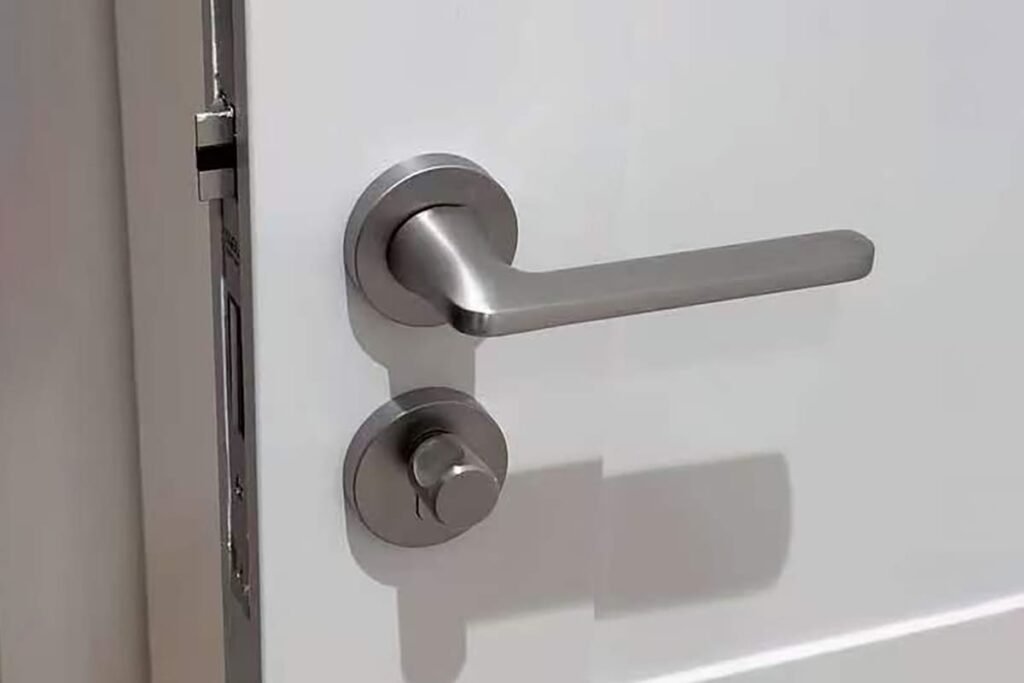
How Does a Door Handle Work?
How does a door handle work is a simple question, but many bulk buyers still face costly mistakes when the answer is incomplete. A handle may look correct in a catalog, yet it can fail in return force, spindle matching, lock compatibility, or finish consistency. The solution is to understand the internal working logic before procurement.
A door handle works by transferring hand pressure through the lever head into the spindle, then into the lock body, where the latch retracts.1 The spring positioning parts, circlips, washers, covers, and internal fixing parts keep the handle stable and help it return to position after operation.
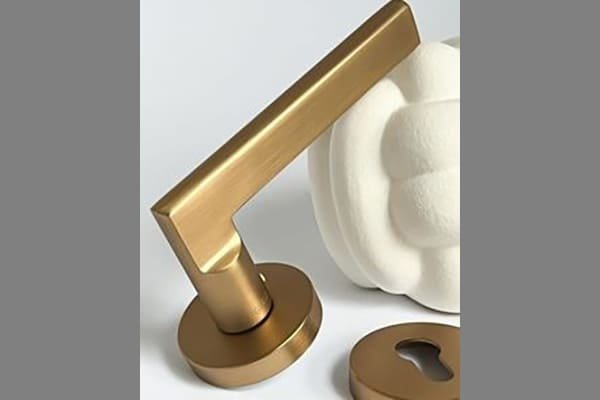
In my factory work, I usually explain the handle as one part of a complete door hardware system. The handle creates movement, but the spindle, mortise lock, latch, and cylinder decide how that movement becomes opening, closing, or locking.
How Does a Door Handle Work Inside the Mechanism?
A door handle may seem like a single visible part, but that view creates procurement risk. If buyers only compare shape, finish, and price, they may miss the real structure inside. The internal parts decide whether the handle feels solid, returns smoothly, and stays stable after repeated use.
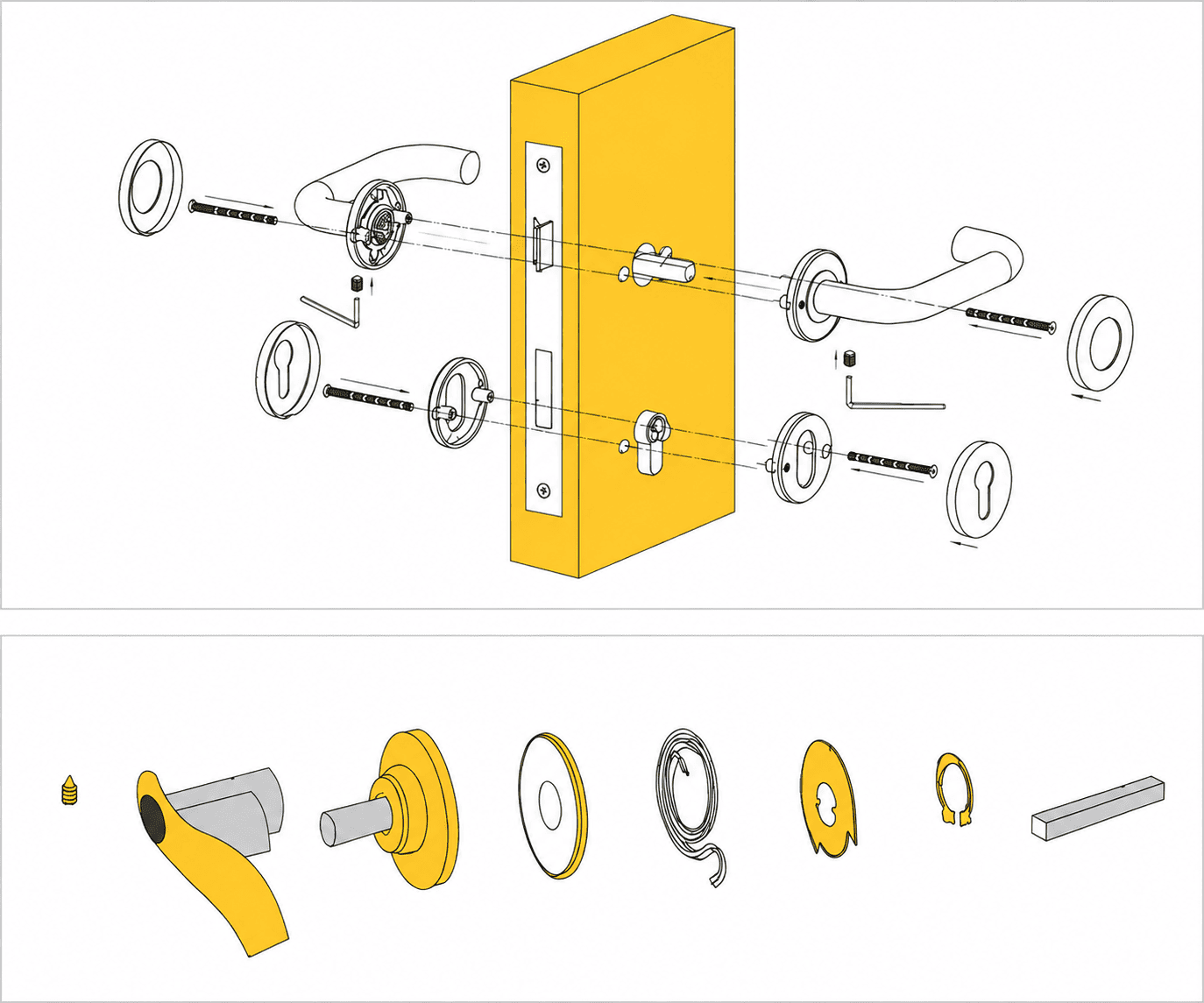
A door handle works through a mechanical sequence: hand pressure rotates the lever, the steel or iron head receives that rotation, the spindle transfers force, the mortise lock retracts the latch, and the spring positioning parts help the lever return. Circlips, washers, and covers keep the assembly aligned and stable.
The basic working flow
From my production and assembly experience, the working order is usually easier to understand when we separate the movement into steps:
- The hand presses the lever downward.
- The lever head rotates inside the handle base.
- The square spindle turns with the handle.
- The spindle drives the follower inside the mortise lock.
- The latch retracts into the lock body.
- The door can open.
- The spring system returns the lever to its original position.
This flow sounds simple, but each step depends on correct matching. A beautiful lever cannot perform well if the spindle tolerance is poor. A strong spindle cannot solve a weak lock follower. A smooth return spring cannot hide poor alignment between the handle rose and the lock body.
The lever is not the whole lock
I often remind buyers that the handle provides operating force, but it does not independently control the whole locking function2. The handle turns. The spindle transfers force. The mortise lock controls latch movement. The cylinder, thumb turn, privacy mechanism, or locking cam controls locking, depending on the design.
This distinction matters for B2B purchasing. When a customer says, “The handle does not lock,” I first ask what system they are using:
- Is it a mortise lock with cylinder?
- Is it a privacy lock?
- Is it a passage function with no locking?
- Is it a bathroom lock with indicator?
- Is it a project-specific lock body with special function?
The visible door handle can be similar across these applications, but the internal lock mechanism may be completely different.
Key internal parts buyers should know
| Part | Main function | Procurement concern |
|---|---|---|
| Lever head / steel head / iron head | Receives rotation from the lever | Strength, tolerance, fixing stability |
| Spindle | Transfers force to lock body | Size, material, length, fit with lock follower |
| Spring positioning part | Helps lever return | Return force, durability, smooth feeling |
| Decorative washer | Supports appearance and spacing | Finish consistency, fit, no rubbing |
| Circlip | Holds internal parts in position | Stability, anti-loosening effect |
| Cover / rose / escutcheon | Covers fixing area and supports design | Fit with door preparation and project style |
| Mortise lock | Controls latch movement | Backset, center distance, latch direction, standard |
| Cylinder | Controls key locking | Profile, length, cam type, certification documents |
A good door handle system depends on the balance of these parts. Buyers should not evaluate only the lever shape. They should ask for drawings, internal structure information, lock matching details, and sample testing before mass orders.
What Parts Make a Door Handle Operate Smoothly?
A door handle can feel smooth in the hand but still be weak inside. This is where buyers can face hidden risk. If the spring is unstable, the circlip is loose, or the spindle fit is inaccurate, the handle may rattle, sag, or return poorly after installation.
The smooth operation of a door handle depends on matched internal parts: the lever head, spindle, spring positioning parts, washers, circlips, covers, and mortise lock follower. These parts must rotate together with correct tolerance, controlled friction, stable fixing, and enough return force for the intended application.
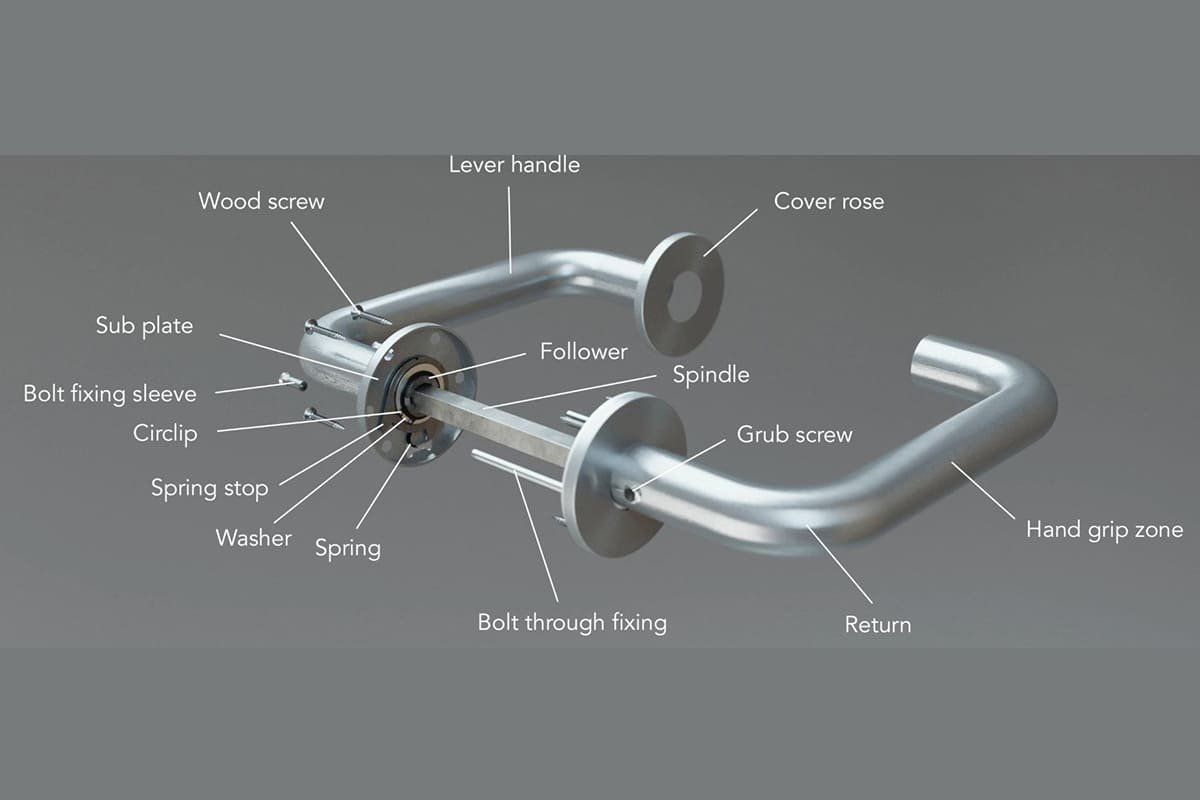
The return mechanism is a quality signal
In our assembly inspection, I pay close attention to the return action. A handle should return to its neutral position without obvious delay, scraping, or uneven movement. This does not mean every product must feel the same. A heavy solid brass lever and a hollow stainless steel lever can feel different. However, each product should match its design purpose and buyer specification.
Common inspection points include:
- Return force: The lever should come back clearly after pressing.
- Looseness: The lever should not shake beyond acceptable tolerance.
- Rattling: Internal parts should not make obvious noise during movement.
- Cover fit: The rose or escutcheon should sit properly against the door.
- Spindle engagement: The spindle should fit the lock body without excessive play.
- Surface protection: The finish should not be scratched during assembly.
A small part can cause a big complaint. For example, if a circlip is not seated correctly, the handle may feel loose. If a washer rubs against the cover, the lever may feel heavy. If the spring positioning part is poorly matched, the handle may not return well. These are not only technical issues. They become after-sales costs for door factories, brand operators, and wholesalers.
Why tolerance matters in bulk orders
In single-sample evaluation, many problems are easy to miss. A sample may feel good because it was assembled carefully by a senior worker. Bulk production is different. A reliable manufacturer needs stable processes that control tolerance across thousands of sets.3
For B2B procurement, I suggest checking:
- Sample consistency across several pieces, not only one golden sample.
- Fit between handle and lock body from the same batch.
- Spindle size and straightness before final approval.
- Assembly torque and fixing method for screws and internal components.
- Finish consistency under normal lighting and batch comparison.
- Packaging protection to prevent scratches during export transport.
A practical buyer checklist
| Check item | Why it matters | What buyers should confirm |
|---|---|---|
| Lever return | Indicates spring and internal fit quality | Smooth return without sagging |
| Side play | Shows tolerance control | No excessive shaking |
| Spindle fit | Affects force transfer | Correct square size and length |
| Lock matching | Affects opening function | Compatible lock follower and backset |
| Cover stability | Affects appearance and installation | No loose rose or escutcheon |
| Finish batch consistency | Affects brand image | Same color and texture across cartons |
I have seen buyers choose a lower-cost handle that looked almost identical to a stronger model. The difference only became clear during assembly. The cheaper version had more play between the spindle and internal head. This is why I believe buyers should test operation, not only appearance.
How Does a Door Handle Work With a Mortise Lock and Cylinder?
A door handle may be blamed when a door does not open or lock properly, but the real cause may be the mortise lock, cylinder, spindle, or installation matching. This confusion can lead to wrong supplier evaluation and unnecessary replacement costs in bulk projects.
A door handle works with a mortise lock by rotating the spindle, which turns the lock follower and retracts the latch. The cylinder or privacy mechanism controls the locking function separately. In many designs, the handle operates the latch, while the lock body and cylinder decide whether rotation is allowed.
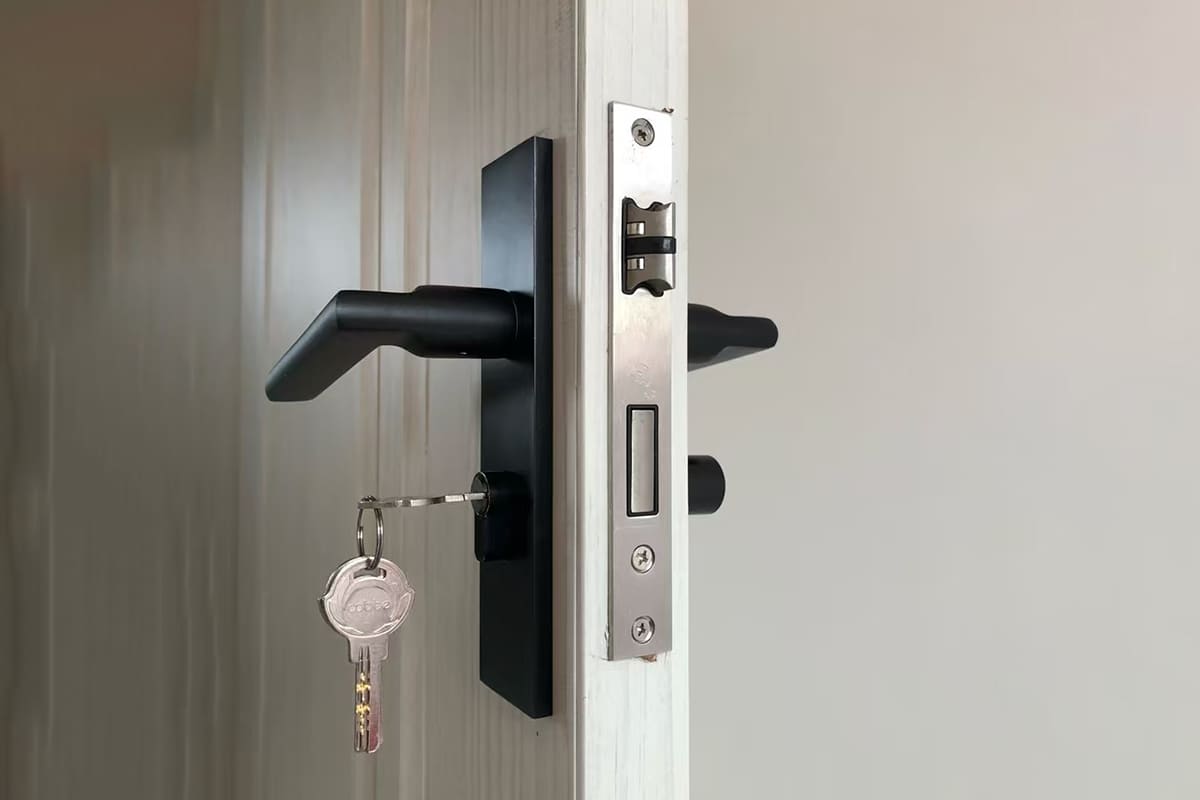
The role division is important
In a complete door set, each part has a defined job:
- Door handle: Provides hand operation and rotational force.
- Spindle: Transfers rotation from both handles to the lock body.
- Mortise lock: Controls latch and sometimes deadbolt movement.
- Cylinder: Controls key locking and unlocking.
- Thumb turn or privacy turn: Controls privacy locking in specific designs.
- Strike plate: Receives latch or bolt on the frame side.
This is why I avoid saying that the handle alone “locks the door.” That statement is too broad. A passage handle may have no locking function. A privacy handle may lock by an internal mechanism. A mortise lock with cylinder may use the key to control the lock case. A fire-rated door hardware set may have project-specific requirements that buyers should verify through valid documents and qualified professional evaluation.4
Why a locked handle may not turn
In some handle and lock designs, the lever cannot turn when the door is locked. In other designs, the lever may still move but not retract the latch or bolt.5 The exact logic depends on the handle, lock body, cylinder, and privacy mechanism.
One possible structure uses a sliding cam or locking part that engages with a fixed slot in the door plate or escutcheon. When engaged, it prevents handle rotation. Other structures control movement inside the mortise lock body. Because designs vary, buyers should not assume that all locked handles behave the same way.
For procurement, this means buyers should confirm the function before ordering:
| Function type | Typical use | Key question |
|---|---|---|
| Passage | Interior non-locking doors | Does the handle only retract the latch? |
| Privacy | Bathroom or bedroom doors | How does the privacy mechanism block or release operation? |
| Entrance | Key-operated doors | Which cylinder profile and cam design are required? |
| Project mortise lock | Commercial or apartment doors | Does the handle set match the specified lock standard? |
| Fire-rated door hardware | Regulated door assemblies | Are certificates and test documents valid for the intended set? |
Compatibility with lock standards
Regional standards affect product selection. Buyers in Europe may require euro profile cylinders, specific center distances, and CE-related documents.6 Buyers in the Middle East may focus on project specifications, finish durability, and cost-effective bulk supply. Southeast Asian wholesalers may need adaptable models for different door thicknesses and market preferences.
I usually recommend that buyers confirm these details before mass production:
- Lock body type: Mortise lock, tubular lock, magnetic lock, or project-specific lock.
- Backset: The distance from door edge to spindle center.
- Center distance: The distance between handle spindle and cylinder center.
- Spindle size: Common square spindle sizes vary by market and lock design.
- Door thickness: Determines screw length, spindle length, and cylinder length.
- Handle direction: Left-hand, right-hand, reversible, or fixed direction.
- Cylinder profile: Euro profile, oval, rim, or other regional type.
- Certification documents: CE, fire-rated, or other documents should be verified for the actual product and application.
A handle set should be evaluated as a system, not as an isolated decorative part.
This approach helps reduce after-sales disputes. It also helps buyers compare suppliers more fairly.
Why Do Similar Door Handles Perform Differently in Bulk Projects?
Similar-looking door handles can create false confidence. A buyer may see the same shape, same finish name, and similar packaging. However, after installation, one batch may return smoothly while another becomes loose, noisy, or hard to operate.
Similar door handles perform differently because internal structure, material grade, spindle fit, spring design, lock compatibility, finishing process, and factory quality control can vary widely. The outside appearance may be nearly identical, but the internal assembly and tolerance control decide long-term stability in bulk use.
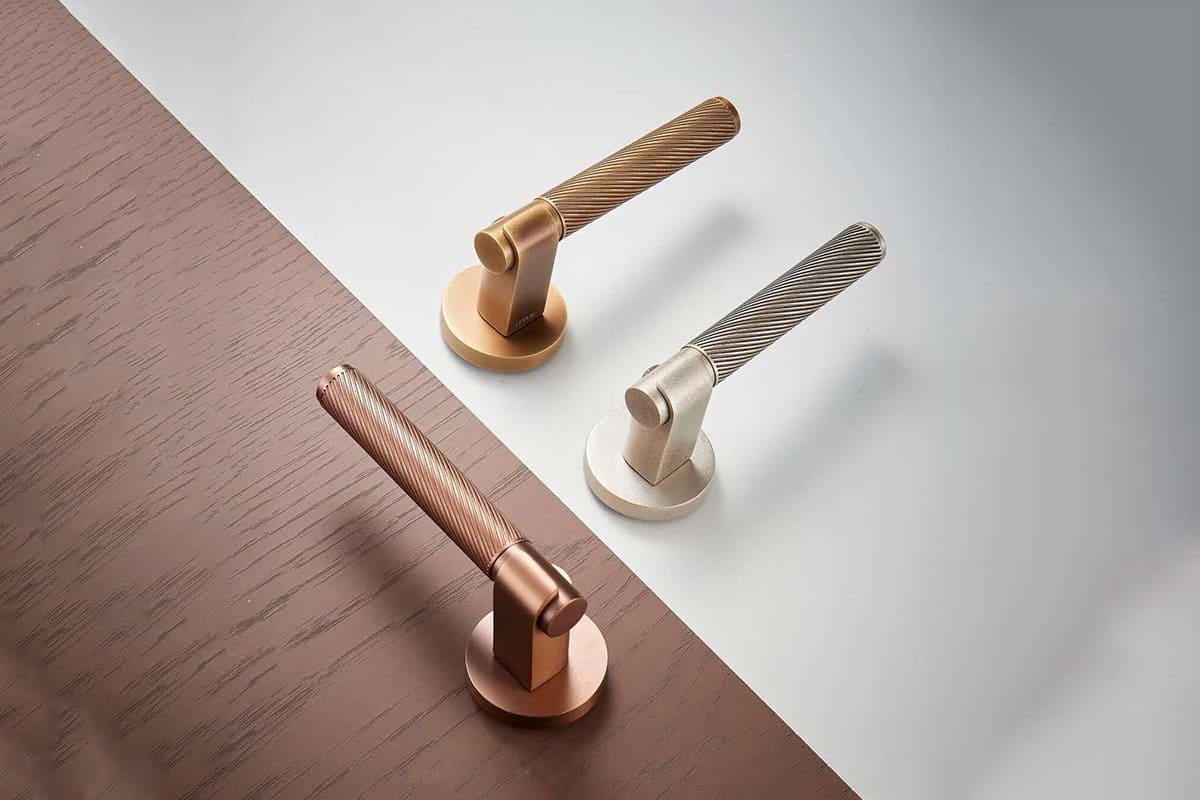
Appearance can hide structure
In architectural hardware, surface finish is important. A consistent satin stainless steel, PVD, black, or antique finish can support brand value. However, finish alone cannot prove mechanical quality.
Two handles may look similar but differ in:
- Internal steel or iron head design
- Spindle hole tolerance
- Spring positioning structure
- Wall thickness of stainless steel tube
- Zinc alloy composition and casting quality
- Brass body machining precision
- Screw fixing method
- Cover or rose thickness
- Washer and circlip quality
- Compatibility with lock body
In one sample comparison I handled, two lever handles had nearly the same external design. The lower-cost version looked attractive in photos. During inspection, the lever had more movement at the head, and the return action felt less stable. The issue was not visible in the catalog. It appeared only when we pressed, released, rotated, and matched it with the lock body.
Batch stability matters more than one sample
For wholesalers and hardware brands, one good sample is not enough. The real question is whether the manufacturer can repeat that quality across the order.
A reliable production process should include:
- Raw material screening
- Component dimensional checking
- Surface finish control
- Assembly inspection
- Function testing
- Packaging inspection
- Batch documentation
At SDH Hardware, our business context includes independent factory production and full-process quality control. I still advise buyers to verify samples, drawings, certifications, and inspection standards before project approval. Certifications should be treated as documents to check, not as marketing slogans.
Important comparison table for buyers
| Buyer concern | Low-control risk | Better procurement practice |
|---|---|---|
| Same appearance | Internal parts may differ | Request structure details or sample disassembly |
| Low price | Material or finish stability may be reduced | Compare total cost and after-sales risk |
| Fast delivery | QC may be rushed | Confirm production schedule and inspection plan |
| Finish name | Color may vary by batch | Approve physical color sample |
| Lock matching | Handle may not operate smoothly | Test with actual lock body |
| Certification claim | Document may not cover the exact item | Verify certificate scope and validity |
Why compatibility risk increases in bulk
Bulk orders often include different door models, thicknesses, lock bodies, and market requirements. A handle that works well on one door may not work well on another if the spindle length or lock case standard changes.
Buyers should confirm:
- Spindle size and length
- Door thickness range
- Handle rose or escutcheon dimensions
- Screw position
- Lock body standard
- Latch direction
- Cylinder length
- Finish code
- Packaging method
- Installation accessories
This is especially important for door manufacturers. A small mismatch can slow the assembly line. If workers must adjust every spindle or replace screws manually, the real cost becomes higher than the purchasing price difference.
How Should Buyers Evaluate Door Handle Materials and Compatibility?
A door handle material choice can look simple, but it affects cost, weight, finish, strength, market positioning, and customer expectations. If buyers only ask for “the best material,” they may overpay or choose a product that does not match the project.
Buyers should evaluate door handle materials by matching the material to application, target market, finish requirement, budget, door type, and lock compatibility. Brass, zinc alloy, and stainless steel each have advantages and trade-offs. The best choice depends on the project specification, not one universal rule.
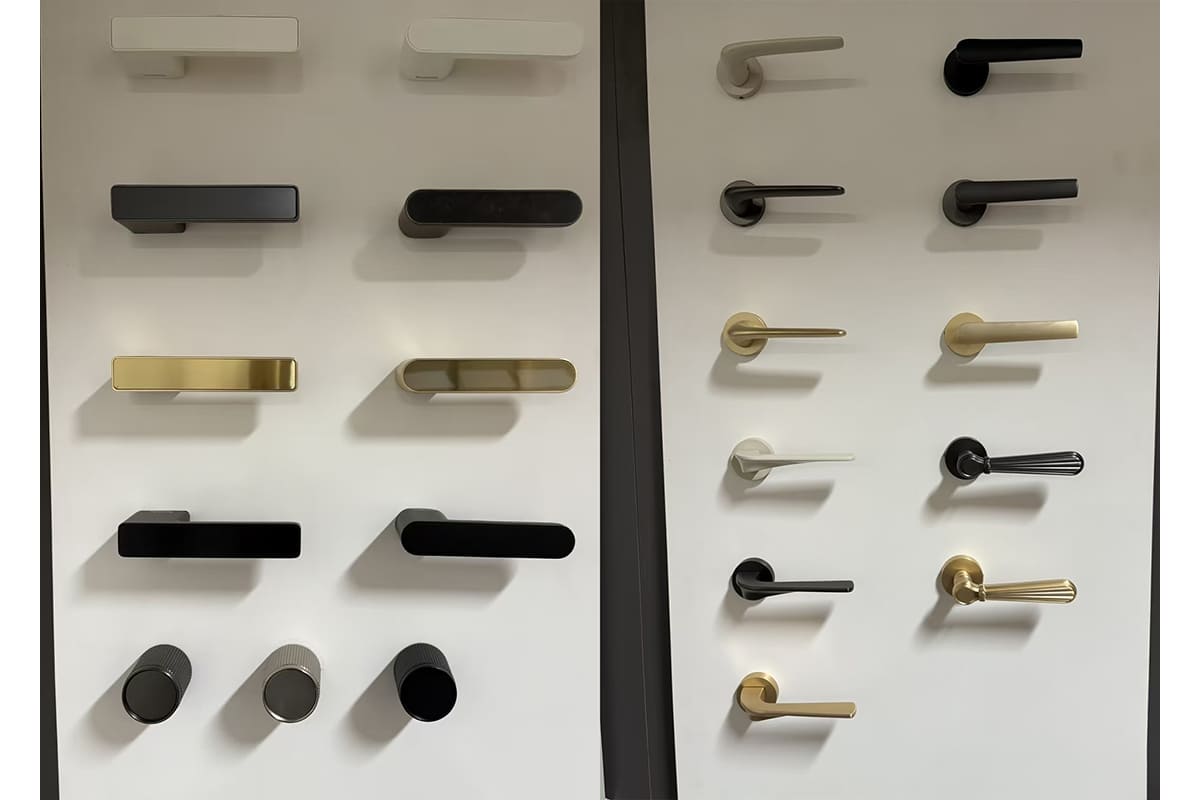
Common material options
In door hardware manufacturing, I commonly see three main material directions: brass, zinc alloy, and stainless steel. Each material can be suitable when used correctly.
| Material | Advantages | Trade-offs | Common buyer fit |
|---|---|---|---|
| Brass | Premium feel, heavy weight, good machining | Can oxidize without proper finish care, higher cost | High-end residential, premium brands |
| Zinc alloy | Easy to shape, good for complex designs, cost flexible | Low-grade mixed materials may affect strength and finish stability | Decorative lines, mid-market products |
| Stainless steel | Durable, widely used, stable for projects | Often hollow; feel depends on thickness and design | Door factories, commercial projects, wholesalers |
Brass handles
Brass often feels solid and premium. Many buyers like the weight and high-end positioning. However, brass needs proper surface treatment and care against oxidation.7 The final performance depends on material quality, machining, plating or coating process, and application environment.
Brass may be a good choice when:
- The project targets a premium segment.
- The buyer wants a heavier hand feel.
- The design requires precise machining.
- The budget supports higher material cost.
Zinc alloy handles
Zinc alloy is popular because it is easy to shape.8 It supports decorative forms that may be harder or more expensive with stainless steel. However, buyers should be careful with low-grade mixed materials. Poor material control can affect strength, surface finish stability, and long-term customer satisfaction.
Zinc alloy may fit when:
- The design is complex or decorative.
- The target price is competitive.
- The supplier has stable casting and finishing control.
- The buyer approves samples and finish standards before production.
Stainless steel handles
Stainless steel is common in project hardware because it offers good durability and a clean appearance.9 Many stainless steel lever handles are hollow by design. Some products may include internal filling or weight-enhancing structures, depending on design and market positioning. A hollow handle is not automatically bad. Buyers should evaluate wall thickness, internal head strength, welding quality, finish, and operation feeling.
Stainless steel may fit when:
- The project needs durable and cost-effective hardware.
- The buyer wants consistent modern finishes.
- The application is commercial or multi-unit residential.
- The supplier can control surface brushing, polishing, and assembly.
Compatibility should come before bulk purchase
Material is only one part of evaluation. A strong lever still fails as a product if it does not match the lock body or door system.
Before bulk purchase, I recommend confirming:
- Spindle size
- Spindle material and length
- Mortise lock type
- Cylinder type and length
- Door thickness
- Handle direction
- Rose or escutcheon design
- Screw and accessory package
- Regional standard
- Project certification requirement
If the project involves fire-rated or CE-related requirements, buyers should verify the valid documents for the actual product, lock set, and application. A qualified professional should review application-specific compliance needs, especially for regulated building projects.
How Does a Door Handle Work in Quality Control and Supplier Selection?
A door handle may pass a quick visual check but still create problems in the market. This is why procurement teams need quality control criteria. Without clear inspection standards, buyers may compare only price and finish, then discover return force, looseness, or lock matching problems later.
A door handle works reliably in bulk supply when the supplier controls materials, dimensions, internal assembly, return action, finish consistency, packaging, and lock compatibility. For supplier selection, buyers should evaluate both the product sample and the factory’s ability to repeat the same quality across production batches.
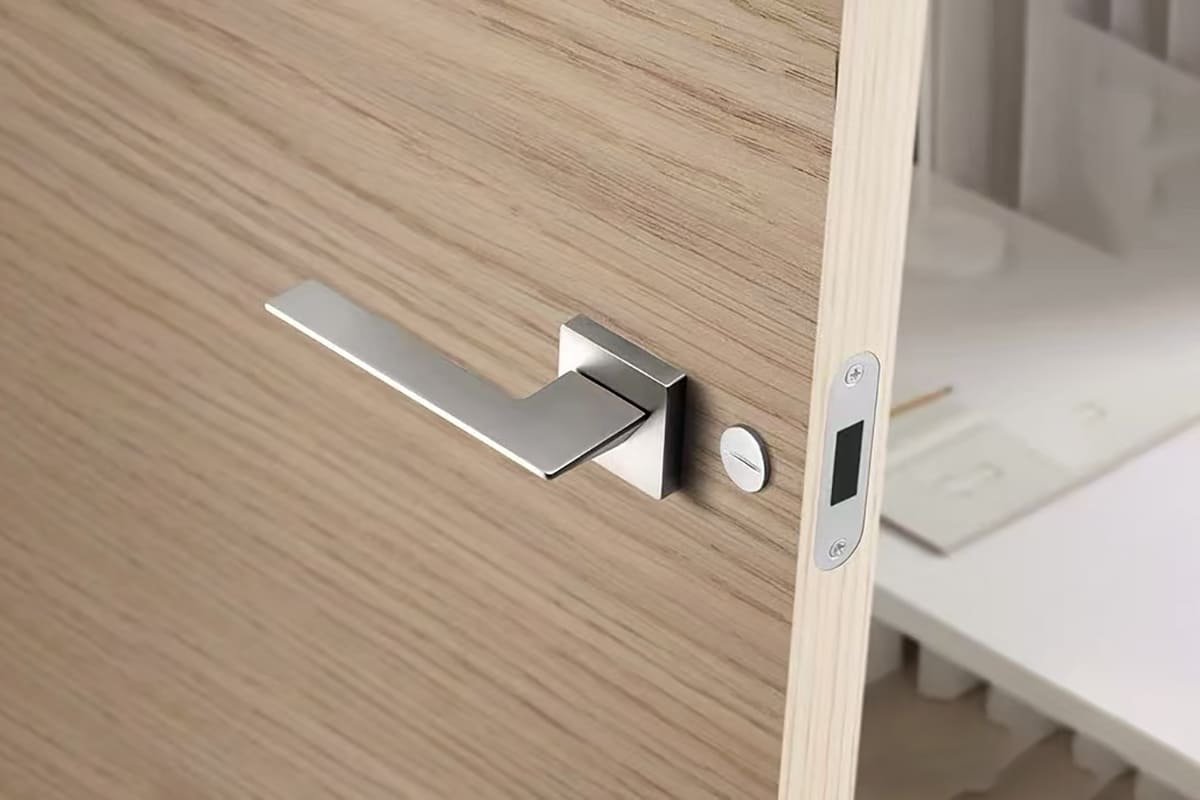
What I check during production inspection
In factory inspection, I do not only look at the finished handle. I look at the parts before and during assembly. This gives a better view of quality stability.
Important checks include:
- Raw material condition: The base material should match the approved order.
- Lever head fit: The rotating head should not be too loose or too tight.
- Spindle hole accuracy: The spindle should engage firmly.
- Spring position: The return part should be installed correctly.
- Circlip seating: The circlip should hold parts securely.
- Cover fit: The cover should not scratch or interfere with movement.
- Finish surface: The color and texture should match the approved sample.
- Operation feeling: The handle should press and return smoothly.
- Packaging: The product should be protected from scratches and movement.
These checks are practical. They help buyers avoid common after-sales issues such as sagging handles, noisy movement, unstable covers, inconsistent finishes, and accessory shortages.
Supplier evaluation questions
When buyers evaluate a door hardware manufacturer, I suggest asking direct questions:
- Do you manufacture in-house or outsource key processes?
- Can you provide drawings and specifications?
- Which lock bodies are compatible with this handle?
- What door thickness range does the set support?
- Can you customize spindle length, finish, or accessories?
- How do you inspect return force and looseness?
- Can you provide CE or fire-rated documents for verification, if required?
- How do you control finish consistency in repeat orders?
- What is your normal lead time for bulk orders?
- Can you support ODM requirements?
Sample approval process
A practical sample approval process should include:
| Step | Action | Purpose |
|---|---|---|
| 1 | Confirm drawing and specification | Avoid misunderstanding before sampling |
| 2 | Test sample with actual lock body | Confirm operation and compatibility |
| 3 | Check finish under agreed standard | Reduce batch color disputes |
| 4 | Confirm packaging and accessories | Avoid installation shortages |
| 5 | Verify certification documents if needed | Support market or project compliance |
| 6 | Approve pre-production sample | Create reference for bulk production |
| 7 | Inspect batch before shipment | Reduce after-sales risk |
Conclusion
A door handle works by turning hand pressure into controlled mechanical movement through the lever head, spindle, lock body, latch, and return structure. For B2B buyers, the key issue is not only how a handle opens a door. The real issue is whether the handle, spindle, mortise lock, cylinder, material, finish, and project specification match reliably. If you need standardized or customized architectural door hardware for bulk supply, I can help you evaluate the structure, compatibility, and production options before your next order.
"Door handle", https://en.wikipedia.org/wiki/Door_handle. General references on door handles and locksets describe a lever or knob as rotating a spindle or follower in the latch or lock case to retract the latch; this supports the stated operating sequence for conventional mechanical door handles. Evidence role: mechanism; source type: encyclopedia. Supports: A general reference should support that a lever or knob rotates a spindle or follower in a latch or lock case to withdraw the latch.. Scope note: This support applies to common mechanical lever or knob sets and may not describe electronic, panic, or specialty hardware designs. ↩
"Door handle - Wikipedia", https://en.wikipedia.org/wiki/Door_handle. References on locksets and mortise locks distinguish the operating trim from the latch, lock case, and cylinder, supporting the article's distinction between handle movement and the complete locking function. Evidence role: definition; source type: encyclopedia. Supports: A neutral reference should distinguish between the handle or lever, the latch or lock case, and the cylinder or locking mechanism.. Scope note: This is a general component-level distinction and does not prove the behavior of any specific lockset model. ↩
"Real-Time Monitoring and Control of Additive Manufacturing Processes", https://www.nist.gov/programs-projects/real-time-monitoring-and-control-additive-manufacturing-processes. Quality-management and statistical process control literature treats controlled processes and variation monitoring as central methods for maintaining dimensional consistency in repeated production, supporting the article's emphasis on tolerance control in bulk orders. Evidence role: general_support; source type: research. Supports: A quality-management or manufacturing-process source should support that controlled processes and monitoring of variation are used to maintain consistent dimensions and quality in production.. Scope note: This evidence supports the manufacturing principle generally rather than providing door-handle-specific failure rates. ↩
"Fire Doors and NFPA 80 FAQs", https://www.nfpa.org/news-blogs-and-articles/blogs/2025/04/11/fire-doors-faqs. Fire-door standards and code guidance require fire door assemblies and associated hardware to comply with applicable listings, labels, and inspection requirements, supporting the need to verify documents for the intended project application. Evidence role: general_support; source type: institution. Supports: A fire-safety code or certification source should support that fire door assemblies and their hardware are regulated through listings, labels, inspections, or project-specific compliance requirements.. Scope note: Specific obligations depend on jurisdiction, building type, door rating, and the tested assembly. ↩
"Lock Functions Lesson by Gordon Malczewski | Schlage - Allegion CA", https://allegion.ca/en/resources/education/leading-the-industry/back-to-basics/lock-functions.html. ANSI/BHMA lock-function descriptions classify locks by how levers, latches, and locking mechanisms operate in locked and unlocked states, supporting the article's statement that locked-handle behavior varies by design. Evidence role: general_support; source type: institution. Supports: A standards or industry-institution source should show that lock functions define different relationships between lever movement, latch operation, and locked status.. Scope note: Such standards describe functional categories rather than every proprietary internal mechanism. ↩
"CE Door Hardware", https://www.dndhardware.com/ce-door-hardware.html. European construction-product guidance and harmonized door-hardware standards document CE-marking and conformity procedures for covered products, while European cylinder standards address common cylinder profiles and dimensions; this contextual evidence supports the article's procurement warning. Evidence role: general_support; source type: government. Supports: A European Commission or European standards source should support that certain construction and door-hardware products may be subject to European standards and CE-marking documentation, while cylinder profiles and dimensions are standardized in European practice.. Scope note: Whether CE documentation is legally required depends on the exact product category, applicable harmonized standard, and intended use. ↩
"Initial oxidation of brass induced by humidified air - PMC - NIH", https://pmc.ncbi.nlm.nih.gov/articles/PMC3587402/. Materials-science references describe brass as a copper alloy that can tarnish or corrode through oxidation and environmental exposure, supporting the article's statement that surface treatment and care affect brass-handle performance. Evidence role: mechanism; source type: education. Supports: A materials-science or university source should explain that brass, a copper alloy, can tarnish or corrode through oxidation and environmental exposure, and that coatings or maintenance can reduce surface degradation.. Scope note: The rate and severity of oxidation depend on alloy composition, finish system, humidity, pollutants, and use conditions. ↩
"[PDF] Just as die casting offers advantages over other manufacturing processes ...", http://alliedmetalcompany.com/wp-content/uploads/2018/03/Zinc-Die-Cast-Facts.pdf. Materials and die-casting references describe zinc alloys as having casting characteristics suitable for producing detailed, dimensionally accurate parts, supporting the article's explanation of their use in decorative handle designs. Evidence role: mechanism; source type: research. Supports: A materials or manufacturing source should support that zinc alloys have casting properties that allow detailed or complex shapes in die-cast components.. Scope note: Ease of shaping does not by itself establish the strength, finish durability, or quality of a particular zinc-alloy handle. ↩
"Revealing the Corrosion Resistance of 316 L Stainless Steel ...", https://pmc.ncbi.nlm.nih.gov/articles/PMC9920300/. Materials references identify stainless steel's corrosion resistance, durability, and finish quality as reasons for its use in architectural and building applications, supporting the article's statement about stainless steel project hardware. Evidence role: general_support; source type: education. Supports: A materials-science or architectural reference should support that stainless steel is valued for corrosion resistance, durability, and appearance in building applications.. Scope note: Actual durability depends on stainless grade, surface finish, environment, maintenance, and manufacturing quality. ↩