How to Fix Binding Door Hinges?
Binding door hinges can turn a well-made door set into a noisy, hard-to-close, complaint-generating problem. The issue feels small at first, but it can lead to finish damage, frame rubbing, delayed project handover, and unnecessary supplier disputes. I usually recommend a structured diagnosis first, then the least invasive fix.
To fix binding door hinges, first tighten all hinge screws, then check whether the hinge pin needs lubrication, the door is sagging, the hinge leaves are misaligned, or the hinge is bent. Use shims or small hinge adjustments before trimming the door. Replace hinges only when they are worn, deformed, underspecified, or repeatedly failing.
In my manufacturing-side experience at SDH Hardware, many binding problems are misread too quickly. Some teams blame the hinge. Others only add oil. The better approach is to separate fixing strength, hinge friction, alignment, load matching, and door-edge interference before deciding what to do next.
Why Do Binding Door Hinges Happen?
Binding door hinges often look like one simple problem, but the cause may sit in the screws, hinge pin, door weight, frame position, or installation tolerance. If the team skips diagnosis, the repair may only hide the issue for a few days.
Binding happens when the door cannot rotate freely around the hinge axis or when the door leaf contacts the frame, floor, or stop.1 Common causes include loose screws, dry hinge pins, hinge misalignment, door sagging, bent hinge leaves, underspecified hinges, frame movement, or door swelling.
The Most Common Root Causes
In after-sales communication, I often see door factories and project teams describe the same symptom in different ways:
- “The door is hard to close.”
- “The hinge makes a cracking sound.”
- “The door rubs the frame.”
- “The lock cannot align with the strike plate.”
- “The customer says the hinge quality is poor.”
These complaints may come from different technical causes. That is why I do not start by saying, “Replace the hinge.” I also do not start by saying, “Just lubricate it.” Both answers can be wrong.
Here is a practical breakdown.
| Symptom | Likely Cause | First Check | Typical Fix |
|---|---|---|---|
| Door drops at handle side | Loose screws or weak screw holding | Check screw tightness and stripped holes | Tighten screws or use longer screws |
| Squeaking or rough movement | Dry pin, dust, rust debris | Move door slowly and listen at hinge | Apply silicone-based lubricant |
| Door rubs frame near top | Sagging or hinge position error | Check door gaps around frame | Adjust hinge or add shim |
| Door binds immediately after installation | Misaligned hinge mortise or frame tolerance | Check hinge seating and reveal gaps | Re-seat hinge or correct alignment |
| Hinge leaf looks twisted | Deformation or overload | Inspect hinge leaf and pin line | Replace hinge if severe |
| Problem affects many doors in one batch | Specification or installation consistency issue | Compare hinge model, screw, door weight, and mortise | Review batch QC and installation process |
Why Diagnosis Matters in B2B Projects
For a homeowner, one binding door is a small repair. For a door factory or hotel project supplier, 200 binding doors can become a serious cost problem. Rework affects labor, delivery, acceptance, and brand trust.
I have seen buyers treat binding as a pure hinge-quality complaint. Sometimes they are right. A hinge may be too thin, poorly formed, overloaded, or inconsistent. But sometimes the hinge is not the root cause. The real issue may be:
- Wrong screw length
- Soft substrate around the screw holes
- Uneven hinge mortise depth
- Door leaf too heavy for the hinge size
- Frame distortion after wall installation
- Paint or coating buildup around the hinge area
- Wood or composite door swelling in humid climates2
For bulk procurement, this distinction matters. A supplier dispute should be based on clear inspection evidence, not only on a rubbing sound. A good troubleshooting sequence helps both sides confirm whether the problem comes from product quality, installation, door construction, or site conditions.
My practical rule is simple: start with the easiest reversible checks, then move toward more permanent corrections.
That means the repair order should usually be:
- Tighten screws.
- Check stripped holes.
- Lubricate the hinge pin if friction is present.
- Check door gaps and alignment.
- Adjust hinge seating or add shims.
- Inspect hinge deformation and load matching.
- Replace damaged or unsuitable hinges.
- Trim the door only after other checks fail.
This sequence reduces unnecessary work and protects the door finish.
How Should I Tighten Screws to Fix Binding Door Hinges?
Loose screws are one of the lowest-risk and highest-return checks when fixing binding door hinges. If the screws lose holding strength, the door leaf can sag, and the handle side may rub the frame even when the hinge itself is still usable.
To fix binding caused by loose screws, open the door, support the door weight, tighten every hinge screw, and check whether any screw spins without gripping. If holes are stripped, use longer screws that bite into stronger material, or repair the screw hole before retesting the door swing.
Why Screws Loosen
A hinge is not only a rotating part. It is also a load-transfer part.3 It carries door weight through the hinge leaf, screws, frame, and door stile. If this connection weakens, the door no longer hangs in its original position.
Loose screws can happen because of:
- Repeated opening and closing cycles
- Heavy door weight
- Short screws
- Poor screw-hole holding strength
- Soft wood, MDF, or low-density core material
- Incorrect pilot hole size
- Excessive installation torque
- Frame vibration during transport
- Fire door or metal door assembly stress
In many project complaints, the top hinge is the first place I check. The upper hinge usually carries significant pulling force because the door wants to rotate downward at the lock side.4 If the upper hinge screws loosen, the door can sag very quickly.
A Practical Screw-Tightening Sequence
For project installers, I recommend a controlled process instead of random tightening.
Open the door to a stable position.
The installer should avoid letting the full door weight twist the hinge during repair.Support the door leaf.
A wedge, lifting tool, or second person can reduce stress on the screws.Check all hinge screws.
The top hinge deserves special attention, but the middle and bottom hinges also matter.Tighten gradually.
Over-tightening can strip the hole or distort a hinge leaf.Identify spinning screws.
If a screw turns freely, it is not holding. Tightening it again will not solve the issue.Use longer screws where appropriate.
Longer screws can reach stronger framing material, especially on timber frames.5Retest the door swing.
The team should check the reveal gaps and lock alignment after tightening.
When Longer Screws Help
Longer screws are useful when the original screw only grips a shallow or weakened layer. For example, some installation teams use short screws for speed during temporary fitting. Those screws may hold during factory inspection but fail after transportation, site installation, or repeated door cycling.
However, longer screws must match the door and frame construction. Installers should verify:
| Check Item | Why It Matters |
|---|---|
| Screw diameter | Oversized screws may split wood or damage metal preparation |
| Screw length | Screws must reach stronger material without interfering with concealed parts |
| Screw head shape | Wrong heads may sit proud and create hinge binding |
| Material compatibility | Corrosion resistance matters in humid or coastal markets |
| Fire-rated assembly rules | Fire door hardware changes should follow tested specifications |
For certified fire-rated doors, any screw change should be reviewed against the approved door set documentation.6 Buyers should verify certificates and test reports, rather than assume that any field modification is acceptable.
What If the Screw Hole Is Stripped?
A stripped screw hole means the fixing point has lost grip. In that case, simply tightening the same screw is not a repair. Depending on the door type and project requirement, the team may need:
- A longer screw
- A slightly larger compatible screw
- A screw-hole repair plug
- Reinforcement inside the door or frame
- Factory rework for repeated batch problems
If many doors in the same batch show loose screws, I would not treat it as a single installation issue. I would review the screw specification, pilot hole process, substrate density, hinge count, door weight, and packing method. Batch consistency is often the real difference between one minor repair and a large project complaint.
When Does Lubrication Fix Binding Door Hinges?
Lubrication can fix binding door hinges when the resistance comes from dry hinge-pin movement, dust, rust particles, or metal-to-metal friction. However, lubrication will not correct a sagging door, a twisted hinge leaf, a miscut mortise, or a door edge rubbing the frame.
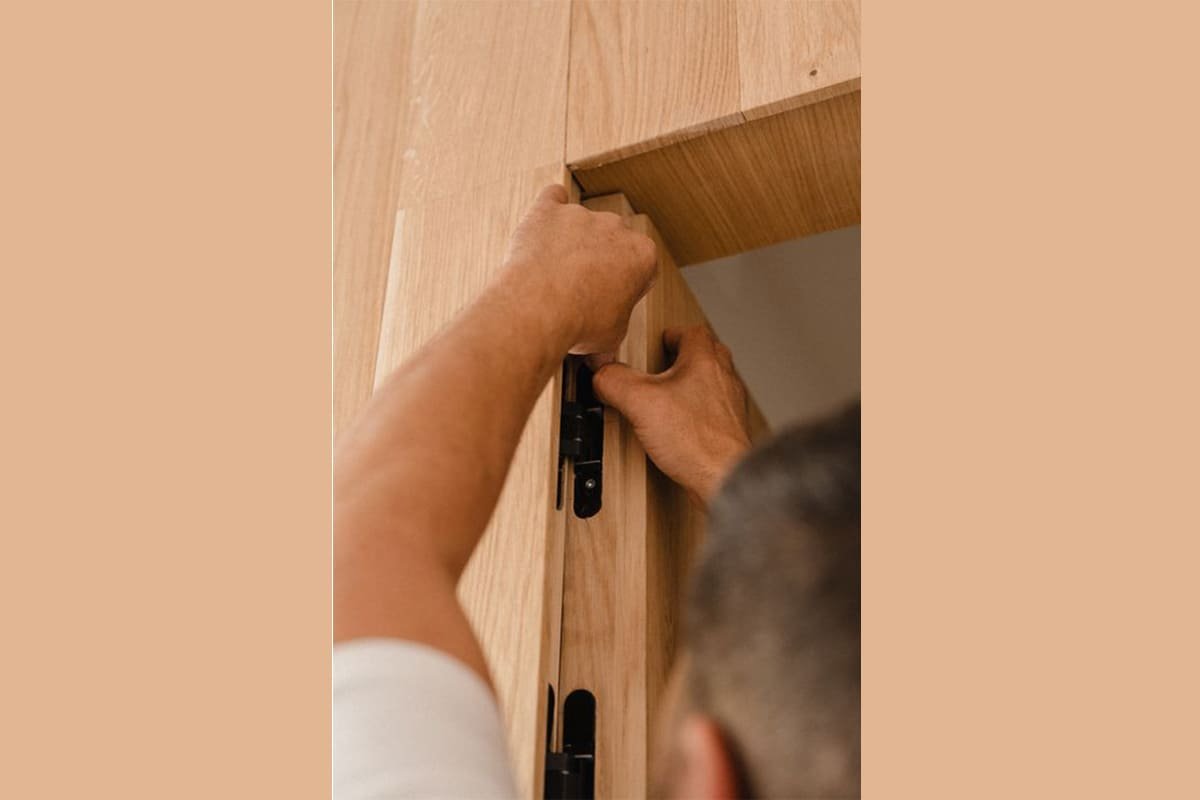
Use a silicone-based lubricant or other suitable hinge lubricant at the hinge pin area, then open and close the door several times to help it penetrate. Wipe away excess oil to avoid staining. If the door still rubs the frame, the problem is alignment or structure, not lubrication.
How to Tell If Friction Is the Main Problem
Lubrication is useful when the door binds at the hinge rotation point. The signs are usually clear:
- The door squeaks during movement.
- The resistance feels rough through the swing.
- The door gap looks acceptable, but movement is stiff.
- The hinge pin area has dust, rust debris, or dry metal contact.
- The problem improves temporarily after oiling.
By contrast, lubrication is not the correct main repair when:
- The top of the door rubs the frame.
- The latch does not align with the strike plate.
- The handle side has dropped.
- The hinge leaf is visibly bent.
- The door only binds near the closed position.
- The door edge scrapes paint or veneer.
I mention this because many customers first apply oil when they hear noise. That makes sense. It is fast and low cost. But if the true problem is sagging, the lubricant only makes a bad installation quieter for a short time.
Lubrication Steps for Project Teams
A simple process helps avoid messy or inconsistent results.
Clean the hinge area.
Remove dust, paint flakes, and metal particles.Apply a small amount of lubricant.
Silicone-based lubricant is often preferred because it reduces friction without attracting as much dust as heavy oil.7Move the door repeatedly.
Open and close the door 10–20 times to distribute the lubricant.Check each hinge separately.
Noise can come from one hinge, not all hinges.Wipe excess lubricant.
This protects the door finish, frame, floor, and packaging areas.Record repeated cases.
If many hinges in a shipment need lubrication before use, the buyer should discuss pre-shipment condition, storage, surface treatment, and packing with the supplier.
Lubricant Selection and Finish Control
For architectural door hardware, finish appearance matters. Excess oil can stain wood doors, attract site dust, or affect customer perception. In B2B supply, I prefer a clean and controlled approach.
| Lubricant Type | Suitable Use | Caution |
|---|---|---|
| Silicone-based spray | General hinge-pin friction | Avoid overspray on visible finishes |
| Light machine oil | Metal hinge movement | May attract dust if overused |
| Dry PTFE lubricant | Cleaner environments | Check compatibility with finish |
| Grease | Heavy-duty applications | Can be messy and visible |
| Penetrating oil | Rusted or seized pins | Not ideal as a long-term clean lubricant |
For stainless steel butt hinges, brass hinges, or coated hinges, the surface treatment and hinge construction may influence the best maintenance choice. Buyers should request maintenance guidance from the hinge supplier, especially for hotel, school, hospital, and public building projects with high usage cycles.
When Lubrication Reveals a Bigger Issue
Sometimes lubrication reduces the sound but the door still feels heavy or uneven. That is a warning sign. The hinge may be underspecified for the door weight, or the hinge axis may not be straight across all hinge positions.
For example, if the top, middle, and bottom hinge barrels are not aligned on the same vertical axis, each hinge fights the others during movement.8 Lubricant may reduce the friction slightly, but it cannot correct geometry. In that case, installers should check hinge mortise position, frame plumbness, and screw seating.
This is where procurement and installation overlap. A good hinge can still perform badly if it is installed outside tolerance. At the same time, a poorly manufactured hinge with inconsistent barrel forming can make installation more difficult. A fair evaluation looks at both sides.
How Can Alignment and Shims Fix Binding Door Hinges?
Alignment and shims can fix binding door hinges when the door has dropped, the gaps are uneven, or the hinge leaf position is slightly wrong. Small corrections behind the hinge leaf can move the door enough to stop rubbing without trimming the door edge.
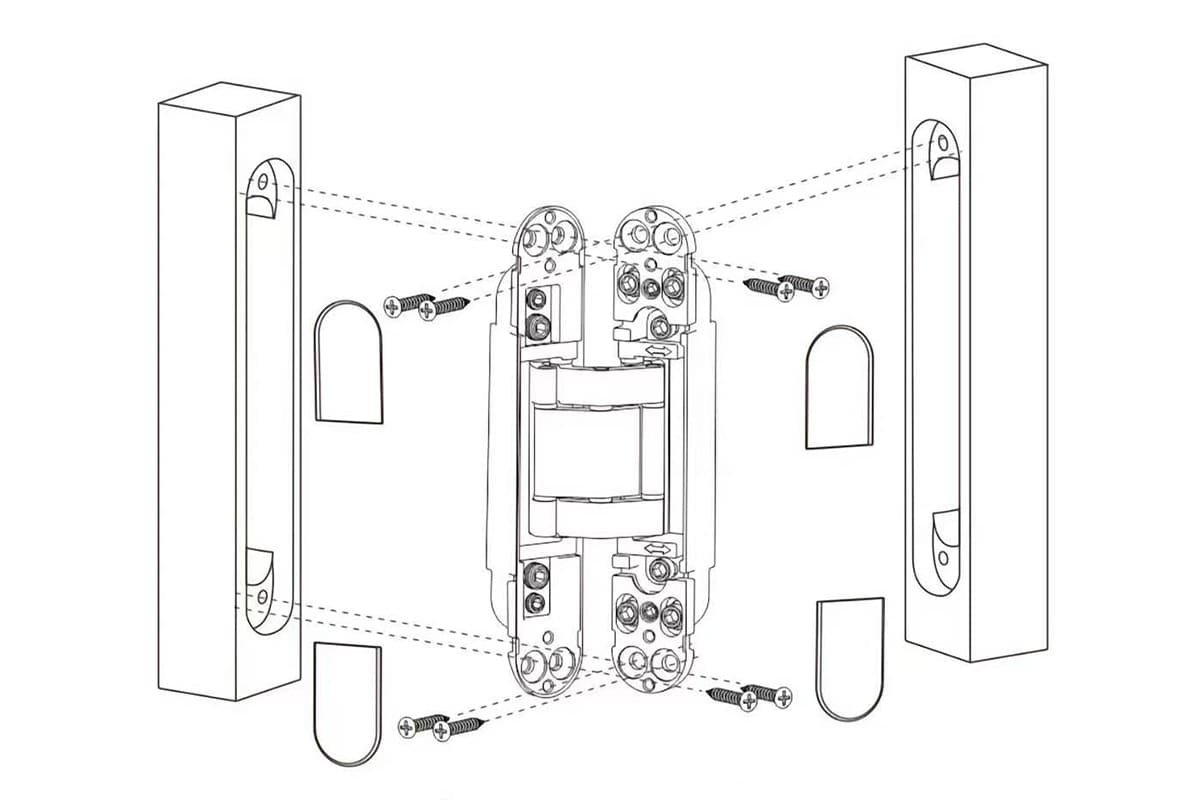
To correct hinge-related binding, inspect the door gaps, confirm where the door rubs, loosen the relevant hinge screws slightly, and adjust the hinge position. Thin metal or approved shims behind the hinge leaf can lift or shift the door. Retighten screws and retest the swing after each small change.
Read the Door Gaps First
Door gaps tell a story. Before changing the hinge, I like to look at the reveal around the door. The reveal is the visible gap between the door leaf and the frame.
Common patterns include:
| Gap Pattern | Likely Meaning | Possible Hinge Correction |
|---|---|---|
| Wide gap at top hinge side, tight at top lock side | Door has sagged downward | Tighten top hinge or shim lower hinge carefully |
| Tight gap along hinge side | Hinge leaf may sit too deep | Add shim behind hinge leaf |
| Door rubs near top frame | Sagging or frame out of square | Adjust top hinge or verify frame |
| Door rubs near latch side only when closing | Door edge or strike alignment issue | Check hinge axis and latch-side clearance |
| Uneven gap from top to bottom | Frame not plumb or hinge positions inconsistent | Verify installation tolerance |
The first check should not be emotional. It should be visual and measurable. A simple gap gauge or ruler can help installation teams document the condition.
How Shims Work
A shim is a thin material placed behind the hinge leaf to change the hinge position. In many cases, a very small adjustment creates a visible improvement at the lock side.
For architectural door installation, metal shims are often preferred because they are stable and do not compress easily.9 The team should avoid random cardboard or soft material in permanent installations, especially for high-use or fire-rated doors.
Shims can help when:
- The hinge mortise is cut too deep.
- The door needs a slight lift or shift.
- The reveal is uneven.
- The hinge leaf is not sitting flush.
- The frame or door preparation has small tolerance variation.
However, shims are not a cure for every case. If the frame is severely twisted, if the door is swollen, or if the hinge is bent, a shim may only move the problem to another location.
Basic Shim Logic
The direction of movement depends on which hinge receives the shim and where the door rubs. Installers should make small changes and retest each time.
- Shim behind the top hinge on the frame side to move the top of the door away from the hinge side in some conditions.
- Shim behind the lower hinge to influence the top lock-side position in certain sagging patterns.
- Use full-leaf shims when the hinge needs to remain flat and supported.
- Avoid partial unsupported shims that twist the hinge leaf.
Because door systems vary, I recommend qualified professional verification for project-specific adjustments, especially on fire-rated assemblies, acoustic doors, metal doors, and heavy commercial doors.
Hinge Mortise Depth and Seating
A hinge leaf should sit properly in its mortise. If the mortise is too shallow, the hinge leaf may stand proud and create pressure when the door closes. If the mortise is too deep, the door can sit too close to the frame or bind at the hinge side.10
Installation teams should check:
- Is the hinge leaf flush with the door edge?
- Is the hinge leaf flush with the frame?
- Are screws pulling the leaf flat?
- Is there paint buildup under the hinge?
- Are hinge corners sitting cleanly in the mortise?
- Are all hinges aligned on one axis?
In batch production, CNC or jig-controlled mortising helps consistency.11 For door factories, I usually recommend keeping hinge preparation data tied to the hinge model. Even a small hinge thickness change can affect the mortise depth requirement.
Why Alignment Issues Create Supplier Disputes
A buyer may receive hinges from one supplier and doors from another factory, then install them on a project site with a third team. When binding appears, everyone may blame someone else.
A clean evaluation should compare:
- Hinge drawings and actual hinge dimensions
- Door weight and hinge load rating
- Screw specification
- Door and frame preparation dimensions
- Hinge axis alignment
- Surface finish thickness
- Packaging and transport damage
- Site humidity and frame movement
This is why specification consistency is important in procurement. If the hinge thickness, knuckle size, hole position, or leaf flatness varies across a batch, installers lose time making adjustments. At SDH Hardware, our manufacturing conversations with buyers often focus on this exact issue: consistent hardware helps the door factory maintain consistent assembly.
When Should I Replace Bent or Worn Binding Door Hinges?
Bent or worn binding door hinges should be replaced when the hinge leaf is visibly twisted, the pin is damaged, the knuckle is loose, or the hinge cannot hold the door in alignment after adjustment. Minor bending may be corrected in limited cases, but severe deformation is a replacement issue.
Replace a binding hinge when it shows structural deformation, excessive wear, repeated screw loosening, pin damage, or insufficient load capacity for the door. A replacement hinge should match the door weight, usage frequency, fire-rating requirements, finish, screw pattern, and project specification.
What Deformation Looks Like
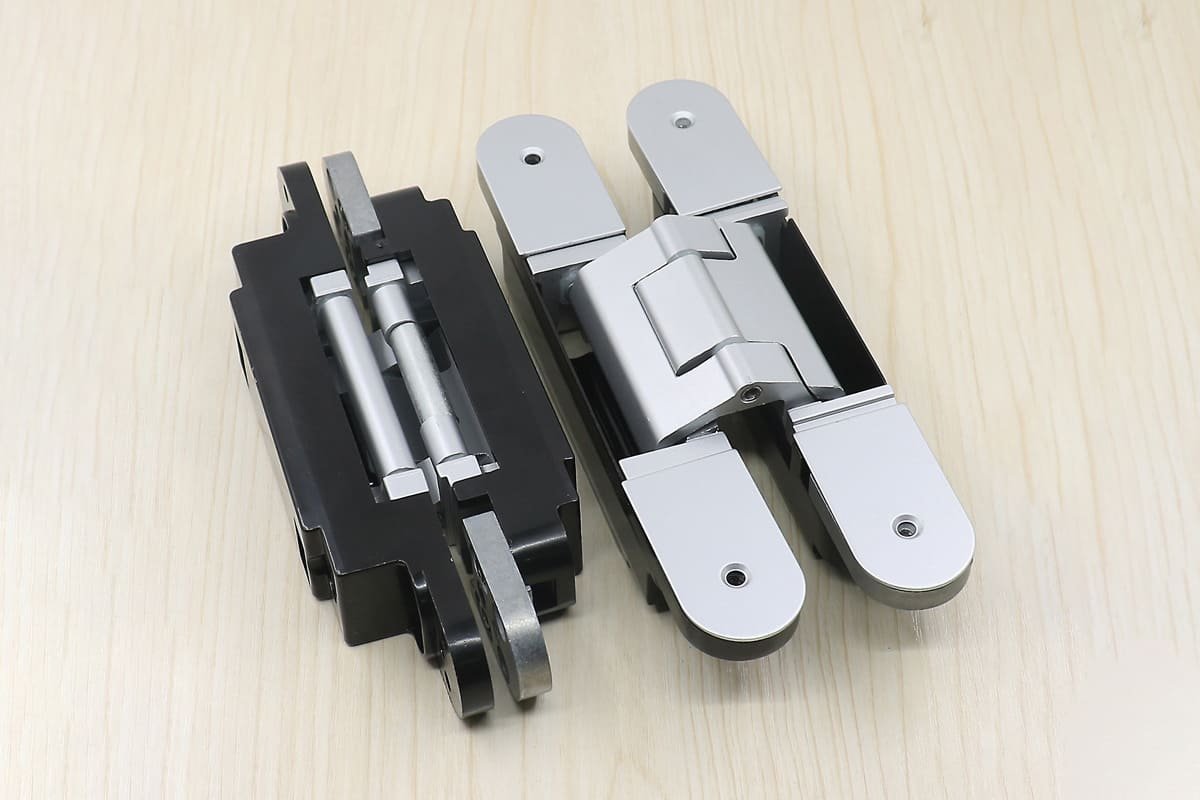
Hinge deformation can be easy to miss. A hinge may still look shiny and new, but the geometry may be wrong. I usually ask teams to check the hinge from different angles.
Signs include:
- One leaf does not sit flat.
- The barrel line is not straight.
- The pin is bent or difficult to remove.
- The knuckles have uneven gaps.
- The hinge opens with a tight spot.
- Screw holes look stretched or distorted.
- The door drops again after adjustment.
- The hinge makes a sharp cracking or popping sound.
If the hinge leaf is only slightly bent due to handling, an experienced installer may correct it. But this should be done carefully. Over-bending can weaken the hinge, damage the finish, or create a new alignment problem.
Why Hinges Bend or Wear
A hinge can fail for several reasons. Some are product-related. Some are application-related.
| Cause | Explanation | Procurement Check |
|---|---|---|
| Door too heavy | Hinge size or thickness is not enough | Verify door weight and hinge load capacity |
| Too few hinges | Load is concentrated | Confirm hinge count by door height and weight |
| Poor material thickness | Leaf may deform under load | Check drawings and samples |
| Weak pin or knuckle forming | Rotation wears faster | Review manufacturing quality |
| Aggressive site handling | Door may be forced open or over-extended | Check door stop and installation process |
| Corrosive environment | Rust increases friction and wear | Specify suitable material and finish |
| Inconsistent batch dimensions | Some hinges bind after assembly | Use incoming QC and supplier reports |
For high-use doors, hinge durability matters as much as appearance. A hotel room door, school door, apartment entry door, and commercial corridor door do not face the same duty cycle.12 Buyers should match the hinge to the application rather than only to the target price.
Replacement Is Not Always Over-Selling
As a manufacturer, I avoid telling customers to replace every hinge too quickly. Replacement adds cost, labor, and schedule pressure. But replacement is the correct decision when the hinge can no longer provide stable rotation or support.
Replacement is usually justified when:
- The hinge leaf is permanently deformed.
- The hinge pin is bent.
- The knuckles have excessive wear.
- The hinge is undersized for the door weight.
- The hinge repeatedly loosens after proper screw repair.
- The hinge does not match the required certification scope.
- The finish or corrosion resistance is unsuitable for the market.
For CE-marked or fire-rated projects, buyers should verify documents and make sure the replacement hinge is within the tested and approved door set configuration. Certification claims should be supported by valid reports, not only by product labels or catalog statements.
How Buyers Should Specify Replacement Hinges
When a project team replaces hinges, the new hinge should match both the technical requirement and the existing door preparation. Otherwise, the repair can create more work.
Important specification points include:
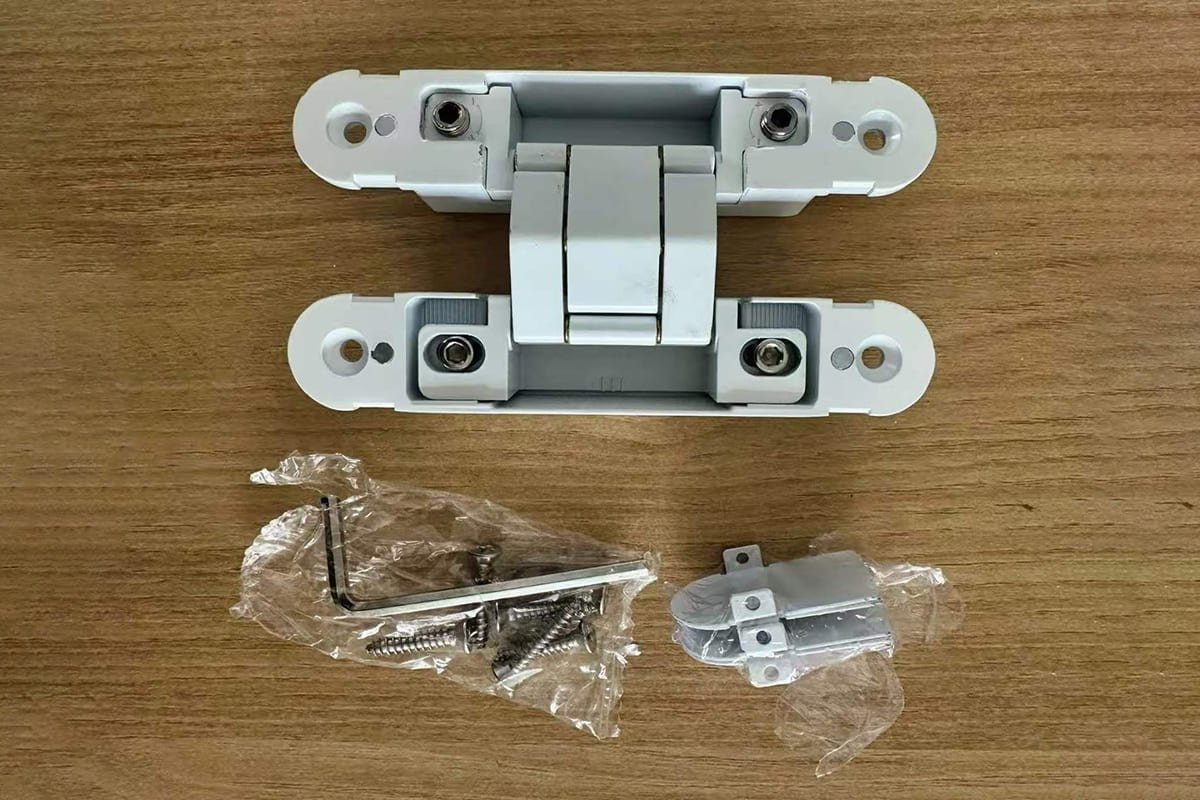
- Hinge type: butt hinge, concealed hinge, lift-off hinge, etc.
- Material: stainless steel, steel, brass, or other material
- Leaf size and thickness
- Knuckle diameter
- Pin structure
- Hole pattern
- Screw type
- Opening angle
- Finish, such as SS satin, polished, PVD, or powder coating
- Door weight and door height
- Fire-rated or CE documentation if required
- Salt spray or corrosion resistance expectations
- Packaging method for bulk shipment
For door factories and hardware brands, I recommend keeping an approved hinge specification sheet for each door series. That sheet should include drawings, tolerance requirements, finish standards, packaging requirements, and inspection points. It makes replacement decisions easier and reduces batch inconsistency.
Is Trimming the Final Way to Fix Binding Door Hinges?
Trimming can fix binding symptoms when the door edge physically interferes with the frame and all hinge-related corrections have failed. However, trimming should be the final remedy because it permanently changes the door leaf and may affect finish, fire performance, acoustic performance, and visual consistency.
Trim the door only after tightening screws, repairing stripped holes, lubricating hinge pins, checking alignment, using suitable shims, and inspecting hinge deformation. If the door still rubs because of swelling, frame movement, or manufacturing tolerance, professional evaluation should confirm how much material can be safely removed.
"Hinge", https://en.wikipedia.org/wiki/Hinge. An architectural-hardware reference defines door binding as impaired door swing caused by hinge-axis restriction or interference between the door leaf and surrounding frame elements. Evidence role: definition; source type: institution. Supports: A neutral architectural-hardware or building-maintenance source should define door binding in terms of hinge movement restriction and/or contact with the frame, floor, or stop.. Scope note: The source may describe the mechanism generally rather than using the exact phrase used in the article. ↩
"Dimensional Changes in Wood", https://extension.okstate.edu/fact-sheets/dimensional-changes-in-wood. Wood-science literature from a government forestry laboratory explains that wood products undergo dimensional changes as moisture content changes, which provides a material basis for humidity-related door swelling. Evidence role: mechanism; source type: government. Supports: A wood-science source should support that wood products change dimensions with moisture content and can swell under humid conditions.. Scope note: This would support the swelling mechanism generally; it may not specifically study binding door hinges. ↩
"Support and Connection Types", https://web.mit.edu/4.441/1_lectures/1_lecture13/1_lecture13.html. Mechanical-design references describe a hinge as a rotational joint that also transfers the supported member's load into the adjoining structure. Evidence role: mechanism; source type: education. Supports: An engineering or architectural-hardware source should explain that hinges both allow rotation and transmit load from the door to the frame.. Scope note: A general mechanical-design source may discuss hinges broadly rather than architectural door hinges specifically. ↩
"305Vehicle Door Sag Evaluation Using FEA - Academia.edu", https://www.academia.edu/12660370/305Vehicle_Door_Sag_Evaluation_Using_FEA. Mechanical analysis of a hinged door shows that the door's weight creates a moment about the hinge line, commonly increasing demand on the upper hinge fasteners and contributing to latch-side sag when the connection loosens. Evidence role: mechanism; source type: research. Supports: A structural or mechanical explanation should support that gravity creates a moment on the door and places substantial load on the upper hinge connection.. Scope note: Actual load distribution depends on hinge spacing, door weight, frame stiffness, screw condition, and installation quality. ↩
"[PDF] Wood Handbook--Chapter 7--Fastenings", https://research.fs.usda.gov/download/treesearch/7144.pdf. Research on wood-screw withdrawal resistance indicates that embedment depth and the quality of the engaged wood substrate affect screw holding capacity, supporting the use of longer screws where they can reach sound framing material. Evidence role: mechanism; source type: paper. Supports: A wood-fastener or building-construction source should support that screw holding capacity is affected by penetration depth and engagement with sound structural material.. Scope note: The source would support the fastener mechanics; the suitability of longer screws still depends on the specific door and frame construction. ↩
"A Specifier's Guide to Fire Door Hardware - dormakaba", https://go.dormakaba.com/en/articles/a-specifiers-guide-to-fire-door-hardware. Fire-door standards treat hardware and fasteners as part of the rated assembly, so substitutions or field changes should be evaluated against the tested or approved door-set documentation. Evidence role: expert_consensus; source type: institution. Supports: A fire-door standard or certification body should support that fire-door hardware and fasteners must remain within the tested or approved assembly requirements.. Scope note: The exact rule may vary by jurisdiction, certification scheme, and door assembly listing. ↩
"Struggling with sticky sliding doors or panels? B'laster Silicone Lubricant ...", https://www.facebook.com/BlasterProducts/posts/struggling-with-sticky-sliding-doors-or-panels-blaster-silicone-lubricant-makes-/1205112851654468/. Tribology and maintenance references describe silicone lubricants as friction-reducing agents used in applications where a cleaner lubricant film is preferred over heavier oil residues. Evidence role: general_support; source type: research. Supports: A neutral maintenance or tribology source should support that silicone lubricants reduce friction and are often used where a cleaner, less residue-heavy lubricant is desired.. Scope note: Evidence may support lower residue or cleaner use generally rather than directly measuring dust accumulation on door hinges. ↩
"Why is my interior door binding after hinge replacement?", https://www.facebook.com/groups/woodworkingforbeginner/posts/3397682640386337/. Door-installation guidance states that multiple hinges should share a common hinge axis; misaligned hinge barrels can impose opposing constraints and cause friction or binding during swing. Evidence role: mechanism; source type: institution. Supports: An architectural-hardware or installation reference should support that multiple hinges must align on a common axis to prevent binding.. Scope note: The source may provide practical installation guidance rather than a formal engineering derivation. ↩
"Heavy Duty Door Hinge Shims 12 Pack (C-Shape Slot with Offset ...", https://www.amazon.com/High-Strength-Anti-Corrosion-Professional-Residential-Commercial/dp/B0F3JCPW1R. Architectural-door installation guidance commonly specifies stable shim materials at hinge locations to maintain hinge support and alignment under service loads. Evidence role: expert_consensus; source type: institution. Supports: A door-installation association or standards source should support the use of stable, non-compressible shims for hinge adjustment.. Scope note: The source may not state that metal is always required; material requirements can vary by door type, rating, and manufacturer instructions. ↩
"r/DIYUK - Hinges too deep, door won't shut?", https://www.reddit.com/r/DIYUK/comments/13qfw2c/hinges_too_deep_door_wont_shut/. Carpentry and door-installation references explain that hinge leaves must sit flush in properly cut mortises; mortises that are too shallow or too deep can alter clearances and contribute to binding. Evidence role: mechanism; source type: education. Supports: A woodworking, carpentry, or door-installation source should explain how hinge mortise depth affects door position and clearance.. Scope note: The source may describe residential or general carpentry practice rather than commercial door-factory production. ↩
"Dimensional Accuracy and Measurement Variability in CNC ...", https://pmc.ncbi.nlm.nih.gov/articles/PMC12194426/. Manufacturing-engineering literature identifies CNC machining and fixture or jig control as methods for improving repeatability and dimensional consistency in batch production. Evidence role: general_support; source type: research. Supports: A manufacturing-engineering source should support that CNC machining and fixtures/jigs improve repeatability and dimensional consistency.. Scope note: The evidence may address manufacturing repeatability generally rather than hinge mortising in door factories specifically. ↩
"A156.1 - 2025 Butts and Hinges", https://buildershardware.com/ANSI-BHMA-Standards/Hardware-Highlights/A1561-2025-Butts-and-Hinges. Architectural-hardware standards classify hinges by durability and performance criteria, including cycle testing, reflecting that different door applications impose different service demands. Evidence role: expert_consensus; source type: institution. Supports: A hinge standard such as ANSI/BHMA or EN 1935 should support that hinges are classified or tested by durability cycles and intended duty level.. Scope note: Standards document performance classes and tests; they may not directly compare hotel, school, apartment, and corridor doors in the same wording. ↩