Top 10 Fire Rated Door Hardware Manufacturers for 2026
Fire rated door hardware manufacturers are difficult to compare because a famous brand name does not automatically prove system compatibility, certificate coverage, or stable bulk delivery1. Buyers can lose time, margin, and project trust when hardware fails documentation review or batch inspection. I use this shortlist to help procurement teams compare suppliers with clearer, lower-risk criteria.
The top fire rated door hardware manufacturers for 2026 include ASSA ABLOY, HAFELE, DORMA, KFV, SSF, PROTEK, GEZE, EURO ART, CONSORT, and SDH Hardware.2 Buyers should treat this as a practical shortlist, not an absolute ranking, and verify certification scope, Euro-standard compatibility, product-system fit, batch consistency, customization support, and delivery reliability before placing bulk orders.
A good shortlist should help you ask better questions. It should not only tell you which brands are visible in the market. Below, I compare these manufacturers from a buyer’s point of view, especially for Euro-standard fire-rated locks, hinges, handles, cylinders, closers, and complete door hardware packages.
Which Fire Rated Door Hardware Manufacturers Should Buyers Shortlist for 2026?
Choosing fire rated door hardware manufacturers can feel simple at the catalog stage, but the real risk appears later. A product may look correct, yet the certificate may not cover the exact size, material, door type, or application3. I have seen buyers slow down orders because one missing document changed the whole project timeline.
The 2026 shortlist should include manufacturers with strong market presence, relevant Euro-standard product coverage, fire-rated documentation support, and practical supply capability. ASSA ABLOY, HAFELE, DORMA, KFV, SSF, PROTEK, GEZE, EURO ART, CONSORT, and SDH Hardware are useful names for buyers to evaluate based on product fit, certification scope, and procurement requirements.
2026 Buyer Shortlist at a Glance
This list is not a laboratory ranking. I do not claim that one company has the strongest fire performance without current product-specific test data. Instead, I present each manufacturer as a buyer-relevant option that may suit different procurement needs.
| Manufacturer | Buyer-Relevant Reason for Inclusion | Product Fit to Check | Best Fit for Buyers Who Need |
|---|---|---|---|
| ASSA ABLOY | Global architectural opening solutions group with broad hardware portfolio | Locks, cylinders, exit devices, closers, door solutions | Large projects, system-wide specification, global brand support |
| HAFELE | Broad architectural and furniture hardware distribution and product platform | Door hardware, access control, project hardware | One-stop sourcing and project supply channels |
| DORMA | Known for door control, access, and entrance solutions under dormakaba market identity | Closers, exit devices, access solutions | Door control and commercial building hardware |
| KFV | Strong relevance in European lock and door system components | Multipoint locks, mortise locks, door locking systems | Door manufacturers needing lock system compatibility |
| SSF | European lock and architectural hardware presence | Locks, security hardware, door components | Buyers focused on lock systems and European standards |
| PROTEK | Market option for architectural and door hardware supply | Fire-rated door hardware categories to verify | Buyers comparing regional hardware supply options |
| GEZE | Strong public visibility in door closers, automatic doors, and door technology | Closers, hold-open systems, sliding/automatic systems | Projects requiring door movement and control solutions |
| EURO ART | Relevant option in architectural hardware and project supply channels | Handles, hinges, locks, accessories to verify | Wholesalers and regional market buyers |
| CONSORT | Architectural hardware and door hardware supply option | Locks, hinges, handles, door accessories to verify | Buyers needing a product-range comparison |
| SDH Hardware | China-based factory with Euro-standard fire-rated hardware production experience | Mortise locks, hinges, handles, cylinders, custom hardware | Door factories, wholesalers, ODM buyers, bulk importers |
1. ASSA ABLOY
ASSA ABLOY is often included in global buyer shortlists because of its wide architectural opening portfolio and international market presence.4 For procurement teams, the main advantage is not only brand recognition. The more important point is whether its specific fire-rated lock, hinge, closer, panic hardware, or access product matches the door system and local approval route.
Buyers should ask for:
- Current product-specific certificates
- Installation instructions linked to fire test evidence
- Compatible door leaf and frame details
- Approved hardware combinations
- Regional compliance documents
I would not treat any global certificate as universal. A lock tested on one steel door configuration may not automatically apply to another timber or composite door assembly.
2. HAFELE
HAFELE is useful for buyers who need broad project hardware access through a large product and distribution platform. Many door factories and contractors know the brand because of its architectural hardware, furniture fittings, and specification channels.
The procurement question is simple: Does the HAFELE-supplied fire-rated item come with documents for the exact application? Buyers should confirm whether the product is manufactured directly, sourced through partner factories, or supplied as part of a broader catalog program.
Key checks include:
- Certificate owner and product model
- Fire rating duration, such as 30, 60, 90, or 120 minutes
- Applicable door material
- Approved dimensions and installation details
- Batch labeling and traceability
3. DORMA
DORMA, now commonly associated with dormakaba in the global market5, remains important for door control and access-related solutions. Buyers often evaluate DORMA-related products when they need closers, exit hardware, access solutions, and commercial building hardware.
For fire-rated doors, door control is not a minor accessory. A closer may affect whether the door returns to the latched position during a fire.6 Buyers should verify the closer model, arm type, mounting position, power size, and fire door approval.
I usually remind buyers that a fire door is a tested assembly, not a collection of independent parts.7
4. KFV
KFV is especially relevant for buyers focused on Euro-standard locking systems and door manufacturing compatibility. In many procurement discussions, lock body dimensions, faceplate size, backset, center distance, and follower configuration decide whether a product is usable in mass production.
A KFV-type supplier evaluation should include:
- DIN direction compatibility
- Euro profile cylinder compatibility
- Multipoint lock specifications
- Mortise preparation requirements
- Latch, deadbolt, and faceplate details
- Fire-rated scope for the exact model
Door factories should request drawings before sampling. A correct certificate is not enough if the lock body does not match the door production line.
5. SSF
SSF appears in European lock and hardware discussions because of its focus on locks and door components. For buyers, this type of supplier can be relevant when the project requires European-style mechanical lock performance and standard preparation.
The buyer should compare SSF by:
- Lock series depth
- Fire-rated model availability
- EN standard references
- Finish options
- Cylinder and handle compatibility
- Supply channel stability
If you are building a regional product range, I would check whether the supplier supports consistent models over multiple years. Frequent model changes can create problems for spare parts, warranty service, and repeat project orders.
6. PROTEK
PROTEK may be considered by buyers comparing fire-rated and architectural hardware options across different regional supply channels. Because public product ranges and certificate claims can vary by market, buyers should treat it as a verification-based option.
The practical questions are:
- Which fire-rated door hardware categories are available?
- Which certificates apply to which model numbers?
- Are products suitable for Euro-standard doors?
- What is the MOQ for bulk orders?
- How stable are finishes across repeated batches?
This type of evaluation is especially important for importers and wholesalers. A product may be commercially attractive, but documentation gaps can limit market entry.
7. GEZE
GEZE is widely recognized for door technology, especially door closers, automatic door systems, sliding systems, and related control solutions.8 In fire-rated applications, closers and hold-open systems require careful review because they can directly affect door behavior under emergency conditions.
Buyers should verify:
| Item | Why It Matters |
|---|---|
| Closer power size | It affects door closing force and compliance |
| Mounting method | Fire approval may depend on installation position |
| Hold-open function | Fire-rated doors may require approved release systems |
| Door width and weight | Product capacity must match the door leaf |
| Certificate scope | The exact model and configuration must be covered |
GEZE may suit buyers who prioritize door movement control and engineered building access. However, buyers should still confirm the specific product certificate for the door assembly.
8. EURO ART
EURO ART can be included as a buyer comparison option for architectural hardware ranges, depending on regional availability and product documentation. Buyers may consider it when sourcing handles, hinges, locks, or accessories for project or wholesale channels.
The important point is not only catalog design. For fire-rated hardware, the product must support:
- Correct base material
- Verified finish durability
- Suitable installation method
- Fire-rated application evidence
- Stable carton labeling and packing
- Repeatable batch dimensions
I recommend asking for physical samples and inspection reports before confirming large-volume orders.
9. CONSORT
CONSORT is another useful name for buyers building a comparison list across architectural door hardware suppliers. It may fit projects or channels where buyers need a practical product range and supplier responsiveness.
For fire-rated door hardware, procurement teams should review:
- Product category coverage
- Fire-rated documentation
- Euro-standard sizes
- Hardware combination suitability
- Packaging and marking requirements
- Lead time for repeat orders
A supplier may offer good general hardware, but fire-rated project supply demands stricter document control. Buyers should always separate ordinary door hardware from fire-rated door hardware during supplier evaluation.
10. SDH Hardware
SDH Hardware is a China-based architectural door hardware manufacturer with over 20 years of specialized production experience. From our factory-side work, we focus on Euro-standard mortise locks, concealed hinges, butt hinges, lever handles, lock cylinders, and related door hardware for overseas door factories, brand operators, and wholesalers.
I include SDH Hardware as one of the 10 fire rated door hardware manufacturers because it can be relevant for buyers who need:
- Euro-standard mortise lock supply
- Stainless steel lever handle production
- Butt hinge and concealed hinge manufacturing
- Brass profile cylinder customization
- ODM support for stainless steel and zinc alloy products
- Bulk supply for Middle East, Europe, and Southeast Asia markets
- CE and fire-rated certificate documentation for buyer verification
I want to be careful here. Buyers should still verify whether any certificate applies to the exact product type, model, material, size, fire rating, and intended door application. That is the correct way to evaluate us, and it is the same standard I would apply to any supplier on this list.
How Should Buyers Compare Fire Rated Door Hardware Manufacturers?
Comparing fire rated door hardware manufacturers by brand awareness alone creates procurement risk. A famous catalog may not solve your door preparation, local certification, batch finish, MOQ, or delivery pressure. The wrong choice can delay a project even when the product itself appears well made.
Buyers should compare manufacturers by certification scope, Euro-standard compatibility, product-system fit, manufacturing consistency, customization capability, delivery stability, and after-sales document support. The best supplier for one buyer may not be the best for another because every door system, market, and procurement model has different requirements.
Start With the Certificate Scope
Fire-rated hardware certificates must be read carefully. A certificate is not a general marketing claim. It is usually linked to a tested product, configuration, door type, material, size, fixing method, and rating period.9
Buyers should verify:
- Product model: Does the certificate show the exact model number?
- Product type: Does it apply to a lock, hinge, handle, cylinder, closer, or panic device?
- Door material: Is it tested for timber, steel, composite, or another assembly?
- Fire rating: Is the rating 30, 60, 90, 120 minutes, or another duration?
- Installation method: Are screws, plates, cut-outs, and fixing points defined?
- Hardware combination: Does the certificate allow the intended combination of lock, hinge, closer, and handle?
- Certificate validity: Is the document current and issued by a recognized body?
I have seen buyers ask for “a fire certificate” as if one document answers everything. In real procurement, that is too broad. A certificate for one hinge size may not cover another hinge size. A lock test may not cover a different faceplate, backset, or latch structure.10
Compare Euro-Standard Compatibility
For Euro-standard door hardware, dimensional compatibility is one of the first practical filters.11 A product can have good fire documentation and still fail your production line if it does not match your machining, door thickness, or regional hardware standard.
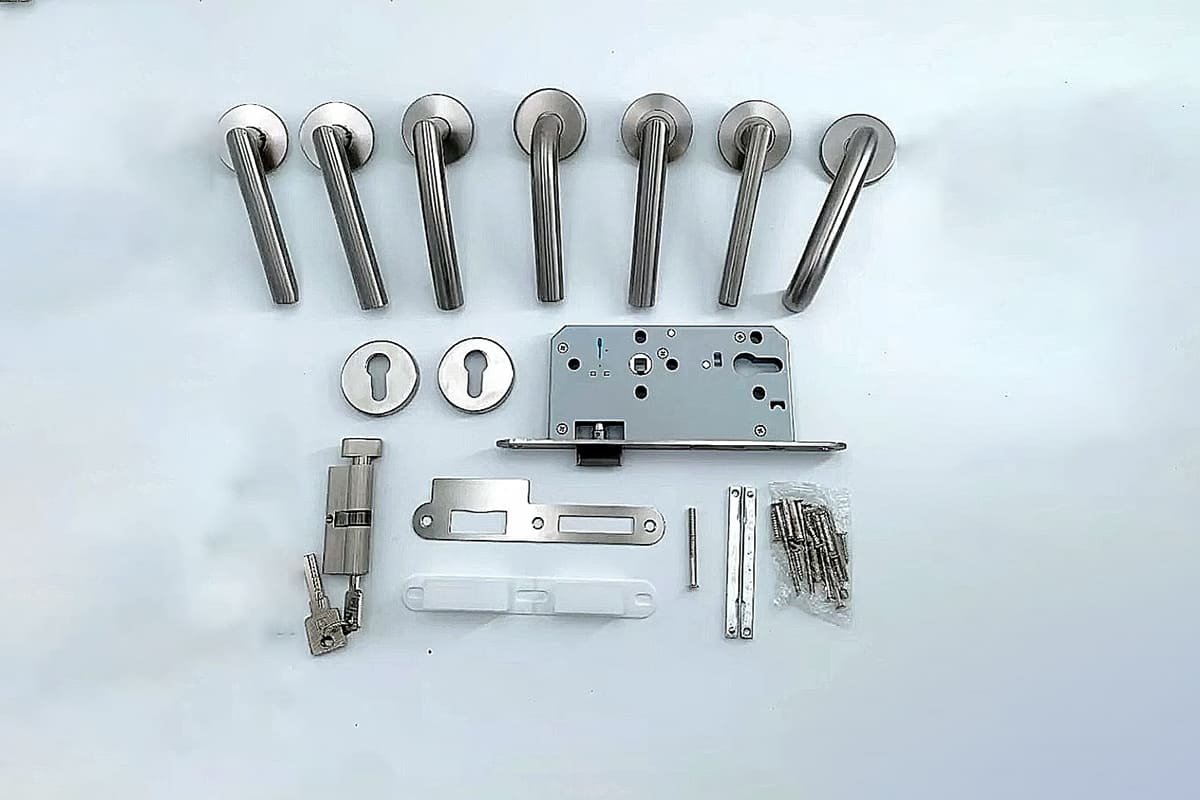
Key Euro-standard details include:
| Product | Buyer Should Check |
|---|---|
| Mortise lock | Backset, center distance, faceplate, follower, latch direction |
| Profile cylinder | Length, cam type, key system, brass grade, finish |
| Lever handle | Rose or plate size, spindle, spring system, fixing method |
| Butt hinge | Size, thickness, knuckle structure, bearing type, screw holes |
| Concealed hinge | Door weight rating, opening angle, milling size, adjustment |
| Door closer | Power size, arm type, door width, mounting position |
If you are a door factory, drawings matter as much as samples. I always prefer to check technical drawings before discussing price. That simple habit prevents many later problems.
Evaluate Batch Consistency
Bulk procurement is different from sample approval. A sample can look excellent, but a 5,000-piece order must keep the same finish, function, tolerance, and packaging standard.12
Buyers should inspect:
- Surface finish consistency across cartons
- Lock operation smoothness
- Hinge hole alignment
- Handle spring return performance
- Cylinder key insertion and rotation
- Salt spray or corrosion test data where relevant
- Carton strength and export packing
- Labeling and batch traceability
For overseas wholesalers, finish consistency is especially important. A small color difference between handles and hinges can create customer complaints at the retail or project installation stage.
Match Supplier Type to Procurement Model
Not every buyer needs the same kind of supplier. A project contractor may prefer a specification-driven brand. A door factory may need a stable OEM or ODM manufacturer. A wholesaler may need repeatable products, flexible cartons, and competitive landed cost.
| Buyer Type | Main Priority | Supplier Fit |
|---|---|---|
| Door factory | Stable dimensions and assembly compatibility | Manufacturer with drawings, samples, and repeat production |
| Hardware brand | ODM support and finish control | Factory with customization and private label ability |
| Project contractor | Document completeness and system approval | Brand or supplier with strong certification support |
| Regional wholesaler | Cost, range, packaging, and repeat supply | Manufacturer or distributor with reliable inventory planning |
| Importer | Compliance documents and shipment stability | Export-capable supplier with clear inspection process |
The right decision depends on your market. A premium European brand may be the right solution for a high-specification project. A factory-direct supplier may be better for a private-label wholesale range. The buyer’s job is to match the supplier to the business model.
What Certification Questions Should You Ask Fire Rated Door Hardware Manufacturers?
Many buyers ask fire rated door hardware manufacturers for certificates too late. They negotiate price, approve samples, and prepare packaging first. Then they discover that the certificate does not match the product or the target market. That mistake can create expensive rework and shipment delays.
Buyers should ask certification questions before sample approval. They should confirm the exact product model, fire rating, test standard, application scope, door type, approved installation method, certificate holder, validity period, and whether the hardware combination is allowed for the intended fire-rated door assembly.
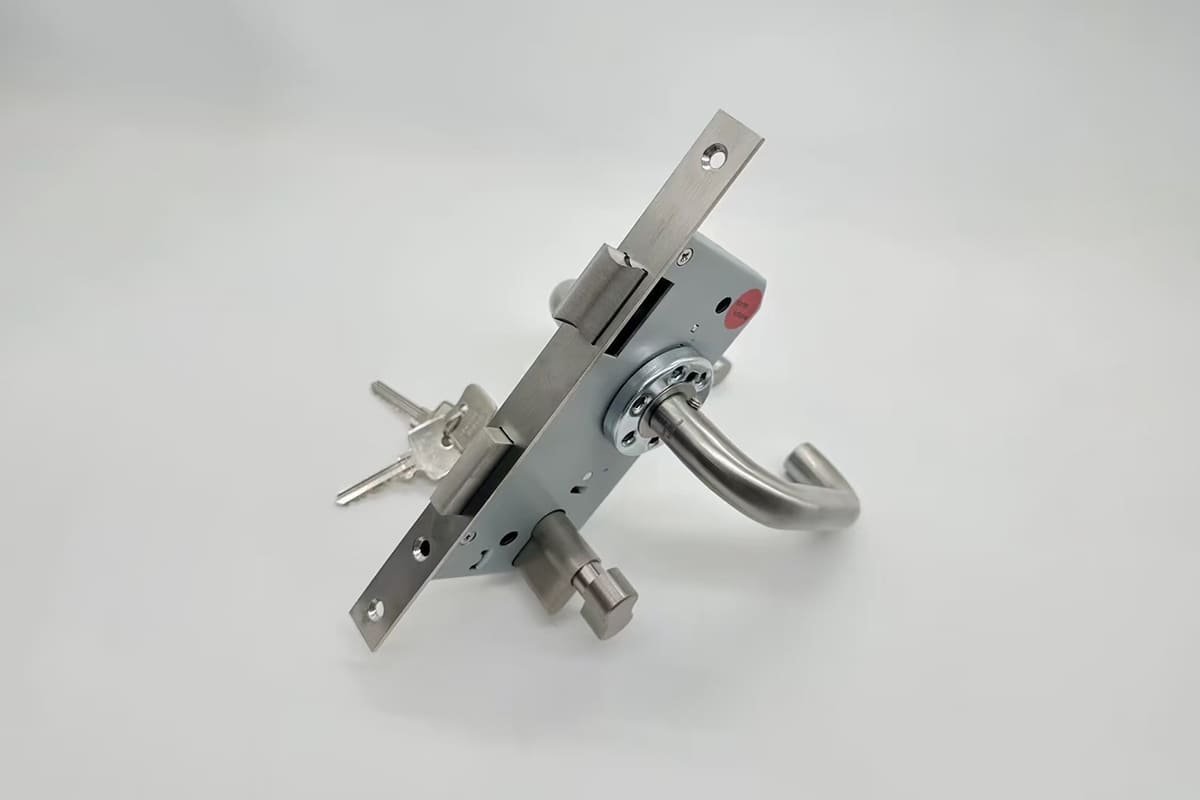
Ask for Product-Specific Documents
The phrase “fire-rated” should always lead to a document review. I recommend buyers request documents by model number, not by general product category.
A strong document request looks like this:
“Please provide the current fire-rated certificate or test report for model X, size Y, finish Z, used on door type A, with fire rating B, for market C.”
This request helps both sides. It stops confusion early. It also shows whether the supplier understands fire-rated project documentation.
Separate Claims, Certificates, and Suitability
Buyers should separate three different things:
Marketing claim
The catalog says the product is fire-rated.Certificate or test report
A document supports a tested model or configuration.Application suitability
A qualified project professional confirms that the product can be used in the intended door assembly and local code environment.
These three items are related, but they are not the same. A supplier can provide a certificate, but the buyer may still need local approval, consultant review, or fire door manufacturer confirmation.
Check Common Fire-Rated Hardware Categories
Fire-rated door hardware includes several product groups. Buyers should not treat them as interchangeable.
| Hardware Category | Common Buyer Risk |
|---|---|
| Fire-rated mortise locks | Certificate may not cover the exact backset or faceplate |
| Fire-rated hinges | Size, load, bearing, and material may affect approval |
| Fire-rated lever handles | Material and fixing method may matter |
| Fire-rated cylinders | Cylinder type and door compatibility should be checked |
| Door closers | Power size and mounting method are critical |
| Panic exit devices | Exit function and fire door approval must both be reviewed |
| Seals and accessories | They may be part of the tested fire door assembly |
Where Does SDH Hardware Fit Among Fire Rated Door Hardware Manufacturers?
SDH Hardware fits as a China-based factory option for buyers who need Euro-standard mortise locks, hinges, lever handles, lock cylinders, and related fire-rated door hardware supply. Buyers should evaluate SDH by product drawings, samples, inspection procedures, certificate availability, customization capability, batch consistency, and delivery performance.
Factory-Side Experience Matters
At SDH Hardware, our work is centered on architectural door hardware manufacturing. We operate with in-house production capability and serve overseas door factories, hardware brands, wholesalers, and project-support procurement companies. Our main product categories include:
- Euro-standard mortise locks
- Door concealed hinges
- Stainless steel butt hinges
- Stainless steel lever handles
- Brass profile cylinders
- Zinc alloy hardware products
- Customized accessories and finishes
From a buyer’s perspective, the value of a factory is not only production volume. It is the ability to repeat the same product standard over time.
What Buyers Can Evaluate With SDH
I encourage buyers to evaluate us with the same practical standards used for any supplier.
| Evaluation Point | What Buyers Should Request |
|---|---|
| Product drawings | Dimensions, tolerances, door preparation details |
| Samples | Finish, operation, installation, packaging |
| Certificate documents | Model-specific CE or fire-rated documents for verification |
| Material details | Stainless steel grade, brass cylinder material, zinc alloy specification |
| Finish control | Color standard, surface treatment, inspection method |
| ODM support | Custom dimensions, logo, packaging, accessories |
| Batch inspection | Pre-shipment inspection, function tests, appearance checks |
| Delivery plan | Lead time, production schedule, export packing |
Suitable Buyer Profiles
SDH Hardware may fit buyers who need:
Door factory supply
Buyers need repeatable dimensions, stable production, and hardware that works with door assembly lines.Private-label hardware programs
Buyers need ODM support, logo options, customized packaging, and consistent finishes.Regional wholesale channels
Buyers need full-category sourcing, competitive cost control, and reliable repeat supply.Project-support procurement
Buyers need documents, samples, and communication for fire-rated door hardware selection.
Step-by-Step Buyer Checklist
Use this checklist before issuing a purchase order.
Define the door system
- Door material
- Door thickness
- Frame type
- Door weight
- Opening direction
- Required fire rating
Define the hardware package
- Lock type
- Cylinder type
- Handle type
- Hinge type and quantity
- Door closer or exit device
- Accessories and seals
Request documents
- Fire-rated certificate or test report
- CE documents where applicable
- Product drawings
- Installation instructions
- Material specifications
- Finish standard
Approve samples
- Check dimensions
- Test operation
- Install on a sample door
- Compare finish
- Review packing
Confirm bulk order standards
- AQL inspection level
- Tolerance requirements
- Surface finish limits
- Carton markings
- Barcode or label requirements
- Spare parts or accessories
Control shipment risk
- Confirm lead time
- Arrange pre-shipment inspection
- Verify carton strength
- Check export documents
- Keep batch records
Conclusion
Fire rated door hardware manufacturers should be compared by evidence, not only by reputation. ASSA ABLOY, HAFELE, DORMA, KFV, SSF, PROTEK, GEZE, EURO ART, CONSORT, and SDH Hardware all deserve buyer-side evaluation for different reasons. The right choice depends on certificate scope, Euro-standard fit, product range, batch consistency, customization needs, and delivery reliability. If you are sourcing Euro-standard locks, hinges, handles, cylinders, or complete fire-rated hardware packages, contact SDH Hardware to review drawings, samples, certification documents, and bulk supply options for your market.
"Fire Doors and NFPA 80 FAQs", https://www.nfpa.org/news-blogs-and-articles/blogs/2025/04/11/fire-doors-faqs. Fire-door standards and certification guidance treat doors, frames, and hardware as approved assemblies whose components must match listed or tested configurations, supporting the view that brand recognition alone does not establish compatibility or certification coverage. Evidence role: expert_consensus; source type: institution. Supports: Authoritative fire-door guidance should explain that fire-door components must be listed, labeled, or approved for the specific assembly and application.. Scope note: This supports the compliance principle, not the article's separate claim about bulk-delivery stability. ↩
"Door Hardware Market Research Report 2034", https://marketintelo.com/report/door-hardware-market. Industry and market overviews identify several of the listed firms as significant participants in architectural door hardware, access, or door-control markets; this supports the shortlist as a contextual procurement starting point, but it does not independently prove that the ten names are the definitive top manufacturers for 2026. Evidence role: general_support; source type: research. Supports: External market or industry sources should show that several named firms have significant architectural door hardware or door-control market presence, providing context for inclusion in a buyer shortlist.. Scope note: Contextual support only; a market overview cannot validate the full ranking or every listed company's fire-rated product scope. ↩
"Doors, Windows and Related Hardware Application Guide", https://www.ul.com/thecodeauthority/knowledge/ul-fire-rated-doors-guide. Fire-testing and certification guidance generally limits fire-door and hardware approvals to tested configurations or stated fields of application, including specified materials, sizes, installation methods, and door assemblies. Evidence role: mechanism; source type: institution. Supports: Certification sources should show that fire-rated door hardware approvals are tied to tested configurations and defined fields of application.. ↩
"Assa Abloy - Wikipedia", https://en.wikipedia.org/wiki/Assa_Abloy. ASSA ABLOY corporate reporting and institutional profiles describe a global access-solutions group with product lines across locks, door hardware, entrance automation, and related opening solutions, supporting its contextual inclusion in international buyer shortlists. Evidence role: general_support; source type: institution. Supports: A corporate annual report or institutional profile should document ASSA ABLOY's global operations and product coverage in access solutions or architectural openings.. Scope note: This supports company scale and portfolio breadth, not product-specific fire-rating suitability. ↩
"Dormakaba - Wikipedia", https://en.wikipedia.org/wiki/Dormakaba. Company-history references describe dormakaba as the group formed from the combination of Dorma and Kaba, supporting the article's statement that DORMA is now associated with the dormakaba market identity. Evidence role: historical_context; source type: encyclopedia. Supports: A neutral company history should confirm the relationship between DORMA and dormakaba, including the merger with Kaba.. ↩
"Self-Closing Doors - HPD", https://www.nyc.gov/site/hpd/services-and-information/self-closing-doors.page. Fire-door inspection and maintenance guidance requires many fire doors to close fully and latch, indicating that closer selection, adjustment, and installation can affect whether the assembly performs as intended during a fire. Evidence role: mechanism; source type: institution. Supports: Authoritative fire-door guidance should state that fire doors must self-close and latch to perform their protective function.. ↩
"Fire Doors and NFPA 80 FAQs", https://www.nfpa.org/news-blogs-and-articles/blogs/2025/04/11/fire-doors-faqs. Fire-door codes and standards define a fire door assembly as an integrated set of components, including the door, frame, hardware, and glazing or accessories where applicable, supporting the statement that fire performance is evaluated at assembly level. Evidence role: definition; source type: institution. Supports: A standard or code source should define a fire door assembly as including the door, frame, hardware, and related components.. ↩
"Door closer - Wikipedia", https://en.wikipedia.org/wiki/Door_closer. Institutional profiles of GEZE describe its business in door, window, and safety technology, including door closers and automatic or sliding door systems; this supports the product-category description but only contextualizes, rather than quantifies, the phrase 'widely recognized.' Evidence role: general_support; source type: institution. Supports: A company profile or institutional overview should document GEZE's business focus in door closers, automatic door systems, sliding systems, and related building technology.. Scope note: The source can support product focus, but recognition level would require independent market or citation data. ↩
"[DOC] 081173", https://online2.ogs.ny.gov/dnc/masterspec24/docs/Division08Openings/081173.0SlidingMetalFireDoors.docx. Certification and fire-test documentation for fire-door hardware typically identifies the tested product or system, installation conditions, assembly type, and fire-resistance rating, supporting careful reading of certificate scope rather than treating certificates as generic claims. Evidence role: general_support; source type: institution. Supports: Certification or standards guidance should show that fire-rating documents specify the tested product, installation conditions, assembly type, and rating duration.. ↩
"[PDF] DOOR HARDWARE (SCHEDULED BY DESCRIBING PRODUCTS)", https://fpm.usc.edu/wp-content/uploads/2021/11/087102-USC-HSC-door-hardware-Guide-Specification_1.pdf. Fire-door field-of-application and extended-application guidance treats changes to hardware type, size, construction, or installation as variables that may require specific evidence or assessment, supporting the caution that a certificate for one hinge or lock configuration may not cover another. Evidence role: mechanism; source type: institution. Supports: A standards or certification source should explain that modifications to hardware size, construction, or installation may require assessment under field-of-application or extended-application rules.. ↩
"SIST EN 12209:2025 - Locks Performance and Test Methods for ...", https://standards.iteh.ai/catalog/standards/sist/d274bd71-c780-45dc-bd63-dd00ae5f9280/sist-en-12209-2025?srsltid=AfmBOoolsCC_4rMNzH3Nkw3vfLCKmlElv44twDSU5GOSbo7AgAw303Dl. European building-hardware standards for mechanically operated locks and related door components specify dimensional and functional characteristics, supporting the article's treatment of dimensional compatibility as an early procurement filter. Evidence role: definition; source type: institution. Supports: European or DIN/EN standards should show that door hardware is specified through dimensional and functional parameters such as backset, follower, faceplate, and cylinder profile compatibility.. Scope note: The standards support the importance of dimensional specification generally; they do not assess any named manufacturer's product compatibility. ↩
"ISO 2859-1:1999(en), Sampling procedures for inspection by attributes", https://www.iso.org/obp/ui/#iso:std:iso:2859:-1:ed-2:v1:en. Acceptance-sampling standards such as ISO 2859 provide methods for inspecting production lots against defined quality criteria, supporting the article's distinction between sample approval and consistent bulk-order performance. Evidence role: general_support; source type: institution. Supports: Quality-control standards should show that production lots are assessed through sampling plans and acceptance criteria to manage batch consistency risks.. Scope note: This supports the general quality-control principle, not any specific defect rate or hardware-category performance. ↩