How Do You Choose a Door Butt Hinge Manufacturer?
A door butt hinge manufacturer can look suitable on a quotation sheet, but the wrong supplier can create noisy doors, uneven gaps, finish mismatches, delayed projects, and after-sales complaints. The risk grows when you buy in bulk.1 The solution is to evaluate the manufacturer by application fit, quality control, compliance documents, customization support, and repeat-order stability.
A reliable door butt hinge manufacturer is one that can match the hinge to the door weight, thickness, usage frequency, regional standard, finish requirement, and order volume.2 Buyers should not judge only by brand reputation or unit price. They should verify samples, production consistency, certificates, packaging, lead time, and long-term supply capability before placing bulk orders.
Many buyers first ask, “Which hinge brand is famous?” I understand that question because brand names give a useful reference point. However, in factory-side communication, I often see that the better question is: Which manufacturer can supply the right hinge for my door type, market standard, cost structure, and delivery plan?
What Makes a Door Butt Hinge Manufacturer Reliable for Bulk Procurement?
A door butt hinge manufacturer may offer a competitive price, but price alone does not protect your project. If the hinge size, bearing structure, material thickness, screw hole position, or finish changes between batches, the buyer pays the real cost later through assembly problems and customer claims.
A reliable door butt hinge manufacturer gives buyers stable product specifications, consistent sample-to-bulk quality, clear inspection standards, realistic delivery schedules, and support for repeated orders. The supplier should also help buyers confirm the correct hinge type for the door application instead of pushing one universal model for every project.
Reliability is a system, not a slogan
When I speak with door factory buyers, I rarely hear them complain only about the first sample. Most problems appear after the order moves into real production. A sample looks good. The quotation looks attractive. Then the bulk shipment arrives with small differences that affect assembly.
Common bulk order issues include:
- Leaf thickness variation
- Inconsistent surface finish
- Different hole positions from the confirmed drawing
- Loose bearing movement
- Incorrect screw accessories
- Weak packaging for export transportation
- Unclear marking between models
- Late delivery during project peak season
These issues are not always dramatic, but they are expensive. A door factory may need to re-drill, re-sort, re-pack, or delay its own shipment. A hardware brand may need to handle customer complaints in its local market.
A practical evaluation should look at the manufacturer’s process, not only the product photo.
| Evaluation Point | Why It Matters | What Buyers Should Check |
|---|---|---|
| Material grade | Affects strength, corrosion resistance, and market positioning | Stainless steel grade, steel type, brass or other material claims |
| Hinge thickness | Affects load capacity and durability | Actual measured thickness against drawing |
| Bearing structure | Affects smoothness and high-frequency use | Plain bearing, washer, ball bearing, or other structure |
| Hole position | Affects installation speed | Drawing confirmation and sample measurement |
| Finish consistency | Affects door set appearance | Color board, sample approval, batch comparison |
| Packaging | Affects export damage rate | Inner box, carton strength, labeling, pallet method |
| Lead time | Affects project delivery | Realistic production schedule, not only promised date |
| Quality records | Supports repeatability | Inspection reports, batch checks, defect handling process |
Brand reputation helps, but it is not enough
Global brands such as Simonswerk, Argenta, ASSA ABLOY, Häfele, dormakaba, Hager, Ives/Allegion, McKinney, and LAMP provide useful market context. Some are known for heavy-duty hinges. Some focus on minimalist or concealed solutions. Some have strong project hardware systems. Some are associated with ANSI-grade or European-oriented supply.
However, a buyer still needs to ask:
- Does this hinge match my door weight and thickness?
- Does the certificate apply to this exact model and configuration?
- Can the supplier support my target price and margin?
- Can the manufacturer repeat the same finish in future orders?
- Can the factory customize packaging for my brand or market?
In my view, the most useful supplier is not always the most famous one. It is the one that can prove product fit, maintain stable quality, and support your business model over time.
How Should a Door Butt Hinge Manufacturer Match Hinges to Door Applications?
A door butt hinge manufacturer should start with the door, not the catalog. The same hinge cannot suit every wood door, steel door, fire-rated door, hotel room door, apartment entrance door, or high-frequency commercial door.3 If the supplier skips application questions, the buyer should slow down.
A door butt hinge manufacturer should confirm door weight, door height, door thickness, usage frequency, installation environment, hinge quantity per leaf, material, size, thickness, bearing structure, finish, and target standard. These variables help prevent under-specification, over-specification, and unnecessary cost.
Start with the door data
A hinge is a small component, but it carries the entire door movement.4 That is why I prefer to ask several basic questions before discussing price. These questions are not complicated, but they prevent many mistakes.
A buyer should prepare:
- Door material: wood, steel, aluminum, composite, or fire-rated assembly
- Door thickness: for example, 35 mm, 40 mm, 44 mm, 50 mm, or customized
- Door height and width
- Estimated door weight
- Usage frequency: residential, hotel, office, school, hospital, public building
- Number of hinges per leaf
- Frame material and installation method
- Required finish: satin stainless steel, polished stainless steel, PVD, black, bronze, or custom color
- Regional requirement: EN-oriented, ANSI-oriented, CE-related, fire-related, or local market standard
- Packaging requirement: neutral, brand box, barcode, project labeling, or bulk pack
The manufacturer should then recommend a hinge specification based on these conditions. A supplier who only says “this model sells well” is not giving enough technical support.
Key hinge variables buyers should compare
| Variable | Practical Impact | Buyer Note |
|---|---|---|
| Hinge size | Supports door dimensions and installation design | Common sizes vary by market and door type |
| Leaf thickness | Affects strength and deformation resistance | Measure actual sample thickness |
| Material | Affects corrosion resistance and price | Stainless steel is common for many architectural markets |
| Bearing type | Affects smoothness and durability | Ball bearing hinges are often preferred for heavier or frequent-use doors5 |
| Pin design | Affects security and maintenance | Confirm fixed pin, loose pin, or special design |
| Screw hole pattern | Affects factory assembly | Must match door/frame preparation |
| Finish | Affects appearance and corrosion performance | Approve finish sample before mass production |
| Certification scope | Affects project eligibility | Verify documents for the exact model and use case |
Avoid under-specification and over-specification
Under-specification creates risk. The hinge may sag, squeak, deform, or wear too quickly. Over-specification also creates problems because the buyer may lose margin in a price-sensitive market.
For example, a door hardware wholesaler may not need the same hinge for a light interior residential door and a heavy public building door. A hotel project may care strongly about quiet movement and finish consistency. A fire-rated door project may require documents that match the tested assembly.6 An ANSI-oriented market may require different product logic from an EN-oriented market.
I usually advise buyers to separate their hinge range by application level instead of buying one model for every customer.
A practical range may include:
- Standard residential butt hinge
- Stainless steel ball bearing butt hinge
- Heavy-duty hinge for higher-frequency use
- Fire-rated project hinge, subject to verified certificate scope
- Customized OEM hinge with specific hole position, size, or finish
This structure helps buyers control cost while still covering different market needs.
Which Global Hinge Brands Should a Door Butt Hinge Manufacturer Be Benchmarked Against?
A door butt hinge manufacturer should not be evaluated in isolation. Global hinge brands help buyers understand design direction, quality expectations, standard systems, and market pricing levels. However, benchmarks should guide evaluation, not become a shortcut for supplier selection.
Buyers can use brands such as Simonswerk, Argenta, ASSA ABLOY, Häfele, dormakaba, Hager, Ives/Allegion, McKinney, LAMP, and SDH as market references. Each may represent different strengths, such as heavy-duty hinges, architectural project hardware, minimalist design, ANSI-grade supply, or cost-effective OEM production.
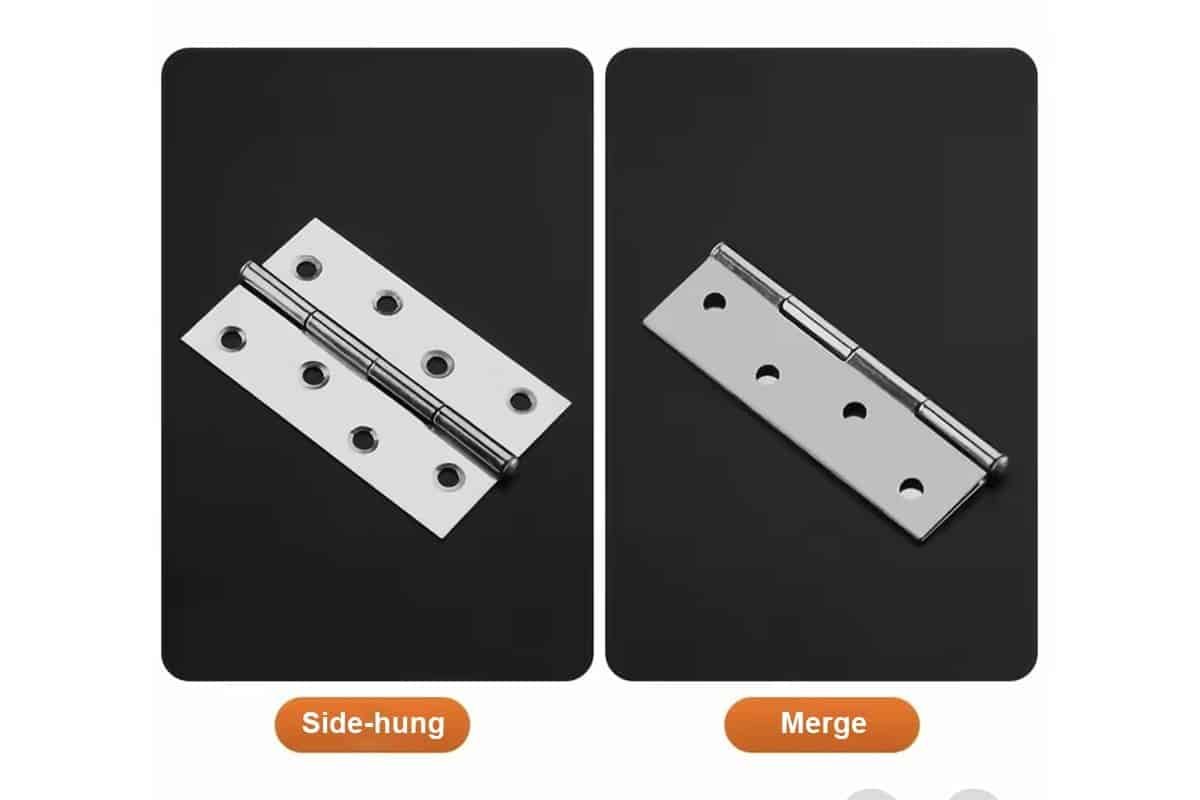
Use brands as reference points, not final answers
Well-known brands often set expectations for design, packaging, technical documentation, and project confidence. This is useful. A buyer can review how premium brands present load capacity, finish options, fire-related documentation, or installation guides.
However, procurement decisions still need a practical filter:
- Does the product fit my local market price?
- Can the supplier support my order volume?
- Can I get stable repeat supply?
- Can I customize finish, logo, packaging, or hole position?
- Does the certification cover my exact model and application?
- Can the manufacturer communicate quickly during sample and bulk production?
A famous name can reduce perceived risk, but it does not automatically solve every buyer’s needs. A regional wholesaler may need fast-moving stainless steel hinges at competitive cost. A door factory may need hole-position matching for its production line. A hardware brand may need OEM packaging and stable finish across multiple shipments.
Common market positioning examples
| Market Reference | Typical Buyer Perception | Procurement Lesson |
|---|---|---|
| Simonswerk | Premium architectural hinge systems and heavy-duty solutions | Use as a reference for engineering detail and project positioning |
| Argenta | Minimalist and concealed door hardware design | Use as a reference for design-focused applications |
| ASSA ABLOY | Large global access solution ecosystem | Use as a reference for system-level project hardware |
| Häfele | Broad architectural and furniture hardware distribution | Use as a reference for catalog depth and channel support |
| dormakaba | Access solutions and project hardware | Use as a reference for commercial building needs |
| Hager | Door hardware and hinge solutions in North America | Use as a reference for durable commercial hardware |
| Ives/Allegion | ANSI-oriented architectural hardware | Use as a reference for North American specification logic |
| McKinney | Heavy-duty architectural hinges | Use as a reference for commercial-grade hinge expectations |
| LAMP | Precision hardware and specialty applications | Use as a reference for detail and niche performance |
| SDH Hardware | China-based manufacturing, OEM/ODM, bulk supply | Use as a reference for cost-effective production and customization |
This table is not a ranking. It is a procurement map. It helps buyers ask better questions.
What I would compare before choosing a supplier
If I were helping a hardware brand evaluate a new hinge source, I would compare at least three supplier types:
- Premium brand supplier
- Regional distributor
- Direct factory manufacturer
Each has advantages.
A premium brand may provide strong documentation and market trust. A distributor may offer mixed-category convenience. A direct factory may offer better customization, cost control, and communication on production details.
For many B2B buyers, the best approach is not to copy a famous brand. The better approach is to define the target product level clearly:
- Economy range
- Standard range
- Project range
- Heavy-duty range
- Certified range, subject to document verification
- OEM/private-label range
Then the buyer can ask each door butt hinge manufacturer to quote against the same specification. This makes comparison fair and useful.
How Can a Door Butt Hinge Manufacturer Control Sample-to-Bulk Quality?
A door butt hinge manufacturer must prove that the approved sample can be repeated in mass production. Many buyers approve a sample quickly, but they do not define inspection points clearly. This creates disputes when the bulk goods arrive with small but important differences.
A door butt hinge manufacturer can control sample-to-bulk quality through confirmed drawings, material checks, tooling control, in-process inspection, finish approval, assembly testing, packaging inspection, and final random inspection.7 Buyers should keep approved samples, color references, measurements, and written tolerance requirements before bulk production begins.
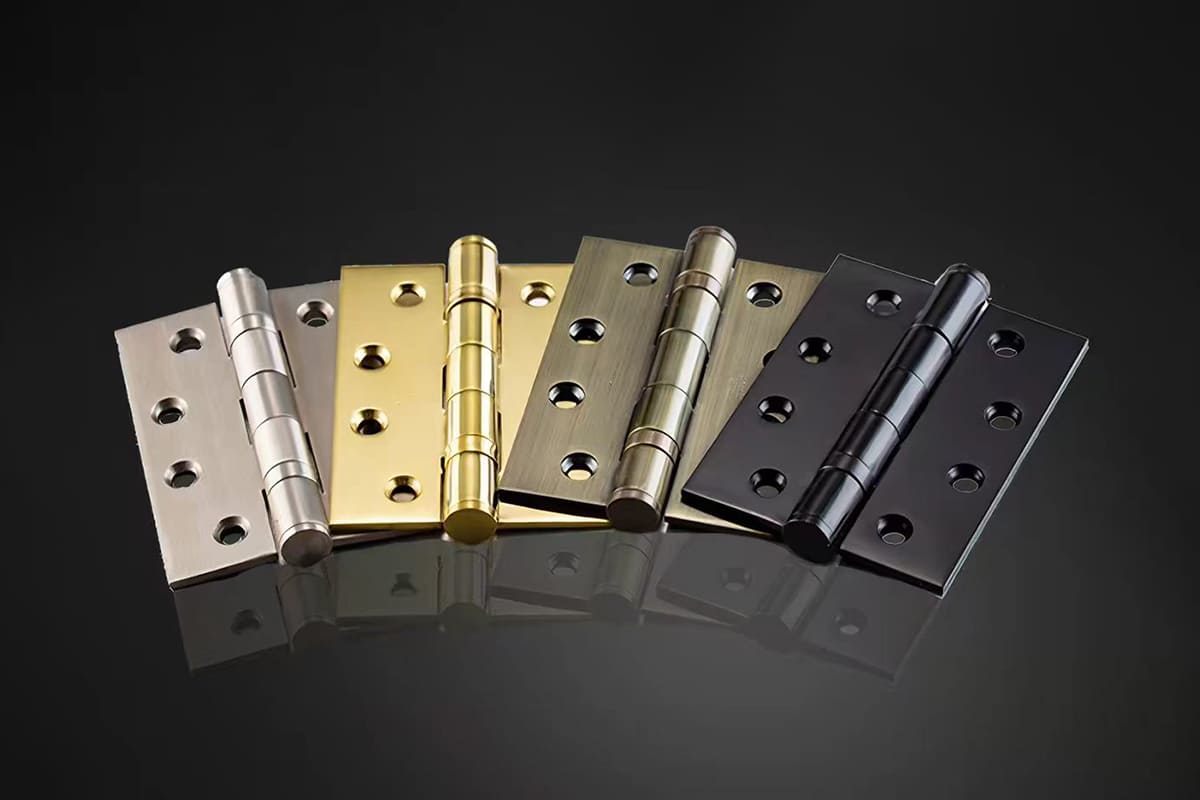
The sample is not only a product; it is a contract reference
In my factory-side experience, a sample becomes valuable only when it is linked to a clear record. A loose sample without a drawing, finish code, material note, packing method, and inspection requirement can create confusion later.
A strong sample approval package should include:
- Product drawing
- Material specification
- Hinge size and leaf thickness
- Pin and bearing structure
- Hole position drawing
- Surface finish reference
- Screw type and accessory list
- Packaging method
- Logo or marking requirement
- Expected certificate or test document, if applicable
- Approved sample photos and measurements
This may look detailed, but it saves time. It also helps the manufacturer control production internally.
Practical QC checkpoints
| Production Stage | QC Focus | Buyer Benefit |
|---|---|---|
| Incoming material | Material type, thickness, surface condition | Reduces hidden quality variation |
| Stamping/cutting | Size, burrs, hole position | Improves installation consistency |
| Forming | Leaf flatness, knuckle alignment | Reduces door movement issues |
| Assembly | Pin fit, bearing movement, opening angle | Improves smooth operation |
| Polishing/finishing | Color, scratches, coating consistency | Protects visible appearance |
| Final inspection | Dimensions, function, quantity, packaging | Reduces shipment complaints |
| Pre-shipment check | Carton mark, labeling, pallet condition | Supports import and warehouse handling |
Finish consistency deserves special attention
Surface finish is one of the most common issues in architectural hardware procurement.8 A hinge may be technically acceptable but visually rejected because the finish does not match the handle, lock faceplate, cylinder trim, or previous shipment.9
Buyers should define finish expectations early. For stainless steel hinges, common finishes may include satin stainless steel or polished stainless steel. Other markets may request black, bronze, PVD-like colors, or customized surface treatment. Each finish has its own cost, lead time, and tolerance.
A buyer can reduce disputes by using:
- Approved finish sample boards
- Limit samples for acceptable color range
- Clear packaging to avoid scratches
- Batch comparison under consistent lighting
- Written agreement on visible surface standards
Documents should be verified, not assumed
For CE, fire-rated, EN1935, ANSI Grade 1, or other compliance-related claims, buyers should request documents and verify their scope. A certificate may apply only to a certain model, material, size, door assembly, test condition, or production site.10
I recommend that buyers ask:
- What exact model does the document cover?
- Does the tested hinge match my ordered hinge?
- Does the certificate cover the required door type?
- Is the document still valid?
- Which laboratory or authority issued it?
- Does my local market accept this document?
This is especially important for fire-rated doors. A hinge is part of a full door assembly, and the final suitability should be evaluated by qualified professionals for the target application.
When Is SDH Hardware a Practical Door Butt Hinge Manufacturer for OEM/ODM Supply?
A door butt hinge manufacturer is practical for OEM/ODM buyers when it can combine stable production, specification flexibility, finish control, packaging support, and direct factory communication. For door factories and hardware brands, this combination often matters as much as the hinge itself.
SDH Hardware can be considered by buyers who need China-based architectural door hardware manufacturing, stainless steel butt hinge supply, OEM/ODM customization, bulk order coordination, and one-stop sourcing with related products such as mortise locks, lever handles, lock cylinders, concealed hinges, and other door hardware categories.
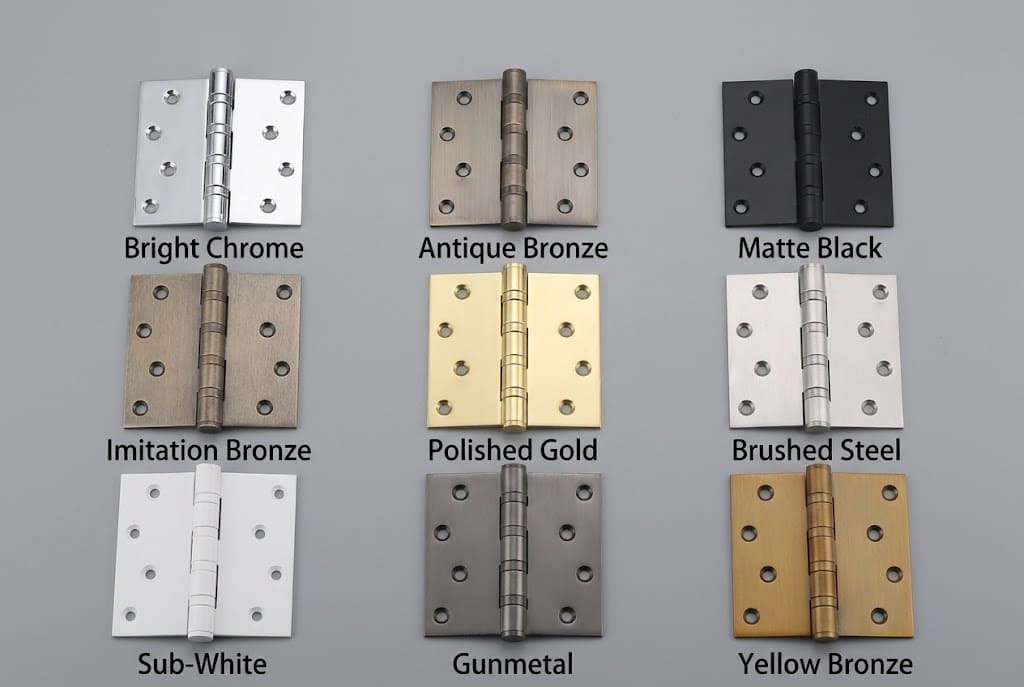
Where SDH fits in the buyer’s sourcing map
SDH Hardware is a professional architectural door hardware manufacturer based in China. The company has over 20 years of specialized production experience and operates with a self-owned factory model. Its product scope includes concealed hinges, European-standard mortise locks, butt hinges, lever handles, lock cylinders, and related door hardware.
For many buyers, this matters because hinge sourcing is often not isolated. A door factory may need hinges, locks, handles, cylinders, and accessories to match one door set. A hardware brand may need a full product range with consistent finish and packaging. A wholesaler may need mixed products in one shipment to improve logistics efficiency.
SDH is positioned as a practical option for buyers who need:
- Bulk stainless steel door butt hinges
- Ball bearing hinge options
- European-market-oriented specifications
- OEM/ODM product customization
- Stable finish and packaging control
- Factory-direct communication
- One-stop door hardware sourcing
- Cost-effective supply for Middle East, Europe, and Southeast Asia markets
What buyers should still verify
I always believe that good procurement requires verification. Even when working with an experienced manufacturer, buyers should confirm the details of the exact order.
Before placing bulk orders, buyers should verify:
- Hinge model and drawing
- Material and thickness
- Bearing structure
- Door application suitability
- Surface finish sample
- Screw and accessory configuration
- Packaging and labeling
- Certificate scope, if required
- Lead time and shipment plan
- Inspection method before delivery
This protects both sides. The buyer gets a clearer product. The factory gets a clearer production target.
OEM/ODM support is valuable when the buyer has a market plan
OEM/ODM customization should not mean random changes. It should serve a real market purpose. A product manager may adjust hole positions to match a door factory’s CNC process. A brand buyer may require a logo, barcode, color box, or regional product label. A wholesaler may need two or three hinge grades to cover different customer budgets.
Useful customization may include:
- Hinge size
- Leaf thickness
- Hole pattern
- Material choice
- Bearing structure
- Surface finish
- Screw package
- Private-label packaging
- Carton marking
- Accessory configuration
From my view, the best OEM/ODM projects begin with a clear target market. When the buyer explains the door type, customer level, price range, and standard requirement, the manufacturer can recommend a more realistic solution.
Why direct factory communication matters
Many procurement problems come from missing details. A direct manufacturer can usually respond more clearly about production constraints, tooling, finish tolerance, packaging, and lead time. This does not remove the need for inspection, but it improves the speed of problem solving.
For example, if a buyer needs a stainless steel ball bearing butt hinge for a door factory project, the discussion should not stop at “100 mm hinge price.” The better conversation includes:
- Door weight
- Door thickness
- Number of hinges
- Required finish
- Screw specification
- Target market
- Packaging method
- Monthly demand
- Required certificate documents
- Delivery schedule
This is the type of conversation that helps a door butt hinge manufacturer become a long-term supply partner rather than only a quotation source.
Frequently Asked Questions
What is a door butt hinge manufacturer?
A door butt hinge manufacturer produces butt hinges used to connect doors and frames. In B2B procurement, the manufacturer may also support material selection, size customization, bearing structure options, surface finishes, packaging, quality inspection, and bulk order supply for door factories, hardware brands, wholesalers, and project buyers.
How many butt hinges should be used on one door?
Most standard doors use two or three butt hinges11, but the correct number depends on door height, weight, thickness, material, and usage frequency. Heavy, tall, or high-traffic doors may require more hinges or a higher-grade hinge.12 Buyers should confirm this with the door specification and a qualified technical professional.
Are stainless steel ball bearing butt hinges better?
Stainless steel ball bearing butt hinges are often preferred for smoother movement, better corrosion resistance, and more frequent use. However, they are not automatically necessary for every door. The buyer should compare door weight, environment, budget, finish requirement, and market positioning before selecting the hinge structure.
Should buyers choose famous hinge brands or direct manufacturers?
Famous hinge brands can provide useful benchmarks for quality, documentation, and market trust. Direct manufacturers can offer customization, cost control, and flexible bulk supply. The better choice depends on the buyer’s door application, target market, compliance needs, order volume, delivery schedule, and margin requirements.
How should I verify hinge certification documents?
Buyers should check whether CE, fire-rated, EN1935, ANSI, or other documents apply to the exact hinge model, size, material, and intended application. They should review validity, issuing body, test scope, and local acceptance. For fire-rated or regulated projects, buyers should seek qualified professional evaluation.
Conclusion
Choosing a door butt hinge manufacturer is not only about finding a famous name or the lowest unit price. It is about matching the hinge to the door application, verifying documents, approving samples carefully, controlling sample-to-bulk consistency, and building stable long-term supply. I recommend that buyers compare suppliers by specification fit, QC process, finish stability, delivery ability, and OEM/ODM support. If you need stainless steel butt hinges or complete architectural door hardware sourcing, contact SDH Hardware to discuss your drawings, samples, target market, and bulk order requirements.
"[PDF] EFFECTIVE METHODOLOGIES FOR SUPPLIER SELECTION AND ...", https://etda.libraries.psu.edu/files/final_submissions/419. Studies of supplier selection and supply-chain risk identify quality consistency and delivery reliability as central procurement risks, providing contextual support for the claim that bulk orders magnify the consequences of supplier failure. Evidence role: general_support; source type: paper. Supports: Research on supplier selection and supply-chain risk management should support that supplier quality and delivery failures become more consequential when purchases are high volume or project-critical.. Scope note: This would support the procurement-risk logic generally, not prove hinge-specific failure rates. ↩
"Understanding BS EN 1935:2002 single-axis hinge grades", https://uk.sfs.com/resources/article/understanding-bs-en-1935. Door-hinge standards such as EN 1935 and ANSI/BHMA A156.1 classify hinges by criteria including door mass or grade, durability cycling, dimensions, corrosion resistance, and application conditions, supporting the need to match hinge specifications to the door and use case. Evidence role: expert_consensus; source type: institution. Supports: Recognized hinge standards classify hinges by load, durability, corrosion resistance, dimensions, and intended application, supporting application-based specification.. Scope note: These standards directly support the technical selection factors, while finish branding and order volume are procurement considerations rather than standard test categories. ↩
"SECTION 087111 - DOOR HARDWARE (SCHEDULED BY ...", https://fpm.usc.edu/wp-content/uploads/2021/11/087102-USC-HSC-door-hardware-Guide-Specification_1.pdf. Institutional hinge standards classify hinges according to criteria such as door mass, durability cycles, corrosion resistance, fire suitability, and application grade, supporting the view that one hinge type is not appropriate for all door applications. Evidence role: expert_consensus; source type: institution. Supports: Door-hinge standards and hardware guidance distinguish hinge requirements by door mass, frequency of use, fire performance, and application category.. Scope note: The source should support application-based classification, not every specific example listed in the article. ↩
"Anatomy, Hinge Joints - StatPearls - NCBI Bookshelf - NIH", https://www.ncbi.nlm.nih.gov/books/NBK518967/. Engineering and building-construction references describe a hinge as a rotational joint that connects two members and permits angular motion, supporting the article’s explanation that the hinge carries the door’s movement. Evidence role: mechanism; source type: education. Supports: A hinge functions as a rotating joint that connects the door to the frame and supports door movement.. Scope note: This supports the mechanical principle generally and does not quantify loads for a particular butt-hinge model. ↩
"[PDF] DOOR HARDWARE (SCHEDULED BY DESCRIBING PRODUCTS)", https://fpm.usc.edu/wp-content/uploads/2021/11/087102-USC-HSC-door-hardware-Guide-Specification_1.pdf. Architectural hardware guidance commonly associates ball bearing hinges with heavier doors and higher-use openings because bearing assemblies reduce friction and improve durability under repeated operation. Evidence role: general_support; source type: institution. Supports: Architectural hardware guidance should support that ball bearing hinges are commonly specified for heavier or higher-use doors because of durability and smoother operation.. Scope note: This supports a general specification practice; actual suitability still depends on the tested grade, hinge size, door weight, and installation conditions. ↩
"Fire Doors and NFPA 80 FAQs", https://www.nfpa.org/news-blogs-and-articles/blogs/2025/04/11/fire-doors-faqs. Fire-door standards such as NFPA 80 treat the door, frame, hardware, and related components as parts of a labeled assembly, supporting the requirement that documentation correspond to the tested or listed configuration. Evidence role: expert_consensus; source type: institution. Supports: Fire-door standards require components and hardware to be appropriate for the listed or tested fire door assembly.. Scope note: This supports the compliance principle; local code acceptance and project-specific approval may vary by jurisdiction. ↩
"7.5.3 Control of Documented Information Explained [ISO 9001 ...", https://www.iso-9001-checklist.co.uk/7.5.3-control-of-documented-information-explained.htm. Quality-management frameworks such as ISO 9001 emphasize documented requirements, controlled production processes, verification activities, and inspection records, supporting the article’s claim that sample-to-bulk consistency depends on formal process controls. Evidence role: mechanism; source type: institution. Supports: Quality-management standards support documented requirements, process control, verification, inspection, and corrective action as methods for maintaining production consistency.. Scope note: This supports the quality-control mechanism generally and does not verify any specific hinge manufacturer’s implementation. ↩
"Door Hardware Finishes: Types, Popular Options, and How ...", https://doorsforpros.com/blog/post/door-hardware-finishes?srsltid. Research and standards on architectural metal finishing and coating inspection recognize color consistency, surface defects, and appearance evaluation as important quality-control issues, providing contextual support for the article’s emphasis on finish-related procurement disputes. Evidence role: general_support; source type: research. Supports: A source should show that surface finish, color consistency, or coating appearance is a recognized inspection and quality issue for architectural metal products.. Scope note: This would not directly prove that finish is statistically among the most common architectural hardware procurement issues unless the source includes defect-frequency data. ↩
"D1729 Standard Practice for Visual Appraisal of Colors ...", https://store.astm.org/d1729-16.html. Standards for visual evaluation of color and appearance, including ASTM D1729 and ISO 3668, establish procedures for comparing finishes under controlled conditions, supporting the article’s point that mismatched visible hardware finishes can be a material quality concern. Evidence role: mechanism; source type: institution. Supports: Color and finish standards support that perceived finish differences are affected by visual comparison conditions and can be formally evaluated.. Scope note: The standards support the evaluation mechanism, not a specific rejection rate for door hinges. ↩
"General Use Products: Certification and Testing | CPSC.gov", https://www.cpsc.gov/Business--Manufacturing/Testing-Certification/General-Use-Products-Certification-and-Testing. Product-certification guidance generally limits certification claims to the products, configurations, production sites, and test conditions identified in the certificate or listing, supporting the need to verify scope before relying on compliance documents. Evidence role: expert_consensus; source type: institution. Supports: Certification guidance should confirm that product certificates and listings are limited by their defined scope and tested configurations.. Scope note: The exact scope depends on the issuing body and certificate wording. ↩
"Everything you need to know about Commercial Door Hinges", https://www.mckinneyhinge.com/en/resource-library/knowledge-center/blog/blog-post.aehdynamic-everything-you-need-to-know-about-commercial-door-hinges-top-10-commercial-contractors-hinge-installation-questions-633f18001fa7df003d7c229b_mckinney.html. Building-construction and installation references commonly show standard swinging doors hung with two or three hinges, supporting the article’s general rule of thumb for ordinary door applications. Evidence role: general_support; source type: education. Supports: Construction or installation references should support that many standard doors are commonly hung with two or three hinges.. Scope note: This is general guidance; hinge quantity should still be determined by door height, weight, traffic level, hardware grade, and applicable codes. ↩
"[PDF] DOOR HARDWARE (SCHEDULED BY DESCRIBING PRODUCTS)", https://fpm.usc.edu/wp-content/uploads/2021/11/087102-USC-HSC-door-hardware-Guide-Specification_1.pdf. Recognized hinge standards and architectural hardware guidance classify hinges by load capacity, durability cycles, and application grade, supporting the recommendation that heavy, tall, or high-traffic doors may require additional hinges or higher-grade hardware. Evidence role: expert_consensus; source type: institution. Supports: Hinge standards and hardware guidance should support selecting hinge grade and quantity according to door mass, dimensions, and operating frequency.. Scope note: The source should be used as selection guidance; final specification depends on the exact door assembly and local code requirements. ↩