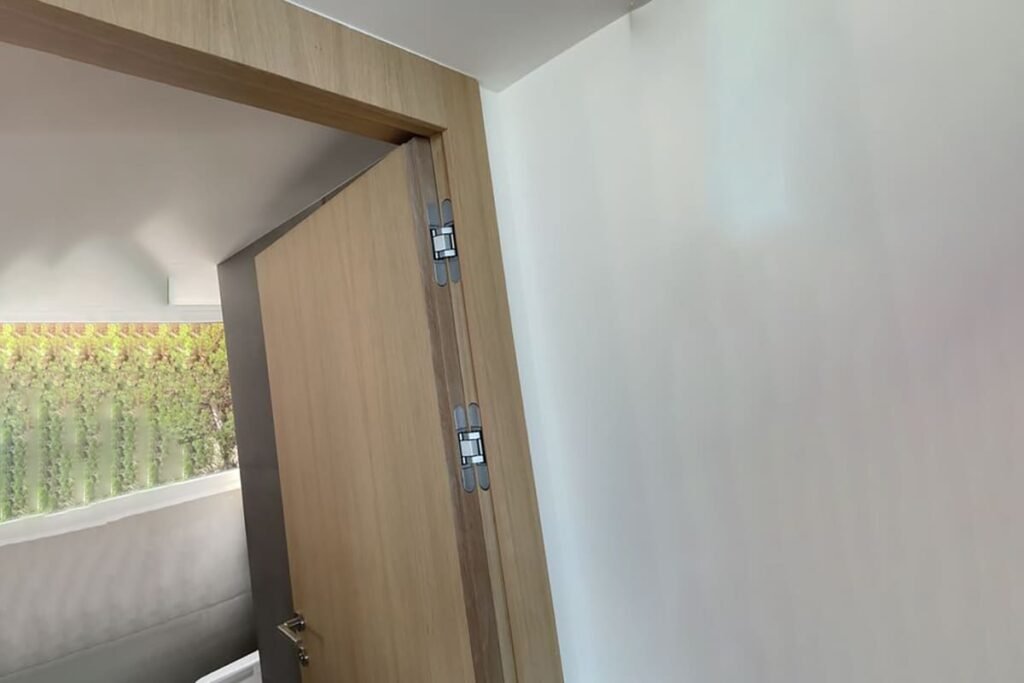
Are concealed door hinges suitable for residential use?
Concealed door hinges are often considered when a residential door needs a cleaner, more modern appearance. The problem is that buyers may focus only on the hidden look and overlook load capacity, door thickness, installation precision, and cost. The better solution is to evaluate the hinge as part of the full door system.
Yes, concealed door hinges are suitable for many residential doors, especially minimalist bedroom doors, hidden doors, custom wooden doors, and smart-door applications. However, suitability depends on door weight, thickness, frame structure, hinge model, mortising accuracy, installer skill, budget, and required functions such as 3D adjustment, wide opening, self-closing, or cable passing1.
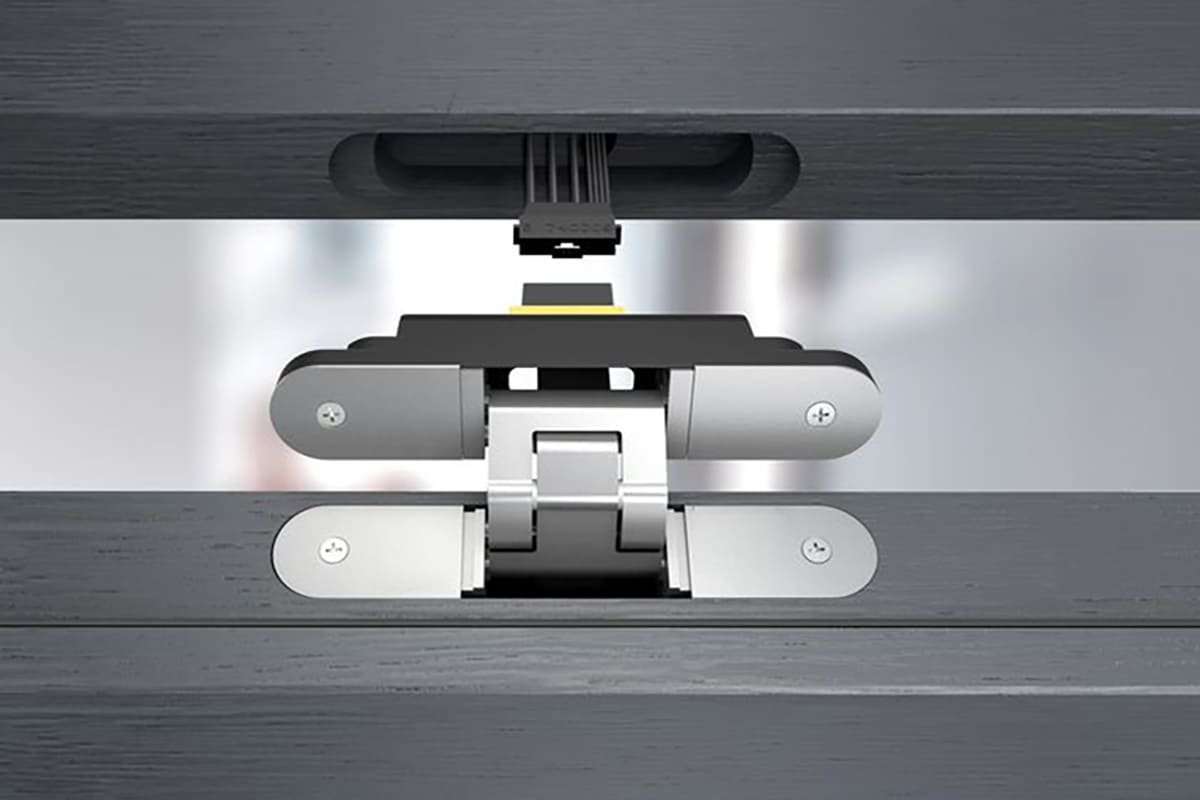
I manufacture and supply door hardware for door factories, brands, and wholesalers, so I usually look at this question from both sides: appearance and risk control. A concealed hinge can improve the residential experience, but only when the product specification and installation conditions match the actual door.
Why are concealed door hinges popular for residential interiors?
Residential buyers want doors that look simple, quiet, and integrated with the wall. The problem starts when exposed hardware interrupts a minimalist design. That can reduce the perceived value of a custom door. Concealed door hinges solve this by hiding the hinge body when the door is closed.2
Concealed door hinges are popular in residential interiors because they support a clean, high-end appearance without visible hinge knuckles on the door edge. They are especially useful for hidden doors, minimalist bedroom doors, study rooms, premium wooden doors, and homes where the door should blend with the wall or interior paneling.
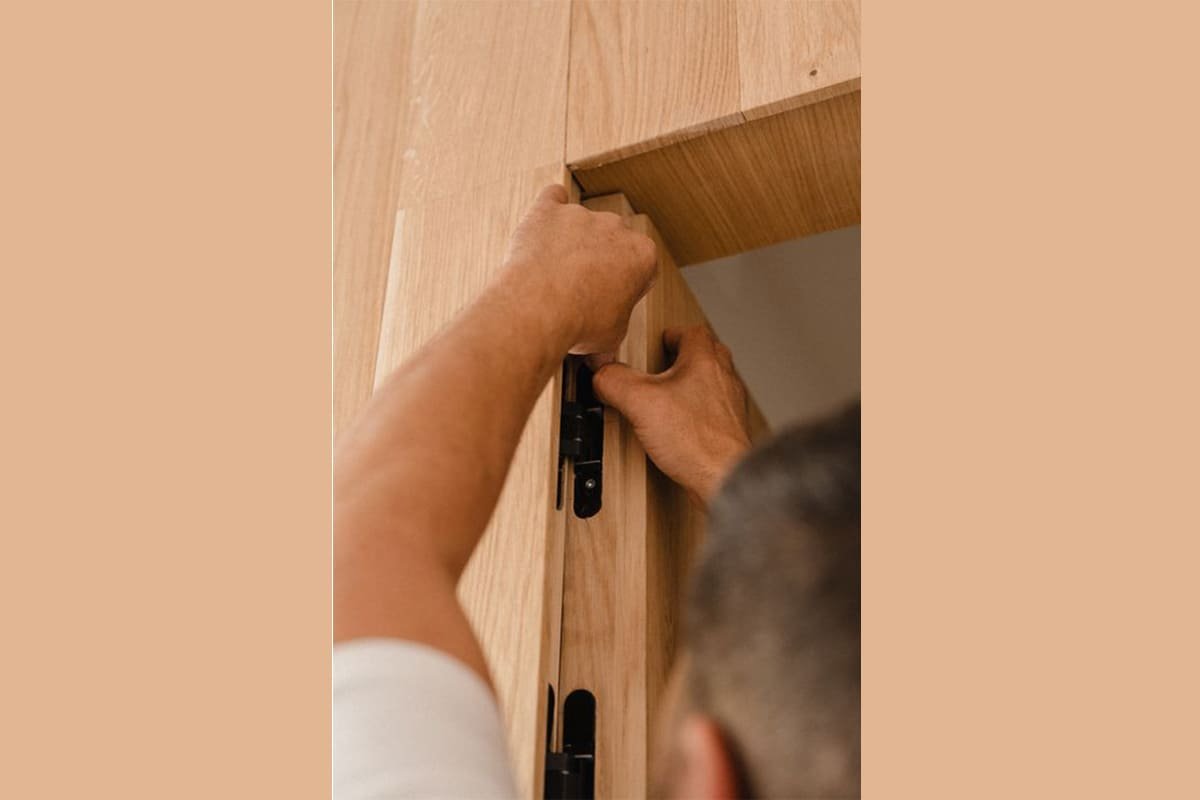
The main value is visual continuity
The strongest reason to use concealed hinges at home is not only that they “look better.” The stronger point is that they help the door become part of the interior design.
In many residential projects, door hardware is no longer just a functional accessory. It affects the whole design language.3 A visible butt hinge creates a traditional line on the hinge side. That line may be acceptable for classic interiors, utility rooms, or budget doors. However, it can feel out of place in:
- Minimalist apartments
- Flush wall door systems
- High-end custom wooden doors
- Hidden storage rooms
- Study rooms and bedrooms with clean wall panels
- Luxury villa interiors
- Hotel-style residential projects
From my factory-side experience, door manufacturers often ask for concealed hinge samples when they develop a “premium” or “flush” door series. Their goal is not only to hide hardware. Their goal is to sell a more complete design effect.
Where concealed hinges fit best at home
The following table gives a practical view of residential applications:
| Residential door type | Suitability | Main reason | Key point to verify |
|---|---|---|---|
| Bedroom door | High | Clean look and smooth alignment | Door weight and thickness |
| Study room door | High | Minimalist appearance and privacy feel | Frame strength and gap control |
| Hidden door | Very high | Hinge must not be visible when closed | Mortising precision |
| Custom wooden door | High | Premium product positioning | Load capacity and finish consistency |
| Small apartment door | Medium to high | Cleaner space and less visual clutter | Opening angle and clearance |
| Smart interior door | Model-specific | Cable-passing options may help | Electrical routing and hinge specification |
| Heavy entrance door | Conditional | Can work with correct heavy-duty models | Professional evaluation required |
| Fire-rated residential door | Conditional | Must match certified door system | Verify fire-rated documents |
Why wholesalers and brands care about this trend
For hardware wholesalers and door hardware brands, concealed hinges can create a stronger product story. They are not just selling a hinge. They are selling:
- Modern appearance
- Higher door value
- Better product differentiation
- Complete door hardware matching
- Premium project positioning
However, I always advise buyers to avoid treating every hidden hinge as the same. A residential concealed hinge can differ widely in body size, material, adjustment range, load rating, surface finish, and screw configuration.
A concealed hinge is only “high-end” when it stays aligned after installation and daily use.
That point matters because residential users may not know the hinge brand, but they will notice if the door rubs, drops, or leaves uneven gaps. For procurement teams, the real value is not just the invisible look. The real value is stable performance after batch installation.
What conditions decide whether concealed door hinges are suitable?
Many buyers like the appearance, but they worry about after-sales risk. That concern is reasonable. If the hinge does not match the door, the installer may struggle with positioning, and the finished door may sag or bind. The solution is to evaluate door conditions before choosing the model.
Concealed door hinges are suitable when the door weight, door thickness, frame structure, hinge quantity, mortising precision, and installation skill match the hinge specification. Buyers should check the load rating, adjustment method, opening angle, material, screw strength, and required cutting dimensions before approving bulk use.
Door weight and hinge quantity come first
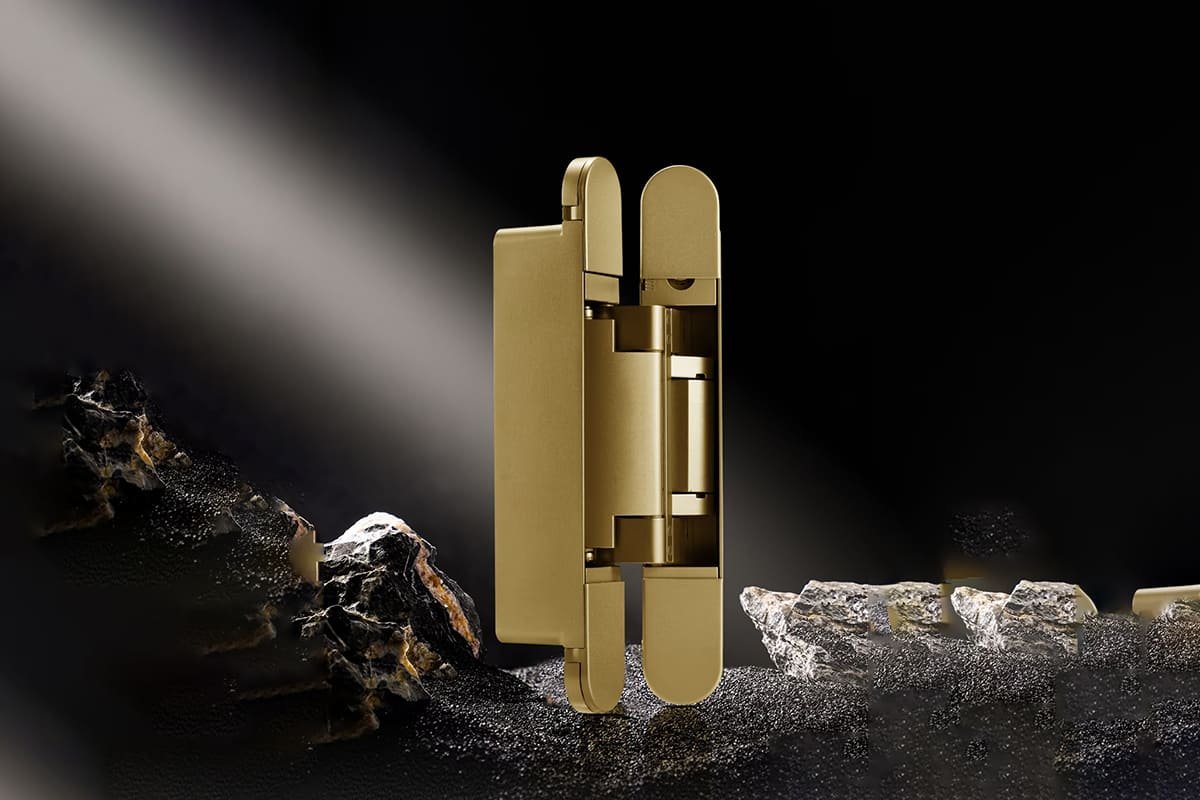
In residential projects, I often see buyers start with appearance and price. I prefer to start with weight. Door weight decides the hinge structure, hinge size, and quantity.4
A lightweight hollow-core interior door may need a very different hinge from a solid wooden door. A tall custom door may need three hinges instead of two.5 A wide door leaf can create more leverage on the hinge side, even if the material does not seem extremely heavy.
Procurement teams should confirm:
- Door leaf weight
- Door height and width
- Door thickness
- Door material
- Frame material and strength
- Expected opening frequency
- Required opening angle
- Hinge quantity per door
- Screw and fixing method
A common mistake is to compare concealed hinges only by unit price. That can create problems later. A slightly cheaper hinge may require more installation time, have weaker adjustment, or fail to maintain alignment under heavier doors.
Door thickness and mortising depth matter
Concealed hinges sit inside the door and frame.6 That means the door and frame must have enough material to accept the hinge body. If the door is too thin, or if the frame structure is weak, installation becomes risky.
For example, many concealed hinges require accurate mortising on both the door leaf and frame. The installer must control:
- Pocket depth
- Horizontal position
- Vertical alignment
- Screw hole accuracy
- Gap consistency
- Frame reinforcement
Small errors can create visible problems. The door may not close smoothly. The reveal gap may look uneven. The hinge may need too much adjustment to compensate.
This is why concealed door hinges are usually more demanding than standard butt hinges7. A butt hinge can be more forgiving during installation. A concealed hinge gives a cleaner result, but it requires better preparation.
3D adjustment can reduce installation risk
Many quality concealed hinges offer 3D adjustment, usually covering height, depth, and side movement. This feature is valuable for residential door installation because walls, frames, and door leaves are not always perfect.
A 3D adjustable hinge can help installers correct small differences after hanging the door. It may help improve:
- Door gap uniformity
- Flush alignment
- Closing smoothness
- Frame-to-door positioning
- Long-term service adjustment
However, 3D adjustment is not a cure for poor machining. If the mortise is badly cut or the door frame is unstable, adjustment alone cannot make the door system reliable.
Simple buyer checklist
Before selecting concealed hinges for residential use, I suggest using a basic checklist:
| Check item | Why it matters | Buyer action |
|---|---|---|
| Door weight | Prevents sagging and overload | Match hinge load rating |
| Door thickness | Ensures hinge body can fit | Check drawing and sample |
| Frame structure | Affects fixing strength | Confirm material and reinforcement |
| Installation tools | Controls mortising accuracy | Ask factory or installer capability |
| Opening angle | Affects room use | Verify actual model data |
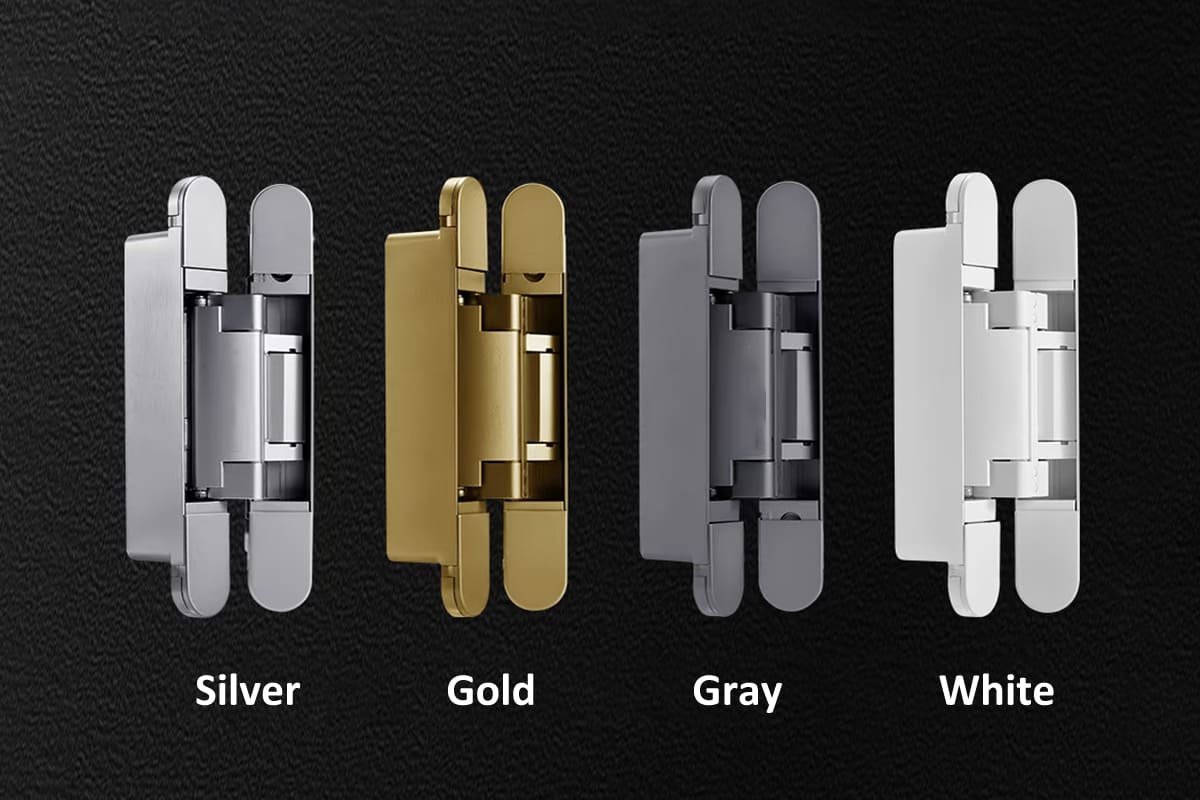
| Finish | Affects visual consistency | Approve finish sample |
| Certification | Required for special applications | Verify valid documents |
| Batch consistency | Reduces assembly variation | Audit QC process |
For door factories and project buyers, this checklist can prevent many avoidable complaints. In my own work with customers, the most successful concealed hinge projects usually begin with drawings, samples, and trial installation before mass ordering.
Do concealed door hinges improve comfort, sealing, and space use?
Residential users care about daily comfort. The problem is that hinge benefits are sometimes exaggerated in sales discussions. Buyers may hear claims about soundproofing, insulation, or wide opening without checking the full door system. A careful approach gives better expectations.
Concealed door hinges can improve residential comfort by supporting cleaner gaps, flush design, and smooth door movement when properly selected and installed. They may help with visual space use and sealing quality, but acoustic and thermal performance still depends on the door leaf, frame, gasket, threshold, and installation quality8.
Space use and visual openness
A concealed hinge can make a residential door feel less bulky because the hinge body is hidden. In small apartments, that can be valuable. The actual floor area may not change much, but the visual space can feel cleaner.
Some concealed hinge models also support wide opening angles. This can help in rooms where furniture movement, wheelchair access, or daily circulation matters. However, this is model-specific. Not every concealed hinge opens to 180 degrees.9 Buyers should always check the product drawing and test the door with the actual frame design.
For residential doors, opening performance depends on:
- Hinge geometry
- Door thickness
- Frame profile
- Wall clearance
- Handle projection
- Skirting board position
- Door stop design
This is why I do not recommend approving a concealed hinge only from a catalog photo. A sample installation gives much better information.
Sealing and gap control
Some buyers ask whether concealed door hinges improve sealing. The cautious answer is: they can support a cleaner door system, but they do not create sealing performance alone.
A concealed hinge may reduce visible hardware interruption along the hinge side. It may also help create a more controlled flush appearance. But real sealing depends on the complete door system:
| Factor | Impact on sealing or comfort |
|---|---|
| Door leaf flatness | Prevents uneven contact |
| Frame accuracy | Controls reveal and gasket pressure |
| Rubber gasket | Main contributor to air and sound control |
| Threshold or bottom seal | Reduces bottom gap leakage |
| Hinge adjustment | Helps align door with frame |
| Installation quality | Determines final performance |
If a residential project needs acoustic reduction or thermal insulation, buyers should evaluate the full door assembly. A concealed hinge can be part of a better system, but it should not be marketed as a standalone soundproofing solution.
Smooth use and long-term alignment
Daily comfort also includes the feeling of opening and closing the door. A well-made concealed hinge should move smoothly, hold alignment, and avoid unnecessary friction. Material choice and production accuracy influence this result.
From a manufacturing perspective, I pay attention to:
- Casting or machining accuracy
- Axis stability
- Arm structure strength
- Screw quality
- Surface treatment consistency
- Load test performance
- Cycle test feedback
- Packaging protection during export
For residential projects, small details can create big differences. If the hinge surface scratches easily, the installer may complain. If the adjustment screw feels loose, the door factory may lose time. If the hinge body dimensions vary between batches, the mortising template may no longer fit correctly.
Smart-door and special-function applications
Some modern residential doors include smart locks, electronic peepholes, sensors, or access control devices. Certain concealed hinges can be designed with cable-passing functions, which help route wires more cleanly through the hinge side.
This can be useful, but it is not universal. Buyers must verify:
- Whether the hinge model supports cable passing
- Cable diameter and routing space
- Door and frame preparation
- Electrical safety requirements
- Compatibility with the smart hardware
- Maintenance access after installation
The same caution applies to self-closing or hydraulic concealed hinges. Some models include those features. Many do not. Buyers should treat these as exact specification items, not general properties of all concealed door hinges.
How do concealed door hinges compare with butt hinges for residential projects?
Many residential door buyers already use butt hinges because they are simple, familiar, and cost-effective. The problem is that a standard hinge may not support premium design goals. The decision should not be emotional. It should compare appearance, installation, cost, performance, and after-sales risk.
Concealed door hinges offer a cleaner appearance and stronger premium positioning than ordinary butt hinges, but they usually require higher machining precision, more careful installation, and a higher budget. Butt hinges remain practical for cost-sensitive doors, traditional designs, and projects where simple replacement and easy installation are priorities.
Practical comparison table
| Item | Concealed door hinges | Butt hinges |
|---|---|---|
| Appearance | Hidden when door is closed | Visible on hinge side |
| Design style | Modern, minimalist, high-end | Traditional, practical |
| Installation | Requires accurate mortising | Easier and more forgiving |
| Adjustment | Many models offer 3D adjustment | Usually limited adjustment |
| Cost | Usually higher | Usually lower |
| Replacement | May require same cutout size | Easier to replace |
| Best use | Hidden doors, premium interiors | Standard residential doors |
| Buyer risk | Wrong model or poor machining can cause issues | Lower installation complexity |
| Batch control | Dimension consistency is critical | More tolerant |
When concealed hinges are worth the upgrade
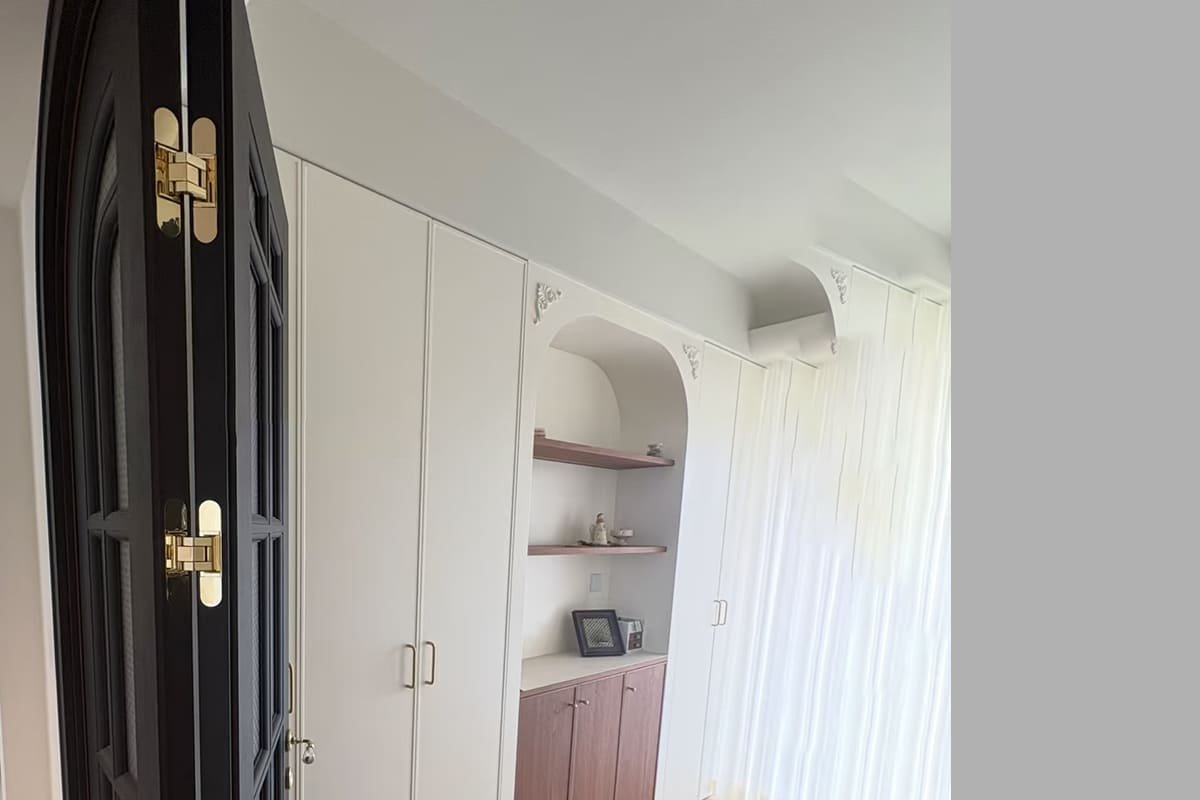
A concealed hinge is usually worth considering when the door itself has a premium purpose. For example, if a door manufacturer sells a high-end flush wooden door, visible hinges may weaken the product positioning. In that case, concealed door hinges help complete the design.
They are also worth considering when:
- The door is part of a minimalist wall system
- The buyer wants a high-value product line
- The door factory has accurate CNC or routing capability
- The installer can adjust the hinge correctly
- The project budget allows higher hardware cost
- The market accepts premium interior hardware
- The brand wants product differentiation
For wholesalers, concealed hinges may work well as a value-added category. They can be supplied with matching mortise locks, lever handles, cylinders, and other door hardware to create a complete residential solution.
When butt hinges may still be better
I do not recommend concealed hinges for every residential door. Butt hinges may be better when the project needs:
- Lowest hardware cost
- Very simple installation
- Easy replacement by local workers
- Traditional decorative hardware
- Low-spec interior doors
- Fast installation with basic tools
- A market that does not value hidden hardware
This is especially true for price-sensitive wholesale markets. If the end user does not pay more for the hidden hinge look, the extra cost may reduce the buyer’s margin.
Cost should include installation and after-sales
Procurement teams should compare total cost, not only hinge price. A concealed hinge may cost more per piece, but the larger issue can be labor and accuracy.
Total cost should include:
- Hinge unit price
- Mortising template or tooling
- Installation labor
- Training time
- Defect rate during assembly
- Rework cost
- Replacement availability
- After-sales service risk
- Packaging and export damage prevention
In our production and customer feedback experience, successful buyers usually test the full assembly process before launching a new door line. They do not only approve the hinge sample on a desk. They install it in a real door, check the gap, open and close it, adjust it, and then decide.
How should buyers select concealed door hinges for residential doors?
A residential project can fail if the hinge looks good in the sample but performs poorly in batch production. Buyers face pressure from design teams, installers, and end customers. The solution is to select concealed door hinges with clear specifications, verified quality control, and supplier support.
Buyers should select concealed door hinges by matching the hinge load capacity, size, material, finish, adjustment range, opening angle, and certification documents to the door application. They should request drawings, samples, test data, installation guidance, and batch quality controls before confirming mass production or project supply.
Start with the door data
Before I recommend a hinge model, I prefer to ask for the door information first. This prevents mismatch. A serious supplier should not only ask, “What price do you need?” The supplier should ask what door the hinge will carry.
Useful door data includes:
- Door height
- Door width
- Door thickness
- Door leaf weight
- Door material
- Frame material
- Door opening direction
- Opening angle requirement
- Finish requirement
- Quantity per door
- Project region
- Certification requirement
- Special functions, such as self-closing or cable passing
This information helps the supplier recommend a suitable hinge series instead of guessing.
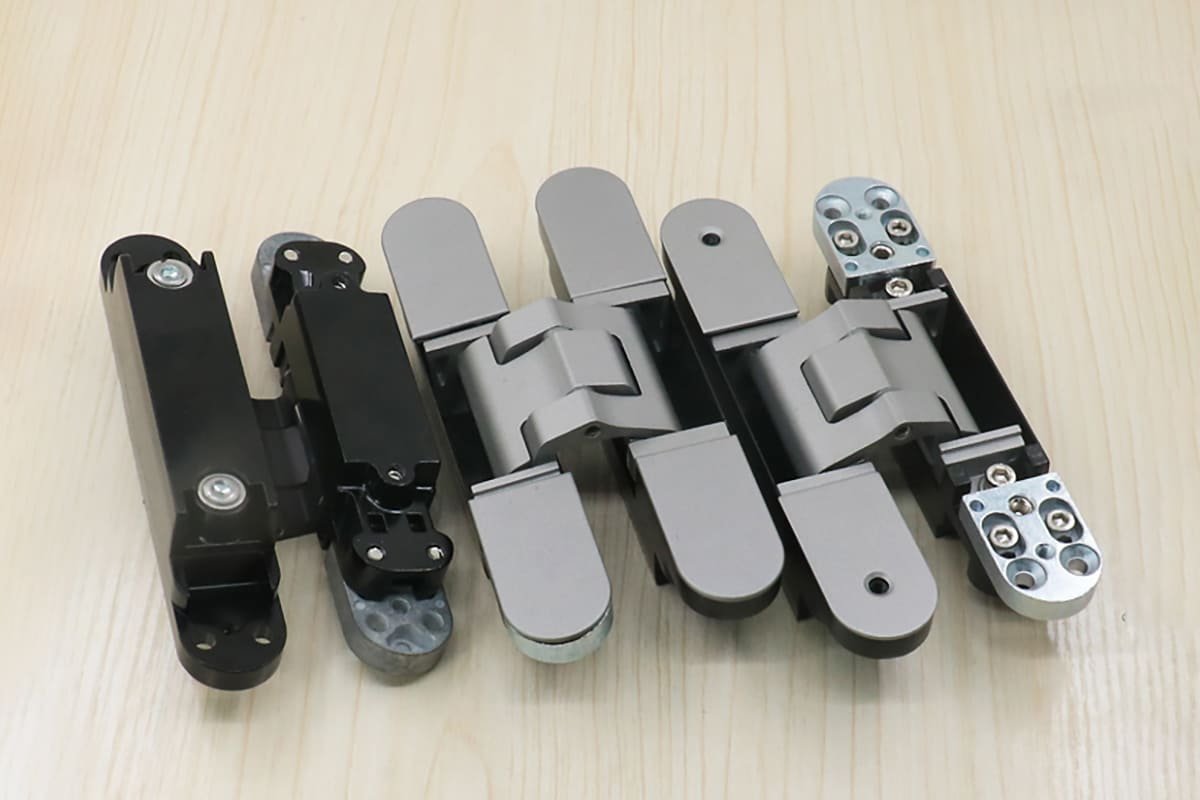
Check material and structure
Concealed hinges can be made with different materials and structures. Stainless steel options may be preferred in some residential markets because buyers associate stainless steel with corrosion resistance10 and stable appearance. Zinc alloy or other structures may also be used depending on the model, budget, and application.
The key is not to assume one material is always best. Buyers should compare:
| Evaluation point | What to check |
|---|---|
| Body material | Strength, corrosion resistance, market preference |
| Arm structure | Stability under door load |
| Axis or pivot design | Smooth movement and durability |
| Screws | Holding strength and compatibility |
| Surface finish | Color consistency and scratch resistance |
| Adjustment system | Ease and range of adjustment |
| Packaging | Protection during bulk shipment |
For residential projects, finish consistency is very important. A brand may order thousands of hinges for matching door sets. If the surface color varies between batches, the problem becomes visible during assembly and sales.
Verify certifications carefully
Some residential doors may require CE documents, fire-rated documents, or other compliance records depending on the market and application. Buyers should treat certificates as documents to verify, not just sales claims.
For fire-rated residential doors, the issue is even more serious. A fire-rated hinge should be evaluated as part of the complete fire-rated door system.11 The door leaf, frame, lock, seal, closer, and hinge all matter. Buyers should request valid documents and involve qualified professional evaluation where needed.
As a manufacturer, I can provide product information, drawings, samples, and available certification documents for verification. However, application-specific approval should always follow the project requirement and local regulation.
Evaluate the supplier, not only the hinge
For door factories, hardware brands, and wholesalers, supplier stability matters as much as product design. A concealed hinge has tight dimensional requirements. If batch consistency is poor, the door factory may face serious production issues.
I suggest checking whether the supplier can support:
- Stable production capacity
- Consistent dimensions
- Strict raw material control
- Surface finish control
- Finished product inspection
- ODM customization
- Technical drawings
- Installation guidance
- Sample testing
- Export packaging
- Long-term supply continuity
At SDH Hardware, our role is usually to help buyers build a complete door hardware solution, including concealed hinges, mortise locks, lever handles, butt hinges, and cylinders. For residential customers, this one-stop matching can reduce procurement complexity and improve finish consistency across product categories.
Frequently Asked Questions
Are concealed door hinges strong enough for residential wooden doors?
Yes, concealed hinges can be strong enough for residential wooden doors when the hinge model matches the door weight, size, and thickness. Buyers should verify load capacity, hinge quantity, screw fixing, and frame strength. Heavy solid doors may need larger or additional hinges.
Can concealed door hinges open 180 degrees?
Some concealed door hinges can support wide opening angles, including 180 degrees, but this is not universal. The actual opening angle depends on the hinge model, door thickness, frame design, wall clearance, and installation conditions. Always verify the specification sheet and test sample installation.
Are concealed hinges harder to install than butt hinges?
Yes, concealed hinges usually require more accurate mortising and positioning than butt hinges. Installers need proper templates, tools, and adjustment knowledge. Many models offer 3D adjustment, but accurate cutting and a stable frame are still necessary for good residential performance.
Do concealed door hinges improve soundproofing?
Concealed hinges may help support cleaner gaps and a flush door design, but they do not create soundproofing by themselves. Acoustic performance depends on the whole door system, including the door leaf, frame, gasket, bottom seal, wall condition, and installation quality.
Are concealed door hinges suitable for smart residential doors?
They can be suitable for smart residential doors if the selected hinge model supports the required function. Some concealed hinges offer cable-passing designs, but this is model-specific. Buyers should verify cable space, electrical routing, compatibility with smart locks, and maintenance access.
Conclusion
Concealed door hinges are suitable for many residential doors, especially when the goal is a clean, minimalist, and high-value interior appearance. However, the right decision depends on door weight, thickness, frame structure, hinge model, installation precision, budget, and special function requirements. I recommend testing samples in real door conditions before bulk procurement. If you are developing residential door lines or sourcing concealed hinges for wholesale supply, SDH Hardware can help you evaluate specifications, customization options, and complete matching door hardware solutions.
"[PDF] DOOR HARDWARE (SCHEDULED BY DESCRIBING PRODUCTS)", https://fpm.usc.edu/wp-content/uploads/2021/11/087102-USC-HSC-door-hardware-Guide-Specification_1.pdf. Architectural hardware standards and selection guides generally treat hinges as part of a door assembly and require matching hinge type, size, load rating, frame preparation, and intended use to the specific door conditions. Evidence role: general_support; source type: institution. Supports: A neutral architectural hardware or standards source should support that hinge selection depends on load, dimensions, frame conditions, installation method, and functional requirements.. Scope note: This would provide general selection support rather than validate any particular concealed hinge model. ↩
"Concealed hinge jig", https://en.wikipedia.org/wiki/Concealed_hinge_jig. Reference descriptions of concealed or hidden hinges define them by the concealment of the hinge mechanism when the door or panel is in the closed position. Evidence role: definition; source type: encyclopedia. Supports: A neutral reference should define a concealed or hidden hinge as a hinge whose mechanism is largely hidden from view when closed.. Scope note: The definition supports the general concept, not the performance or suitability of a specific product. ↩
"Computer Requirements for Interior Design Coursework", https://www.fcs.txst.edu/undergraduate-programs/interior-design/computer-requirements.html. Interior design and architectural detailing literature commonly treats hardware as part of the visible design vocabulary of a space, affecting visual coherence as well as function. Evidence role: general_support; source type: education. Supports: An interior design or architecture source should support that hardware details influence the perceived style and coherence of an interior space.. Scope note: This supports the design principle contextually and does not measure consumer preference for concealed hinges specifically. ↩
"Selecting Full Sized Door Hinges - HardwareSource", https://www.hardwaresource.com/a/blog/post/selecting-full-sized-door-hinges. Architectural hardware guidance links hinge size, construction, and quantity to the mass and dimensions of the door leaf and to expected service conditions. Evidence role: mechanism; source type: institution. Supports: A hinge selection standard or guide should explain that hinge specification is determined by door size, weight, and expected use.. Scope note: Such guidance establishes the selection principle but may not prescribe one universal hinge count for all residential doors. ↩
"When to use 3 hinges per door? : r/cabinetry - Reddit", https://www.reddit.com/r/cabinetry/comments/1h6xjim/when_to_use_3_hinges_per_door/. Door hardware selection references commonly recommend increasing hinge quantity as door height, door weight, or service demand increases in order to distribute load and maintain alignment. Evidence role: general_support; source type: institution. Supports: A hardware guide should support that hinge quantity increases with door height, weight, or duty level.. Scope note: The exact threshold for using three hinges depends on the applicable standard, hinge type, and door construction. ↩
"r/DIYUK - Mortise (Recess) for door hinge - can I just cut ...", https://www.reddit.com/r/DIYUK/comments/1hy5qd2/mortise_recess_for_door_hinge_can_i_just_cut_the/. Technical descriptions of concealed door hinges identify recessed mortising in both the door leaf and frame as a typical installation condition for hiding the hinge body. Evidence role: mechanism; source type: institution. Supports: A technical reference should show that concealed hinges are recessed into the door and frame rather than surface-mounted like many butt hinges.. Scope note: Some specialty concealed systems may use different mounting details, so the source should be read as describing the common mechanism. ↩
"Concealed Hinges vs. Traditional Hinges: Understanding ...", https://www.swingingcafedoors.com/swinging-door-blog/concealed-hinges-vs-traditional-hinges-understanding-the-key-differences-590ac8/. Woodworking and architectural hardware references describe concealed hinge installation as dependent on accurate recess cutting and alignment, making preparation tolerances more critical than for many exposed butt-hinge installations. Evidence role: general_support; source type: education. Supports: A woodworking or architectural hardware source should support that concealed hinges require accurate mortising, alignment, and templates.. Scope note: The degree of difficulty varies by hinge design, tooling, and installer experience. ↩
"[PDF] ENERGY SERIES: What about Caulking and Weather-Stripping?", https://www.pubs.ext.vt.edu/content/dam/pubs_ext_vt_edu/2908/2908-9017/BSE-304.pdf. Building science and architectural acoustics sources identify the door leaf, frame fit, perimeter seals, bottom threshold, and installation gaps as major contributors to air leakage and sound transmission through door assemblies. Evidence role: mechanism; source type: research. Supports: A building science or acoustics source should support that leakage paths, seals, frames, thresholds, and installation quality affect door acoustic and thermal performance.. Scope note: This supports the assembly-level principle and does not directly test concealed hinges against butt hinges. ↩
"Can Concealed Door Hinges Open 180 Degrees?", https://www.descoo.com/news/117/. Door hardware technical references treat opening angle as a hinge-specific performance parameter influenced by hinge geometry, door thickness, frame profile, and adjacent clearances. Evidence role: mechanism; source type: institution. Supports: A hardware specification or technical reference should show that hinge opening angle is a model-specific parameter affected by hinge geometry and surrounding construction.. Scope note: The source would support why verification is needed, not establish the opening angle of any particular hinge. ↩
"Revealing the Corrosion Resistance of 316 L Stainless Steel by an In ...", https://pmc.ncbi.nlm.nih.gov/articles/PMC9920300/. Materials science references explain that stainless steels resist corrosion through the formation of a chromium-rich passive oxide layer on the metal surface. Evidence role: mechanism; source type: education. Supports: A materials science source should explain that stainless steel resists corrosion primarily through chromium-rich passive oxide films.. Scope note: Corrosion resistance still depends on alloy grade, surface condition, environment, and maintenance. ↩
"Fire Doors and NFPA 80 FAQs", https://www.nfpa.org/news-blogs-and-articles/blogs/2025/04/11/fire-doors-faqs. Fire-door standards such as NFPA 80 treat hinges and other hardware as components of a listed fire-door assembly, meaning compliance depends on the tested or approved assembly rather than on an isolated hinge claim. Evidence role: expert_consensus; source type: institution. Supports: A fire-protection standard should support that fire doors are evaluated as assemblies including door leaf, frame, hinges, latching hardware, seals, and closers where required.. Scope note: Local code adoption and specific listing requirements vary by jurisdiction and door rating. ↩