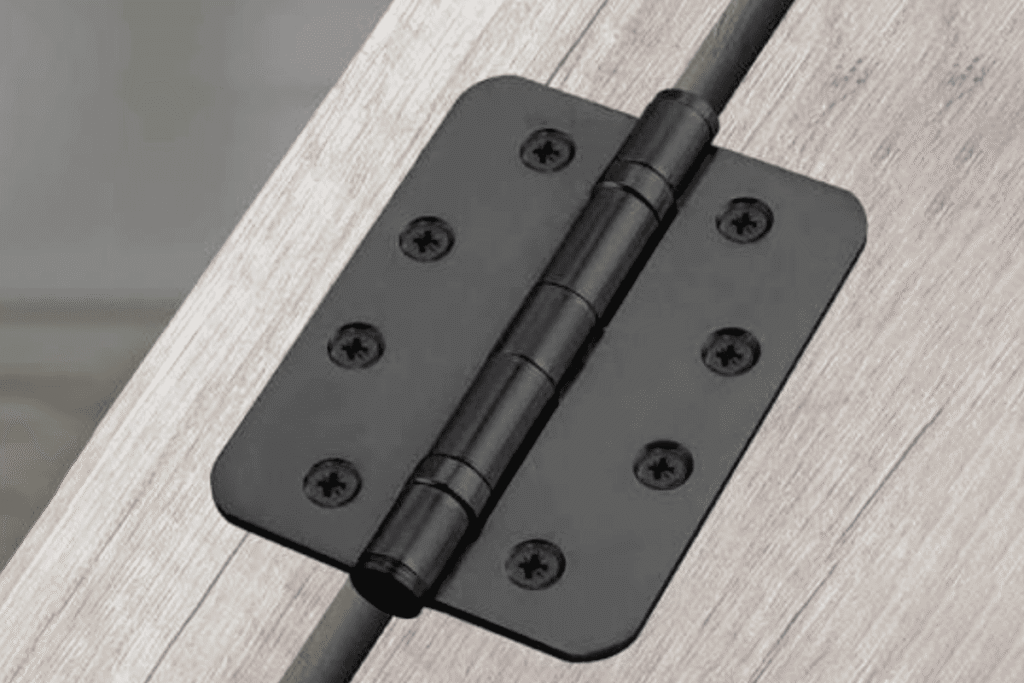
What Are the Benefits of Using Hinges with Ball Bearings for Smooth Door Operation?
Hinges with ball bearings matter when a door feels heavy, noisy, or rough during daily use. If the hinge knuckle relies only on metal-to-metal contact, friction can increase over time. The practical solution is to use a properly made ball bearing butt hinge where door weight, usage frequency, and project budget justify the upgrade.
Hinges with ball bearings improve smooth door operation by adding rolling friction around the hinge pin and knuckle area1. This structure helps the hinge leaves move more quietly, reduces wear around the pin2, and supports better long-term performance on frequently used or heavier interior doors when the hinge size, material, thickness, and installation are suitable.
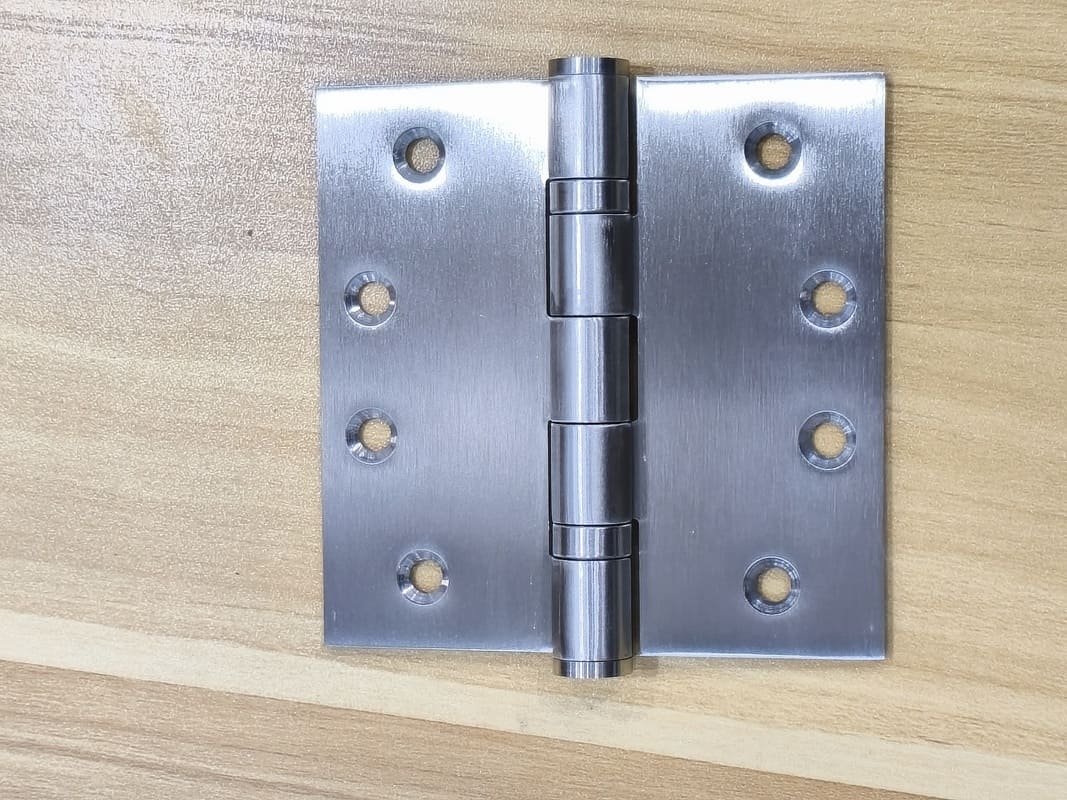
I often see buyers compare hinges only by surface finish or price. That is understandable, but it misses the main point. A hinge is a moving mechanical part. Once I look at the structure, bearing placement, material thickness, and inspection consistency, the real value becomes much easier to judge.
How Do Hinges with Ball Bearings Improve Door Movement?
A door that opens with resistance creates a poor user experience. The problem becomes more obvious in bedrooms, living rooms, offices, and hotel rooms where doors open many times each day. Hinges with ball bearings solve part of this problem by changing how friction behaves inside the hinge knuckle.
Hinges with ball bearings improve movement because the ball bearings help the hinge rotate with rolling friction instead of relying only on direct metal-to-metal sliding contact. This can make the door feel smoother, reduce operating noise, and slow wear around the hinge pin3 when the hinge is correctly selected and installed.
The basic structure matters
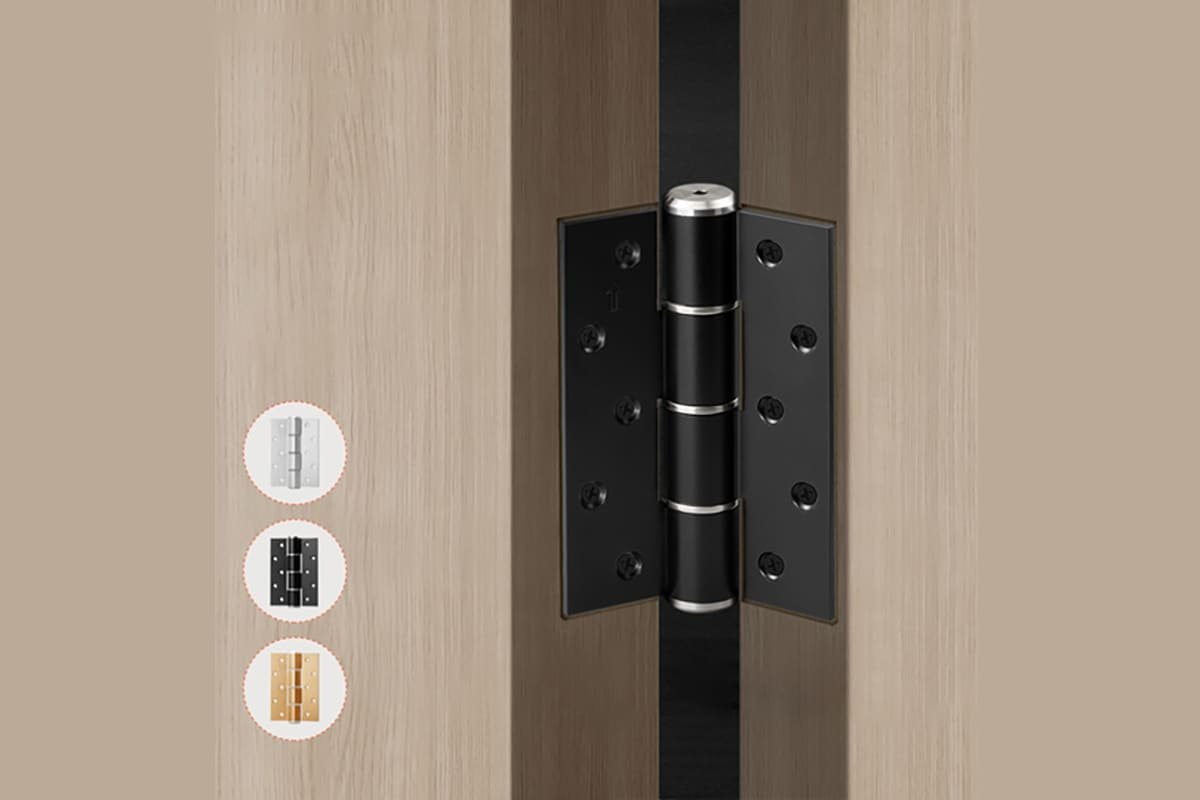
A ball bearing butt hinge starts with the same basic layout as a standard butt hinge:
- Two hinge leaves fixed to the door and frame
- A central pin running through the knuckle
- Interlocking knuckle sections that allow rotation
- Screw holes for installation
- Ball bearings placed around the knuckle and pin area
The key difference is the bearing system. In an ordinary butt hinge, the knuckle sections move mainly through direct contact. In a ball bearing butt hinge, the bearings help carry part of the movement. This reduces sliding friction and creates a more controlled rotation.
From a manufacturing perspective, I do not view the bearing as a decorative feature. I see it as a functional part of the hinge structure. If the bearing quality is poor, the pin fit is loose, or the knuckle alignment4 is inconsistent, the hinge may not perform as expected.
Why friction reduction is important
Friction affects several performance areas:
| Evaluation Point | Ordinary Butt Hinge | Ball Bearing Butt Hinge |
|---|---|---|
| Movement feel | Can be acceptable on light doors | Usually smoother on suitable doors |
| Wear around pin | More direct metal contact | Reduced contact through bearing support |
| Noise potential | May increase with wear | Often quieter when well made |
| Best use case | Light, low-frequency doors | Frequent-use or heavier interior doors |
| Cost level | Usually lower | Usually higher but still practical |
I like to explain this with a simple example. If a door is opened only a few times per week, an ordinary hinge may be enough. If a solid wood bedroom door opens dozens of times each day, the hinge works much harder. In that situation, hinges with ball bearings can help the door manufacturer offer a better user experience without changing the whole door system.
Smoothness is not only about bearings
The bearing is important, but it is not the only factor. Buyers should also check:
- Hinge material such as stainless steel or steel
- Leaf thickness for strength and stability
- Pin fit to avoid wobbling
- Knuckle alignment for smooth rotation
- Screw hole accuracy for stable installation
- Surface treatment5 for corrosion resistance and appearance
- Finished-product inspection before shipment
At SDH Hardware, we pay attention to these points during manufacturing and final inspection. I prefer this practical approach because a hinge must work after it leaves the factory, not only look good in a catalog.
Where Should Buyers Use Hinges with Ball Bearings?
Choosing the wrong hinge can waste money or create performance problems. Some buyers over-specify light doors, while others under-specify heavier doors. Hinges with ball bearings are most useful when the door has higher weight, higher opening frequency, or a need for quieter, smoother operation.
Hinges with ball bearings are a good choice for solid wood doors, bedroom doors, living room doors, office doors, hotel room doors, and other interior doors used frequently. They are less necessary for very light, low-frequency doors unless the project specification requires smoother movement or a higher perceived hardware standard.
Match the hinge to the door type
I normally suggest that buyers start with three questions:
- How heavy is the door?
- How often will the door open and close?
- What user experience does the project require?
These questions are more useful than simply asking, “Is a ball bearing hinge better?” A ball bearing butt hinge is not automatically the right choice for every door. It is better in the right application.
For example, many wooden door manufacturers use ball bearing butt hinges for interior doors where smooth daily operation matters. Solid wood doors often place more demand on the hinge than lightweight hollow-core doors6. In that case, the bearing structure can help distribute motion more effectively and reduce friction around the knuckle.
Common use cases for B2B buyers
| Door Application | Hinge Recommendation | Reason |
|---|---|---|
| Light storage room door | Ordinary butt hinge may be enough | Low opening frequency and lower weight |
| Bedroom door | Ball bearing butt hinge is often practical | Frequent daily use and need for quiet movement |
| Living room door | Ball bearing butt hinge can be useful | Regular use and visible hardware quality |
| Solid wood interior door | Ball bearing butt hinge is usually worth evaluating | Higher weight and better movement control |
| Hotel room door | Ball bearing butt hinge often fits the requirement | Frequent use and user comfort |
| Fire-rated project door | Verify tested hinge specification | Certification and system compatibility matter |
I always recommend that buyers treat the hinge as part of the complete door system. Door weight, door thickness, frame material, screw holding strength, and installation quality all affect final performance.
Avoid overbuying and underbuying
Many procurement teams face two risks.
The first risk is overbuying. A buyer may select hinges with ball bearings for every door in a project even when some doors are light and rarely used. This can raise cost without adding much practical value.
The second risk is underbuying. A buyer may choose the cheapest ordinary butt hinge for a heavier wooden door. The door may work at first, but the movement can become less stable over time if the hinge structure is not suitable.
A balanced selection process should include:
- Door material: MDF, hollow core, solid wood, engineered wood, or metal-clad wood
- Door size: height, width, and thickness
- Door weight: confirmed by the door factory or project drawings
- Usage level: low, medium, or high frequency
- Environment: indoor dry area, humid area, coastal market, or commercial building
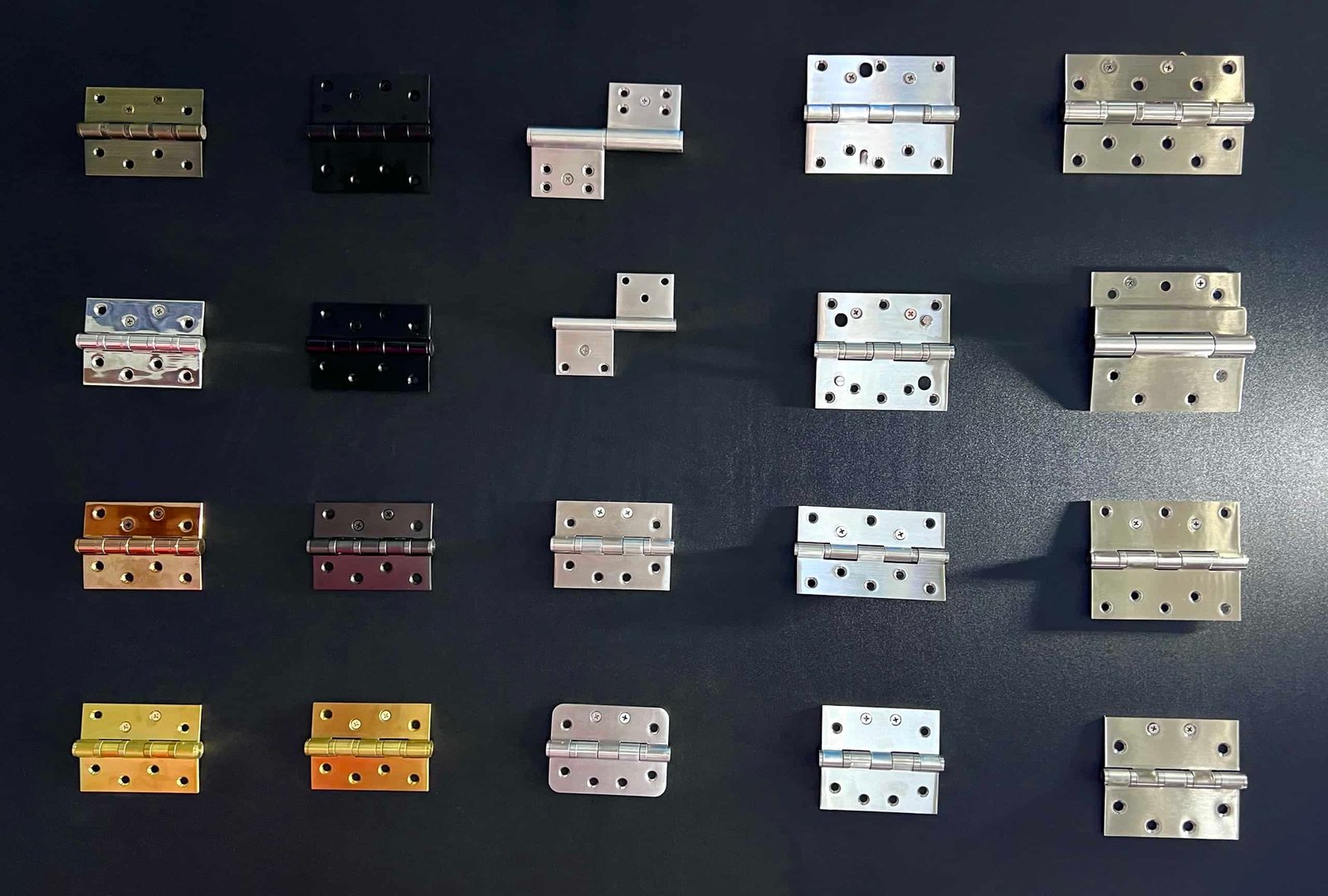
- Finish requirement: satin stainless steel, polished, black, brass color, or custom coating
- Certification needs: CE, fire-rated documentation, or project-specific test reports
For technical projects, I also suggest that buyers ask suppliers for relevant documents and verify whether certificates apply to the exact hinge model, material, size, and configuration being purchased7.
How Should Door Factories Compare 2BB and 4BB Hinges with Ball Bearings?
The 2BB versus 4BB question can confuse buyers. Some people assume more bearings always mean a better hinge. That is not always the right way to evaluate hinges with ball bearings. The better question is whether the hinge design, bearing quality, thickness, and door application match the project requirement.
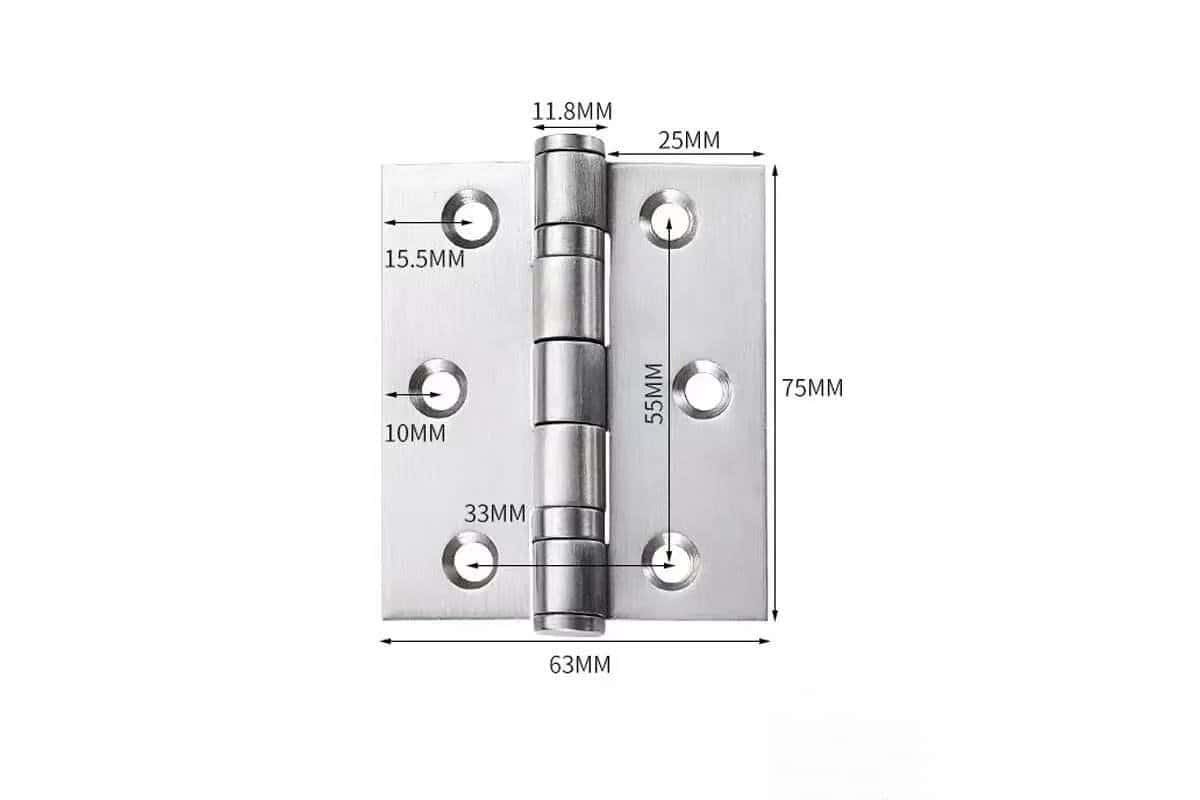
A 2BB ball bearing butt hinge has two bearing positions, while a 4BB hinge has four8. For many standard interior-door applications, a well-made 2BB hinge can offer a balanced choice between cost, smoothness, and practical load support. However, final selection should depend on verified product design, testing, door weight, and usage conditions.
What 2BB and 4BB mean
The terms 2BB and 4BB refer to the number of ball bearing positions in the hinge structure. A 2BB hinge usually has two ball bearing rings or bearing points around the knuckle. A 4BB hinge has four.
This sounds simple, but performance is not decided by bearing count alone9. I have seen buyers focus too much on the number and ignore the rest of the hinge. A poorly made 4BB hinge may not perform better than a well-made 2BB hinge if the material, pin fit, leaf thickness, or bearing precision is weak.
Practical comparison for procurement
| Factor | 2BB Ball Bearing Hinge | 4BB Ball Bearing Hinge |
|---|---|---|
| Bearing positions | Two | Four |
| Cost | Often more economical | Usually higher |
| Smoothness | Good when well manufactured | Can be very smooth when well manufactured |
| Suitable doors | Many standard interior and solid wood doors | Heavier or higher-spec applications, depending on design |
| Buyer focus | Balance of price and performance | Higher specification and verified requirement |
| Key warning | Do not choose only by low price | Do not assume bearing count alone proves strength |
For standard interior doors, I often see a properly manufactured 2BB hinge meet the practical needs of door factories and wholesalers. It can improve movement compared with ordinary butt hinges while keeping cost under control. This is useful for B2B buyers who need stable quality across many SKUs and repeat orders.
For heavier doors, public-use areas, or projects with strict specifications, buyers should ask for detailed data from the supplier. If the project requires a certain grade, fire rating, or tested performance level, the purchasing team should verify the exact documentation.
Selection should be data-bound
I avoid saying that one structure is always better than another. Instead, I suggest using a selection checklist:
- Confirm the door weight range with the door factory.
- Confirm the number of hinges per door based on door size and specification.
- Confirm hinge dimensions such as height, width, and thickness.
- Confirm material such as stainless steel grade or steel base material.
- Confirm bearing design and whether it matches the door application.
- Confirm finish durability for the target market.
- Confirm certification documents if CE or fire-rated compliance is required.
- Confirm sample testing before bulk purchasing.
In our factory work, I prefer sample confirmation before mass orders. A sample allows the buyer to check the rotation feel, surface finish, screw hole accuracy, packaging, logo requirements, and matching accessories. It also reduces misunderstandings between the buyer, the supplier, and the door manufacturer.
What Quality Checks Matter When Sourcing Hinges with Ball Bearings?
A hinge can look acceptable in photos but still fail buyer expectations in real installation10. The risk increases when procurement teams compare only price and finish. Hinges with ball bearings should be checked for structure, consistency, movement feel, material, finish, packaging, and supplier manufacturing control.
When sourcing hinges with ball bearings, buyers should inspect hinge thickness, knuckle alignment, bearing placement, pin fit, screw hole accuracy, surface finish, opening smoothness, and batch consistency. They should also verify supplier production capability, quality-control process, and any CE or fire-rated documents required for the target market or project.
Inspection points before bulk orders
I recommend that buyers check both the hinge and the supplier. A good hinge depends on repeatable manufacturing, not only one attractive sample.
Key product checks include:
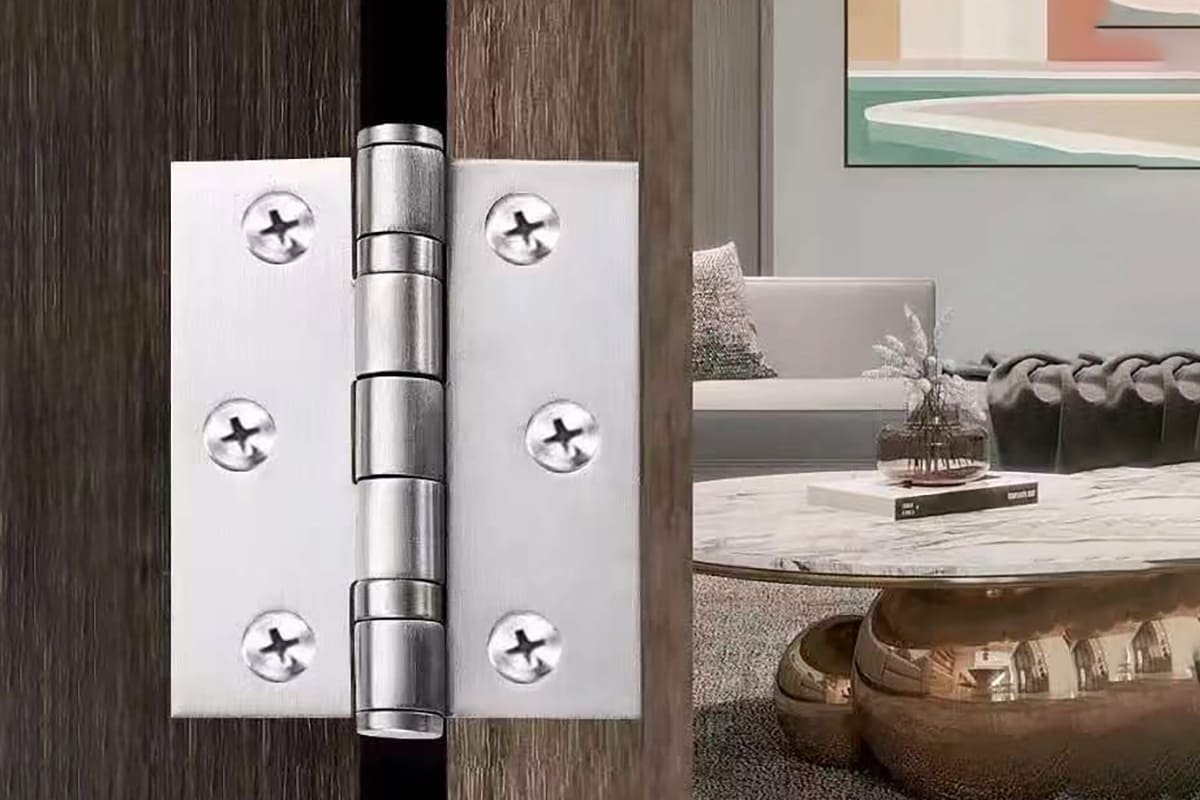
- Leaf flatness: The hinge leaves should sit correctly against the door and frame.
- Knuckle alignment: The knuckles should line up cleanly for stable rotation.
- Bearing placement: The bearings should be positioned consistently and protected from poor assembly.
- Pin fit: The pin should not create obvious looseness or rough movement.
- Opening feel: The hinge should rotate smoothly without grinding or sticking.
- Thickness consistency: The hinge leaf should match the agreed specification.
- Screw hole position: Holes should align with installation needs and drawings.
- Surface finish: Finish should match approved samples and resist visible defects.
- Packaging: Bulk packaging should protect the finish during shipping.
For B2B supply, consistency is often more important than one excellent sample. Door factories need hinges that fit their production line. Hardware brands need stable appearance and repeatable specifications. Wholesalers need reliable packaging and market-ready product presentation.
Supplier evaluation matters
A professional supplier should be able to support more than a price quote. Buyers should ask about:
| Supplier Capability | Why It Matters |
|---|---|
| In-house production | Improves control over quality and lead time |
| Product drawings | Reduces mistakes in OEM and ODM orders |
| Surface treatment options | Helps match regional market demand |
| Finished-product inspection | Helps catch defects before shipment |
| Custom logo service | Supports hardware brands and distributors |
| Packaging design | Improves resale and project presentation |
| Certification support | Helps buyers verify compliance requirements |
At SDH Hardware, we manufacture and supply architectural door hardware for door factories, hardware brand enterprises, and bulk wholesalers. Our main products include Euro mortise locks, stainless steel lever handles, butt hinges, concealed door hinges, Euro brass cylinders, and door accessories. We also support OEM and ODM orders, custom stamping or laser logos, custom color packaging, and product drawings after order confirmation.
I mention this not as a blanket claim that one factory fits every project. I mention it because supplier capability directly affects procurement risk. Buyers should always evaluate whether the factory can produce the same hinge consistently across repeat batches.
Certifications should be verified
Many architectural hardware buyers require CE certification or fire-rated documentation. These documents are important, but they should be checked carefully.
Buyers should confirm:
- The certificate applies to the exact product type.
- The hinge size and material match the project requirement.
- The fire-rated document applies to the full door assembly when required.
- The supplier can provide current, readable documentation.
- A qualified professional reviews the application-specific decision.
This is especially important for fire-rated doors. A hinge alone does not guarantee fire-door performance11. The complete door set, frame, hardware, seals, and installation method must work together according to the tested system and local requirements.
Frequently Asked Questions
Are hinges with ball bearings always better than ordinary butt hinges?
Hinges with ball bearings are not always necessary. They are usually more useful for frequently used doors, heavier interior doors, and applications where smoother movement matters. Ordinary butt hinges can still be suitable for light, low-frequency doors when the material, thickness, and installation are appropriate.
What is the main benefit of a ball bearing butt hinge?
The main benefit is reduced friction around the hinge pin and knuckle. The ball bearings help the hinge rotate with rolling movement instead of only direct metal-to-metal sliding contact. This can improve smoothness, reduce noise, and slow wear in suitable door applications.
Should I choose 2BB or 4BB ball bearing hinges?
You should choose based on door weight, opening frequency, hinge size, material, thickness, and verified supplier data. For many standard interior doors, a well-made 2BB hinge can be a cost-effective option. For heavier or higher-spec projects, a 4BB hinge may be worth evaluating.
Can ball bearing hinges be used on solid wood doors?
Yes, ball bearing butt hinges are commonly evaluated for solid wood doors because these doors are often heavier than lightweight interior doors. Buyers should still confirm the hinge size, thickness, material, number of hinges per door, screw holding strength, and installation method before bulk use.
Do ball bearing hinges need certification?
Certification depends on the market and project. Some projects may require CE documentation, fire-rated certification, or other compliance documents. Buyers should verify that the certificate applies to the exact hinge model and should seek qualified professional evaluation for fire-rated or application-specific decisions.
Conclusion
Hinges with ball bearings improve smooth door operation by reducing friction at the hinge knuckle, not by being automatically “premium.” The best choice depends on door weight, opening frequency, door material, hinge size, material thickness, bearing quality, and installation quality. For standard interior or solid wood door applications, a properly manufactured 2BB ball bearing butt hinge can be a cost-effective option compared with ordinary butt hinges. If you are sourcing for a door factory, hardware brand, or wholesale project, I recommend choosing specifications carefully and requesting samples, drawings, and verified documents before bulk orders.
"Introduction to Tribology – Friction", https://depts.washington.edu/nanolab/ChemE554/Summaries%20ChemE%20554/Introduction%20Tribology.htm. A mechanical-engineering source explains that rolling-element bearings replace much of the sliding contact between moving parts with rolling contact, thereby reducing friction in rotating assemblies. Evidence role: mechanism; source type: education. Supports: Rolling contact in bearings can reduce friction relative to sliding contact in mechanical assemblies.. Scope note: The source would support the mechanical principle generally, rather than directly testing this specific hinge model. ↩
"Rolling-element bearing", https://en.wikipedia.org/wiki/Rolling-element_bearing. Tribology literature describes wear as strongly influenced by contact mode, load, lubrication, and surface condition, and notes that substituting rolling contact for sliding contact can reduce adhesive and abrasive wear under suitable conditions. Evidence role: mechanism; source type: paper. Supports: Reduced sliding contact and controlled bearing contact can reduce wear in rotating mechanical interfaces.. Scope note: The evidence would be mechanistic and conditional; actual hinge wear also depends on materials, load, alignment, contamination, and installation. ↩
"Research on the Friction Noise Generation Mechanism and ... - PMC", https://pmc.ncbi.nlm.nih.gov/articles/PMC10458101/. Research on rolling-element bearings treats friction, wear, vibration, and noise as linked performance characteristics of rotating contact systems. Evidence role: general_support; source type: research. Supports: Bearing systems are used to control friction and wear, and bearing condition can affect noise and smoothness in rotating mechanisms.. Scope note: The source would provide general support for bearing behavior, not a direct field study of residential door hinges. ↩
"GUIDE (Guiding an Improved Dementia Experience) Model", https://www.cms.gov/priorities/innovation/innovation-models/guide. Technical door-hardware guidance identifies hinge and frame alignment as necessary for proper swing operation, because misalignment can cause binding, increased friction, and uneven load transfer. Evidence role: mechanism; source type: institution. Supports: Alignment of hinge components affects rotation, friction, binding, and installation performance.. Scope note: The citation would usually address installation and component alignment broadly rather than isolating hinge-knuckle alignment in laboratory testing. ↩
"Hazards of heavy metal contamination", https://pubmed.ncbi.nlm.nih.gov/14757716/. Corrosion-engineering research describes protective coatings and surface treatments as methods for modifying surface appearance and reducing corrosion by limiting environmental attack on the underlying metal. Evidence role: mechanism; source type: paper. Supports: Surface treatments and coatings can improve corrosion resistance and change surface appearance of metal components.. Scope note: The degree of protection depends on coating type, substrate, preparation, thickness, and exposure environment. ↩
"Solid-Core vs Hollow-Core Doors - Pros & Cons", https://doorslosangeles.com/blog/solid-core-vs-hollow-core-doors?srsltid=AfmBOopm2gVvM7Ejo_8-Lzr1Hj9m4W6bolwrjkBEEEfohkvy55L_yeGg. Educational building-material references describe hollow-core doors as lightweight constructions and solid wood or solid-core doors as heavier alternatives, which provides context for higher hinge loading. Evidence role: general_support; source type: education. Supports: Solid wood or solid-core doors are generally heavier than hollow-core interior doors, increasing the load carried by hinges.. Scope note: Exact door weight varies by species, dimensions, core material, and manufacturer. ↩
"Conformity Assessment of Medical Devices - PMC - NIH", https://pmc.ncbi.nlm.nih.gov/articles/PMC12821529/. Construction-product conformity frameworks require declarations or certificates to identify the product type and relevant declared characteristics, supporting the need to match documentation to the specific hinge being supplied. Evidence role: general_support; source type: government. Supports: Compliance documentation is tied to specified product types, intended uses, and declared characteristics rather than to unrelated variants.. Scope note: The exact documentation requirements vary by jurisdiction, standard, and project specification. ↩
"Blog – SDH hardware", https://sdhhardware.com/blog/. Architectural-hardware terminology sources use 2BB and 4BB to distinguish ball-bearing hinges by the number of bearing locations in the hinge knuckle. Evidence role: definition; source type: institution. Supports: 2BB and 4BB are hinge descriptors referring to the number of bearing positions or bearing races in the hinge.. Scope note: Terminology may vary by market and manufacturer, so the citation should be used to support the general definition rather than every product design. ↩
"A156.1 - 2025 Butts and Hinges", https://buildershardware.com/ANSI-BHMA-Standards/Hardware-Highlights/A1561-2025-Butts-and-Hinges. Door-hardware performance standards evaluate hinges by characteristics such as size, material, load capacity, durability cycles, and application conditions, indicating that bearing count alone is not a sufficient performance measure. Evidence role: expert_consensus; source type: institution. Supports: Hinge performance is assessed through multiple design and testing factors, not bearing count alone.. Scope note: Standards may not explicitly compare 2BB and 4BB hinges, but they contextualize performance as a multi-factor assessment. ↩
"Automatic Visual Inspection for Industrial Application - PMC - NIH", https://pmc.ncbi.nlm.nih.gov/articles/PMC12565284/. Quality-control literature distinguishes visual inspection from functional and dimensional testing, noting that appearance checks alone cannot establish whether a mechanical product will meet service-performance requirements. Evidence role: general_support; source type: research. Supports: Visual inspection may identify surface defects but cannot fully verify mechanical fit, function, or durability.. Scope note: The source would support the general inspection principle, not door hinges specifically. ↩
"FRAME | Washington State University", https://framenetworks.wsu.edu/. Fire-safety guidance treats a fire door as an assembly whose rating depends on the tested combination of door leaf, frame, hardware, seals, glazing where present, and installation method. Evidence role: expert_consensus; source type: government. Supports: Fire-door performance depends on the complete tested assembly, including door, frame, hardware, seals, and installation.. Scope note: Requirements differ across jurisdictions and referenced standards, so the citation should support the assembly principle rather than a specific project approval. ↩