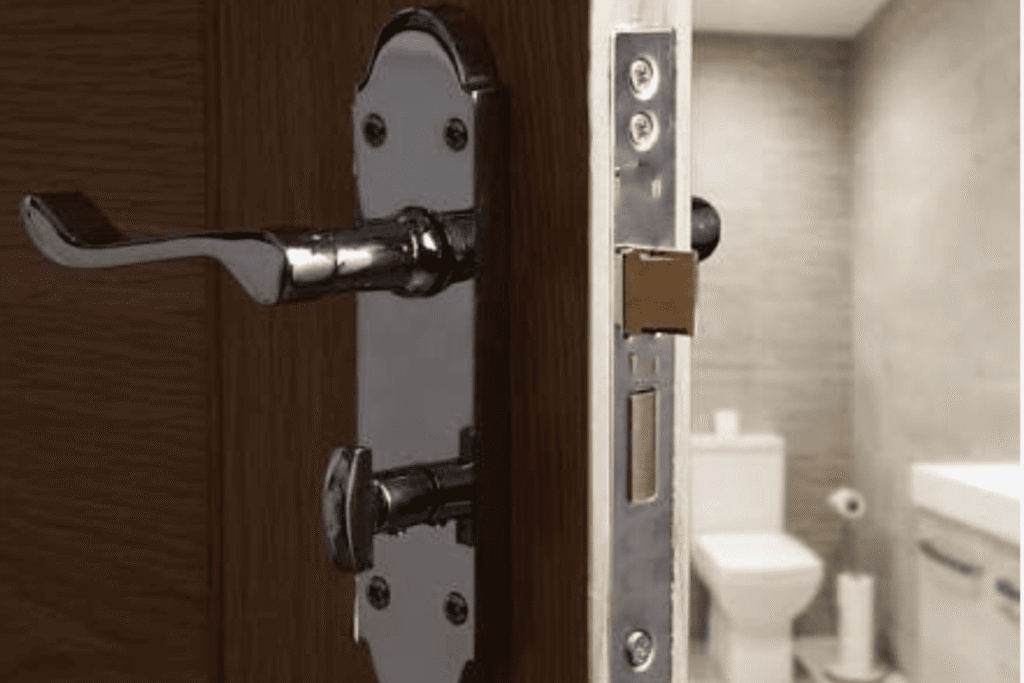
How to Measure a Euro Cylinder for Your uPVC Door?
A Euro cylinder can look simple, but wrong measurement creates expensive problems. If I only check the total lock length, I may miss cam position, handle thickness, or mortise lock alignment. The practical solution is to measure from the fixing screw center, confirm both side dimensions, and match the cylinder to the real uPVC door structure.
To measure a Euro cylinder for a uPVC door, measure from the cylinder fixing screw or cam center to the outside face, then measure from the same center to the inside face1. Add allowance for handles, escutcheons, or covers, check whether the mortise lock is centered, and round to the nearest suitable standard cylinder size.
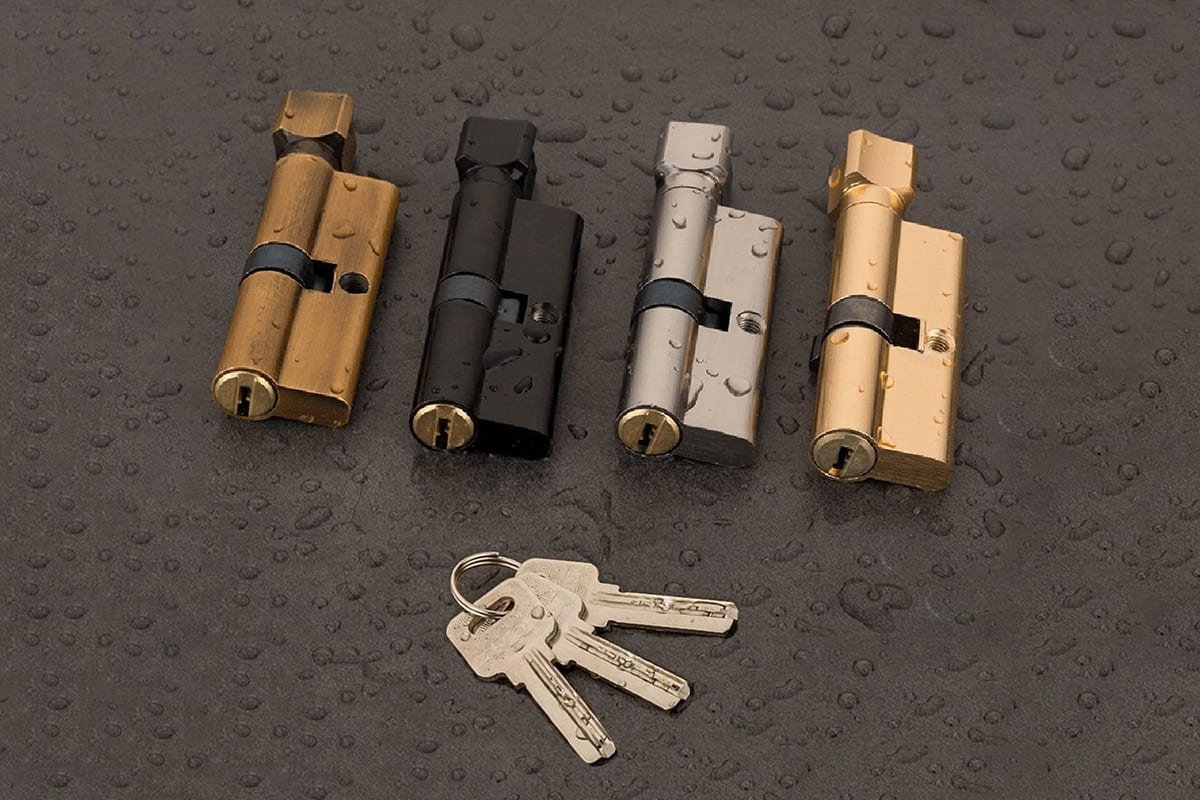
I usually see measurement mistakes happen before sampling or bulk ordering, not during final installation. A buyer may give the door thickness only, but the supplier still needs the split size, projection allowance, and lock case position before confirming a reliable specification.
How Do I Measure a Euro Cylinder from the Fixing Screw Center?
Measuring a Euro cylinder can feel confusing because the product is sold as two dimensions, not only one total length. If I treat it like a simple metal bar, I may order a cylinder that fits the door thickness but fails to engage the lock correctly.
The correct method is to measure from the fixing screw center, which is also the cam reference point, to each side of the door. The result should be written as two dimensions, such as 30/30 mm, 35/45 mm, or 40/50 mm, depending on the inside and outside structure.
Dive deeper: why the center measurement matters
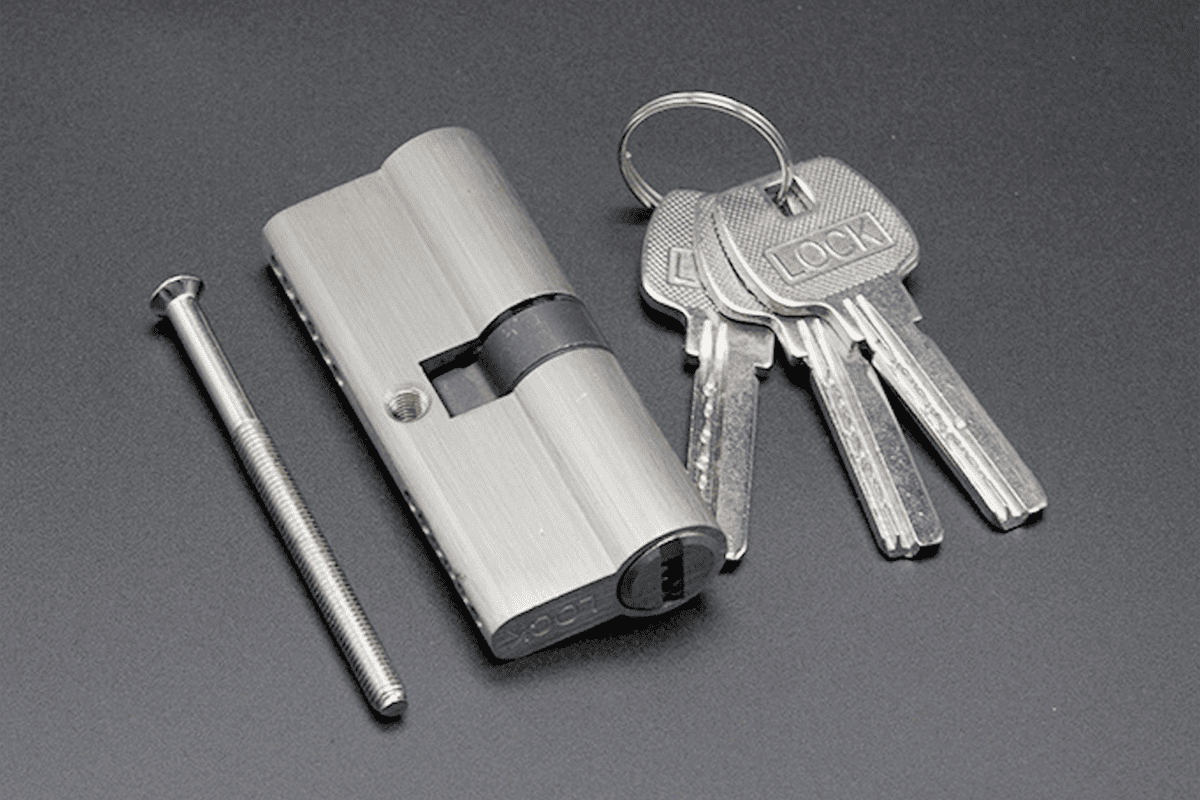
A Euro profile cylinder is usually selected by its A side and B side dimensions. These dimensions start from the center of the fixing screw hole and extend toward each end of the cylinder. This is important because the cam sits at or near this center reference. The cam must align with the mortise lock case so it can drive the locking mechanism.2
In procurement communication, I prefer to confirm the following before quoting or producing samples:
- Door leaf thickness
- Inside handle or escutcheon thickness
- Outside handle, escutcheon, or security cover thickness
- Mortise lock case position inside the door
- Required inside/outside cylinder projection
- Cylinder type, such as key-key, key-thumbturn, or half cylinder
A simple example helps:
| Measurement Item | Example Value | Why It Matters |
|---|---|---|
| Door leaf thickness | 60 mm | Gives the base structure |
| Outside plate thickness | 8 mm | Adds outside projection requirement |
| Inside plate thickness | 6 mm | Adds inside projection requirement |
| Lock case position | Centered | Suggests equal or near-equal cylinder split |
| Practical cylinder size | 35/40 mm or similar | Must be confirmed against actual hardware |
I often see buyers ask for a “70 mm Euro cylinder.” That may not be enough. A 70 mm cylinder can be 35/35, 30/40, or another split, depending on the manufacturer’s standard range. The total length may be identical, but the cam position relative to the door face changes.
For a uPVC door, this distinction matters even more because the door may include multi-point locking hardware, reinforced profiles, decorative handle plates, or protective escutcheons3. The correct specification is not just “70 mm.” It is usually something like:
Euro cylinder: 35/45 mm, key-key, brass body, satin nickel finish, suitable for matching mortise lock and uPVC door handle set.
That level of detail helps a supplier check feasibility before production. It also helps a door factory or wholesaler avoid order correction after the sample arrives.
What Euro Cylinder Length Should I Choose for a uPVC Door?
Choosing a Euro cylinder length can be risky if I only use door thickness. The cylinder may be too short to pass through the handle set, or it may project too far and look unsuitable. In some cases, it may also fail to align with the mortise lock cam position.
As a supplier-side guideline, the suitable Euro cylinder length is often estimated as door leaf thickness plus about 20 mm4, then rounded to the nearest standard size. This is not a universal rule. I still need to confirm handle plates, escutcheons, covers, and lock case position before final selection.
Dive deeper: using the “door thickness + 20 mm” guideline carefully
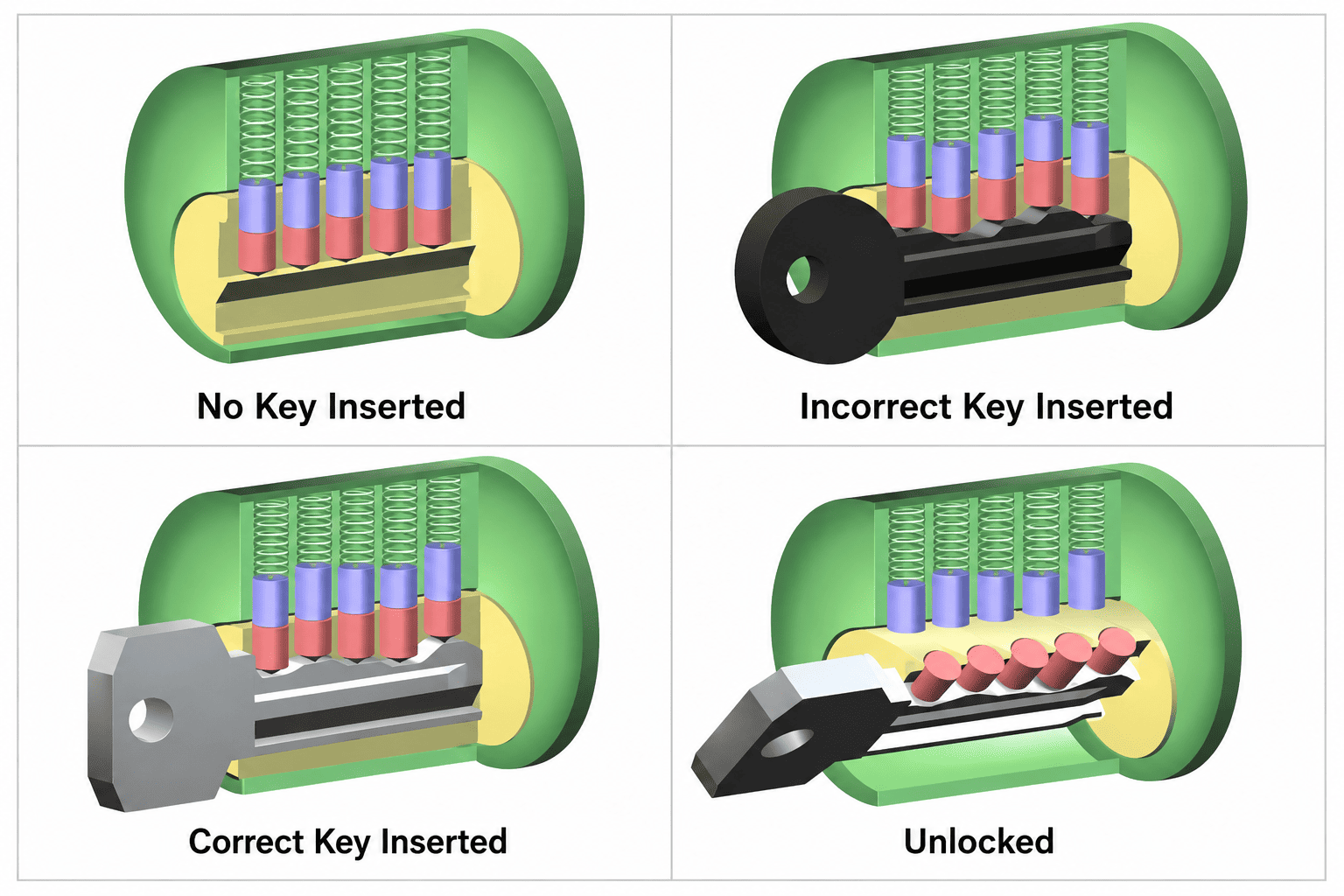
When I discuss cylinder specifications with B2B customers, I use “door thickness plus about 20 mm” as a practical starting point. It helps buyers estimate the likely total length before they send drawings or samples. However, I never treat it as a final engineering rule for every door system.
For example:
| Door Leaf Thickness | Initial Guideline | Possible Standard Size | Notes |
|---|---|---|---|
| 40 mm | Around 60 mm | 30/30 mm | Common for thinner doors |
| 50 mm | Around 70 mm | 35/35 mm or 30/40 mm | Split depends on lock position |
| 60 mm | Around 80 mm | 40/40 mm or 35/45 mm | Hardware thickness matters |
| 70 mm | Around 90 mm | 45/45 mm or 40/50 mm | Check escutcheon and profile |
| 80 mm | Around 100 mm | 50/50 mm or offset size | Confirm door system carefully |
This method works best as an early procurement estimate. It gives the purchasing team a likely cylinder family, so they can request samples or pricing. But final confirmation should consider the complete assembly.
What the extra allowance covers
The extra allowance often helps cover:
- Lever handle plates
- Rosettes or escutcheons
- Security covers
- uPVC profile tolerances
- Inside and outside projection
- Installation clearance
A cylinder should usually sit neatly with the hardware. It should not be buried inside the handle plate, and it should not project excessively beyond the face. Excess projection may create appearance issues and, depending on the market and project requirement, may also raise security concerns.5 Buyers should confirm application-specific requirements with a qualified professional where needed.
Why standard size rounding matters
Euro cylinders are normally supplied in standard increments.6 Common sizes include:
- 30/30 mm
- 30/35 mm
- 35/35 mm
- 35/40 mm
- 40/40 mm
- 40/45 mm
- 45/45 mm
- 50/50 mm
Different factories may offer different size ranges. At SDH Hardware, I would verify the available standard sizes and custom options during order confirmation. For OEM or ODM orders, the size also needs to match packaging labels, drawings, and inspection criteria.
The main point is simple: door thickness gives a starting number, but it does not define the final Euro cylinder specification by itself.
Why Does Mortise Lock Position Matter When You Measure a Euro Cylinder?
A Euro cylinder works through the mortise lock, so the lock case position is critical. If I measure only the door thickness and ignore the lock case location, the cylinder may pass through the door but fail to match the cam position correctly.
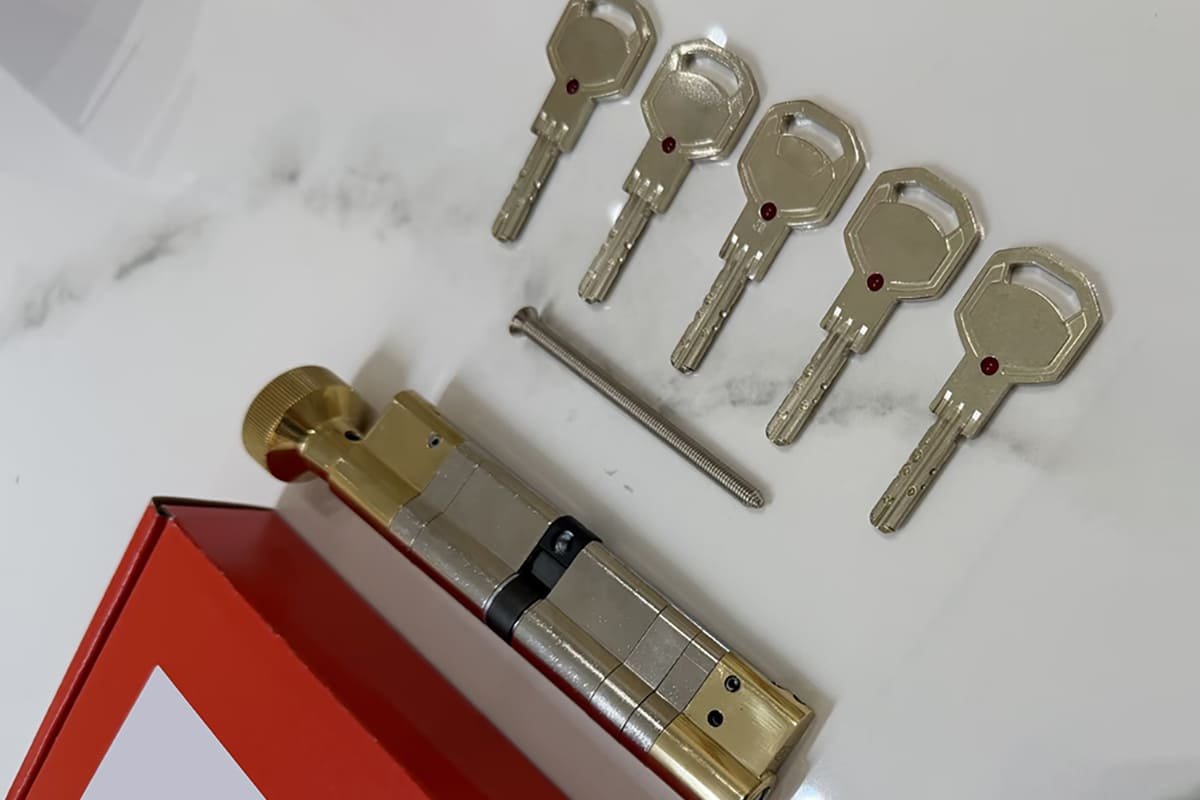
If the mortise lock is centered in the door thickness, a centered cam cylinder is usually suitable. If the mortise lock is offset, the cylinder split should correspond to the actual lock case position7, such as 30/40 mm, 35/45 mm, or another asymmetric size.
Dive deeper: centered and offset lock cases
The cam is the rotating part of the cylinder that operates the lock mechanism. In many Euro profile cylinders, the fixing screw hole and cam area are the main reference for measurement. This is why I ask buyers to provide measurements from the screw center to each door face, not just the overall cylinder length.
A centered lock case is easier to specify. If the door thickness and hardware projection are balanced, a 30/30 mm, 35/35 mm, or 40/40 mm cylinder may be suitable. But many real door systems are not perfectly balanced. A uPVC door may have different inside and outside hardware thicknesses. It may also use a lock case that sits closer to one side of the door profile.
Centered vs. offset examples
| Door / Lock Condition | Likely Cylinder Style | Example Size |
|---|---|---|
| Lock case centered, equal plates | Equal split | 35/35 mm |
| Lock case centered, thicker outside cover | Slightly longer outside side | 35/40 mm |
| Lock case offset toward outside | Asymmetric split | 30/45 mm |
| Lock case offset toward inside | Asymmetric split | 45/30 mm |
| Unknown lock case position | Needs drawing or sample | Not safe to guess |
This is where procurement communication becomes important. In my experience, a clear drawing or photo with dimensions prevents most mistakes. A supplier should be able to check whether the requested cylinder size matches the lock case and handle set. However, the buyer still needs to provide real door data.
What to send to a supplier
For better specification confirmation, I recommend sending:
- Door cross-section drawing
- Door leaf thickness
- Distance from fixing screw center to outside face
- Distance from fixing screw center to inside face
- Handle plate or escutcheon thickness
- Mortise lock drawing or model
- Required finish and cylinder type
- Certification documents required for the project or market
For technical B2B supply, I treat certifications such as CE or fire-rated documents as items buyers should verify against the exact product, application, and market requirement. A cylinder, mortise lock, and full door assembly may have different compliance considerations. Therefore, I recommend that project-specific fire, safety, or security decisions be reviewed by qualified professionals.
The key risk is not only that the cylinder is too long or too short. The bigger issue is that the cam may not sit where the mortise lock needs it. That is why lock case position must be part of the measurement process.
What Common Mistakes Should Buyers Avoid When Specifying Euro Cylinders?
Specifying a Euro cylinder seems easy until a sample does not fit. The most common problem I see is incomplete information. A buyer may send only the total length or door thickness, and the supplier cannot confirm whether the cylinder will match the real uPVC door and mortise lock.
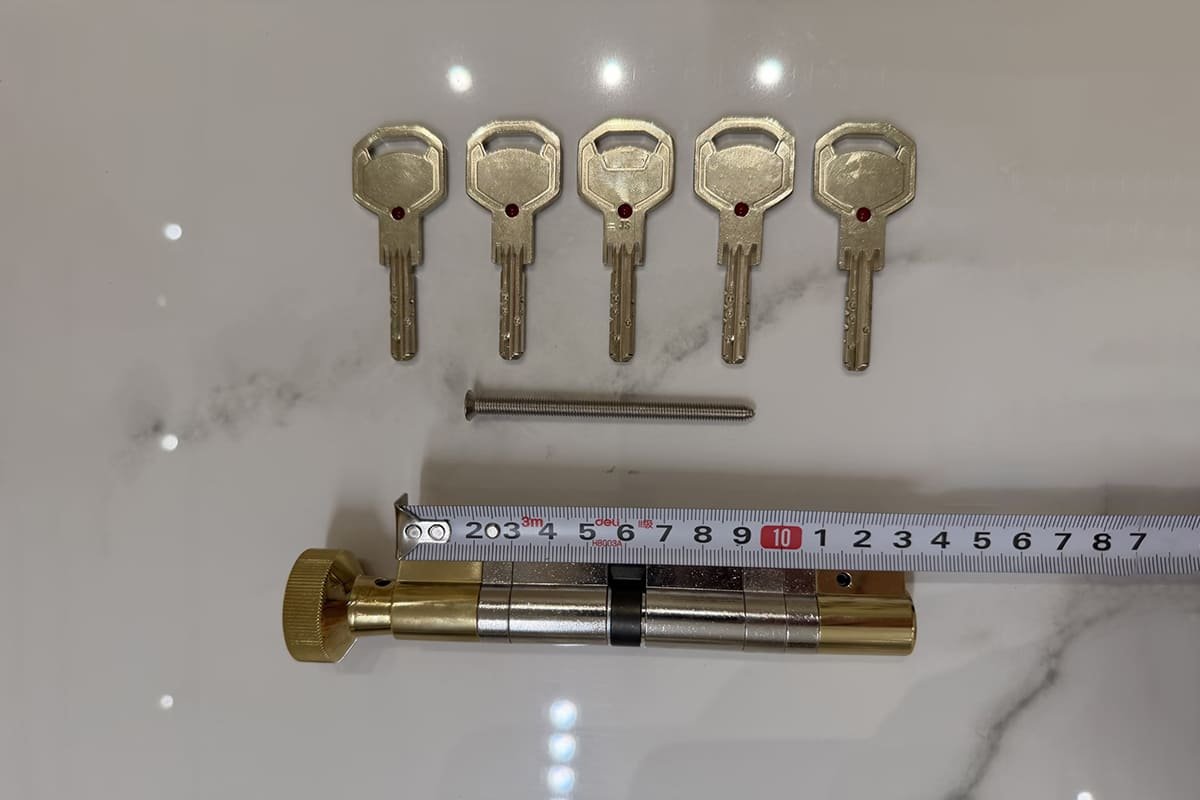
Buyers should avoid relying on total length alone, assuming one size fits all uPVC doors, ignoring handle projection, and forgetting cam position. A correct inquiry should include the split size from the fixing screw center, hardware thickness, lock case position, finish, cylinder type, and required documents.
Dive deeper: the mistakes that cause returns and order corrections
I often say that the cheapest mistake is the one found before production. In door hardware sourcing, cylinder mistakes can create sample delays, repacking costs, rework, or shipment problems. For wholesalers, the risk is even higher because one wrong specification may affect many cartons.
Mistake 1: giving only total length
A total length such as 80 mm is incomplete. It does not tell me whether the product should be:
- 40/40 mm
- 35/45 mm
- 30/50 mm
- 45/35 mm
Each version can behave differently in the door assembly. If the lock case is not centered, the wrong split can cause installation failure.
Mistake 2: ignoring handle and escutcheon thickness
The cylinder does not sit in the door leaf alone. It passes through the complete hardware set. A thick outside plate or protective cover can change the required projection. This is especially important for uPVC door hardware, where profiles and decorative hardware can vary by market.
Mistake 3: assuming all uPVC doors use the same size
There is no single standard Euro cylinder size for every uPVC door.8 Door thickness, lock case position, market preference, handle design, and supplier standards all affect the final size. Even within one product category, two door factories may require different cylinder splits.
Mistake 4: not confirming cylinder type
Buyers should also specify the operating type:
| Cylinder Type | Common Use | Procurement Note |
|---|---|---|
| Key-key cylinder | Key operation on both sides | Common for many markets |
| Key-thumbturn cylinder | Key outside, thumbturn inside | Confirm safety and market rules |
| Half cylinder | One-sided operation | Often used in special applications |
| Master key system cylinder | Managed access | Needs detailed keying plan |
For bulk orders, the keying requirement also matters. Buyers may need keyed alike, keyed different, master keyed, or construction key systems.9 These decisions should be documented clearly before production.
Mistake 5: not matching finish and accessories
A Euro cylinder may be made in brass, zinc alloy, or other material structures depending on specification. Common finishes may include satin nickel, polished brass, chrome, black, or customized surface treatments. The cylinder should match the lever handle, hinge, lock body, and door accessory series if the buyer wants a coordinated hardware set.
At SDH Hardware, I would usually confirm cylinder size, finish, logo marking, packing design, and inspection requirements during order confirmation. That process is practical, not promotional. It reduces misunderstanding between the buyer, factory, and end customer.
How Should I Prepare a Euro Cylinder Inquiry for Bulk Orders?
A Euro cylinder inquiry for bulk orders needs more detail than a retail replacement request. If I send a vague inquiry, I may receive a price quickly, but the quotation may not match the final product needed for the door project or wholesale market.
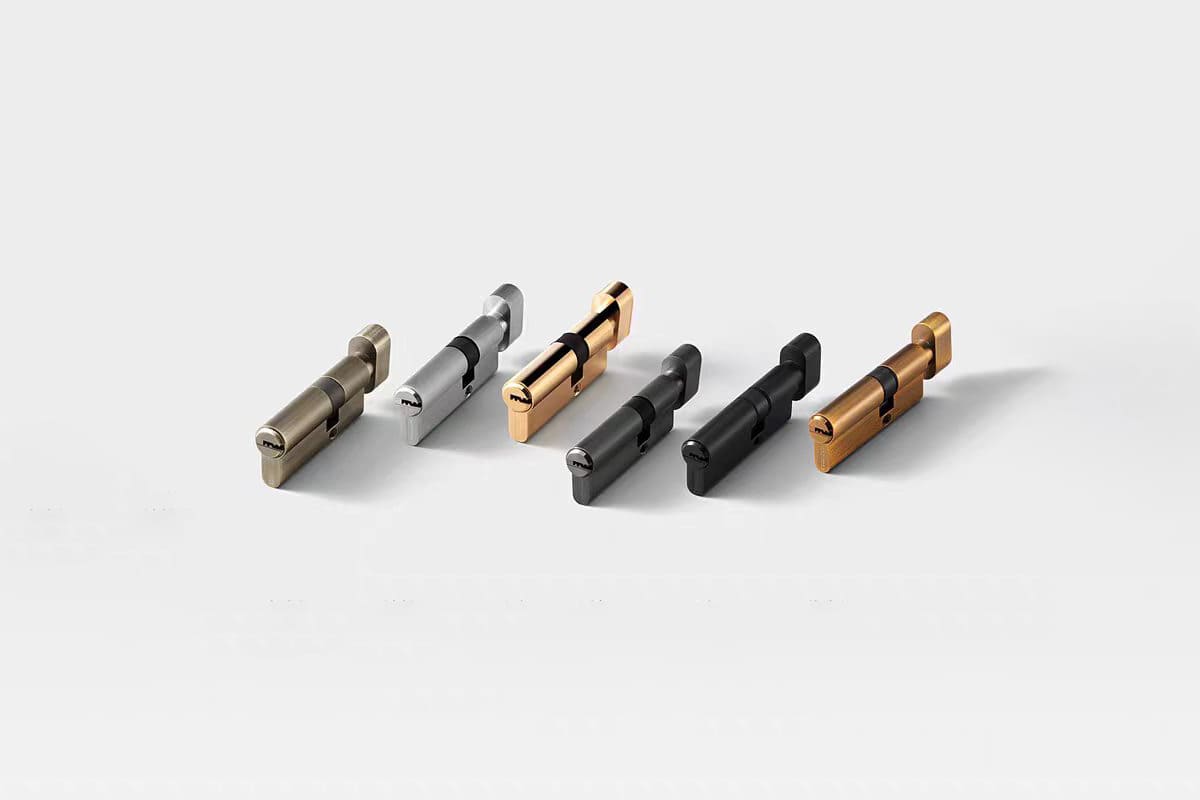
A strong bulk inquiry should include cylinder split size, total length, door thickness, mortise lock position, cylinder type, finish, material requirement, keying method, packaging, logo needs, quantity, target market, and any CE or fire-rated documents that the buyer needs to verify.
Dive deeper: a practical B2B checklist
For door factories, hardware brands, and wholesalers, the goal is not just to buy cylinders. The goal is to buy a cylinder that fits the matching mortise lock, handle set, door profile, and market expectation. That is why I recommend preparing a simple but complete inquiry sheet.
Basic specification checklist
| Specification Item | Example | Why I Need It |
|---|---|---|
| Cylinder size | 35/45 mm | Confirms split and total length |
| Door thickness | 60 mm | Checks sizing logic |
| Mortise lock model | Euro mortise lock case | Confirms cam alignment |
| Cylinder type | Key-key or key-thumbturn | Defines operation |
| Finish | Satin nickel | Matches hardware series |
| Keying | Keyed different | Affects production and packing |
| Quantity | 5,000 pcs | Affects pricing and lead time |
| Packaging | Color box with logo | Supports brand resale |
| Market | Europe / Middle East / Southeast Asia | Helps confirm common preferences |
| Documents | CE or fire-rated certificate request | Must be verified against exact items |
Sample confirmation before mass production
For new projects, I usually prefer sample confirmation before bulk production. A sample lets the buyer check:
- Physical fit
- Cam operation
- Projection on both sides
- Finish match
- Key smoothness
- Packing layout
- Label accuracy
- Compatibility with mortise lock and handle set
This is especially important when the order includes a full door hardware package, such as Euro mortise locks, stainless steel lever handles, butt hinges, concealed hinges, Euro brass cylinders, and door accessories. A one-stop sourcing order is convenient, but it also requires careful specification alignment.
Supplier evaluation points
When choosing a Euro cylinder supplier, I suggest checking more than unit price. Buyers should evaluate:
- Factory production capability
- Experience with OEM / ODM orders
- Standard and custom size range
- Quality control process
- Testing equipment and inspection records
- Document availability for target markets
- Drawing and sample confirmation support
- Packing and branding service
- Communication accuracy before production
SDH Hardware operates as a China-based architectural door hardware manufacturer with in-house production and more than 10 years of specialized experience. In real order communication, I have seen that the best results come from clear drawings, confirmed split dimensions, and careful checking of the matching mortise lock. Buyers should still verify certifications and project suitability based on their own market and application requirements.
Frequently Asked Questions
Is Euro cylinder total length enough for ordering?
No. Total length is not enough because the same total length can have different split dimensions. A 70 mm cylinder may be 35/35 mm or 30/40 mm. I recommend confirming the measurement from the fixing screw center to both sides of the door.
How much should a Euro cylinder project from a uPVC door?
The correct projection depends on the handle plate, escutcheon, protective cover, and market requirement. As a practical rule, the cylinder should sit neatly with the door hardware and should not project excessively. Buyers should confirm project-specific safety or security needs with qualified professionals.
What does 35/45 mm mean on a Euro cylinder?
A 35/45 mm Euro cylinder measures 35 mm from the fixing screw center to one end and 45 mm from the same center to the other end. The total length is 80 mm, but the split tells me how the cylinder aligns with the door and lock case.
Can I use the same Euro cylinder for every uPVC door?
No. uPVC doors can differ in thickness, profile design, handle plate thickness, mortise lock position, and hardware system. I recommend checking each door structure before sampling or bulk ordering, especially for door factories and wholesalers.
Should I measure the old cylinder or the door?
If the old cylinder worked correctly, measuring it can help. However, I still prefer checking the door thickness, hardware projection, and mortise lock position. If the old cylinder was poorly fitted, copying it may repeat the same problem.
Conclusion
A Euro cylinder for a uPVC door should be measured from the fixing screw center to each side, not selected by total length alone. I use door thickness plus about 20 mm as a practical starting guideline, then I confirm handle projection, escutcheons, standard size rounding, and mortise lock position. For B2B orders, clear drawings and split dimensions reduce sampling errors and return risk. If you need factory-direct Euro cylinders matched with mortise locks, handles, and door hardware sets, contact SDH Hardware with your door specifications for a practical quotation and sample confirmation.
"What Size Euro Cylinder Do I Need? Measuring Guide", https://lockerfella.co.uk/euro-cylinder-size/. A technical standard or independent institutional guide defines Euro-profile cylinder dimensions by reference to the fixing-screw or cam-center area, supporting the practice of recording separate inside and outside measurements; this supports the dimensional principle rather than every installation detail for uPVC doors. Evidence role: definition; source type: institution. Supports: The source should define Euro-profile cylinder dimensional references and show that each side is measured from the fixing screw or cam-center reference.. Scope note: Contextual support if the source defines cylinder geometry but does not provide a full uPVC-door installation procedure. ↩
"What Should I Know About European Cylinder Locks? | AKADA", https://akada-hardware.com/what-should-i-know-about-european-cylinder-locks/. A neutral technical description of cylinder locks explains that the cylinder’s cam or actuator turns to engage the lock case mechanism, supporting the need for cam alignment with the mortise lock; it does not by itself verify a specific door manufacturer’s dimensions. Evidence role: mechanism; source type: encyclopedia. Supports: The source should describe the cam or actuator on a cylinder lock and its role in operating the lock case.. Scope note: Contextual support because the mechanism is general and may not cover every Euro mortise lock design. ↩
"Multipoint Locks, UPVC Lock Mechanism & Locking System", https://www.lockshopdirect.co.uk/categories/multipoint-locks-6266/. An institutional building or fenestration reference describes uPVC door systems as commonly incorporating reinforced profiles and multi-point locking hardware, supporting the article’s statement about features that can affect cylinder selection. Evidence role: general_support; source type: institution. Supports: The source should describe typical uPVC door construction or hardware systems, including reinforcement and multi-point locking.. Scope note: Contextual support because specific hardware combinations vary by manufacturer, market, and door model. ↩
"Euro Cylinder Sizes Explained: 30/30, 35/45, 40/40 and More", https://www.welock.com/blogs/news/euro-cylinder-sizes-explained?srsltid=AfmBOoq0TkNFMJecRWf6jl_Kn2ROi2R1uXQjH8xMyU80_EDNl0TiIuwM. An independent technical guide on Euro cylinder measurement supports adding allowance for door furniture such as handles or escutcheons when estimating cylinder length; the commonly used 20 mm figure is a practical approximation rather than a universal standard. Evidence role: general_support; source type: institution. Supports: The source should support the broader practice of adding allowance for handles or escutcheons when estimating cylinder length, even if it does not use the exact 20 mm figure.. Scope note: Contextual support because the exact allowance depends on the handle set, escutcheon, cover, and door system. ↩
"What is Lock Snapping with Prevention Tips (Expert Advice)", https://www.locksmiths.co.uk/faq/lock-snapping/. A public security or police guidance source explains that excessive cylinder projection can increase exposure to attack methods such as snapping, supporting the article’s caution about security concerns; the degree of risk depends on cylinder security rating and protective hardware. Evidence role: mechanism; source type: government. Supports: The source should explain that exposed or protruding lock cylinders can be more vulnerable to attack methods such as snapping or manipulation.. Scope note: Contextual support because the risk varies with cylinder grade, escutcheon design, and local security requirements. ↩
"Euro Cylinder Sizes Explained: 30/30, 35/45, 40/40 and More", https://www.welock.com/blogs/news/euro-cylinder-sizes-explained?srsltid=AfmBOoplxZbBgDmJ3mPg2z6ZFX7W5xvltVJNfsK-zyfiwERrGU8yzywi. A standards-based or institutional dimensional reference identifies recurring Euro cylinder lengths and split dimensions, supporting the statement that these cylinders are commonly supplied in standard increments. Evidence role: definition; source type: institution. Supports: The source should show that Euro cylinders are offered or defined in recurring standard length increments.. ↩
"Euro Cylinder Sizes Explained: 30/30, 35/45, 40/40 and More", https://www.welock.com/blogs/news/euro-cylinder-sizes-explained?srsltid=AfmBOooVaR1N4k8zcla_V4_Tbixp4IihvnOsoUEzgoNbpRsO78AEDS-3. An institutional lock-installation reference explains that the cylinder’s split dimensions must correspond to the lock case and door-hardware position, supporting the article’s statement that an offset mortise lock may require an asymmetric cylinder. Evidence role: mechanism; source type: institution. Supports: The source should explain that cylinder split dimensions must correspond to the lock case or fixing point position in the door assembly.. Scope note: Contextual support because final suitability still depends on the exact lock case, door profile, and furniture thickness. ↩
"A Complete Guide to Euro Cylinder Locks", https://uk.rs-online.com/web/content/product-knowledge/security-access-control/door-security-systems/euro-cylinder-locks-guide. An independent door-hardware reference describes Euro cylinder selection as dependent on door thickness, hardware projection, and split dimensions, supporting the statement that no single size fits all uPVC doors. Evidence role: general_support; source type: institution. Supports: The source should show that Euro cylinder selection depends on door and hardware dimensions rather than a single universal uPVC-door size.. Scope note: Contextual support because the source may document dimensional variation rather than survey all uPVC door models. ↩
"Master keying", https://en.wikipedia.org/wiki/Master_keying. An educational or institutional locksmithing reference defines common keying arrangements such as keyed alike, keyed different, master keyed, and construction keying, supporting the article’s classification of possible bulk-order keying requirements. Evidence role: definition; source type: education. Supports: The source should define common lock keying arrangements, including keyed alike, keyed different, master keyed, and construction keying.. ↩