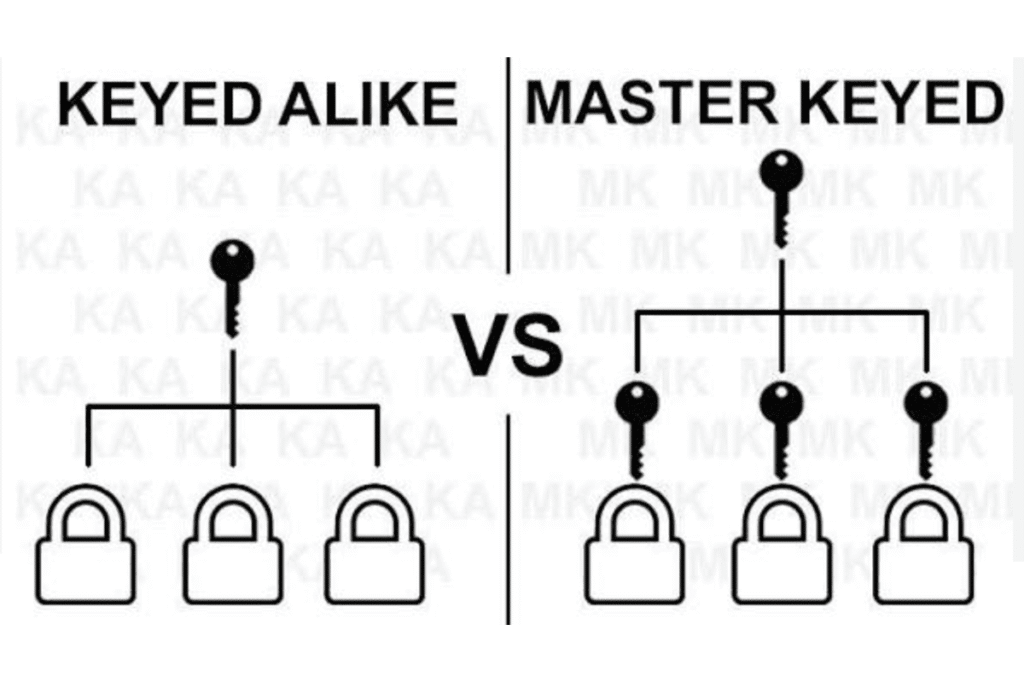
Keyed Alike vs Keyed Different in Multipoint Door Locks?
Keyed alike vs keyed different is not just a small cylinder detail when buyers source multipoint door locks. The wrong choice can create access confusion, raise replacement costs, or weaken the purpose of a security-focused door system. I usually recommend that buyers compare convenience against exposure before confirming the cylinder and keying plan.
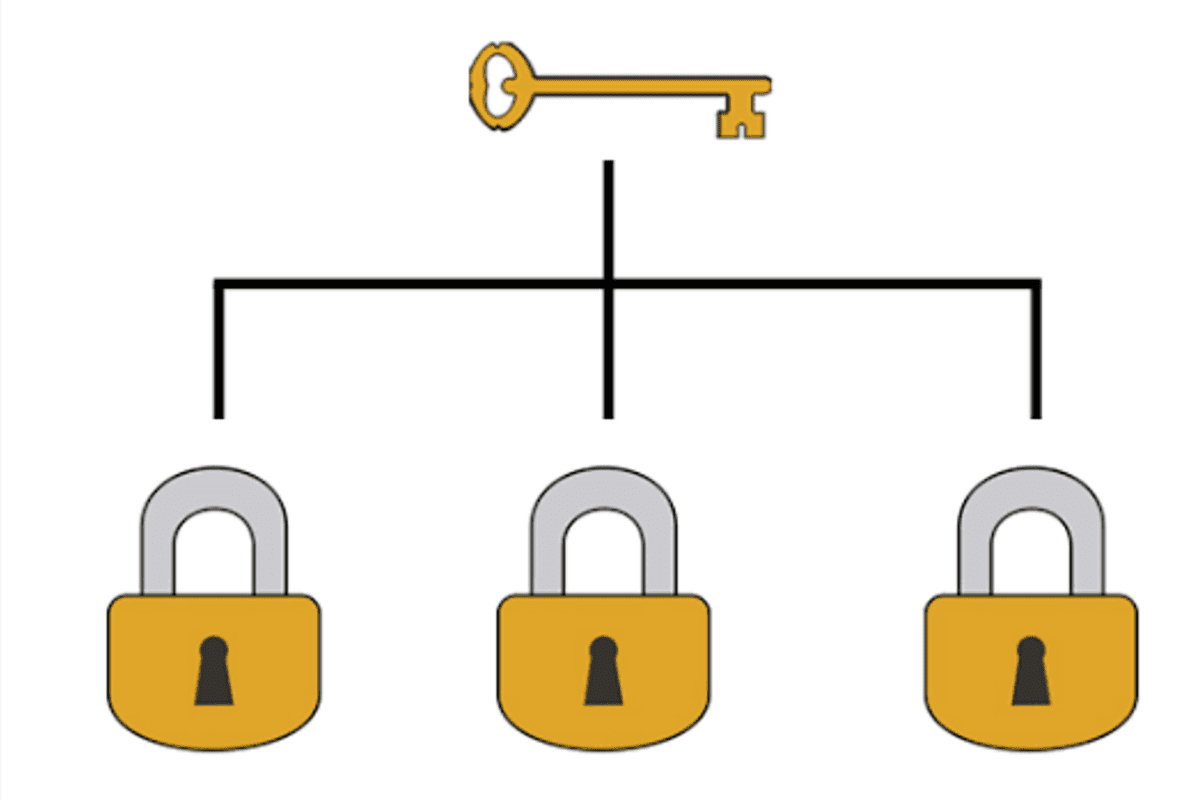
Keyed alike means one key opens multiple locks, while keyed different means each lock has its own independent key.1 For multipoint door locks used on entrance doors, balcony doors, and security-sensitive doors, keyed different is usually the safer default2 because it limits the impact of a lost, copied, or mismanaged key.
In my experience working with door factories, hardware brands, and import customers, keying decisions often look simple at first. However, they affect packaging, order sorting, replacement planning, and end-user access control. So I prefer to clarify the keying method early, before production and shipment.
Why Does Keyed Alike vs Keyed Different Matter in Multipoint Door Locks?
A multipoint lock is usually selected because the door needs better closing strength, security, or weather performance. If the keying method is chosen only for convenience, the cylinder plan may work against that purpose. This creates a gap between the lock’s function and the buyer’s real security expectation.
Keyed alike vs keyed different matters because the keying method decides how access risk is distributed. Keyed alike concentrates access into one key, while keyed different separates access by lock. For multipoint door locks, this decision should match the door location, user structure, and risk tolerance.
Multipoint locks are usually not “ordinary” locks
A multipoint door lock normally secures the door at more than one locking point.3 Depending on the lock design, it may engage hooks, bolts, rollers, or latches along the door edge.4 Buyers often use these locks for:
- Entrance doors
- Balcony doors
- Apartment doors
- Villa doors
- Project doors
- PVC, aluminum, steel, or wooden door systems
Because these doors often face the outside or separate private areas from public areas, the cylinder choice deserves careful attention. I have seen buyers spend time comparing lock cases, backsets, faceplates, handles, and finishes, but then treat keying as a final packing note. That approach can cause trouble later.
The cylinder is the access point
The multipoint lock body provides mechanical engagement, but the cylinder controls who can operate it.5 That means the cylinder and keying method influence the practical access level of the whole door set.
A simple way to think about it is this:
| Item | What it controls | Buyer question |
|---|---|---|
| Multipoint lock body | How the door locks mechanically | Does the lock fit the door profile and security need? |
| Cylinder | Who can operate the lock | What cylinder type, length, finish, and security level are needed? |
| Keying method | How access is shared or separated | Should keys open one lock or multiple locks? |
| Packaging plan | How locks and keys are delivered | Can the installer and buyer identify each set correctly? |
When I confirm orders with B2B customers, I prefer to discuss keying together with cylinder length, cam type, finish, quantity, and packing labels. This reduces confusion during installation or resale.
Convenience and security are not equal
Keyed alike is convenient because one key can open several doors. That can be useful for one owner or one controlled property. However, convenience also means broader exposure. If that one key is lost or copied, every lock in that keyed-alike group may need attention.6
Keyed different is less convenient because each door has its own key. However, it better limits the affected area if one key is lost. This is why I usually see keyed different as the more appropriate default for multipoint door locks used on security-sensitive doors.
My practical rule is simple: if the door is selected for security, the keying plan should also support security.
Procurement teams should decide before production
For bulk orders, the keying method affects more than the end user. It can affect:
- Cylinder production or sourcing
- Key stamping or numbering
- Lock-and-cylinder matching
- Inner box labeling
- Carton packing
- Inspection before shipment
- After-sales replacement
At SDH Hardware, we manufacture and supply architectural door hardware for global B2B buyers. When customers order Euro mortise locks, multipoint lock-related door hardware, cylinders, handles, hinges, and accessories, I prefer to confirm keying configuration clearly before final production. This is especially important for OEM and ODM orders, where packaging and branding requirements may vary by market.
When Is Keyed Alike Suitable for Multipoint Door Locks?
Some buyers choose keyed alike because their customers do not want many keys. That problem is real. However, if the project includes entrance doors or separate access zones, one-key convenience may create unnecessary exposure. The challenge is knowing when convenience is acceptable and when it becomes a security compromise.
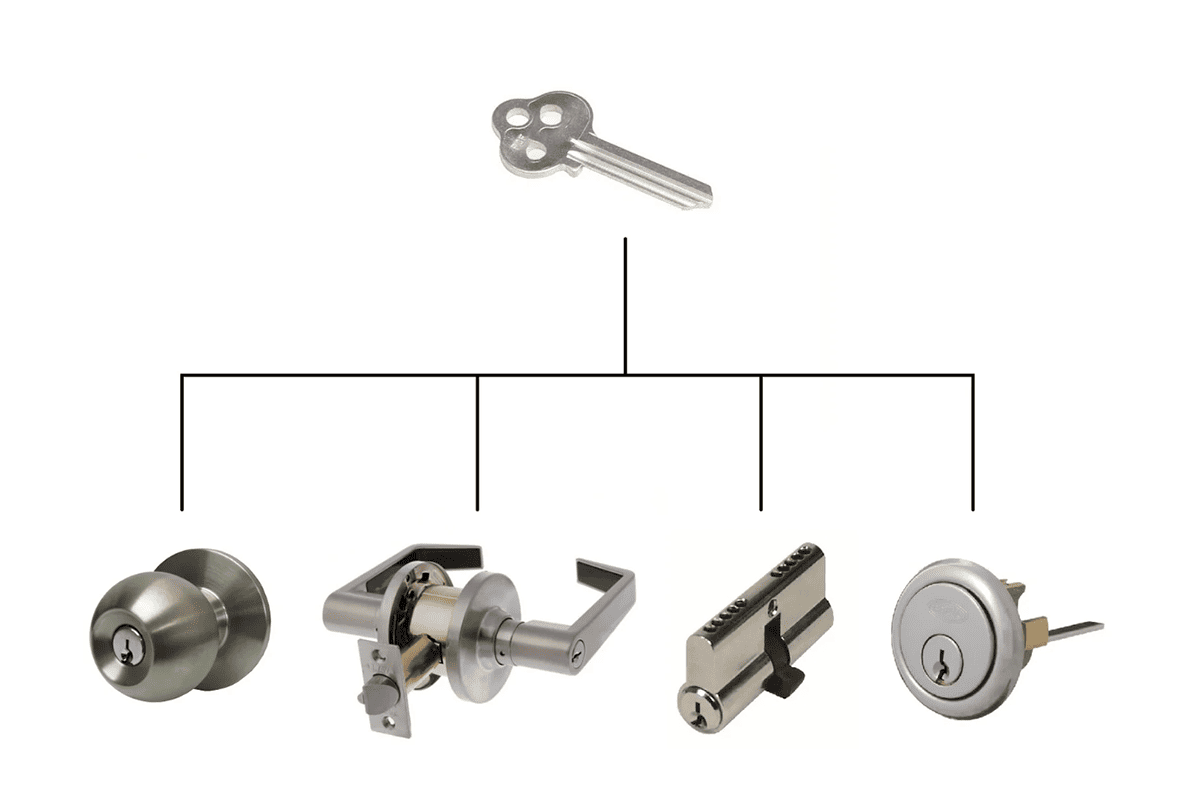
Keyed alike can be suitable for multipoint door locks when one authorized owner controls all the doors, the doors belong to the same private access area, and the buyer accepts that one lost key may affect several locks. It is not a substitute for a master key system or professional access-control planning.7
What keyed alike means
Keyed alike means multiple locks are pinned or configured so that they can be opened by the same key. In simple terms, one key operates several cylinders.
For example, a homeowner may want the same key for:
- Front entrance door
- Side entrance door
- Garage-to-house door
- Balcony door
This can reduce the number of keys on a keyring. It can also make daily use easier for one family or one property owner.
Where keyed alike may make sense
Keyed alike may be reasonable in specific situations:
| Situation | Why keyed alike may help | Risk to review |
|---|---|---|
| One private house with several exterior doors | One owner controls all doors | One lost key may affect all keyed-alike doors |
| Showroom sample doors | Staff can operate displays easily | Samples should not be confused with project security needs |
| Low-risk internal access groups | Simple operation for one team | Access boundaries may become unclear |
| Replacement cylinder sets for one owner | Easier user experience | Buyer must verify correct matching and labeling |
I do not describe keyed alike as “bad.” That would be too simple. It is useful when the access group is small, controlled, and clearly understood.
Why convenience can create exposure
The risk logic is straightforward. If one key opens five locks, then one lost key may create concern for five doors. If one key opens one lock, then the concern is limited to one door.
This matters more for multipoint door locks because they are commonly used where the buyer expects higher security. A keyed-alike configuration can still use a quality cylinder, but the access structure is broader by design.
Buyers should ask:
- Who will hold the key?
- How many copies will be distributed?
- Can the key be duplicated in the local market?
- Which doors become exposed if one key is lost?
- Will future homeowners or tenants understand the keying plan?
- Can replacement cylinders be supplied later with the same configuration?
B2B order confirmation points
For door manufacturers and hardware brands, keyed alike must be handled carefully during order confirmation. If a customer requests 500 cylinders keyed alike, I want to know whether they mean:
- All 500 cylinders use one key
- Each carton contains a small keyed-alike group
- Each door set has two cylinders keyed alike
- Each apartment unit has its own keyed-alike group
- The buyer actually needs a master key system
These details change the production and packing plan. They also affect inspection. A vague request like “same key” is not enough for a bulk order.
For OEM buyers, I suggest using a written keying schedule. Even a simple spreadsheet can help:
| Door group | Quantity | Keying method | Key number | Packing requirement |
|---|---|---|---|---|
| Villa A entrance + side door | 2 sets | Keyed alike | KA-001 | Pack together |
| Villa B entrance + balcony | 2 sets | Keyed alike | KA-002 | Pack together |
| Common stock items | 100 sets | Keyed different | KD series | Individual box |
This kind of schedule prevents many avoidable mistakes.
Why Is Keyed Different Usually the Safer Default for Multipoint Door Locks?
Buyers often ask for a simple default because they manage many SKUs, finishes, and door sizes. The problem is that the easiest default is not always the safest one. For exterior and project doors, a broad key-sharing plan can create future complaints that are hard to trace.
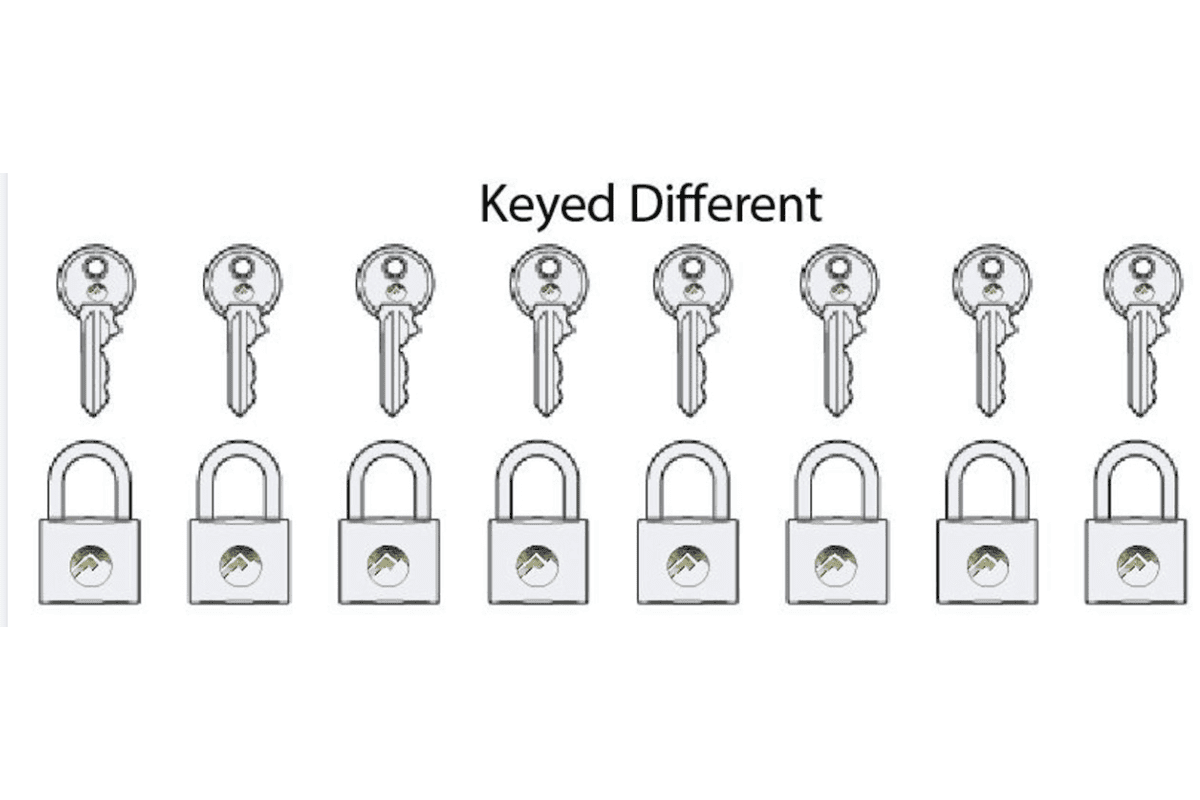
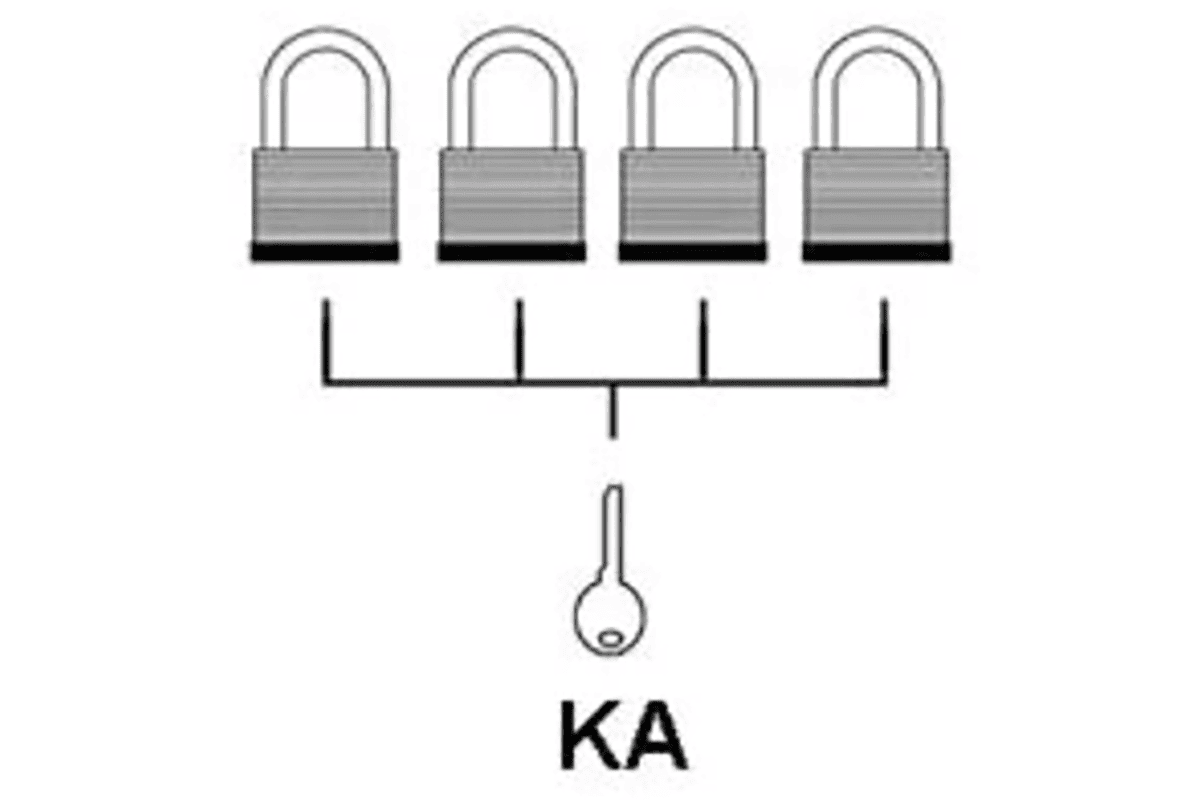
Keyed different is usually the safer default for multipoint door locks because each lock has its own independent key. This separation limits the effect of lost or mismanaged keys, keeps permission boundaries clearer, and better matches entrance door and balcony door security expectations.
What keyed different means
Keyed different means each lock cylinder is operated by its own unique key. A key for one lock should not open another lock in the same order group, unless a specific master key system or special configuration is requested.
For many standard supply orders, keyed different is the normal expectation. It is simple, clear, and easier to explain to end users.
Why keyed different fits security-sensitive doors
Multipoint locks are often selected for doors that need stronger closing and locking performance. These doors may include:
- Main entrance doors
- Apartment entry doors
- Balcony doors with outside access risk
- Hotel or project unit doors
- Residential development doors
- Premium exterior door systems
For these doors, access separation is important. If a key is lost, only one lock normally needs attention. This makes after-sales support and risk management more controlled.
Permission boundaries are clearer
Keyed different helps buyers maintain clearer access boundaries. This is especially useful when locks are sold through wholesalers, used by door factories, or installed in project buildings.
Consider these examples:
| Application | Better default | Reason |
|---|---|---|
| Apartment entrance doors | Keyed different | Each residence needs independent access |
| Balcony doors for separate units | Keyed different | One unit’s key should not affect another unit |
| Retail stock for wholesalers | Keyed different | Buyers expect independent lock sets |
| Door factory standard production | Keyed different | Reduces risk of mixed access between customers |
| One owner with several private doors | Depends | Keyed alike may be acceptable if risk is understood |
This is why I usually advise buyers not to choose keyed alike only because it feels easier. The downstream risk may belong to someone else: the installer, retailer, brand owner, or final property owner.
Keyed different also supports cleaner logistics
In bulk door hardware supply, keyed different is often simpler to manage if every lock set is packed with its own keys and labeled correctly. This does not mean keyed different requires no control. It still needs careful packing and inspection. However, the permission structure is easier to understand.
At SDH Hardware, our production and quality control process includes raw material screening, standardized production supervision, and finished product inspection. For cylinder and lock orders, buyers can also request inspection service after order completion. The goal is not to make unsupported security claims. The goal is to help the buyer verify that the delivered goods match the confirmed specification.
Questions buyers should ask before choosing keyed different
Before confirming keyed different, buyers should still review practical details:
How many keys per cylinder are required?
Common commercial orders may request 3 keys, 5 keys, or a market-specific standard.Should keys be numbered?
Numbering can help after-sales service, but it must be controlled.Should the cylinder be packed with the lock body or separately?
Door factories may prefer complete door-set packing. Wholesalers may prefer item-based packing.Does the cylinder match the lock case and door thickness?
Keying method does not replace cylinder dimension confirmation.Are certificates or fire-rated documents required for the complete hardware set?
Buyers should verify relevant CE or fire-rated documentation based on the actual product, market, and project requirements.
Security-first does not mean maximum complexity
A security-first approach does not always mean choosing the most complex cylinder system. It means matching the configuration to the application. For many standard multipoint door lock orders, keyed different gives a strong balance of clarity, risk limitation, and procurement simplicity.
I like to put it this way when discussing orders:
If the buyer has no special access management requirement, keyed different is usually the safer starting point.
How Is Keyed Alike vs Keyed Different Different From a Master Key System?
This is one of the most common points of confusion I see in B2B communication. A buyer may ask for “one key to manage all locks,” but that request can mean several different things. If the supplier assumes incorrectly, the delivered cylinders may not match the project’s permission plan.
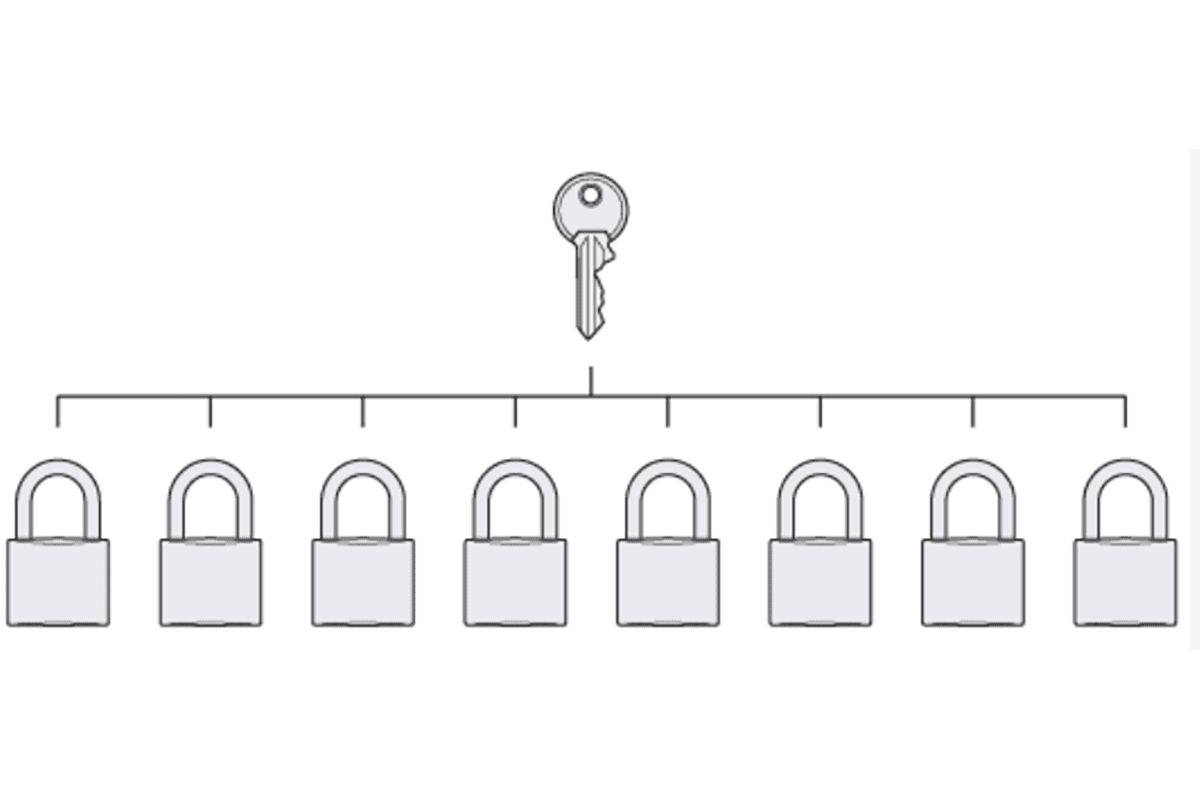
Keyed alike vs keyed different describes whether locks use the same key or separate keys. A master key system is different because it allows selected higher-level keys to open multiple locks while individual change keys still open only assigned locks.8 It must be specified separately.
Three different concepts
Buyers should separate these terms clearly:
| Term | Basic meaning | Typical purpose |
|---|---|---|
| Keyed alike | One key opens multiple locks | Convenience for one owner or one access group |
| Keyed different | Each lock has its own key | Independent access and clearer boundaries |
| Master key system | Individual keys plus higher-level master access | Managed access hierarchy for projects |
These are not interchangeable. A keyed-alike system is not a true permission hierarchy. It simply gives the same access to every holder of that key.
Why keyed alike is not a master key system
Keyed alike may look like a management solution because one key opens many doors. However, it does not provide layered control. If every cylinder is keyed alike, then every person with that key has the same access.
A master key system can be designed so that:
- A tenant key opens only one unit
- A floor manager key opens a selected group
- A property manager key opens a wider group
- A grand master key opens multiple groups, if specified
This requires proper planning and professional cylinder configuration. It should not be assumed from a simple keyed-alike request.
When a master key system may be needed
A master key system may be relevant for:
- Apartment buildings
- Hotels
- Student housing
- Office buildings
- Property management groups
- Institutional projects
However, these systems require more detailed communication. The buyer must define the access hierarchy before production. I recommend using a keying chart, not only a short note in a purchase order.
A basic keying chart may include:
| Area | Individual key | Group key | Master key |
|---|---|---|---|
| Apartment 101 | Opens 101 only | Opens Floor 1 only | Opens all assigned units |
| Apartment 102 | Opens 102 only | Opens Floor 1 only | Opens all assigned units |
| Apartment 201 | Opens 201 only | Opens Floor 2 only | Opens all assigned units |
| Service room | Opens service room only | Facility key | Master key if allowed |
The supplier should confirm whether the requested cylinder type can support the planned system. The buyer should also consider local regulations, project requirements, and professional security advice.
Procurement risks when terms are unclear
If a purchase order says “same key,” the supplier may not know whether the buyer wants:
- All cylinders keyed alike
- Sets of cylinders keyed alike by apartment
- Keyed different locks with a master key
- Sample cylinders using one key for showroom display
- Replacement cylinders matching a previous key code
These are very different requirements. They affect cylinder preparation, quality checking, key labeling, and packing.
I have learned to slow down at this point in order confirmation. A few extra questions before production can prevent serious after-sales problems later.
Recommended wording for B2B orders
Buyers can make communication clearer with precise wording:
- “All cylinders keyed different, 3 keys per cylinder.”
- “Each door set keyed different, packed individually.”
- “Each apartment has two cylinders keyed alike; different apartments keyed different.”
- “Master key system required; supplier to confirm capability and keying schedule.”
- “Replacement cylinders must match previous key number after verification.”
This wording helps the supplier quote accurately and reduces the risk of wrong delivery.
How Should Buyers Confirm Cylinder and Keying Details Before Ordering?
A buyer may choose the right keying concept but still face problems if the order details are incomplete. Multipoint door locks involve many dimensions and accessories. If cylinder size, finish, cam type, packing, or key quantity is missed, the keying method alone will not save the order.
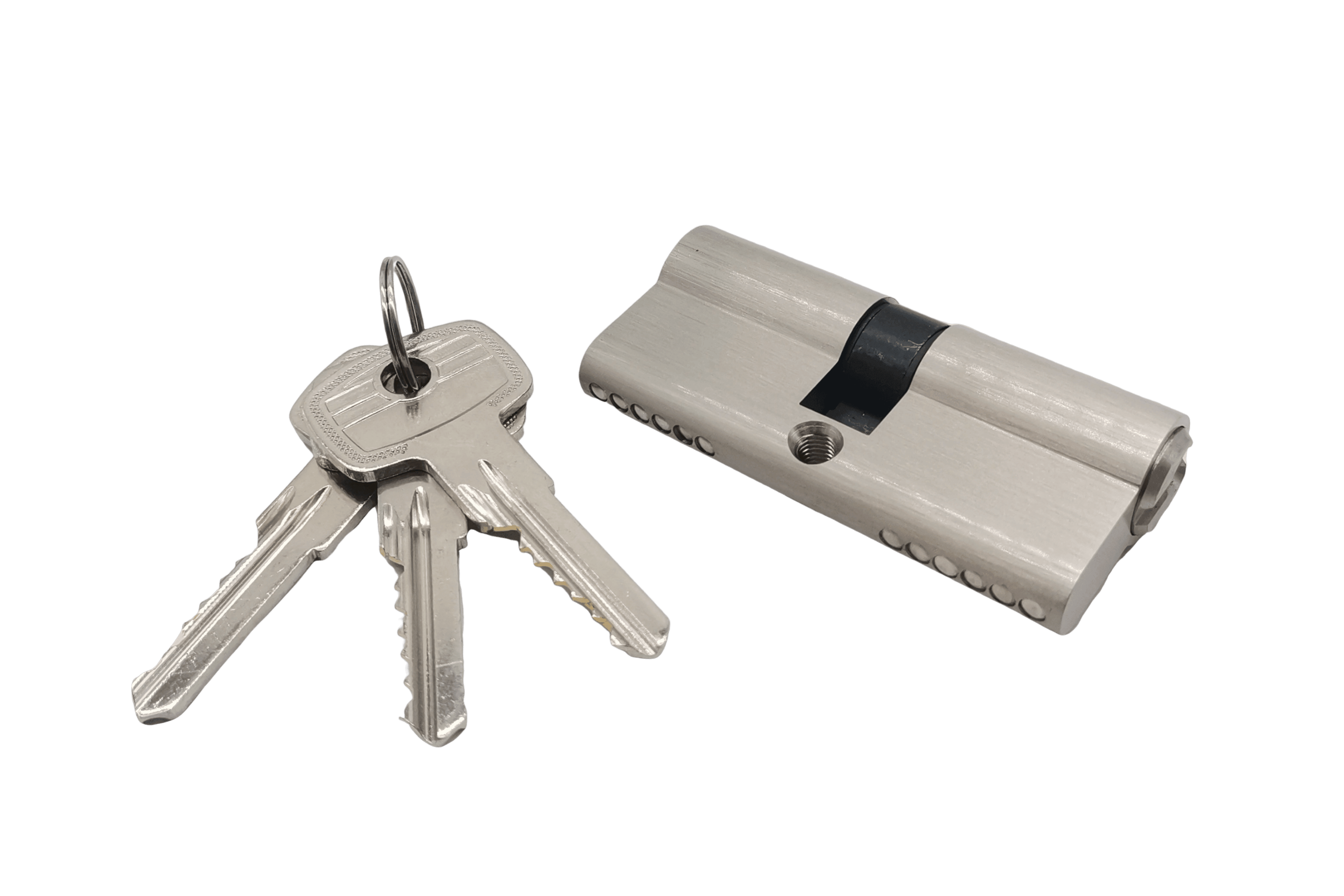
Buyers should confirm cylinder type, cylinder length, keying method, key quantity, finish, cam compatibility, packaging, labeling, and inspection requirements before ordering multipoint door locks. For bulk orders, I recommend a written specification sheet and a keying schedule approved before production.
Start with the door and lock specification
A multipoint door lock must match the door system. Before discussing keying, buyers should confirm:
- Door material: aluminum, PVC, wood, steel, or composite
- Door thickness
- Backset
- Faceplate width and length
- Locking point type
- Handle height
- Cylinder profile
- Required finish
- Market standard
- Project or retail packaging requirement
For European-style door systems, Euro profile cylinders are common.9 However, the exact cylinder length must match the door thickness and hardware position. A wrong length can affect appearance, function, and security expectations.10
Confirm the keying method in writing
I recommend that buyers use written terms instead of informal notes. The order should clearly state one of the following:
- Keyed different
- Keyed alike
- Keyed alike by group
- Master key system required
- Special replacement key code required
For keyed alike by group, the group structure should be listed. For master key systems, the hierarchy should be specified and professionally reviewed.
Use a practical checklist
Here is a simple checklist I suggest for B2B buyers:
| Confirmation item | Why it matters |
|---|---|
| Cylinder profile | Must match the lock and market standard |
| Cylinder length | Must match door thickness and hardware position |
| Cam type | Must operate the lock case correctly |
| Finish | Should match handles, escutcheons, and project design |
| Keying method | Defines access structure |
| Keys per cylinder | Affects user experience and cost |
| Key numbering | Helps tracking but needs control |
| Packing method | Prevents jobsite or warehouse confusion |
| Logo or branding | Important for OEM and hardware brands |
| Certificates/documents | Buyers should verify required CE or fire-rated documents |
Think about packaging and delivery
For bulk buyers, packaging is not just cosmetic. It protects the keying plan.
If each cylinder is keyed different, each cylinder and key set should stay together. If cylinders are keyed alike by group, the group must be identified clearly. If a master key system is involved, the packing and labeling must be handled with much more care.
At SDH Hardware, we support factory-direct B2B supply, ODM/OEM orders, custom surface treatments, customer logos, packaging design, drawings upon order confirmation, and inspection service after completion. For keying orders, I prefer to align the packaging method with the buyer’s warehouse and installation process.
Verify documents and project requirements
Many buyers also need CE certification or fire-rated certification documents for architectural hardware.11 I always suggest that buyers verify documents according to the exact product model, application, and destination market. A certificate should be treated as a document to check, not as a general assumption for every possible configuration.
For application-specific decisions, especially fire-rated doors, emergency exits, public buildings, or regulated projects, buyers should consult qualified professionals.12 The keying method is only one part of the complete hardware specification.
Frequently Asked Questions
Is keyed alike less secure than keyed different?
Keyed alike is not automatically unsafe, but it increases exposure because one key can open multiple locks. If that key is lost, copied, or mismanaged, several doors may be affected. Keyed different limits the impact to one lock, so it is usually better for security-sensitive multipoint door locks.
Should entrance doors use keyed alike or keyed different?
Entrance doors usually should use keyed different unless one owner intentionally wants shared access across several private doors. Since entrance doors are security-sensitive, keyed different gives clearer access separation and reduces the risk created by one lost or copied key.
Can keyed alike be used for balcony doors?
Keyed alike can be used for balcony doors in controlled private settings, but buyers should consider the risk carefully. If the balcony door is part of a security-sensitive exterior opening, keyed different is often the safer default because access remains separated.
Is a master key system the same as keyed alike?
No. Keyed alike means one key opens multiple locks with the same access level. A master key system creates an access hierarchy where individual keys open assigned locks and master keys open selected groups. It must be specified separately during ordering.
What should I tell my supplier when ordering cylinders?
You should confirm cylinder type, length, finish, cam type, keying method, keys per cylinder, packaging, labeling, and inspection needs. For keyed alike groups or master key systems, provide a written keying schedule before production.
Conclusion
Keyed alike vs keyed different should be decided from a security-first perspective, not only from a convenience-first mindset. Keyed alike can help one owner manage several doors, but it also spreads access risk. Keyed different is usually the safer default for multipoint door locks used on entrance, balcony, and project doors. If you need help confirming cylinder specifications, keying schedules, OEM packaging, or bulk door hardware supply, I invite you to contact SDH Hardware for practical factory-direct guidance.
"Lock and key", https://en.wikipedia.org/wiki/Lock_and_key. A neutral locksmithing reference defines keyed-alike locks as multiple cylinders operated by the same key and keyed-different locks as cylinders operated by individual keys. Evidence role: definition; source type: encyclopedia. Supports: The source should define keyed-alike locks as multiple locks operated by the same key and keyed-different locks as locks operated by separate keys.. ↩
"Keys, Locks, and Locking Devices | U.S. Fish & Wildlife Service", https://www.fws.gov/policy-library/432fw3. Government or institutional key-control guidance treats lost or uncontrolled keys as an access-control risk and recommends limiting key privileges or rekeying affected locks, which contextually supports keyed-different configurations for security-sensitive doors. Evidence role: expert_consensus; source type: government. Supports: The source should support the security principle that restricting key access and limiting the number of locks affected by a lost key reduces access-control risk.. Scope note: This would support the underlying key-control principle rather than prove that keyed different is always safer for every multipoint-lock application. ↩
"Three-point locking", https://en.wikipedia.org/wiki/Three-point_locking. A neutral technical reference describes multipoint door locks as locking systems that secure a door at multiple points rather than at a single latch or bolt location. Evidence role: definition; source type: encyclopedia. Supports: The source should describe multipoint locks as door locks that engage more than one locking point along the door.. ↩
"FUHR Multi-Point Locks | Replacement Guide", https://www.allaboutdoors.com/article-fuhr-multi-point-locks?srsltid=AfmBOorsHA5-5Ucxy6YHyH34Kb4TTA5pAfJHJgCFGpt_au35hJ46ZS9A. Institutional or standards-based descriptions of multipoint locking systems identify several possible engagement elements, including bolts, hooks, rollers, and latch points along the lock edge. Evidence role: mechanism; source type: institution. Supports: The source should show that multipoint locking systems may include different engagement elements such as hooks, bolts, rollers, or latches.. Scope note: The exact components vary by manufacturer and standard, so the source would support the general mechanism rather than every listed product configuration. ↩
"Lock and key", https://en.wikipedia.org/wiki/Lock_and_key. Educational technical material on pin-tumbler or profile cylinders explains that the cylinder authorizes operation by the correct key and transfers motion to the lock mechanism. Evidence role: mechanism; source type: education. Supports: The source should explain that the cylinder is the key-operated component that permits or prevents operation of the lock mechanism.. Scope note: This supports the operating principle of cylinder locks generally, not the performance of any specific multipoint lock model. ↩
"Facilities Management Key Control Policy - My Willamette", https://my.willamette.edu/site/facilities/policies/key-control-policy. University key-control policies commonly treat lost or unreturned keys as security events and require rekeying or other corrective action for the locks that the key can operate. Evidence role: general_support; source type: education. Supports: The source should state that lost, stolen, or uncontrolled keys can require rekeying or replacing affected locks to restore access control.. Scope note: Such policies support the risk-management logic but may not specifically discuss multipoint door locks. ↩
"Master keying", https://en.wikipedia.org/wiki/Master_keying. A neutral locksmithing reference distinguishes keyed-alike locks from master-key systems by noting that master keying creates levels of access using change keys and master keys. Evidence role: definition; source type: encyclopedia. Supports: The source should define a master key system as one in which individual keys open assigned locks and master keys open multiple selected locks.. ↩
"The Master Key System: Unlock Success with the Ultimate Book", https://www.lsfellowship.missouri.edu/article/the-master-key-system-unlock-success-with-the-ultimate-book. Reference descriptions of master-key systems state that change keys operate assigned cylinders, while master keys are configured to operate multiple cylinders within the designed keying hierarchy. Evidence role: definition; source type: encyclopedia. Supports: The source should explain the relationship between change keys, master keys, and higher-level access in a master key system.. ↩
"Euro Profile-Full Cylinder", https://www.allaboutdoors.com/Products/door-parts/hinged-residential-door-parts/Lock-Cylinders-Parts/Euro-Profile-Full-Cylinder?srsltid=AfmBOoqRhlvWLe2lHLMhLark_L78d-tfiJZXGramdxRIeLuNVrE6PmPl. European door-hardware standards and technical references identify the Euro profile cylinder as a standard cylinder format used with many European mortise and multipoint locksets. Evidence role: general_support; source type: institution. Supports: The source should show that Euro profile cylinders are a recognized cylinder format in European door-lock standards or door hardware practice.. Scope note: This supports the general prevalence of Euro profile cylinders in European-style systems, not their use in every European market or door type. ↩
"What is Lock Snapping with Prevention Tips (Expert Advice)", https://www.locksmiths.co.uk/faq/lock-snapping/. Police or government-linked security guidance on Euro cylinders notes that cylinders should be correctly sized and not protrude excessively, because poor fit can affect operation and increase vulnerability to physical attack. Evidence role: mechanism; source type: government. Supports: The source should explain that improper cylinder sizing or excessive protrusion can create functional or security issues, including vulnerability to attack.. Scope note: This supports the security and fit principle for Euro cylinders generally, rather than documenting every appearance or function issue caused by wrong length. ↩
"CE Marking for Construction Products", https://www.intertek.com/building/ce-marking/. Official construction-product guidance explains that regulated door and hardware products may require conformity documentation such as CE marking, declarations of performance, or fire-performance evidence when placed on applicable markets. Evidence role: general_support; source type: government. Supports: The source should establish that certain construction products or door hardware placed on regulated markets may need CE marking, declarations of performance, or fire-performance documentation.. Scope note: Certification obligations depend on the exact product, intended use, harmonized standard, and destination market. ↩
"1910.36 - Design and construction requirements for exit ...", http://www.osha.gov/laws-regs/regulations/standardnumber/1910/1910.36. Building-code and fire-safety authorities treat fire-rated openings and means-of-egress doors as regulated life-safety elements, with hardware selection and inspection tied to applicable codes and competent professional review. Evidence role: expert_consensus; source type: government. Supports: The source should support that fire doors, emergency exits, and public-building openings are subject to code requirements and competent assessment or inspection.. Scope note: This supports the need for qualified review in regulated applications, but the applicable authority and code requirements vary by jurisdiction. ↩