
Active vs Passive Doors: What’s the Difference on French Doors?
Active vs passive doors can cause expensive ordering mistakes when buyers treat them as simple left/right labels. That confusion can lead to the wrong lock, wrong flush bolts, or a door pair that does not close correctly. I usually explain the difference by looking at the locking sequence first, then matching the hardware.
On French doors, active vs passive doors describe the job of each leaf, not the side of the opening1. The passive door is fixed first with top and bottom bolts2. The active door is used daily and carries the main lock, cylinder, and handle3, locking into the passive leaf.
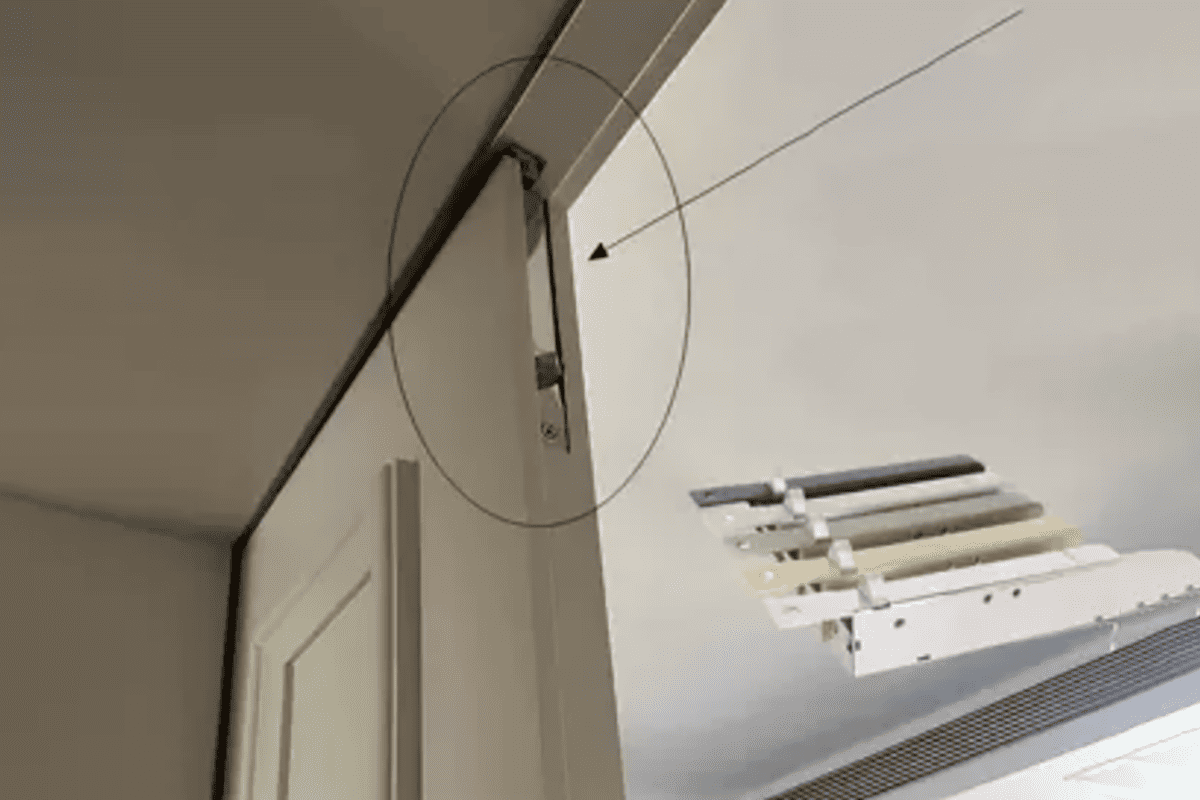
Most French double-door problems begin before production. A buyer confirms the size, finish, and handle style, but not the operating sequence. In my experience at SDH Hardware, the better question is not “left or right?” It is: which leaf closes first, and which leaf locks last?
Why Are Active vs Passive Doors Not the Same as Left and Right Doors?
Many buyers ask which side should receive the lock. That question feels practical, but it can hide the real issue. If a project team confuses side position with function, the hardware schedule may look complete while the door pair still cannot lock properly.
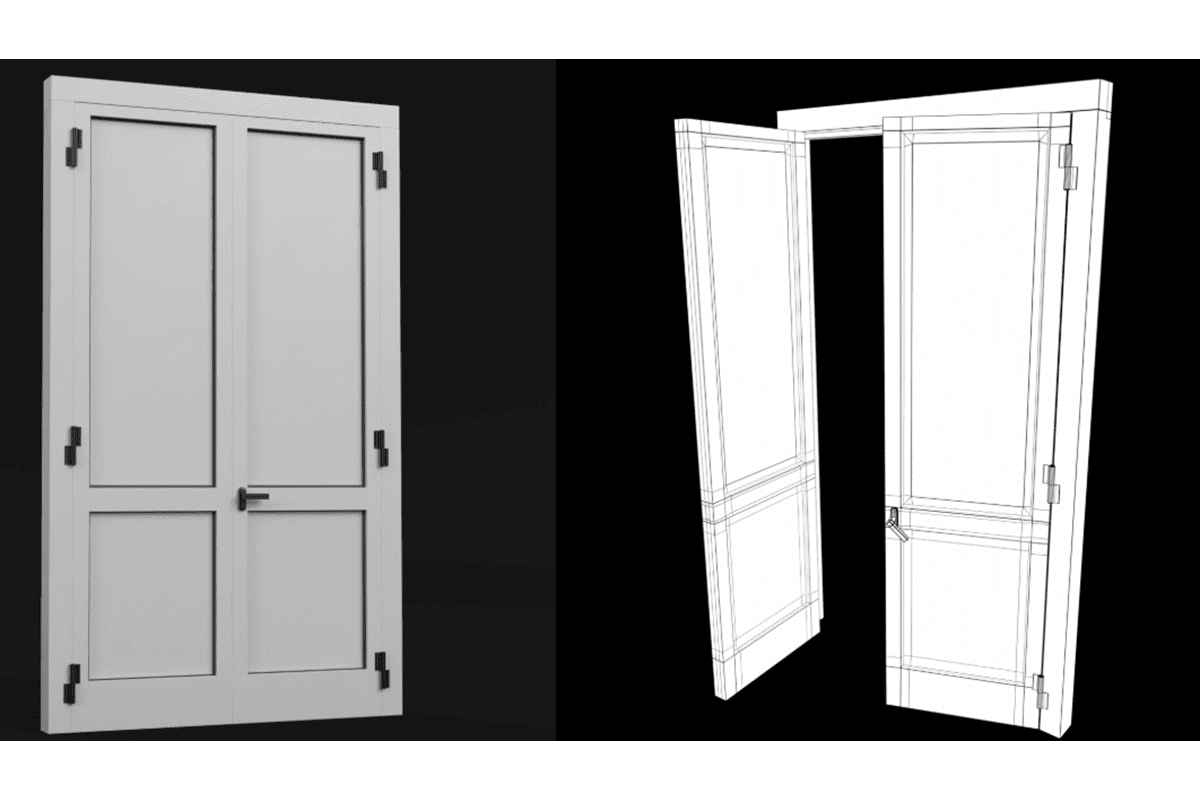
Active vs passive doors are not left/right labels because either the left or right leaf can be active depending on the project layout. The active leaf is the daily operating door. The passive leaf is secured first and provides the receiving point for the active leaf’s latch or bolt.
The correct definition starts with function
When I review double French door hardware with customers, I try to separate four different ideas:
Active or passive leaf
This describes the locking role of each door leaf.Left or right position
This describes what you see when facing the door from a chosen side.Inswing or outswing
This describes the direction the door opens.Door handing4
This describes hinge side and swing direction for hardware selection.
These terms often overlap in conversation, but they are not the same. A left leaf can be active on one project. A right leaf can be active on another. An inswing pair can still have either leaf as the active door. An outswing pair can work the same way, subject to project design and hardware compatibility.
The active leaf is the daily-use leaf
The active door is the leaf people normally open first. It usually carries:
- The main mortise lock or tubular lock
- The cylinder or thumbturn, depending on design
- The operating lever handle or pull handle set
- The latch and deadbolt functions, if specified
- The primary closing and locking action
On French doors, the active leaf does not lock into a fixed frame jamb in the same way as a single door. Instead, it often locks into the passive leaf through a strike box, keeper, or prepared lock receiving plate5.
The passive leaf is fixed first
The passive door normally stays closed during daily use. It is opened only when a wider passage is needed. For example, a hotel, villa, office, or showroom may keep one French door leaf closed most of the time and open both leaves only for furniture movement, cleaning, events, or emergency access where permitted by the project design.
The passive leaf is usually secured by:
- Top flush bolt
- Bottom flush bolt
- Automatic flush bolt
- Surface bolt, in some lower-spec or traditional designs
- Special astragal or meeting stile hardware, depending on the door system
This means the passive leaf becomes a stable receiving side. Then the active leaf can close and lock against it.
A simple comparison
| Term | What It Means | What It Does Not Mean |
|---|---|---|
| Active door | Daily operating leaf with main lock | Always the left door |
| Passive door | Leaf fixed first with bolts | Always the right door |
| Door handing | Hinge and swing classification | Same as active/passive |
| Inswing/outswing | Opening direction | Same as lock function |
| Meeting stile | Where two leaves meet | A complete lock specification |
In factory communication, I prefer to confirm the active/passive roles before confirming handing. This small step prevents many avoidable mistakes. It also helps buyers order the correct lock body, lever handle, dummy trim, flush bolts, strike components, and accessories.
My practical rule is simple: do not ask which side gets the lock first. Ask which door people use every day.
How Does the Passive Door Work on French Doors?
The passive door can look simple from the outside, but it plays a critical role in the locking system. If buyers treat it as just a decorative second leaf, they may forget bolts, keepers, reinforcements, or coordinator requirements.
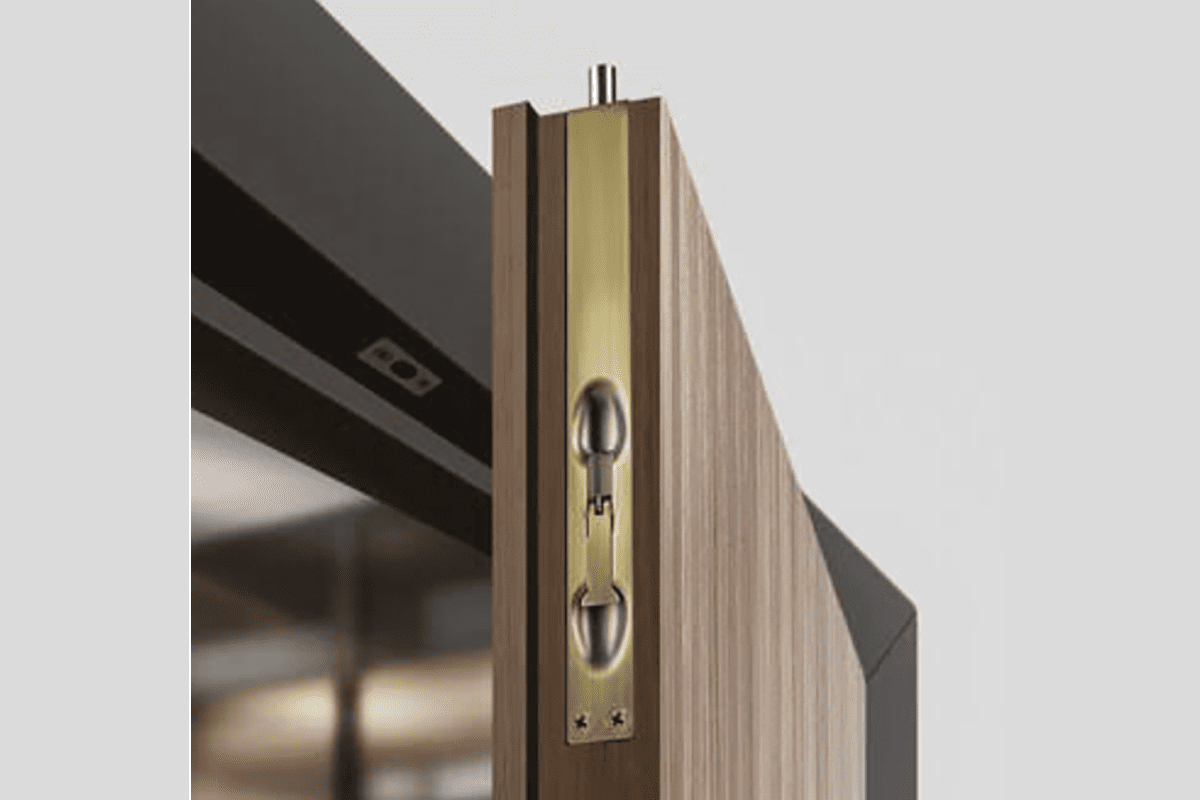
The passive door works by closing first and staying fixed in position. It is commonly secured with top and bottom flush bolts or automatic flush bolts. It may carry a strike box or keeper so the active door’s latch and deadbolt can lock securely into it.
The passive leaf creates the “frame” for the active leaf
On a single door, the latch and deadbolt usually engage into the fixed door frame. On many French door pairs, the active door locks into the passive door at the meeting stile. This changes the hardware logic.
The passive leaf must be stable enough to receive force from the active lock. If the passive leaf moves, flexes, or sits out of alignment, the active leaf may not latch cleanly. The result can be a customer complaint that sounds like a lock problem, even when the real issue is passive leaf positioning.
At SDH Hardware, I often see this during order discussion. A buyer may choose a good Euro mortise lock and a solid lever handle set, but they may not specify the passive leaf bolts clearly. That leaves the factory or installer to solve the missing detail later.
Common passive door hardware
A passive French door may include the following parts:
Manual flush bolts
These are operated by hand. One bolt secures upward into the head frame. Another secures downward into the floor or threshold.Automatic flush bolts6
These engage automatically when the active door closes, depending on the design. They are often used where convenience or closing sequence control matters.Dust-proof socket or floor strike
This receives the bottom bolt and helps keep debris out of the floor hole.Top strike plate
This receives the upper bolt into the frame head.Strike box or lock keeper
This receives the active door latch or deadbolt at the meeting stile.Dummy handle or fixed pull
This gives visual symmetry and occasional pulling function without operating the main lock.
Manual vs automatic flush bolts
| Feature | Manual Flush Bolts | Automatic Flush Bolts |
|---|---|---|
| Operation | User engages bolts manually | Bolts engage through door sequence |
| Cost | Usually lower | Usually higher |
| Convenience | Lower | Higher |
| Risk | User may forget to engage | Needs correct adjustment |
| Best fit | Standard commercial or residential pairs | Higher-spec doors or controlled closing systems |
Why the passive leaf usually does not carry the main lock
The passive door normally does not carry the main mortise lock because it is not the daily-use leaf. Its job is to remain fixed first. If both leaves were treated as primary locking leaves, the hardware would become confusing and may not function as intended.
However, the passive leaf still needs hardware preparation. It may need routed pockets for flush bolts, a reinforced meeting stile, or a strike box. For metal, timber, aluminum, or composite doors, those preparations can differ. That is why I always recommend confirming the door material, stile width, lock backset, and meeting stile construction before production.
Practical procurement checks
Before ordering passive door hardware, I suggest checking:
Door height
Taller doors may need longer rods or special bolt lengths.Threshold design
The bottom bolt needs a proper receiving socket7.Frame head preparation
The top bolt needs enough material and correct alignment.Meeting stile profile
Rebated, flat, or astragal meeting stiles affect strike selection.Fire-rated or project requirements
Buyers should verify test reports, CE documents, and local project standards with qualified professionals.
The passive door may not be used daily, but it controls the success of the whole French door pair. If it is not fixed correctly, the active door cannot lock reliably.
What Hardware Goes on the Active Door?
The active door carries the hardware people touch most often. If the wrong lock body, cylinder, handle, or strike relationship is selected, the French door pair may look correct but fail during daily use.
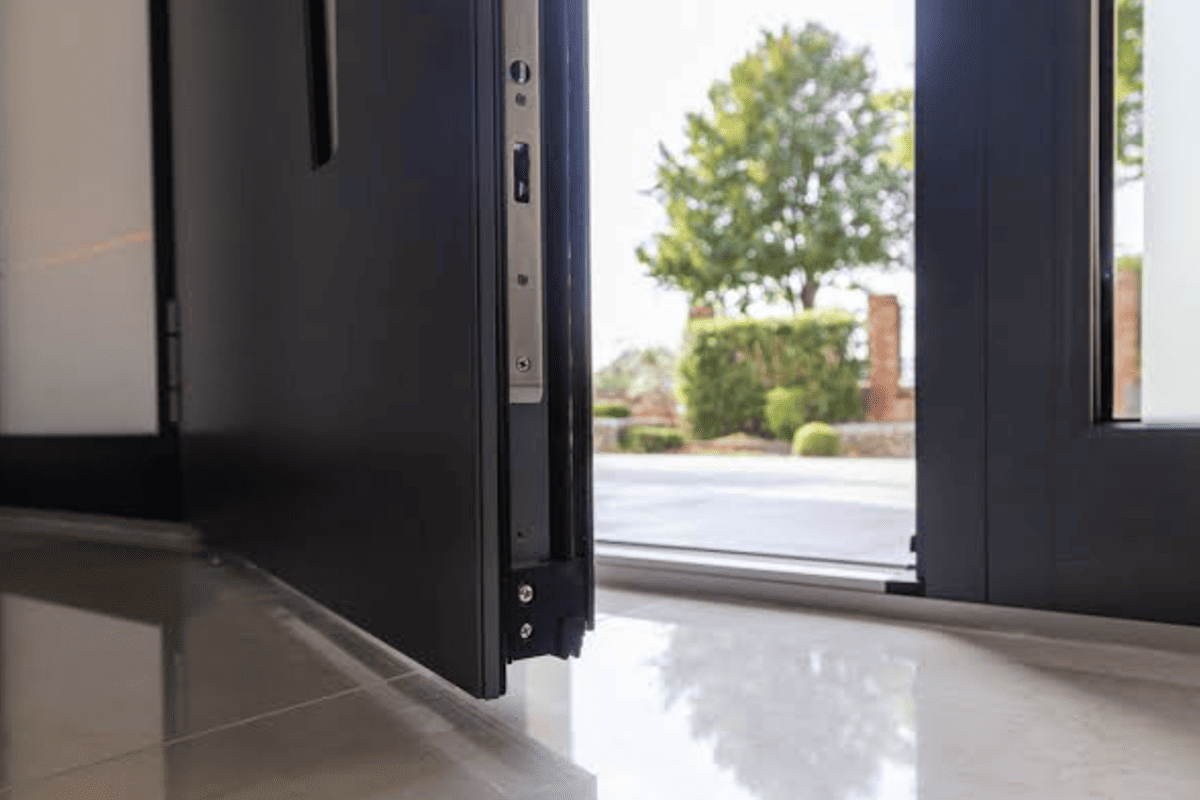
The active door usually carries the main lockset, including the mortise lock body, latch, deadbolt, cylinder, and operating handle. It closes after the passive door and locks into the passive leaf through a strike box, keeper, or meeting stile receiving component.
The active leaf is the operating side
In a French door pair, the active door is the leaf that users open first and close last. It provides normal entry and exit. That is why it needs the complete operating hardware set.
A typical active door hardware package may include:
- Euro mortise lock body
- Euro profile cylinder
- Lever handle pair or pull handle set
- Escutcheons or rosettes
- Spindle and fixing screws
- Latch and deadbolt
- Strike box or keeper on the passive side
- Optional door closer, depending on project needs
- Optional door coordinator, if closing sequence must be controlled
For architectural projects, the details matter. A 55 mm backset lock does not replace a 45 mm backset lock without changing door preparation8. A square forend does not match a radius forend unless the door edge is machined correctly. A stainless steel lever handle may look suitable, but the spindle, spring cassette, and fixing method still need to match the lock and door thickness.
Locking into the passive leaf
The active door’s latch and deadbolt need a proper receiving point. This is often where mistakes happen. Some buyers order the active lockset but forget the passive-side strike box. Others order a standard frame strike, which may not suit the meeting stile of a French door.
The receiving component may vary by door design:
| Door Meeting Style | Common Receiving Hardware | Procurement Note |
|---|---|---|
| Flat meeting stile | Strike plate or strike box | Check alignment and reinforcement |
| Rebated meeting stile | Rebate kit and matching strike | Confirm rebate direction and depth |
| Astragal system | Keeper integrated into astragal | Confirm supplier compatibility |
| Metal door pair | Welded or screwed receiving box | Check material thickness |
| Timber door pair | Routed strike pocket | Check screw holding strength |
Handle choices on the active leaf
The active side usually needs an operating handle, not just a dummy handle. The handle must retract the latch and support daily operation. For B2B orders, I suggest confirming the following before placing a purchase order:
Handle material
Stainless steel, zinc alloy, brass, or aluminum each has different cost and durability profiles.Finish
Satin stainless steel, PVD, matte black, polished chrome, and custom finishes may require different lead times.Door thickness9
Spindle length and fixing screws must match actual thickness.Lock function
Passage, privacy, entrance, classroom, or project-specific functions affect lock selection.Cylinder type
Single cylinder, double cylinder, thumbturn cylinder, or keyed-alike systems must match regional requirements.
Why I ask for drawings before confirmation
For ODM and OEM orders, I prefer to review drawings or at least a clear hardware schedule before production. This is not because the active door concept is difficult. It is because small mismatches become expensive when repeated across hundreds or thousands of sets.
A good order confirmation should show:
- Active leaf position from a defined viewing side
- Passive leaf position from the same viewing side
- Door swing direction
- Lock backset and center distance
- Forend shape and size
- Cylinder length
- Handle model and finish
- Strike or keeper type
- Flush bolt type and length
- Packaging, logo, and inspection requirements
At SDH Hardware, I have seen buyers prevent major rework by confirming these details early. The active door is the most visible part of the system, but it only works when the passive-side preparation is equally clear.
When Do Active vs Passive Doors Need a Door Coordinator?
French doors may close out of sequence when both leaves are opened. If the active leaf closes before the passive leaf, the latch may hit the wrong surface, bolts may not engage, and the lock may fail to align.
Active vs passive doors need a door coordinator when the closing order must be controlled. The coordinator helps ensure the passive door closes first and the active door closes second10. This is especially important on pairs with closers, automatic bolts, rebated meeting stiles, or project safety requirements.

Closing sequence matters
The correct French door closing sequence is usually:
- Passive door closes first
- Passive door bolts engage
- Active door closes second
- Active lock latches or bolts into the passive leaf
If this sequence is reversed, the active door may stop the passive door from reaching its fixed position. The latch may rub. The deadbolt may not throw. The flush bolts may not engage. In commercial projects, repeated misalignment can create warranty disputes between the door factory, hardware supplier, and installer.
What a door coordinator does
A door coordinator is a hardware device that controls the order in which paired doors close. It typically holds the active leaf open long enough for the passive leaf to close first. Once the passive door reaches its position, the active door can close properly.
Door coordinators are often considered when French doors have:11
- Door closers on both leaves
- Automatic flush bolts
- Fire-rated door pair requirements
- Rebated meeting stiles
- Astragals that require a specific closing order
- High-traffic commercial use
- Users who may not understand the correct closing sequence
Coordinator vs no coordinator
| Situation | Coordinator Usually Needed? | Reason |
|---|---|---|
| Both leaves have closers | Often yes | Sequence may be unpredictable |
| Automatic flush bolts installed | Often yes | Bolts depend on correct closing action |
| Manual flush bolts only | Sometimes no | User controls passive leaf manually |
| Decorative interior French doors | Sometimes no | Lower functional demand |
| Fire-rated project pair12 | Verify carefully | Local standards and test evidence matter |
| Rebated meeting stile | Often yes | Active leaf may block passive leaf |
Important note on fire and safety projects
I avoid making universal code claims because requirements vary by country, building type, and tested assembly. For fire-rated or safety-related French doors, buyers should verify:
- Fire-rated certificate or test report
- CE documentation where applicable
- Door leaf test compatibility
- Lock and hinge test compatibility
- Coordinator and closer requirements
- Local authority or consultant approval
SDH Hardware can provide products with CE certification and fire-rated certification documents for applicable product lines, but buyers should treat these as documents to verify against the specific project. A qualified professional should evaluate the complete door assembly before final approval.
Common coordinator mistakes
I often see four common mistakes in double-door orders:
The coordinator is omitted because the doors are “just French doors.”
This may work for low-risk decorative doors, but it can fail on closers or automatic bolts.The coordinator is selected after the frame is already produced.
This can create fixing problems or appearance issues.The coordinator is not matched to door width.
The device must fit the pair size and closing movement.The coordinator is ordered without checking the closer arms.
Some closers and coordinator layouts can interfere with each other.
A coordinator is not needed for every French door pair. However, when the sequence must be reliable, it becomes a small part that protects the whole opening.
How Should Buyers Specify Active vs Passive Doors Before Ordering?
Bulk buyers often manage many door sizes, finishes, and markets at once. If the active/passive logic is not written clearly, the factory may produce hardware that matches the drawing visually but fails in installation.
Buyers should specify active vs passive doors by confirming the daily-use leaf, passive leaf bolt method, lock position, strike or keeper type, closing sequence, handing, swing direction, and any coordinator requirement. A clear hardware schedule reduces rework before production and purchasing.
A practical order-confirmation method
When I help customers prepare French door hardware sets, I like to use a simple sequence. It keeps the discussion clear for door factories, hardware brands, and wholesalers.
Step 1: Confirm the active leaf
Ask: Which leaf will people use every day?
Do not start with left or right until the viewing side is defined. Instead, identify the daily-use leaf first. Then mark it on the drawing.
Step 2: Confirm the passive leaf
Ask: Which leaf should remain fixed during normal operation?
This leaf needs flush bolts or another suitable fixing method. It may also need a dummy handle or pull handle for visual balance.
Step 3: Confirm the meeting stile
Ask: How do the two leaves meet?
The meeting stile affects the strike, rebate kit, astragal, lock forend, and sometimes the handle projection.
Step 4: Confirm the lockset
Ask: What lock body and cylinder function does the active leaf need?
For Euro mortise locks, buyers should confirm center distance, backset, forend size, follower size, cylinder type, and latch/deadbolt direction.
Step 5: Confirm the closing sequence hardware
Ask: Will the passive leaf reliably close first?
If not, check whether a door coordinator, closer adjustment, or automatic bolt system is needed.
Procurement checklist for French double doors
| Item to Confirm | Why It Matters | Typical Risk if Missed |
|---|---|---|
| Active leaf | Defines main lock position | Lock prepared on wrong leaf |
| Passive leaf | Defines bolt and keeper side | Missing flush bolts |
| Viewing side | Makes left/right meaningful | Drawing confusion |
| Swing direction | Affects lock latch and hinges | Wrong handing |
| Door thickness | Affects spindle and cylinder | Parts too short or long |
| Backset | Affects door machining | Lock does not fit cutout |
| Meeting stile | Affects strike solution | Latch cannot engage |
| Flush bolt type | Affects passive fixing | Passive leaf moves |
| Coordinator need | Controls closing order | Doors close in wrong sequence |
| Certification documents | Supports project compliance review | Documents may not match application |
Example configuration
A typical commercial French door set may use:
- Active leaf: Euro mortise lock, Euro cylinder, stainless steel lever handles
- Passive leaf: Top and bottom flush bolts, strike box, dummy lever or fixed pull
- Both leaves: Butt hinges or concealed hinges, depending on door design
- Optional: Door coordinator and closers where sequence control is required
- Finish: Satin stainless steel, matte black, or custom finish by order
- Branding: Laser logo, customer stamping, or custom packaging for OEM/ODM orders
This is only one example. A hotel room, villa entrance, office partition, school corridor, or fire-rated service area may require different hardware. That is why I avoid giving one universal configuration. The best set depends on door material, usage frequency, market standard, test requirements, and customer budget.
How SDH Hardware supports this process
As a manufacturer, SDH Hardware works with door manufacturers, hardware brands, and bulk wholesalers that need repeatable hardware sets. We produce Euro mortise locks, stainless steel lever handles, butt hinges, concealed hinges, Euro brass cylinders, and door accessories. Our production team can support standardized products and customized specifications.
For active vs passive doors, I usually recommend that buyers send:
- Door elevation drawings
- Door thickness and material
- Hardware finish requirements
- Lock function requirements
- Quantity and packaging requirements
- Certification or test document requirements
- Target market standards
- Any brand logo or private-label request
Then we can help match the lock, flush bolts, keeper, handle trim, hinges, and accessories before production. This keeps the discussion practical and reduces the chance of mismatched components.
Frequently Asked Questions
Is the active door always on the right side?
No. The active door is not always on the right side. It can be either leaf. The active leaf is the door used daily and fitted with the main lockset. Buyers should define the viewing side before using left/right language in drawings or purchase orders.
Does the passive door need a handle?
The passive door may use a dummy handle, fixed pull, or matching trim for appearance and occasional operation. It usually does not need the main operating lock handle. The best choice depends on design, traffic level, door material, and the desired visual symmetry.
Can both French door leaves have locks?
Some special designs may use more complex locking systems, but standard French doors usually do not put the same main lock hardware on both leaves. The common setup uses one active lockset and one passive leaf secured by flush bolts or automatic bolts.
Do all active vs passive doors need automatic flush bolts?
No. Many French door pairs use manual flush bolts on the passive leaf. Automatic flush bolts are useful when convenience, controlled closing, or project requirements justify them. Buyers should check door design, usage frequency, and any required certification before selecting bolt type.
When should I specify a door coordinator?
You should consider a door coordinator when the passive door must close before the active door, especially with closers, automatic flush bolts, rebated meeting stiles, astragals, or fire-rated assemblies. Project standards should be verified by a qualified professional before final selection.
Conclusion
Active vs passive doors on French doors are best understood by function and sequence, not by left or right position. The passive leaf closes first and is secured by bolts. The active leaf closes second and carries the main lock, cylinder, and operating handle. For B2B buyers, the safest approach is to confirm the active leaf, passive bolts, strike solution, handing, swing, and coordinator needs before ordering. If you need help matching a French double-door hardware set, contact SDH Hardware for factory-direct OEM/ODM support and order-confirmation guidance.
"0751.49 In-Building Transformer Vault Doors", https://web8.seattle.gov/city-light-engineering-standards/Home/GetPDF?libId=BrowseAll&searchForfileName=0751.49.pdf. A door-hardware glossary or ANSI/BHMA-style terminology source defines the active leaf as the leaf normally used for passage and the inactive leaf as the companion leaf that is secured when not in use, supporting the distinction between function and side position. Evidence role: definition; source type: institution. Supports: A neutral door-hardware glossary or standard should define active and inactive/passive leaves by function in a pair of doors.. Scope note: Terminology may vary between “passive leaf” and “inactive leaf,” so the source may support the concept using a different term. ↩
"Decoded: Flush Bolts and Coordinators", https://idighardware.com/2016/12/decoded-flush-bolts-and-coordinators-january-2017/. Architectural door-hardware references describe flush bolts as devices used to secure the inactive leaf of a pair of doors at the head and sill, supporting the statement that the passive leaf is fixed before the active leaf closes. Evidence role: mechanism; source type: institution. Supports: A neutral technical source should show that inactive leaves in paired doors are often secured with flush bolts or surface bolts at the head and threshold.. Scope note: The source would support the common mechanism, not prove that every French door pair uses this arrangement. ↩
"0751.49 In-Building Transformer Vault Doors", https://web8.seattle.gov/city-light-engineering-standards/Home/GetPDF?libId=BrowseAll&searchForfileName=0751.49.pdf. Door-hardware terminology sources describe the active leaf as the operable leaf in a pair and associate it with the primary latching or locking hardware, supporting the article’s description of the active door’s hardware role. Evidence role: definition; source type: institution. Supports: A door-hardware reference should identify the active leaf as the leaf equipped for normal operation and locking.. Scope note: Specific components such as cylinder type and handle style vary by lock design and regional practice. ↩
"Right Hand vs. Left Hand Door: How to Tell the Difference", https://www.rockymountainhardware.com/right-hand-vs-left-hand-door-guide/. Door-hardware references define handing by the relationship between hinge side and direction of swing, supporting the article’s distinction between handing and active/passive leaf function. Evidence role: definition; source type: institution. Supports: A technical door-hardware or building-code reference should define door handing in terms of hinge location and swing direction.. ↩
"Electric strike for double metal doors. : r/accesscontrol", https://www.reddit.com/r/accesscontrol/comments/12f9efg/electric_strike_for_double_metal_doors/. Technical door-hardware references for paired doors describe latch and bolt engagement at the meeting stile through strikes, keepers, or astragal-mounted components, supporting the article’s explanation of active-to-passive locking. Evidence role: mechanism; source type: institution. Supports: A hardware manual or standards guide should explain that the active leaf of a door pair can latch into a strike or keeper on the inactive leaf at the meeting stile.. Scope note: The exact receiving component depends on the door material, stile profile, and lock system. ↩
"Decoded: Flush Bolts and Coordinators", https://idighardware.com/2016/12/decoded-flush-bolts-and-coordinators-january-2017/. Door-hardware standards and technical guides describe automatic flush bolts as bolts used on the inactive leaf of a door pair that project or retract through the operation of the active leaf or closing sequence, supporting the article’s description of their role. Evidence role: mechanism; source type: institution. Supports: A neutral hardware standard or guide should describe automatic flush bolts as devices that secure the inactive leaf automatically as part of paired-door operation.. Scope note: Different automatic flush-bolt designs operate differently, so the source may describe the general category rather than the exact mechanism used in every installation. ↩
"Dust Proof Strikes", https://www.rockwoodmfg.com/en/Products/Latching-and-Coordinating-Hardware/Dust-Proof-Strikes. Door-hardware technical references describe floor strikes or dust-proof sockets as receiving devices for the lower bolt of a flush-bolt assembly, supporting the statement that the bottom bolt requires a proper receiving socket. Evidence role: mechanism; source type: institution. Supports: A door-hardware guide should describe floor strikes, dust-proof strikes, or sockets as receiving components for bottom flush bolts.. Scope note: The exact socket type depends on the threshold, floor finish, and door-rating requirements. ↩
"How to measure and choose the right mortise lock size", https://www.blue-id.com/en/blog/mortise-lock-mass. Door-hardware references define backset as a fixed dimensional relationship between the door edge and the lock or latch centerline, supporting the conclusion that substituting a different backset requires compatible door preparation. Evidence role: mechanism; source type: institution. Supports: A door-hardware reference should define backset as the distance from the door edge to the lock centerline, showing why different backsets require different preparations.. ↩
"How to Measure the Correct Mortise Cylinder Length",
. Architectural hardware references specify cylinders, spindles, and through-bolts in relation to door thickness, supporting the article’s statement that thickness affects the fit of handles and locking components. Evidence role: mechanism; source type: institution. Supports: A technical hardware reference should explain that cylinders, spindles, and through-fixings must be sized to the door thickness.. ↩"What Is a Door Coordinator? How It Works and When You ...", https://watersonusa.com/solutions/door-coordinator. Architectural hardware and fire-door references define a coordinator as a device used on paired doors to control closing order, typically allowing the inactive leaf to close before the active leaf, supporting the article’s explanation of its purpose. Evidence role: definition; source type: institution. Supports: A door-hardware or fire-door reference should define a coordinator as a device that controls the order of closing in a pair of doors.. ↩
"Decoded: Flush Bolts and Coordinators", https://idighardware.com/2016/12/decoded-flush-bolts-and-coordinators-january-2017/. Technical door-hardware guidance links coordinators to paired-door assemblies where astragals, automatic flush bolts, closers, or fire-door listings require a specific closing sequence, supporting the article’s list of common coordinator-use conditions. Evidence role: general_support; source type: institution. Supports: A technical guide should connect coordinators with paired doors where astragals, automatic flush bolts, closers, or fire-door assemblies require a controlled closing sequence.. Scope note: The source would support common design considerations, while actual need depends on the tested assembly, local code, and project specification. ↩
"QQ: Coordinators on Fire Doors", https://idighardware.com/2019/05/qq-coordinators-on-fire-doors/. Fire-door standards such as NFPA 80 treat fire doors as assemblies whose components and hardware must be installed and maintained in accordance with their listings and applicable code requirements, supporting the article’s caution to verify fire-rated paired-door hardware carefully. Evidence role: expert_consensus; source type: institution. Supports: A fire-door standard or code source should state that fire-door assemblies and their hardware must comply with tested/listed assembly requirements.. Scope note: The standard establishes the compliance framework but does not determine suitability for a specific project without the actual listing, test report, and local authority review. ↩