What Is Lift to Lock on a Multipoint Door Lock?
Lift to lock on a multipoint door lock can confuse buyers when the operating method is not clearly explained. A door may close correctly, but the customer may still ask how the bolts engage, whether a key is needed, and what handle set is compatible. I use this guide to make the function simple for door factories and hardware buyers.
Lift to lock means the user closes the door, lifts the handle upward, and triggers the multipoint lock body so the bolts or locking points extend into the frame.1 In many configurations, this avoids turning a key several times to throw the deadbolts, although the exact release method depends on the product design.2
This operating method is only one type of multipoint locking system. It is popular because it feels intuitive, but the final performance depends on the lock body, handle, cylinder, keeps, door material, and installation accuracy. I will break down each part from a manufacturer’s evaluation perspective.
How Does Lift to Lock Work on a Multipoint Door Lock?
A multipoint door can look secure from the outside, but the real locking action happens inside the door edge and frame. If the operation is misunderstood, the wrong handle, cylinder, or keep may be selected. I often start by explaining the movement sequence first.
Lift to lock works by converting an upward handle movement into internal lock body movement. After the door is closed, the user lifts the lever. The gearbox then drives the locking points, such as hooks, bolts, rollers, or shoot bolts, into the frame keeps so the door is secured at several positions.
The basic user sequence
In a typical lift to lock configuration, the user does not start by rotating the key multiple times. The hand action comes first.
- The user closes the door.
- The latch keeps the door in the closed position.
- The user lifts the handle upward.
- The lock body mechanism is triggered.
- The locking points extend into the door frame keeps.
- The door becomes secured according to that lock configuration.
- The user may use a key, thumb turn, or other release method if the model requires it.
This simple sequence is the main reason many door factories consider lift to lock for residential entrance doors, apartment doors, terrace doors, and some commercial door systems.
What moves inside the lock?
The handle spindle connects the lever handle to the central gearbox. When the lever is lifted, the spindle rotates in the opposite direction from normal opening. That movement transfers force through the gearbox and vertical drive bars. The bars then move the locking points along the door edge.
Common locking points include:
- Deadbolts near the center lock case
- Hook bolts that pull into metal keeps
- Roller cams that improve compression
- Mushroom cams often used on certain door systems
- Top and bottom shoot bolts for extended vertical locking
Not every multipoint lock uses all of these parts. A buyer should read the product drawing and test sample operation before confirming a bulk order.
Lift to lock is not the same as “all multipoint locks”
I want to make this point very clear. Not all multipoint locks are lift to lock.3 Some systems use key-operated locking, automatic locking, slam-shut locking, split-spindle operation, or motorized control.4 Lift to lock is one operating method among several.
Here is a simple comparison:
| Operating method | Main user action | Common buyer concern |
|---|---|---|
| Lift to lock | Lift handle to extend locking points | Handle compatibility and user habit |
| Key-operated multipoint | Turn key to extend locking points | Key turns and cylinder durability |
| Automatic multipoint | Close door to trigger locking | Installation tolerance and reset function |
| Motorized multipoint | Electronic signal drives locking | Power supply and access control integration |
From my factory experience, many misunderstandings happen because a buyer says “multipoint lock” but actually means a specific operating style. Before quotation, I prefer to confirm the door type, lock center distance, backset, faceplate size, locking point layout, handle operation, and cylinder function.
For procurement, the phrase “multipoint door lock” describes the locking arrangement. The phrase “lift to lock” describes the user operation.
Why Do Door Factories Choose Lift to Lock for Multipoint Door Locks?
Door factories need hardware that users can understand quickly. If locking feels difficult, the end customer may think the door is defective. Lift to lock solves part of this problem by making the locking movement direct, physical, and easy to demonstrate during installation handover.
Door factories choose lift to lock because it can reduce repeated key rotation, simplify daily locking, and provide clear handle feedback. The user closes the door, lifts the handle, and engages the multipoint mechanism. This operation can match market expectations in regions where upward handle locking is familiar.
Convenience in daily use
The biggest selling point of lift to lock is convenience. Traditional locking may require the user to turn a key several times to fully throw the deadbolt. With a lift to lock multipoint door lock, the upward handle movement throws the locking points instead.
This matters for door factories because user behavior affects after-sales service. A lock may be technically correct, but if the buyer’s customer does not understand the operation, the factory may receive complaints.
I have seen this happen in sample discussions. A customer may test the door, press the handle down, and then assume the lock has failed because the multipoint bolts did not engage. Once I explain, “Close the door first, then lift the handle,” the function becomes obvious.
Better communication during product handover
For B2B supply, simple operation is useful only if it is supported by clear documentation. Door manufacturers should prepare operation labels, installation instructions, and sales training materials when they introduce lift to lock systems.
Useful handover notes include:
- “Lift handle upward after closing to engage locking points.”
- “Do not force the handle if the door is not aligned.”
- “Unlock according to the cylinder or thumb turn configuration.”
- “Check frame keeps after installation.”
This small documentation effort can reduce confusion in showrooms, construction sites, and final home delivery.
Market fit matters
Lift to lock is more common in some markets than others.5 In parts of Europe and the Middle East, many users are familiar with lever-up locking. In other markets, users may expect key-only locking or automatic locking. A door factory should choose based on the final market, not only based on mechanism availability.
| Evaluation factor | Why it matters for lift to lock |
|---|---|
| User habit | Customers must understand the upward handle action |
| Door type | PVC, aluminum, timber, and steel doors may need different lock bodies |
| Handle style | Lever strength and spindle compatibility affect operation |
| Cylinder function | Key, thumb turn, or privacy release must match project needs |
| Frame design | Keeps must align with bolts or hooks |
| Project standard | Fire, CE, or performance documents should be verified for the exact product |
Convenience does not replace technical evaluation
A lift to lock multipoint door lock can be convenient, but convenience is not the same as certified performance.6 If the door is for a fire-rated assembly, escape route, apartment entrance, hotel room, or regulated project, the buyer should confirm the lock model, test report, installation method, and applicable standard.
At SDH Hardware, I can explain product structure and supply hardware according to confirmed specifications. However, project-specific compliance should always be verified with the relevant documents and qualified professionals.
What Components Affect Lift to Lock Performance?
A lift to lock system may feel simple to the end user, but several components must work together. If one part is mismatched, the handle may feel heavy, the bolts may rub, or the locking points may fail to engage smoothly.
The main components affecting lift to lock performance are the central lock body, handle set, spindle, cylinder or thumb turn, faceplate, drive bars, locking points, frame keeps, door alignment, and installation tolerance.7 Buyers should evaluate these parts as one system rather than as separate hardware items.
Central gearbox and lock body
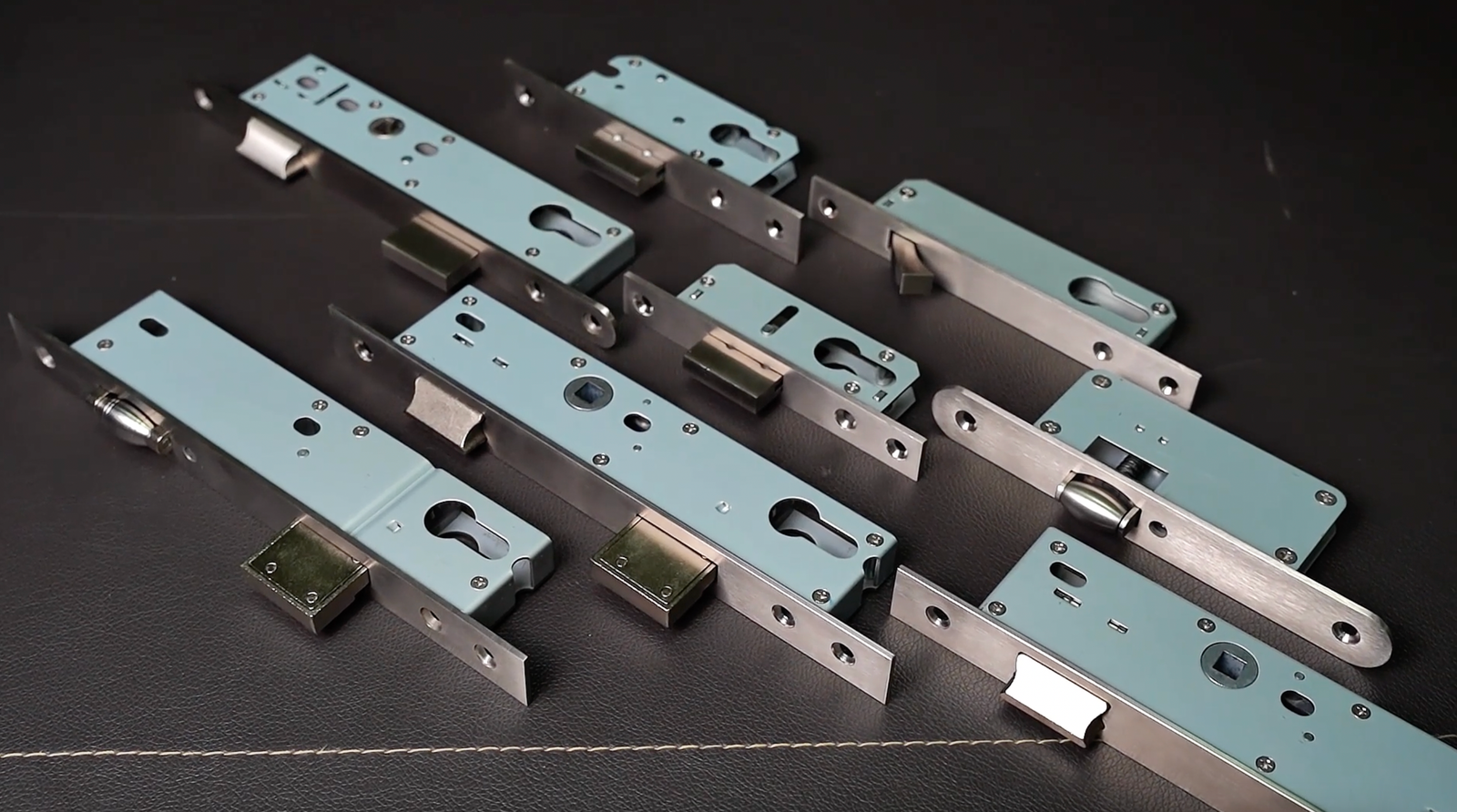
The central lock body is the control center. It receives handle movement and transfers force to the upper and lower locking points. A poor gearbox may create rough operation, weak return, or early wear. A suitable gearbox should match the door thickness, backset, center distance, and handle configuration.
Common specifications to confirm include:
- Backset: often 25 mm, 30 mm, 35 mm, 45 mm, or another project-specific size
- Center distance: commonly 85 mm, 92 mm, or market-specific dimensions
- Faceplate width: such as 16 mm, 20 mm, 22 mm, or 24 mm
- Door thickness range: must match handle screws and spindle length
- Follower size: often 8 mm square spindle, but this must be verified
Handle set and spindle strength
The handle does more than open the door. In lift to lock operation, the handle also provides the force to engage the multipoint mechanism.8 This means the lever, spring structure, spindle, and fixing screws should be strong enough for repeated upward movement.
A weak handle can create several problems:
- The lever may sag after repeated use.
- The spindle may twist or wear.
- The screws may loosen.
- The customer may feel the lock is heavy or unstable.
- The handle finish may be damaged if users apply extra force.
For door factories, I suggest testing the handle and lock as a complete set. It is not enough to test the lock body alone on a bench. The full door sample gives better information about real operation.
Locking points and keeps
The locking points must enter the frame keeps without excessive friction. Even a good lock body can feel poor if the keeps are installed too high, too low, or too deep.
Common locking point types include:
| Locking point type | Typical purpose | Procurement note |
|---|---|---|
| Hook bolt | Pulls into keep and resists separation | Check hook direction and keep depth |
| Roller cam | Improves compression | Useful where gasket pressure matters |
| Deadbolt | Adds central locking strength | Confirm projection and strike plate |
| Shoot bolt | Locks top and bottom points | Check door height and frame drilling |
| Mushroom cam | Common in some profile systems | Confirm profile compatibility |
Door alignment and compression
Lift to lock operation can become difficult if the door is not aligned.9 This is especially important for doors with gaskets, thermal breaks, or high compression seals. If the sash does not sit correctly in the frame, the user may need to pull or push the door while lifting the handle.
Buyers should check:
- Door leaf straightness
- Hinge adjustment range
- Frame squareness
- Gasket compression
- Keep position
- Lock faceplate routing accuracy
- Final handle operating force
A sample door test is valuable before mass production.10 I usually recommend that door factories test the locking function after painting, sealing, glazing, and final assembly, not only during the early frame stage.
Cylinder, thumb turn, and release method
Unlocking should not be overgeneralized. Some lift to lock models use a key to secure or release the mechanism. Some use a thumb turn from the inside. Some have privacy functions. Some may allow handle release after cylinder operation.
The correct explanation depends on the exact product configuration. Procurement teams should ask the supplier for:
- Operation video
- Exploded drawing
- Lock case drawing
- Cylinder requirement
- Handle spindle requirement
- Inside and outside operation description
- Sample for door testing
This reduces the risk of ordering a lock body that works mechanically but does not match the intended user experience.
How Should Buyers Evaluate a Lift to Lock Multipoint Door Lock Supplier?
A supplier may say a lock is suitable, but buyers still need evidence. Door factories face real costs when a hardware system causes rework, delayed delivery, or customer complaints. A structured supplier evaluation protects both product quality and project reputation.
Buyers should evaluate a lift to lock multipoint door lock supplier by checking manufacturing capability, product drawings, sample consistency, material control, testing process, certification documents, customization ability, packaging support, and after-sales communication. The supplier should explain operation clearly and provide product-specific documents for verification.
Start with product drawings
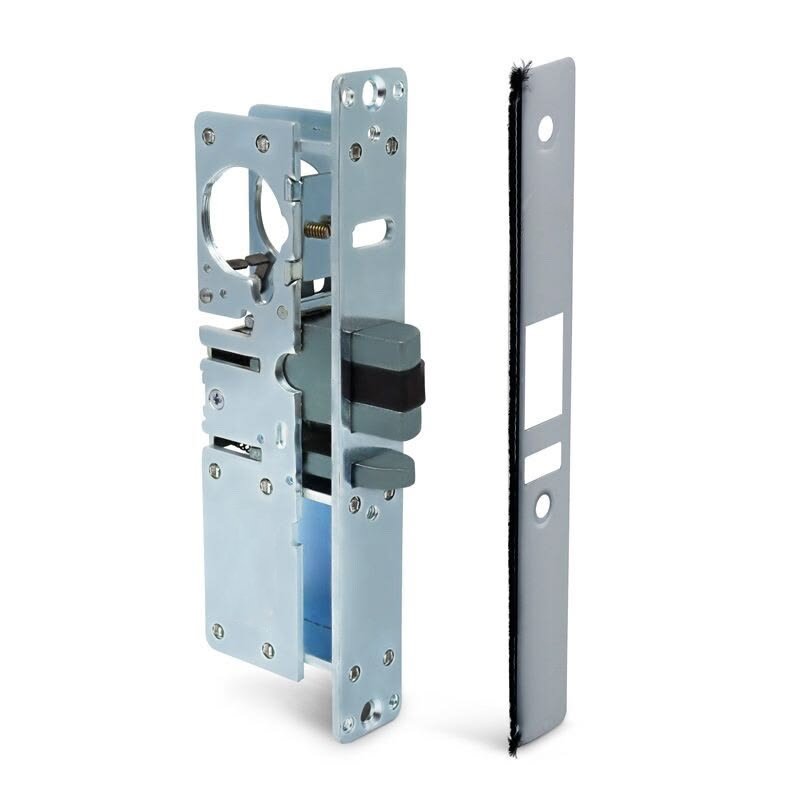
A good quotation should not rely only on product names. Door factories need technical drawings to confirm whether the lock fits the door system.
Important drawing details include:
- Faceplate length and width
- Lock case dimensions
- Backset
- Center distance
- Spindle follower position
- Cylinder cutout
- Locking point positions
- Bolt projection
- Keep dimensions
- Screw hole locations
- Door thickness compatibility
At SDH Hardware, I prefer to confirm these points before production because small dimensional errors can create large installation problems. A 2 mm mismatch in a keep position may be enough to make the handle feel heavy.11
Ask for sample testing before bulk order
A sample is not only for appearance. It should be installed into the actual door profile or door structure. The buyer should test the complete door through repeated closing, lifting, locking, unlocking, and opening.
A practical sample test can include:
Visual inspection
The buyer checks surface finish, burrs, plating, welding, rivets, and packaging.Dimensional inspection
The buyer compares the sample with the approved drawing.Operation test
The buyer closes the door, lifts the handle, checks locking point engagement, and confirms unlocking.Alignment sensitivity test
The buyer adjusts hinges and keeps to understand tolerance limits.Accessory compatibility test
The buyer tests the handle, cylinder, escutcheon, screws, and strikes as a full set.
Confirm quality control process
For manufacturing quality control, buyers should ask how the supplier checks raw materials, production steps, and finished goods. A supplier should be able to describe inspection points without vague language.
A useful QC checklist may include:
| QC stage | What buyers should verify |
|---|---|
| Raw material inspection | Material type, thickness, hardness, surface condition |
| Component machining | Hole position, stamping accuracy, case dimensions |
| Assembly inspection | Gear movement, bolt projection, spring action |
| Surface treatment | Finish color, corrosion resistance process, coating consistency |
| Functional testing | Handle lift action, locking point extension, retraction |
| Final inspection | Quantity, packaging, labeling, drawing match |
Verify certification and project documents
Many buyers ask about CE certification or fire-rated certification. These documents matter, but they must match the exact product, door assembly, and application.12 I avoid making broad claims because certification is document-specific.
Buyers should verify:
- Certificate number and issuing body
- Product model covered
- Test standard referenced
- Validity period
- Door type included in the test
- Hardware configuration tested
- Installation conditions
- Fire-rating scope, if applicable
If the lock is used in a regulated door system, buyers should consult qualified professionals or testing bodies. A lock that is suitable for one door assembly may not automatically be suitable for another.
Evaluate customization ability
Door factories often need more than a standard lock body. They may need a different faceplate length, special keep, brand stamping, customized packaging, or adjusted accessory configuration.
As a manufacturer, SDH Hardware supports ODM and OEM discussions for door hardware. Still, customization should be controlled by drawings, samples, and approval records. I always recommend written confirmation before mass production.
Useful customization items include:
- Surface treatment
- Faceplate dimensions
- Locking point layout
- Accessory kits
- Logo stamping or laser marking
- Color box design
- Installation instructions
- Product inspection after completion
Is Lift to Lock Suitable for Every Door System?
A convenient function can still be the wrong choice if it does not match the door system. Buyers should avoid choosing lift to lock only because it sounds modern. The door structure, market habit, certification need, and installation capacity all matter.
Lift to lock is not suitable for every door system. It is suitable when the door design, handle set, frame keeps, user expectations, and compliance requirements support upward handle locking. Buyers should compare it with key-operated, automatic, or motorized multipoint locks before final selection.
When lift to lock is a good fit
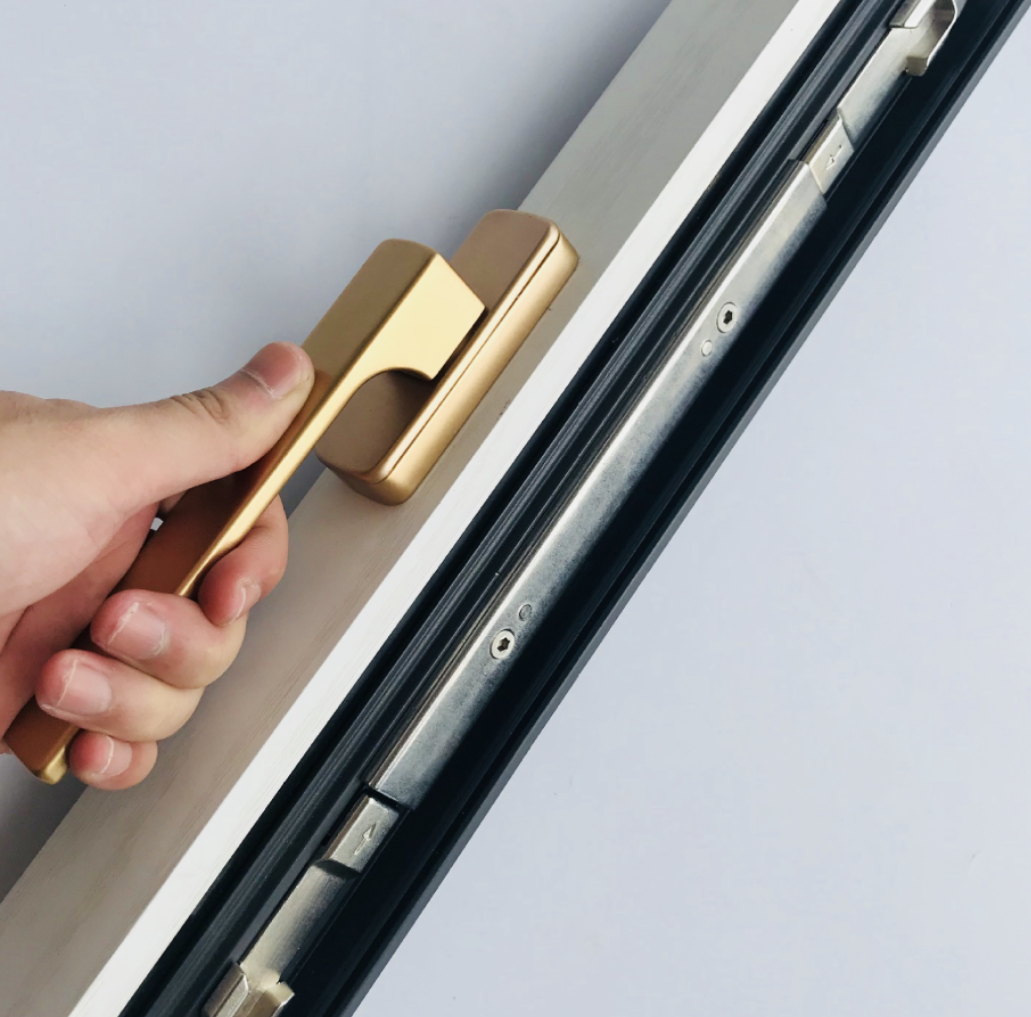
Lift to lock can be a strong option when the project values simple manual operation and visible user control. The user feels the handle lift and understands that the locking points have engaged.
It may be suitable for:
- Residential entrance doors
- Apartment doors, depending on local requirements
- Balcony or terrace doors
- Timber, aluminum, PVC, or steel doors with compatible routing
- Markets where lever-up locking is familiar
- Door factories that can control installation accuracy
- Projects where manual operation is preferred over automatic locking
The function is especially useful when the buyer wants to avoid repeated key turns during daily use. The user can complete the main locking action with one upward handle movement.
When another system may be better
Lift to lock may not be the best option when users expect the door to lock automatically after closing. It may also create confusion in markets where customers are not familiar with lifting the handle.
Another system may be better when:
- The project requires automatic locking after every closing.
- The door is part of an access control system.
- The end user expects key-only operation.
- The handle design cannot support upward locking force.
- The door frame tolerance is difficult to control.
- The product must match a tested fire-rated assembly that uses another lock model.
- Local regulations require a different escape or release function.
Compare options before ordering
Door factories should compare operating methods before confirming the lock series.
| Requirement | Lift to lock | Key-operated multipoint | Automatic multipoint | Motorized multipoint |
|---|---|---|---|---|
| Simple manual operation | Strong | Medium | Strong | Medium |
| No repeated key turns | Strong | Weak | Strong | Strong |
| User training needed | Medium | Low | Low | Medium |
| Installation tolerance sensitivity | Medium | Medium | High | High |
| Access control integration | Low | Low | Medium | Strong |
| Hardware cost level | Usually moderate | Usually moderate | Often higher | Often higher |
| Best for | Manual residential use | Traditional key markets | Self-locking demand | Smart or commercial systems |
Installation capability is part of suitability
Even a well-made lift to lock multipoint door lock needs correct installation. Door factories should confirm whether their production line can maintain stable routing, drilling, and keep positioning. If workers need special training, that cost should be included in the decision.
I suggest checking these production questions:
- Can the factory machine the lock pocket accurately?
- Can the frame keeps be positioned consistently?
- Can the hinge system adjust the door after installation?
- Can workers test locking after final assembly?
- Can the sales team explain the operation to customers?
- Can the after-sales team diagnose alignment issues?
Suitability depends on the complete door assembly
A lock does not work in isolation. The door leaf, frame, hinges, seals, handle, cylinder, screws, and keeps all affect the final result. For critical projects, buyers should evaluate the complete assembly and verify applicable documents.
At SDH Hardware, I can support door factories with product information, drawings, sample supply, and hardware configuration discussion. However, application-specific decisions should be made after testing the actual door system and reviewing project requirements.
Frequently Asked Questions
Does lift to lock mean the door locks without a key?
Lift to lock means the handle lift engages the locking points. It does not always mean the door needs no key. Some models use a key, thumb turn, or other function to secure or release the mechanism. Buyers should confirm the exact operation of the selected lock model.
Is every multipoint door lock a lift to lock system?
No. Lift to lock is only one operating method for a multipoint door lock. Other types include key-operated, automatic, slam-shut, and motorized multipoint locks. Buyers should specify the required user operation before requesting samples or quotations.
Why does the handle feel heavy when lifting to lock?
The handle may feel heavy because the door is misaligned, the keeps are not positioned correctly, the gasket compression is too strong, or the handle and lock body are not well matched. Buyers should test the full door assembly, not only the lock body.
Can lift to lock be used on fire-rated doors?
It may be possible only if the exact lock, door assembly, and installation method are covered by valid fire-rated documents. Buyers should verify certificates and test reports for the specific product and application. A qualified professional should review regulated projects.
What should door factories confirm before ordering lift to lock hardware?
Door factories should confirm backset, center distance, faceplate size, door thickness, handle compatibility, cylinder function, locking point layout, keep dimensions, finish, packaging, and certification documents. A sample installed in the real door system is strongly recommended before bulk purchasing.
Conclusion
Lift to lock on a multipoint door lock is a practical operating method where the user closes the door, lifts the handle, and engages several locking points into the frame. It can improve convenience by reducing repeated key rotation, but it must match the door design, handle set, cylinder function, frame keeps, and market expectations. If you are evaluating lift to lock hardware for door production, SDH Hardware can support you with factory-direct supply, drawings, samples, customization, and product-specific documentation for review.
"Instructional Series - Multi Point Locking",
. Institutional guidance on multipoint door locks describes lift-to-lock operation as a handle-lifting action that engages multiple locking points into the frame. Evidence role: definition; source type: institution. Supports: A technical or institutional source should define lift-to-lock operation as lifting the handle to engage the locking points of a multipoint lock.. ↩"Three-point locking - Wikipedia", https://en.wikipedia.org/wiki/Three-point_locking. Technical descriptions of multipoint locks distinguish handle-operated engagement from key-operated engagement, supporting the statement that lift-to-lock designs can reduce repeated key turning; the source does not prove that every lift-to-lock model eliminates key use. Evidence role: mechanism; source type: institution. Supports: A neutral source should explain that some multipoint locks use handle movement to engage locking points while others use key rotation or other release mechanisms.. Scope note: The support is contextual because release and securing methods vary by specific lock model. ↩
"Smart lock for multipoint locks with lift handle?", https://www.facebook.com/groups/HomeAssistant/posts/4206095846328420/. Institutional material on door-locking systems identifies multiple multipoint lock operating methods, supporting the distinction between the multipoint locking arrangement and the lift-to-lock user action. Evidence role: definition; source type: institution. Supports: A source should show that multipoint locks can be operated by different mechanisms, not only by lifting the handle.. ↩
"Multipoint Locks", https://uaplimited.com/products/category/external-door-hardware/multipoint-locks/. Institutional and standards-oriented descriptions of door hardware recognize manual, automatic, and electrically controlled locking configurations, supporting the article’s classification of multipoint lock operating methods; terminology such as “slam-shut” or “split-spindle” may vary by jurisdiction and product category. Evidence role: general_support; source type: institution. Supports: A source should confirm that multipoint locks are available in several operating configurations, including manual, automatic, and electrically controlled forms.. Scope note: The support is contextual because not every source will use the exact same commercial terminology. ↩
"Lift-to-lock hardware is common in European made doors. ...", https://www.instagram.com/reel/DCawcJwqE8Y/?hl=en. Regional consumer and institutional guidance in Europe commonly describes multipoint locks that require the user to lift the handle before locking, supporting the statement that familiarity with lift-to-lock operation varies by market; this does not quantify adoption rates across all regions. Evidence role: historical_context; source type: institution. Supports: A source should show that lift-handle multipoint locking is commonly described in some regional door-hardware markets, especially European or UK contexts.. Scope note: The support is contextual because it indicates regional familiarity but may not provide market-share statistics. ↩
"SECTION 087111 - DOOR HARDWARE (SCHEDULED BY ...", https://fpm.usc.edu/wp-content/uploads/2021/11/087102-USC-HSC-door-hardware-Guide-Specification_1.pdf. Door-hardware certification frameworks treat performance as a matter of tested conformity to specified standards and configurations, supporting the distinction between user convenience and certified performance. Evidence role: expert_consensus; source type: institution. Supports: A standards or certification source should support the idea that certified door-hardware performance is based on testing and documented conformity, not merely on convenient operation.. ↩
"The Complete Guide to Multipoint Lock Components", https://www.als-locksmiths.com/blog/multipoint-lock-components-explained-complete-homeowner-guide.html. Technical guidance on multipoint locking systems describes operation as dependent on the lock mechanism, associated handle and cylinder hardware, frame keeps, and correct alignment, supporting the article’s system-level description. Evidence role: mechanism; source type: institution. Supports: A technical source should support that multipoint lock function depends on the lock case, handle hardware, locking points, keeps, and alignment.. ↩
"Multipoint Lock Gearbox Operations",
. Technical descriptions of lever-operated multipoint locks explain that handle movement is transmitted through a spindle or gearbox to actuate the locking points, supporting the mechanism described here. Evidence role: mechanism; source type: institution. Supports: A source should explain that lever movement through the spindle and gearbox actuates the locking points in a handle-operated multipoint lock.. ↩"How to Fix Multipoint Door Handles: Troubleshooting Guide", https://www.suffolklatchcompany.com/blogs/news/how-to-fix-multipoint-door-hardware?srsltid=AfmBOoroBMKb2S76pICfsARCSQiXkyXvLZjUOqg6ZPuGjJD6fjP1RuLw. Installation guidance for multipoint locks links difficult handle operation to door or keep misalignment, supporting the claim that lift-to-lock operation can become difficult when the assembly is not aligned. Evidence role: mechanism; source type: institution. Supports: A source should support that misalignment between the door, frame, and keeps can increase friction or prevent smooth engagement of locking points.. ↩
"Production part approval process", https://en.wikipedia.org/wiki/Production_part_approval_process. Quality-assurance literature on prototype and pre-production validation supports testing representative samples before mass production to identify fit, process, and functional problems; the evidence is general to manufacturing rather than specific only to door locks. Evidence role: general_support; source type: paper. Supports: A manufacturing quality source should support that prototype or sample validation helps detect design, fit, or process issues before mass production.. Scope note: The support is contextual because it applies general manufacturing quality principles to door-hardware production. ↩
"Quick Fix For a Multi-Point Lock",
. Installation guidance for multipoint locks indicates that small misalignments of keeps or strikes can cause stiff handle operation; unless the cited source specifies a 2 mm tolerance, it supports the general sensitivity rather than the exact numerical threshold. Evidence role: mechanism; source type: institution. Supports: A source should support that small errors in keep or strike alignment can cause stiff or heavy lock operation, ideally with a millimeter tolerance range.. Scope note: The support is contextual unless the source directly states that a 2 mm keep mismatch is sufficient to increase handle force. ↩"Doors, Windows and Related Hardware Application Guide", https://www.ul.com/thecodeauthority/knowledge/ul-fire-rated-doors-guide. Certification guidance for door assemblies treats test reports and certificates as limited to the product models, configurations, and installation conditions identified in the documentation, supporting the need to match documents to the exact application. Evidence role: expert_consensus; source type: institution. Supports: A certification or standards source should support that compliance documents apply only within their stated product scope, tested configuration, and installation conditions.. ↩