Application of Stainless Steel Hinges in Special Environments: What Should Buyers Check?
Stainless steel hinges often look like a simple solution for harsh environments, but I have seen buyers face corrosion complaints, fire-door approval problems, and heavy-door sagging when the hinge specification does not match the real application. The better solution is to evaluate material, certification, load capacity, installation, and maintenance together.
Stainless steel hinges can be used in special environments when the hinge grade, structure, load rating, certification, and finish match the actual risk. SUS316 is usually better for coastal or humid areas, fire-rated doors require verified fire-rated documentation, and heavy doors need hinges selected by door weight, size, quantity, and use frequency.
In my factory work, I rarely treat a hinge as only a metal part. I treat it as a door performance component. The same hinge can work well in one project and fail early in another if the environment, door weight, or certification requirement changes.
Why Do Stainless Steel Hinges Need Different Specifications in Special Environments?
Special environments create different risks. A coastal hotel, a hospital fire door, and a heavy steel entrance door may all need stainless steel hinges, but they do not need the same hinge. If buyers use one standard specification for every case, after-sales problems become much more likely.
Stainless steel hinges need different specifications because each environment stresses the hinge in a different way. Corrosion risk, fire safety, door weight, opening frequency, and maintenance access all affect the correct material grade, hinge thickness, bearing design, screw configuration, certification, and quality inspection standard.
I usually classify the risk before I discuss the model
When a customer asks me, “Which stainless steel hinge should I use?” I usually do not answer with a model number first. I ask where the door will be installed, how heavy the door is, what the door function is, and whether the project needs certification documents. This conversation saves time because “special environment” is not one single condition.
I normally group the risks like this:
| Risk type | Common environment | Main hinge concern | Buyer should check |
|---|---|---|---|
| Corrosion risk | Coastal areas, humid buildings, chemical-adjacent spaces | Rust staining, pitting, reduced appearance quality | Stainless grade, surface finish, maintenance plan |
| Fire safety requirement | Fire-rated doors, emergency exits, public buildings | Certification and door-set compatibility | Fire-rated report, standard, door system scope |
| Heavy-load requirement | Steel doors, oversized timber doors, acoustic doors | Sagging, deformation, screw pull-out | Rated load, hinge size, thickness, quantity |
| High-frequency use | Hotels, hospitals, schools, commercial buildings | Wear, noise, bearing fatigue | Bearing structure, cycle testing evidence, lubrication |
| Low maintenance access | Remote projects, public facilities, marine-adjacent sites | Long-term service risk | Material selection, spare parts, inspection plan |
Material is important, but it is not the whole answer
Many buyers start with the phrase “I need stainless steel.” That is understandable, but it is incomplete. Stainless steel covers different grades and production qualities. In architectural hardware, common options may include SUS201, SUS304, and SUS316, depending on cost target and environment.
As a door hardware factory, I pay attention to:
- Base material grade and purchase traceability
- Thickness tolerance and stamping stability
- Pin quality and pin-hole alignment
- Bearing or washer structure
- Surface treatment consistency
- Screw hole accuracy
- Finished product inspection before packing
A hinge may look bright and strong on a product photo. However, performance depends on details that buyers cannot always see immediately. I have seen projects where the hinge leaf looked acceptable, but the pin fit, screw quality, or installation condition created performance problems later.
Special environments also need realistic expectations
I avoid telling customers that stainless steel will “never rust.” That statement creates risk. Stainless steel is corrosion-resistant, not magic.1 In coastal air, cleaning chemicals, cement dust, acidic pollution, or poor maintenance conditions, corrosion marks can still appear.
A better procurement question is:
“Which stainless steel hinge specification reduces the risk enough for this environment and budget?”
That question leads to better decisions. It also helps buyers compare suppliers fairly. A lower-cost hinge may be acceptable for a dry interior door. A more corrosion-resistant material and stronger structure may be worth the cost for a coastal resort, marine-adjacent building, or high-value fire-door project.
Are SUS316 Stainless Steel Hinges Better for Coastal and Humid Areas?
Coastal and humid environments punish door hardware. Salt air, condensation, poor ventilation, and cleaning chemicals can attack surfaces faster than many buyers expect. If the hinge grade is chosen only by price, the project may face visible rust marks and customer complaints.
SUS316 stainless steel hinges are generally a better choice than standard stainless options for coastal, humid, and higher-corrosion environments because SUS316 contains molybdenum2, which improves corrosion resistance. However, I still treat SUS316 as more corrosion-resistant, not completely rust-proof, and I recommend maintenance and supplier verification.
Why I often recommend SUS316 for higher corrosion risk
In many export discussions, customers ask whether SUS304 is enough. My practical answer depends on the project. For normal indoor use, SUS304 stainless steel hinges are often widely accepted. For coastal hotels, beach villas, humid bathrooms, or buildings near salt air, I usually discuss SUS316 as the safer option.
The key difference is molybdenum. SUS316 contains molybdenum, which helps improve resistance to chloride-related corrosion3. This matters because salt in coastal air can increase the chance of surface staining or pitting4. That does not mean SUS316 cannot corrode. It means it normally offers a stronger resistance margin than more basic stainless steel options.
Practical selection points for humid and coastal projects
When I help buyers compare hinge options, I ask them to look beyond the grade name. A grade label is useful, but it should be supported by supply-chain control and inspection.
Buyers should check:
Material declaration or mill-related documents
I recommend asking suppliers how they verify stainless steel grade. A serious factory should have a raw material screening process.Surface finish quality
Brushed, satin, polished, or PVD-related finishes may behave differently in appearance and maintenance. The finish should match the project style and cleaning condition.Pin and bearing material
If the leaf is stainless but the pin or internal washer is poorly selected, long-term performance can suffer.Installation screws
Screws should match the environment and door material. A corrosion-resistant hinge with poor screws can still create complaints.Maintenance guidance
Coastal hardware should be cleaned periodically with suitable methods. Harsh cleaners can damage surfaces.5
SUS304 vs SUS316 in buyer evaluation
| Item | SUS304 stainless steel hinges | SUS316 stainless steel hinges |
|---|---|---|
| Common use | General architectural doors, indoor use, moderate environments | Coastal, humid, or higher-corrosion environments |
| Corrosion resistance | Good for many standard uses | Generally stronger, especially against chloride exposure |
| Cost level | Usually more economical | Usually higher cost |
| Buyer risk | May be acceptable if environment is controlled | Better risk control for demanding conditions |
| Important note | Not suitable for every harsh site | More resistant, but not “never rust” |
Factory-side quality control matters
At SDH Hardware, we work with stainless steel lever handles, butt hinges, concealed door hinges, mortise locks, cylinders, and door accessories. From a factory-side view, the best corrosion strategy starts before production. Raw material screening, standardized production supervision, and finished product inspection all matter.
For special environments, I prefer buyers to send detailed project information before confirming the hinge:
- Project country and city
- Indoor or outdoor location
- Distance from sea, if relevant
- Door material and door weight
- Expected finish
- Cleaning method and maintenance cycle
- Packaging and shipment requirements
This information helps the supplier recommend the right grade and avoid unrealistic promises. It also helps importers and hardware brands reduce future after-sales claims.
How Should Stainless Steel Hinges Be Selected for Fire-Rated Doors?
Fire-rated doors are not ordinary doors with better hardware. They are safety components within a tested door system.6 I have seen buyers focus on stainless steel material and forget that certification documents and tested compatibility are often the real purchasing issue.
Stainless steel hinges for fire-rated doors should be selected by verified fire-rated certification, intended door system, market standard, load requirement, and installation details. Stainless steel material alone is not enough.7 Buyers should request relevant test reports or certificates and confirm that the hinge specification matches the approved fire-door application.
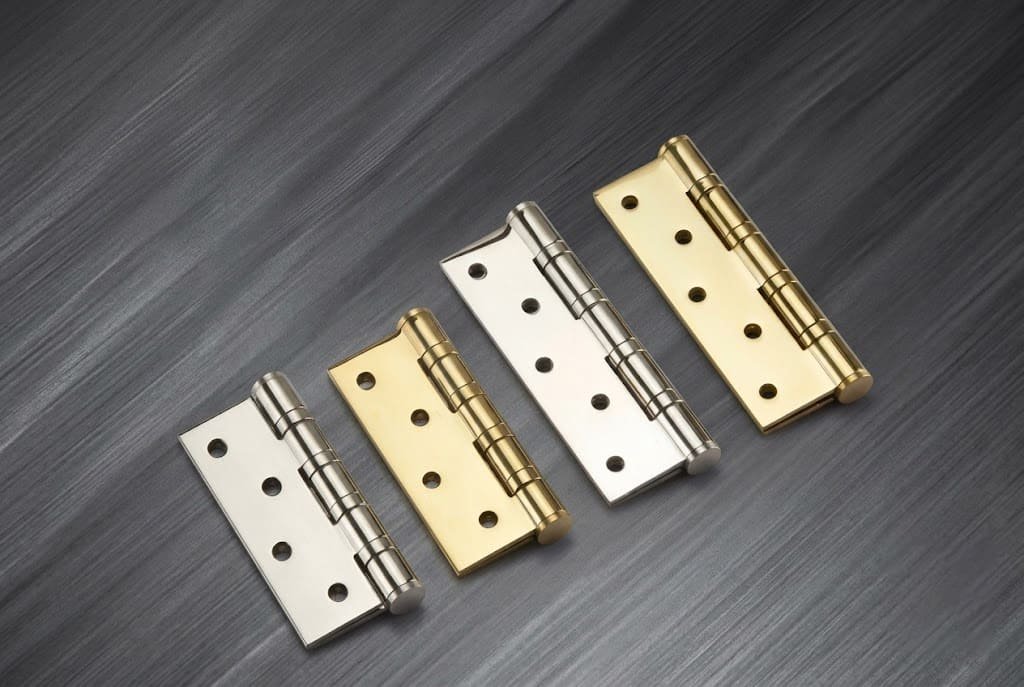
Certification comes before appearance
A fire door buyer may ask for a stainless steel hinge because the project needs corrosion resistance or a specific finish. That is reasonable. However, for fire-rated doors, I always bring the discussion back to certification. The hinge must be suitable for the intended fire-rated door system and market requirement.
Different regions may request different documentation. Buyers may need to verify standards, test reports, CE-related documents, or fire-rated certificates depending on the market. I will not treat a general stainless steel hinge as automatically acceptable for a fire door.
Important questions include:
- Does the hinge have relevant fire-rated documentation?
- Which standard or test method does the documentation reference?
- Which door type was tested?
- What was the tested hinge size, thickness, and quantity?
- Does the certificate cover the intended door construction?
- Is the certificate still valid and issued by a recognized body?
- Does the project require CE-related compliance or local approval?
The hinge is part of the door assembly
A fire-rated door normally depends on a complete system. The door leaf, frame, seals, lock, closer, hinge, screws, and installation method can all affect performance.8 Even a strong hinge can become a weak point if it is not used as tested or installed correctly.
From procurement experience, I suggest buyers avoid these mistakes:
Using non-certified hinges on certified doors
This can create approval risk and liability risk.Changing hinge size without checking documentation
A 4-inch hinge and a 5-inch hinge may not be covered in the same way.Ignoring screw specification
Screws are small, but they are part of the installed performance.Assuming stainless steel equals fire-rated
Stainless steel describes material. Fire rating requires testing and documentation.Mixing hardware from different suppliers without system review
This can create uncertainty for the door manufacturer or project inspector.
Fire-rated hinge procurement checklist
| Check item | Why it matters | What I suggest buyers request |
|---|---|---|
| Fire-rated certificate or report | Confirms tested performance scope | Copy of certificate/report for review |
| Applicable standard | Market acceptance depends on standard | Standard name and report details |
| Hinge size and thickness | Tested product must match supplied product | Drawing and specification sheet |
| Door type compatibility | Fire performance depends on door set | Tested door type and configuration |
| Screw and installation method | Installation affects performance | Installation guide or technical drawing |
| Supplier consistency | Production must match certified sample | Factory QC process and inspection support |
My factory-side view on fire-rated orders
At SDH Hardware, our core products are available with CE certification and fire-rated certification according to project and market requirements. I always advise buyers to verify documents before purchase. Certification should not be treated as a marketing sentence. It should be treated as a procurement document.
For fire-door producers, this step is especially important. A fire-door factory may face inspection by its customer, local authority, or certification partner. If the hardware documents are incomplete, the issue may delay the project even when the physical product looks correct.
I also recommend that buyers confirm packaging labels, product markings, and batch traceability if the project requires them. These small details help professional customers manage quality records and reduce confusion during installation.
What Matters for Stainless Steel Hinges on Heavy-Duty Doors Over 120kg?
Heavy doors create mechanical stress every time users open and close them.9 I have seen buyers ask for “strong stainless steel” when the real issue was door weight, hinge quantity, frame strength, screw holding power, and opening frequency. Material alone cannot solve a heavy-door problem.
For heavy-duty doors over 120kg, stainless steel hinges must be selected by rated load capacity, hinge size, leaf thickness, bearing structure, number of hinges, screw fixing, frame condition, and opening frequency. A heavier door usually needs a verified heavy-duty hinge specification, not just a better stainless steel grade.
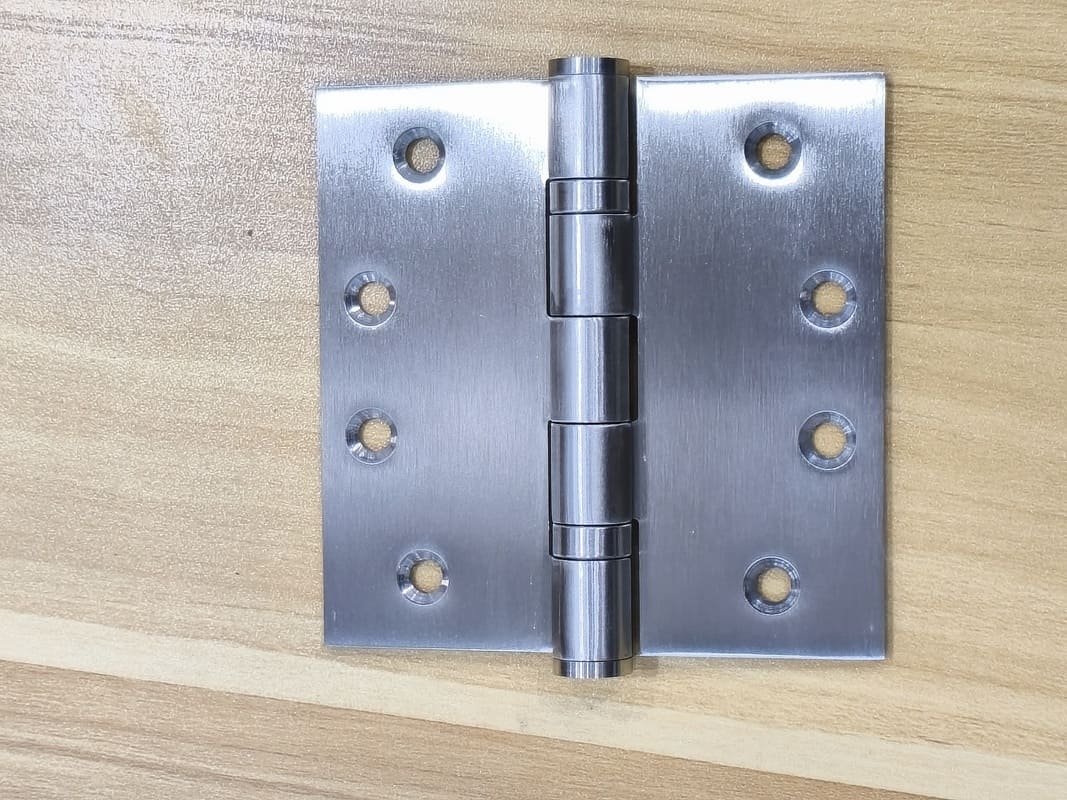
Door weight changes the whole selection logic
A door over 120kg is not just a normal door with more mass.10 It puts higher stress on the top hinge, the frame, the screws, and the hinge pin. If the hinge is undersized, the door can sag. If the screw fixing is weak, the hinge can loosen. If the bearing structure is not suitable, opening can become noisy or rough.
When I discuss heavy-duty stainless steel hinges with buyers, I ask for:
- Door leaf weight
- Door width and height
- Door material, such as steel, wood, composite, or acoustic construction
- Door thickness
- Opening angle
- Opening frequency
- Indoor or outdoor condition
- Frame material and reinforcement
- Number of hinges planned
- Closer or access-control hardware used
These details matter because a wider door creates more leverage11. A frequently used door creates more wear. A door with a closer can add dynamic stress.12 A weak frame can ruin even a good hinge.
Hinge factors that affect heavy-duty performance
A heavy-duty hinge should be evaluated as a structure. I focus on the following items.
1. Hinge size
Larger hinges often distribute load better, but size must match the door and frame design. Buyers should not choose size only by habit. Project drawings and supplier recommendations should be reviewed.
2. Leaf thickness
Thicker hinge leaves can improve strength and reduce deformation risk. However, thickness must match the mortise preparation and installation design.
3. Bearing design
Ball bearing hinges, washer structures, or other bearing designs can improve movement under load. High-frequency doors often need better bearing support than low-use doors.
4. Pin quality
The pin carries important stress. Poor pin fit can create noise, wear, or unstable door movement.
5. Number of hinges
A heavier or taller door may need more hinges. The top hinge often carries significant load. Buyers should confirm the correct number based on door design and supplier or engineer guidance.
6. Installation quality
A strong hinge can fail if it is installed with weak screws, misaligned mortises, or an under-reinforced frame.
Heavy-duty hinge comparison table
| Selection factor | Standard interior door | Heavy-duty door over 120kg |
|---|---|---|
| Main concern | Smooth movement and basic durability | Load support, sagging prevention, long-term stability |
| Material focus | SUS304 or suitable grade | Grade plus structure and tested load capacity |
| Hinge thickness | Standard project specification | Often heavier-duty specification |
| Bearing design | May be plain or bearing type | Bearing structure is more important |
| Hinge quantity | Often 2–3, depending on door | Must be calculated or professionally specified |
| Installation | Standard fixing may be enough | Frame reinforcement and screw quality are critical |
I do not recommend guessing for heavy doors
For heavy doors, I recommend qualified professional evaluation when the project has safety, access-control, or public-use requirements. A hinge supplier can provide product data, drawings, and production experience. However, the final selection should fit the door system, site condition, and local code requirements.
This approach protects everyone. Door factories reduce callbacks. Hardware brands reduce warranty disputes. Importers reduce unclear claims. Project buyers receive a door that opens smoothly and stays aligned for longer.
How Should Buyers Evaluate Stainless Steel Hinges Suppliers for Special Projects?
Special projects expose weak supplier systems. A supplier may provide an attractive price, but the buyer still needs stable material sourcing, reliable production, inspection ability, packaging control, and document support. If the supplier cannot answer technical questions clearly, the project risk increases.
Buyers should evaluate stainless steel hinges suppliers by checking factory experience, material control, product drawings, certification documents, load-related information, inspection process, customization ability, and after-sales communication. A good supplier helps match the hinge to the environment instead of selling one generic model for every project.
Supplier selection is part of product quality
I have learned that hinge quality is not only about the finished part. It starts with communication. If the buyer explains the project environment clearly and the supplier responds with a suitable technical recommendation, the chance of success improves.
For B2B buyers, I suggest checking these supplier areas:
Factory background
Does the supplier operate its own production lines? Does it understand manufacturing details?Material control
Can the supplier explain how it checks stainless steel grade and incoming material?Production capability
Can the supplier control stamping, machining, polishing, assembly, and inspection?Testing and inspection
Does the supplier have suitable testing machines and final inspection procedures?Certification support
Can the supplier provide documents for CE or fire-rated requirements when needed?Customization ability
Can the supplier adjust size, finish, hole pattern, logo, packaging, or accessory configuration?Communication quality
Does the supplier ask about door weight, environment, and project requirements before quoting?
What I recommend buyers request before bulk orders
For professional purchasing, I prefer a clear document package. It does not need to be complicated, but it should reduce misunderstanding.
A practical pre-order checklist includes:
| Document or sample | Purpose |
|---|---|
| Product drawing | Confirms dimensions, thickness, holes, and tolerances |
| Material specification | Confirms stainless steel grade and finish |
| Physical sample | Allows fit, finish, and installation review |
| Certification copy, if required | Supports fire-rated or market compliance review |
| Load-related information | Helps evaluate heavy-door suitability |
| Packing details | Prevents scratches, moisture issues, and shipping damage |
| Inspection report | Confirms finished product quality before shipment |
Why factory-direct support helps B2B buyers
SDH Hardware is a professional architectural door hardware manufacturer in China with more than 10 years of specialized production experience. We manufacture and supply Euro mortise locks, stainless steel lever handles, butt hinges, concealed door hinges, Euro brass cylinders, and door accessories. Our customers include door factories, hardware brands, and bulk wholesalers in markets such as the Middle East, Europe, and Southeast Asia.
From my side, factory-direct cooperation helps because technical feedback reaches production faster. If a buyer needs a different hinge thickness, surface finish, logo, packaging, or accessory configuration, the engineering and production teams can evaluate it directly. That matters for OEM and ODM orders.
We also provide one-stop sourcing for complete door hardware series. This is useful when a door factory wants hinges, locks, handles, cylinders, and accessories to match in finish and market positioning. Still, I always encourage buyers to verify certifications and review samples before large project purchasing.
Conclusion
The application of stainless steel hinges in special environments depends on more than the words “stainless steel.” I recommend matching the hinge grade, certification, load capacity, structure, and installation method to the real project risk. SUS316 can reduce corrosion risk in coastal or humid sites, fire-rated doors need verified documents, and heavy-duty doors require proper load matching. If you need factory-direct support for hinge selection, OEM customization, or project hardware sourcing, I welcome you to contact SDH Hardware with your door specifications.
"Enthalpy and specific heat of four corrosion-resistant alloys ...", https://nvlpubs.nist.gov/nistpubs/jres/54/jresv54n1p15_A1b.pdf. A corrosion-engineering reference explains that stainless steels rely on passive chromium-rich surface films for corrosion resistance and can still suffer localized corrosion when those films are damaged or exposed to aggressive environments. Evidence role: general_support; source type: research. Supports: Stainless steels resist corrosion through passive surface films but may corrode when exposed to chlorides, contamination, poor maintenance, or other aggressive conditions.. Scope note: This supports the general material principle rather than evaluating the specific hinge products discussed in the article. ↩
"SAE 316L stainless steel", https://en.wikipedia.org/wiki/SAE_316L_stainless_steel. A stainless-steel materials specification identifies Type 316/SUS316 as an austenitic stainless steel containing molybdenum in addition to chromium and nickel. Evidence role: definition; source type: institution. Supports: SUS316 or Type 316 stainless steel includes molybdenum in its chemical composition.. ↩
"Studies on the Cooperative Influence of Cr and Mo on ... - PMC", https://pmc.ncbi.nlm.nih.gov/articles/PMC10707140/. Corrosion studies of austenitic stainless steels report that molybdenum additions increase resistance to chloride-induced localized corrosion, including pitting and crevice corrosion. Evidence role: mechanism; source type: paper. Supports: Molybdenum additions in austenitic stainless steel increase resistance to chloride-induced pitting or crevice corrosion.. Scope note: The evidence concerns stainless-steel alloys generally and does not by itself prove long-term performance for any particular hinge design or finish. ↩
"Marine grade stainless", https://en.wikipedia.org/wiki/Marine_grade_stainless. Research on atmospheric corrosion identifies chloride deposition in marine environments as a contributor to localized corrosion and staining of stainless steels. Evidence role: mechanism; source type: research. Supports: Chloride deposition in marine or coastal atmospheres is associated with increased localized corrosion risk in stainless steels.. Scope note: The source would support the environmental mechanism, while actual hinge corrosion also depends on alloy grade, surface finish, cleaning, and installation conditions. ↩
"Selection and Use of Home Cleaning Products - Publications", https://pubs.nmsu.edu/_g/G304/. A stainless-steel maintenance guide notes that chloride-containing, abrasive, or otherwise unsuitable cleaning agents can damage stainless-steel surfaces and contribute to corrosion. Evidence role: general_support; source type: institution. Supports: Inappropriate cleaners, such as chloride-containing or abrasive cleaners, can damage stainless steel surfaces or promote corrosion.. Scope note: This is contextual maintenance guidance and does not measure the effect of any specific cleaner on the hinges described. ↩
"Fire Doors and NFPA 80 FAQs", https://www.nfpa.org/news-blogs-and-articles/blogs/2025/04/11/fire-doors-faqs. Fire-door standards and testing guidance define fire doors as assemblies whose performance depends on the tested combination of door leaf, frame, hardware, seals, and installation method. Evidence role: definition; source type: institution. Supports: A fire door is evaluated as an assembly or doorset that includes the leaf, frame, hardware, seals, and installation details.. ↩
"Fire-Rated Hinges & Building Codes: 2026 Guide", https://www.keymanlock.com/fire-rated-hinges-and-building-codes.html. Fire-door inspection and listing guidance states that hardware used on fire-rated doors must be suitable for the rated assembly and cannot be inferred from material designation alone. Evidence role: expert_consensus; source type: institution. Supports: Fire-door hardware must be appropriately listed, certified, or tested for the relevant fire-door assembly rather than accepted solely on the basis of material.. Scope note: Applicable listing and documentation requirements vary by jurisdiction, standard, and door assembly. ↩
"Important Tips for Specifying Fire Door Assemblies", https://steeldoor.org/tips-for-specifying-fire-door-assemblies/. Fire-door guidance describes the fire door as an installed assembly and notes that components such as frames, seals, hardware, fasteners, and installation details are relevant to its rated performance. Evidence role: general_support; source type: government. Supports: Fire resistance of a door assembly depends on the coordinated performance of the door leaf, frame, hardware, seals, fasteners, and installation.. Scope note: The source would support the assembly principle, not certify any particular hinge model for a specific door. ↩
"How much weight can door hinges hold?", https://www.hingeoutlet.com/blogs/news/how-much-weight-can-door-hinges-hold?srsltid=AU7gw4X2yb_FqQsyCUxOvRasqK0fi8j35SNcIHRwhSRKtYFpx8IycCgW. Architectural hardware standards classify hinges by durability, door mass, and service conditions, reflecting that heavier doors impose greater mechanical loads during operation. Evidence role: mechanism; source type: institution. Supports: Door mass and usage impose loads on hinges, which is why hinge standards classify products by load, durability, and application.. Scope note: The cited standard would provide classification logic rather than a project-specific structural calculation. ↩
"How to read the hinge classification key", https://www.kronakoblenz.com/en/product-school/guide-how-to-read-the-hinge-classification-key. Building-hardware hinge standards classify hinges according to tested door mass and duty level, supporting the practice of specifying heavier-duty hinges for doors substantially above ordinary interior-door weights. Evidence role: general_support; source type: institution. Supports: Hinge selection standards distinguish hinges by tested door mass and service grade, supporting the need for different specifications for very heavy doors.. Scope note: The exact 120 kg cutoff may depend on the standard, product classification, and door configuration. ↩
"28.18 -- Open door to demonstration preparation area", https://web.physics.ucsb.edu/~lecturedemonstrations/Composer/Pages/28.18.html. Statics principles show that the moment about a hinge equals the applied load multiplied by its perpendicular distance from the hinge axis, so a wider door can increase hinge loading. Evidence role: mechanism; source type: education. Supports: The torque or moment on a hinge system increases as the horizontal distance from the hinge axis to the door’s center of mass increases.. Scope note: This supports the mechanical principle; actual hinge reactions also depend on hinge spacing, door stiffness, frame rigidity, and installation quality. ↩
"087100 – DOOR HARDWARE - Facilities and Campus Services", https://fcs.cornell.edu/087100-door-hardware. Door-control hardware guidance explains that closers exert forces to control door movement, making them relevant to the operational loading of the door and its supporting hardware. Evidence role: mechanism; source type: institution. Supports: Door closers apply controlled closing forces and can affect the loads experienced by hinges and the door assembly during operation.. Scope note: The extent of added stress depends on closer adjustment, door size, opening angle, user behavior, and installation conditions. ↩