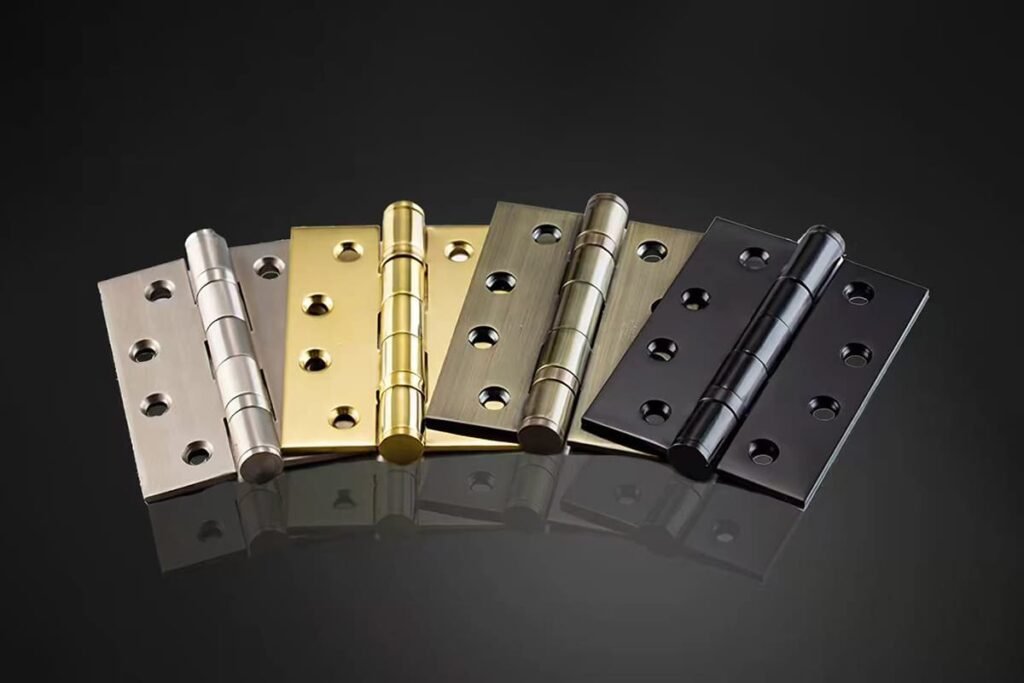
Pros and Cons of Surface-Mount Door Hinges?
Surface-mount door hinges can look like a simple way to save installation time, but that simplicity can create problems if the door is heavy, wide, or used frequently. I have seen buyers focus only on fast fitting and then face sagging or alignment complaints. The better approach is to evaluate the hinge, door, and frame together.
Surface-mount door hinges are useful when quick installation, easy replacement, and simple production flow matter more than concealed appearance or maximum load capacity. They are installed directly on the visible surface of the door leaf and frame, so buyers should verify door weight, fixing strength, hinge size, material, screw retention, and application requirements before choosing them.
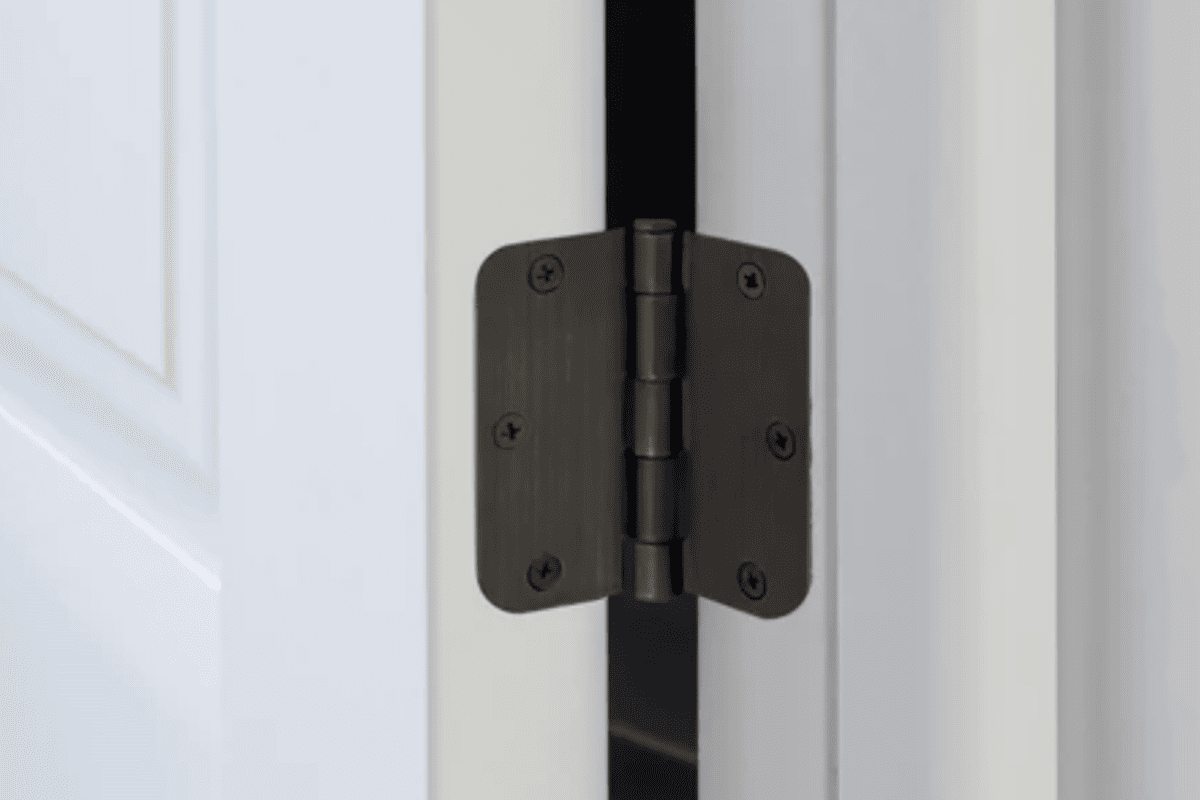
In factory production, I do not judge a hinge only by whether it is easy to install. I look at how it carries load, how screws hold over time, how it affects door alignment, and how the final door looks to the project customer.
What Are Surface-Mount Door Hinges?
Many hinge selection problems start with unclear terminology. A buyer may say “simple hinge,” “butterfly hinge,” “flush hinge,” or “non-mortise hinge” and mean different products. That confusion can lead to the wrong production process, wrong fixing method, or wrong appearance expectation.
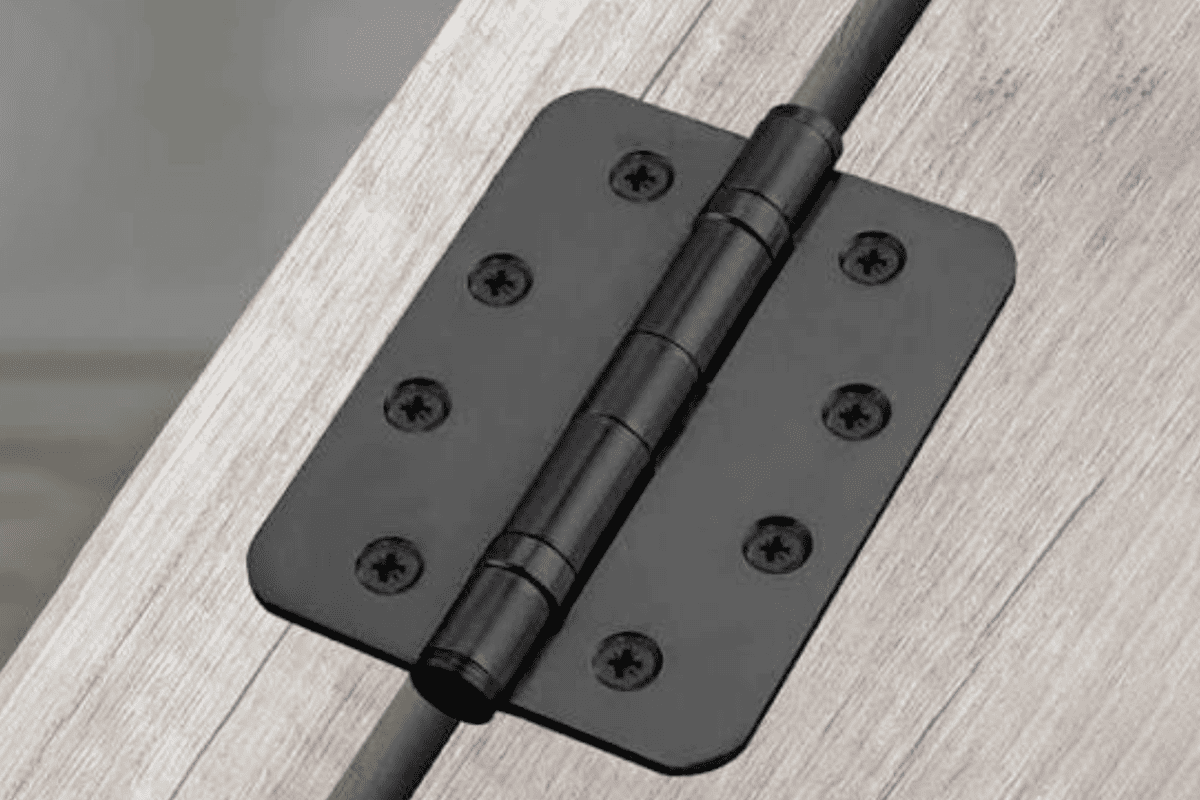
Surface-mount door hinges are hinges fixed directly onto the visible face of the door leaf and the surrounding frame without cutting a mortised recess.1 Unlike mortised hinges, they do not require routing or chiseling.2 Unlike concealed hinges, they remain visible after installation and become part of the door’s final appearance.
The basic definition matters
In door hardware production, a surface-mounted hinge is defined mainly by how it is installed. The hinge leaves sit on top of the door and frame surfaces. The installer positions the hinge, marks the holes, drills pilot holes if needed, and fixes the hinge with screws.
This is different from a mortised butt hinge. A mortised hinge usually requires a shallow pocket on both the door edge and frame. The hinge leaf sits into this recess, which helps create a cleaner edge line and can support alignment when properly machined.
It is also different from a concealed door hinge. A concealed hinge is usually installed inside a routed pocket and is hidden when the door is closed.3 That creates a cleaner look, but it requires more accurate machining and a more controlled installation process.
Surface-mounted vs. mortised vs. concealed hinges
| Hinge type | Installation method | Visibility | Production complexity | Common buying concern |
|---|---|---|---|---|
| Surface-mounted hinge | Fixed on visible surface | High | Low | Screw holding and appearance |
| Mortised butt hinge | Fitted into shallow recesses | Medium | Medium | Machining accuracy and alignment |
| Concealed hinge | Installed into hidden pockets | Low | High | Precision, adjustment, and cost |
I often explain this difference to door factory customers during product development. A hinge is not just a metal part. It also defines the door preparation process. If the hinge type changes, the factory may need to change machining, inspection points, packaging protection, and installation instructions.
Why the definition affects procurement
When a buyer sends us an inquiry for door hinges, I usually ask several basic questions before discussing price:
- What is the door material: timber, steel, aluminum, composite, or fire-rated core?
- What is the door size and weight?
- Is the door for interior use, exterior use, or a project door?
- How many cycles or how much daily traffic is expected?
- Does the customer accept a visible hinge?
- What screws, reinforcement plates, or frame materials will be used?
These questions matter because surface-mount door hinges transfer forces through screws fixed into the surface material.4 If the substrate is weak, thin, or poorly reinforced, the hinge can loosen even when the hinge body itself is well made.5
I have learned in production that hinge failure is not always a hinge failure. Sometimes it is a fixing system failure.
Where they are usually considered
Surface-mounted hinges can be practical for:
- Light to medium interior doors
- Utility doors
- Cabinet-style doors
- Temporary structures
- Doors requiring simple replacement
- Applications where fast fitting matters
- Non-premium areas where visible hardware is acceptable
However, the product must still match the door. A light interior panel and a wide, heavy exterior door create very different loads. That is why I always treat surface-mounted hinge selection as a technical decision, not just a purchasing shortcut.
What Are the Main Pros of Surface-Mount Door Hinges?
Door manufacturers often consider this hinge type because production time is under pressure. Mortising, routing, jig setup, and edge finishing all take labor. When factories produce many doors, small savings per door can become meaningful. However, the advantage must be measured carefully.
The main advantage of surface-mount door hinges is installation efficiency. Because they are fixed directly onto the door and frame surface, they reduce or remove mortising steps, simplify replacement, and can lower preparation complexity. They work best when speed, accessibility, and simple assembly are more important than concealed appearance.

1. They reduce door preparation steps
The biggest practical benefit is simple: no mortised recess is needed. That can save time in several parts of production.
A typical mortised hinge process may include:
- Measuring hinge position
- Setting routing depth
- Cutting recesses on the door leaf
- Cutting matching recesses on the frame
- Cleaning the recess edges
- Test fitting the hinge
- Correcting tolerance problems
- Fixing screws and checking alignment
With surface mounting, the process is usually shorter:
- Measure hinge position
- Mark holes
- Drill pilot holes if required
- Fix the hinge
- Check alignment and swing
This difference can be important for factories that produce standard interior doors, utility doors, or doors where the customer does not require a flush hinge line.
2. They simplify replacement and field service
Surface-mounted hinges are easy to access. If a hinge is damaged, the installer can usually remove it without cutting into the door edge. This can help in maintenance-heavy environments, such as rental properties, storage areas, temporary buildings, or service rooms.
From a manufacturing point of view, this also makes spare part planning easier. A door factory can supply replacement hinges without requiring special routing tools on site. That can reduce after-sales friction.
3. They reduce tooling dependence
For some projects, the door factory may not have consistent routing equipment. I have seen smaller production lines struggle with hinge pocket accuracy, especially when different door thicknesses and frame profiles are mixed in the same batch.
Surface mounting can reduce dependence on:
- CNC routing programs
- Manual chiseling skill
- Special jigs
- Depth control tools
- Recess finishing work
This does not mean surface-mounted hinges require no skill. They still need correct positioning, straight alignment, proper screw selection, and quality inspection. But the entry barrier is usually lower than for concealed hinges or precision mortised hinges.
4. They can support flexible door designs
Surface-mounted hinges can be useful when the door or frame design is not ideal for recess cutting. For example, some thin frame profiles may not offer enough material for a conventional mortise. Some light-duty doors may also be easier to assemble with visible hardware.
| Buyer priority | Surface-mounted hinge fit |
|---|---|
| Fast installation | Strong fit |
| Easy replacement | Strong fit |
| Low machining complexity | Strong fit |
| Hidden appearance | Weak fit |
| Heavy load performance | Conditional |
| Premium flush design | Weak fit |
5. They are not automatically “cheap” or “low-end”
This is an important point. Some buyers assume surface-mounted hinges are only for low-cost doors. That is not always fair. A visible hinge can be simple, but it can still use suitable material, controlled stamping or machining, stable plating, and proper screw design.
The real question is not whether the hinge looks simple. The real question is whether it matches the door’s technical and market requirements.
For B2B buyers, I recommend checking:
- Hinge material and thickness
- Pin design
- Bearing or washer structure, if applicable
- Screw hole pattern
- Surface treatment
- Salt spray requirement, if needed
- Drawing tolerances
- Packaging protection
- Batch inspection process
At SDH Hardware, we normally discuss these details before confirming an ODM or OEM order. I prefer that discussion because it prevents a common mistake: choosing a hinge that is easy to install but not suitable for the complete door system.
What Are the Main Cons of Surface-Mount Door Hinges?
Installation speed is attractive, but every shortcut has a trade-off. If buyers ignore door weight, frame strength, and long-term use frequency, a simple hinge can become expensive later. The cost may appear as door sagging, screw loosening, warranty claims, or poor visual feedback from end users.
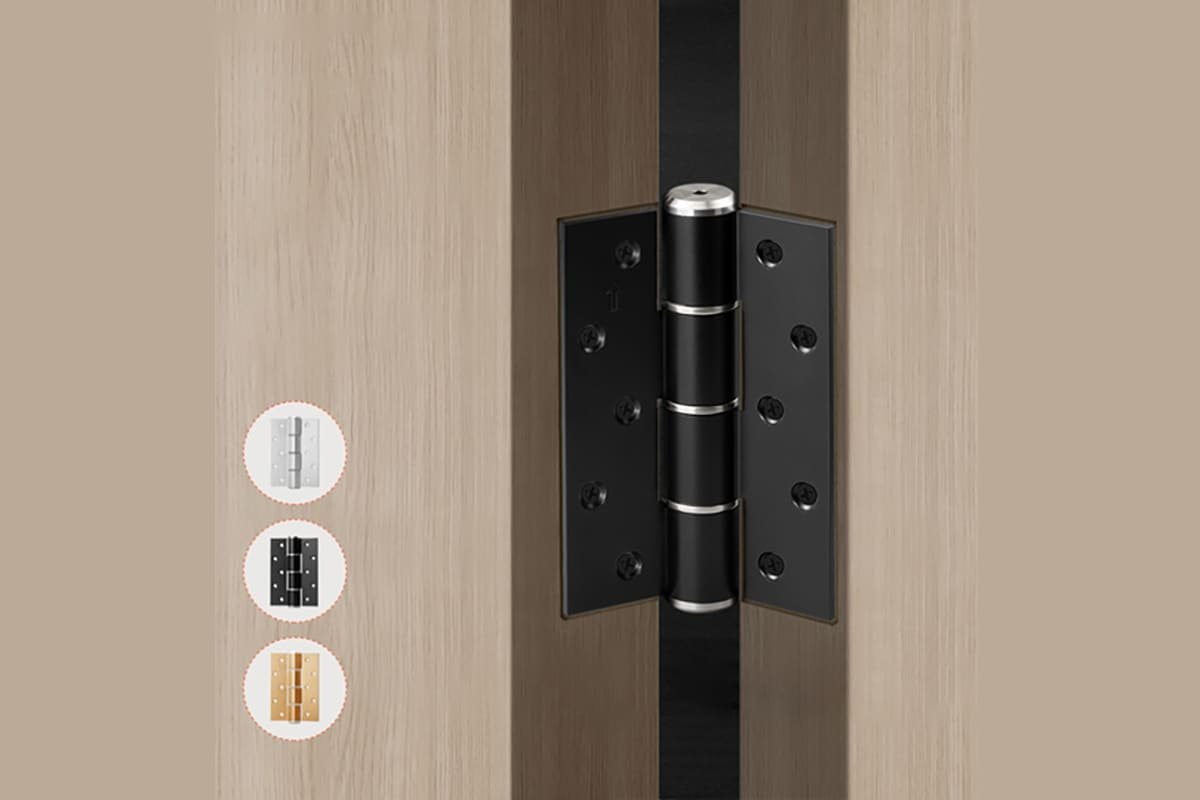
The main disadvantages of surface-mount door hinges are lower structural tolerance in demanding applications and higher visibility. Because the hinge sits on the surface, performance depends heavily on screw fixing strength, door and frame material, hinge size, and installation accuracy. They are not automatically suitable for heavy exterior or premium concealed-door projects.
1. Load capacity is application-dependent
The first limitation is structural. Surface-mounted hinges rely strongly on screws gripping into the door leaf and frame surface. If the door is heavy, wide, or frequently used, the hinge line receives more stress.
A heavier door increases vertical load. A wider door increases leverage.6 Frequent opening increases fatigue on the fixing points.7 If the frame material is weak or the screws are short, loosening can occur over time.
I avoid giving universal load claims without a specific product drawing, material, screw specification, and test method. That is the responsible way to evaluate industrial hardware. A hinge may perform well in one door system and poorly in another if the fixing conditions change.
2. Screw holding strength becomes critical
For surface-mounted installation, the screws are not just accessories. They are part of the load path.
Buyers should check:
- Screw diameter
- Screw length
- Screw material
- Thread type
- Pilot hole diameter
- Frame reinforcement
- Door core density
- Number and position of fixing holes
A strong hinge plate cannot compensate for a weak fixing base. For example, a thin metal frame may need reinforcement. A low-density door core may need inserts or special fixing solutions. A timber frame may need pilot holes to reduce splitting and improve screw seating.8
3. Appearance is more visible
Surface-mounted hinges remain exposed.9 This can be acceptable or even desirable for some traditional, industrial, or utility designs. But it can conflict with modern minimalist doors, premium hotel doors, high-end apartments, and projects that require a clean flush look.
For a door brand, visual consistency matters. If the door catalogue shows a sleek surface but the delivered product has prominent hinge leaves and screws, the customer may complain even if the hinge works mechanically.
Aesthetic concerns include:
- Visible hinge leaves
- Visible screw heads
- Possible shadow lines
- Surface treatment mismatch
- Bulkier appearance
- Less premium visual impression
4. Alignment errors are easier to see
Because the hinge is visible, installation errors can become obvious. If the hinge line is not straight, the screw spacing is inconsistent, or the hinge leaves are not parallel, the final product may look careless.
For factory production, this means inspection must still be strict. Surface mounting reduces cutting work, but it does not remove the need for measurement control.
Important quality checks include:
- Hinge position consistency
- Vertical alignment across all hinges
- Door gap uniformity
- Screw seating and torque control
- Door swing smoothness
- No rubbing between leaf and frame
- No plating damage after installation
5. They may not suit fire-rated or certified door assemblies without verification10
This point is especially important for engineering door manufacturers. A hinge being available with certification in one product family does not mean every installation or every door assembly is automatically compliant.
Buyers should verify:
- The exact hinge model
- The certificate scope
- The tested door type
- The tested installation method
- Door weight and size limits in the documentation
- Required screws and fixing details
- Applicable regional standards
At SDH Hardware, our core products are available with relevant CE and fire-rated certification documents where applicable. However, I always recommend that buyers verify product-specific documentation for their project. Compliance depends on the tested assembly, not only the hinge category.11
How Should Door Factories Evaluate Surface-Mount Door Hinges?
A factory buyer may ask, “Is this hinge good?” That question is too broad. A better question is, “Is this hinge suitable for this door, this frame, this user frequency, and this market expectation?” That shift prevents many avoidable purchasing mistakes.
Door factories should evaluate surface-mount door hinges by checking door weight, door width, use frequency, door and frame material, screw fixing strength, hinge dimensions, surface treatment, supplier inspection process, and documentation. The best choice balances installation efficiency against structural safety, appearance requirements, and long-term service risk.
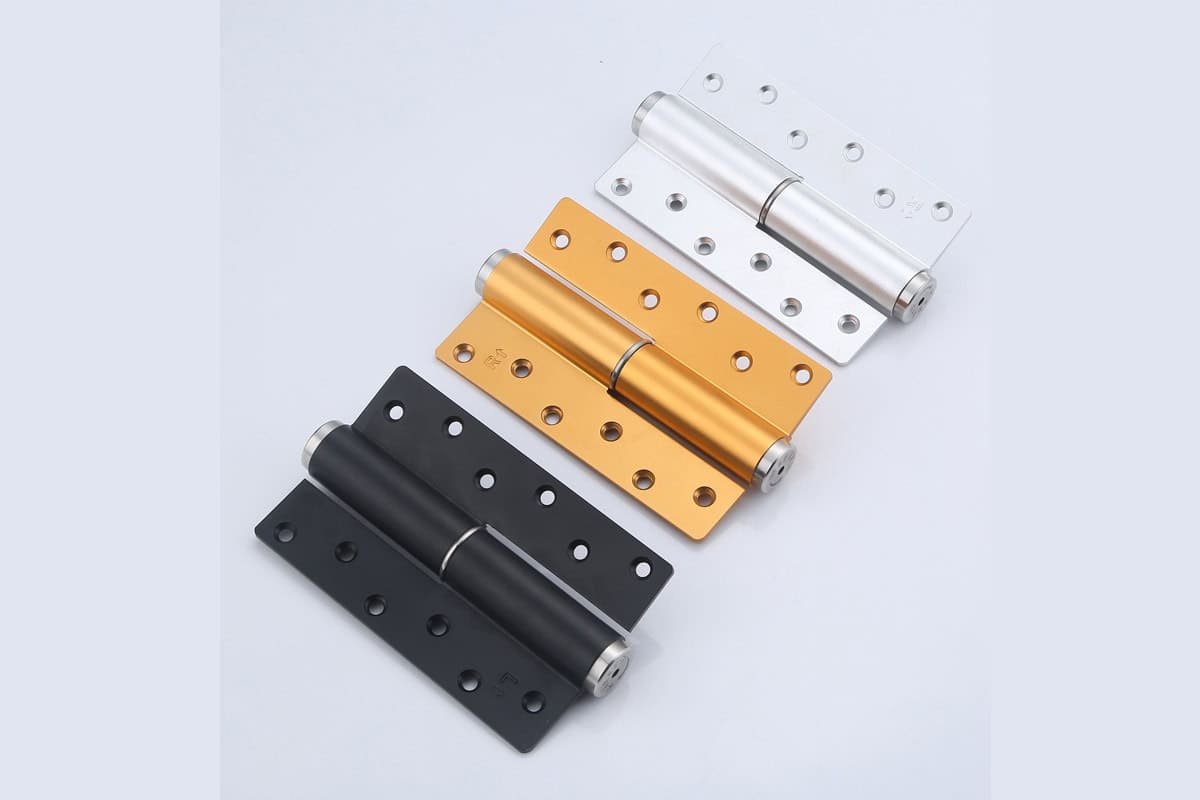
Start with the door, not the hinge
In my factory work, I prefer to begin with the door specification. The hinge selection should follow the door.
A practical evaluation checklist includes:
- Door height and width
- Door weight
- Door material
- Frame material
- Interior or exterior use
- Opening frequency
- Required service life
- Exposure to humidity or corrosion
- Visual design requirement
- Certification or project standard requirement
This information helps the supplier recommend a hinge structure instead of guessing from a photo.
Review the fixing system
For surface-mounted hinges, fixing strength is often the hidden risk. The screw holes, screw type, frame reinforcement, and door leaf material must work together.
| Evaluation item | Why it matters | What buyers should request |
|---|---|---|
| Hinge size | Affects load distribution | Product drawing with dimensions |
| Hinge thickness | Affects stiffness | Material thickness tolerance |
| Screw hole pattern | Affects fixing stability | Hole layout and screw recommendation |
| Door/frame material | Affects screw grip | Application review |
| Surface finish | Affects corrosion and appearance | Finish samples or salt spray requirement |
| Batch consistency | Affects installation repeatability | Inspection standard |
| Certification documents | Affects project compliance | Product-specific certificates |
Ask for drawings before mass production
A drawing is more useful than a general product photo. It allows the door manufacturer to confirm:
- Leaf length and width
- Knuckle diameter
- Pin structure
- Hole diameter
- Hole spacing
- Open angle
- Material thickness
- Edge clearance
- Screw size
- Packaging requirements
For OEM or ODM orders, drawings also protect both sides. The supplier knows what to produce. The buyer knows what to inspect. At SDH Hardware, we provide detailed product drawings after order confirmation, and I find that this reduces misunderstandings during production.
Define quality inspection points
A good supplier should not only ship hinges. The supplier should control the process. For surface-mounted hinges, I would expect inspection around raw material, forming, drilling, finishing, assembly, and final packing.
Useful inspection points include:
- Raw material thickness check
- Plate flatness check
- Hole position check
- Pin fit and rotation check
- Surface finish consistency
- Burr inspection
- Screw compatibility check
- Opening and closing smoothness
- Packaging abrasion protection
- Random finished product inspection
I have seen small burrs around screw holes create installation problems. I have also seen inconsistent plating cause visible color differences after assembly. These are not dramatic failures, but they affect the buyer’s product quality.
Compare total cost, not only unit price
Surface-mount door hinges may reduce installation labor, but the full cost includes more than the hinge price.12
Buyers should consider:
- Hinge unit cost
- Installation time
- Tooling cost
- Rework rate
- Warranty risk
- Appearance complaints
- Inventory complexity
- Replacement convenience
- Project approval risk
A hinge that saves one production step may still be the wrong choice if it causes door sagging or does not match the buyer’s catalogue design. On the other hand, a surface-mounted hinge can be a very practical choice when the application is light-duty, the customer accepts visible hardware, and the fixing structure is strong enough.
When Are Surface-Mount Door Hinges Better Than Mortised or Concealed Hinges?
Many buyers compare hinge types as if one must be best in every situation. Real product selection does not work that way. A hinge type is better only when it fits the door design, factory process, project budget, and end-user expectation.
Surface-mount door hinges are better than mortised or concealed hinges when installation speed, easy replacement, and low machining complexity are the main priorities. Mortised hinges are usually better for a cleaner traditional edge fit, while concealed hinges are better for premium flush appearance when the door and frame can support accurate routing.
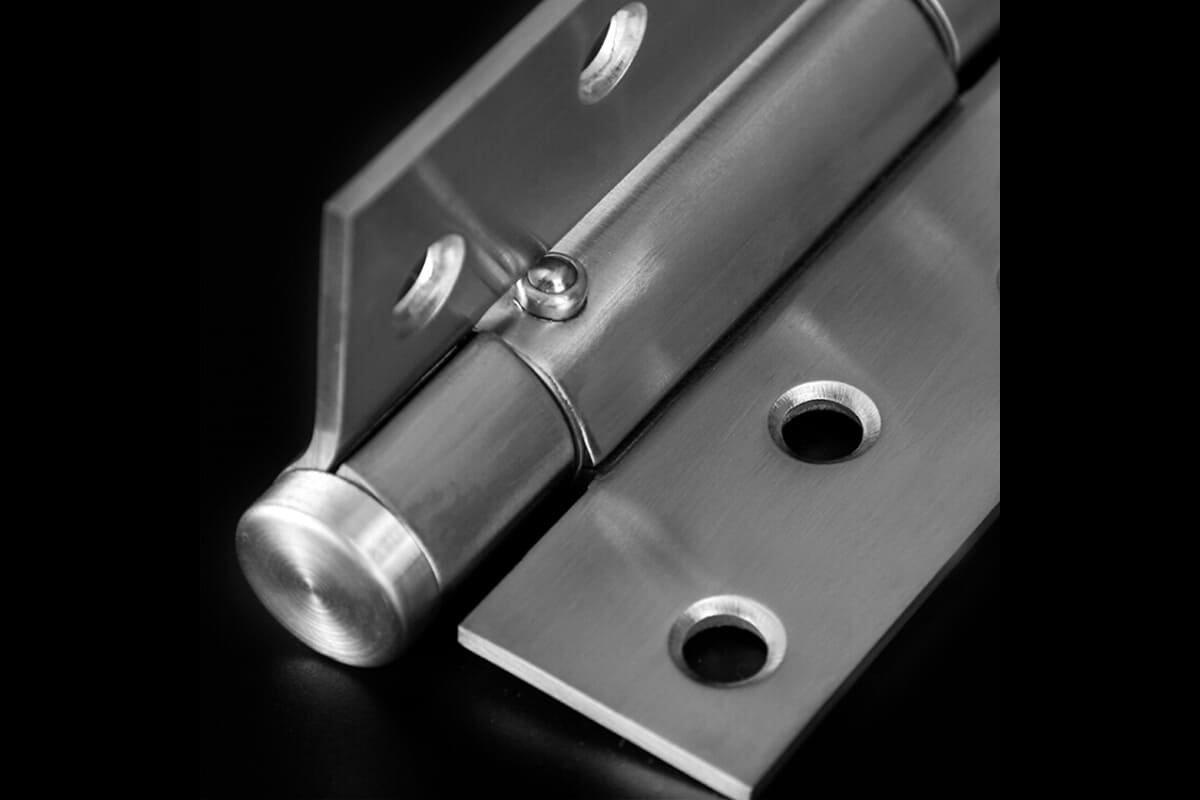
Use them when speed is the main priority
If a door factory needs fast assembly and the door is not heavy or design-sensitive, surface mounting can be practical. The factory can reduce routing steps and simplify worker training.
This can be useful for:
- Standard interior utility doors
- Storage room doors
- Light commercial internal doors
- Maintenance access doors
- Temporary project doors
- Low-to-medium duty applications after verification
The phrase “after verification” matters. I do not recommend choosing them only because they are convenient. The hinge still needs to match the actual door.
Choose mortised hinges when edge fit matters
Mortised butt hinges are common because they balance strength, appearance, and production practicality. The hinge leaf sits into a recess, so the door edge looks cleaner than with a surface-mounted plate. The recess can also help position the hinge consistently when machining is accurate.
Mortised hinges may be better when:
- The door needs a more traditional finished look
- The edge gap must be controlled closely
- The project accepts visible knuckles but not surface plates
- The factory has stable routing capacity
- The door weight requires a more robust hinge format
For many architectural doors, butt hinges remain a standard option because they are familiar, inspectable, and available in many grades and materials.
Choose concealed hinges when appearance is the main priority
Concealed hinges are often used when the project wants a minimalist appearance. When the door is closed, the hinge is hidden. This creates a clean surface, which is attractive for high-end residential, hotel, office, and modern interior projects.
However, concealed hinges require more accurate preparation. The door and frame must be machined correctly. The hinge body must fit the pocket. Adjustment must be controlled. The cost is usually higher than simple visible hinges.
Concealed hinges may be better when:
- The customer requires a flush appearance
- The project is premium or design-led
- The door structure can accept routed pockets
- Installers have enough skill
- Adjustment features are needed
- Product-specific load and certification documents are verified
A simple decision matrix
| Project condition | Best hinge direction |
|---|---|
| Fast installation is the top priority | Consider surface-mounted hinges |
| Clean traditional door edge is required | Consider mortised butt hinges |
| Minimalist hidden hardware is required | Consider concealed hinges |
| Heavy exterior door is involved | Verify load data and fixing structure carefully |
| Fire-rated assembly is required | Verify product-specific certificates and tested assembly |
| Weak frame or thin door skin is used | Review reinforcement before choosing |
The right buying question is not, “Are surface-mount door hinges good or bad?” The right question is:
“Does this door need quick installation more than high load capacity or concealed appearance?”
That question keeps the procurement team focused on the actual trade-off.
Frequently Asked Questions
Are surface-mount door hinges strong enough for heavy doors?
Surface-mount door hinges can be suitable for some doors, but heavy doors need product-specific verification. Buyers should check hinge size, material, screw fixing, door width, door weight, frame reinforcement, and test documentation. I do not recommend assuming suitability for heavy exterior doors without technical review.
Do surface-mounted hinges require mortising?
No. Surface-mounted hinges are installed directly on the visible surface of the door leaf and frame. They usually do not require routing, chiseling, or recessed hinge pockets. This is why they can reduce installation steps compared with mortised butt hinges.
Are surface-mount door hinges suitable for premium doors?
They can be used when visible hardware fits the design, but they are usually less suitable for minimalist or premium flush doors. Concealed hinges are often preferred when the project requires hidden hardware. The final choice should match the visual standard of the door brand or project.
What should I ask a supplier before buying surface-mounted hinges?
You should ask for product drawings, material specifications, hinge thickness, screw recommendations, finish options, inspection standards, packaging details, and any relevant certification documents. You should also provide door weight, size, material, frame details, and application conditions so the supplier can evaluate suitability.
Can surface-mounted hinges be fire-rated?
A hinge category is not automatically fire-rated. Buyers should verify the exact hinge model, certificate scope, tested door assembly, fixing method, and applicable standard. For project doors, I recommend professional review of the full door set, not only the hinge.
Conclusion
Surface-mount door hinges are not simply “easy-install hinges.” They are a conditional choice. They can help door factories reduce preparation steps, simplify replacement, and improve production efficiency. However, buyers must weigh those benefits against load capacity, fixing strength, visibility, door weight, and frame material. If you are evaluating surface-mount door hinges for an OEM, ODM, or project door order, contact SDH Hardware with your door specifications. I can help review the hinge type, drawing, finish, and inspection requirements before mass production.
"Full Mortise vs Non Mortise Hinge: Key Differences & When ...", https://watersonusa.com/solutions/full-mortise-vs-non-mortise-hinge. A construction or architectural hardware reference defines surface-mounted hinges as hinges attached to the face of the door and frame rather than recessed into a mortise. Evidence role: definition; source type: education. Supports: A construction or architectural hardware reference should define surface-mounted hinges by their surface installation and distinguish them from mortised hinges.. ↩
"How to Mortise Hinges With a Chisel",
. Woodworking and construction references describe mortised hinge installation as requiring a recess cut into the door and jamb, supporting the distinction that surface-mounted hinges avoid that routing or chiseling step. Evidence role: definition; source type: education. Supports: A woodworking or construction source should explain that mortised hinges require a recessed pocket cut into the door and frame, while surface-mounted hinges do not.. ↩"A DIY Guide to Installing 3D Adjustable Concealed Hinges ...", https://www.tambee.com/blogs/news/a-diy-guide-to-installing-3d-adjustable-concealed-hinges-for-hidden-doors. Architectural hardware references define concealed hinges as hinge mechanisms recessed into the door and frame so that the hinge is hidden when the door is closed. Evidence role: definition; source type: institution. Supports: A door-hardware reference should define concealed hinges as hidden from view when closed and installed in prepared recesses or pockets.. ↩
"Wood Handbook, Chapter 08: Fastenings", https://research.fs.usda.gov/download/treesearch/37424.pdf. Research on screwed connections explains that applied loads are transferred through the screw into the surrounding substrate, which supports treating hinge screws and door/frame material as part of the load path; the source would support the fastening mechanism rather than test this exact hinge configuration. Evidence role: mechanism; source type: paper. Supports: Engineering literature on screwed connections should show that loads are transferred through fasteners into the surrounding substrate.. Scope note: Contextual support from screwed-connection mechanics, not direct proof of a specific surface-mounted hinge model. ↩
"Screw withdrawal strength of heat-treated and laminated ...", https://bioresources.cnr.ncsu.edu/resources/screw-withdrawal-strength-of-heat-treated-and-laminated-veneer-lumber-reinforced-with-carbon-and-glass-fibers/. Studies of screw withdrawal and pull-out resistance show that fastener performance depends on the receiving material’s density, thickness, and reinforcement, supporting the claim that a hinge can loosen because of the substrate rather than the hinge leaf itself. Evidence role: mechanism; source type: paper. Supports: Fastener-strength literature should show that screw withdrawal or pull-out resistance depends on substrate properties such as thickness, density, and reinforcement.. Scope note: The support is based on fastener behavior generally and may not provide door-hinge-specific failure rates. ↩
"What is a Moment?", https://web.mit.edu/4.441/1_lectures/1_lecture5/1_lecture5.html. Engineering statics texts define moment as force multiplied by perpendicular distance, supporting the inference that a heavier door increases hinge load and a wider door increases leverage at the hinge line. Evidence role: mechanism; source type: education. Supports: An engineering statics source should support that moment increases with force and perpendicular distance, which applies to door weight and width.. Scope note: This is a mechanics-based inference and does not substitute for product-specific hinge load testing. ↩
"(PDF) Loosening Evaluation of Bolt-Nut Fastener Under ...", https://www.academia.edu/80416765/Loosening_Evaluation_of_Bolt_Nut_Fastener_Under_Transverse_Cyclic_Loading. Mechanical studies of fastened joints under cyclic loading show that repeated load cycles can promote fatigue damage or loosening, supporting the concern that frequent door operation stresses hinge fixing points. Evidence role: mechanism; source type: paper. Supports: Research on cyclic loading of fastened joints should support that repeated motion or loading can contribute to fatigue or loosening.. Scope note: The evidence is contextual unless the source specifically tests door hinges under opening-cycle loads. ↩
"Wood Handbook: Wood as an Engineering Material", https://research.fs.usda.gov/fpl/wood-handbook. Wood-products technical guidance, such as government wood engineering manuals, notes that properly sized pilot holes help prevent splitting and improve screw placement in timber. Evidence role: mechanism; source type: government. Supports: A wood-products technical guide should support the use of pilot holes to reduce splitting when driving screws into timber.. ↩
"Installing New Face Mount Cabinet Hinges",
. Door-hardware references describe exposed or surface-mounted hinges as visible hardware mounted on the face of the door or frame, supporting the article’s visibility distinction. Evidence role: definition; source type: encyclopedia. Supports: A general or specialist reference should state that exposed or surface-mounted hinges are visible when installed.. ↩"NFPA 80 Fire Door Requirements: Code Guide | CDF Distributors", https://www.cdfdistributors.com/blog/post/nfpa-80-fire-door-requirements. Fire-door standards such as NFPA 80 require fire door assemblies and their hardware to be installed and maintained according to listing and labeling requirements, supporting the need to verify hinge suitability for certified assemblies. Evidence role: expert_consensus; source type: institution. Supports: A fire-door standard should support that hardware used on fire door assemblies must comply with listing, labeling, and installation requirements.. Scope note: Requirements vary by jurisdiction and by the specific listing or test evidence for the door assembly. ↩
"Doors, Windows and Related Hardware Application Guide", https://www.ul.com/thecodeauthority/knowledge/ul-fire-rated-doors-guide. Building-code provisions for fire door assemblies treat the rated opening as a tested and labeled assembly with specified hardware, supporting the statement that compliance cannot be inferred from the hinge category alone. Evidence role: expert_consensus; source type: government. Supports: A building-code or fire-door source should show that fire-rated openings are evaluated as assemblies with listed components and conditions of use.. Scope note: The source would establish the code principle; project approval still depends on local authority interpretation and the exact tested listing. ↩
"Building Life Cycle Cost Programs", https://www.nist.gov/services-resources/software/building-life-cycle-cost-programs. Life-cycle cost guidance, including government cost-analysis methods, evaluates products by initial cost together with labor, maintenance, replacement, and other future costs, supporting the article’s broader cost framing. Evidence role: general_support; source type: government. Supports: A life-cycle cost or production-cost source should support considering installation labor, maintenance, replacement, and other downstream costs in addition to unit price.. Scope note: This supports the cost-evaluation framework generally and does not quantify savings for any specific hinge installation. ↩