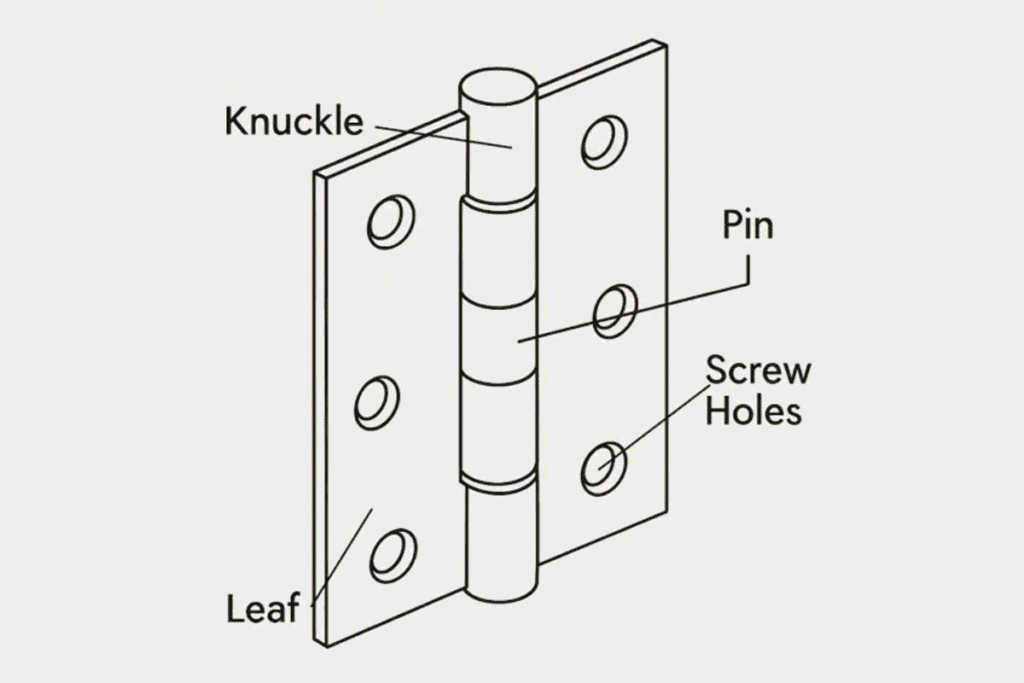
How Pin Diameter Affects Hinge Strength?
Pin diameter matters because buyers often use it as a quick signal of hinge strength, but that shortcut can create mistakes. If a door factory chooses only by “bigger pin,” the hinge may still fail to fit, look poor, or perform below expectation. I recommend checking the full hinge structure, including leaf thickness, knuckle diameter, drawings, screws, and installation clearance.
Pin diameter affects hinge strength by supporting the hinge axis and helping distribute door load through the knuckles, but it is not the only factor. A stronger butt hinge usually combines a suitable inner pin, thicker hinge leaves, correct outside knuckle diameter, reliable material, proper screw fixing, and accurate installation fit.
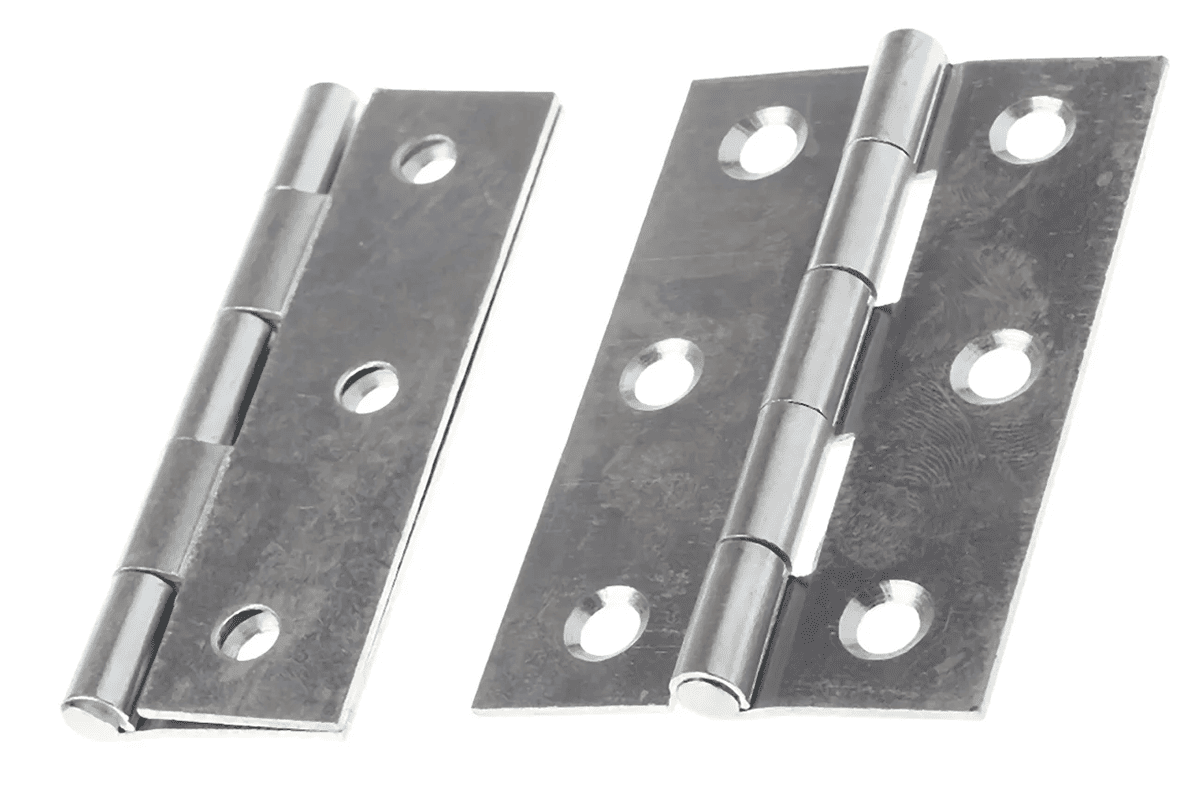
In our factory work at SDH Hardware, I often see technical teams compare hinges by one number first. That number may be 14 mm, 15 mm, or another knuckle size. However, the useful question is deeper: what does that diameter actually represent, and will it match the door design?
How Does Pin Diameter Affect Hinge Strength?
Pin diameter affects hinge strength because the hinge pin forms the rotation axis of the door1. If that axis is weak, loose, or poorly supported, the door can sag, rub, or feel unstable. However, the pin works with the hinge leaves and knuckles, not alone.
Pin diameter affects hinge strength by influencing how the hinge axis resists bending, wear, and repeated movement. In a butt hinge, the door load passes through the leaves, knuckles, pin, screws, and frame2. A larger pin can help, but only when the surrounding hinge structure is also properly designed.
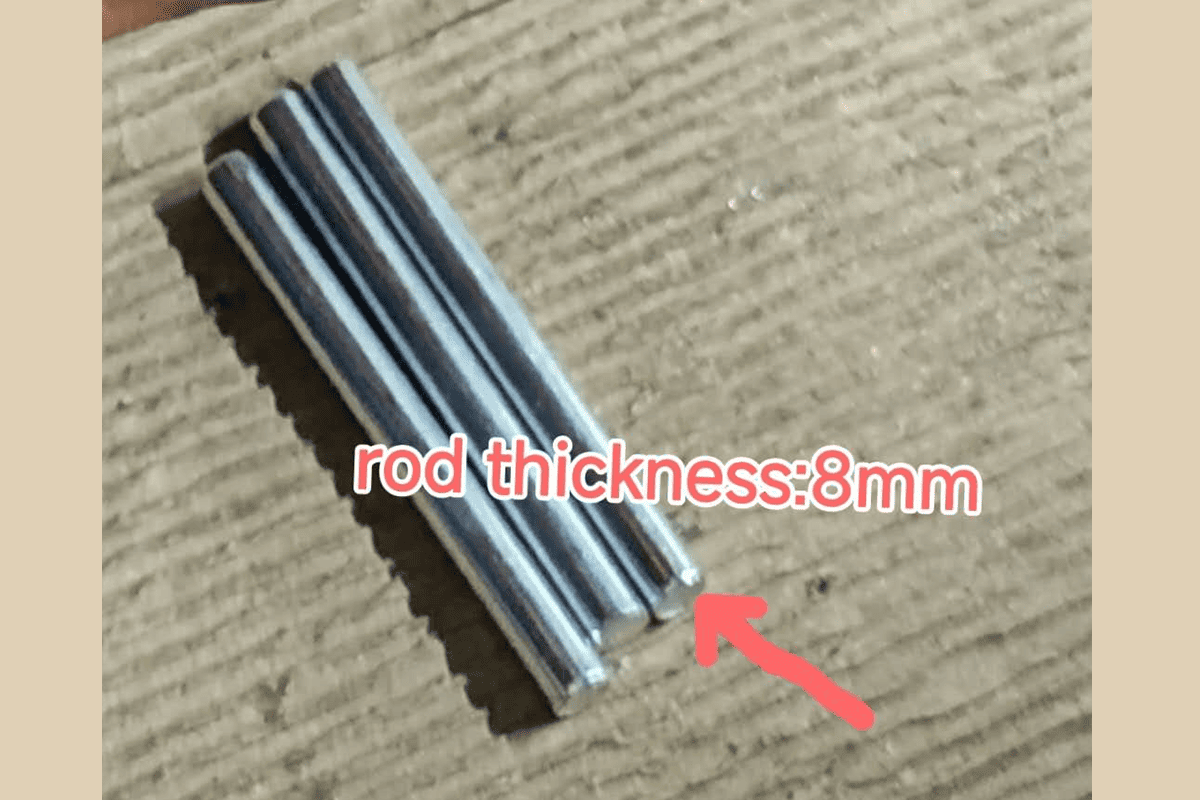
The hinge pin is only one part of the load path
A butt hinge looks simple, but the load path is not simple. The door weight does not sit on the pin alone. It transfers through several connected parts:
Door leaf of the hinge This side fixes into the door panel or door edge.
Frame leaf of the hinge This side fixes into the frame or jamb.
Knuckle structure The rolled or formed hinge barrels hold the pin and create the hinge axis.
Inner pin The pin allows rotation and helps maintain alignment.
Screws and fixing holes Screws transfer force into the door and frame material.
Door and frame material Timber, steel, aluminum, or composite structures all behave differently.
When I review hinge specifications with buyers, I try to avoid saying, “This hinge is strong because the pin is big.” That statement is incomplete. A hinge with a larger pin but thin leaves may not offer the same support as a hinge with a balanced design. The leaf thickness, knuckle formation, and screw fixing pattern can be just as important.
Why the pin supports rotation and alignment
The pin sits inside the knuckles and becomes the center line of movement. During opening and closing, it must handle:
- Vertical load from the door weight
- Side load from door movement and pulling force
- Wear from repeated cycles
- Misalignment stress if the door or frame is not square
- Impact stress in high-traffic applications
A thicker inner pin can usually provide better resistance to bending than a very thin pin3, assuming the material and manufacturing quality are equal. However, hinge performance also depends on how tightly the knuckles are formed around the pin4. If the tolerance is poor, a thick pin will not solve loose movement.
Why leaf thickness often tells more than the pin alone
For European-standard butt hinges, the outside knuckle diameter often reflects the combined structure of the hinge. For example:
| Example hinge structure | Leaf thickness | Inner pin size | Approx. outside knuckle diameter |
|---|---|---|---|
| Standard structure | 3 mm + 3 mm | 8 mm | 14 mm |
| Heavier structure | 3.5 mm + 3.5 mm | 8 mm | 15 mm |
This example shows why buyers must separate inner pin diameter from outside knuckle diameter. The inner pin may stay at 8 mm, while the outside knuckle diameter increases because the leaves are thicker.5 In that case, the stronger structure comes not from a larger inner pin, but from thicker hinge leaves and larger formed knuckles.
Practical buying point
For door factories, pin diameter should be part of a technical checklist, not a single decision rule. I normally suggest reviewing:
- Door weight
- Door height and width
- Door material
- Opening frequency
- Number of hinges per door
- Screw type and fixing depth
- Fire-rated or CE documents, where required
- Hinge drawing dimensions
- Installation clearance and prepared opening
> A bigger pin may help hinge strength, but a well-matched hinge structure helps the whole door system perform better.
Why Is Outside Knuckle Diameter Different From Inner Pin Diameter?
Outside knuckle diameter and inner pin diameter are often confused because both relate to the hinge axis. This confusion can cause wrong purchasing decisions. A buyer may ask for a “15 mm pin,” when the drawing actually shows a 15 mm outside knuckle with an 8 mm inner pin.
Outside knuckle diameter is the external size of the rolled hinge barrel, while inner pin diameter is the size of the pin inside that barrel. A larger outside knuckle can come from thicker hinge leaves, a larger pin, or both. Door factories should confirm this through technical drawings before ordering.
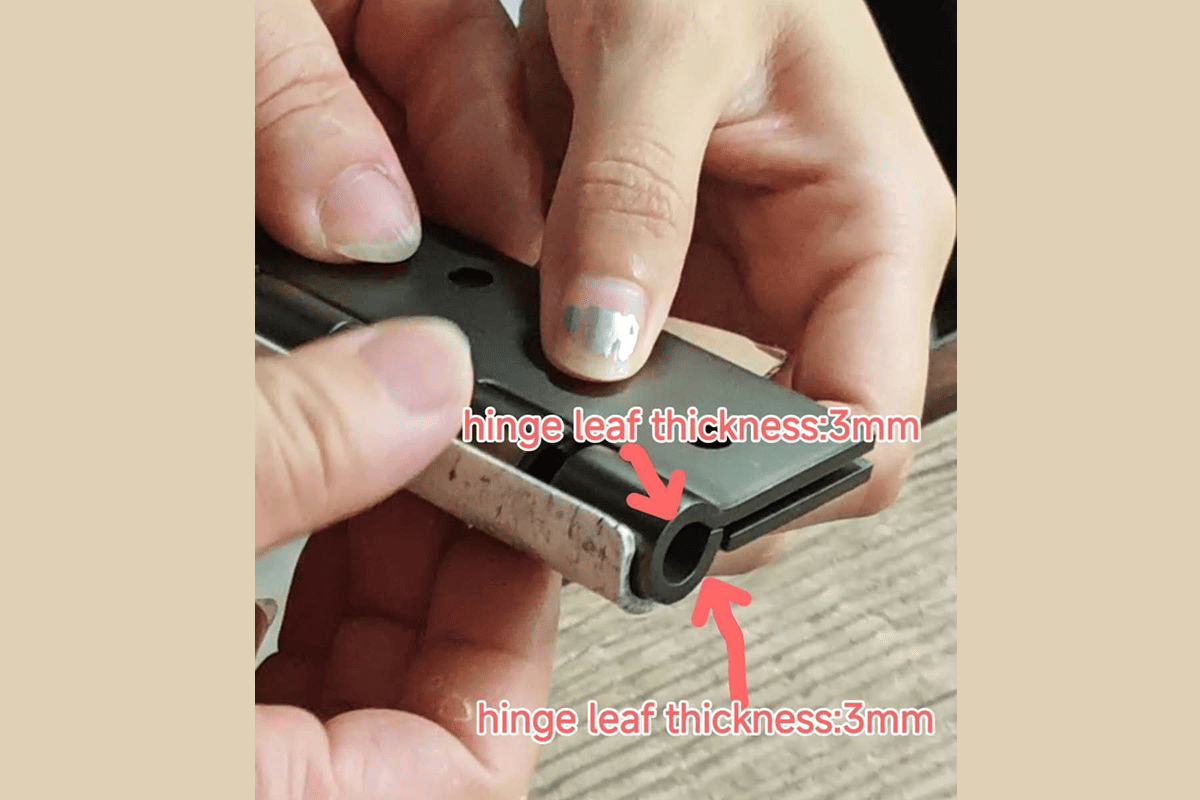
The difference is easy to see in a drawing
In hinge production, the knuckle is usually formed from the hinge leaf material. The leaf is rolled or shaped around the pin area. This means the outside diameter includes more than the pin. It includes the metal thickness around the pin.
A simplified way to understand the common examples is:
| Outside knuckle diameter | Leaf thickness on one side | Inner pin diameter | Basic calculation |
|---|---|---|---|
| 14 mm | 3 mm | 8 mm | 3 + 8 + 3 = 14 mm |
| 15 mm | 3.5 mm | 8 mm | 3.5 + 8 + 3.5 = 15 mm |
This does not replace the official drawing, because real hinge geometry includes forming radius, tolerances, bearing washers, tips, and knuckle layout. However, it explains the buying logic very well. A 15 mm outside knuckle does not always mean a 15 mm inner pin.6
Why this matters in procurement
I have seen this issue in factory communication many times. A purchasing team may request a stronger hinge and mention only the outside size. Then the technical team checks the door edge preparation and finds that the larger knuckle will not sit correctly. This creates delay, sample rework, or visual problems after installation.
Buyers should ask suppliers for:
- 2D technical drawings
- Leaf thickness
- Inner pin diameter
- Outside knuckle diameter
- Hole position
- Countersink details
- Open angle
- Material grade
- Surface treatment
- Relevant CE or fire-rated certificates, when required
Certifications should be treated as documents to verify. For project use, buyers should check whether the certificate matches the exact hinge model, size, material, and intended application.
Inner pin diameter is not the same as hinge strength rating
A larger inner pin can improve axis support, but it does not automatically define a universal load capacity.7 Real hinge capacity depends on the full assembly and test conditions. These conditions may include door weight, cycle testing, screw pull-out resistance, frame material, and installation accuracy.8
For that reason, I avoid giving universal load-bearing numbers unless a specific test report is available. A professional supplier should be able to explain the hinge structure and provide documents for qualified review. For project-specific decisions, especially fire doors, heavy doors, or public buildings, buyers should involve a qualified technical evaluator or project engineer.
What I check first in a hinge drawing
When I review a European-standard butt hinge drawing, I usually look at these points before discussing price:
Overall hinge size Height, width, and open width must match the door design.
Leaf thickness This affects strength, milling depth, and screw seating.
Outside knuckle diameter This affects clearance, appearance, and installation space.
Inner pin size This affects hinge axis support and rotation stability.
Screw hole layout This affects fixing strength and compatibility with existing production.
Gap and clearance requirements This affects door movement and final visual result.
A drawing-based review reduces risk. It also makes communication clearer between purchasing, engineering, production, and installation teams.
When Should Door Factories Choose a Larger Pin Diameter and Knuckle Size?
Pin diameter selection becomes important when the door is heavy, tall, wide, frequently used, or installed in a demanding environment. If the hinge is underspecified, the door may sag or loosen. If the hinge is oversized without checking drawings, it may not fit the prepared opening.
Door factories should consider a larger pin diameter or larger knuckle structure when the door design needs more axis support, thicker leaves, or better long-term stability. However, the final choice should also reflect door weight, door size, usage frequency, material, screw fixing, certification needs, and installation conditions.
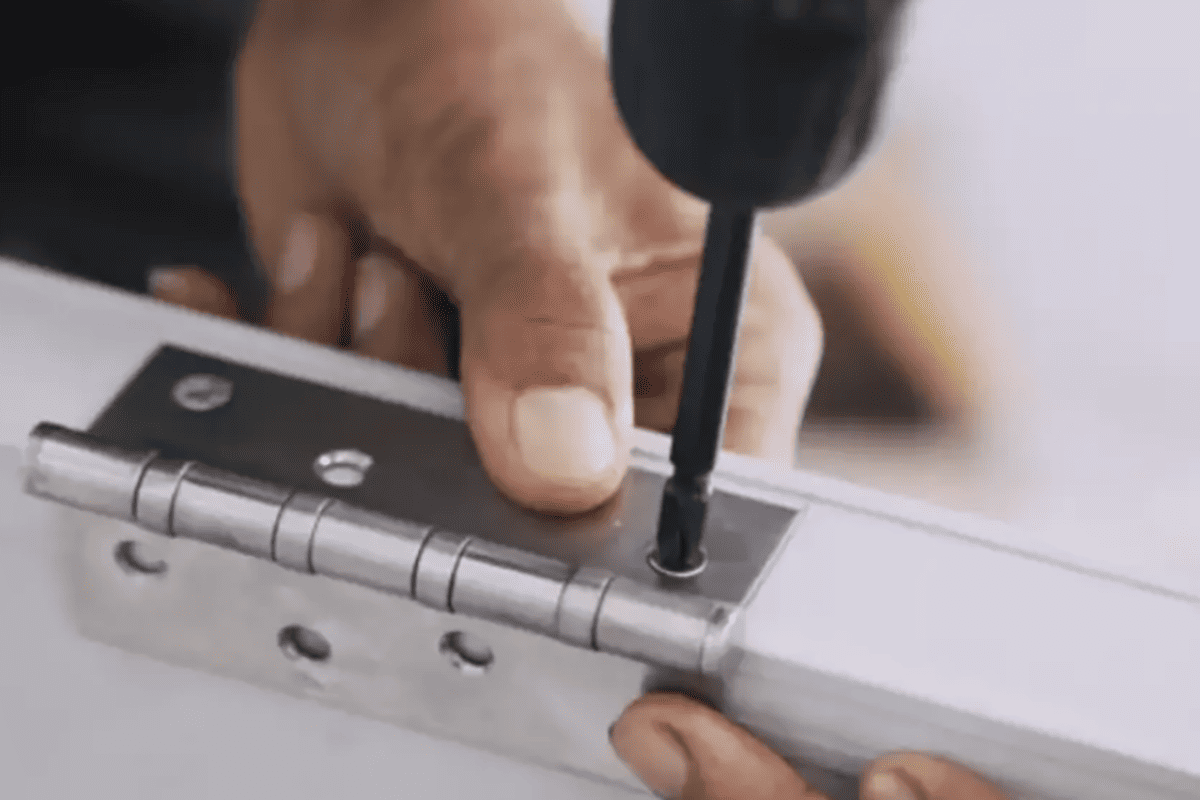
Bigger can be better, but only in the right system
A larger hinge axis can be useful in heavier applications. However, hinge strength comes from a system. In practice, buyers often compare a 14 mm outside knuckle and a 15 mm outside knuckle because those sizes are common in European-standard butt hinges.
A 15 mm outside knuckle may indicate a stronger structure if it uses thicker leaves, such as 3.5 mm instead of 3 mm. That extra thickness can improve support around the hinge axis and may give the hinge a more robust feel. But the hinge still needs correct fixing and correct installation.
Key factors before choosing a larger hinge
Door factories should evaluate the door as a complete assembly. I recommend creating a checklist before approving a hinge for production.
| Evaluation factor | Why it matters | What buyers should check |
|---|---|---|
| Door weight | Higher weight increases hinge load | Confirm project door weight range |
| Door height | Taller doors create more leverage9 | Check hinge quantity and position |
| Door width | Wider doors increase bending force | Review screw fixing and hinge structure |
| Usage frequency | More cycles increase wear10 | Ask about cycle testing documents if needed |
| Door material | Fixing strength varies by material | Match screws and reinforcement |
| Frame material | Weak frames reduce hinge performance | Check frame preparation and inserts |
| Leaf thickness | Supports the knuckle and fixing area | Compare 3 mm vs 3.5 mm or other specs |
| Inner pin diameter | Supports rotation axis | Confirm actual pin size on drawing |
| Outside knuckle diameter | Affects fit and appearance | Check clearance before production |
| Certification | Required for regulated projects | Verify exact documents and model scope |
A larger knuckle can change installation details
A stronger hinge may also need more space. This is where many door factories face practical problems. The knuckle diameter affects the gap between the door and frame, the milling preparation, and the visible hinge line.
If the prepared clearance is too small, the hinge may bind or fail to sit correctly.11 If the prepared opening is too large, the door may still work, but the final appearance can look poor. In export markets, that kind of visual issue can lead to complaints even when the hinge itself is not defective.
A practical example from factory communication
In one typical situation, a door factory may design the door edge around a 14 mm outside knuckle hinge. Later, the buyer decides to upgrade to a 15 mm version because the project door feels heavier than expected. That change sounds small. It is only 1 mm. However, the prepared space, door gap, and hinge seating may all need review.
This is why I always prefer to confirm the drawing before mass production. A 1 mm difference can matter in architectural hardware. The technical team should check whether the larger outside knuckle changes:
- Door edge milling depth
- Frame rebate clearance
- Screw hole alignment
- Door opening angle
- Visible gap line
- Surface contact around the hinge
- Packaging and accessory requirements
When a larger hinge may not be the best answer
A larger pin diameter or knuckle size is not always the right solution. Sometimes the better solution is:
- Adding another hinge
- Improving screw length or screw type
- Using reinforcement plates
- Changing hinge material
- Adjusting hinge position
- Improving door frame structure
- Selecting a certified hinge model for the application
For technical projects, buyers should not rely on appearance alone. They should evaluate drawings, samples, and relevant test documents. If the door is used in a fire-rated assembly or a regulated building project, the decision should involve qualified professional review.
How Should Pin Diameter Be Checked Against Hinge Drawings Before Installation?
Pin diameter must be checked against hinge drawings because installation fit depends on more than the visible hinge size. If the drawing is ignored, the door may bind, leave uneven gaps, or look unfinished. These problems are expensive after doors are painted, packed, or delivered.
Door factories should check pin diameter, outside knuckle diameter, leaf thickness, hinge width, hole position, and clearance dimensions before installation. The prepared opening must match the hinge drawing. A tight opening may prevent proper fitting, while an oversized opening may create poor appearance and weak-looking workmanship.
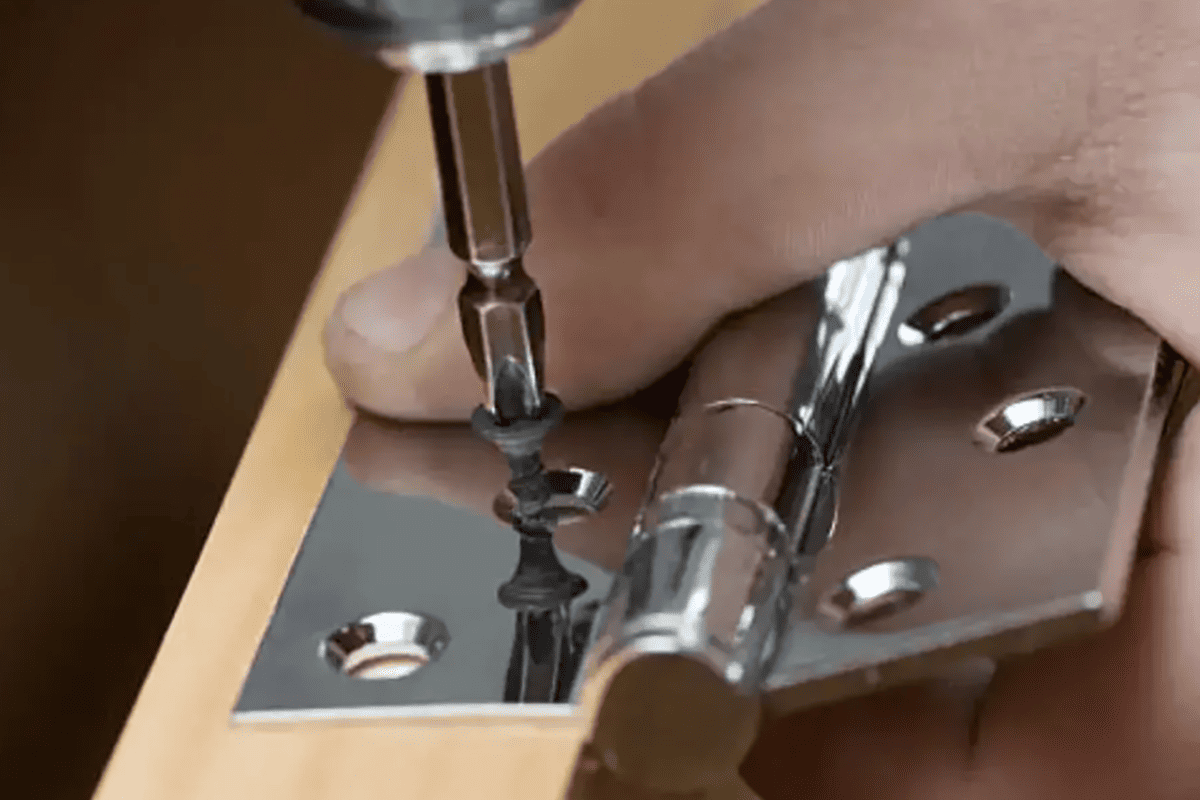
Drawings turn a hinge from a product into a production part
A hinge is not just a hardware item. For a door factory, it is also a production component. The door edge, frame rebate, screw holes, and finishing process must all match the hinge dimensions. That is why drawings are essential before ordering large quantities.
At SDH Hardware, our work often includes confirming product drawings, specifications, installation fit, and inspection points with customers. I find that the best results happen when purchasing teams and technical teams review the drawing together. Purchasing may focus on cost and lead time. Engineering focuses on fit. Both views matter.
What to check on the drawing
A good hinge drawing should help the door factory confirm the important dimensions. Buyers should not only look at the product photo.
Key drawing points include:
Hinge height This affects the door edge preparation and hinge positioning.
Leaf width This affects how the hinge sits on the door and frame.
Leaf thickness This affects mortise depth and structural support.
Outside knuckle diameter This affects clearance and visual appearance.
Inner pin diameter This confirms the actual hinge axis size.
Hole diameter and countersink angle This affects screw compatibility.
Hole spacing This affects pre-drilling and CNC setup.
Corner radius or square corner detail This affects routing tools and installation appearance.
Open width This affects the relationship between door, frame, and reveal.
Surface finish thickness This can matter when clearance is tight.
Common installation risks
The most common risks are not always dramatic. They are often small fit issues that appear during trial installation.
| Installation issue | Possible cause | Result |
|---|---|---|
| Hinge cannot sit fully | Mortise too shallow or knuckle clearance too tight | Door may bind or rub |
| Door gap looks too large | Opening prepared too wide | Poor visual appearance |
| Screw head sits proud | Wrong countersink or screw type | Door may not close smoothly |
| Hinge axis misaligned | Inaccurate positioning | Door movement feels uneven |
| Knuckle contacts frame | Outside diameter not checked | Door cannot open properly |
| Finish gets damaged | Clearance too tight after coating | Scratches and complaints |
Why sample fitting matters before mass production
I always recommend sample fitting before full production. A drawing is the starting point, but a real sample confirms how the hinge works with the actual door material, frame design, screws, and finishing process.12
A strong sample review should include:
- Measuring the hinge against the drawing
- Installing it on the actual door profile
- Checking the opening and closing movement
- Checking the reveal and visual gap
- Testing screw seating
- Checking surface finish after installation
- Confirming packaging protection
- Recording any changes before mass order
This process is especially important for ODM and OEM orders. If the buyer requests custom surface treatment, logo stamping, special packaging, or adjusted dimensions, the drawing should be updated and approved before production.
Quality control should connect drawing, production, and inspection
For factory-direct hinge supply, quality control should not happen only at the end. It should connect the whole process:
- Raw material screening
- Leaf forming and machining
- Knuckle forming
- Pin assembly
- Surface finishing
- Dimensional inspection
- Function testing
- Final product inspection
- Packaging check
This is the practical side of hinge strength. A good design can still fail if production tolerance is poor. A suitable pin diameter can still create problems if the knuckle is loose, the leaf is uneven, or the hole position is wrong.
For door factories, the safest approach is to combine drawing confirmation, sample fitting, and supplier quality review. That approach reduces installation risk and makes bulk purchasing more predictable.
Frequently Asked Questions
Is a larger pin diameter always better for hinge strength?
A larger pin diameter can improve hinge axis support, but it is not always better by itself. Hinge strength also depends on leaf thickness, outside knuckle diameter, material, screw fixing, door weight, frame strength, and installation accuracy. Buyers should review the full hinge specification before choosing.
What is the difference between pin diameter and knuckle diameter?
Pin diameter refers to the inner pin inside the hinge barrel. Knuckle diameter refers to the outside diameter of the rolled hinge barrel. For example, a 15 mm outside knuckle may still use an 8 mm inner pin if the hinge leaves are thicker.
Why do 14 mm and 15 mm butt hinges feel different?
A 15 mm outside knuckle often comes with thicker leaves than a 14 mm version. For example, 14 mm may use 3 mm + 3 mm leaves with an 8 mm pin, while 15 mm may use 3.5 mm + 3.5 mm leaves with an 8 mm pin. The thicker structure can feel stronger.
Should I choose hinge size based only on door weight?
Door weight is important, but it is not the only factor. Door height, width, usage frequency, material, screw fixing, frame design, certification needs, and installation clearance also matter. For project-specific decisions, buyers should ask for drawings, samples, and relevant technical documents.
Why should I check hinge drawings before installation?
Hinge drawings confirm the dimensions that affect fit, including leaf thickness, outside knuckle diameter, pin diameter, hole spacing, and clearance. If the prepared opening is too small, the hinge may not fit. If it is too large, the final appearance may look unprofessional.
Conclusion
Pin diameter affects hinge strength, but buyers should never judge a butt hinge by pin size alone. A reliable European-standard hinge depends on the full structure: inner pin, outside knuckle diameter, leaf thickness, screw fixing, material quality, production tolerance, and installation fit. I recommend checking technical drawings and samples before bulk orders. If your team needs factory-direct butt hinges with drawing support, customization, and inspection service, SDH Hardware can help you evaluate the right specification for your door project.
"Bearing (mechanical) - Wikipedia", https://en.wikipedia.org/wiki/Bearing_(mechanical). A general mechanical reference defines a hinge as a joint that constrains motion primarily to rotation about an axis, which supports identifying the hinge pin as the door’s rotational centerline in a butt hinge; the reference is definitional and does not evaluate this specific hinge design. Evidence role: definition; source type: encyclopedia. Supports: A hinge permits rotation between two members about a fixed axis, commonly provided by a pin or bearing arrangement.. Scope note: Contextual definition rather than a test of the article’s specific hinge examples. ↩
"Support and Connection Types", https://web.mit.edu/4.441/1_lectures/1_lecture13/1_lecture13.html. Engineering descriptions of pinned joints and architectural hinge assemblies support the point that applied door loads are transmitted through the hinge leaves, bearing surfaces, fasteners, and surrounding structural members rather than by the pin alone; this is a general load-path explanation and not a quantified rating for a particular hinge. Evidence role: mechanism; source type: education. Supports: Loads in a hinged door assembly are resisted by the hinge leaves, pin or bearing surfaces, fasteners, and supporting door/frame material.. Scope note: General mechanical support, not a product-specific load test. ↩
"Section modulus", https://en.wikipedia.org/wiki/Section_modulus. Mechanics-of-materials references show that the bending stiffness and bending stress capacity of a circular section depend on diameter through its section properties, supporting the statement that a thicker hinge pin can better resist bending when material and manufacturing conditions are comparable; the source does not by itself establish complete hinge capacity. Evidence role: mechanism; source type: education. Supports: For a circular member, bending resistance is strongly related to diameter through geometric section properties such as area moment of inertia and section modulus.. Scope note: Supports the pin-bending mechanism only, not total hinge performance. ↩
"Influence of two kinds of clearance joints on the dynamics of ...", https://pmc.ncbi.nlm.nih.gov/articles/PMC10667275/. Research on clearance and wear in pin joints reports that the fit between a pin and its surrounding bearing surfaces affects contact behavior, wear, and motion accuracy, which supports the article’s claim that knuckle-to-pin tolerance influences hinge performance; the evidence is mechanistic and may not be specific to butt hinges. Evidence role: mechanism; source type: paper. Supports: Clearance in pin joints can influence looseness, contact stress, wear, vibration, and motion accuracy.. Scope note: Contextual support from pin-joint mechanics, not necessarily a butt-hinge-specific experiment. ↩
"ANATOMY OF A BUTT HINGE This technical illustration ...", https://www.facebook.com/61556236284739/posts/anatomy-of-a-butt-hingethis-technical-illustration-provides-a-detailed-breakdown/122299438136207876/. Architectural hardware terminology and hinge drawings distinguish the internal pin from the external knuckle or barrel, supporting the point that the outside knuckle dimension includes material around the pin and therefore need not equal pin diameter; the source would support the dimensional concept rather than the exact 8 mm, 14 mm, or 15 mm examples. Evidence role: definition; source type: institution. Supports: Hinge terminology distinguishes the pin, leaves, and knuckles/barrels, and technical drawings commonly show that outside barrel dimensions include material surrounding the pin.. Scope note: Supports the distinction and geometry, not the article’s specific sample dimensions unless the source includes matching drawings. ↩
"Hinge Terminology", https://www.larsenhinge.com/about-us/hinge-terminology. Architectural hardware terminology sources identify the hinge pin and knuckle or barrel as distinct elements, supporting the statement that an outside knuckle diameter should not be read as the inner pin diameter; the source is terminological and does not validate any particular supplier drawing. Evidence role: definition; source type: institution. Supports: Hinge specifications treat the pin and knuckle/barrel as separate components or dimensions.. Scope note: Terminology support only; exact measurements still require the specific hinge drawing. ↩
"BS EN 1935:2002 – Single Axis Hinges", https://www.hoppe.com/in-en/contacts-service/standards/bs-en-1935/. Architectural hardware standards for single-axis hinges classify performance using multiple parameters such as durability, door mass, corrosion resistance, and application category, supporting the point that pin diameter alone does not establish a universal load capacity; access to full standard text may be required for complete details. Evidence role: expert_consensus; source type: institution. Supports: Hinge standards classify or test hinges using several criteria, including durability cycles, door mass, dimensions, and application conditions, rather than pin diameter alone.. Scope note: Standards provide a framework for classification but may not disclose all test procedures in freely accessible summaries. ↩
"Wood Handbook, Chapter 08: Fastenings", https://research.fs.usda.gov/download/treesearch/37424.pdf. Research and standards on door hardware and fastener performance indicate that durability and load behavior depend on door mass, repeated cycling, fastener holding capacity, supporting material, and installation conditions, supporting the article’s multi-factor framing of hinge capacity; the evidence is cumulative rather than from a single universal test. Evidence role: general_support; source type: research. Supports: Door hardware performance is affected by hinge durability testing, supporting substrate, fastener strength, and installation conditions.. Scope note: Requires synthesis across hinge standards and fastener/substrate research. ↩
"What is a Moment?", https://web.mit.edu/4.441/1_lectures/1_lecture5/1_lecture5.html. Statics references define moment as force multiplied by its lever arm, supporting the article’s statement that taller door geometry can increase leverage considerations for hinge layout; the source provides the underlying mechanics rather than door-specific design limits. Evidence role: mechanism; source type: education. Supports: Moment is the product of force and perpendicular distance, so changes in geometry can alter leverage effects on supports such as hinges.. Scope note: Mechanistic support only; actual hinge selection still depends on the full door and frame design. ↩
"Studies on tribology - PMC", https://pmc.ncbi.nlm.nih.gov/articles/PMC3722018/. Tribology literature and hinge durability standards support the principle that repeated motion cycles can increase wear at bearing interfaces, which justifies treating usage frequency as a hinge-selection factor; this does not quantify wear for the specific hinge structures discussed in the article. Evidence role: mechanism; source type: paper. Supports: Repeated sliding or rotational contact cycles can produce wear at bearing interfaces, and hinge standards use durability cycles to evaluate service performance.. Scope note: General wear mechanism and testing rationale, not a specific product lifespan prediction. ↩
"How to Install No-Mortise Hinges",
. Door installation guidance explains that proper hinge mortising and clearances are necessary to avoid binding, rubbing, or improper hinge seating, supporting the article’s warning about small prepared clearances; the guidance is installation-contextual rather than a controlled test of knuckle diameter. Evidence role: general_support; source type: education. Supports: Door and hinge installation guidance recognizes that inadequate clearances or incorrect mortising can cause binding, rubbing, or poor seating.. Scope note: Applies generally to door installation and may not address every hinge geometry. ↩"Design Verification and Validation with Rapid Prototyping", https://veranex.com/medical-device-development/design-verification. Manufacturing quality-control guidance on prototype verification and first-article inspection supports the claim that drawings should be supplemented by sample fitting to confirm fit and function with actual materials and processes; the source supports the quality principle rather than hinge-specific performance. Evidence role: general_support; source type: institution. Supports: Manufacturing quality practices use first-article inspection, prototype verification, or sample fitting to confirm that produced parts meet drawings and function in their intended assembly.. Scope note: General manufacturing QA support, not a hinge-only study. ↩