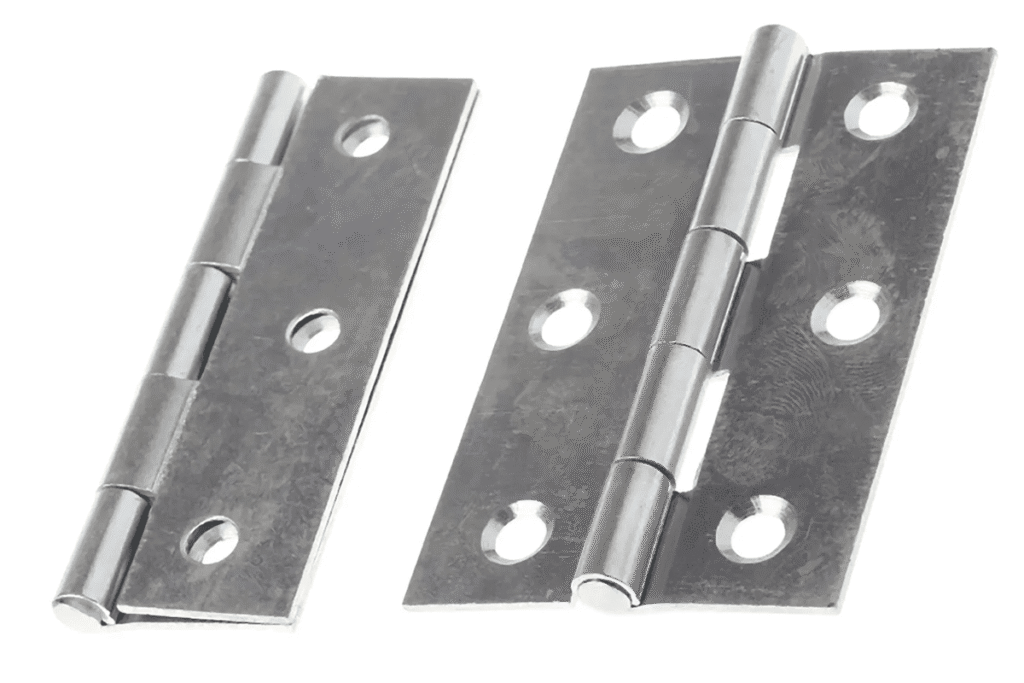
Fixed Pin Hinges: The Security Detail Most People Miss?
Fixed pin hinges sound like a small specification, but they sit at the heart of a big, often-missed security risk. Many teams only compare size, load, and finish. Then a door swings outward, the hinge pin faces the street, and a removable pin turns into an easy bypass. The fix is simple once you see it.
Fixed pin hinges are butt hinges with a pin that cannot be withdrawn after installation%%%FOOTNOTE_REF1%%%, which matters most on outward-opening doors where the pin is exposed on the non-secure side. [If someone can tap out the pin from outside, the door can be lifted.](https://www.hingeoutlet.com/collections/security-hinges-nrp-and-sec-tab/stainless-steel-hinges?srsltid=AU7gw4Xda7zxNVzoKN1xcSk-tniqU4c6hiYbcx9-yoOrkkw4Q-L2xhW)2 If the pin is fixed, that shortcut is blocked.
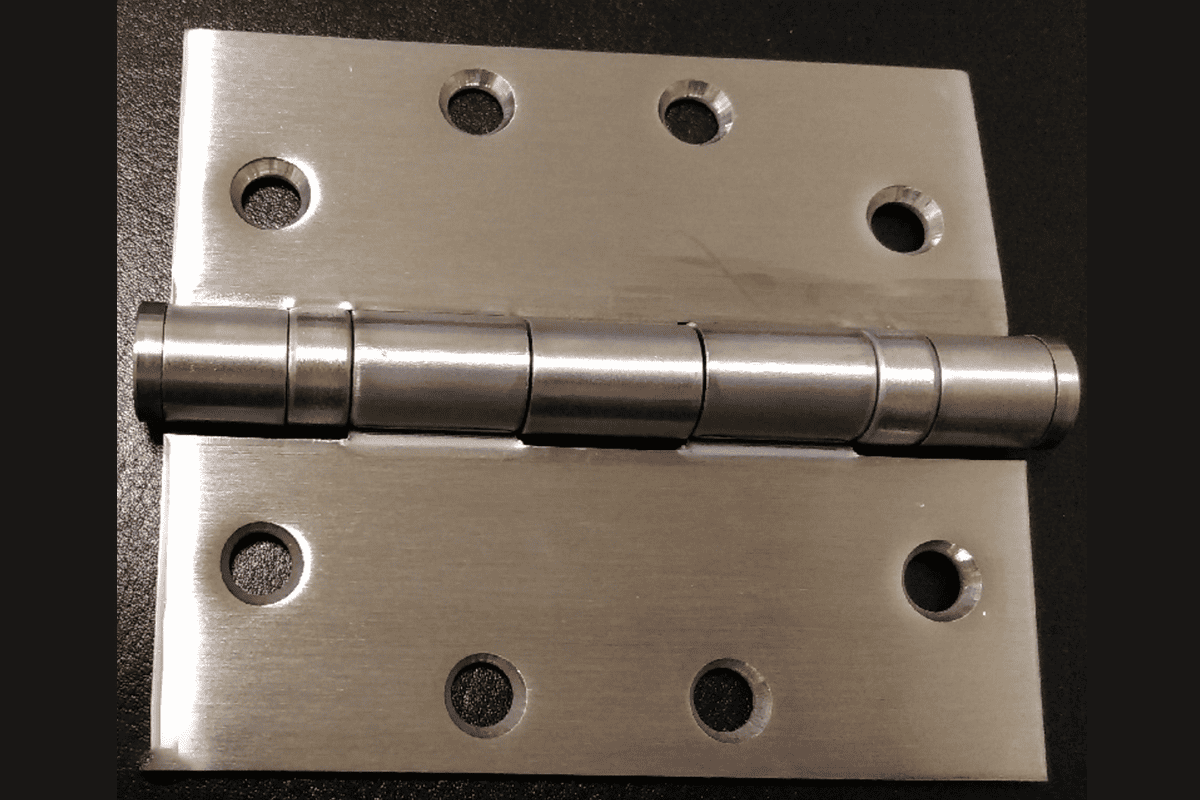
The logic is straightforward, but the buying trap is real: a hinge can match your datasheet and still expose the pin. Below I explain when fixed pin hinges are essential, how they differ from other pin structures, and how to specify and verify them reliably in procurement.
What exactly is a fixed pin hinge, and when does it matter?
You pick a butt hinge, install it, and the door works. The problem appears when the hinge pin is accessible from outside. Attackers do not need the lock if they can drive out the pin and lift the door. The solution is boring but effective: stop the pin from leaving.
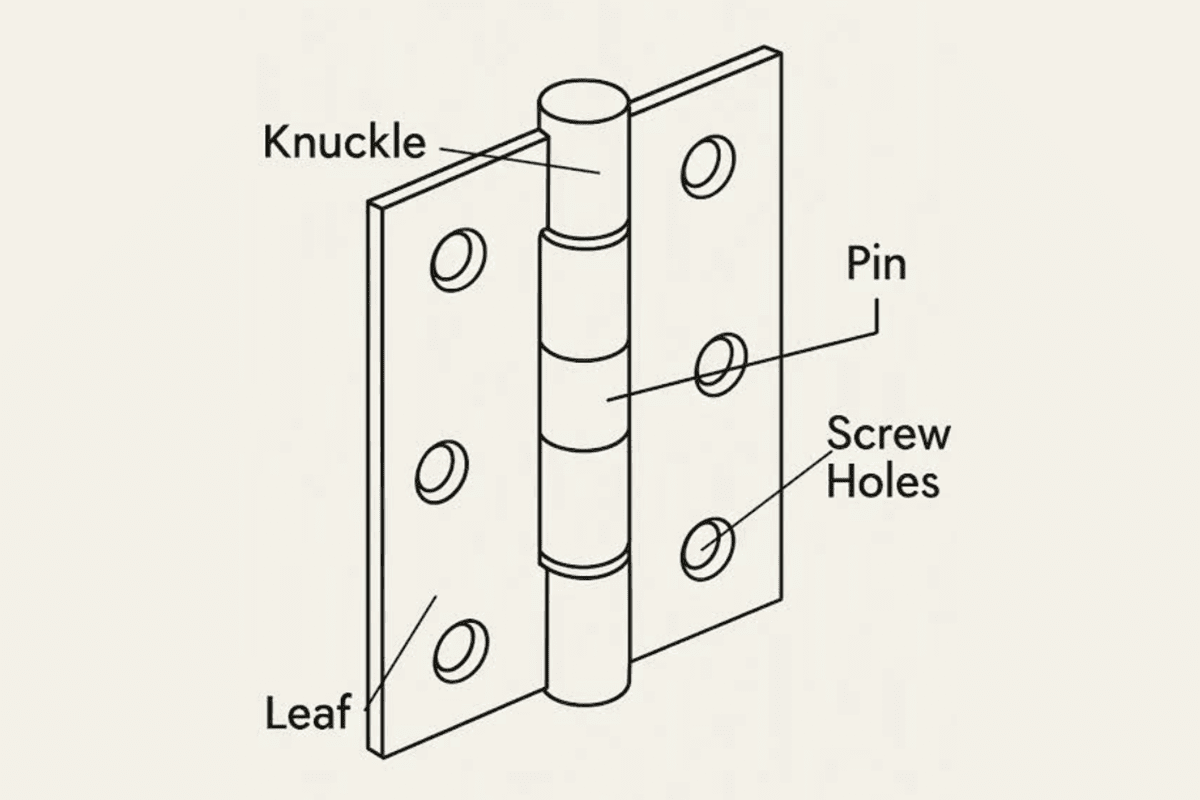
A fixed pin hinge is a butt hinge whose pin is permanently retained—by peening, staking, welding, or capping3—so it cannot be removed after installation. It matters most on outward-opening doors, perimeter doors, and any opening where the hinge barrel is exposed on the attack side.
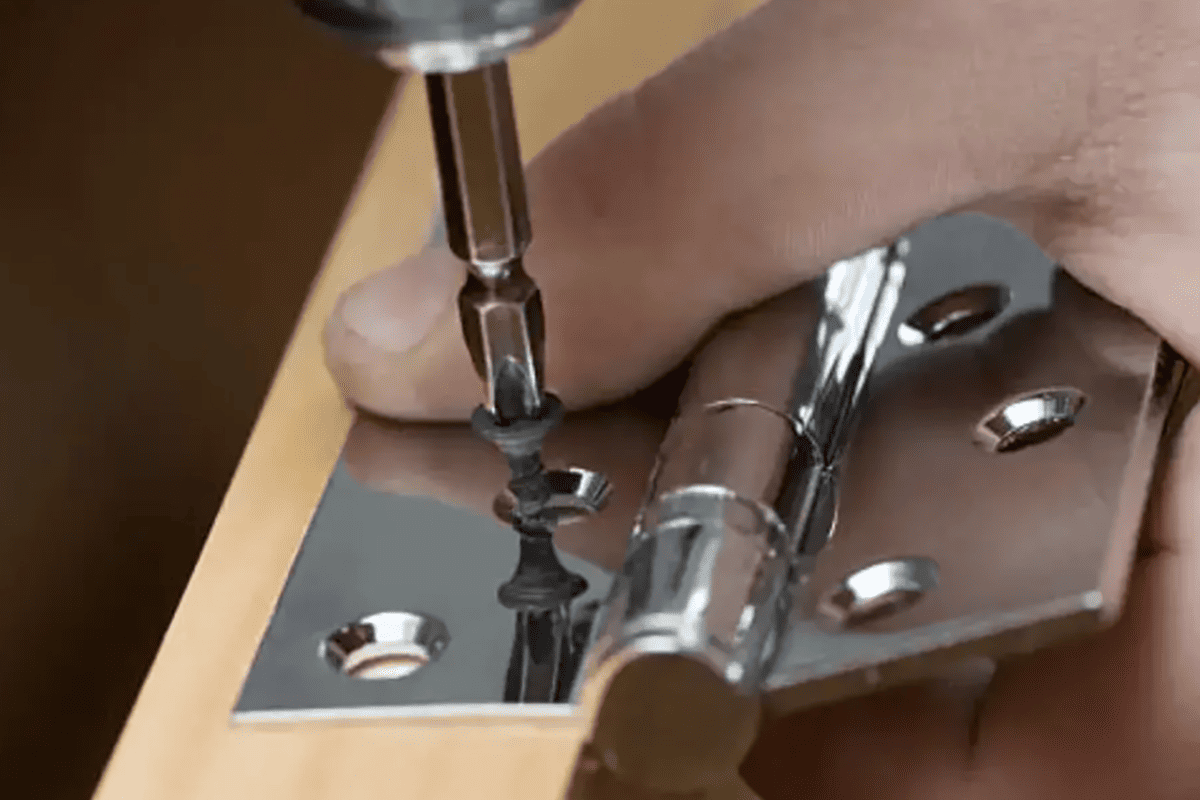
Why the “pin” is the real decision point
- The barrel/knuckle faces the outside on many outswing doors.
- A removable pin can be tapped out from that side with basic tools.
- A fixed pin breaks that shortcut by mechanically locking the pin in the knuckles.
As a manufacturer, I have opened hundreds of hinge samples. The difference is visible:
- Removable pin: flat chamfered end, sometimes a top plug; pin slides out with drift/punch.
- Fixed pin: ends are peened, staked, micro-welded, or riveted; any attempt to drive the pin mushrooms metal and jams it.
- Security/non-removable pin (NRP in US terms): usually a set screw hidden inside the knuckle, accessible only when the door is open.
Use fixed pin hinges on outswing openings, gates, and any door where the pin sits on the non-secure side. Use standard removable pins only where the pin is protected or where frequent door leaf removal is part of maintenance, and security is handled by the envelope (e.g., interior rooms).
How do fixed pin hinges differ from removable-pin and security-pin designs?
You can order three “similar” butt hinges and still get three different security behaviors. That confusion causes most procurement mistakes. The fastest path is to decide pin behavior first, then size and finish.
Removable-pin hinges allow the pin to slide out for installation/maintenance. Fixed pin hinges permanently retain the pin by mechanical deformation. Security/non-removable pin hinges add a hidden set screw or device that prevents pin withdrawal while the door is closed. Choose based on pin exposure and service needs.
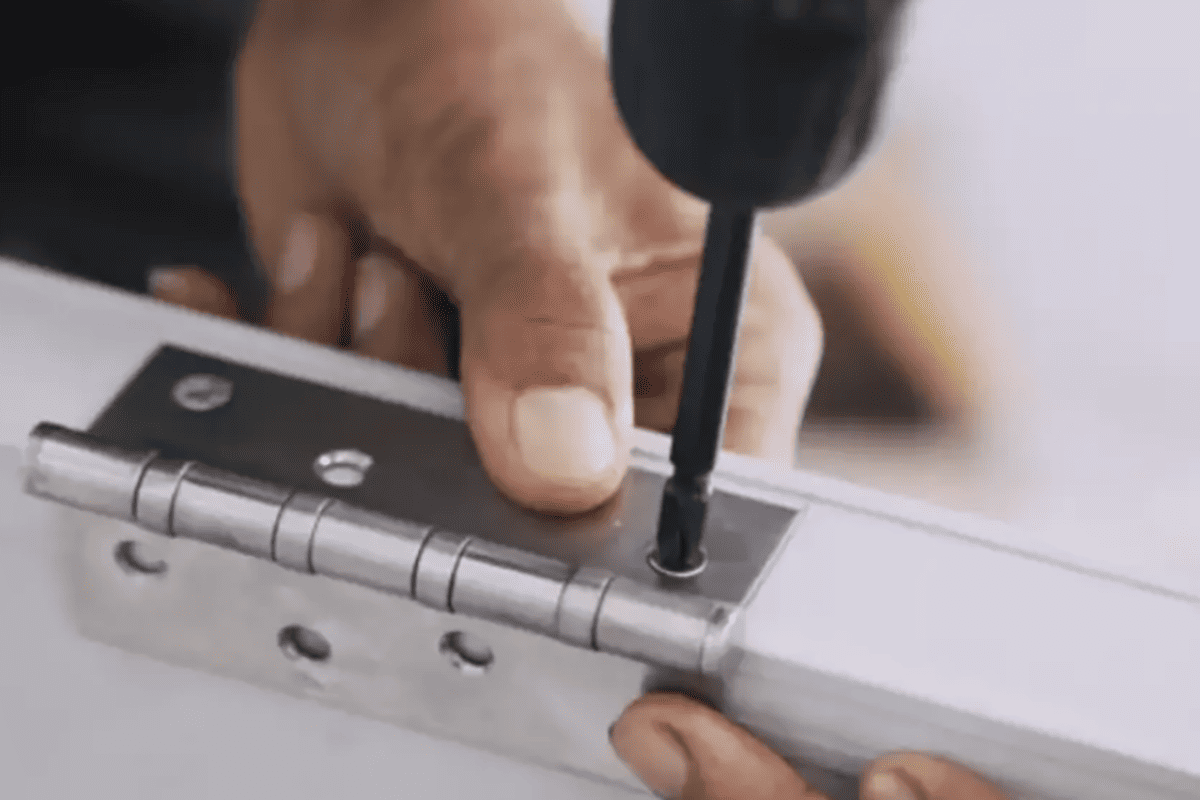
The buyer’s view, not the engineer’s
I avoid overcomplicating pin geometry in meetings. This table is how I brief customers before we cut samples:
| Hinge type | Pin behavior | Typical retention method | When to use | Key risk addressed | Installation/service impact |
|---|---|---|---|---|---|
| Removable pin | Pulls out | Plain pin with top plug | Interior doors, protected pins, frequent removal | None; fast service | Easiest maintenance |
| Fixed pin hinges | Cannot be removed | Peened/staked ends, riveted cap, tack weld | Outswing or exposed pins | Prevents pin pull-out | Leaf removal requires unscrewing hinge |
| Security/NRP hinge | Pin held while door closed | Hidden set screw in knuckle | US-style ball-bearing hinges, commercial doors | Prevents pin pull-out | Set screw requires door open to service |
| Hinge with security studs | Leaf studs engage frame/leaf | Studs/dogs in leaves | Extra anti-lift on exposed doors | Prevents lifting even if pin fails | Requires precise alignment |
Notes from our factory floor:
- “Fixed pin” is not the same as “non-lift-off.” Lift-off hinges are designed to remove the leaf by lifting4; fixed pin refers to the pin in a standard butt hinge.
- Some imports labeled “fixed pin” only crimp one knuckle lightly. In our inspections, a punch still freed the pin. Ask for the specific retention method and do a push-out test on samples.
Which door swing directions require fixed pin hinges?
Spec sheets often skip door swing. Yet that single line decides whether the hinge pin faces the public side. I always start with a sketch: stand on the secure side and draw the swing. If the barrel ends up outside, the decision changes.
Use fixed pin hinges on outward-opening doors and any installation where the hinge barrel sits on the non-secure side. On inward-opening doors with protected hinge barrels, removable-pin hinges may be acceptable if serviceability is prioritized and the environment is low risk.
How to make the call in one minute
- Stand on the secure side. Open the door in your mind.
- If the door swings toward you (inswing), the hinge barrel is inside. Pin is protected.
- If the door swings away from you (outswing), the hinge barrel is outside. Pin is exposed.
Practical examples we see weekly:
- Apartment corridor fire doors often inswing into the apartment: barrels are inside, removable pins may be acceptable. However, always check fire-rated requirements separately from pin structure.
- Commercial storefronts and emergency exits frequently outswing to meet egress codes5: barrels sit outside; fixed pin hinges or NRP designs are advised.
- Service yards, gates, and perimeter metal doors almost always require fixed pin hinges due to exposure.
Add context:
- Door construction matters. A lightweight leaf with a fixed pin hinge is still vulnerable elsewhere. We advise clients to evaluate locks, frames, anchorage, and site risk holistically6.
- Hinge count matters. Three leaves with fixed pins distribute load and complicate any attack further than two leaves.
When in doubt, request a quick mockup. I often ask customers to send a phone photo of the frame and leaf from both sides. A 10-second look saves a 10,000-piece ordering mistake.
How do I verify a fixed pin hinge during procurement?
A label is not enough. “Fixed pin” must be a documented structure that you can confirm on the sample and spot-check in mass production. The cost of getting it wrong is not only security exposure; it is rework and reputational hit when products land in-market.
Verify fixed pin hinges by specifying the exact retention method in your RFQ (peened/staked, riveted cap, tack-welded), confirming on physical samples with a light push-out test, and adding pin-retention checks to incoming QC7. Require drawings and photos of the pin ends and knuckles.
A simple, repeatable verification workflow
H3: Write the RFQ clearly Include:
- “Pin retention: fixed pin; peened/staked both ends” (or your chosen method).
- “No pin withdrawal possible after installation.”
- Material and finish: SUS304 or SUS201 stainless steel; or steel/brass as required.
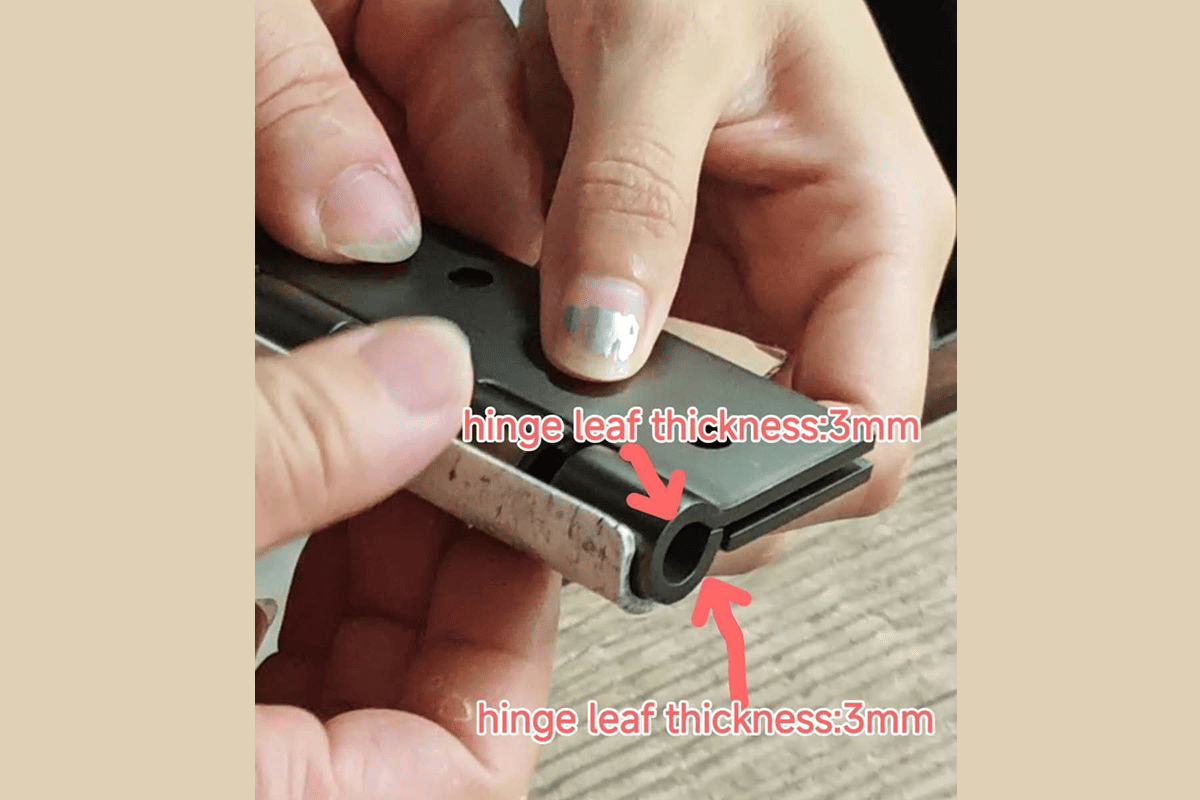
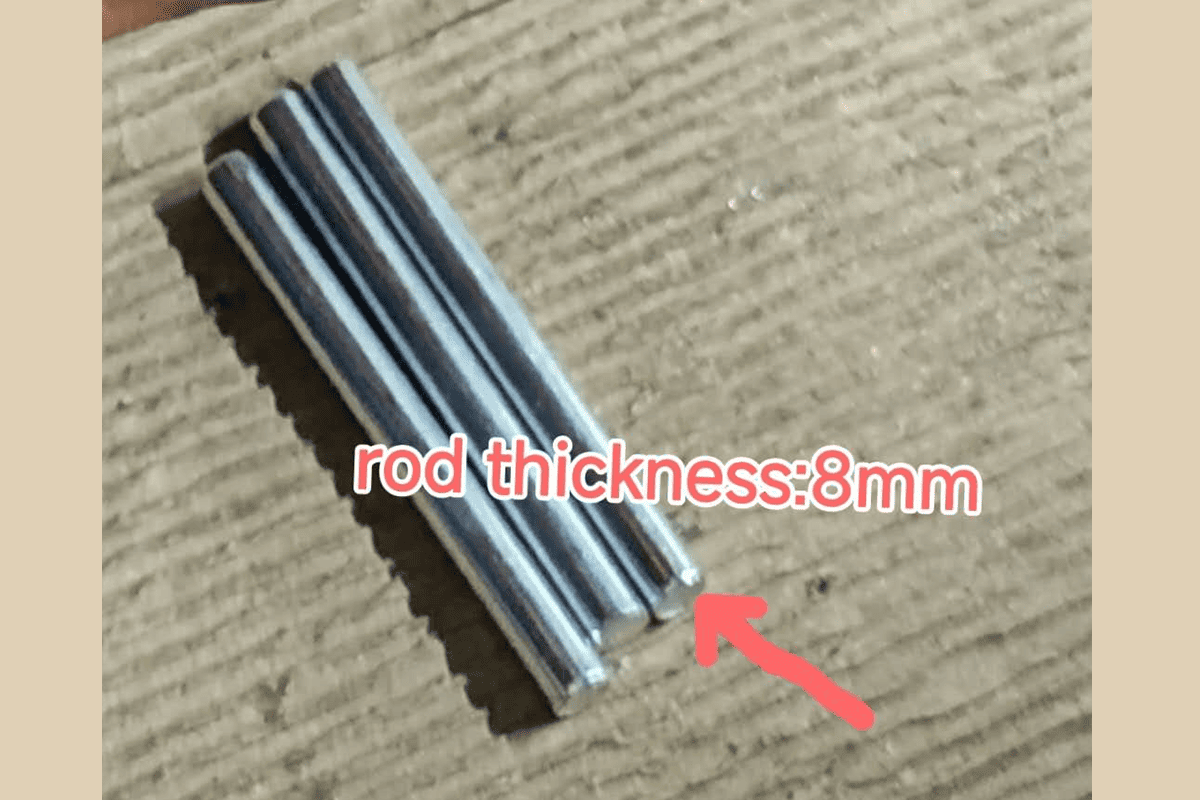
- Size and thickness: e.g., 100×75×2.5 mm; knuckle height; pin diameter.
- Bearing type: plain, ball-bearing, or washered.
- Certifications to verify (e.g., CE/EN for hinge grade; fire-rated documents if required by project). Note: these do not certify security8.
H3: Confirm on physical samples
- Visual: look for peened or riveted ends on the pin. Proper peening flares the pin end beyond the knuckle ID.
- Push-out test: attempt to drift the pin lightly with a 2–3 mm punch and hand hammer on a spare hinge. A true fixed pin will resist and deform rather than slide.
- Knuckle alignment: measure knuckle clearance and straightness; poor fit can loosen under vibration.
- Bearings: if ball-bearing, confirm cage type and lubricant.
H3: Add incoming QC steps
- AQL sampling: include “pin push-out” as a special check. We press with a small arbor press and a gauge pin to confirm no movement.
- Dimensional checks: leaf thickness, hole positions, pin diameter.
- Surface checks: finish uniformity; corrosion test as per your standard (e.g., neutral salt spray hours for stainless or plated steel).
One anecdote: a client sent us “fixed pin” samples from another source. The supplier only crimped one outer knuckle. We drove the pin out in under 30 seconds. After we shared macro photos of proper peening and updated their RFQ, their problem disappeared in the next lot.
What quality checks prevent failures with fixed pin hinges in production?
Even a good design can fail in production if the retention step becomes inconsistent. In busy seasons, we see shortcuts: shallow peening, missing weld dots, or soft pins. Those show up later as sporadic failures.
Control fixed pin hinges with process checks: monitor peening depth/diameter, pin hardness, knuckle alignment, and cycle testing9. Use fixtures for consistent staking, and add lot-level retention checks. Document the retention method in drawings so operators cannot substitute steps.
The production realities you should ask about
H3: Pin retention consistency
- Peening/staking: gauge the flare diameter (e.g., ≥0.3–0.5 mm beyond knuckle OD, per your design). Use go/no-go rings if possible.
- Welded caps: inspect for full coverage and minimal heat tint on stainless; spot-weld location must avoid bearing races.
- Riveted caps: check head height and seating; loose caps are a red flag.
H3: Materials and hardness
- Pin material: for stainless hinges, SUS304 pins are common; for higher strength, hardened steel pins can be used with corrosion-protective finishes. Ask for pin material certification and hardness range if specified.
- Knuckle material: avoid mixed hardness that accelerates wear; ball-bearing designs reduce friction and stabilize alignment.
H3: Alignment and function
- Knuckle concentricity: measure runout; misalignment increases wear and makes retention less effective.
- Leaf flatness: warped leaves stress knuckles and pins.
- Operating force: check smooth swing through full arc with installed screws.
H3: Durability and finish
- Cycle testing: if you require EN 1935 grade compliance10, ask for third-party reports and verify grade selection matches door mass and usage category. Note: this is not a security certification.
- Corrosion: for coastal or humid markets, specify SUS316 or higher neutral salt spray hours for plated steel hinges.
At SDH Hardware, our line leaders run retention checks at the same station that assembles pins. I recommend every buyer request photos or short videos of that step. A 20-second clip of peening or welding tells you more than a paragraph in a manual.
How should buyers balance cost, load rating, and fixed pin hinge security?
Hinges are price-sensitive, and security features add process steps. The trick is not to buy the most expensive hinge. The trick is to buy the right pin structure for the door’s exposure, then size and grade it to the door mass and duty cycle.
Start with exposure: if the pin is outside, fixed pin hinges or NRP hinges are justified. Next, size the hinge to door weight and usage grade. Finally, optimize material and finish for environment. Cost follows these decisions; cutting pin retention to save cents is false economy.
A step-by-step selection approach
H3: Step 1 — Exposure and risk
- Outswing or exposed barrel? Choose fixed pin hinges or NRP.
- Add security studs if anti-lift is a concern even after pin defeat.
- Interior, protected barrel? Removable-pin may be fine.
H3: Step 2 — Mass and frequency
- Door weight and size define hinge count and grade. Heavier doors may need ball-bearing hinges for smooth operation and longevity.
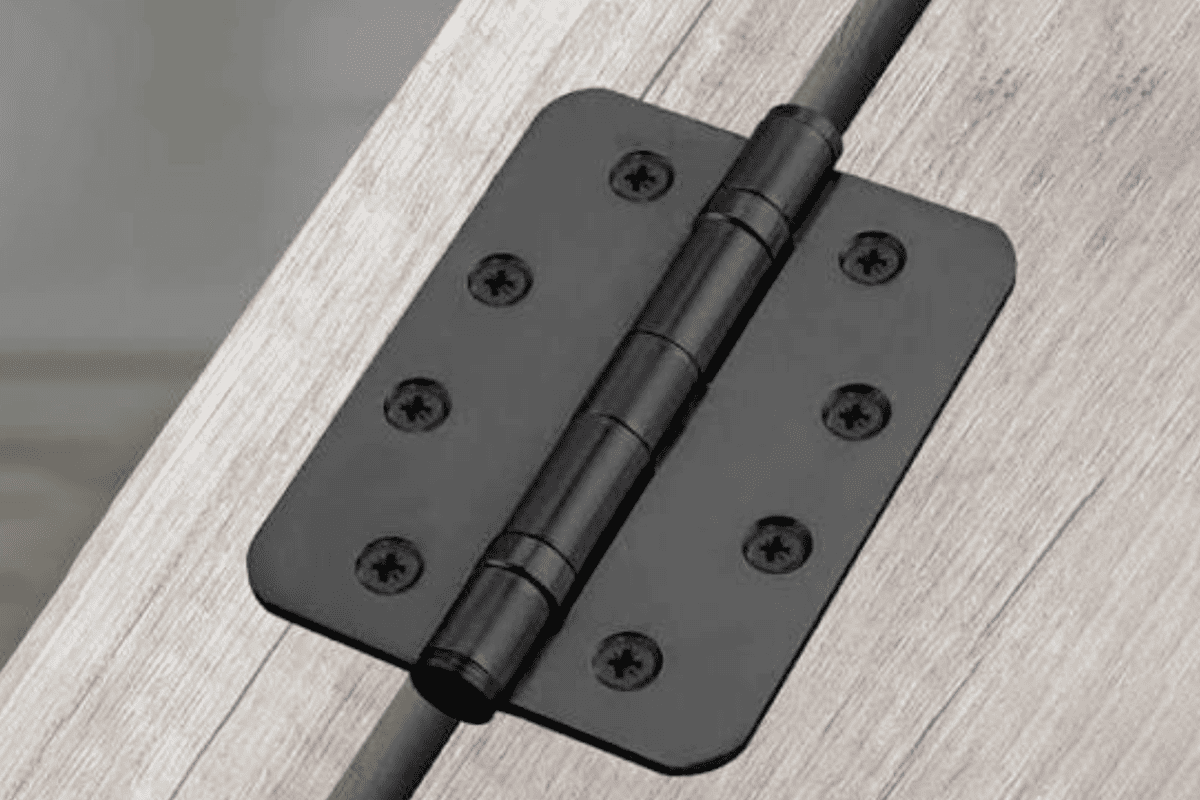
- Typical sizes for architectural butt hinges: 100×75×2.5 mm, 102×76×2.5–3.0 mm, 4"×3"×3 mm. Confirm screw pattern compatibility.
H3: Step 3 — Environment
- Stainless steel (SUS304) for general corrosion resistance; SUS316 for coastal projects.11
- Plated steel for interior cost-sensitive applications.
- Finishes: satin, polished, PVD, black—confirm finish thickness and adhesion.
H3: Step 4 — Cost analysis
- Price deltas mainly come from material (stainless vs steel), bearing type (ball-bearing adds cost), and the retention operation (peening vs welding).
- Fixed pin retention adds a small cost but prevents a large downstream risk. In one OEM project, the retention step added less than 2% to hinge cost but avoided door recalls at 10× that.
Always avoid mixing specs casually. For example, a ball-bearing hinge with a removable pin is not a substitute for a fixed pin hinge on an outswing shopfront. Decide pin security first; then pick bearing, size, and finish.
How do fixed pin hinges compare to other security measures on doors?
Many teams ask whether fixed pin hinges alone “make the door secure.” They do not. They address a narrow but important risk: pin removal and door lifting on exposed barrels. Other components complete the system.
Fixed pin hinges block pin withdrawal. Security studs help resist door lift. The door leaf, frame anchorage, quality lockset, cylinder protection, and installation standards all matter. Treat fixed pin hinges as one layer in the security stack, not the entire solution.
A practical layered approach
H3: Hinge-side measures
- Fixed pin hinges: prevent pin removal.
- Security studs/dogs: interlock leaves so even if pins fail, the door cannot be lifted out when closed.
- Fasteners: use the correct screw length and substrate anchors; loose screws defeat every hinge.
H3: Lock-side measures
- Certified mortise lock with appropriate latch/bolt throw.
- Hardened strike plate with long screws into the frame.
- Protected cylinder per regional standards; avoid easy snapping/pulling.
H3: Installation and verification
- Proper shimming to avoid hinge bind.
- Confirm door reveals and gaps; misalignment increases stress.
- On-site inspection; for projects requiring CE or fire-rated compliance, verify documents and markings directly from the supplier.
In short, fixed pin hinges solve one clear attack path. Keep them in scope, but close the other gaps too.
Frequently Asked Questions
Are fixed pin hinges the same as non-removable pin (NRP) hinges?
No. Fixed pin hinges permanently deform or cap the pin ends so the pin cannot be withdrawn. NRP hinges use a hidden set screw in the knuckle12 that blocks pin removal while the door is closed. Both address exposed pins; selection depends on your hinge style and service preferences.
Do I need fixed pin hinges on every exterior door?
Not always. You need them where the hinge barrel and pin are exposed on the non-secure side, which commonly happens on outward-opening doors. For inward-opening exterior doors with barrels inside, removable-pin hinges can be acceptable. Always evaluate overall site risk and local regulations.
Can I retrofit fixed pin hinges onto an existing door?
Yes, if screw patterns and leaf dimensions match. Verify door swing first, then select hinges with the same size and hole pattern. During retrofit, check frame anchorage and add security studs if the opening is high risk. Test the door swing and clearances after installation.
Are fixed pin hinges required for fire-rated doors?
Fire rating is a separate specification. Some fire-rated doors use fixed pin or NRP hinges, but the rating depends on tested assemblies, grades, and documentation. Always verify fire-rated certificates and markings for the hinge and door system. Do not assume security features imply fire compliance.
How should I specify fixed pin hinges in an RFQ?
State “fixed pin hinges” explicitly and define the retention method (peened/staked both ends, riveted cap, or tack-welded). Include material, size, thickness, bearing type, finish, and any required certifications. Request drawings, macro photos of pin ends, and sample approval with a pin push-out check.
Conclusion
Fixed pin hinges are a small line on a spec, but they close a big gap whenever the hinge pin is exposed. Start with door swing and pin exposure, then size, grade, and finish. If you need samples or a quick spec check, send SDH Hardware your drawings and photos—we will verify retention methods, compare options, and help you avoid costly rework on your next order.
"The Non-Removable Pin Hinge", https://www.directdoorhardware.com/what-is-a-non-removable-pin-hinge.htm?srsltid=AU7gw4VZKwRjcvkv5XqOGcb0TKx5ZrMoTvX6Rv47CvlmnR1yn5P15fW3. An architectural-hardware standards or glossary source defines non-removable or fixed-pin hinges as hinge assemblies in which the pin is retained to prevent ordinary withdrawal after installation. Evidence role: definition; source type: institution. Supports: The source should define fixed-pin or non-removable-pin hinges as hinges whose pins are retained against withdrawal.. ↩
"Security Hinges - NRP and Sec Tab - HingeOutlet", https://www.hingeoutlet.com/collections/security-hinges-nrp-and-sec-tab/stainless-steel-hinges?srsltid=AU7gw4Xda7zxNVzoKN1xcSk-tniqU4c6hiYbcx9_-yoOrkkw4Q-L2xhW. Government or public-safety door-security guidance identifies exposed removable hinge pins as a potential forced-entry vulnerability and lists non-removable pins or hinge-side security devices as mitigations. Evidence role: general_support; source type: government. Supports: The source should state that exposed removable hinge pins can be a door-security weakness and that non-removable pins or equivalent measures reduce that risk.. Scope note: This supports the general attack path and mitigation, but it does not quantify the likelihood of such attacks for a specific building. ↩
"Staking (manufacturing)", https://en.wikipedia.org/wiki/Staking_(manufacturing). Mechanical-manufacturing references describe peening, staking, welding, and capped or headed ends as methods for plastically or permanently retaining assembled components against axial displacement. Evidence role: mechanism; source type: education. Supports: The source should explain that peening, staking, welding, or caps are established mechanical methods for retaining components or preventing axial movement.. Scope note: This supports the retention mechanism in general engineering terms, not the performance of any particular hinge model. ↩
"Hinge", https://en.wikipedia.org/wiki/Hinge. Reference definitions of lift-off hinges characterize them as hinges designed so that one leaf or attached door can be lifted away from the mating hinge component. Evidence role: definition; source type: encyclopedia. Supports: The source should define lift-off hinges as hinges that permit separation of the leaves by lifting one component off the pin or mating part.. ↩
"CHAPTER 10 MEANS OF EGRESS", https://codes.iccsafe.org/content/IBC2021P2/chapter-10-means-of-egress. Building and life-safety codes, including model-code provisions, require certain egress doors to swing in the direction of exit travel depending on occupancy conditions and occupant load. Evidence role: general_support; source type: institution. Supports: The source should support that building or life-safety codes can require egress doors to swing in the direction of egress travel under specified conditions.. Scope note: The code requirement is conditional and jurisdiction-dependent, so it supports the article's general statement but not every commercial storefront or emergency exit. ↩
"Physical Security | Cybersecurity and Infrastructure ...", https://www.cisa.gov/topics/physical-security. Public-sector physical-security guidance treats door resistance as a system property involving the door leaf, frame, locking hardware, hinges, fasteners, and installation conditions. Evidence role: expert_consensus; source type: government. Supports: The source should describe door security as dependent on multiple components, including frames, locks, hinges, fasteners, and installation.. Scope note: This provides contextual support for a layered-security approach rather than direct evidence about fixed-pin hinges specifically. ↩
"Incoming goods inspection simply explained", https://www.yaveon.com/en/insights/article-incoming-goods-inspection/. Quality-management guidance for purchased products requires organizations to verify that incoming goods meet specified requirements, including critical product characteristics identified in purchasing documents. Evidence role: general_support; source type: institution. Supports: The source should support the practice of verifying critical product characteristics during receiving or incoming inspection.. Scope note: This supports the quality-control logic generally; it does not prescribe a hinge-specific pin-retention test. ↩
"What Is EN 1935? Door Hinge Classification Explained", https://dnddoorhinge.com/blog/what-is-en-1935-door-hinge-classification-explained.html. The EN 1935 classification system for single-axis hinges covers attributes such as duty category, durability, door mass, fire suitability, safety, corrosion resistance, and security grade, but fire or CE documentation alone is not equivalent to a forced-entry certification. Evidence role: definition; source type: institution. Supports: The source should define the scope of EN 1935 or CE/fire-door hinge documentation and show that it concerns performance, durability, safety, corrosion, or fire use rather than burglary resistance.. Scope note: This supports the distinction among certification scopes; exact security coverage depends on the specific standard, grade, and test report. ↩
"Peening Techniques for Surface Modification - PMC - NIH", https://pmc.ncbi.nlm.nih.gov/articles/PMC8307355/. Mechanical-design and hinge-performance literature links dimensional tolerances, material hardness, joint alignment, and cyclic loading tests to wear, retention integrity, and service durability in rotating hardware assemblies. Evidence role: mechanism; source type: research. Supports: The source should support that dimensional control, hardness, alignment, and cyclic testing are relevant to mechanical joint integrity and hinge durability.. Scope note: This is contextual engineering support and may not specify the exact inspection limits proposed for a given fixed-pin hinge design. ↩
"Understanding BS EN 1935:2002 single-axis hinge grades", https://uk.sfs.com/resources/article/understanding-bs-en-1935. EN 1935 establishes a classification system for single-axis hinges that includes categories such as use, durability, test-door mass, fire suitability, safety, corrosion resistance, and security-related performance. Evidence role: definition; source type: institution. Supports: The source should explain the EN 1935 classification system for single-axis hinges and the performance categories included in its grade code.. ↩
"Corrosion Behavior of Sensitized AISI 304 Stainless Steel in ...", https://pmc.ncbi.nlm.nih.gov/articles/PMC9740934/. Metallurgical references report that Type 316 stainless steel, because of its molybdenum content, generally offers greater resistance to chloride-induced pitting than Type 304, making it more suitable for marine or coastal exposure. Evidence role: mechanism; source type: research. Supports: The source should explain that molybdenum-bearing 316 stainless steel generally has better pitting resistance than 304 in chloride or marine environments.. Scope note: Material performance still depends on surface finish, maintenance, chloride concentration, and fabrication quality. ↩
"EASY Tutorial! How to remove the set screw & the pin on a ...",
. Architectural-hardware references describe non-removable-pin hinges as using a concealed screw or similar device in the knuckle to restrain the pin when the door is closed. Evidence role: definition; source type: institution. Supports: The source should define NRP hinges and describe the concealed set-screw mechanism used to prevent pin removal.. ↩