Interior Door Aluminum Profile & Accessories: How Should B2B Buyers Choose the Right System?
An interior door aluminum profile looks simple at first, but I often see buyers treat it like a price-and-color item. That creates risk. A frame that does not match the lock, hinge, seal, wall thickness, or project environment can cause rework.1 The better solution is to evaluate the profile and accessories as one complete door system.
Interior door aluminum profile & accessories should be chosen by checking frame strength, wall thickness, groove standard, hardware compatibility, surface treatment, sealing design, and project requirements. Buyers should confirm drawings, samples, hinge and lock specifications, gasket systems, and local standards before mass production or project procurement.
In my supplier-side experience, customers often start by asking, “What is your aluminum profile price?” That is a fair first question. However, the real cost depends on whether the complete profile system fits the door structure, hardware set, installation method, and long-term use environment.
Why Is an Interior Door Aluminum Profile More Than a Frame Choice?
An interior door aluminum profile can reduce problems that appear with traditional wooden frames, but it is not automatically suitable for every door. If buyers focus only on appearance, they may miss strength, deformation resistance, and accessory fit. That mistake can affect production stability.
An interior door aluminum profile is more than a frame because it controls structural support, hardware positioning, sealing space, installation tolerance, and long-term door performance. Buyers should evaluate profile section design, wall thickness, groove system, and matching accessories before comparing price.
Aluminum Frames Solve Specific Buyer Problems
I have handled many inquiries from door manufacturers and hardware brands that want a cleaner, lighter, and more stable frame solution. In many cases, aluminum door frame profiles are considered because wooden frames may be affected by moisture, swelling, cracking, or deformation2, especially in humid or temperature-variable environments.
That does not mean aluminum is always better. It means the buyer should match the frame material to the project risk.
Common reasons buyers consider an interior door aluminum profile include:
- Moisture resistance3 in bathrooms, apartments, hotels, and coastal regions
- Lighter frame structure for easier handling and installation
- Better dimensional stability compared with some wood frame options
- Modern appearance for minimalist interior doors
- Flexible finishing options, including anodizing, powder coating, and wood grain transfer
- Repeatable production quality for OEM and ODM door manufacturers
However, aluminum frame sourcing should not stop at “Can you supply this color?” or “What is the meter price?” A profile can look attractive but still fail in the door system if it lacks enough structural support or if the groove does not match the required accessories.
The Profile Is Part of a Door System
A practical interior door frame system usually includes more than the aluminum profile itself.
| System Part | Why It Matters to Buyers | Common Risk If Ignored |
|---|---|---|
| Aluminum frame profile | Supports door structure and installation | Weak frame, deformation, poor fit |
| Hinges | Carry door weight and control movement | Misaligned holes, sagging, noise |
| Mortise lock or latch | Determines lock body and strike position | Rework on machining or wrong opening |
| Connectors | Join frame corners and support assembly | Loose frame or inconsistent gaps |
| Sealing strips | Improve closing feel, sound control, and dust resistance | Door rattling or poor sealing |
| Floor spring or pivot hardware | Used for certain swing or glass door systems | Wrong load rating or fixing method |
| Surface treatment | Affects appearance and corrosion behavior | Color mismatch or premature wear |
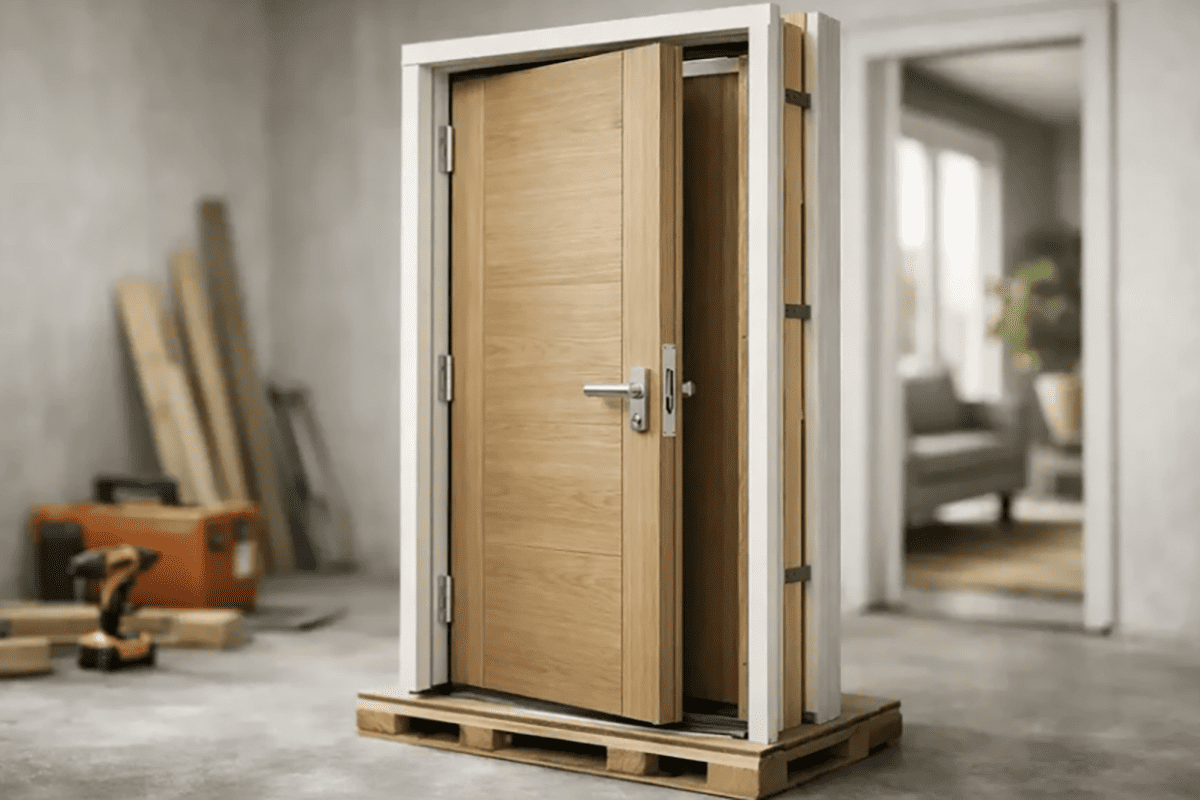
When I discuss aluminum profile projects with B2B customers, I usually ask for the door type first. A flush wooden door, aluminum glass door, concealed frame door, and hotel room door may require different profile shapes and accessory logic.
I do not recommend choosing one profile and forcing every door model to use it. The better approach is to confirm the door system first, then choose the aluminum profile and accessories around it.
How Do Interior Door Aluminum Profile Accessories Affect System Fit?
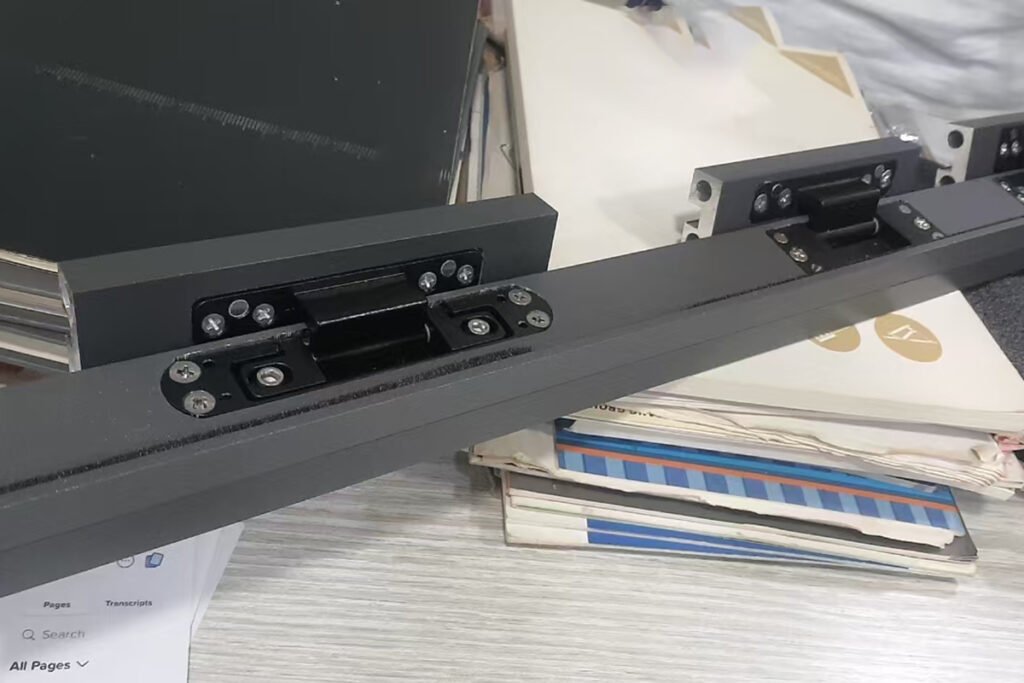
Interior door aluminum profile accessories are often the difference between smooth installation and costly rework. A profile may be correct in size but wrong in groove width, slot type, fixing hole position, lock compatibility, or hinge mounting design. These details matter before purchase.
Interior door aluminum profile accessories affect system fit by determining whether hinges, locks, floor springs, connectors, seals, and mounting parts can be installed correctly4. Buyers should confirm the groove standard, slot logic, hole positions, and door structure before ordering profiles or matching hardware.
Accessories Should Be Confirmed Before Mass Production
Many buyers ask for the aluminum frame profile first and discuss the hardware later. I understand why. The profile looks like the main product. But from a manufacturing viewpoint, the accessories often decide whether the system works.
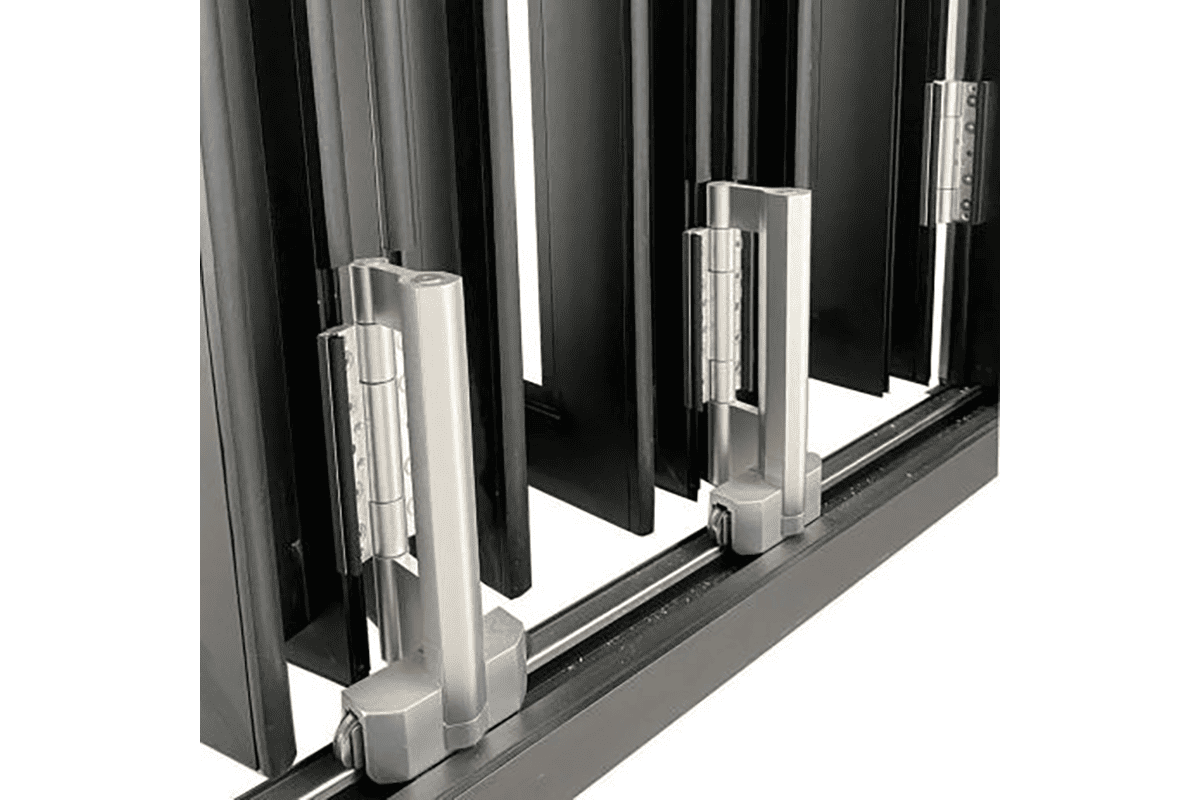
For example, a mortise lock may require a certain lock body depth. A hinge may require a certain fixing surface and screw strength.5 A seal may require a matching groove. A connector may require enough internal space inside the profile section.
If any of these details are wrong, the factory may face:
- Extra machining
- Delayed assembly
- Larger door gaps
- Poor closing feel
- Hardware interference
- Higher after-sales risk
- Rejected project samples
Common Accessory Compatibility Checks
The following table shows the checks I recommend during supplier selection.
| Accessory | What Buyers Should Confirm | Why It Matters |
|---|---|---|
| Butt hinges | Leaf size, thickness, screw hole position, load capacity | Prevents sagging and drilling mismatch |
| Concealed hinges | Cut-out size, frame depth, adjustment range | Avoids interference inside the profile |
| Euro mortise locks | Backset, center distance, faceplate size, strike plate position | Ensures accurate locking and latching |
| Floor springs | Door weight, opening angle, fixing base, pivot position | Important for glass or heavy swing doors |
| Connectors | Corner joint method, screw type, internal reinforcement | Affects frame rigidity |
| Sealing strips | Groove width, gasket material, compression level | Affects sound, dust, and closing performance |
| Strike plates | Lock tongue position, fixing method, surface finish | Prevents latch misalignment |
Groove Standards Are Not a Small Detail
One point I always ask buyers to confirm is the groove or slot system. Some markets use European-style slot logic. Others follow American-style hardware habits. Some door factories also develop their own private profile designs.
A supplier should be able to discuss:
- Groove width
- Slot depth
- Screw channel design
- Hinge fixing area
- Seal installation position
- Lock and strike plate machining
- Compatibility with standard or customized hardware
A so-called “standard profile” may still be unsuitable if the buyer’s hardware is not standard in the same way. This is especially important for B2B buyers who source from different suppliers. If the aluminum profile comes from one factory and the locks or hinges come from another, the buyer should request drawings from both sides and compare them before confirming the order.
At SDH Hardware, I prefer to check the profile drawing, door structure, and hardware drawings together. This does not replace professional project engineering, but it helps reduce avoidable sourcing mistakes.
Which Wall Thickness and Structure Details Matter for an Interior Door Aluminum Profile?
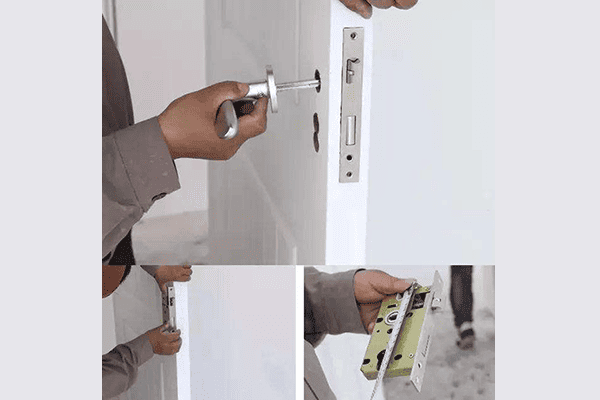
The wall thickness of an interior door aluminum profile affects strength, machining reliability, screw holding, and deformation resistance.6 If the profile is too thin for the door size or hardware load, the finished system may feel unstable or become difficult to install consistently.
A buyer should evaluate interior door aluminum profile wall thickness together with profile shape, reinforcement, door weight, hinge type, screw positions, and local project standards. A thickness such as ≥1.2 mm is sometimes used as a common reference, but it must be verified for the actual application.
Wall Thickness Is a Reference, Not a Universal Rule
Some customers ask me, “Is 1.2 mm enough?” My answer is usually: it depends on the door system.
A wall thickness of ≥1.2 mm is often discussed as a common reference point in interior aluminum frame sourcing.7 However, this number should not be treated as a universal standard. Buyers should verify it against:
- Door height and width
- Door weight
- Hinge quantity
- Lock type
- Installation method
- Wall condition
- Market standard
- Project specification
- Required service life
A small interior door in a dry residential environment may have different requirements from a hotel door, office door, hospital door, or humid coastal project.
Profile Shape Can Matter as Much as Thickness
Wall thickness is important, but it is only one part of strength. The section design also matters. A well-designed profile may use ribs, chambers, and screw channels to improve rigidity.8 A weak section may deform even if the stated thickness looks acceptable.
Buyers should review the profile drawing and check these structure points:
| Structure Detail | Buyer Question | Evaluation Purpose |
|---|---|---|
| Main wall thickness | Is the thickness suitable for the door and market? | Basic strength check |
| Reinforcement ribs | Does the profile resist twisting? | Deformation control |
| Screw channels | Are screws supported by enough material? | Hardware fixing stability |
| Internal chamber | Does the profile allow connectors or reinforcement? | Assembly strength |
| Hinge side design | Is the hinge area strong enough? | Load-bearing reliability |
| Seal groove | Can the gasket be installed without falling out? | Closing and sealing quality |
| Corner connection | Is the joint method stable? | Frame squareness |
Manufacturing Consistency Is a Procurement Issue
For bulk wholesalers and door manufacturers, one good sample is not enough. The buyer should ask whether the supplier can maintain stable extrusion, machining, finishing, packing, and inspection quality across repeat orders.
In my own production discussions, I usually pay attention to:
Raw material control
The supplier should explain material grade and incoming inspection. Buyers should request documentation when project standards require it.Extrusion tolerance
Small tolerance differences can affect locks, hinges, seals, and corner connectors.9Machining accuracy
Pre-drilled holes, hinge pockets, and lock cut-outs must match the buyer’s hardware.Surface inspection
Scratches, color variation, and coating defects can create project rejection.Packaging method
Aluminum profiles are long and easy to scratch during transport. Protective film, foam, cartons, and pallet loading should be confirmed.
A lower profile price can become expensive if the factory must repair finish problems, adjust machining, or reject inconsistent batches. That is why I see interior door aluminum profile selection as a production stability decision, not only a purchasing decision.
How Should Buyers Compare Surface Treatments for Interior Door Aluminum Profiles?
Surface treatment for interior door aluminum profiles is not only a design choice. It affects corrosion behavior, color consistency, scratch resistance, cleaning, and long-term appearance.10 Buyers should choose the finish according to the project environment, target market, and required visual effect.
Buyers should compare anodizing, powder coating, and wood grain transfer by checking corrosion resistance data, color tolerance, coating thickness, durability expectations, sample approval, and supplier quality control. For humid or coastal applications, anodized profiles may be preferable, but project data should be verified.
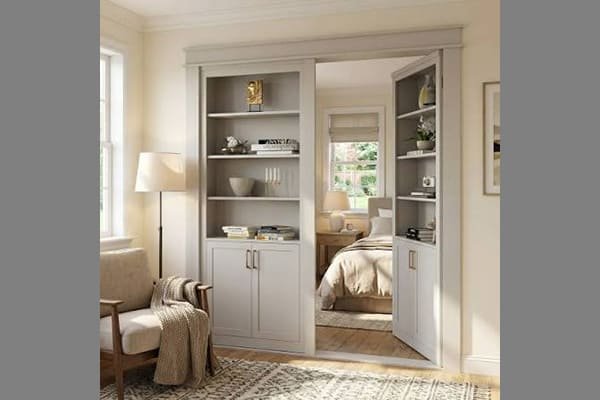
Surface Finish Connects Appearance With Service Life
A beautiful aluminum frame can still create complaints if the finish is inconsistent or unsuitable for the environment. I have seen buyers become very specific about color after they receive the first sample. That is normal. Interior door frames are visible products, especially in hotels, apartments, offices, and showrooms.
However, I also remind buyers to connect color with performance. The same black appearance can come from different processes. The same wood grain look can vary by film, base coating, transfer process, and batch control.
Main Surface Treatment Options
| Surface Treatment | Main Advantages | Buyer Risks to Check |
|---|---|---|
| Anodizing | Metallic appearance, good surface stability, often considered for humid areas | Color range may be limited; buyer should verify corrosion data |
| Powder coating | Wide color choice, smooth finish, good design flexibility | Coating thickness, adhesion, and color consistency must be controlled |
| Wood grain transfer | Warm wood-like appearance with aluminum structure | Film quality, pattern consistency, and scratch resistance should be checked |
| Brushed finish | Premium metal texture | Fingerprints and scratch visibility may matter |
| Custom color coating | Brand or project color matching | Sample approval and batch tolerance are critical |
How I Suggest Buyers Approve Finishes
For B2B procurement, finish approval should not rely only on a digital color image. Screens show color differently. Lighting also changes the appearance of aluminum profiles.
I usually suggest a process like this:
Confirm the finish type
- Anodized
- Powder coated
- Wood grain transfer
- Brushed or customized finish
Request physical samples
- Same alloy and profile surface if possible
- Same process planned for bulk production
- Same color code or approved reference sample
Check the environment
- Indoor dry area
- Humid room
- Coastal region
- High-cleaning-frequency area
- Hotel or public building
Confirm quality data
- Coating thickness if relevant
- Adhesion test if required
- Salt spray or corrosion data if applicable
- Color tolerance standard
- Packaging protection method
Keep a signed master sample
- Buyer and supplier should keep matching approved samples
- This helps reduce disputes in repeat orders
For humid or coastal interior projects, anodized profiles may be considered because anodizing can provide a stable oxide layer11. Still, I avoid saying it is always the best choice. The correct choice depends on verified supplier data, project requirements, cleaning conditions, and local standards.
When Do Acoustic, Thermal, and Sealing Accessories Matter for an Interior Door Aluminum Profile?
An interior door aluminum profile may need acoustic, thermal, or sealing accessories when the project requires better comfort, privacy, energy behavior, or dust control. Buyers should not assume a basic aluminum frame automatically delivers sound insulation or thermal performance.
Acoustic and thermal performance depends on the whole door system, including the aluminum profile section, gasket design, sealing strips, door leaf, threshold, glass, wall condition, and installation quality. Buyers should confirm whether the profile supports suitable seals, thermal break design, and compatible accessories.
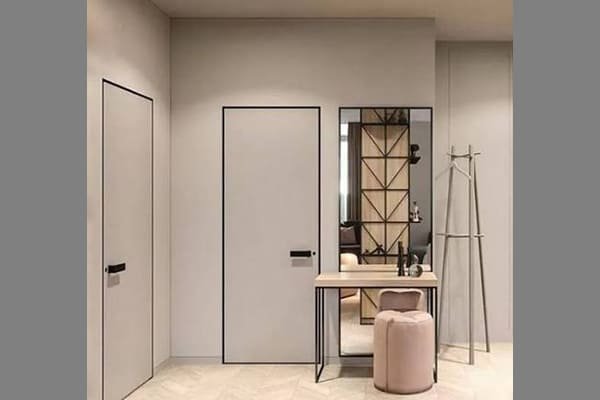
Sound and Temperature Performance Are System Results
A frame alone does not create acoustic performance. A seal alone does not solve a weak door leaf. A thermal break frame does not help much if the installation gap is not sealed correctly.
That is why I discuss acoustic and thermal requirements early when a customer is sourcing aluminum door frame profiles. Some interior doors only need a clean frame and normal closing function. Other projects, such as hotels, offices, clinics, apartments, and meeting rooms, may require better sound control or privacy.
Sealing Accessories Buyers Should Review
Common sealing-related accessories include:
- Rubber gaskets
- Brush seals
- Magnetic seals
- Drop-down seals
- Perimeter sealing strips
- Threshold seals
- Corner sealing parts
- Compatible adhesive or mechanical fixing systems
Each accessory must match the profile shape. If the seal groove is too loose, the gasket may fall out. If the seal is too thick, the door may become hard to close. If the seal compression is uneven, the door may rattle or leak sound.
Thermal Break Considerations
For interior doors, thermal performance is not always a priority. However, it can matter for air-conditioned spaces, apartment corridors, mixed-use buildings, or interior zones with temperature differences.
Buyers should confirm whether the interior door aluminum profile supports:
| Requirement | What to Confirm |
|---|---|
| Better thermal behavior | Thermal break design or insulation structure |
| Better acoustic behavior | Compatible gasket system and door leaf specification |
| Better airtightness | Compression seals and installation gap control |
| Better closing feel | Soft gaskets and accurate hinge alignment |
| Better dust control | Continuous perimeter sealing |
If a customer asks for sound insulation, I do not promise a number based on the aluminum profile alone. I ask about the full door construction, glass type if used, door leaf density, seal system, threshold, and test requirements. If the project has a required acoustic rating, the buyer should request qualified test reports and professional evaluation.
Installation Quality Can Decide the Final Result
Even a good profile and gasket system can fail if installation is poor. Frame squareness, wall opening accuracy, screw fixing, foam filling, and final adjustment all affect performance.
For project-based procurement, buyers should prepare:
- Installation drawings
- Opening tolerance requirements
- Hardware positioning drawings
- Seal installation instructions
- Finished door sample approval
- Site feedback process
This step is especially important when the buyer supplies profiles to another door factory or contractor. The supplier, manufacturer, and installer should all understand the same system logic.
What Should Buyers Confirm Before Ordering Interior Door Aluminum Profile & Accessories?
Before ordering interior door aluminum profile & accessories, buyers should confirm the door type, frame size, wall thickness, opening method, groove standard, hardware specifications, sealing requirement, surface finish, application environment, and target market standards. This prevents mismatched parts and production delays.
A complete inquiry for interior door aluminum profile & accessories should include drawings or samples, door dimensions, profile section requirements, hinge and lock details, surface treatment, gasket system, packaging needs, quality documents, and expected order quantity. Clear information helps the supplier quote accurately.
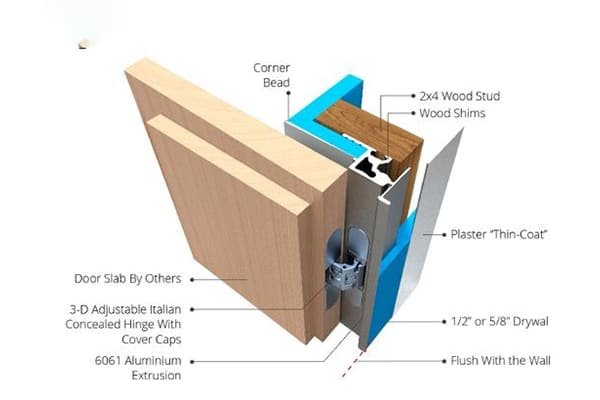
A Practical Inquiry Checklist
When buyers send a short message like “Please quote aluminum profile,” the supplier cannot evaluate the system. I can give a rough price, but that price may not mean much. A more complete inquiry allows the supplier to check compatibility, tooling, machining, finish, packing, and inspection requirements.
Here is the checklist I recommend for door factories, hardware brands, and bulk wholesalers.
| Inquiry Item | What to Provide | Why It Matters |
|---|---|---|
| Door type | Wooden door, glass door, aluminum door, concealed door, hotel door | Determines profile section |
| Frame size | Height, width, depth, wall opening | Affects strength and cutting |
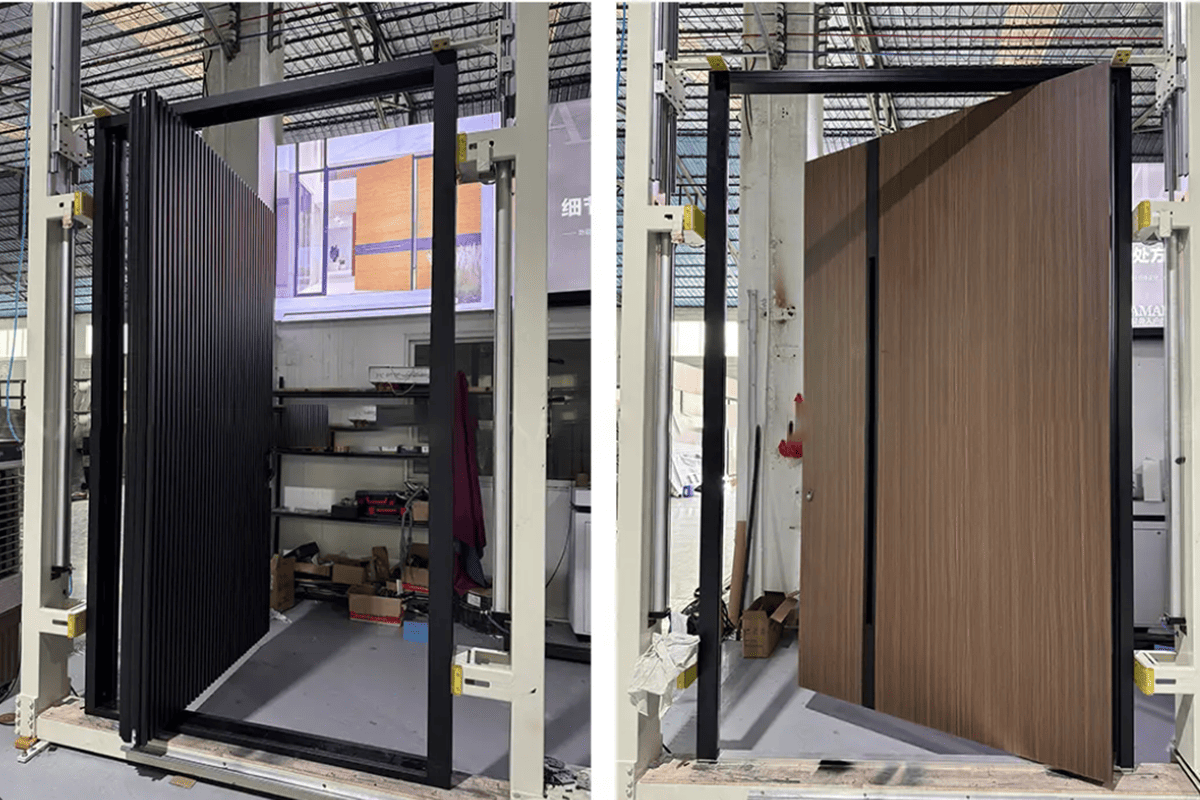
| Opening method | Swing, sliding, pivot, double leaf | Determines hardware system |
| Application environment | Dry indoor, humid, coastal, public building | Guides finish and sealing |
| Profile drawing or sample | CAD drawing, section image, physical sample | Confirms shape and compatibility |
| Wall thickness requirement | Example: ≥1.2 mm reference, or project standard | Affects cost and strength |
| Groove/slot standard | European-style, American-style, custom | Controls hardware matching |
| Lock specification | Mortise lock, latch, cylinder, strike plate | Prevents machining mismatch |
| Hinge specification | Butt hinge, concealed hinge, pivot, floor spring | Confirms load and fixing |
| Sealing requirement | Rubber seal, magnetic seal, drop seal | Affects comfort and fit |
| Surface finish | Anodized, powder coated, wood grain, custom color | Controls appearance and durability |
| Target market standards | EU, Middle East, Southeast Asia, local codes | Guides documents and tests |
| Branding request | Logo, packaging, drawings | Supports OEM/ODM supply |
| Inspection requirement | Sample approval, finished inspection, reports | Reduces quality disputes |
How I Read a Buyer’s Inquiry
When I review an inquiry, I look for hidden risks. If the buyer sends a profile drawing but no hinge specification, I ask for it. If the buyer requests black powder coating for a humid market, I ask about corrosion expectations and cleaning conditions. If the buyer needs fire-rated hardware, I remind them to verify the required certificates and project documents.
At SDH Hardware, our core product range includes Euro mortise locks, stainless steel lever handles, butt hinges, concealed door hinges, Euro brass cylinders, and door accessories. We support OEM and ODM orders, and we can help buyers align matching hardware with the aluminum frame system. For products where CE certification or fire-rated certification is required, buyers should verify the documents against the exact model, application, and local project requirements.
Price Should Be Compared After System Confirmation
Price matters. Every B2B buyer has a target cost. However, I recommend comparing prices only after the main specifications are aligned.
A lower quote may exclude:
- Correct wall thickness
- Required finish quality
- Machining service
- Matching hinges or locks
- Connectors and seals
- Protective packaging
- Inspection service
- Document support
- Stable repeat production
A higher quote may include these items and reduce rework risk. The real procurement question is not “Which supplier is cheapest?” The better question is:
“Which supplier can provide the most stable interior door aluminum profile system for my door structure, hardware configuration, finish requirement, and target market?”
That question leads to better sourcing decisions.
Conclusion
Choosing an interior door aluminum profile is a system-fit decision, not just a price or appearance decision. Buyers should confirm wall thickness, structure, groove standard, locks, hinges, seals, connectors, surface finish, and project requirements before ordering. If you are sourcing aluminum door frame profiles with matching architectural hardware, I can help review your drawings, specifications, and accessory list so your procurement decision is more stable from sample approval to mass production.
"International and national standards on dimensional ...", https://www.nist.gov/publications/international-and-national-standards-dimensional-coordination-modular-coordination. Research on construction rework identifies design coordination, specification errors, and installation incompatibilities as recurring causes of remedial work; this supports the general risk described here, although it does not test aluminum interior door frames specifically. Evidence role: general_support; source type: research. Supports: Component coordination, installation tolerances, and mismatches in building assemblies are recognized contributors to defects and rework.. Scope note: Contextual support; the source should address construction rework broadly rather than this exact product category. ↩
"Chapter 4: Moisture relations and physical properties of wood", https://research.fs.usda.gov/treesearch/62243. The USDA Forest Products Laboratory explains that changes in wood moisture content cause shrinkage and swelling and can contribute to distortion or checking, providing material-science context for moisture-related risks in wooden frames. Evidence role: mechanism; source type: government. Supports: Wood absorbs and loses moisture, causing dimensional change and potentially warping, checking, or cracking under variable humidity conditions.. Scope note: The source supports the behavior of wood generally, not the failure rate of any specific interior door-frame design. ↩
"TEMPERATURE AND HUMIDITY EFFECTS ON THE ...", https://www.osti.gov/etdeweb/servlets/purl/20468663. Materials-science references describe aluminum as forming a thin, adherent oxide layer that improves corrosion resistance in many service environments; this supports its use where moisture exposure is a concern, although coastal or chemically aggressive settings still require project-specific finish verification. Evidence role: mechanism; source type: education. Supports: Aluminum forms a protective oxide film that gives it useful corrosion resistance in many environments, including moist indoor conditions.. Scope note: Contextual support; corrosion resistance depends on alloy, finish, contaminants, and exposure severity. ↩
"SECTION 087111 - DOOR HARDWARE (SCHEDULED BY ...", https://fpm.usc.edu/wp-content/uploads/2021/11/087102-USC-HSC-door-hardware-Guide-Specification_1.pdf. ANSI/BHMA door-hardware standards specify dimensional and performance requirements for hinges, locks, closers, and related components, supporting the need to coordinate hardware with the frame profile before production. Evidence role: expert_consensus; source type: institution. Supports: Door hardware is governed by dimensional, load, and performance standards that must be coordinated with the door and frame assembly.. Scope note: The standards support the principle of compatibility but may not prescribe a particular aluminum groove or supplier-specific profile design. ↩
"A156.1 - 2025 Butts and Hinges", https://buildershardware.com/ANSI-BHMA-Standards/Hardware-Highlights/A1561-2025-Butts-and-Hinges. Architectural-hardware standards and guidance treat hinges as load-bearing components whose performance depends on rated capacity, fastener configuration, and attachment to suitable door and frame materials. Evidence role: mechanism; source type: institution. Supports: Hinge performance depends on load rating, fastener placement, and the supporting door or frame material.. Scope note: The source should be used to support the design principle, not to validate a specific hinge-profile combination without testing. ↩
"Advances and Trends in Forming Curved Extrusion Profiles", https://pmc.ncbi.nlm.nih.gov/articles/PMC8037283/. Aluminum extrusion design guidance explains that wall thickness and cross-sectional geometry affect stiffness, local strength, manufacturability, and fastener-support features in extruded profiles. Evidence role: mechanism; source type: institution. Supports: In extruded aluminum sections, wall thickness and section geometry influence stiffness, local strength, manufacturability, and fastening features.. Scope note: The guidance is general engineering support; the required thickness for a door frame must still be calculated or tested for the specific application. ↩
"Aluminum Door Frames", https://www.aluminumdoorframes.com/aluminum-door-frames. Technical standards for aluminum architectural profiles often set minimum thickness requirements by profile type and use case, which can contextualize a 1.2 mm sourcing reference while showing that it is not a universal rule. Evidence role: general_support; source type: institution. Supports: Some technical specifications or market standards use minimum wall-thickness values for aluminum door or window profiles, but those values depend on application and jurisdiction.. Scope note: This needs a jurisdiction-specific or application-specific source; a standard for windows or exterior doors may only provide contextual, not direct, support for interior door frames. ↩
"Ribs, Webs, Fillets and Radii in Aluminum Extrusion Design", https://clinalu.com/ribs-webs-fillets-radii-aluminum-extrusion-design/. Aluminum extrusion design manuals describe ribs, hollow chambers, and screw-boss features as methods for increasing section stiffness and providing material for reliable fastening. Evidence role: mechanism; source type: institution. Supports: Cross-sectional features such as ribs, chambers, and screw bosses are used in extruded aluminum design to improve stiffness and fastening support.. Scope note: The source supports the design mechanism generally; the effectiveness of a particular profile depends on its exact geometry, alloy, temper, and load conditions. ↩
"Aluminum Extrusion Tolerance Calculator III", https://sites.psu.edu/lfshowcasefa25/2025/12/19/aluminum-extrusion-tolerance-calculator-iii/. Standards and design guidance for aluminum extrusions specify dimensional tolerances and emphasize that mating components must be designed with those tolerances in mind, supporting the risk of hardware or connector fit problems. Evidence role: mechanism; source type: institution. Supports: Extruded aluminum products have dimensional tolerances, and those tolerances must be considered when designing assembled systems with mating parts.. Scope note: The source supports tolerance management generally; it does not quantify acceptable tolerances for the article’s specific profile system. ↩
"QUALICOAT - What is Behind this Detailed Specification ...", https://qualicoatuki.org/news/what-is-behind-this-detailed-specification. Architectural aluminum finish standards, including anodizing and powder-coating specifications, evaluate properties such as film thickness, adhesion, corrosion resistance, abrasion behavior, and appearance, supporting the claim that finish choice affects service performance. Evidence role: expert_consensus; source type: institution. Supports: Architectural aluminum finishes are evaluated for properties such as coating thickness, adhesion, corrosion resistance, appearance, and durability.. Scope note: The source supports the evaluated performance categories; actual durability depends on finish quality, exposure conditions, maintenance, and supplier process control. ↩
"Anodizing.pdf", https://materialsdata.nist.gov/bitstream/handle/11115/221/Anodizing.pdf?sequence=1/1000. Materials references describe anodizing as an electrochemical process that thickens the natural aluminum oxide film, creating a more stable surface that can improve corrosion resistance and appearance. Evidence role: mechanism; source type: education. Supports: Anodizing electrochemically thickens the aluminum oxide layer, improving surface stability and corrosion resistance under suitable conditions.. Scope note: This directly supports the mechanism, but it does not prove that anodizing is always the best finish for every humid or coastal interior project. ↩