Why Are 3-Point Locks Becoming Essential in Modern Door Systems?
3-point locks are getting more attention because many modern doors now need more than basic opening and closing. A weak specification can create security gaps, sealing problems, customer complaints, and costly rework. The practical solution is to treat the lock as part of the full door system, not as a separate component.
3-point locks are becoming essential in selected modern door systems because they address two different needs: stronger multi-position locking for high-security doors, and tighter door-to-frame compression for doors that require better sealing, sound control, or temperature isolation.1 They are not necessary for every door, but they can be valuable when the application justifies them.
In my work with door manufacturers, hardware brands, and import customers, I often see the same question appear early in product discussions: “Does this door really need a multipoint locking system?” The answer depends on the door’s purpose, the frame design, and the performance target.
Why Are 3-Point Locks Used for High-Security Door Systems?
High-security doors face a simple problem: one central locking point may not provide enough resistance against forced opening.2 This can become more serious on tall, heavy, or exterior doors.3 3-point locks help reduce that weakness by securing the door at multiple positions along the door height.4
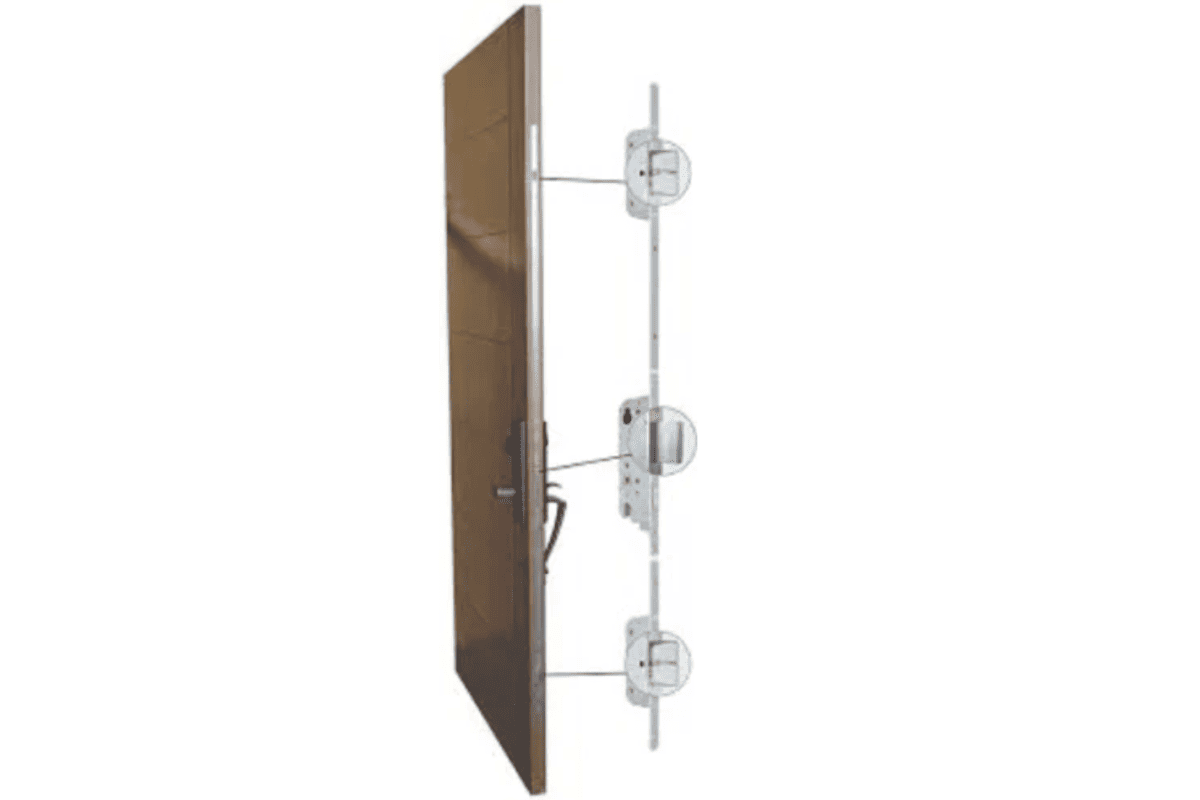
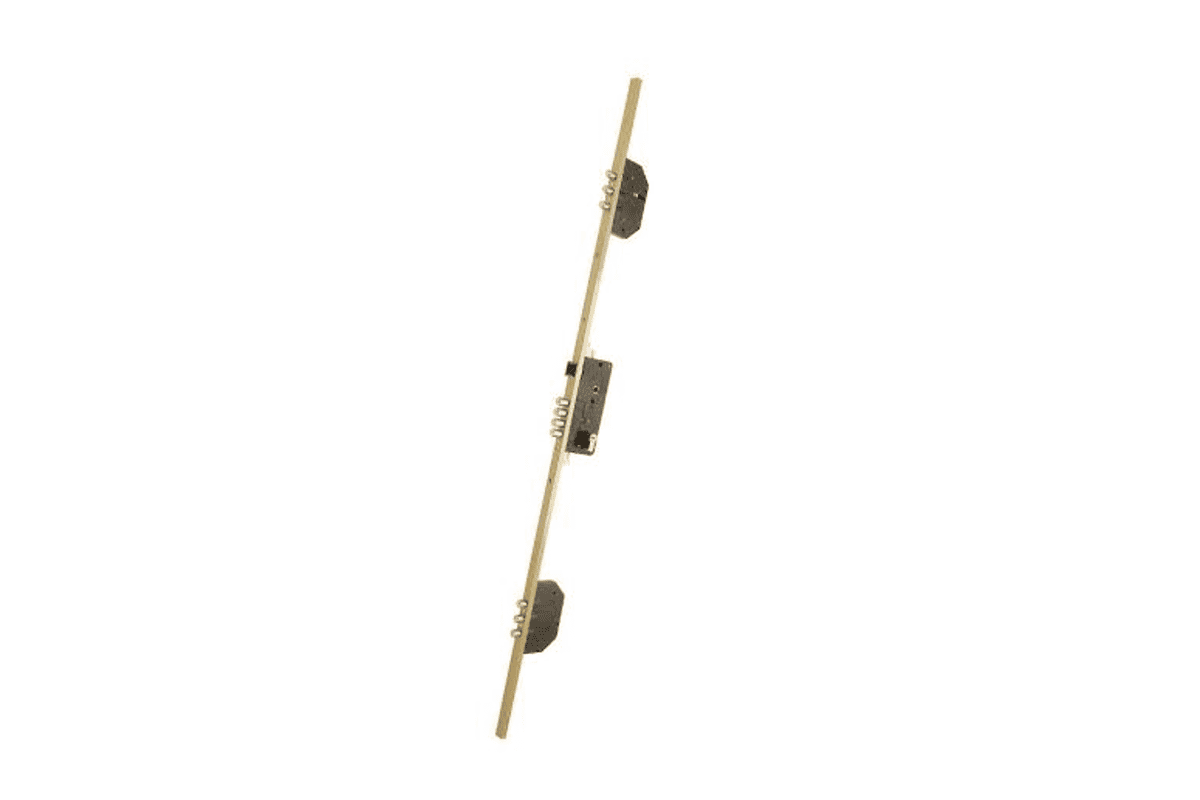
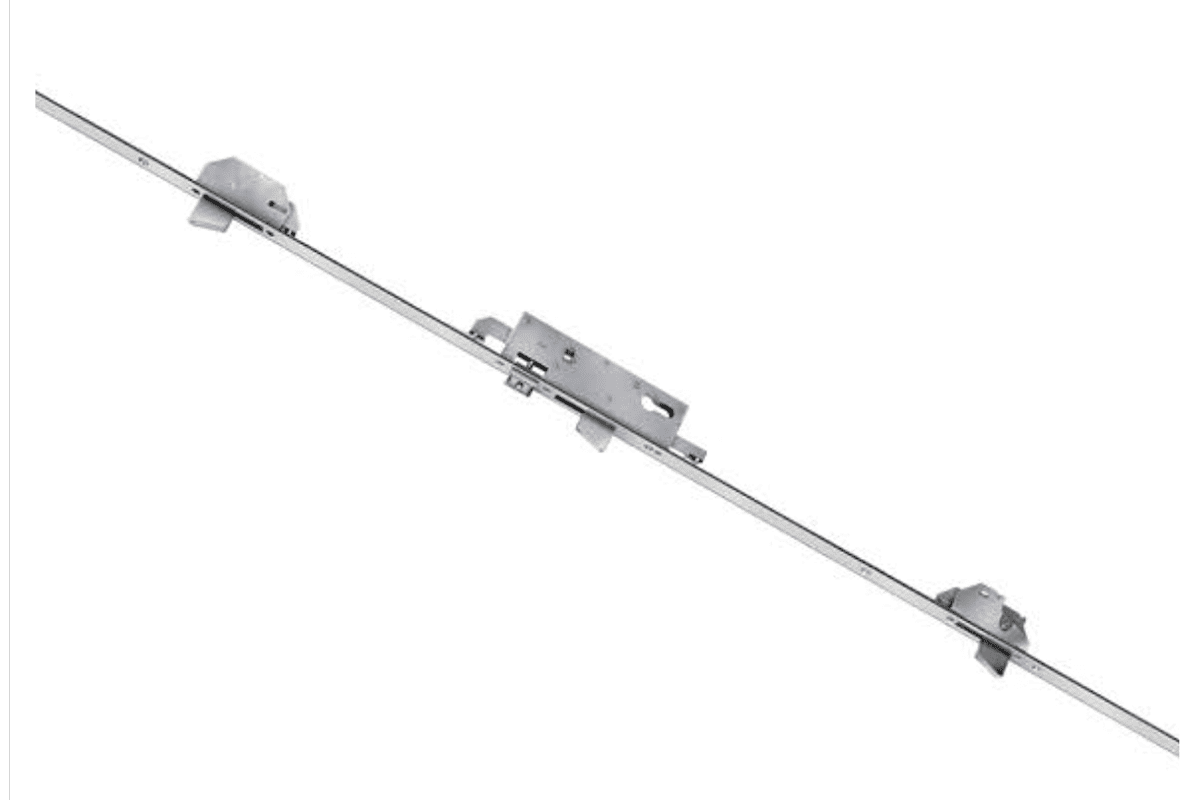
3-point locks are used for high-security door systems because they lock the door at the center, top, and bottom positions. This distributes resistance across more than one point and helps the door leaf engage more firmly with the frame. Final security performance still depends on the complete tested door assembly.5
The security value comes from multiple engagement points
A standard single-point mortise lock usually secures the door around the handle and cylinder area. That design is still suitable for many interior doors, office doors, and standard residential applications. I do not treat single-point locks as outdated. They remain practical, economical, and easier to install.
However, some doors need stronger resistance at more than one position. Examples include:
- Main entrance doors
- Apartment entrance doors
- Commercial shop doors
- Doors for storage areas with valuable goods
- Bank or finance-related internal security zones
- External doors exposed to force, wind, or heavy use
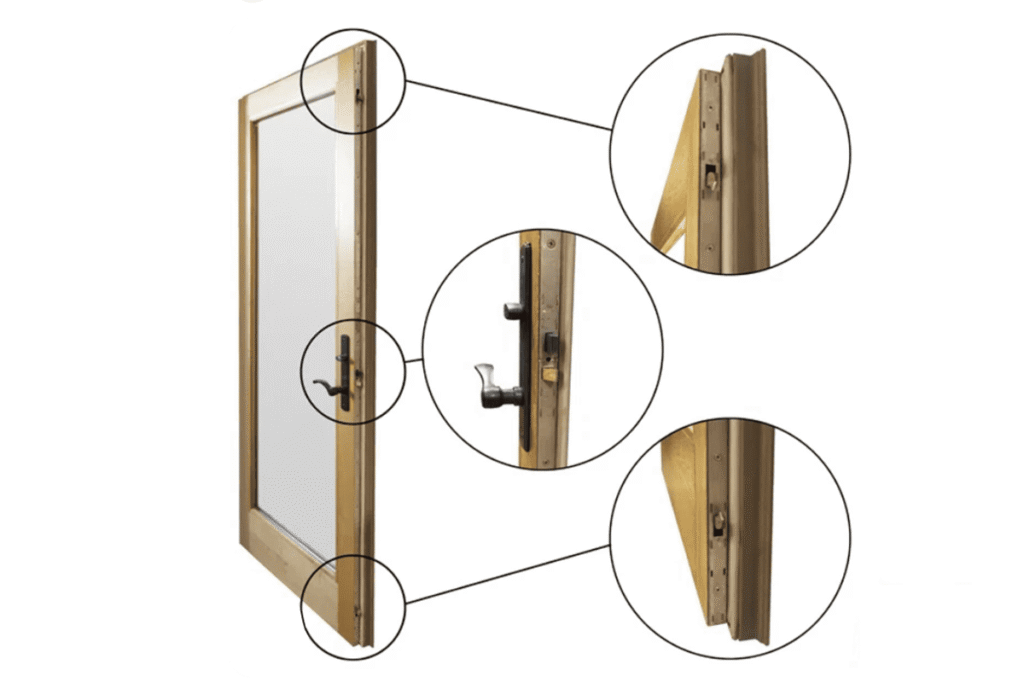
A 3-point system normally connects the central lock body to upper and lower locking elements through rods, strips, or integrated mechanisms. When the user lifts the handle or turns the key, the system engages several locking points into the keeps or frame.
This design can help in three practical ways:
It reduces reliance on one central latch or deadbolt.
The door is not secured only near the handle area.It improves door-to-frame engagement.
The upper and lower sections of the door leaf can be held more firmly.It supports better resistance in tall door leaves.
Tall doors can flex, bow, or move more than short doors.6 Additional locking points can help control that movement.
Buyers should verify tested performance, not assume it
I always remind B2B buyers that “multipoint” is a design feature, not a complete performance certificate. A 3-point lock alone does not automatically make a door burglary-resistant. The result depends on the full system.
| Evaluation item | Why it matters for security |
|---|---|
| Door leaf material | Steel, timber, aluminum, and composite doors behave differently under force |
| Frame structure | A weak frame can fail before the lock does |
| Keeps and strike plates | Locking points need strong and accurate engagement |
| Cylinder quality | A weak cylinder can compromise the whole system |
| Handle set | The handle must match the lock’s operating force and function |
| Installation accuracy | Misalignment can reduce engagement and cause early failure |
| Certification documents | Security claims should be based on tested assemblies, not assumptions |
For procurement teams, this means the lock specification should be discussed together with the door manufacturer, hardware supplier, and any relevant testing or certification body. At SDH Hardware, we can support configuration discussions from the manufacturer side, including lock body options, faceplate dimensions, keeps, cylinders, handle compatibility, and finish requirements. However, I would never suggest that the lock alone proves final security performance. Buyers should verify documents for the complete door set when specific resistance grades or market standards are required.
How Do 3-Point Locks Improve Door Sealing Performance?
Many buyers first think about anti-theft when they hear about 3-point locks. That view is incomplete. Some doors need multipoint locking mainly because they must seal better. If the door leaf is not compressed evenly against the frame gasket, sound, air, cold, heat, or dust can pass through gaps.
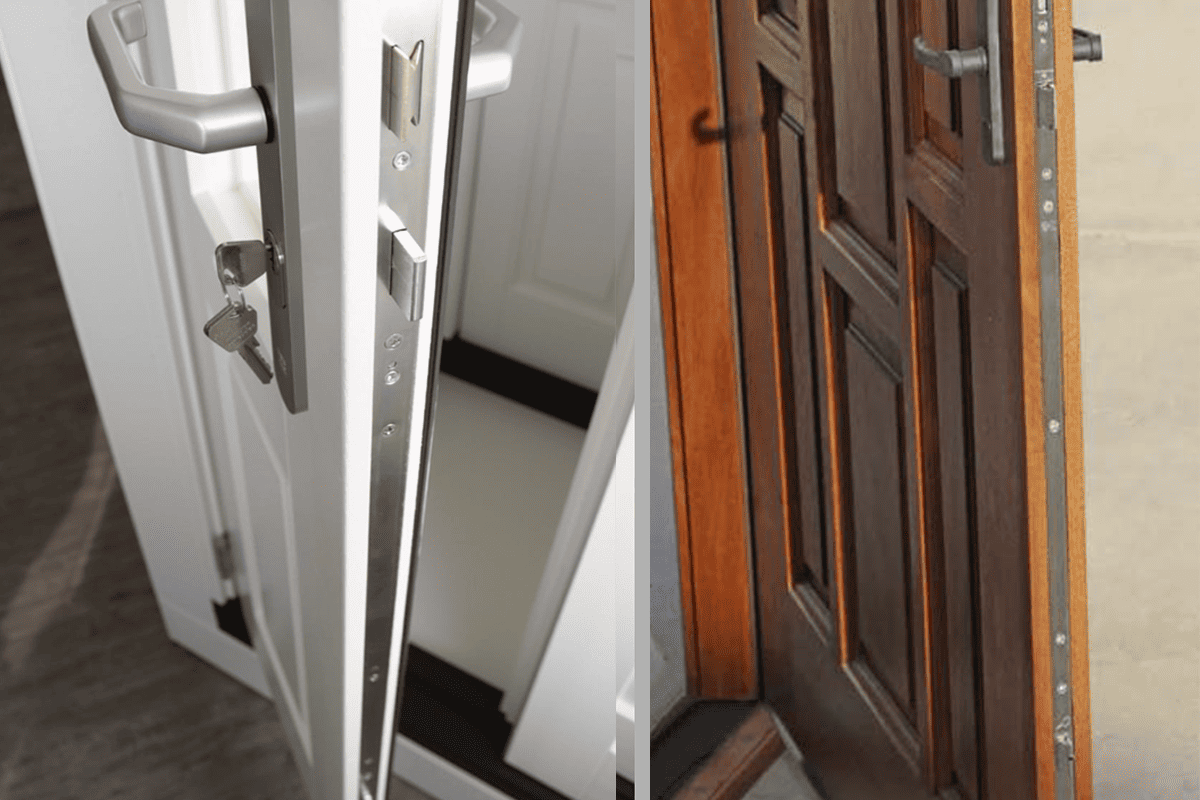
3-point locks improve sealing performance by pulling the door leaf closer to the frame at several positions.7 This can support better gasket compression and more consistent contact along the door height. The lock does not create acoustic or thermal performance alone, but it can help the sealing system work as intended.
Sealing is a different use case from security
This point is important. The value of multipoint locking is not always “more anti-theft.” For some doors, the real value is better compression.
I have seen this in discussions with customers who produce doors for hotels, cold regions, studios, villas, and premium residential projects. Their concern is often not forced entry first. Their concern is:
- “Will the door close tightly?”
- “Will the gasket compress evenly?”
- “Will the customer feel cold air entering?”
- “Will the door reduce unwanted noise?”
- “Will the tall door leaf remain stable over time?”
A single central lock point can hold the middle of the door tightly, while the top and bottom may still have small gaps. This is especially common with tall doors, wide doors, or doors affected by temperature and humidity changes. A 3-point system helps because it applies locking force at several positions.
Common sealing-focused applications
| Application | Main reason for 3-point locking |
|---|---|
| Recording studio doors | Better gasket contact may support sound control |
| Doors in cold regions | Better compression may help reduce cold air leakage |
| Hotel room entrance doors | Better closing feel and comfort expectations |
| Premium villa entrance doors | Security and sealing may both matter |
| Technical rooms | Air, dust, or sound control may be part of the design |
| High-end apartment doors | Better perceived quality and stable closing |
The key phrase here is “may support.” A 3-point lock does not guarantee soundproofing or thermal insulation by itself. Acoustic performance depends on the complete tested door assembly, including leaf core, perimeter seals, drop seal, frame, threshold, wall connection, and installation.8 Thermal performance depends on materials, thermal breaks, seals, glass if used, and construction details.9
Compression must be designed, not forced
A common mistake is to add stronger locking points and expect the door to seal well automatically. That does not always happen. If the gasket is too hard, the handle may become difficult to operate. If the keeps are not aligned, the locking points may scrape. If the door leaf is warped, the user may need too much force to lock the door.
For sealing-focused doors, I usually ask buyers to check:
Door leaf height and weight
Tall and heavy doors need careful hardware sizing.Gasket profile and compression range
The seal must compress within its designed working range.Frame rigidity
The frame must resist deformation when the lock pulls the door closed.Locking point design
Hooks, bolts, rollers, or shoot bolts behave differently.Handle operation force
The user should not need excessive force to engage the system.Long-term alignment
Hinges, frame fixing, and door weight affect performance over time.
This is why I see 3-point locks as a system-level specification. The lock can help the seal work, but the door manufacturer must design the entire door set around that target.
Why Are 3-Point Locks Not a Universal Upgrade for Every Door?
Some buyers assume that more locking points always mean a better door. That assumption can create unnecessary cost and complexity. 3-point locks are useful when the application needs added security, better compression, or both. A standard interior door may not need that level of hardware.
3-point locks are not a universal upgrade because many doors perform well with single-point locks. Interior doors, light commercial doors, and low-risk applications often need simple, reliable, and cost-effective hardware. Multipoint systems add components, installation requirements, adjustment steps, and maintenance considerations.10
The right lock depends on the door’s job
When I speak with B2B customers, I try to move the conversation away from “Which lock is best?” and toward “What must this door achieve?” That question produces a clearer specification.
A single-point lock can be the better choice when the door needs:
- Simple daily operation
- Lower hardware cost
- Fast installation
- Easy replacement
- Standard interior privacy or passage control
- Lower closing force
- Basic project requirements
A 3-point system can be the better choice when the door needs:
- Higher resistance against forced opening
- Better engagement on tall door leaves
- Better door-to-frame compression
- Support for premium door positioning
- Stronger closing feel
- Combined security and sealing performance
Cost is not only the lock price
The added cost of multipoint locking is not limited to the lock body. Buyers should also consider the full bill of materials and production impact.
| Cost factor | Single-point lock | 3-point lock |
|---|---|---|
| Lock body cost | Lower | Higher |
| Keeps and accessories | Simple | More detailed |
| Door machining | Easier | More precise |
| Frame preparation | Standard | More alignment work |
| Installation time | Shorter | Longer |
| Adjustment needs | Lower | Higher |
| After-sales risk | Lower if standard | Higher if mismatched |
| Perceived value | Standard | Premium or performance-focused |
This does not mean 3-point locks are too expensive. It means buyers should match the cost to a real benefit. In many premium exterior doors, the added cost is justified. In a basic interior door, it may not be.
More lock points can create problems if the system is mismatched
A multipoint system has more moving parts. That creates more places where poor matching can cause trouble.
Common problems include:
- The top or bottom locking point does not enter the keep smoothly.
- The handle feels too heavy.
- The door must be pushed hard before locking.
- The gasket creates too much resistance.
- The frame is not rigid enough.
- The installer cannot adjust the keeps accurately.
- The cylinder cam or handle spindle does not match the lock function.
- The door leaf sags after months of use.
These problems are not signs that multipoint locks are bad. They are signs that the hardware and door system were not matched correctly.
In my own factory-side experience, the best results come when the buyer confirms the door structure early. This includes door thickness, lock backset, center distance, faceplate size, locking point type, finish, cylinder profile, handle function, and packaging requirements. Early confirmation reduces rework, improves sampling efficiency, and makes bulk production more stable.
What Should B2B Buyers Check Before Specifying 3-Point Locks?
B2B buyers often compare price first. That is understandable, but it is not enough. A cheap multipoint lock can become expensive if it does not match the door, frame, market standard, or installation method. 3-point locks should be evaluated through compatibility, quality control, and documentation.
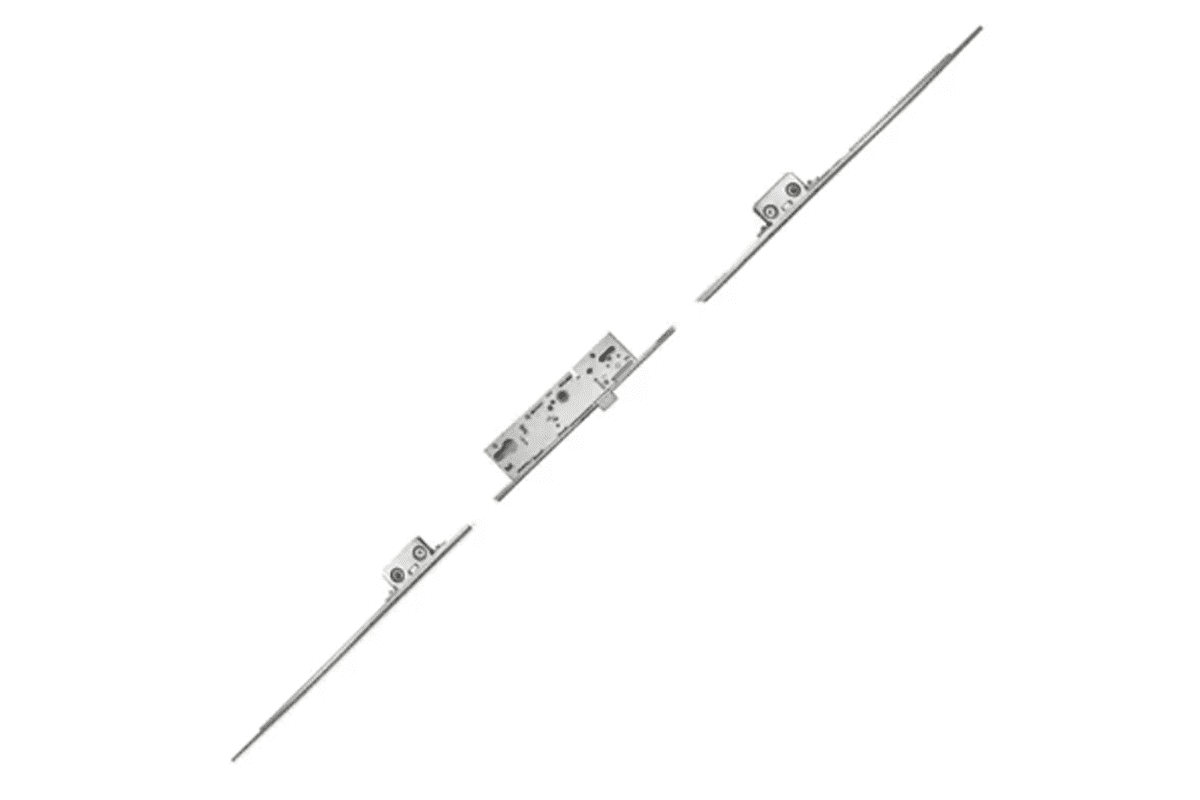
B2B buyers should check door dimensions, lock function, locking point type, frame keeps, cylinder compatibility, handle operation, surface finish, testing documents, and supplier production control before specifying 3-point locks. Buyers should also verify any fire, security, acoustic, or thermal claims against the complete door assembly.
Start with the door specification
A supplier cannot recommend the right multipoint locking system without basic door information. When a customer sends only a photo, I can give a general direction, but I cannot confirm a production-ready solution. The door details matter.
Buyers should prepare:
Door material
Steel, wood, aluminum, or composite construction changes the hardware choice.Door height and width
Tall doors may need different rod lengths or locking point positions.Door thickness
Lock body and cylinder length must match.Opening direction
Left-hand, right-hand, inward, or outward opening affects configuration.Backset and center distance
These dimensions must match local market standards and handle sets.Frame profile
Keeps must match the frame material and geometry.Seal design
Compression requirements affect locking force.Performance target
Security, sealing, fire rating, acoustic control, or thermal comfort require different evaluation paths.
Compare lock types by function
Multipoint systems can use different locking elements. Each one behaves differently.
| Locking point type | Typical advantage | Buyer caution |
|---|---|---|
| Round bolt | Simple and strong engagement | Needs accurate keep alignment |
| Hook bolt | Good pull-in effect and anti-separation support | Requires suitable frame and keep design |
| Roller cam | Helps compression and smoother closing | May offer less deadlocking strength depending on design |
| Shoot bolt | Secures top and bottom positions | Needs precise frame preparation |
| Combination type | Balances security and compression | More complex to install and adjust |
For example, a door focused on compression may use roller cams or hook-style elements to help pull the leaf toward the frame. A security-focused steel entrance door may use more robust bolts or hooks. The final choice should follow the door construction and target market requirements.
Evaluate manufacturing quality
As a manufacturer, I pay close attention to repeatability. A sample can look good, but bulk production must remain consistent. For 3-point locks, quality control should cover more than appearance.
Important inspection points include:
- Lock body material and thickness
- Faceplate straightness
- Bolt movement smoothness
- Spring durability
- Handle follower strength
- Rod connection stability
- Surface finish consistency
- Salt spray expectations when required
- Cycle testing according to agreed standards
- Packaging protection for long products
At SDH Hardware, our production process includes raw material screening, standardized production supervision, and finished product inspection. We also use specialized testing machines for function checks and product verification. For buyers, I recommend requesting drawings, samples, inspection criteria, and relevant certification documents before bulk orders.
Treat certificates as documents to verify
Many architectural hardware products are sold with references to CE certification, fire-rated certification, or other standards. These documents are important, but buyers should read them carefully.
They should verify:
- Which product model is covered
- Which standard was used
- Which test laboratory issued the report
- Whether the certificate applies to hardware only or the door assembly
- Whether the door material and configuration match the tested sample
- Whether the document is still valid
- Whether the destination market accepts that document
This is especially important for fire-rated doors. A lock may be part of a fire-rated door system, but fire performance must be confirmed based on the tested door assembly and applicable local rules.11 I recommend that buyers consult qualified professionals or certification bodies for project-specific decisions.
How Should Door Manufacturers Match 3-Point Locks With Frames, Handles, and Cylinders?
A multipoint lock does not work alone. It must cooperate with the frame, keeps, handle, cylinder, hinges, seals, and installation method. If one part is wrong, the complete door system may feel poor even when the lock itself is well made.
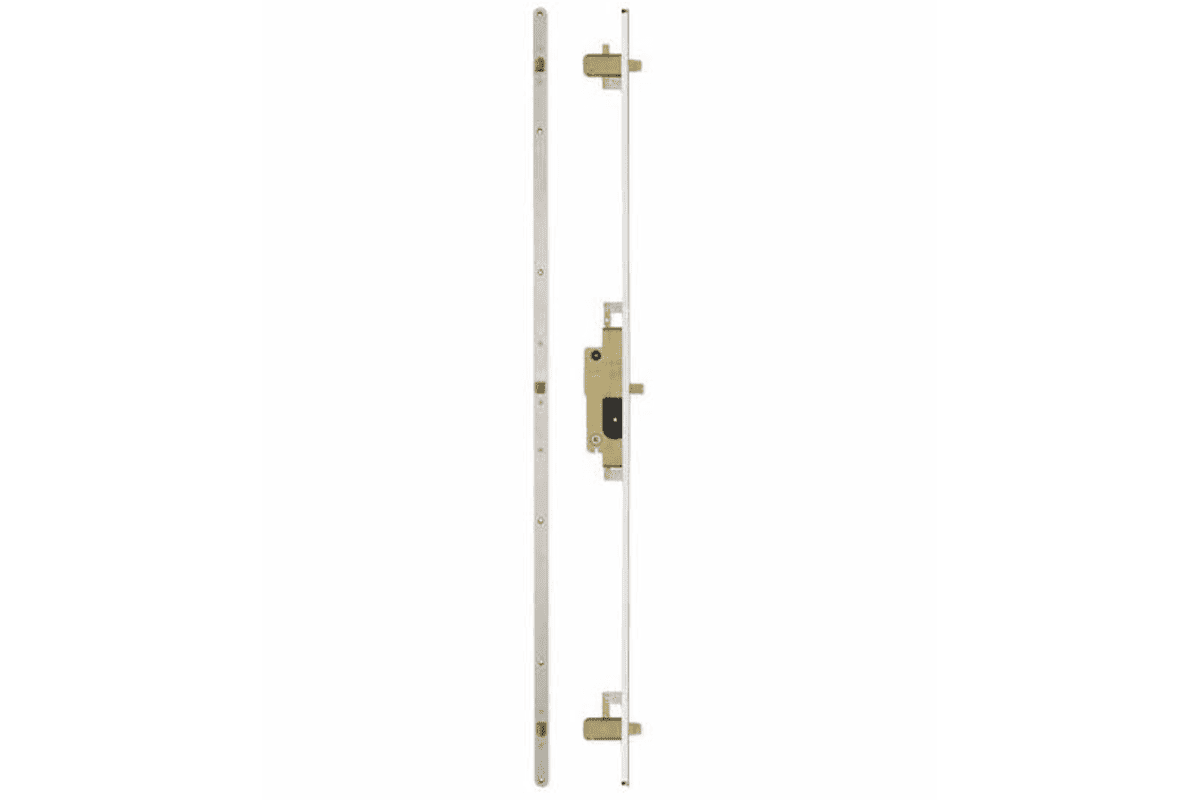
Door manufacturers should match 3-point locks with frames, handles, and cylinders by confirming all interface dimensions before production. The lock body, faceplate, keeps, cylinder cam, handle spindle, door thickness, seal pressure, and hinge alignment must work together to ensure smooth locking and long-term performance.
Frame and keeps are critical
The keeps receive the locking points. If the keeps are weak, misaligned, or poorly fixed, the lock cannot perform correctly.
Door manufacturers should check:
- Keep depth
- Keep width
- Screw fixing strength
- Frame reinforcement
- Tolerance for site adjustment
- Compatibility with sealing gaskets
- Clearance between door leaf and frame
For steel frames, reinforcement may be needed around the keep positions. For timber frames, screw holding strength and long-term deformation should be considered. For aluminum frames, the profile shape and thermal break design may limit keep placement.
Handle and cylinder must match the lock function
A multipoint system often requires a specific handle operation. Some designs lock by lifting the handle. Some designs lock by turning the key. Some are panic-function systems for specific commercial requirements. These functions should not be mixed casually.
Buyers should confirm:
| Component | Key matching points |
|---|---|
| Handle | Spindle size, spring support, lever strength, return action |
| Cylinder | Euro profile, cam type, length, security level, key system |
| Escutcheon or plate | Screw positions, cylinder protection, finish |
| Lock body | Backset, center distance, follower size, latch direction |
| Door thickness | Cylinder and screw length compatibility |
A weak handle can make a good lock feel bad. A wrong cylinder cam can prevent proper locking. A mismatched escutcheon can create installation delays. These details are small, but they matter in bulk projects.
Hinges influence multipoint locking performance
Many buyers focus on the lock side and forget the hinge side. That is risky. If the hinges cannot carry the door weight, the door leaf may sag. Once the door sags, the locking points may no longer enter the keeps smoothly.12
For heavy doors, manufacturers should evaluate:
- Hinge load capacity
- Number of hinges
- Hinge material
- Screw strength
- Door closer force, if used
- Frame fixing method
- Long-term service conditions
SDH Hardware supplies several related door hardware categories, including butt hinges, concealed door hinges, lever handles, mortise locks, cylinders, and accessories. From a sourcing view, one-stop matching can reduce compatibility problems. Buyers still need to confirm actual door testing and installation conditions.
Installation accuracy decides the final user experience
Even a well-designed lock can fail in the field if installation is poor. Multipoint systems need tighter control than simple single-point locks.
Installers should avoid:
- Cutting keeps too loosely
- Ignoring gasket compression
- Forcing rods into position
- Using wrong screws
- Over-tightening parts
- Leaving the door out of plumb
- Failing to test locking under real closing conditions
I usually suggest that door manufacturers prepare installation instructions or templates for projects using multipoint locking systems. This is especially useful for export markets where the door factory, distributor, and installer may be different companies.
Frequently Asked Questions
Are 3-point locks more secure than single-point locks?
3-point locks can improve security by locking the door at multiple positions, but they do not guarantee burglary resistance alone. The final result depends on the door leaf, frame, keeps, cylinder, handle, hinges, installation, and tested assembly. Single-point locks remain suitable for many standard interior applications.
Do 3-point locks make a door soundproof?
3-point locks do not make a door soundproof by themselves. They can help improve door-to-frame compression, which may support better sealing. Real acoustic performance depends on the full tested door assembly, including door core, seals, threshold, frame, wall connection, and installation quality.
When should I choose a 3-point lock for a door project?
You should consider a 3-point lock when the door needs higher security, better sealing compression, or both. Common examples include exterior entrance doors, premium apartment doors, cold-region doors, recording studio doors, and commercial doors storing valuable goods. Standard interior doors may not need this system.
What information should I send to a supplier before ordering?
You should send door material, height, width, thickness, opening direction, backset, center distance, frame profile, seal design, finish requirement, cylinder type, handle style, and target market standards. Drawings are very helpful. Samples should be tested before confirming bulk production.
Can 3-point locks be used on fire-rated doors?
3-point locks may be used in fire-rated door systems only when the complete door assembly supports that configuration. Buyers should verify fire test reports, certificates, approved hardware lists, and local code requirements. A lock certificate alone should not be treated as proof of full door fire performance.
Conclusion
3-point locks are becoming essential in modern door systems where the application requires stronger multi-position locking, better door-to-frame compression, or both. They are not a universal upgrade, and they should not be specified only because they sound premium. The best results come from matching the lock with the door leaf, frame, seals, keeps, handle, cylinder, hinges, and installation method. If you are evaluating multipoint locking systems for OEM, ODM, or bulk supply, I can help you review the hardware configuration and prepare a practical factory-direct solution for your target market.
"Lock and Hardware Requirements for PAS24 Doors", https://internaldoors.co.uk/blogs/news/lock-and-hardware-requirements-for-pas24-doors. Standards such as PAS 24 (UK) and EN 1627 (EU) evaluate enhanced security at the doorset level and are commonly satisfied using multipoint locking, while fenestration guidance notes that multi‑point engagement can increase gasket compression and improve air‑ and water‑tightness when properly designed. Evidence role: general_support; source type: institution. Supports: That multipoint locking is commonly employed to achieve enhanced security of doorsets and can support improved sealing by increasing door-to-frame compression.. Scope note: These standards do not mandate multipoint in every case; the phrase ‘becoming essential’ reflects market practice rather than a universal requirement. ↩
"EN 1627:2021 - Burglar Resistance of Doorsets Windows ...", https://standards.iteh.ai/catalog/standards/cen/3d1d7351-8866-419a-a177-e4d873b39069/en-1627-2021?srsltid=AU7gw4XVvAc30bz20KgNfwZ-S69Tp68QY68ToyzUhxZ5hiaMvkXdb60H. Burglar‑resistance standards and police‑endorsed guidance for residential and commercial doorsets (e.g., EN 1627/EN 1628–1630 and PAS 24, Secured by Design) emphasize multi‑point engagement and reinforcement of multiple locking locations to increase resistance to forced entry compared with single‑point latching alone. Evidence role: general_support; source type: institution. Supports: That guidance and standards for burglary resistance promote multi-point engagement to improve resistance beyond what a single central latch or deadbolt alone offers.. Scope note: Security classifications apply to complete doorsets; no single hardware element guarantees a particular resistance class by itself. ↩
"Specifying High-Performance Doors for Demanding ...", https://premierdoorco.com/guide-to-specifying-doors/. Structural mechanics and building‑science references explain that deflection and sag increase with span and load, and exterior doors are subject to wind, temperature, and moisture cycles that can promote warping and misalignment, which in turn can degrade engagement at the lock edge. Evidence role: mechanism; source type: education. Supports: That increased span and mass, as well as exterior exposure, raise the likelihood of deflection, warping, and misalignment in door leaves.. Scope note: This is a general engineering principle; exact behavior depends on materials, construction, and environmental conditions. ↩
"Door lock", https://en.wikipedia.org/wiki/Door_lock. Reference descriptions of multipoint locking systems document designs that actuate several bolts or hooks spaced along the door edge, typically engaging the frame near the top, middle, and bottom to distribute resistance. Evidence role: definition; source type: encyclopedia. Supports: That multipoint locking devices engage multiple locking points spaced along the door stile (often at center, top, and bottom).. Scope note: Tertiary summaries may not cover all proprietary designs; consult primary standards for detailed specifications. ↩
"EN 1627 vs UL: European and American Security Door ...", https://www.tdsltd.ie/knowledge-base/high-security-doors/en1627-vs-ul-standards?srsltid=AU7gw4U3bYqS8bGny1VdWdGDeNpXsvxnkwiPvDEu76fRl4soYcjRId8A. Standards such as EN 1627 (with EN 1628–1630 test methods) and PAS 24 specify that burglary‑resistance classifications apply to the tested doorset as a complete assembly, not to standalone locks. Evidence role: definition; source type: institution. Supports: That standards assign burglary-resistance classifications to tested complete doorsets rather than to individual components.. ↩
"Deflection (engineering)", https://en.wikipedia.org/wiki/Deflection_(engineering). Elementary beam theory indicates that mid‑span deflection grows with the cube of the span length under comparable conditions, which supports the observation that taller door leaves can exhibit greater flexure and bowing than shorter ones. Evidence role: mechanism; source type: education. Supports: That deflection increases with span length (all else equal), making taller door leaves more susceptible to flexure and bowing.. Scope note: Beam theory is an idealization; actual door behavior depends on construction, support conditions, and materials. ↩
"Improving the airtightness of an average entry door", https://www.greenbuildingadvisor.com/question/improving-the-airtightness-of-an-average-entry-door. Fenestration technical guidance notes that multi‑point latching/locking improves uniform contact and compression of perimeter seals by engaging the leaf to the frame at multiple locations, which can enhance air‑ and water‑tightness when the system is correctly designed and installed. Evidence role: mechanism; source type: institution. Supports: That multi-point engagement can increase and even out gasket compression by drawing the door leaf into the frame at several positions, potentially improving air and water performance.. Scope note: Performance depends on seal design, tolerances, and installation; multipoint engagement alone is not sufficient to guarantee sealing performance. ↩
"Sound transmission class", https://en.wikipedia.org/wiki/Sound_transmission_class. Acoustic standards (e.g., ISO 10140 series and ASTM E90) assess sound transmission of complete building elements; for doors, ratings pertain to the assembled leaf, frame, seals, thresholds, and installation details rather than individual hardware components. Evidence role: definition; source type: institution. Supports: That acoustic performance of doors is evaluated for complete assemblies under standards such as ISO 10140 or ASTM E90.. ↩
"THERM 7 / WINDOW 7 NFRC Simulation Manual", https://windows.lbl.gov/sites/default/files/Downloads/NFRCSim7-July2017.pdf. Standards and certification procedures (e.g., EN ISO 10077 series and NFRC methodologies) compute whole‑product U‑factors that integrate contributions from frames, leaves, glazing, thermal breaks, and seals, confirming that thermal performance is a function of the entire assembly. Evidence role: definition; source type: institution. Supports: That whole-door thermal ratings are calculated considering frame, leaf, glazing, thermal breaks, and seals.. ↩
"E-Series Hinged Patio Door Multi-Point GU Lock ...", https://helpcenter.andersenwindows.com/aw/s/article/E-Series-Hinged-Patio-Door-Multi-Point-GU-Lock-Maintenance-Guide. Industry best‑practice guidance for door hardware notes that multipoint mechanisms incorporate additional rods, keeps, and actuation linkages that demand precise installation tolerances and may require periodic adjustment compared with simpler single‑point locks. Evidence role: general_support; source type: institution. Supports: That multipoint locking mechanisms require precise alignment, additional components (rods/keeps/actuators), and may need periodic adjustment relative to single-point locks.. Scope note: Specific procedures and intervals depend on the particular product design and service conditions. ↩
"EN 1634-1", https://www.architecturalarmour.com/tech-spec/security-glass/en1634-1. Fire‑door standards and codes (e.g., EN 1634‑1, UL 10C, and NFPA 80) govern and evaluate complete door assemblies and require that hardware be tested or listed as part of the assembly, so a lock certificate alone does not establish a door’s fire rating. Evidence role: definition; source type: institution. Supports: That fire ratings apply to complete door assemblies and require tested/listed hardware as part of the assembly.. ↩
"How to Fix a Sagging Door that Won't Close or is Rubbing",
. Hinge standards and guidance (e.g., EN 1935 classification by load and durability) explain that insufficient hinge capacity or support can lead to door drop/sag, which misaligns lock bolts or latches with strikes/keeps and disrupts smooth engagement. Evidence role: mechanism; source type: institution. Supports: That inadequate hinge support can cause door sag/drop leading to misalignment between latches/bolts and keeps, degrading lock operation.. ↩