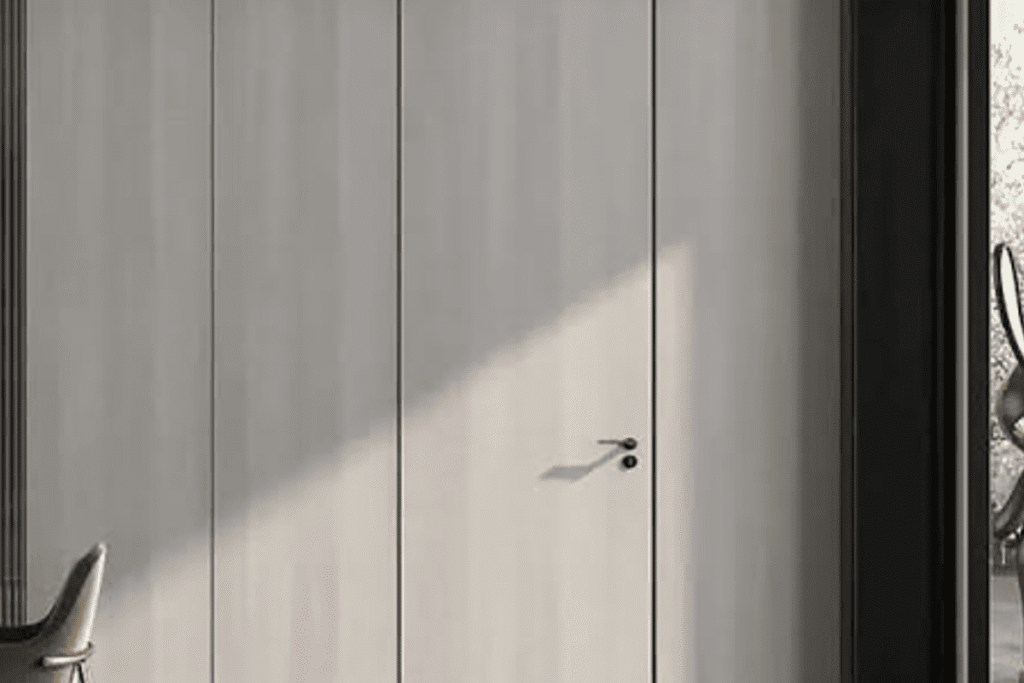
Modern Door Handles for Frameless Doors: How Should B2B Buyers Choose?
Modern door handles for frameless doors can look simple, but the wrong choice can create lock mismatch, installation delays, finish complaints, and returns. Many buyers start with appearance, then discover that glass thickness, mortise lock structure, spindle size, drilling holes, or batch color consistency were not confirmed. A better solution starts with system matching.
Modern door handles for frameless doors should be selected by matching the handle type to the door structure, lock system, opening method, thickness, installation holes, material, finish, and supply consistency. Frameless glass doors and frameless interior doors require different hardware logic, so buyers should confirm technical compatibility before approving style, samples, or bulk orders.

I often see the same pattern in sampling discussions. A buyer sends a clean handle photo and asks for “the same modern style.” That is a useful start, but it is not enough. The real question is whether that handle can work with the door, lock, accessories, and repeat order plan.
Why Are Modern Door Handles for Frameless Doors a System-Matching Decision?
Modern door handles for frameless doors create problems when buyers treat them as decorative parts only. A handle may look correct in a catalog, but it can fail during matching if the door type, lock body, spindle, glass cut-out, or concealed hardware is not considered first.
Modern door handles for frameless doors should be evaluated as part of a complete door hardware system. Buyers need to confirm the door material, lock structure, hole position, thickness, opening direction, fixing method, finish standard, and accessory package before they approve samples or place bulk orders.

“Frameless” does not mean one hardware category
The first mistake I see is using the word frameless too broadly. In B2B door hardware sourcing, “frameless door” may refer to at least two very different applications:
Frameless glass doors
- Usually depend on glass locks, patch fittings, clamps, pull handles, or special lock cases.
- Matching depends on glass thickness, glass drilling, cut-out pattern, opening direction, and safety expectations.
- Hardware must be selected carefully because glass cannot be adjusted like timber or metal doors after production.1
Frameless or invisible interior doors
- Usually depend on mortise locks, concealed hinges, magnetic locks, slim roses, lever handles, and flush visual design.
- Matching depends on door thickness, lock body size, spindle, handle rose, latch function, edge detail, and pre-cut holes.
- The goal is often a minimal wall-to-door appearance, not exposed glass transparency.
These two scenarios may both need a modern design language, but they do not use the same hardware logic.
The buyer’s checklist should start before style approval
When I discuss a new inquiry with a door factory or hardware brand, I usually ask several questions before recommending a handle model. These questions reduce risk during sampling and mass production.
| Matching item | Frameless glass door | Frameless interior door |
|---|---|---|
| Main structure | Tempered glass door leaf2 | Wood, MDF, metal, or composite door leaf |
| Key matching point | Glass thickness3 and cut-out | Mortise lock and door thickness |
| Common handle types | Pull handle, knob, glass lock handle set | Lever handle, slim rose handle, concealed-style handle |
| Installation logic | Clamp, through-bolt, or glass drilling | Spindle, screws, lock case, latch, cylinder |
| Main risk | Hole mismatch or unsuitable fitting | Lock-handle mismatch or poor flush appearance |
| Buyer focus | Safety, cut-out accuracy, finish durability | Minimal design, smooth operation, lock compatibility |
Modern design still needs mechanical logic
A slim handle may look attractive, but it still needs enough strength, comfortable grip, and correct fixing. A minimalist rosette may help the interior door look clean, but it must cover the opening holes and fit the lock body. A long pull handle may suit glass doors, but the center-to-center hole distance must match the glass processing drawing.
For procurement teams, the safest sequence is:
- Confirm the door type.
- Confirm the lock or fitting structure.
- Confirm door or glass thickness.
- Confirm hole positions and installation method.
- Confirm handle form and dimensions.
- Confirm material and finish.
- Confirm accessories and packaging.
- Approve sample before bulk order.
This sequence may look basic, but it prevents many expensive mistakes. In our own order communication at SDH Hardware, selection problems often appear when buyers approve “modern design” before confirming the lock structure or door thickness. I do not see that as a small detail. I see it as the difference between a smooth repeat order and a batch of parts that cannot be installed correctly.
How Should Modern Door Handles for Frameless Glass Doors Be Selected?
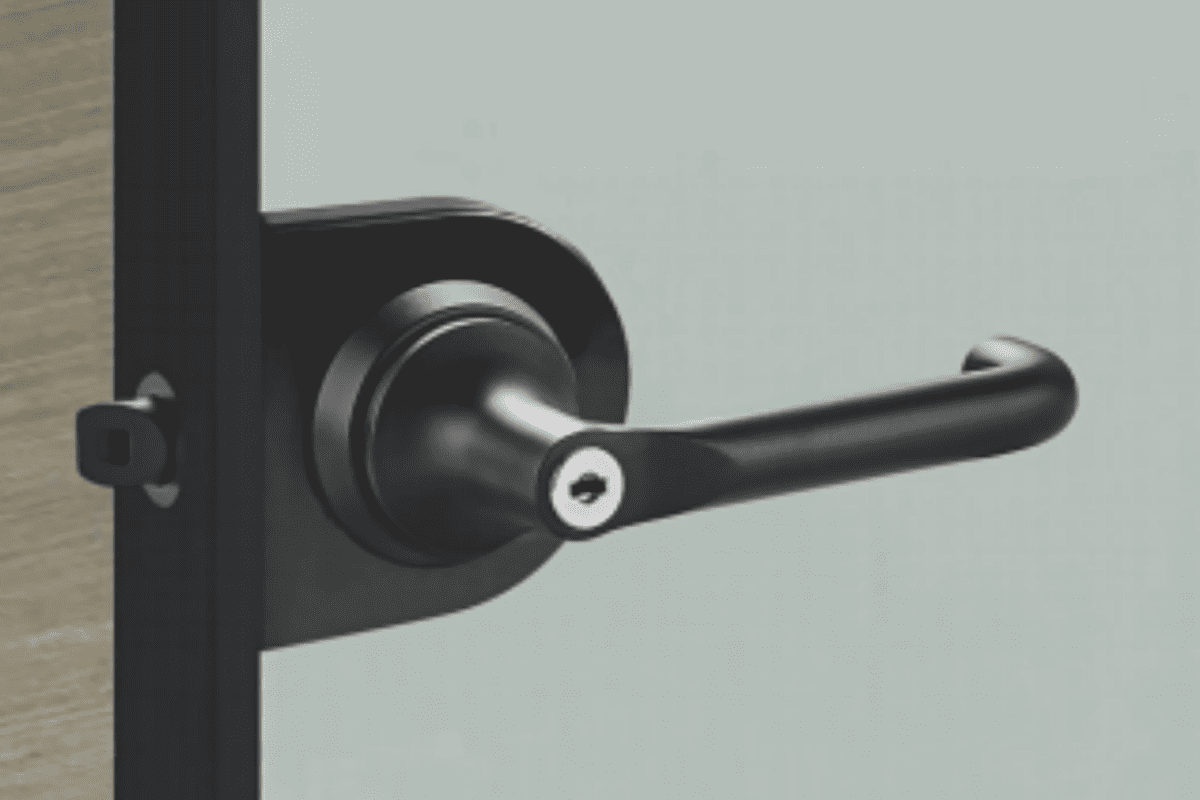
Modern door handles for frameless glass doors can cause high risk when the buyer chooses the handle before confirming the glass hardware system. Glass thickness, drilling pattern, lock type, opening direction, and fitting method must be checked because glass doors allow little adjustment after production.
Modern door handles for frameless glass doors should be selected by matching the handle to the glass lock, clamp, patch fitting, cut-out drawing, glass thickness, and usage frequency. Buyers should request drawings and samples, then verify dimensions before glass processing or mass production.
Start with glass thickness and processing method
Frameless glass door hardware often depends on glass thickness and glass preparation. Common glass door projects may use different glass thicknesses depending on market, project requirements, and door size. The hardware supplier should not assume one universal specification.
For procurement evaluation, buyers should confirm:
- Glass thickness
- Single door or double door
- Swing direction
- Floor spring, pivot, hinge, or sliding system
- Locking function
- Pull handle or lever-type operation
- Hole diameter and center distance
- Edge clearance
- Required accessories and screws
- Finish and visible surface standard
I always prefer to see a drawing at the sampling stage. A photo helps with style, but a drawing confirms whether the hardware can be produced and installed consistently.
Pull handles, glass locks, and lever sets work differently
Frameless glass doors can use several types of handle solutions. Each has a different matching logic.
| Handle solution | Typical use | Key compatibility checks | Common sourcing risk |
|---|---|---|---|
| Back-to-back pull handle | Office glass doors, retail entrances | Hole center distance, tube diameter, fixing set, glass thickness | Wrong screw length or hole distance |
| Glass door lock with handle | Interior glass office doors | Lock body, cut-out, cylinder type, strike plate, opening direction | Lock cut-out mismatch |
| Knob or small pull | Light-use glass doors | Grip comfort, fixing method, door size | Weak user experience for high traffic |
| Patch fitting with pull handle | Commercial glass systems | Patch fitting layout, floor spring, lock function | Mixed fittings from different systems |
A modern pull handle can look simple, but its performance depends on the connection details. For example, a 600 mm pull handle and a 1200 mm pull handle may use similar surface finishes, but the installation feel and fixing stress are not the same. Buyers should ask for the correct fixing kits for the glass thickness range.
Do not separate safety expectations from hardware choice
I avoid making on-site structural claims because each glass door project should be reviewed by qualified professionals. However, from a manufacturing and supply point of view, I can say that buyers should not treat glass door handles as isolated decorative products.
They should verify:
Material strength
- Stainless steel is common for modern glass door pull handles.
- Buyers should confirm grade, wall thickness, and tube dimensions.
Edge and touch quality
- Glass doors are often used in offices, hotels, and commercial interiors.
- Users touch the handle frequently, so burrs, sharp transitions, and poor polishing can create complaints.
Finish durability
- PSS, SSS, black, gold, and other finishes require color control.
- Brushed finishes should be even.
- Coated finishes should be checked for adhesion and scratch resistance according to the buyer’s standard.4
Accessory completeness
- Screws, washers, sleeves, gaskets, and fixing parts must match the door.
- Missing small parts can stop installation even when the handle itself is correct.
Sampling should include real installation details
For glass doors, a sample should not only be judged by appearance. A useful sample evaluation should include:
- Actual handle dimensions
- Surface finish comparison under normal light
- Fixing method
- Screw length
- Gasket quality
- Lock operation if included
- Packaging protection
- Drawing and labeling accuracy
In B2B supply, these small details protect both sides. The buyer reduces project risk, and the supplier receives clearer production instructions. At SDH Hardware, we often use sampling discussion to clarify whether the customer needs a glass lock solution, a pull handle solution, or a matched set with accessories. That early clarification usually prevents later changes after production has started.
How Should Modern Door Handles for Frameless Interior Doors Be Matched?
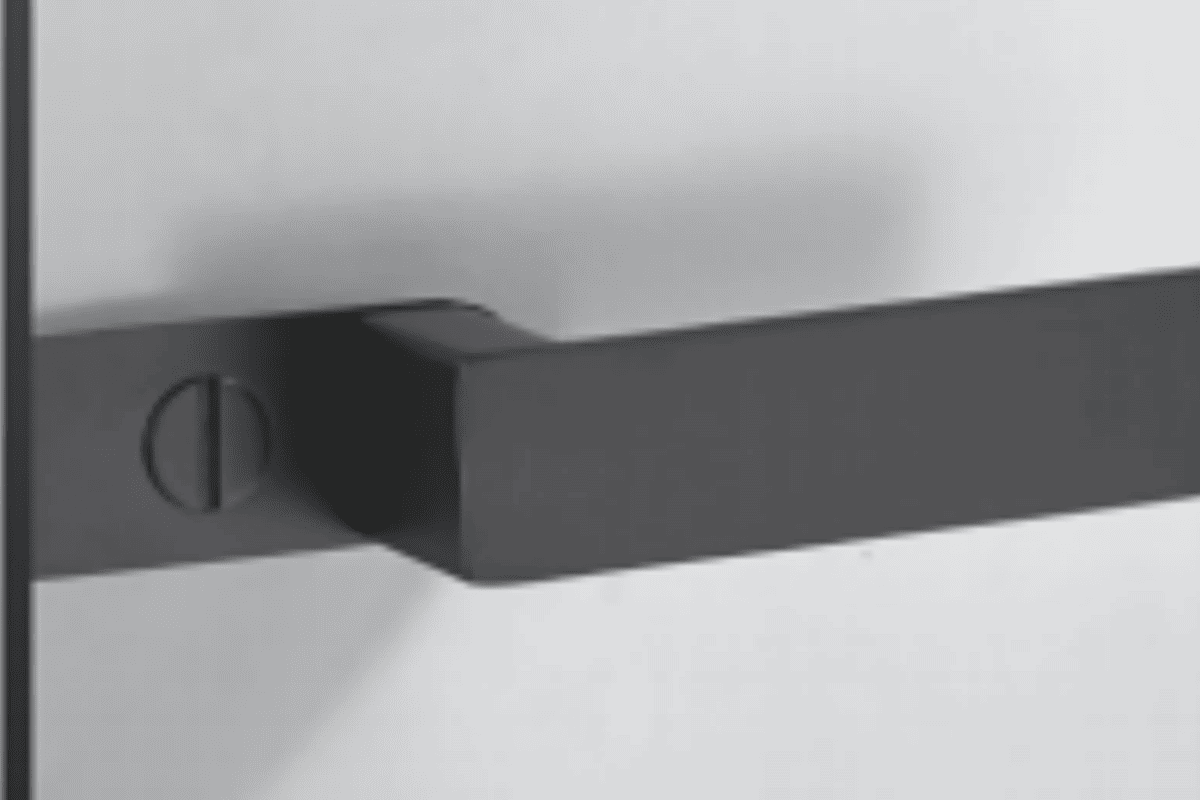
Modern door handles for frameless interior doors can create problems when the buyer only focuses on the minimalist look. Invisible doors, flush doors, and concealed-hinge doors still need correct lock bodies, spindle sizes, door thickness ranges, latch positions, and rose or plate dimensions.
Modern door handles for frameless interior doors should be matched with the mortise lock, door thickness, spindle, cylinder, concealed hinge layout, opening holes, and minimalist appearance target. The best choice is not always the thinnest handle; it is the handle that fits the full door system reliably.
Interior frameless doors depend on the lock body
For invisible or frameless interior doors, the handle is usually part of a mortise lock system5. This means the handle must match the spindle, follower, latch, backset, center distance, rose, escutcheon, and sometimes a Euro profile cylinder.
A clean handle cannot perform well if the lock body is wrong. Buyers should confirm:
- Door thickness, such as 35 mm, 40 mm, 45 mm, or project-specific thickness
- Mortise lock case size
- Backset
- Center distance
- Spindle size, often 8 mm in many markets6
- Latch direction or reversible latch
- Cylinder type
- Rose or plate dimensions
- Screw fixing method
- Door edge preparation
The exact values depend on market standards and the customer’s system. Buyers should not rely on assumptions.
Minimalist design must still cover the technical openings
Modern interior doors often use:
- Slim lever handles
- Square rose handles
- Round rose handles
- Magnetic lock handles
- Hidden or concealed screw designs
- Black, satin nickel, satin stainless, or PVD-style finishes
- Matching concealed hinges
These designs reduce visual noise. However, the handle rose still needs to cover the installation holes. The spindle must align with the lock follower.7 The lever return spring must feel stable. The screws must hold firmly in the door structure.
A very small rose can look elegant in a showroom, but it may not suit every factory’s pre-drilled opening. This is why I always suggest checking the door drawing before final approval.
Lever handle, pull handle, or flush pull?
Frameless interior doors may use different handle forms depending on the door function.
| Door application | Common handle type | Best use case | Key warning |
|---|---|---|---|
| Standard swing invisible door | Lever handle with slim rose | Rooms needing latch and privacy | Must match mortise lock and spindle |
| Passage flush door | Minimal lever or recessed pull | Simple passage function | Grip comfort may vary |
| Sliding frameless interior door | Flush pull or recessed pull | Space-saving interior systems | Pocket depth and pull size matter |
| Hotel or commercial interior door | Lever handle with lock set | High-use environments | Durability and finish consistency are critical |
The handle should match user behavior. A decorative recessed pull may suit a light-use sliding panel, but it may frustrate users on a daily swing door. A slim lever can look modern, but it still needs comfortable hand clearance.
Concealed hinges affect the total system
Frameless interior doors often use concealed hinges to keep the door face clean. This creates a full minimalist system. The handle, lock, hinges, and door edge must work together.
Procurement teams should check:
Door weight and hinge specification
- Concealed hinge selection should be reviewed according to the door size and weight.8
- Buyers should verify supplier documents and project requirements.
Lock position and hinge clearance
- The lock body and hinge pockets must not conflict inside the door leaf or frame.
Door opening angle
- The handle should not hit the wall, frame, or adjacent panel.
Visual alignment
- A modern interior door often depends on small details.
- Rose shape, escutcheon size, hinge finish, and lock faceplate should look coordinated.
As a manufacturer, I see buyers gain better results when they treat the door set as one integrated product. The handle is important, but it is only one visible part of a larger structure.
Which Materials and Finishes Matter for Modern Door Handles for Frameless Doors?
Modern door handles for frameless doors can lose value quickly if the material or surface finish is inconsistent. A beautiful sample may not protect the buyer from corrosion, color variation, fingerprint complaints, poor touch feel, or finish mismatch across repeat orders.
Modern door handles for frameless doors should use materials and finishes selected for the application environment, target price, brand positioning, and expected order consistency. Buyers should verify stainless steel grade, brass or zinc specifications, coating method, color tolerance, corrosion resistance, and inspection standards before bulk production.

Material choice affects both performance and brand image
In architectural hardware, the material is not only a cost item. It affects touch, weight, durability, machining quality, and customer perception.
Common materials include:
Stainless steel
- Common for glass door pull handles and modern commercial hardware.
- Often selected for corrosion resistance and clean appearance.9
- Buyers should confirm grade and finish process.
Zinc alloy
- Often used for lever handles with decorative finishes.
- Allows flexible shapes and competitive pricing.10
- Buyers should check plating quality and mechanical performance.
Brass
- Often used in higher-positioned lock cylinders, handles, or decorative hardware.
- Provides a premium feel.
- Buyers should verify material composition and finish requirements.
Aluminum
- Used in some minimalist interior systems.
- Lightweight and suitable for anodized finishes.11
- Buyers should check strength and surface durability for the application.
No material is perfect for every project. The correct choice depends on door type, market segment, indoor or exposed environment, usage frequency, and buyer budget.
Finish consistency is a bulk-order issue
For B2B buyers, finish is where many complaints appear. A showroom sample may look excellent, but a bulk order must match across hundreds or thousands of pieces.
Buyers should pay attention to:
| Finish factor | Why it matters | Buyer action |
|---|---|---|
| Color tone | Different batches may vary | Approve master sample and tolerance |
| Gloss level | Satin and polished finishes show differences clearly | Define PSS, SSS, matte, or custom standard |
| Coating adhesion | Poor coating can peel or scratch | Request test reports or internal inspection data |
| Fingerprint visibility | Dark and glossy finishes show marks | Check real handling conditions |
| Edge coverage | Corners may wear faster | Inspect corners, holes, and underside |
| Packaging protection | Handles can rub during shipping | Confirm individual wrapping and carton layout |
At SDH Hardware, we often discuss finish details before production because the customer’s brand reputation depends on repeatable color and touch feel. A black handle that looks slightly different from order to order can create a real problem for hardware brands and wholesalers.
Popular modern finishes need clear definitions
Modern door hardware buyers often ask for:
- Satin stainless steel
- Polished stainless steel
- Matte black
- Brushed nickel
- Satin gold
- Champagne
- Antique bronze
- Custom PVD or electroplated finishes
These names are useful, but they are not precise enough by themselves. One supplier’s “satin gold” may not match another supplier’s “champagne gold.” A buyer should define the finish through a physical sample, approved photo reference, or controlled specification.
Inspection should include touch and assembly
Material and finish inspection should not stop at visual checks. I recommend checking:
Surface
- No obvious scratches, dents, stains, or color patches.
- Brushing direction should be consistent.
Edges
- No sharp burrs.
- Comfortable touch matters, especially on lever handles.
Assembly
- Handle movement should feel stable.
- Rosettes, covers, screws, and fittings should assemble smoothly.
Function
- Lever return should be reliable.
- Lock and handle operation should be tested together.
Packaging
- Each visible part should be protected.
- Accessories should be packed and labeled clearly.
Buyers can also request certification documents, fire-rated documentation, CE-related files, or other compliance documents where relevant. These documents should always be verified against the product model, application, and target market requirements. For application-specific decisions, qualified professional evaluation is still important.
How Can B2B Buyers Reduce Risk When Sourcing Modern Door Handles for Frameless Doors?
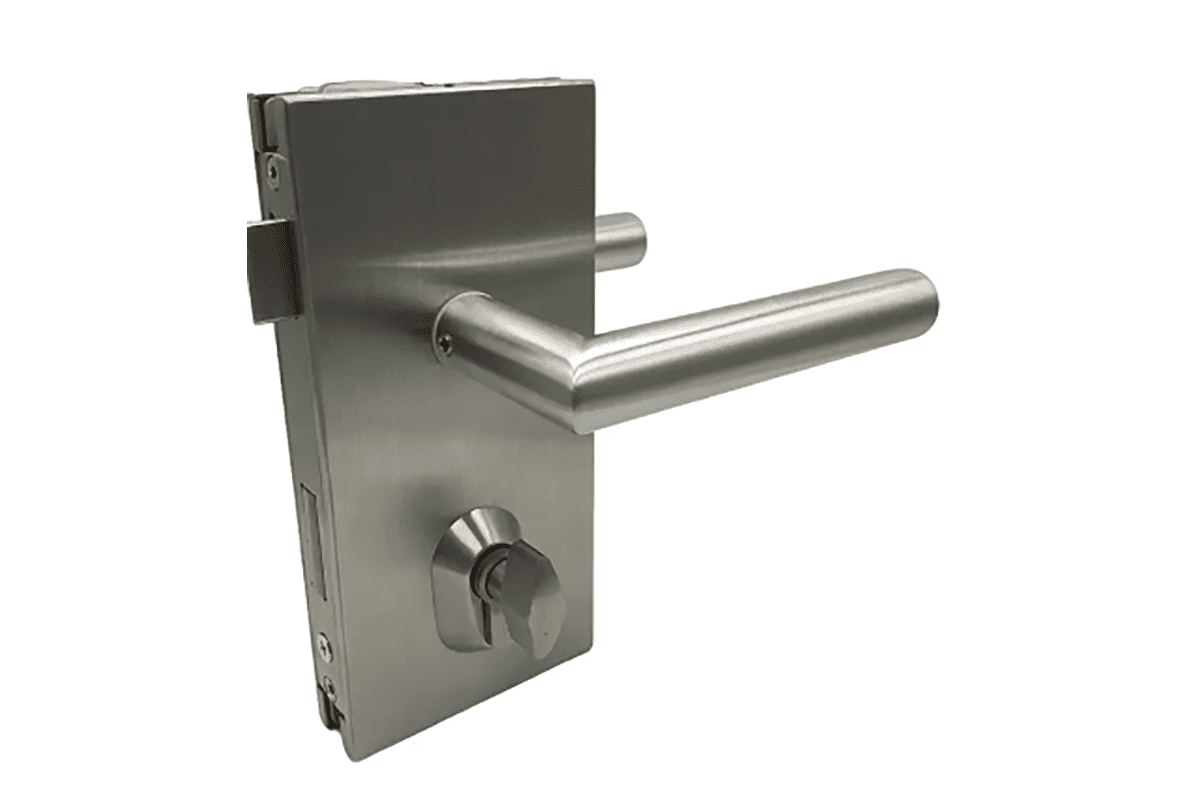
Modern door handles for frameless doors create sourcing risk when buyers do not control drawings, samples, accessories, finish standards, packaging, and repeat supply terms. The product may look simple, but small mismatches can cause installation delays, customer complaints, or rejected shipments.
B2B buyers can reduce risk by confirming drawings, door type, lock matching, material, finish samples, accessory lists, inspection criteria, packaging, certification documents, and repeat order consistency before mass production. A clear approval process protects door factories, hardware brands, glass door suppliers, and wholesalers.
Inquiry quality affects quotation accuracy
A complete inquiry helps the supplier recommend the correct solution. A short message like “send price for modern frameless door handle” usually creates too many assumptions.
A stronger inquiry includes:
- Door type: glass, invisible interior door, flush wood door, metal door, or sliding door
- Door or glass thickness
- Handle type: lever, pull, knob, flush pull, or lock handle set
- Lock requirement
- Hole drawing or current sample
- Material preference
- Finish and color standard
- Quantity and delivery plan
- Packaging requirement
- Brand logo or private-label requirement
- Target market and required documents
When buyers provide this information early, the supplier can quote more accurately. It also reduces later changes that affect price, tooling, and delivery time.
Sample approval should simulate real use
A sample should answer more than “Does it look good?” It should answer “Can this product work in our system and can we sell it repeatedly?”
I suggest a sample checklist like this:
Dimensional check
- Compare the sample with drawing.
- Check hole distance, rose size, handle length, and spindle position.
Lock matching
- Install the handle with the actual mortise lock or glass lock.
- Test latch movement and handle return.
Finish check
- Compare with approved color sample.
- Check under indoor lighting and daylight if possible.
Accessory check
- Confirm screws, spindles, fixing kits, gaskets, keys, cylinders, and instructions.
Packaging check
- Confirm whether packaging protects the finish during shipment.
- Check label information and carton strength.
User feel
- Test grip comfort, lever movement, and surface touch.
In my experience, buyers who spend more time during sample approval often spend less time solving after-sales problems.
Batch consistency protects wholesalers and brands
For door hardware brands and wholesalers, repeat supply is as important as the first order. Customers expect the same handle model, finish, packaging, and accessory configuration every time.
Batch consistency should cover:12
| Consistency area | What to control |
|---|---|
| Dimensions | Handle length, rose size, screw spacing, spindle position |
| Finish | Color tone, gloss, brushing direction, coating quality |
| Function | Lever return, lock operation, fixing stability |
| Accessories | Screws, spindle, cylinder, keys, gaskets, instructions |
| Branding | Laser logo, stamping, packaging artwork, labels |
| Documentation | Drawings, certificates, inspection reports, product codes |
| Supply | Lead time, MOQ, reorder availability, spare parts |
This matters because one inconsistent batch can damage a buyer’s channel reputation. A wholesaler may sell to many small installers or door shops. If those customers find missing screws or color differences, the wholesaler receives the complaint, not only the factory.
Conclusion
Modern door handles for frameless doors should never be chosen by appearance alone. Buyers need to separate frameless glass doors from frameless interior doors, then confirm lock structure, thickness, hole positions, material, finish, accessories, and repeat supply consistency. This approach reduces installation mismatch, finish complaints, and order risk. If you are developing a glass door, invisible door, or private-label hardware range, I recommend sharing drawings and sample requirements with SDH Hardware so we can help you evaluate a matched door hardware solution.
"How to Cut Tempered Glass (and Why It's So Difficult)", https://www.fabglassandmirror.com/blog/how-to-cut-tempered-glass/?srsltid=AU7gw4Vlydv5AFCrmDb9YbQsuraO286K7O6U2RotbTa_E_fihIl5yY_p. Technical guidance on fully tempered glass explains that holes, notches, and edge work are normally completed before heat treatment because subsequent cutting or drilling can cause breakage, supporting the need to confirm hardware cut-outs before production. Evidence role: mechanism; source type: institution. Supports: Tempered glass is fabricated to final dimensions before heat treatment, making later drilling or cutting unsafe or impractical.. ↩
"16 CFR Part 1201 -- Safety Standard for Architectural ...", https://www.ecfr.gov/current/title-16/chapter-II/subchapter-B/part-1201. The U.S. Consumer Product Safety Commission safety standard for architectural glazing materials establishes impact-performance requirements for glazing used in doors and other hazardous locations, providing regulatory context for the use of tempered or other safety glazing in frameless glass doors. Evidence role: general_support; source type: government. Supports: Safety-glazing rules for door assemblies support the use of tempered or equivalent safety glass in door locations.. Scope note: This supports the safety-glazing context, but it does not prove that every frameless glass door project uses tempered glass. ↩
"Structural Behavior Of Architectural Laminated Glass", https://scholarsmine.mst.edu/context/civarc_enveng_facwork/article/3575/viewcontent/STRUCTURAL_BEHAVIOR_OF_ARCHITECTURAL_Laminated_Glass.pdf. Glazing design standards such as ASTM E1300 treat glass thickness as a core variable in determining load resistance and allowable use, providing technical context for verifying thickness before selecting frameless glass door fittings. Evidence role: mechanism; source type: institution. Supports: Glass thickness is part of glazing design because it affects load resistance, deflection, and fitting compatibility.. Scope note: This supports the engineering relevance of glass thickness, but it does not specify the correct thickness for any individual door project. ↩
"Standard Test Methods for Rating Adhesion by Tape Test", https://store.astm.org/d3359-23.html. Coating test standards such as ASTM D3359 for adhesion and ASTM D4060 for abrasion resistance establish standardized methods for evaluating coating performance, supporting the article’s emphasis on checking adhesion and scratch-related durability. Evidence role: expert_consensus; source type: institution. Supports: Recognized coating standards provide methods for assessing adhesion and resistance to wear or scratching.. Scope note: The cited standards describe test methods; they do not set a universal pass/fail requirement for every door-handle application. ↩
"Mortise lock", https://en.wikipedia.org/wiki/Mortise_lock. Reference definitions of mortise locks describe a lock case fitted into a mortise in the door and operated through coordinated trim components, supporting the article’s treatment of the handle as part of a lock system rather than an isolated decorative part. Evidence role: definition; source type: encyclopedia. Supports: A mortise lock is a lock case installed into a pocket in the door edge and operated by associated trim such as handles, spindles, and cylinders.. ↩
"DIN EN 1906 - HOPPE | United States & Canada", https://www.hoppe.com/us-us/door-handles/standards-and-solutions-door-handles/din-en-1906/. Door-furniture standards and technical references for lever handles commonly identify an 8 mm square spindle as a standard operating interface, supporting the article’s note that this size is common in many markets. Evidence role: general_support; source type: institution. Supports: European-style door furniture standards and technical documents commonly reference 8 mm square spindles for lever handles.. Scope note: This is market-dependent and does not apply to all regional lock standards or specialty hardware. ↩
"How to Install a Mortice Lock - Tutorial Video by Tradco",
. Technical descriptions of lever-operated locks explain that the spindle passes through the follower to transmit rotational motion from the handle to the latch mechanism, supporting the requirement that spindle and follower positions align. Evidence role: mechanism; source type: education. Supports: The spindle transmits handle rotation to the lock follower, so alignment is necessary for latch operation.. ↩"How to Choose & Install Concealed Hinges | Cabinet Door ...",
. Architectural hinge standards such as EN 1935 and ANSI/BHMA hinge classifications evaluate hinges by factors including door mass, durability, and use conditions, supporting the need to match concealed hinges to door size and weight. Evidence role: mechanism; source type: institution. Supports: Hinge standards classify or test hinges in relation to door mass, size, durability, and use category.. Scope note: The standards support the selection principle but do not determine the correct hinge for a specific product without project data. ↩"Stainless steel", https://en.wikipedia.org/wiki/Stainless_steel. Materials references describe stainless steel as an iron alloy containing sufficient chromium to form a passive oxide layer, explaining its widely cited corrosion resistance and supporting its use in door hardware exposed to handling and indoor environments. Evidence role: mechanism; source type: encyclopedia. Supports: Stainless steel resists corrosion because chromium forms a protective passive oxide layer.. Scope note: Corrosion performance depends on grade, environment, maintenance, and finish condition. ↩
"Zinc die casting carves new space in manufacturing.", https://www.asme.org/topics-resources/content/todays-zinc-casting-technology-for-tomorrows-markets. Technical literature on zinc die casting notes that zinc alloys can produce complex, dimensionally accurate components with efficient high-volume manufacturing, supporting their use for shaped lever handles and decorative hardware. Evidence role: mechanism; source type: research. Supports: Zinc alloys are suitable for die casting complex shapes with good dimensional accuracy and production efficiency.. Scope note: The source supports manufacturability and production efficiency, not the exact price of any specific handle. ↩
"Process Specification for the Anodizing of Aluminum Alloys", https://www.nasa.gov/wp-content/uploads/2023/03/prc-5006-current.pdf. Engineering materials references describe aluminum as a low-density metal and explain anodizing as an electrochemical process that thickens the protective oxide layer, supporting the article’s statement that aluminum is lightweight and suitable for anodized finishes. Evidence role: mechanism; source type: education. Supports: Aluminum has low density compared with many structural metals and can be anodized to form a controlled oxide surface.. ↩
"Manufacturing | NIST", https://www.nist.gov/manufacturing. ISO 9001 quality-management principles require organizations to control processes and provide products that consistently meet specified requirements, supporting the article’s focus on batch consistency for repeated door-hardware supply. Evidence role: general_support; source type: institution. Supports: Quality-management systems emphasize controlled processes and consistent conformity of products across production runs.. Scope note: This supports the general quality-management rationale, not the completeness of the article’s specific checklist. ↩