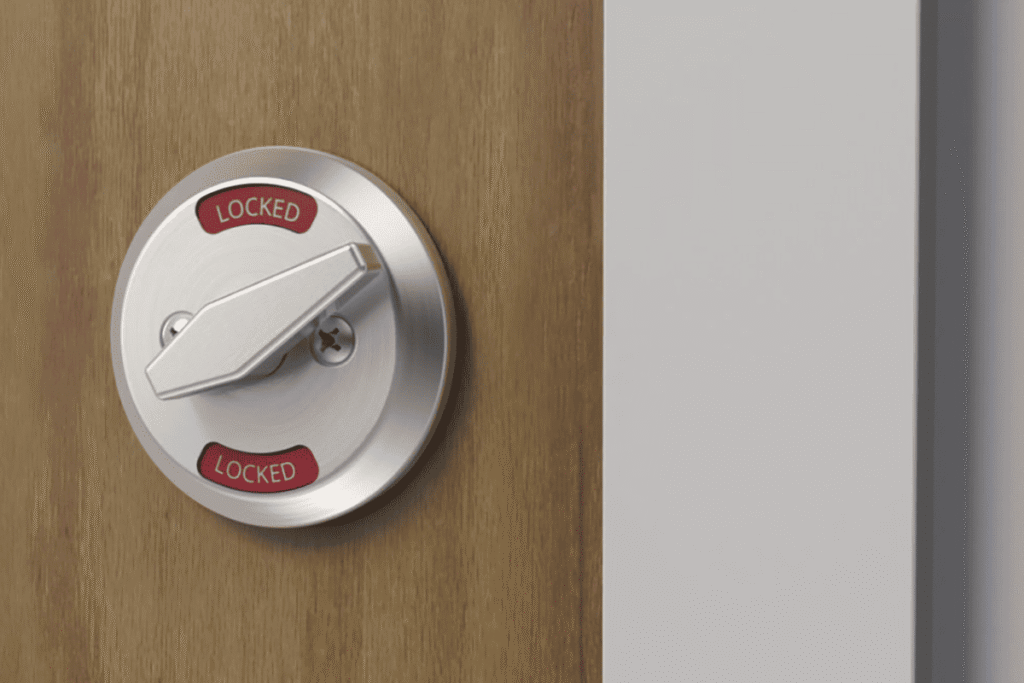
What Is a Thumbturn Lock and Where Does It Fit?
A thumbturn lock can create confusion when a door factory is preparing a hardware schedule. Buyers may treat it as one complete lock, but that can lead to wrong quotations, mismatched parts, and poor site performance. The practical solution is to define the operation first, then match the lock body, cylinder, handle, indicator, and emergency function.
A thumbturn lock is usually not a standalone universal lock.1 In B2B door hardware communication, it normally means an inside thumbturn operation used with a cylinder, bathroom function, privacy lock, or low-security interior door set. The correct configuration depends on door location, privacy level, emergency access needs, mortise lock compatibility, door thickness, and outside operation.
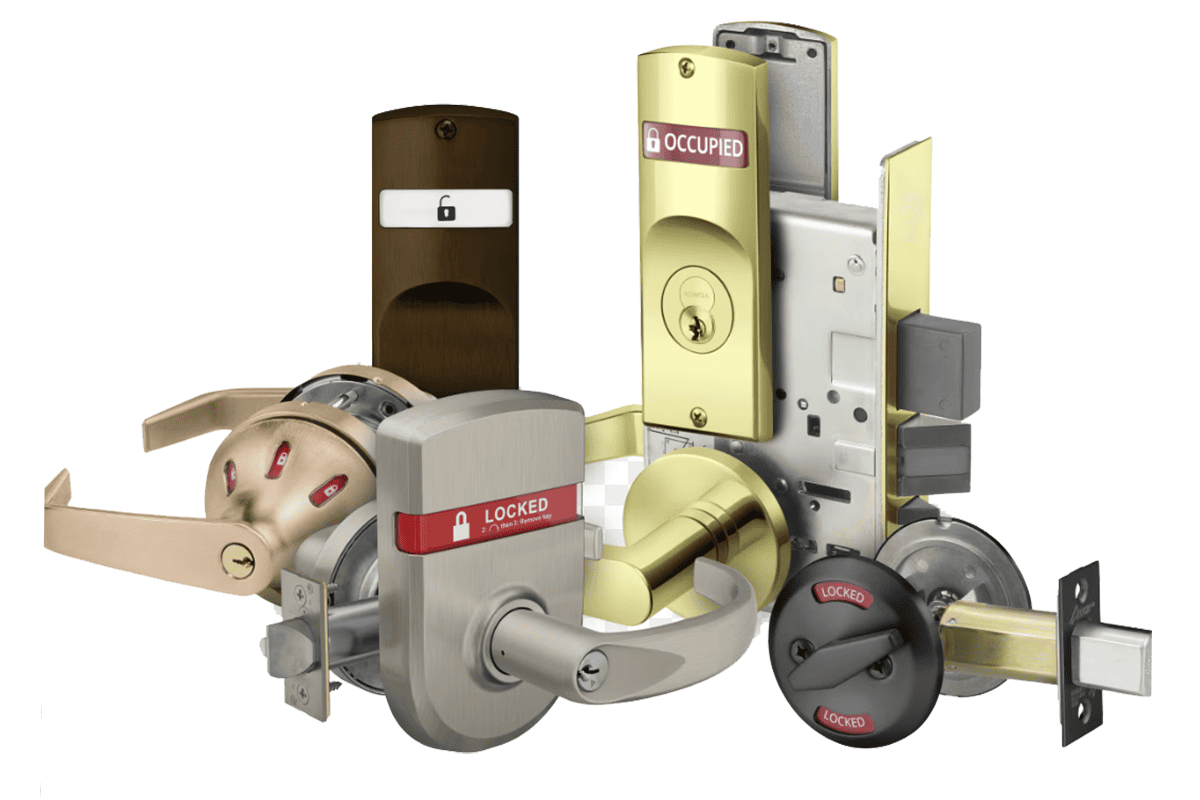
In my factory-side communication with door manufacturers, I often see the same issue: the buyer asks for a “thumbturn lock,” but the door type is not yet clear. That small missing detail changes the whole hardware set. So, before looking at finish, price, or packaging, I always bring the discussion back to function.
What Does a Thumbturn Lock Mean in B2B Door Hardware?
A thumbturn lock sounds simple, but the term can be too broad during procurement. If both sides assume different products, the sample may not fit the mortise case, the outside function may be wrong, or the project may receive a privacy solution where a stronger access solution was required.
A thumbturn lock usually refers to an inside thumbturn operation, not one fixed product category. It can be part of a bathroom cylinder, a key-thumbturn cylinder, a privacy function, or a low-security interior door lockset. Buyers should specify the complete set, including lock body, cylinder type, outside access, handle, and door details.
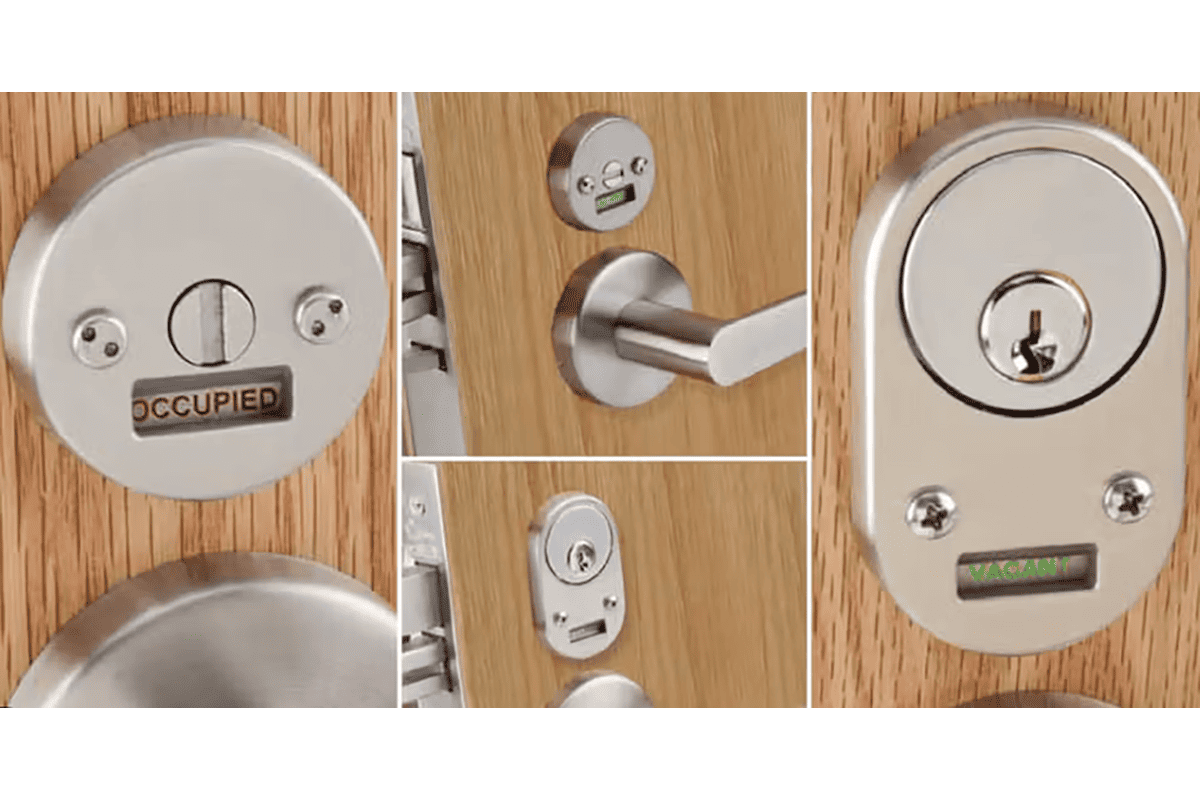
A thumbturn is an operation, not the whole system
In architectural hardware discussions, I prefer to treat the word thumbturn as a user-side operation. It tells us how the person inside the room locks or unlocks the door by hand. It does not automatically tell us:
- Which mortise lock body is used
- Whether the outside has a key, emergency slot, indicator, or blank rose
- Whether the door is for a public restroom, residential bathroom, office room, or interior bedroom
- Whether the cylinder is a bathroom cylinder, key-thumbturn cylinder, or key-knob cylinder2
- Whether the door needs project-specific fire-rated, escape, accessibility, or local code verification
This distinction matters because door hardware is a system. A lever handle, mortise lock, cylinder, escutcheon, indicator, spindle, strike plate, and fixing set must work together.
In one order discussion, a customer asked me for a “thumbturn bathroom lock.” After checking the door type, we found that half of the doors were public restroom cubicle-style doors, while the other half were apartment bathroom doors. Those two cases did not need the same configuration.
Common ways buyers use the term
The phrase thumbturn lock may refer to several different configurations:
| Buyer phrase | Likely meaning | Typical application | Outside operation |
|---|---|---|---|
| Thumbturn cylinder | Cylinder with thumbturn on inner side | Apartment entrance or controlled interior door | Usually key outside |
| Bathroom cylinder | Cylinder with thumbturn inside and emergency slot outside | Residential bathroom | Tool-operated emergency slot outside |
| Bathroom lock with indicator | Mortise bathroom lock plus occupancy indicator | Public restroom | Indicator and emergency release depending on model |
| Key-knob cylinder | Lower-security cylinder with knob operation | Interior low-security door | Key or simple outside operation, depending on type |
The main point is simple: the buyer should not approve a thumbturn lock only by looking at the thumbturn shape. The door function should lead the product selection.
What I ask before quoting
When a door factory sends an inquiry, I usually ask these questions first:
Where is the door installed?
Public restroom, residential bathroom, bedroom, office, storeroom, or entrance?Who uses the door?
Public users, hotel guests, apartment residents, staff, or controlled internal users?What is the required privacy level?
Visual privacy only, temporary privacy, controlled access, or security access?What should happen outside?
Key access, emergency slot, indicator display, coin release, or no access?Which mortise lock body is required?
Bathroom lock, sash lock, deadlock, latch lock, or project-specific case?What is the door thickness and handing?
These details affect cylinder length, spindle length, fixing screws, and rose position.
This is why I do not define a thumbturn lock as one complete standardized product. In real manufacturing orders, it is a configuration decision.
Where Does a Thumbturn Lock Fit on Bathroom Doors?
A thumbturn lock is often requested for bathroom doors, but bathroom doors are not all the same. Public restroom doors, hotel bathrooms, and residential bathrooms have different user risks. If the wrong configuration is selected, the door may lack an occupancy display or emergency access method.
For bathroom doors, the correct thumbturn-related configuration depends on the scenario. Public restrooms commonly use a mortise bathroom lock with an indicator3 because occupancy display matters. Residential bathrooms commonly use a mortise sash lock with a bathroom cylinder, with a thumbturn inside and an emergency release slot outside4.
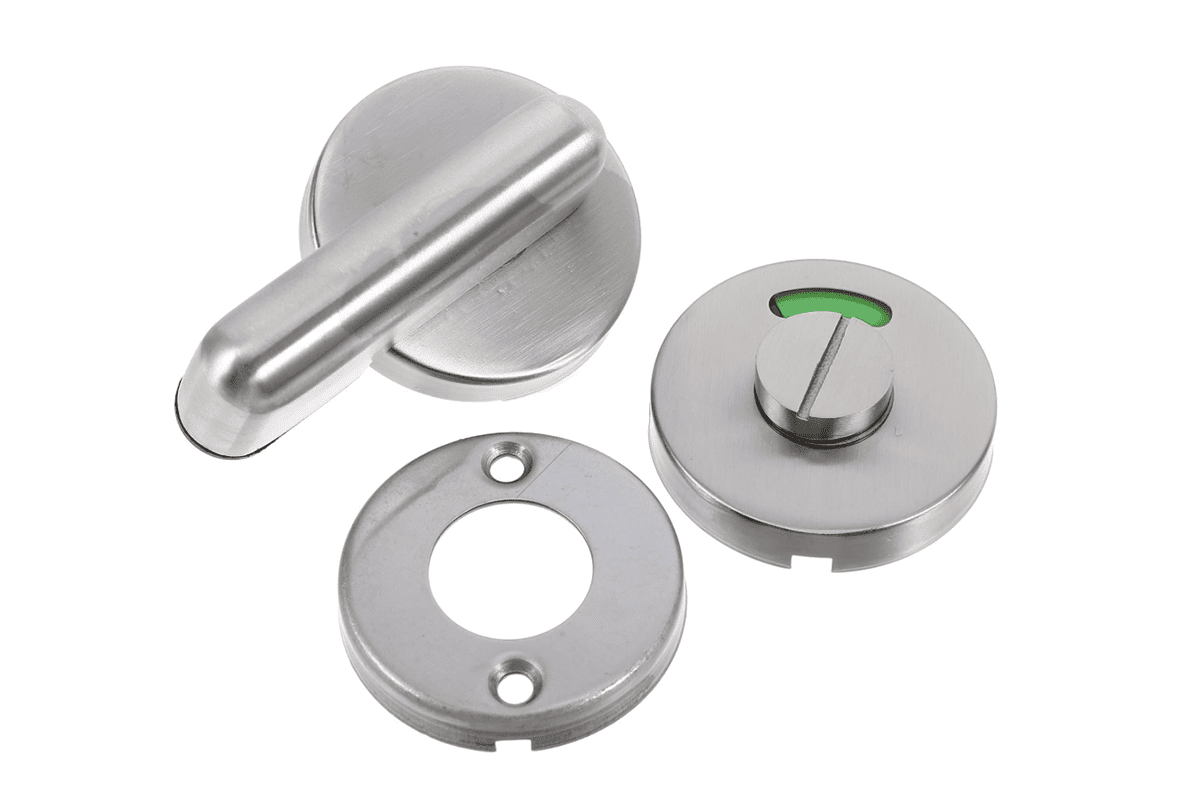
Public restroom: mortise bathroom lock + indicator
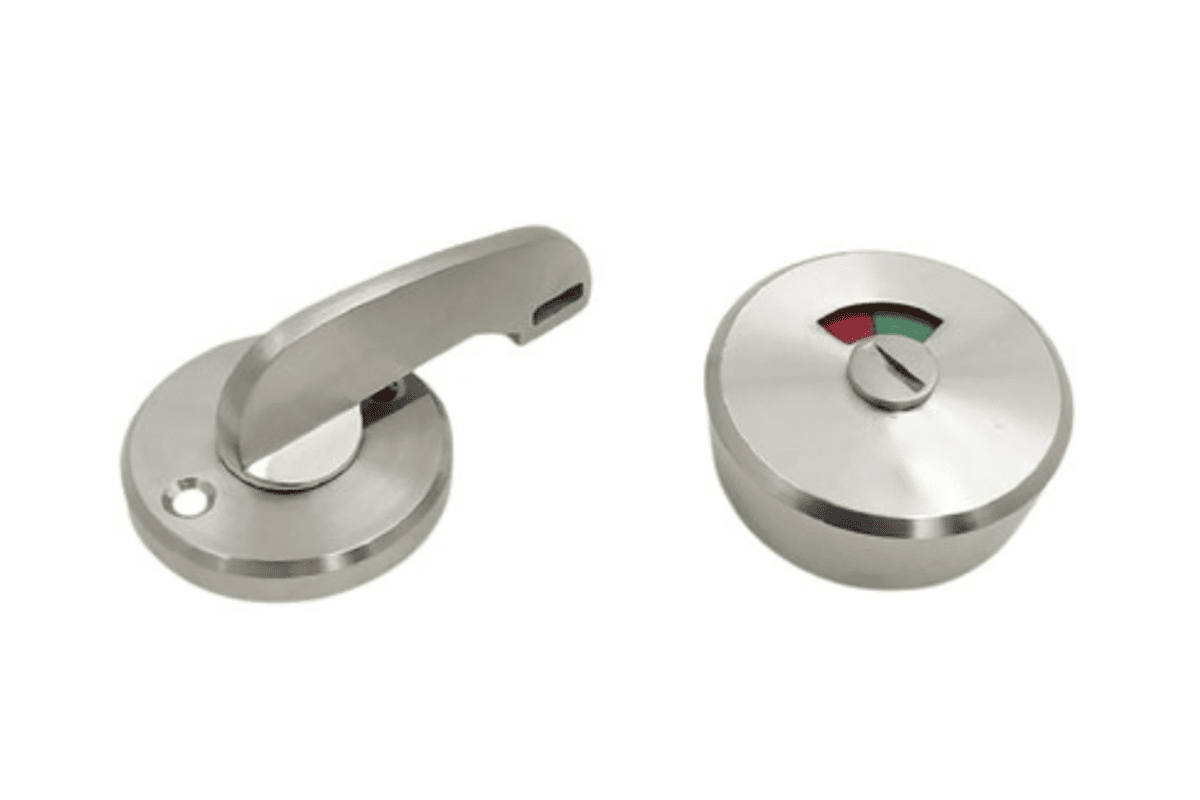
For public restroom applications, I usually see door factories choose a mortise bathroom lock + indicator combination. The reason is not only locking. The outside user must see whether the room is occupied.
A typical public restroom hardware set may include:
- Mortise bathroom lock body
- Lever handle set
- Bathroom indicator set
- Emergency release function, depending on model and project requirement
- Strike plate and fixing accessories
- Suitable spindle and screws for door thickness
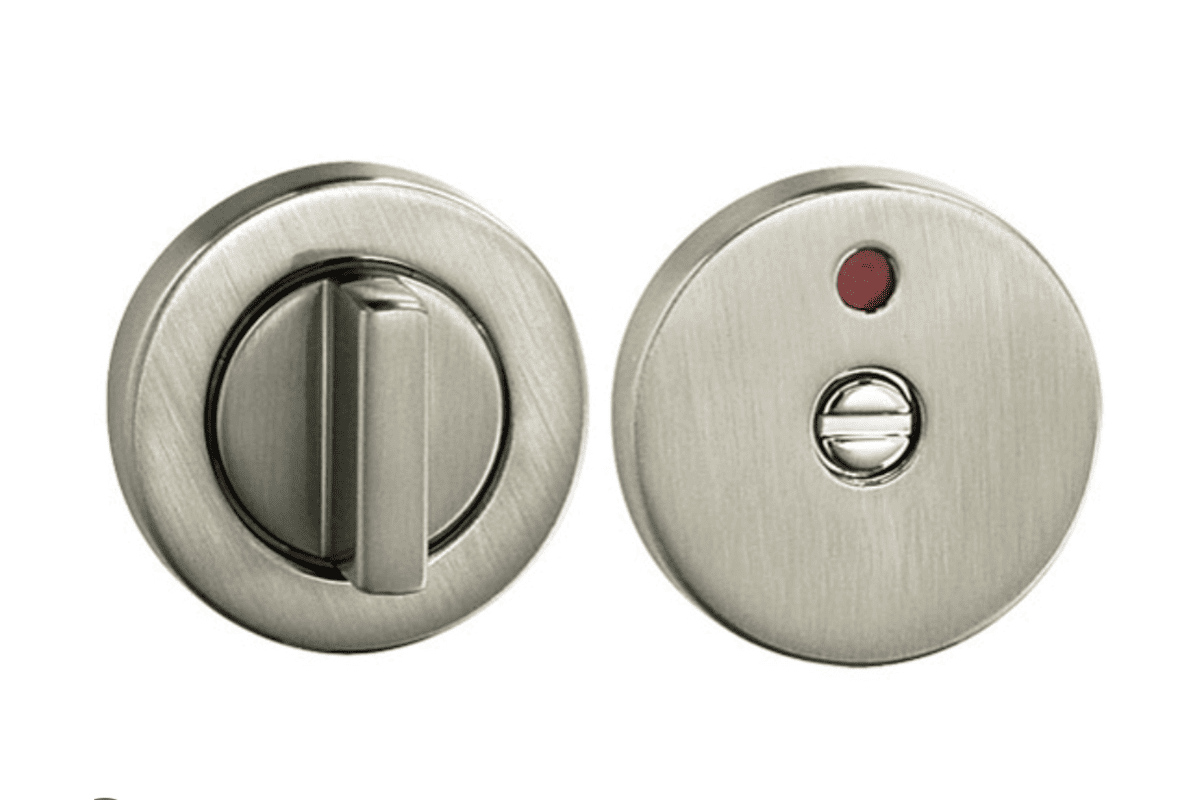
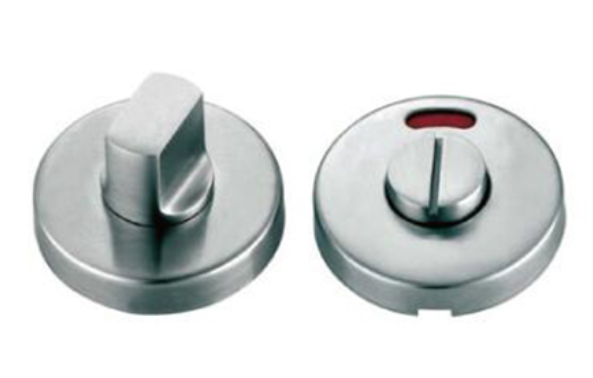
The indicator is a key part of the user experience. In public spaces, people should not need to test the handle to know whether the room is occupied. The indicator gives clear visual information, usually showing vacant or engaged5.
However, I always tell buyers to verify market-specific requirements. Public bathroom doors may involve accessibility rules, emergency opening requirements, anti-panic considerations, fire compartment requirements, or local building codes. A factory can provide a compatible hardware configuration and documentation, but the project team should confirm compliance with the local authority, consultant, or qualified professional.
Residential bathroom: mortise sash lock + bathroom cylinder
For residential bathrooms, the common solution is different. A mortise sash lock + bathroom cylinder combination is often more suitable. In this setup, the bathroom cylinder has:
- Inside: a thumbturn knob for daily locking and unlocking
- Outside: a horizontal slot for emergency release with a suitable tool
This layout gives privacy for the occupant while still allowing emergency access from outside. For example, if a child locks the door and cannot open it, an adult can use a tool to operate the outside slot.
This is not the same as a public restroom indicator set. The residential bathroom may not need a visible occupied/vacant indicator on the outside. The main requirement is usually private use and emergency opening.
Public vs residential bathroom comparison
| Door scenario | Recommended configuration | Main reason | Outside function |
|---|---|---|---|
| Public restroom | Mortise bathroom lock + indicator | Occupancy display is important | Indicator and emergency release according to model |
| Residential bathroom | Mortise sash lock + bathroom cylinder | Privacy plus emergency access | Horizontal emergency slot6 |
| Hotel guest bathroom | Often project-specific | Depends on design, safety policy, and market requirement | Usually emergency access required |
| Apartment bathroom | Mortise sash lock + bathroom cylinder | Simple daily privacy | Emergency slot outside |
Why the distinction matters
If a buyer simply writes “thumbturn lock for bathroom,” the factory cannot safely assume the right configuration. I have seen order drawings where the door schedule said “bathroom lock,” but the elevation drawing showed an indicator. In that case, we had to clarify whether the customer needed a mortise bathroom lock or a sash lock with a bathroom cylinder.
The difference affects:
- Lock case machining
- Cylinder hole position
- Indicator rose hole
- Handle rose or plate design
- Packing list
- Installation drawing
- Project cost
A thumbturn lock decision should therefore start with the user scenario. Public restroom doors and residential bathroom doors should not be treated as the same product request.
How Should a Thumbturn Lock Match the Mortise Lock, Cylinder, and Handle?
A thumbturn lock can only work properly when it matches the full door hardware system. If the thumbturn, cylinder, mortise lock, handle, and door preparation are not aligned, installation becomes difficult and performance becomes inconsistent. This is especially important for OEM and ODM orders.
A thumbturn lock must be matched with the mortise lock body, cylinder type, lever handle, door thickness, opening direction, spindle size, strike plate, and any indicator or emergency release requirement. Door factories should confirm these details before ordering samples, because one incompatible part can affect the whole door set.
The lock body comes first
The mortise lock body is the core of the door set. It determines the function and internal mechanism. A thumbturn-related cylinder cannot solve a mismatch in the lock case.
Common mortise lock bodies include:
- Mortise sash lock: latch and deadbolt, often used with lever handles and cylinders
- Mortise bathroom lock: designed for privacy use and often matched with indicators
- Mortise deadlock: deadbolt only, used where a latch is not needed
- Mortise latch lock: latch function only, usually for passage doors
If a customer wants a bathroom cylinder, I first check whether the mortise sash lock supports the required cylinder operation. If a customer wants an indicator, I check whether the bathroom lock body is suitable for that indicator set.
Cylinder type changes the outside function
The cylinder is not just a hole filler. It defines how the door is operated from inside and outside.
| Cylinder type | Inside operation | Outside operation | Typical use |
|---|---|---|---|
| Bathroom cylinder | Thumbturn | Horizontal emergency slot | Residential bathroom |
| Key-thumbturn cylinder7 | Thumbturn | Key | Apartment entrance or controlled room |
| Double key cylinder | Key | Key | Higher control, depending on project |
| Key-knob cylinder | Knob or simple inside operation | Key or configured outside function | Low-security interior door |
| Privacy cylinder or turn set | Thumbturn-style operation | Emergency release or blank | Interior privacy use |
For lower-security doors, such as certain interior rooms, a key-knob cylinder may be acceptable. However, I do not treat it as the same decision as an entrance door or high-security lockset. A low-security interior door has different risk expectations.
Door thickness and cylinder length must match
Door thickness is a basic detail, but it affects many parts. Common interior and architectural doors may be around 35 mm to 55 mm8, but project doors can vary. Cylinder length must suit the door thickness and escutcheon or rose thickness.
If the cylinder is too short:
- The fixing screw may not align correctly
- The cylinder may sit too deep
- Operation may feel poor
- Installation may require unplanned modification
If the cylinder is too long:
- It may project too far from the door face
- It may look unprofessional
- It may create exposure or damage risk
- It may fail the buyer’s visual approval
In our factory communication, I usually ask for door thickness, handle rose thickness, and required cylinder projection before confirming a cylinder model.
Handing and opening direction still matter
Some lock cases are reversible, while others are handed9. Handles, latch bolts, strike plates, and indicator designs may also need direction confirmation.
Door factories should confirm:
- Left-hand or right-hand opening
- Inward or outward opening
- Door thickness
- Backset
- Center distance
- Forend size
- Strike plate type
- Cylinder profile
For Euro-style architectural hardware, common specifications often include a Euro profile cylinder10, standard backsets such as 45 mm, 50 mm, 55 mm, or 60 mm, and center distances such as 72 mm or 85 mm, depending on the market. These details should always be checked against the actual door design and local market standard.
Surface finish is not the first question
Many buyers begin with finish options such as satin stainless steel, polished chrome, matte black, PVD, or antique brass. Finish is important for brand positioning and project design. However, finish should come after function.
A better sequence is:
- Confirm door location
- Confirm user type
- Confirm privacy or security level
- Confirm outside access function
- Confirm mortise lock body
- Confirm cylinder and thumbturn type
- Confirm handle and rose or plate
- Confirm door thickness and machining
- Confirm finish, logo, packaging, and inspection requirements
This sequence reduces sample revisions and production mistakes. It also gives the hardware supplier enough information to recommend a stable configuration.
When Is a Thumbturn Lock Not Enough for Security?
A thumbturn lock may be convenient, but convenience should not be confused with high security. The thumbturn side is mainly about inside operation. It does not automatically define cylinder grade, key control, anti-drill performance, fire suitability, emergency escape behavior, or compliance with local standards.
A thumbturn lock is not enough when the door requires higher security, controlled access, certified performance, or project-specific code compliance. For low-security interior doors, a key-knob cylinder may be suitable. For entrance doors or high-risk areas, buyers should evaluate cylinder grade, lock case strength, key system, and verified certifications.
Privacy and security are different decisions
A bathroom or bedroom door usually needs privacy. An entrance door or controlled office may need security. These two words are not interchangeable.
Privacy usually means:
- The user can prevent casual entry
- The door gives temporary personal space
- Emergency access may still be required
- The threat level is low
Security usually means:
- The door resists unauthorized entry
- Key control matters
- Cylinder performance matters
- Lock case strength matters
- Certification and testing may matter
A thumbturn lock can be part of either type of solution, but it does not decide the performance level by itself.
Where key-knob cylinders may fit
For lower-security applications, such as certain interior doors, a key-knob cylinder can be acceptable. It may suit rooms where simple access separation is needed but high attack resistance is not the main requirement.
Typical examples may include:
- Staff interior rooms
- Light-duty office rooms
- Storage rooms with low-value contents
- Internal doors in controlled buildings
- Residential interior rooms where convenience is preferred
Still, the buyer should not use this logic for every door. A main entrance, apartment entry door, high-value storage room, or public-facing access point may need a more robust lock and cylinder selection.
What buyers should verify for higher-risk doors
When the door has real security or compliance requirements, the buyer should evaluate more than the thumbturn. I suggest checking:
| Evaluation point | Why it matters |
|---|---|
| Cylinder standard | It may indicate tested performance under a known standard |
| Key control | It affects duplication risk and access management |
| Lock case strength | It affects mechanical resistance and durability |
| Door material | A strong lock cannot compensate for a weak door leaf |
| Strike reinforcement | The frame side is critical during forced entry |
| Fire-rated documents | They must match the door assembly and market requirement |
| Emergency egress rules | They are project- and jurisdiction-specific |
| Accessibility rules | Hardware operation may need professional verification |
SDH Hardware can provide product documentation such as CE-related documents and fire-rated certification documents for applicable product lines. However, I always recommend that buyers verify certificates against the exact product model, project requirement, and local regulation. A certificate is not a universal approval for every door assembly.11
Thumbturns and emergency escape
Many customers ask whether a thumbturn is good for emergency escape because the inside user can operate it without a key12. That can be an advantage in some configurations. However, emergency escape is a regulated topic in many markets.
A thumbturn may support easier inside operation, but the final decision may depend on:
- Door location
- Occupancy type
- Local fire code
- Escape route design
- Lock case function
- Hardware standard
- Accessibility requirement
- Project consultant approval
So, I do not make universal safety claims. I treat the thumbturn as one design element. The complete door set must be evaluated by qualified professionals when fire, life safety, or code compliance is involved.
How Should Door Factories Specify a Thumbturn Lock Before Ordering?
A thumbturn lock inquiry should not begin with only price, finish, or a catalog photo. If the specification is incomplete, the factory may quote the wrong cylinder, supply the wrong lock body, or miss an indicator requirement. That creates delays during sampling and mass production.
Door factories should specify a thumbturn lock by confirming the door location, user type, privacy or security level, outside access method, mortise lock body, cylinder type, handle design, door thickness, opening direction, finish, packaging, and required inspection documents. This approach turns a vague request into a manufacturable hardware configuration.
A practical specification checklist
When I prepare or review a thumbturn-related order, I like to build the specification in layers. This avoids confusion between public bathroom, residential bathroom, and ordinary interior door solutions.
Here is a useful checklist:
Door location
- Public restroom
- Residential bathroom
- Hotel bathroom
- Bedroom
- Office
- Interior utility room
- Entrance or controlled access door
Required function
- Privacy only
- Privacy with emergency access
- Occupancy indication
- Key access from outside
- Low-security internal control
- Higher-security access control
Recommended configuration
- Public restroom: mortise bathroom lock + indicator
- Residential bathroom: mortise sash lock + bathroom cylinder
- Low-security interior door: possible key-knob cylinder
- Higher-security door: project-specific lock and cylinder evaluation
Outside operation
- Key
- Horizontal emergency slot
- Indicator
- Blank rose
- Coin release
- Other project-specific function
Door and hardware dimensions
- Door thickness
- Backset
- Center distance
- Forend size
- Strike plate type
- Handle rose or plate size
- Cylinder length
Commercial requirements
- Surface finish
- Logo stamping or laser logo
- Packaging design
- Drawing confirmation
- Inspection standard
- Certificate documents for verification
Example order configurations
The table below shows how I would separate common B2B requests before preparing a quotation.
| Door type | Better product description | Avoid saying only | Key confirmation |
|---|---|---|---|
| Public restroom | Mortise bathroom lock with indicator set | Thumbturn lock | Indicator type and emergency release |
| Residential bathroom | Mortise sash lock with bathroom cylinder | Bathroom thumbturn | Outside horizontal slot and cylinder length |
| Interior office door | Sash lock with key-knob cylinder, if low security | Thumbturn lock | Security level and outside key need |
| Apartment entrance | Sash lock with suitable key-thumbturn cylinder | Thumbturn cylinder only | Cylinder grade and key system |
| Hotel bathroom | Project-specific bathroom lockset | Universal bathroom lock | Hotel standard and emergency access |
Why this helps OEM and ODM production
For OEM and ODM hardware orders, unclear language can affect mold selection, machining drawings, production routing, and packing. A door manufacturer may need one-stop supply, but the supplier still needs accurate functional information.
Conclusion
A thumbturn lock is best understood as an inside-operation configuration, not a universal standalone product. Public restrooms, residential bathrooms, and low-security interior doors often need different combinations. The right choice depends on the mortise lock, cylinder, handle, indicator, emergency access method, door thickness, and project requirements. If you are preparing a door hardware schedule, I recommend confirming the function first. SDH Hardware can help door factories and hardware brands configure factory-direct mortise locks, cylinders, handles, and matching accessories for OEM and ODM projects.
"Pin tumbler lock", https://en.wikipedia.org/wiki/Pin_tumbler_lock. An encyclopedia entry on cylinder locks describes thumbturn cylinders as a variant where the interior side is operated by a turn rather than a key, indicating that 'thumbturn' refers to an operating feature rather than a complete lockset. Evidence role: definition; source type: encyclopedia. Supports: That in architectural hardware, a thumbturn commonly denotes an inside-operated turn on a cylinder or privacy set, not a universal standalone lock.. Scope note: Terminology and product grouping can vary by market and manufacturer; the source defines the component-level concept but does not cover every regional sales convention. ↩
"Lock and key", https://en.wikipedia.org/wiki/Lock_and_key. A general reference on residential door hardware notes that key-in-knob locks offer lower resistance to forced entry than robust deadbolts, aligning with their use in lower-security applications. Evidence role: general_support; source type: encyclopedia. Supports: That key-in-knob locksets are considered less secure than dedicated deadbolts and are typically used where high attack resistance is not required.. Scope note: Security performance varies by grade and construction; the comparison is general and does not evaluate specific models. ↩
"Public toilet", https://en.wikipedia.org/wiki/Public_toilet. A general reference on toilet occupancy indicators notes their common use on public restroom doors to display 'vacant/engaged' status to people outside the cubicle. Evidence role: general_support; source type: encyclopedia. Supports: That public toilet doors often use occupied/vacant indicators to show availability to users outside the room.. Scope note: The source does not prescribe lock case type or mortise specifics, and practices can vary by region and building type. ↩
"Lockset", https://en.wikipedia.org/wiki/Lockset. A general reference on privacy locksets explains that such locks are intended for bathrooms or bedrooms and can be opened from the exterior with a generic tool for emergency access. Evidence role: general_support; source type: encyclopedia. Supports: That privacy locks for bathrooms/bedrooms are commonly designed to be opened from outside using a simple tool in an emergency.. Scope note: Design details (e.g., slot shape) and prevalence vary by region and manufacturer; the source supports the concept rather than a specific cylinder style. ↩
"Ghost sign", https://en.wikipedia.org/wiki/Ghost_sign. A general reference on occupancy indicators for toilets explains that such devices typically show 'vacant' or 'engaged' to communicate availability. Evidence role: definition; source type: encyclopedia. Supports: That occupancy indicators for toilet doors commonly display states like 'vacant' and 'engaged' to users outside.. Scope note: Exact wording and color conventions vary; some designs use icons or color only rather than text. ↩
"Door handle", https://en.wikipedia.org/wiki/Door_handle. An encyclopedia entry describing bathroom/privacy turn-and-release hardware notes an exterior emergency release feature allowing tool-operated unlocking from outside. Evidence role: definition; source type: encyclopedia. Supports: That bathroom/privacy turn-and-release sets provide a simple outside interface for emergency opening without a key.. Scope note: The exact geometry (horizontal slot vs. coin turn, hole, etc.) varies across products and markets; the source supports the emergency-release concept rather than a single slot format. ↩
"Pin tumbler lock", https://en.wikipedia.org/wiki/Pin_tumbler_lock. A general reference on Euro profile cylinders identifies a variant with a thumbturn on one side and a key-operated cam on the other, reflecting the described inside/outside operations. Evidence role: definition; source type: encyclopedia. Supports: That a common cylinder variant has a thumbturn on the interior side and a keyed interface on the exterior side.. Scope note: Typical applications (e.g., apartments) vary by jurisdiction and security requirements; the source supports the mechanism, not a universal application. ↩
"Door", https://en.wikipedia.org/wiki/Door. A general reference on doors lists typical interior door thicknesses near 35 mm and common exterior thicknesses around 44–45 mm, aligning with the stated 35–55 mm range across markets. Evidence role: statistic; source type: encyclopedia. Supports: That widely referenced standards note common interior door thicknesses around 35–45 mm and exterior doors around 44–45 mm, consistent with the stated range.. Scope note: Door thickness varies by region, building type, and specification; the cited figures illustrate common values rather than an exhaustive range. ↩
"Handedness", https://en.wikipedia.org/wiki/Handedness. An encyclopedia entry on door handing defines left- and right-hand configurations and explains their relevance to selecting compatible hardware. Evidence role: definition; source type: encyclopedia. Supports: That door handing (left-hand/right-hand, in-swing/out-swing) is a standard specification parameter affecting hardware selection.. Scope note: Handing conventions differ by region (e.g., North American vs. European notation), so project documentation must use the locally accepted standard. ↩
"Pin tumbler lock", https://en.wikipedia.org/wiki/Pin_tumbler_lock. An encyclopedia entry on Euro profile cylinders describes the standardized profile and its widespread use in European door hardware systems. Evidence role: general_support; source type: encyclopedia. Supports: That the Euro profile cylinder is a standardized and widely used cylinder format in European architectural hardware.. Scope note: Adoption can vary by country and building sector; the source outlines general prevalence rather than market share data. ↩
"Fire Doors and NFPA 80 FAQs", https://www.nfpa.org/news-blogs-and-articles/blogs/2025/04/11/fire-doors-faqs. A fire door standard explains that door assemblies must conform to their specific listings and labeled components, indicating that certificates are assembly-specific rather than universally transferrable. Evidence role: general_support; source type: institution. Supports: That fire door assemblies are required to be installed and maintained in accordance with their listing, including compatible, labeled components as part of the tested assembly.. Scope note: Listing requirements and documentation formats differ among standards bodies and jurisdictions; the principle is broadly recognized but must be verified for the specific product and code path. ↩
"California Code of Regulations, Title 8, Section 3235. Doors.", https://www.dir.ca.gov/title8/3235.html. A recognized life-safety code states that egress doors shall be readily openable from the egress side without the use of a key or special knowledge, consistent with the operational benefit of interior thumbturns. Evidence role: expert_consensus; source type: institution. Supports: That major life-safety codes specify egress doors must be readily openable from the egress side without keys, tools, or special knowledge.. Scope note: Exact code text and applicability depend on jurisdiction and occupancy type; compliance must be verified against the adopted local code edition. ↩