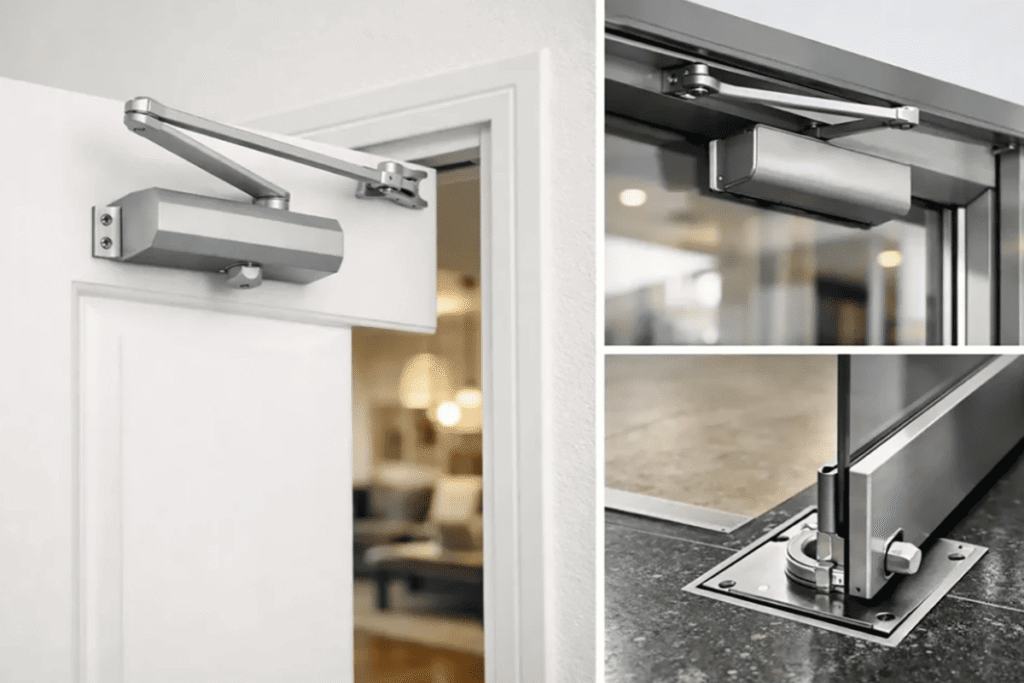
Hold-Open vs Non-Hold-Open Door Closers: Which Is Right for Your Business?
Hold-open vs non-hold-open door closers create a simple choice on paper, but they can cause expensive rework when the opening is fire-rated, smoke-rated, or used in a high-traffic commercial area. I have seen projects pass smoothly when the function was chosen early. The solution is to make the decision compliance-first, then confirm daily operation needs.
Hold-open door closers keep a door open at a set angle, while non-hold-open door closers always return the door to the closed position. For fire or smoke doors, mechanical hold-open must not be used.1 If a rated door must stay open, specify an EN 1155 electromagnetic hold-open system linked to the fire alarm2.
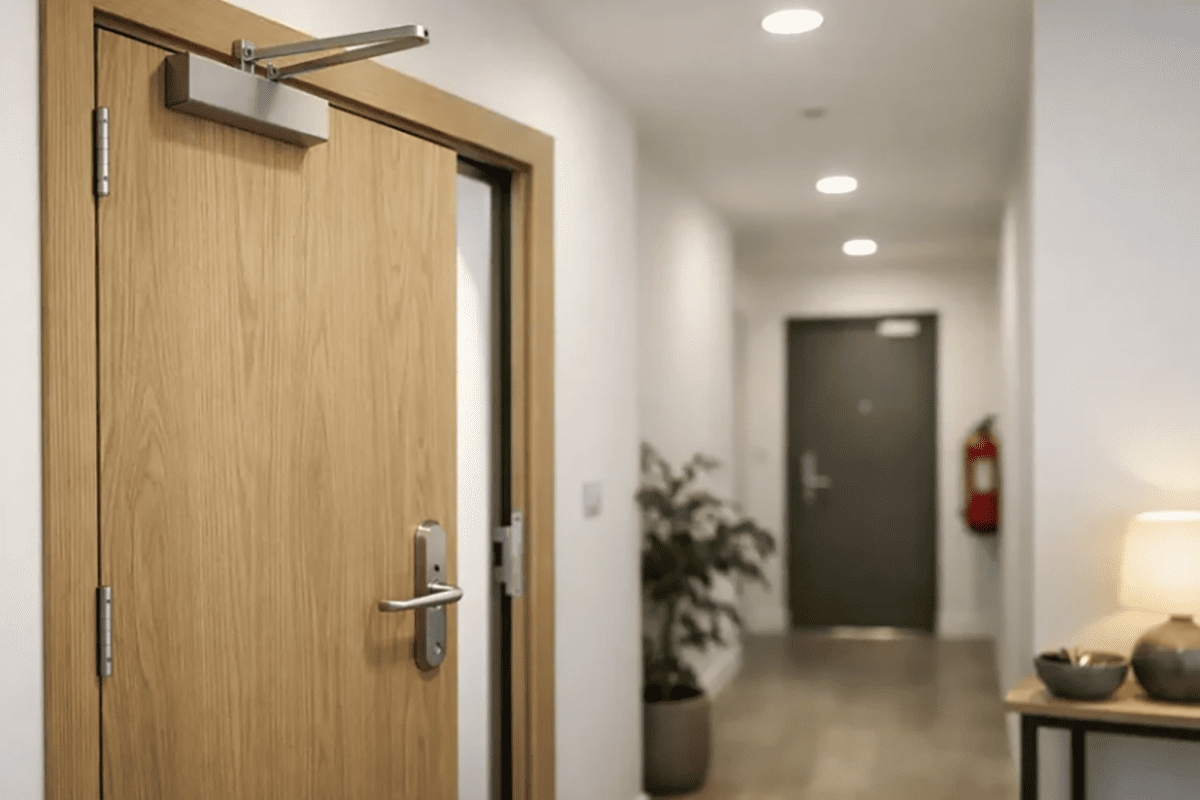
I usually begin this discussion with one question: What should the door do during normal operation and during a fire alarm? Once that answer is clear, the closer type, certification documents, wiring needs, and supplier responsibilities become much easier to define.
How Should You Decide Between Hold-Open vs Non-Hold-Open Door Closers?
Choosing hold-open vs non-hold-open door closers becomes difficult when buyers focus only on user convenience. A door that stays open may improve traffic flow, but it can also create a compliance problem if the opening is rated. I always separate life-safety requirements from daily convenience first.
The best decision rule is this: fire and smoke doors require controlled closing and cannot use mechanical hold-open. Non-fire doors should default to non-hold-open unless daily operation truly requires the door to remain open. If a rated door must normally stay open, use an electromagnetic hold-open device connected to the alarm system.
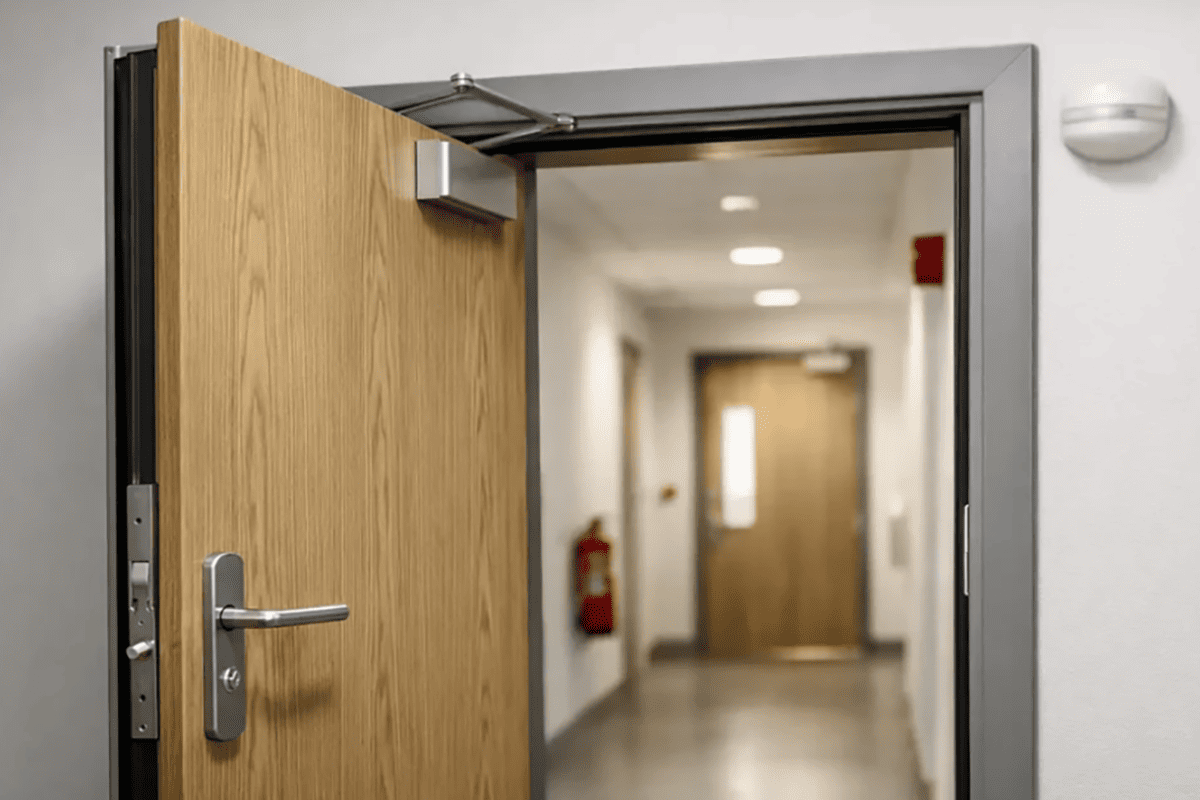
Start With the Door Category
In my pre-sales work, I always ask customers to classify each opening before discussing the product model. This avoids many wrong quotations. A door closer is not only a hardware item. It is part of an opening system.
I usually group openings like this:
Fire-rated or smoke-rated doors
- Stairwell doors
- Fire compartment doors
- Cross-corridor fire doors
- Hotel corridor doors
- Certain technical room doors
Non-fire internal commercial doors
- Office room doors
- Meeting room doors
- Storage room doors
- Staff-only circulation doors
High-traffic non-fire openings
- Retail entrances
- Mall internal entrances
- Showroom access doors
- Loading or service doors, depending on rating and use
For fire or smoke doors, I treat the decision as non-negotiable. A mechanical hold-open closer should not be selected. The door must be able to close reliably when required. If the business wants the door normally open during working hours, the proper route is an electromagnetic hold-open system that releases on alarm.
For non-fire doors, the question becomes operational. Does the door need to stay open for people, trolleys, goods, or visibility? If not, I recommend non-hold-open as the default.
Simple Scenario Table
| Opening Scenario | Recommended Function | Reason |
|---|---|---|
| Apartment block entrance | Non-hold-open | Security, weather control, and controlled closing |
| Tenant or unit entrance | Non-hold-open | Privacy and access control |
| Fire-rated corridor door | Non-hold-open or electromagnetic hold-open | Mechanical hold-open is not acceptable |
| Cross-corridor fire door normally open | EN 1155 electromagnetic hold-open | Door must release and close on alarm |
| Retail storefront during business hours | Hold-open, if non-rated | Improves customer flow |
| Mall entrance, non-rated | Hold-open, if required | Supports traffic and visibility |
| Hotel fire door | Certified closer system only | Must match fire/smoke documentation |
My Practical Rule
If the door should protect, separate, secure, or control smoke and fire, I choose a closing function first.
If the door mainly supports traffic flow and is not rated, I consider hold-open.
This rule has helped me reduce disputes during submittal review. It also helps door factories and hardware wholesalers build cleaner bills of materials. Instead of offering every closer function for every door, they can create a controlled selection matrix.
For example, at SDH Hardware, when we support B2B customers with door hardware packages, I prefer to mark non-hold-open as the standard option and then list hold-open only where the project use supports it. For fire-door packages, I separate electromagnetic hold-open kits from ordinary closer SKUs because they involve more than the closer body. They involve power, alarm release, documents, installation, and acceptance.
When Are Hold-Open vs Non-Hold-Open Door Closers Compliant for Fire Doors?
Fire-door hardware mistakes are stressful because they often appear late, during inspection or handover. A buyer may think a hold-open function is a small convenience feature. However, on a fire or smoke door, the wrong hold-open method can cause failed acceptance, site changes, and shipment disputes.
For fire and smoke doors, mechanical hold-open is not acceptable. The compliant approach is a certified door closer system that allows the door to close. If the door must normally remain open, buyers should specify an EN 1155 electromagnetic hold-open device connected to the fire alarm, with all documents verified by the local AHJ.
EN 1154 and EN 1155 Are Different
I often see confusion between closer certification and hold-open certification. The two are related, but they are not the same.
- EN 1154 applies to controlled door closing devices.
- EN 1155 applies to electrically powered hold-open devices for swing doors.
- CE documentation may be required depending on the market and product category.
- Fire-test references should match the door assembly and project requirements.
A door closer tested under EN 1154 does not automatically make a mechanical hold-open function suitable for a fire door. This is an important point for procurement teams. The closer, hold-open device, door leaf, frame, hinges, lock, seals, and installation method all affect the final opening performance.
Mechanical Hold-Open vs Electromagnetic Hold-Open
| Feature | Mechanical Hold-Open | Electromagnetic Hold-Open |
|---|---|---|
| Holds door open by | Mechanical friction or catch mechanism | Powered magnetic or electromechanical device |
| Suitable for fire/smoke doors | No | Possible when certified and alarm-linked |
| Releases on fire alarm | No, not inherently | Yes, when connected correctly |
| Requires wiring | Usually no | Yes |
| Requires alarm interface | No | Yes |
| Typical use | Non-rated convenience openings | Rated doors that must stay open normally |
| Buyer verification | Function and durability | EN 1155, alarm release, fire documents, AHJ acceptance |
Why Fire Doors Need a Different Mindset
A fire door has a job during an emergency. It must help compartmentalize fire and smoke.3 If a door is held open mechanically and cannot release automatically during a fire alarm, it fails that basic purpose.
In one acceptance discussion I supported, the installer had treated a hold-open arm as a minor change because the door closer body looked similar to the non-hold-open model. The inspector focused on the function, not the appearance. The issue became a rework item. The practical remedy was to remove the mechanical hold-open arrangement and move to a properly documented electromagnetic hold-open solution with alarm release, subject to the project’s approval route.
That experience shaped how I write quotations. I now prefer to include clear notes such as:
- “Mechanical hold-open is not for fire/smoke-rated doors.”
- “For rated doors requiring normally open operation, specify EN 1155 electromagnetic hold-open with alarm release.”
- “Final acceptance must be verified with the local AHJ.”
What Buyers Should Ask Suppliers to Provide
When buyers evaluate hold-open vs non-hold-open door closers for rated openings, they should not stop at price and finish. They should request a document package.
Useful submittal documents include:
- EN 1154 certificate for the closer
- EN 1155 certificate for the electromagnetic hold-open device, where applicable
- CE documentation, when required by the target market
- Fire-test reports or references
- Installation instructions
- Wiring and interface notes
- Door size and closer force grade compatibility
- Statement to verify with the local AHJ
This document-first approach protects the buyer and the supplier. It also keeps the conversation educational rather than emotional when someone requests a risky configuration.
What Installation Checks Matter for Hold-Open vs Non-Hold-Open Door Closers?
Even the correct product can fail if the installation is not planned. I have seen buyers select the right closer but forget wiring, power supply, alarm interface, or closer force grade. These details are not small. They can decide whether the opening passes inspection.
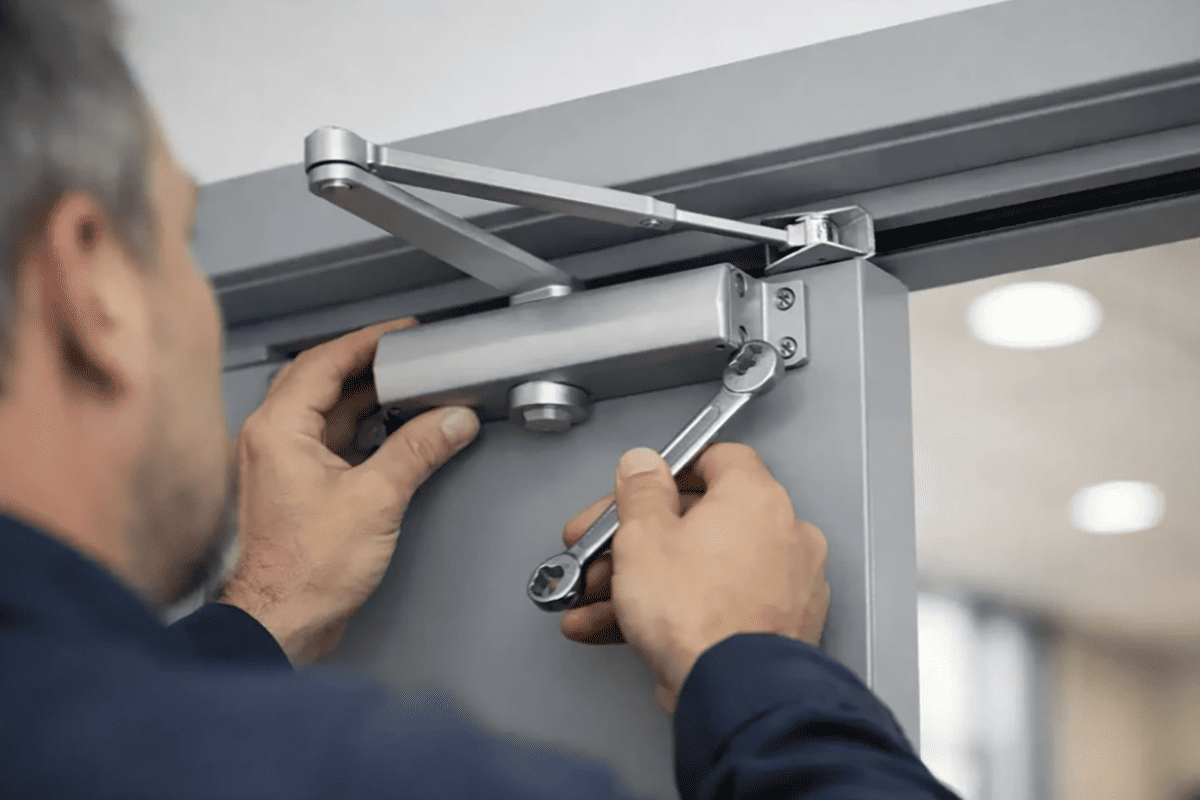
The key installation checks are door size, closer force grade, mounting position, wiring route, power supply, alarm panel interface, release behavior, and AHJ acceptance. For electromagnetic hold-open on rated doors, the door must release reliably on alarm and close fully according to the approved documentation.
Door Size and Force Grade
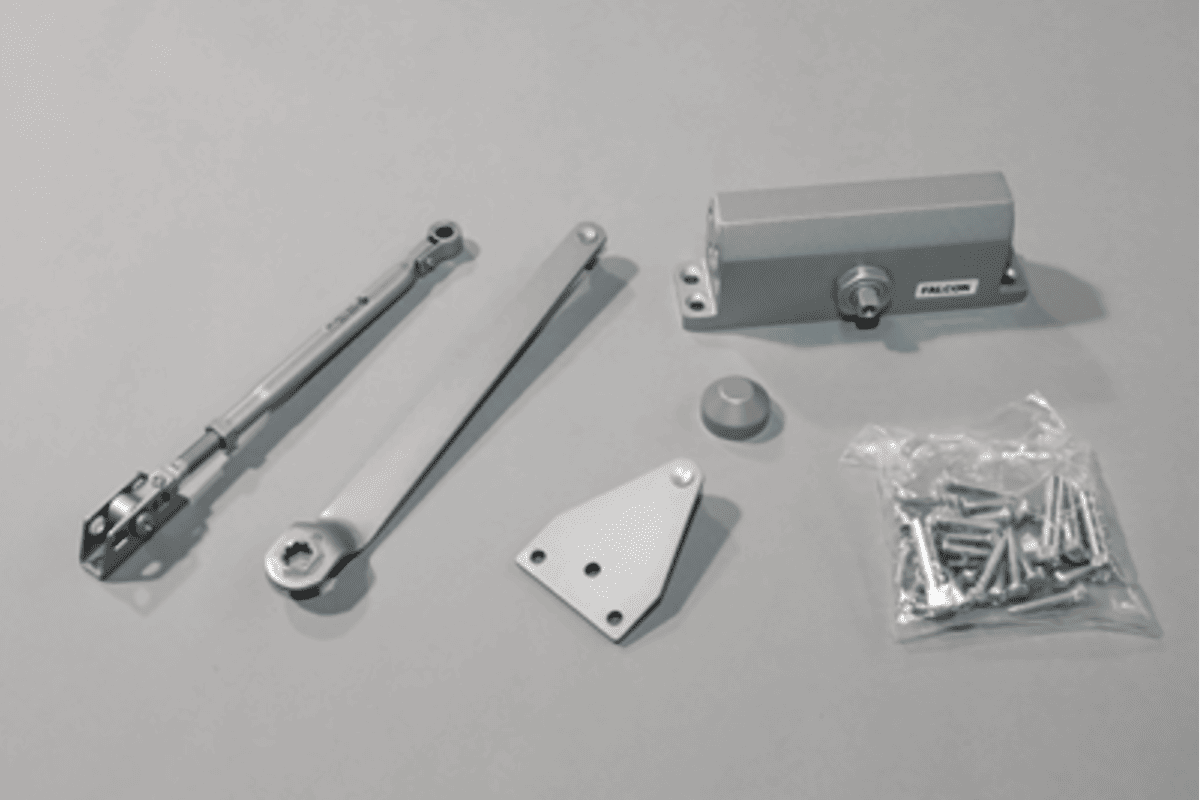
The closer must match the door width, weight, and site conditions. A closer that is too weak may not latch the door. A closer that is too strong may create poor user experience and accessibility issues.4 Wind pressure, air conditioning pressure, seals, and latch resistance can also affect closing.5
For many commercial projects, I ask for:
- Door leaf width
- Door leaf weight
- Door material
- Frame type
- Opening angle
- Indoor or outdoor location
- Fire rating status
- Latch type
- Expected traffic level
These details help the supplier recommend a closer body, arm type, and adjustment range. They also help prevent a common mistake: choosing the closer only by appearance.
Wiring and Power Supply
For non-hold-open closers, wiring is usually not part of the closer selection. For electromagnetic hold-open systems, wiring becomes essential.
The project team should confirm:
- Where the power comes from
- How the cable reaches the hold-open device
- Whether the system fails safe
- How the fire alarm panel releases the door
- Who supplies the power interface
- Who tests the release during commissioning
If these items are missing from the quotation, the buyer may face extra site costs later. I prefer to include wiring and interface notes in the submittal even if SDH Hardware is only supplying the hardware package. Clear notes help the door factory, installer, and project consultant align early.
Mounting Position and Opening Angle
Hold-open performance depends on the selected opening angle. A retail entrance may need the door to stay open at a wider angle. A corridor door may have wall limits or safety restrictions. The closer arm and template must match the actual door swing.
Key mounting checks include:
| Check Item | Why It Matters |
|---|---|
| Pull side or push side mounting | Affects arm type and closer performance |
| Maximum opening angle | Affects hold-open position and wall clearance |
| Frame depth | May require special brackets |
| Door stop position | Prevents impact damage |
| Ceiling or wall obstruction | May limit arm movement |
| Fire rating documentation | May limit approved installation methods |
Acceptance Test Behavior
I recommend that buyers define acceptance behavior in simple language. This reduces disputes.
For a non-hold-open closer, the expected behavior is:
- The door opens smoothly.
- The door closes under control.
- The door latches fully.
- Backcheck or delayed action, if specified, works as intended.
- The door does not remain open by itself.
For an electromagnetic hold-open system, the expected behavior is:
- The door stays open at the approved position during normal operation.
- The door releases when power is cut or alarm signal is triggered.6
- The closer brings the door to the closed and latched position.
- The function matches the approved EN 1155 and fire documentation.
- The local AHJ or project authority accepts the installation.
This is where I like to remind customers that delayed action is not hold-open7. Delayed action slows closing for a short period. It does not keep the door open indefinitely. Backcheck is also different. Backcheck cushions or resists the opening movement near the end of swing.8 It does not replace hold-open.
How Can Buyers Avoid Rework When Specifying Hold-Open vs Non-Hold-Open Door Closers?
Rework usually starts with unclear product descriptions. A buyer may write “door closer with hold function,” while the supplier quotes a mechanical hold-open arm. Later, the project team discovers that the opening is rated. At that point, the problem is no longer a small specification issue.
Buyers can avoid rework by writing the function clearly in drawings, BOQs, and purchase orders. They should state non-hold-open, mechanical hold-open for non-rated doors only, or EN 1155 electromagnetic hold-open with fire alarm release. They should also attach certificates and require AHJ verification.
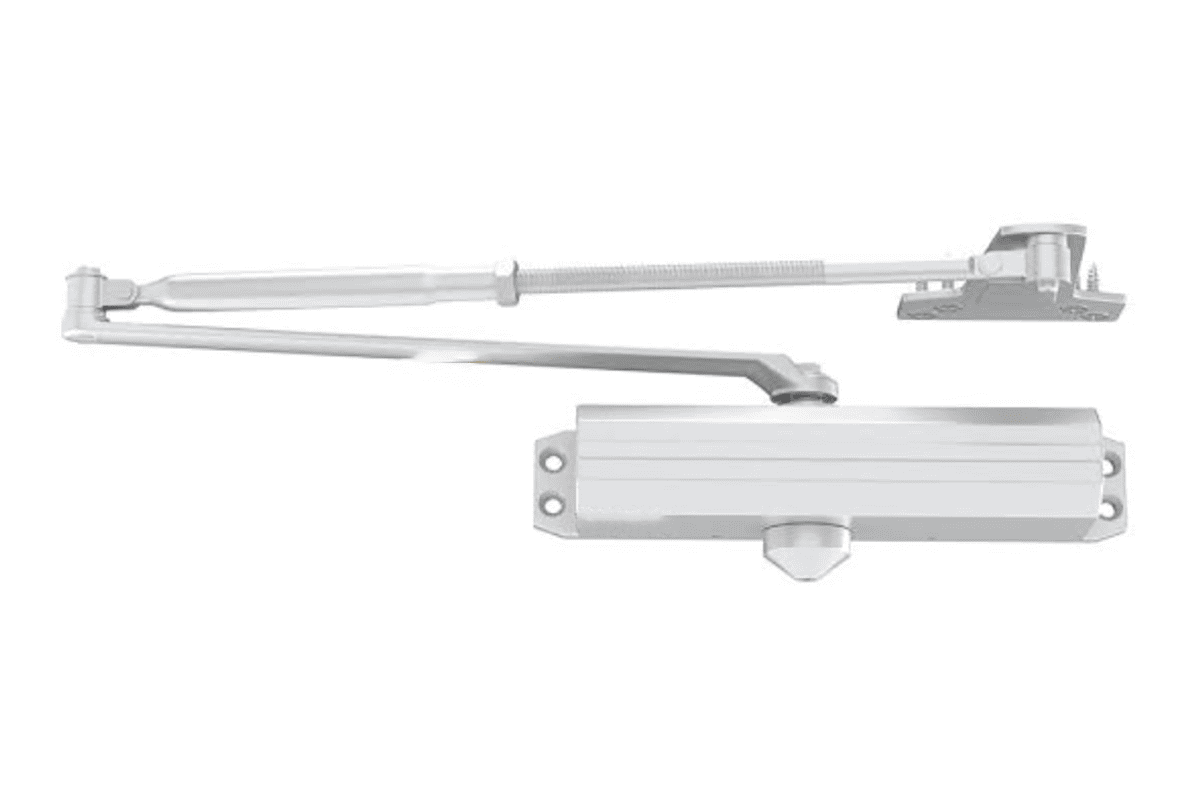
Misfit 1: Mechanical Hold-Open on a Fire Door
This is the most serious mismatch. It can create inspection failure and schedule pressure. It often happens because someone copied a closer model from a non-rated opening into a rated opening.
The prevention method is simple:
- Mark every rated opening in the door schedule.
- Block mechanical hold-open from rated-door hardware sets.
- Use non-hold-open closers unless normally open operation is required.
- If normally open operation is required, specify electromagnetic hold-open.
- Verify documentation with the AHJ before procurement.
The remedy is also clear, but it costs time. The mechanical hold-open hardware must be removed. The buyer must select the correct electromagnetic system, confirm wiring, link it to the fire alarm, and submit the documentation again.
Misfit 2: Confusing Delayed Action With Hold-Open
This mismatch causes returns and disputes because the product may be technically correct but operationally wrong. A delayed-action closer allows the door to close slowly after opening. It does not hold the door open permanently.
Here is a simple comparison:
| Function | What It Does | What It Does Not Do |
|---|---|---|
| Hold-open | Keeps a door open at a set angle | Does not automatically mean fire-door compliance |
| Non-hold-open | Closes the door every time | Does not support normally open traffic flow |
| Delayed action | Delays closing for a short time | Does not keep the door open indefinitely |
| Backcheck | Controls opening force near wide swing | Does not hold the door open |
| Electromagnetic hold-open | Holds open and releases on signal | Requires wiring and correct integration |
I suggest using clear function codes in drawings and BOMs. For example:
- NHO = Non-hold-open
- MHO = Mechanical hold-open, non-rated doors only
- EMHO = Electromagnetic hold-open with alarm release
- DA = Delayed action
- BC = Backcheck
The actual codes may vary by company, but the habit matters. Clear labels reduce misunderstandings.
What I Include in a Safer Quotation
When I prepare or review a closer proposal, I prefer to include notes that prevent wrong assumptions. A good quotation should not only list the unit price. It should explain the function and limits.
For hold-open vs non-hold-open door closers, I like to include:
Opening category
- Fire-rated
- Smoke-rated
- Non-rated
- Interior or exterior
Closer function
- Non-hold-open
- Mechanical hold-open, where allowed
- Electromagnetic hold-open
Standards reference
- EN 1154 for the closer
- EN 1155 for electrically powered hold-open devices
- CE documents if applicable
Integration notes
- Power supply
- Fire alarm release
- Wiring route
- Fail-safe behavior
Acceptance notes
- Verify with local AHJ
- Install according to manufacturer instructions
- Confirm compatibility with the full door assembly
This approach is not about making the quotation longer for no reason. It is about preventing expensive ambiguity. In B2B door hardware supply, a one-line product description may be fast, but it can be risky when the door is rated or part of a larger building system.
How Should Product Managers Build SKUs for Hold-Open vs Non-Hold-Open Door Closers?
Product managers often want a wide catalog because customers ask for many options. However, too many unclear closer SKUs can increase returns. I prefer a controlled product structure where the default choice is safe, and special functions are clearly separated.
For most business catalogs, non-hold-open should be the default SKU. Mechanical hold-open should be labeled for non-rated doors only. Fire-door packages that require normally open operation should be sold as an electromagnetic hold-open kit with closer, release device, wiring notes, certificates, and AHJ verification language.
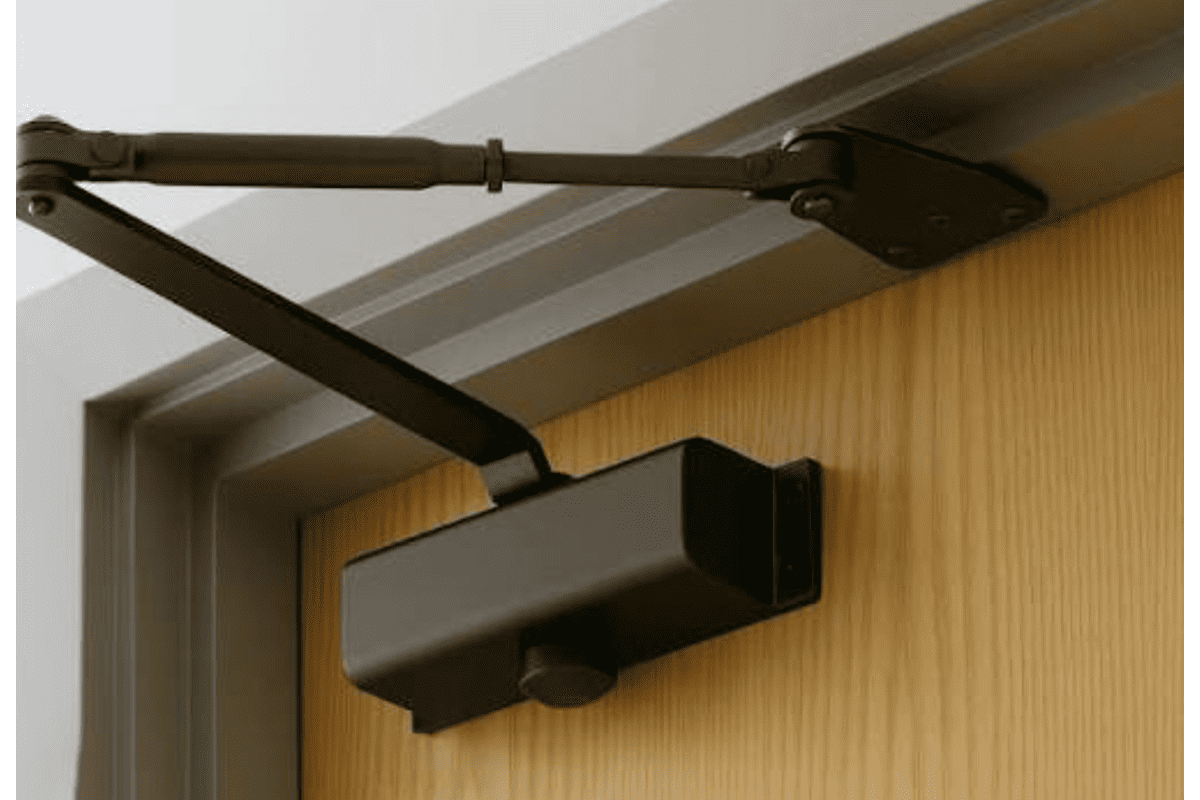
Recommended SKU Pattern
A clean SKU system helps sales teams, distributors, and customers choose correctly. It also helps prevent the wrong item from being packed or installed.
Here is a practical structure:
| SKU Group | Suggested Use | Notes |
|---|---|---|
| Standard non-hold-open closer | General commercial and residential doors | Default option |
| Heavy-duty non-hold-open closer | Larger or higher-traffic doors | Match force grade and door size |
| Mechanical hold-open closer | Non-rated convenience openings | Not for fire/smoke doors |
| Delayed-action closer | Accessibility or controlled slow closing | Do not describe as hold-open |
| Electromagnetic hold-open kit | Rated doors requiring normally open operation | Requires EN 1155 and alarm interface |
| Fire-door closer package | Rated doors that must close | Include EN 1154 and fire references |
This structure supports procurement because each SKU group has a clear purpose. It also supports sales training. A junior salesperson can learn that mechanical hold-open is not a universal upgrade.
What an Electromagnetic Hold-Open Kit Should Include
For a rated opening that must stay open during normal operation, I prefer a kit description rather than a single closer line. This reminds the buyer that the function depends on a system.
A practical kit may include:
- Certified door closer
- Electromagnetic hold-open device
- Arm or mounting accessories
- Release device or connection notes
- Power supply requirements
- Wiring diagram or interface note
- EN 1154 documentation
- EN 1155 documentation
- CE documentation, where applicable
- Fire-test references
- Installation instructions
- AHJ verification note
At SDH Hardware, we manufacture and supply architectural door hardware for B2B customers, including door factories, brand enterprises, and wholesalers. Because our customers often serve different regions, I avoid universal code promises. Instead, I recommend document review, project-specific confirmation, and local authority acceptance.
Why This Reduces Returns
Returns often happen because the customer receives a product that does not match the expected behavior. SKU clarity reduces that risk.
For example:
- A wholesaler can list non-hold-open as the standard closer in catalog pages.
- A brand can add a warning under mechanical hold-open: “For non-fire-rated doors only.”
- A door factory can quote EMHO kit for cross-corridor fire doors that remain open during business hours.
- A project buyer can attach certificates during submittal instead of requesting them after inspection.
This is especially useful for export markets. Customers in the Middle East, Europe, and Southeast Asia may have different local acceptance routes. A clear SKU and document package helps the buyer verify the product with the local AHJ before installation.
Frequently Asked Questions
Are mechanical hold-open door closers allowed on fire doors?
No. Mechanical hold-open should not be used on fire or smoke doors. If a rated door must normally stay open, specify an electromagnetic hold-open device that releases through the fire alarm system, with EN 1155 documentation and local AHJ approval.
Is delayed action the same as hold-open?
No. Delayed action slows the closing cycle for a short time after the door opens. Hold-open keeps the door open at a set position. These functions have different purposes and different compliance outcomes, especially on rated openings.
When should I choose a non-hold-open door closer?
Choose a non-hold-open closer when the door should normally close after every use. Common examples include apartment entries, tenant doors, stairwell doors, service rooms, and most general commercial doors where security, smoke control, or privacy matters.
What documents should I ask for when buying electromagnetic hold-open systems?
Ask for EN 1154 documents for the closer, EN 1155 documents for the powered hold-open device, CE documentation where applicable, fire-test references, installation instructions, and wiring or alarm interface notes. You should also verify the final assembly with the local AHJ.
Can I use a door stop or wedge instead of a hold-open closer?
No. A wedge or loose door stop is not a compliant substitute for a proper hold-open solution, especially on fire or smoke doors. Rated doors must close when required, and any normally open function should be achieved through an approved electromagnetic release system.
Conclusion
Hold-open vs non-hold-open door closers should be selected by compliance first and convenience second. Fire and smoke doors must not use mechanical hold-open. If they need to stay open, use a certified electromagnetic hold-open system with alarm release and verified documentation. For non-rated doors, choose non-hold-open by default unless traffic flow truly requires hold-open. If you need support building a safer closer schedule or OEM hardware package, I can help you review the opening types, functions, certificates, and supply options with SDH Hardware.
"Door Hold Open Devices - Facilities and Operations", https://fo.umich.edu/fosg/door-hold-open-devices/. Government or fire-code guidance on fire doors supports that rated doors are expected to close during a fire event and that hold-open arrangements require automatic release; this supports the article’s compliance distinction, although exact requirements depend on the adopted local code and door listing. Evidence role: expert_consensus; source type: government. Supports: Fire doors generally must be self-closing or automatic-closing, and any hold-open arrangement must release automatically under fire-alarm or detection conditions rather than relying on a purely mechanical hold-open feature.. Scope note: Local building codes and product listings may vary, so the source provides general compliance context rather than project-specific approval. ↩
"Door Hold Open Devices - Facilities and Operations", https://fo.umich.edu/fosg/door-hold-open-devices/. A standards-body description of EN 1155 identifies it as the standard for electrically powered hold-open devices for swing doors, supporting the article’s use of EN 1155 for alarm-released hold-open systems; the standard description does not by itself prove acceptance for a particular installed assembly. Evidence role: definition; source type: institution. Supports: EN 1155 covers electrically powered hold-open devices for swing doors and is relevant where hold-open devices must release to allow closing under alarm or power-loss conditions.. Scope note: The standard applies to the device category, while approval of a complete fire-door assembly remains project- and jurisdiction-specific. ↩
"Basic fire safety - Administration and Finance", https://adminfinance.rochester.edu/resources/fire-safety/. Fire-safety educational guidance supports that fire doors contribute to compartmentation by limiting the movement of fire and smoke between areas, supporting the article’s explanation of why rated doors must be able to close. Evidence role: mechanism; source type: education. Supports: Fire doors are used as part of passive fire protection to compartmentalize buildings and limit the spread of fire and smoke.. ↩
"Chapter 4: Entrances, Doors, and Gates", https://www.access-board.gov/ada/guides/chapter-4-entrances-doors-and-gates/. Accessibility guidance on door opening force supports that excessive door resistance can impede accessible use, providing contextual support for the article’s warning about over-strong closers; separate manufacturer or standards data may be needed to document latching failure from under-sized closers. Evidence role: general_support; source type: government. Supports: Door operating force is an accessibility concern, while insufficient closing force can prevent controlled closing and latching.. Scope note: Accessibility sources directly support the user-effort concern but may only indirectly support the latching-risk portion. ↩
"Commercial Door Closer Adjustment Guide for Installers ...", https://doorsforpros.com/blog/post/commercial-door-closer-adjustment?srsltid=AU7gw4X0_VyyloPAabBUDsdndNwa6YsTPzxrG808k8Hcs6sGU-wJ7T9x. Building-science or fire-door technical guidance supports that pressure differentials and resistance from seals or latches can affect the force needed for a door to close and latch, supporting the article’s installation-check discussion. Evidence role: mechanism; source type: research. Supports: Pressure differentials, weather or smoke seals, and latching resistance can influence whether a door closer can close and latch a door reliably.. Scope note: The evidence would explain the mechanism generally; site-specific measurements are needed to quantify the effect on a particular opening. ↩
"Door Hold Open Devices - Facilities and Operations", https://fo.umich.edu/fosg/door-hold-open-devices/. Standards or fire-safety guidance for electrically powered hold-open devices supports that such devices release the door under alarm or power-interruption conditions, allowing the closer to shut the door; correct operation still depends on wiring, commissioning, and the approved assembly. Evidence role: mechanism; source type: institution. Supports: Electrically powered hold-open devices for fire doors are designed to release so the door can close when alarm conditions occur or power is removed.. Scope note: The source would support intended fail-safe behavior, not verify that a specific installed system is wired correctly. ↩
"Delayed Action Closer on a Fire Door?", https://www.thebuildingcodeforum.com/forum/threads/delayed-action-closer-on-a-fire-door.9986/. An architectural-hardware glossary or institutional guide defining door-closer functions supports that delayed action is a time-limited closing delay rather than an indefinite hold-open function. Evidence role: definition; source type: institution. Supports: Delayed action slows the closing cycle for a limited period, whereas hold-open keeps the door open at a set position.. ↩
"Back-2-Basics: Door Closers", https://idighardware.com/2013/11/back-2-basics-door-closers/. An institutional architectural-hardware reference defining backcheck supports that it controls the door near the end of its opening swing, distinguishing it from hold-open and delayed-action functions. Evidence role: definition; source type: institution. Supports: Backcheck is intended to slow, cushion, or resist the door as it approaches the fully open position.. ↩