

Panic Exit Device Types for Single and Double Fire Doors
Panic exit device types can confuse buyers when a fire door project moves from drawing to ordering. A product may look correct in a catalog, but the wrong configuration can create delays, failed samples, or mismatched door leaves. I usually recommend starting with the door type, escape side, outside function, and fire-rated documents before choosing a model.
Panic exit device types for single and double fire doors should be selected according to door leaf arrangement, inside escape function, outside access control, locking points, and fire-rated suitability. A single fire door usually needs one inside panic device, while a double fire door requires careful active leaf and inactive leaf1 configuration.
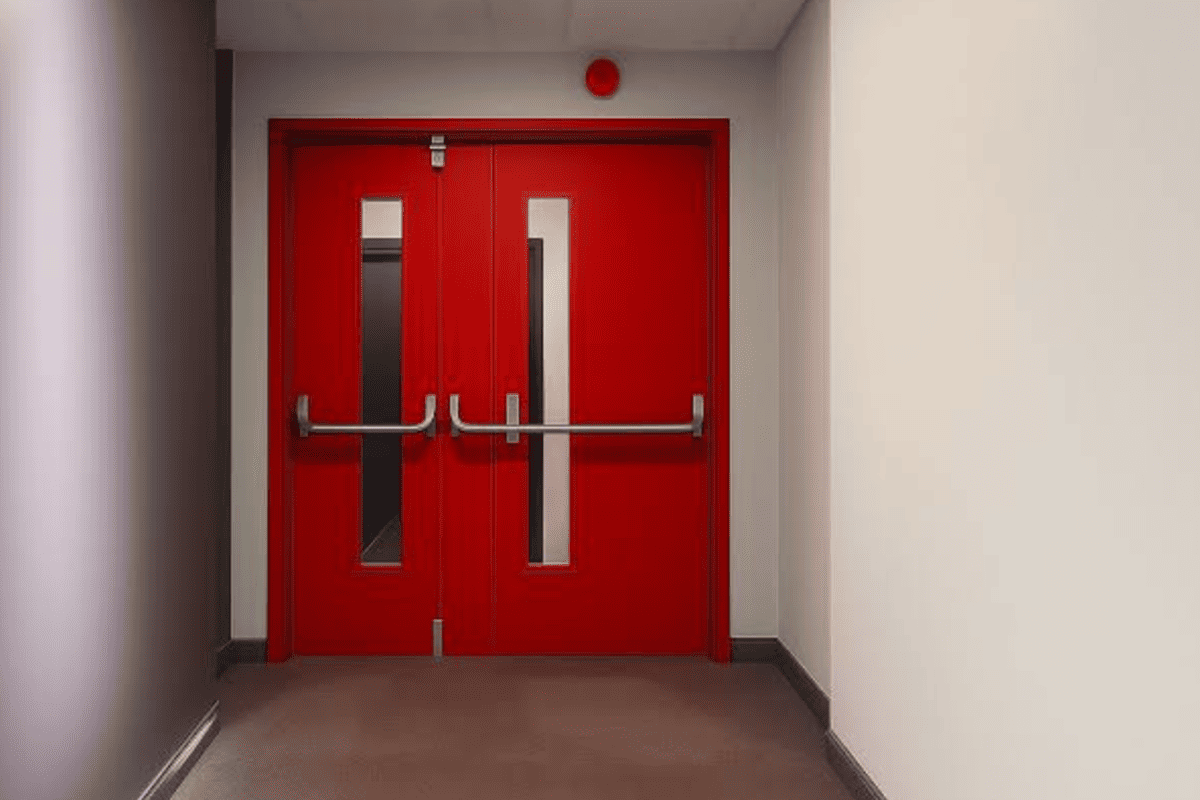
In my factory-side conversations with door manufacturers and hardware importers, I often see one early mistake: the buyer asks for “a panic bar” before confirming the door structure. The better question is not only “Which bar?” It is “Which complete door hardware configuration?”
What are panic exit device types for fire doors?
A panic exit device is simple in purpose, but many buyers make it complicated by starting with appearance. They compare a long push bar, a short push pad, or a trim set first. The better starting point is the escape function and the door configuration.
A panic exit device is installed on the indoor escape side of a door so people can push and exit quickly. From the outside, the door may remain locked or be controlled by a lever trim, cylinder, pull handle, or access system2, depending on project requirements and fire-rated compatibility.
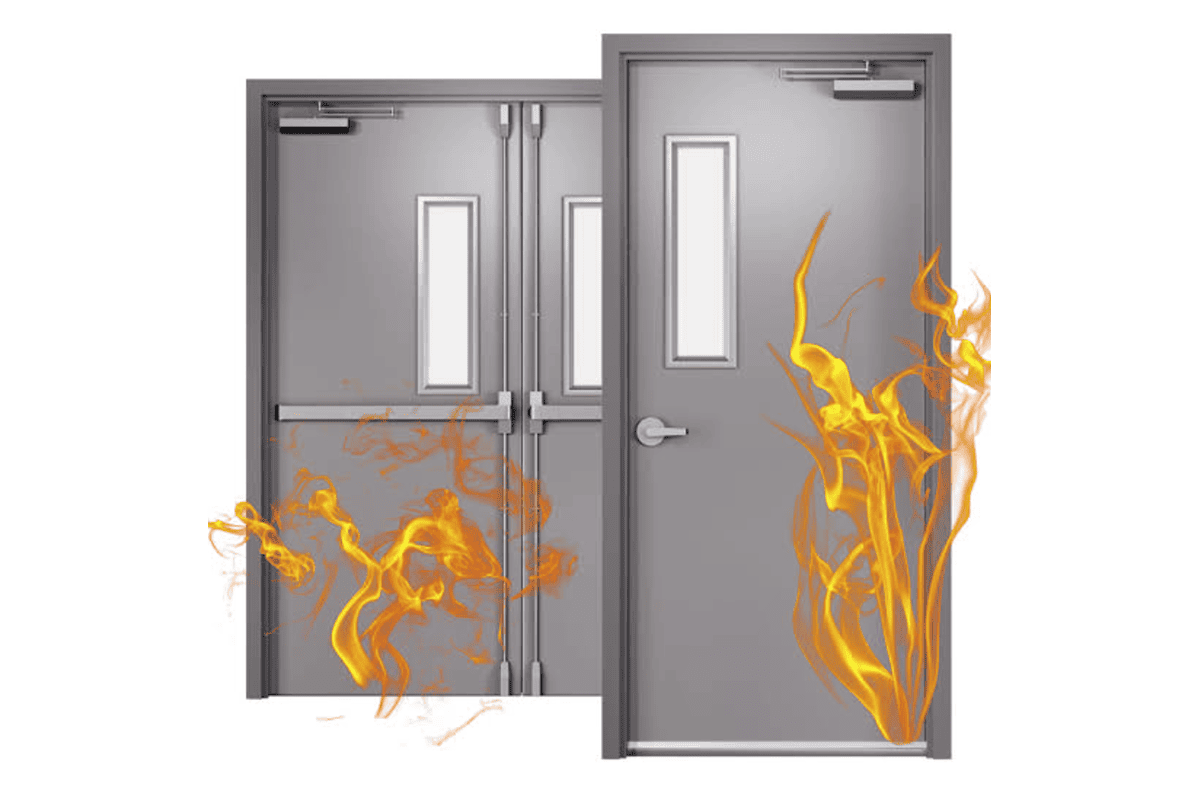
The basic function matters more than the appearance
A panic exit device is not a lock installed on both sides of the door. It is mainly an inside escape-side opening device3. When a person pushes the bar or push area, the latch or locking mechanism releases and allows the door to open in the escape direction.4
From the outside, the door can work in several ways:
- It can stay normally locked.
- It can be opened by a key cylinder.
- It can be opened by an outside lever trim.
- It can be connected with access control hardware, if the project allows it.
- It can use a pull handle only, where outside entry is not required.
This distinction is important for B2B procurement. A door factory may order the correct inside panic bar, but the wrong outside trim can still make the total set unsuitable for the project.
Common visible styles buyers ask about
In real inquiries, many customers describe products by what they see. I usually hear terms like “long bar,” “short bar,” “push handle,” or “panic handle.” These descriptions are useful, but they are not complete technical specifications.
| Buyer-friendly style | Common description | Practical selection point |
|---|---|---|
| Long push bar type | A horizontal bar across much of the door width | Often selected for clear emergency push action and commercial fire doors5 |
| Short push pad or push type | A shorter operating area or compact body | May suit narrower doors or specific market preferences |
| Rim panic device | Surface-mounted latch at the door edge | Common for single doors and some active leaves |
| Mortise panic device | Works with a mortise lock body inside the door | Requires accurate door preparation and compatible lock case |
| Vertical locking type | Locks at top/bottom or uses vertical rods | Often considered for double doors or taller door security needs |
I treat these names as the beginning of the specification, not the end of it.
What buyers should confirm first
Before discussing price, samples, or logo stamping, I prefer to confirm these points:
- Is the door single or double?
- Which side is the indoor escape side?
- What is the door material and fire rating requirement?
- What are the door width, height, and thickness?
- Is the door left-hand or right-hand opening?
- Does the outside need key access, lever access, or no access?
- For double doors, which leaf is active and which is inactive?
- Does the inactive leaf need automatic top and bottom locking?
These questions help prevent the most common mismatch: ordering a device that looks like a panic bar but does not match the fire door set. A device may be well made, but that does not automatically make it suitable for every fire-rated door. Buyers should verify certificates, test reports, door assembly compatibility, and local project requirements with qualified professionals or inspection authorities.
How do panic exit device types work for single fire doors?
Single fire doors are usually the easiest configuration, but errors still happen. A buyer may specify the panic device correctly and then forget the outside function. Or they may order a model that does not match the door thickness, opening direction, or required certificate.
For a single fire door, one panic exit device is normally installed on the inside escape face of the door leaf. The outside face can be configured with a cylinder, lever trim, pull handle, or access hardware, while the fire-rated suitability and dimensions must be verified before ordering.

A typical single-door configuration
For a single fire door, the hardware schedule is usually more direct than for a pair of doors. The panic exit device operates the latch from the inside. The outside hardware controls whether people can enter from the non-escape side.
A common configuration may include:
- Inside: panic exit device for emergency escape
- Outside: lever trim with key cylinder, or pull handle
- Door edge: latch or lock mechanism
- Door closer: required in many fire door assemblies6
- Hinges: fire-rated butt hinges or suitable hinge system
- Cylinder: Euro profile cylinder or project-specific cylinder
- Accessories: strike plate, screws, spindle, fixing kits, and signage where needed
At SDH Hardware, I have seen sample requests where the buyer says, “We need a panic bar for a 45 mm fire door.” That is helpful, but it is still incomplete. I then ask whether the outside needs entry by key, whether the door is timber or steel, what standard the project follows, and whether the customer needs CE or fire-rated documentation for review.
Single fire door selection checklist
| Item to confirm | Why it matters |
|---|---|
| Door thickness | The spindle, fixing screws, and trim must match the leaf |
| Door width | The panic device length must suit the door size |
| Door handing | Some devices are reversible, while others must be specified |
| Escape direction | Panic device should release in the escape direction |
| Outside function | Locked, key access, lever trim, pull handle, or access control |
| Fire-rated document | Buyers should verify certificates and assembly compatibility |
| Finish | Stainless steel, painted, plated, or project-specific surface |
| Packaging and branding | Important for hardware brands and wholesalers |
Long push bar or short push type?
For single fire doors, the visible style often depends on the market, building type, and customer preference. A long push bar type gives a clear visual instruction. People understand that they should push it. This can be useful in public or commercial areas with high traffic.
A short push type may be selected where the door design needs a more compact appearance. It can also be chosen for some regional markets where this style is common. However, the decision should not be based only on appearance.
Buyers should connect the style to:
- Door width
- User traffic
- Fire-rated requirements
- Outside access function
- Locking method
- Local market expectations
- Maintenance needs
Manufacturing and procurement notes
From a supplier communication view, a good inquiry for a single fire door should include drawings or at least a basic schedule. If a buyer can provide door thickness, door width, finish, quantity, and certificate request, I can usually help narrow the correct product family faster.
For OEM and ODM orders, additional details matter. Brand customers may request laser logos, customer stamping, custom color boxes, or matching finishes across hinges, lock bodies, handles, cylinders, and panic devices. When one factory supplies a broader architectural hardware package, the buyer can reduce mismatch risk across components.
Still, I always suggest that fire-rated projects should not rely only on a catalog photo. The buyer should check whether the selected device is included in the relevant fire-rated door assembly or accepted by the project authority. Product quality is only one part of the decision. Document verification is another.
How should panic exit device types be configured for double fire doors?
Double fire doors create more configuration risk than single doors. Many buyers treat both leaves as identical, but a door pair usually has an active leaf and an inactive leaf. If this point is not clear, the selected hardware may not secure or release the door pair correctly.
For double fire doors, panic exit device types should be configured according to the active leaf and inactive leaf. The active leaf normally carries the main panic device, while the inactive leaf may need automatic top and bottom bolts, vertical locking hardware, or a coordinated self-locking solution.

Active leaf versus inactive leaf
A double fire door set is not simply two single doors placed together. One leaf is usually the active leaf. This is the leaf people use most often. The other leaf is the inactive leaf, which stays secured until it is needed for wider opening or emergency use.
This difference affects the hardware.
| Door leaf | Main role | Typical hardware consideration |
|---|---|---|
| Active leaf | Daily passage and primary escape operation | Panic exit device, outside trim, latch or lock |
| Inactive leaf | Secondary leaf that helps close and secure the pair | Automatic top/bottom bolts, vertical locking, coordinator, or matching exit hardware |
If the inactive leaf is not secured correctly, the whole door pair may not perform as expected. If it is over-secured or incorrectly coordinated, it may not release properly when people need to escape. This is why double-door panic hardware should be treated as a system.
Common double-door configurations
Double fire door projects may use different arrangements. The correct choice depends on the door construction, required locking points, local rules, and project specification.
Common configurations include:
Panic device on active leaf + automatic bolts on inactive leaf
The active leaf provides the main escape function. The inactive leaf uses top and bottom bolts that help secure the pair.Panic devices on both leaves
This may be used where both leaves must allow escape operation. The hardware must be coordinated carefully.Vertical locking device on one or both leaves
Vertical locking can secure the door at the top and bottom.7 Buyers must confirm whether concealed or surface vertical systems are suitable.Mortise panic hardware with outside trim
This can be selected where the project requires a mortise lock function and a cleaner hardware design.Rim device with mullion or special strike arrangement8
Some pairs use a removable mullion or special strike setup, depending on the door design and code acceptance.
Why the inactive leaf is often the problem
In many inquiries, the active leaf is described clearly. The customer sends a photo of a push bar and says, “We need this.” But the inactive leaf is ignored. Then later, during sample checking or installation, the buyer finds that the pair does not lock correctly.
The inactive leaf may require:
- Automatic top and bottom bolts9
- Flush bolts, if allowed by the project
- Vertical rod panic hardware
- Door coordinator
- Dust-proof strike for floor locking
- Top strike preparation
- Correct meeting stile design
- Fire-rated compatible accessories
The exact combination should be reviewed against the fire door assembly and project requirements. I do not recommend assuming that one panic bar on one leaf solves the entire double-door set.
Double-door specification table
| Specification question | Why I ask it before quoting |
|---|---|
| Which leaf is active? | Determines main panic device placement |
| Which leaf is inactive? | Determines secondary locking hardware |
| Do both leaves need escape function? | Affects whether one or two panic devices are needed |
| Is there a mullion? | Changes strike and latching arrangement |
| Is vertical locking required? | Affects top/bottom preparation and hardware type |
| What is the door height? | Vertical rod length or bolt system may change |
| What is the meeting stile design? | Affects strike, latch engagement, and clearance |
| What certificates are required? | Fire-rated suitability must be documented and verified |
Procurement advice for double fire doors
For double doors, I strongly prefer to review a simple door elevation drawing. It does not need to be beautiful. Even a marked PDF is better than a text message. The drawing should show:
- Door width and height
- Door thickness
- Active leaf and inactive leaf
- Opening direction
- Escape side
- Outside access side
- Locking points
- Required finish
- Certificate or standard request
When buyers provide these details early, the supplier can avoid quoting a device that only solves half the problem. For door factories and wholesalers, this also protects sample cost and delivery time. A wrong double-door panic hardware sample can delay a project more than a wrong lever handle, because the locking logic affects the whole door pair.
Which panic exit device types are suitable for fire-rated projects?
A device that looks strong or has a push bar is not automatically suitable for a fire door. This is a serious procurement point. Buyers should not judge fire-rated suitability from appearance, weight, or product name only.
Panic exit device types are suitable for fire-rated projects only when their certificates, test reports, dimensions, materials, and door assembly compatibility meet the project requirements. Buyers should verify CE documents, fire-rated certification, door thickness range, latch configuration, and local approval needs before confirming samples or bulk orders.

What documents should buyers request?
For fire-rated door hardware, documents matter. At SDH Hardware, we can support buyers with product documents for applicable items, but the buyer still needs to verify whether those documents match the final project.
Common documents may include:
- CE certification10, where applicable
- Fire-rated test report or certificate
- Product technical drawing
- Material specification
- Installation instruction
- Product data sheet
- Finish details
- Packing list and labeling details
- Inspection report after production, if requested
These documents should be checked against the door type, market, and project standard. A certificate for one configuration may not automatically cover every door size, every installation method, or every accessory combination.11
Fire-rated suitability is a system question
A fire door is an assembly.12 The panic exit device is one part of that assembly. Hinges, closers, locks, cylinders, seals, bolts, strikes, and door leaf construction can all affect final suitability.
This is why I avoid saying, “This device is suitable for all fire doors.” A more accurate answer is:
“This device may be suitable for fire-rated door applications when the selected model, certificate, door assembly, and project requirements are verified.”
That sentence may sound cautious, but it protects buyers. It also reflects how B2B fire door hardware purchasing works in real projects.
Key technical points to verify
| Technical point | What to check |
|---|---|
| Door thickness | Confirm the device, spindle, and screws match the leaf |
| Door width | Confirm bar length and latch position |
| Door height | Important for vertical rods or top/bottom locking |
| Fire rating | Verify product documents and door assembly compatibility |
| Door material | Steel, timber, or aluminum systems may require different preparation |
| Opening direction | Confirm handing and escape direction |
| Outside trim | Ensure trim does not conflict with fire-rated function |
| Locking points | Rim, mortise, vertical, or top/bottom bolts |
| Finish | Confirm corrosion needs and market preference |
| Quantity and packaging | Important for batch production and distribution |
Common buyer mistakes I see
I see several repeated mistakes in sourcing conversations:
The buyer sends only a photo.
A photo helps identify style, but it does not confirm fire rating, size, lock function, or door structure.The buyer asks for the lowest price first.
Price matters, but panic hardware is not a decorative item only. Configuration errors cost more than a small unit price difference.The buyer ignores outside trim.
The inside escape side and outside access side must be planned together.The buyer treats double doors like two single doors.
Active and inactive leaf hardware must be coordinated.The buyer assumes all panic devices are fire-rated.
Buyers should verify certification and project acceptance before ordering.
How I suggest buyers prepare an inquiry
A strong inquiry does not need to be long. It just needs the right details.
A useful inquiry might say:
- “We need panic exit hardware for a single steel fire door, 45 mm thickness, 950 mm width, outward opening.”
- “Inside requires panic exit. Outside requires key cylinder with lever trim.”
- “Finish: satin stainless steel.”
- “Please provide CE and fire-rated documents for review.”
- “Quantity: 200 sets, OEM logo required.”
For a double door, the inquiry should add:
- “Active leaf width: 900 mm.”
- “Inactive leaf width: 500 mm.”
- “Inactive leaf requires top and bottom locking.”
- “Please suggest a coordinated hardware set.”
This level of detail helps a manufacturer recommend the right product family and avoid unnecessary sample revisions.
How can buyers choose a reliable panic exit device supplier?
Choosing the right product is only half of the work. Buyers also need a supplier who understands door hardware configuration, sample confirmation, production control, and documentation. A weak supplier may quote quickly but miss important details.
Buyers should choose a panic exit device supplier by evaluating manufacturing capability, fire-rated document support, configuration knowledge, quality control process, customization options, and experience with door factories, hardware brands, importers, and wholesalers in target markets.
What a serious supplier should ask you
A reliable supplier should not only ask, “How many pieces do you need?” They should ask technical questions first. In my experience, good early questions prevent most later problems.
A serious supplier should ask:
- Is the door single or double?
- What is the door thickness?
- What is the door width and height?
- Which side is the escape side?
- What outside function do you need?
- Which leaf is active on a double door?
- Does the inactive leaf need automatic bolts?
- What certificate do you need for review?
- Do you need OEM branding or standard packaging?
- What market will the product be sold into?
If a supplier never asks these questions, the buyer should be careful. Fast quotation is useful, but accurate quotation is better.
Factory capability and quality control
For architectural hardware, factory capability affects consistency. SDH Hardware operates as a China-based manufacturer with independent production experience in door hardware. Our product scope includes Euro mortise locks, stainless steel lever handles, butt hinges, concealed door hinges, Euro brass cylinders, door accessories, and related door hardware solutions.
For panic exit devices and fire door hardware configuration, I believe buyers should review the supplier’s ability in three areas:
| Evaluation area | What buyers should look for |
|---|---|
| Production capacity | Stable manufacturing, repeatable quality, and batch order support |
| Quality control | Raw material screening, production inspection, and final checking |
| Configuration support | Ability to discuss active leaf, inactive leaf, outside trim, and certificates |
Why one-stop sourcing can reduce mismatch
Many door factories and wholesalers prefer to source from one hardware supplier when possible. This does not mean every product must come from one factory. But a coordinated hardware package can reduce mismatch risk.
For example, a fire door project may need:
- Panic exit device
- Mortise lock or latch
- Euro cylinder
- Stainless steel lever handle or outside trim
- Butt hinges
- Door closer
- Automatic bolts
- Strike plates
- Accessories and screws
If these parts come from different suppliers without coordination, small dimensional differences can create problems. The spindle may not match. The finish may differ. The strike plate may not fit the latch. The packaging may not suit the buyer’s brand channel.
A supplier with broad door hardware experience can help buyers align these details before production.
OEM and wholesale considerations
Hardware brands and bulk wholesalers often need more than a standard product. They may need:
- Logo stamping
- Laser marking
- Custom packaging
- Market-specific finishes
- Product drawings
- Inspection reports
- Mixed container planning
- Consistent replacement parts
- Long-term model stability
These factors matter because panic exit devices are often sold as part of a larger door hardware program. A buyer may not want to change models every year. Stable supply helps catalogs, dealer training, stock planning, and after-sales replacement.
Conclusion
Panic exit device types should be selected as part of a complete fire door hardware configuration, not as a standalone push bar purchase. For single doors, the main questions are inside escape function and outside access control. For double doors, buyers must confirm the active leaf, inactive leaf, locking points, and fire-rated suitability. If you are sourcing panic exit devices for door manufacturing, wholesale, or OEM branding, contact SDH Hardware with your door drawings and project requirements so I can help you review the right configuration before sampling.
"Double Doors: Active Leaf vs. Inactive Leaf", https://beaconcdl.com/blogs/news/double-doors-active-leaf-vs-inactive-leaf?srsltid=AU7gw4WbQcKeAnS2--7bmSPl0DSx3EIw9lqMBCWN3j67O1IkKp2T_1_i. Door-hardware references define the active leaf as the primary operating leaf of a pair and the inactive leaf as the secondary leaf, supporting the article’s claim that paired fire doors require leaf-specific hardware decisions. Evidence role: definition; source type: institution. Supports: A door or fire-door reference should define active and inactive leaves in a door pair and connect that distinction to hardware configuration.. Scope note: The source would define the terminology and general practice, not determine the correct hardware for a particular project. ↩
"Door Locks", https://firemarshal.ks.gov/DocumentCenter/View/1555/Door-Locks. Model building-code provisions generally require egress doors to be openable from the egress side without a key or special knowledge, while exterior access may be controlled by approved trim or locking arrangements; this supports the distinction between inside escape function and outside access function. Evidence role: general_support; source type: government. Supports: A building-code source should support the distinction between required egress-side release and variable exterior access control.. Scope note: The source would provide general code context, while specific outside trims or access-control systems still require local approval and listing compatibility. ↩
"prEN 1125 - Panic Exit Devices Horizontal Bar ...", https://standards.iteh.ai/catalog/standards/cen/4ca1267a-5973-43a0-8535-f2bc84aa0b3c/pren-1125?srsltid=AU7gw4Xo1-xuEgZCR29m-fIBf8_UdfZpUoACN_p9ysqsygZPvsGLKKIh. A building-hardware standard such as EN 1125 or a model fire code defines panic exit hardware by its escape-side operation, supporting the statement that the device is principally an egress-side opening mechanism rather than a conventional two-sided lock. Evidence role: definition; source type: institution. Supports: A recognized standard or code should define panic or exit hardware as a device operated from the egress side to release the door for escape.. Scope note: The source would support the general definition, not the suitability of any specific model or installation. ↩
"Crash bar", https://en.wikipedia.org/wiki/Crash_bar. Technical standards for panic exit devices describe actuation by pressure on a horizontal bar or similar operating element to release the latching mechanism, supporting the article’s description of push-to-release escape operation. Evidence role: mechanism; source type: institution. Supports: A technical standard should support that panic exit devices are actuated by pressure on a bar or pad to release latching for egress.. Scope note: The source would establish the standard operating principle, not confirm performance for every device style. ↩
"Ekin - What Is a Panic Bar (US) vs EN 1125/EN 179 (EU)", https://www.ekinpanicbar.com/knowledge/what-is-a-panic-bar-us-vs-en-1125en-179-eu. EN 1125 treats horizontal-bar panic exit devices as hardware for escape routes where a panic situation may occur and users may be unfamiliar with the exit, giving standards-based context for the use of conspicuous push bars on commercial egress doors. Evidence role: expert_consensus; source type: institution. Supports: A standard should support that horizontal-bar panic devices are intended for public or panic situations where users may be unfamiliar with the door.. Scope note: This would support the functional rationale, not prove that buyers in every market often select this style. ↩
"Fire Doors and NFPA 80 FAQs", https://www.nfpa.org/news-blogs-and-articles/blogs/2025/04/11/fire-doors-faqs. Fire-door standards such as NFPA 80 address self-closing and automatic-closing requirements for fire door assemblies, supporting the statement that closers are required in many fire-rated door applications. Evidence role: general_support; source type: institution. Supports: A fire-door standard should support that many fire doors must be self-closing or automatic-closing.. Scope note: The requirement varies by door location, occupancy, rating, and adopted local code. ↩
"Surface Vertical Rod Latch Parts", https://commercialdoorhardware.com/collections/surface-vertical-rod-latch-parts?srsltid=AU7gw4Wtlyt5PvqI7ZoVMfT3r1U9GAFstmwDjoRa1uuaLhvHEjVcRMP0. Technical references for vertical-rod exit devices describe latching at the top and bottom of the opening, supporting the article’s statement that vertical locking secures the door through upper and lower locking points. Evidence role: mechanism; source type: institution. Supports: A technical hardware reference should support that vertical rod or vertical locking exit devices latch at the head and sill or top and bottom positions.. Scope note: The source would explain the mechanism, while suitability for fire-rated doors depends on listing and assembly compatibility. ↩
"Rim Exit Device Mullions", https://www.vonduprin.com/en/products/options-accessories/mullions.html. Door-hardware technical guidance describes rim exit devices on paired openings as commonly using a fixed or removable mullion, or an approved strike arrangement, to provide a latching surface, supporting the article’s configuration example. Evidence role: general_support; source type: institution. Supports: A door-hardware technical source should support that rim exit devices on paired openings may use mullions or special strikes for latching.. Scope note: The source would support the configuration concept, not establish that it is acceptable for every fire-rated pair or local code condition. ↩
"Manual Flush Bolts on Fire Doors", https://www.thebuildingcodeforum.com/forum/threads/manual-flush-bolts-on-fire-doors.7162/. Fire-door hardware standards and installation guidance discuss automatic flush bolts or automatic top-and-bottom latching arrangements for inactive leaves of door pairs, supporting the article’s identification of this hardware as a common inactive-leaf solution. Evidence role: general_support; source type: institution. Supports: A fire-door standard should support the use of automatic flush bolts or automatic top and bottom bolts on inactive leaves under specified conditions.. Scope note: The source would not mean automatic bolts are mandatory or permitted in all egress conditions. ↩
"EN 1125: Building Hardware - Panic exit devices operated ...", https://www.intertek.com/building/standards/en-1125/. European construction-product rules and harmonized standards for emergency and panic exit hardware provide the regulatory context for CE marking of covered devices, supporting the article’s inclusion of CE documentation for applicable projects. Evidence role: general_support; source type: government. Supports: An EU regulatory or harmonized-standards source should support that CE marking is relevant for panic exit devices covered by applicable European construction-product standards.. Scope note: This applies primarily to jurisdictions and product categories covered by the relevant European regulatory framework. ↩
"Important Tips for Specifying Fire Door Assemblies", https://steeldoor.org/tips-for-specifying-fire-door-assemblies/. Fire-door standards and certification listings generally require assemblies and listed hardware to be installed within the conditions of their test evidence and listing, supporting the statement that one certificate does not automatically cover all sizes, installation methods, or accessory combinations. Evidence role: expert_consensus; source type: institution. Supports: A fire-door standard or certification body should support that listings and test evidence are limited to specified assemblies, components, sizes, and installation conditions.. Scope note: The source would support the principle of listing scope, while the exact coverage must be checked in the specific certificate or test report. ↩
"Fire Doors and NFPA 80 FAQs", https://www.nfpa.org/news-blogs-and-articles/blogs/2025/04/11/fire-doors-faqs. Fire-door standards define a fire door assembly as a complete system including the door leaf, frame, hardware, and related components, supporting the article’s statement that fire-rated suitability must be assessed at the assembly level. Evidence role: definition; source type: institution. Supports: A fire-door standard should define a fire door assembly as including the door, frame, hardware, and related components.. Scope note: The source would define the assembly concept, not certify any specific combination of products. ↩
